
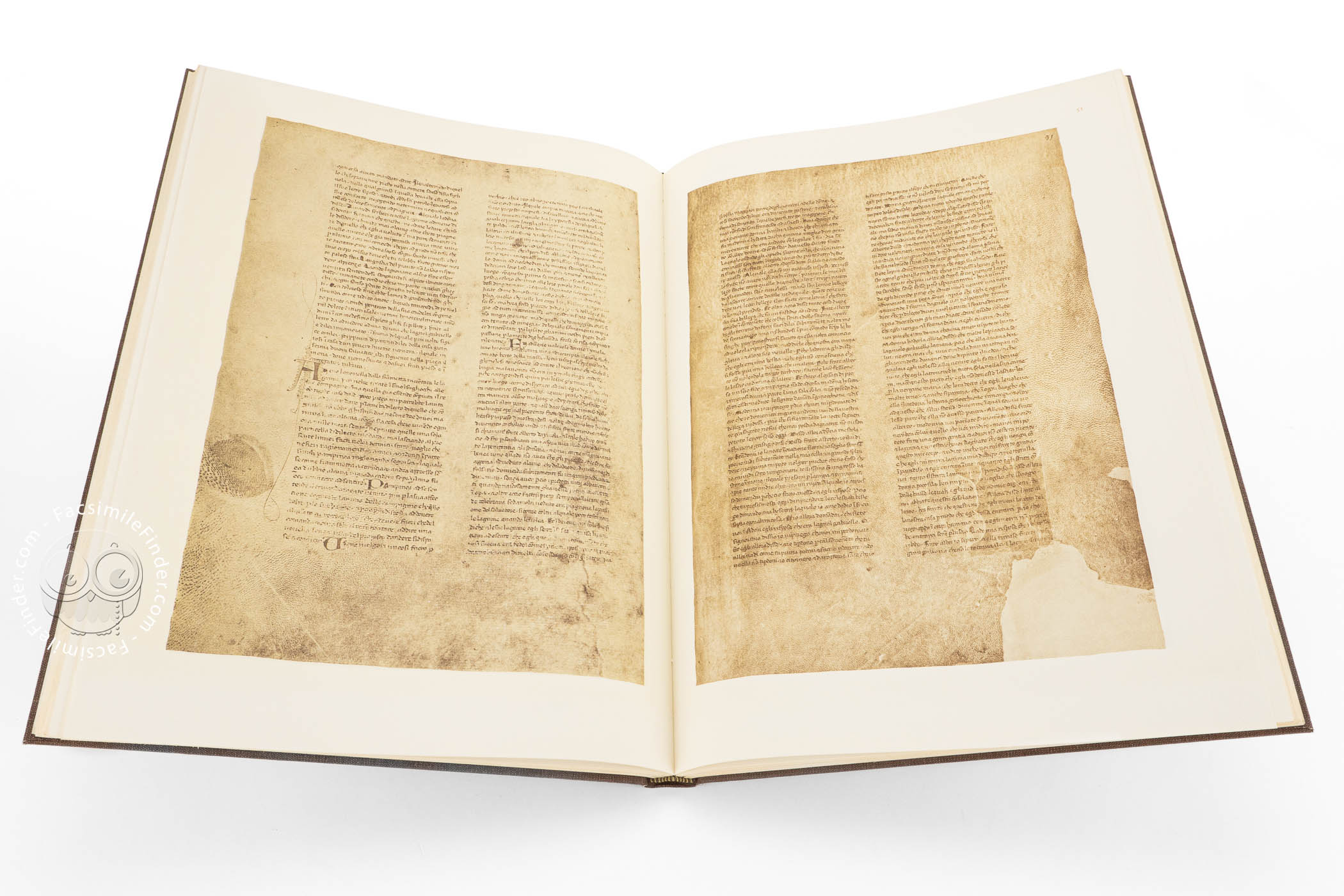
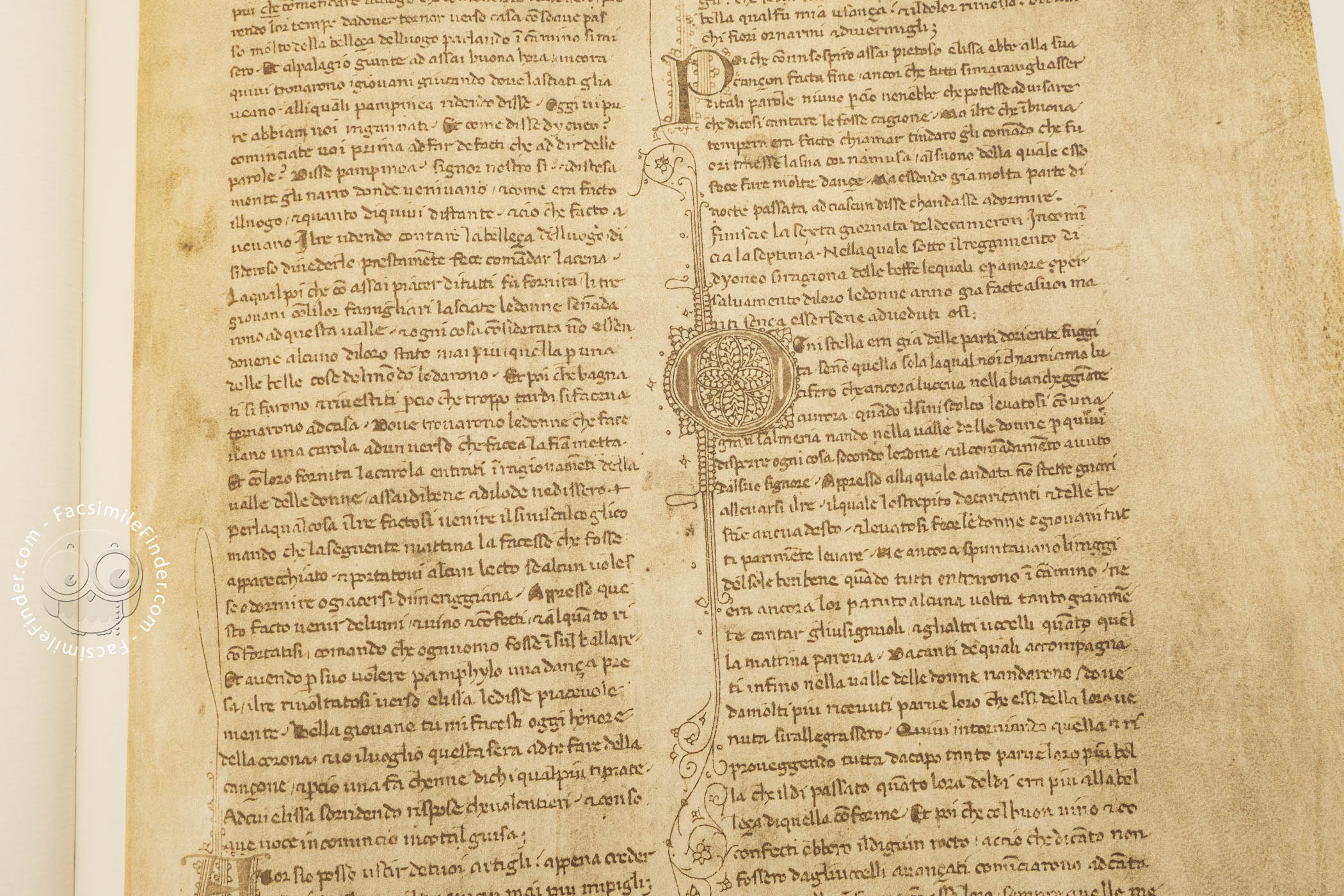
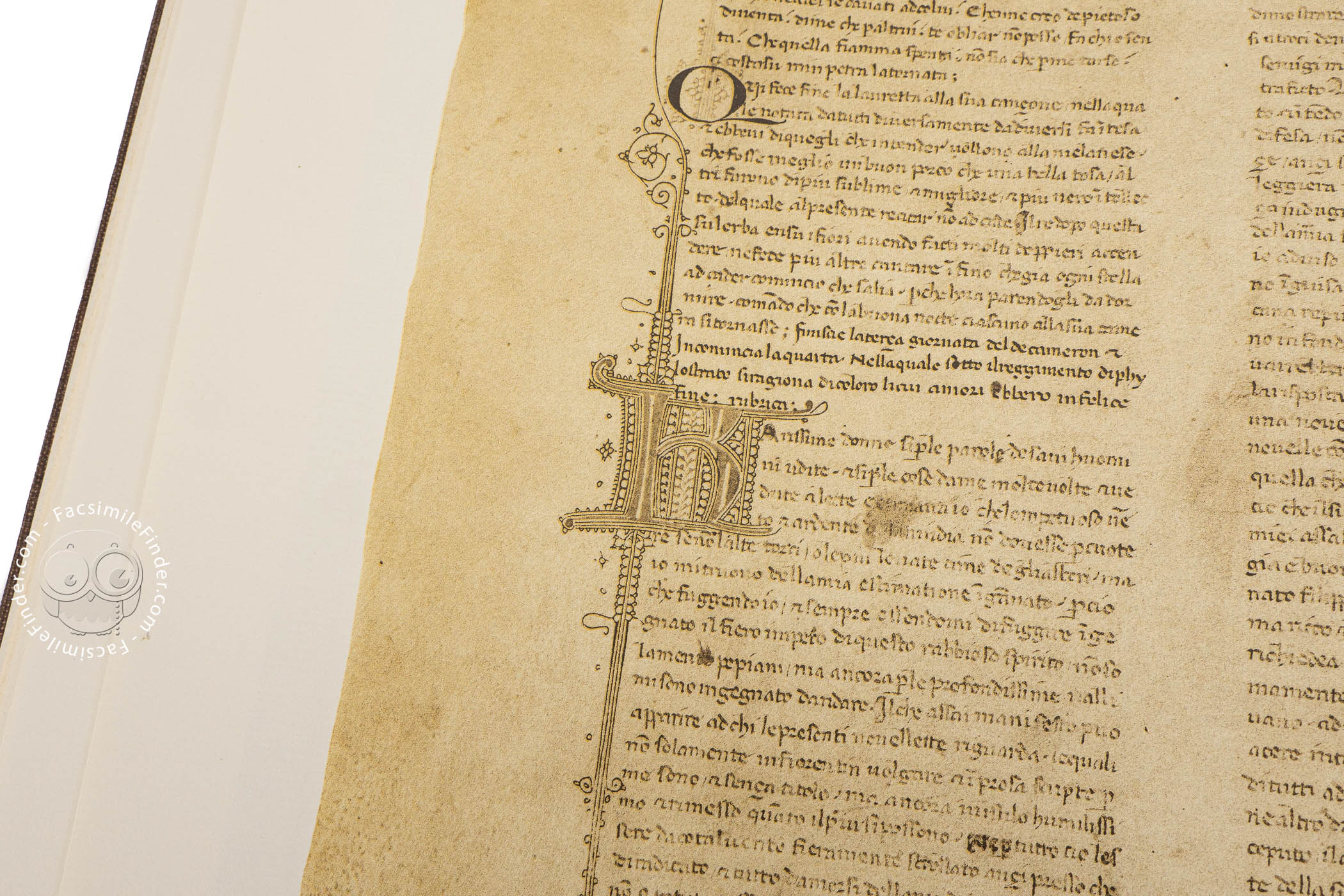
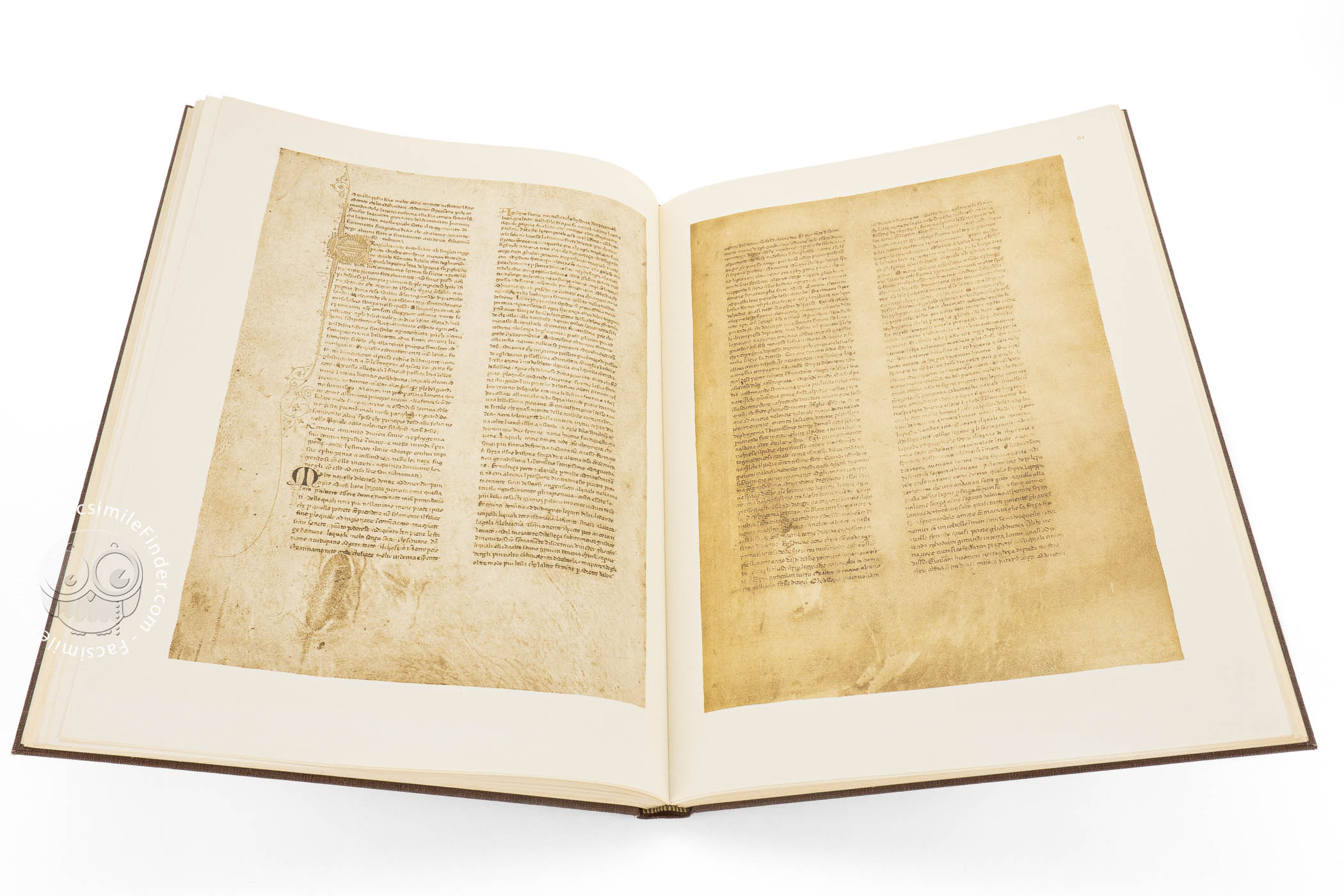
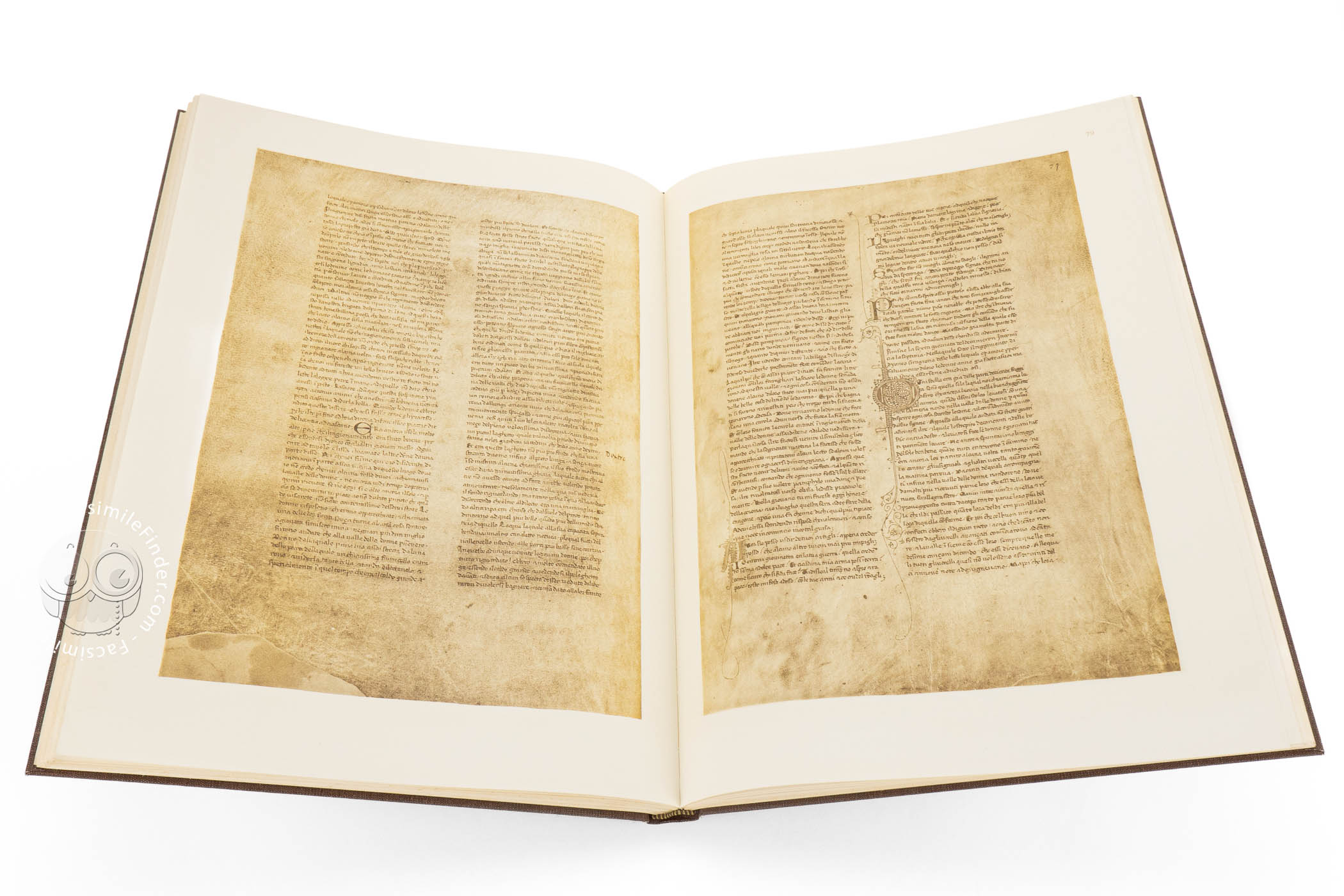
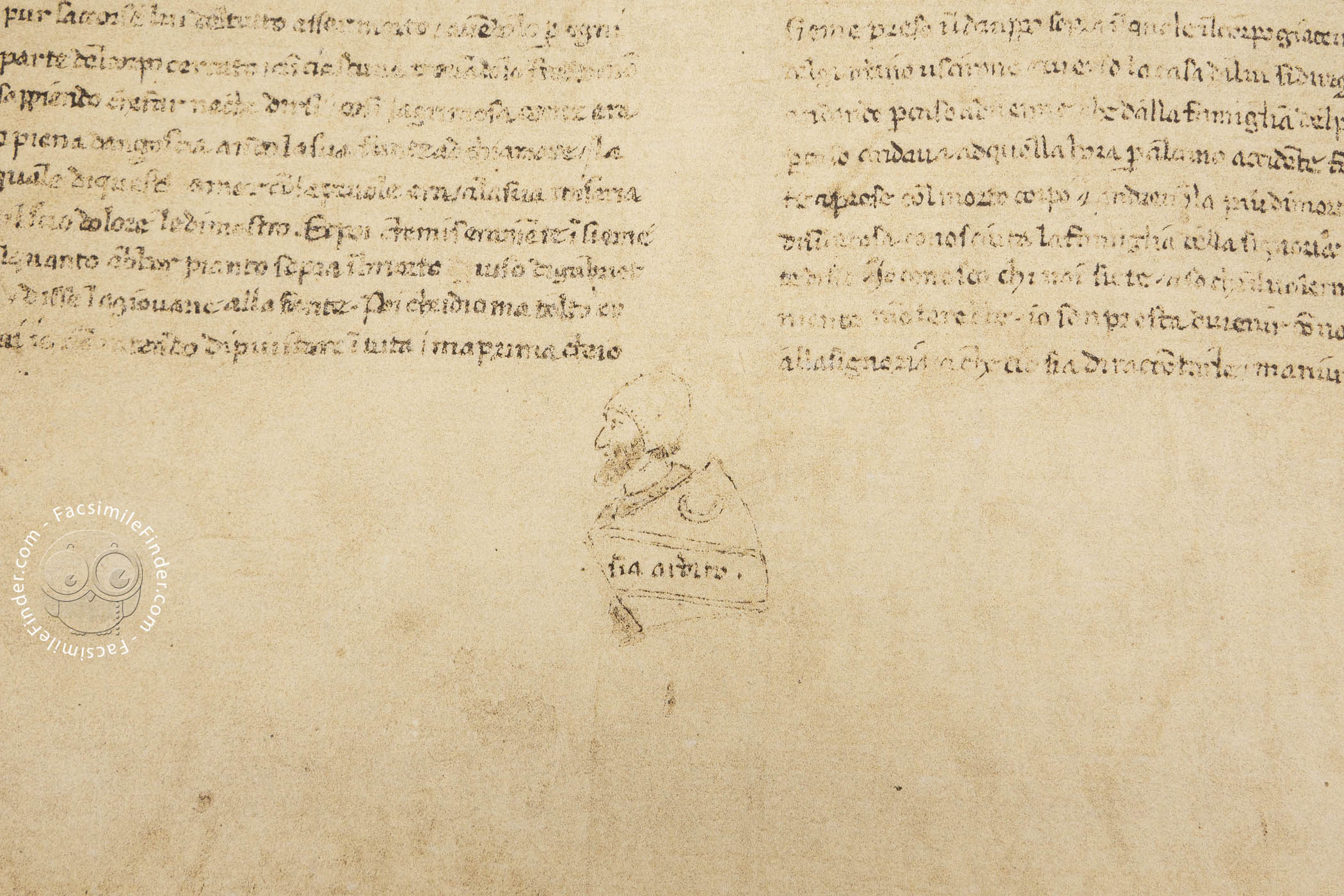
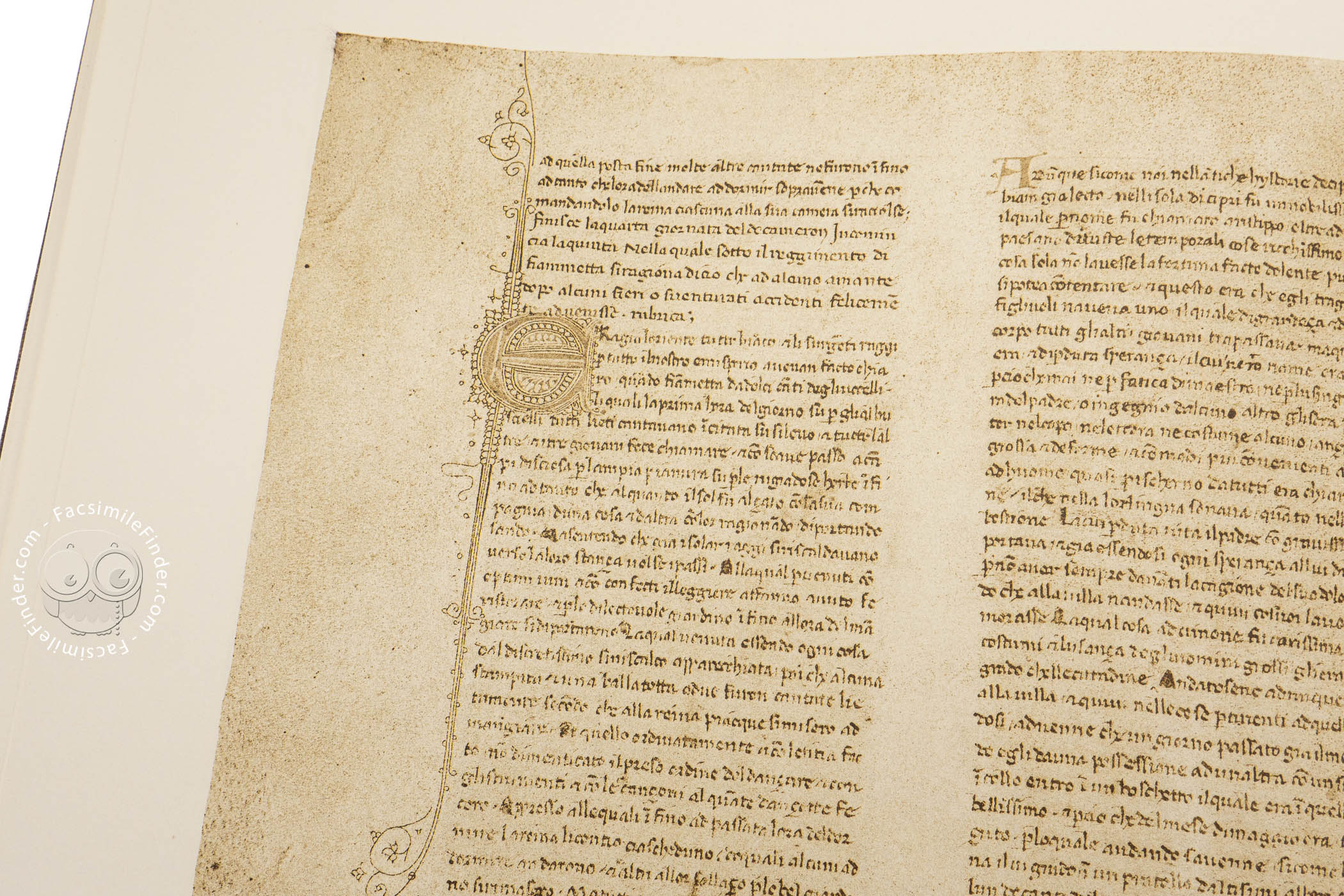
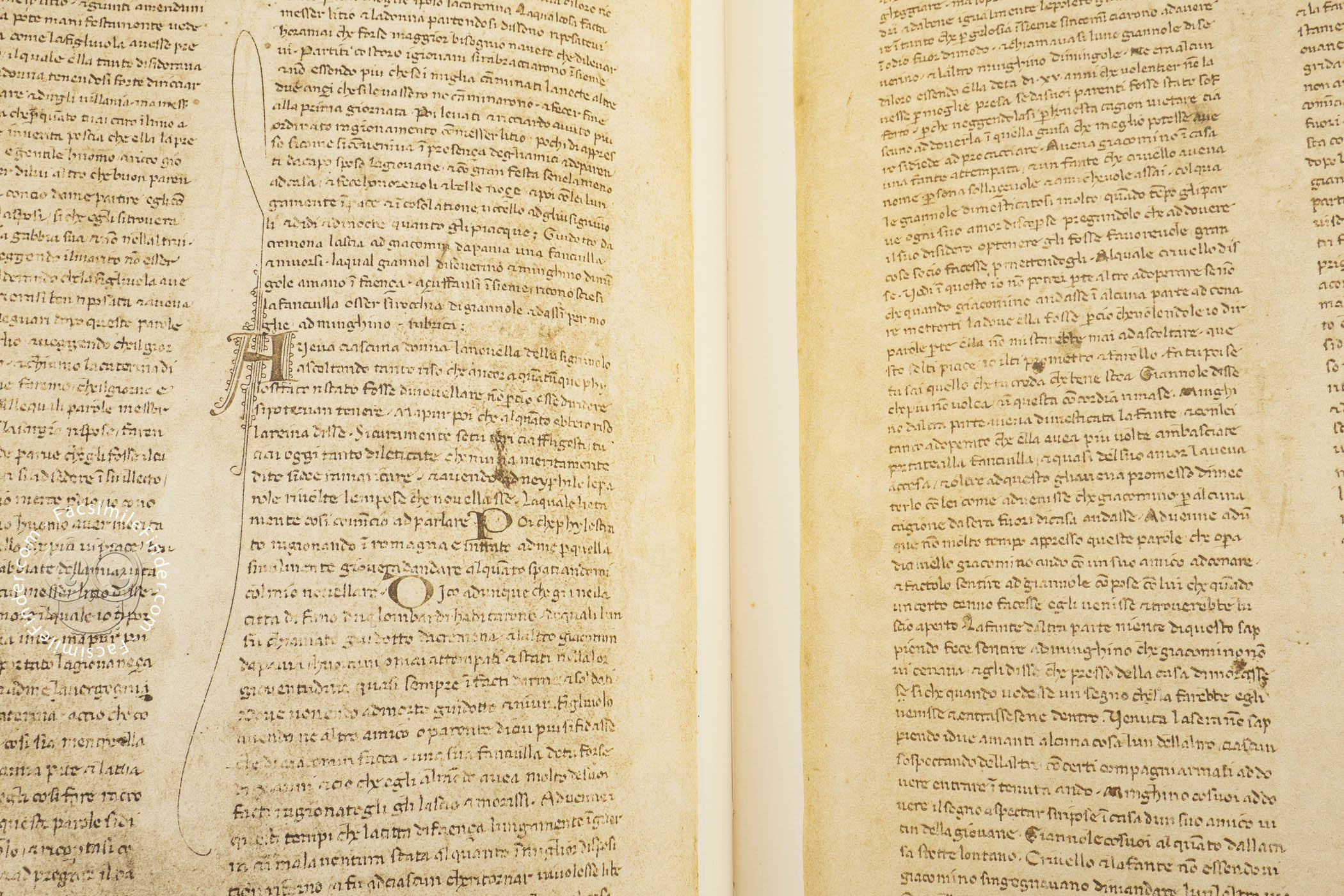
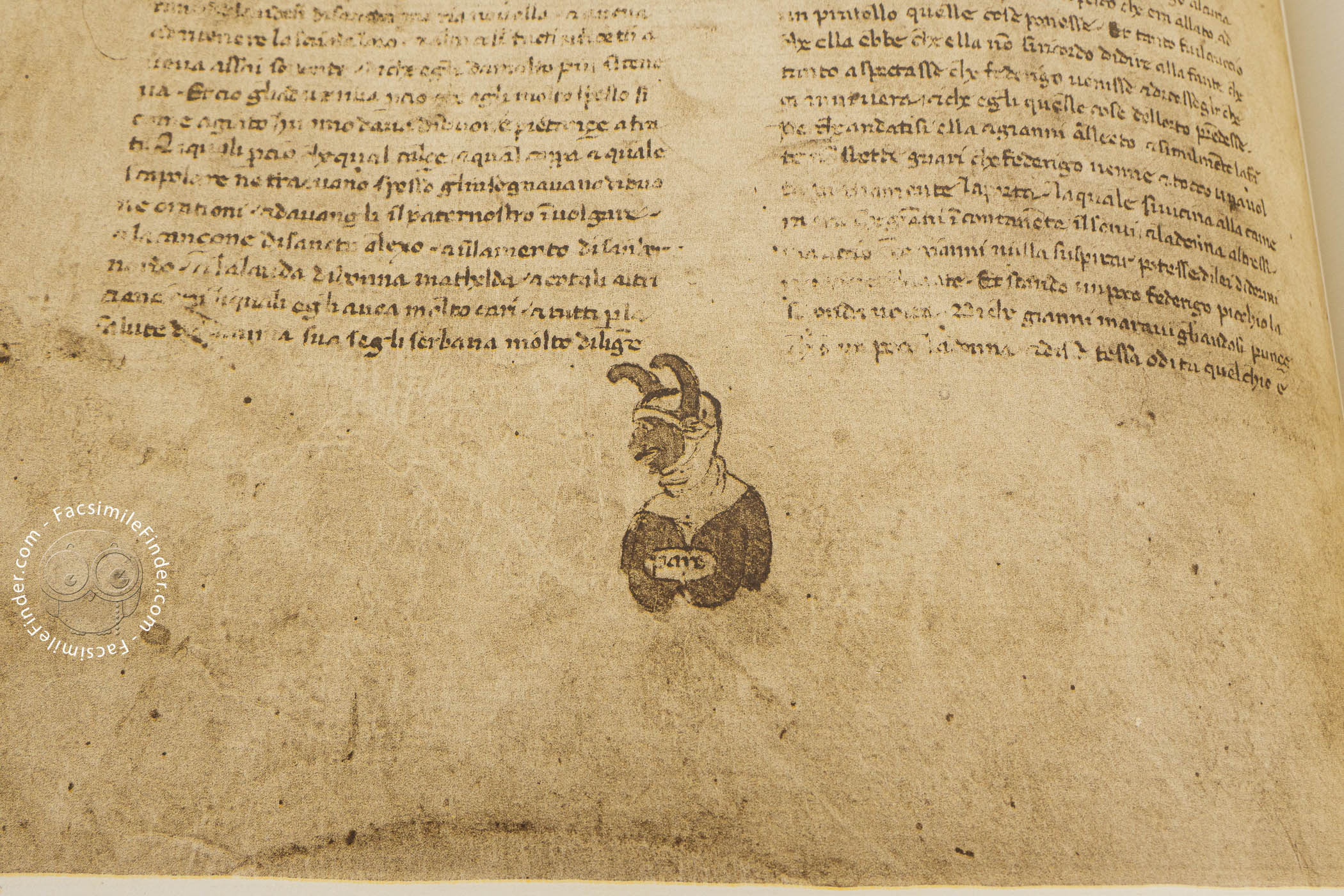
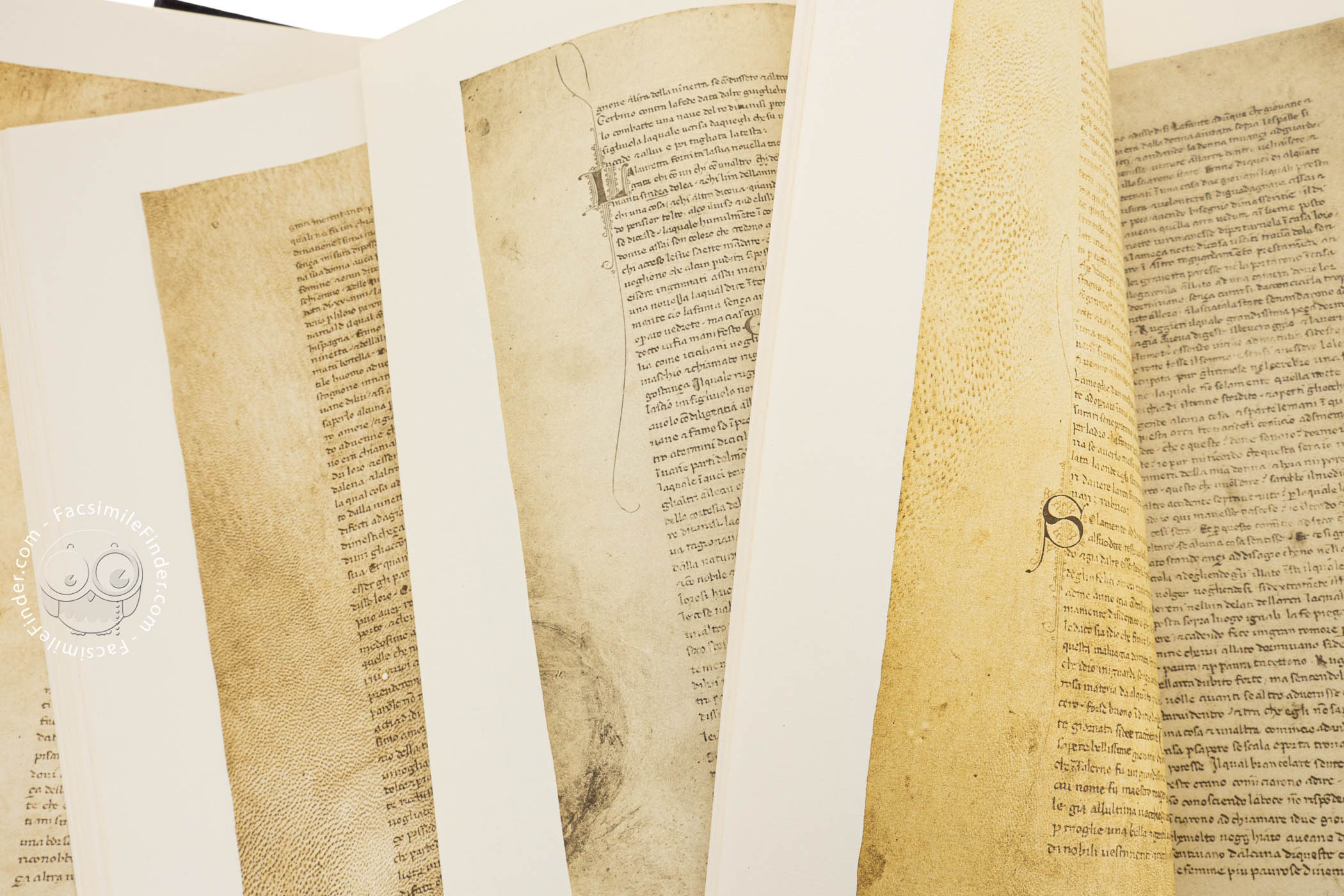
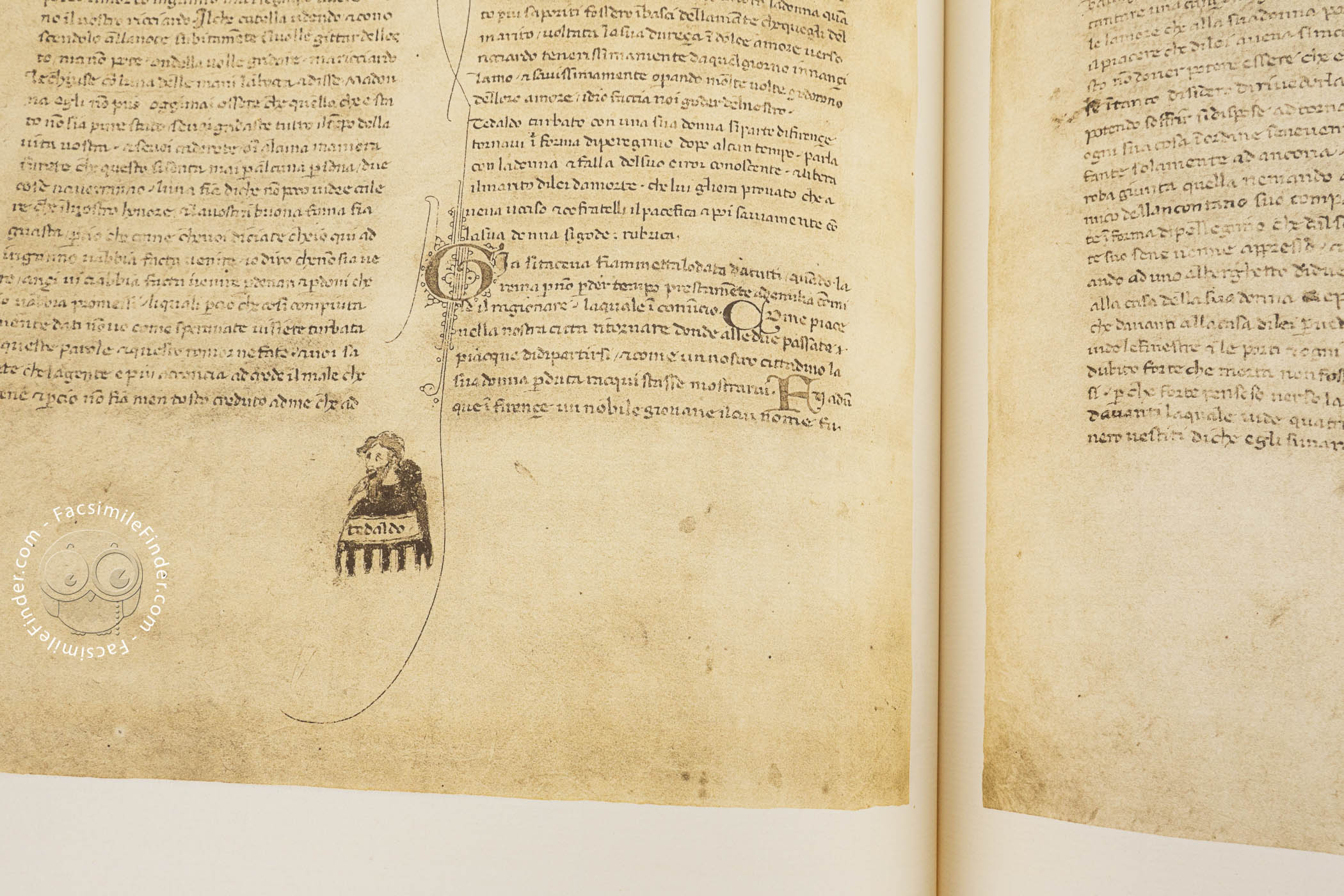
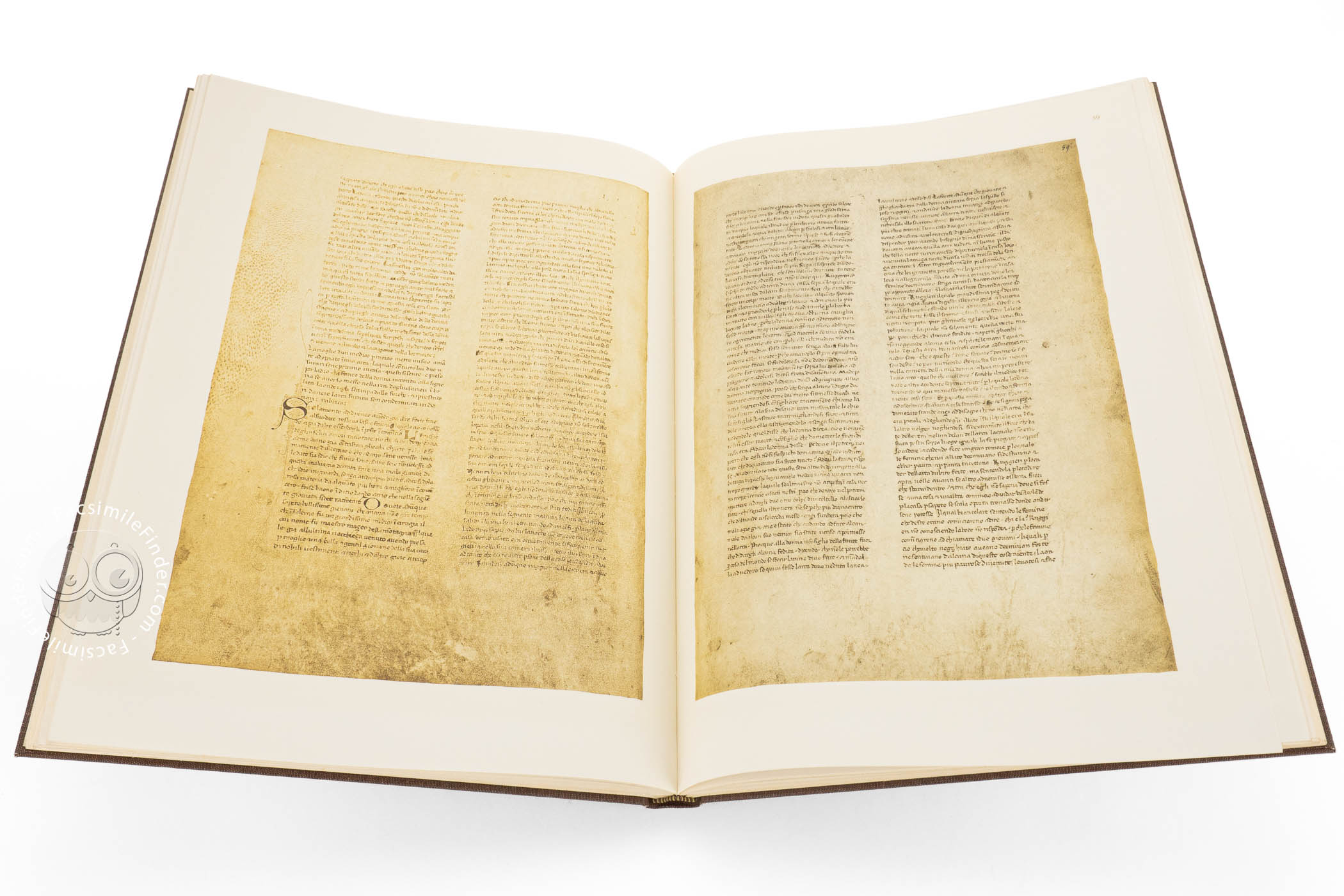
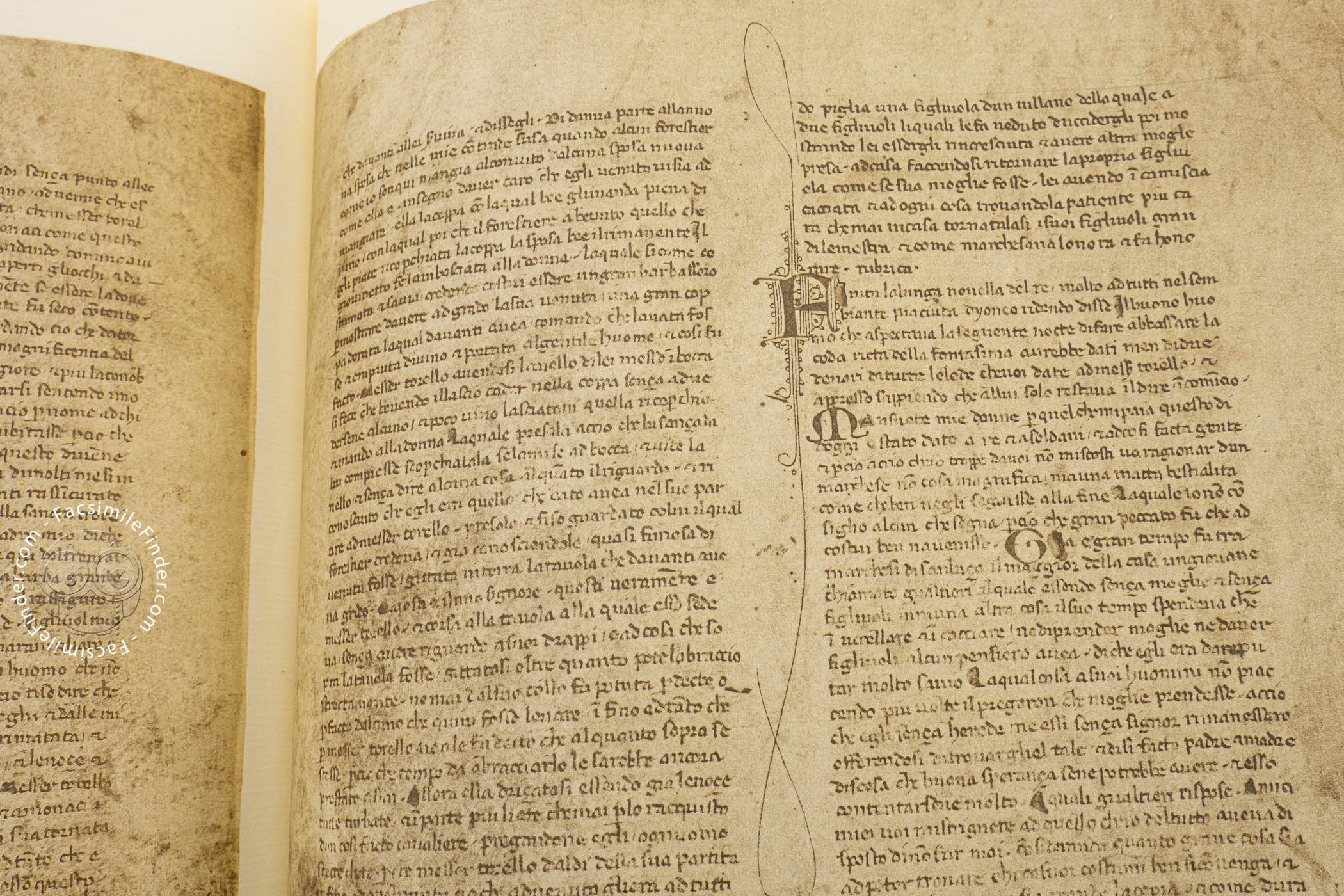
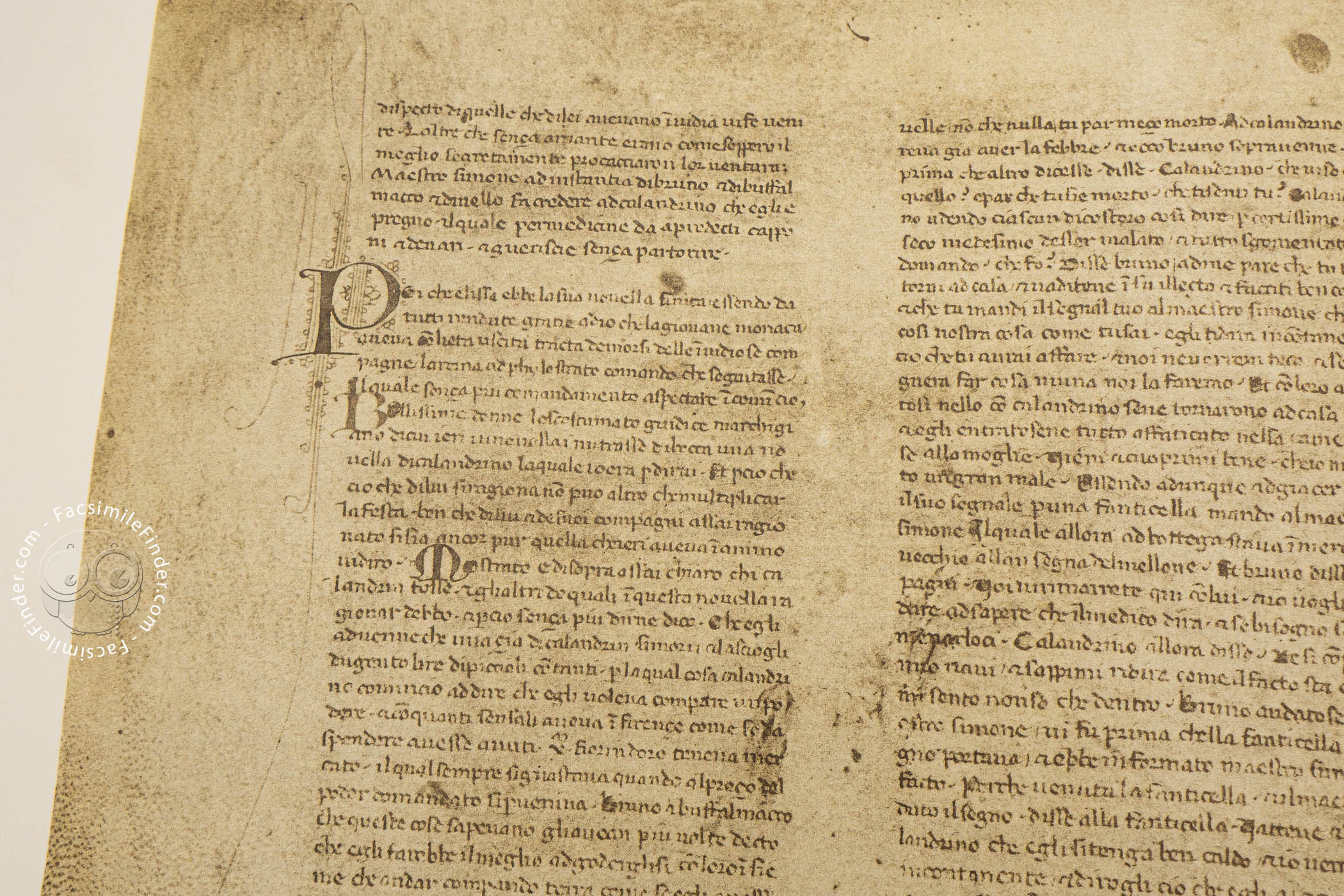
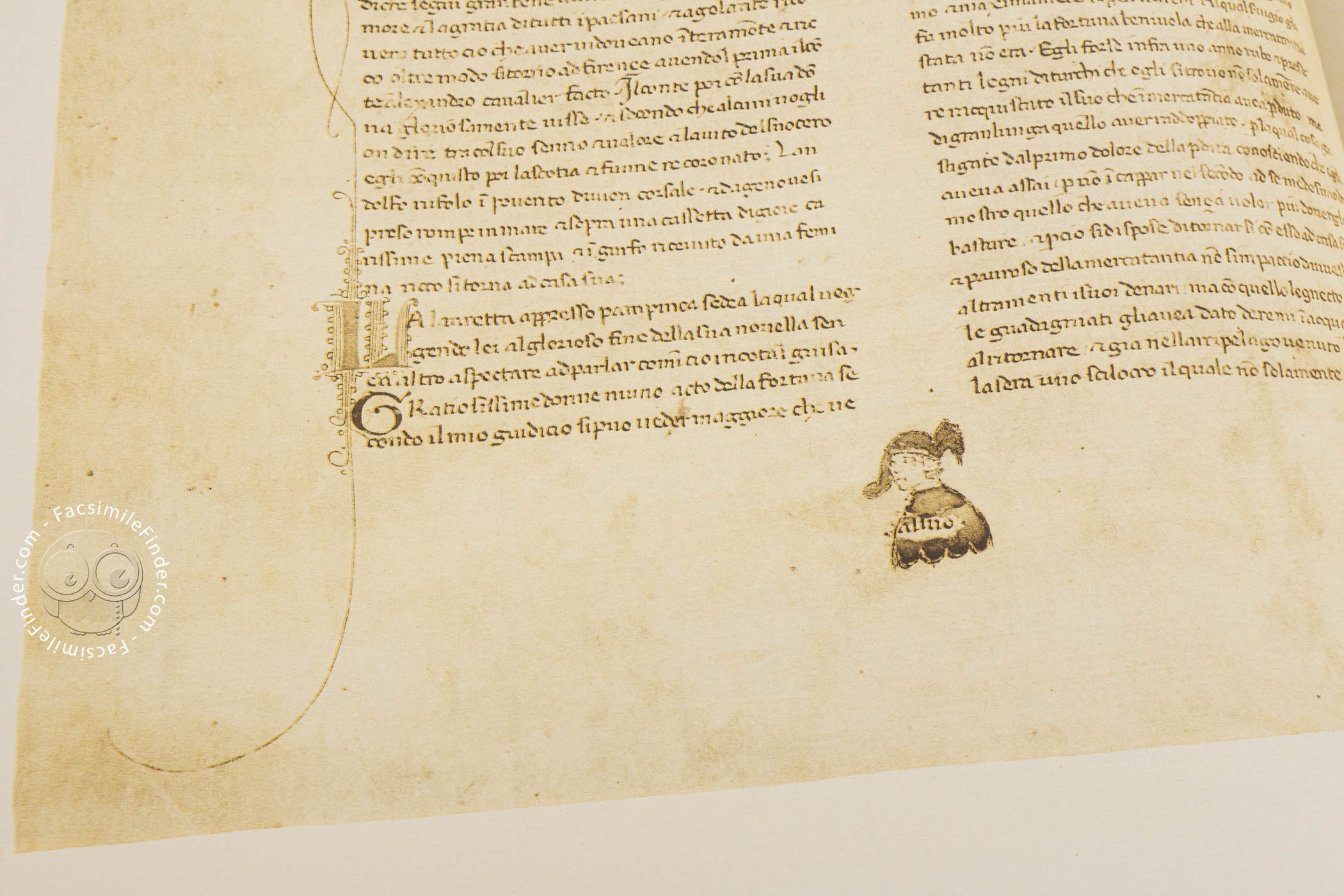
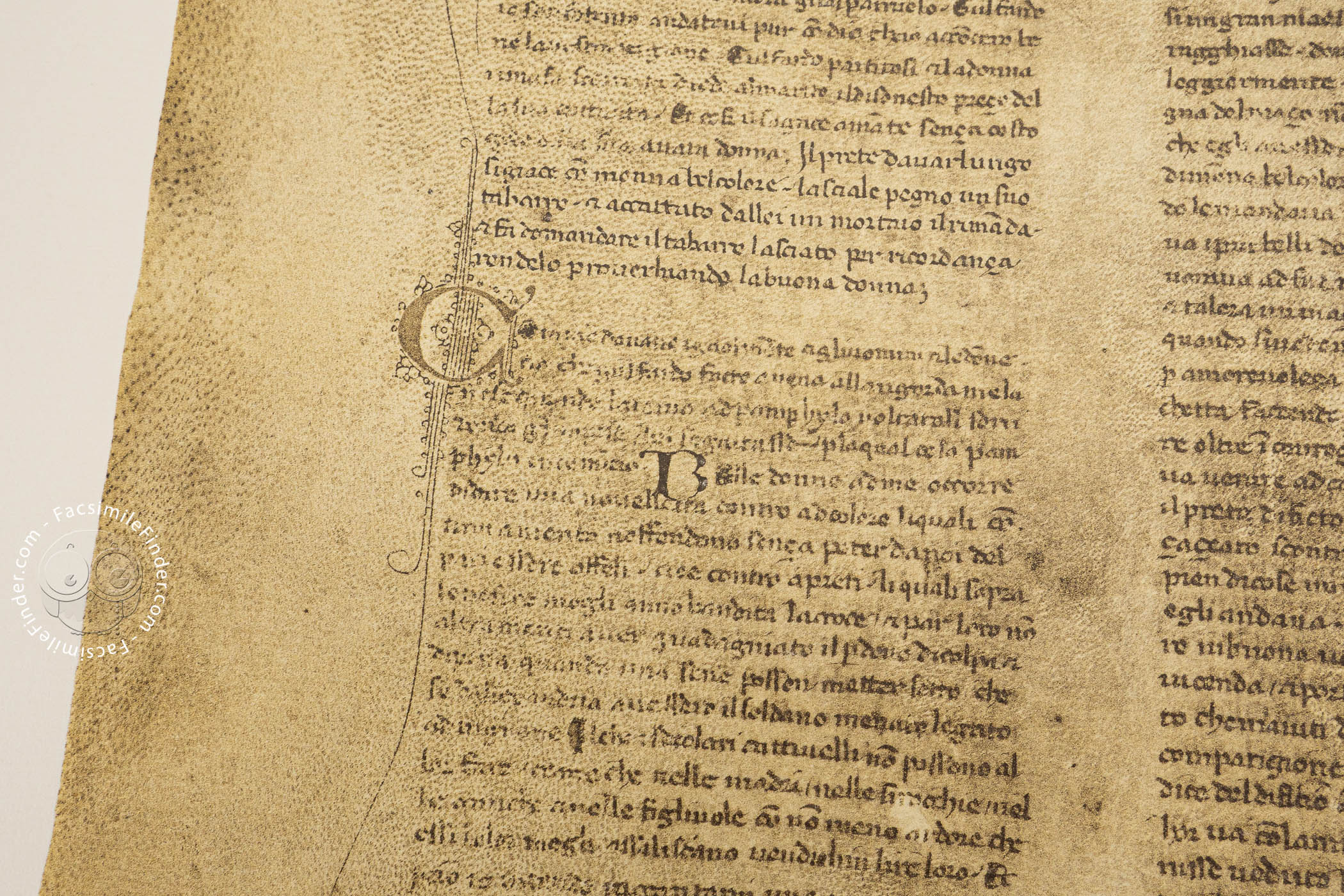
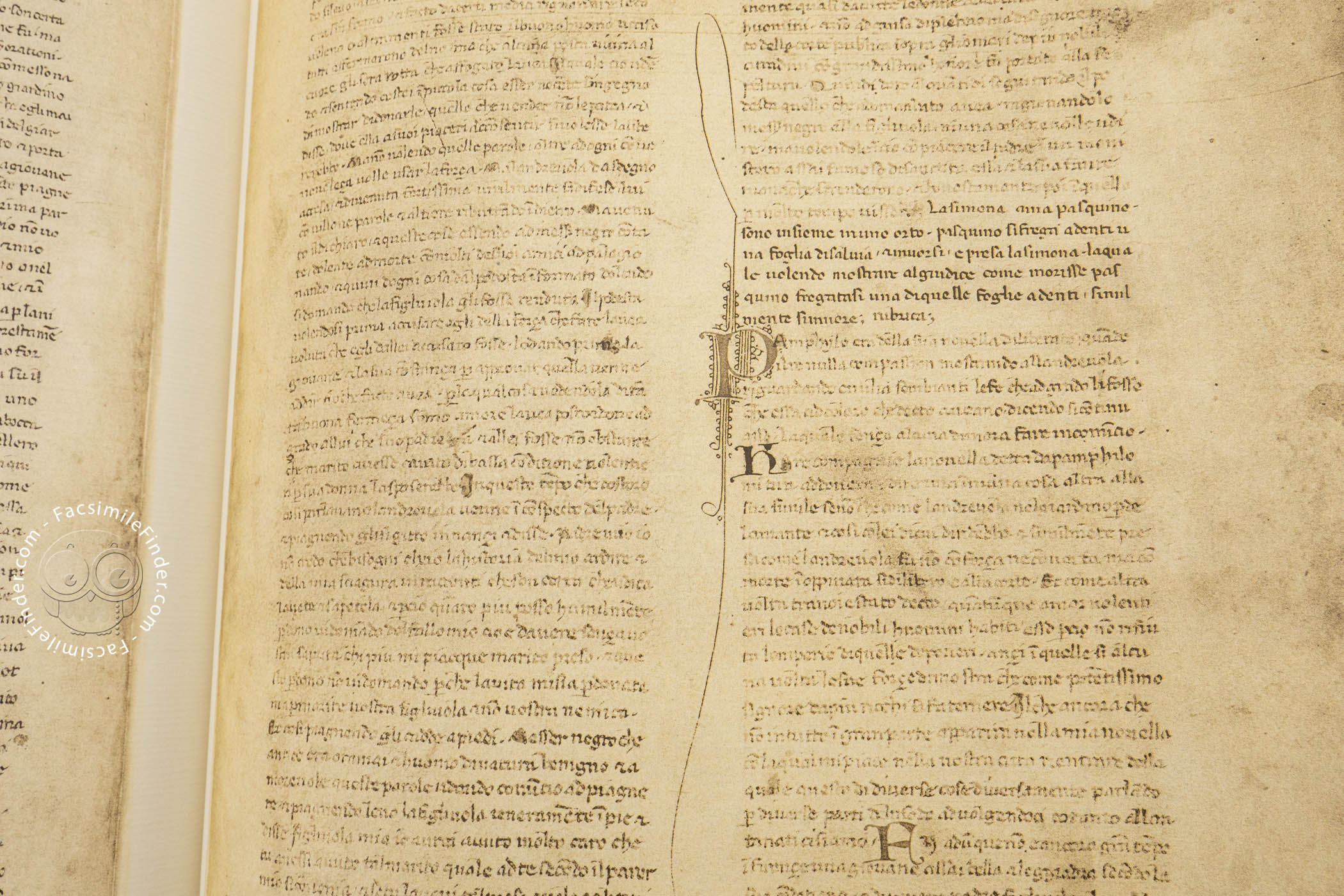
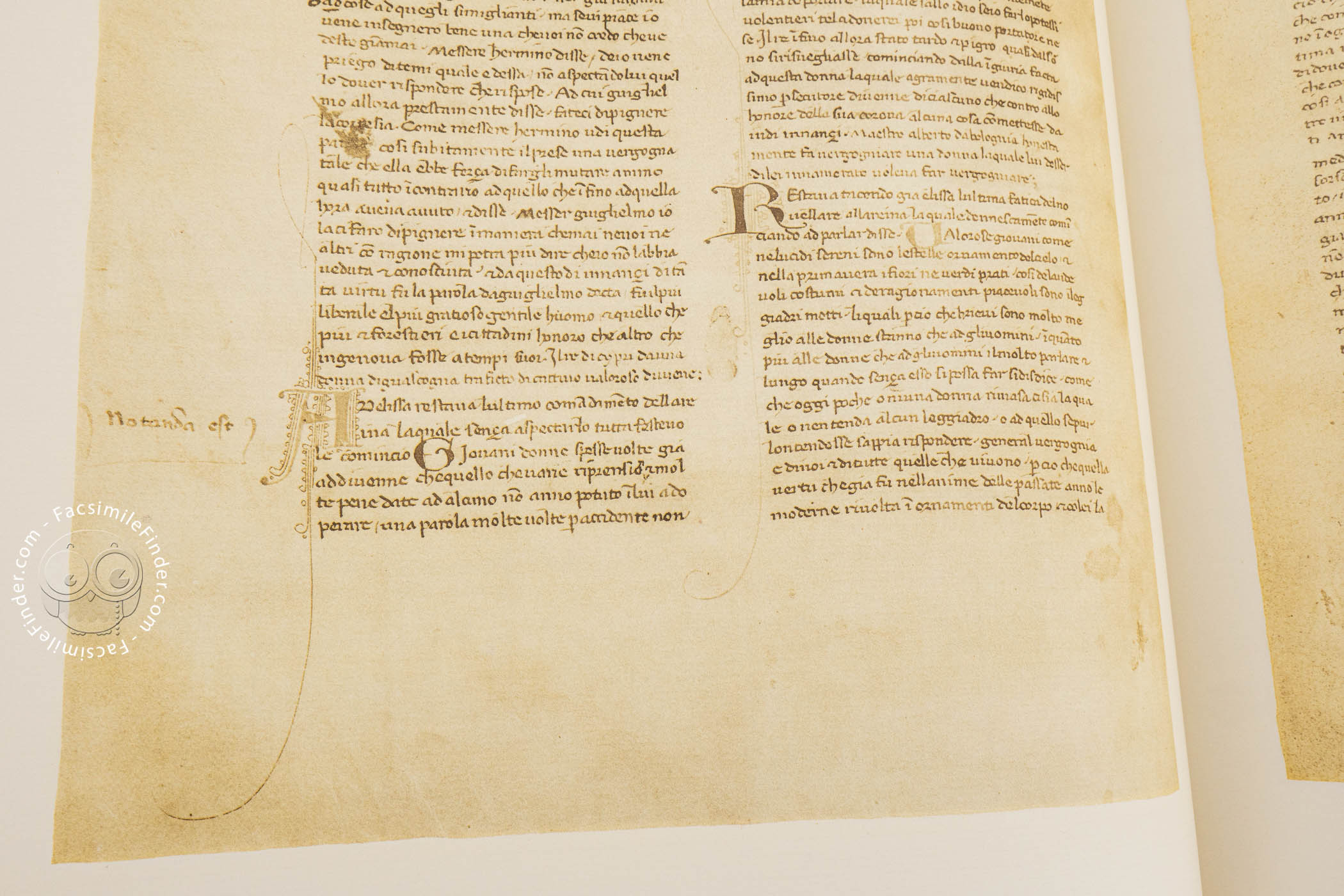
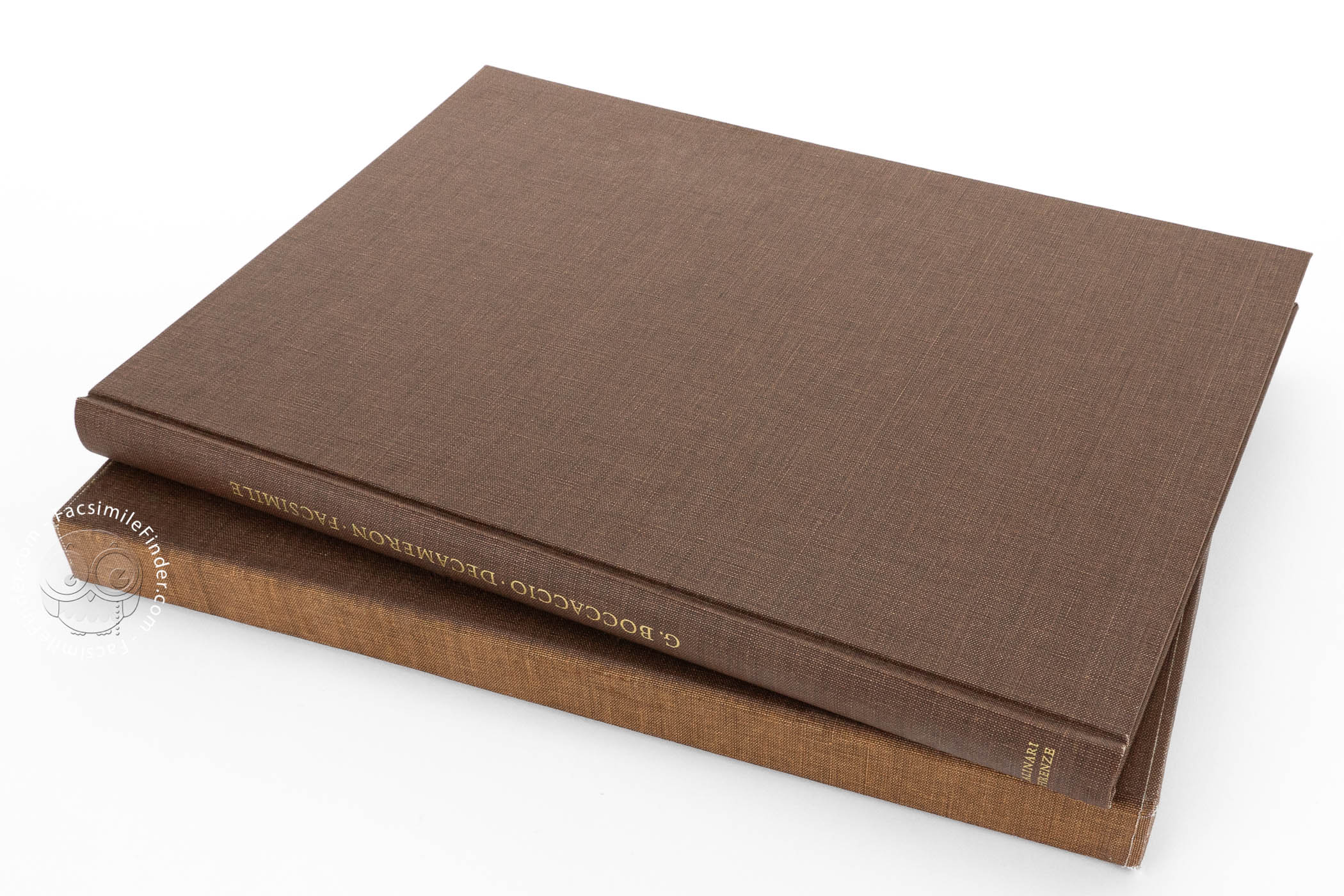
Ms. Ham. 90 is the autograph manuscript of the Decameron, penned by Giovanni Boccaccio himself around 1370 and now preserved at the Staatsbibliothek zu Berlin. With its 112 leaves (albeit incomplete), the codex represents a unique “work‑in‑progress,” complete with the author’s corrections, marginal notes, and decorative details. As such, it stands as one of the most significant witnesses for reconstructing the text’s original final form and for understanding Boccaccio’s own editorial process.
Scholars initially debated its authenticity due to its rough parchment, scribal errors, and unfinished feel. However, by 1962, researchers like Vittore Branca and Pier Giorgio Ricci confirmed it as Boccaccio’s original, reshaping Decameron scholarship.
Content and What Ms. Ham. 90 Preserves
Ms. Ham. 90 transmits a version of the Decameron written in two columns on parchment, originally spanning 112 leaves. Because parts of the codex are missing, significant lacunae affect the text: for example, substantial portions of the seventh day of stories (from novella 1.16 to 9.32), the end of the ninth day, and nearly the entire tenth day are no longer legible in the manuscript.
Beyond simple text, the codex reveals the dynamic nature of the work: along with the main text there are numerous marginal and interlinear corrections and variant readings. In many cases Boccaccio revises phrases, inserts alternate words, or corrects errors: evidence that this was a “work in progress,” not a finished, polished copy.
The Author and the Historical Context of Composition
The author of the Decameron, Giovanni Boccaccio (1313–1375), lived through the devastating wave of the Black Death (circa 1348), an event that shaped much of the social and intellectual atmosphere of his time. Scholars believe Boccaccio composed the original Decameron narratives between 1349 and 1353.
Ms. Ham. 90, however, is a later, refined revision of that work, dated to around 1370 — likely produced in the final years of Boccaccio’s life. Its production at that late stage suggests that Boccaccio returned to his earlier masterpiece to recast it in a more stable, book‑like form, editing and refining his narrative for posterity.
The Manuscript’s Role in Textual Tradition and Variation
For centuries after its composition, the text of the Decameron circulated in many copies — often made by scribes and copyists, with resulting variants, omissions, or interpolations. Among the roughly thirty earliest manuscripts of the work, Ms. Ham. 90 stands out because it is the only autograph copy of the 100‑novella collection.
Since the definitive scholarly endorsement of its authenticity in 1962 by Vittore Branca and Pier Giorgio Ricci, the readings of Ms. Ham. 90 have formed the backbone of modern critical editions of the Decameron. Thus, Ms. Ham. 90 remains central to philological work: collating it with other manuscripts helps scholars reconstruct the earliest form of Boccaccio’s text and chart its evolution over time.
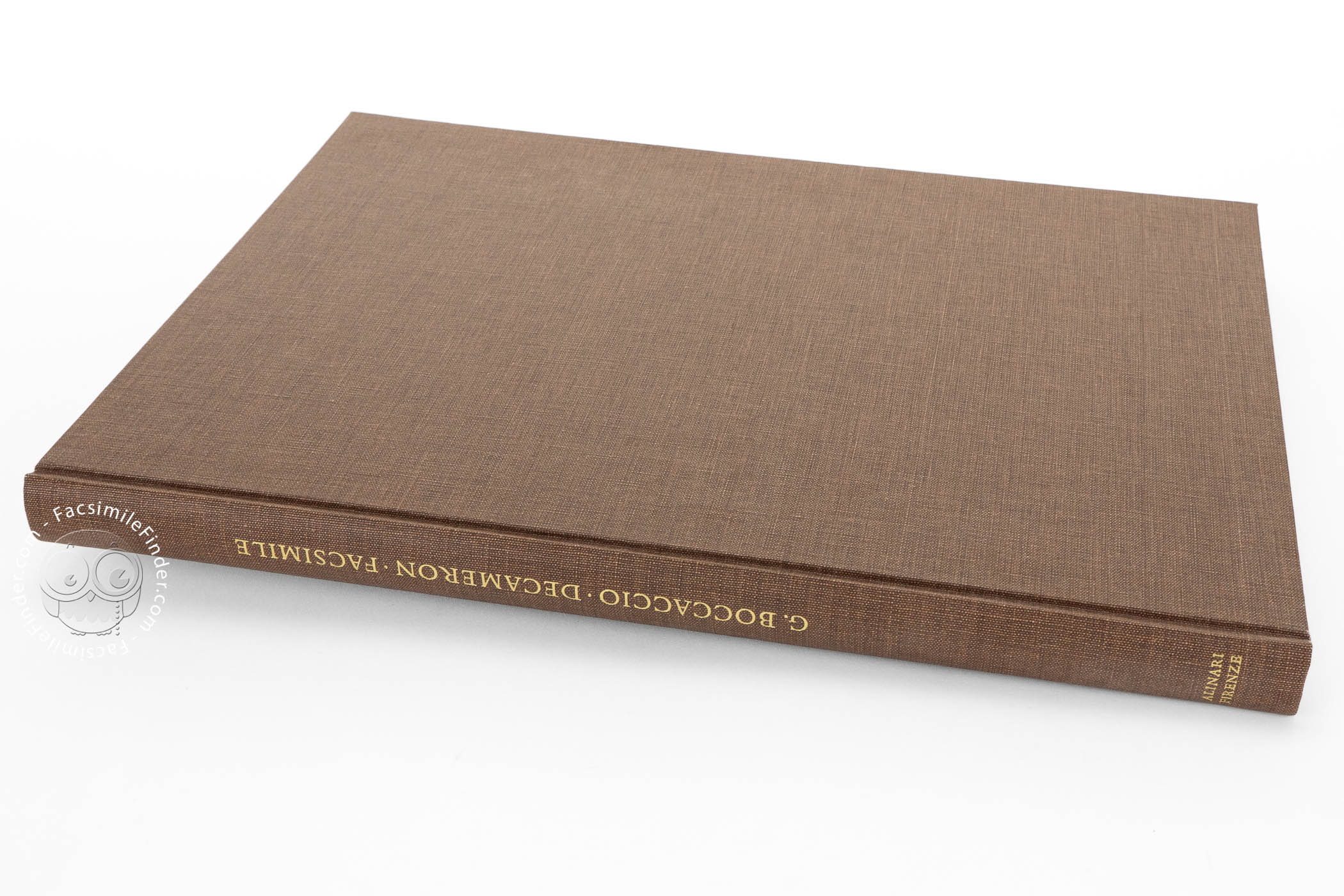
We have 1 facsimile edition of the manuscript "Berlin Decameron": Decameron: Facsimile dell'Autografo Conservato nel Codice Hamilton 90 facsimile edition, published by Alinari, 1975
Request Info / Price