
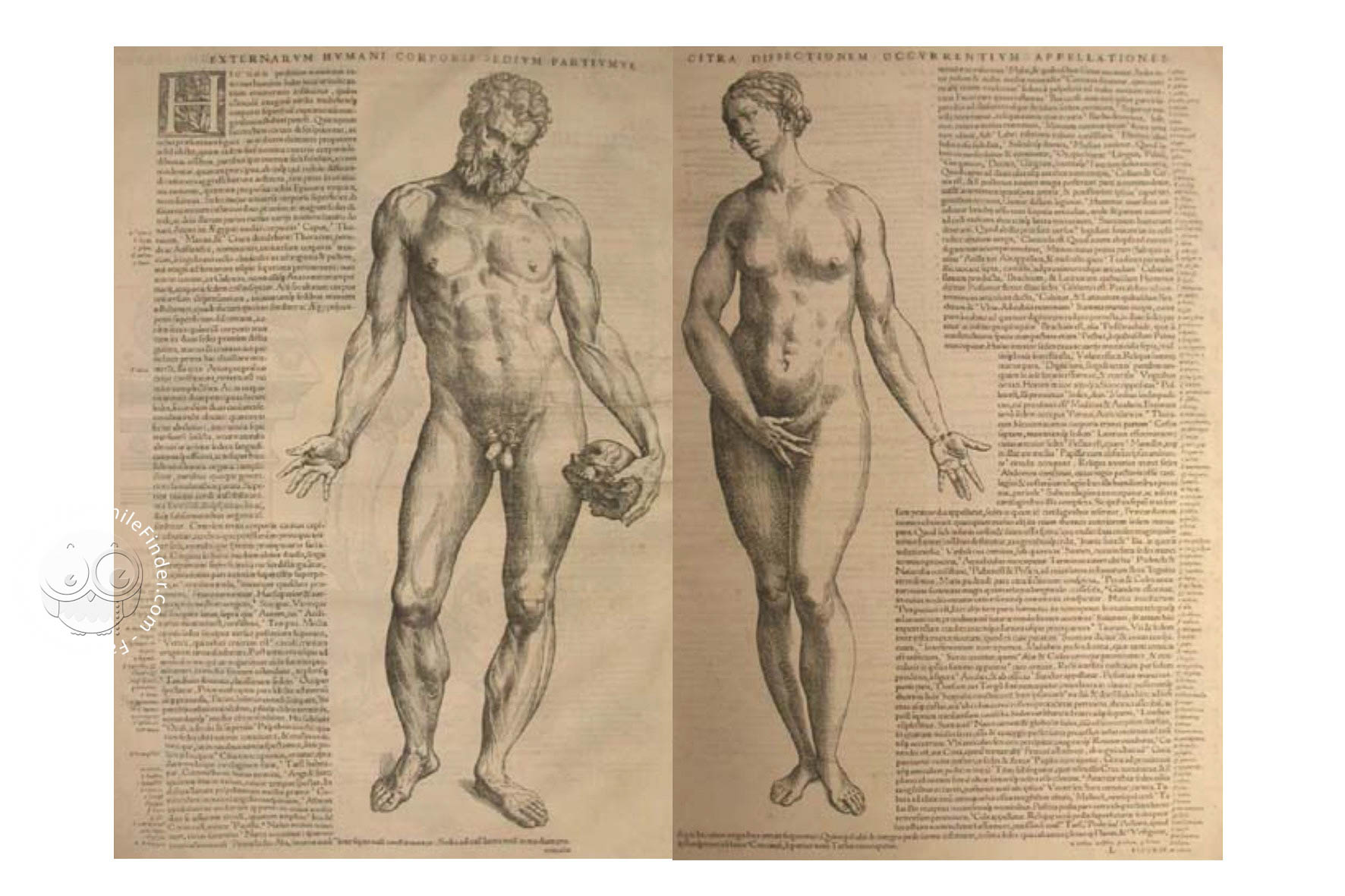
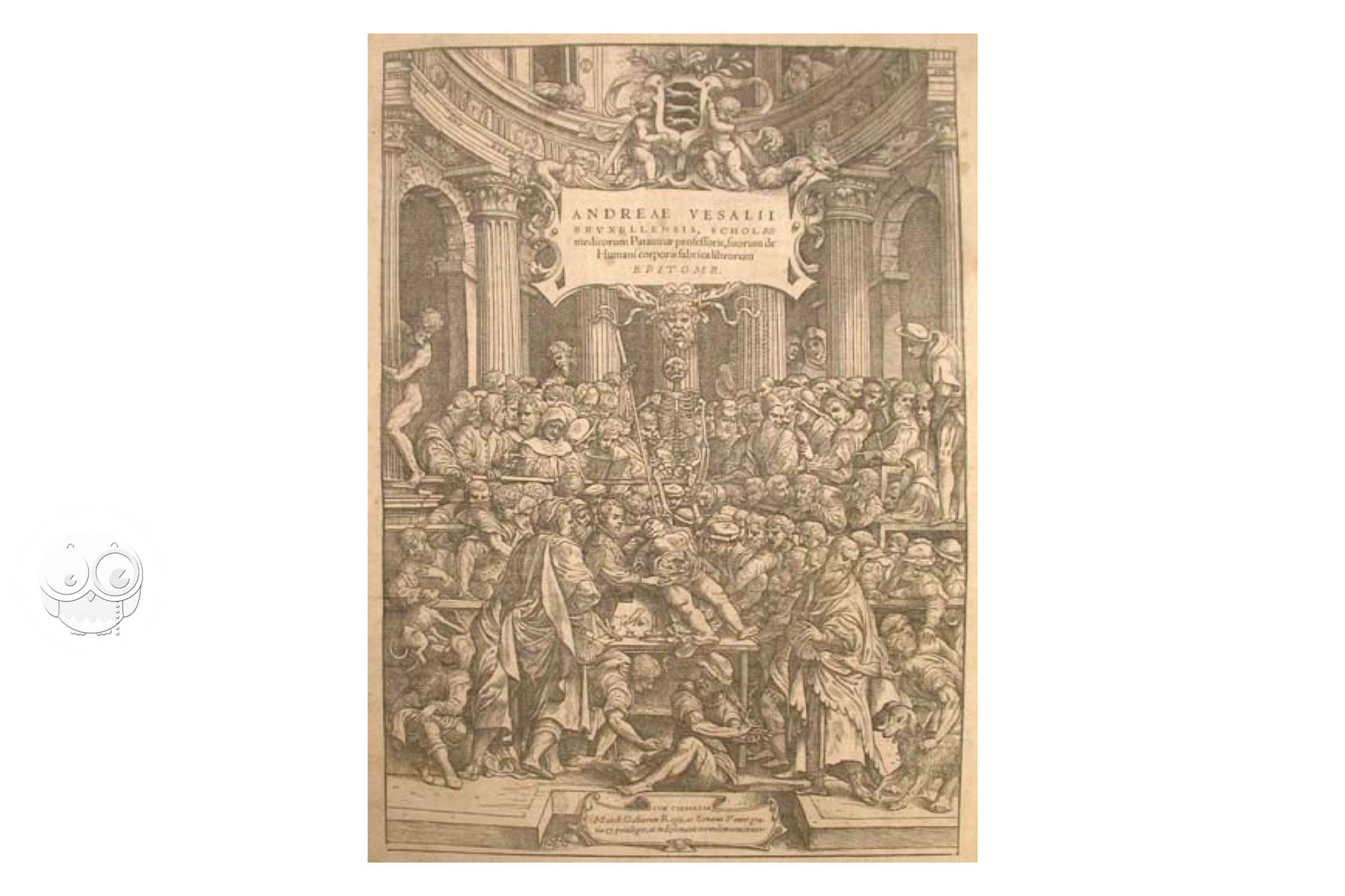
De Humani Corporis Fabrica: Epitome is a printed anatomical compendium, issued in Basel in 1543 as the visual counterpart to Andreas Vesalius’s far larger Fabrica. Conceived as a more accessible guide, it distilled the new anatomy into a format meant for students, physicians, and artists alike. Large in scale yet comparatively brief, it translated scholarly anatomy into something immediate, legible, and startlingly modern.
A Book Made for Looking
What gives the Epitome its singular place in the history of the book is its profound trust in vision. Vesalius organized the body not simply as text to be read but as form to be seen, handled, and mentally reconstructed. The volume includes imposing woodcut figures—skeletons, écorchés, and nude standing bodies—through which anatomical knowledge unfolds layer by layer. In some copies, additional printed sheets were designed to be cut and assembled into a paper manikin, turning the book into an interactive instrument of study.
Print, Scale, and Pedagogy
Its unusual format mattered. Printed on very large sheets and often sold unbound, the Epitome could function almost like a portable studio atlas or wall chart. Dedicated to Prince Philip, the future Philip II of Spain, it reveals how Renaissance anatomy moved between courtly ambition, university teaching, and artisanal practice. The book’s reduced text does not simplify Vesalius’s project so much as sharpen its didactic edge.
A New Image of the Human Body
The Epitome embodies a turning point in European knowledge. Here, the body is no longer inherited passively from authority; it is examined, staged, and verified through dissection. That shift gives the work its lasting force. Even beside the grander Fabrica, the Epitome remains one of the clearest expressions of Vesalius’s belief that anatomy begins in the disciplined act of seeing.
We have 1 facsimile edition of the manuscript "De Humani Corporis Fabrica. Epitome": Epitome de Vesalio facsimile edition, published by Orbis Mediaevalis, 2024
Request Info / Price