
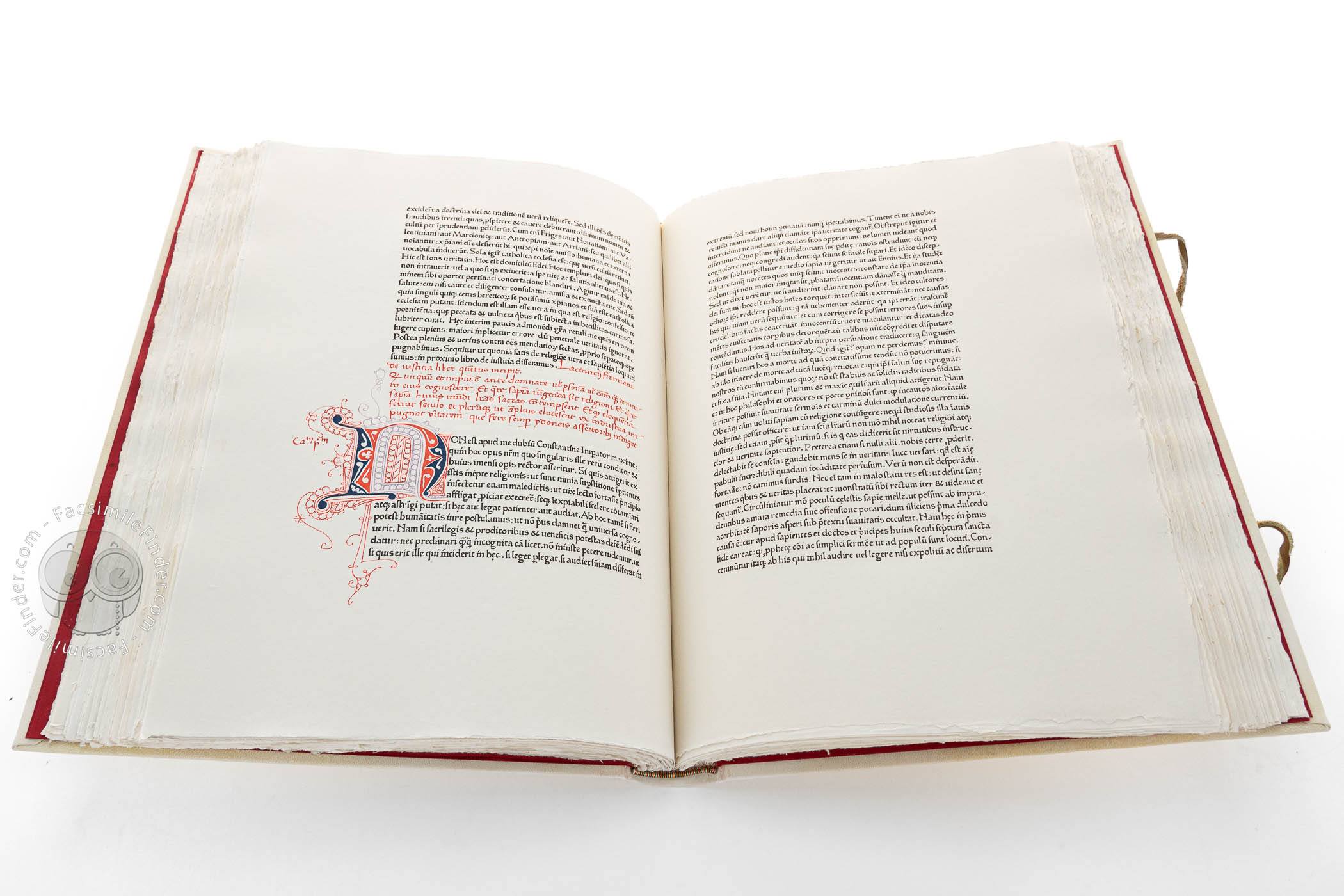
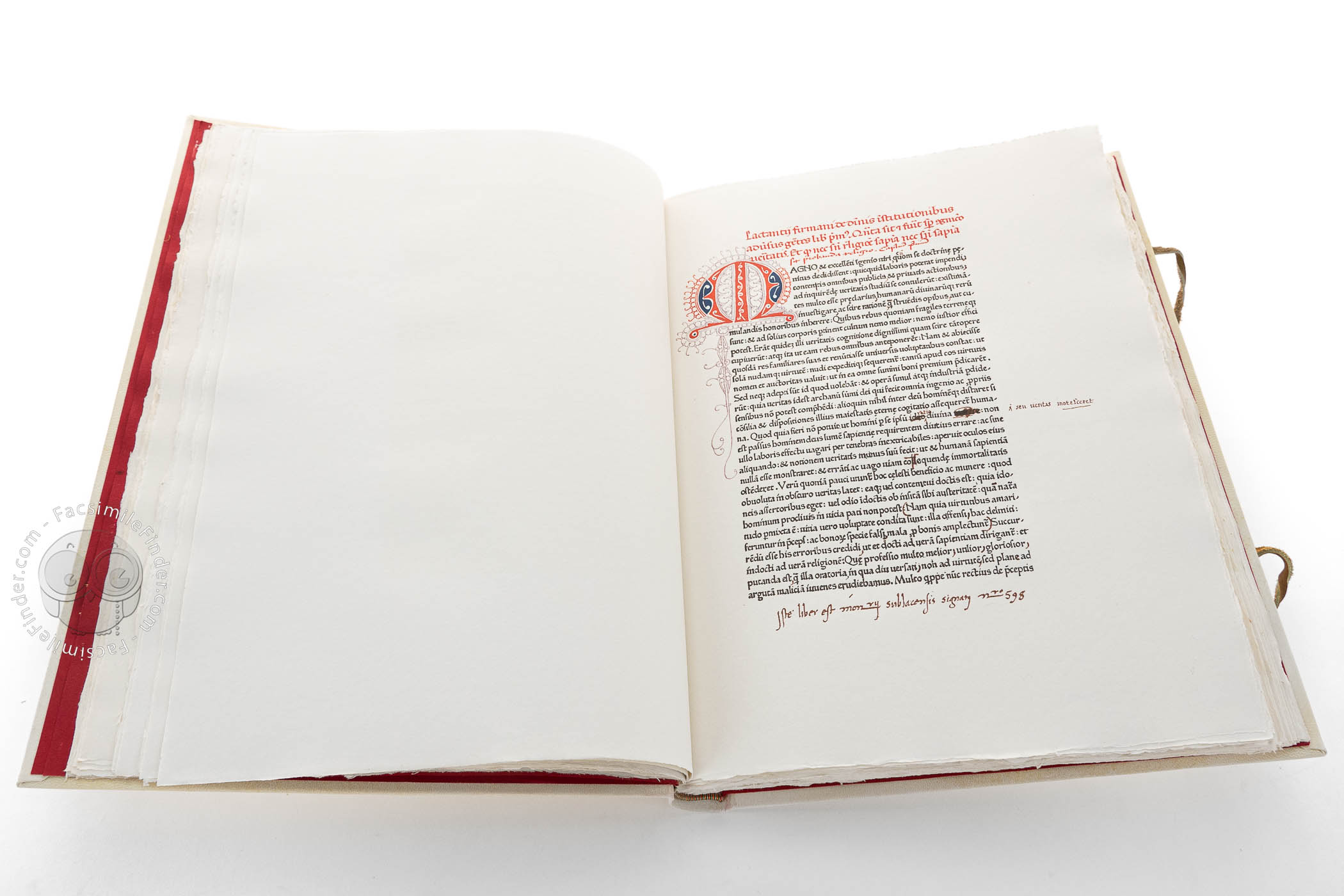
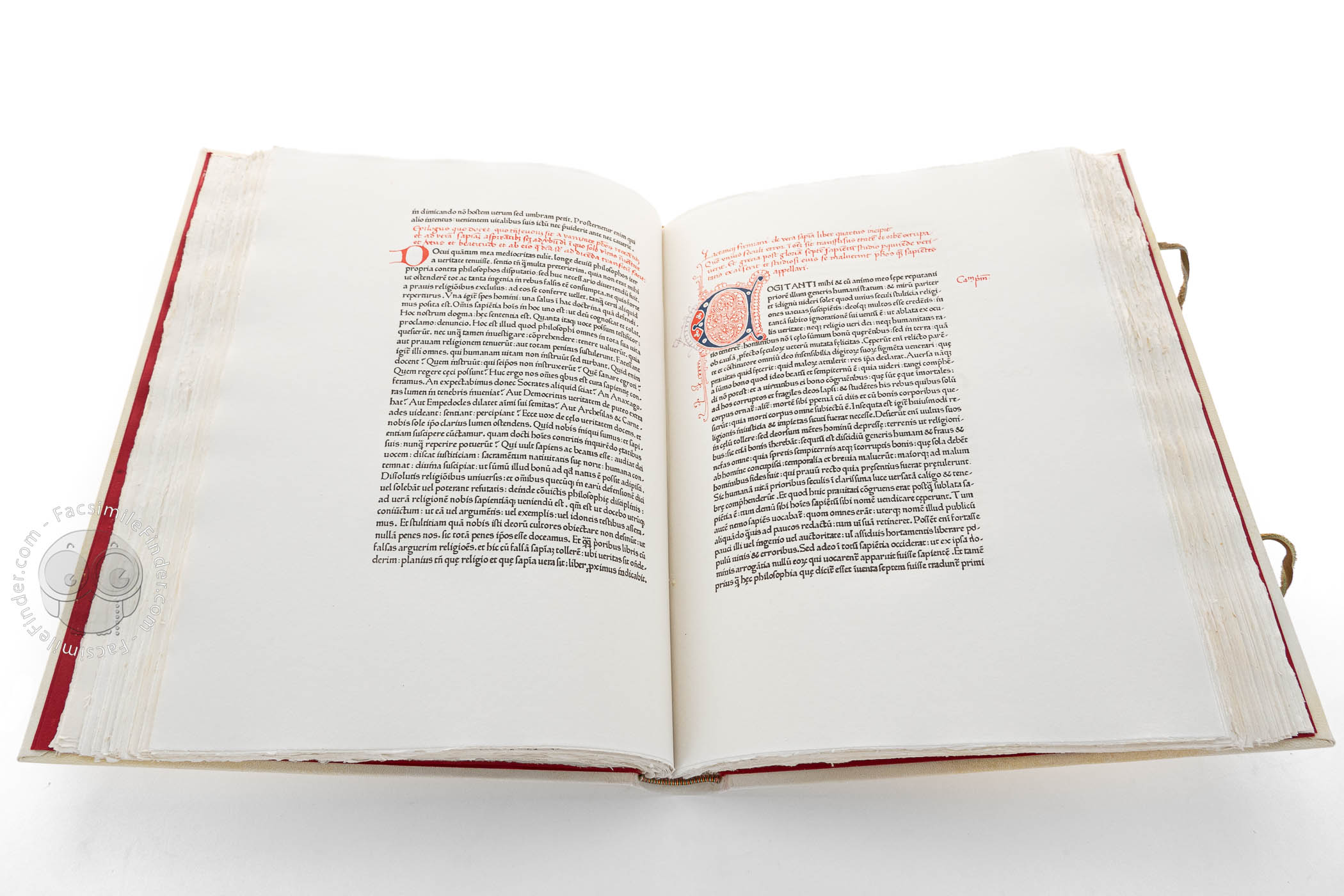



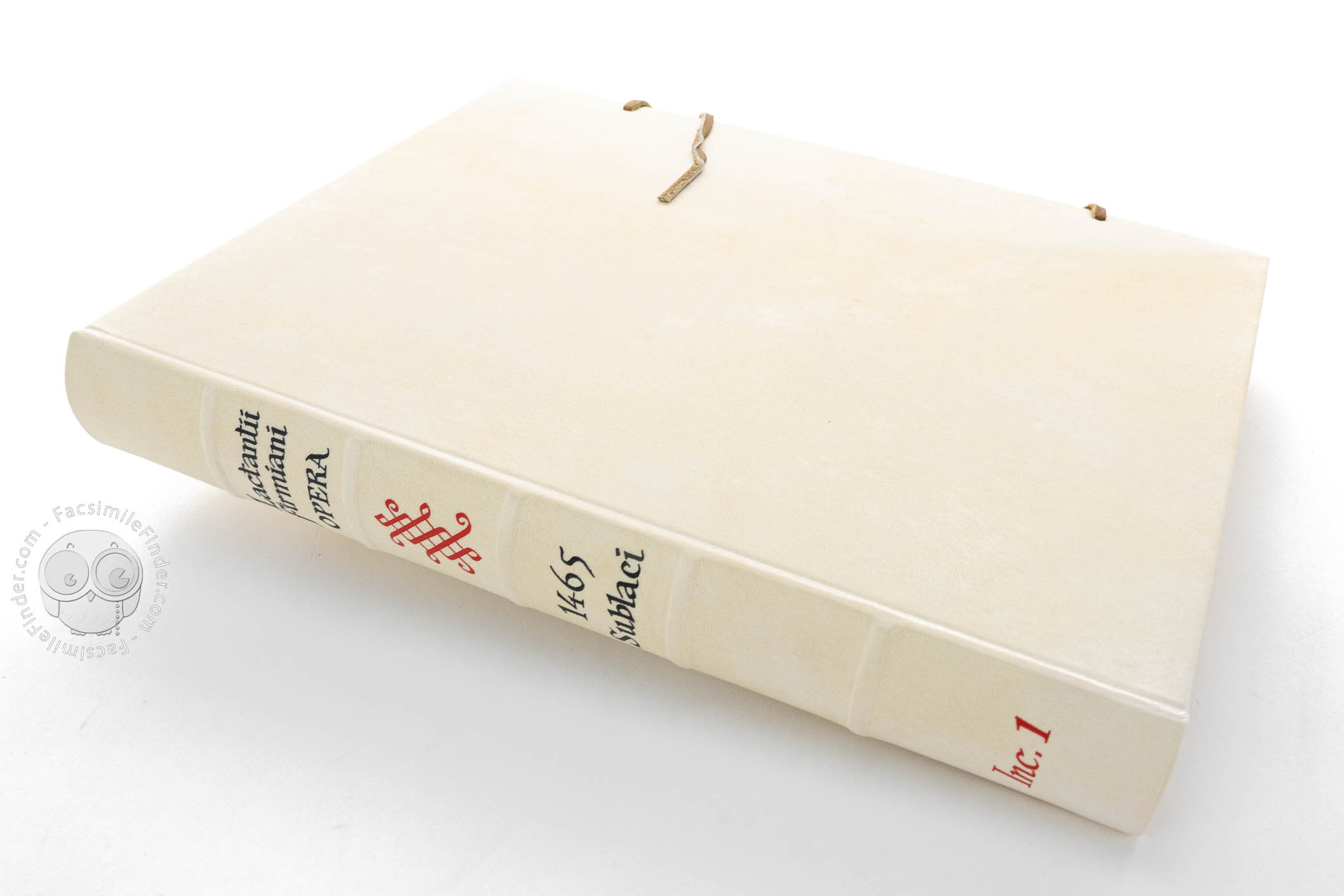
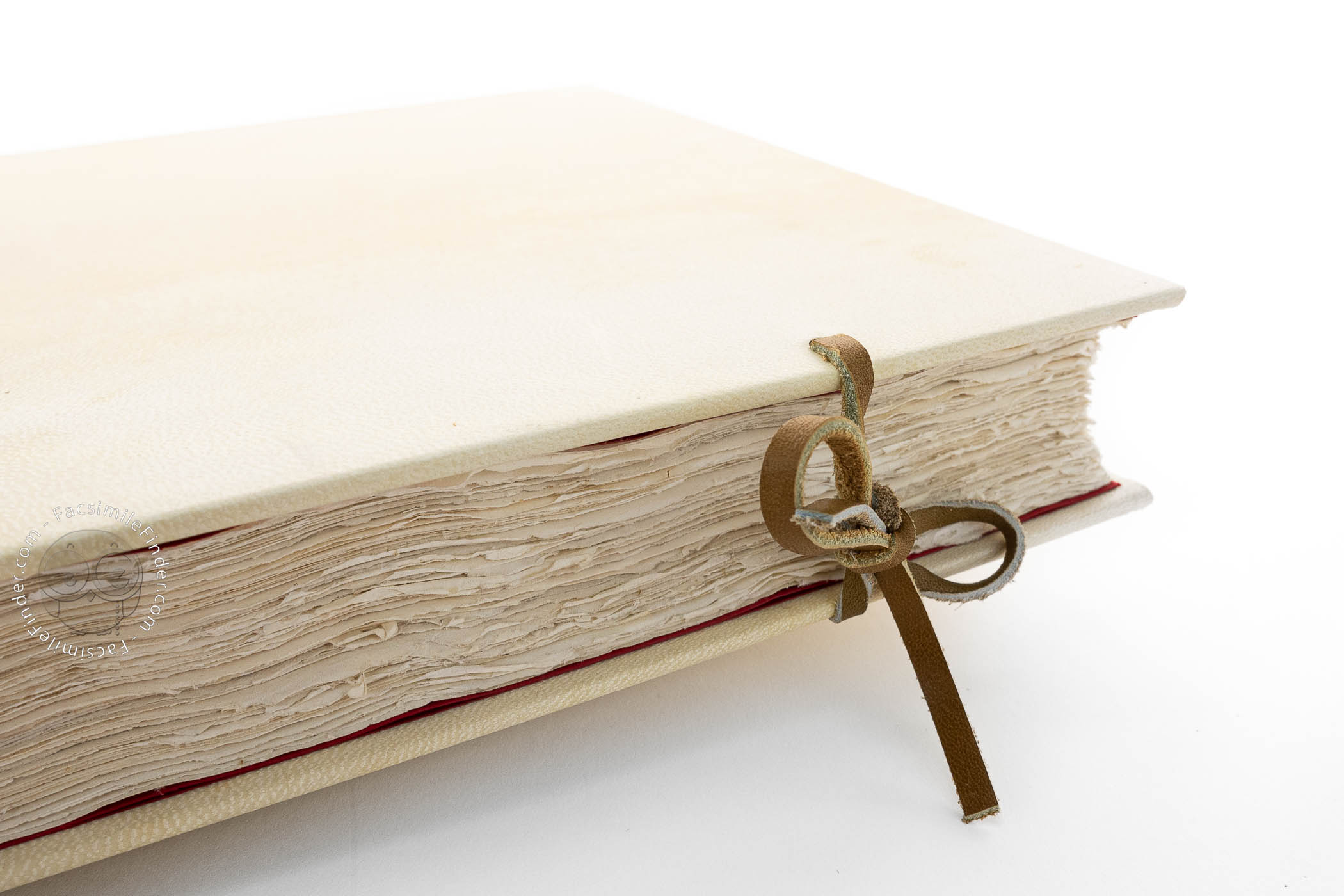
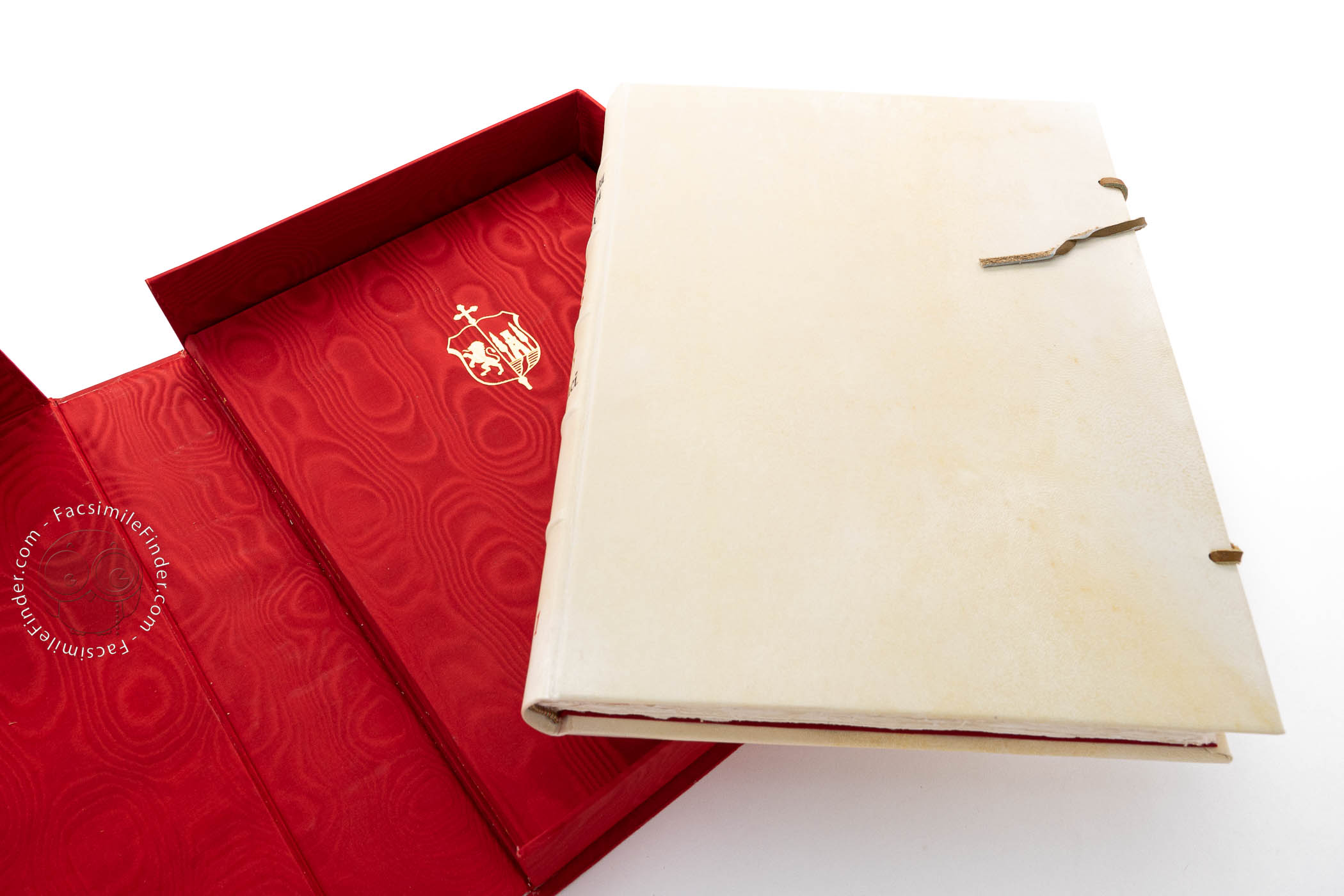
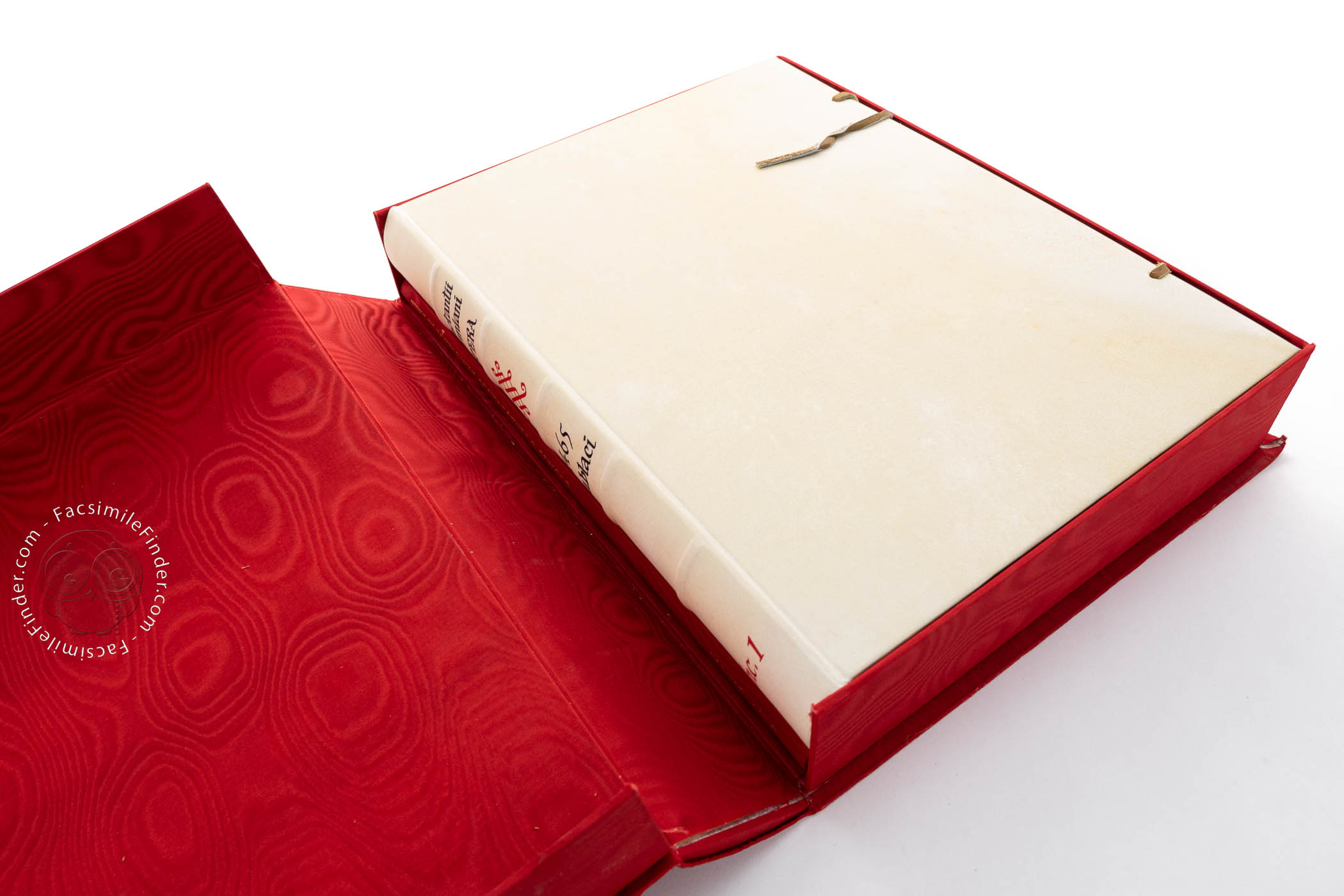
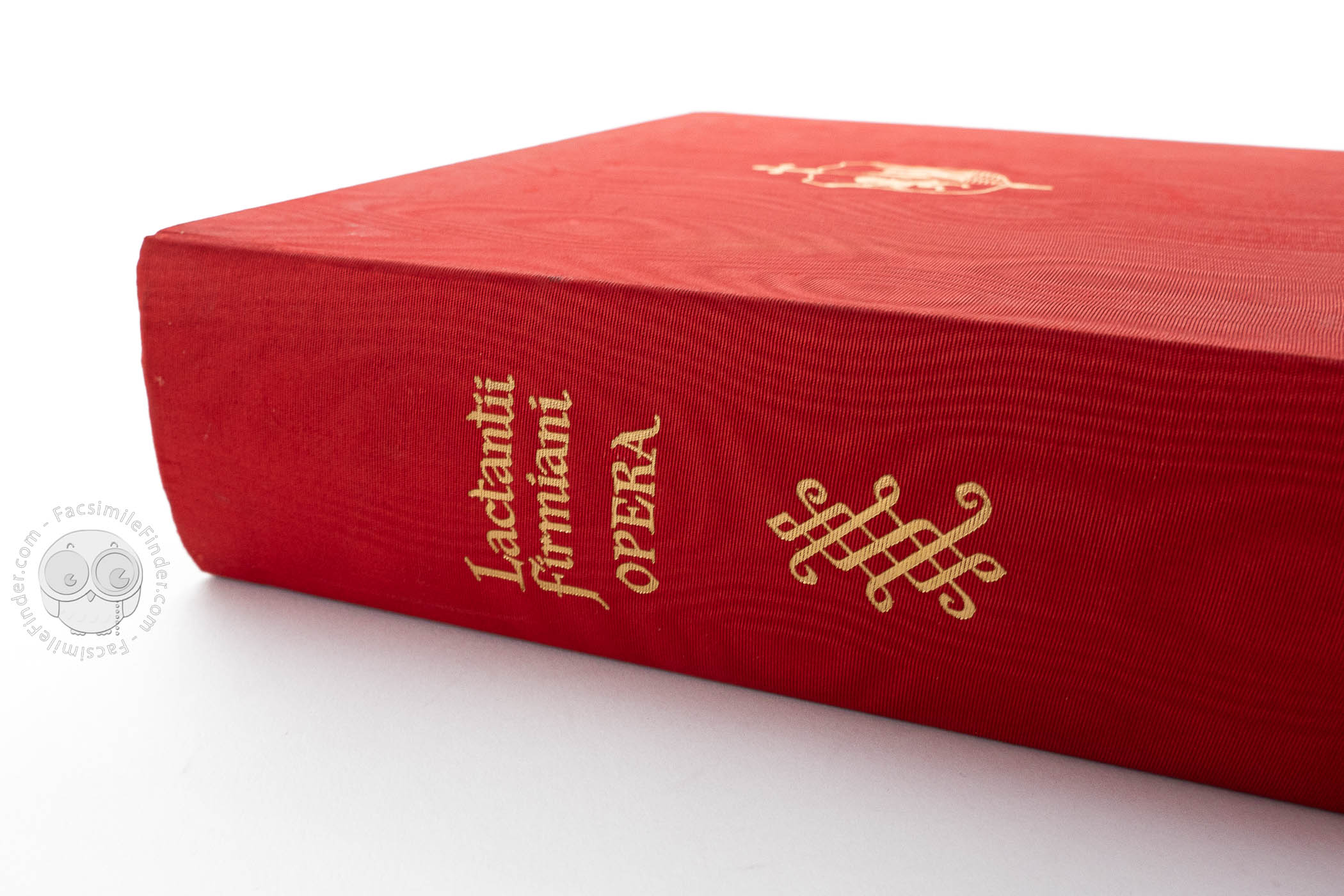
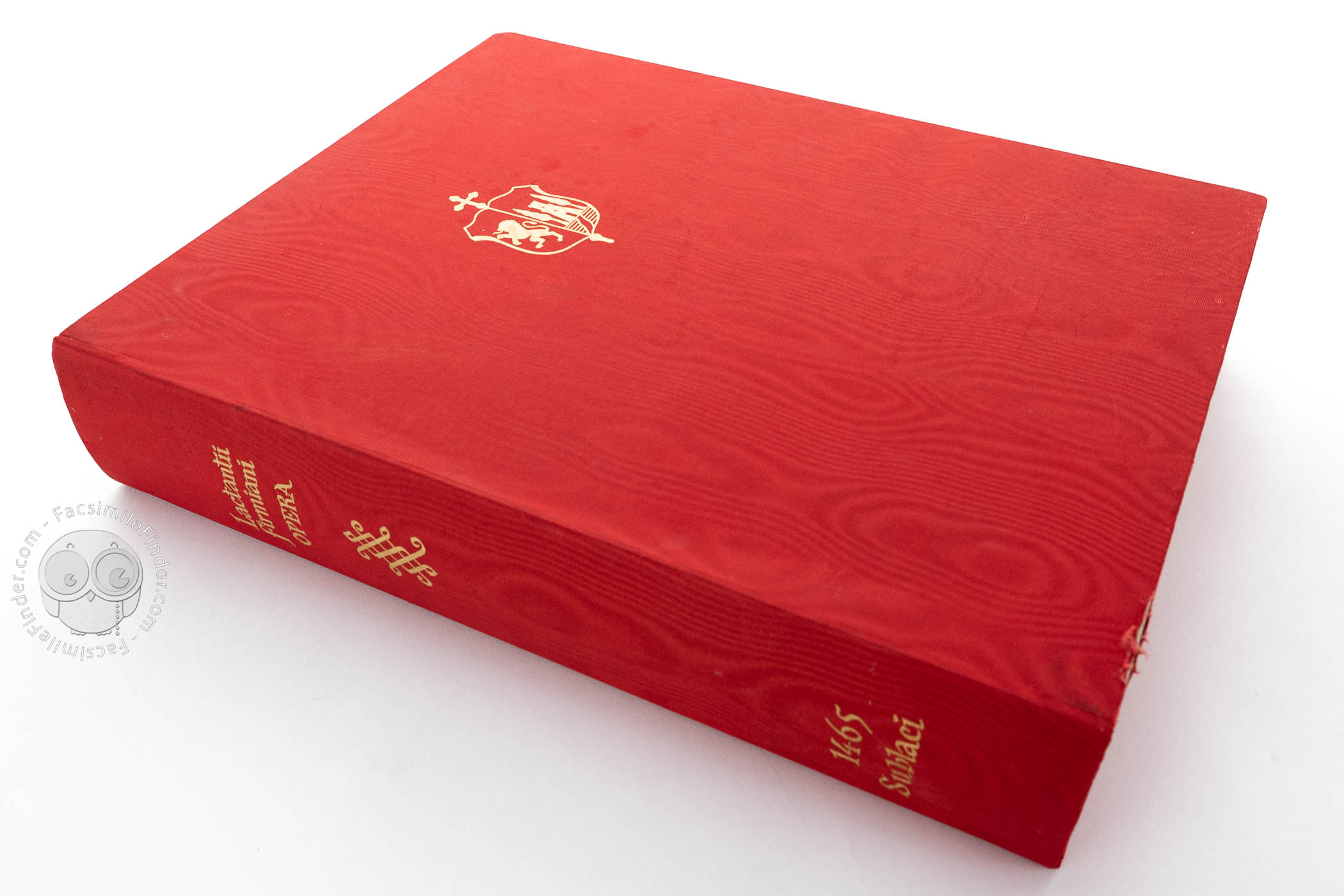
Printed at Subiaco in the Benedictine monastery of Santa Scolastica on 29 October 1465, this volume of Lactantius—De divinis institutionibus adversus gentes, De ira Dei, and De opificio hominis—stands at a threshold moment, when the culture of the cloister met the new mechanics of the press. Its Latin apologetics, forged in Late Antiquity, re-enter 15th-century Italy not as a copied manuscript, but as an incunable born in one of the peninsula’s earliest printing experiments.
Subiaco and the First Italian Press
The book is inseparable from the arrival of the German printers Conrad Sweynheym and Arnold Pannartz, whose work at Subiaco marks the passage of typography into Italy in the venerable monastery sublacense. The colophon fixes the place and day with unusual clarity, turning the volume into a document of cultural change as much as a vehicle of text.
Christian Apologetics Reassembled
The volume gathers three works: the seven books of the Divinae institutiones (a sustained argument against pagan religion and philosophy), followed by De ira Dei (defending divine justice), and De opificio hominis (a meditation on the human person as purposeful creation). Together they frame Lactantius as both rhetor and theologian—later praised for a style “Ciceronian” in its eloquence.
Sublacense Type and Page Architecture
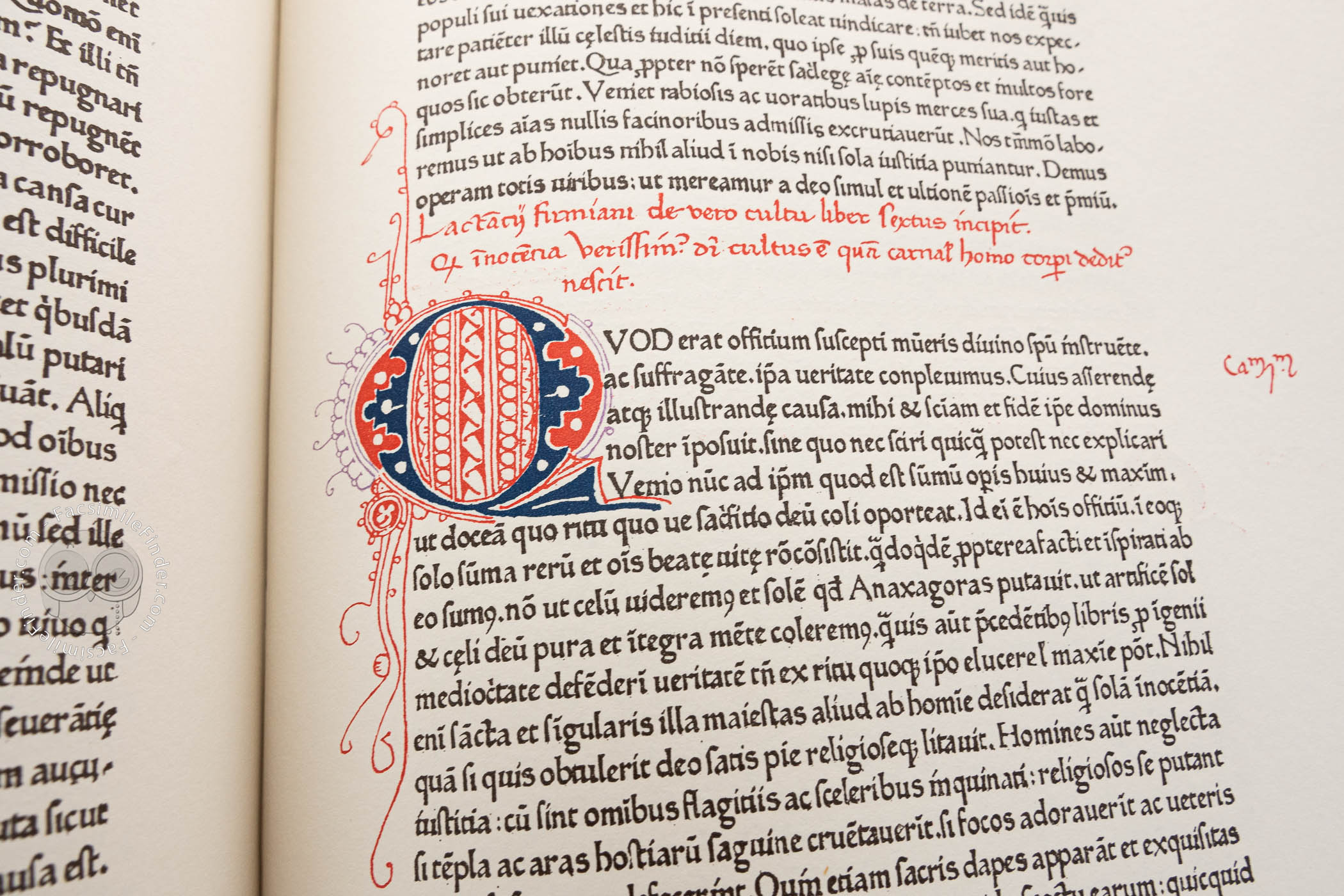
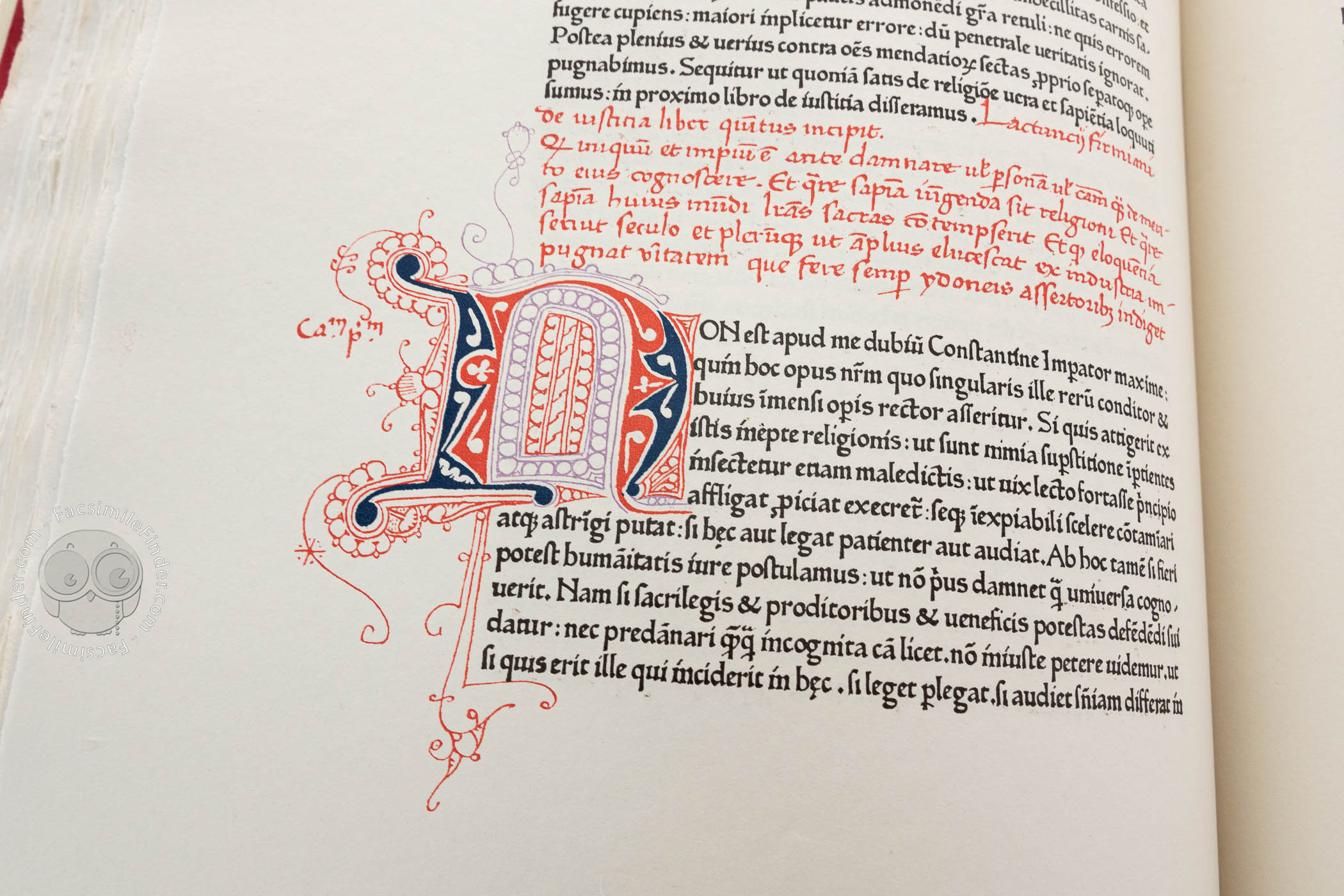
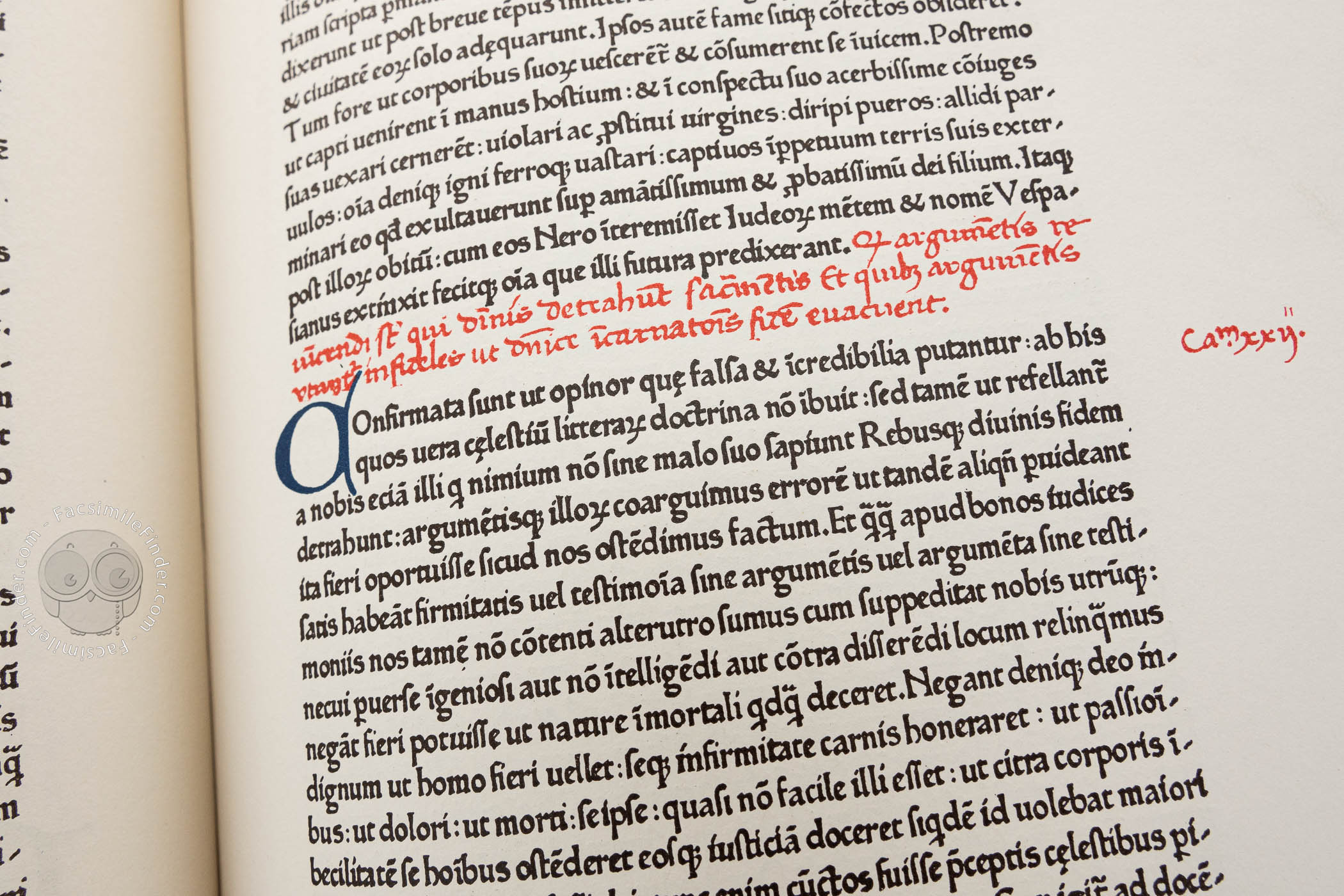
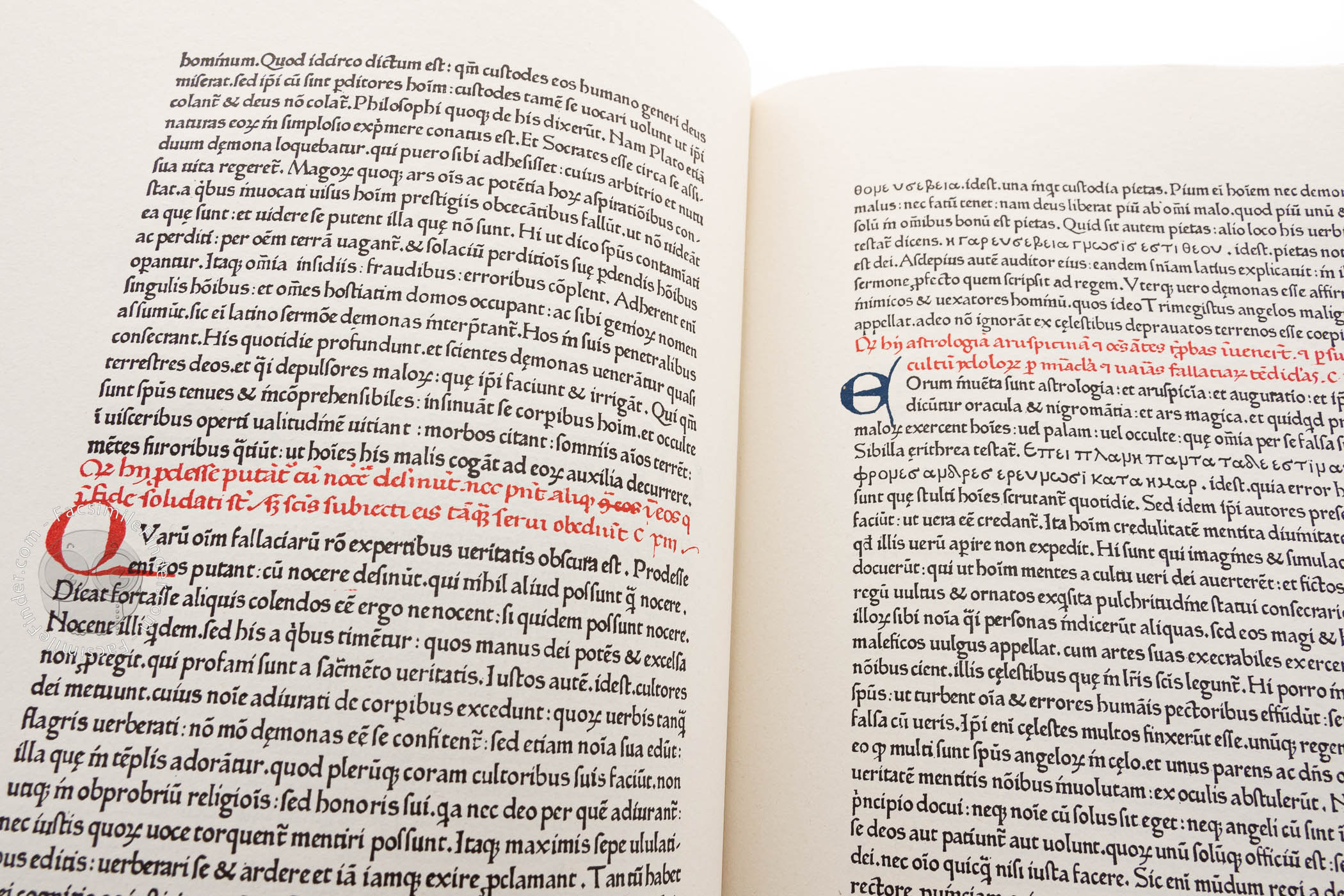
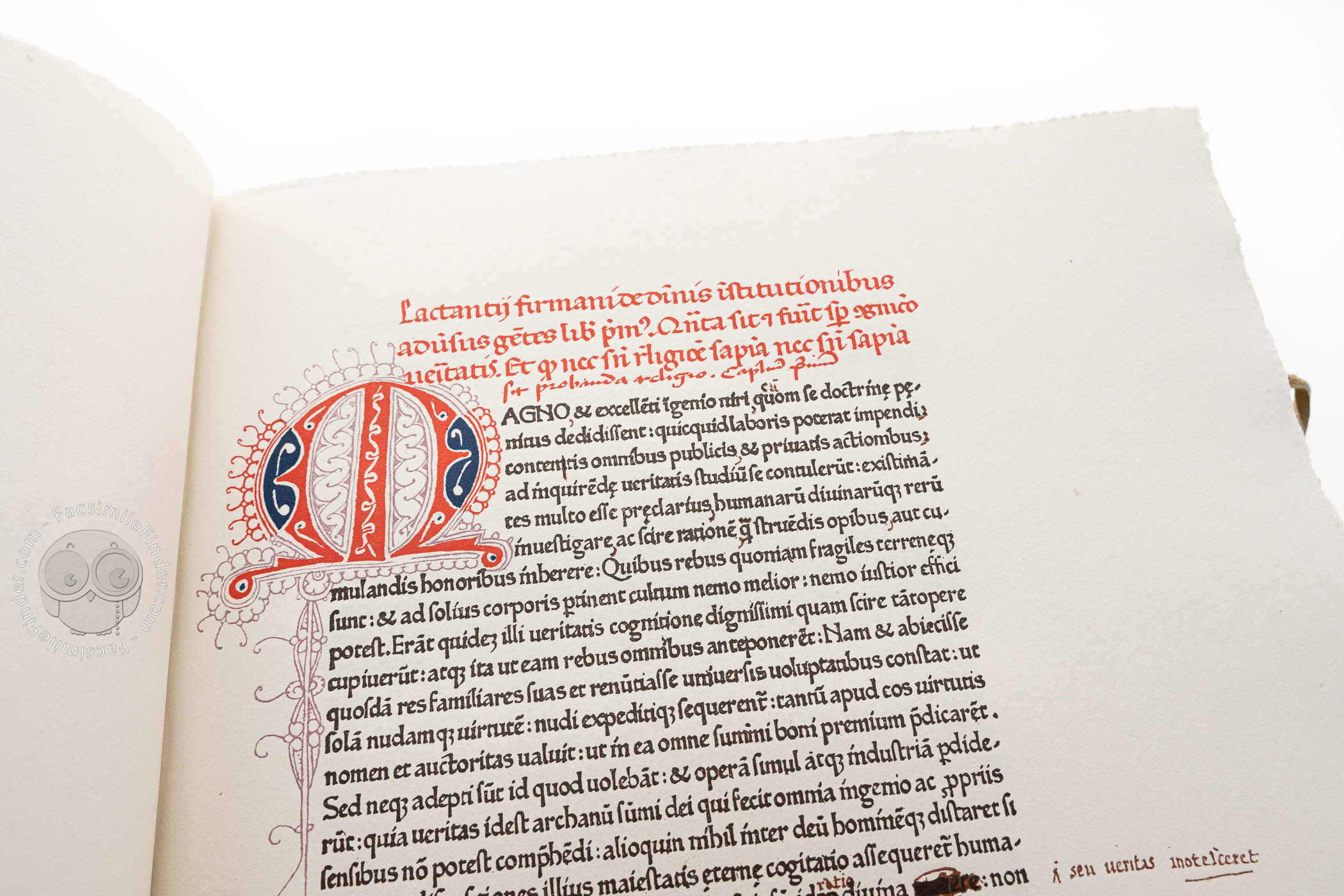
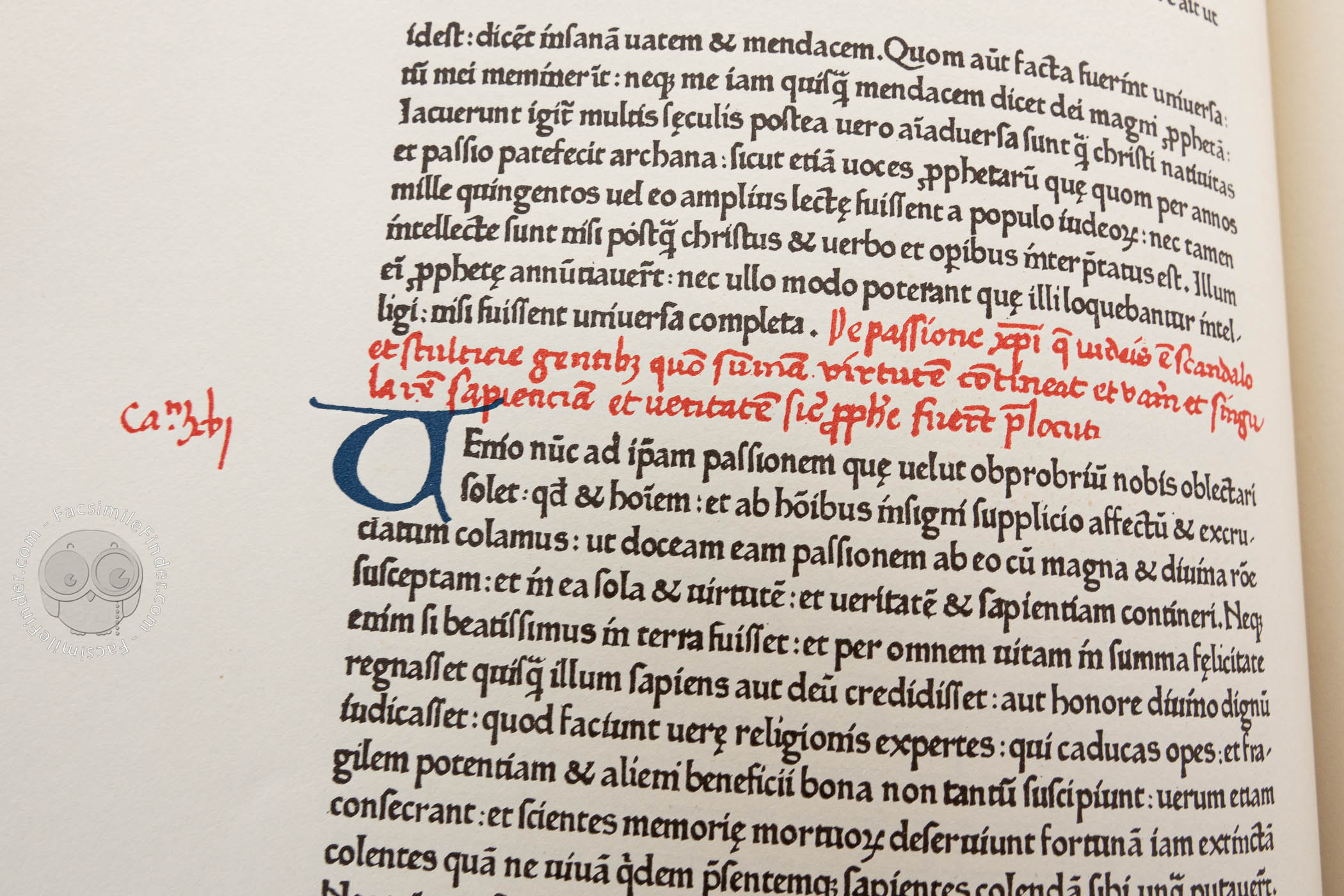
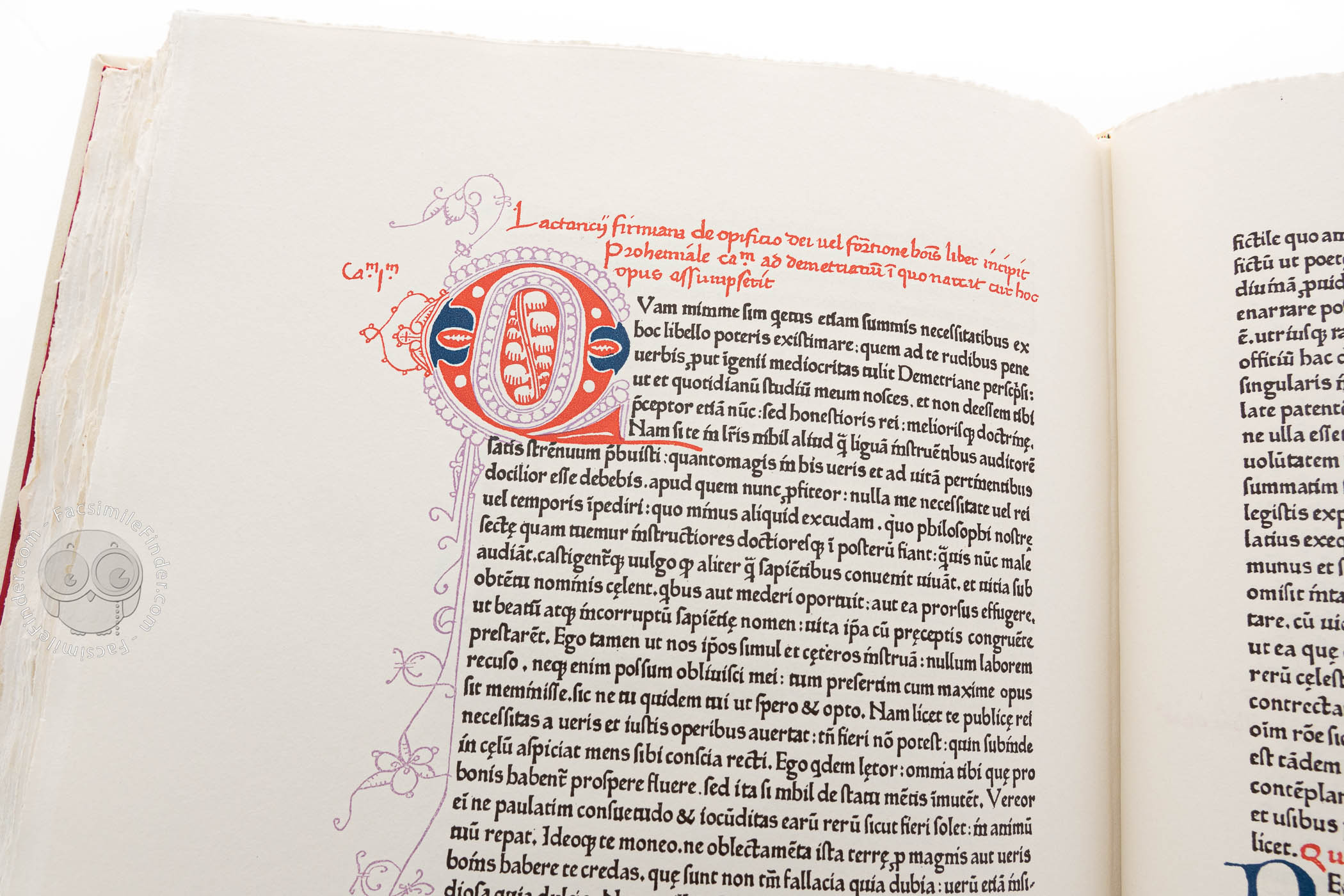
The typography is distinctive: fully Roman capitals paired with semi-Gothic minuscules, creating a page that feels at once classical and transitional. The book is printed in a large folio format, in a single column of 36 lines, with ample margins and an inky, dense impression characteristic of early Subiaco production.
Rubrication and the Afterlife of Use
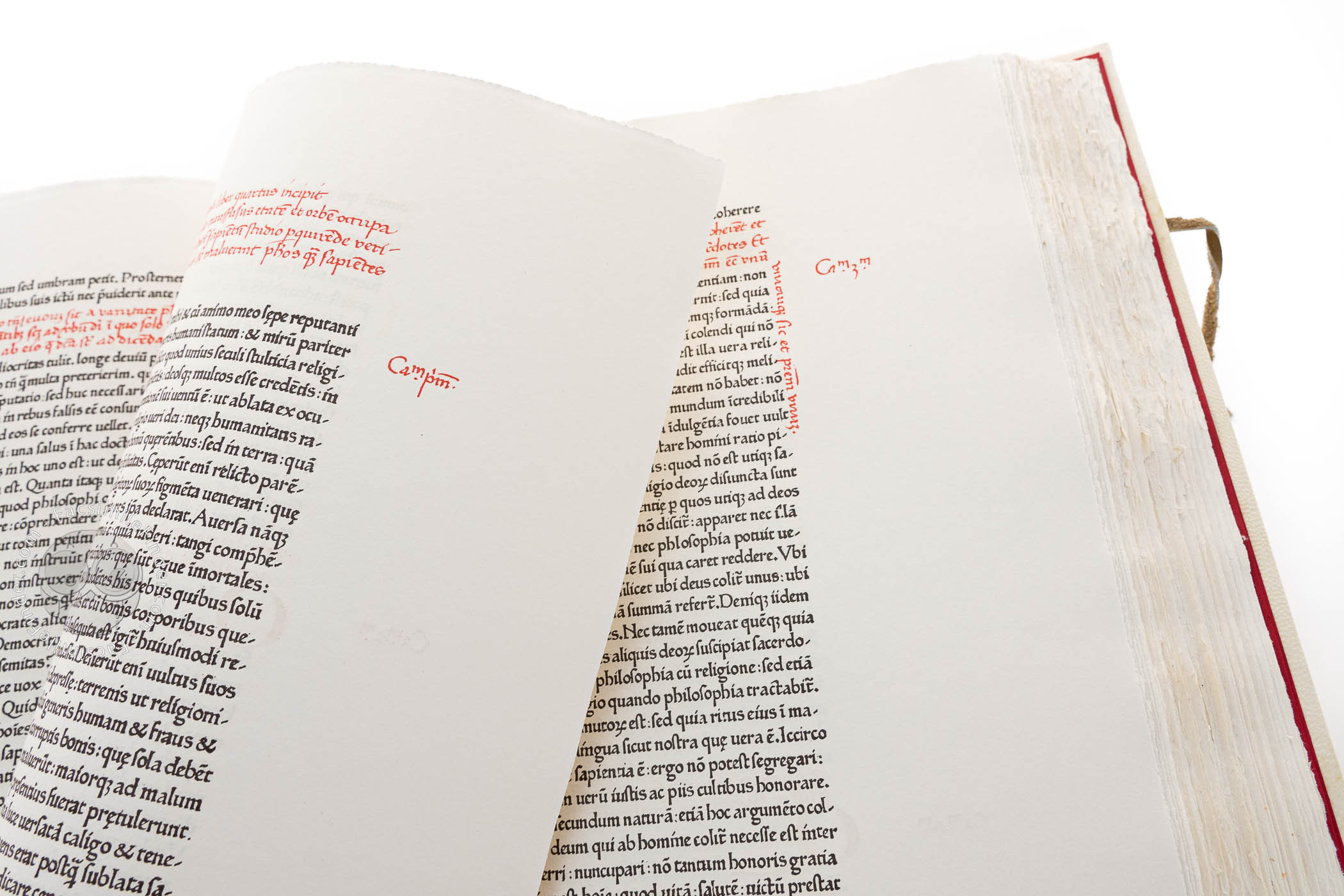
Like many early printed books, the volume anticipates the hand: rubricae (indexes) open the text, while initials and headings were intended to be supplied in color, sustaining older reading habits within a new medium. The result is neither purely “printed” nor purely “manuscript,” but a hybrid object shaped by both.
A Quiet Monument of Beginnings
This Subiaco Lactantius does not merely transmit Christian argument; it testifies to an Italian dawn of print culture, where monastic space, humanist taste, and technical invention briefly converged—leaving behind a book that still reads like an origin story set in type.
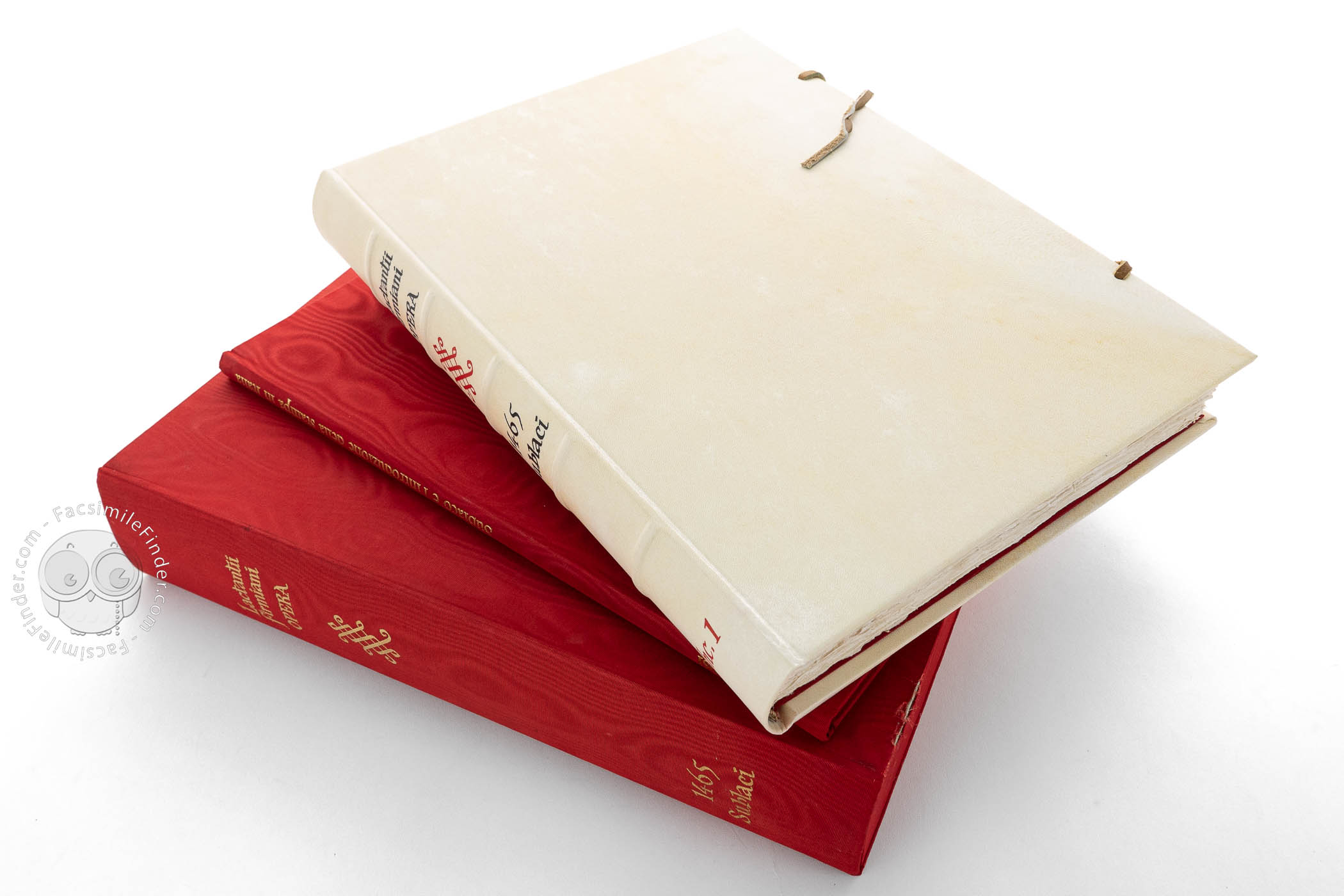
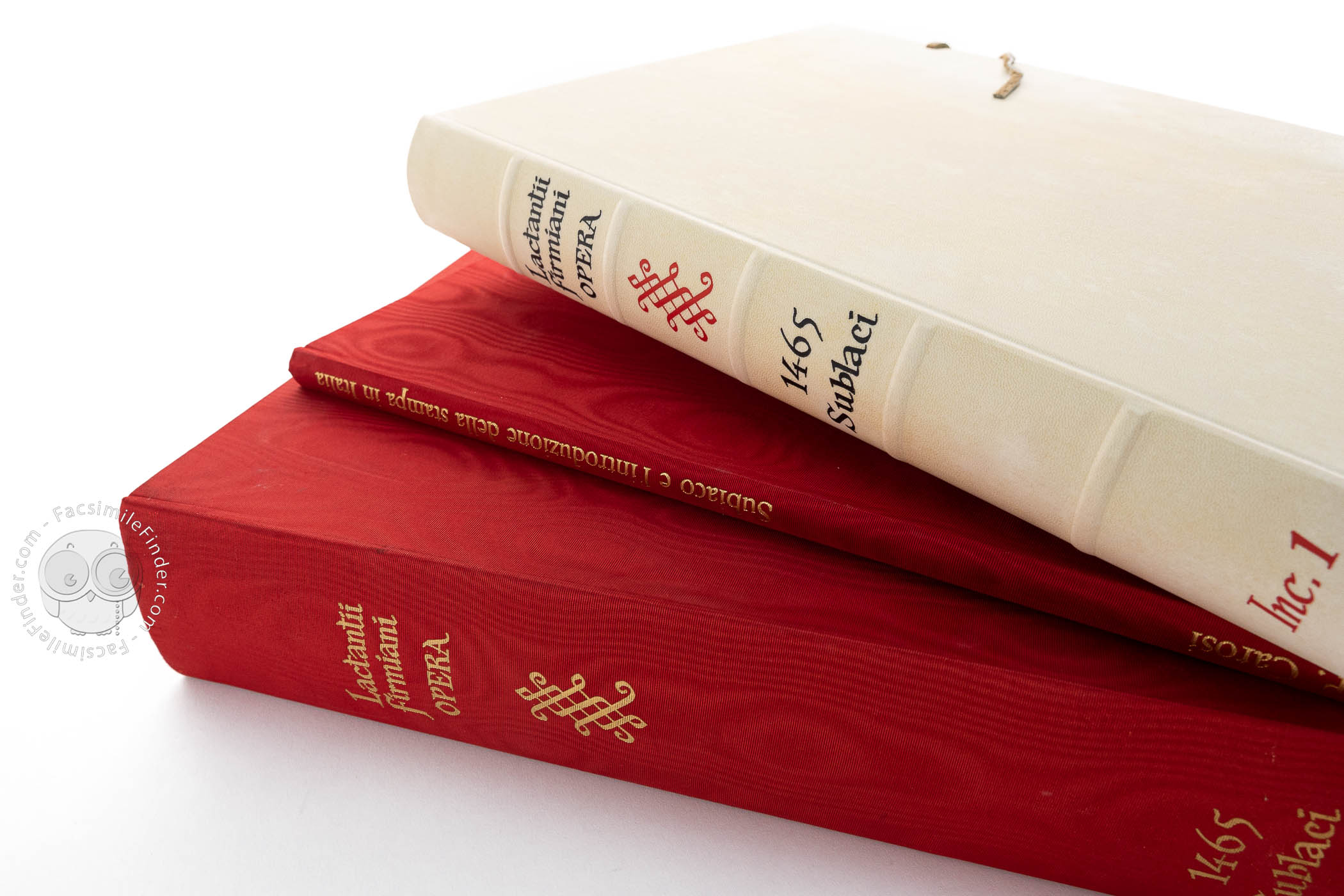
We have 1 facsimile edition of the manuscript "Subiaco Lactantius": Lactantii Firmiani Opera facsimile edition, published by Bramante Edizioni, 1972
Request Info / Price