
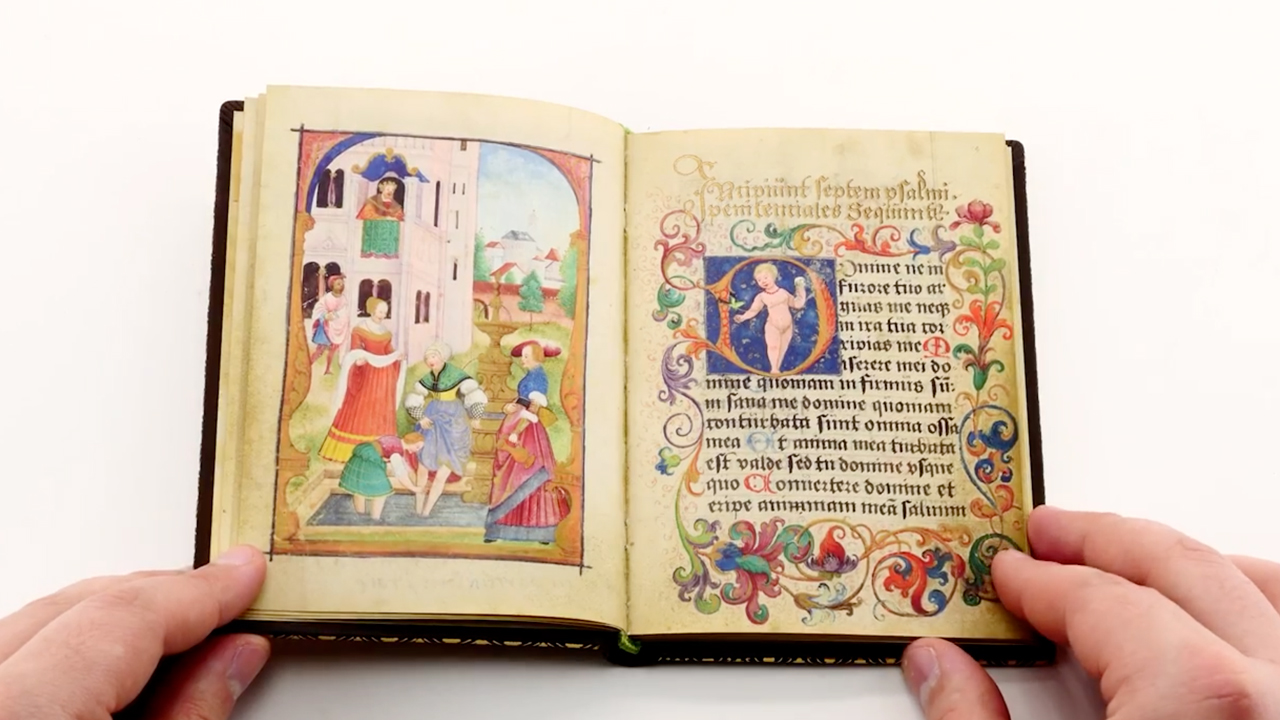

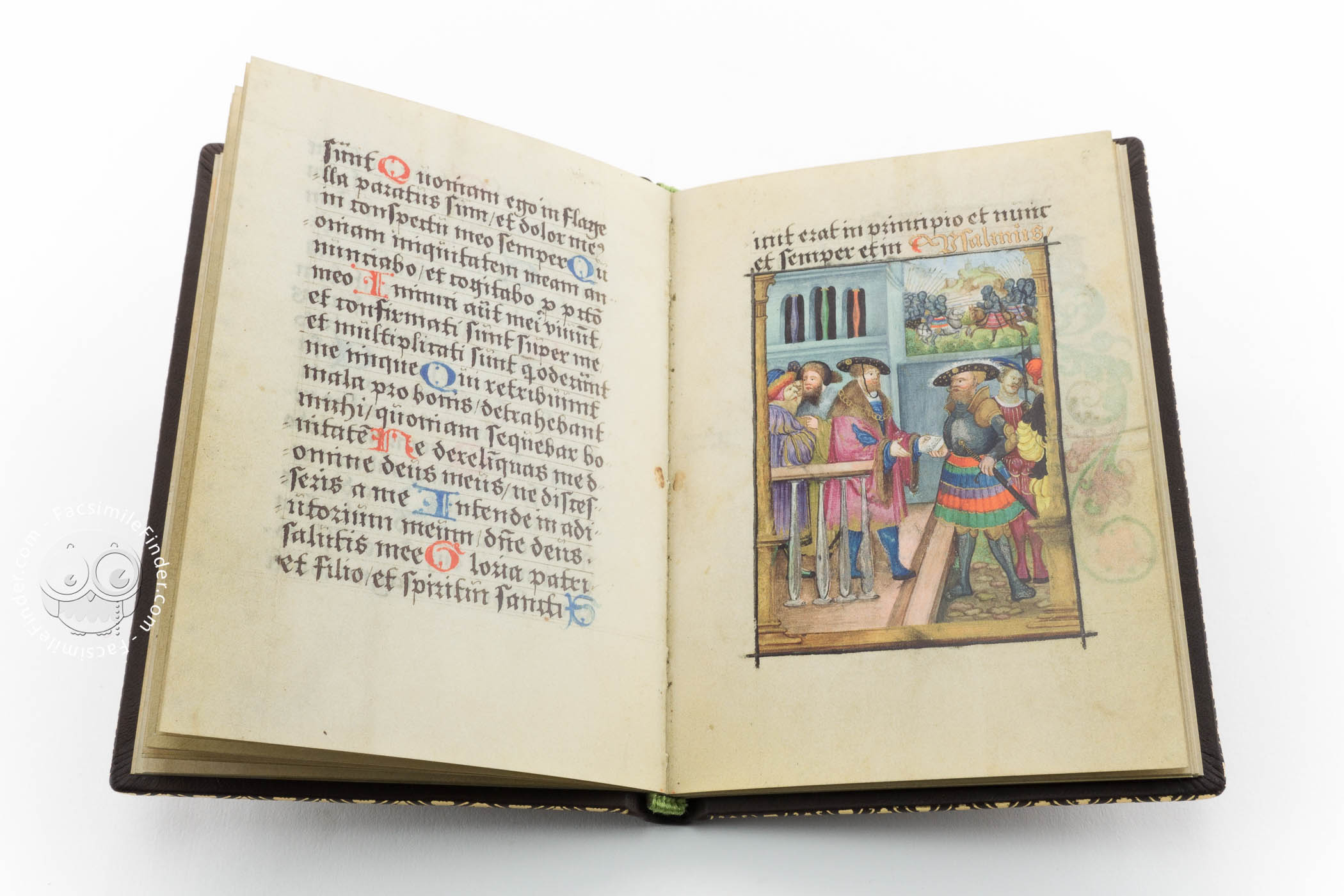


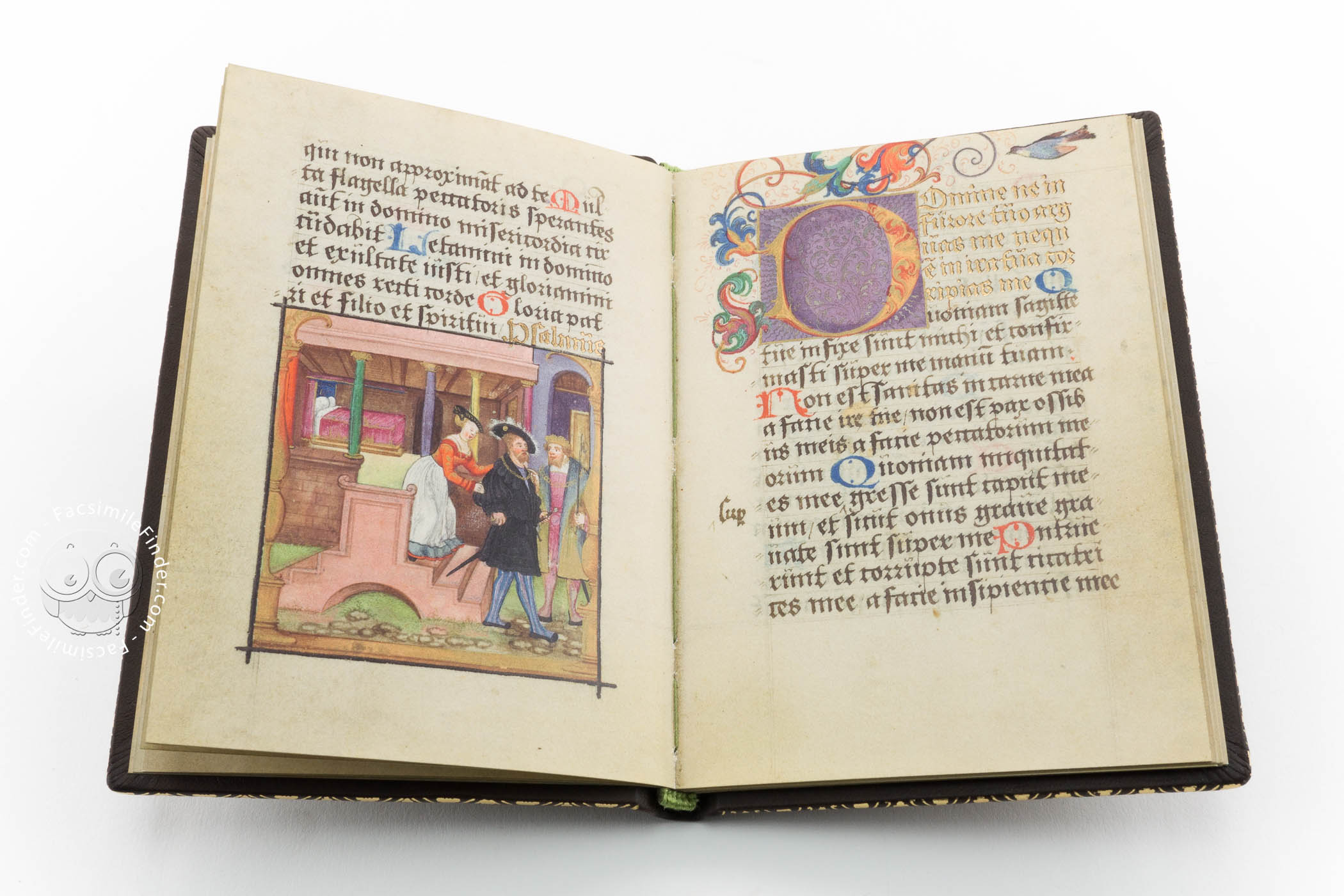

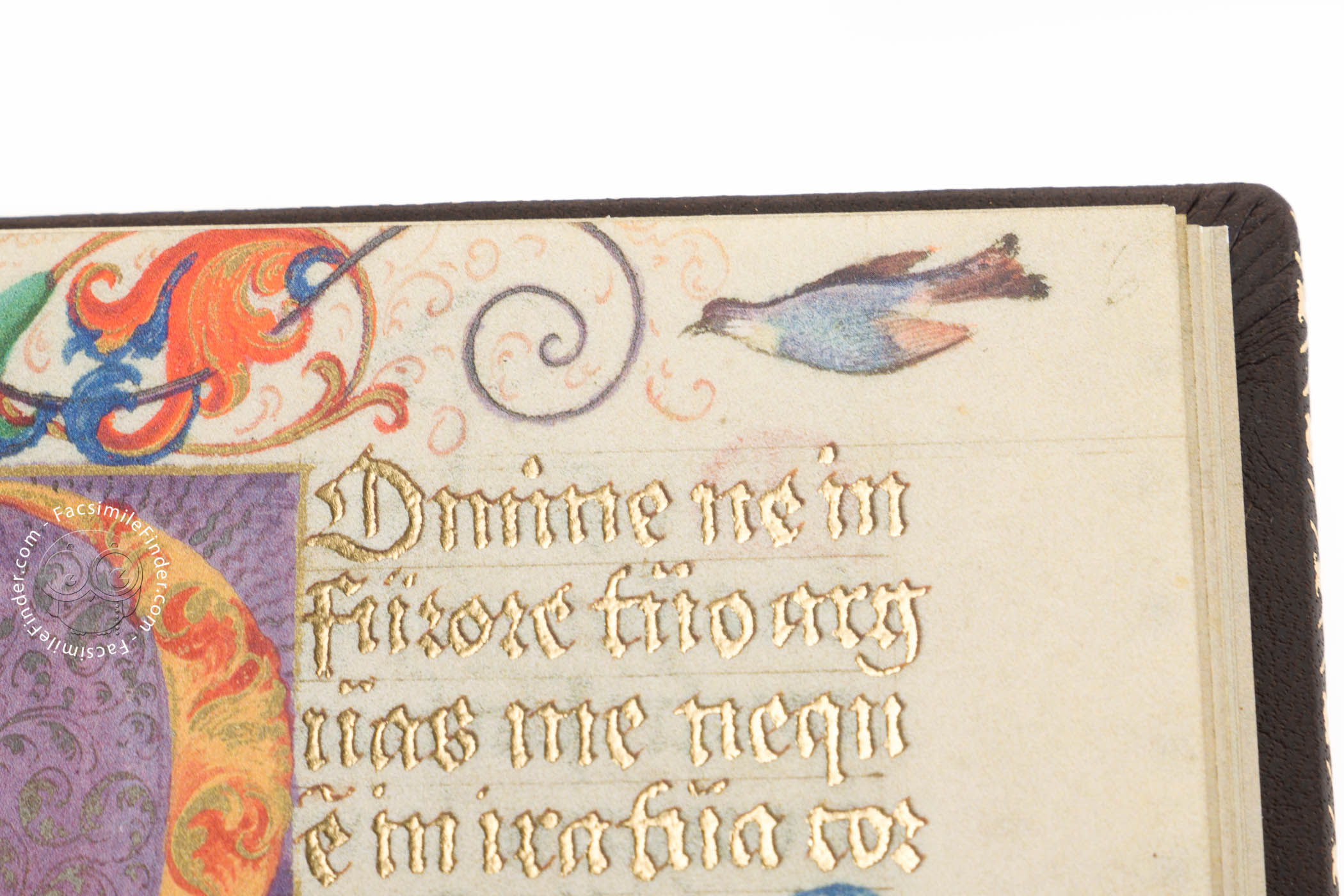
The Prayers of Repentance is a manuscript collection of biblical psalms and Christian prayers expressing regret and pleading for forgiveness for sins or offenses. It was created in Nuremberg around 1530 at the behest of Johann II, Count Palatine of Pfalz-Simmern, as a gift for his young son Reichard, future Count Palatine of Simmern-Sponheim. Written by Hans Lang, the manuscript was illuminated by Albrecht Glockendon, a prolific painter and publisher. Its nine miniatures include seven devoted to the story of the Israelite king David's adultery and subsequent repentance.
The longest text in the manuscript is that of the seven Penitential Psalms, identified by Christians as appropriate expressions of contrition (fols. 3r-15v). There follow Christian prayers, including a litany of saints—a series of supplications for the intercession of saints (fols. 17r-22r).
David, Model of Repentance
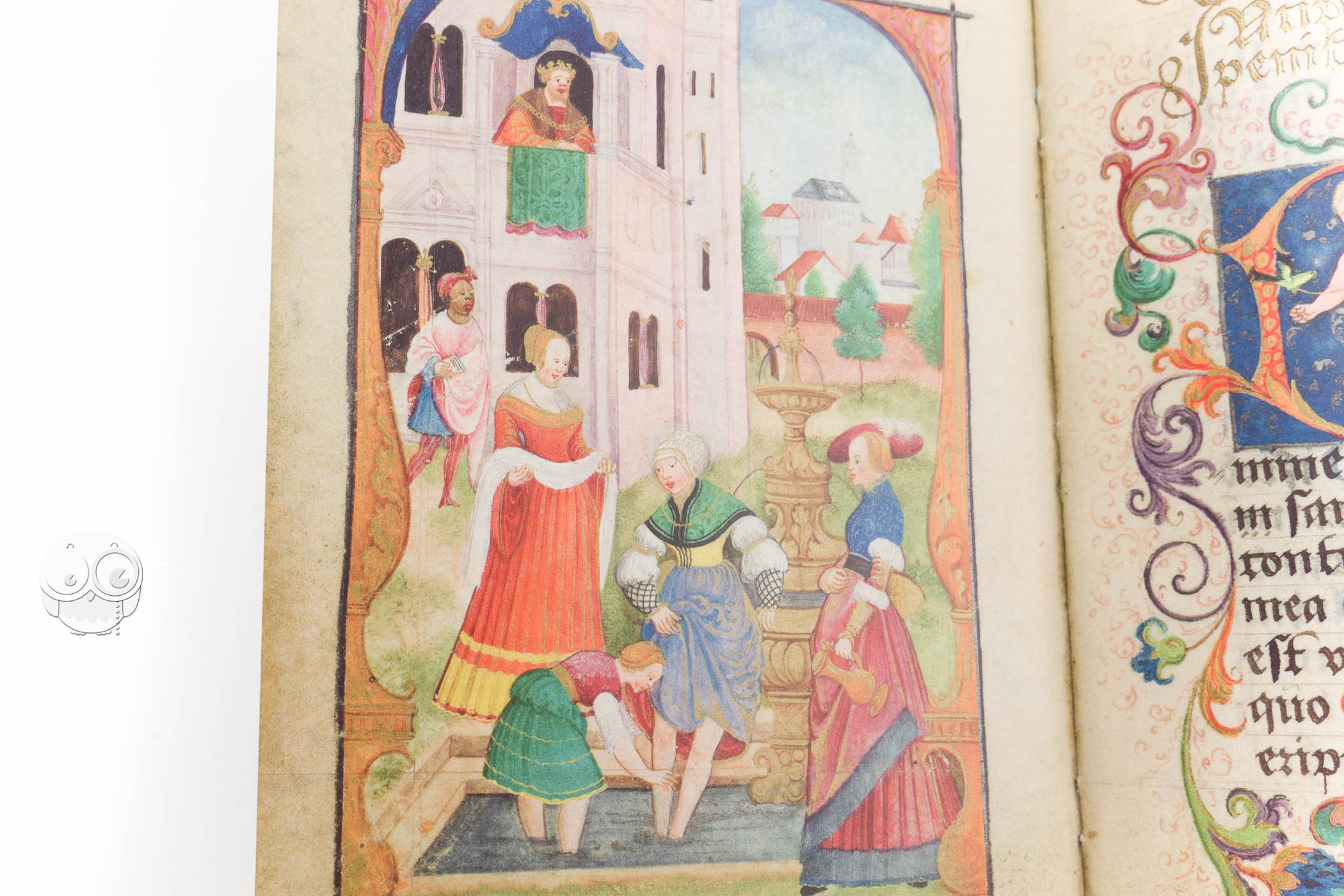
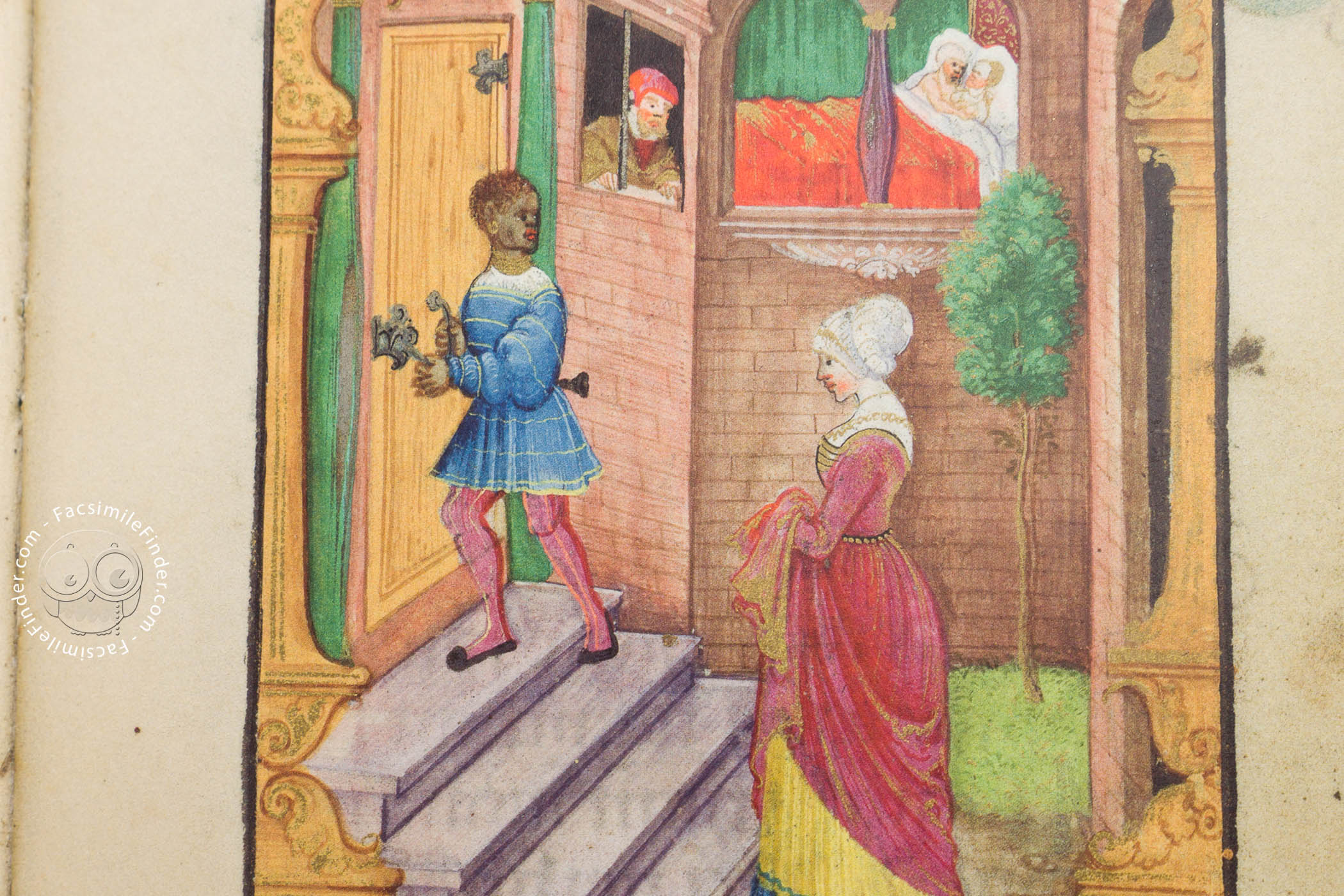
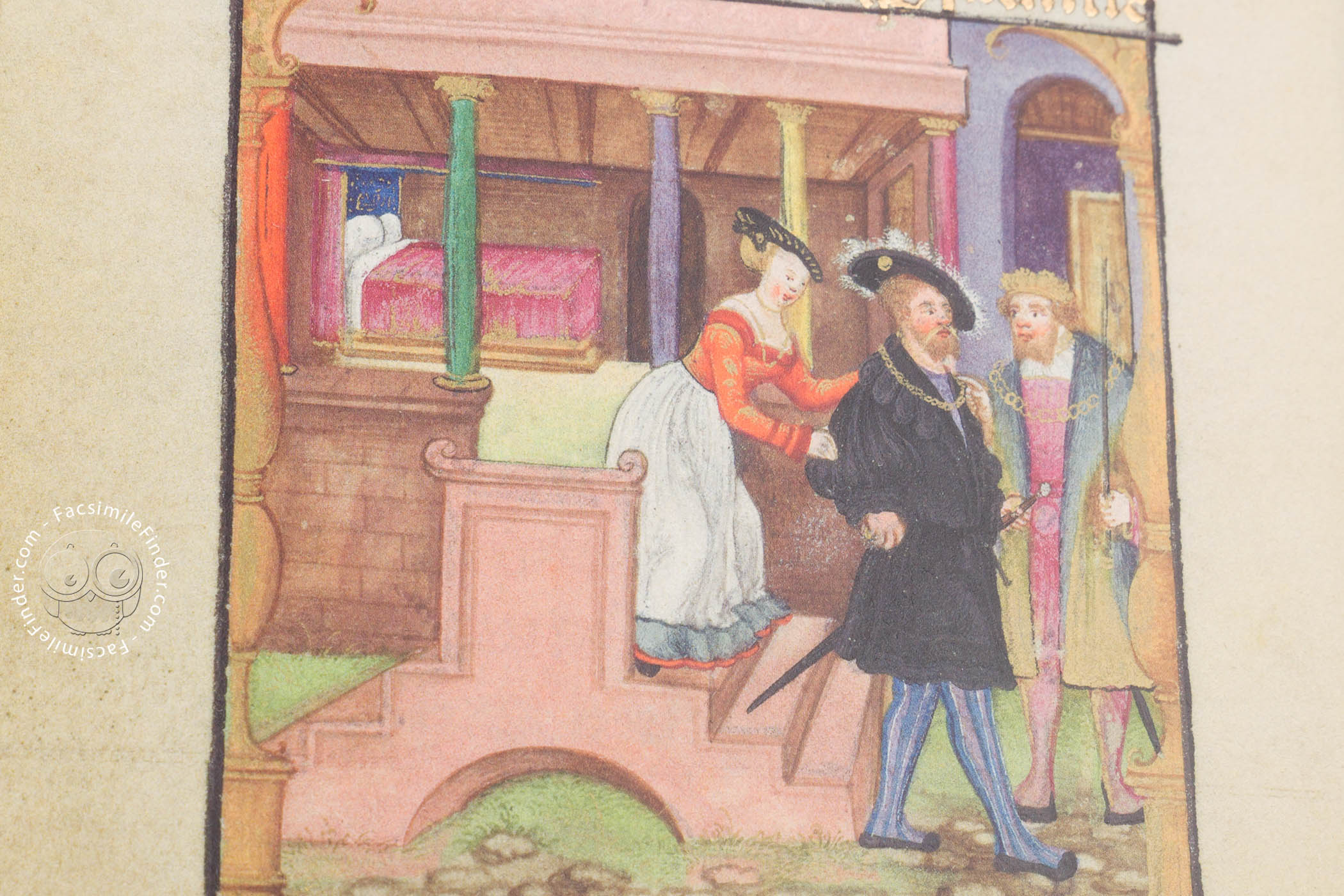
Christians understand David as a model penitent. After committing adultery with Bathsheba and arranging for her husband's death on the battlefield, he was rebuked by the prophet Nathan and repented of his behavior. In the manuscript, the story unfolds in seven scenes from David watching Bathsheba bathing (fol. 2v) to the death of David and coronation of his son Solomon (fol. 14r).
Fashion Show
The David-Bathsheba story is visualized as if occurring in contemporary Germany, with fashion to the fore. This emphasizes the relevance of the ancient story for the sixteenth-century Christian. Glockendon also varies the dress of the protagonists from miniature to miniature, providing a rich gallery of contemporary fashion.
A Family in the Book Business
Albrecht Glockendon (d. 1545) entered the family business, which included the manufacture of woodcuts and printed books, as well as the illumination of manuscripts. He contributed to the illumination of many books, including the Calendar of 1526, the Prayer Book of Johann Albrecht I, Duke of Mecklenburg, and the Berlin Splendor Solis. His grandfather, father, brother, and twelve nephews were artists.
A Gift for a Young Son
Johann II (1492-1557) had the manuscript made for his second son, Reichard (1521-1598), when he was just a boy. Its illumination combines family pride with instructional narrative. It opens with a full-page miniature of the family's heraldry: the arms of Pfalz and the Bavarian house of Wittelsbach are joined under a single elaborate helmet (fol. 1v).
The David-Bathsheba miniatures show both the breadth of David's misbehavior and the depth of his contrition. Glockendon also painted a seven-scene David-Bathsheba cycle, an unusually extensive treatment of the subject, in the Prayer Book of William IV of Bavaria (Vienna, Österreichische Nationalbibliothek, Cod. 1880).
A Fruitful Collaboration
Hans Lang did not sign his work in the Prayers of Repentance manuscript, but it is unmistakably the writing of the scribe who signed seven manuscripts with his monogram IL. All seven feature illumination by Albrecht Glockendon or his brother Nikolaus.
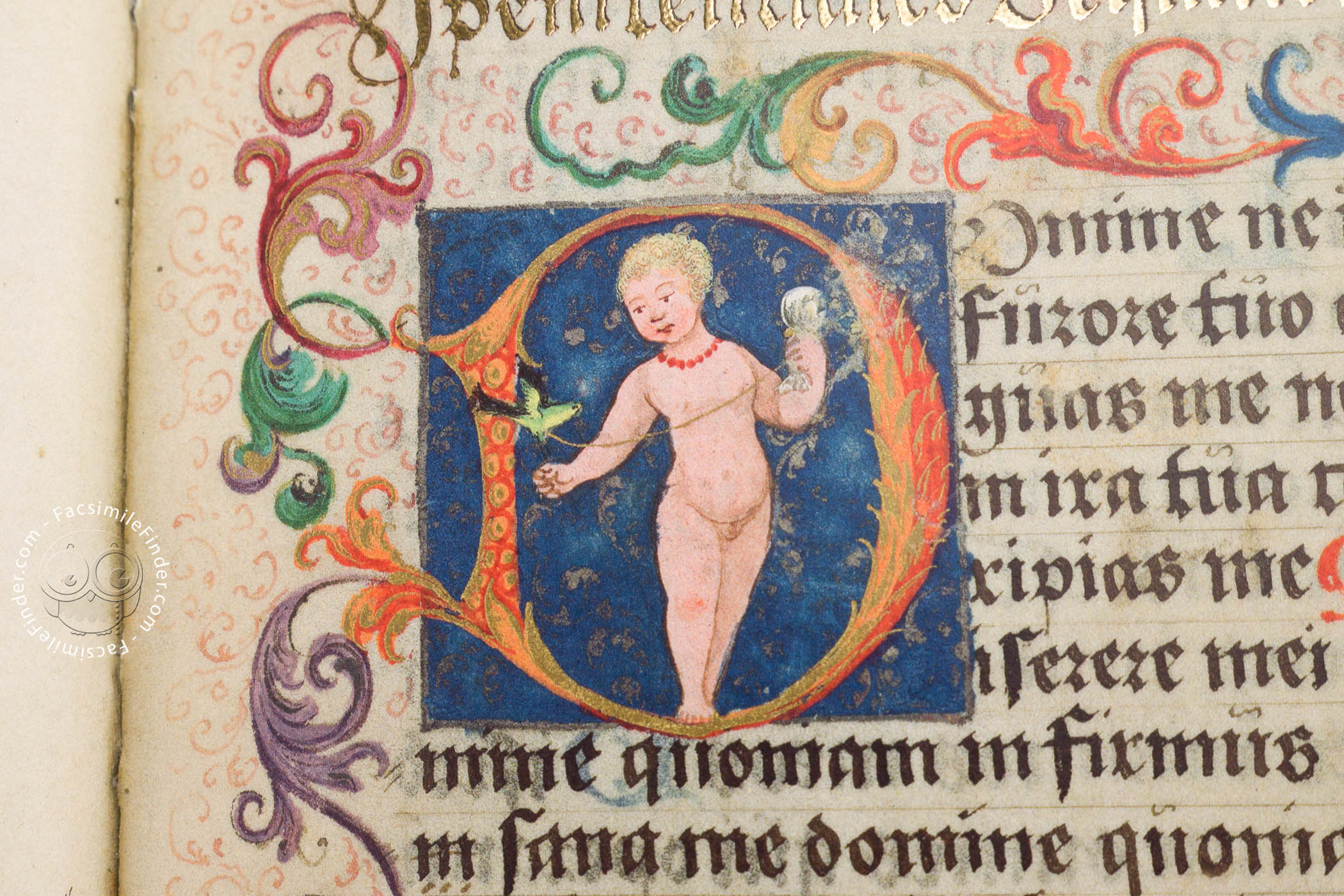
Lang wrote a distinctive spiky Gothic Hybrida. Each of the major textual divisions is marked by an enlarged initial. The first has a representation of the Christ child wearing a red coral necklace (fol. 3r). The others feature foliate motifs.
From Simmern to Mannheim to Munich
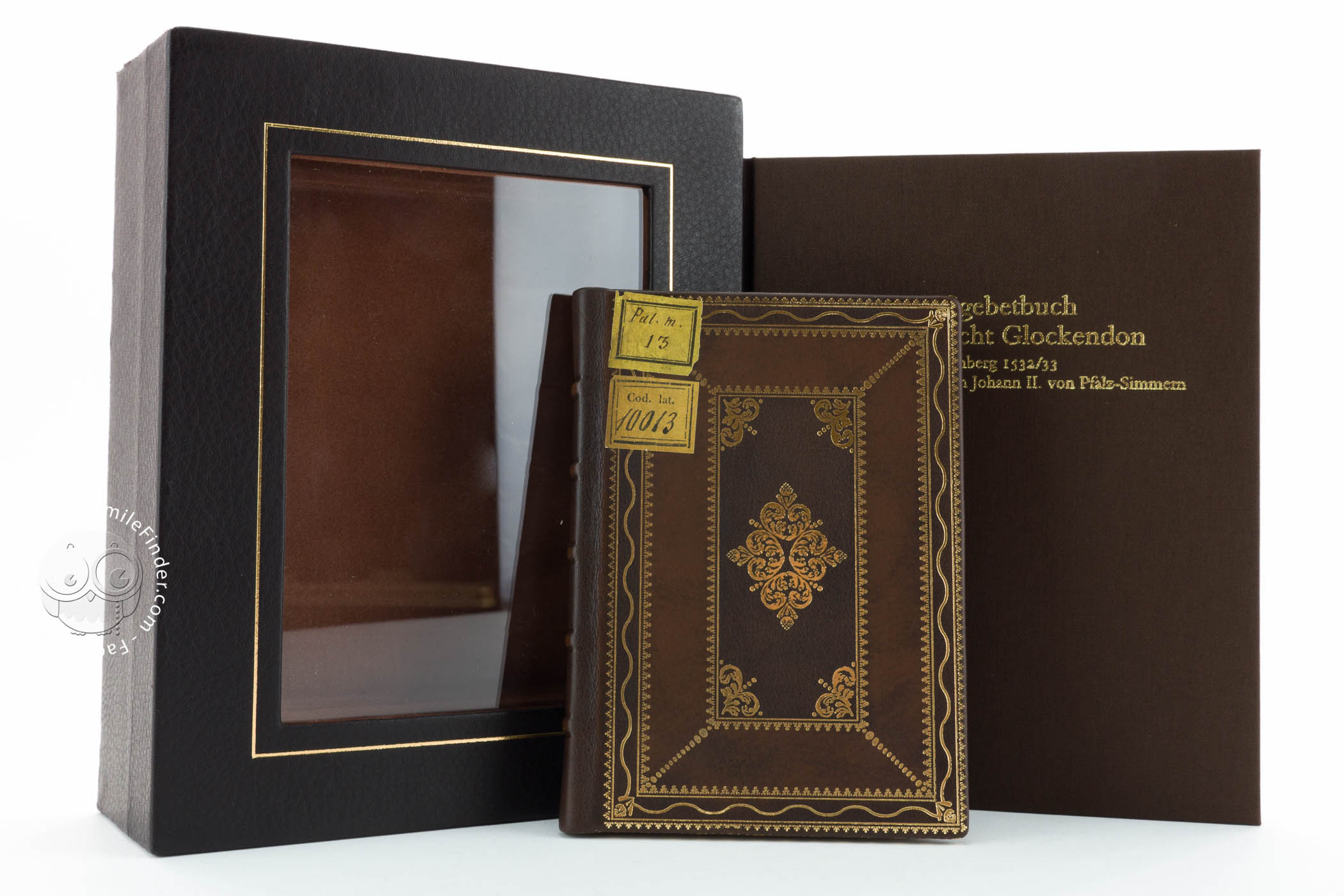
The book was in Reichard's possession at least until 1575, and we do not know how it found its way southeast to Mannheim. By the end of the eighteenth century, it was in the Bibliotheca Palatina there, whence it was transferred even farther south and east to the Bavarian Hofbibliothek in 1803/1804. The holdings of the Hofbibliothek served as the foundation collection of the Hof- und Staatsbibliothek, which was renamed the Bayerische Staatsbibliothek in 1919. The gold-tooled brown leather binding probably dates from the eighteenth century.
We have 1 facsimile edition of the manuscript "Prayers of Repentance": Bußgebetbuch von Albrecht Glockendon für Johann II. von Pfalz-Simmern facsimile edition, published by Faksimile Verlag, 2010
Request Info / Price