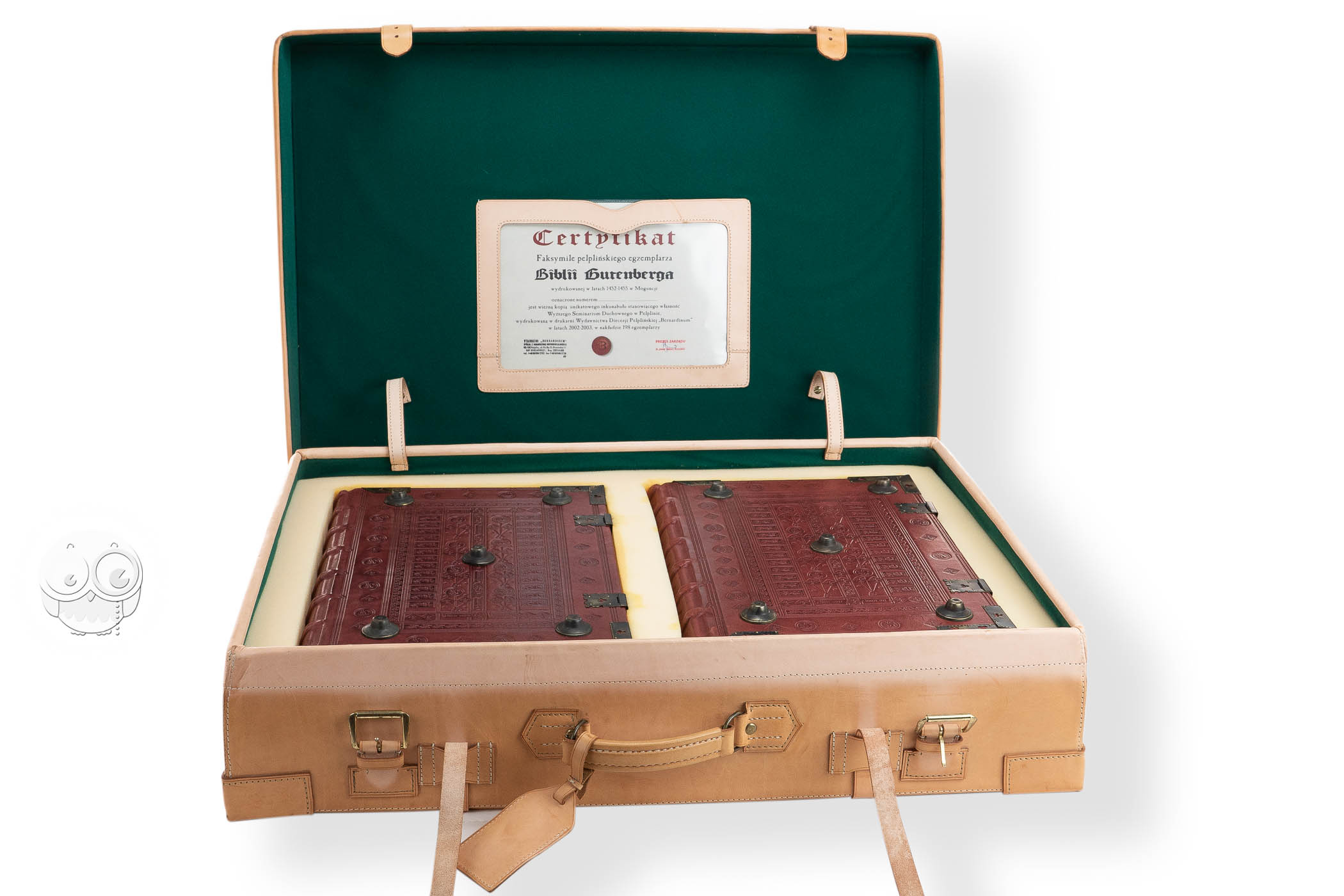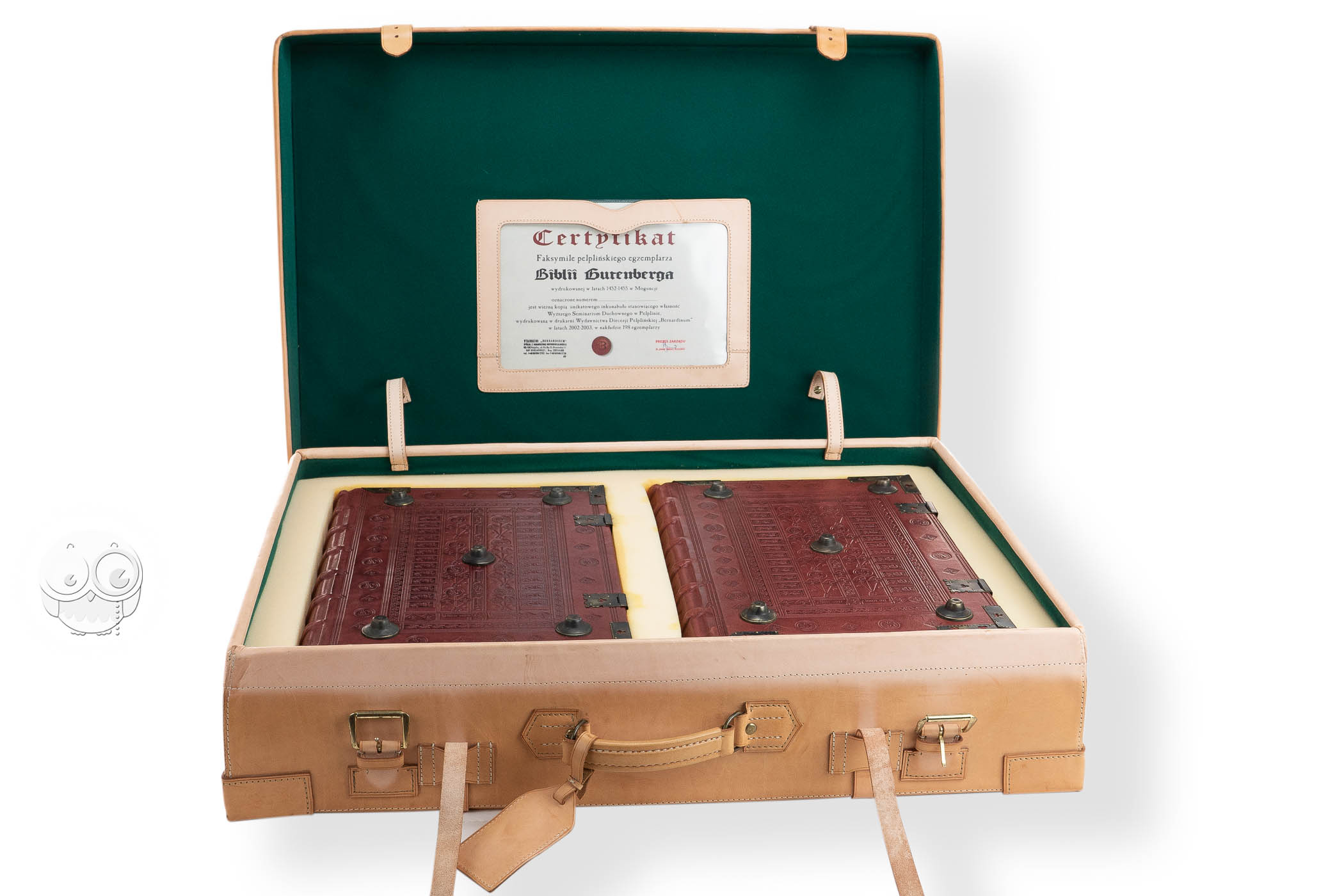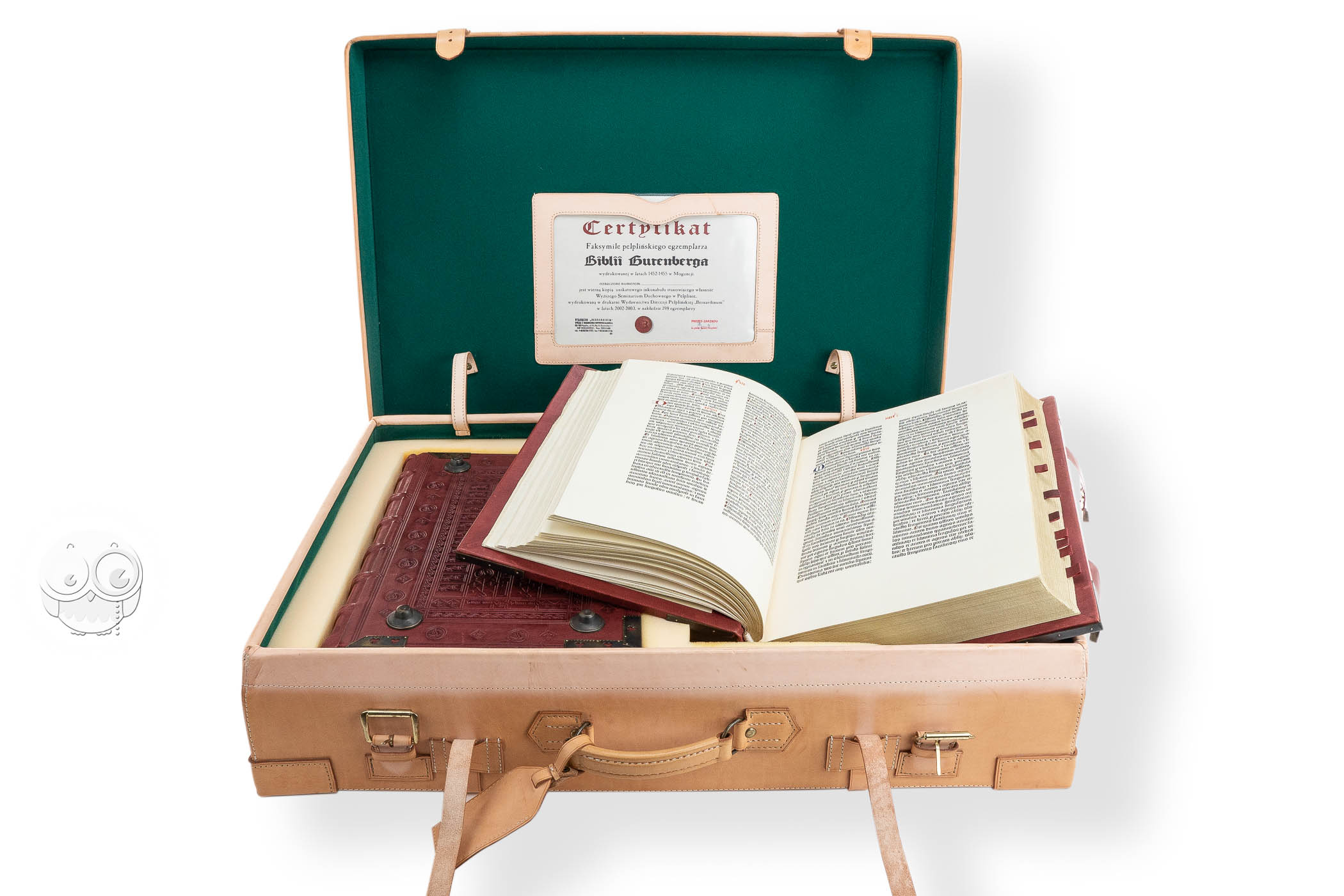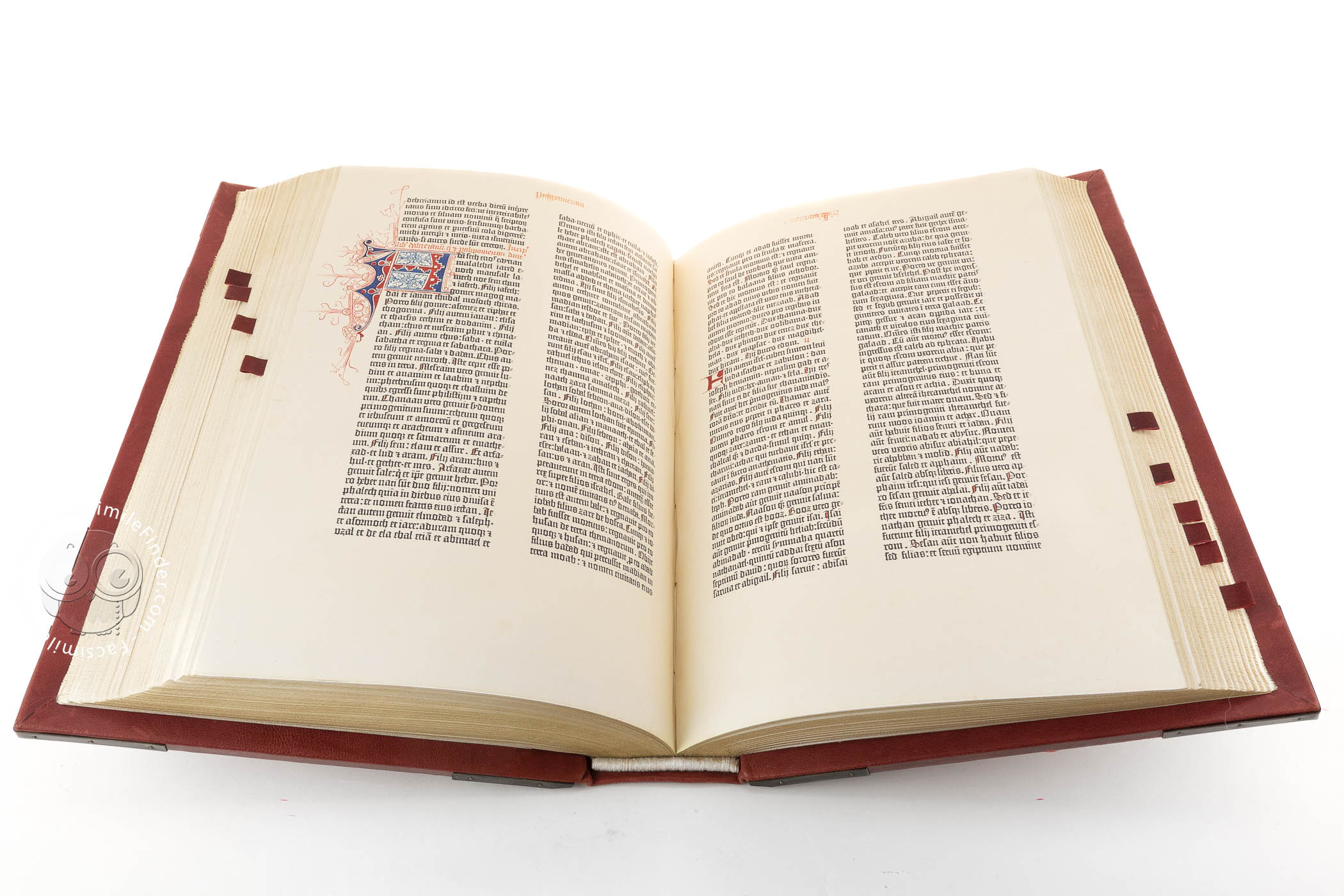
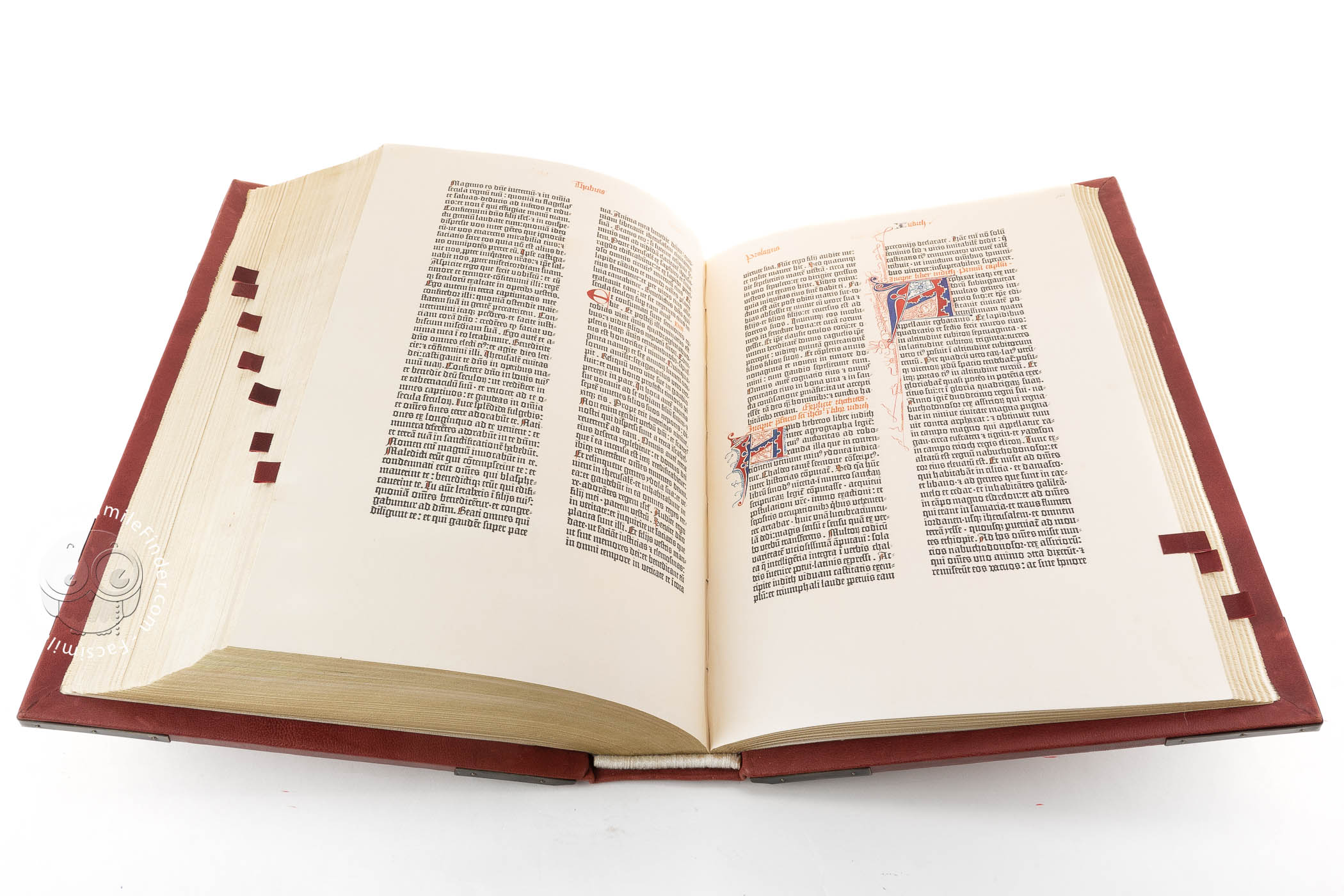
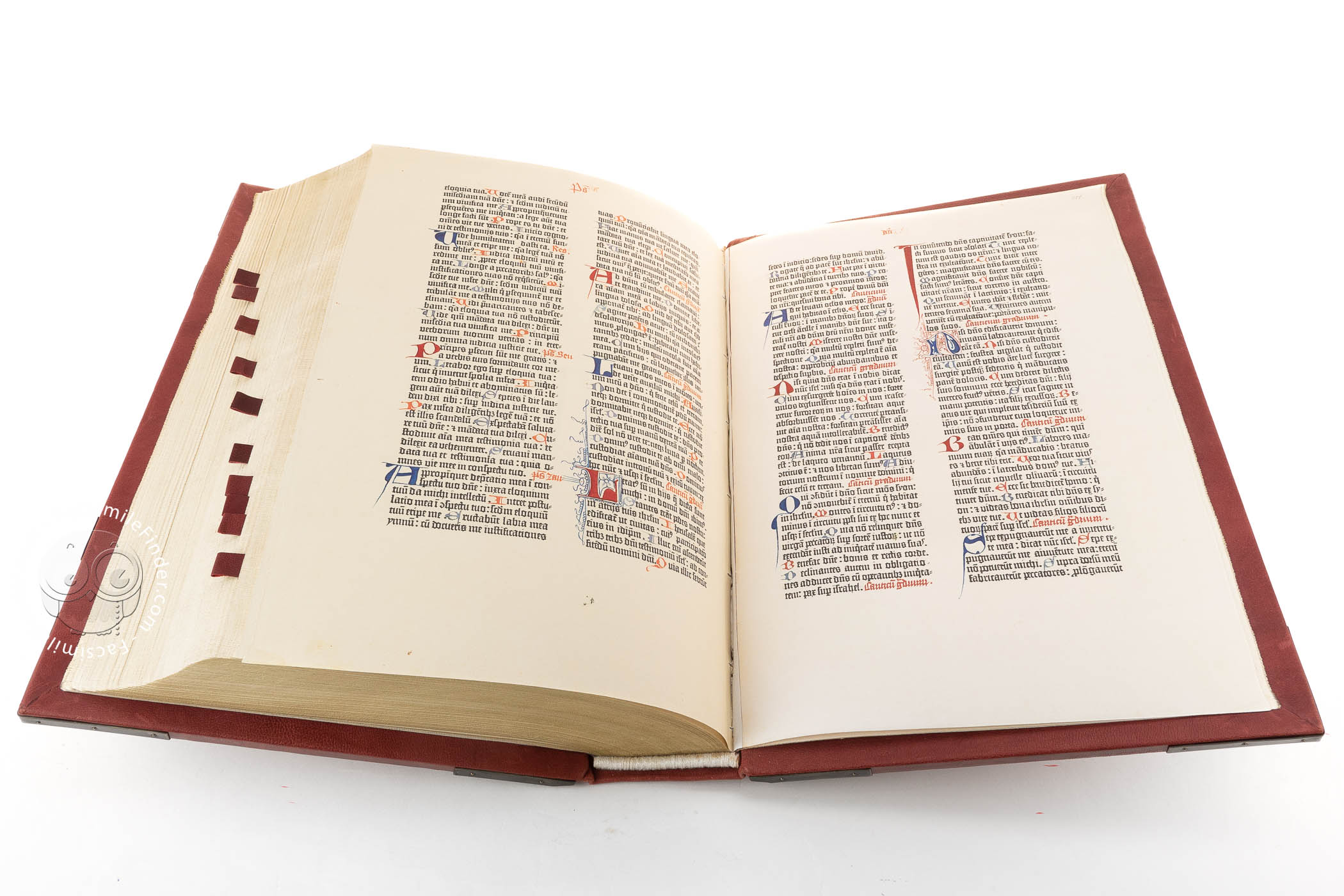

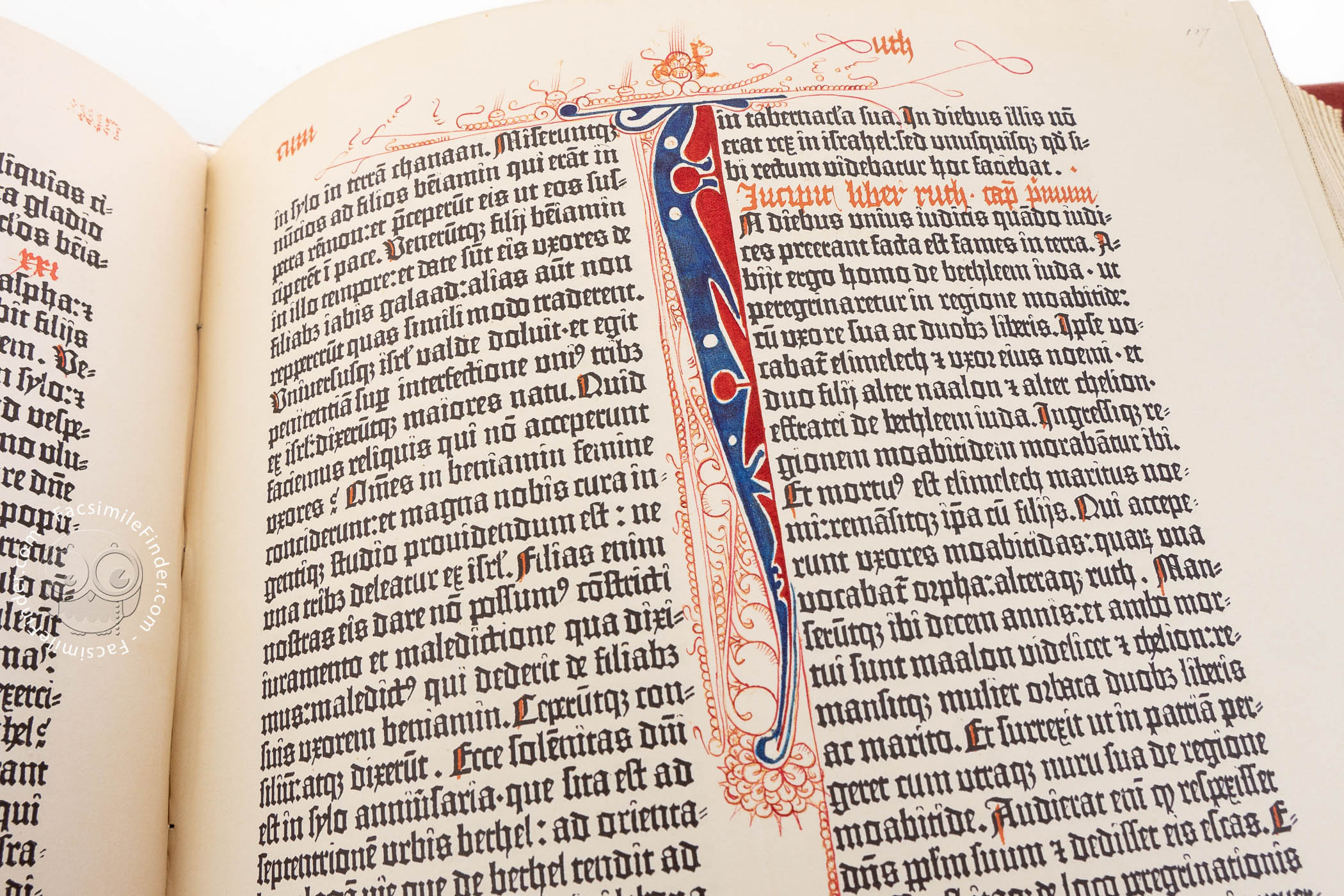

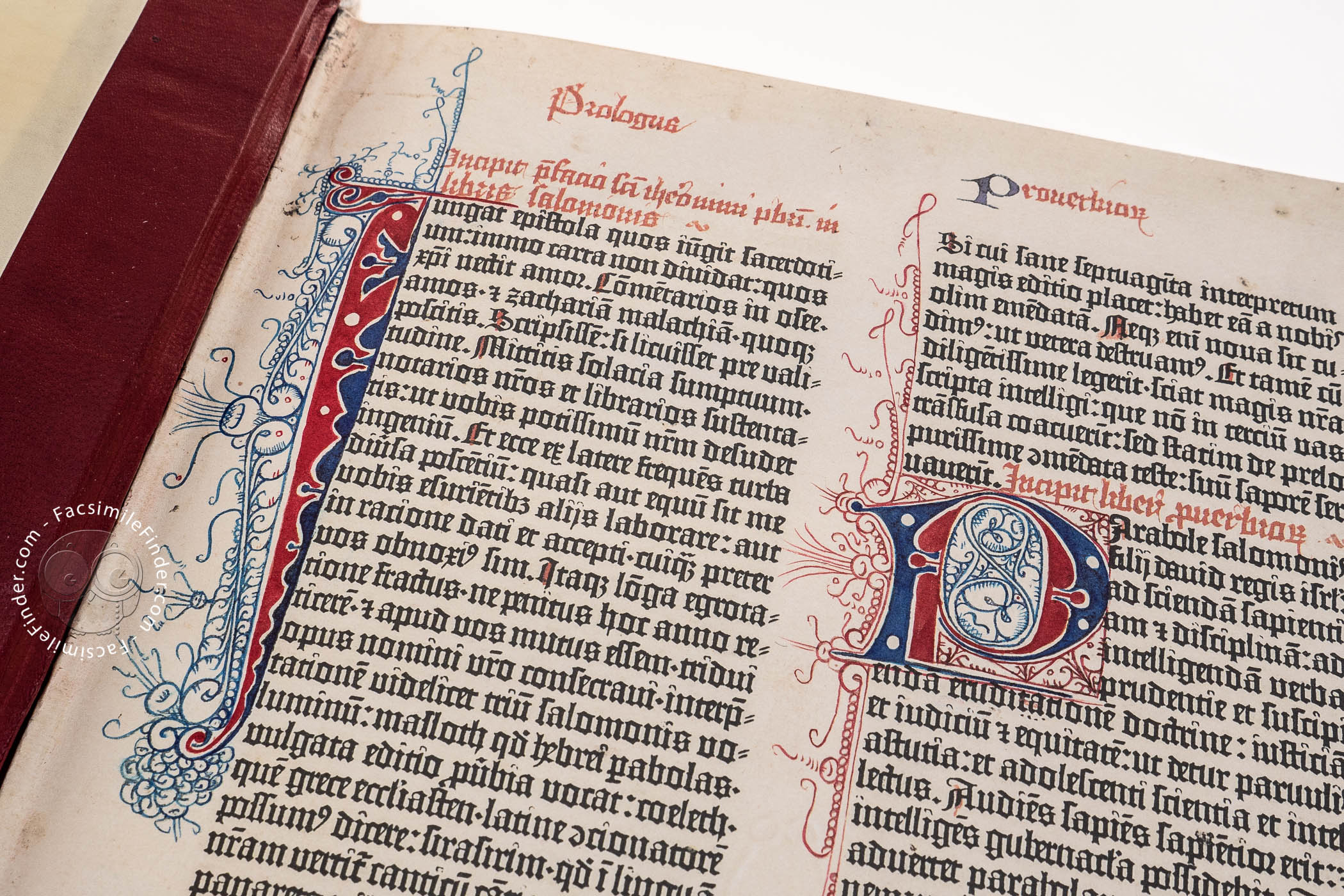

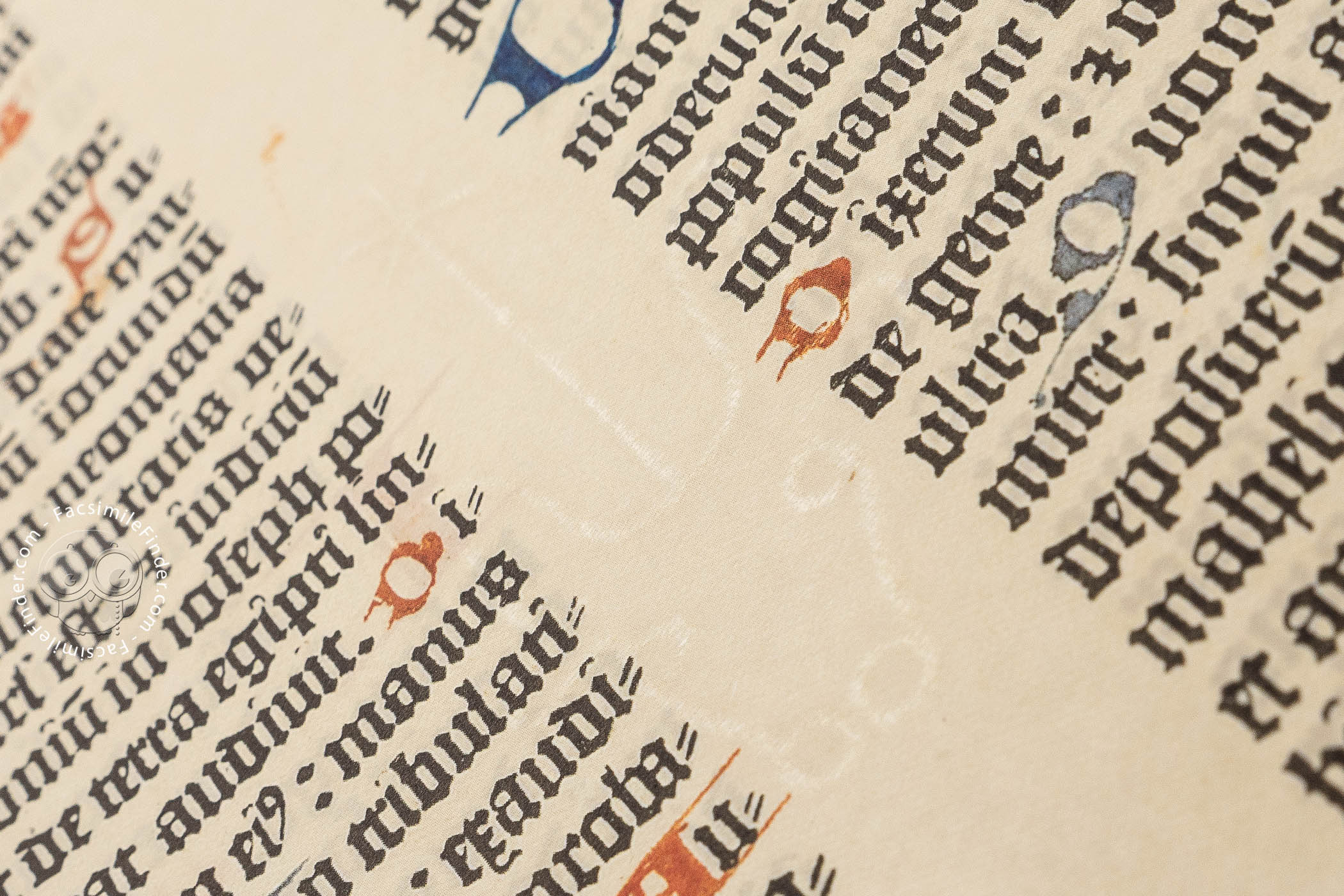


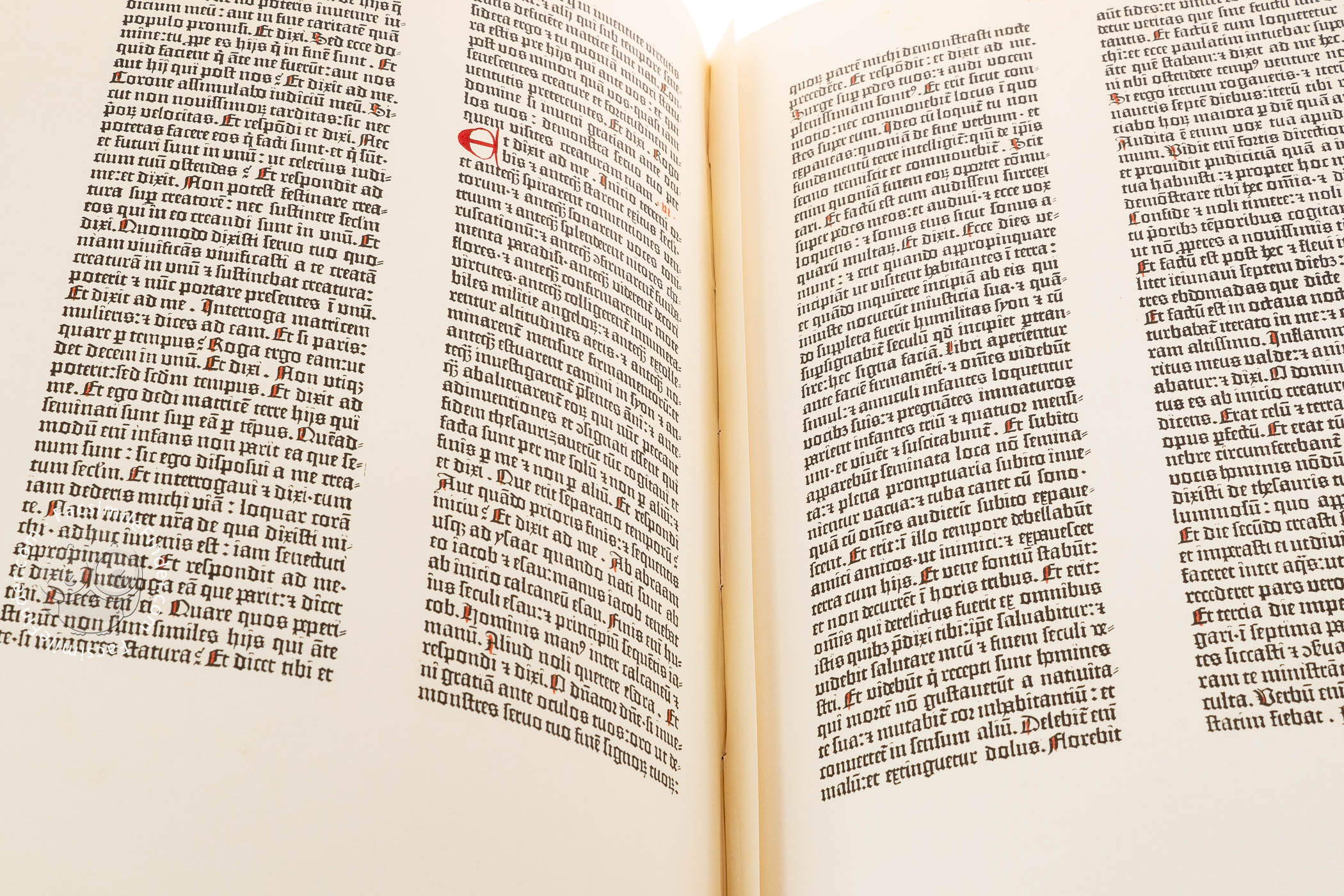

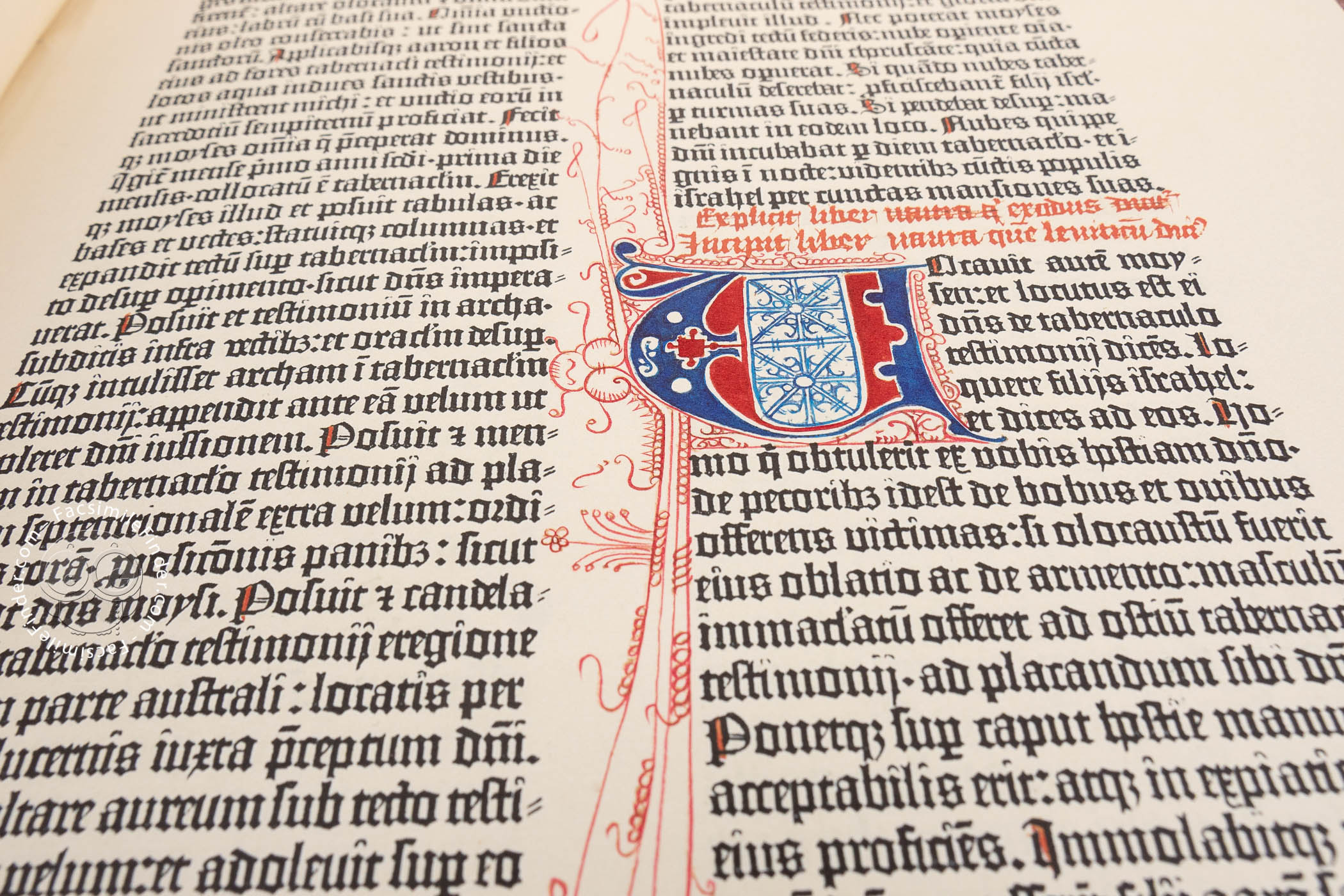

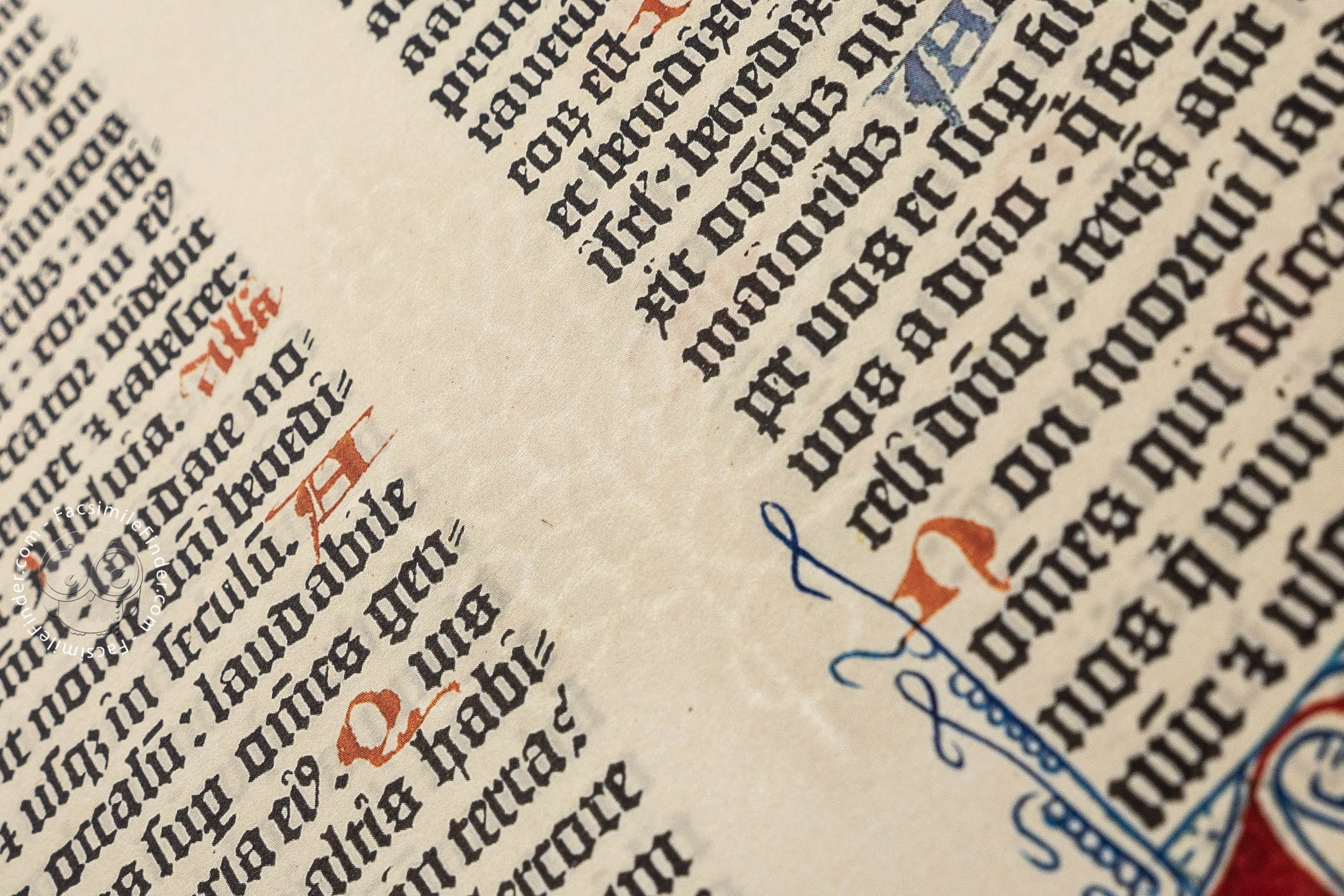



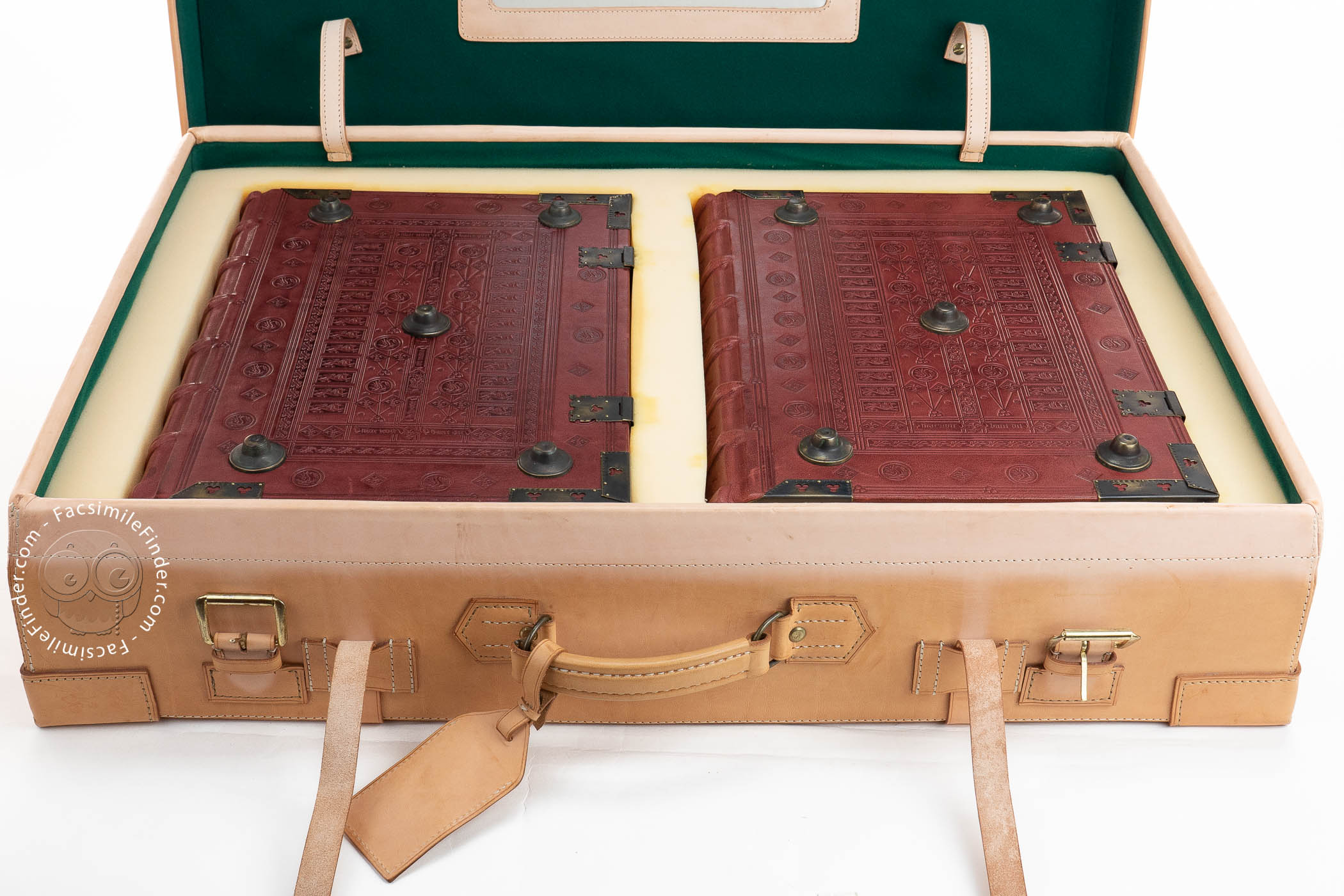
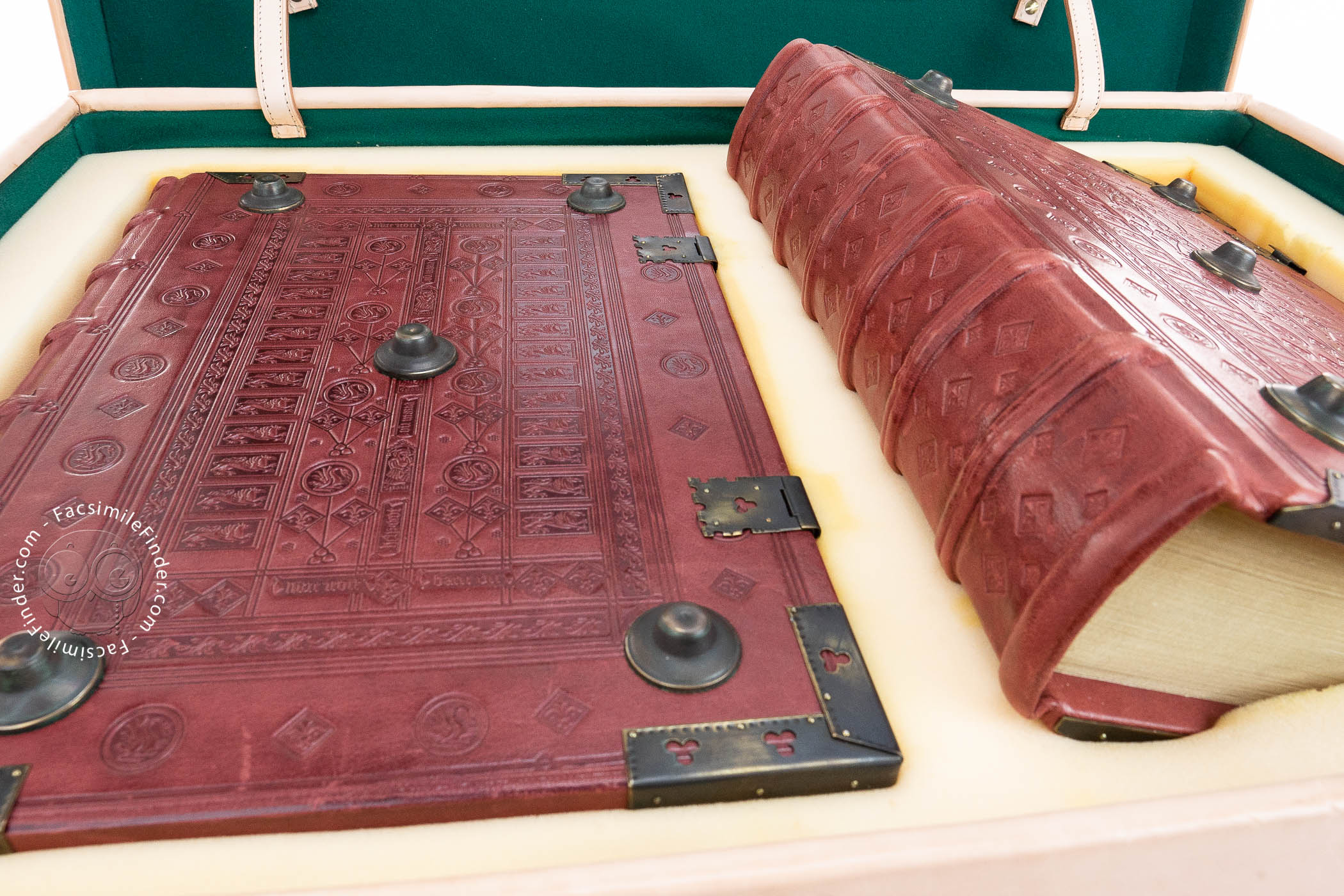
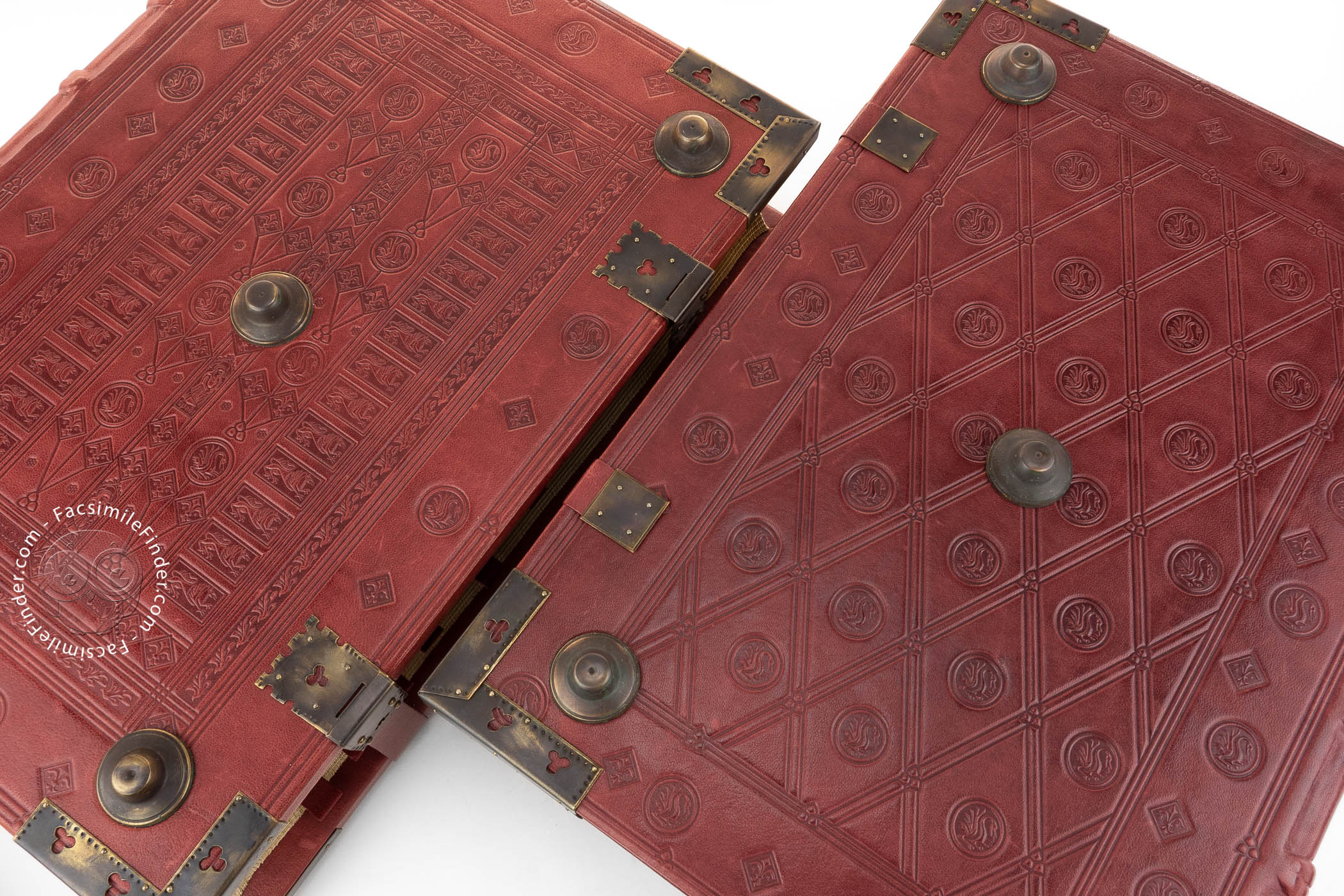
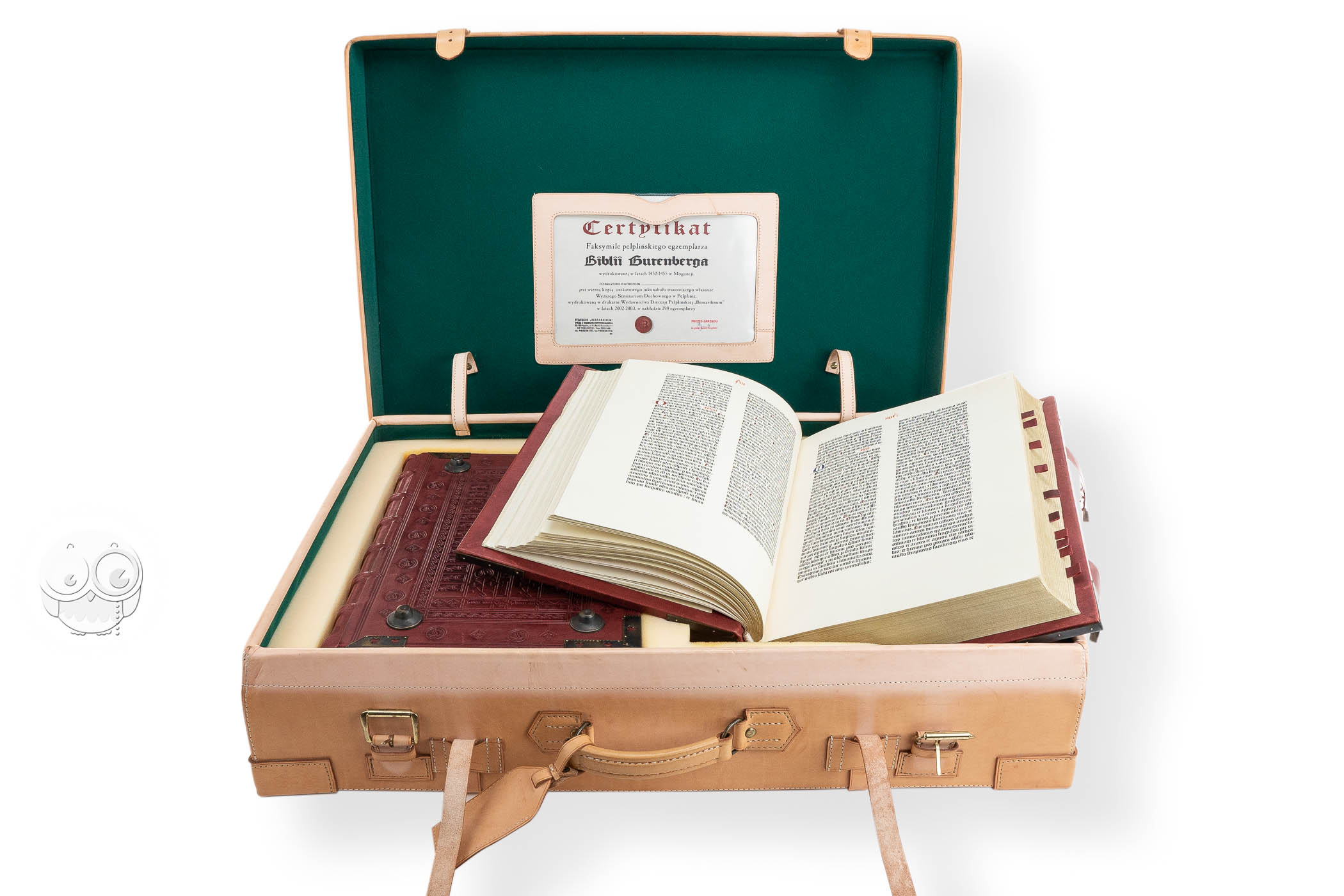
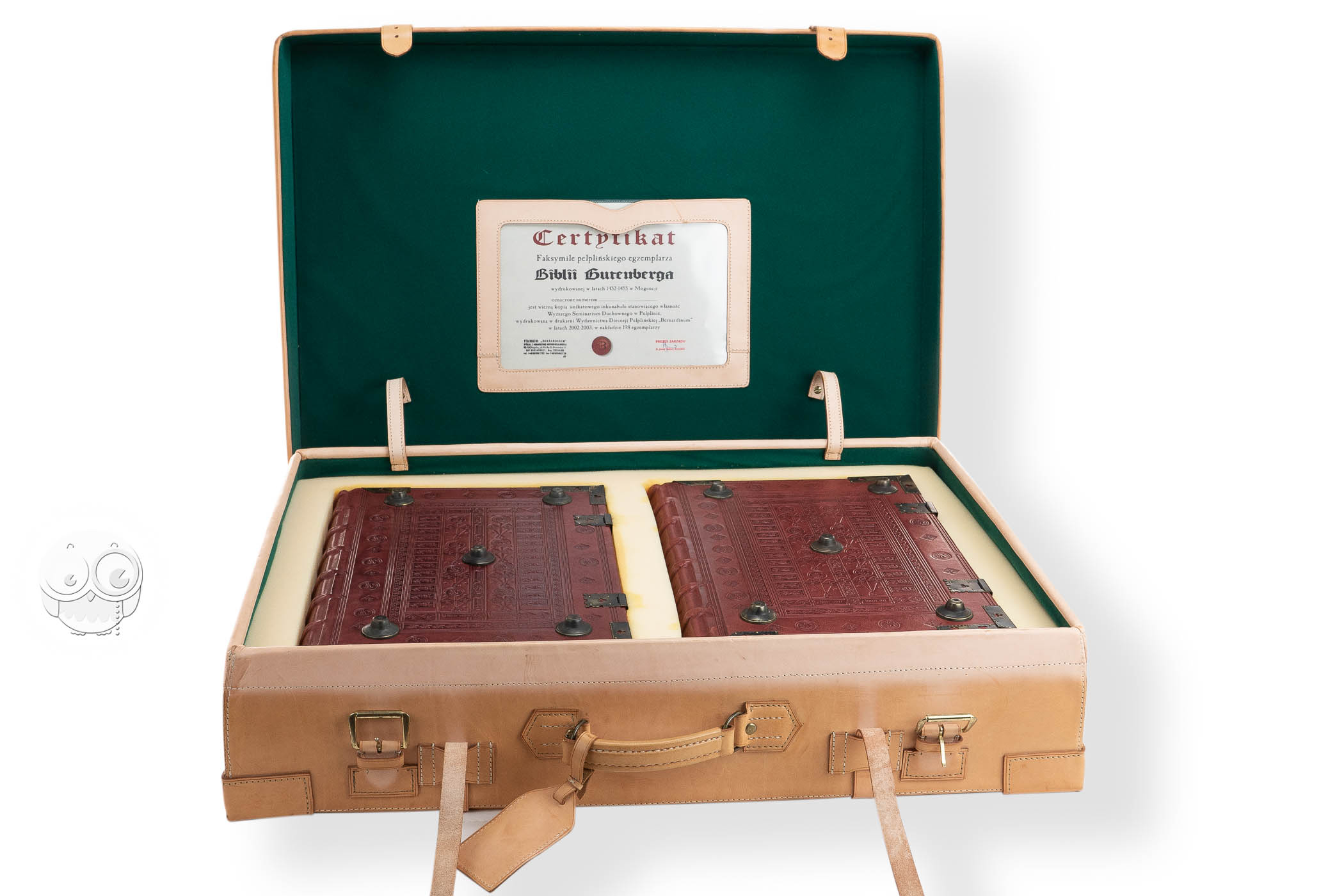
The Pelplin Gutenberg Bible is one of the most complete copies of the two-volume Bible printed in Mainz by Johann Gutenberg and Johannes Fust around 1453-1554. Among its remarkable features is the imprint of a fallen piece of movable type. Its extraordinary history—surviving World War II while hidden and transported through Paris, London, and Canada before returning to Poland—adds to its significance as a link to the birth of printing. The Pelplin copy of the Gutenberg Bible features handwritten rubrics and more than 100 pen-flourished initials.
Johannes Gutenberg is widely credited as the inventor of movable-type printing. In the fifteenth century, books were so expensive that only a privileged few could afford to own them. The “Master of Mainz,” as Gutenberg is often called, sought to produce dozens of identical copies of the Bible which, thanks to their relatively low cost, could circulate more widely. Between 1452 and 1455, approximately 180 copies of the Latin Bible were printed in two volumes, using a Textualis typeface similar to the script then commonly employed by scribes.
The Pelplin Bible
The Pelplin Bible contains the Latin text of the Holy Scriptures in the translation of Saint Jerome and includes the commentaries and prologues from the Vulgate tradition. Of its 149 illuminated initials, the most striking is undoubtedly the first one—the letter F—decorated with 24-carat gold leaf and blue pigment, and enriched with an exquisite marginal ornamentation. The remaining initials are executed in two colors, blue and red, with delicate ornamentation articulated through elegant, elongated forms.
The Gutenberg “Signature”
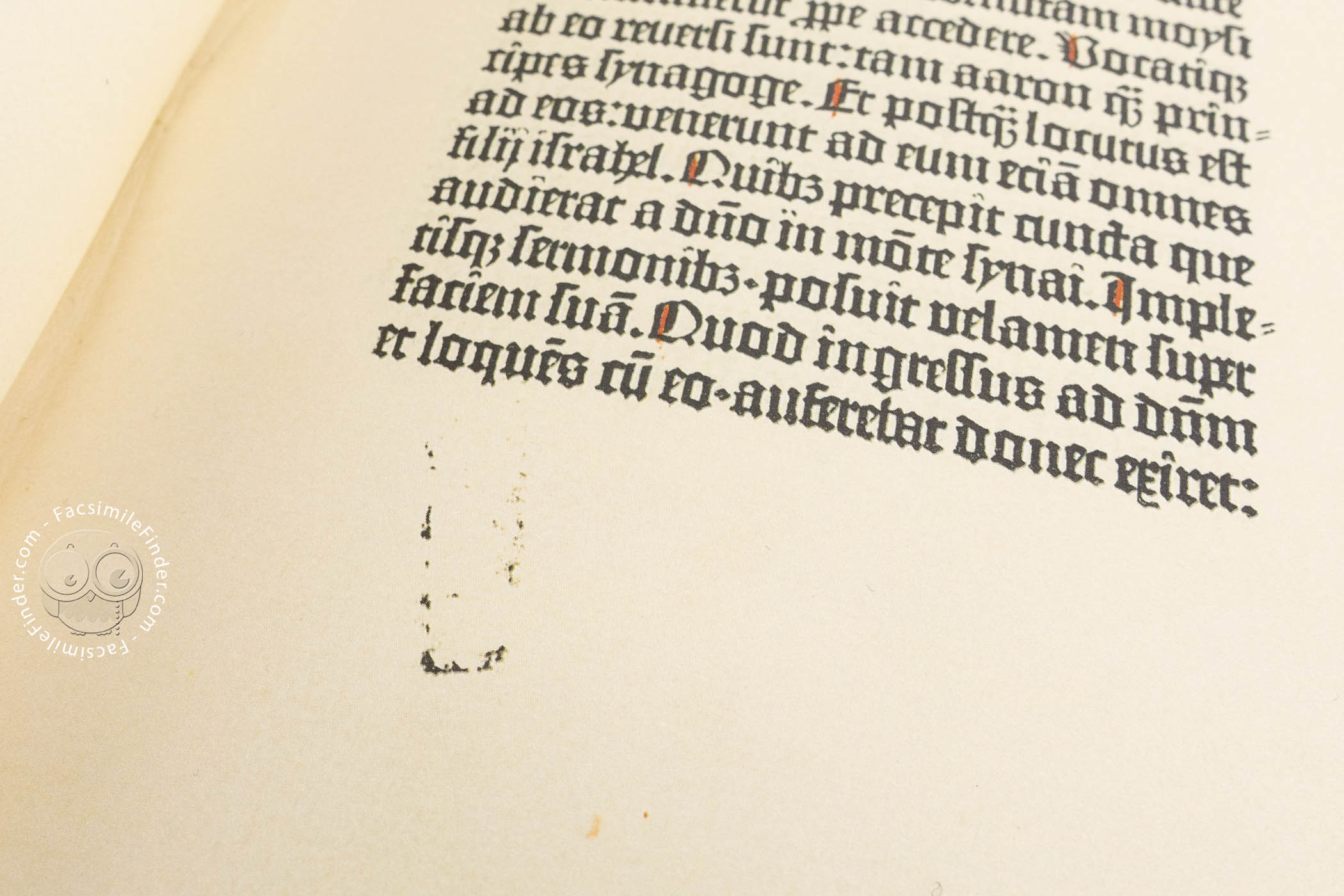
A minute yet remarkable detail makes the Pelplin Bible—already of exceptional historical importance—even more significant. On folio 46 of the first volume, there is a mark measuring approximately 25 × 7 mm. This imprint is the trace left by a piece of movable type that appears to have accidentally fallen from the printer’s hand. The existence of this mark has enabled modern scholars to reconstruct aspects of Gutenberg’s movable-type block structure, offering crucial evidence for the study of the early history of printing.
Escaping the War
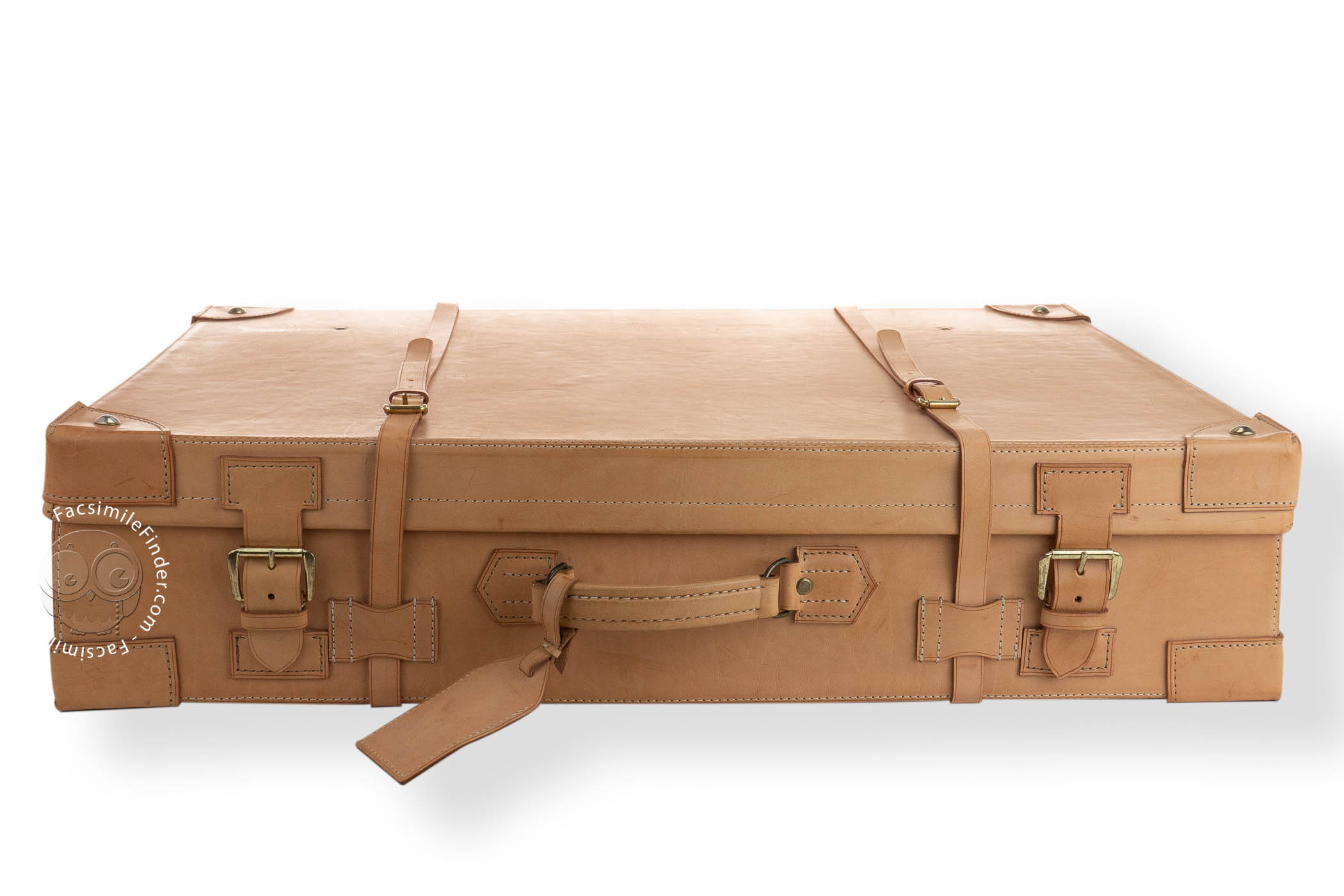
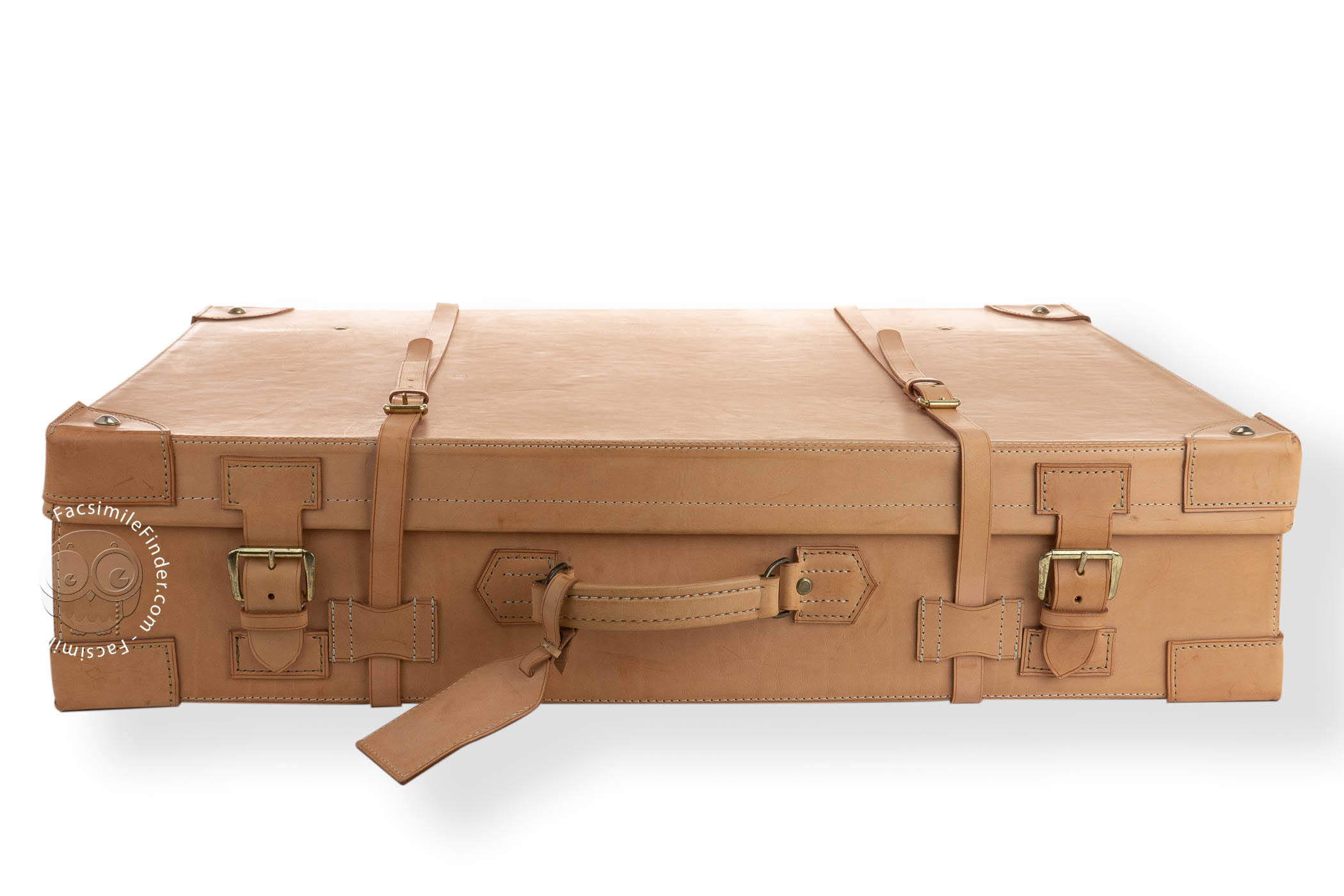
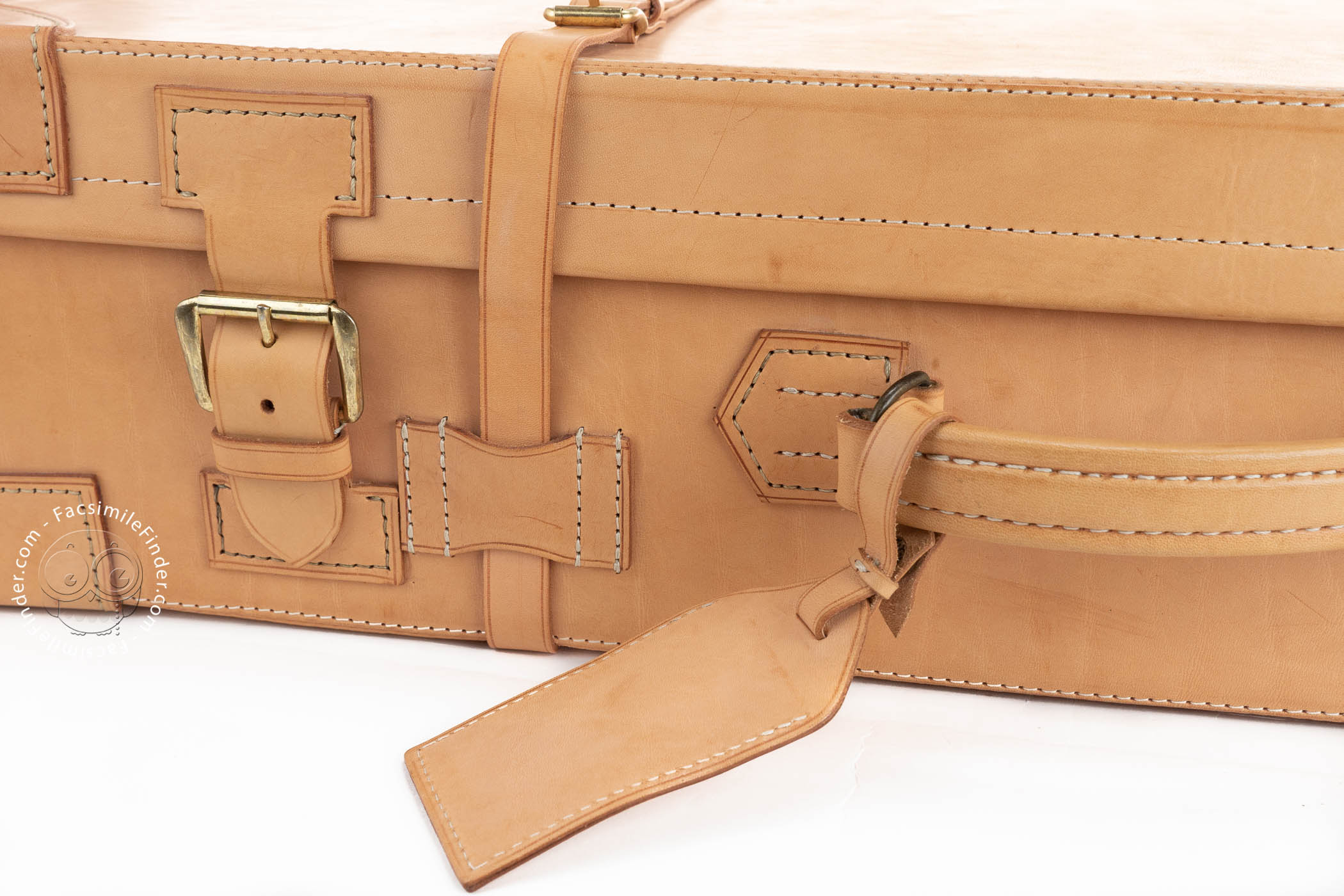
The two-volume Latin Bible, acquired by Reverend Chrapicki, Bishop of Chełmno (1496–1508), was donated to the Franciscan Order in Lubawa, Poland. On the eve of the Second World War, the Pelplin Bible was in danger of being lost forever. It was saved by Reverend Liedtke, who secured it in a leather suitcase and transported it to Paris, together with other treasures belonging to the diocese. Shortly before German troops entered the French capital, these Polish cultural treasures were moved to London and subsequently to Canada. After two decades of displacement, the valuables of the Diocese of Pelplin, including the Bible, were finally returned to their rightful home.
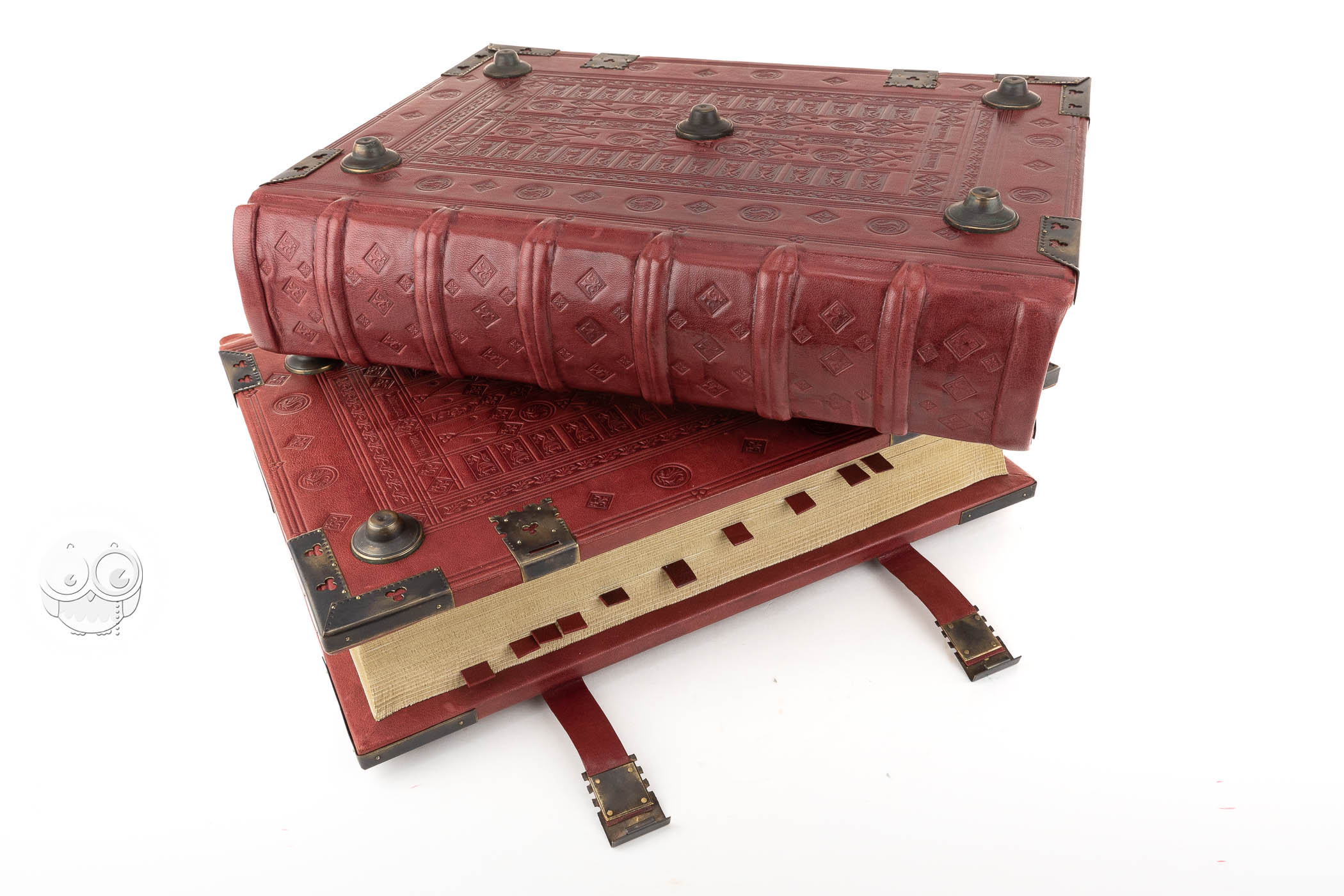
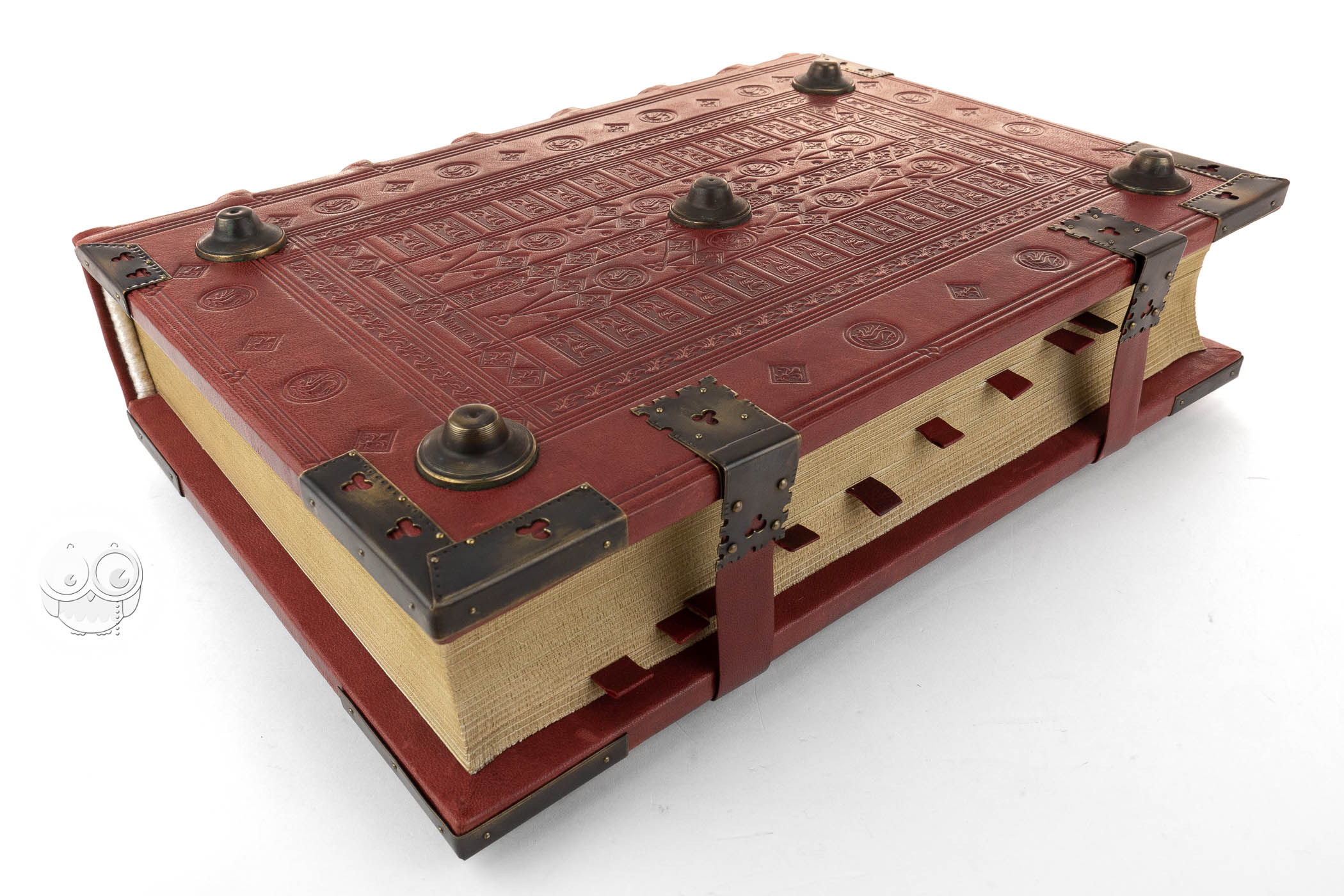
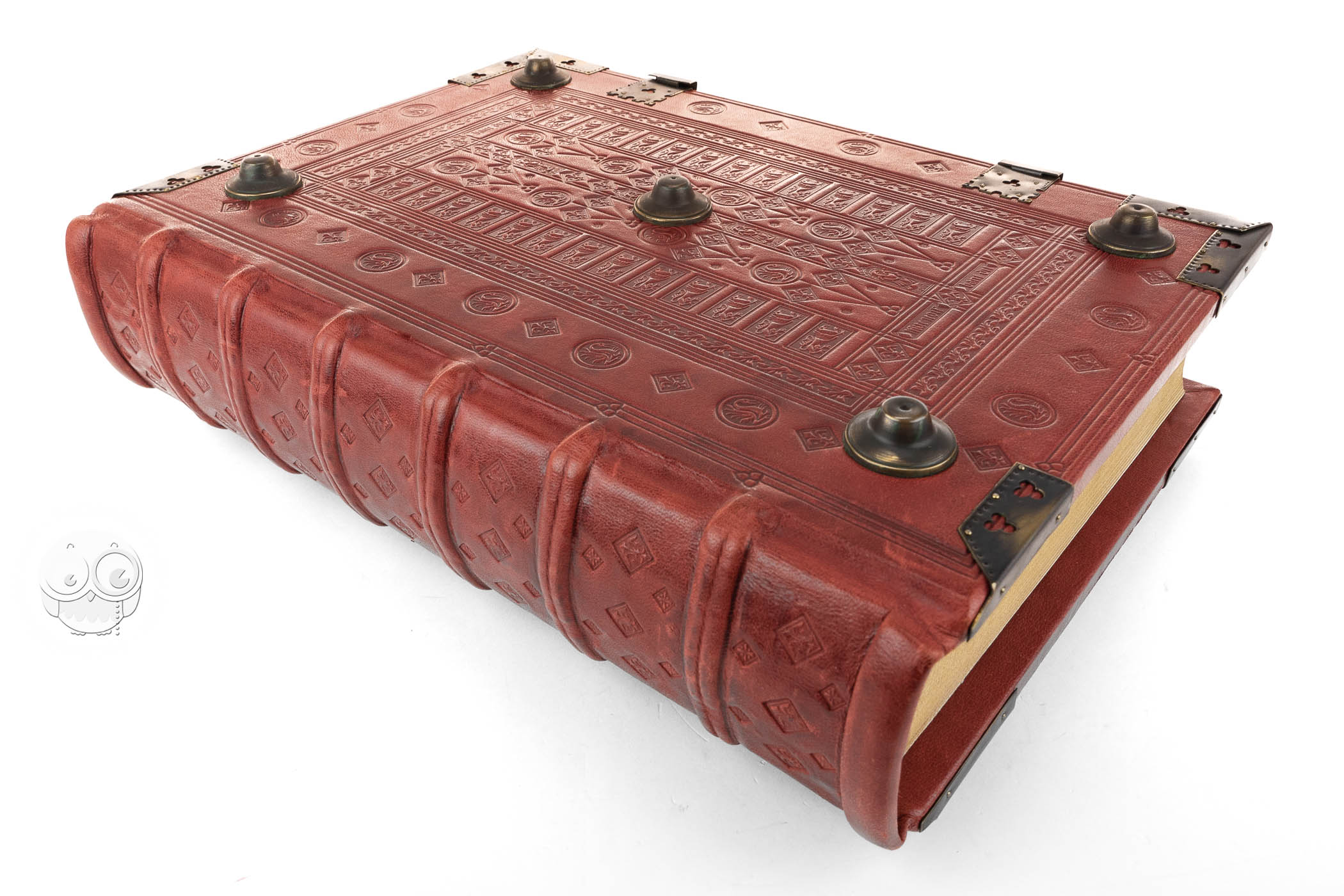
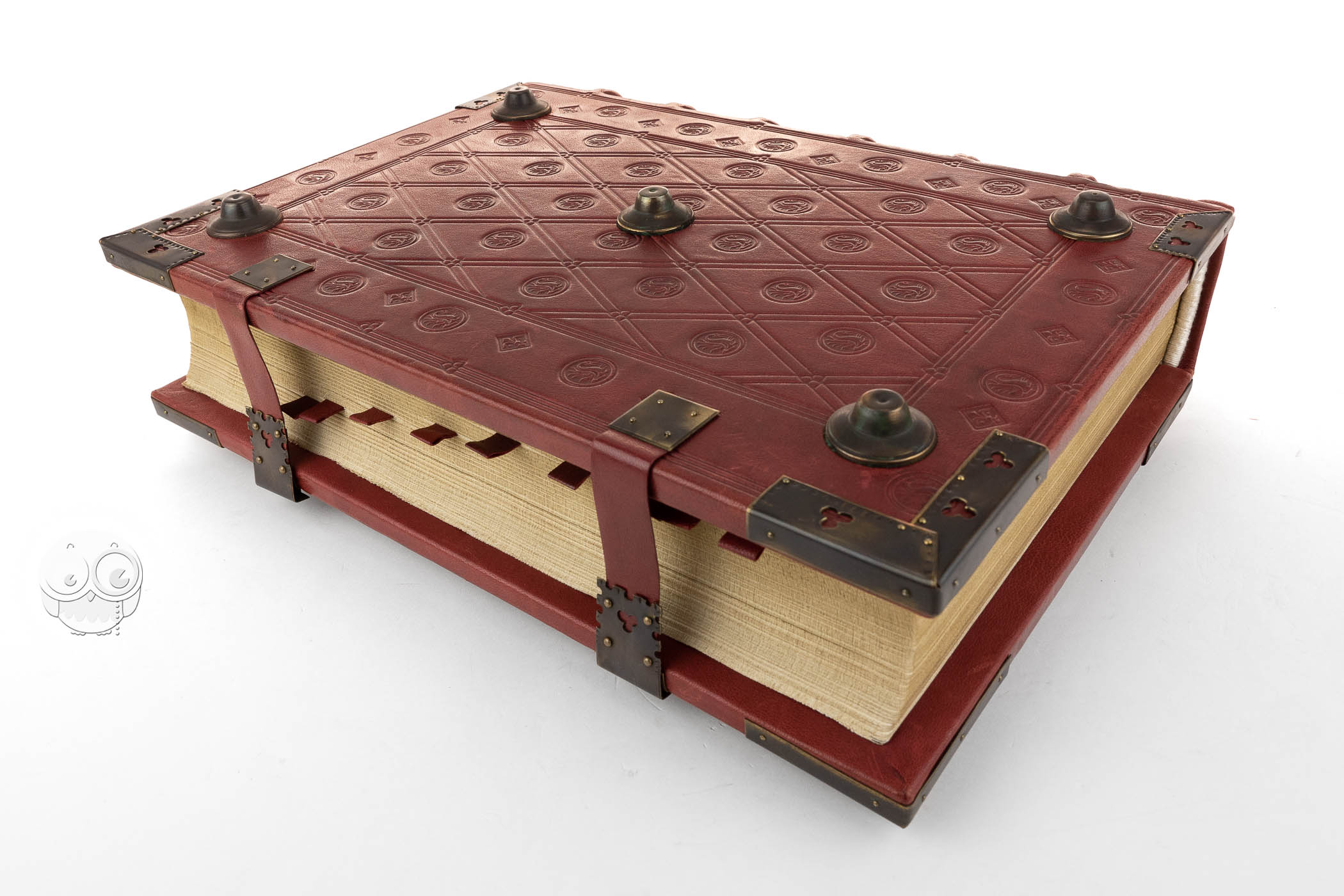
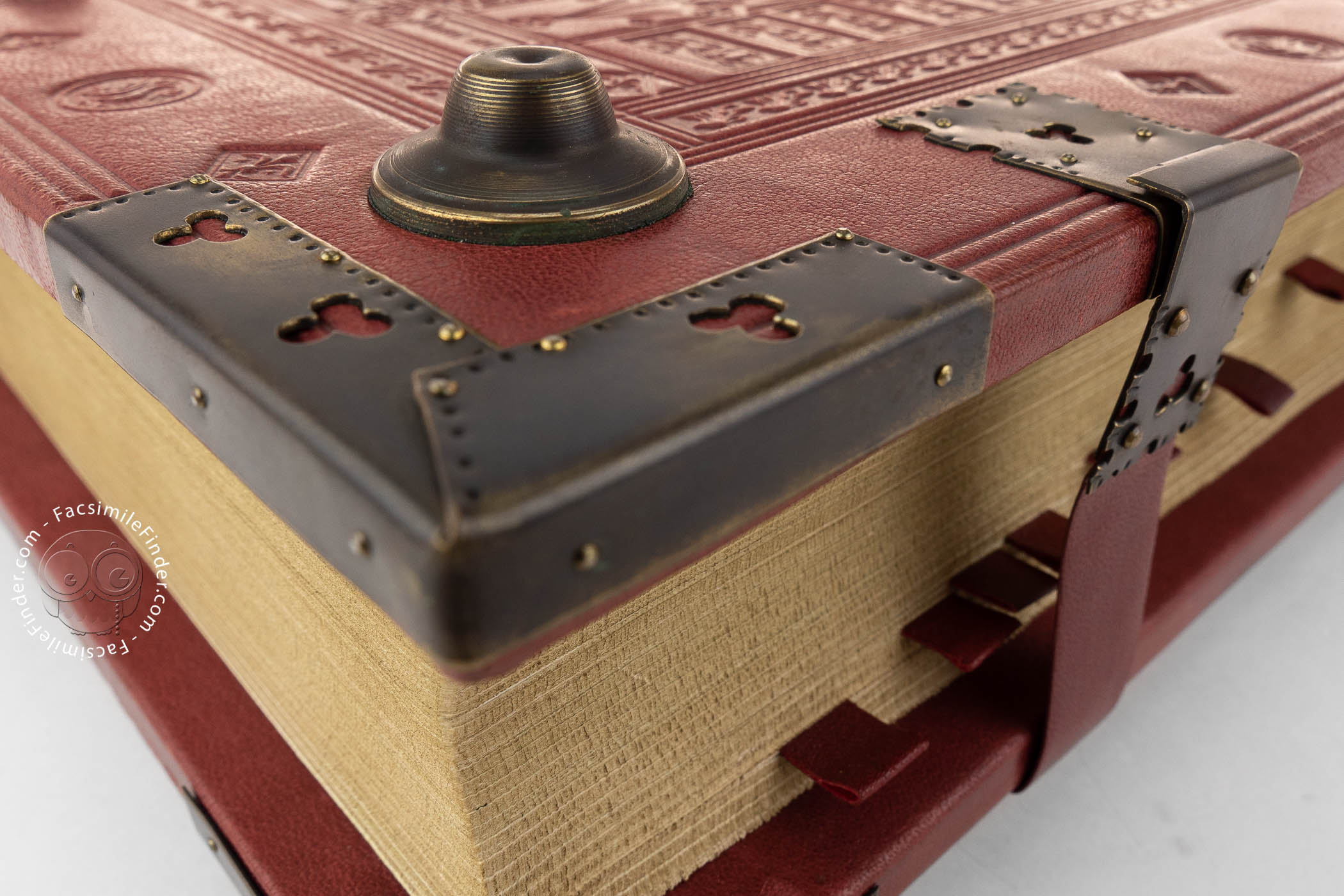
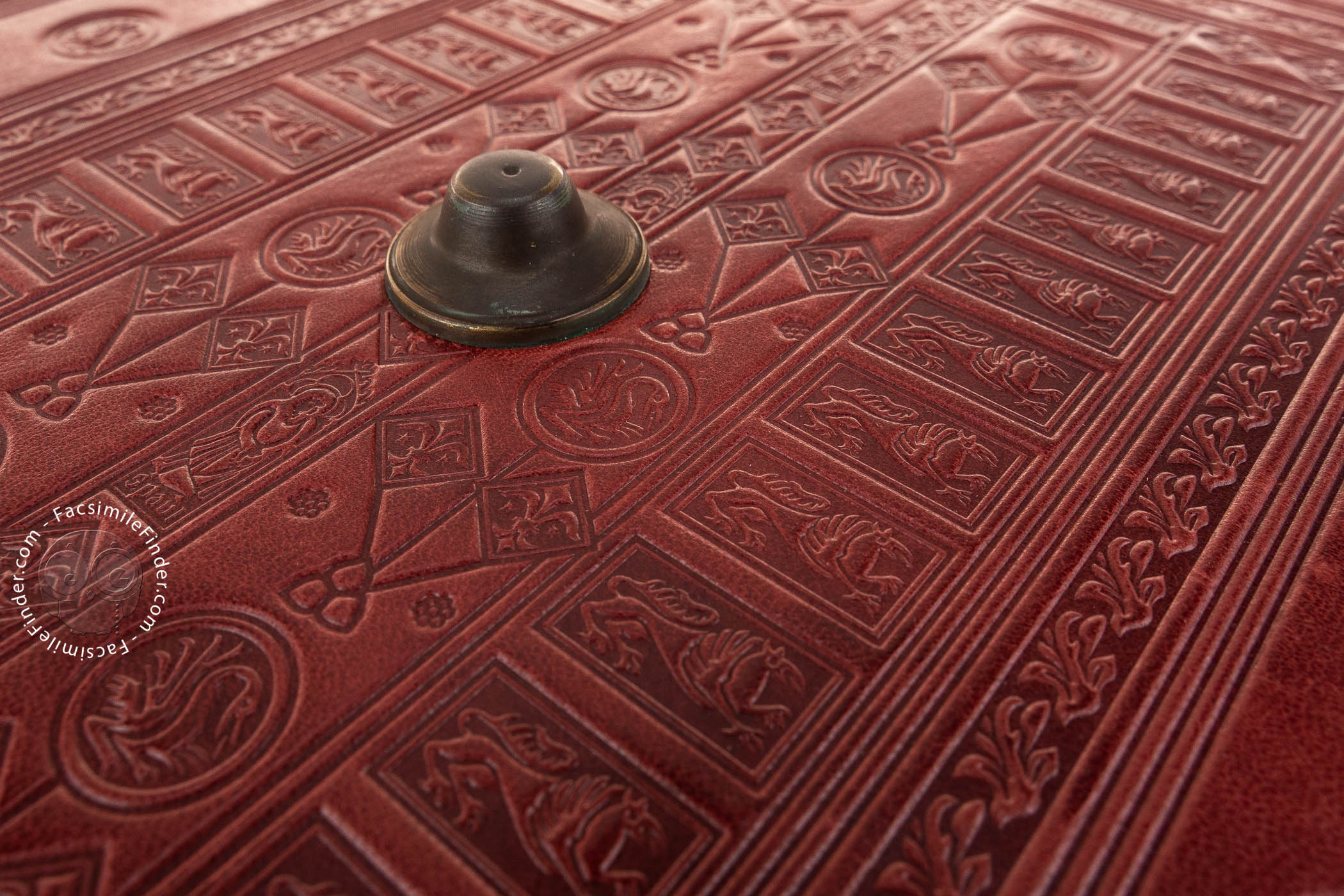
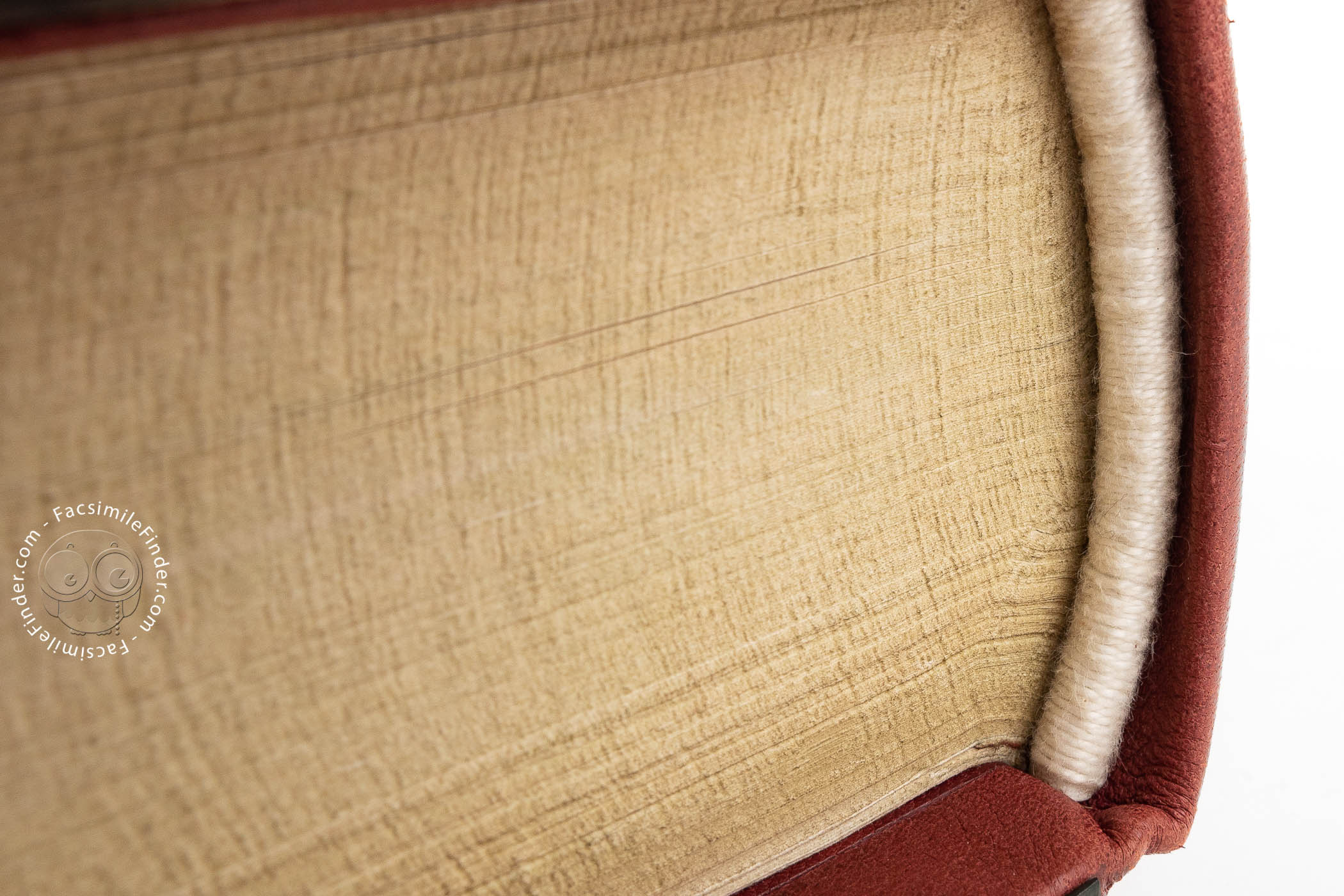
The codex was bound in the fifteenth century by Henricus Coster of Lübeck. The binding consists of two oak boards covered with red goatskin.
We have 2 facsimiles of the manuscript "Pelplin Gutenberg Bible":
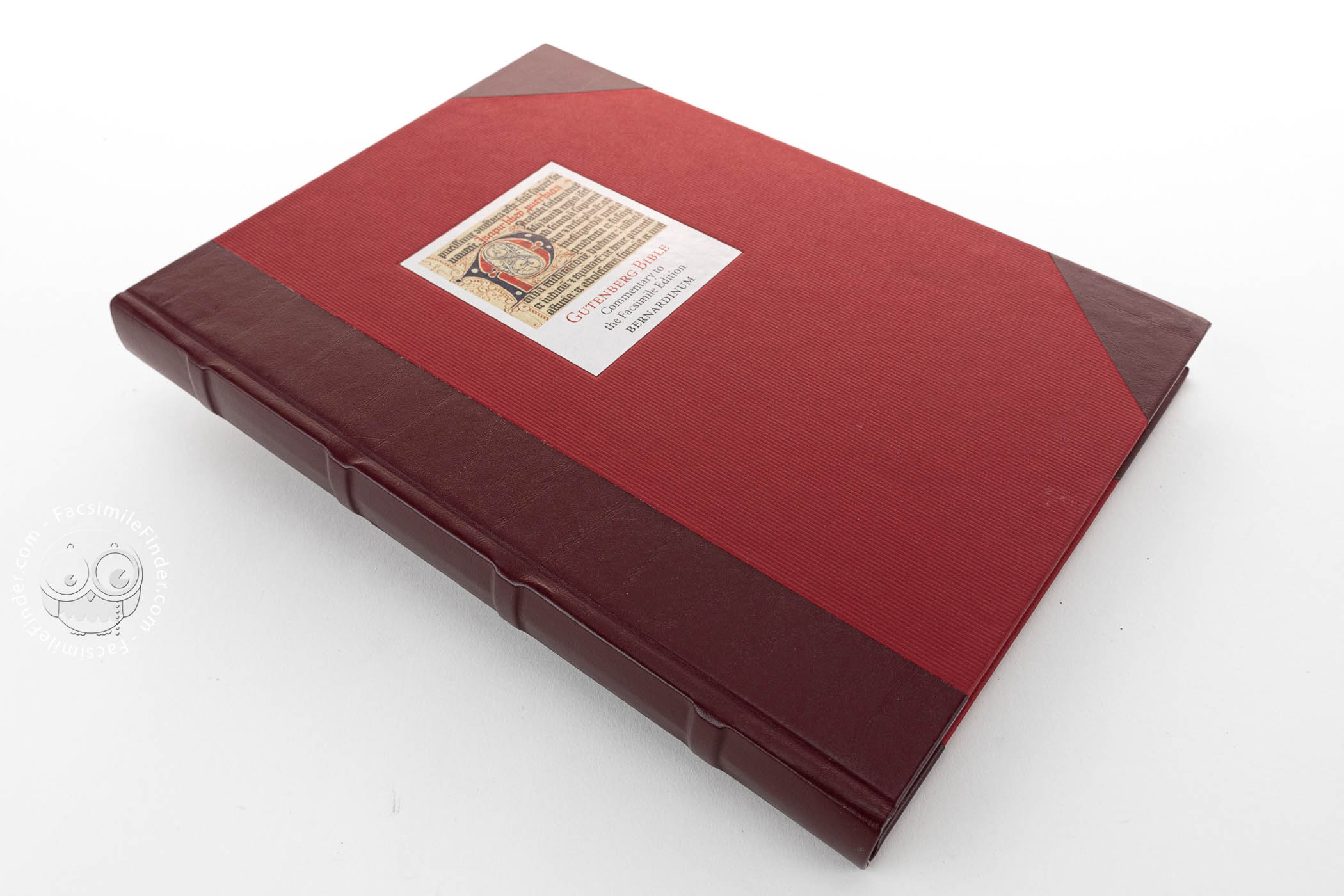
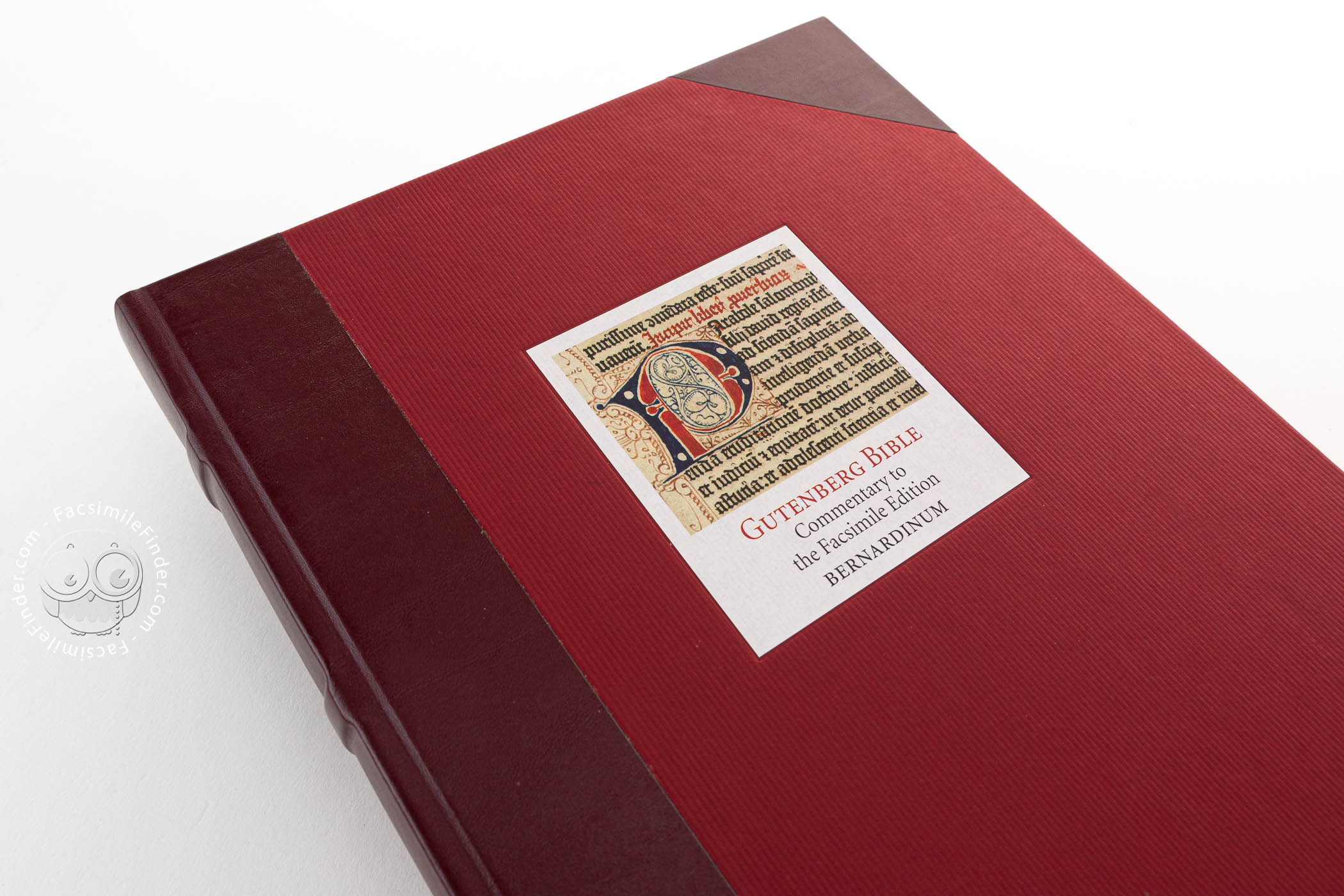
- Pelplinskiego Egzemplarza Biblii Gutenberga facsimile edition published by Bernardinum Wydawnictwo, 2002-2003
- Pelplinskiego Egzemplarza Biblii Gutenberga facsimile edition published by Orbis Pictus, 2004