
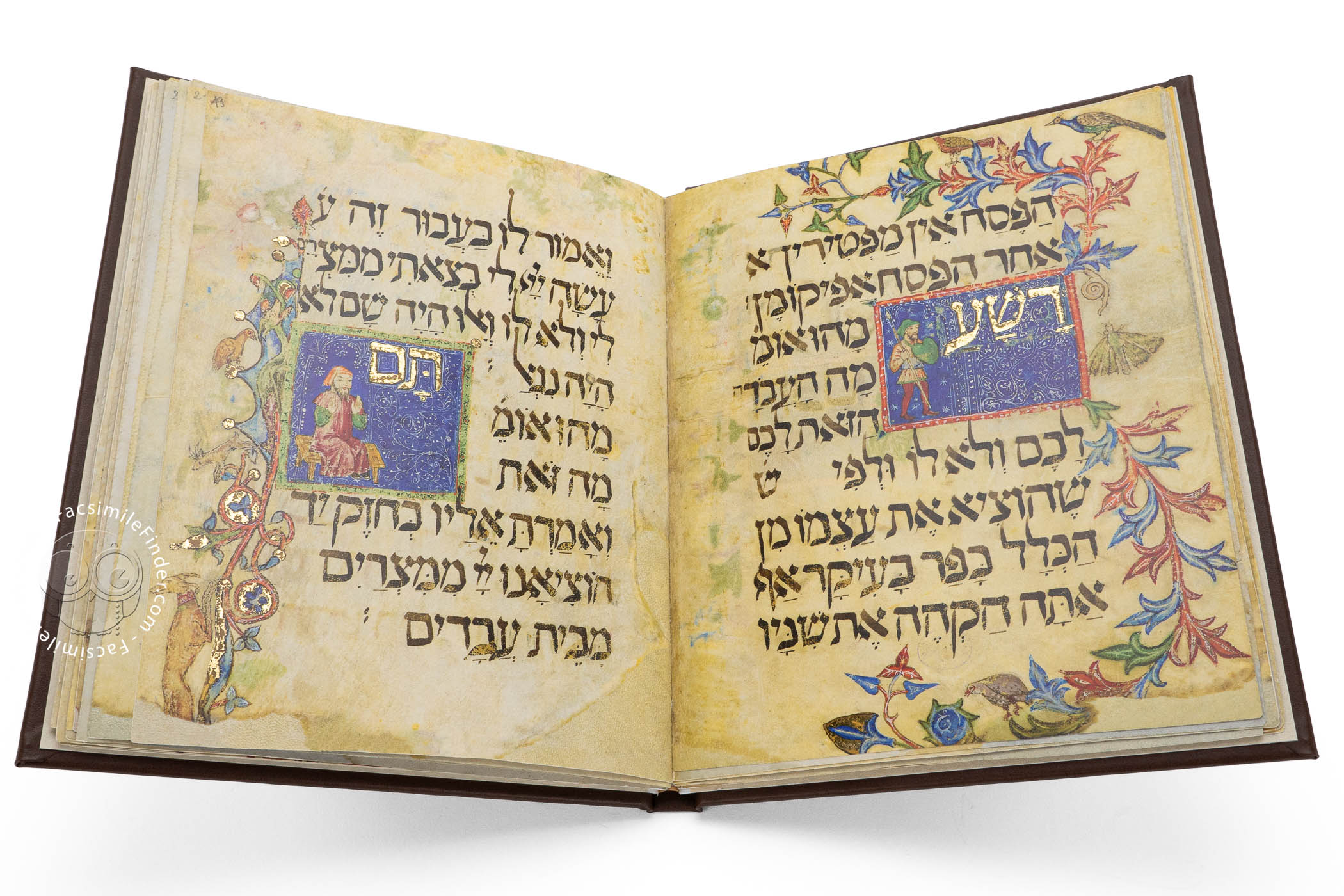
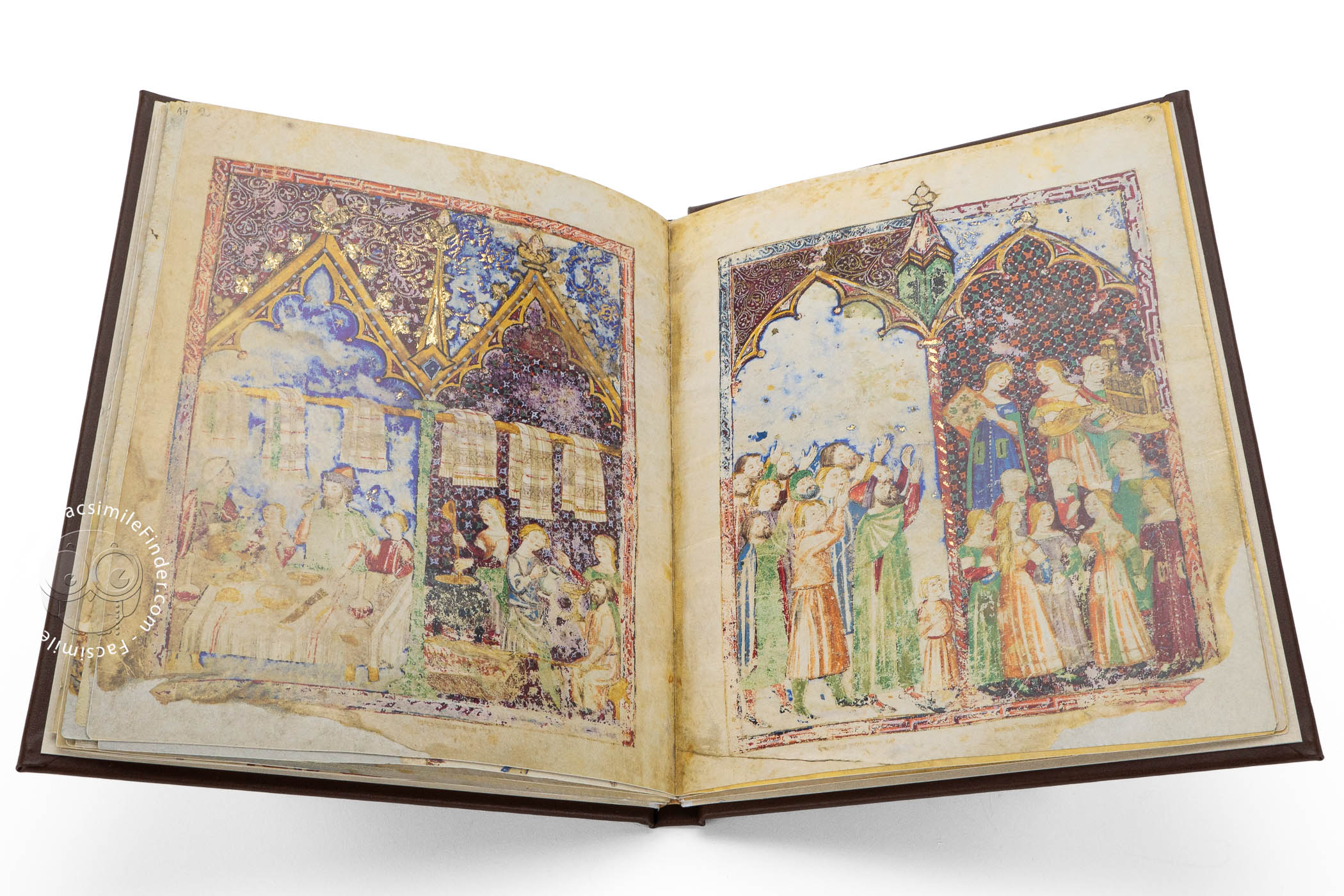
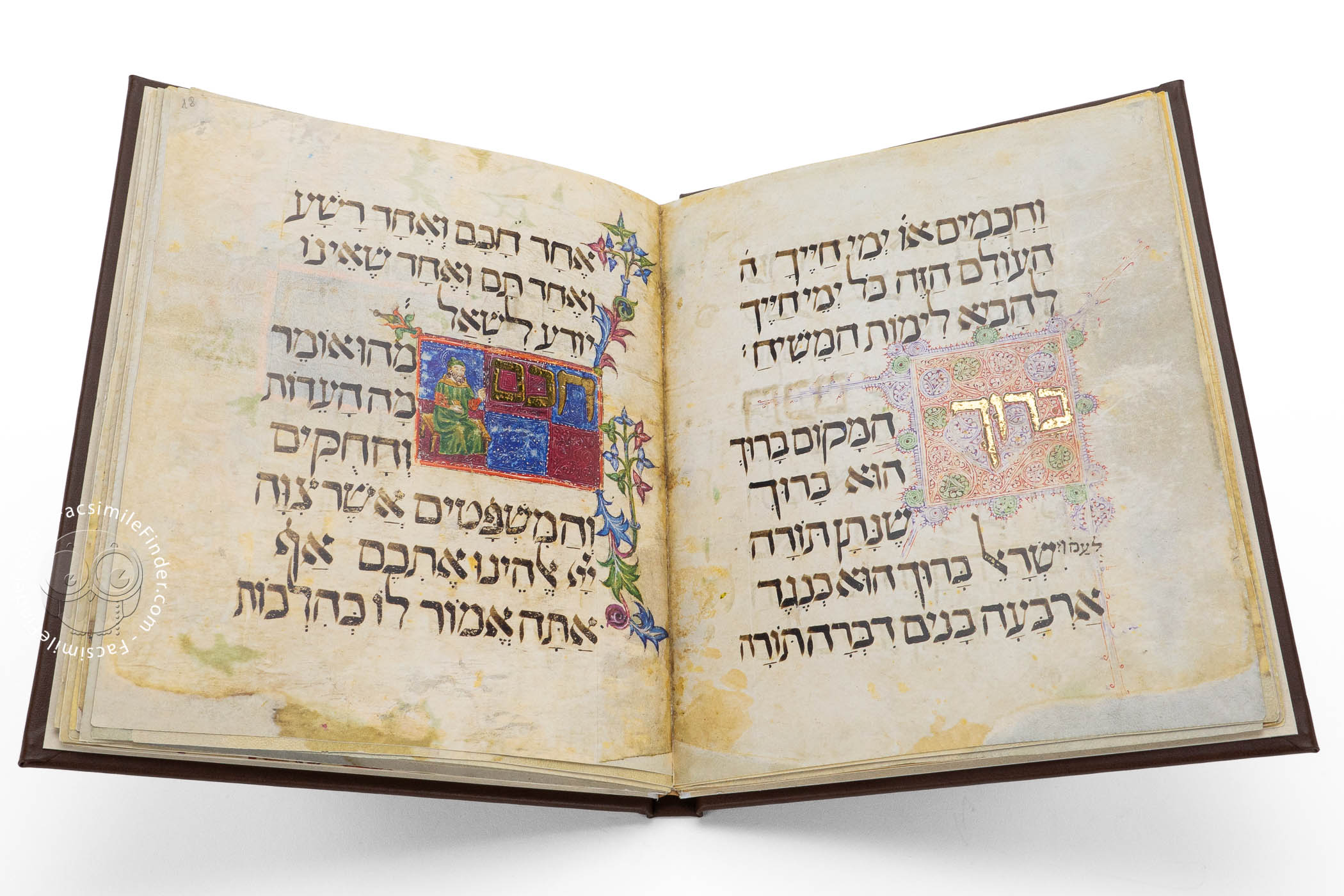
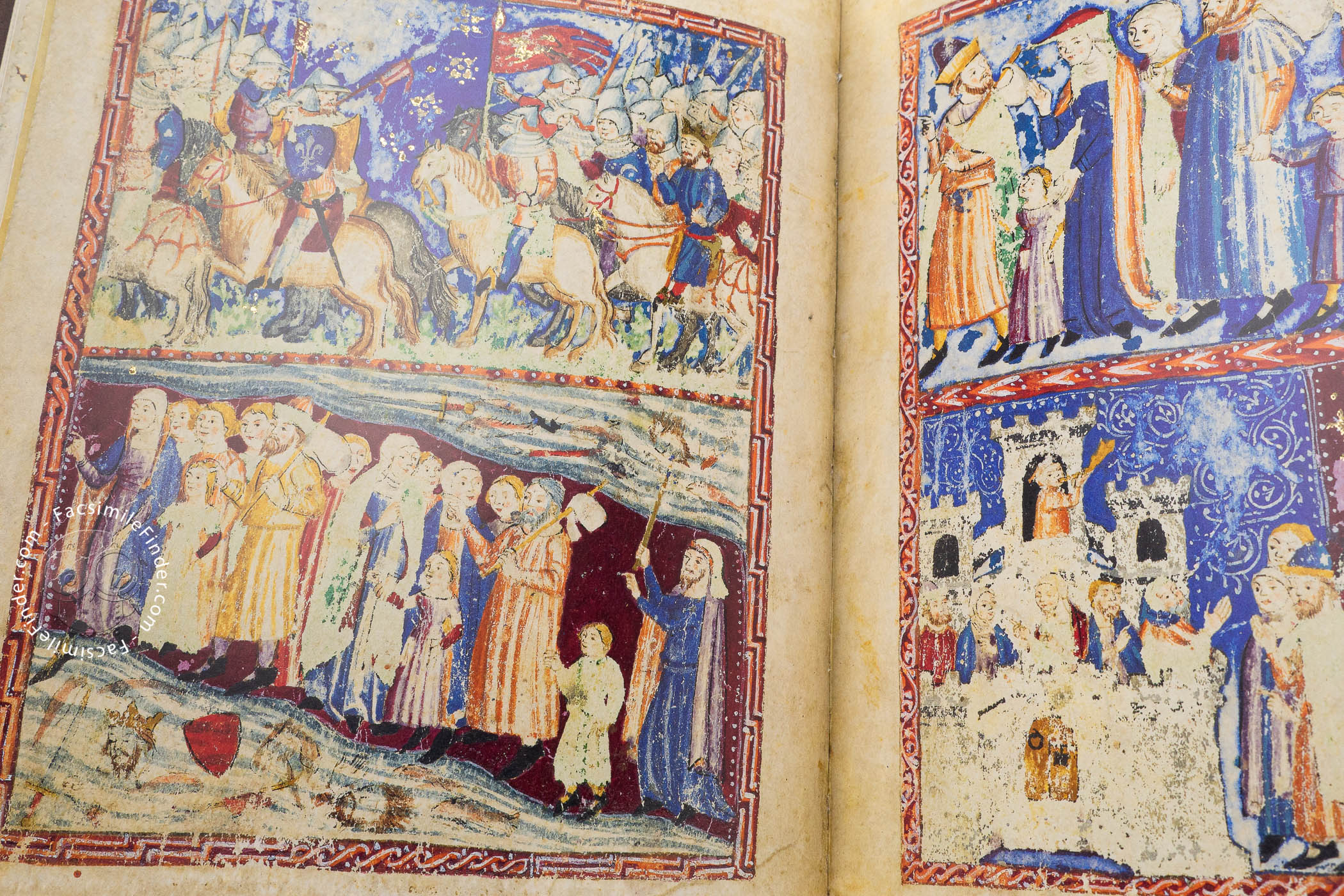
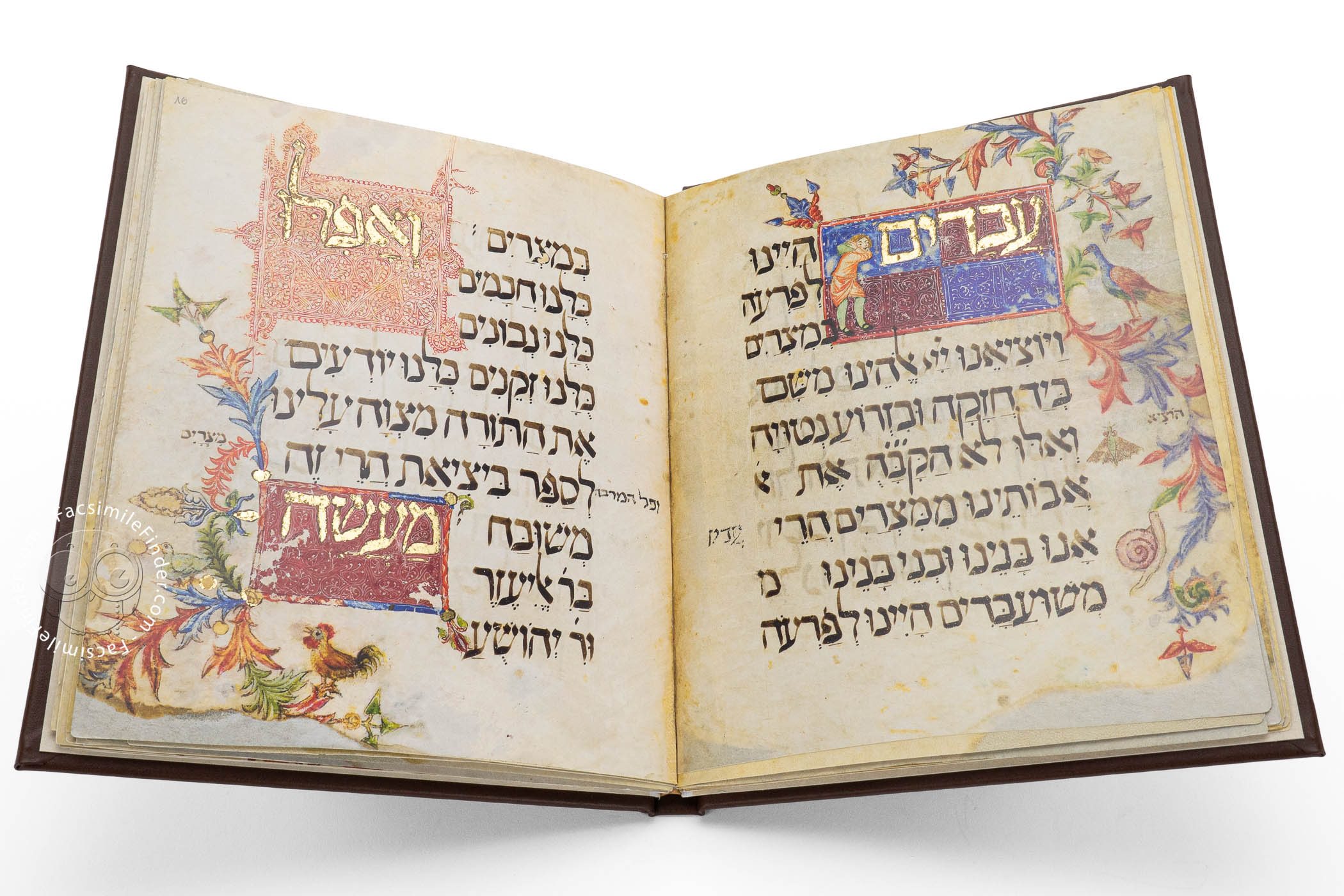
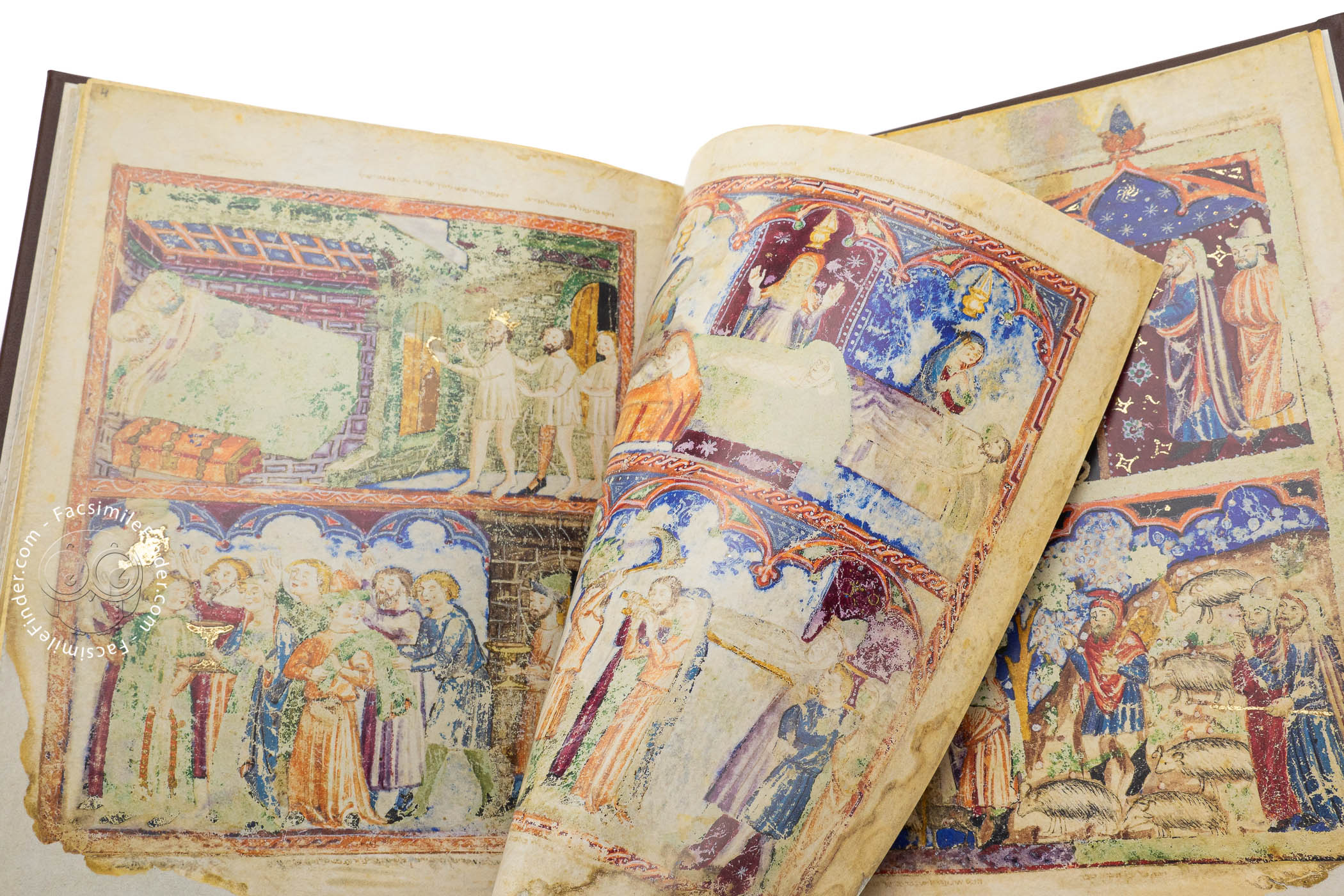
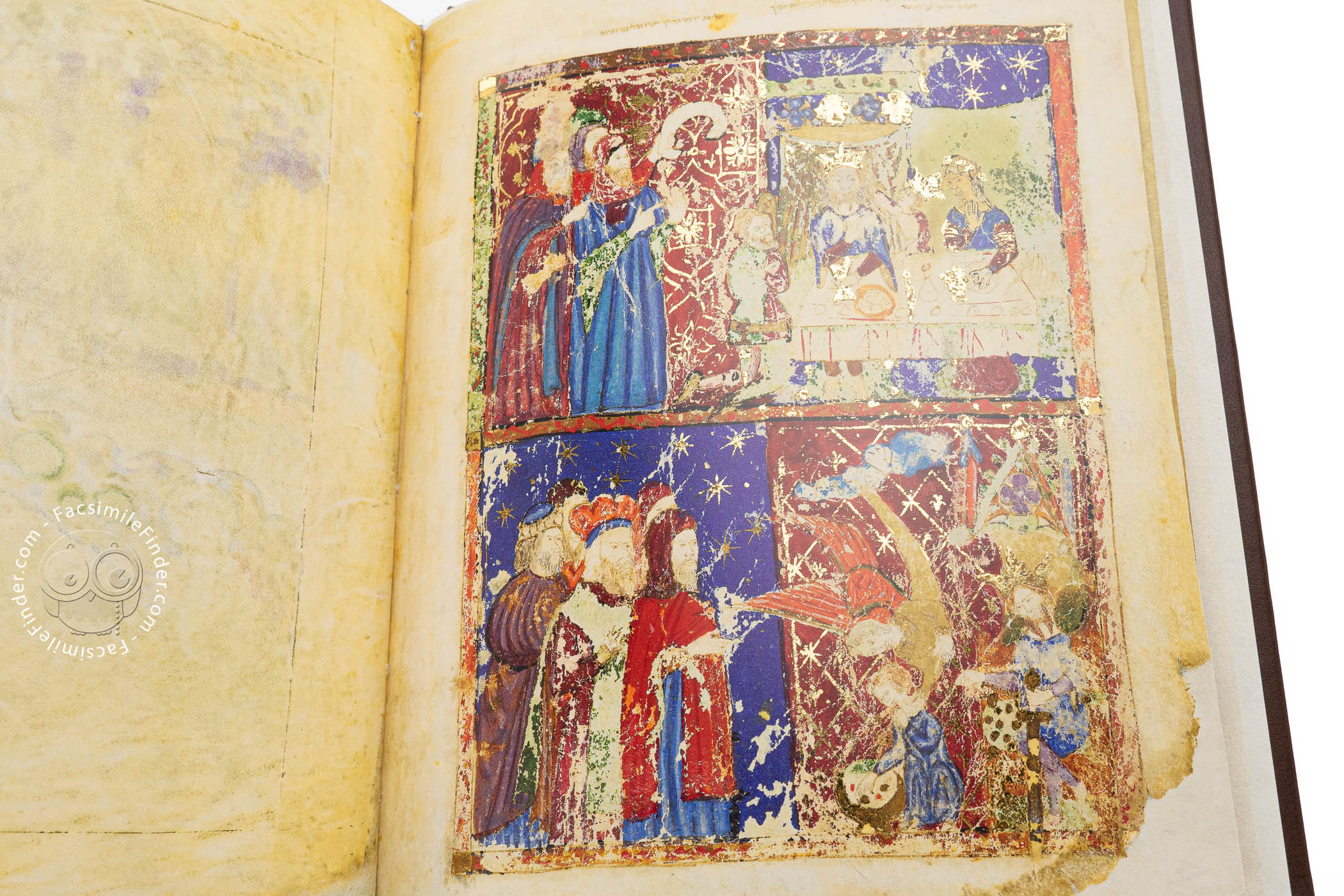
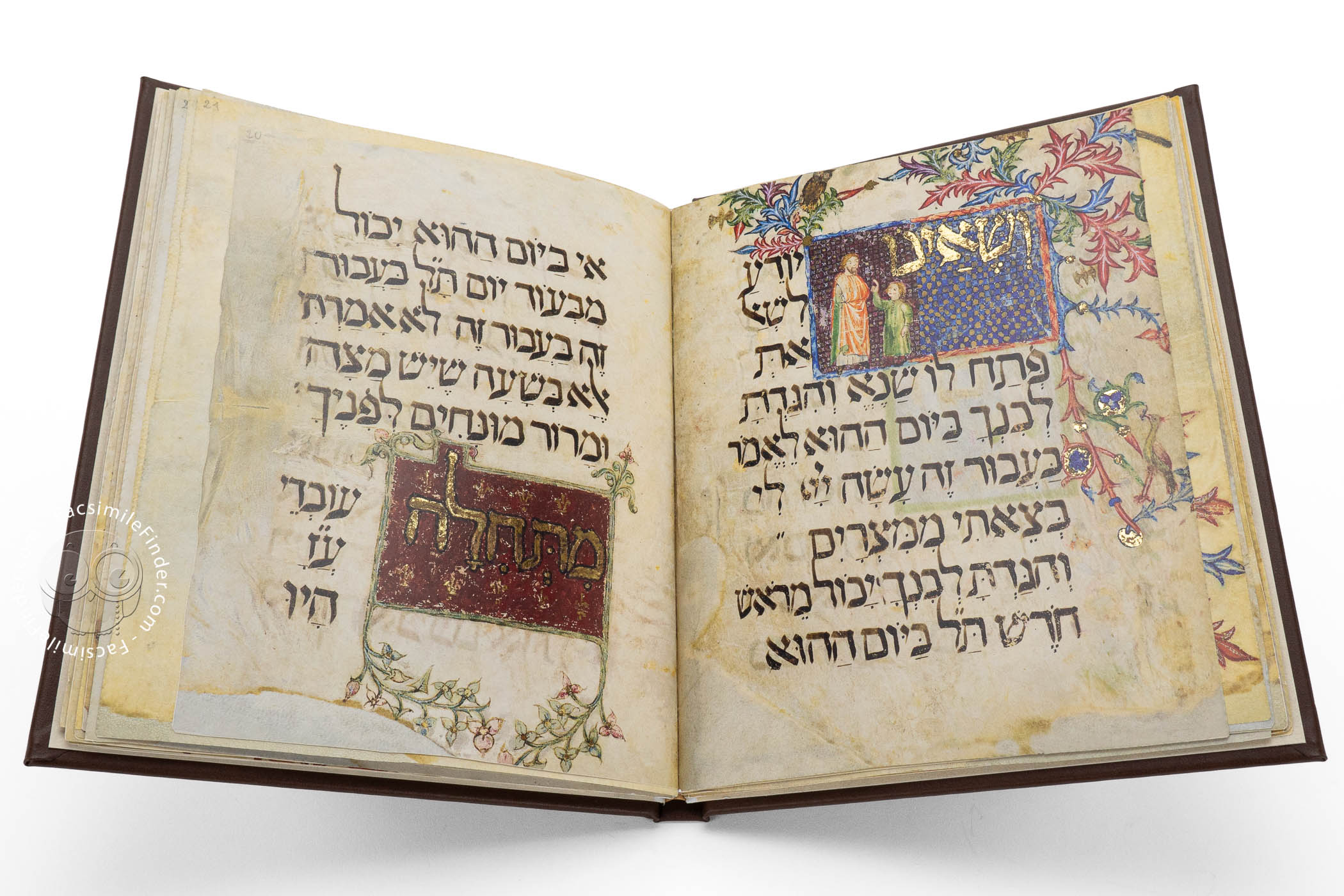
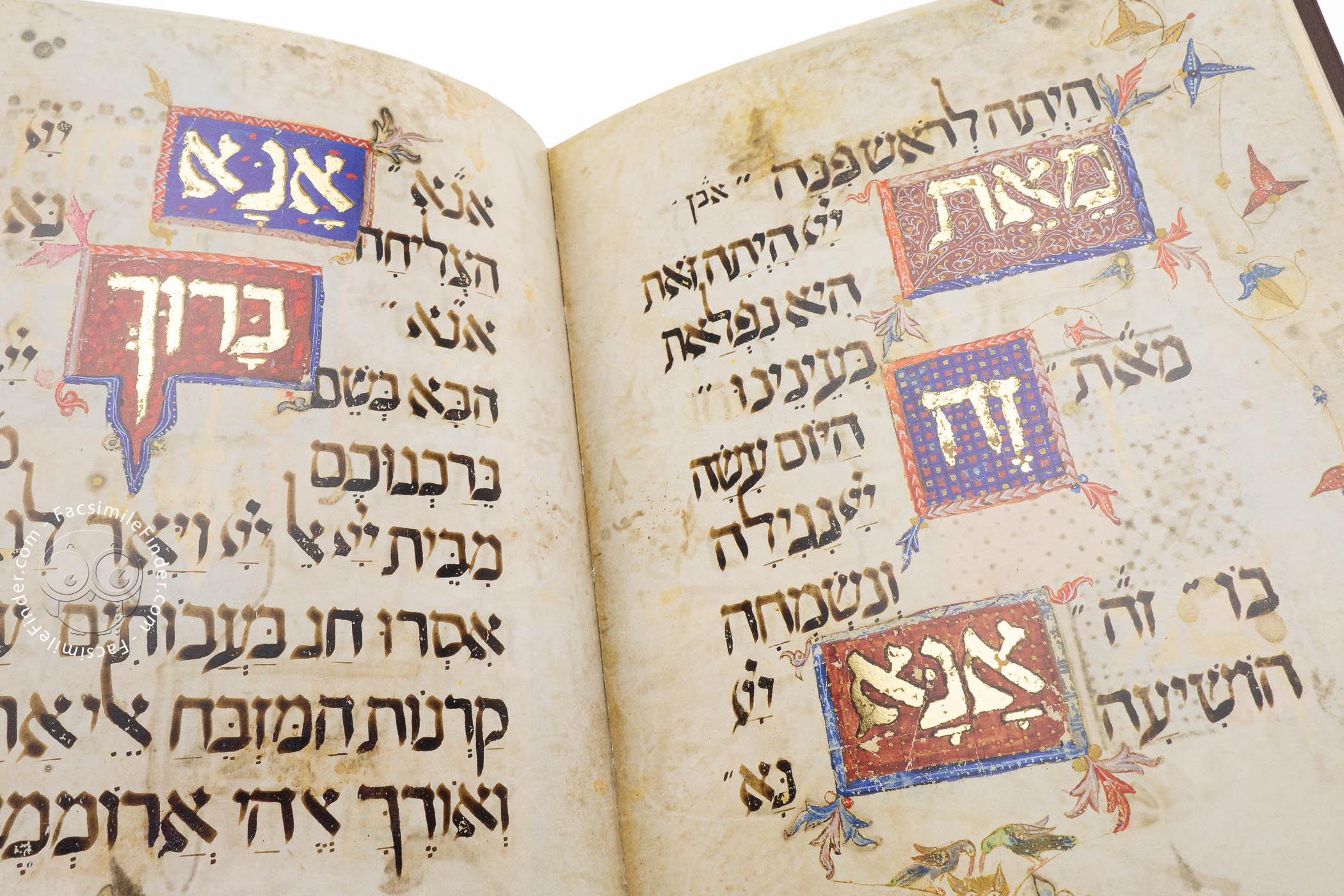
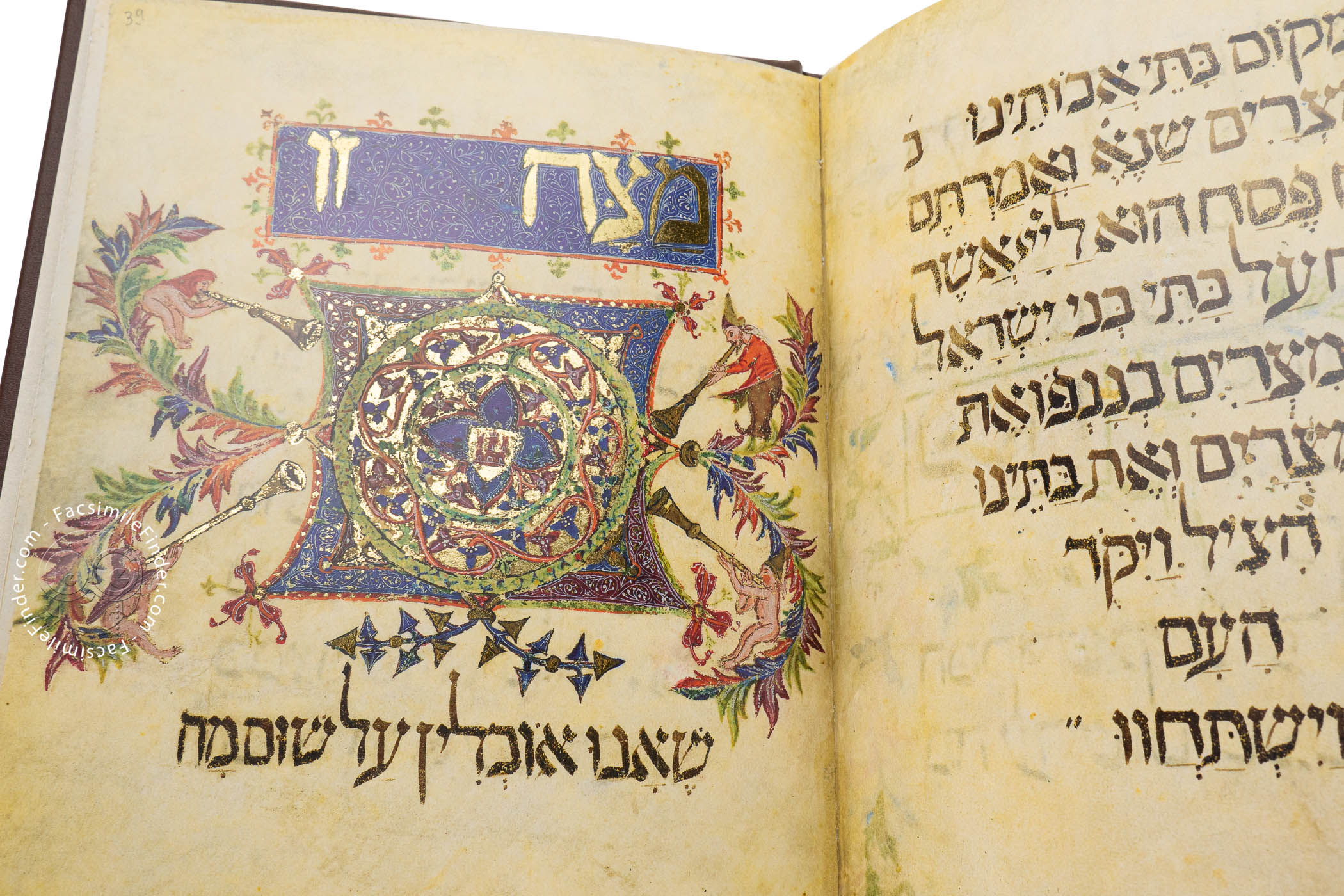
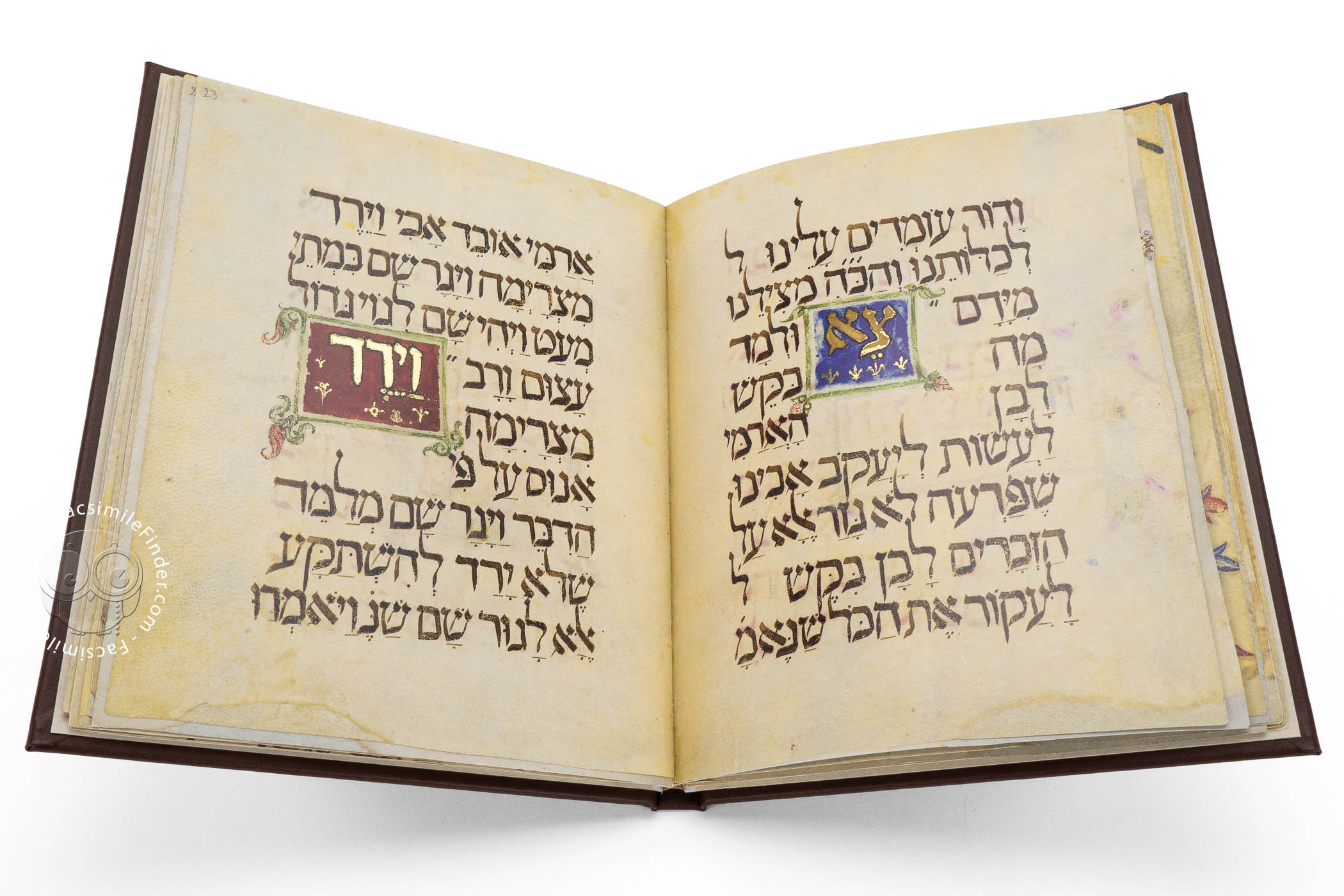
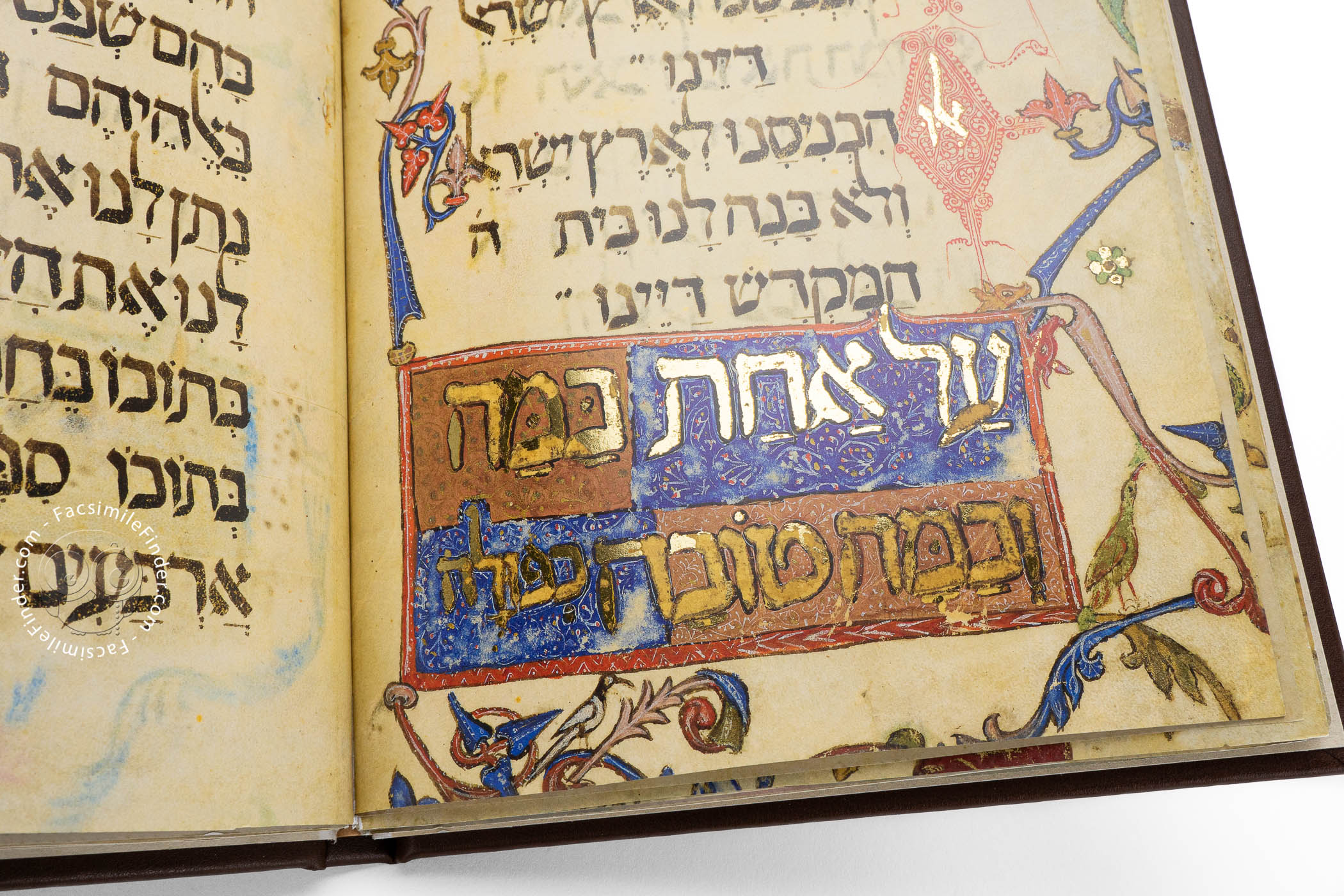
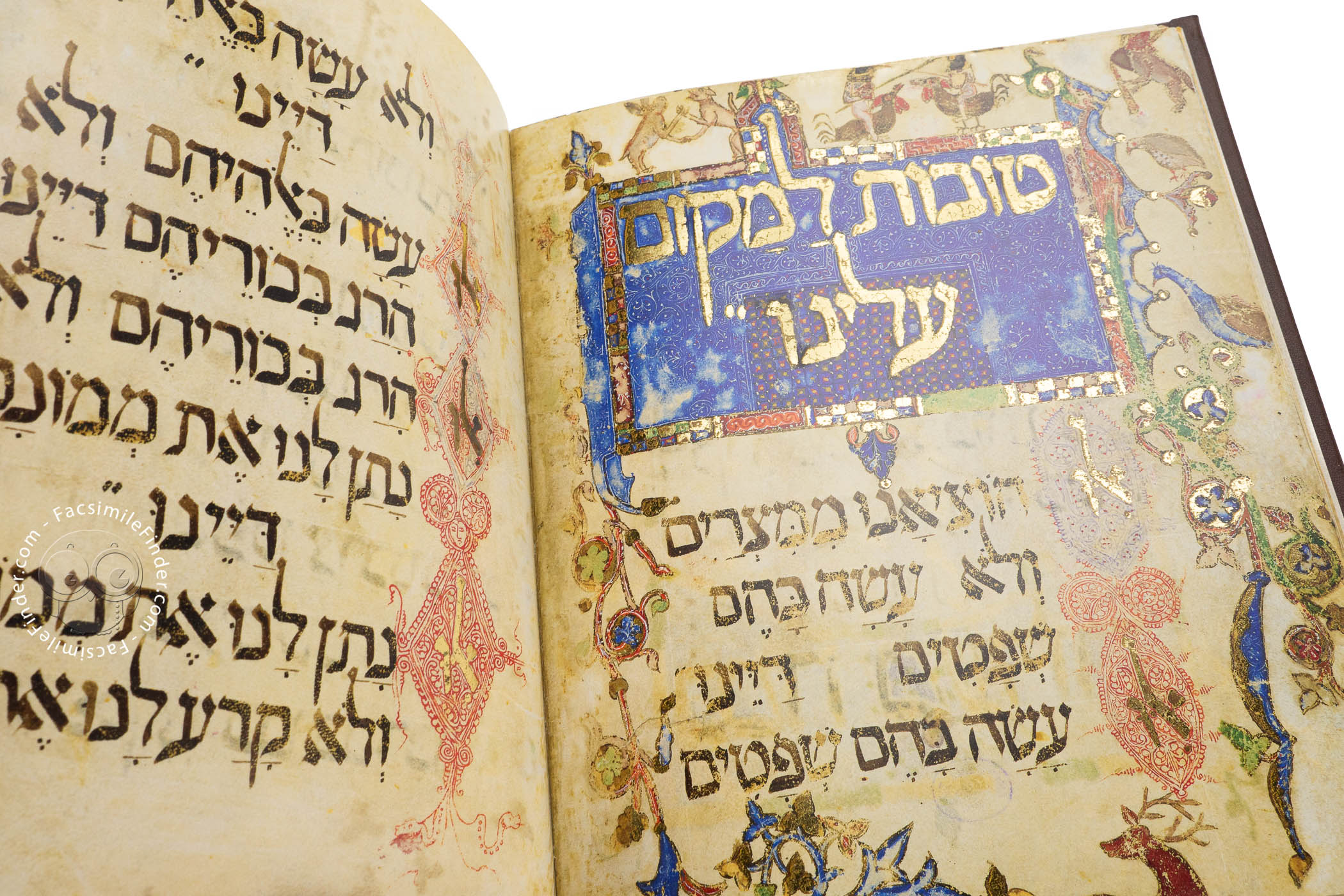
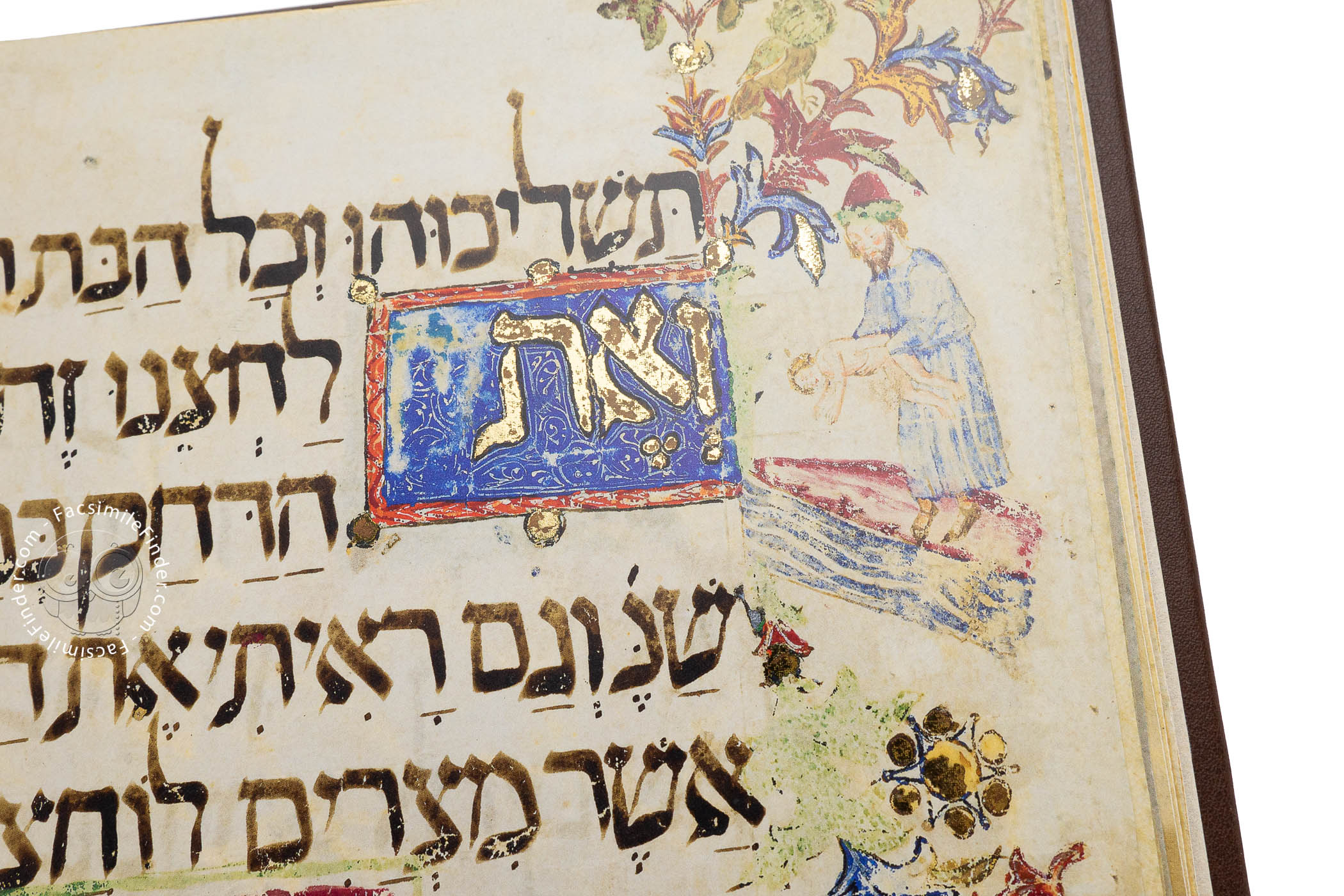
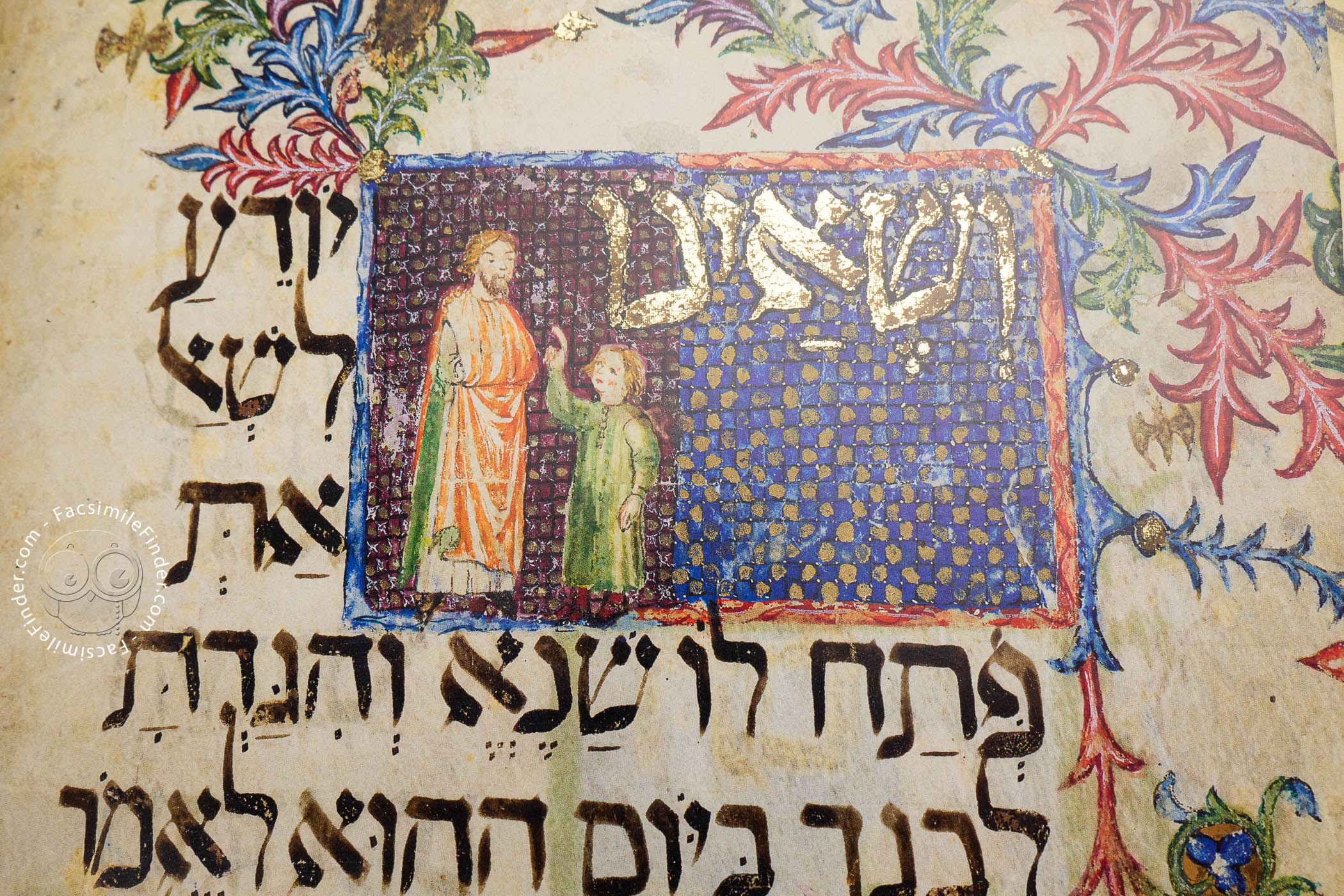
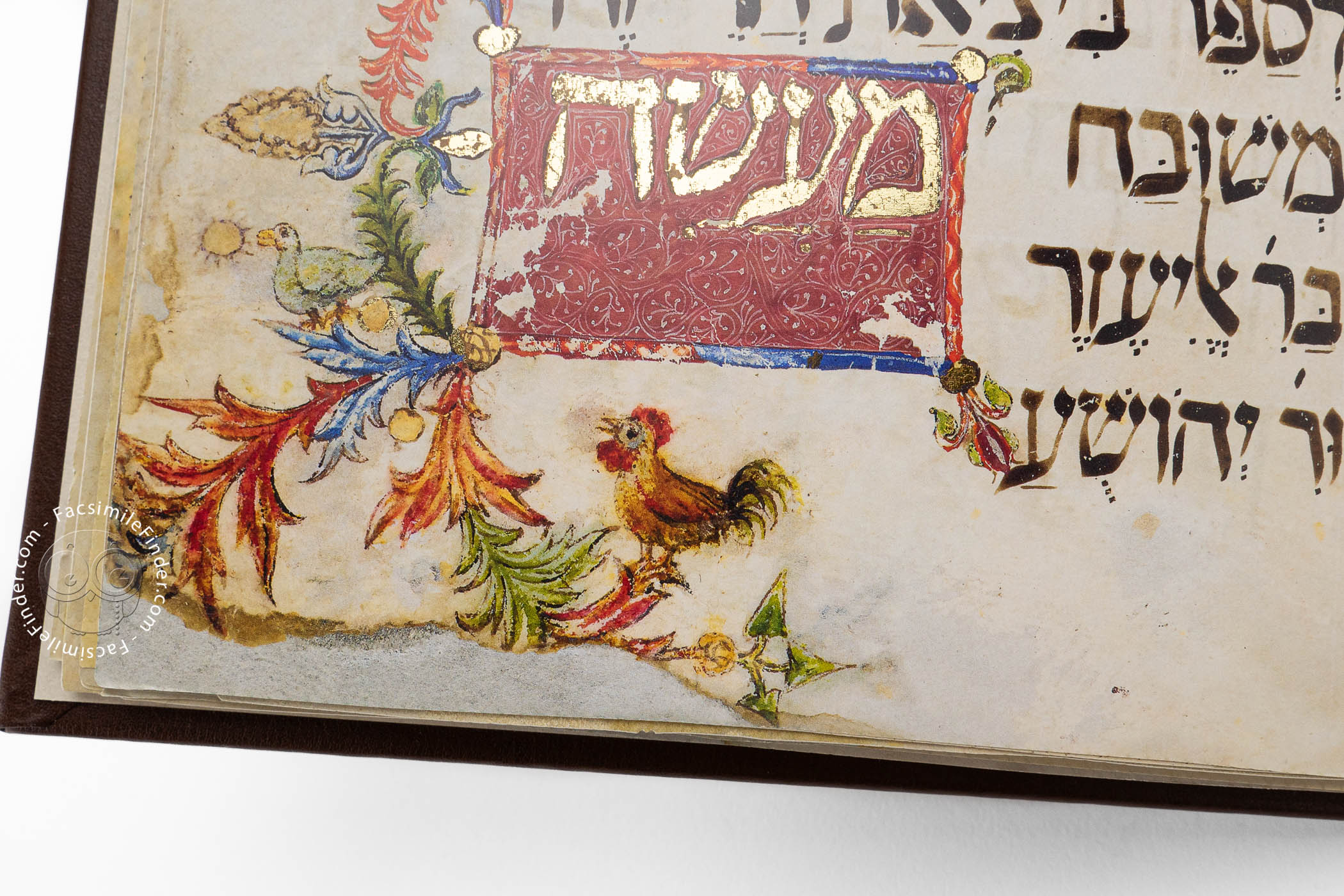
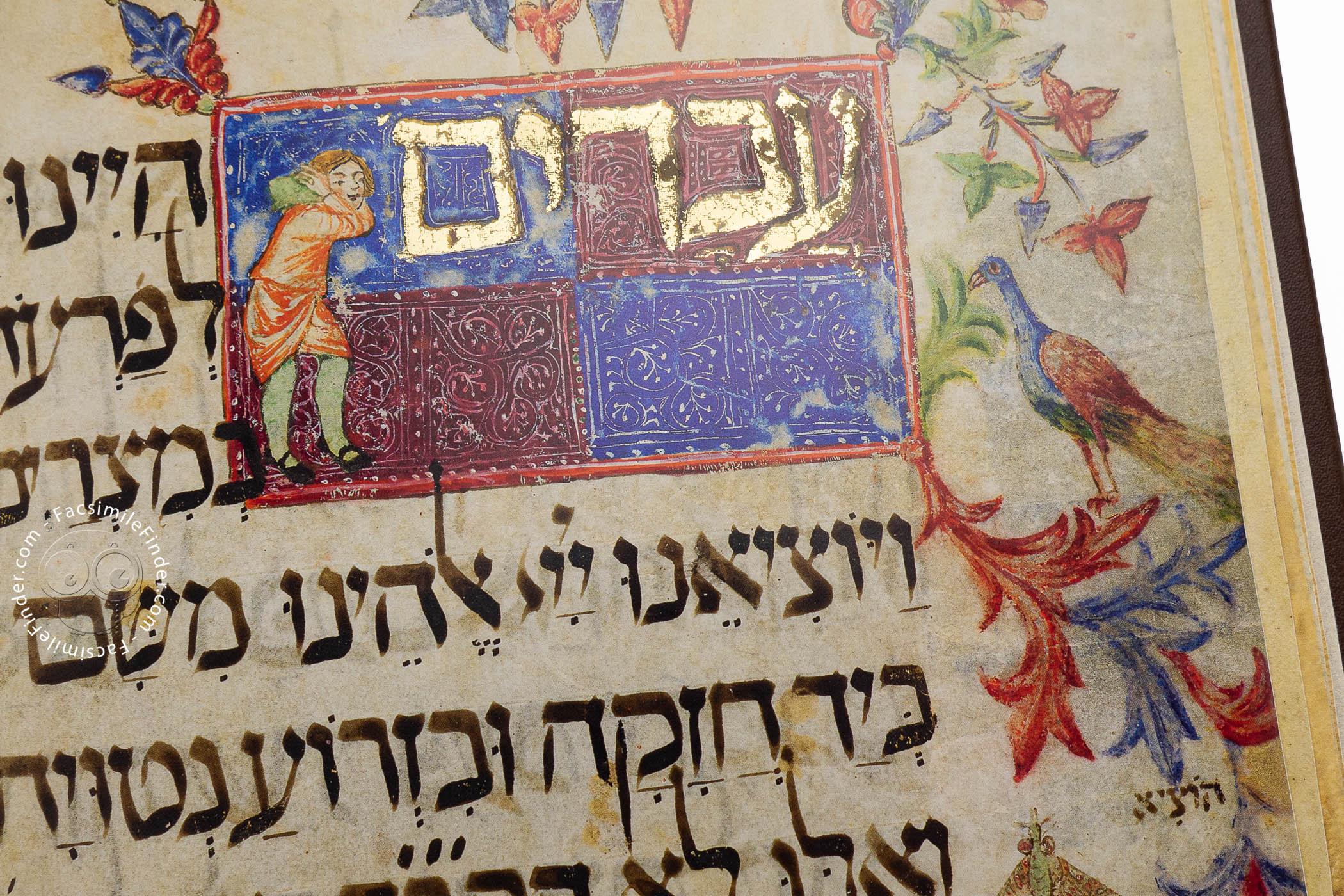
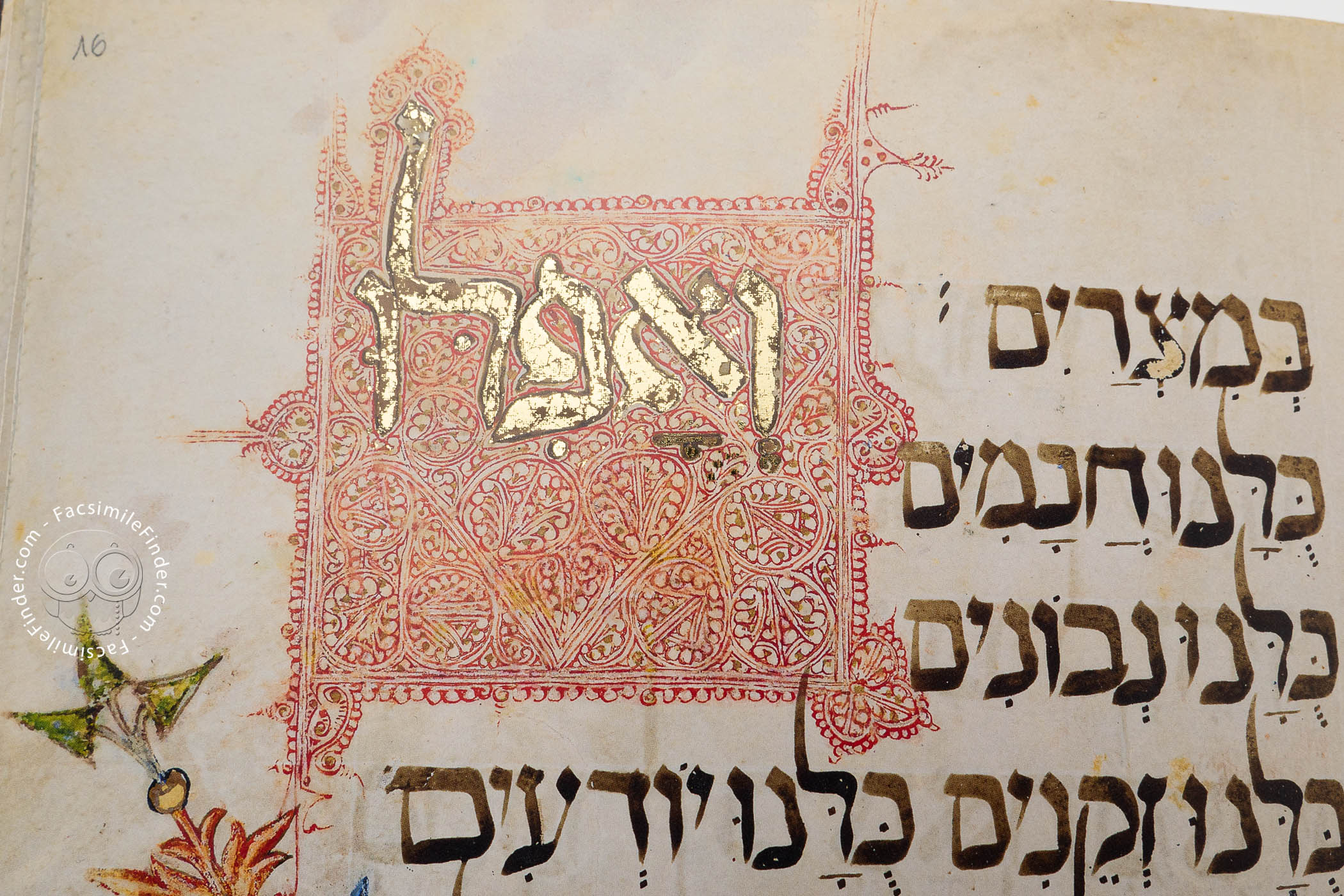
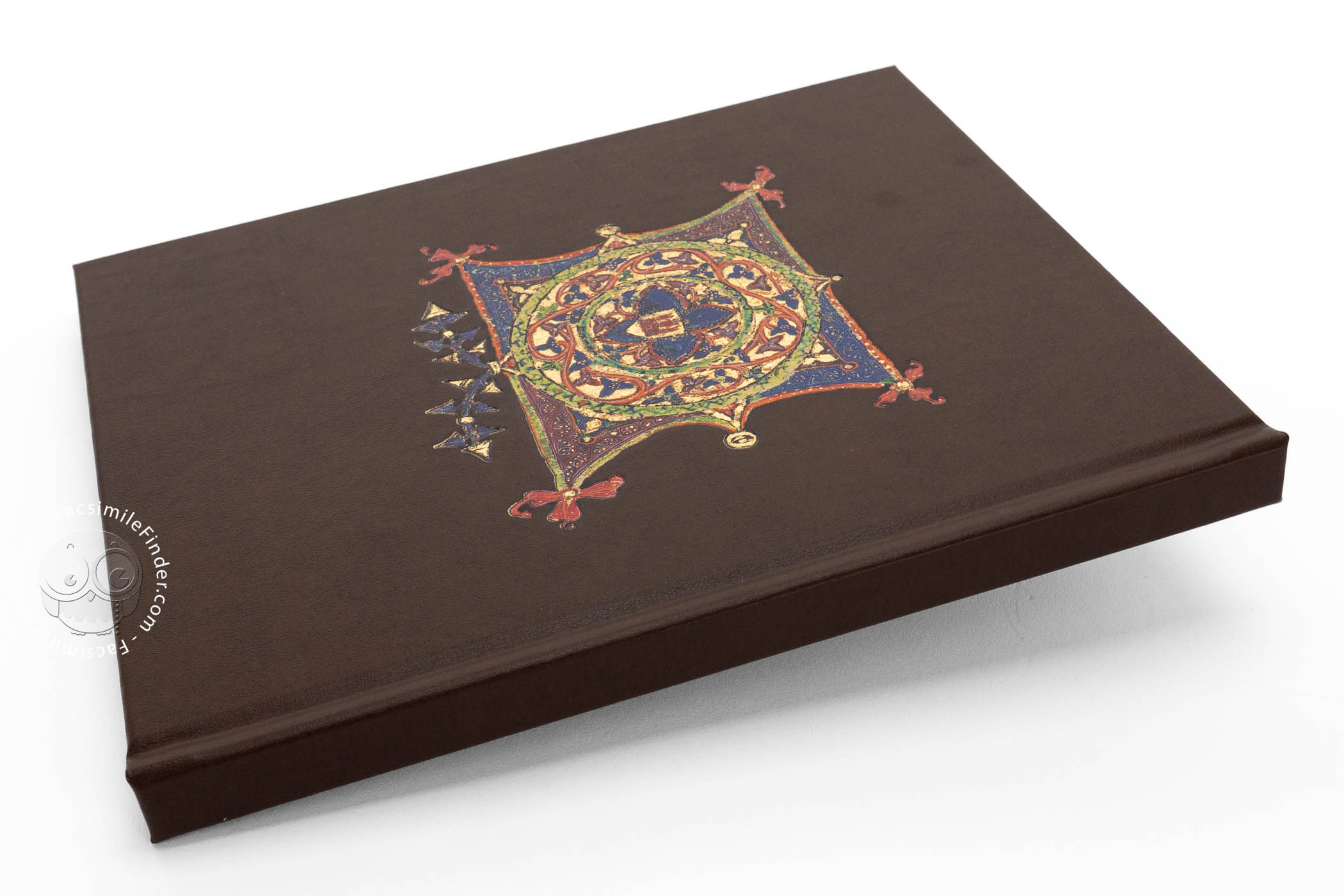
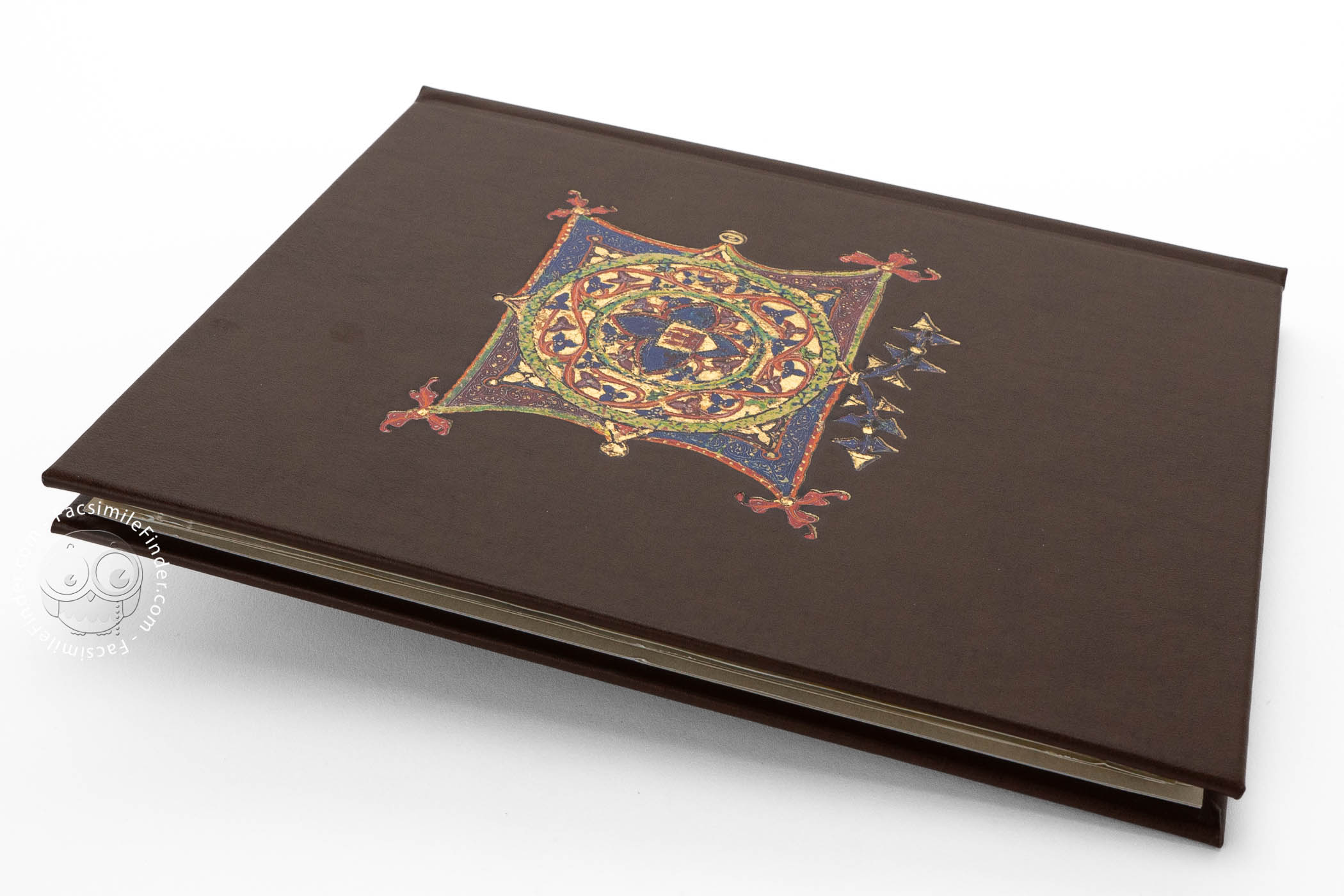
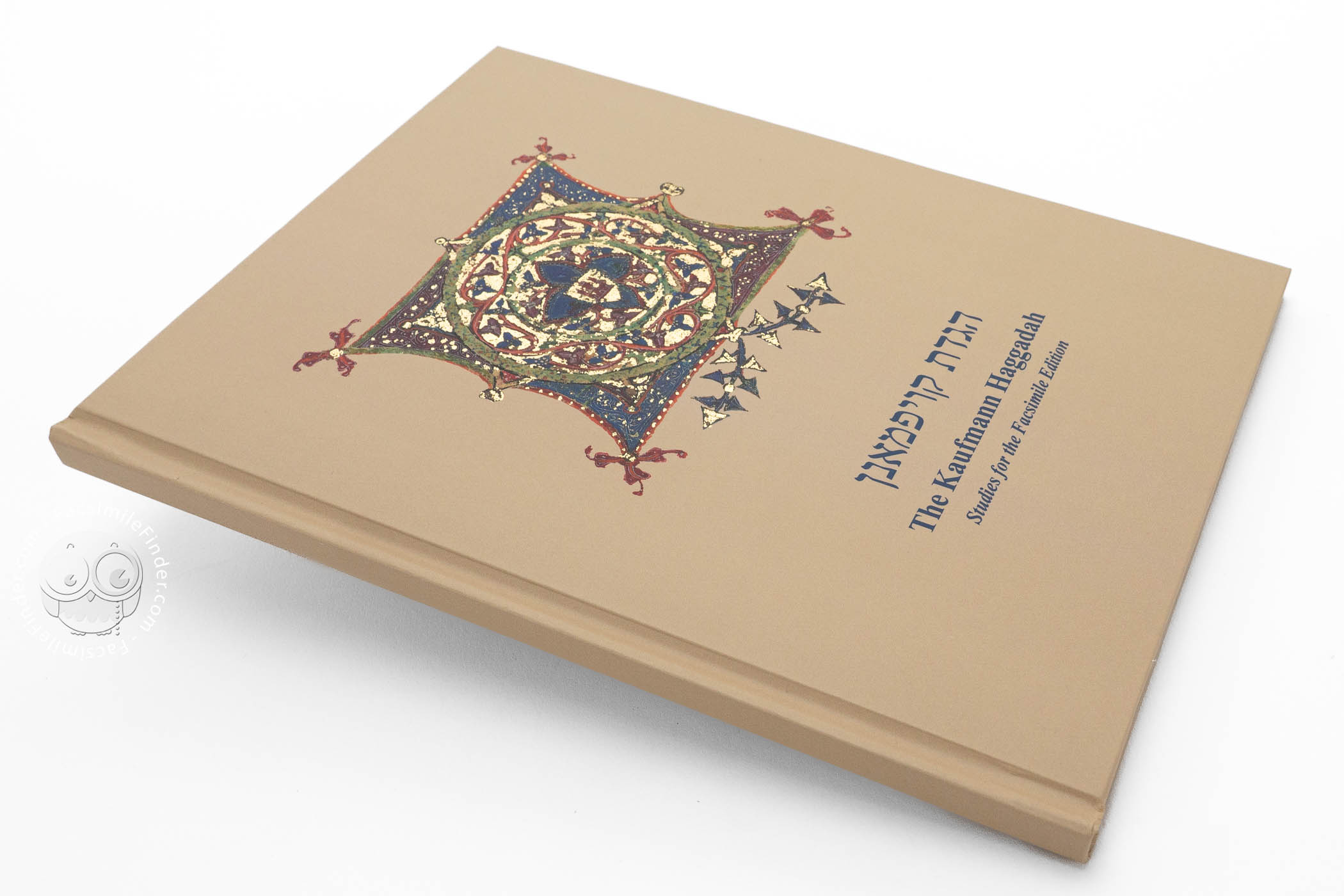
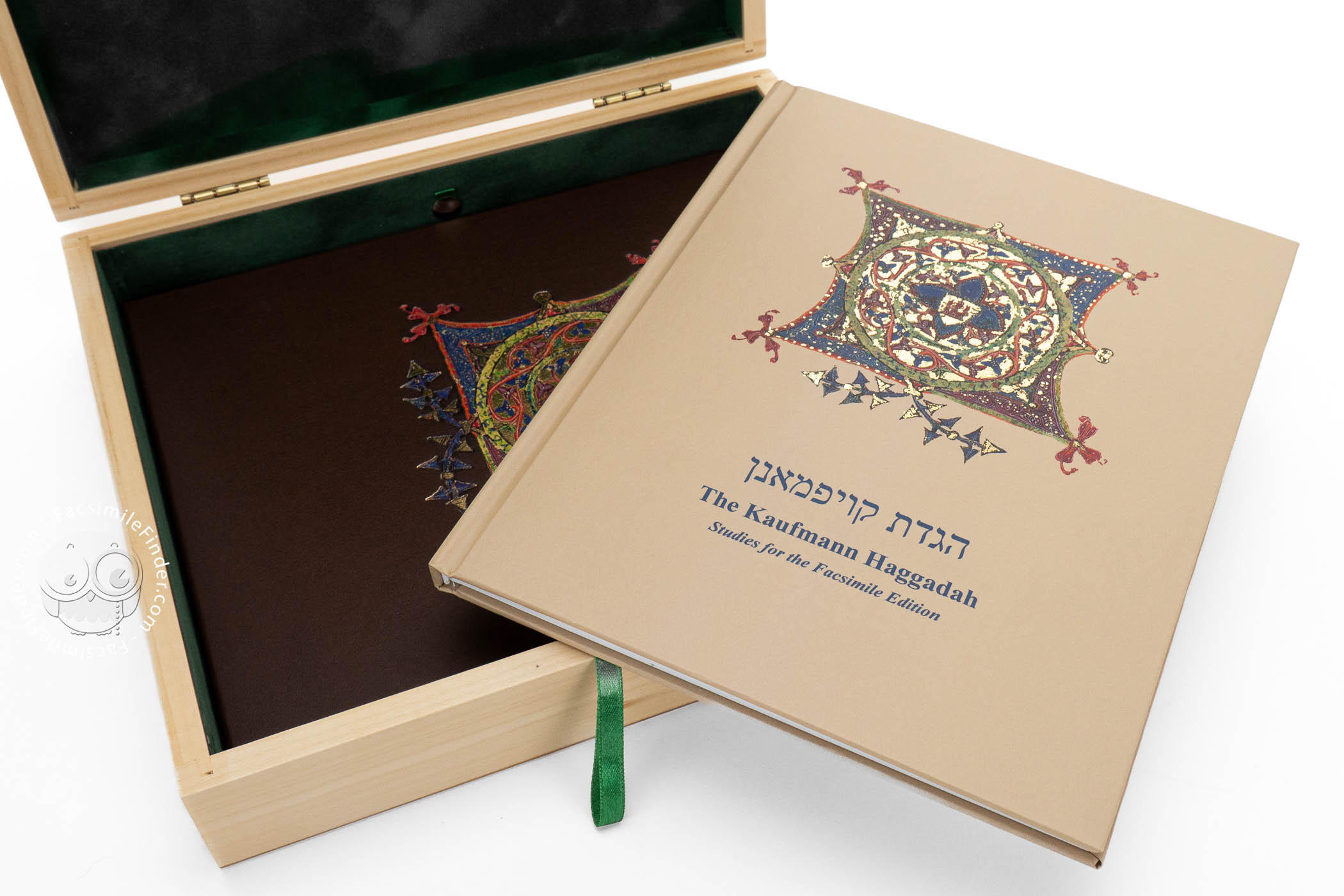
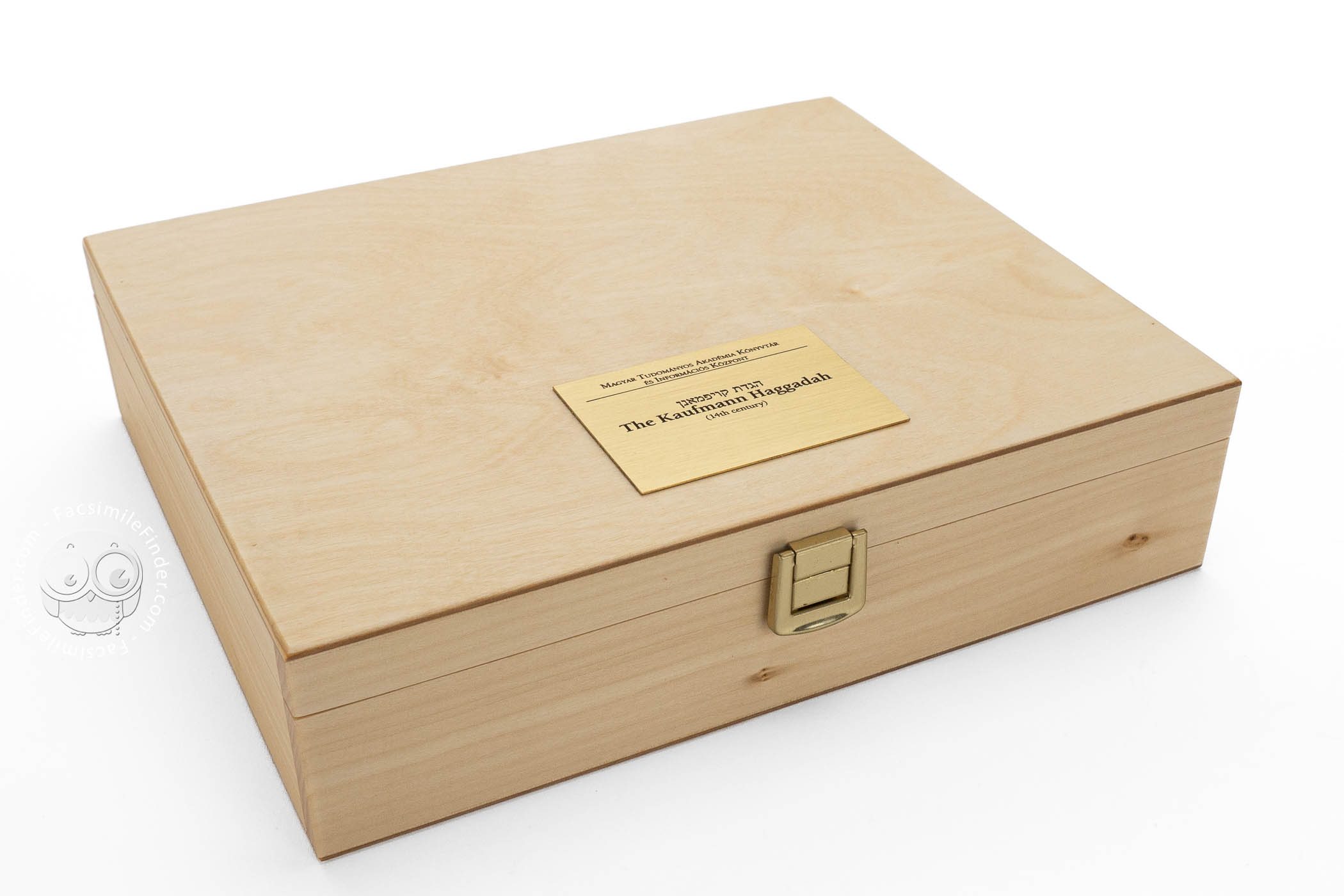
The Kaufmann Haggadah is a compact yet sumptuous Sephardic Passover manuscript, produced in Catalonia around 1350–1360 on parchment. Designed for the seder—the ritual family banquet that opens Passover—it pairs liturgical instructions and festive poems with an unusually vivid visual language, turning the remembrance of Exodus into an experience of pageantry and presence.
Catalan Sephardic Passover Context
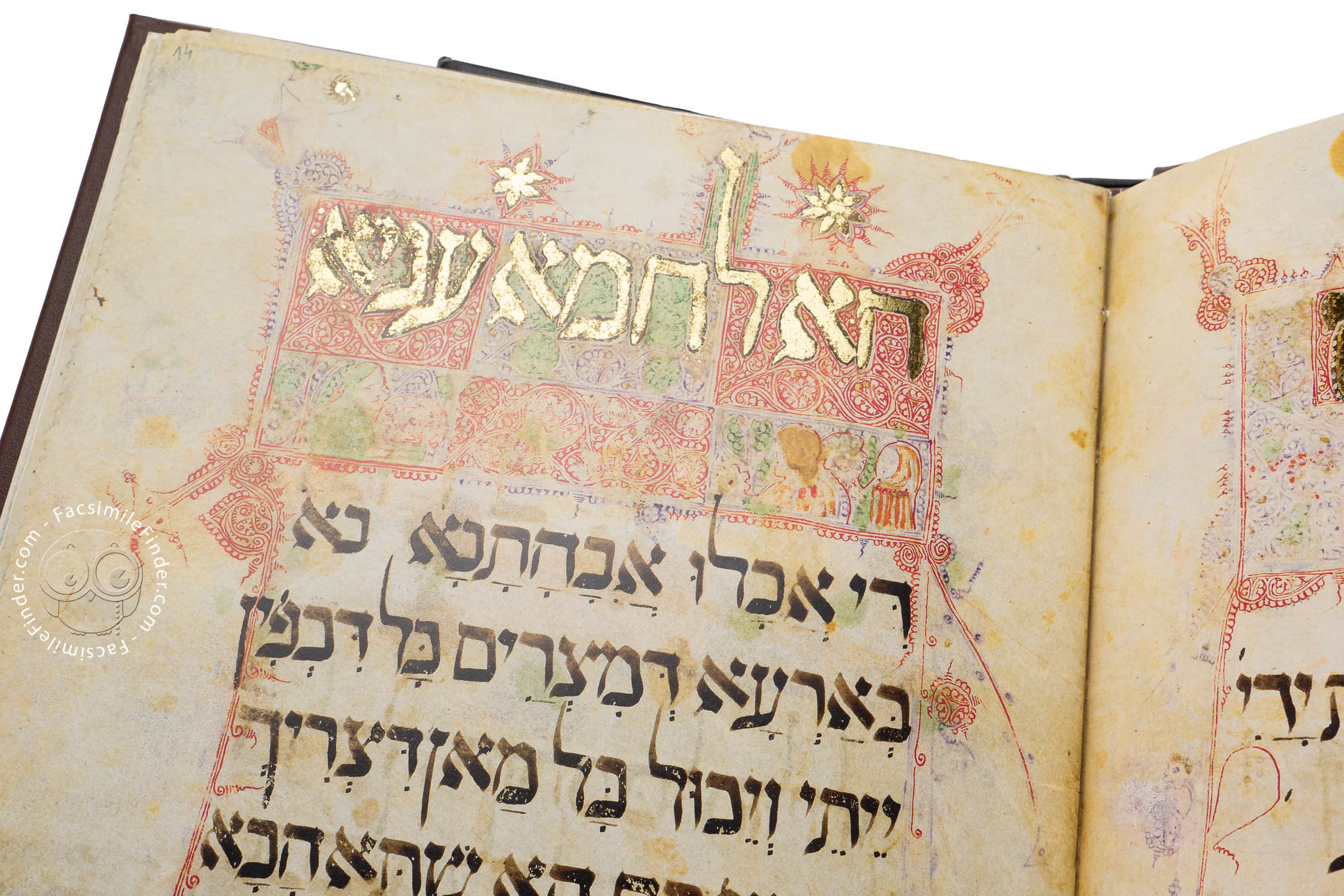
The manuscript belongs to the tradition of Sephardic Haggadot produced in the Crown of Aragon and nearby regions, where biblical memory, family instruction, and elite visual culture meet on the page. It begins with the familiar opening declaration “ha-laḥma ʾanya” and unfolds through the core elements of the rite—matzah, maror, questions, narration, and praise.
Hebrew Square Script and Scribal Planning
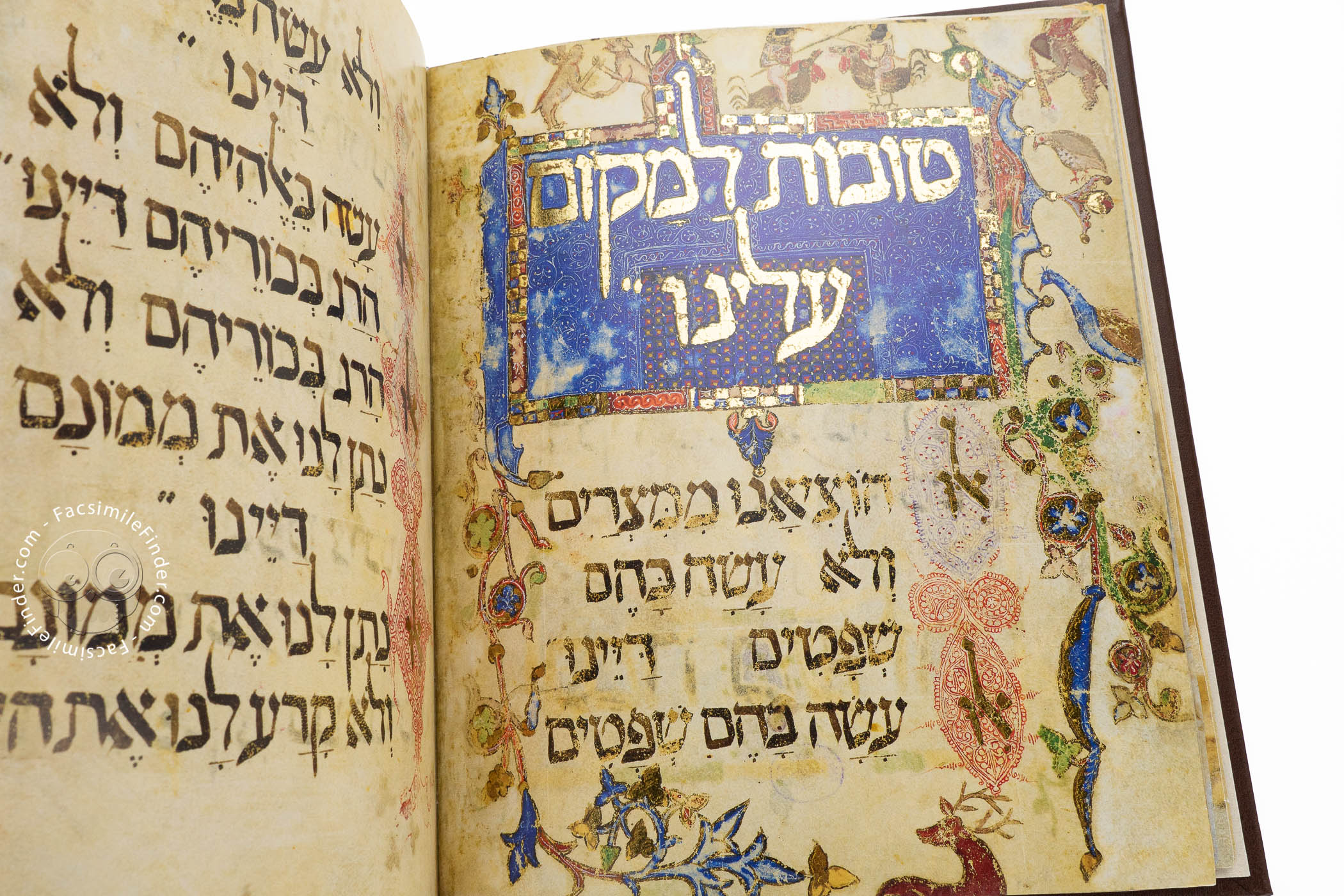
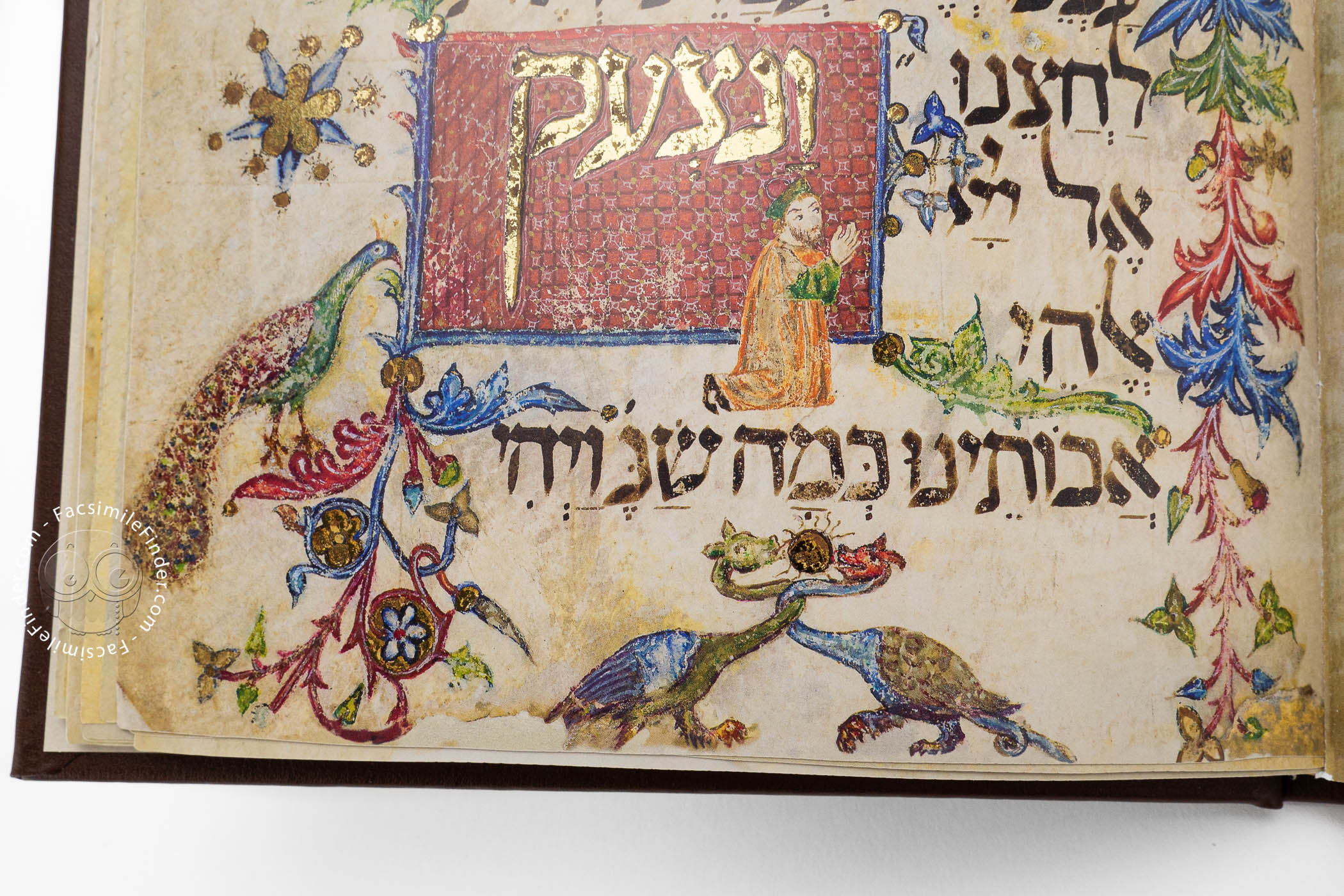
Copied in an elongated Hebrew square script characteristic of medieval Catalonia, the text is carefully vocalized, with omitted words supplied in the margins. The scribe also staged the decoration in advance, outlining opening words for gilding and reserving space for key images.
Illumination, Workshops, and Visual Motifs
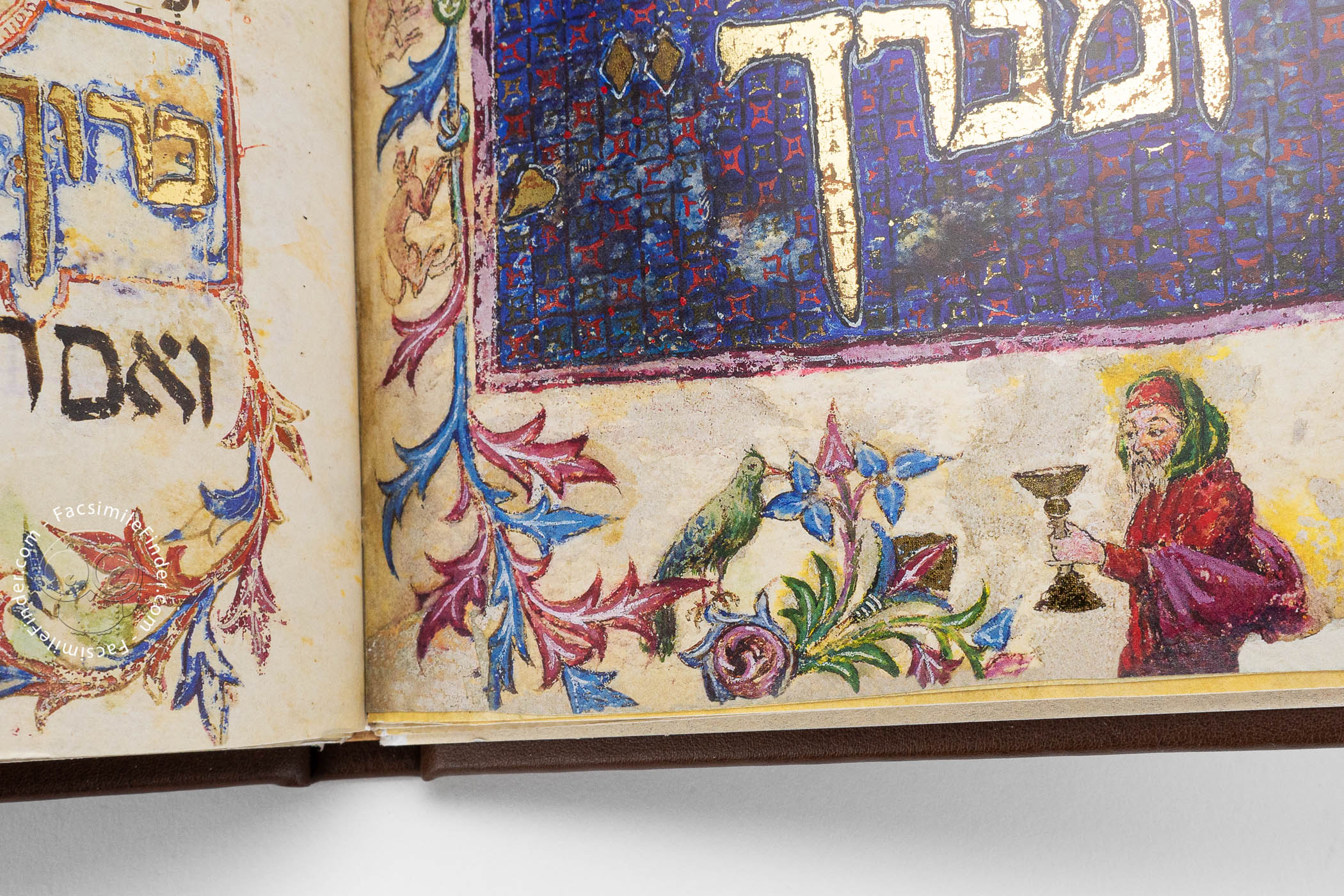
At least four hands contributed to the decoration. Two senior illuminators—the Master of the Kaufmann Haggadah and the Master of the Second Cup—differ in palette and spatial ambition, yet share a taste for acanthus foliage and animated margins populated by birds, peacocks, butterflies, and snails. Gold leaf was applied before painting, over gesso or bole, giving the initials a warm, ceremonial sheen.
Ritual Images and Household Splendor
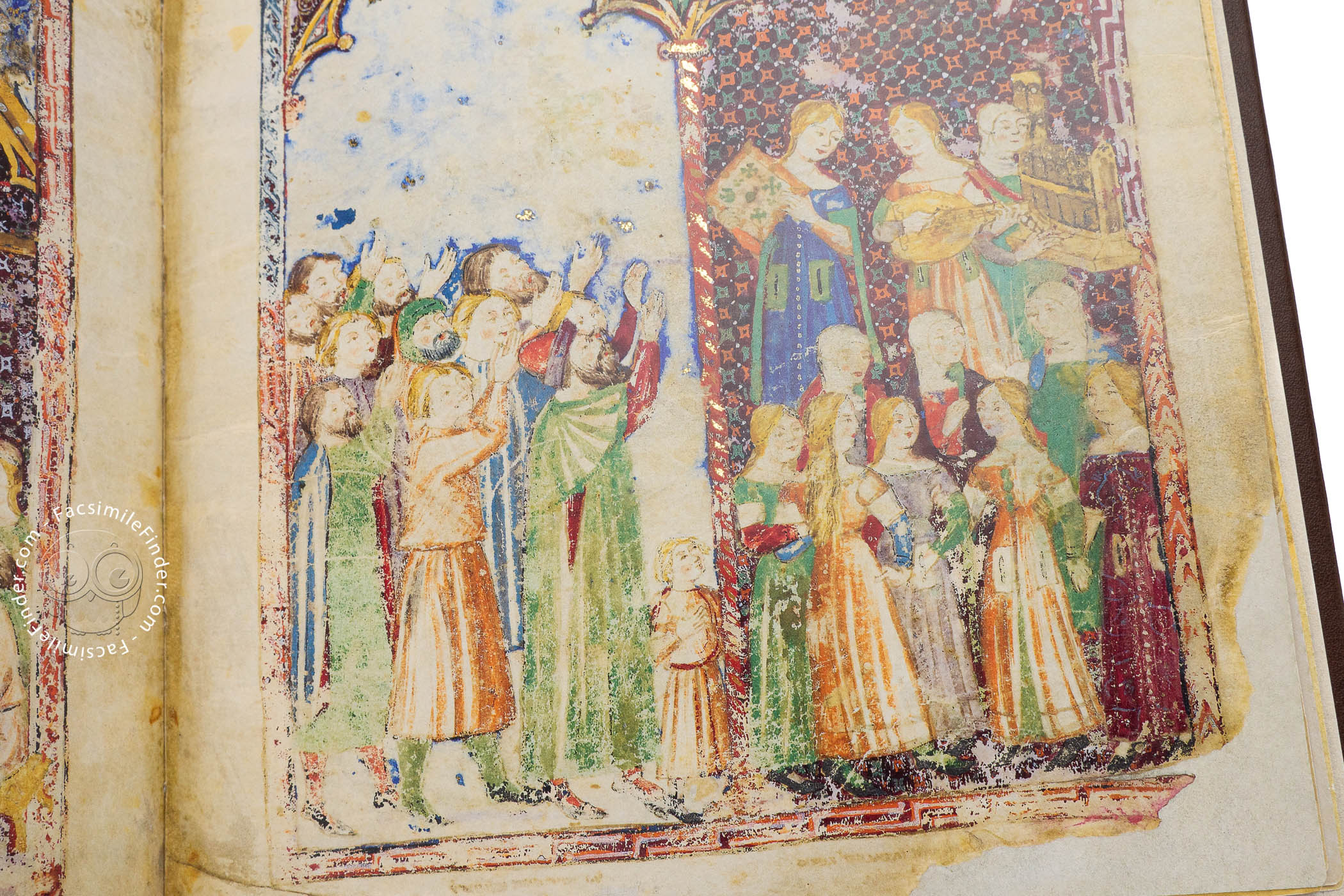
Signature pages visualize the ceremony itself: a decorated matzah encircled by trumpet-blowing figures, and the maror shown as a great peeled-root plant pointed out by tiny attendants. Domestic seder scenes feature a striking display of embroidered towels, evoking handwashing ritual and the “royal” character of freedom.
Survival and Provenance
The book’s modern afterlife is unusually well documented. It entered the celebrated library of David Kaufmann (1852–1899) and has been preserved by the Library of the Hungarian Academy of Sciences since 1905, when Kaufmann’s mother-in-law, Róza Gomperz, donated it to the institution “as property in perpetuity” and for scholarly access.
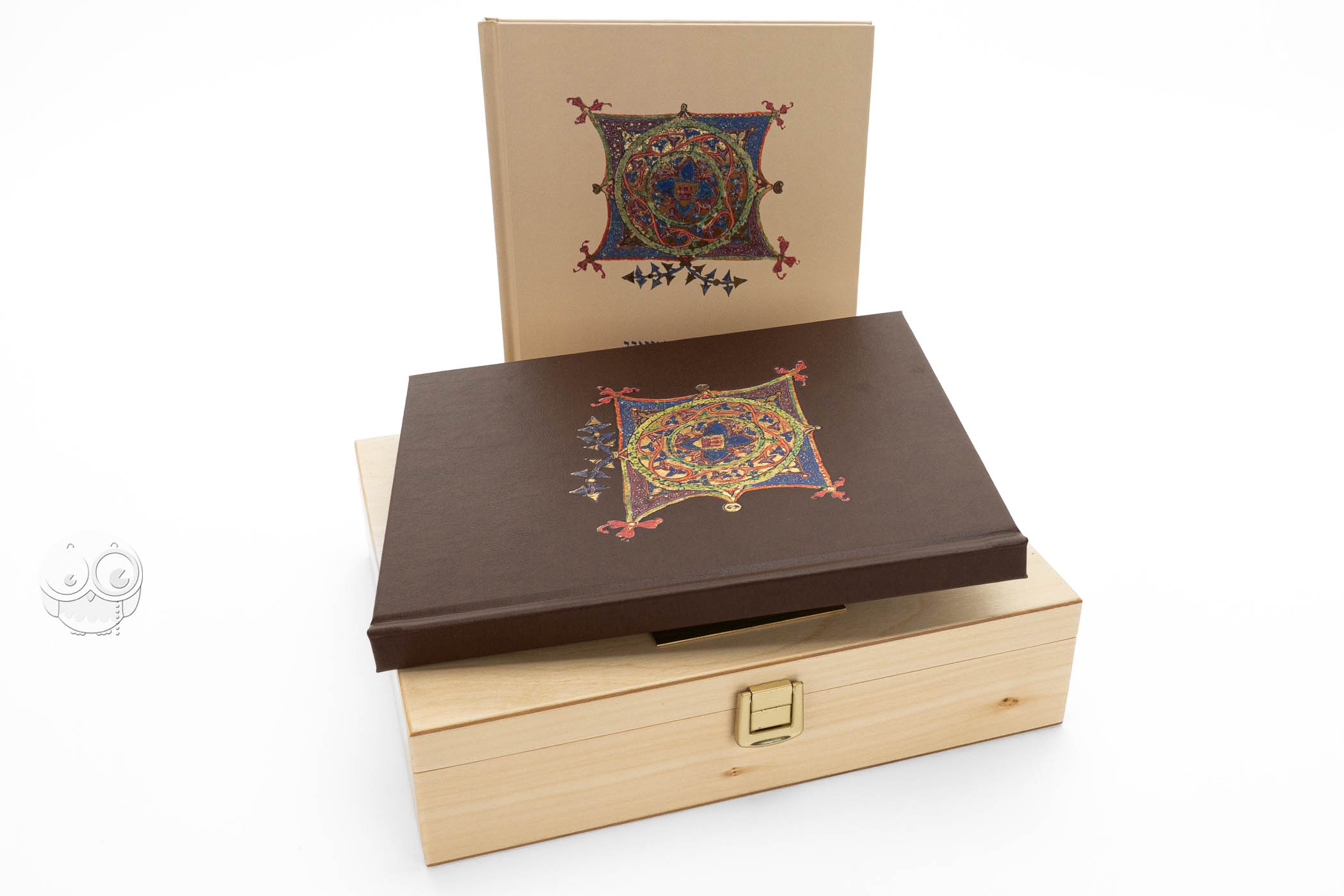
We have 3 facsimiles of the manuscript "Kaufmann Haggadah":
- Kaufmann Haggadah facsimile edition published by Schöck ArtPrint Kft., 2025
- Kaufmann Haggadah facsimile edition published by Kultura International, 1990
- Kaufmann Haggadah. Facsimile Edition of MS 422 of the Kaufmann Colection facsimile edition published by Publishing House of the Hungarian Academy of Sciences, 1957