
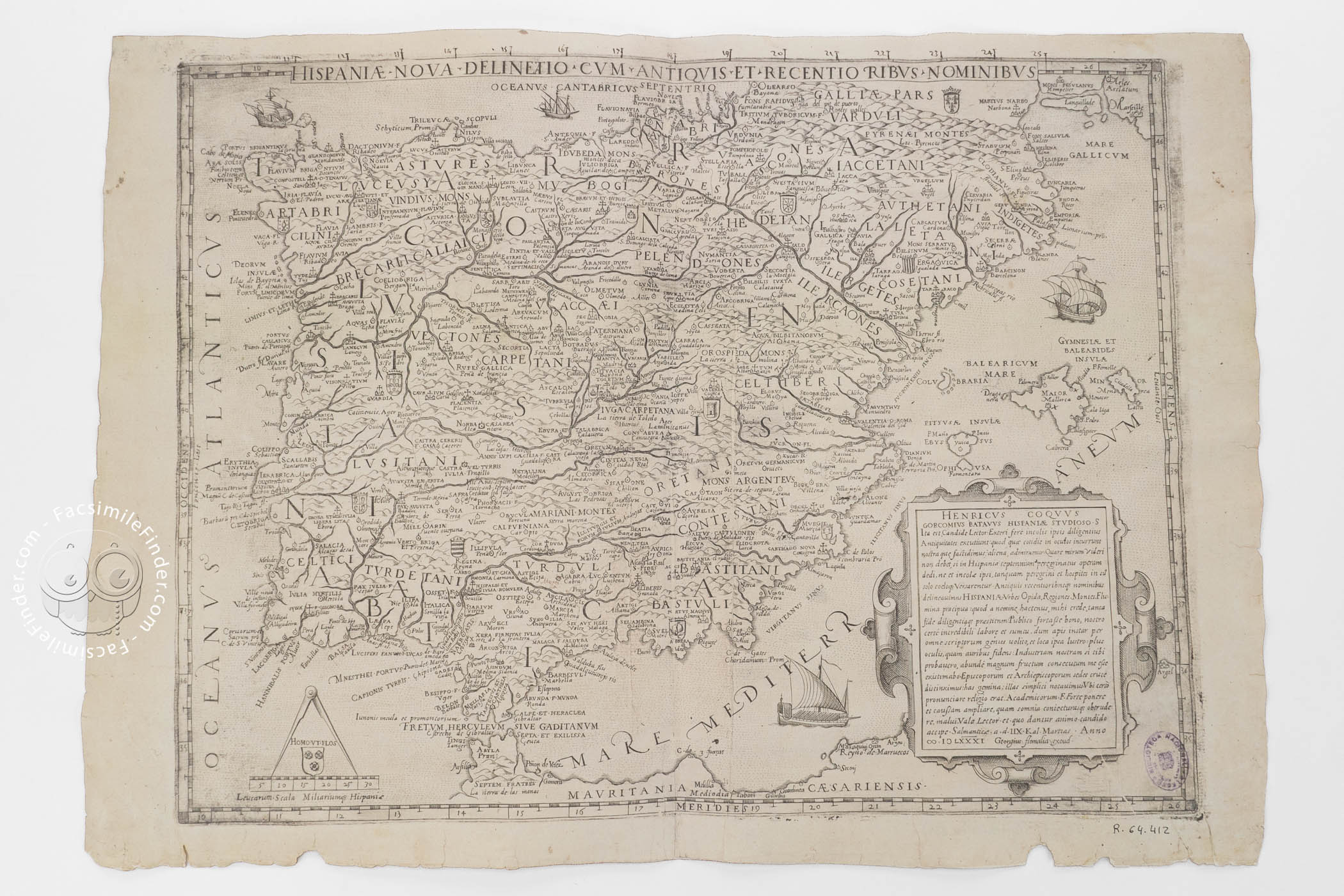
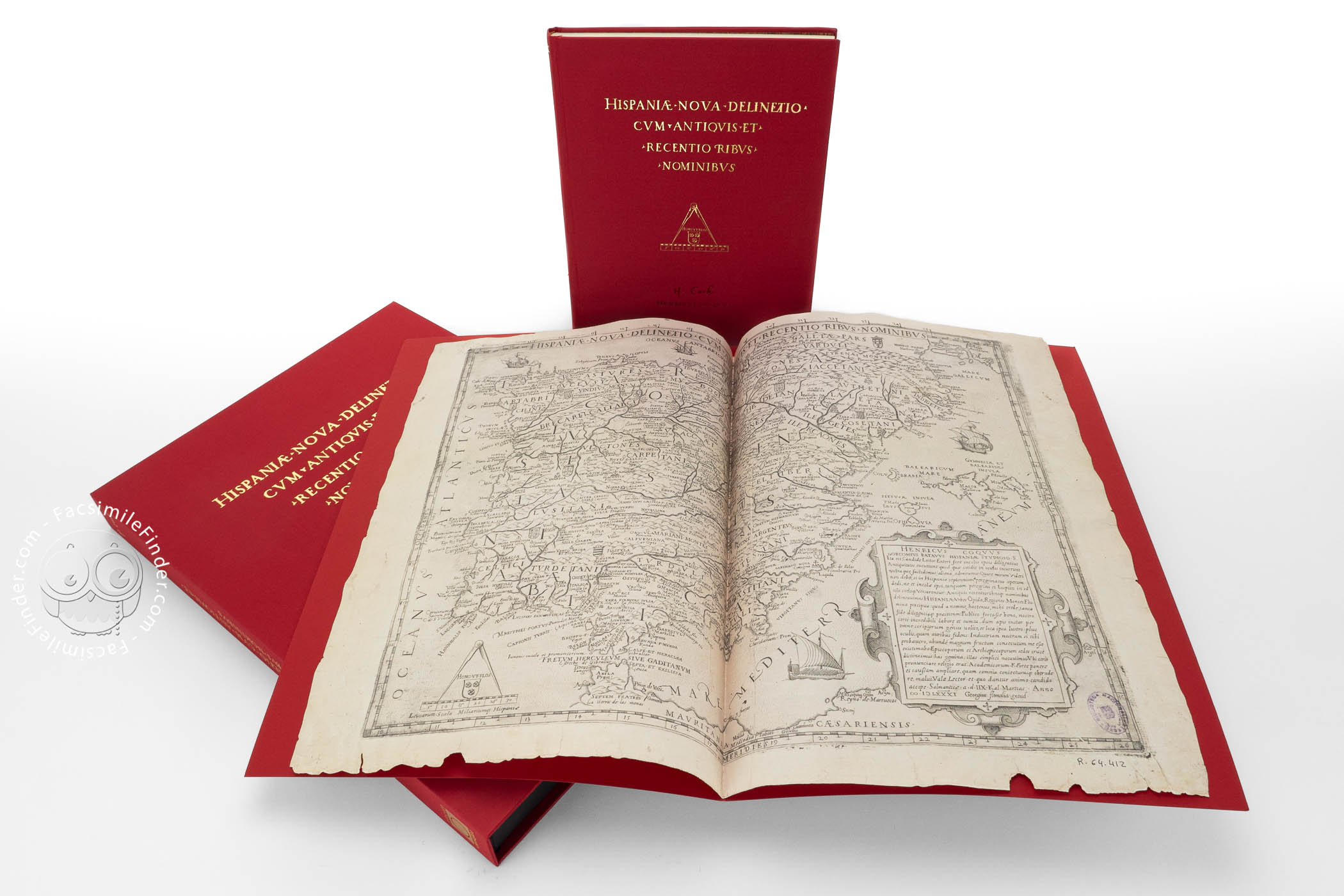

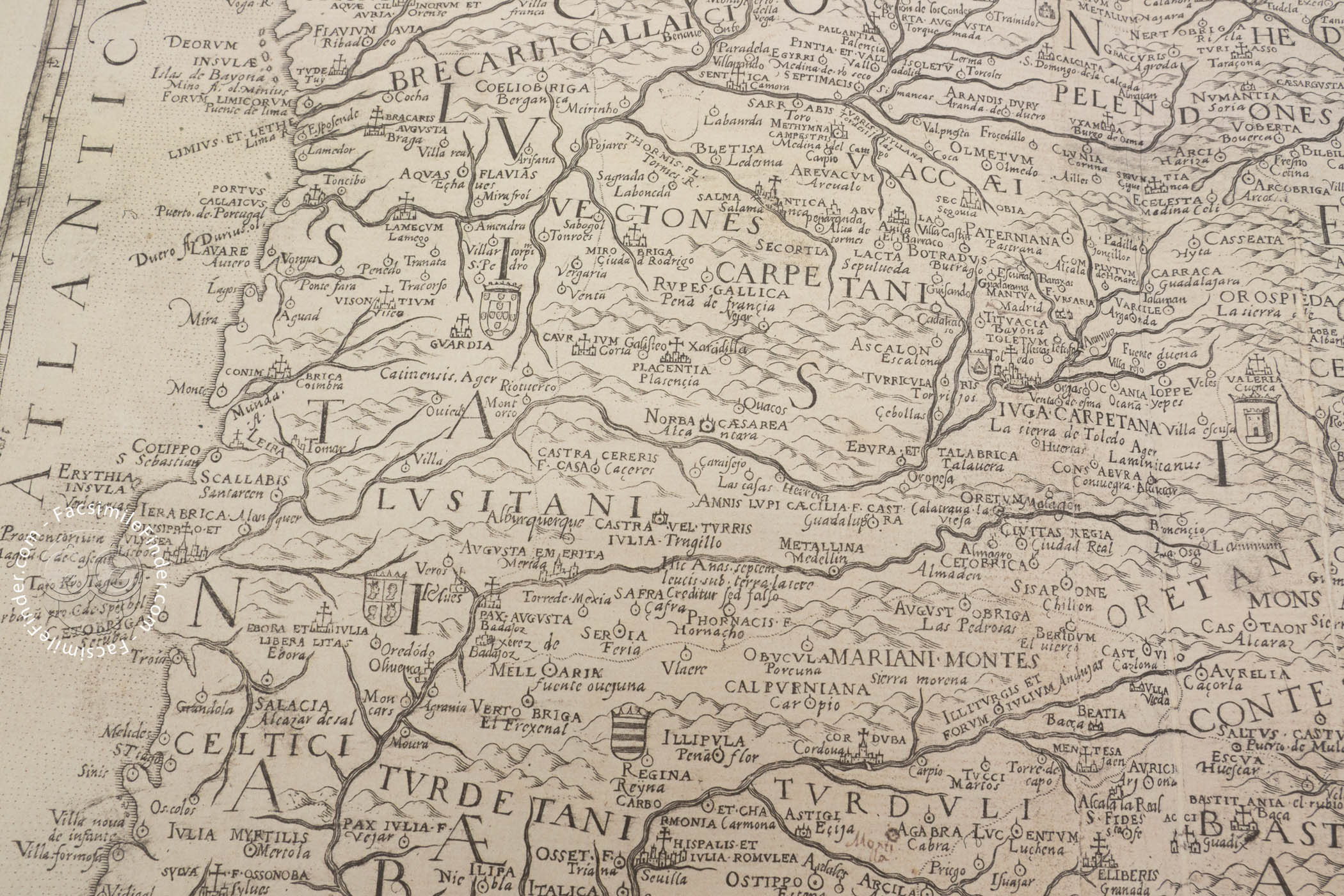
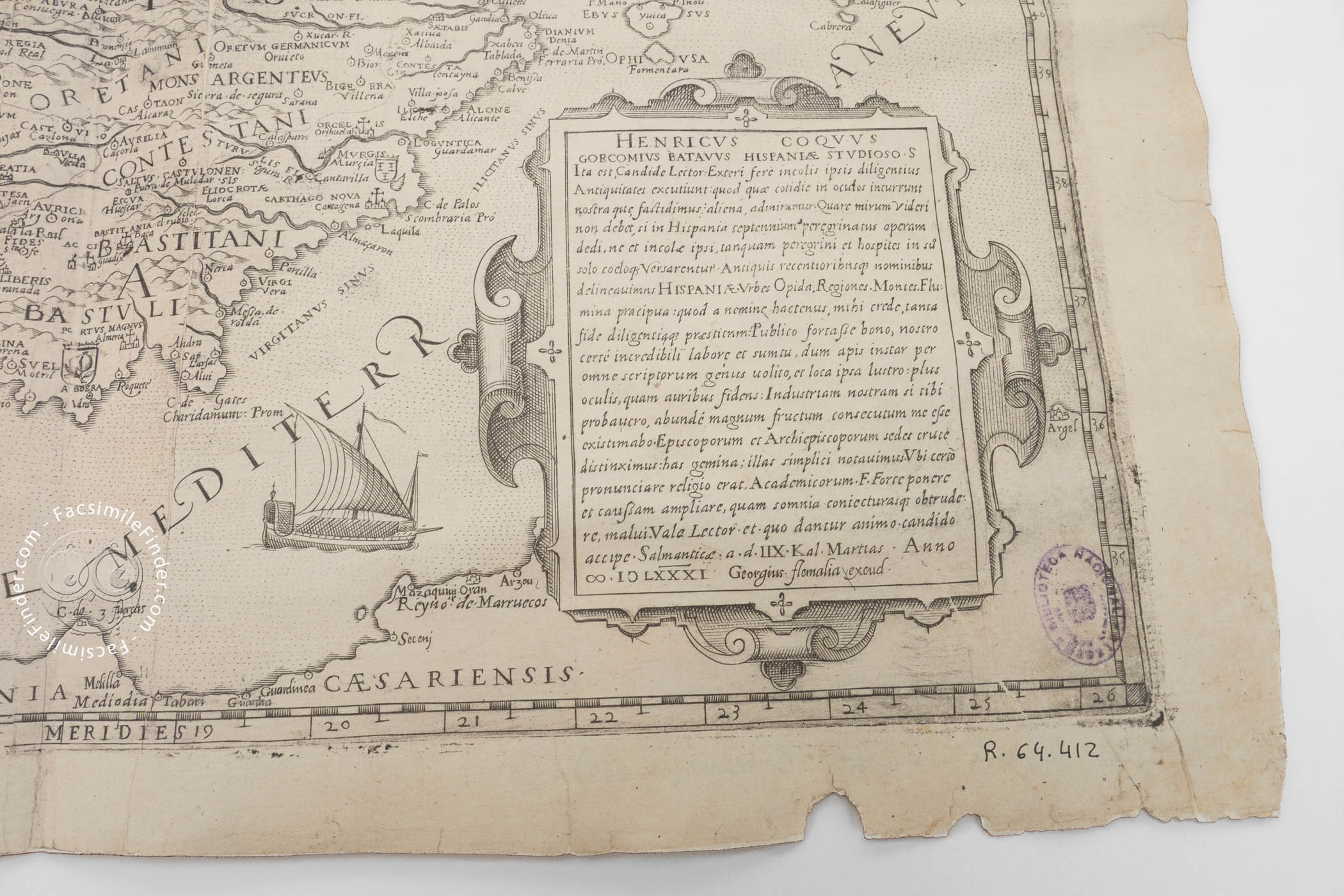
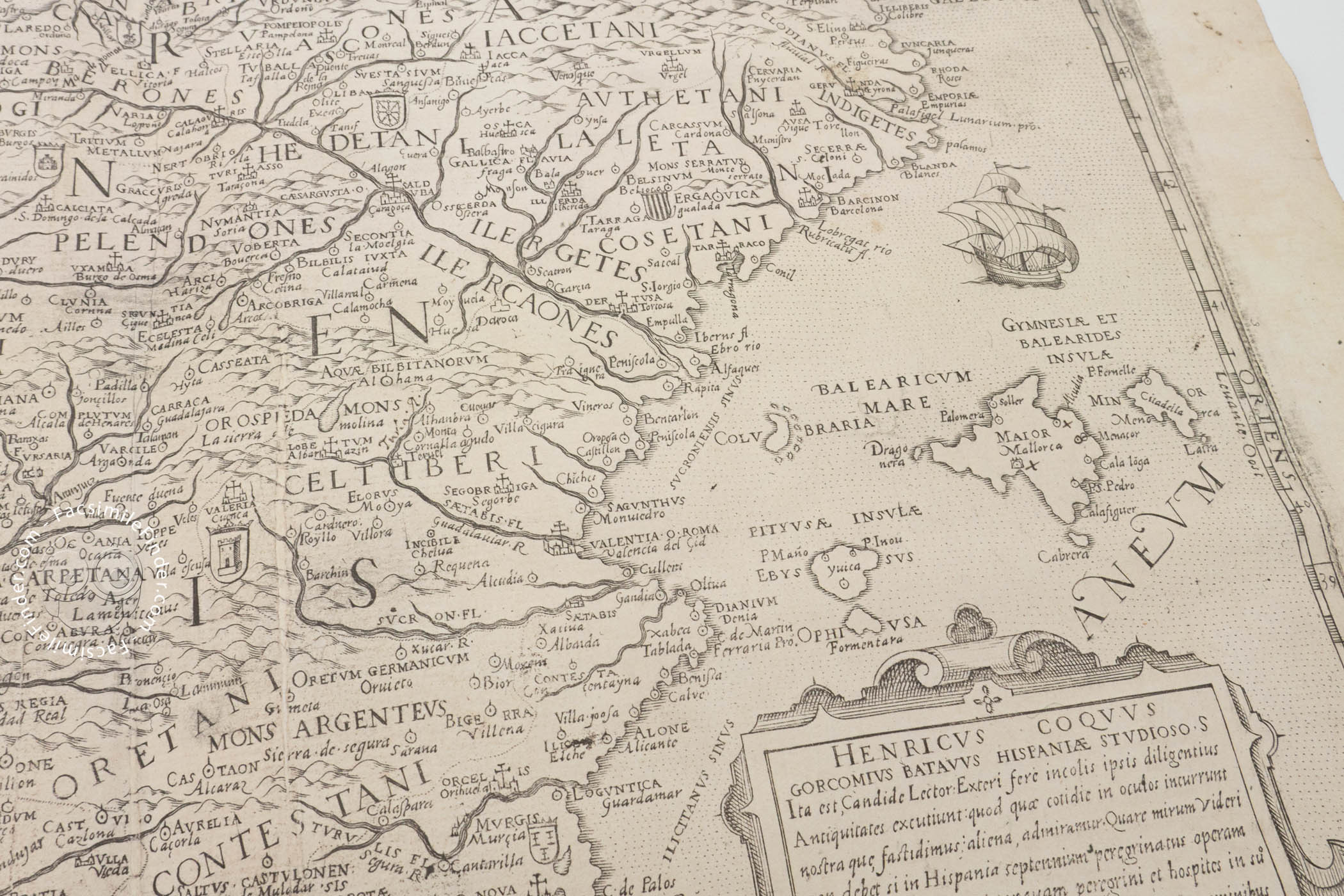
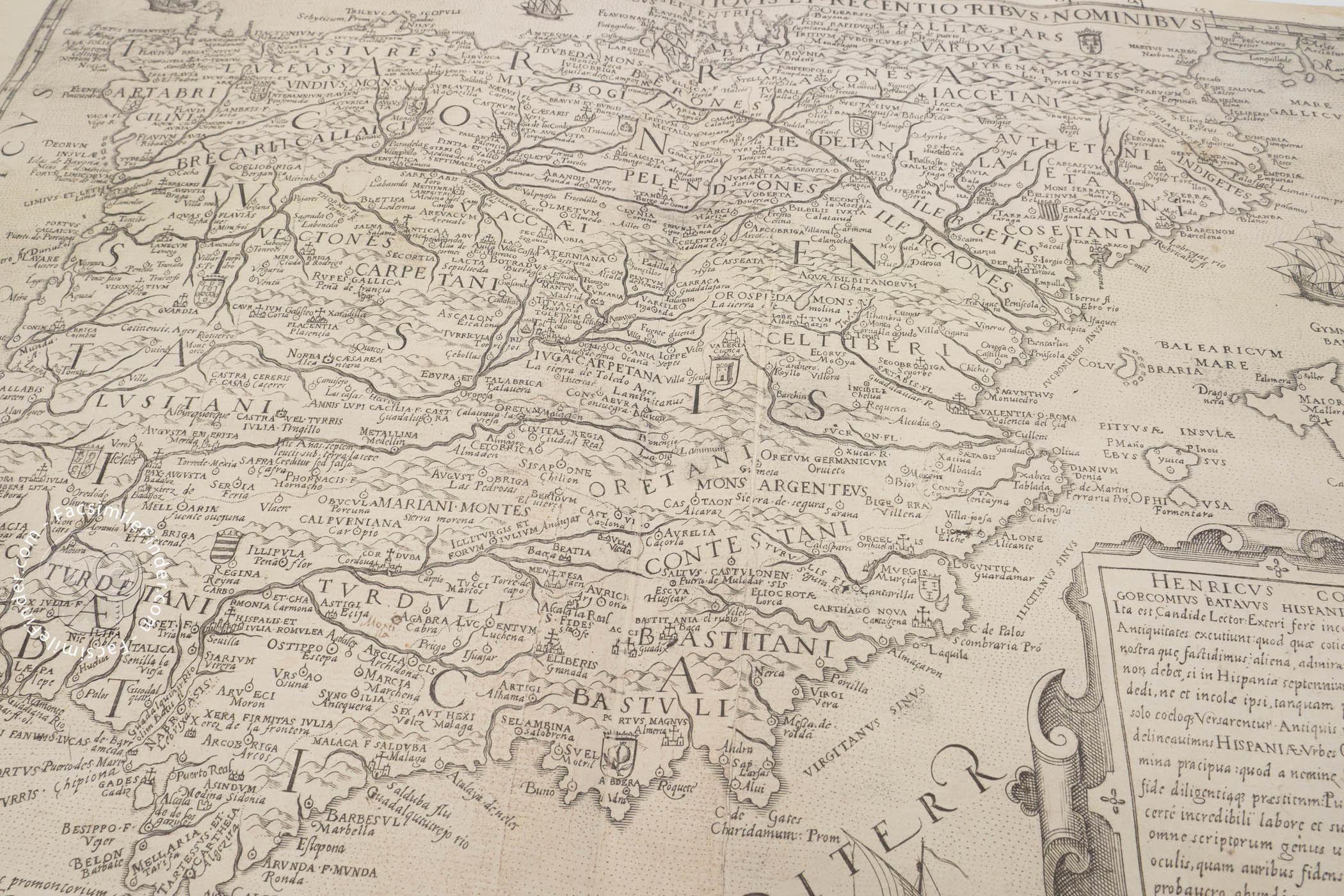
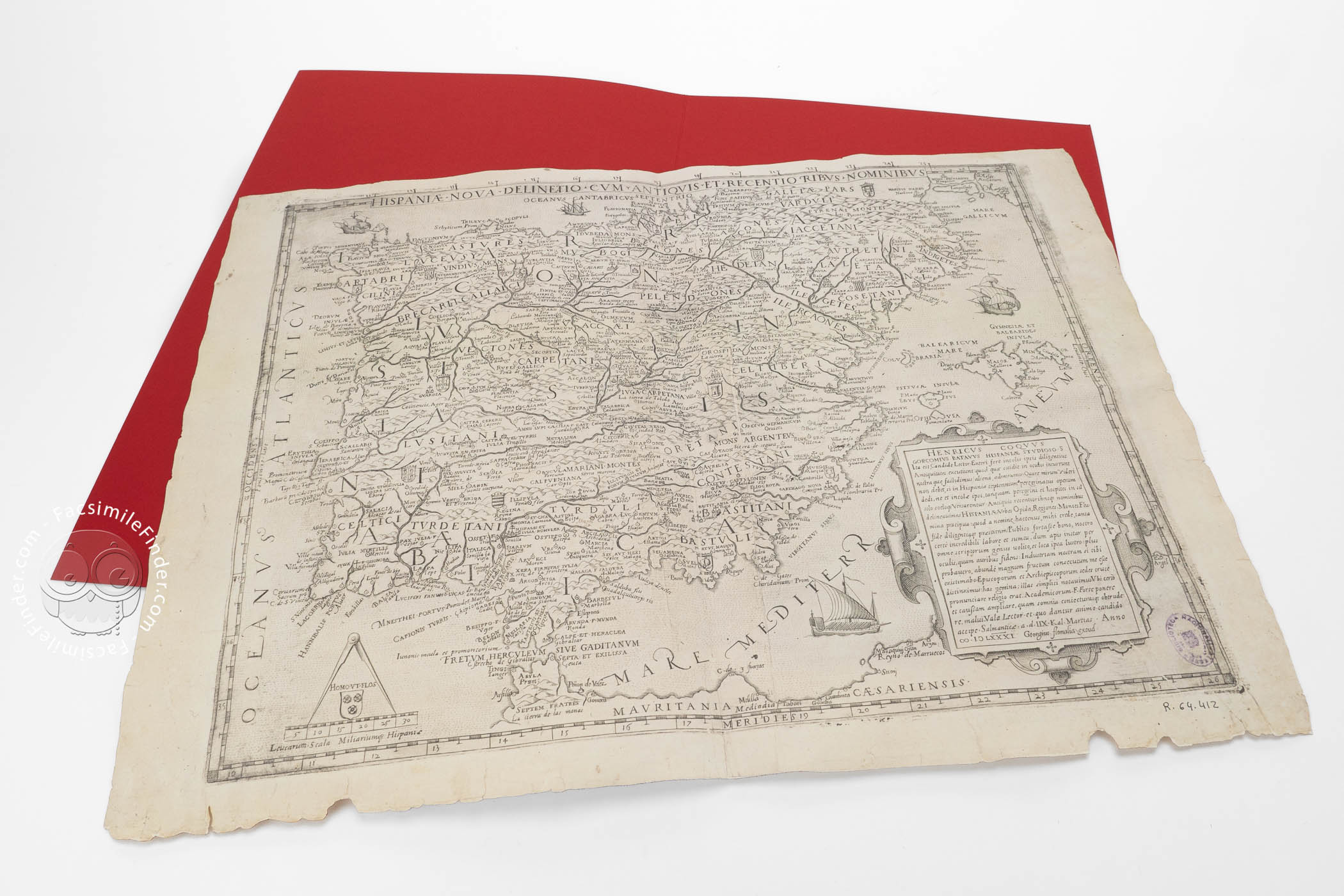
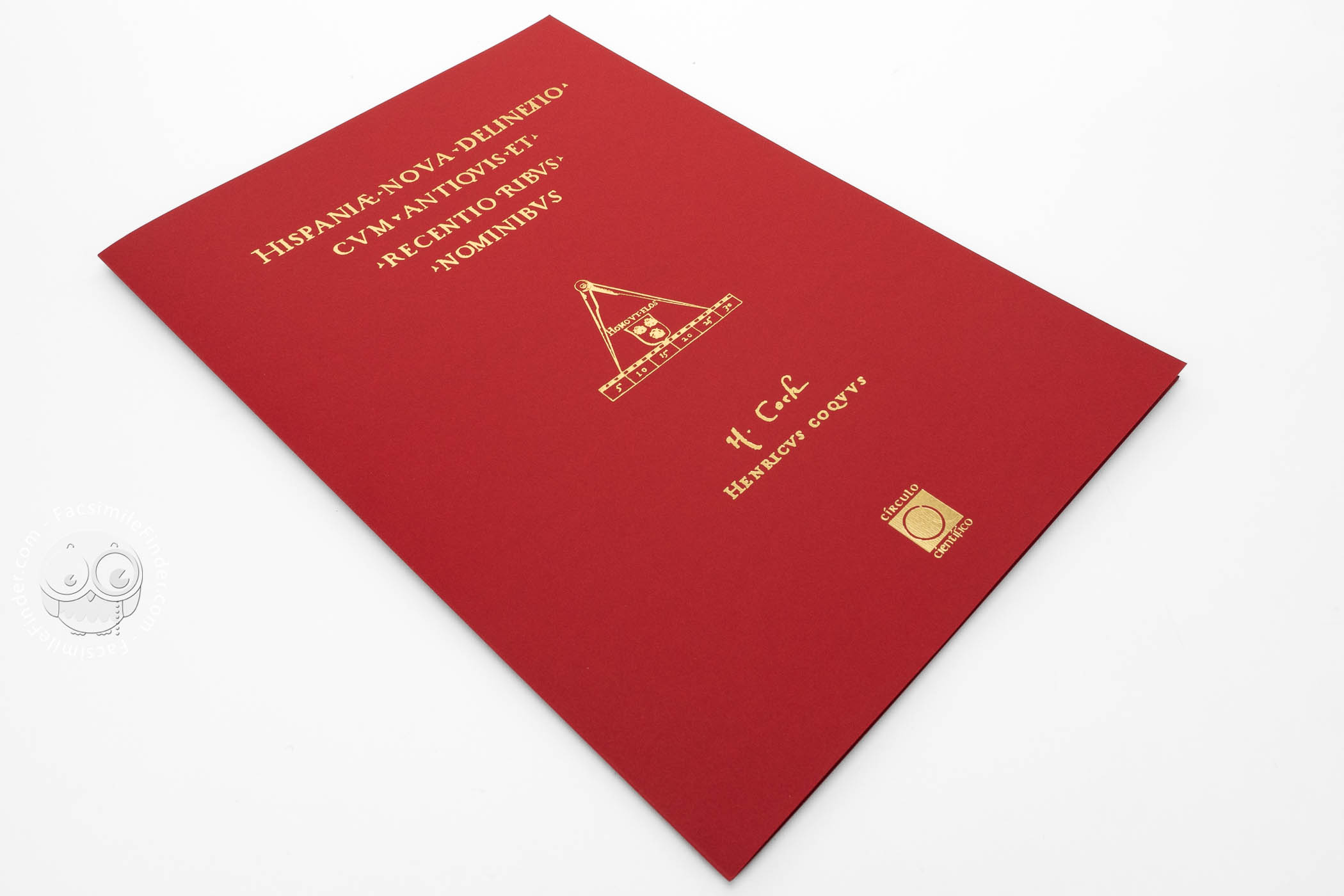
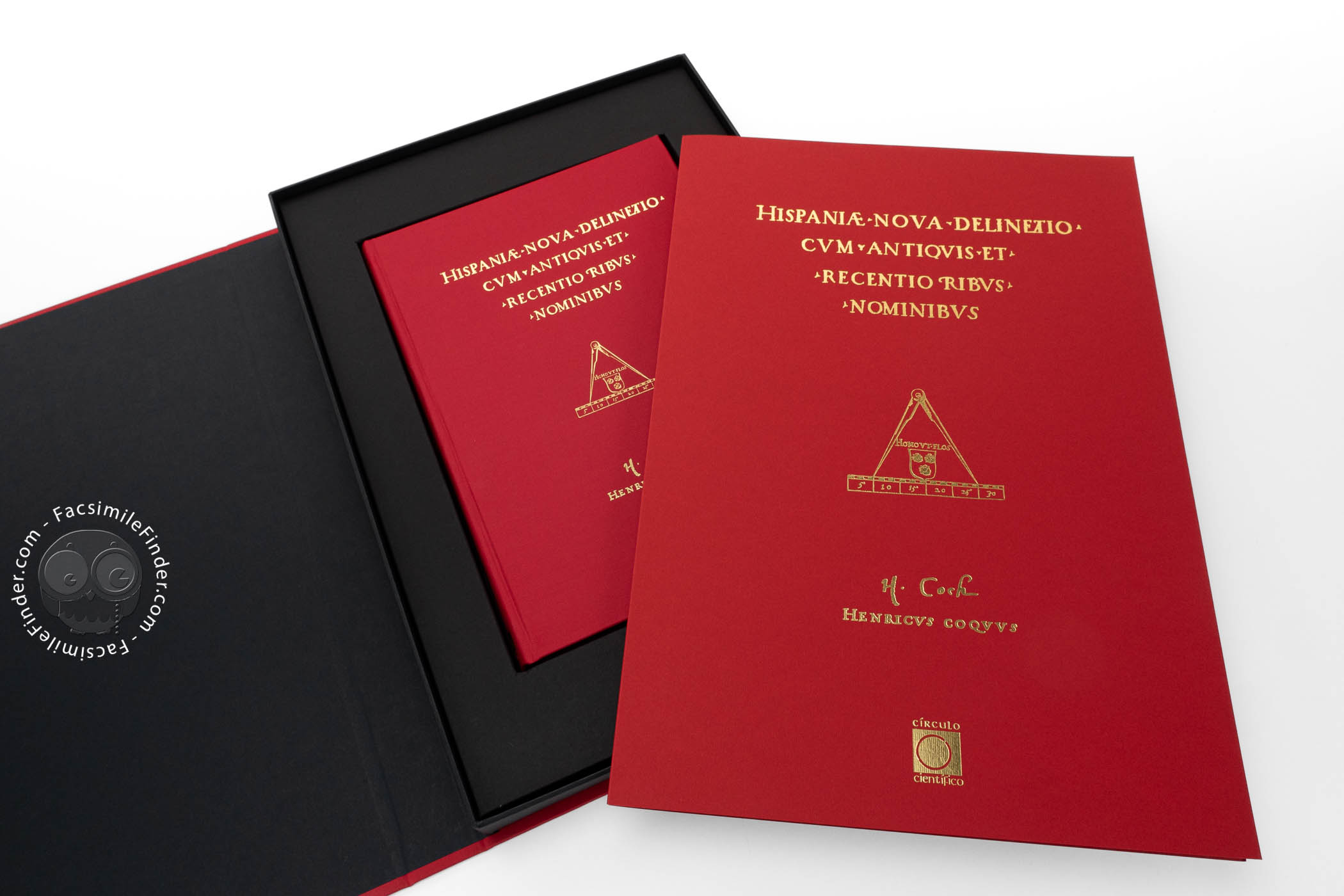
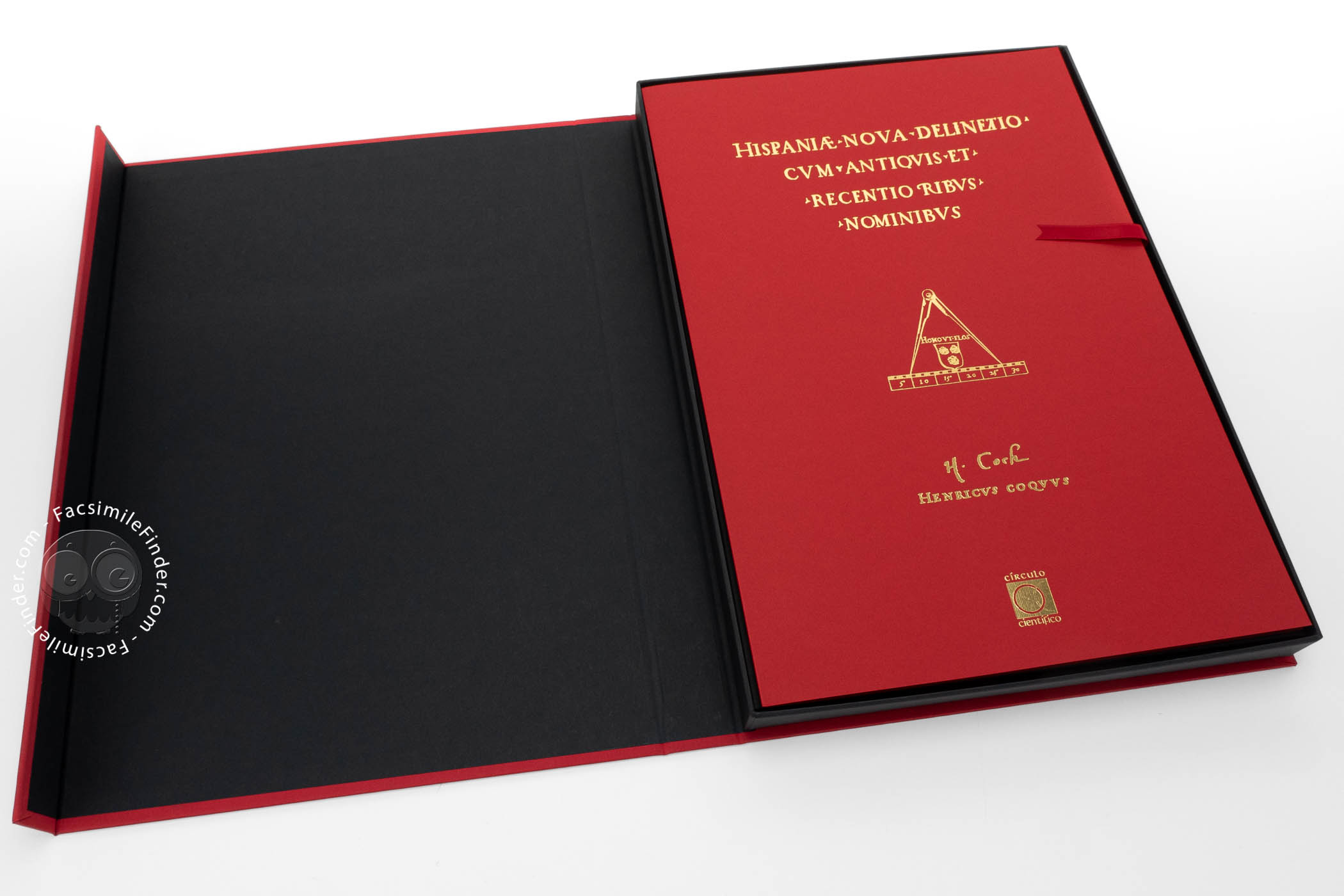
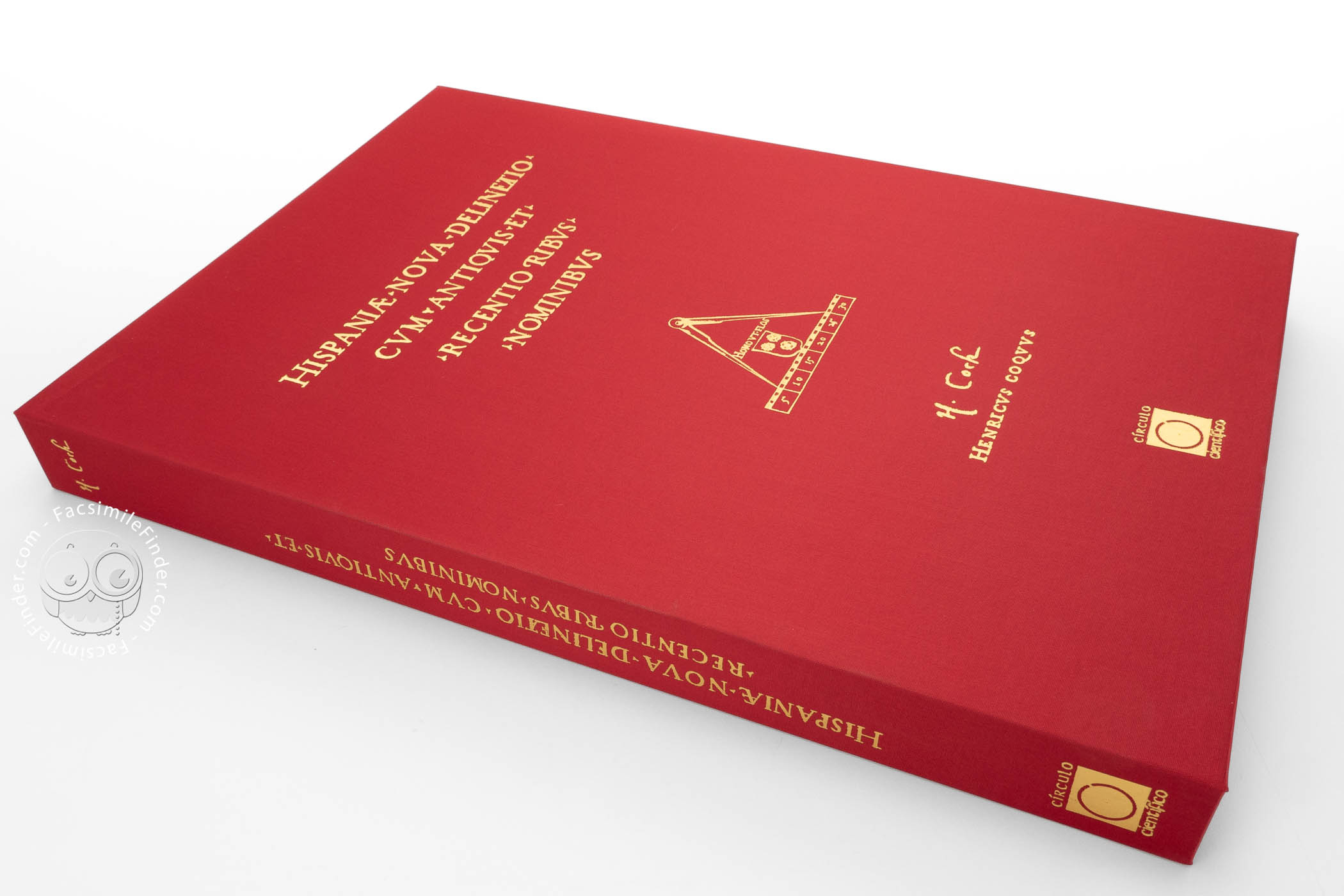
Hispaniae Nova Delineatio is a single-sheet printed map on paper (40.4 × 56.8 cm) produced in Salamanca in 1583 (often associated with work begun in 1581), preserving the ambitious scope of a wall-map while remaining portable enough for study and circulation. Its Latin title—“Spain newly delineated, with ancient and modern names”—signals a work poised between humanist scholarship and the practical needs of an expanding early modern world.
Historical Salamanca and a Cartographic Rarity
Created in a city defined by its university culture and international print trade, the map stands out as an exceptional Spanish cartographic achievement: a locally produced image of the peninsula at a time when such maps were more commonly imported from the great presses of Italy and the Low Countries. Surviving testimony suggests an unusually fragile legacy for such an influential object, with only a handful of exemplars known to have endured.
Engraving, Lettering, and the Map’s Visual Theatre
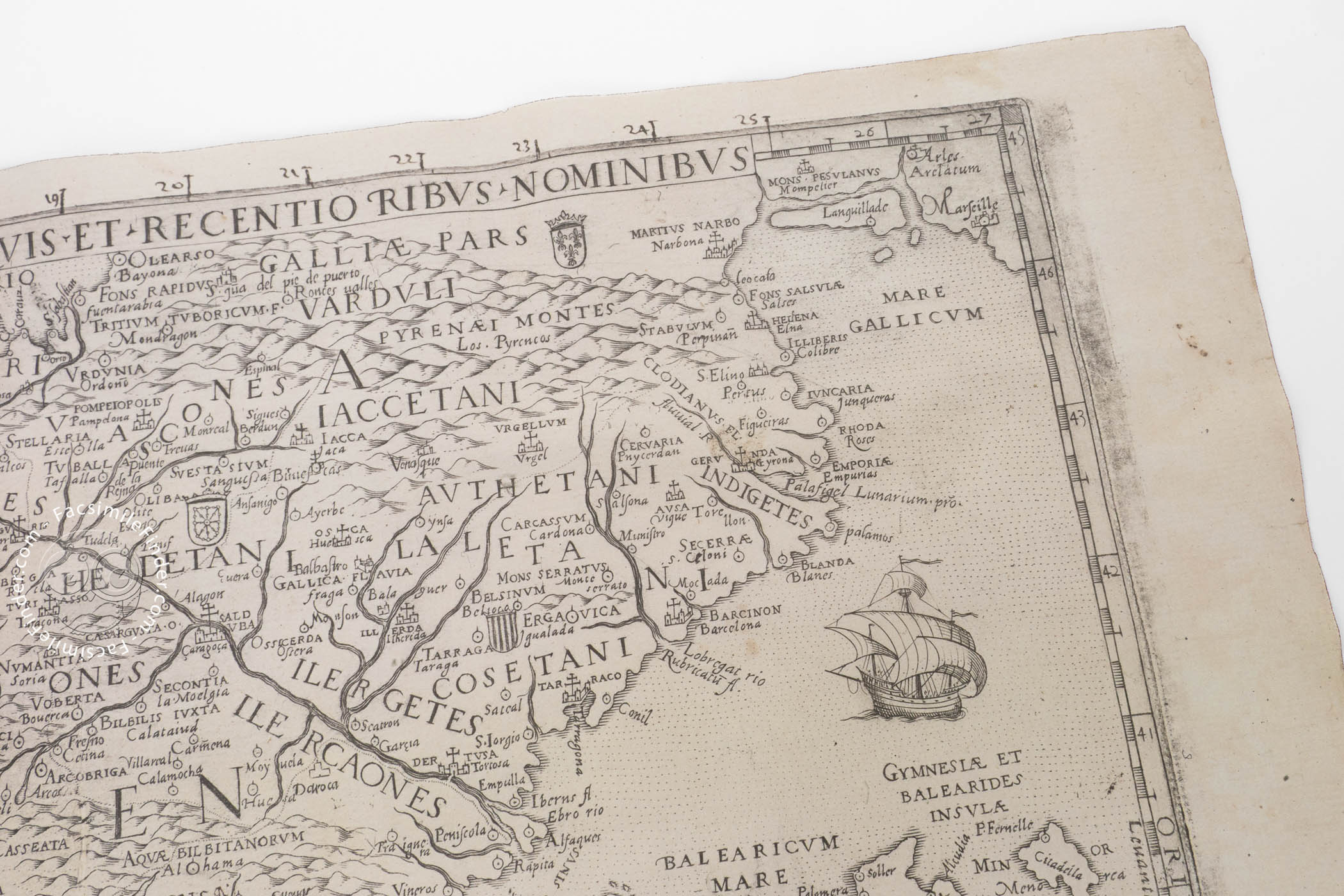
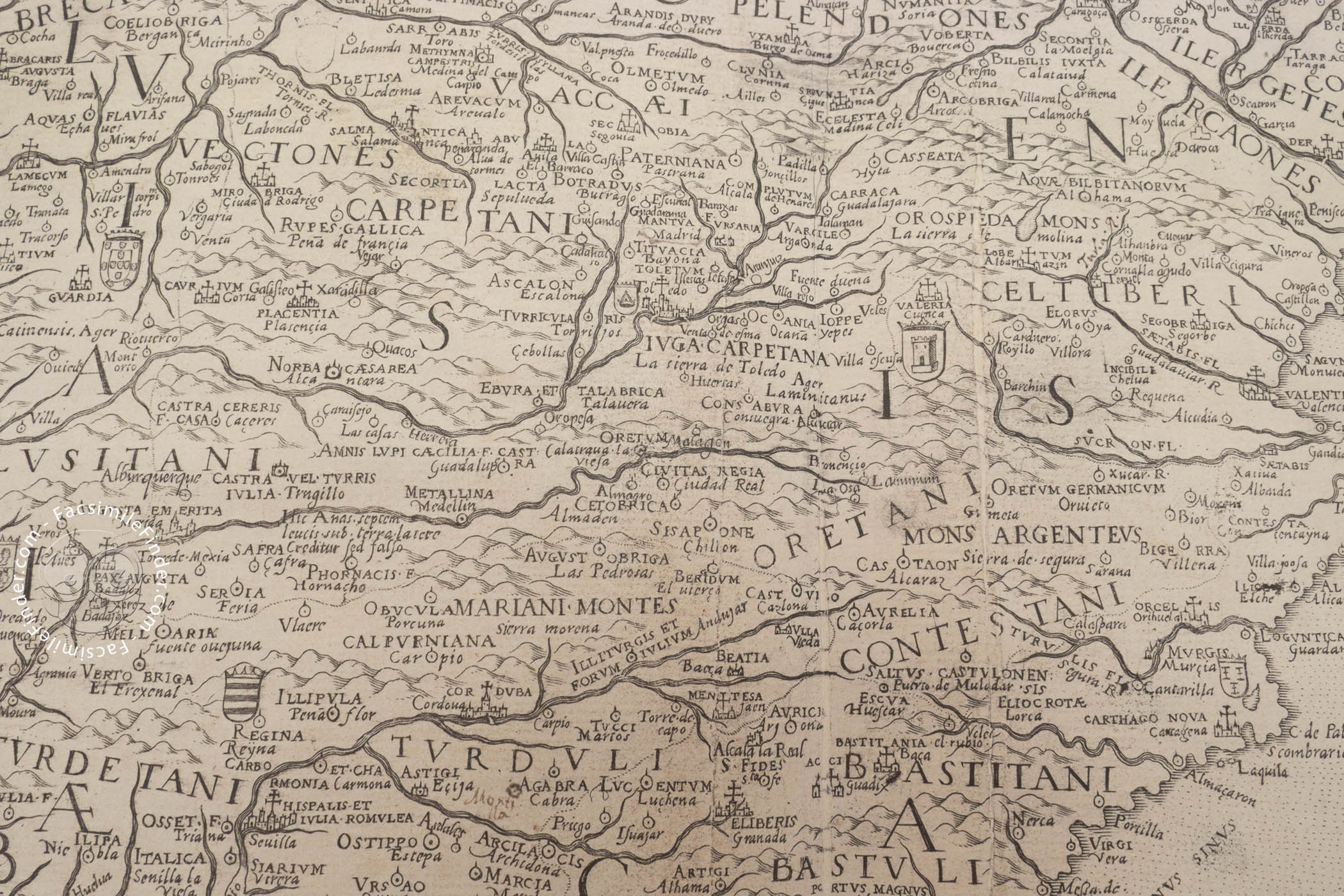
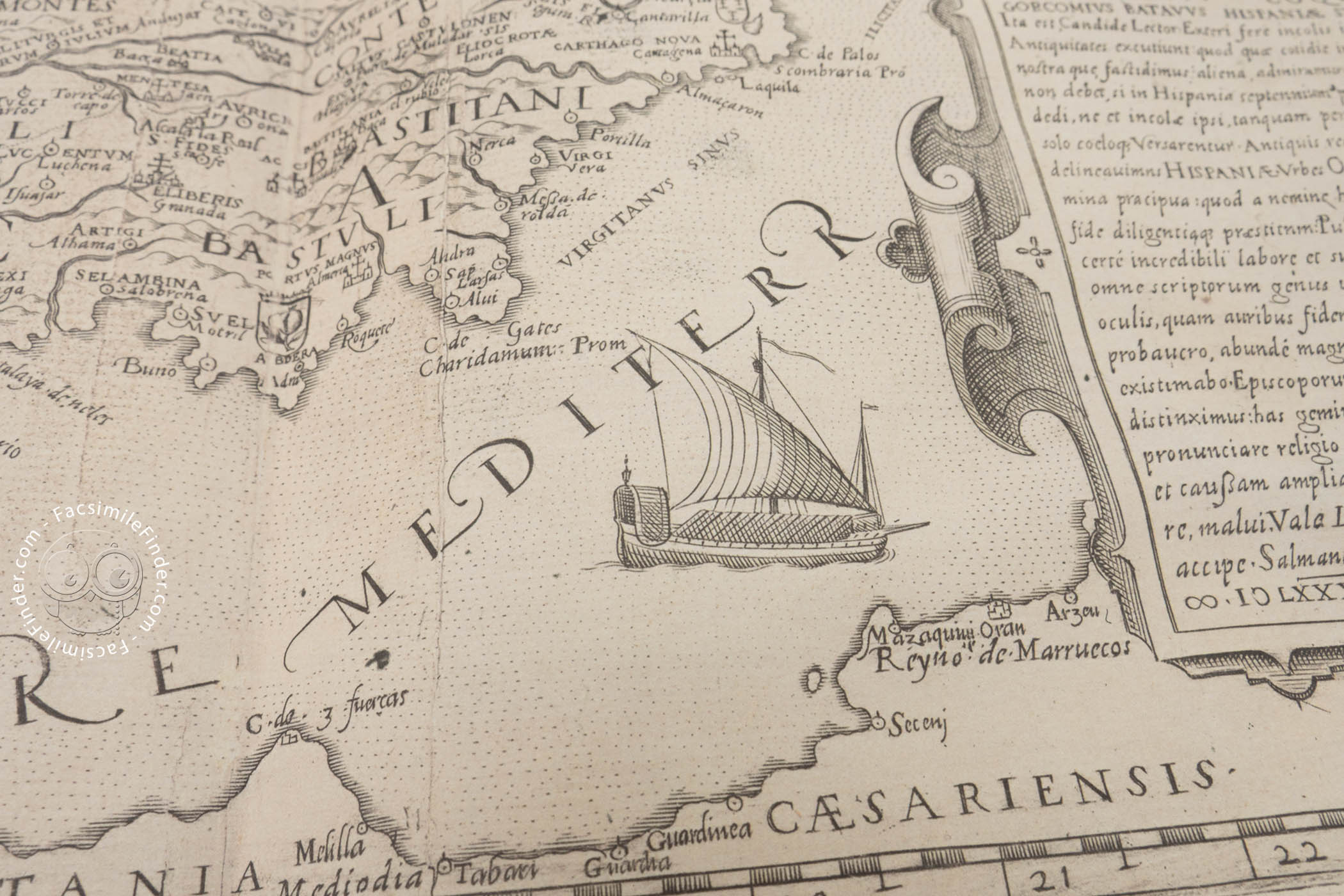
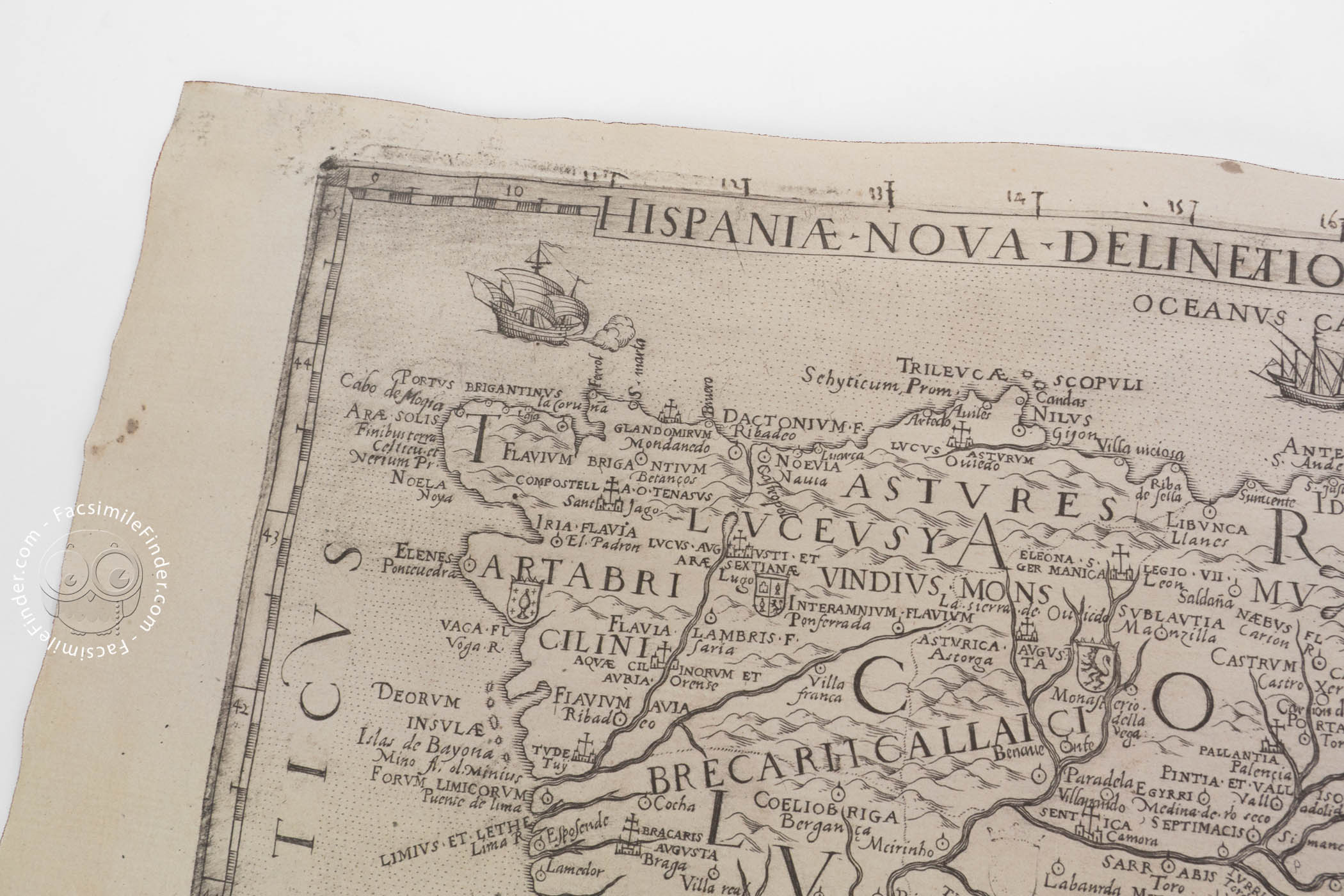
The sheet was engraved by Jorge (Georgius) Flemalia, whose line is praised for its fine, delicate burin work, and it is associated with the scholar-traveller Enrique Cock. The design orchestrates information and spectacle: a peninsula densely inscribed with toponyms, framed by ornamental winds, maritime movement, and an emphatic Habsburg imperial eagle that turns geography into a statement of order and authority.
Meaning, Function, and Humanist Ambition
Beyond orientation, the map performs an argument. By pairing ancient and modern place-names, it invites the viewer to read Spain as both a contemporary polity and a classical landscape—an exercise in memory as much as measurement. In that fusion of scholarship, print, and power, Hispaniae Nova Delineatio becomes a quietly eloquent witness to how a kingdom learned to see itself on paper.
Afterlife, Influence, and Quiet Disappointment
The map’s later story is threaded with a certain irony. Cock invested heavily—intellectually and economically—in publishing this “Mapa de España,” yet the effort was not properly rewarded; beyond scattered notices, his cartographic work passed unnoticed, except for its clear influence on later mapping, including Ortelius’s Hispania veteris descriptio. Even then, Ortelius did not credit Cock on the map itself, though he did list him among the authors in his Catalogus—a faint but telling form of acknowledgement that helped preserve Cock’s name where the sheet itself so often failed to survive.
We have 1 facsimile edition of the manuscript "Hispaniae Nova Delineatio": Hispaniae Nova Delineatio cum Antiquis et Recentioribus Nominibus, 1581 facsimile edition, published by Círculo Científico, 2007
Request Info / Price