
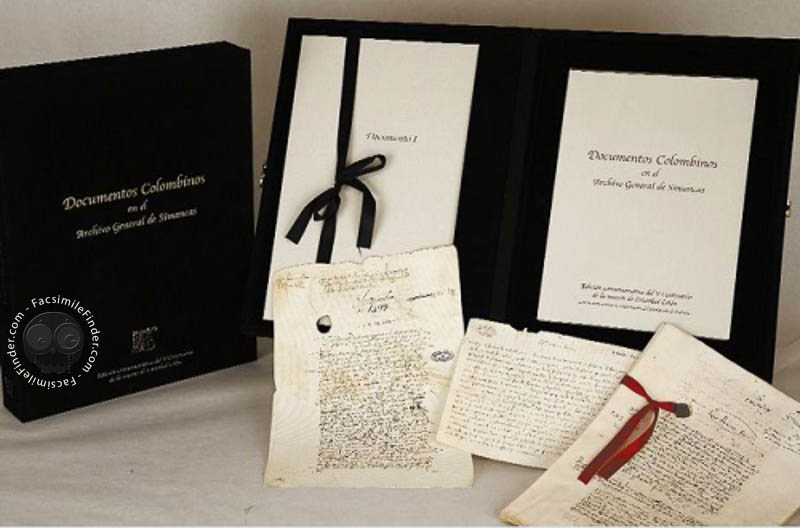
Seven papers, scattered across different fonds of the Archivo General de Simancas, follow Christopher Columbus from the triumphant announcement of his first crossing in 1493 to the settlement of his estate in 1505. They were never a single archival unit. Each was filed where the business that produced it belonged — chancery, treasury, household accounts — and only modern scholarship has drawn them together.
Paper Trails of a Castilian Administration
The Catholic Monarchs governed through documents, and the Indies enterprise generated them at every turn: a safe-conduct, a muster roll, a debt settled, a will copied for the record. When the Council of the Indies papers left Simancas for Seville in 1785, these pieces stayed behind, lodged too deeply inside Castilian series to be extracted.
An Autograph Letter, Cut Along Its Lower Edge
One item stands apart. Addressed to Queen Isabella alone and written in Columbus’s own hand, it survives unsigned and undated, measuring roughly 15.5 × 21.5 cm, its foot removed with a blade. A paper seal still clings to the reverse. Its Castilian carries the Portuguese and Italian inflections that mark everything the Admiral wrote himself. The letter reporting the first voyage to Luis de Santángel, by contrast, is a contemporary copy; the original has not survived.
Service, Payment, Inheritance
Read together, the documents replace the explorer with the claimant: a man recruiting condemned prisoners, owing wages to shipmates, pressing the crown to confirm what it had promised, and finally binding his titles into an entail.
The archive kept the ordinary paperwork, and the ordinary paperwork is what remains.
We have 1 facsimile edition of the manuscript "Columbus Documents in the Archivo General de Simancas (Collection)": Documentos Colombinos en el Archivo General de Simancas facsimile edition, published by Círculo Científico, 2006
Request Info / Price