
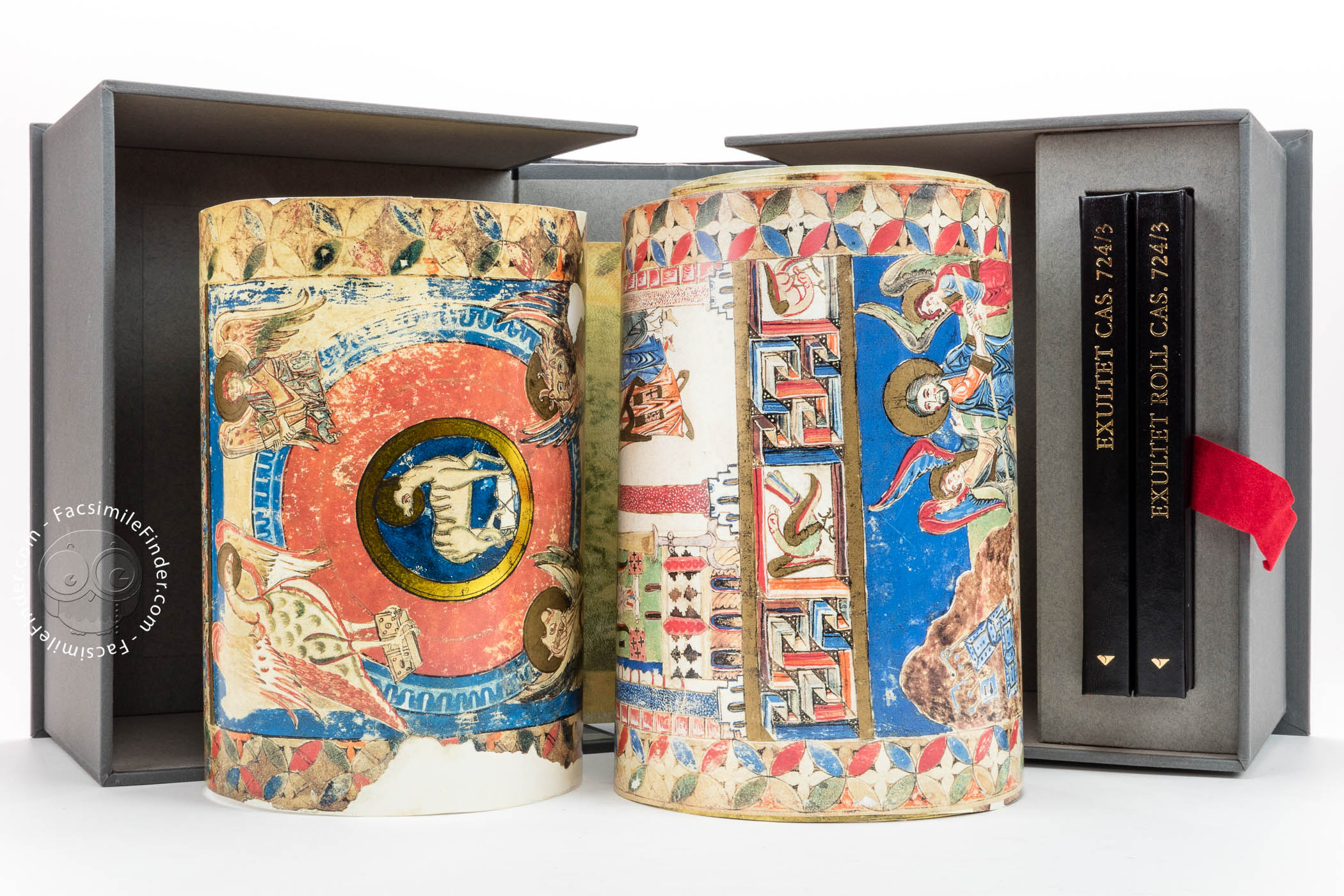
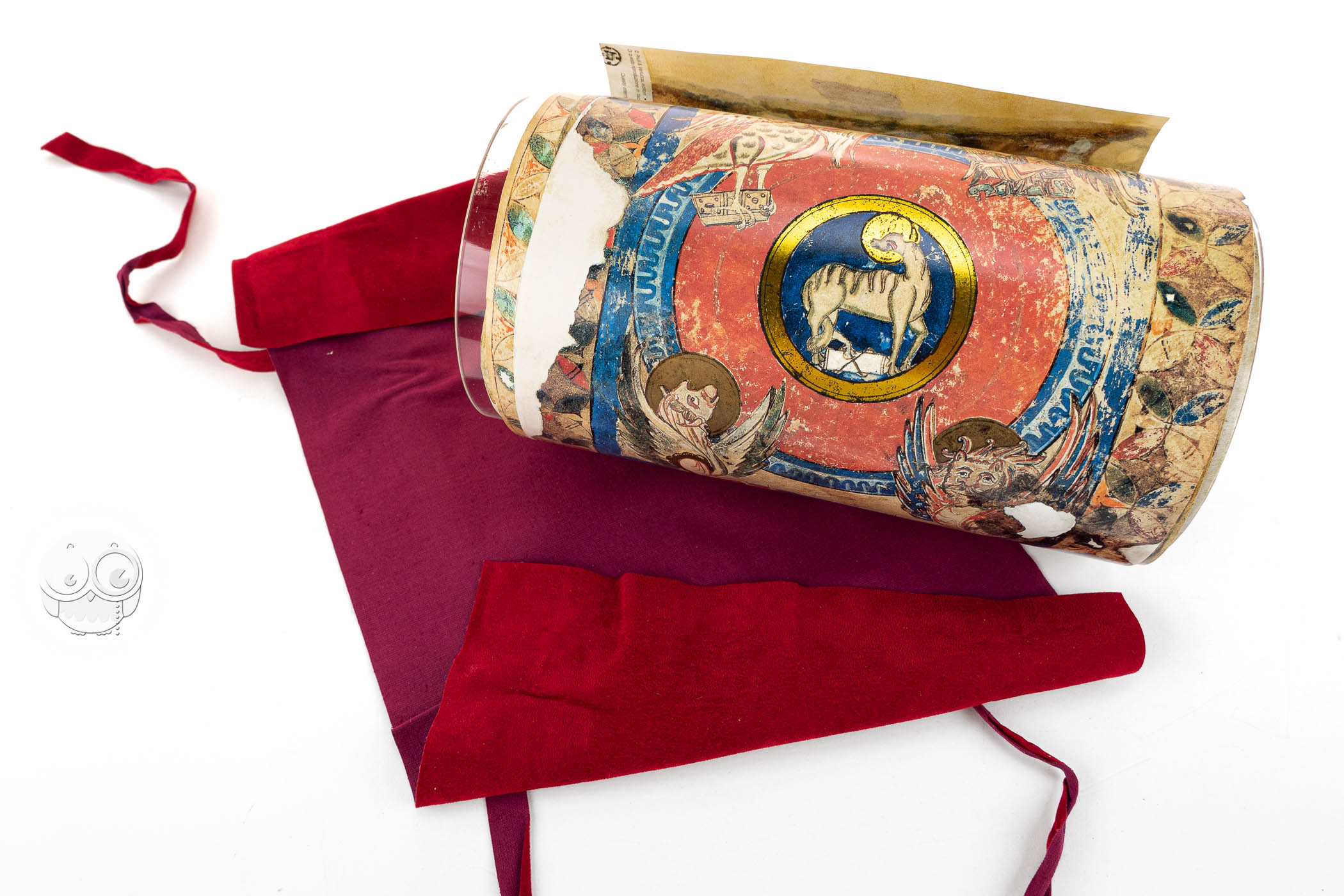
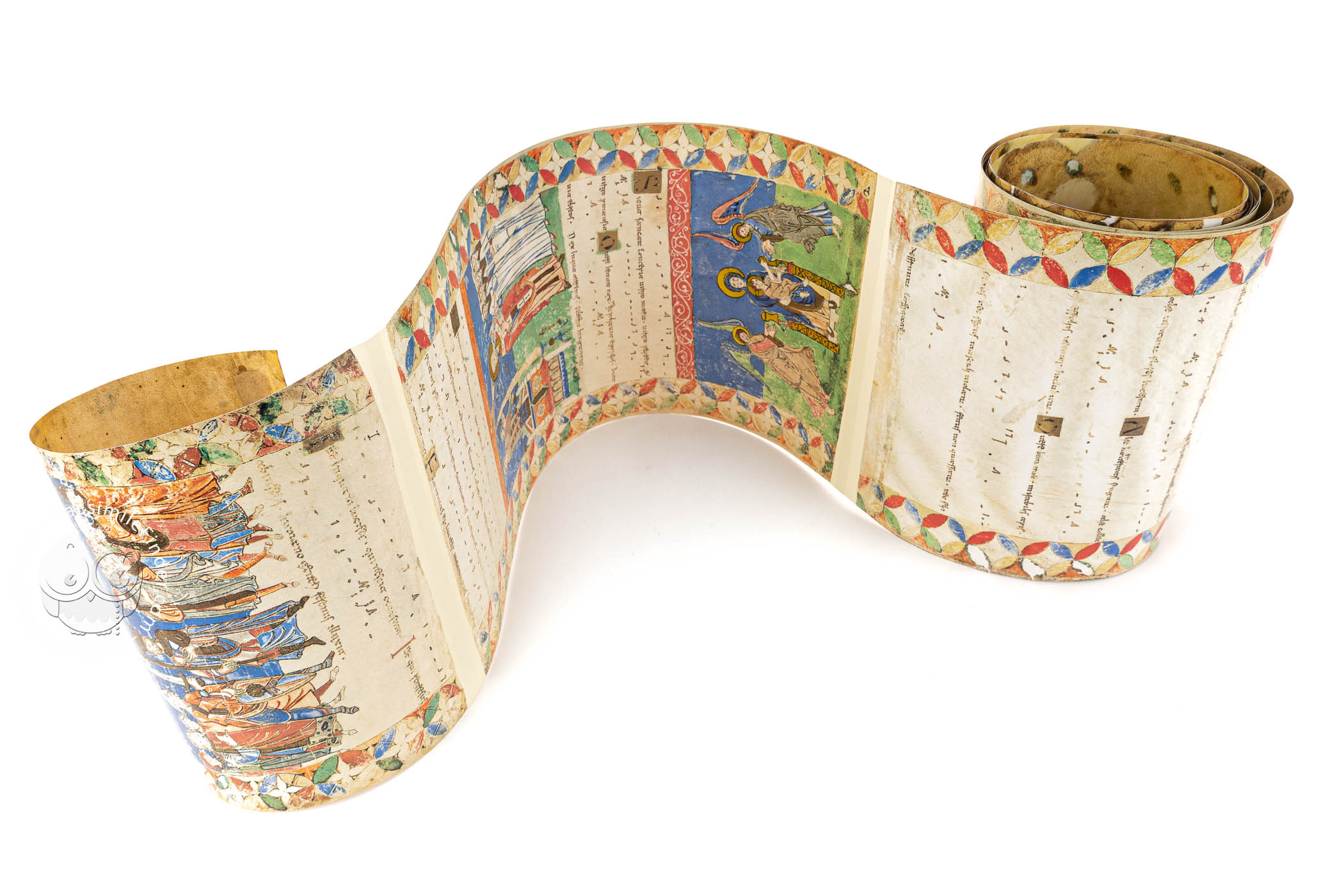
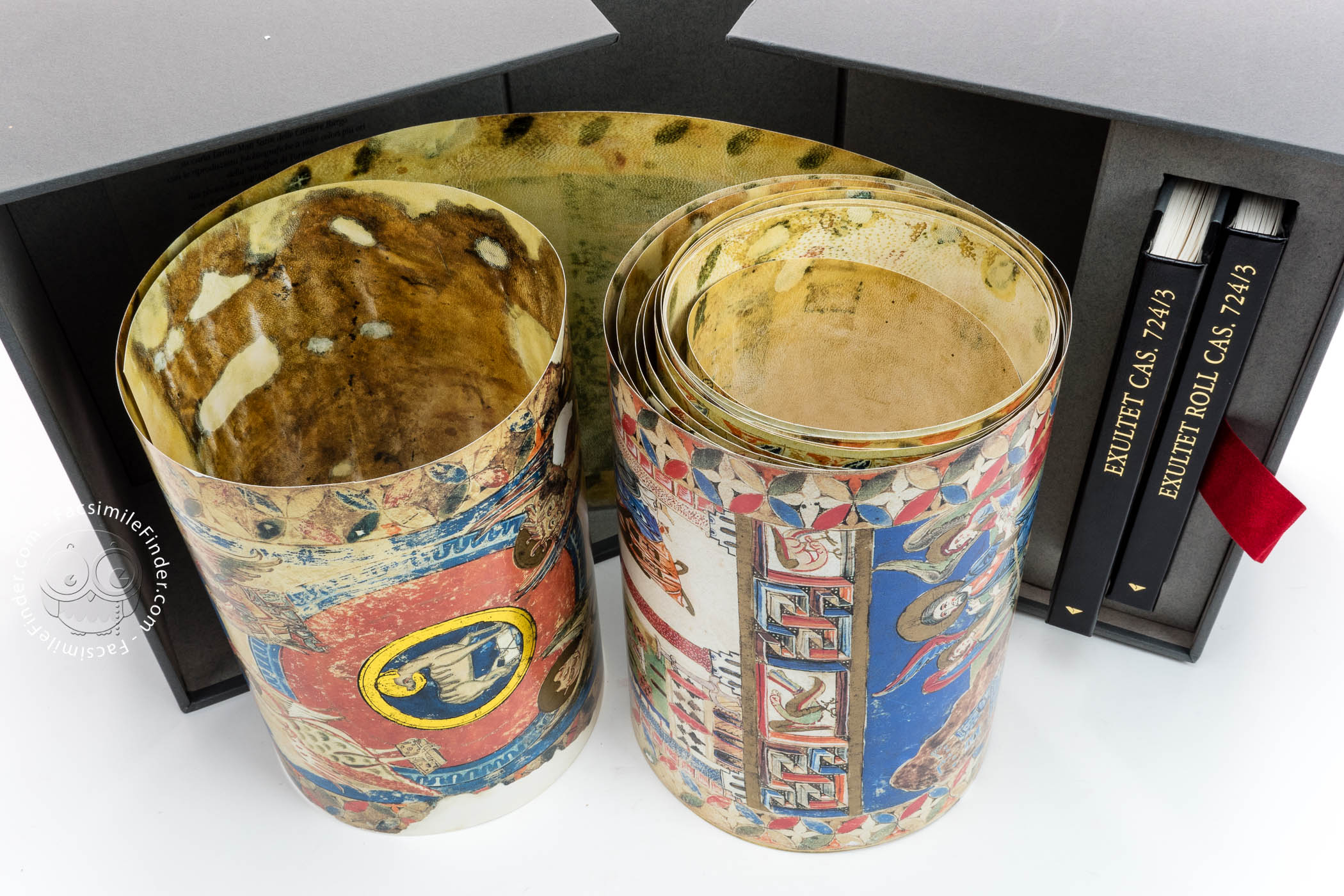
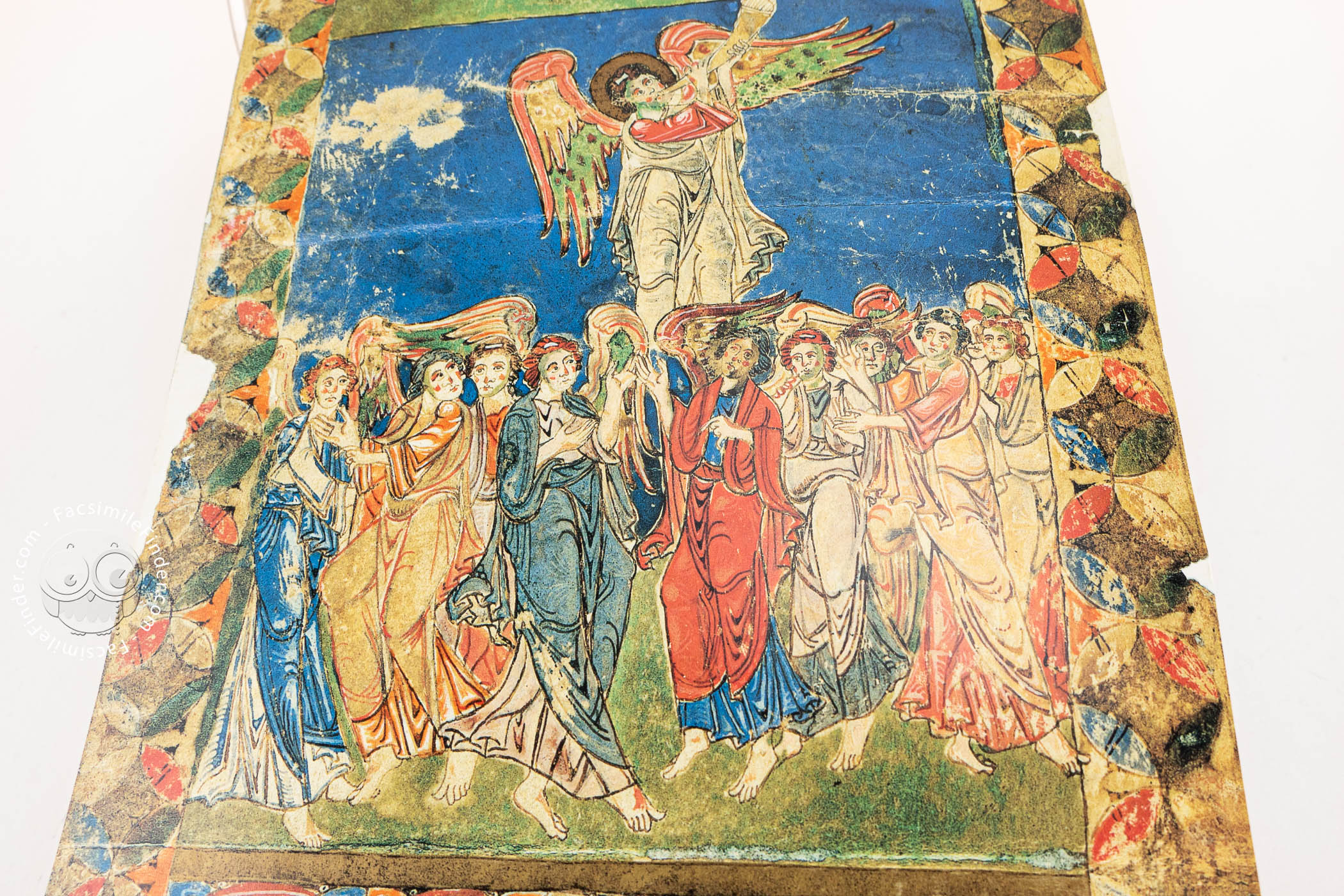

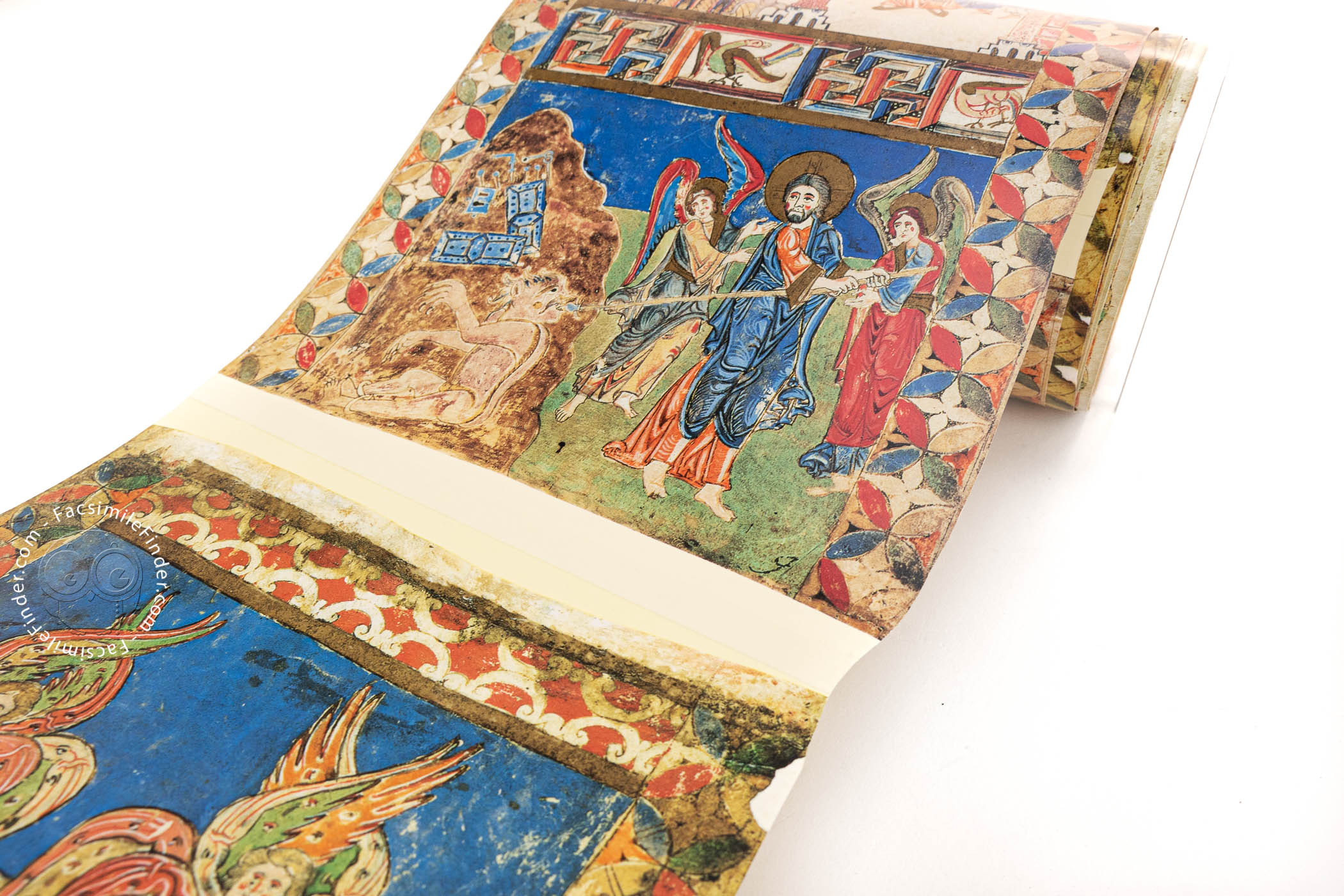


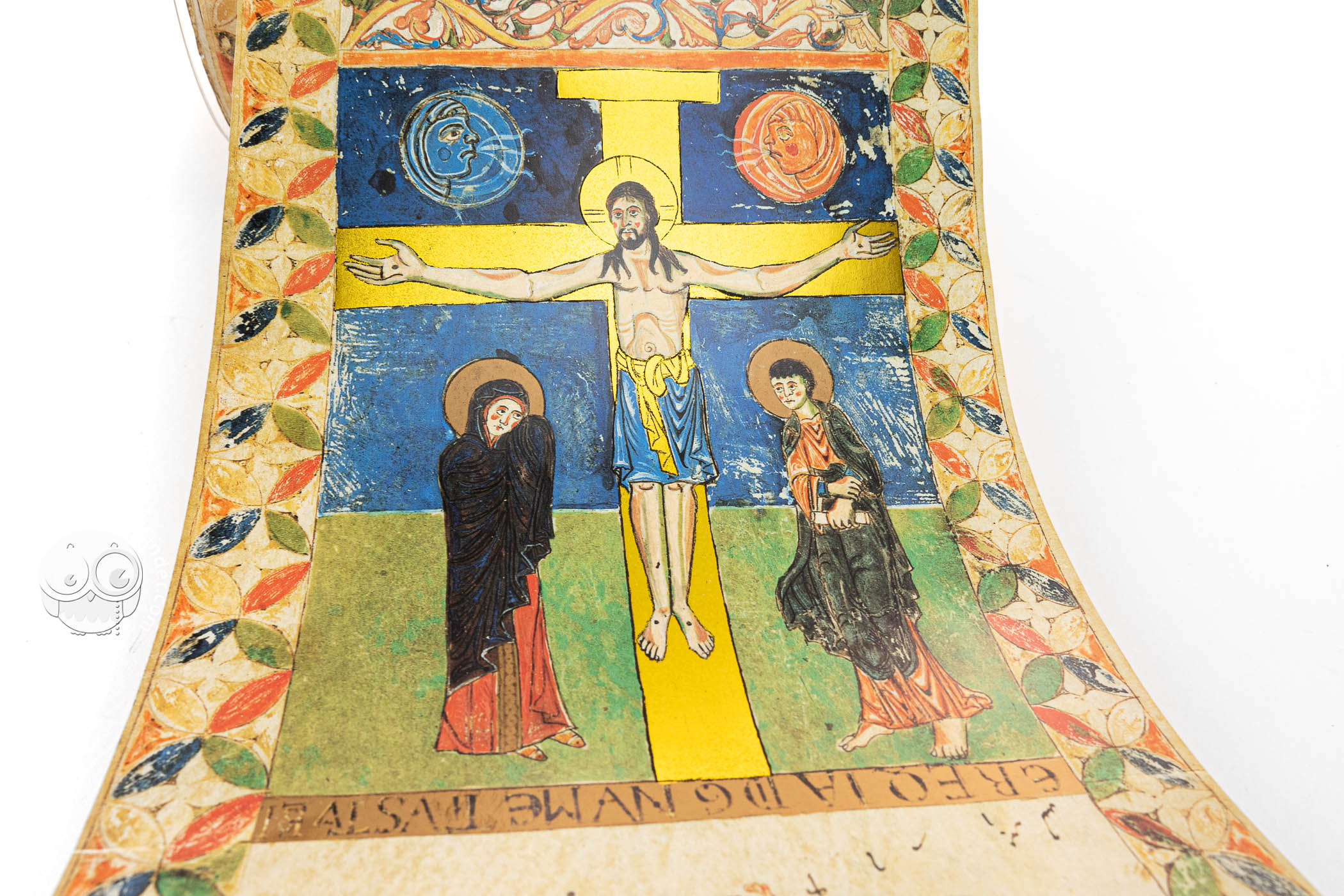
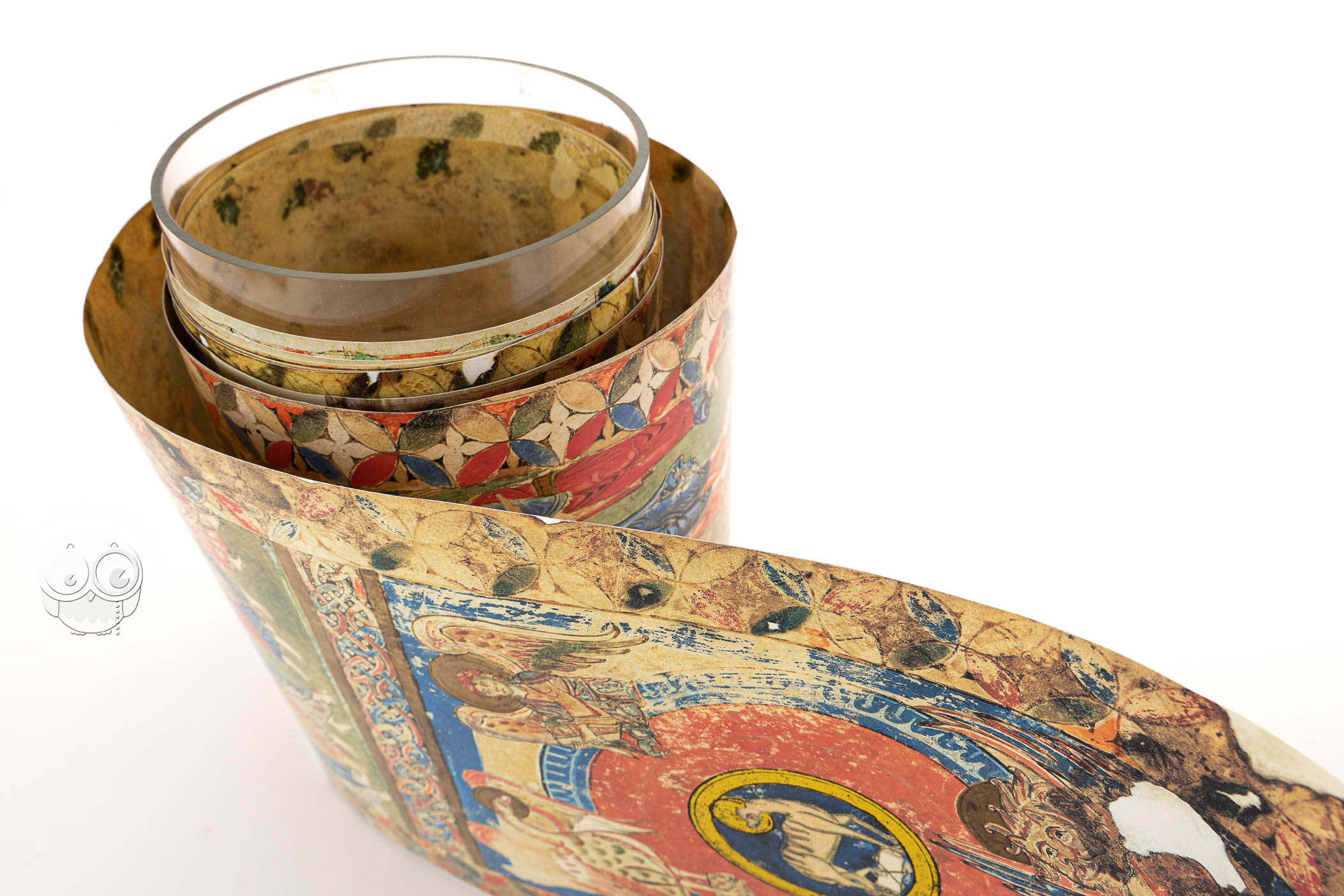
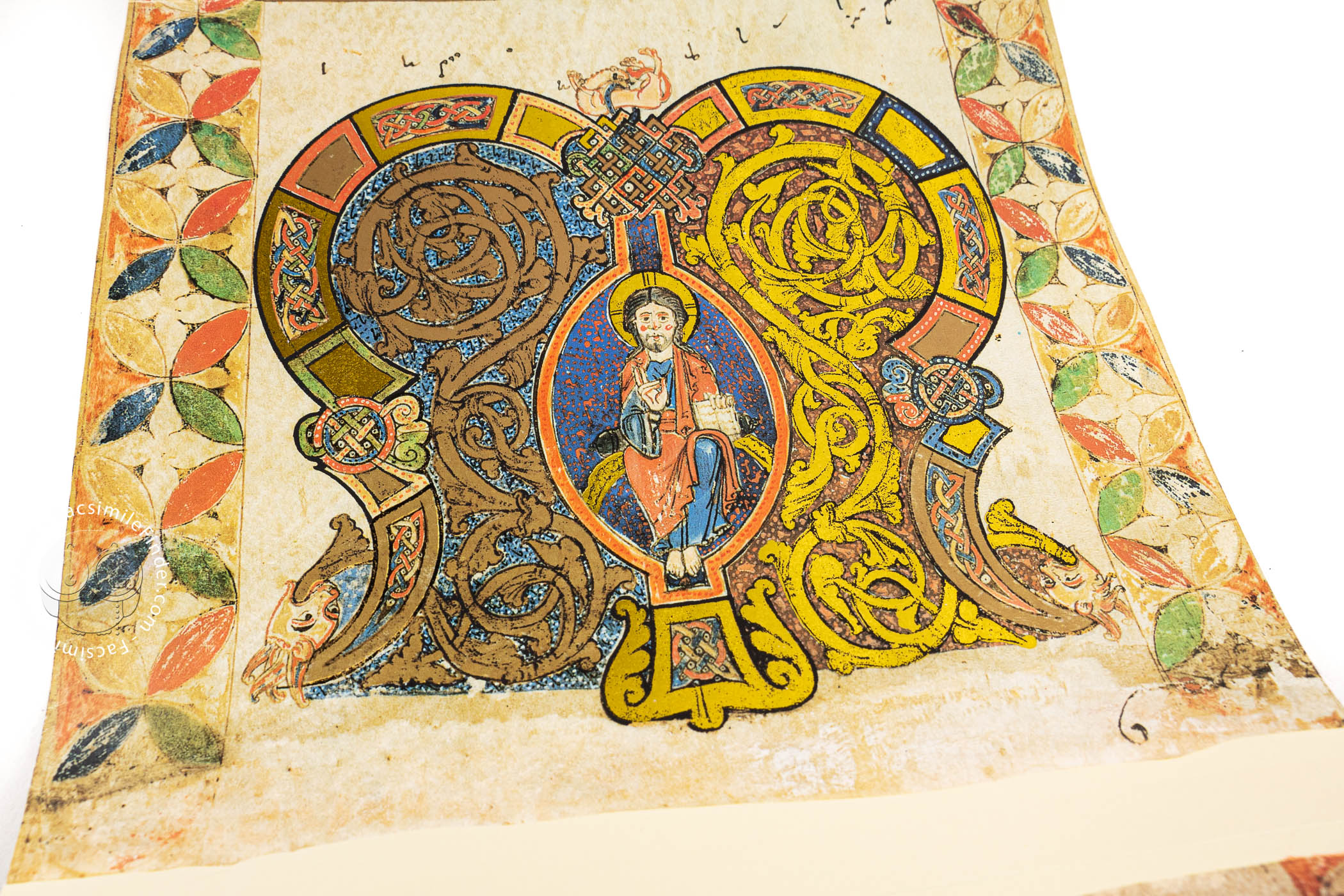
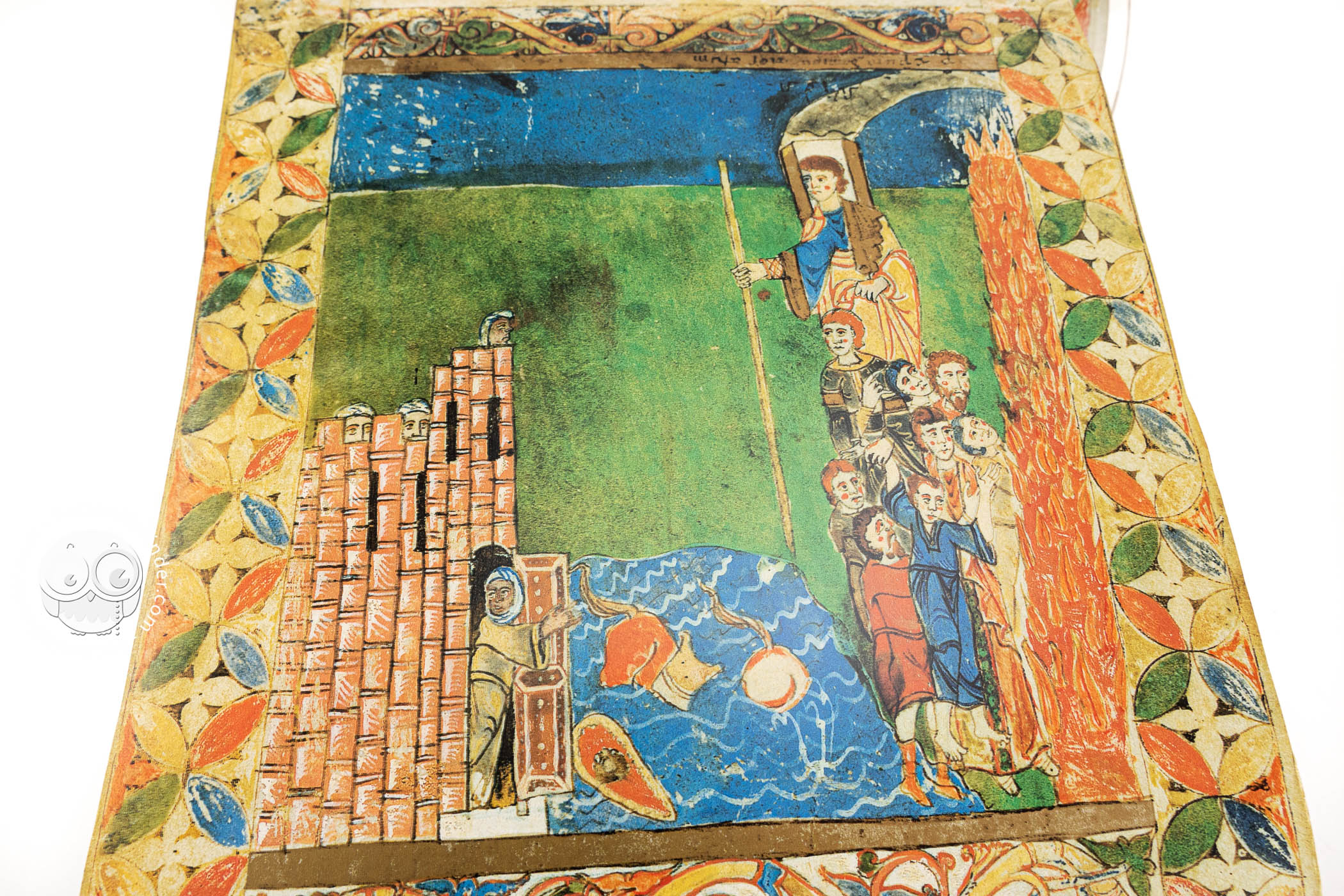
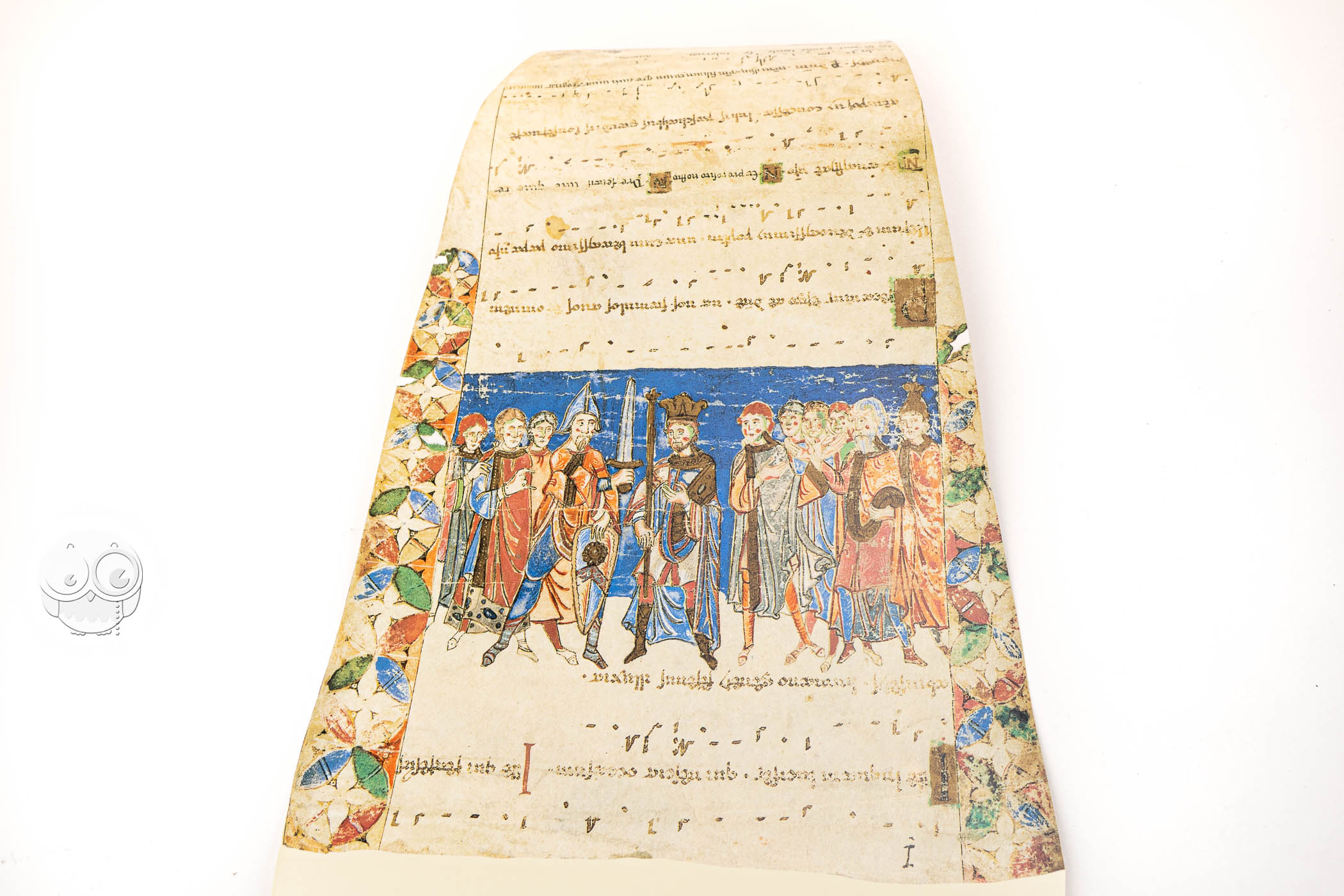
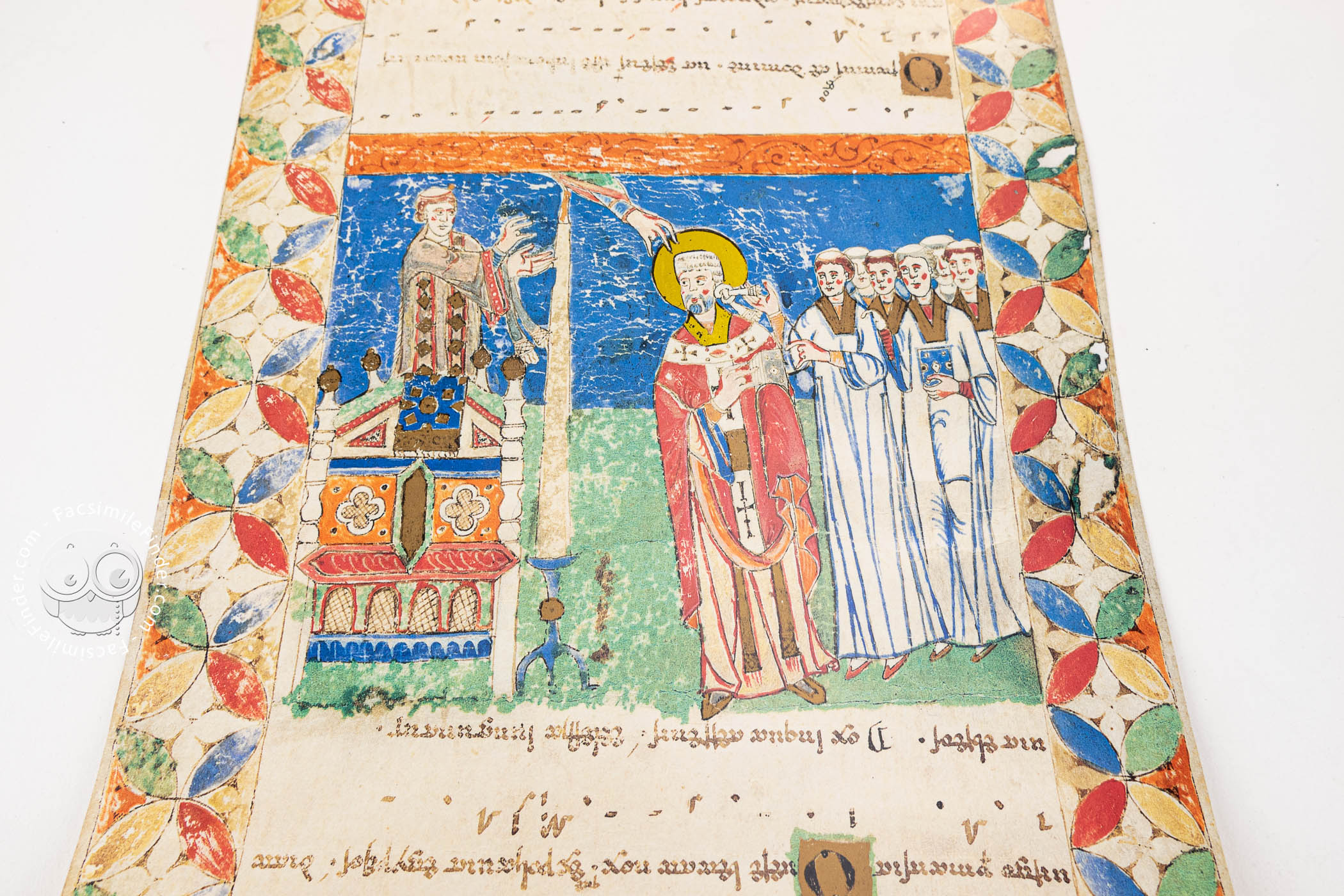

The Casanatense Exultet Roll is a twelfth-century Christian liturgical manuscript with the text and music notation of the pascal proclamation, the portion of the Easter vigil at which a ceremonial candle is blessed and lit, announcing the coming of Easter. It was made either at the Benedictine monastery at Montecassino or at Benevento, the seat of an archbishop, in southern Italy. It boasts fifteen large miniatures in brilliant color of historical and contemporary subjects, including a scene that pictures an Exultet roll in use.
The lighting of the pascal candle in a dark sanctuary is the climax of the Easter vigil, and the chant elaborates on the meaning of its light as the metaphorical conquest of sin and evil and associates it with the pillar of fire that led the ancient Israelites through the wilderness by night.
Biblical and Allegorical Subjects
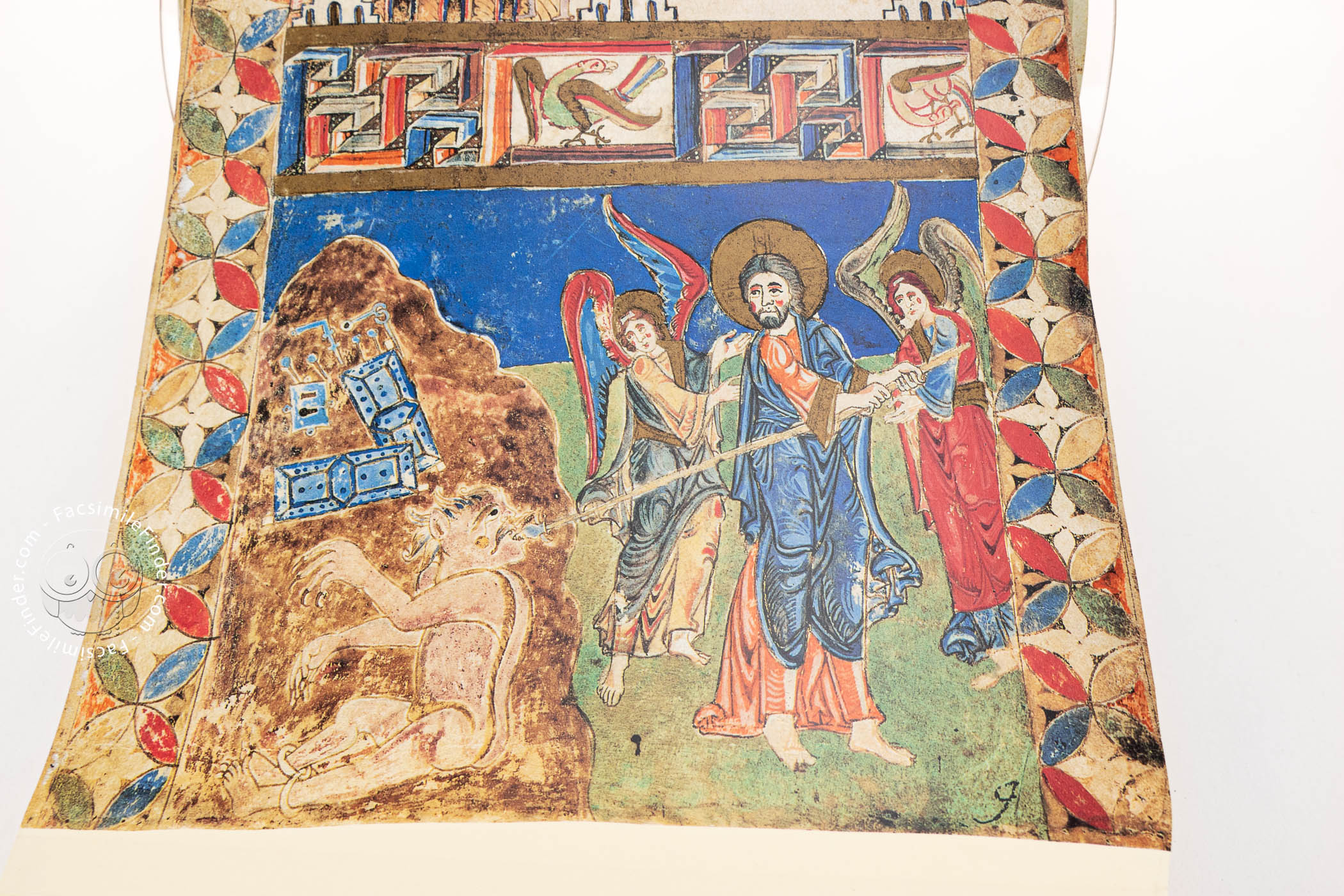
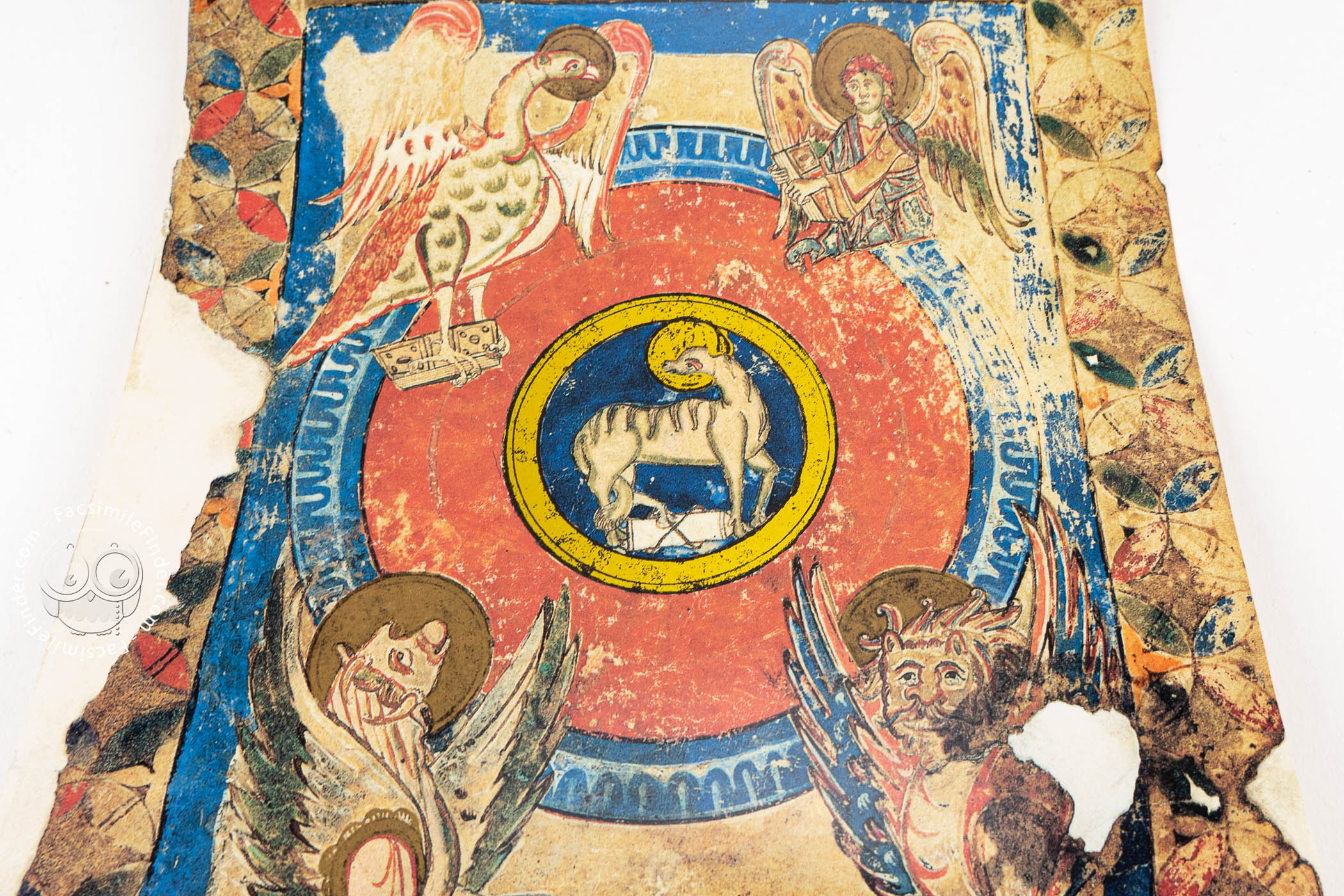
The roll's historical subjects include narrative scenes, such as the Harrowing of Hell, which shows the risen Christ rescuing Adam and Eve from Limbo, and the ancient Israelites crossing the Red Sea on their flight from Egypt. Also pictured are the Lamb of God, surrounded by the symbols of the four evangelists, and the Virgin and Child, flanked by angels.
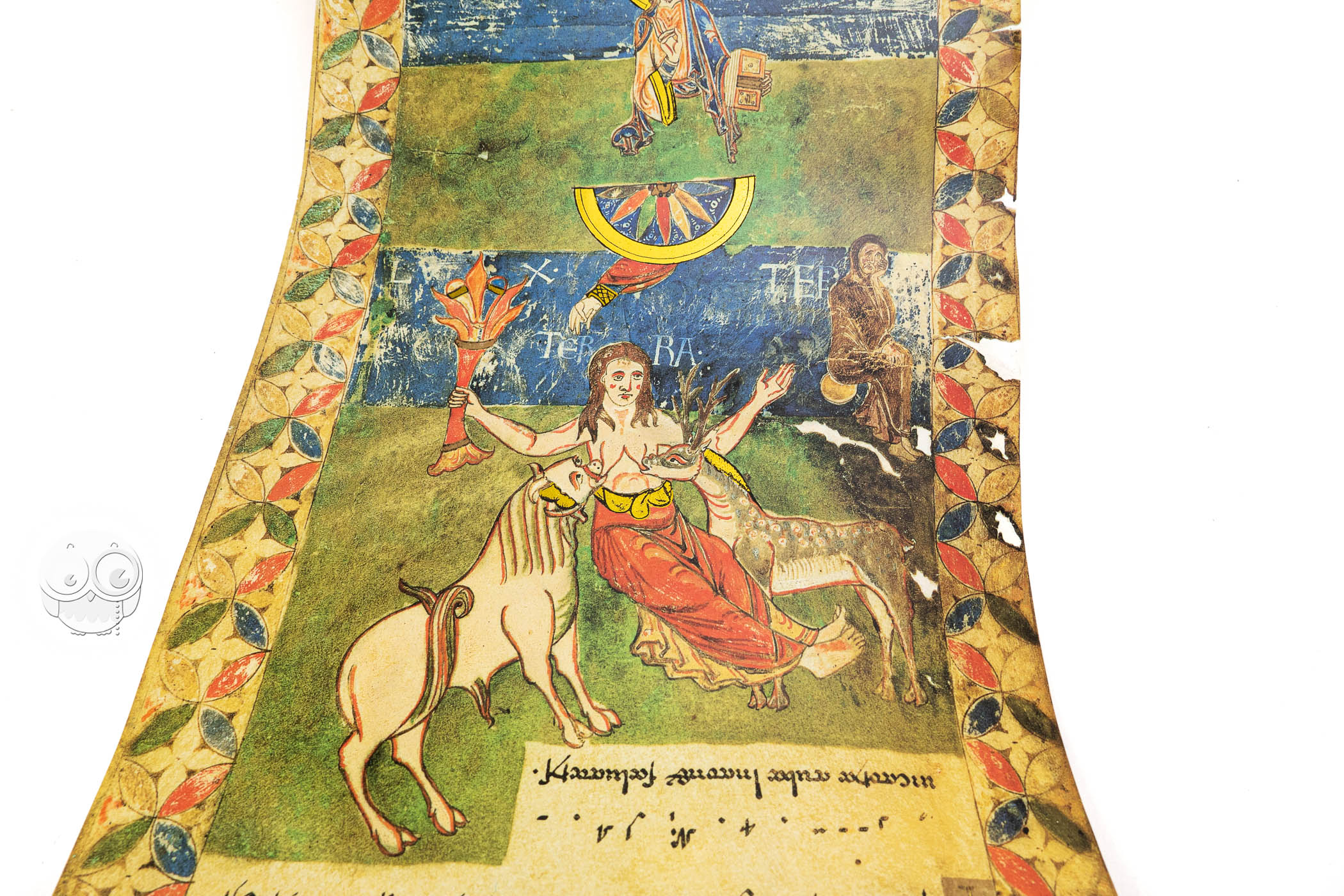
An allegorical scene showing the personification of Earth suckling two animals while holding a torch aloft illustrates a passage near the beginning of the chant: "Let the earth rejoice, irradiated with such brilliance, and let it feel itself illuminated by the splendor of the eternal King, lost in the darkness of the whole world." The personification of Darkness is included in the scene, shown in a traditional pose of mourning. Christ blesses the scene from heaven.
Contemporary Subjects
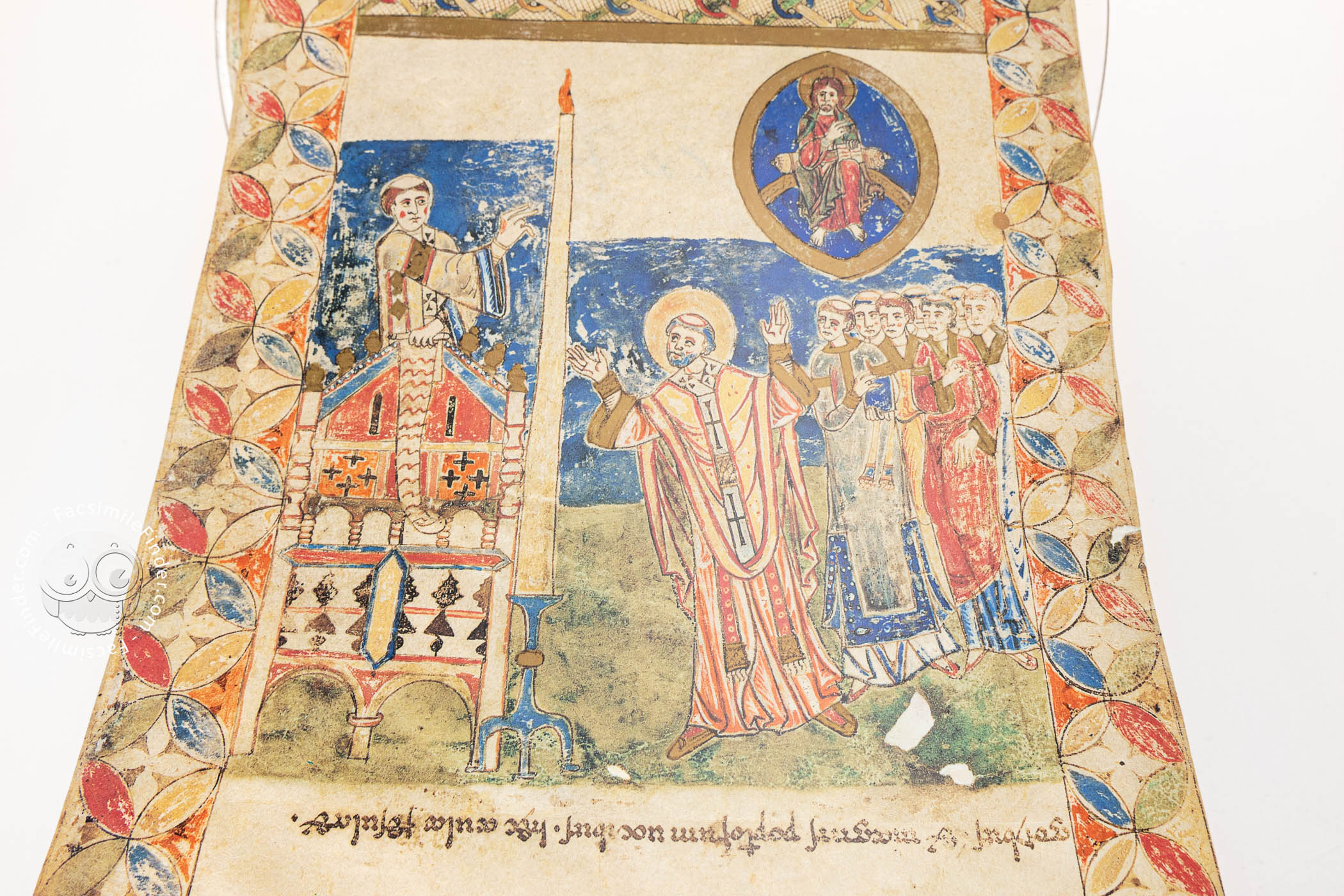
Six miniatures show contemporary subjects, including an archbishop presenting an Exultet roll to a deacon and three moments in the ceremony. The first mention of the bees that produce the wax for the candle prompted a miniature of nine hives on a wooden frame, attended by bees.
A Distinctive Format
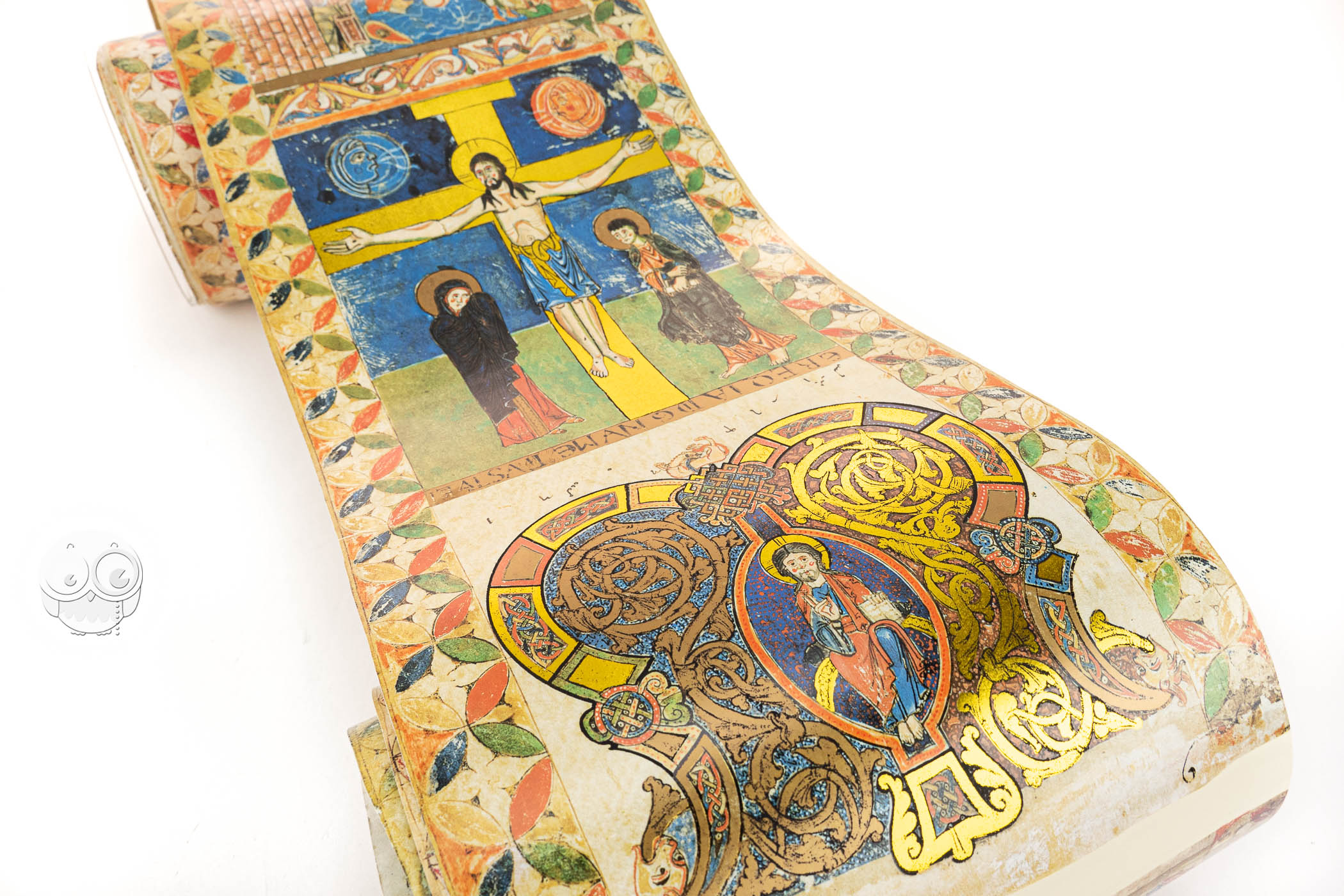
The miniatures, upside-down and above the portion of the chant text they illustrate, are brightly colored, and many occupy most of the roll's width. This arrangement—at least in principle—facilitates their visibility as the roll unfurls over the top of the pulpit. The roll thus added drama to the other sights and sounds of the liturgy.
A Distinctive Chant
The Exultet text is in more elevated Latin than most chants of the Christian liturgy. It includes classical vocabulary and poetic turns of phrase, such as a reference to the light of the pascal candle "drinking from the strength" of the wax. The music features repeating, looping melodies that evoke the moving lights of the night sky and the unrolling of the manuscript.
A Distinctive Script
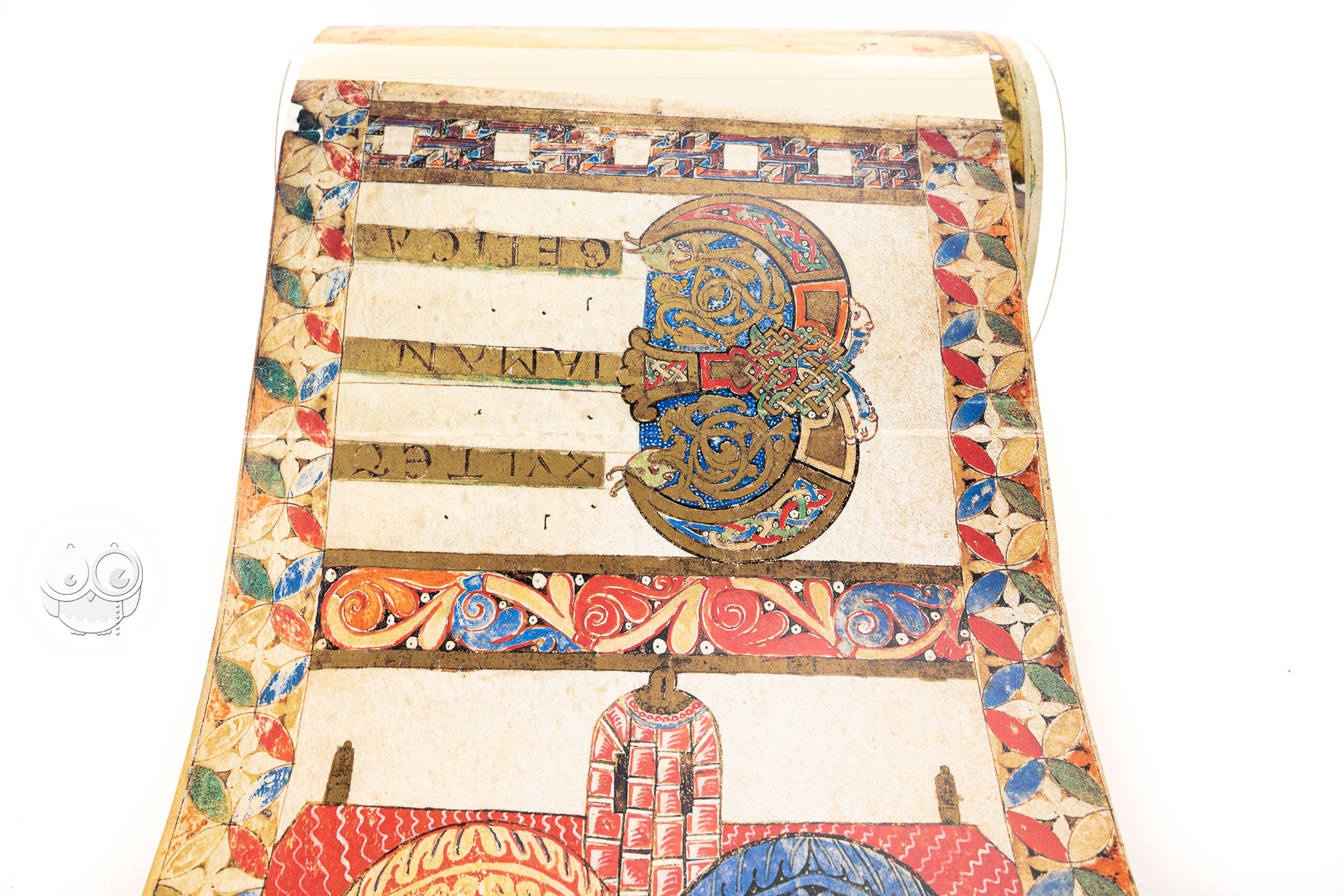
The manuscript's text is written in Beneventan Minuscule, an elegant script developed in southern Italy that continued in use as most of Europe adopted Caroline Minuscule. Its many ligatures of two or more connected letters contribute to its singular appearance. The painted initials are composed of interlace designs of great intricacy.
Reflection of an Old Tradition
The miniatures of the Casanatense Exultet Roll demonstrate a reliance on a tradition established with the tenth-century Vatican Exultet Roll and also seen in the thirteenth-century Salerno Exultet Roll. The Casanatense and Salerno manuscripts, in contrast to the earlier Vatican roll, have the Exultet text of the Roman rite, imposed on southern Italy in 1058 by the pope.
A Cardinal's Treasure
Cardinal Girolamo Casanate (1620-1700) probably purchased the roll in Benevento, when he also acquired two earlier liturgical rolls, a benedictional and a pontifical. It entered the Biblioteca Casanatense together with most of the cardinal's extensive collection of manuscripts and printed books at its foundation in 1701. It is unknown when the manuscript, with a total length of about twenty-two and a half feet (685 cm), was divided into ten pieces, now preserved in calf-bound registers.
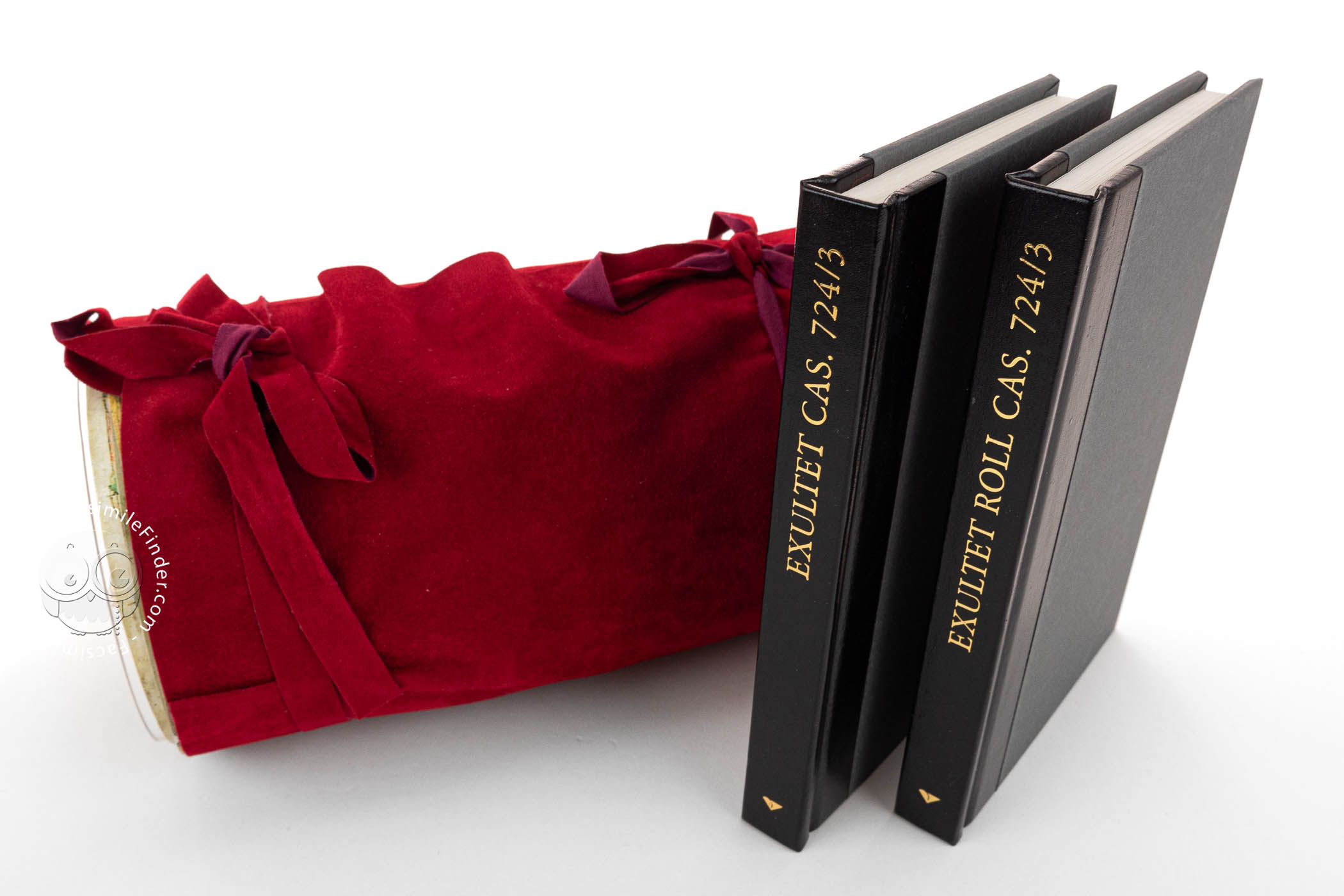
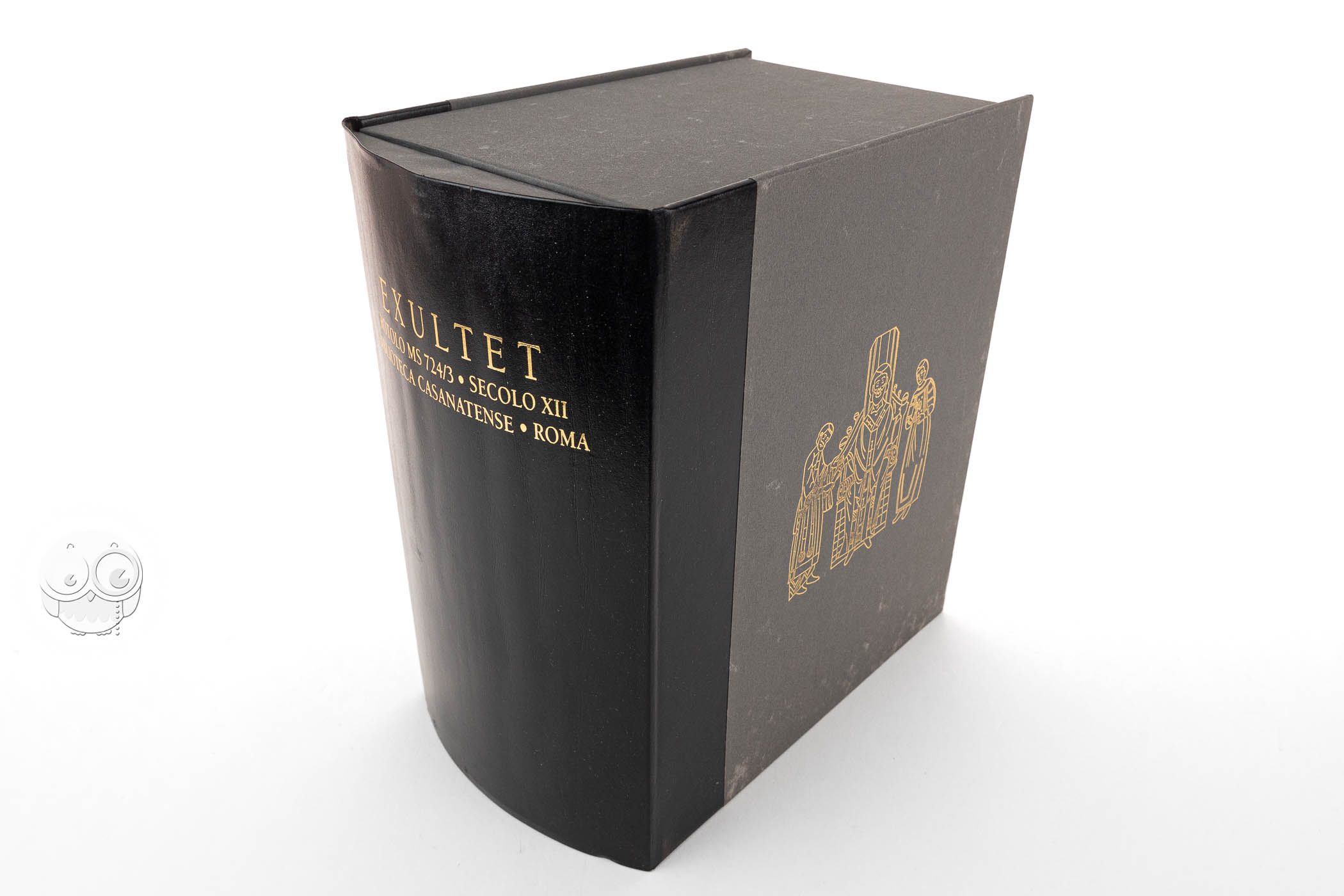
We have 1 facsimile edition of the manuscript "Casanatense Exultet Roll": Exultet Casanatense facsimile edition, published by Priuli & Verlucca, editori, 1994
Request Info / Price