

The Vienna Book of Surgery is a richly illuminated manuscript of the surgical treatise by the renowned physician Abū al-Qāsim al-Zahrāwī (Abulcasis). Created in southern France in the second half of the fourteenth century, the codex transmits a Latin translation of the final section of Kitāb al-Taṣrīf ("Complete Book on Medical Art"), a medical encyclopedia that profoundly shaped surgical knowledge in medieval Europe. The manuscript features sixty-eight miniatures depicting surgical techniques and instruments.
The Vienna manuscript presents al-Zahrāwī's discussion of surgery, completed in the year 1000, in the Latin translation by Gherardo da Cremona (d. 1187). It unfolds in three "books" treating cauterization, obstetrics and bloodletting, and orthopedics.
A Manuscript to Admire
Although the manuscript was annotated by early readers, it was designed more for show than practical use. The large size, the handsome presentation of the text, and the extensive program of miniatures indicate that the manuscript was never intended as a handbook for practicing medicine.
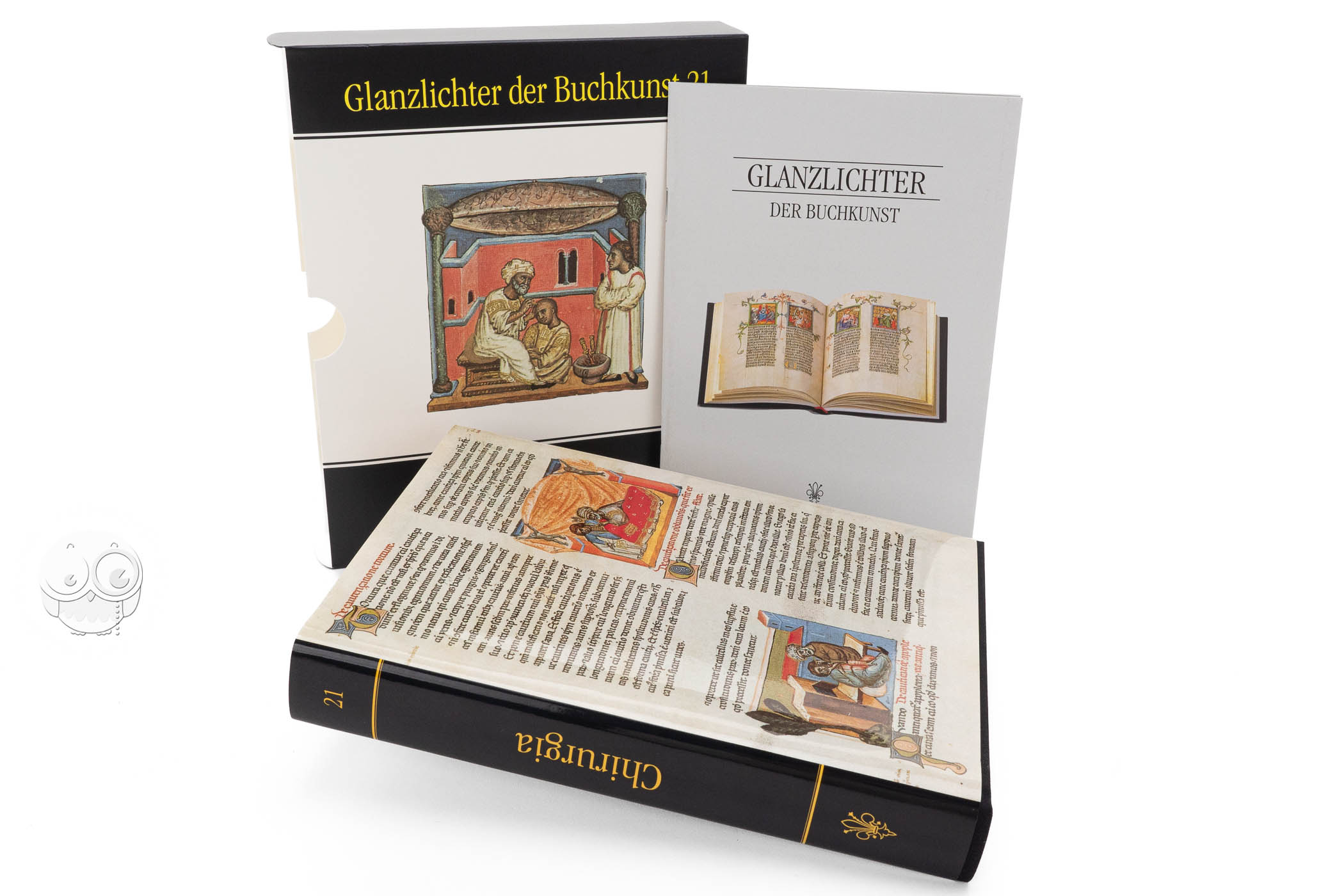
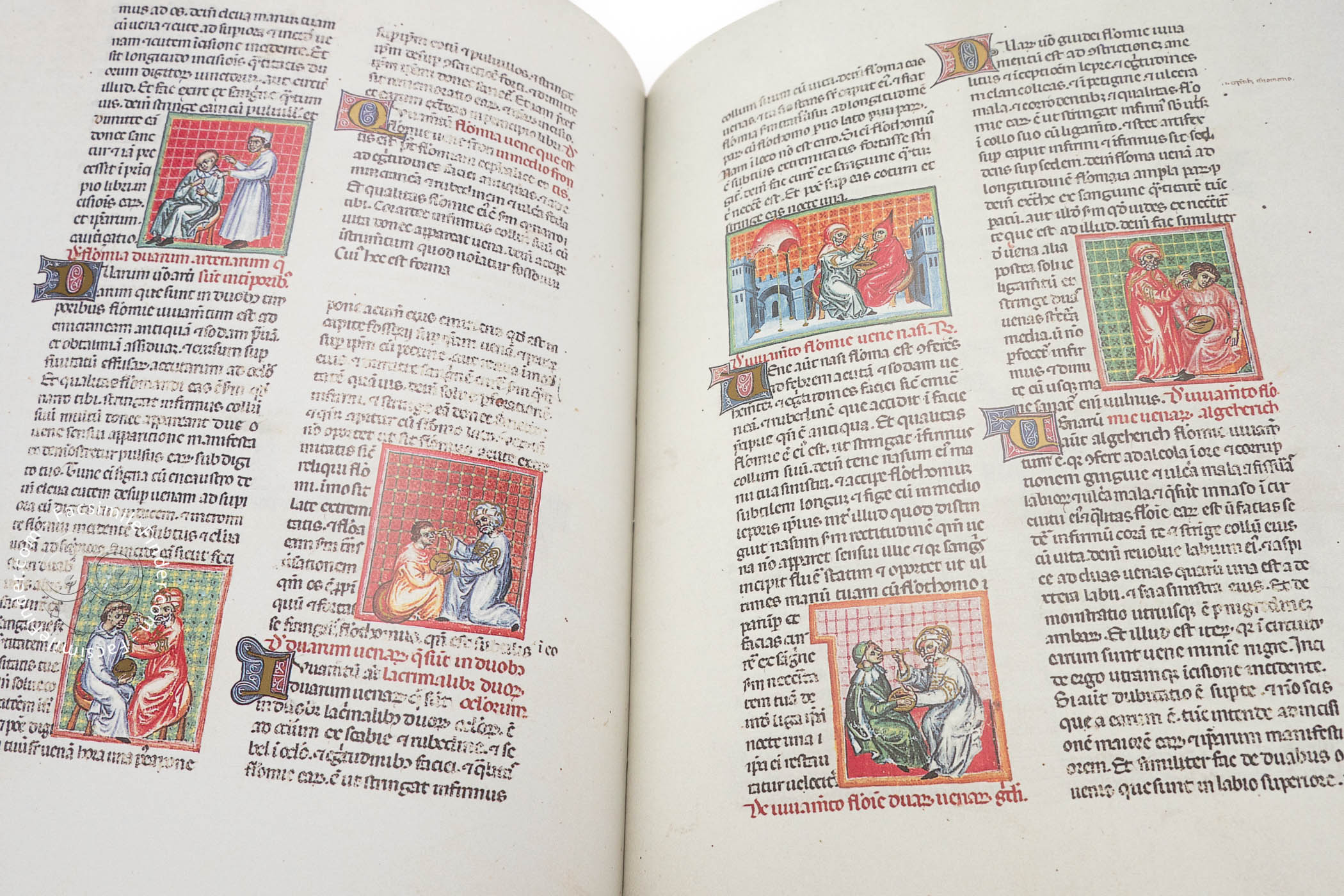
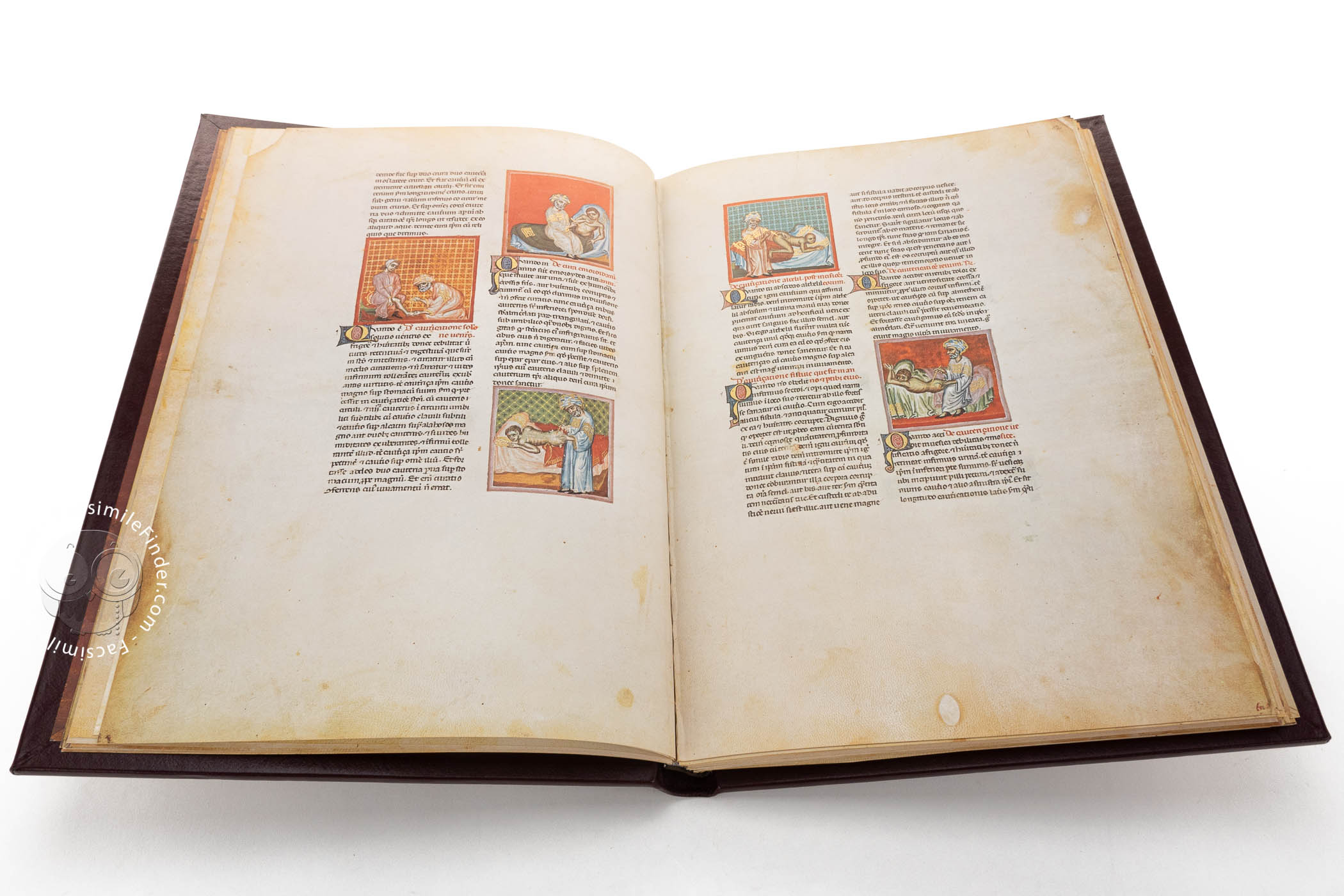
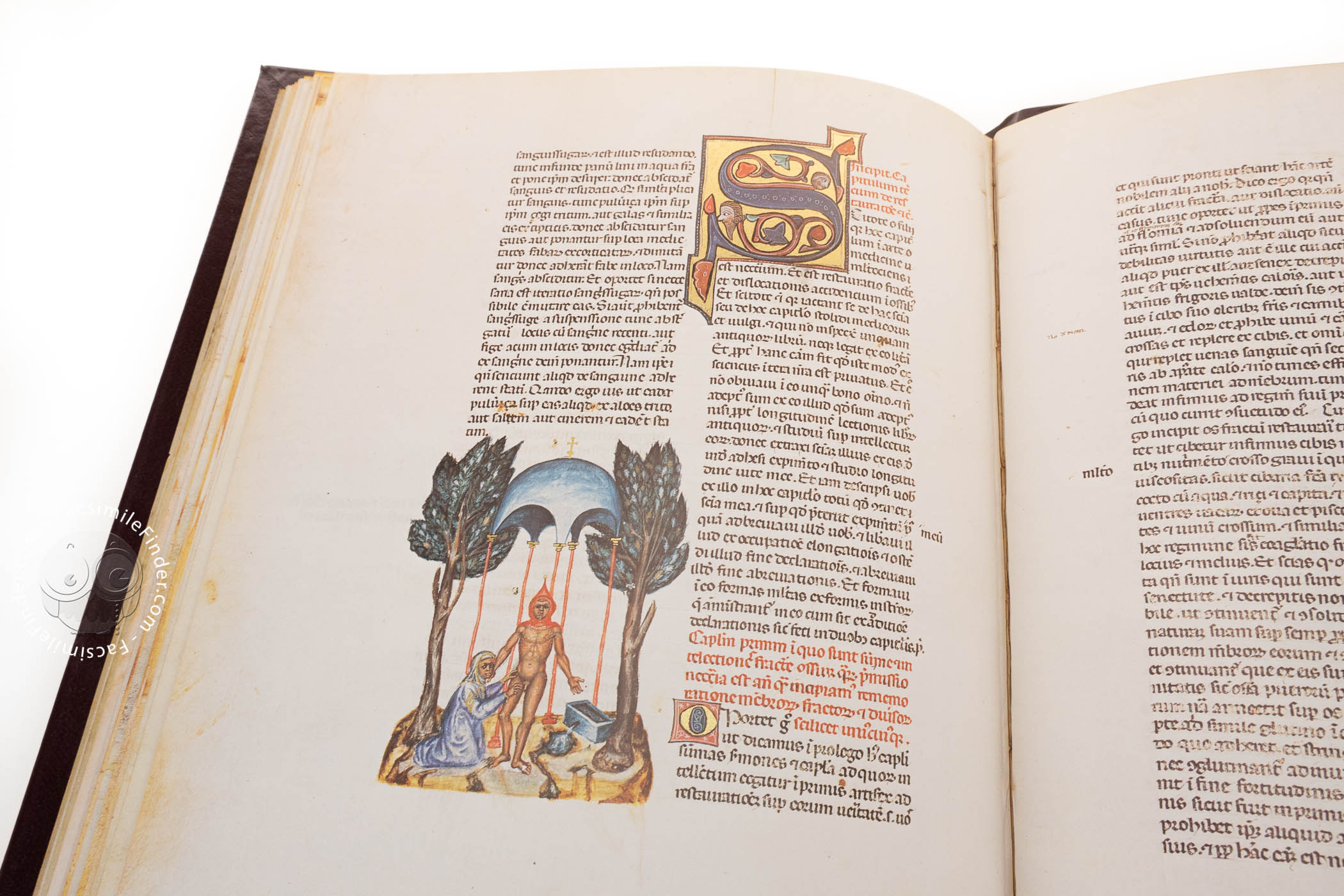
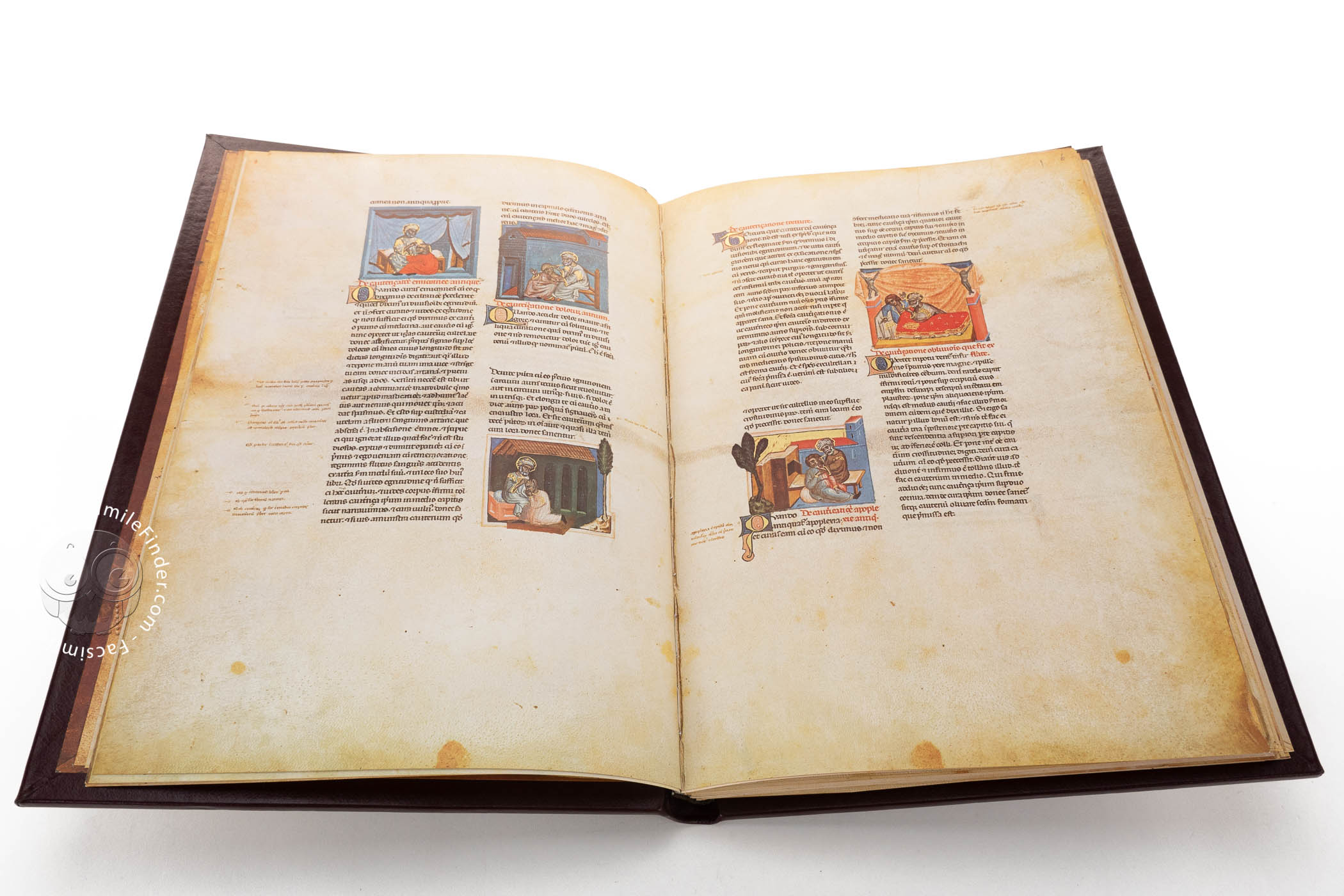
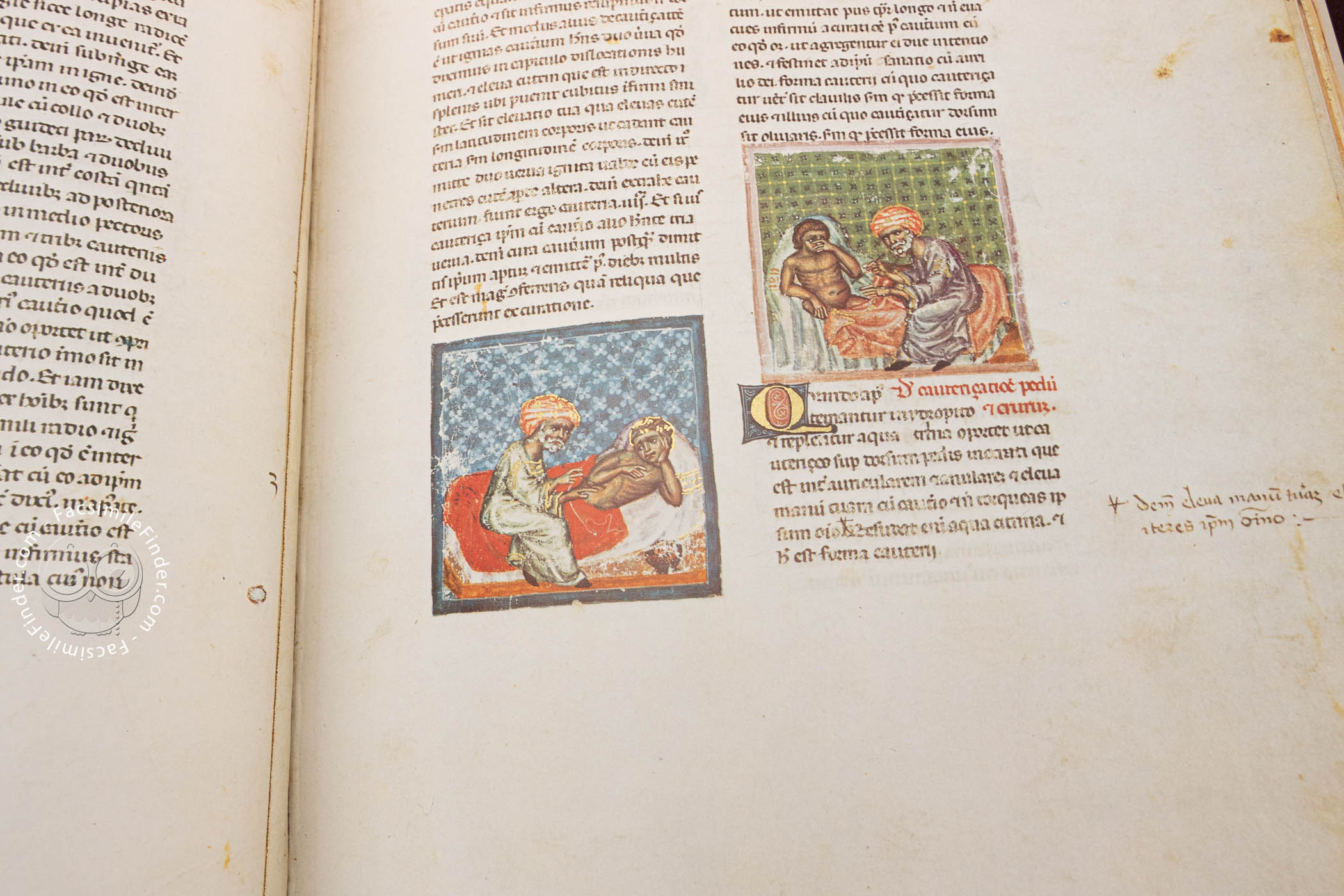
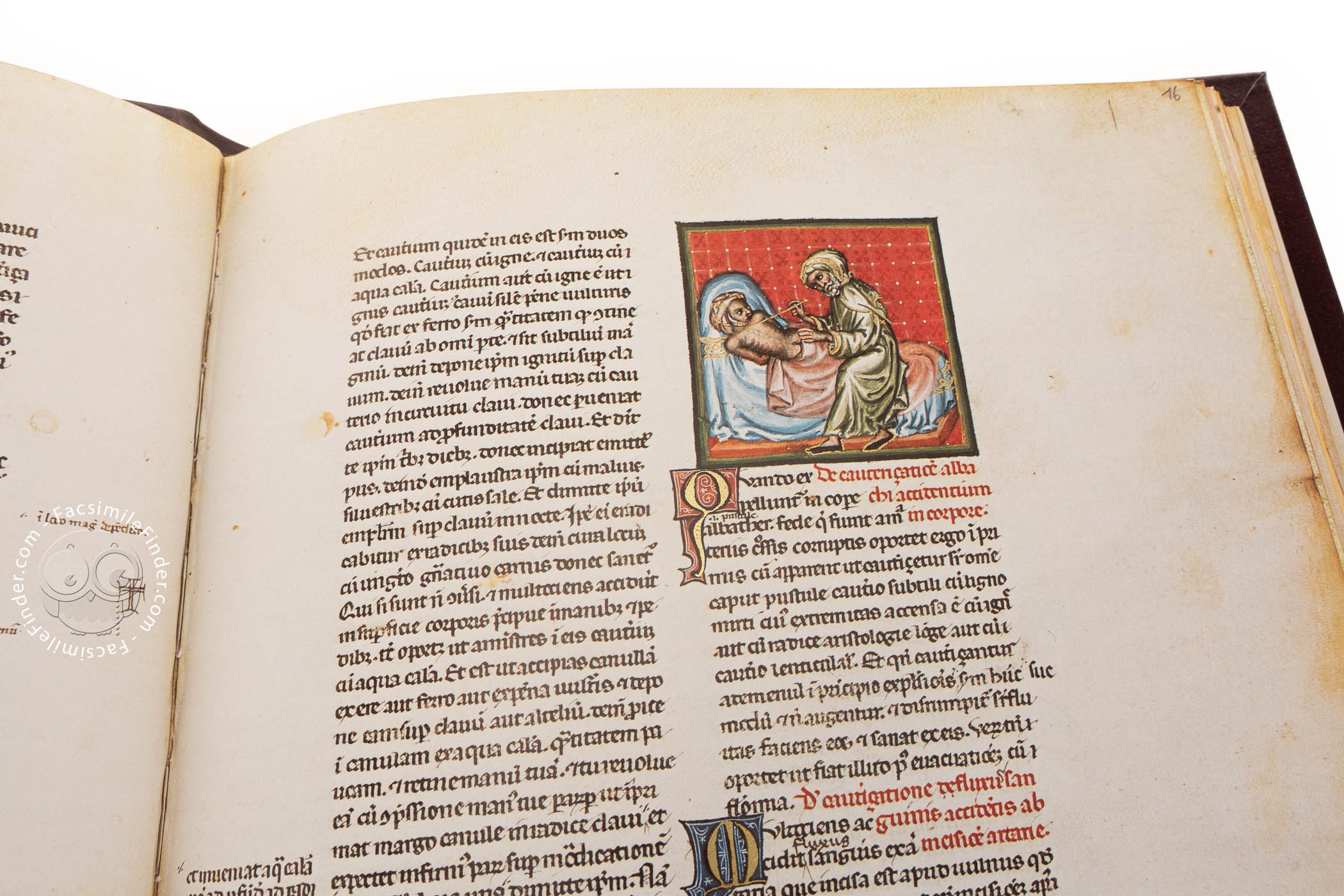
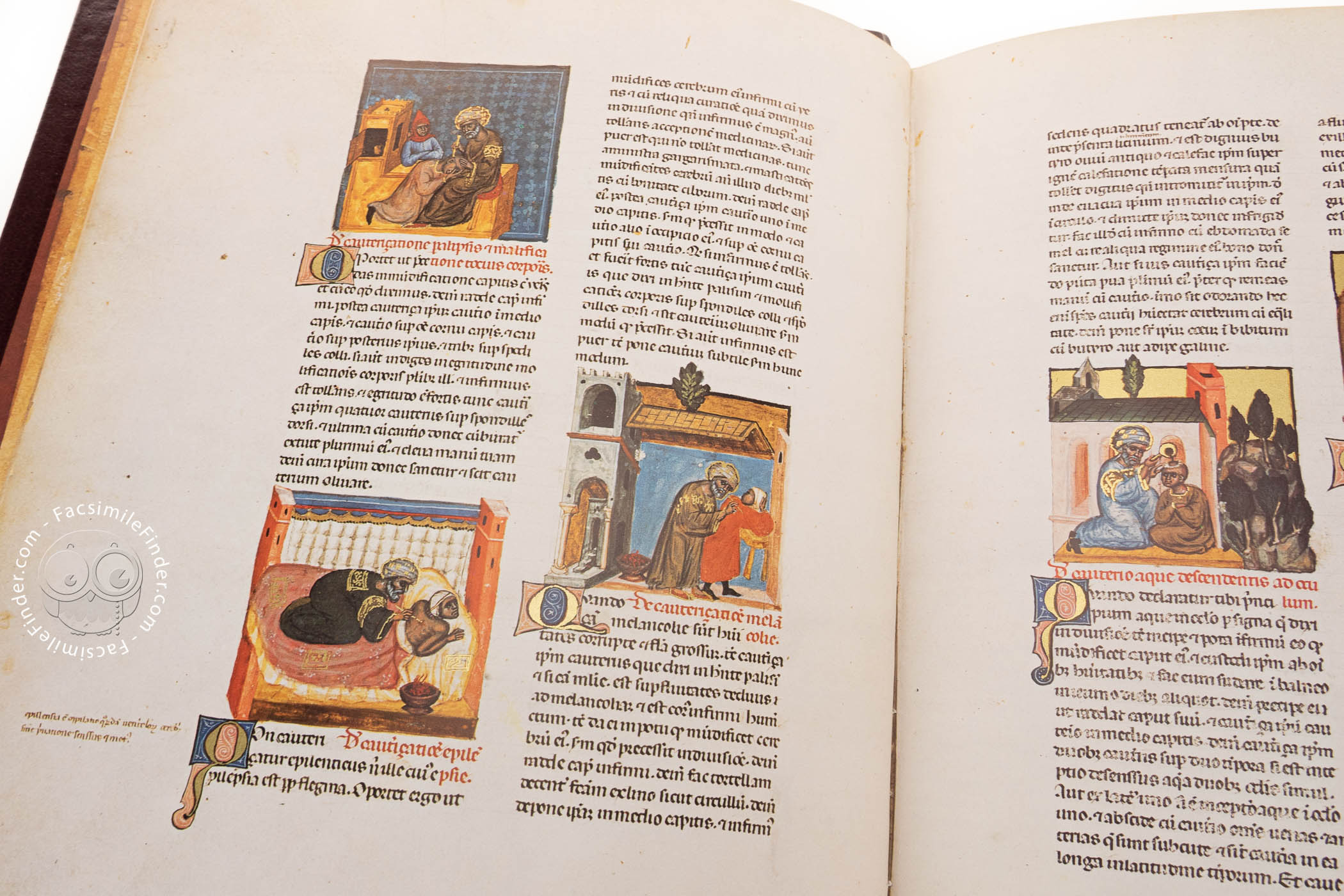
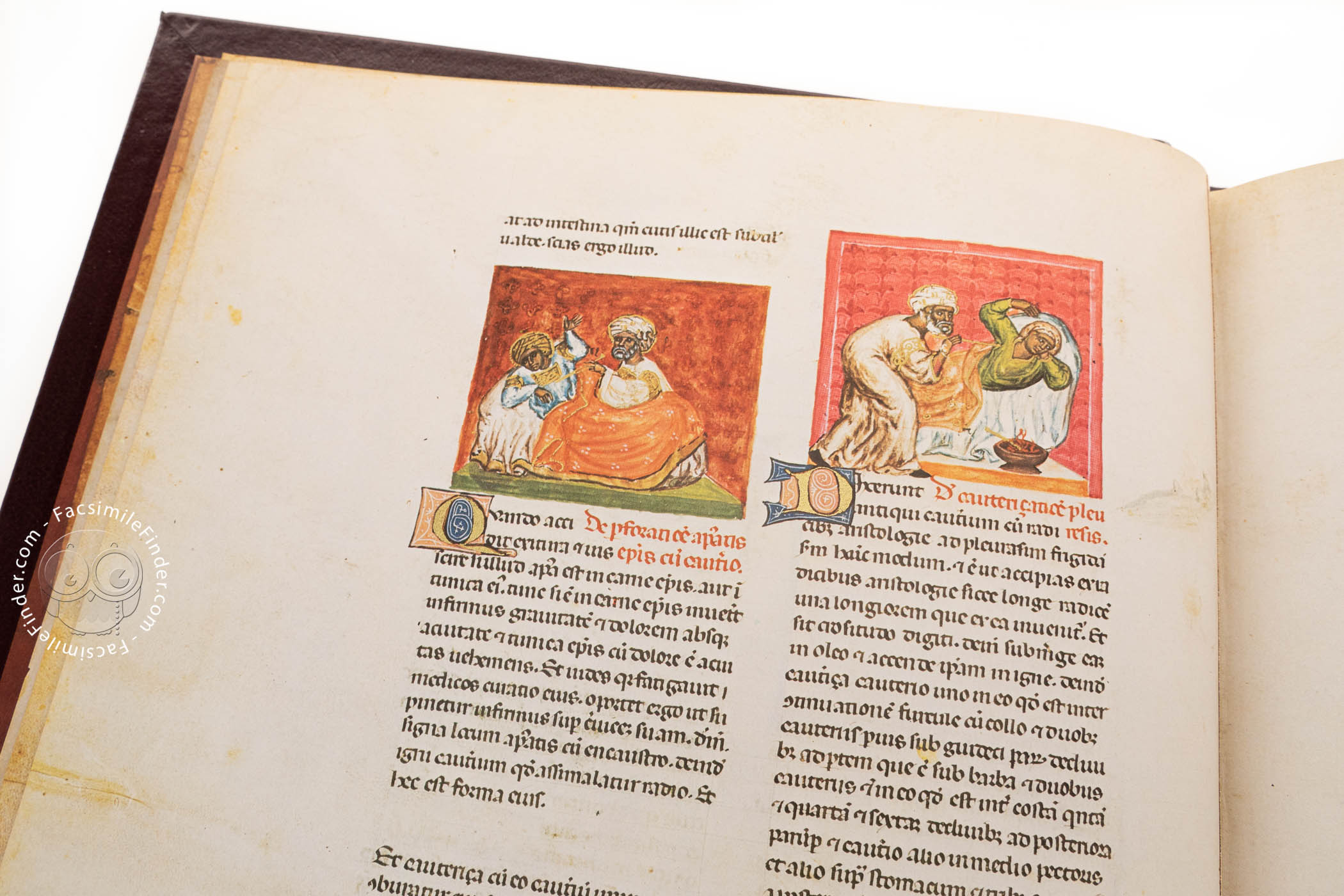
Most of the miniatures illustrate medical procedures, with a medical practitioner (if male, usually wearing a turban) performing the appropriate operation on a patient, who is often shown reclining in a bed in a stylized architectural setting. The settings are sometimes embellished with landscape elements. Many have solid-colored backgrounds (including gold), and others boast backgrounds of repeating geometric patterns. A very few images have unpainted parchment as a background.
A Grand Beginning
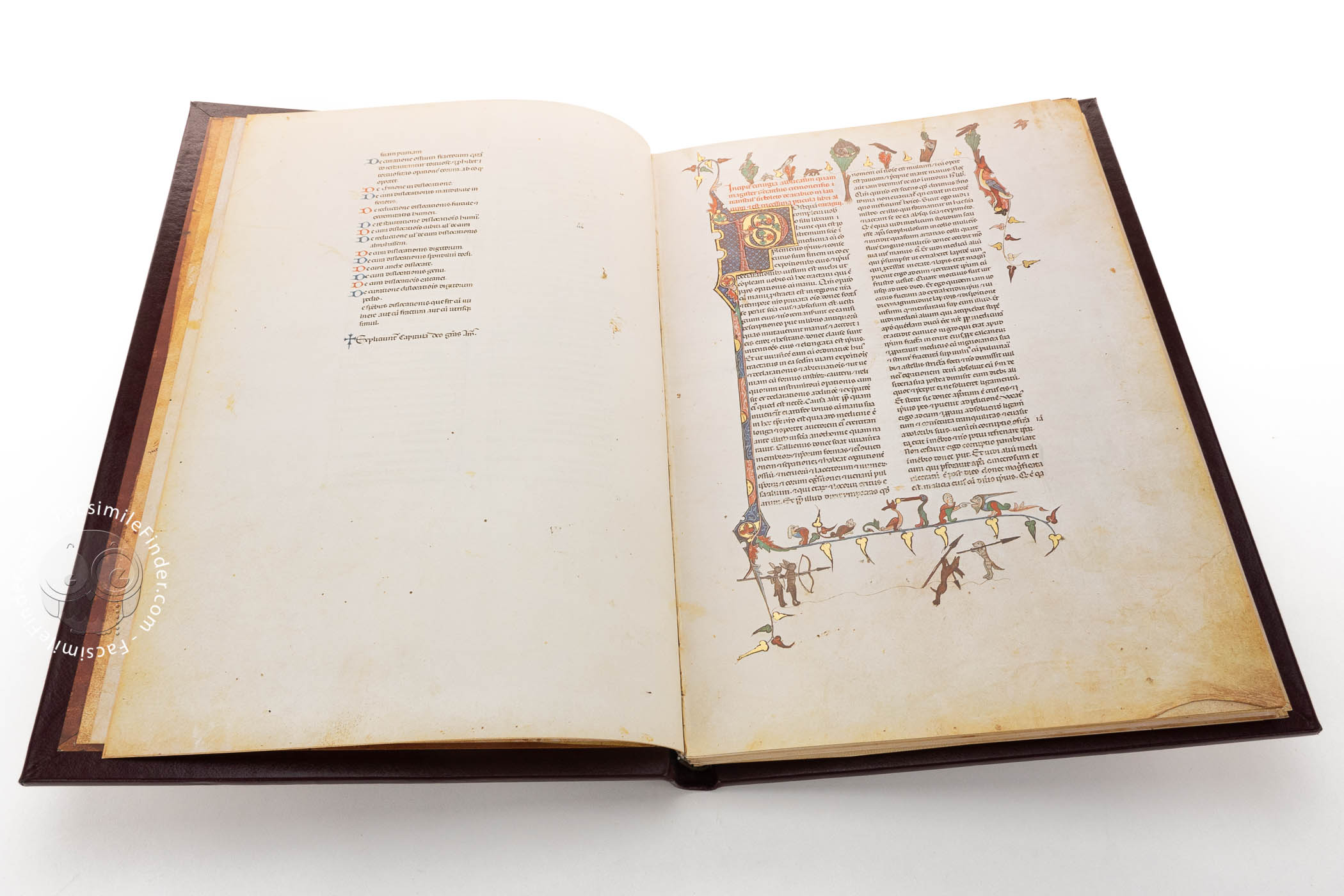
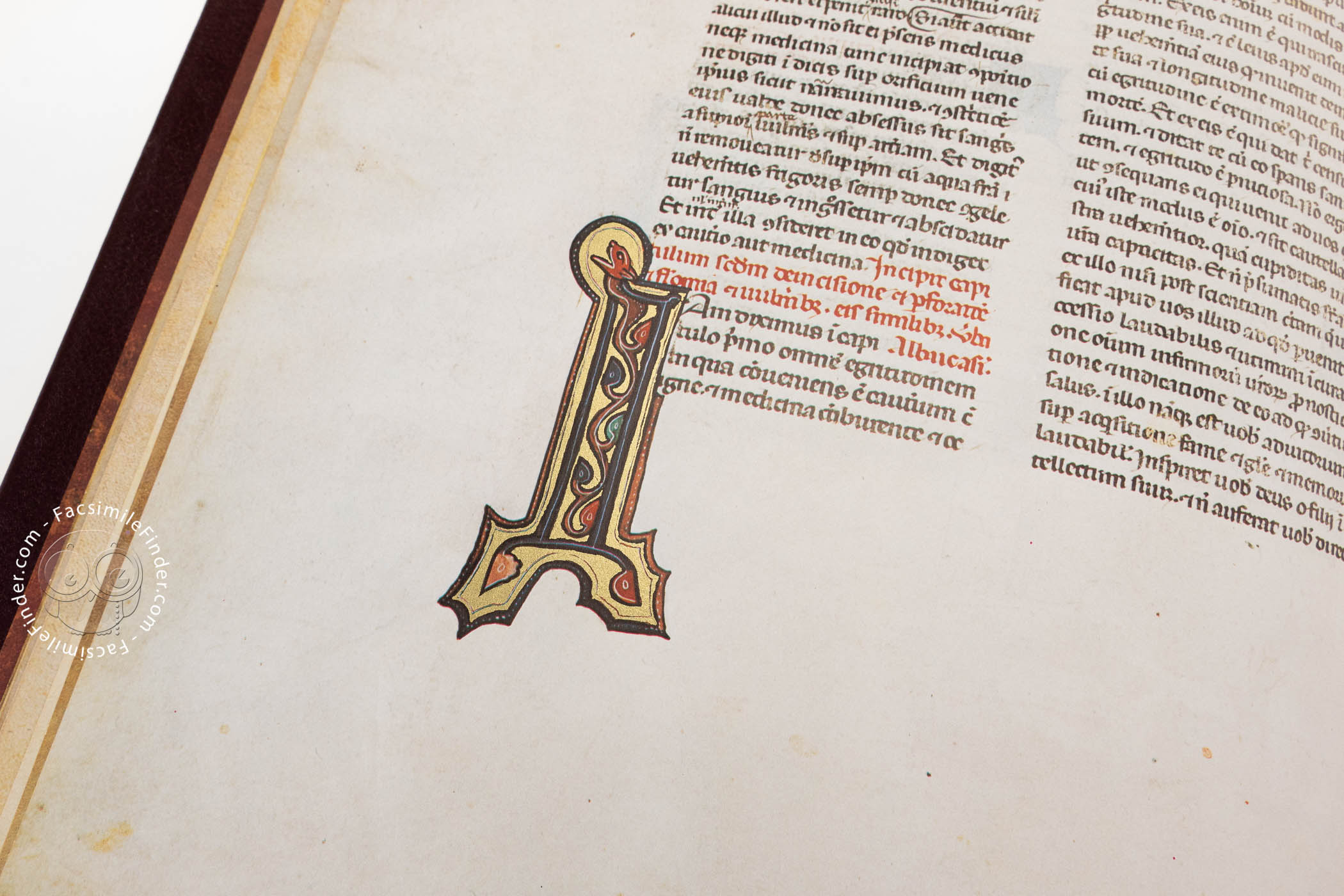
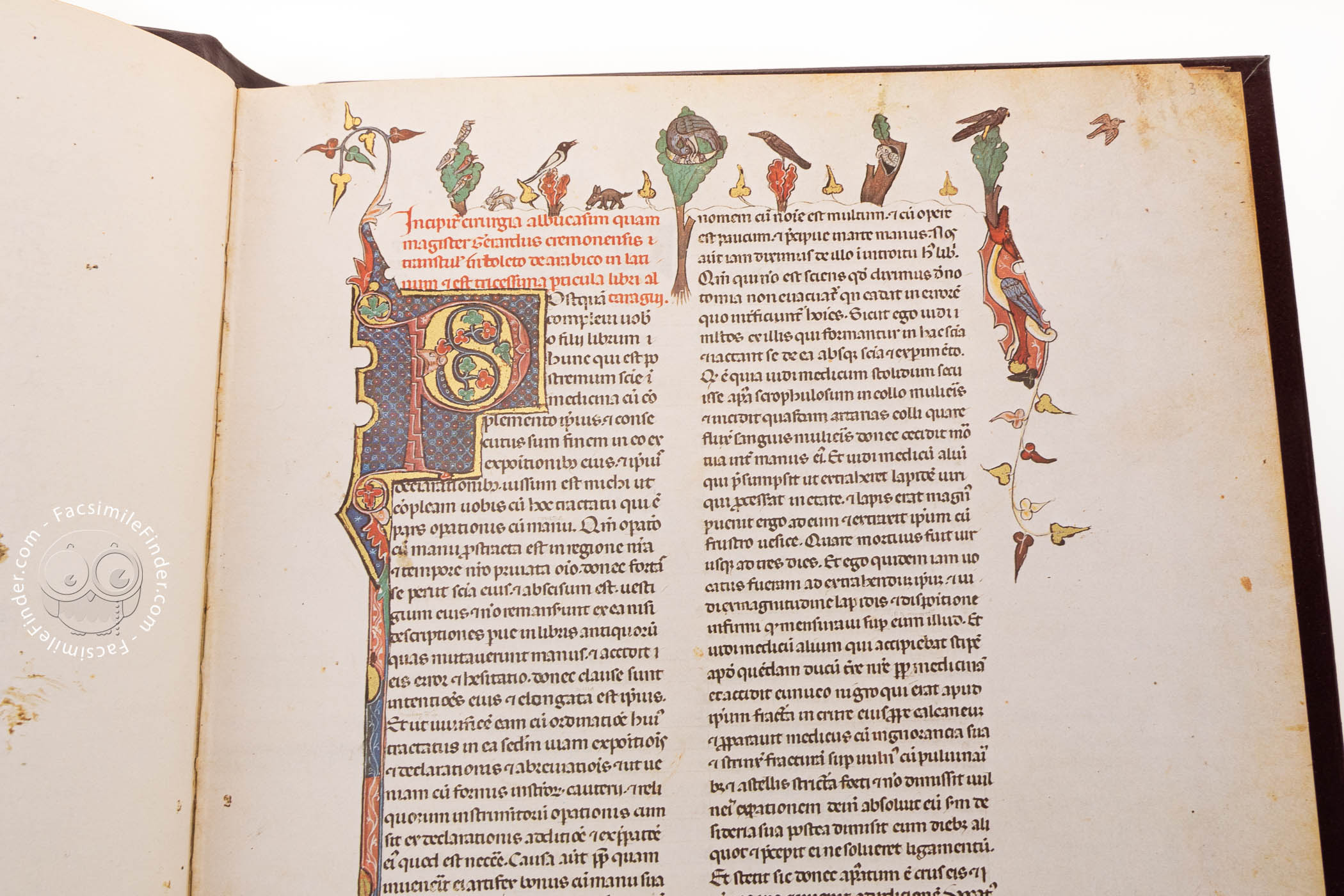
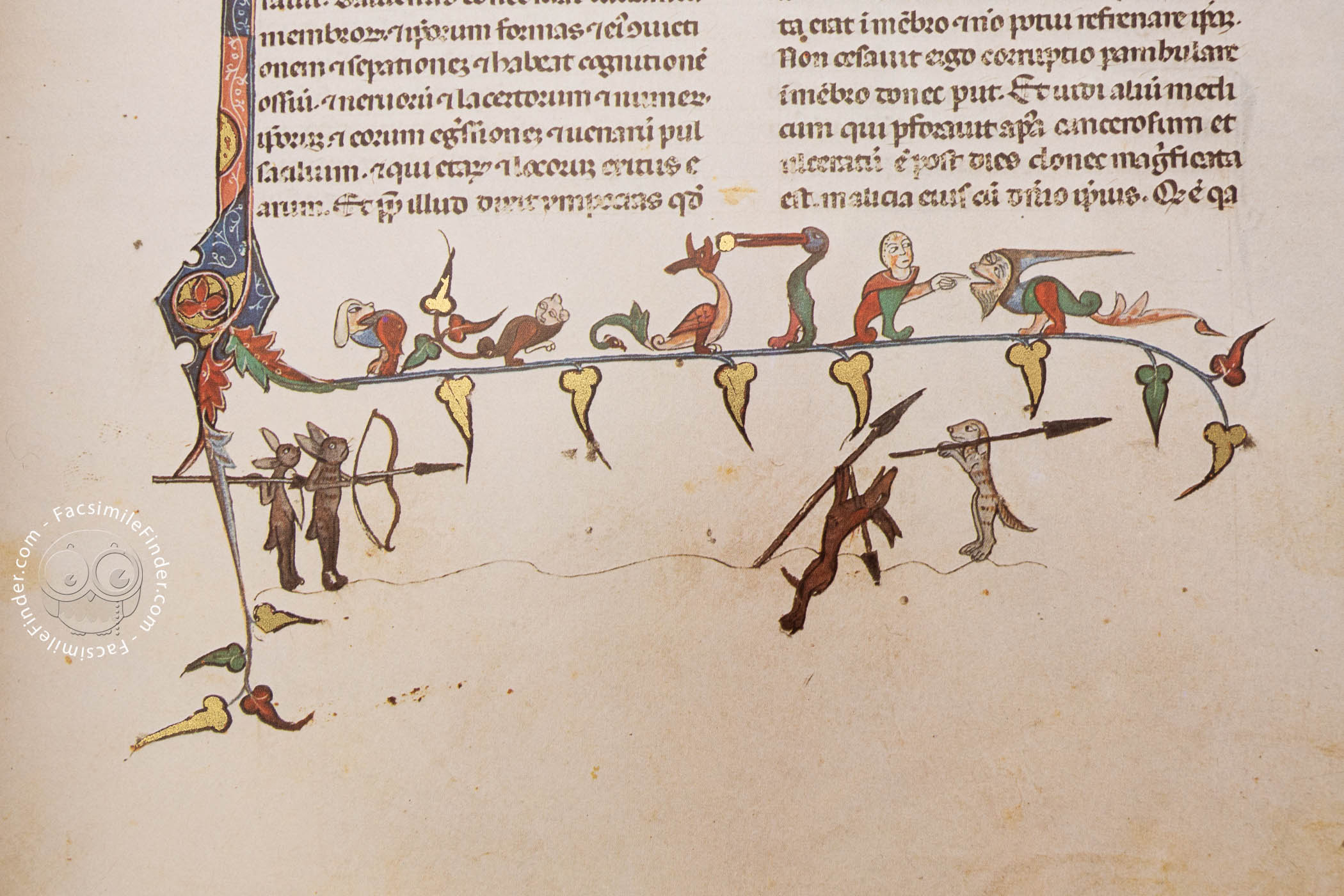
Following a list of chapters, the prologue opens on a page featuring a nine-line painted initial extending into the margins. Animals and birds, including a pelican feeding her young, occupy the upper margin, a dragon-like hybrid the outer margin, and a variety of animals, including rabbits and dogs armed with spears and a bow, the lower margin (fol. 3r).
A Decrescendo of Illumination
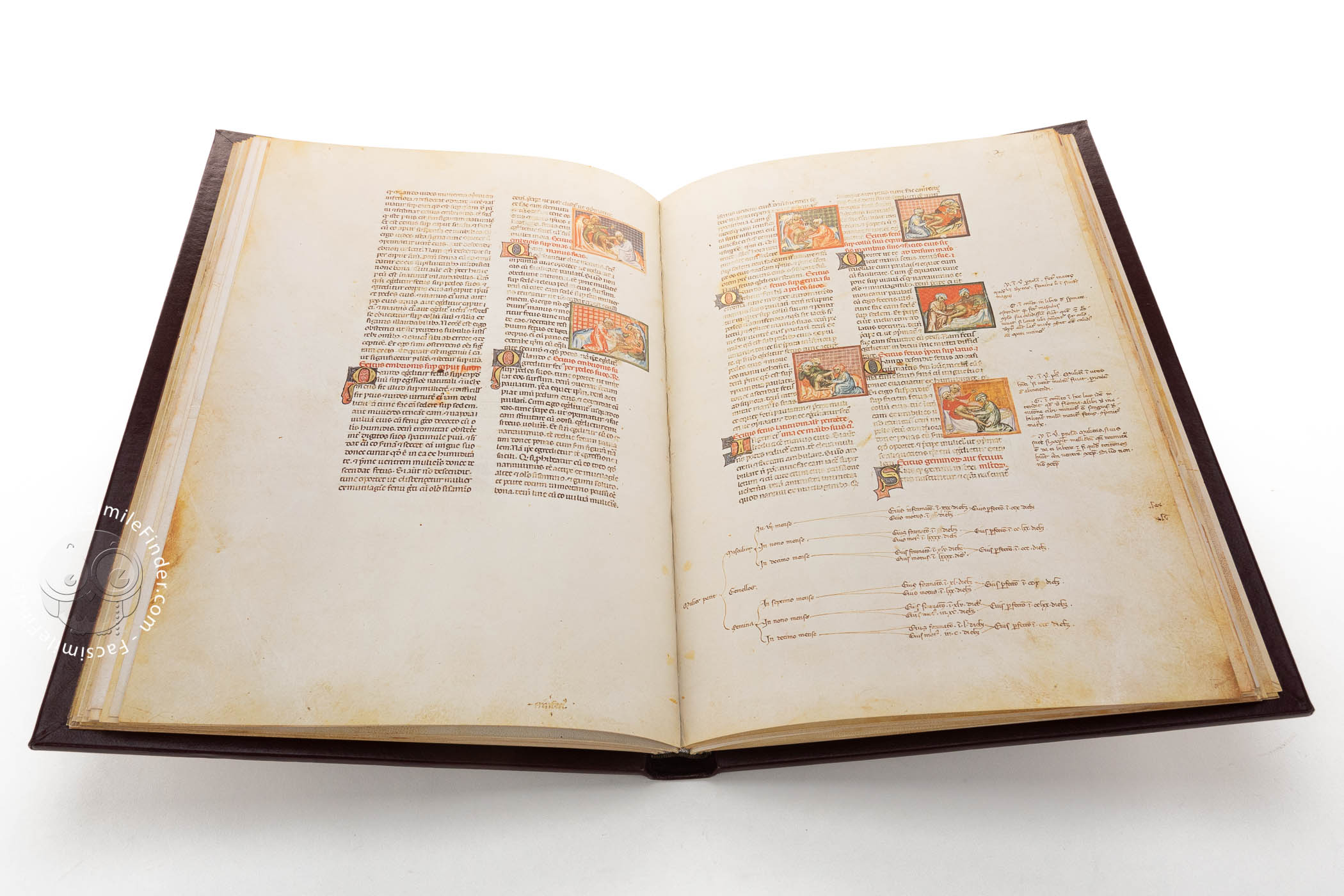
Book 1 occupies the fewest pages (13 fols.) but boasts forty miniatures. They show cauterization of different parts of the body. Book 2, which is much longer (46 fols.), has twenty-seven miniatures, including a series of eight scenes in quick succession of midwives assisting births (fols. 40v-41v). Many of the miniatures in Book 2 are less than column width.
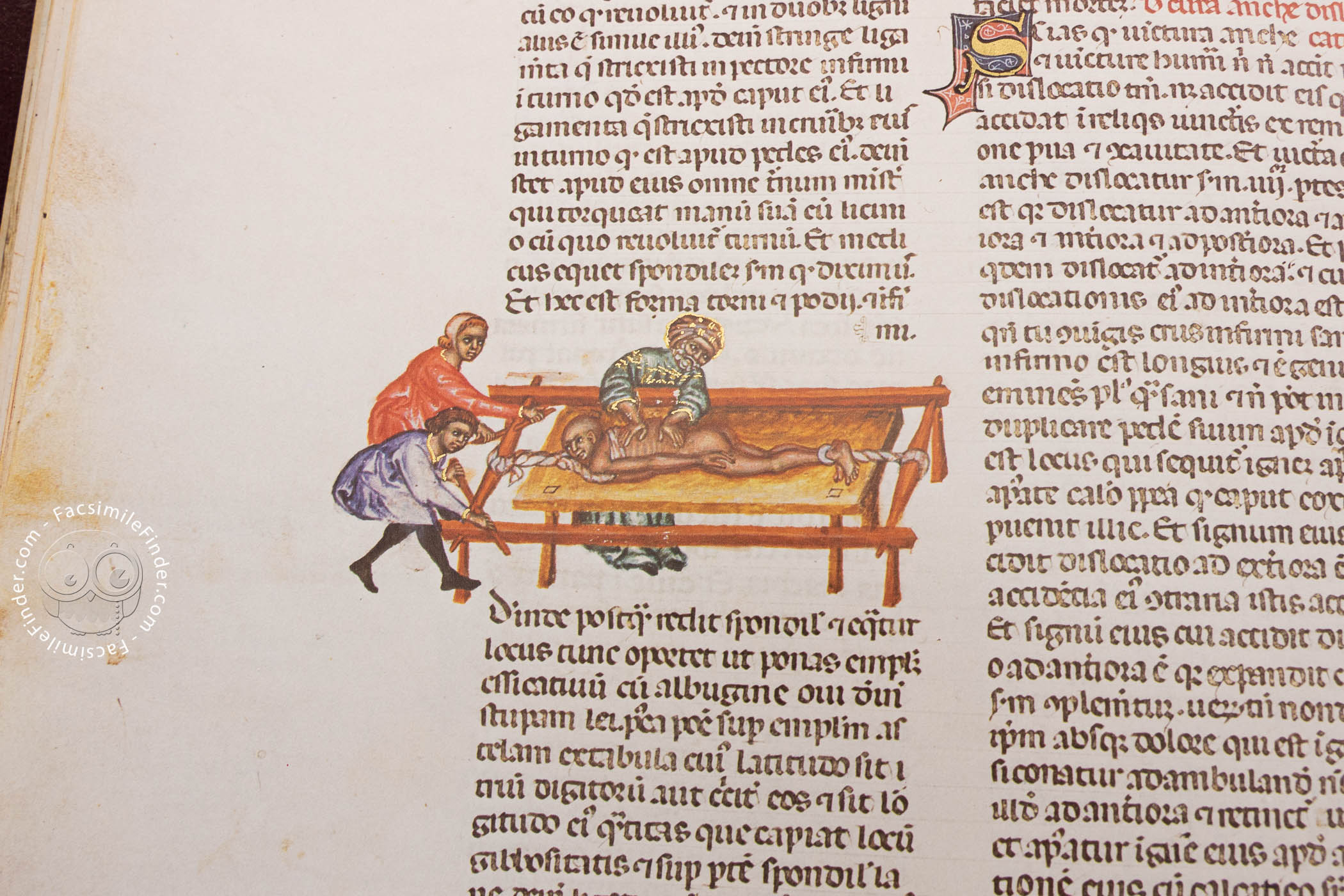
Book 3 (16 fols.) has only one miniature, which shows the procedure for reducing dislocated vertebrae using hand pressure with the patient laid out on a traction table with a winch operated by two assistants (fol. 76v). The traction table is rendered in detail, in stark contrast to the comparable scene in the Budapest Book of Surgery by Albucasis.
Surgical Instruments in Use
The Vienna codex is remarkable for the near absence of isolated paintings of surgical instruments, as are customarily present in manuscripts of the text. Spaces were left by the scribe for 204 such images, but only one, a drawing in text ink, was supplied (fol. 4v). Instead, the viewer gains familiarity with the tools of the physician's trade from the action scenes of medical procedures.
An Italianate Script
A single scribe, writing in Gothic Rotunda in two columns, was responsible for the main text and rubrics. The script is the rounded version of Gothic Textualis popular in Italy, and one scholar has suggested that the manuscript may have originated in Naples.
The most extensive and interesting marginal annotation, probably added by a very early reader, is a diagram charting gestation periods for male and female embryos based on the writings of ancient Greek physicians (fol. 41r).
Taken to Padua
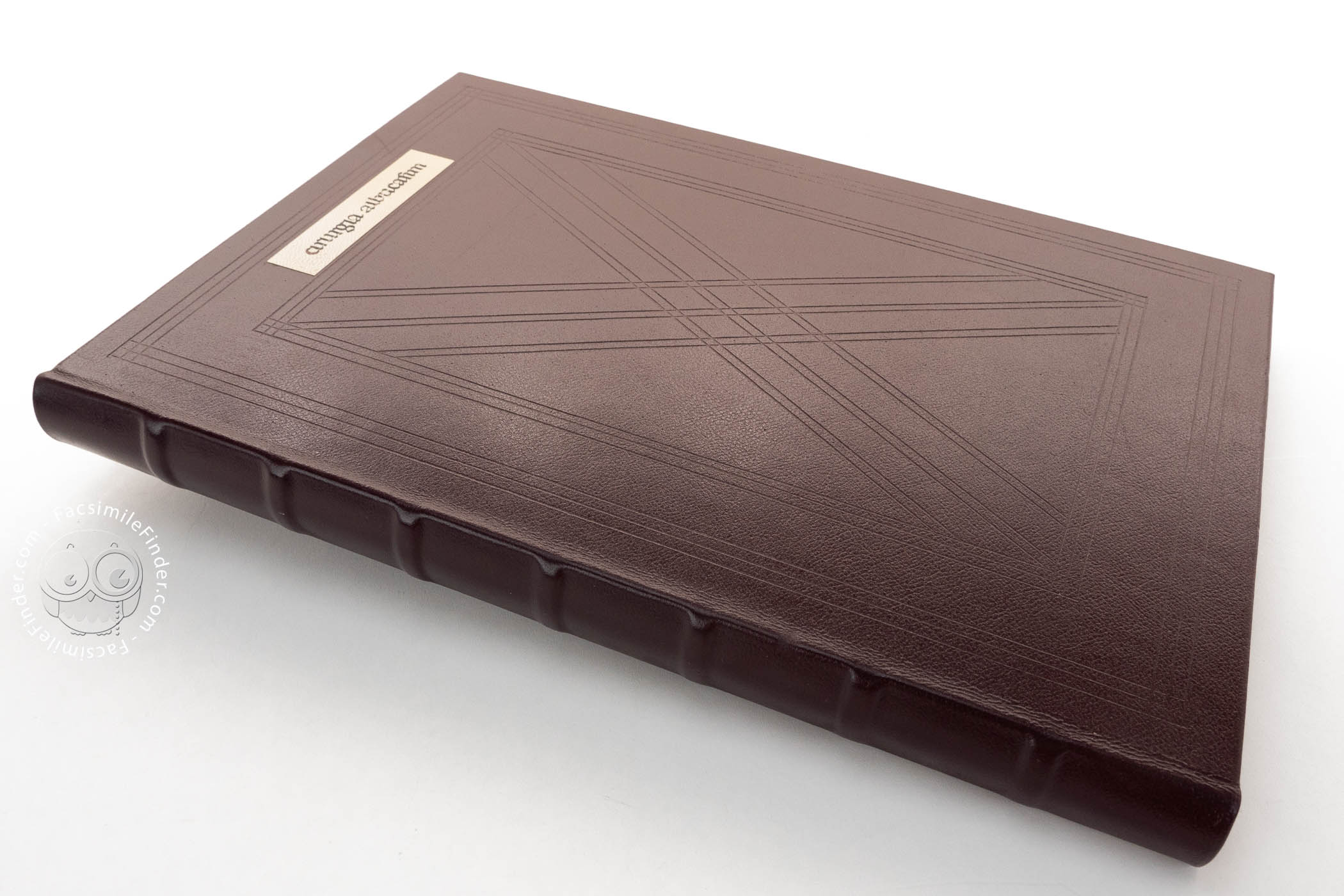
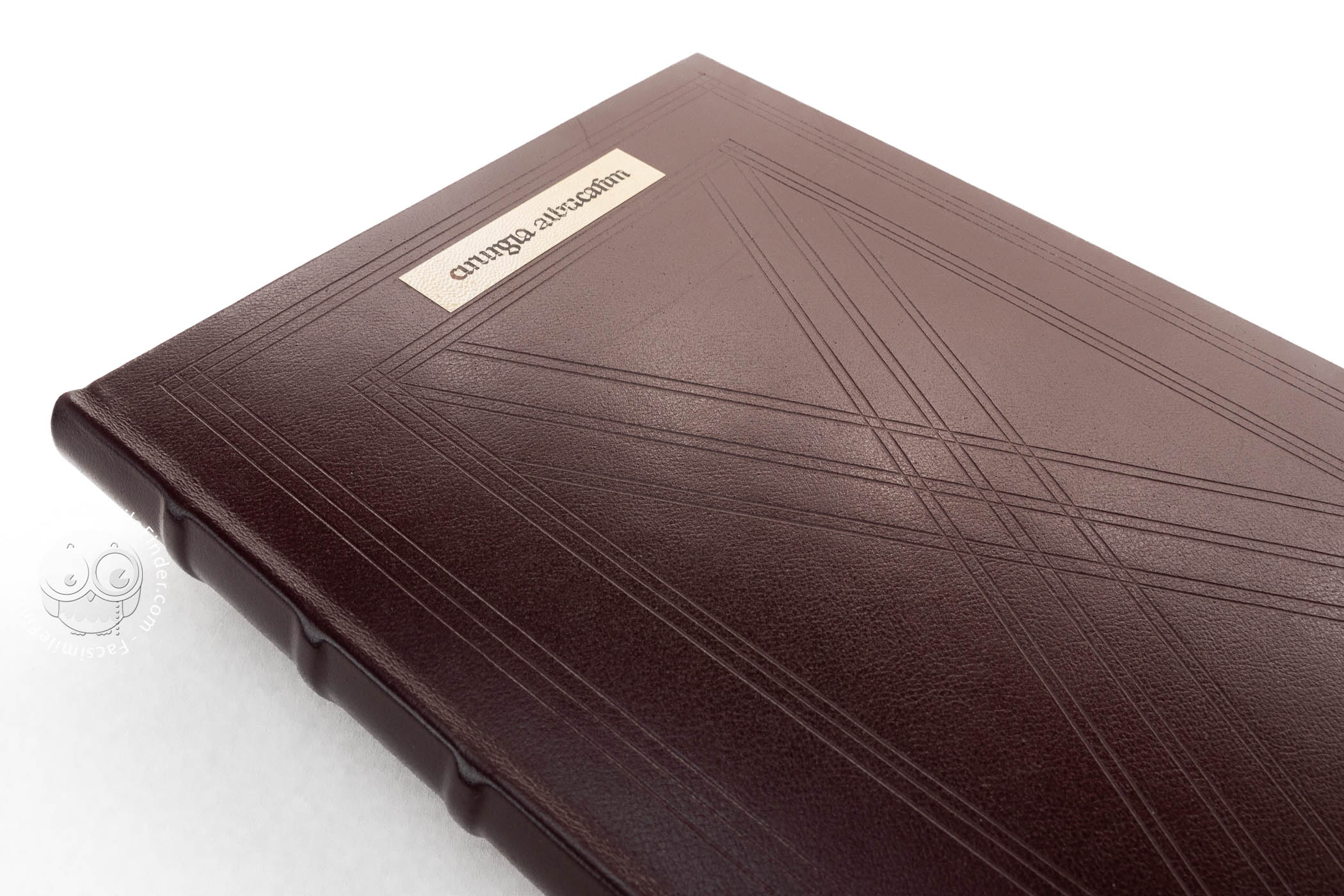
According to a note in the manuscript, a certain Augustinus (who may or may not have owned the book) took it to Padua in 1408. The first identifiable owner is Ferdinand II (1529-1595), Archduke of Austria. The manuscript was transferred to the Kunsthistorisches Museum in Vienna in 1806 and then to the Österreichische Nationalbibliothek in 1936. The binding, which dates from the second half of the fifteenth century, is of blind-tooled leather over boards with modern clasps.
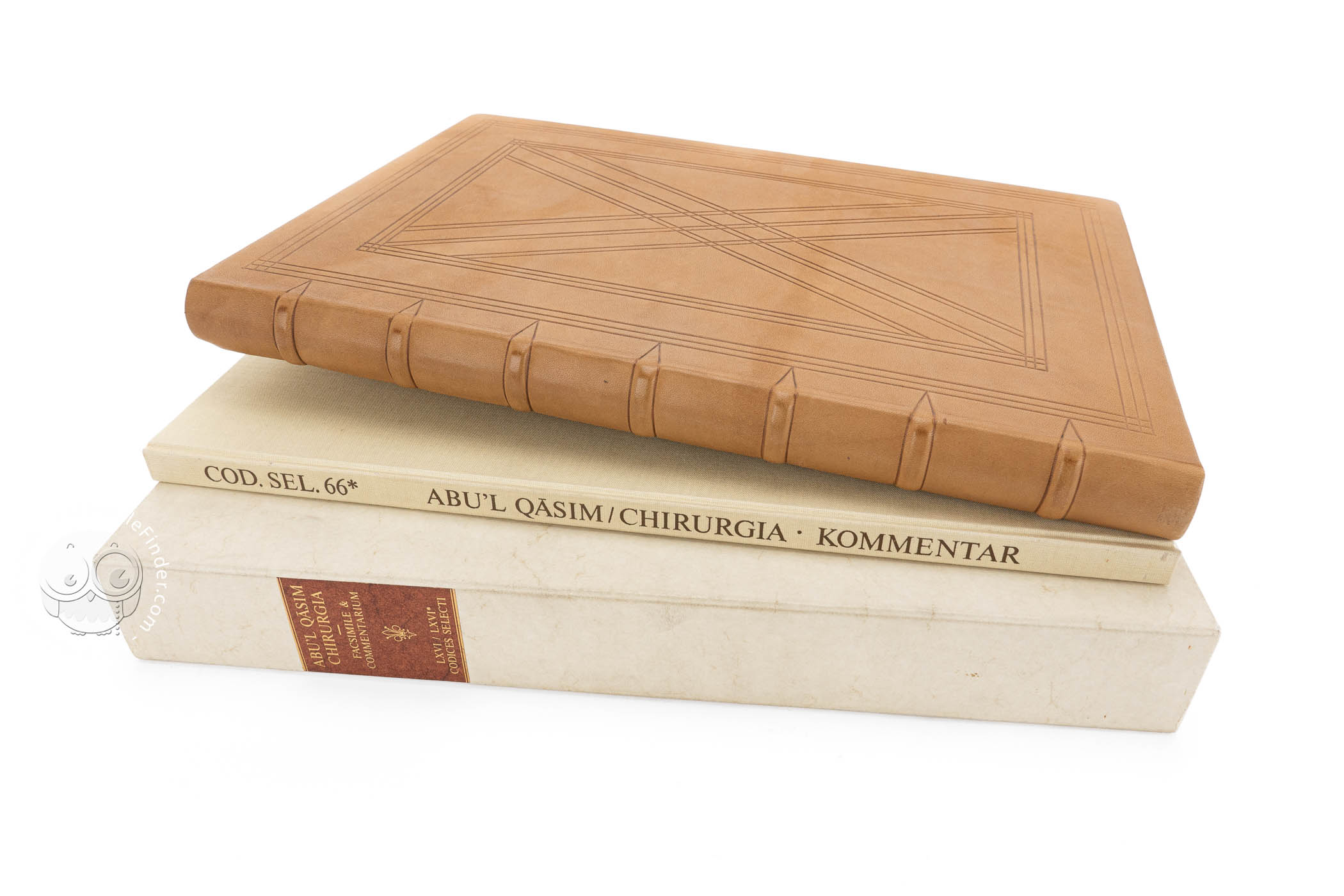
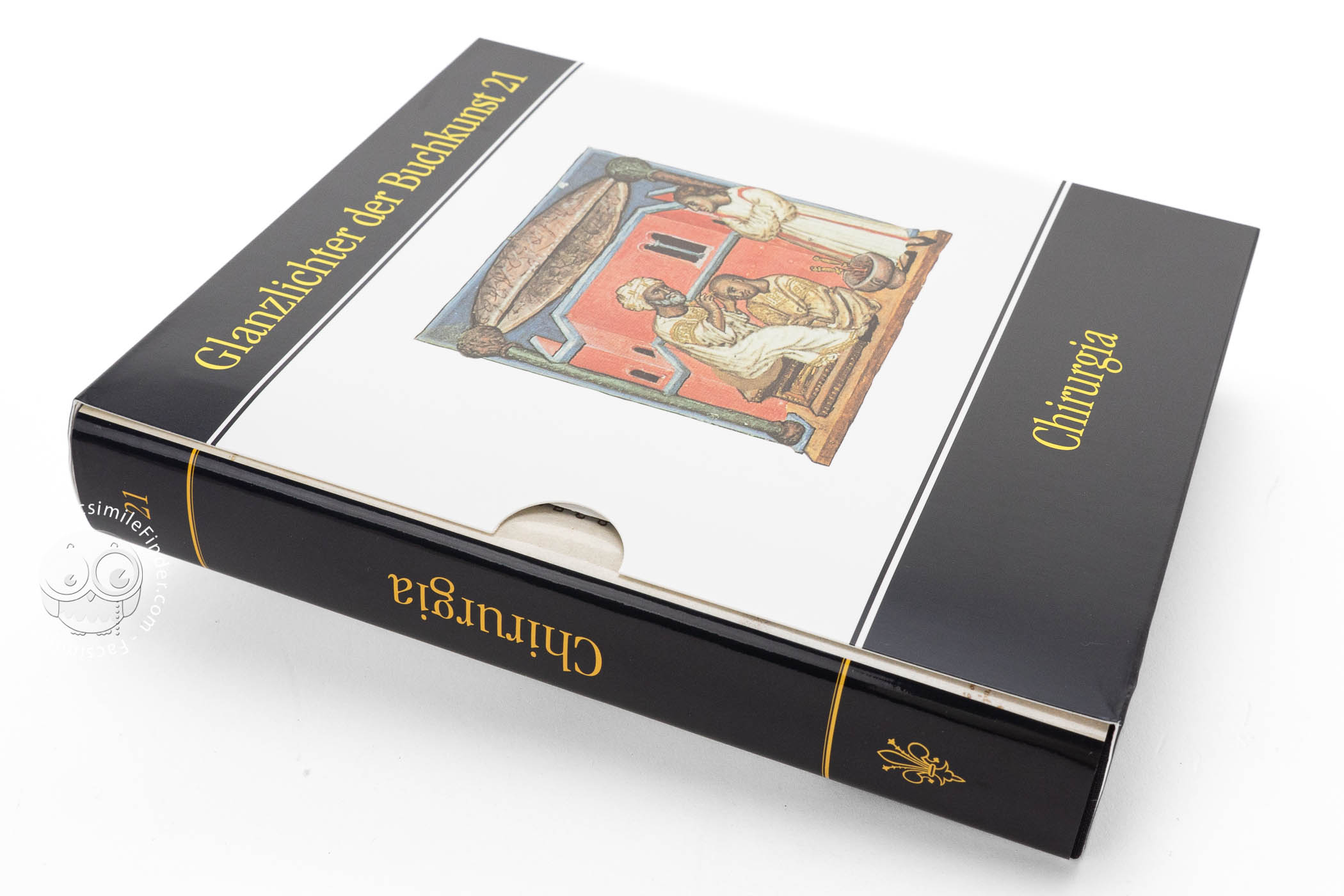
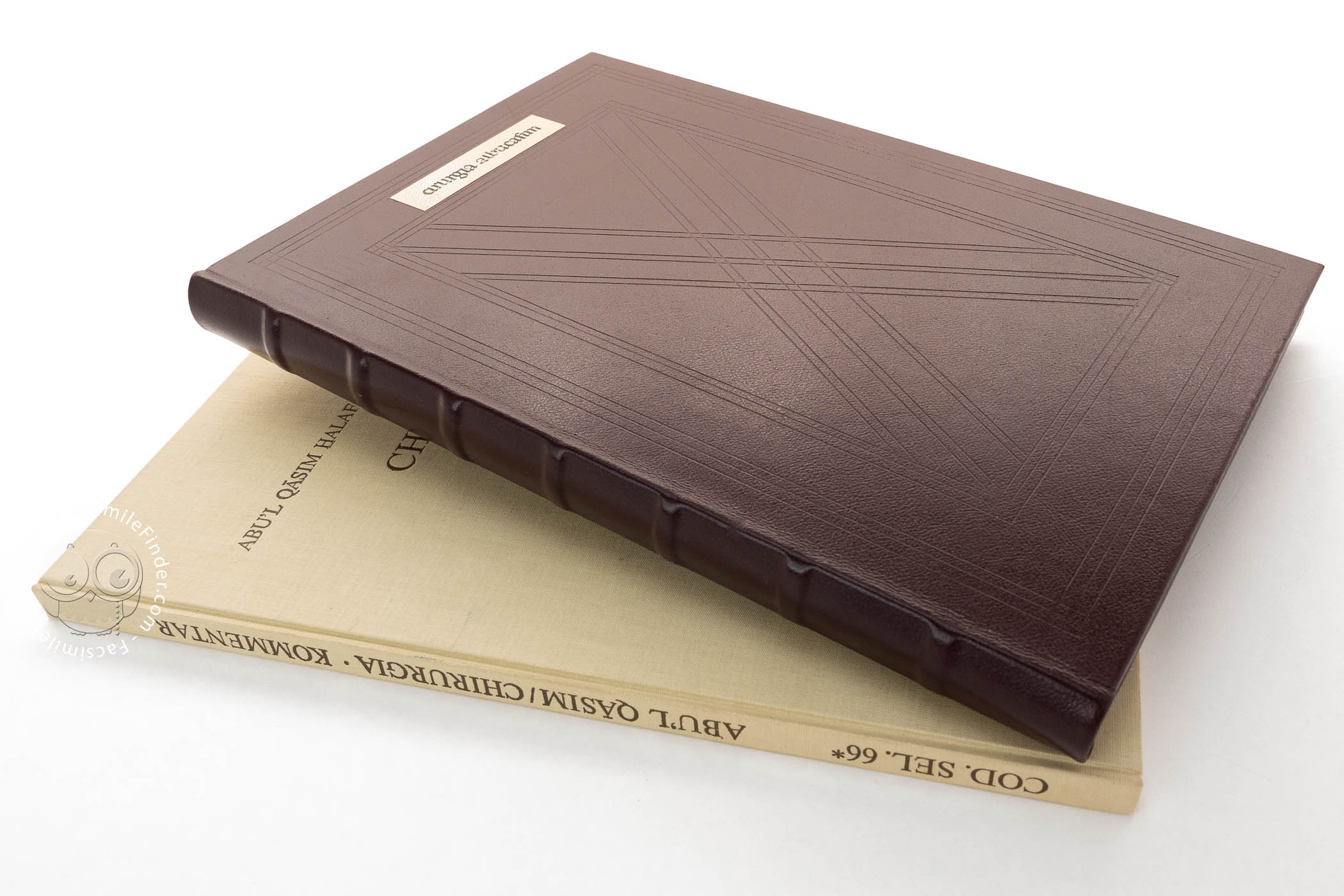
We have 3 facsimiles of the manuscript "Vienna Book of Surgery by Albucasis":
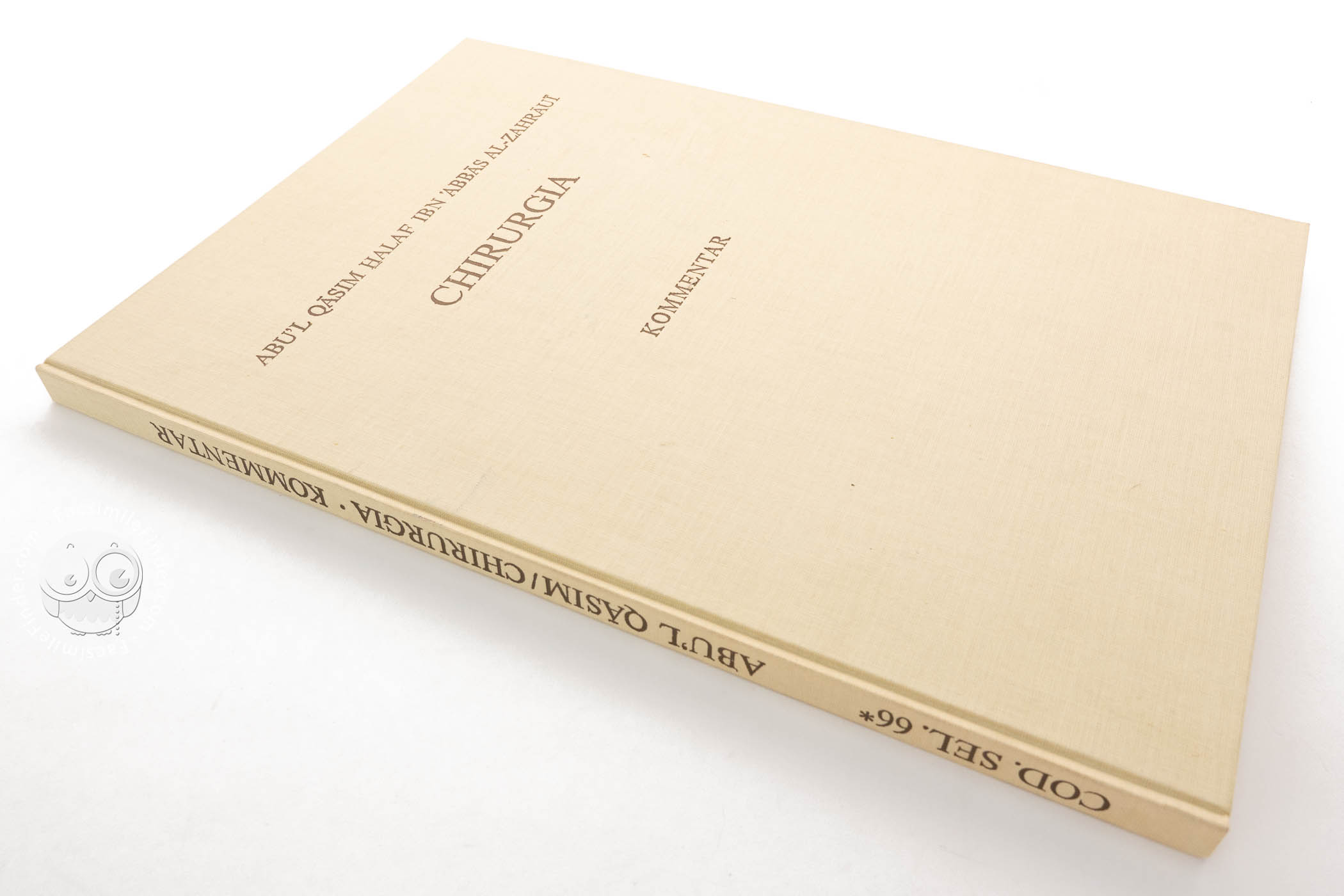
- Abu´l Qasim Halaf ibn Abbas al-Zahraui - Chirurgia facsimile edition published by Akademische Druck- u. Verlagsanstalt (ADEVA), 1979
- Chirurgia (Glanzlichter der Buchkunst series) facsimile edition published by Akademische Druck- u. Verlagsanstalt (ADEVA), 2012
- La Cirugía facsimile edition published by Editorial Casariego, 1993