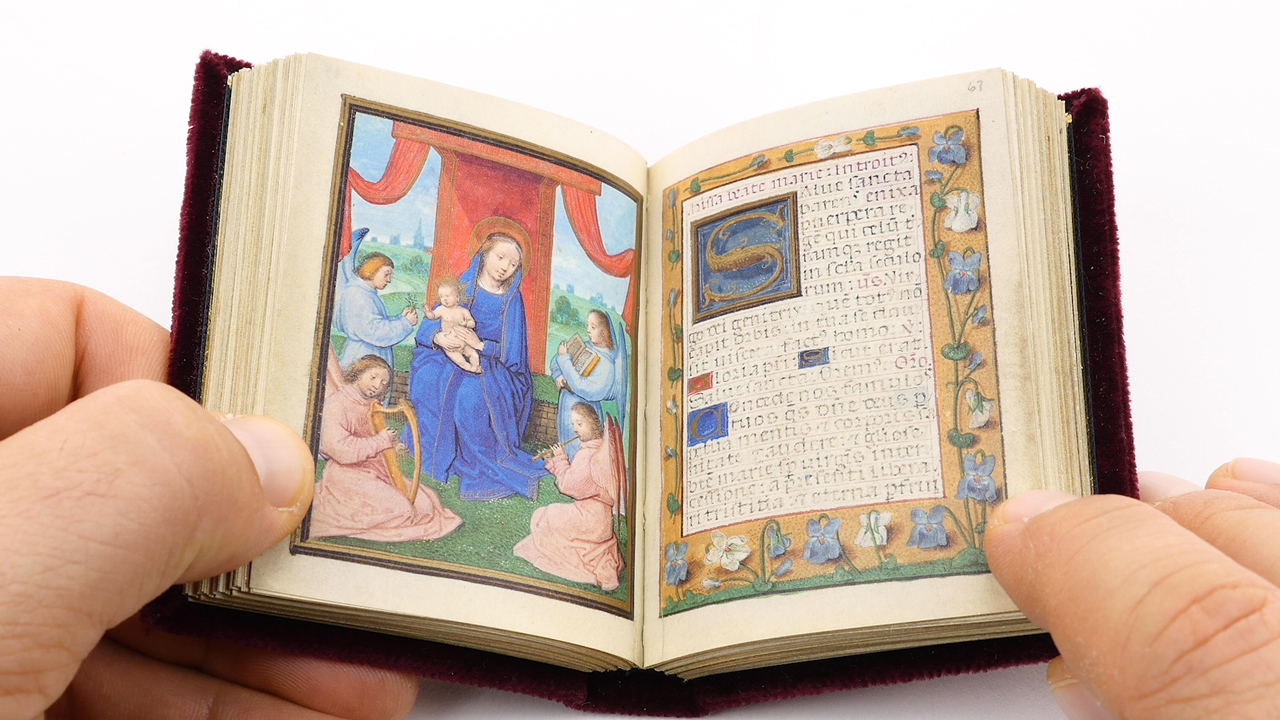
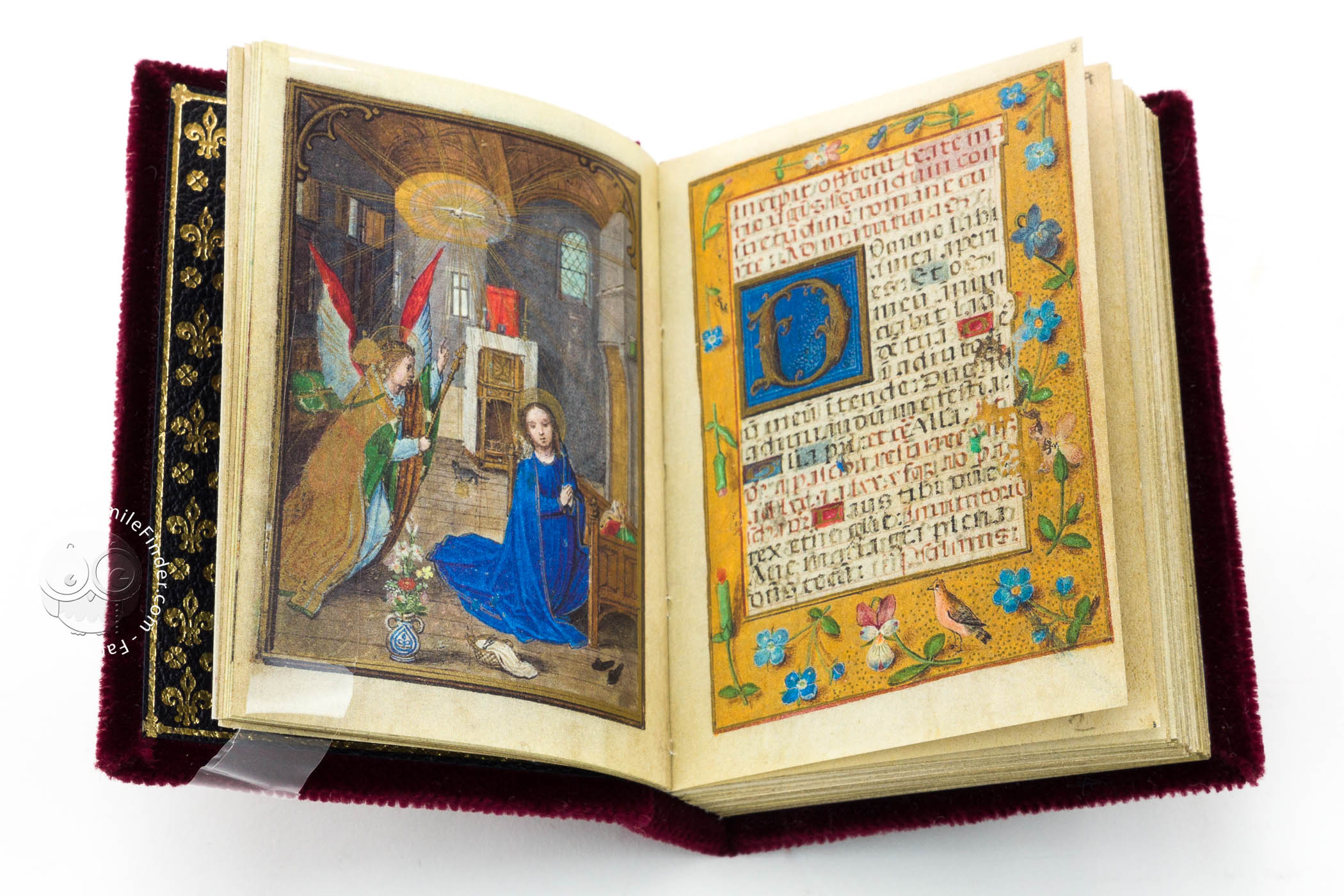
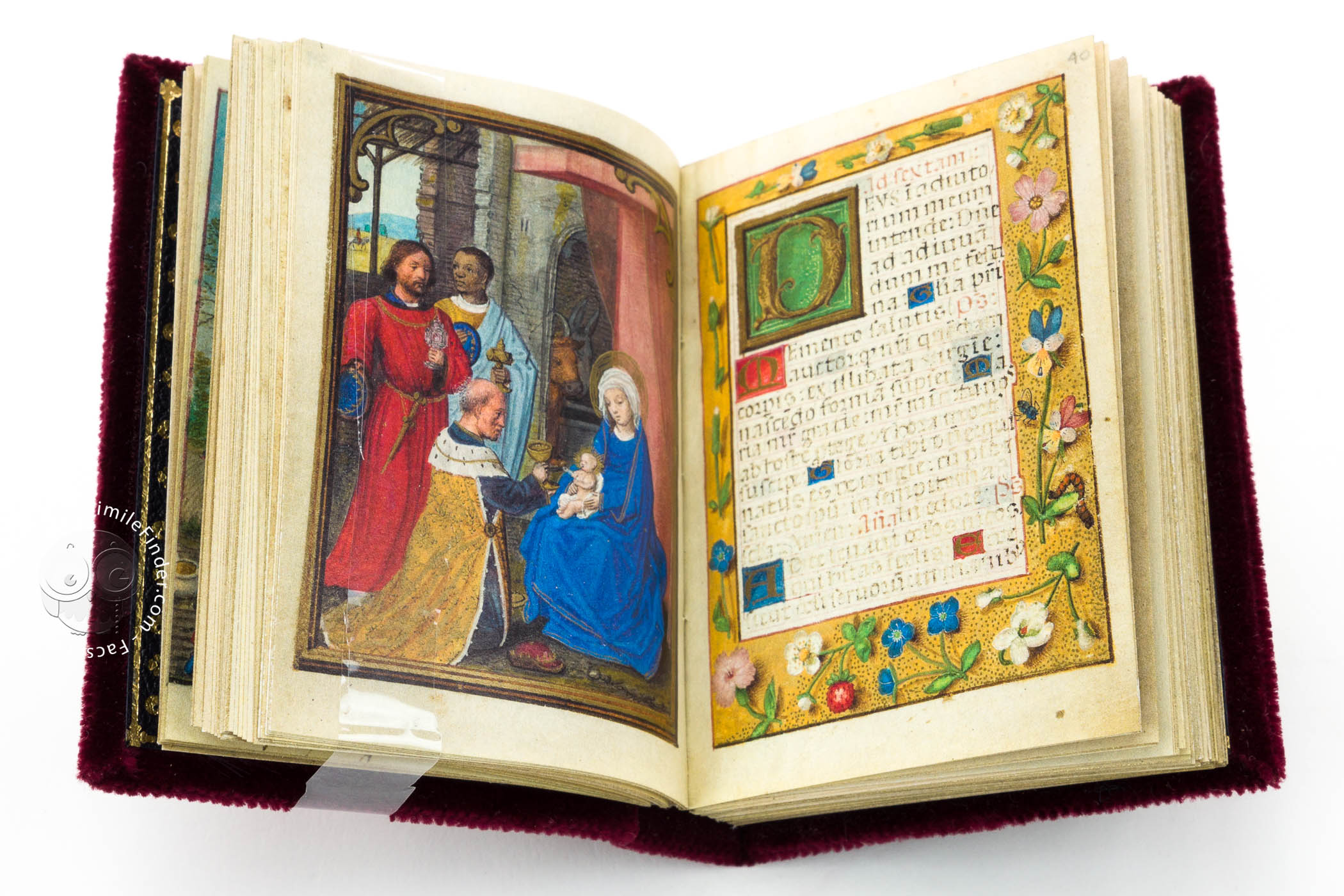


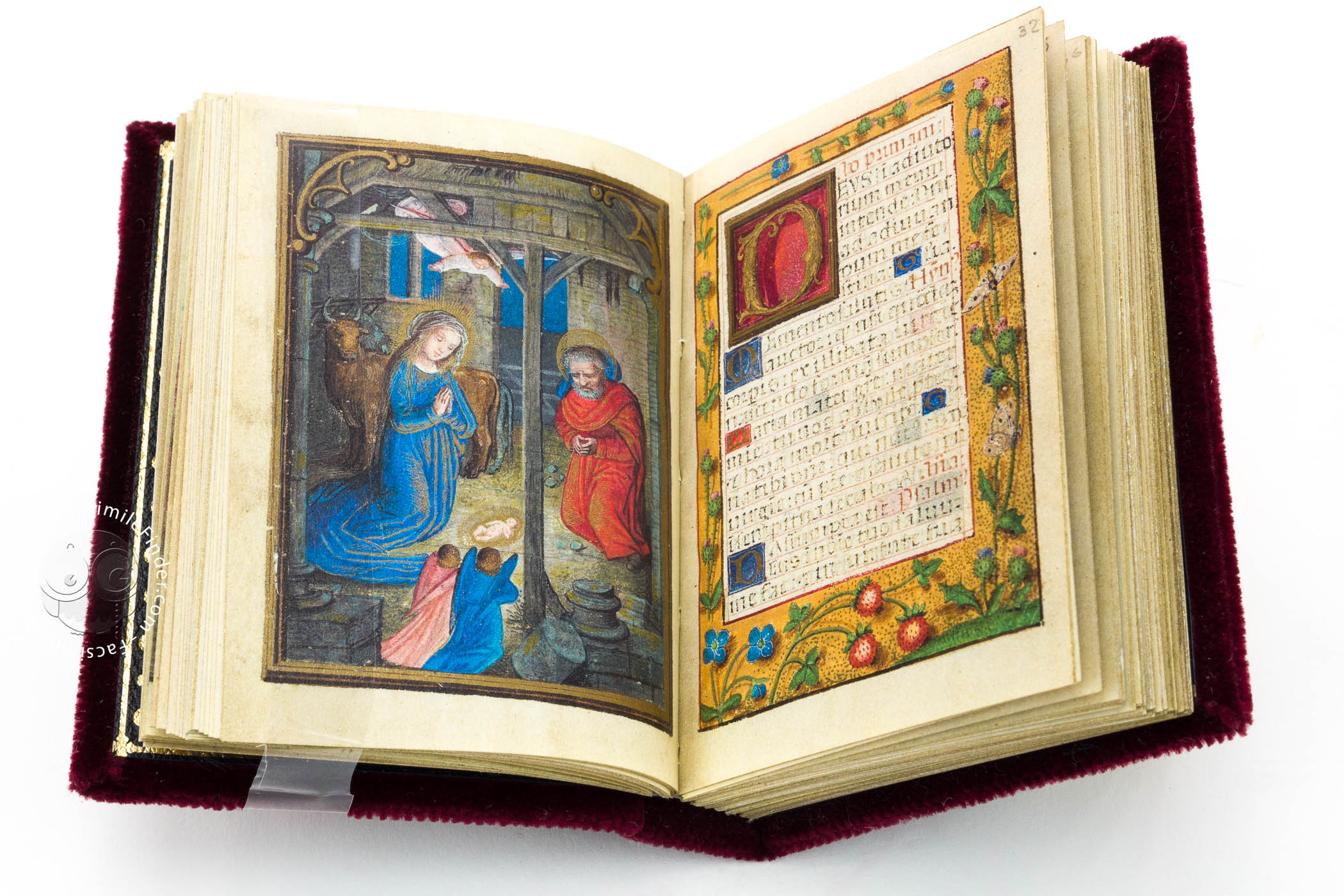
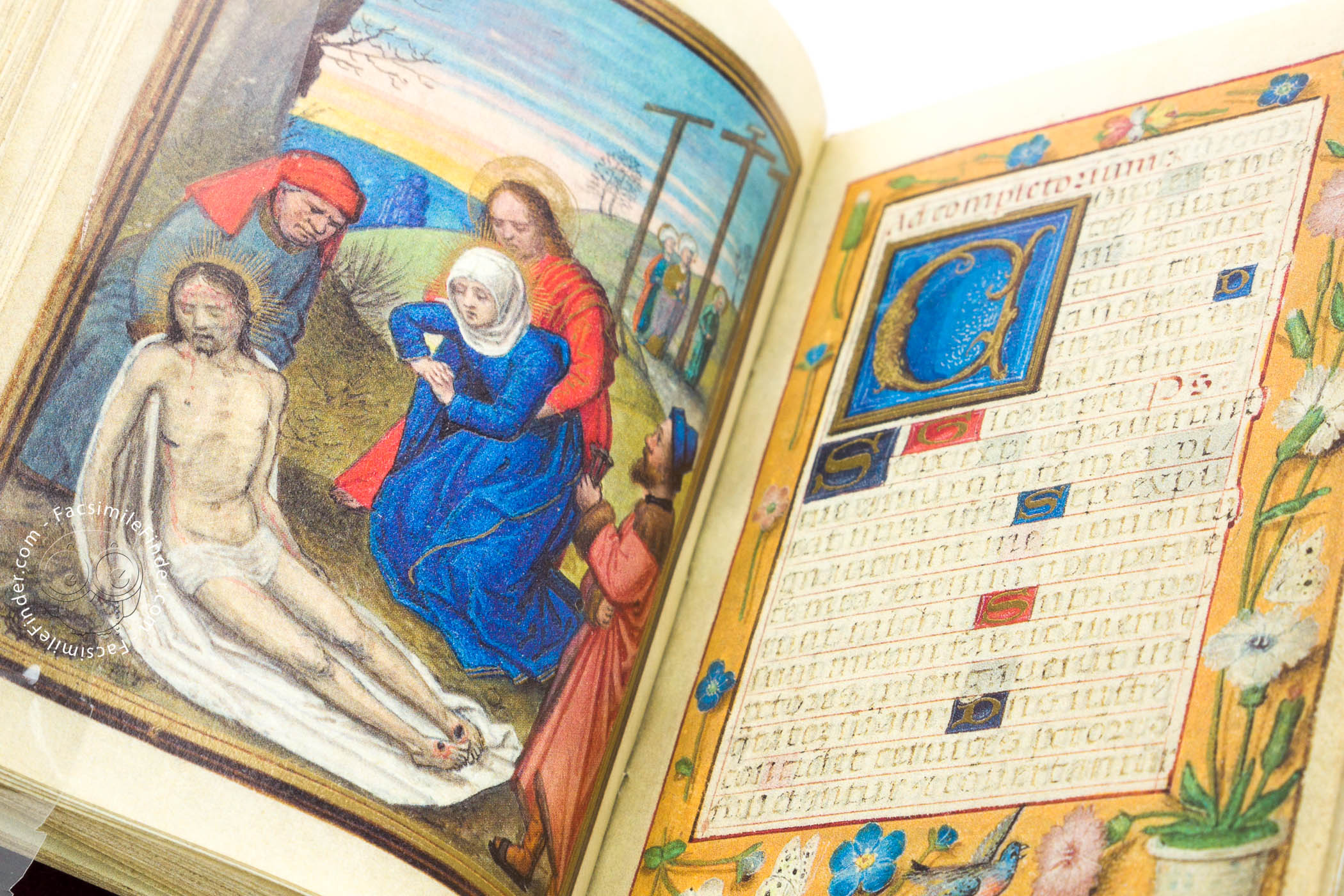



The Van Damme Hours is named after its scribe, Antonius van Damme, who identifies himself in a colophon as "author and writer" of the book. He further states that he was living (and, presumably, creating the manuscript) in Bruges in 1531. Remarkable for its tiny size, the manuscript is a book of hours, a type of prayer book consulted in the private devotions of the Christian laity. It boasts thirty-two full-page miniatures and twelve historiated borders painted by Simon Bening.
The Hours of the Virgin, daily prayer services focused on the Virgin, and the Penitential Psalms (Psalms 6, 32, 38, 51, 102, 130, and 143), considered particularly appropriate for the faithful seeking the Lord's forgiveness, are the manuscript's longest texts.
Seasonal Activities in Miniature
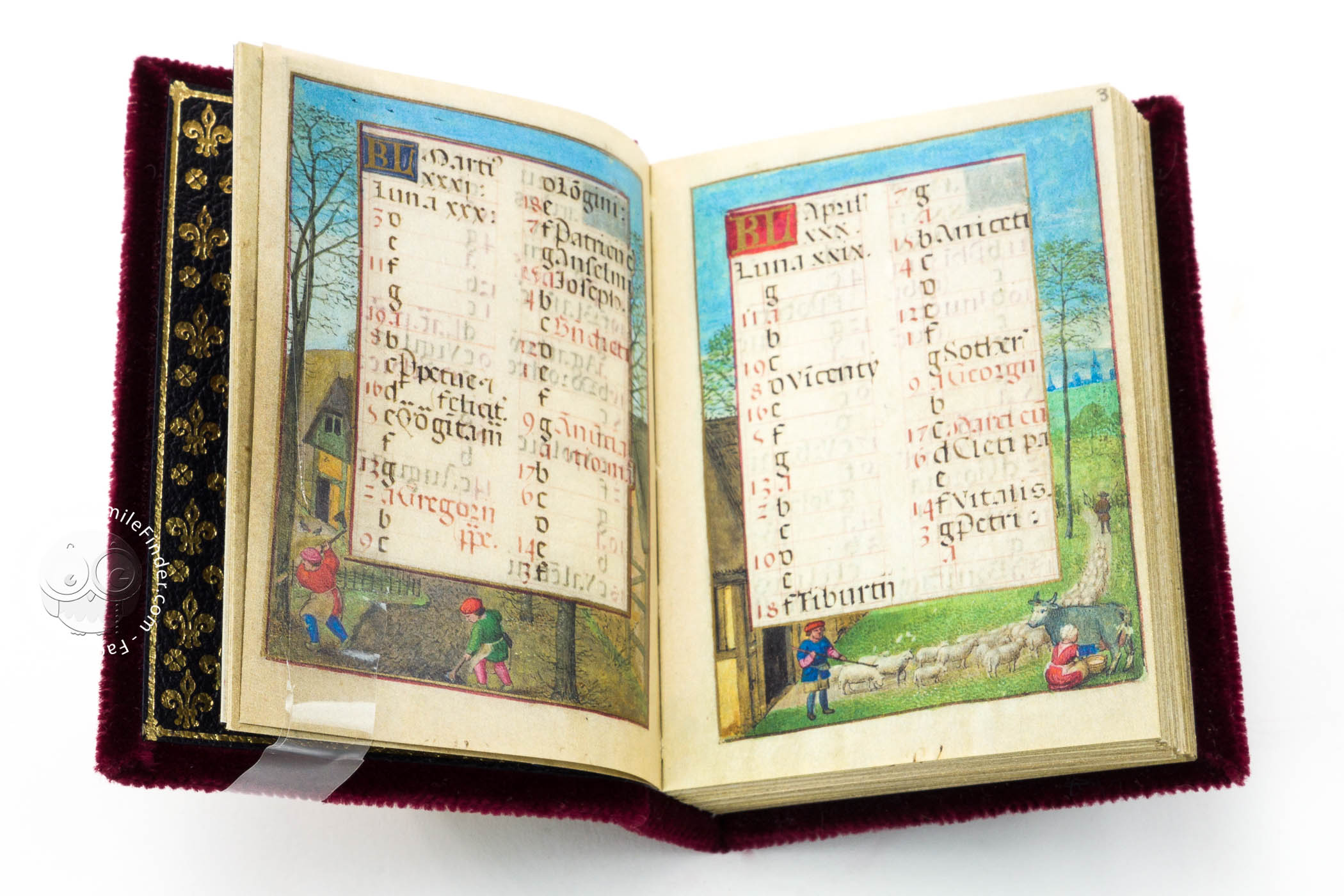
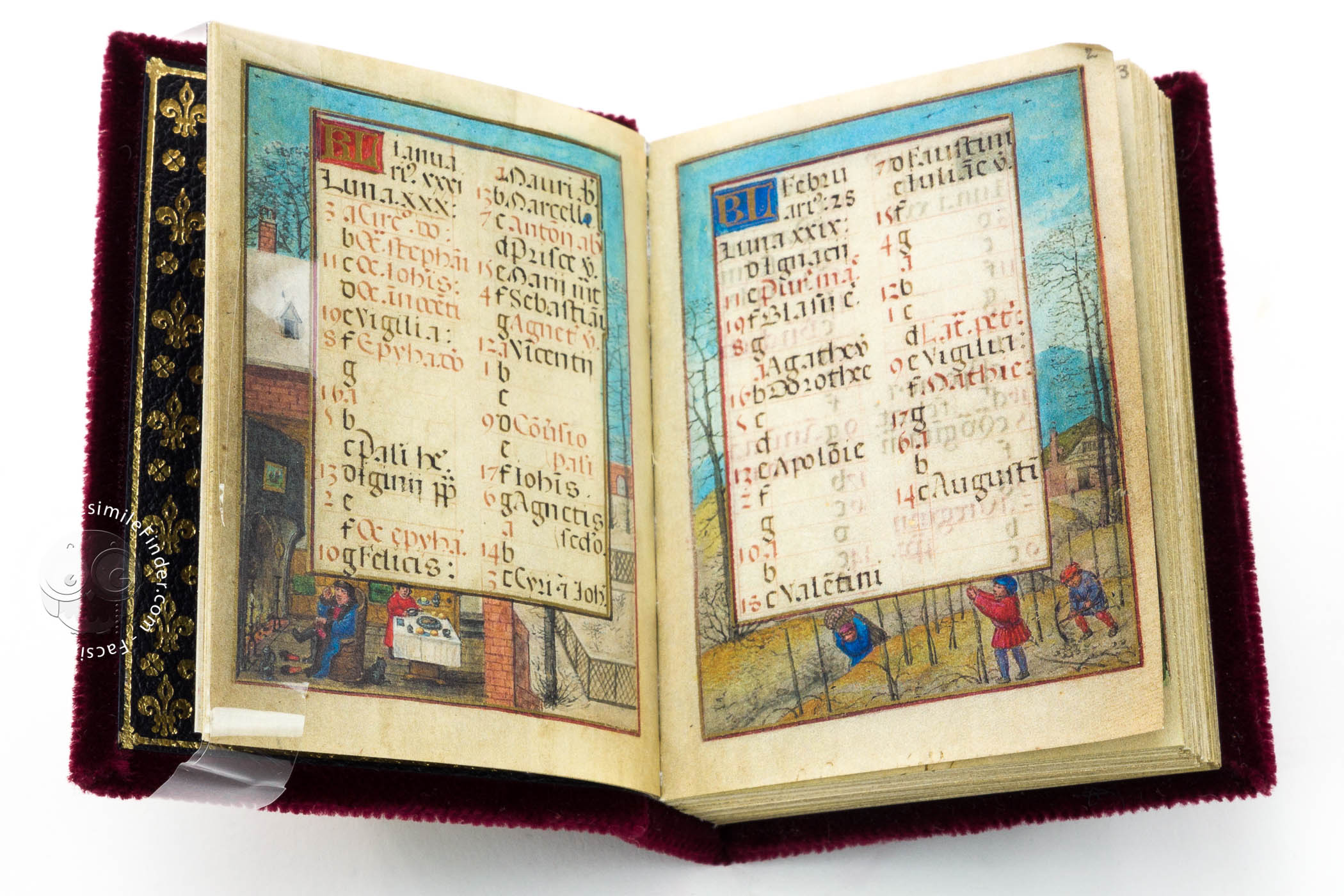
The manuscript opens with a liturgical calendar. With one page for each of the twelve months, it identifies events or saints to be commemorated on each day. Its illumination takes the form of historiated borders, that is, painted borders with genre scenes.
The borders of the calendar pages present an activity associated with each month, usually agricultural, in the lower portion. Their landscape settings, however, occupy the full border and display Simon Bening's masterful capture of seasonal atmospheres.
Holy Portraiture
The last section of the book presents a series of short prayers (suffrages) focused on saints, each preceded by a full-page portrait of the saint or, more rarely, a scene from the saint's life. The portraits include half-length figures, their bodies cut off by the fictive tracery frame, usually before deep, atmospheric landscapes. There are also standing figures in evocative landscape settings.
A Thirty-Year Working Relationship
Simon Bening (d. 1561) was the most admired illuminator of his time, both in Flanders and on the Iberian Peninsula. He and Antonius van Damme certainly collaborated on at least three projects, the earliest of which is the Van Damme Hours. Still other manuscripts illuminated by Bening, including the Boston-Cambridge Rosary Psalter and the Munich-Montserrat Hours, may be products of their collaboration, but neither manuscript is signed by the scribe, and the attribution of the former to van Damme has not been widely accepted.
Strewn-Flower Borders
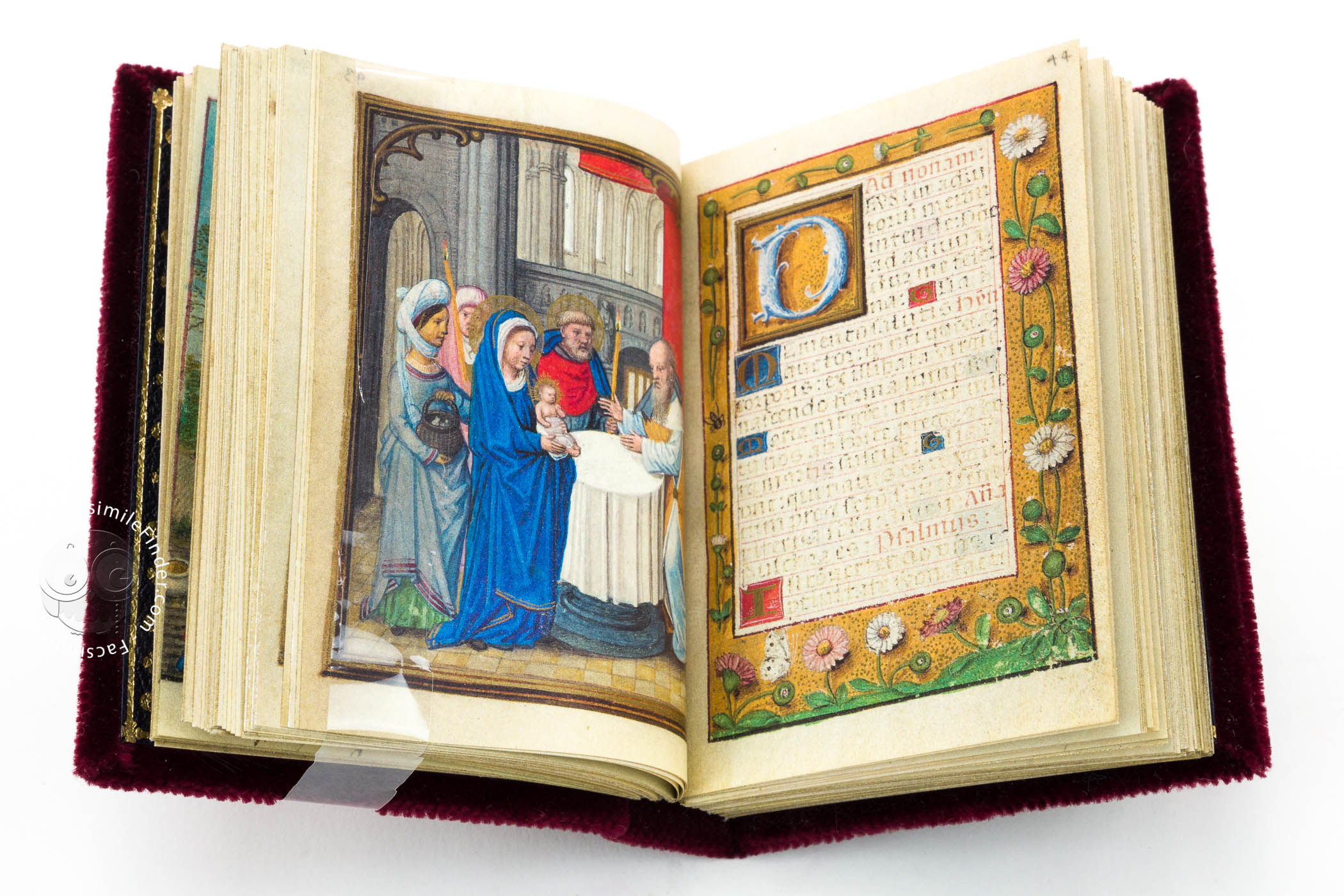
Van Damme wrote the book in Gothic Rotunda, the rounded version of the most formal of the Gothic scripts. The opening page of each text has a full border of the strewn-flower type, with trompe-l'oeil ("fool the eye") flowers and insects seeming to cast shadows on the painted surface of the page.
Surprising Inclusions
Van Damme claimed the authorship of the book, which probably means he chose the manuscript's texts. Among his choices was an Office for the Conception of the Virgin, rarely found in books of hours. It is preceded by a visualization of the Virgin Mary's conception free from the burden of the original sin committed by Adam and Eve: the fetal Virgin appears in half-length, hands clasped in prayer, in an aura on the belly of the seated Saint Anne (fol. 69v).
Another unusual inclusion in a prayer book is the Athanasian Creed, a statement of Christian faith. It is preceded by a portrait of Saint Athanasius (d. 373), Patriarch of Alexandria, the text's purported author, in a bucolic landscape (fol. 93v).
Distinguished Ownership
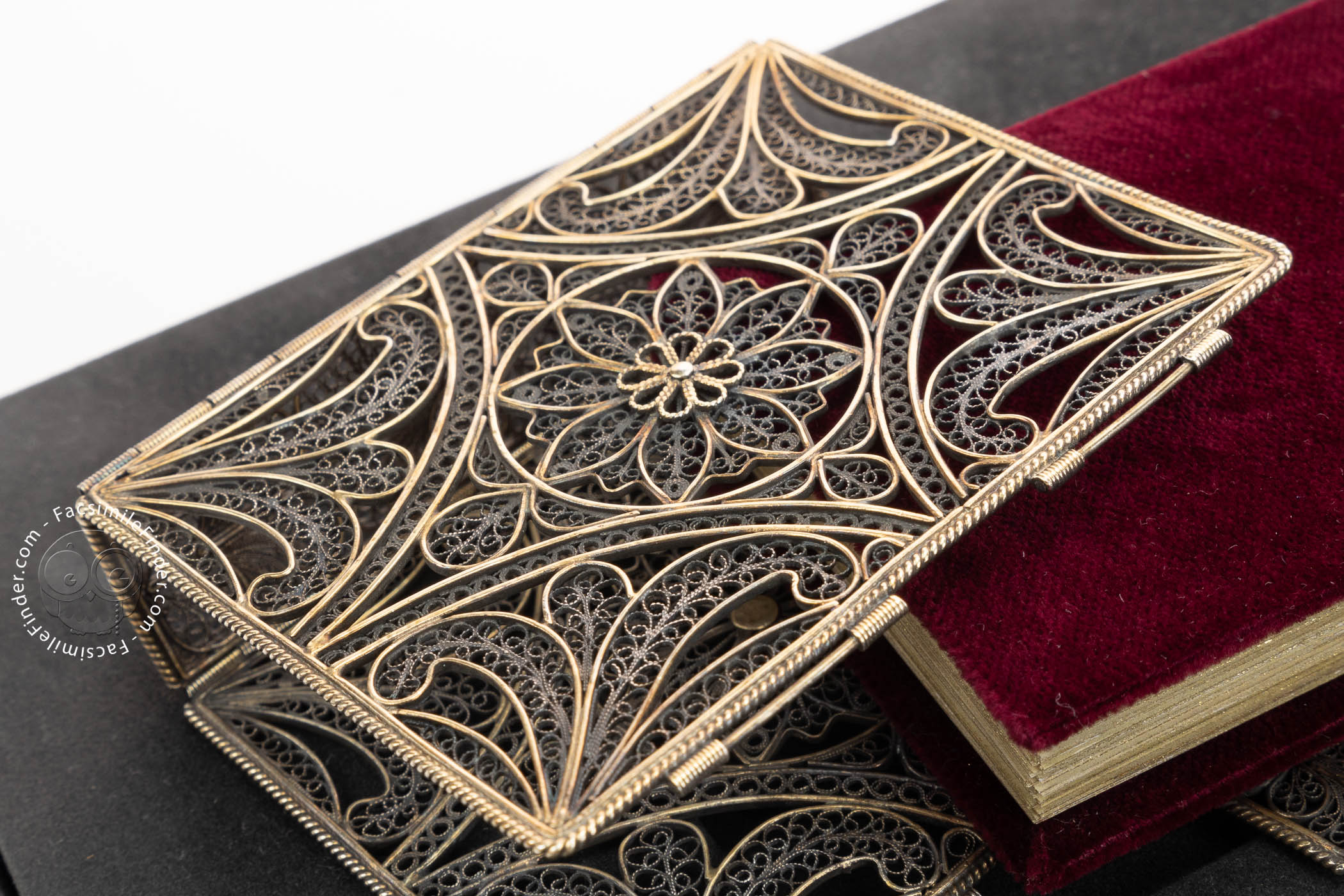
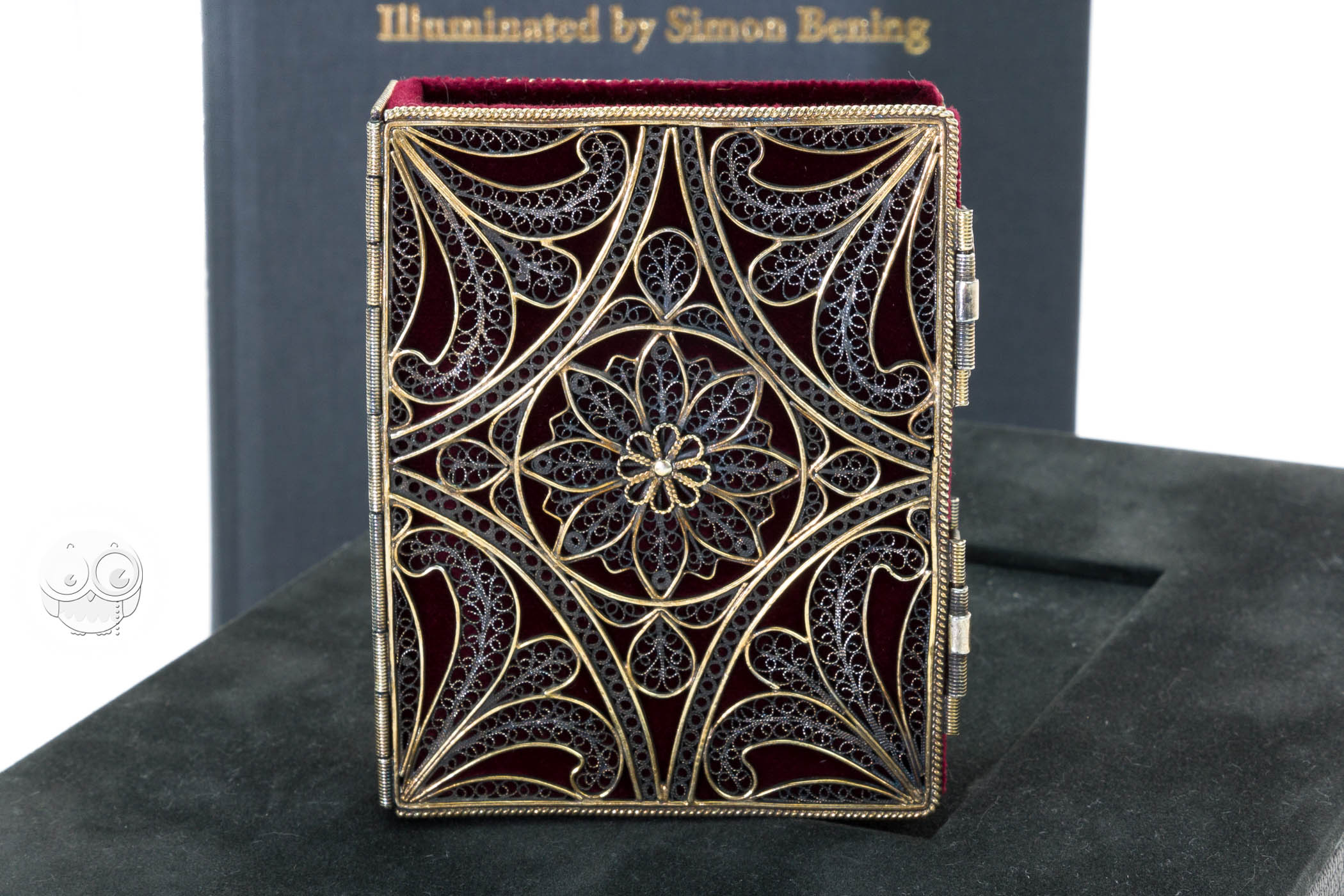
The manuscript's first identifiable owner is John Strange (1732-1799), a British diplomat posted in Venice for part of his life, who collected paintings, prints, drawings, sculpture, coins, antiquities, natural history specimens, and books. It was probably he who had the book bound in red velvet over pasteboard and its silver filigree case made.
Subsequent owners include George Spencer Churchill (1766-1840), Duke of Marlborough, John Boykett Jarman (1782-1864), Philip Augustus Hanrott (1777-1856), and Louis Leboeuf de Montgermont (1841-1918). J. Pierpont Morgan (1837-1913) acquired the manuscript in 1911. It then passed into the collection of his son, J. P. Morgan (1867-1943), who made his and his father's collection a public institution in 1924 (now the Morgan Library & Museum).
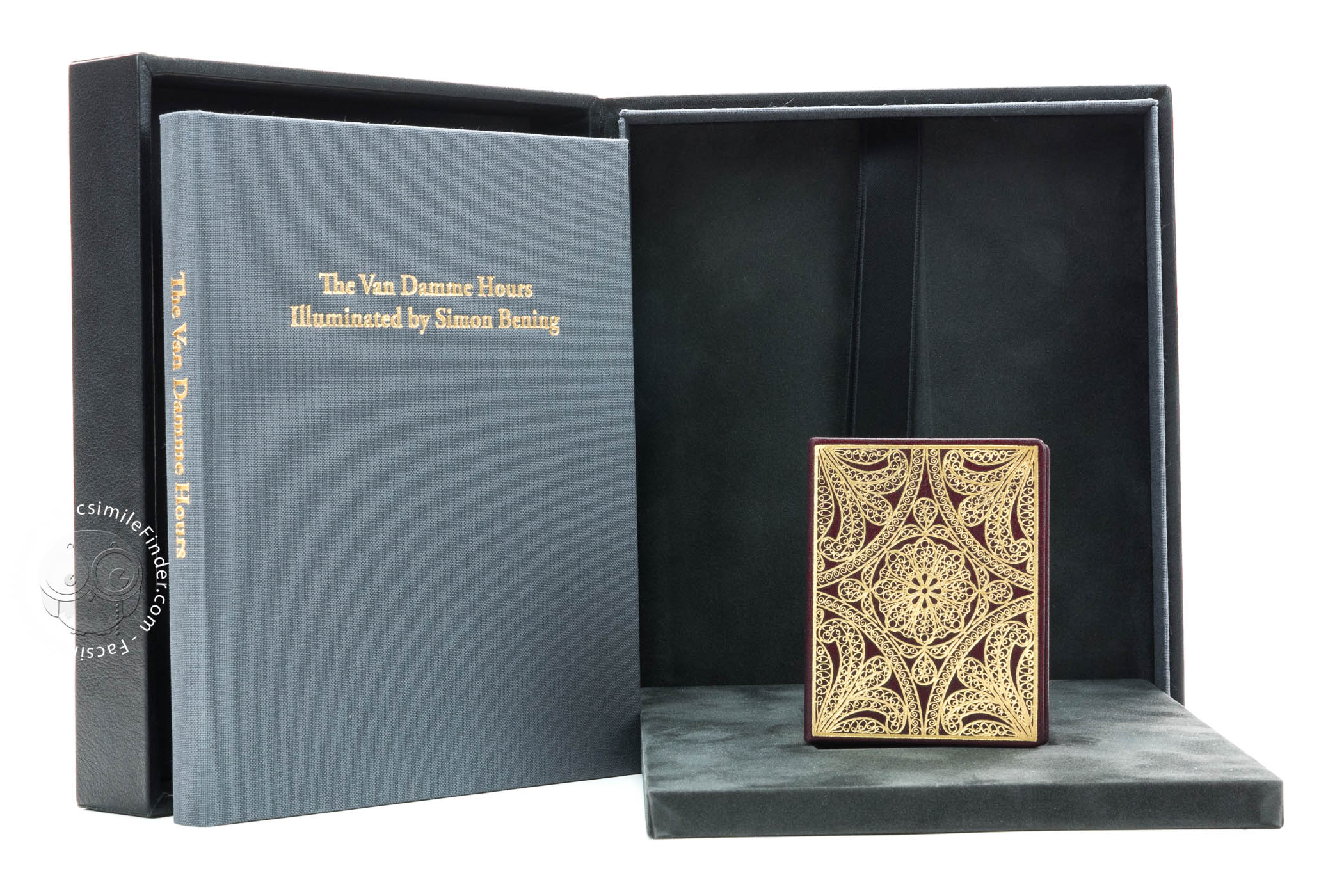
We have 2 facsimiles of the manuscript "Van Damme Hours":
- Van-Damme Stundenbuch (Deluxe Edition) facsimile edition published by Faksimile Verlag, 2013
- Van-Damme Stundenbuch (Standard Edition) facsimile edition published by Faksimile Verlag, 2013