



In Nuremberg in 1525, three years before his death, Albrecht Dürer brought to the press a book that set out to teach geometry to craftsmen who had never read Euclid. The Treatise on Measurement, printed in German in the city where he had spent nearly his whole life, survives in the copy held in New York at The Metropolitan Museum of Art.
Geometry in the Vernacular, for the Nuremberg Workshop
Dürer dedicated the volume to his friend Willibald Pirckheimer, the humanist whose library gave him access to classical mathematics. Yet the book itself turns away from the Latin learning of that circle. Written in German, it addresses painters, goldsmiths, sculptors, stonemasons, and carpenters — the men of the workshops, for whom the measured line was a daily instrument rather than a philosophical object.
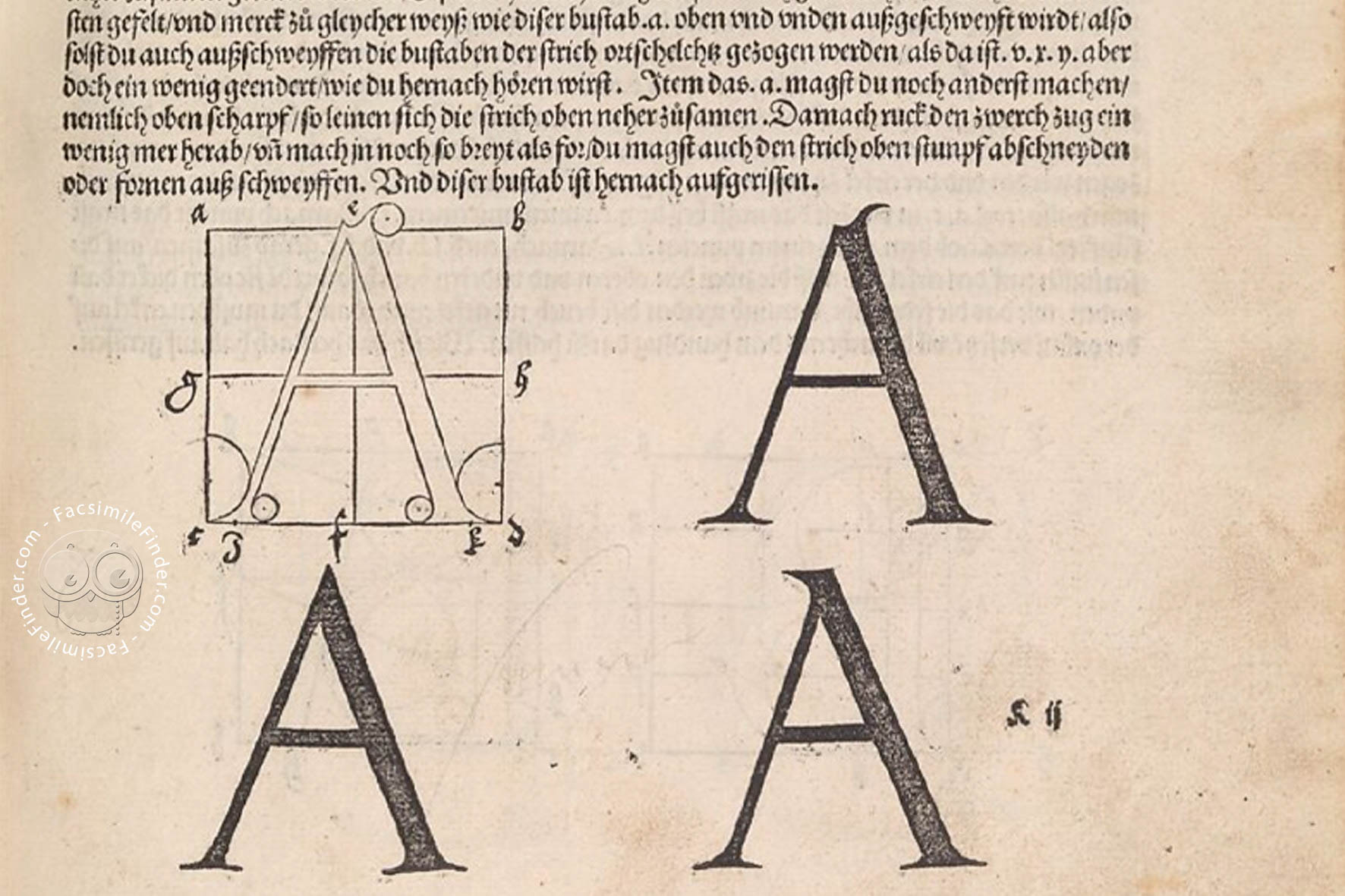
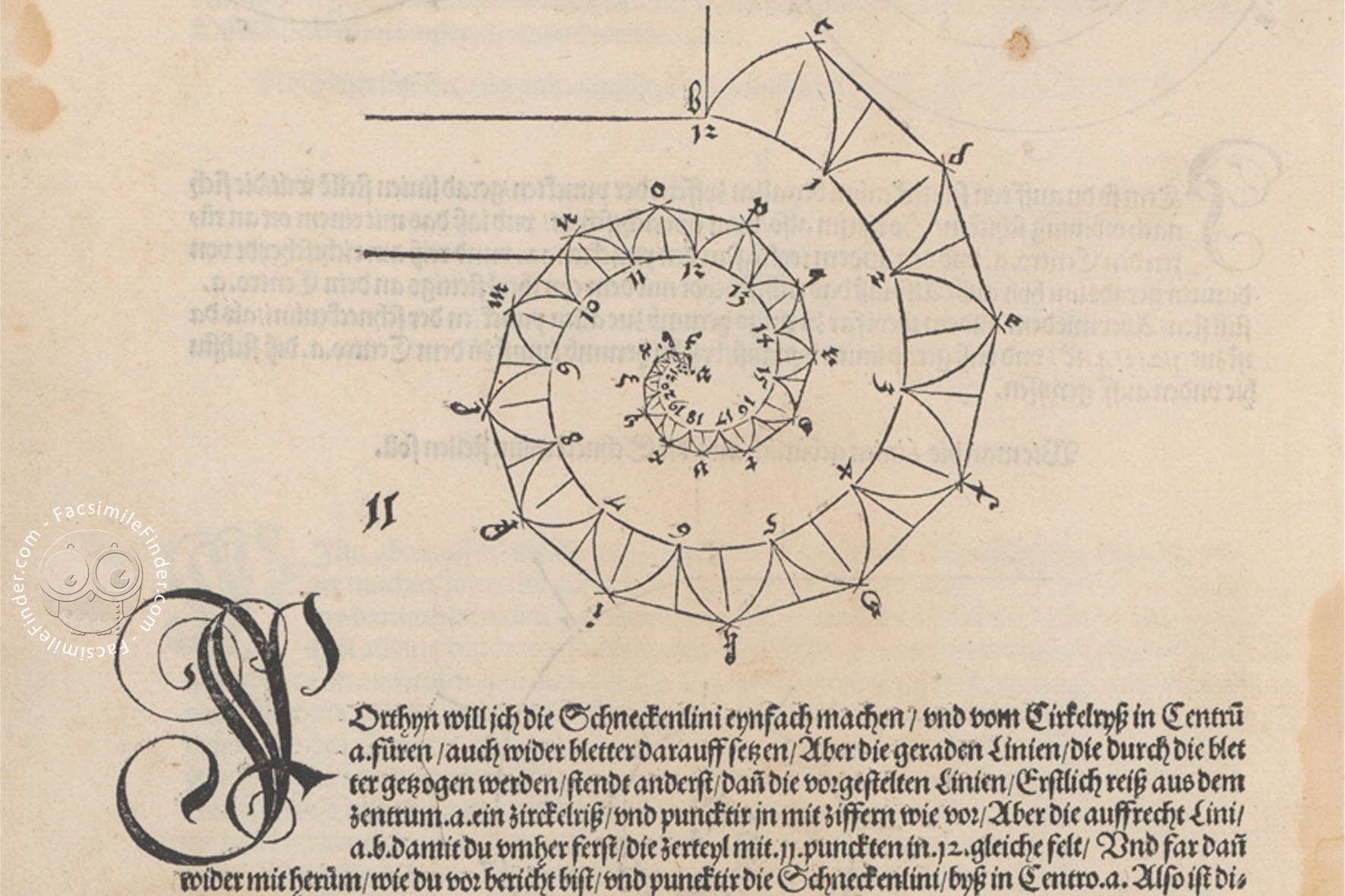
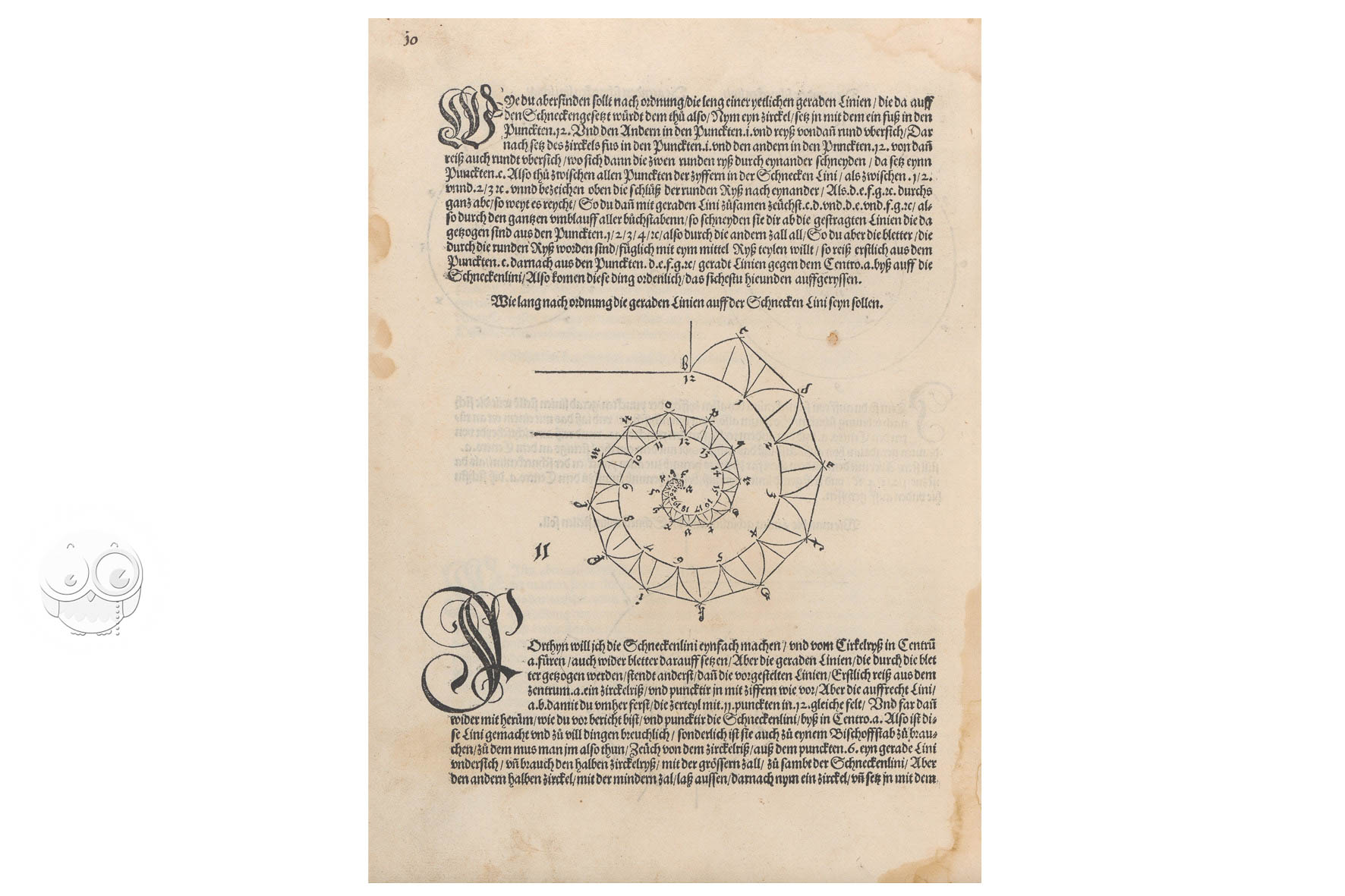
Woodcut Diagrams, Constructed Alphabets, and Fraktur Type
Hieronymus Andreae, to whom the printing is attributed, cast the Fraktur type used here and in other works by Dürer. The pages carry woodcut geometrical figures, architectural designs, constructed roman and gothic alphabets, and two workshop scenes; two small mobile slips, pasted near the end, let the reader manipulate perspective schemes by hand.
Four Books from the Line to the Solid
The treatise advances by stages: lines and curves, plane figures, applied constructions such as monuments, lettering, and sundials, and finally solid bodies and perspective. The sequence is pedagogical, moving from what can be drawn to what can be seen.
Dürer freely described the work as a compilation. What he compiled, though, was a way of thinking with the compass — and he put it into the hands of readers who had never been invited to use it.
We have 1 facsimile edition of the manuscript "Treatise on Measurement by Albrecht Dürer": Underweysung der Messung facsimile edition, published by Collegium Graphicum, 1972
Request Info / Price