
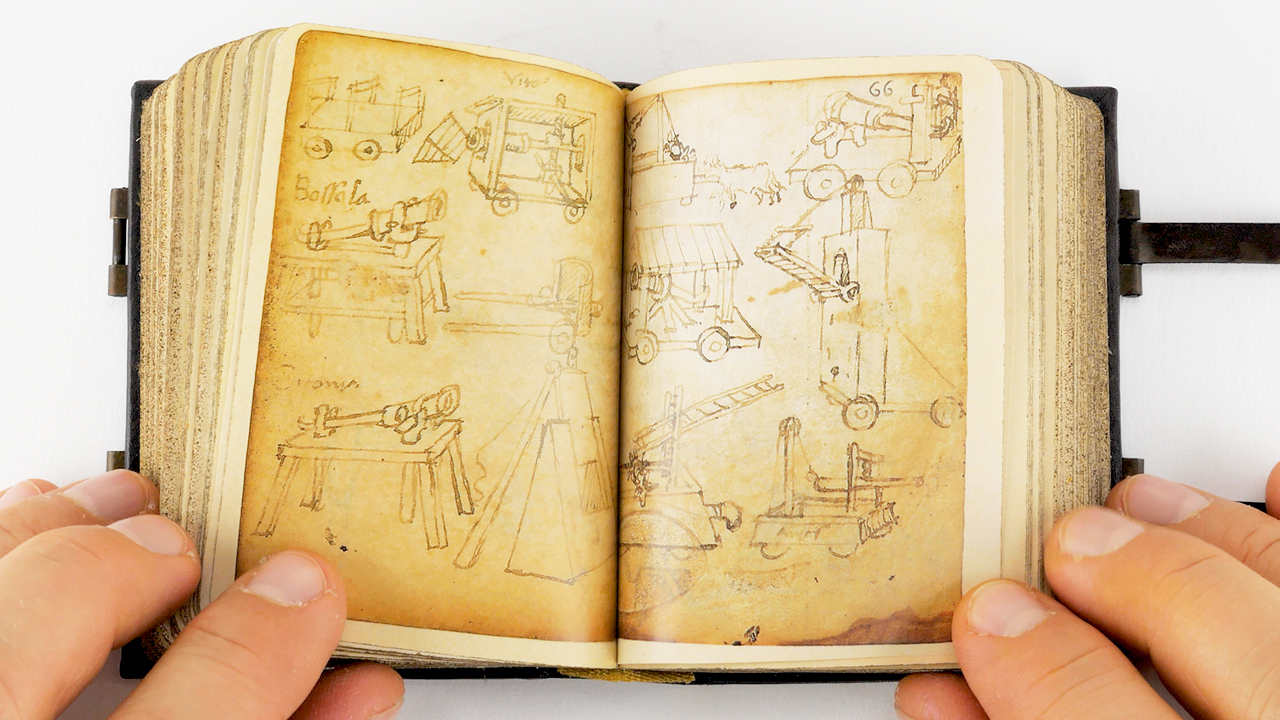
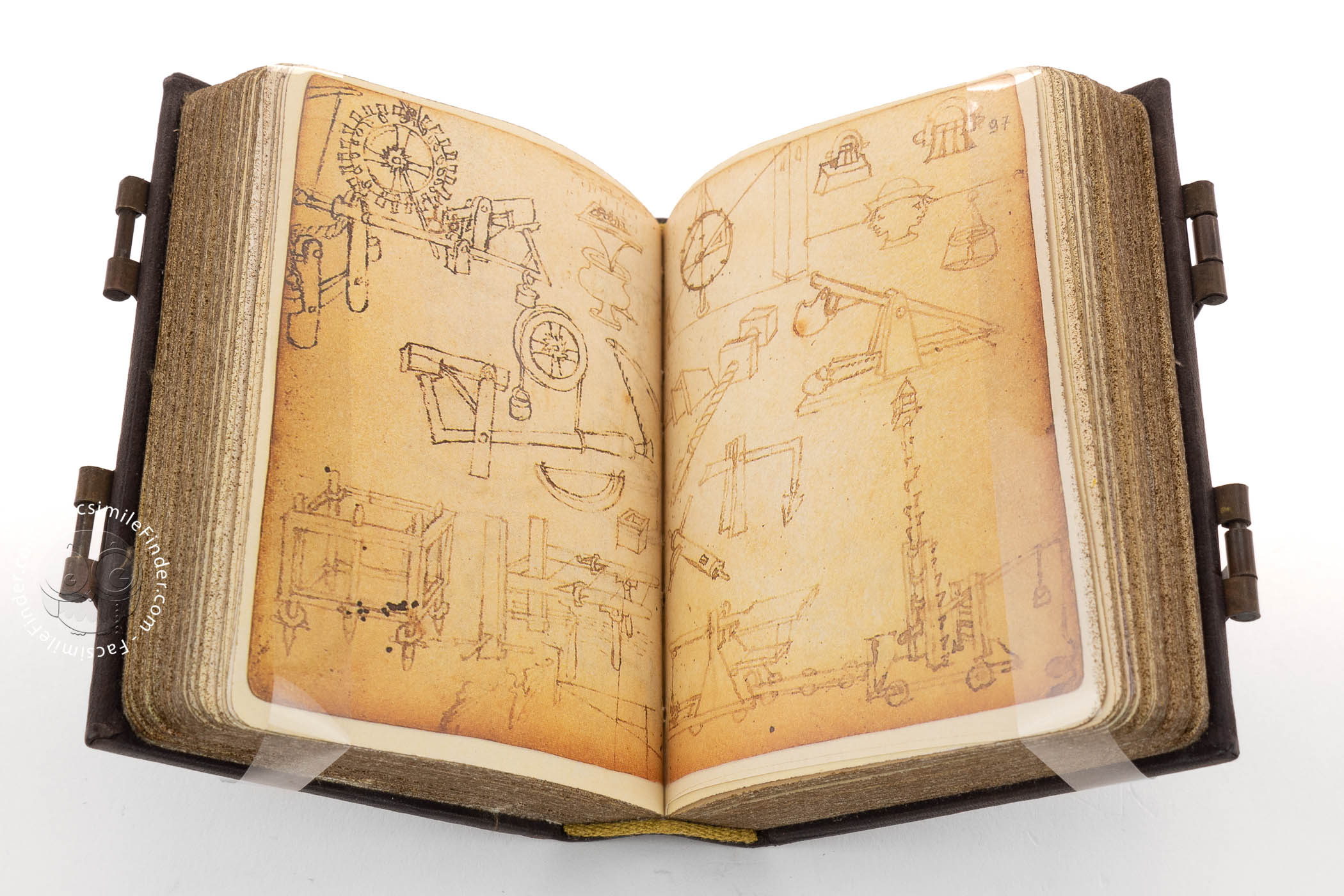
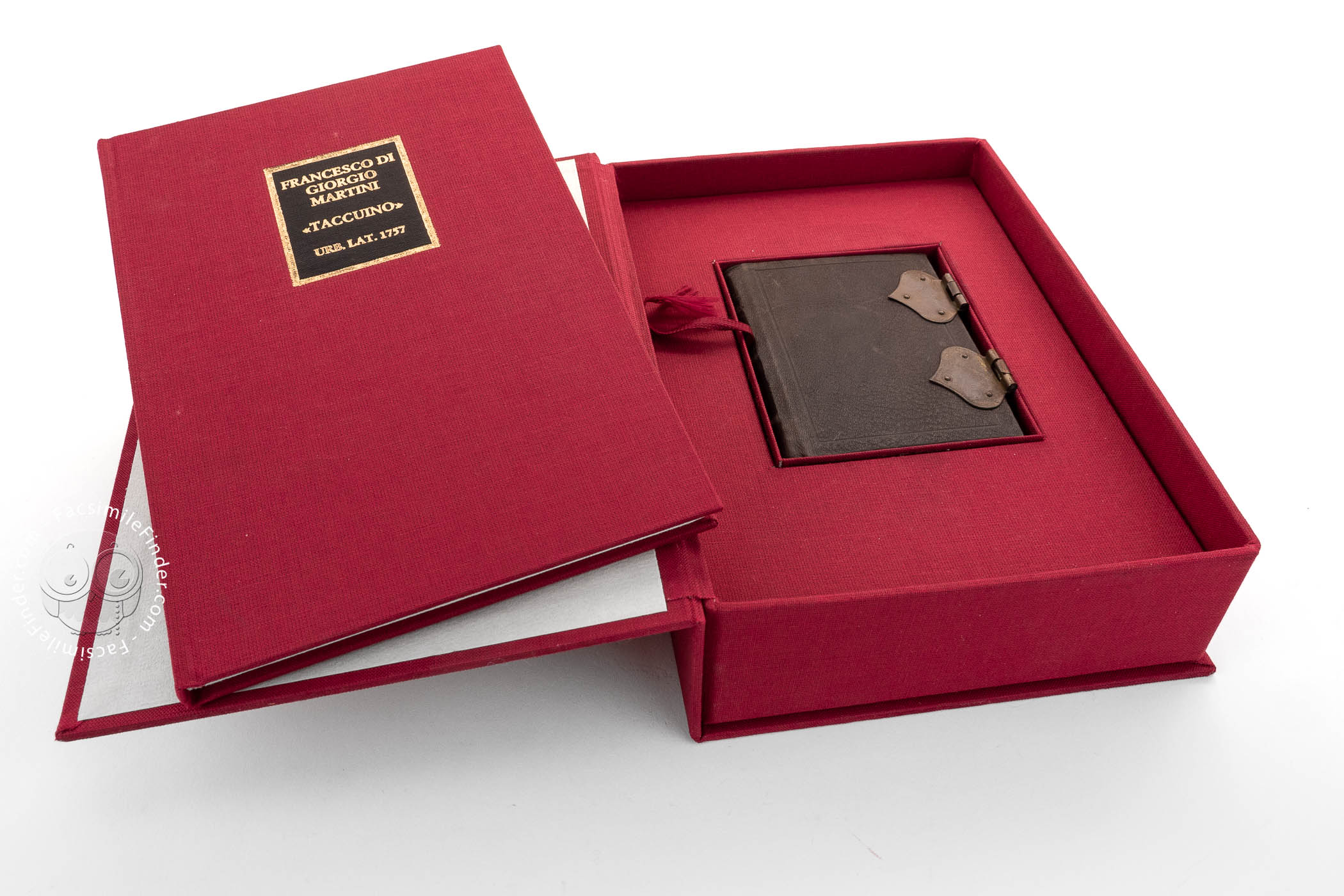
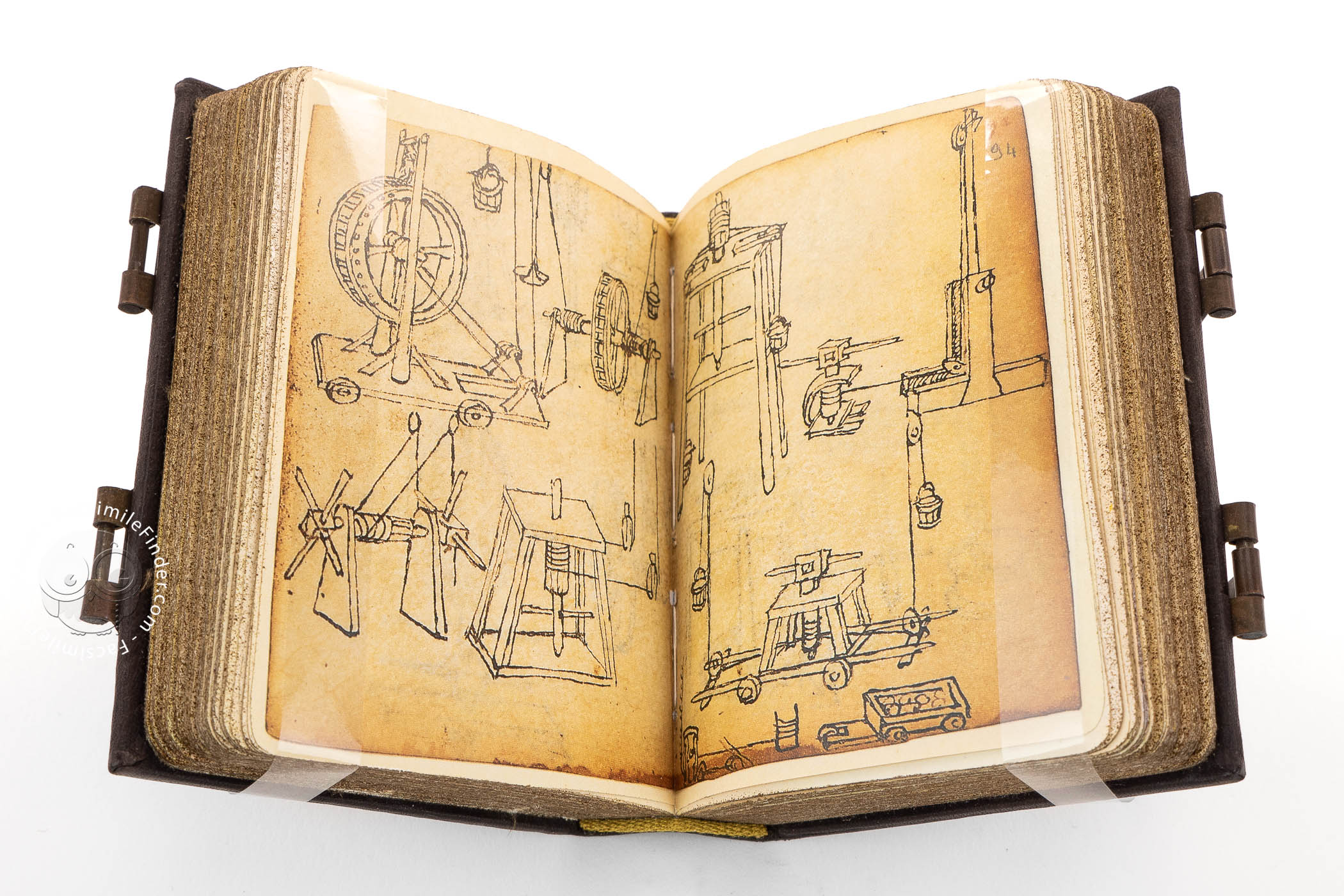
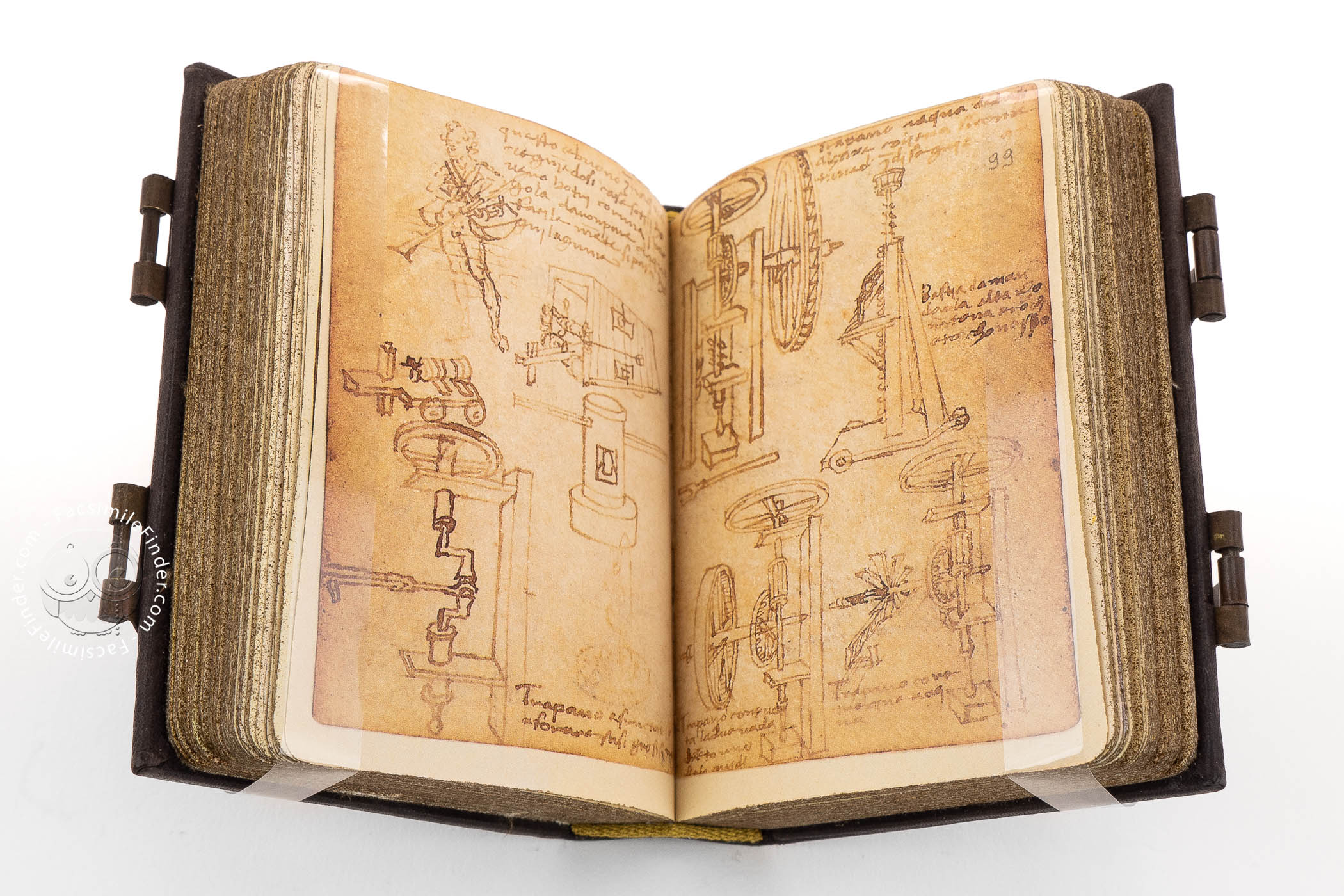
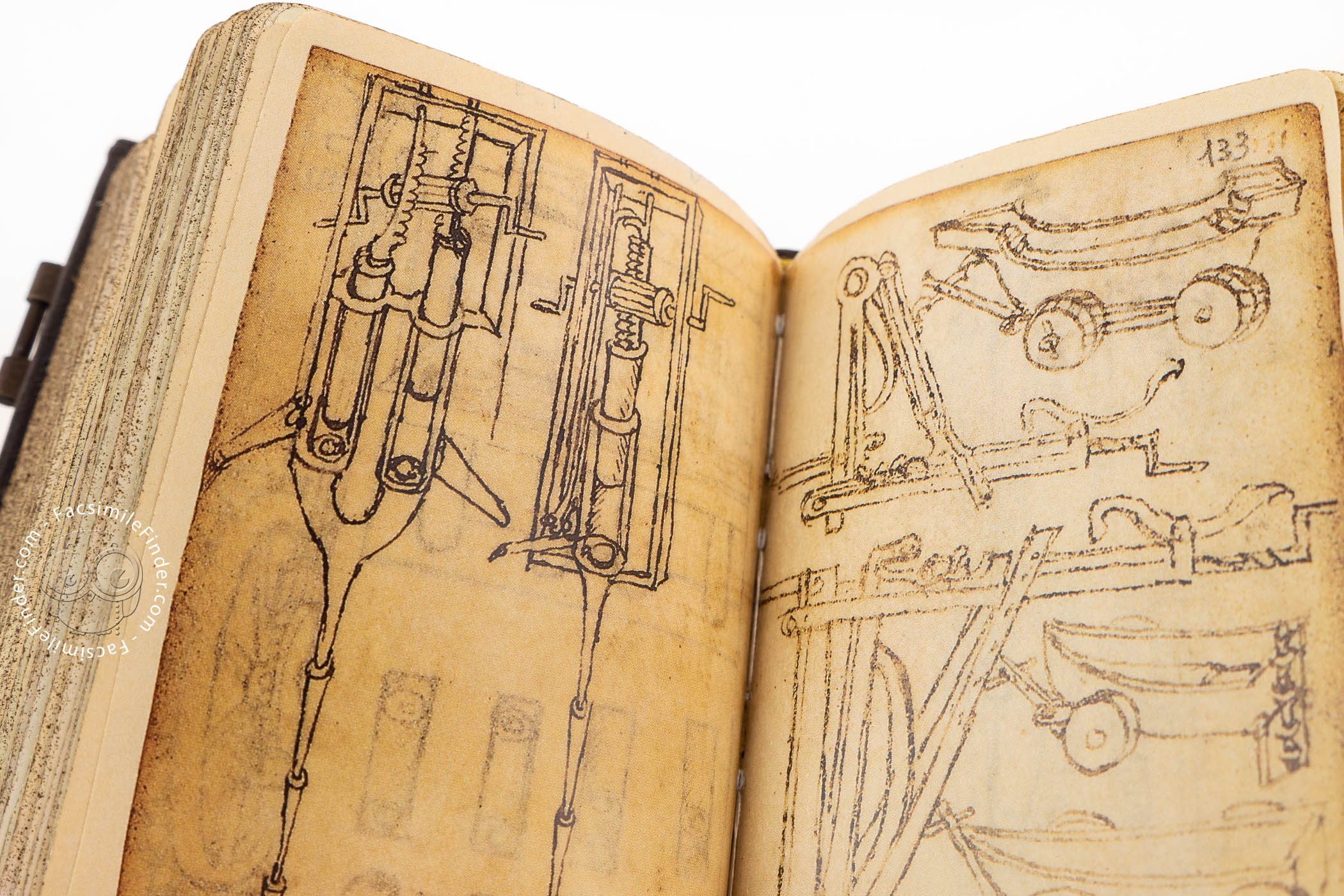

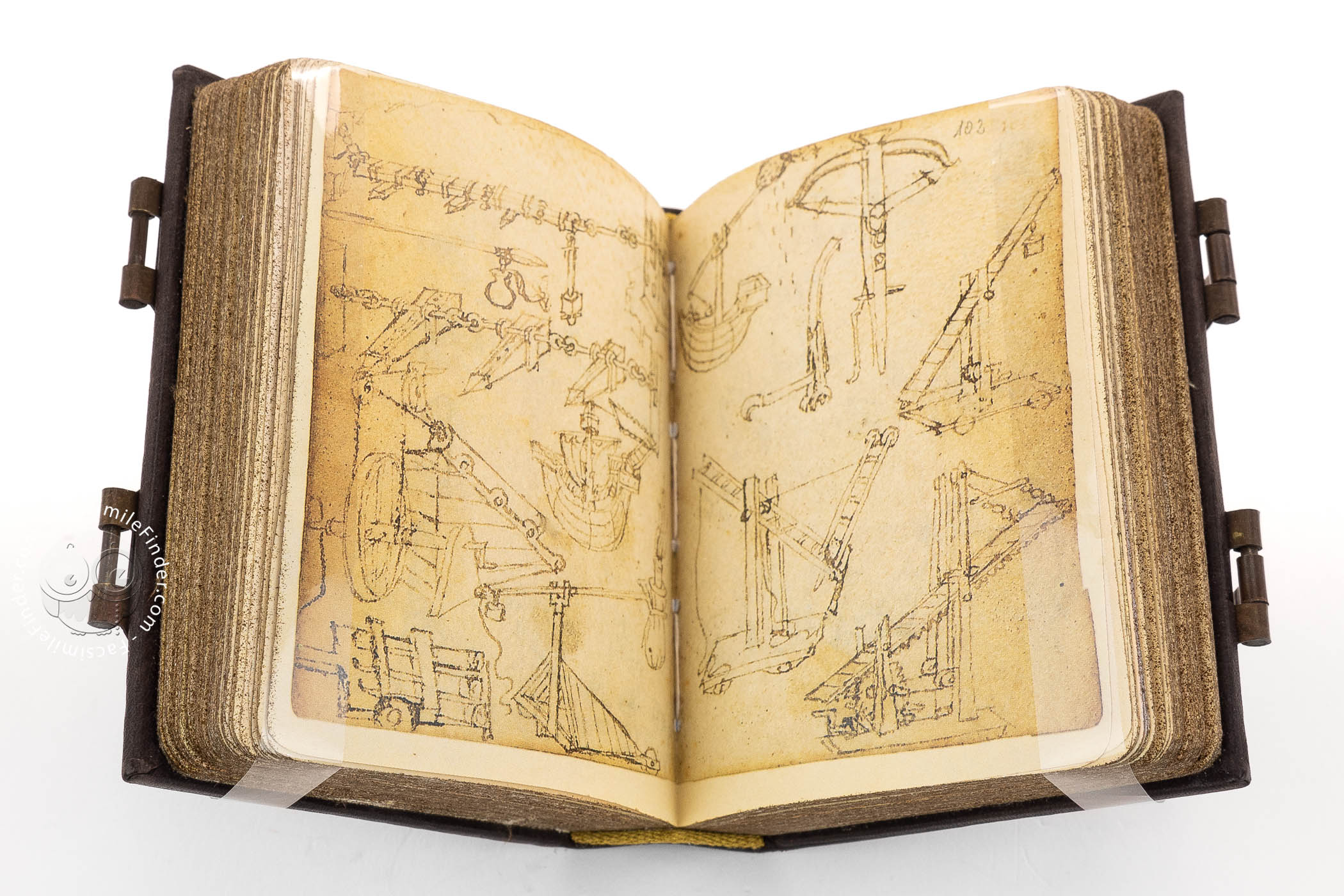
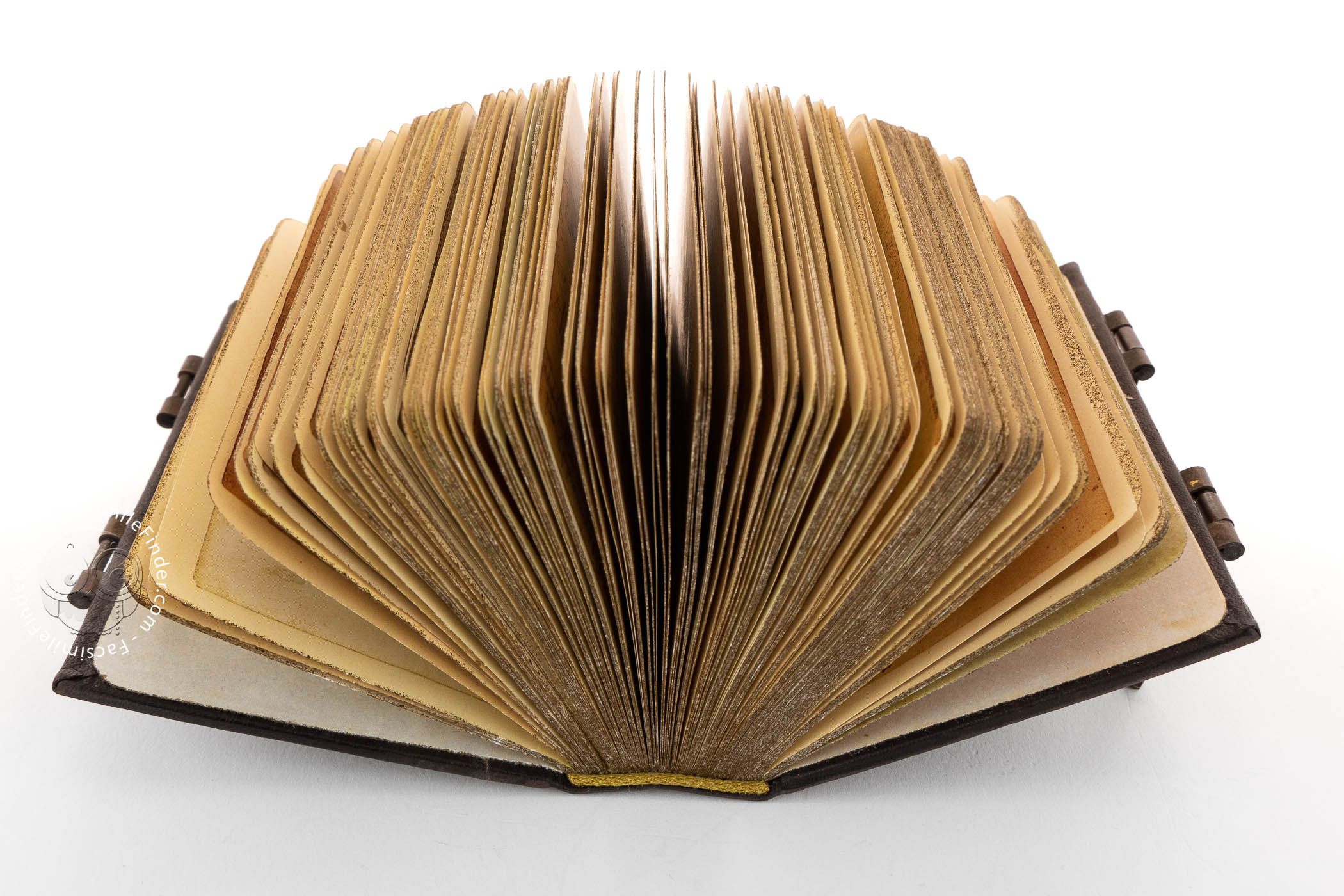
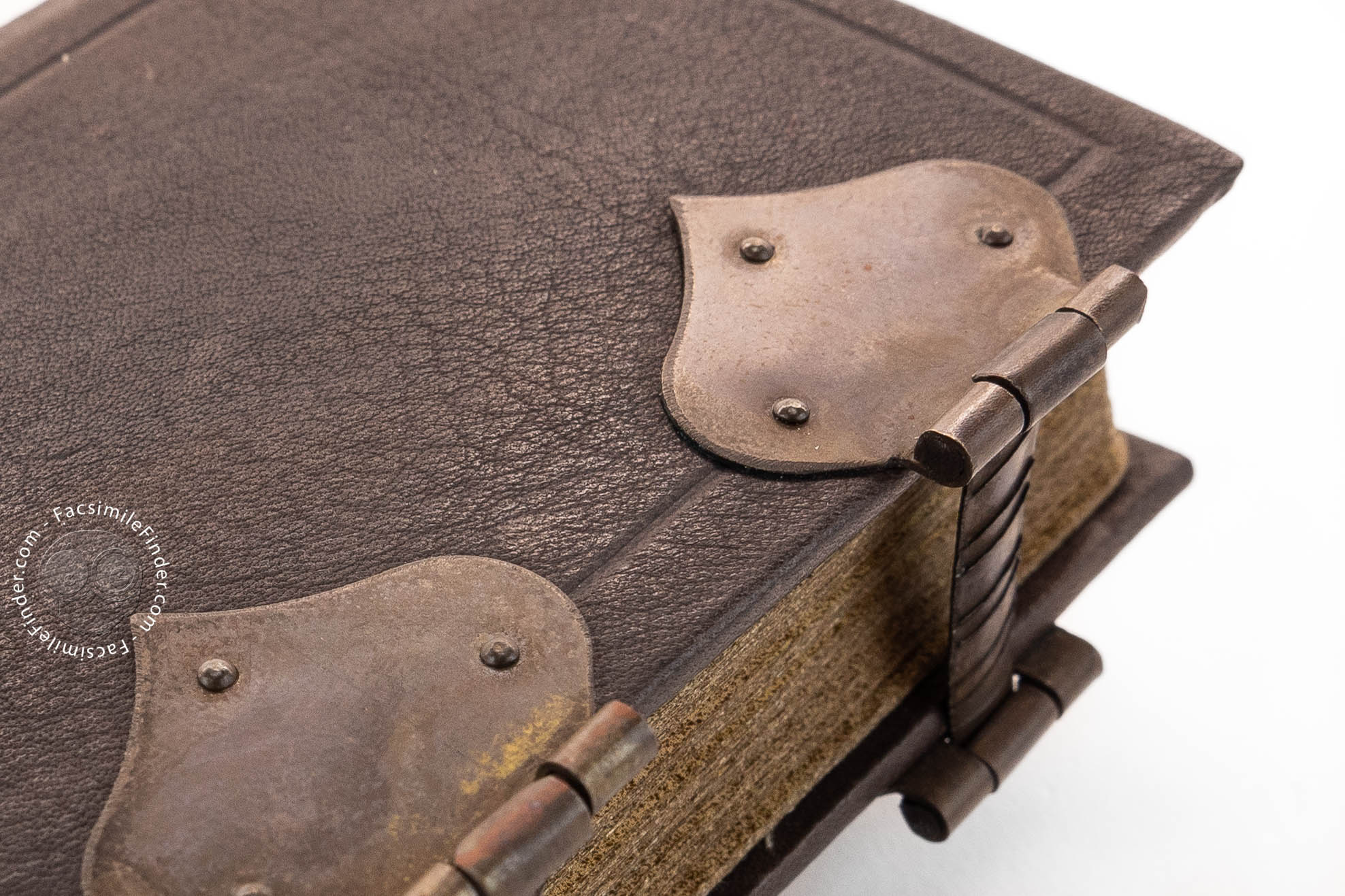
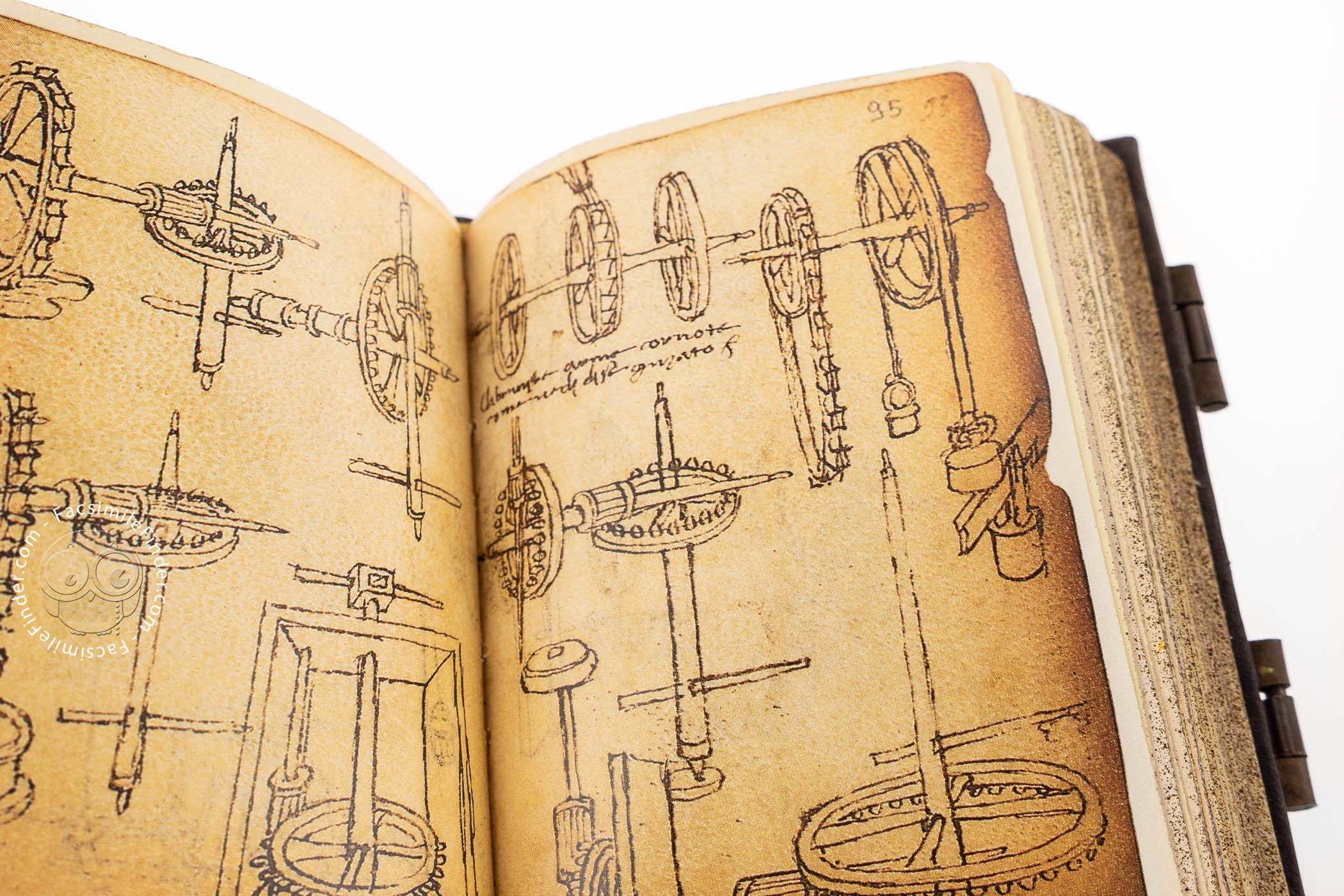

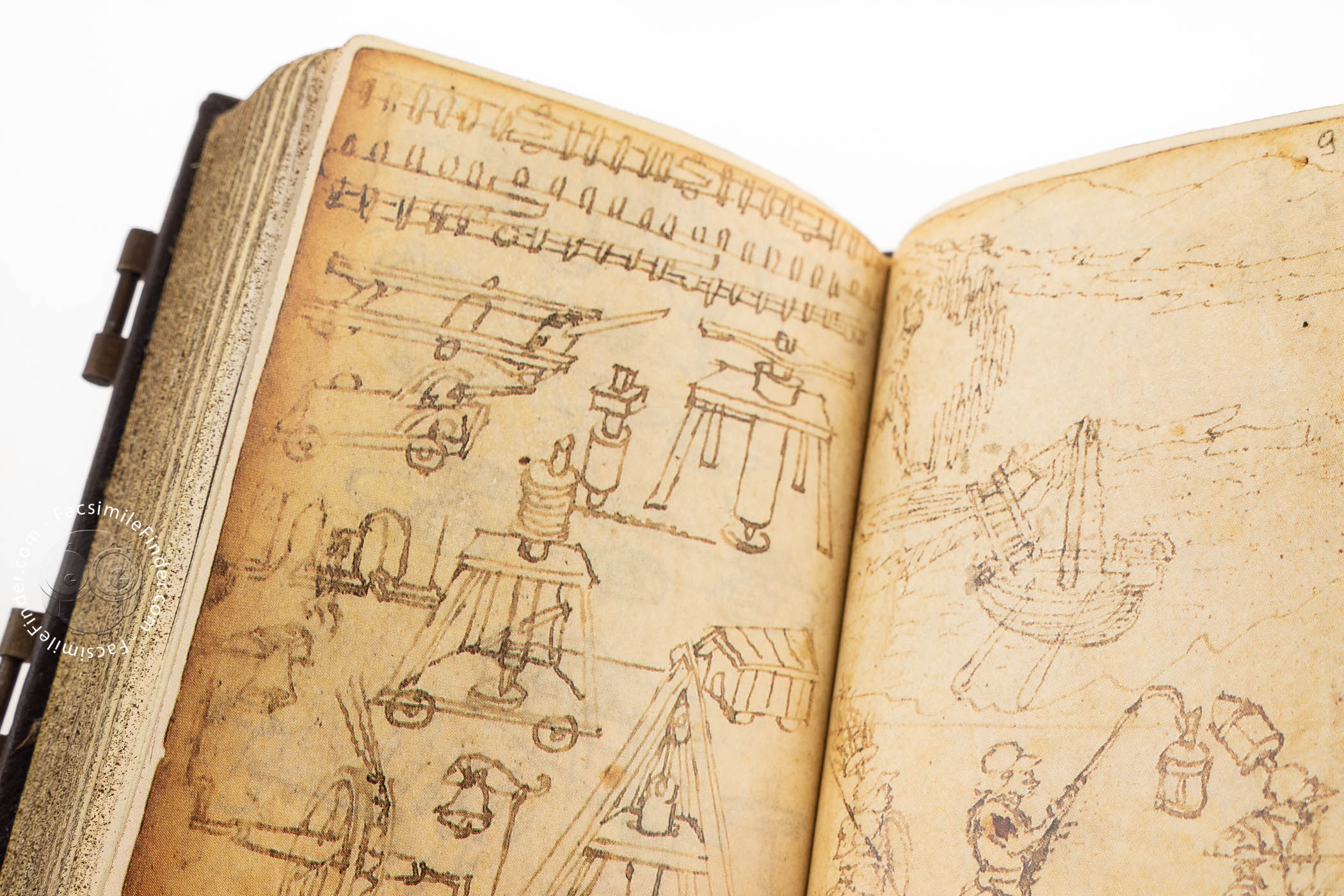
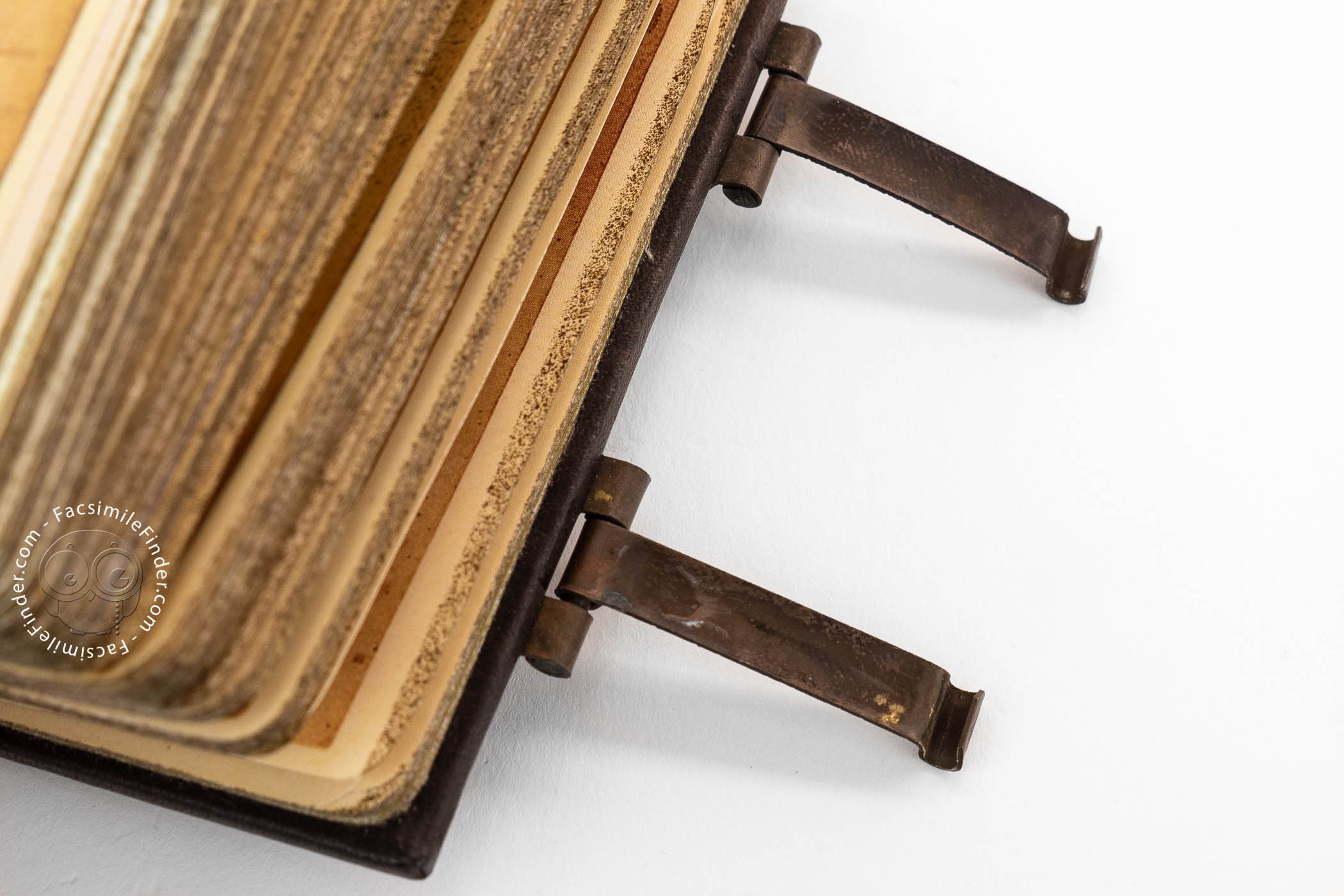

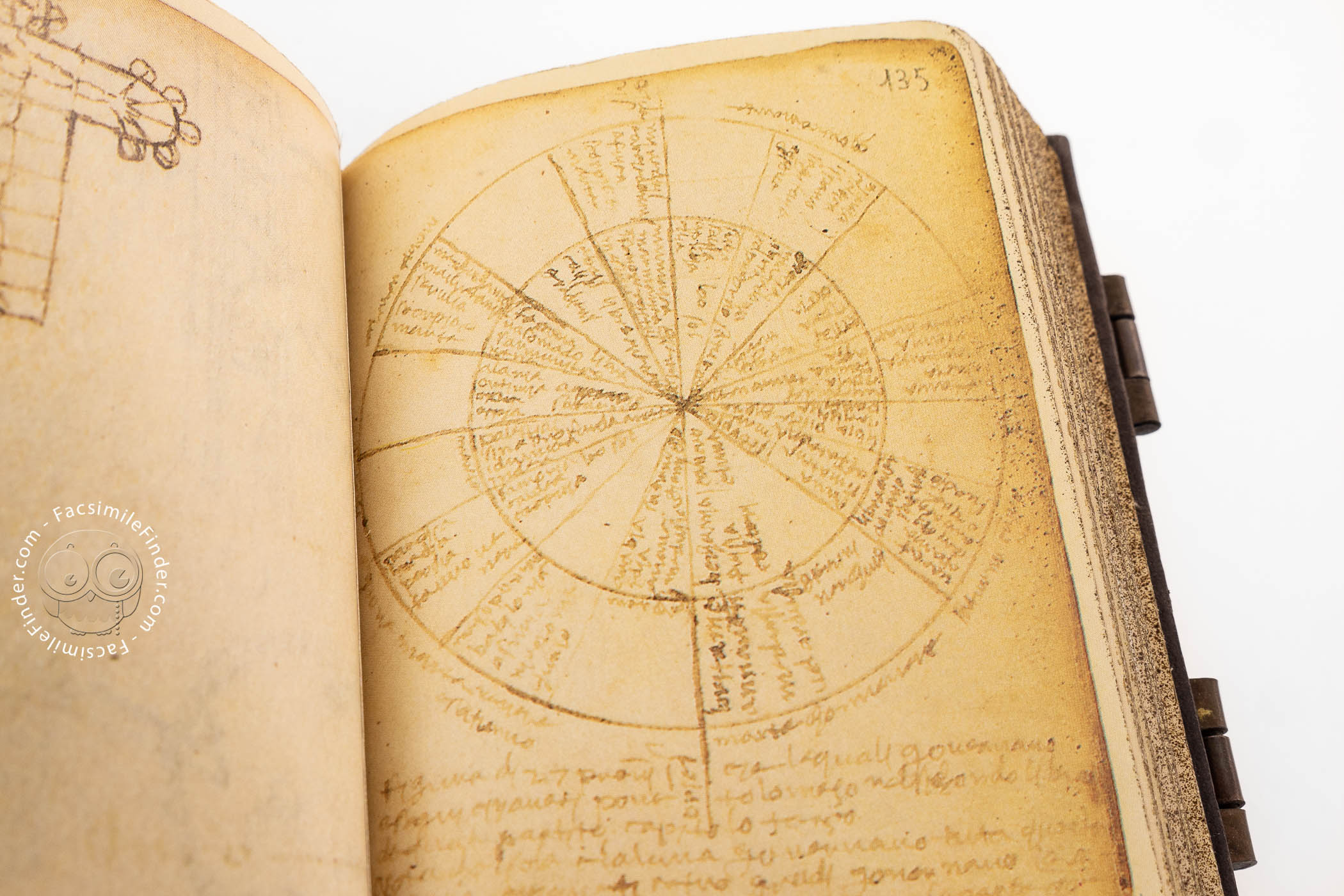
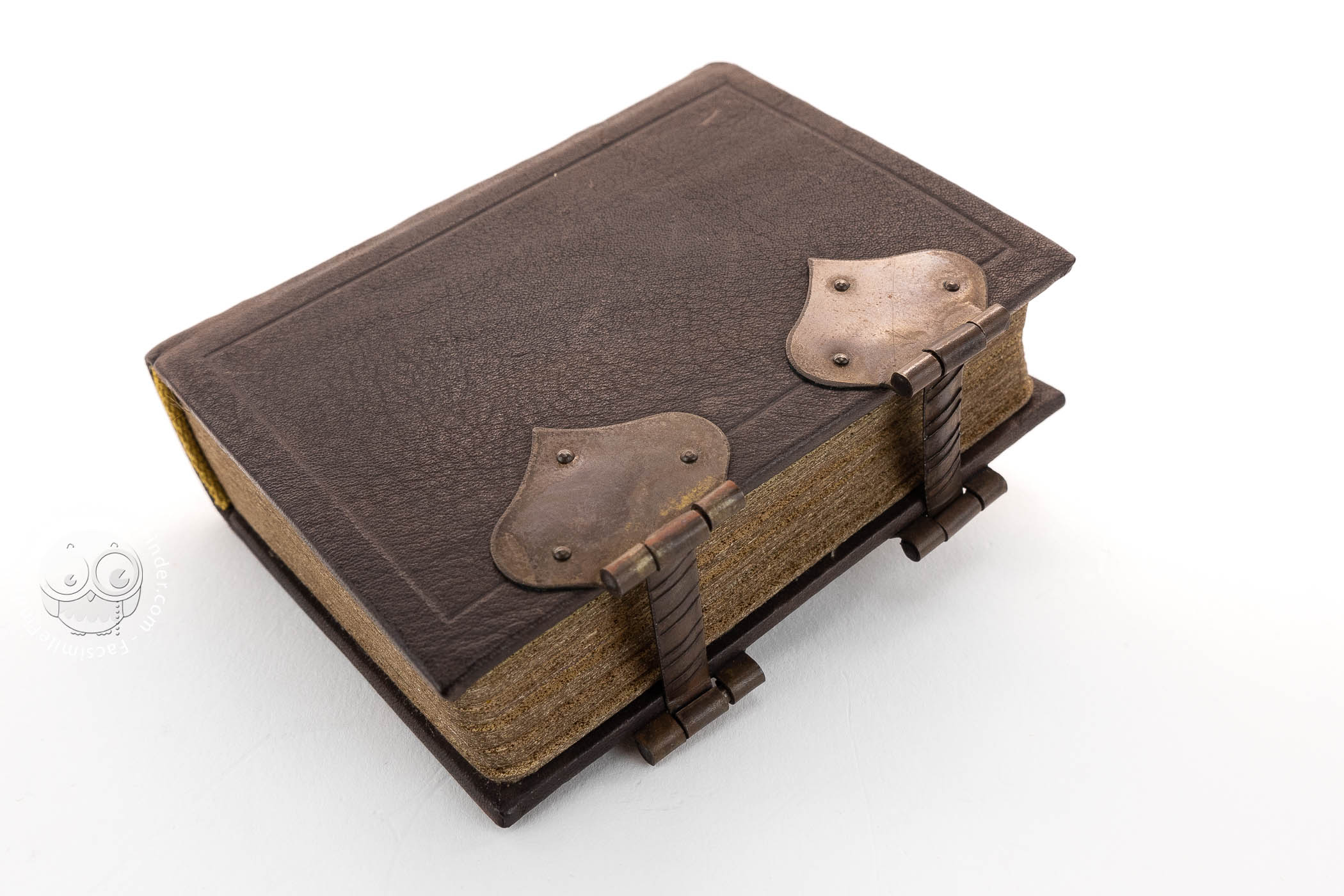
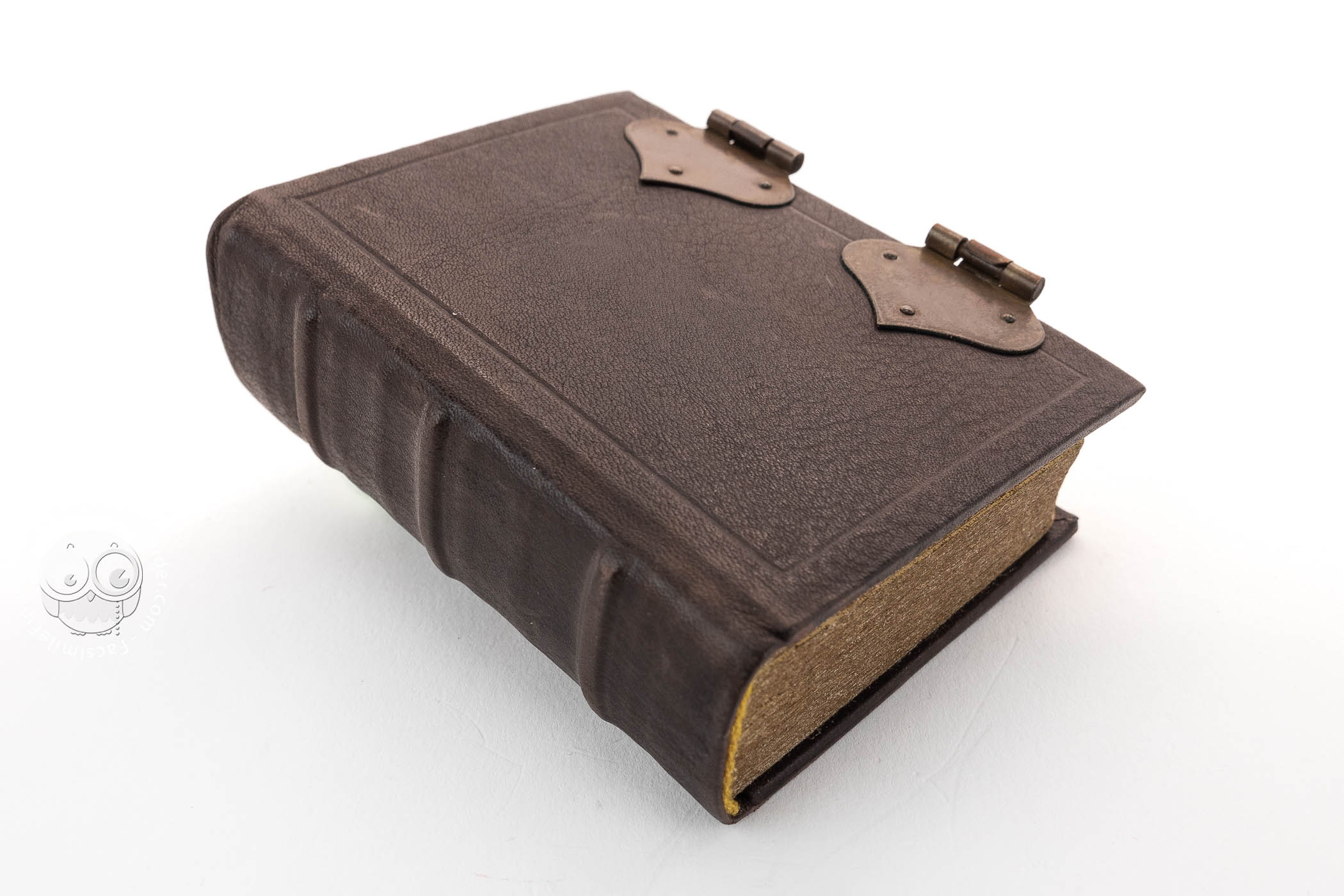
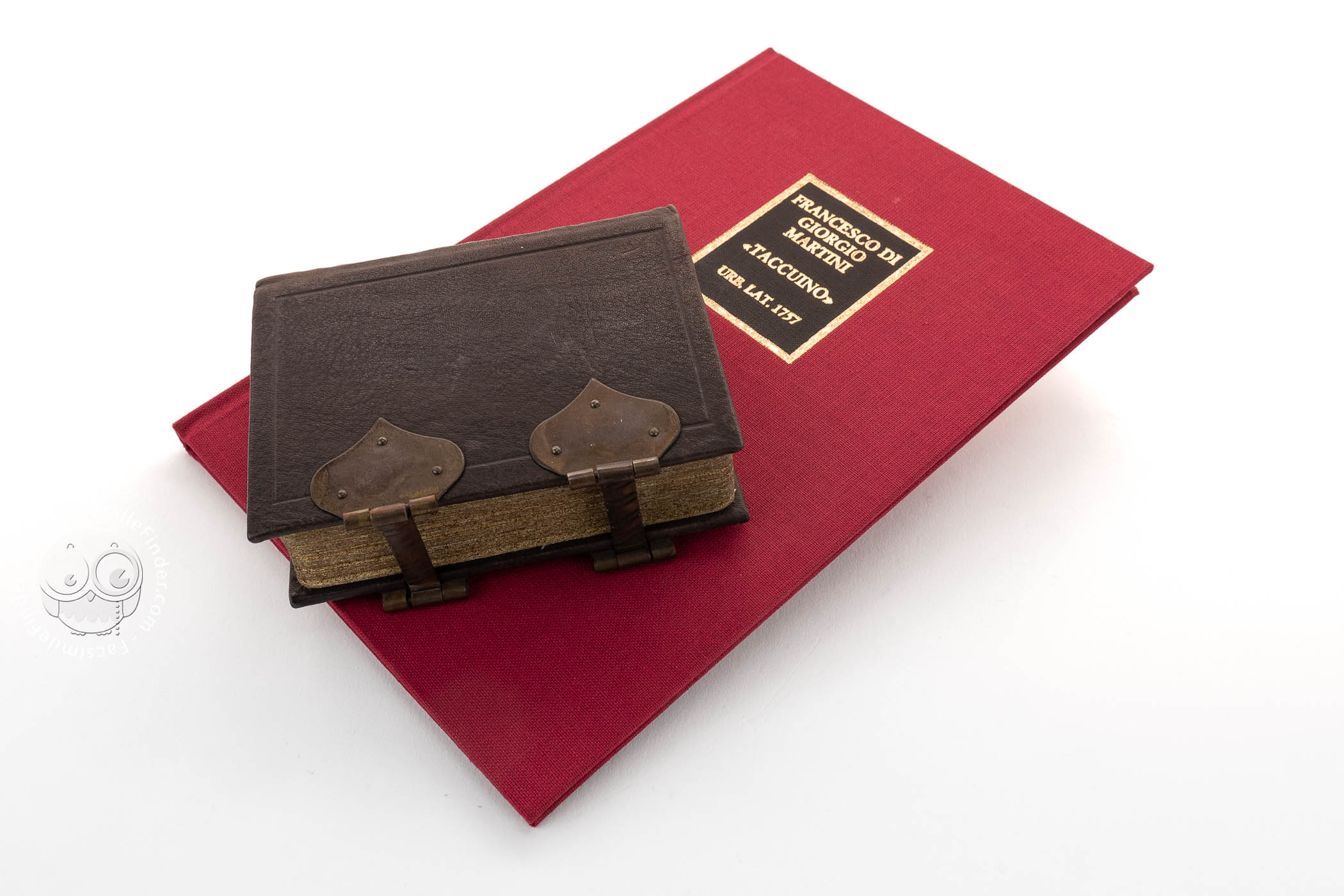
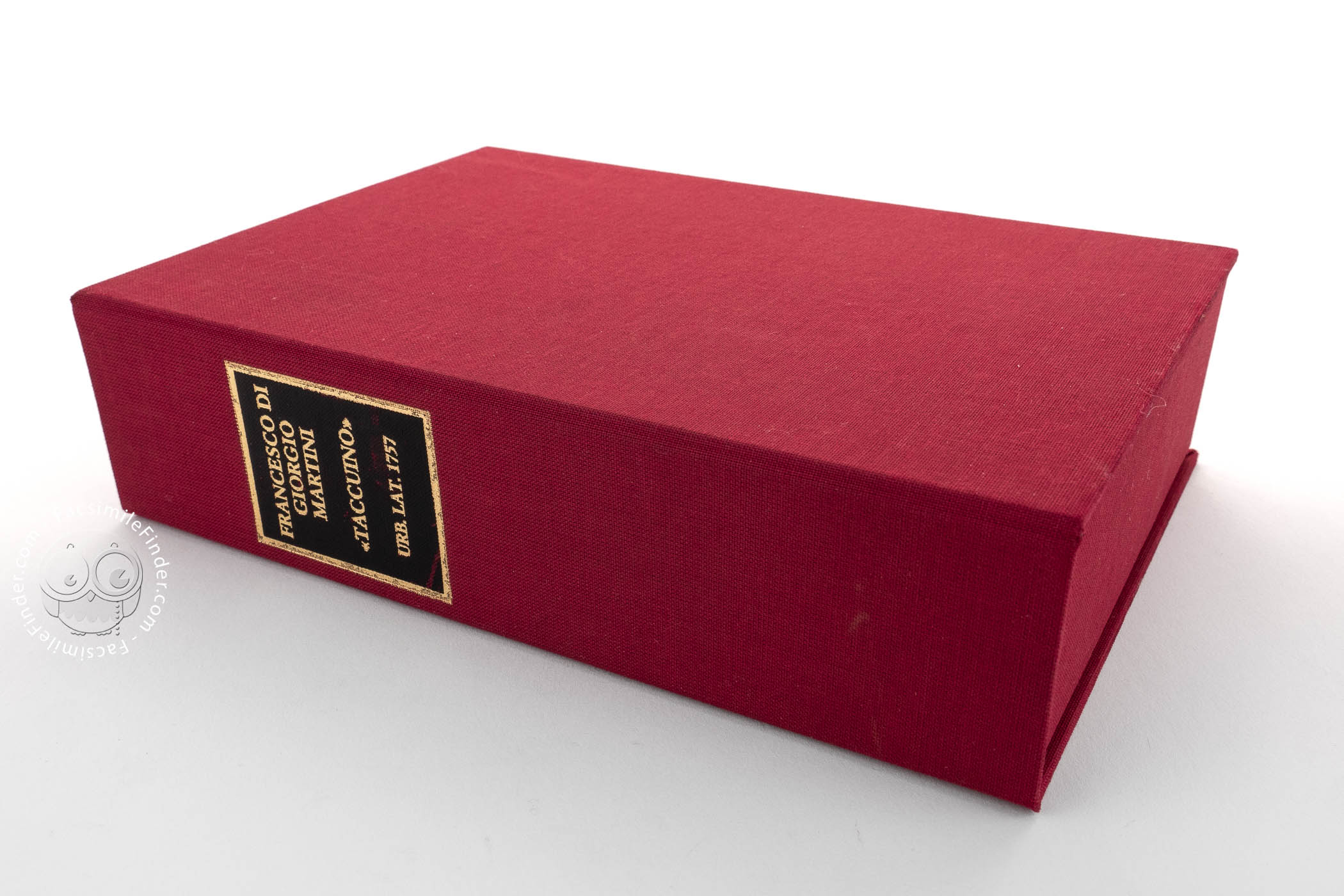
The Sketchbook of Francesco di Giorgio Martini comprises more than 1,200 sketches made by one of the premier Italian architects of his day. The manuscript also includes Italian-language translations of excerpts from ancient authors, as well as medical and alchemical recipes and explanations of the drawings. Francesco started the sketchbook in his native Siena around 1458 and continued to add drawings after he moved to Urbino around 1475. The sketches depict a range of hydraulic devices, construction equipment, and military machinery, as well as buildings, bells, carts, wagons, animals, and human figures.
Francesco spent decades compiling his densely packed sketchbook. He regularly returned to pages with blank space to add more material and sometimes erased his own drawings to make room for new drawings or text.
A Great Sienese Pedigree
The manuscript is sometimes referred to as the Taccuino, because of Francesco's reliance, especially in the first half of the manuscript, on the notebooks of the notary and authority on mechanics Mariano Taccola, known in his own time as the "Archimedes of Siena," but whose fame would ultimately be eclipsed by Francesco's renown as an architect, engineer, painter, and sculptor.
The sixteenth-century Florentine art historian Giorgio Vasari regarded Francesco as one of the most important architects of the fifteenth century. He secured palace and church architectural commissions at the courts of Urbino, Milan, and Naples, and Leonardo da Vinci owned a copy of his Treatise on Architecture.
Lifting and Moving Devices
Francesco included several drawings of hoists and other lifting devices, such as machines for lifting columns (fols. 118v, 121v, 123r, and 123v). There is also a range of carts, some drawn by teams of animals, including one for moving an obelisk (fol. 117r). Some of the drawings are devoted to the details of equipment, such as screw-and-tooth wheel mechanisms (e.g., on fol. 130r).
Drawings of canals, dams, bridges, aqueducts, siphons, basins, wells, and fountains abound, but there are also maritime scenes, such as one of a pair of sailing ships tied together and blown by a wind represented as a head with puffed cheeks (fol. 12r).
Machines of War
Francesco concentrated on offensive weaponry, and the sketchbook includes images of machines for launching projectiles, siege equipment (such as battering rams), and incendiary devices. One image shows an armored man on horseback, wielding a long pole with a bucket of fire at the end. He appears to follow a horse loaded with more firebombs. Below are devices for flinging firebombs (fol. 90v).
Authority of the Ancients
Francesco wrote the text in a legible but unpretentious Gothic Hybrida, and some of the parchment was reused from outdated documents. The manuscript survives incomplete, with about 20% lost. Many of the texts describe the pictured machinery, either translated from the Latin of Taccola's earlier manuscripts or newly composed.
Francesco also included Italian translations of excerpts from ancient authors, including the Roman architect Vitruvius and the Greco-Roman astronomer Ptolemy. He also translated passages from the medieval Latin treatise on incendiary weaponry by the legendary Marcus Graecus.
From the Library of the Dukes of Urbino
Federico da Montefeltro (1422–1482), Count and then Duke of Urbino, employed Francesco to complete ambitious architectural projects. He also built a great library, which may have included the sketchbook. The manuscript was certainly in the library of the dukes of Urbino at the time it was acquired for the Vatican in 1657, when the manuscript was described as a "little book of machines."
We have 1 facsimile edition of the manuscript "Sketchbook of Francesco di Giorgio Martini": Skizzenbuch des Francesco di G. Martini facsimile edition, published by Belser Verlag, 1989
Request Info / Price