


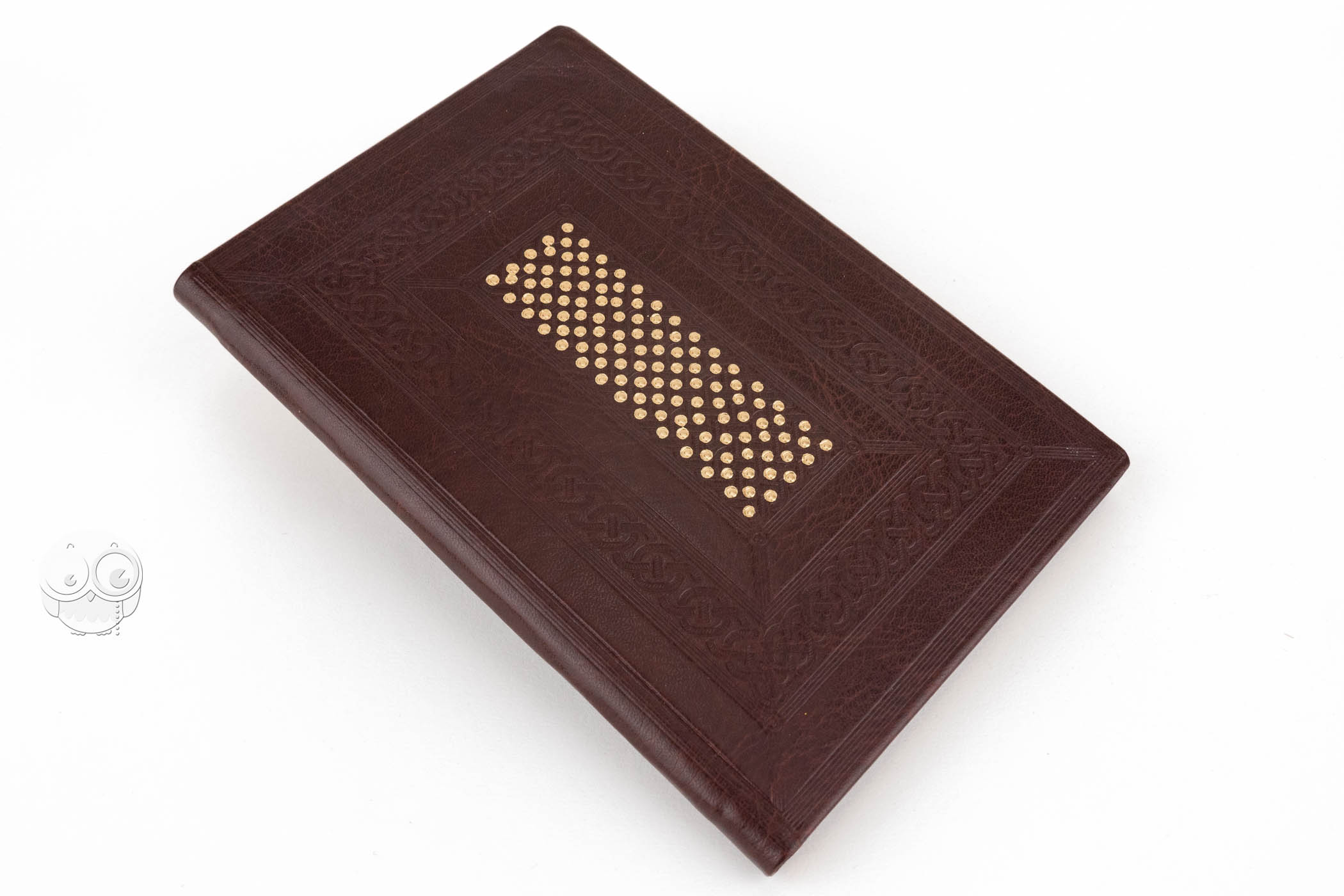
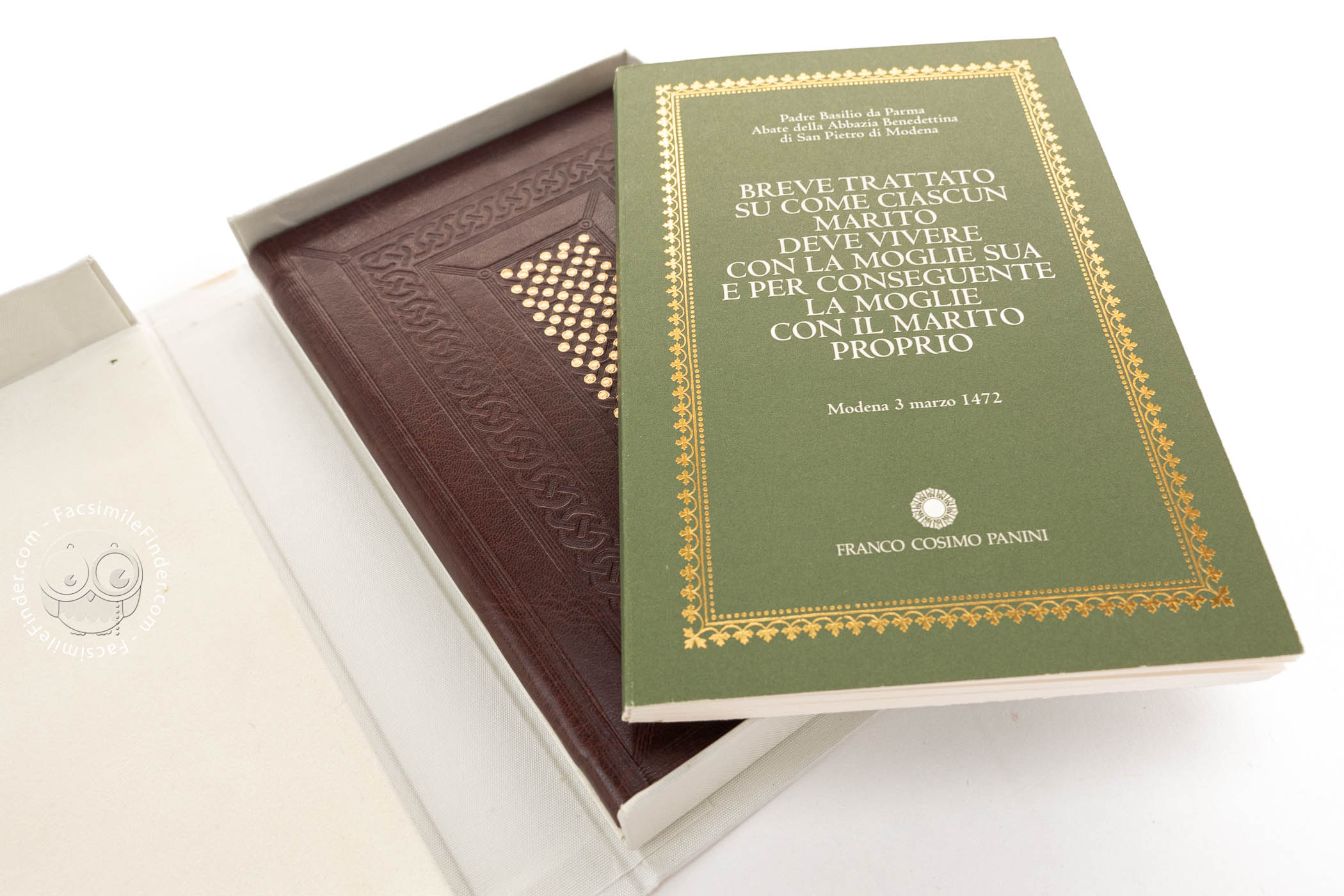
Short Treatise on How Every Husband Should Live with His Wife, dated 3 March 1472, preserves a small but striking witness to late-medieval Italian moral writing: a Breve trattato on the duties of marriage, composed within the Benedictine Abbey of San Pietro in Modena under Abbot Basilio da Parma. Conceived as a gift for a young couple—addressed to the “soave e nobilissima… giovane virtuosa” Polissena and her “nobilissimo” spouse—the manuscript belongs to the courtly tradition of nuptial counsel: a text meant to accompany the threshold between ceremony and lived domestic life.
Renaissance Marriage Ethics in 15th-Century Modena
The treatise speaks from a world in which marriage was framed as a moral economy: affection and governance, harmony and hierarchy. Basilio supports his counsel with citations drawn from Scripture, Patristic authorities, and moral exempla attributed to Valerius Maximus, aligning household discipline with learned tradition.
Humanistic Minuscule Script and Renaissance Illumination
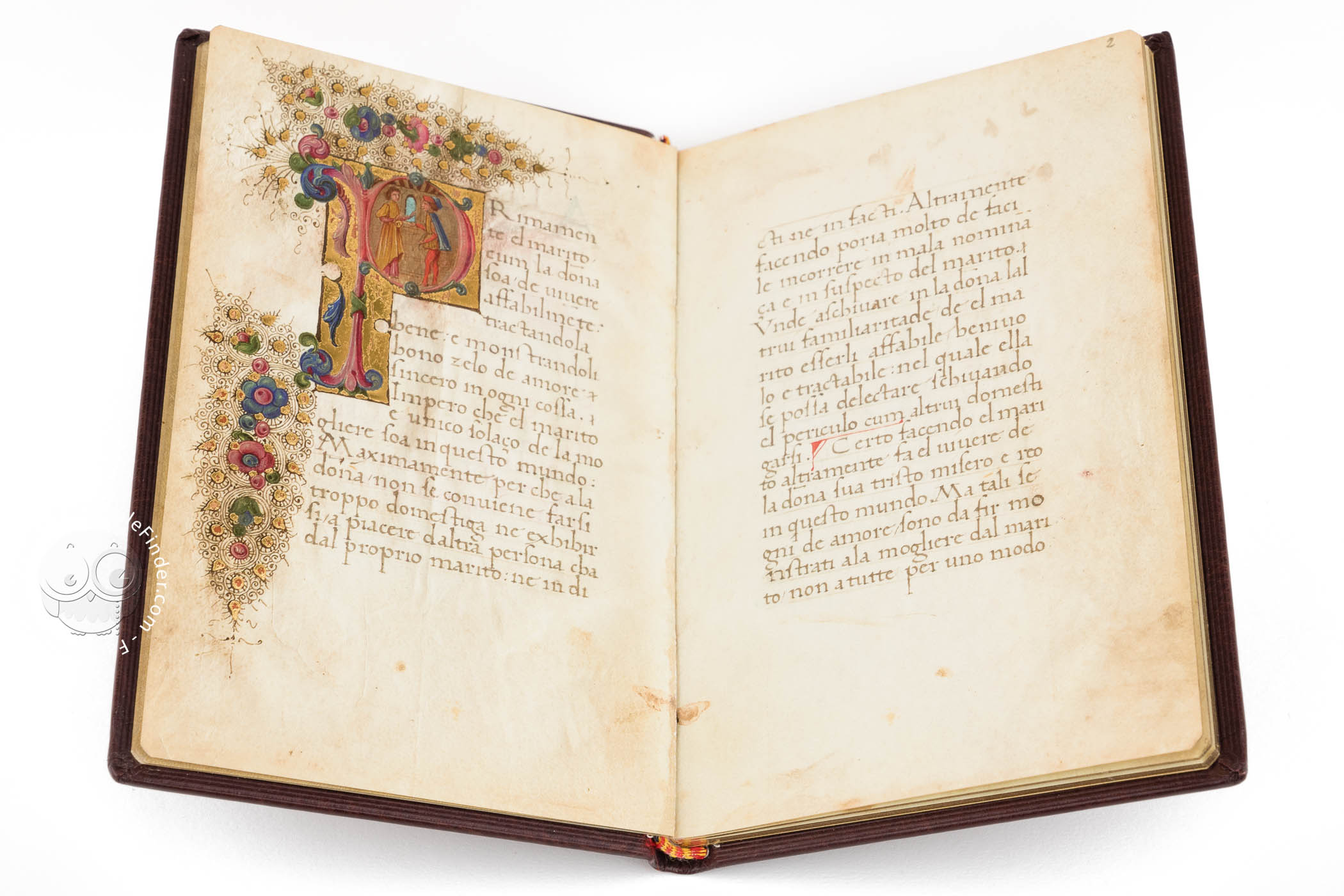
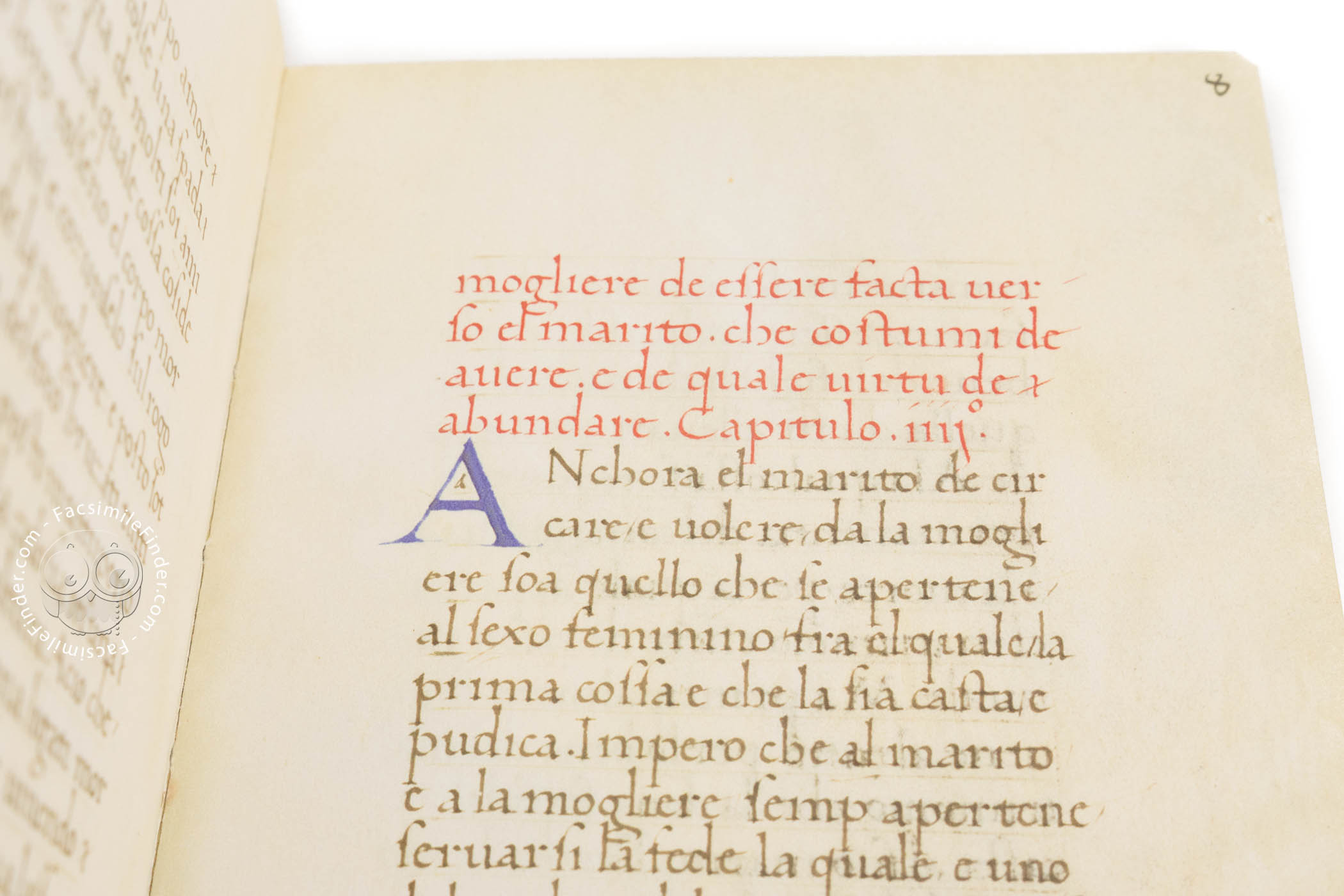
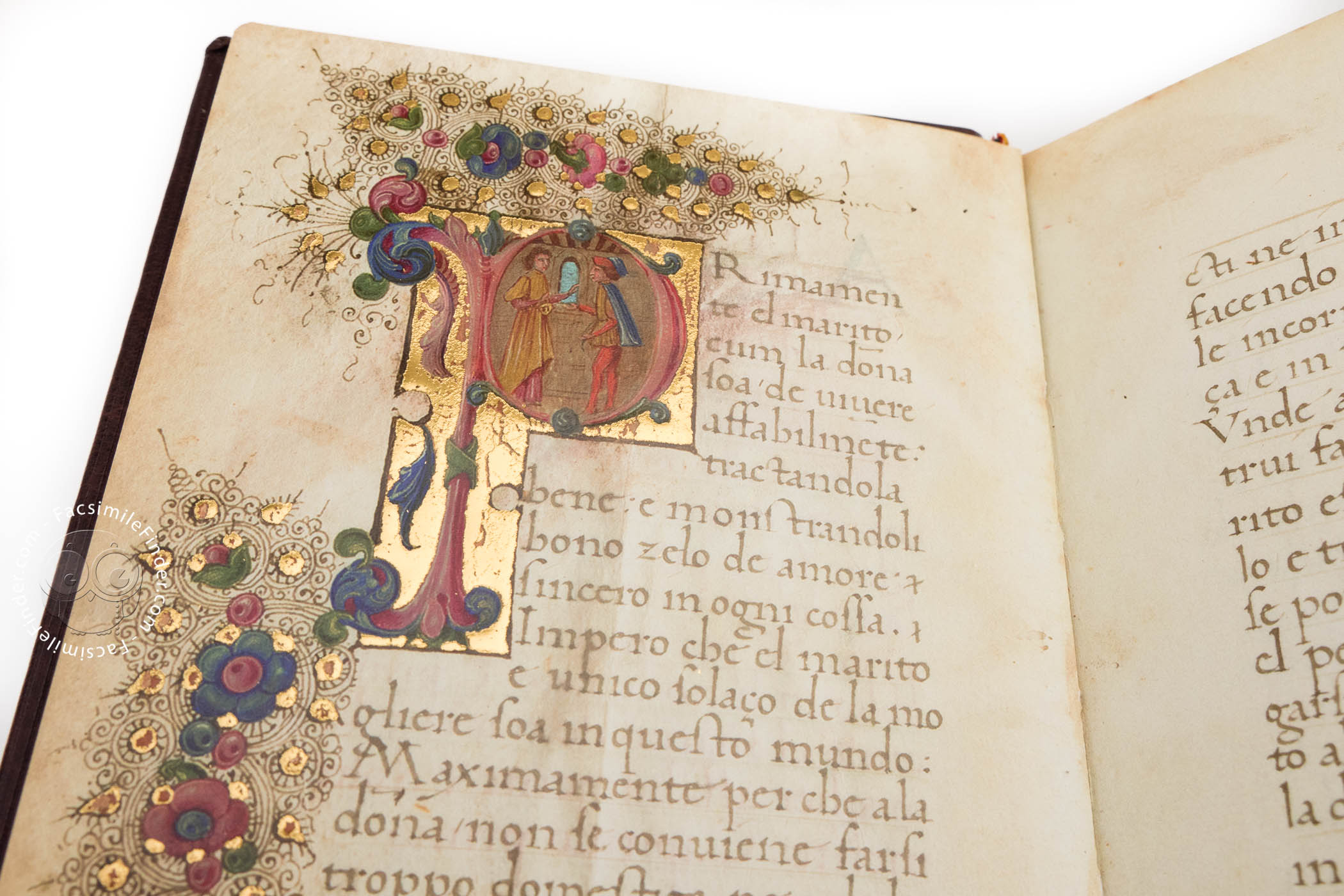
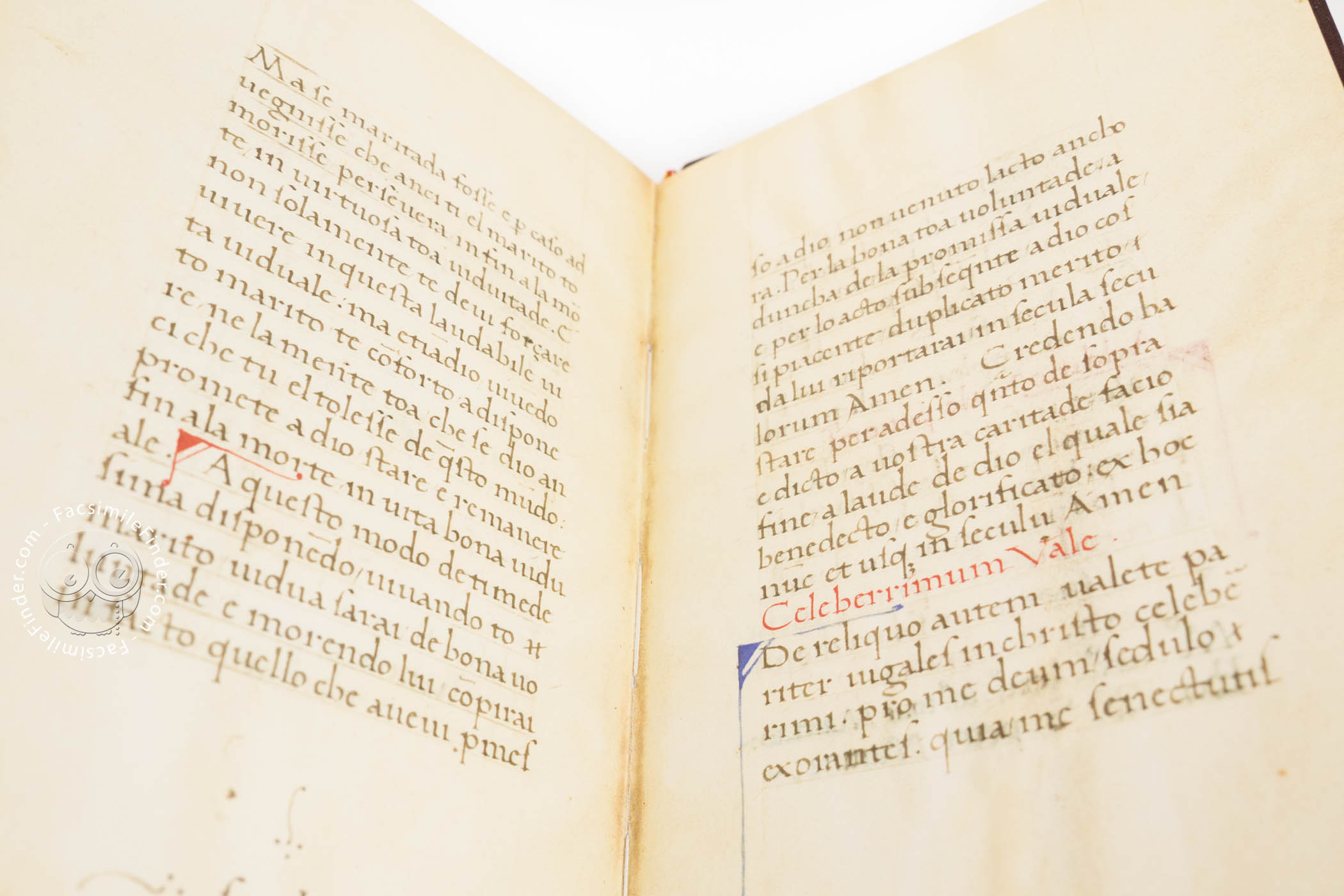
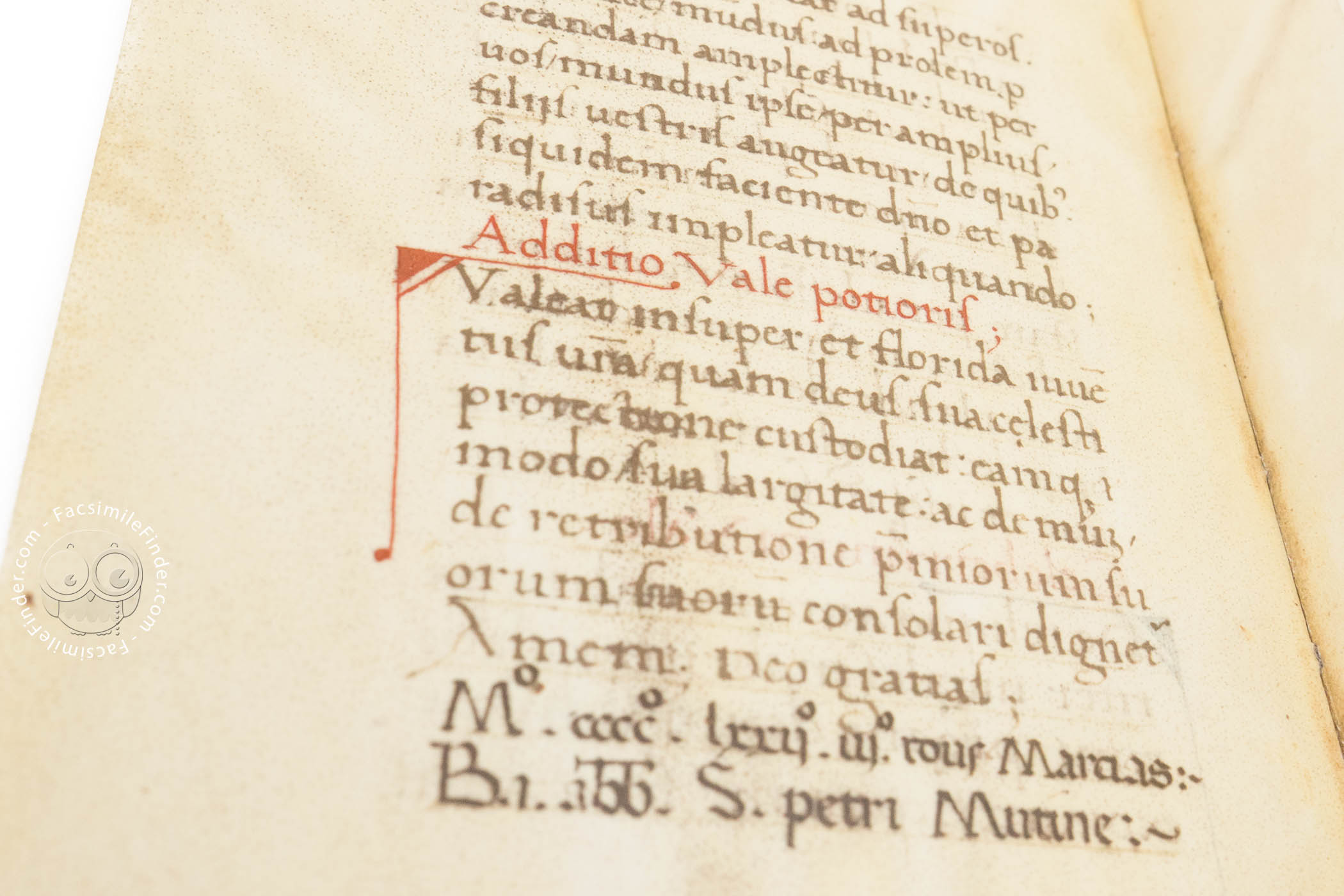
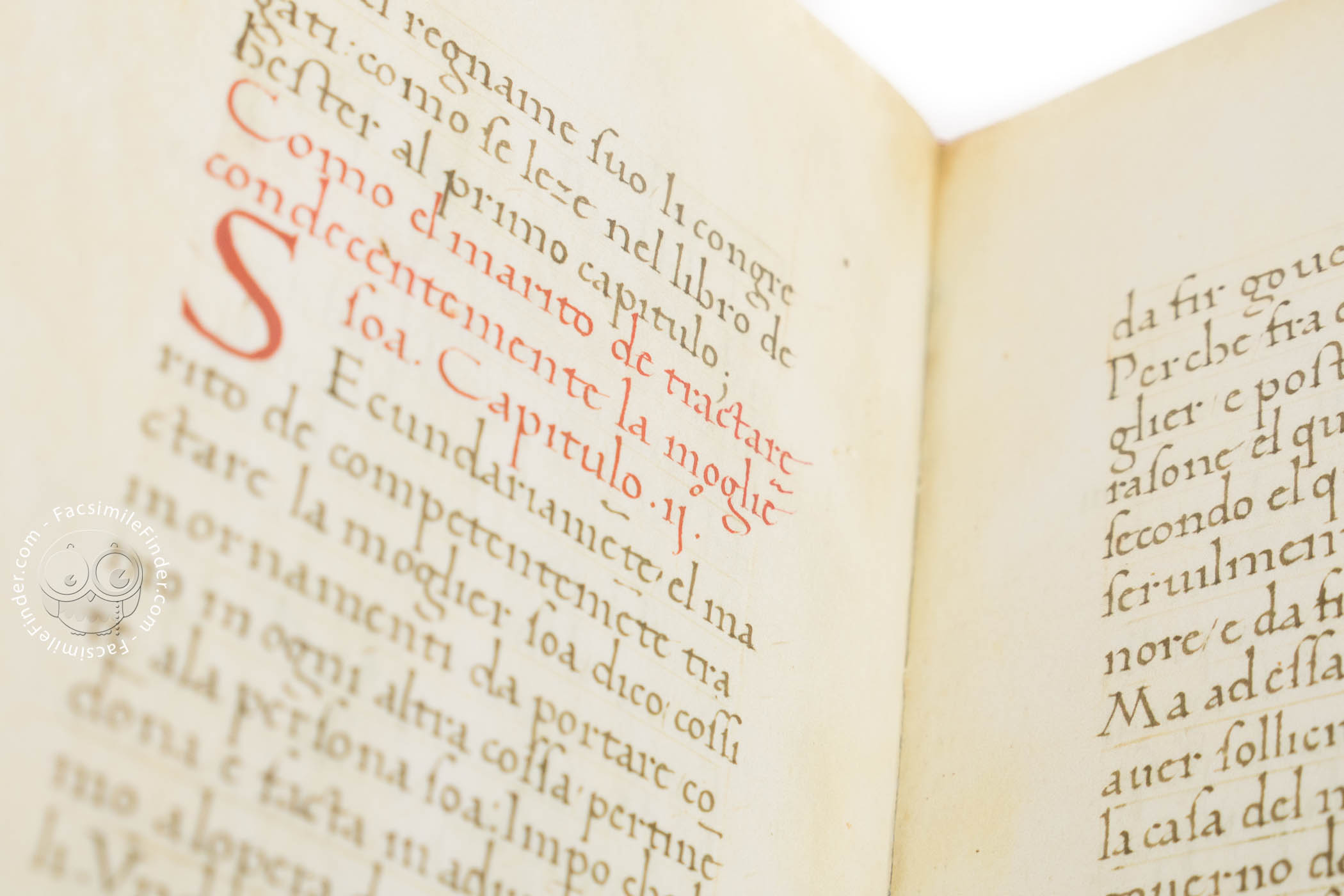
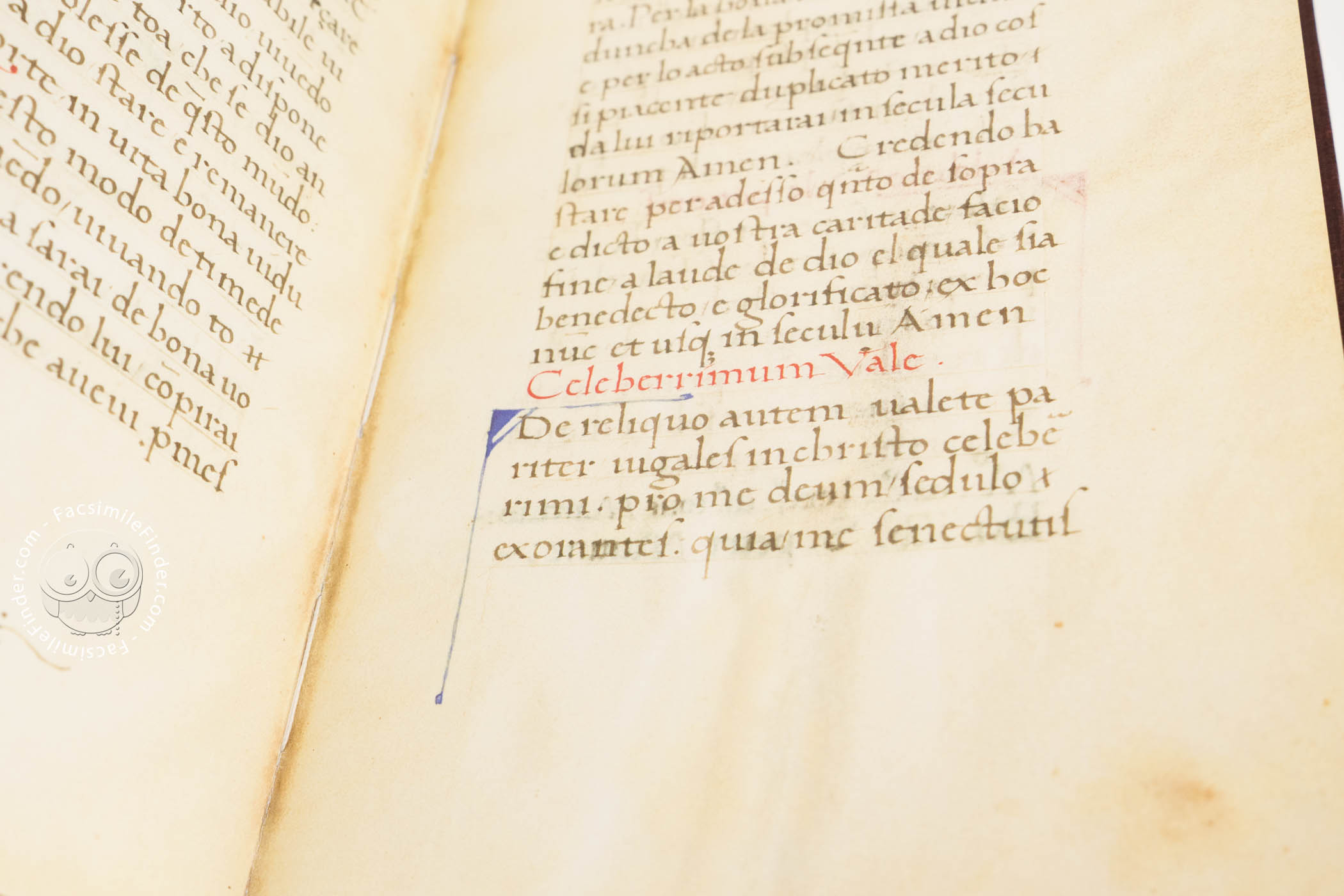
Written on parchment in an elegant humanistic minuscule, the text is organised into seven short chapters, copied in brown and red inks with carefully articulated initials and punctuation in red and blue. At the opening, an exceptional historiated initial—gilded and richly coloured—shows a couple facing one another, hands extended in the familiar iconography of betrothal, a miniature that echoes the refined visual language of the Ferrarese Renaissance book arts.
1472 Italian Marriage Advice Treatise for Husbands and Wives
Despite its stated address to both spouses, the treatise’s moral weight falls heavily on the wife: urging chastity, controlled speech, modest behaviour, and regulated charity, while imagining the husband as both companion and corrector. Read today, it illuminates the gendered ideals—and anxieties—through which late 15th century society sought to script the private life of marriage.
Provenance and Survival
After nearly five and a half centuries of obscurity, the codex resurfaces as a prestigious unicum, remarkably preserved intact and in its original binding. Its ownership note, “Ex Monasterio Sancti Petri Mutine,” anchors the book to San Pietro in Modena and, more importantly, points to an organised monastic scriptorium, where scribes and illuminators worked under the emblematic rhythm of Ora et labora and in dialogue with a notable abbey library.
In this light, the manuscript reads not only as counsel for a couple, but as a self-portrait of a community that could translate learned devotion into an object made for the thresholds of private life.
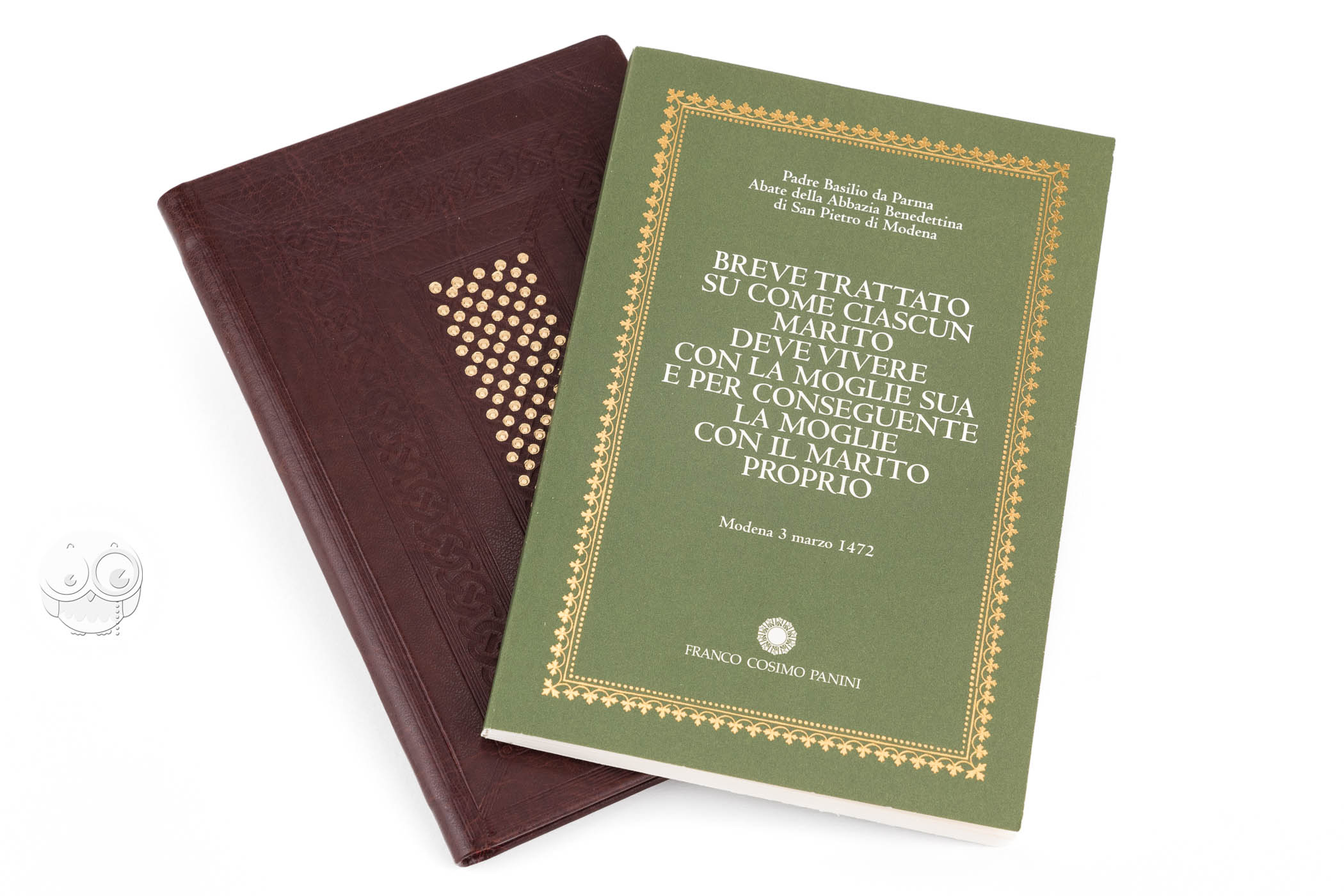
We have 1 facsimile edition of the manuscript "Short Treatise on How Every Husband Should Live with His Wife": Breve Trattato su Come Ciascun Marito Deve Vivere con la Moglie Sua e per Conseguente la Moglie con il Marito Proprio facsimile edition, published by Franco Cosimo Panini Editore, 2006
Request Info / Price