
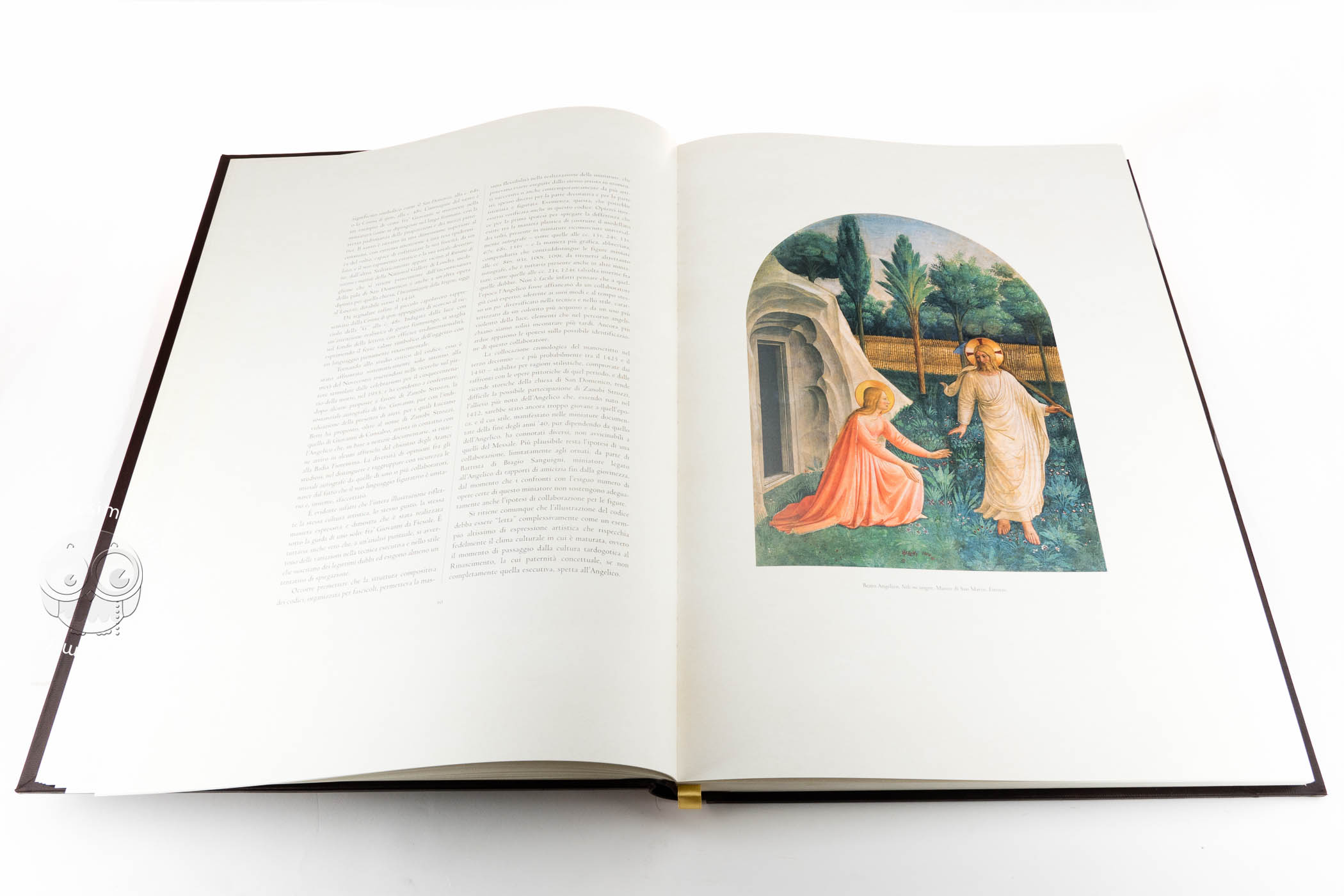
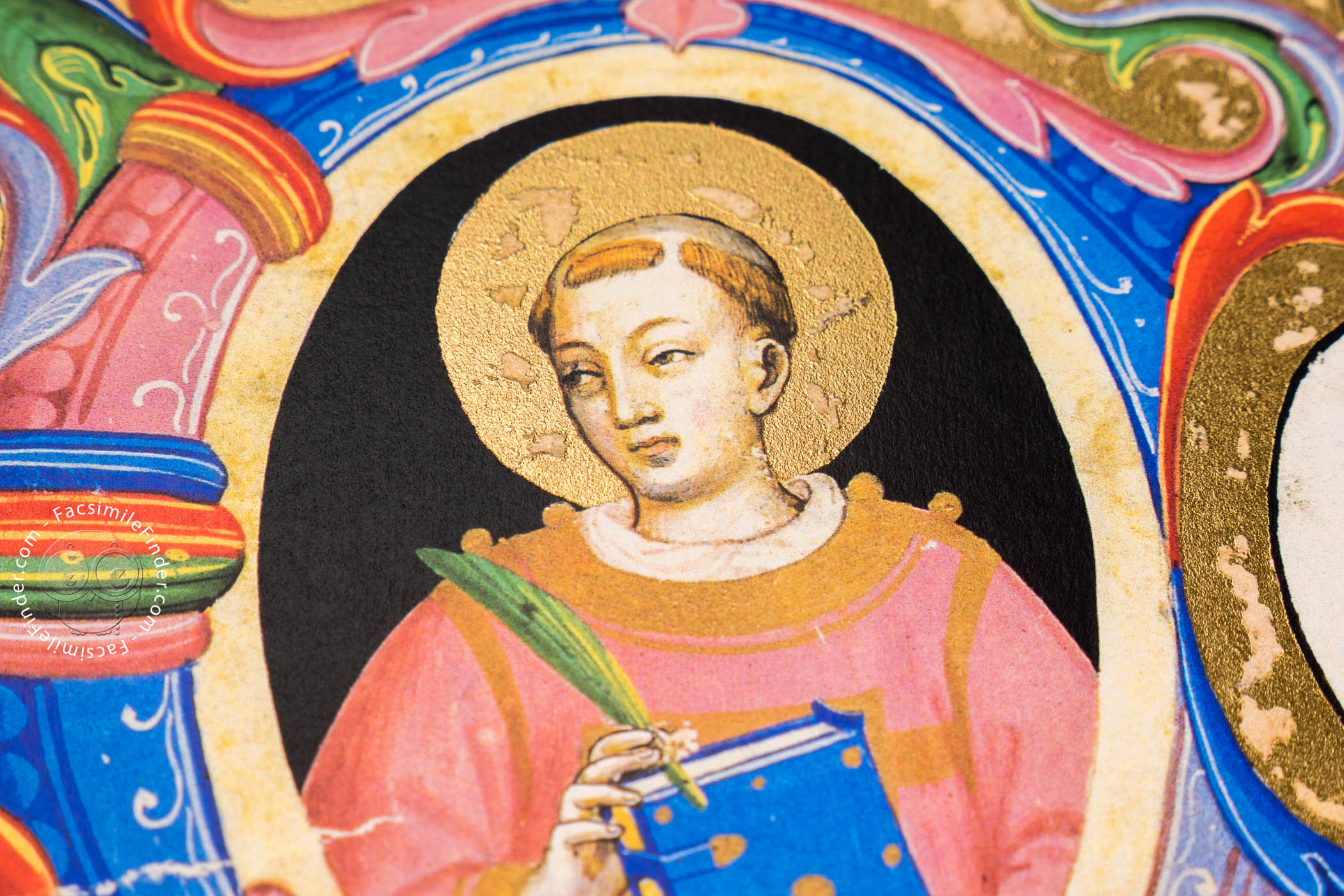

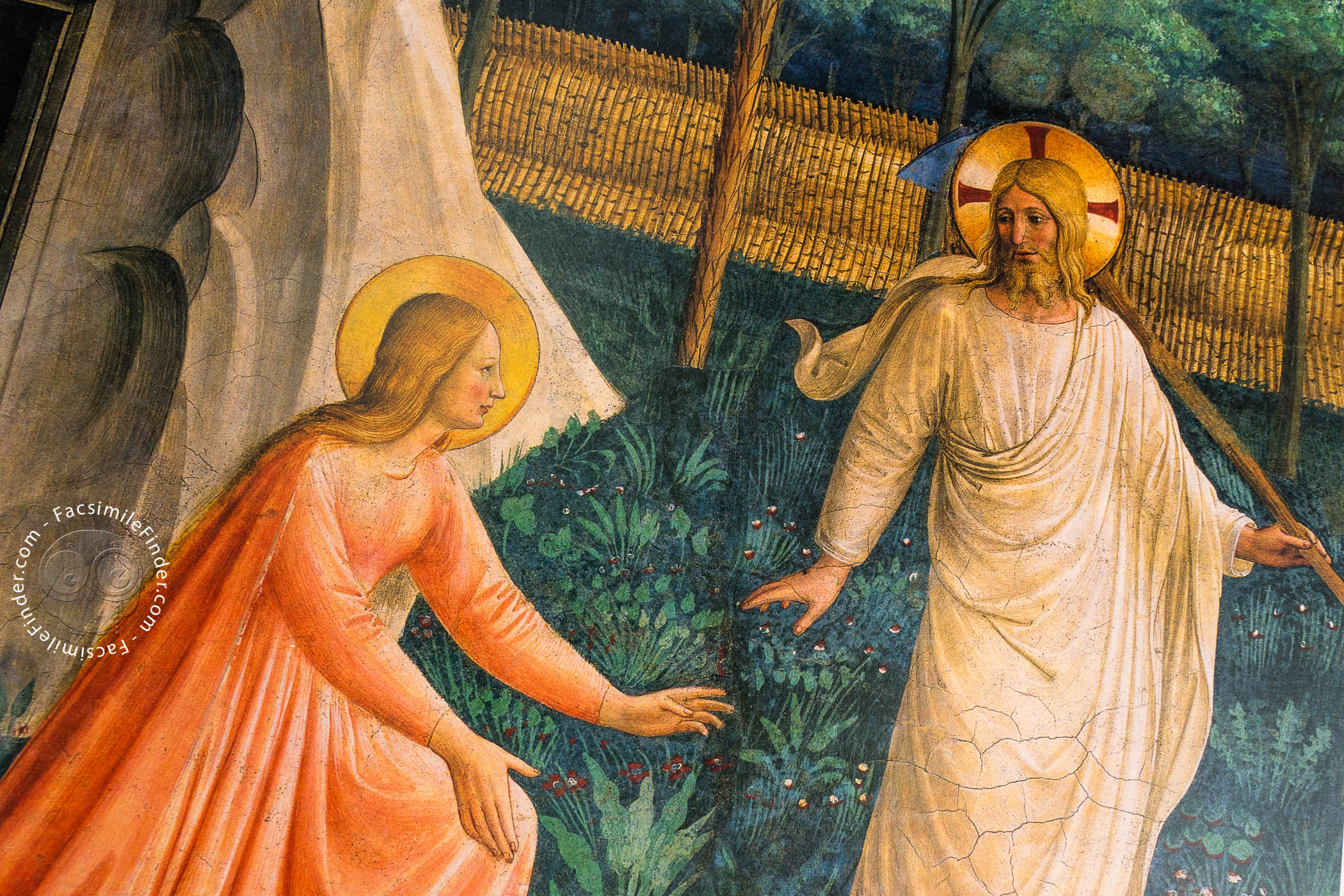
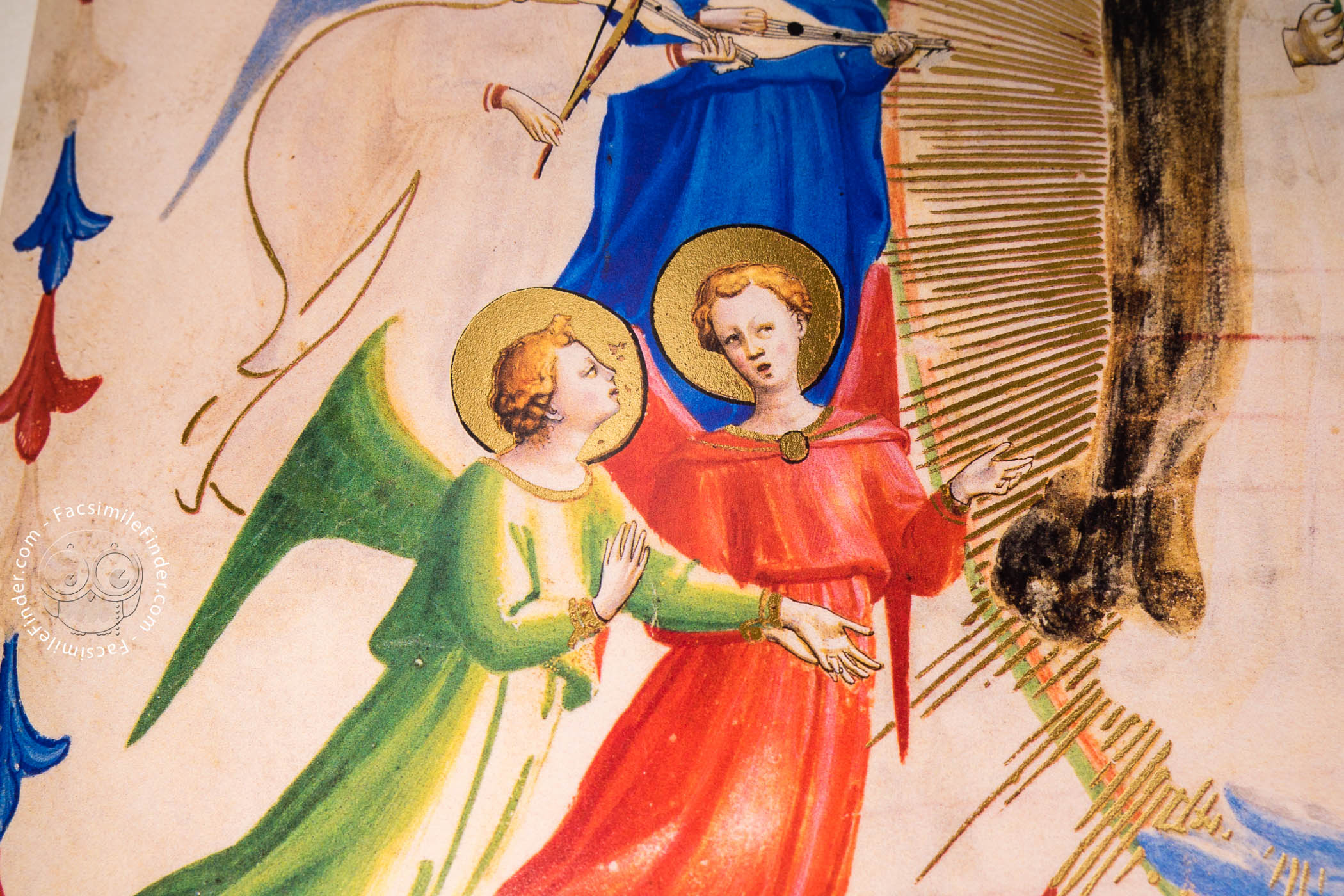
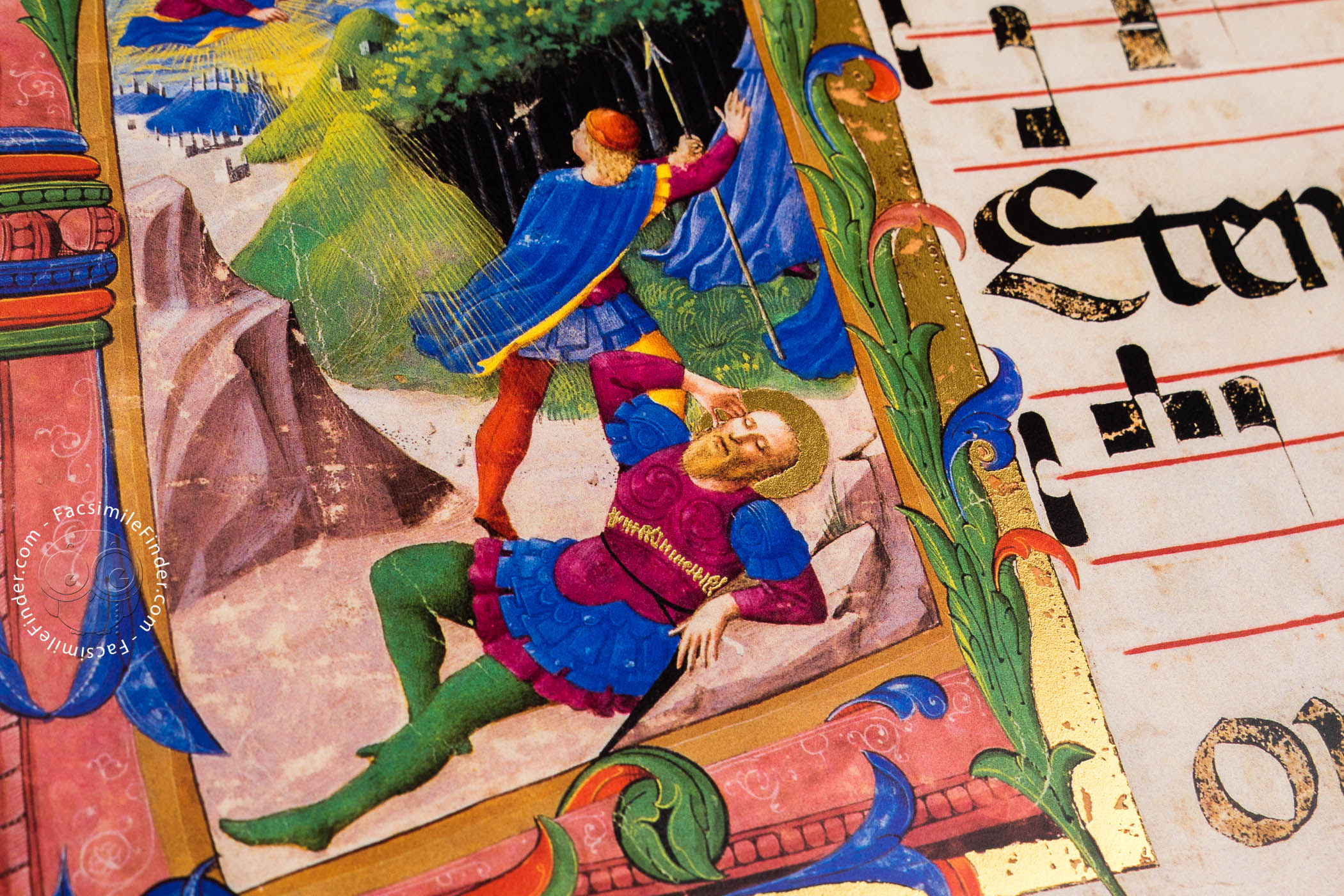
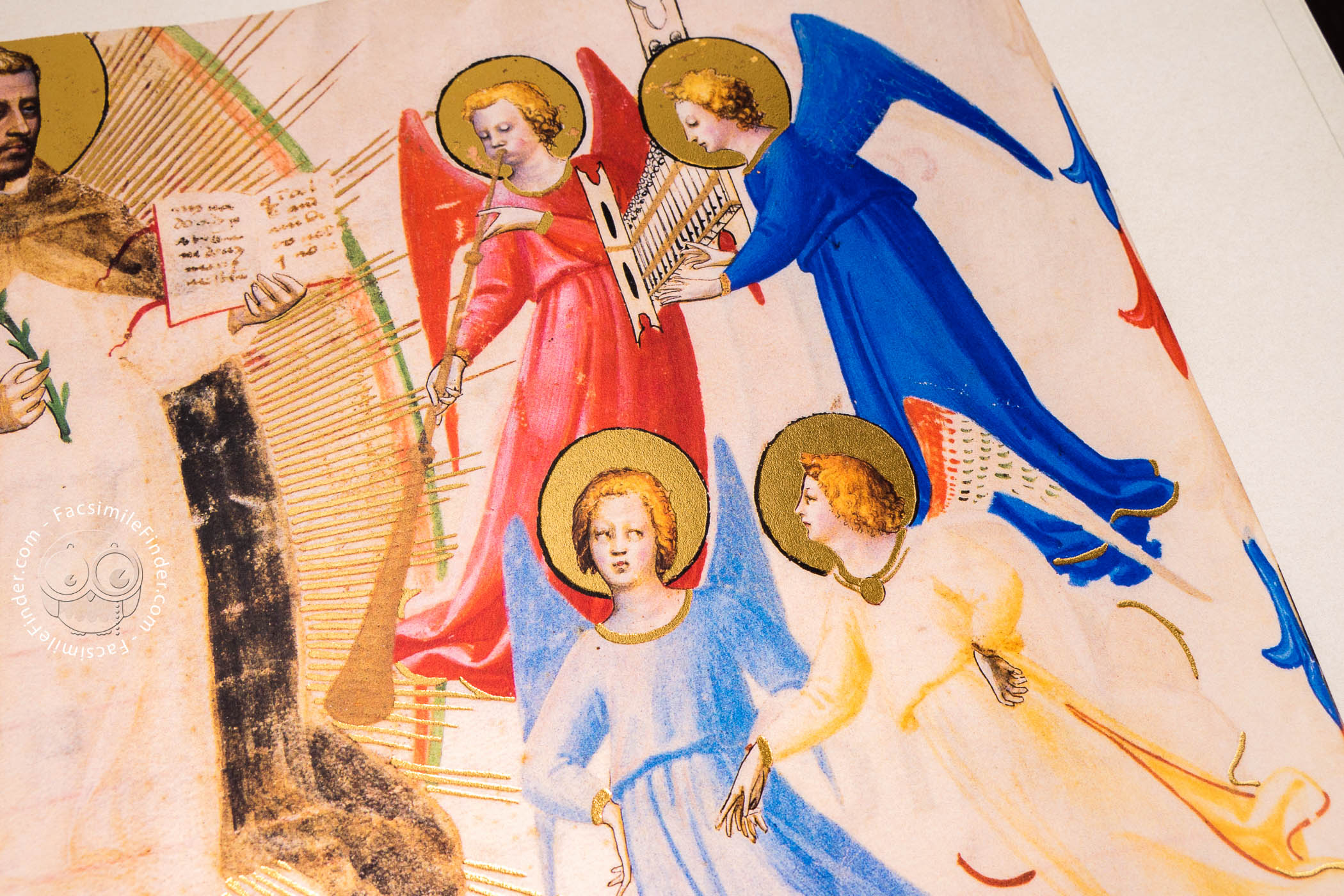
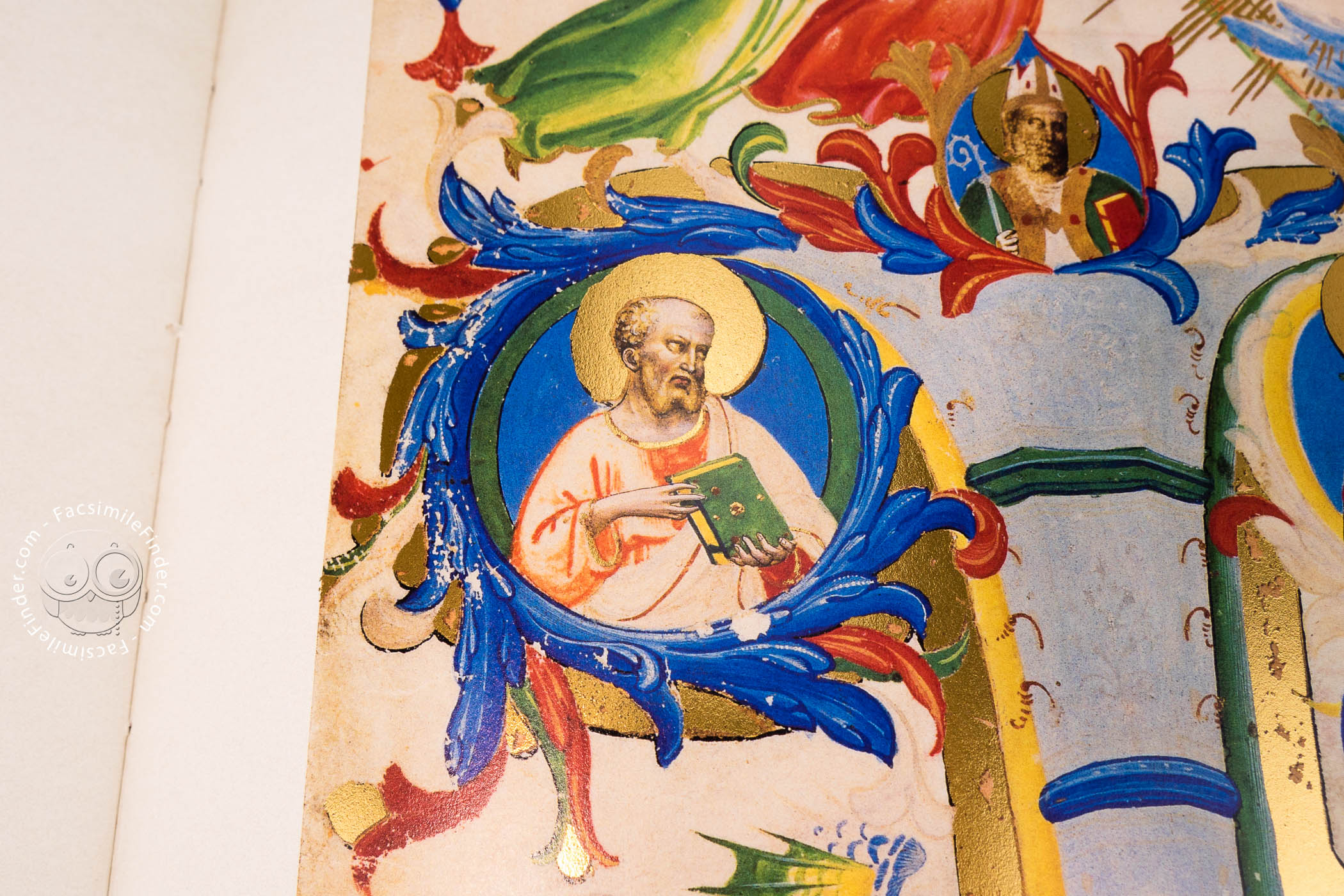

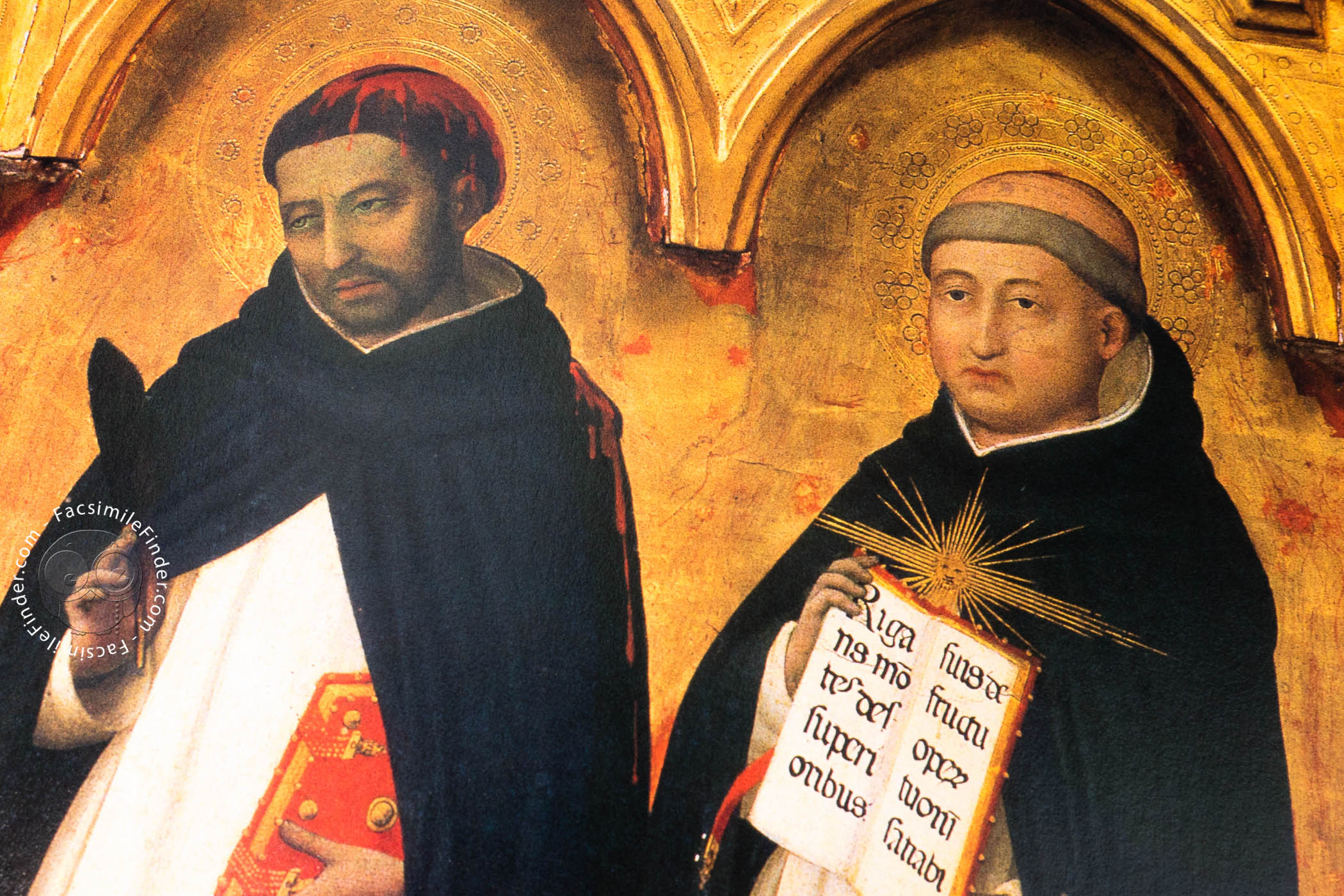
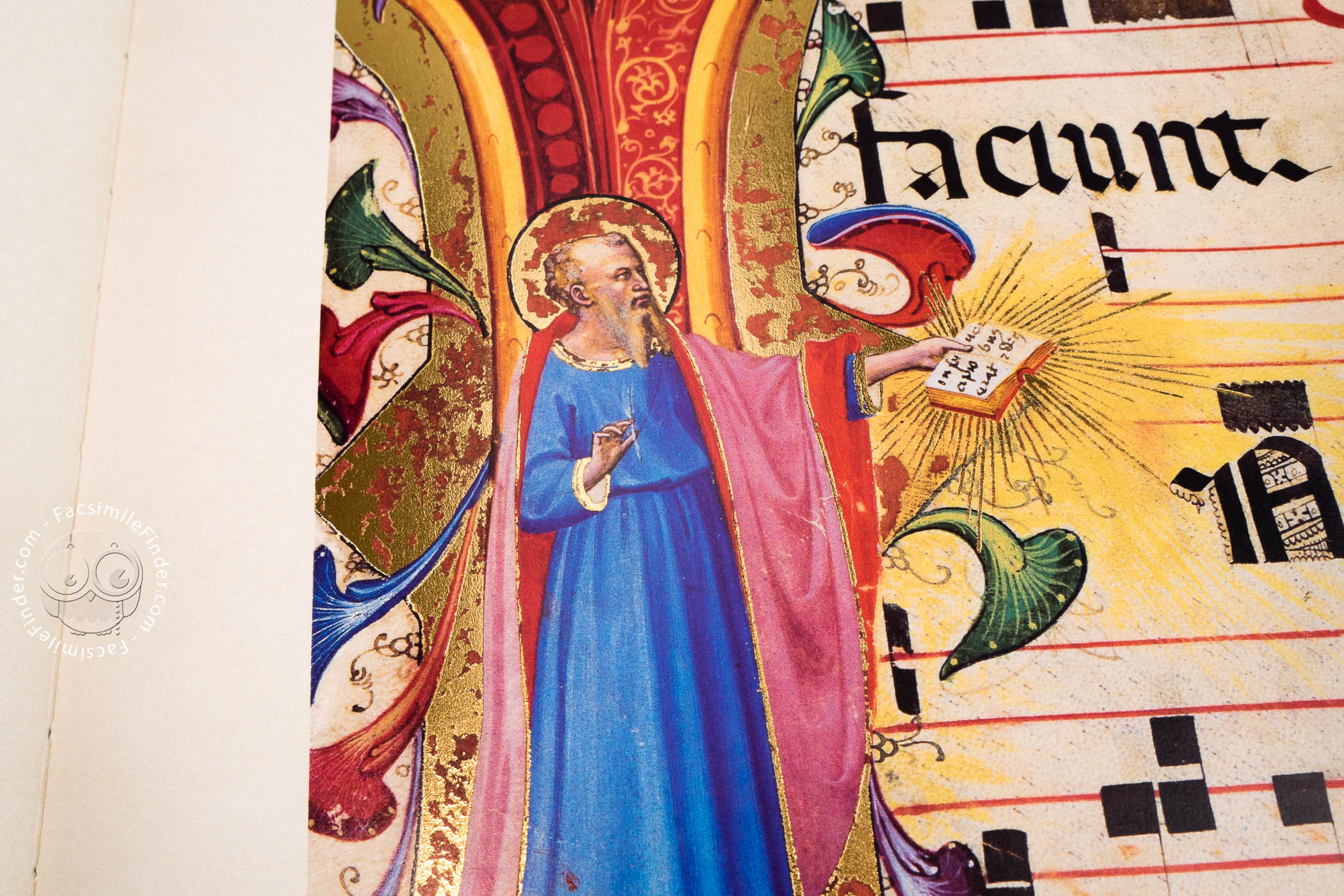
The San Domenico Gradual—also known as the Blessed Angelico's Missal—is a Christian choir book illuminated by Fra Angelico, one of the most famous painters of fifteenth-century Italy, and his assistants. It was created in the scriptorium of the monastery of San Domenico in Fiesole in the early 1430s for use at that institution. Its painted decoration comprises, as is customary in choir books, historiated initials—enlarged initials containing an identifiable scene or person(s)—most of which introduce the chants for a given feast day. The San Domenico Gradual boasts thirty large historiated initials and nearly 1,000 decorated initials.
The manuscript is devoted entirely to the chants of saints' feasts, presented in an annual cycle commencing with the feast of Saint Andrew (November 30) and continuing to All Souls Day (November 2), followed by the common of saints, which contains chants for different categories of saints.
The Blessed Angelico
The painter now known as Fra Angelico (or Beato Angelico) was baptized Guido di Piero and took the name Giovanni when he became a Dominican friar as a young man. Remembered today as a panel and fresco painter with important papal commissions, he may have originally trained as an illuminator. The San Domenico Gradual is the most important representative of his early work as an illuminator, and it displays the bright palette and narrative detail found in his panel paintings.
A Gallery of Saints
Because the manuscript contains only saints' feasts, the historiated initials mostly picture events in the lives of saints. For example, the large painted L that marks the chants for the Conversion of Saint Paul shows the commemorated event: a half-length figure of Christ emanating brilliant golden light in the sky addresses the prostrate Paul, as the saint's companions flee (fol. 21r).
The subject of the initial for the feast of Saint Andrew is inspired by the text it introduces: "The Lord walking by the sea of Galilee saw two brothers, Peter and Andrew." The large letter D contains the scene of the Calling of Saints Peter and Andrew (fol. 9r).
Focus on Saint Dominic
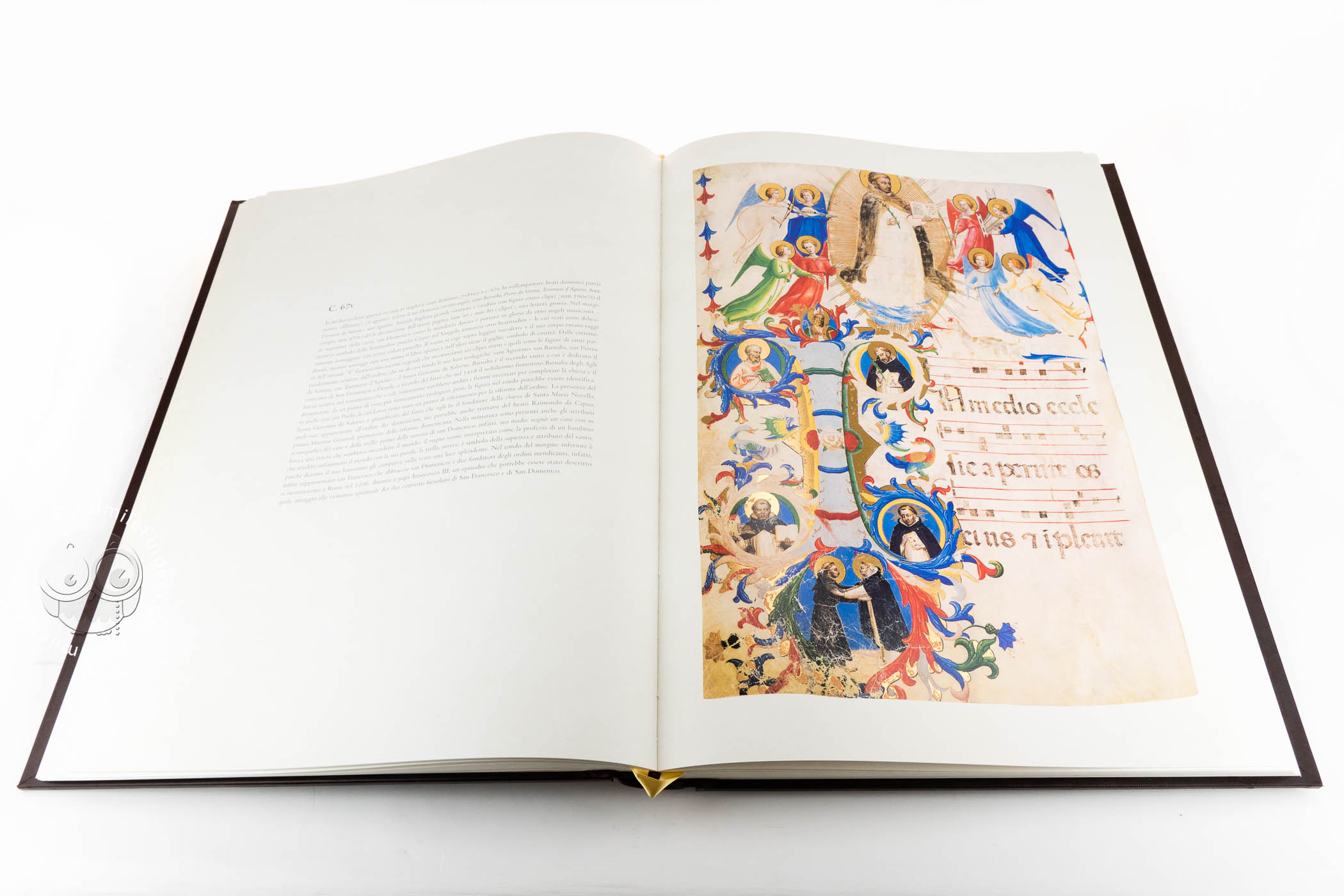
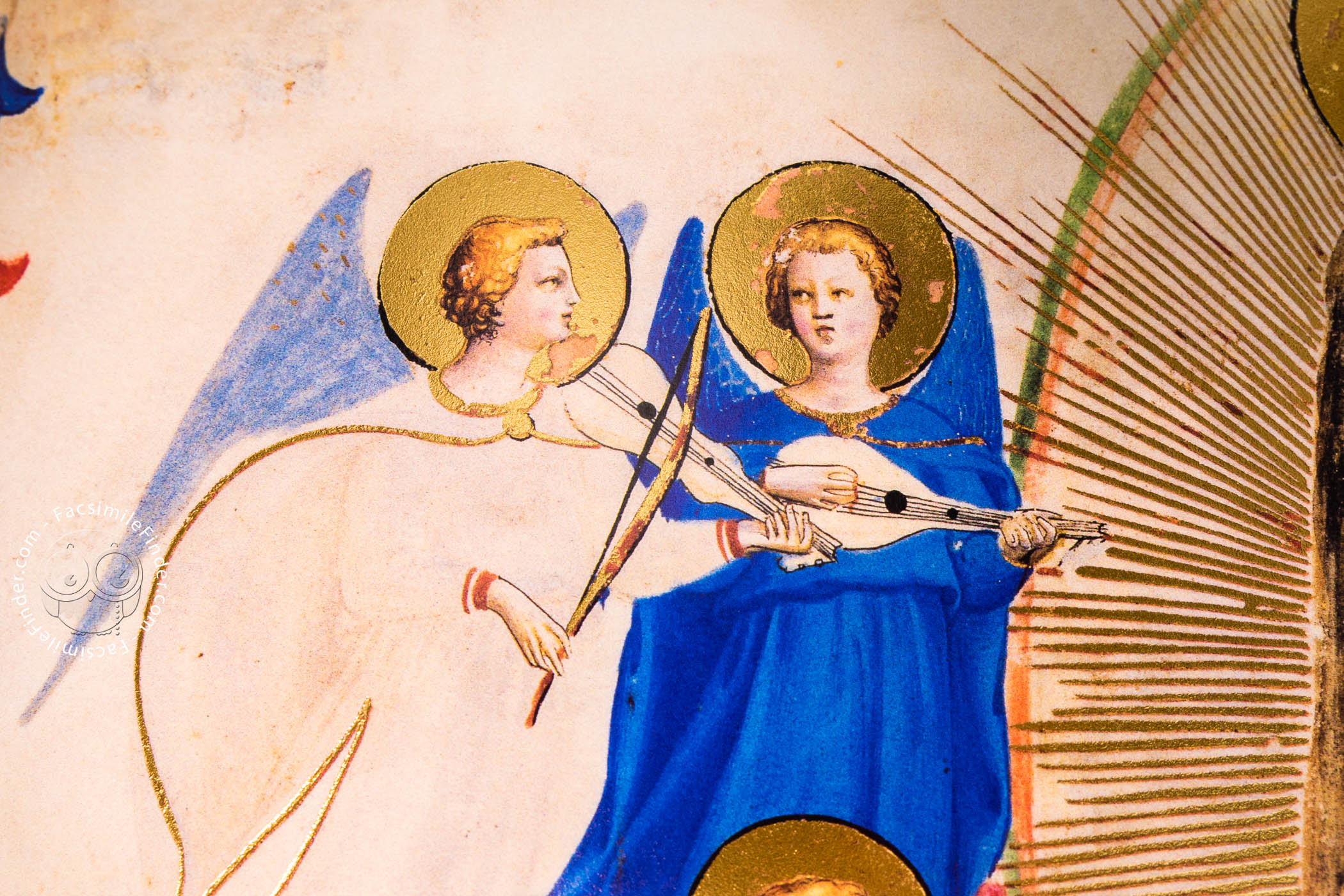
The feast of Saint Dominic boasts two painted initials, the second of which is much rubbed, probably because it was kissed and otherwise admired by generations of friars (fol. 68v). The first is an initial I topped by an image of Saint Dominic in Glory: the standing saint is shown in an almond-shaped aureole flanked by music-making angels (fol. 67v).
White Vine-Stem Initials
The text is written in a stately and spacious Gothic Rotunda, the preferred script for liturgical books made south of the Alps. The melodies are written in square notation on a four-line staff, the noteheads sometimes (as on fol. 13v) elongated with serrated edges. Some of the decorated initials are of the white vine-stem variety that would come to be popular in the embellishment of Italian humanistic manuscripts.
We have 1 facsimile edition of the manuscript "San Domenico Gradual": Messale del Beato Angelico facsimile edition, published by Vallecchi, 2005
Request Info / Price