
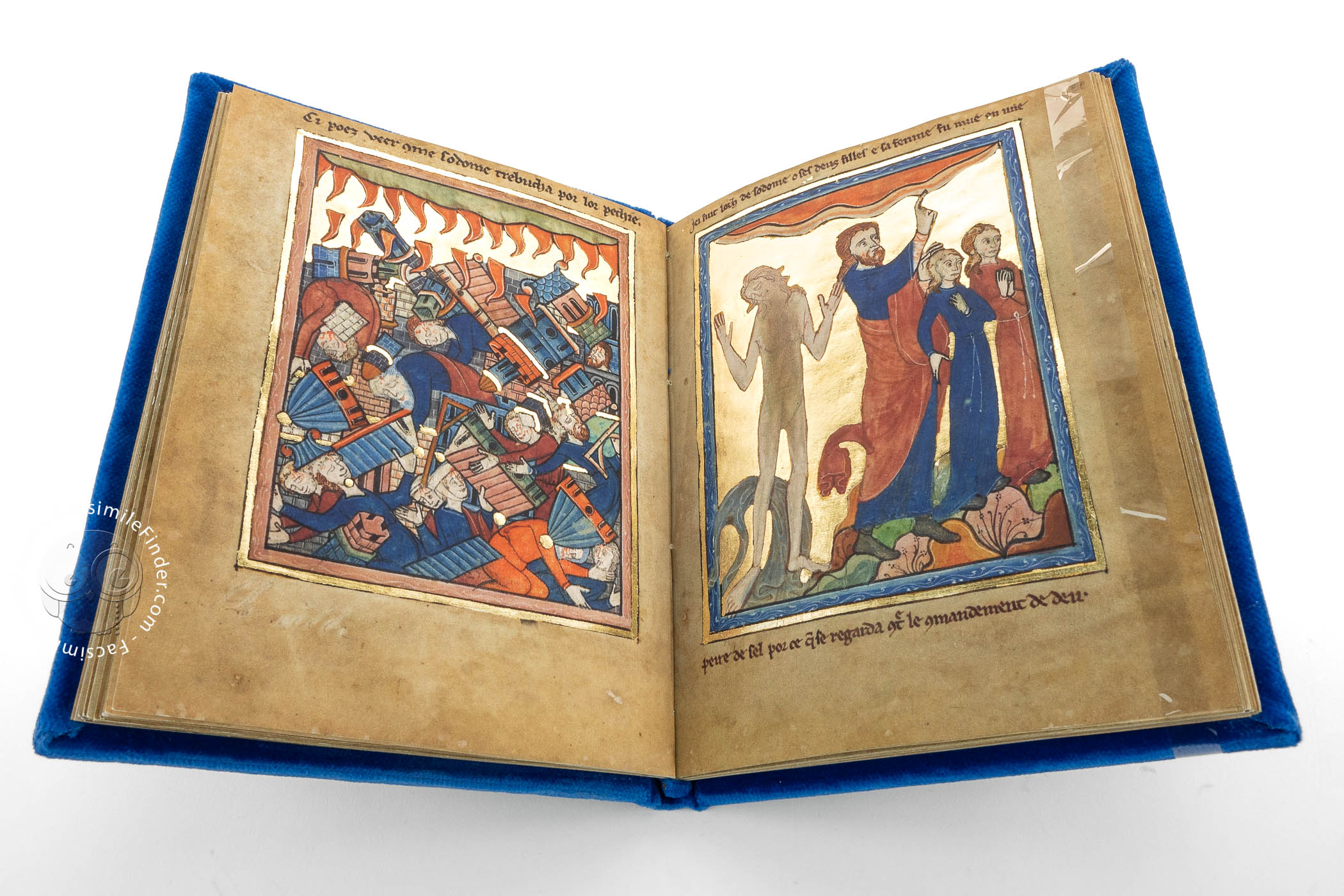
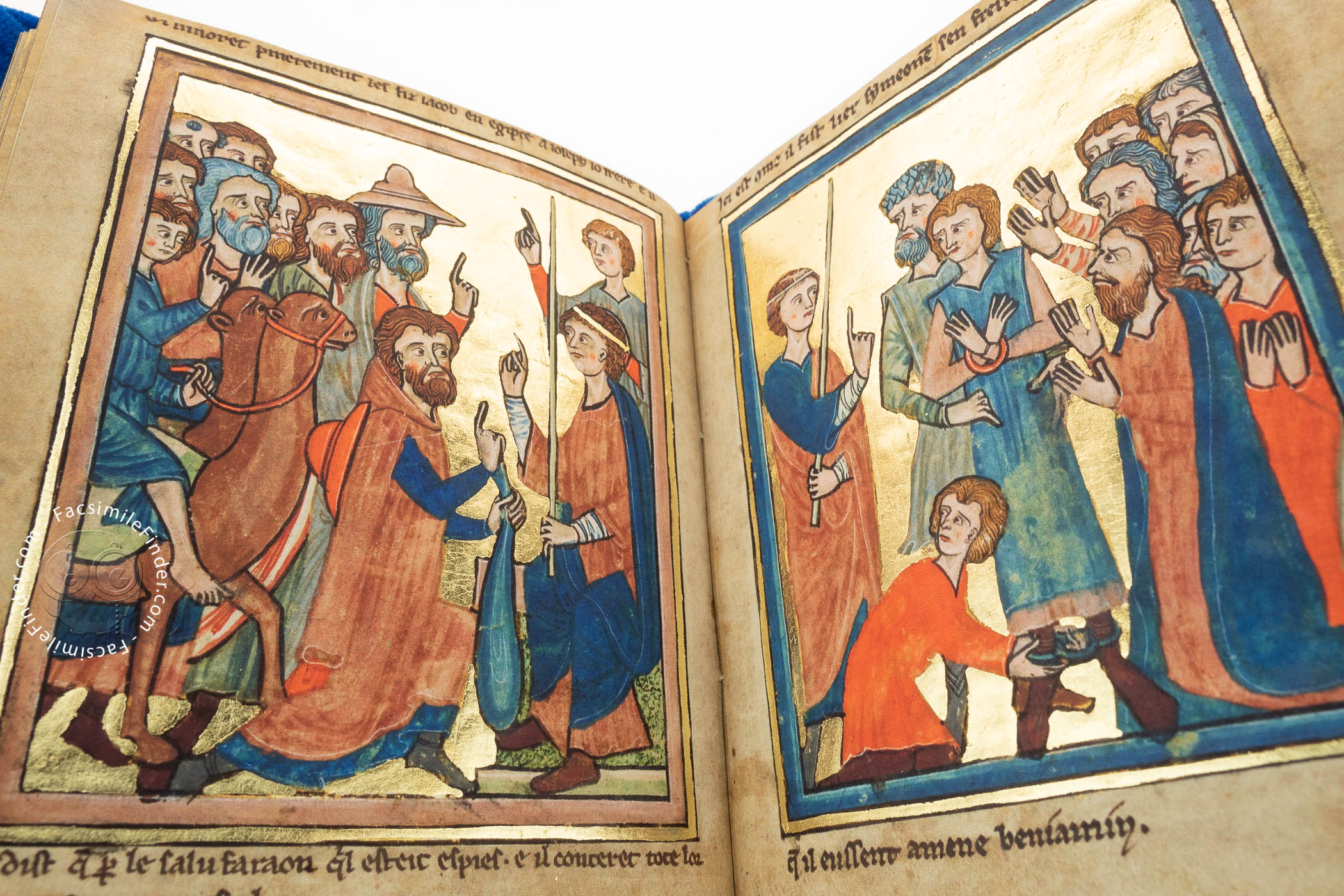
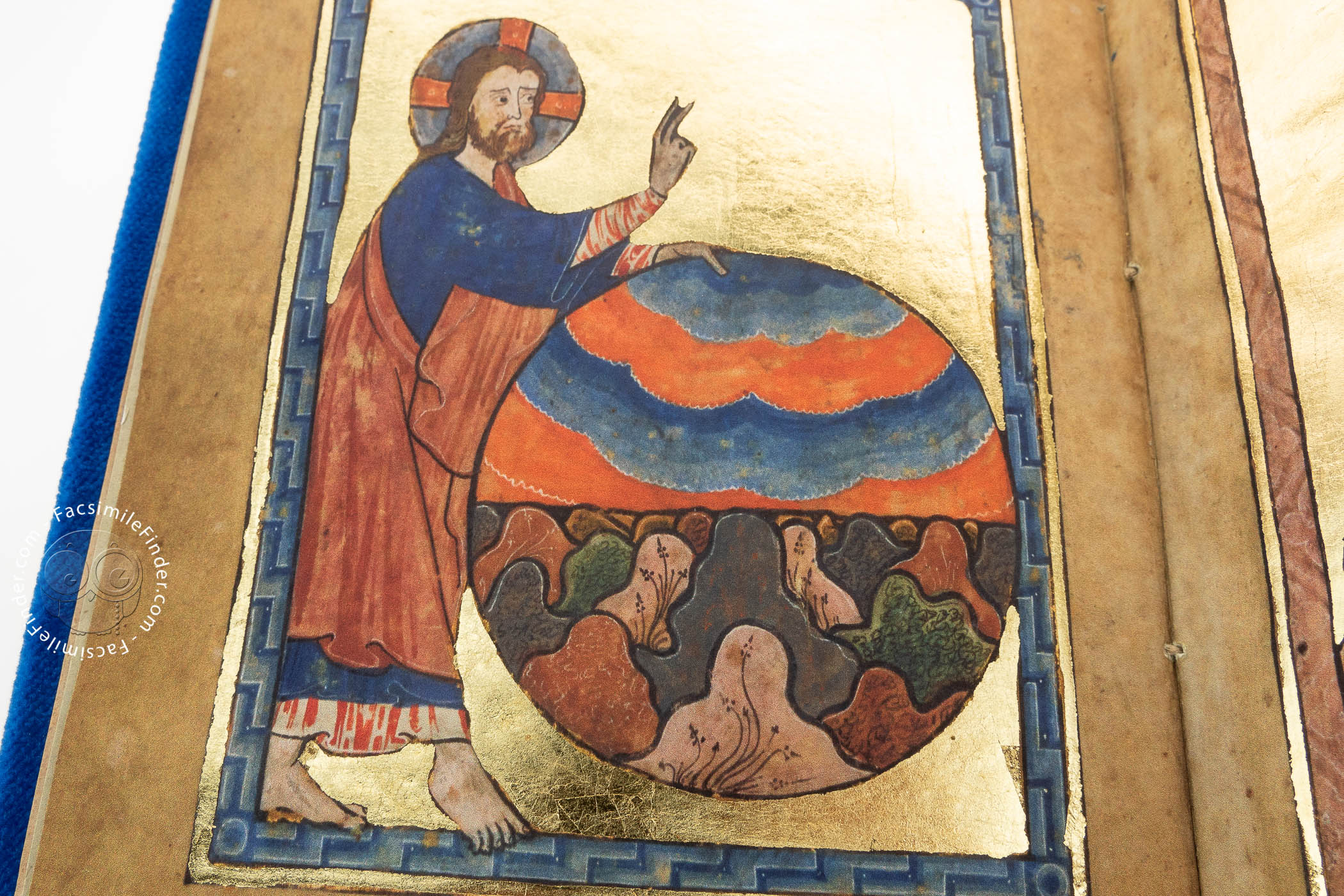
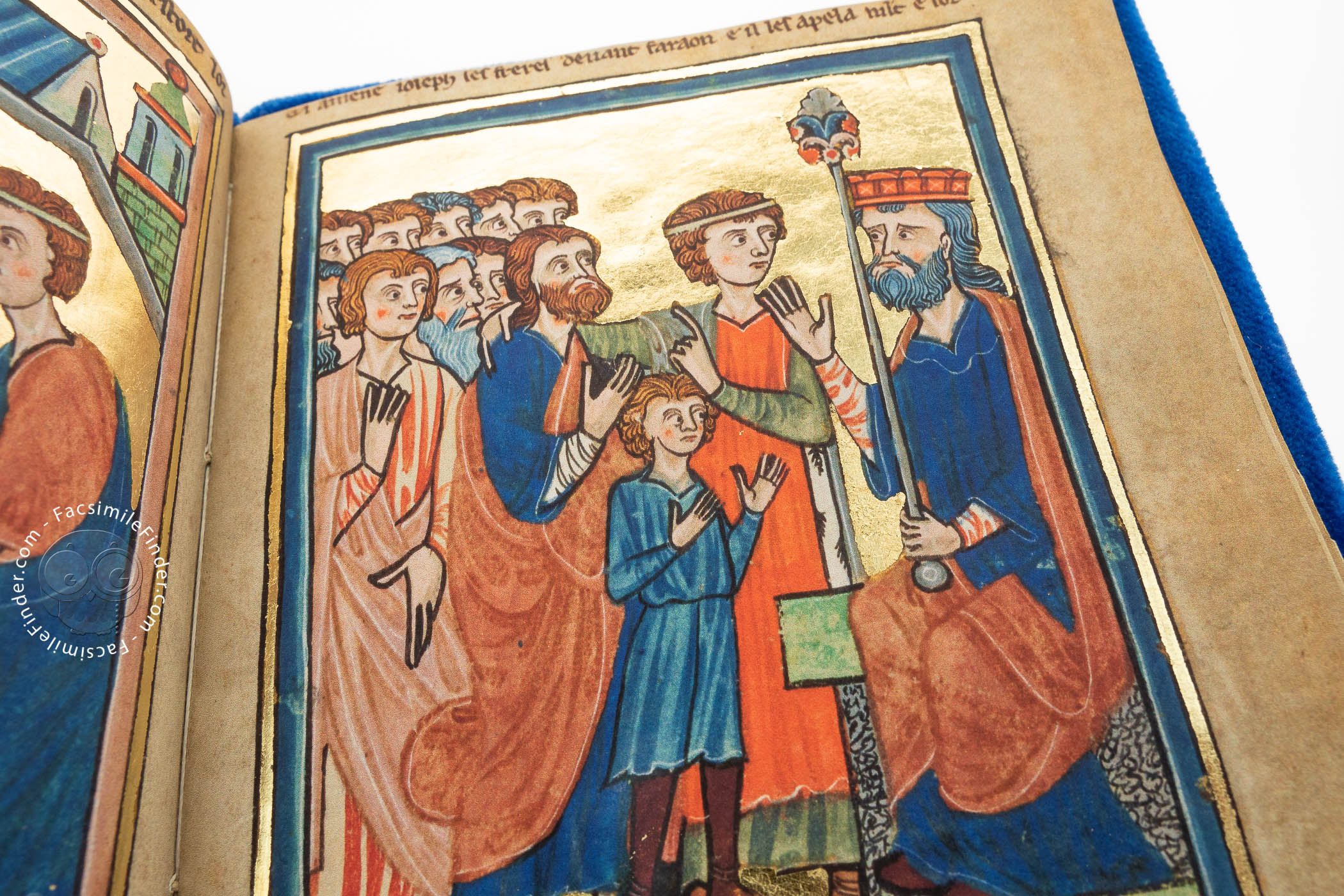
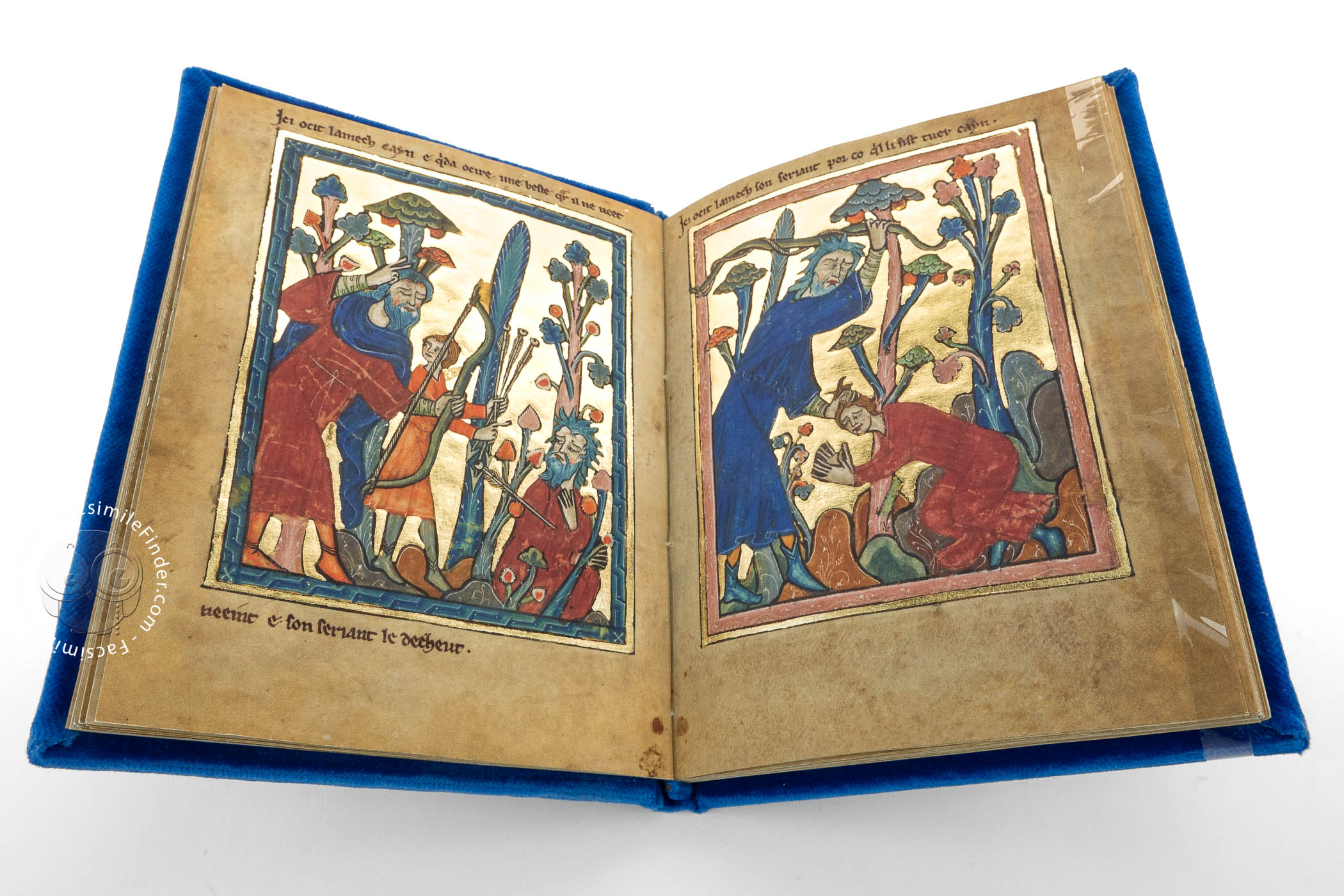

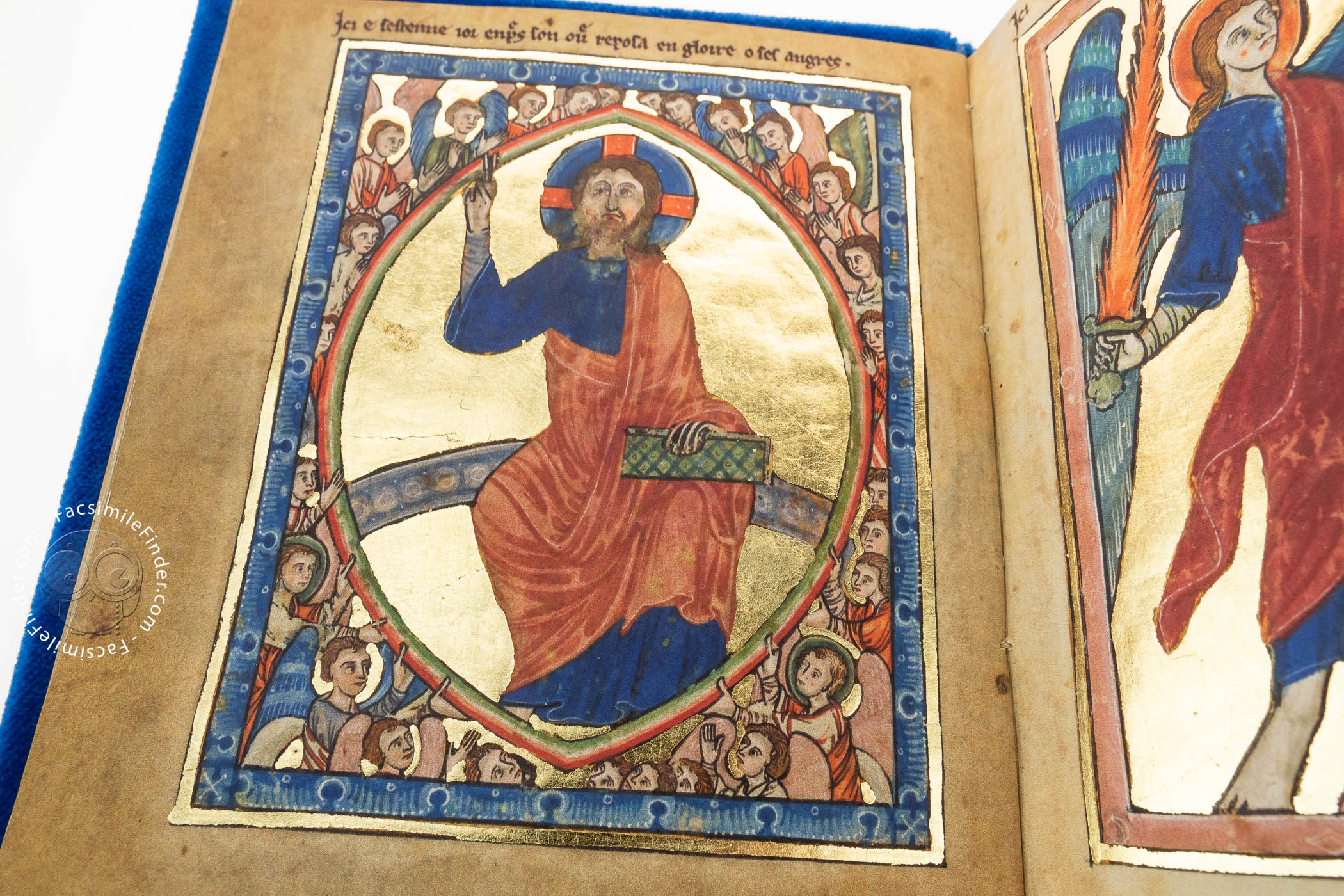
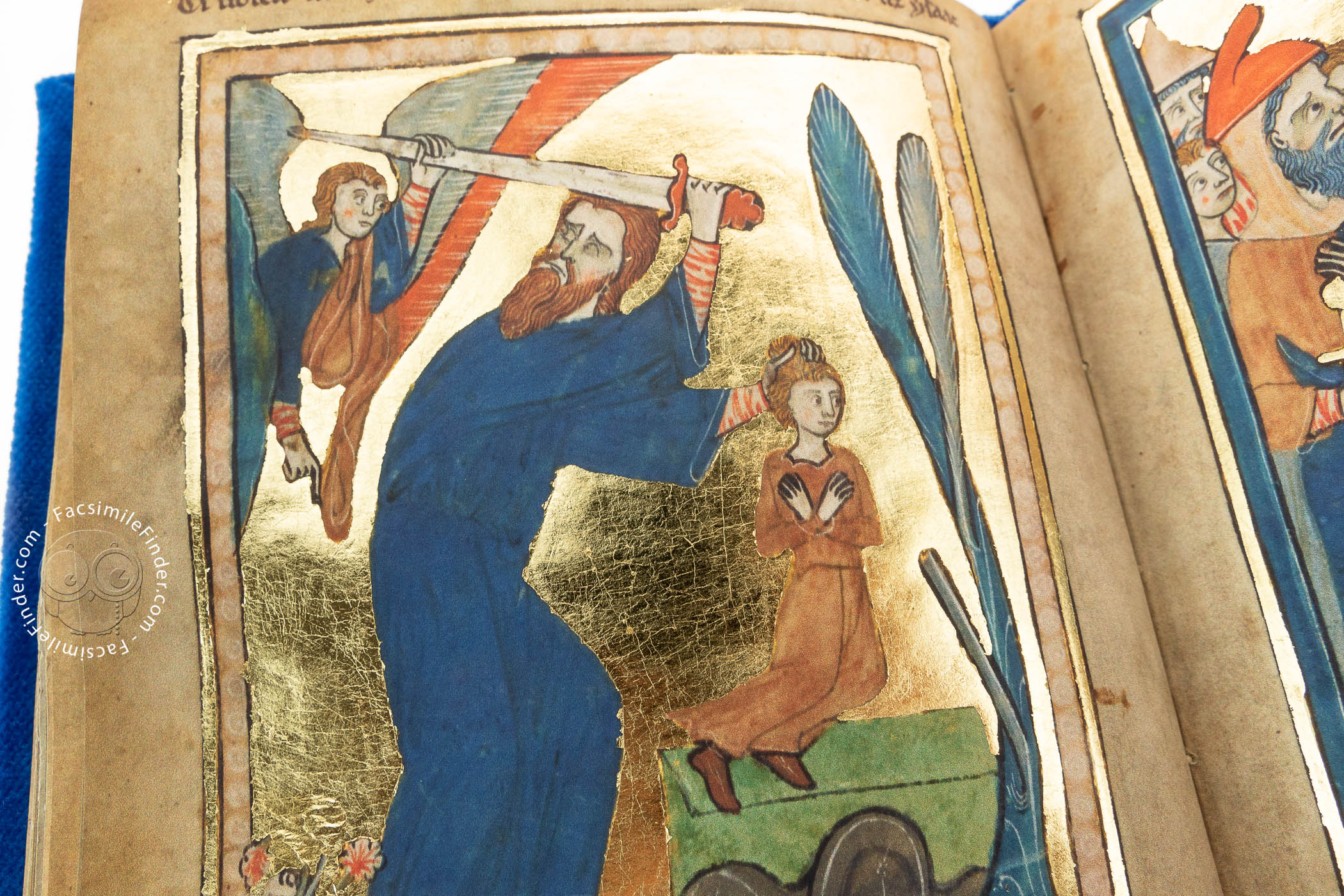
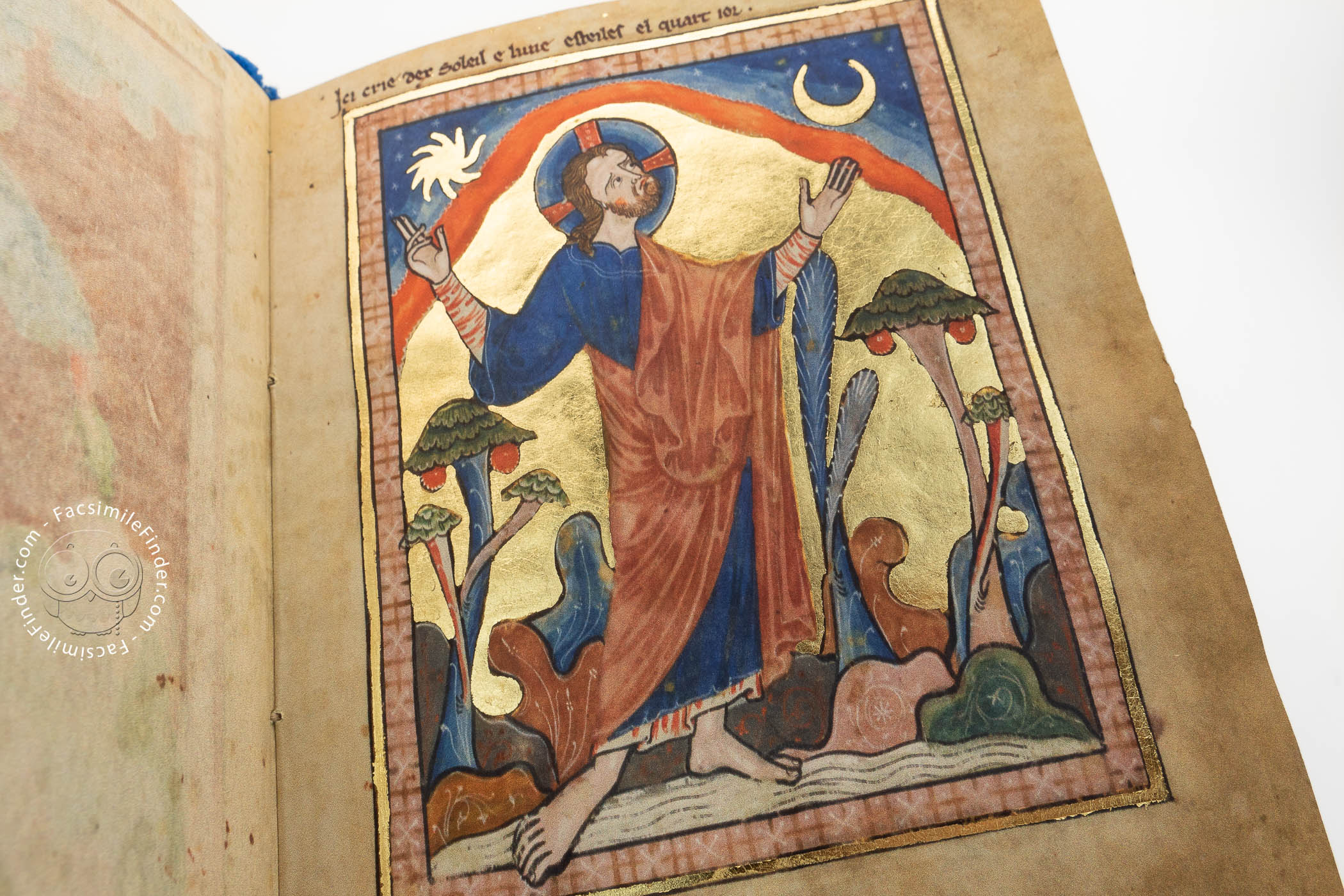
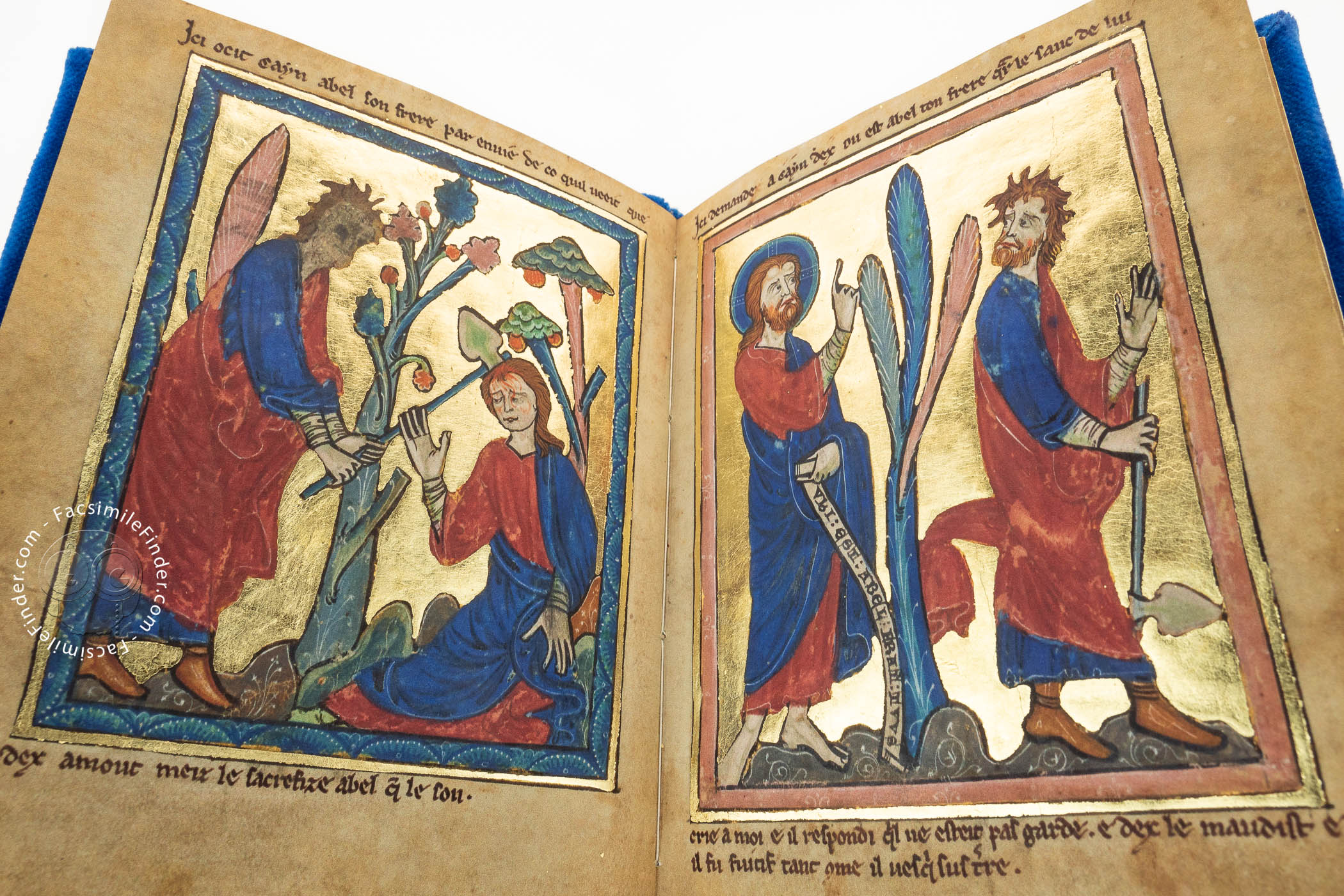
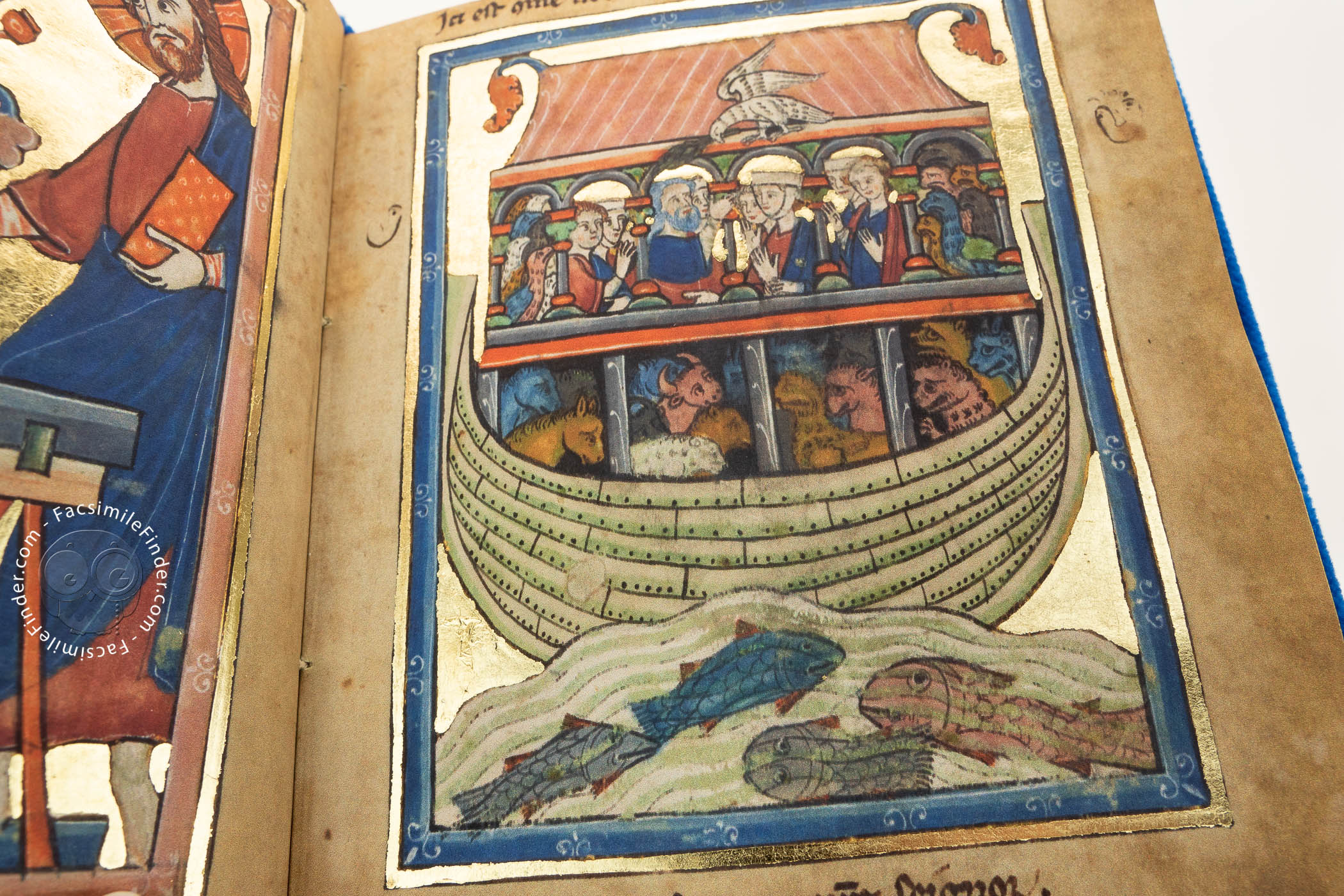
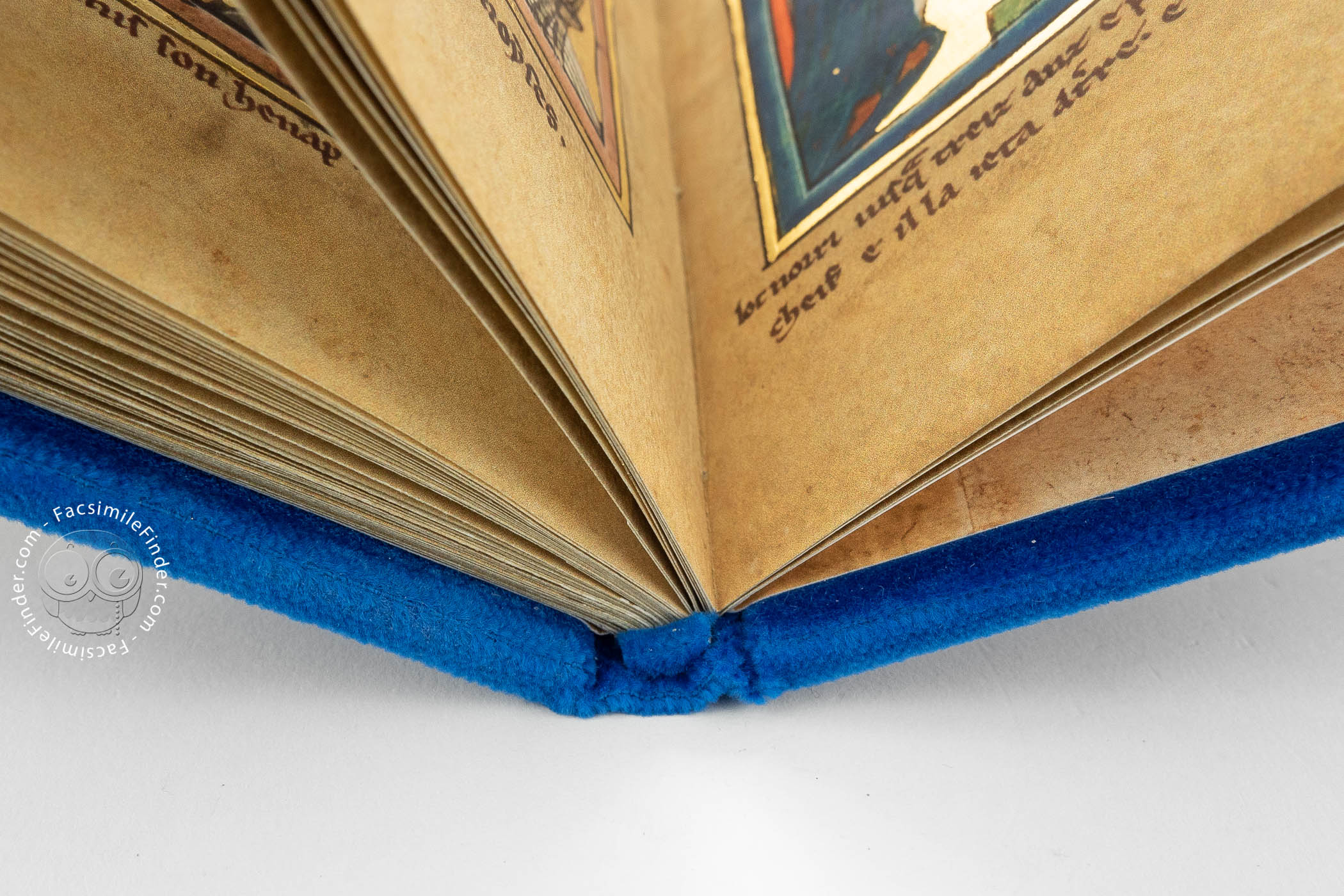
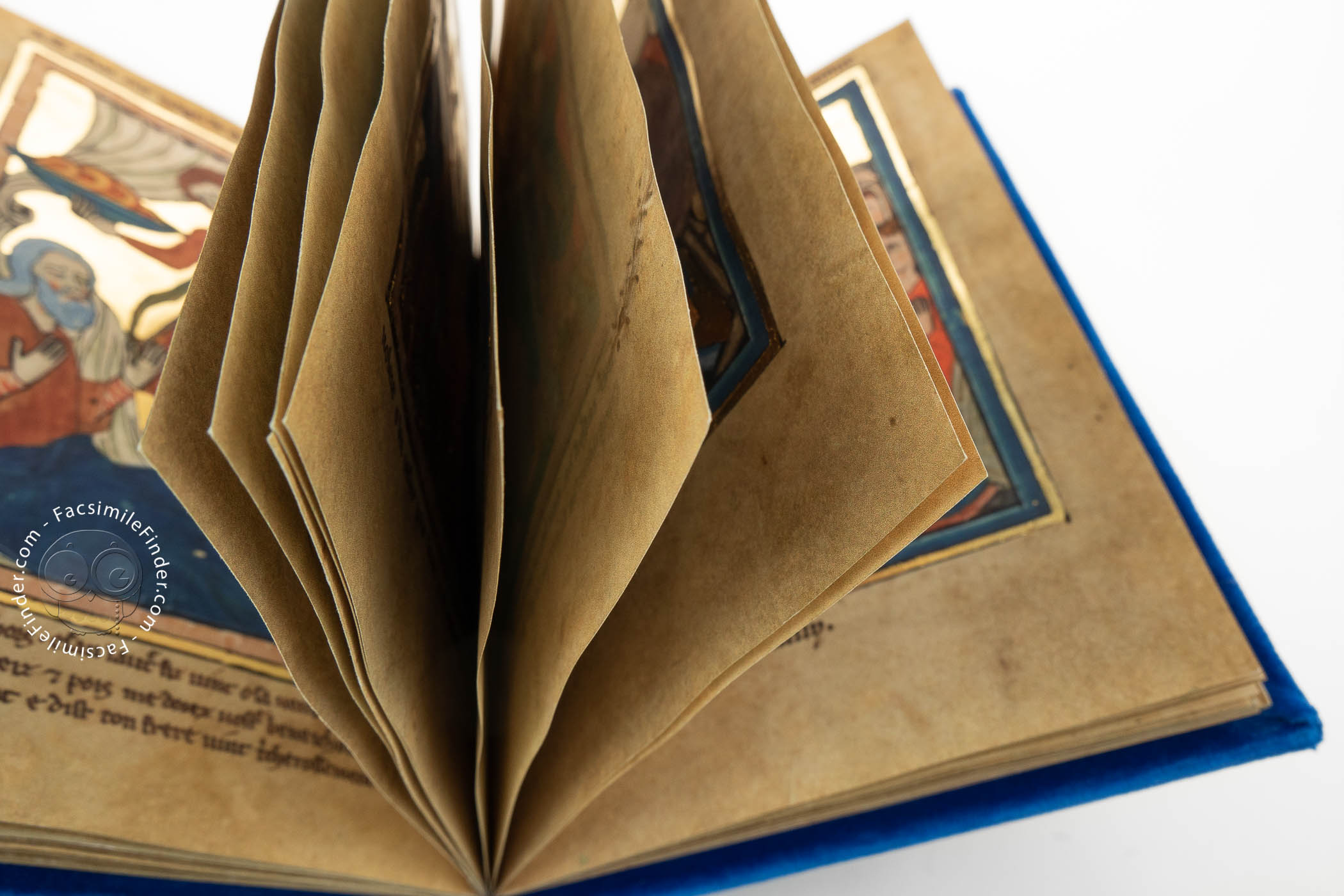
Created in Picardy in the early thirteenth century, the Rylands Picture Bible presents episodes from the Christian Old Testament spanning from Creation to the early story of the ancient Israelites in Egypt in forty-eight full-page miniatures accompanied by added French-language inscriptions. The manuscript's miniatures are painted in the so-called Channel Style practiced at the end of the twelfth and beginning of the thirteenth centuries on both sides of the English Channel. Its characteristics are strong colors, bold outlines, solid figures, dramatic gesturing, and simple drapery. The miniatures all feature burnished gold leaf backgrounds.
The manuscript is surely incomplete. Eight leaves have been lost among the surviving leaves, and the picture cycle almost surely originally continued to include more Old Testament scenes and possibly New Testament scenes and scenes from biographies of saints.
Lively Narratives Boldly Presented
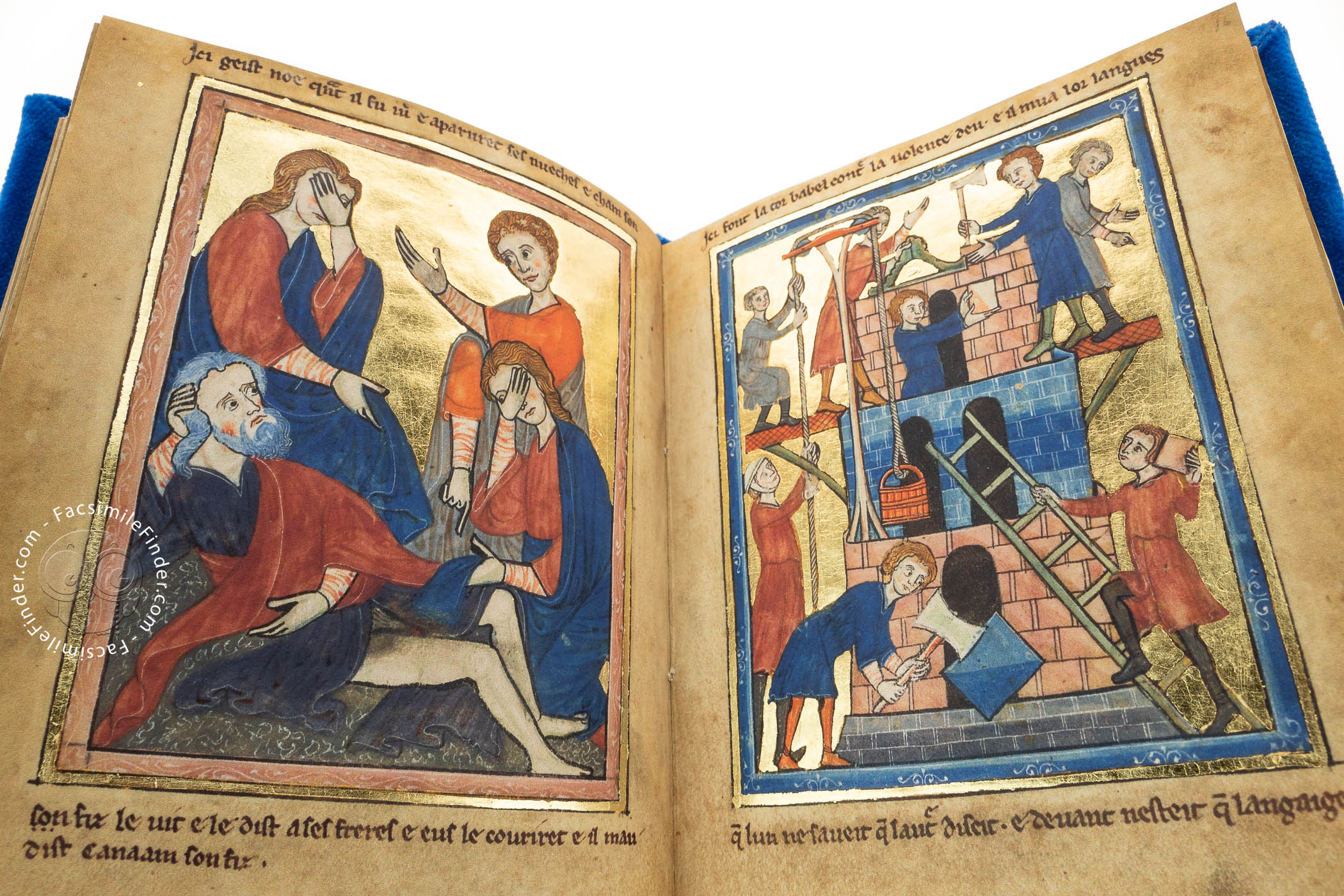
Each miniature presents a single scene, an unusual trait for picture books (which more often include more than one scene in a framed miniature). This allows for the inclusion of details that enhance the storytelling. For example, the image of the construction of the Tower of Babel includes eight figures interacting as they employ a pulley and a ladder in building the tower (fol. 16r). Other examples include the Morgan Picture Bible, the Huth Bible, and the Hague Bible Picture Book.
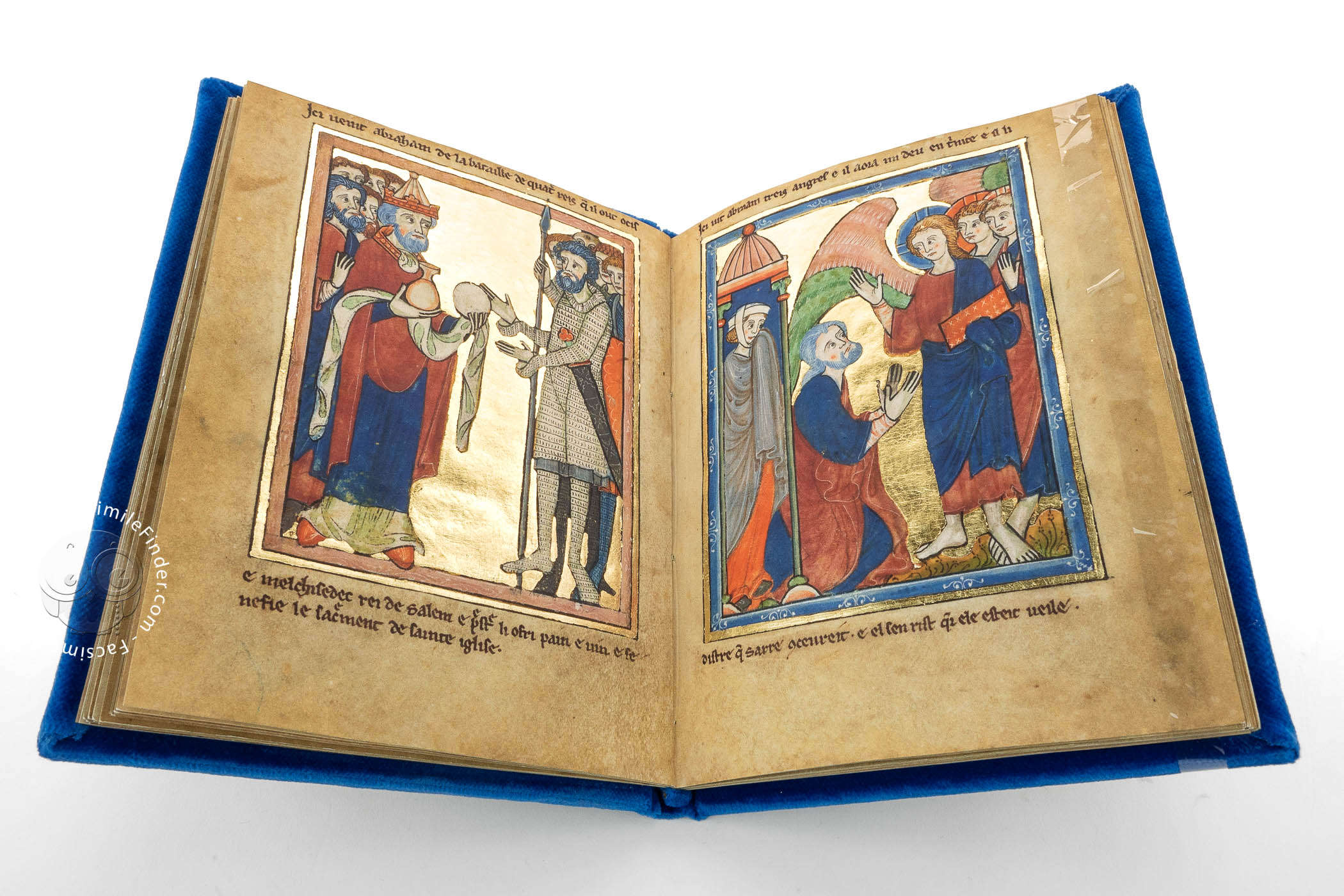
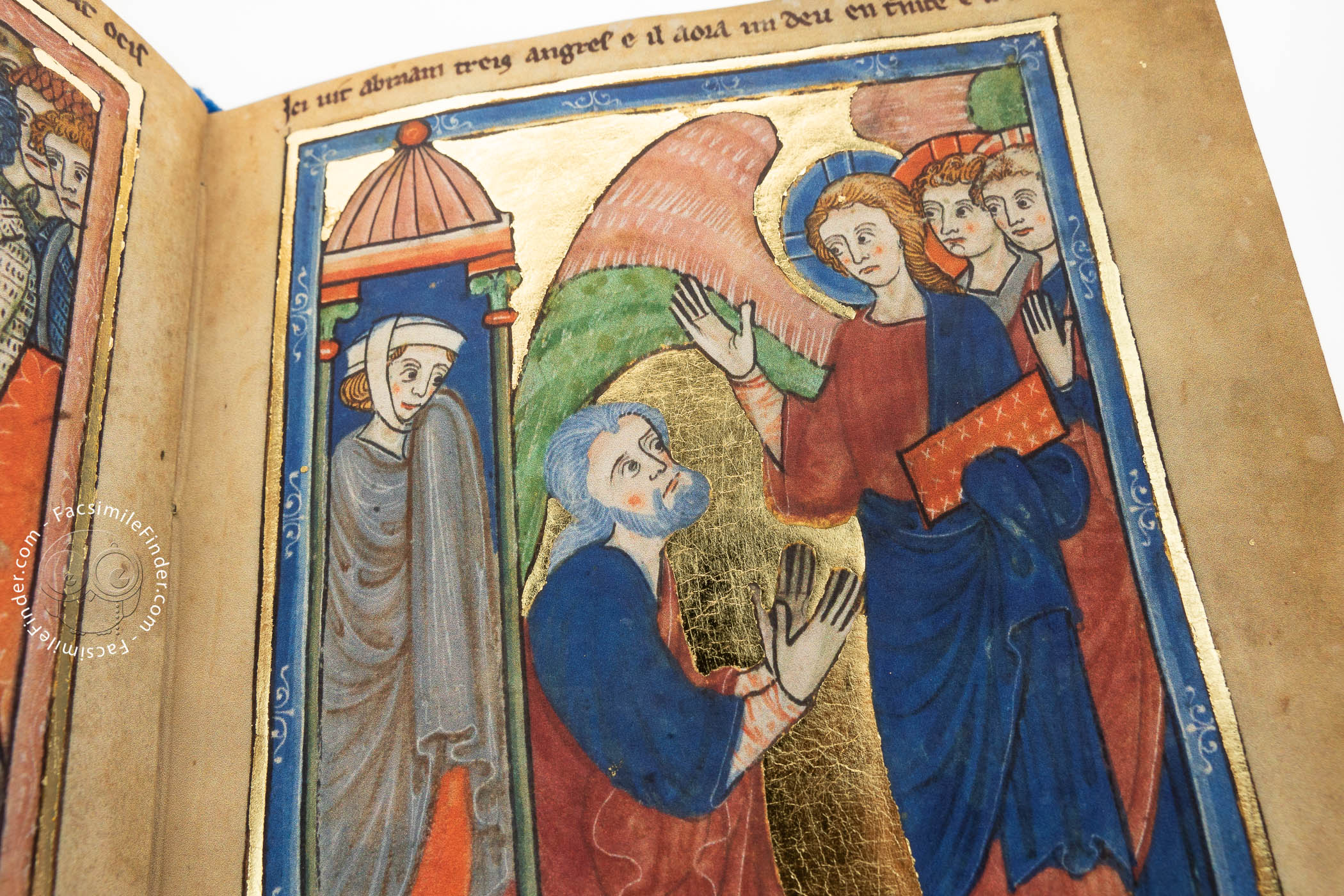
The narrative details do not, however, diminish the grandeur of the scenes. For example, the miniature of Abraham and the Three Angels includes a representation of Sarah within a structure, her hand to her face betraying her awe at the appearance of the heavenly visitors. The kneeling Abraham is nevertheless the focus of the scene (fol. 18r). The golden backgrounds of all the scenes establish the spiritual import of the stories depicted and help to focus the viewer's attention on important figures.
Beyond the Bible
Most of the miniatures show events described in the Bible, but some embellish the biblical narrative. For example, Genesis reports simply that Eve gave birth to Cain, but the Rylands manuscript presents a developed domestic scene, with Adam presenting a bowl of food to Eve in bed with the swaddled infant (fol. 7v). The painter has also included in the foreground the source for Adam's offering, a pot on a fire.
A Generous Use of Parchment
With painting on only one side of the parchment, the miniatures are arranged in facing pairs alternating with facing pages of blank parchment, a lavish approach to the use of parchment, an expensive material. This, as much as the rich palette and generous use of gold, suggests that the book was created for a wealthy patron.
Inscriptions Added
The book was originally conceived as a pure picture book without captions, but not long after the miniatures were painted, captions in Gothic Textualis were added. Most are the work of one scribe, but a second scribe wrote seven of the forty-eight inscriptions. Most simply identify the depicted scene, but some fill in narrative missing from the picture cycle or offer commentary.
A Treasure of the Bibliotheca Lindesiana
James Ludovic Lindsay (1847-1913), Earl of Crawford, purchased the manuscript in its current seventeenth-century binding in 1893. Enriqueta Augustina Rylands (1843-1908) purchased the earl's manuscript collection in 1901, which she bequeathed to the library she founded that bears her husband's name.
We have 2 facsimiles of the manuscript "Rylands Picture Bible":
- Bibbia Aurea. Il Manoscritto French 5 facsimile edition published by Istituto dell'Enciclopedia Italiana - Treccani, 2022
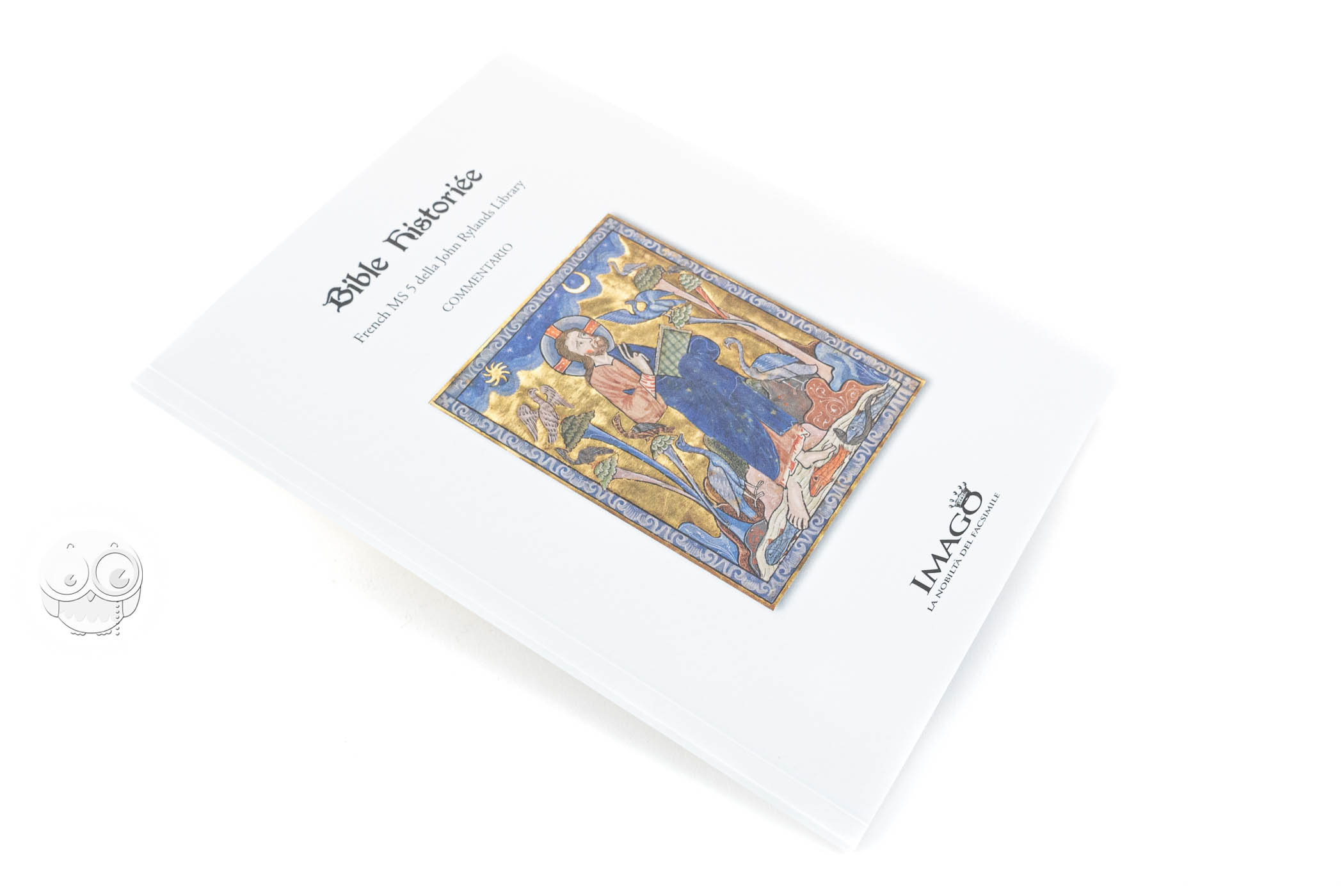
- Bibbia di Manchester John Rylands Ms. 5 facsimile edition published by Imago, 2019


