
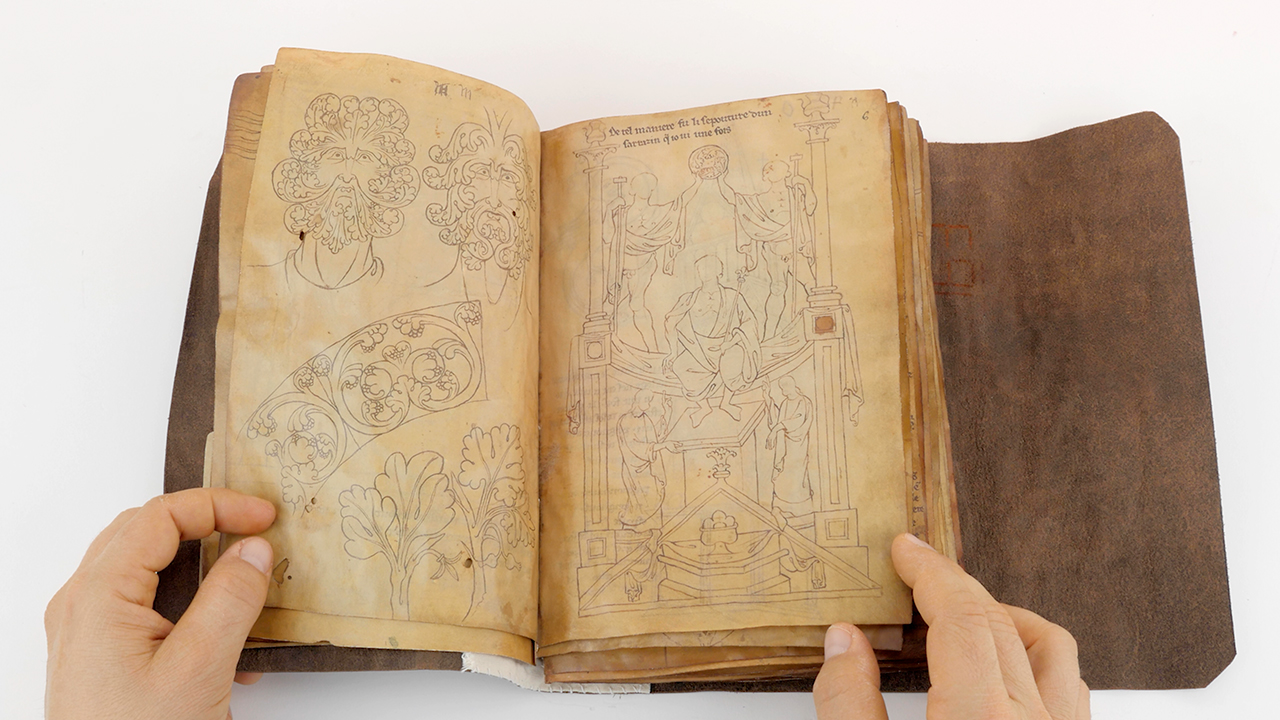
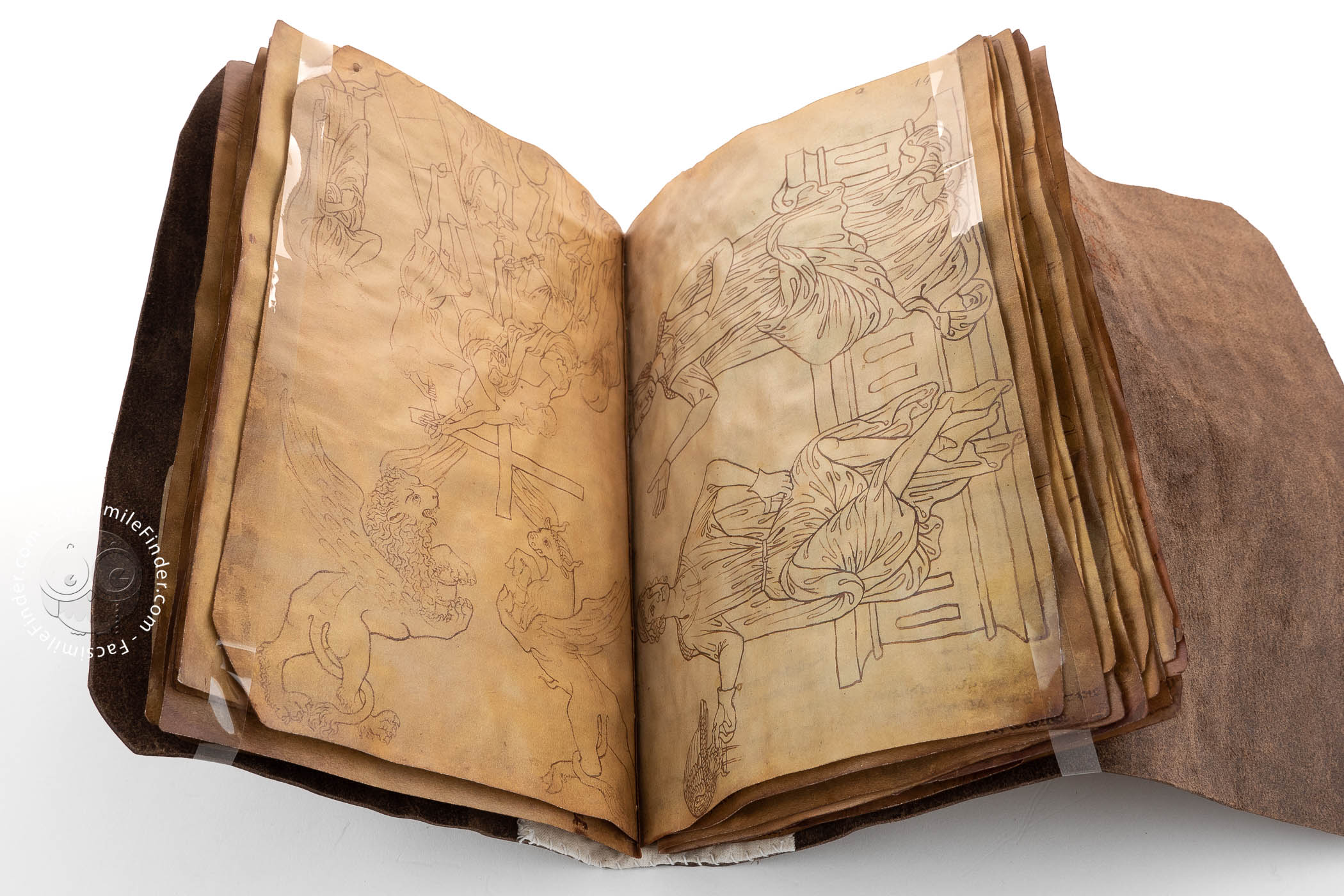
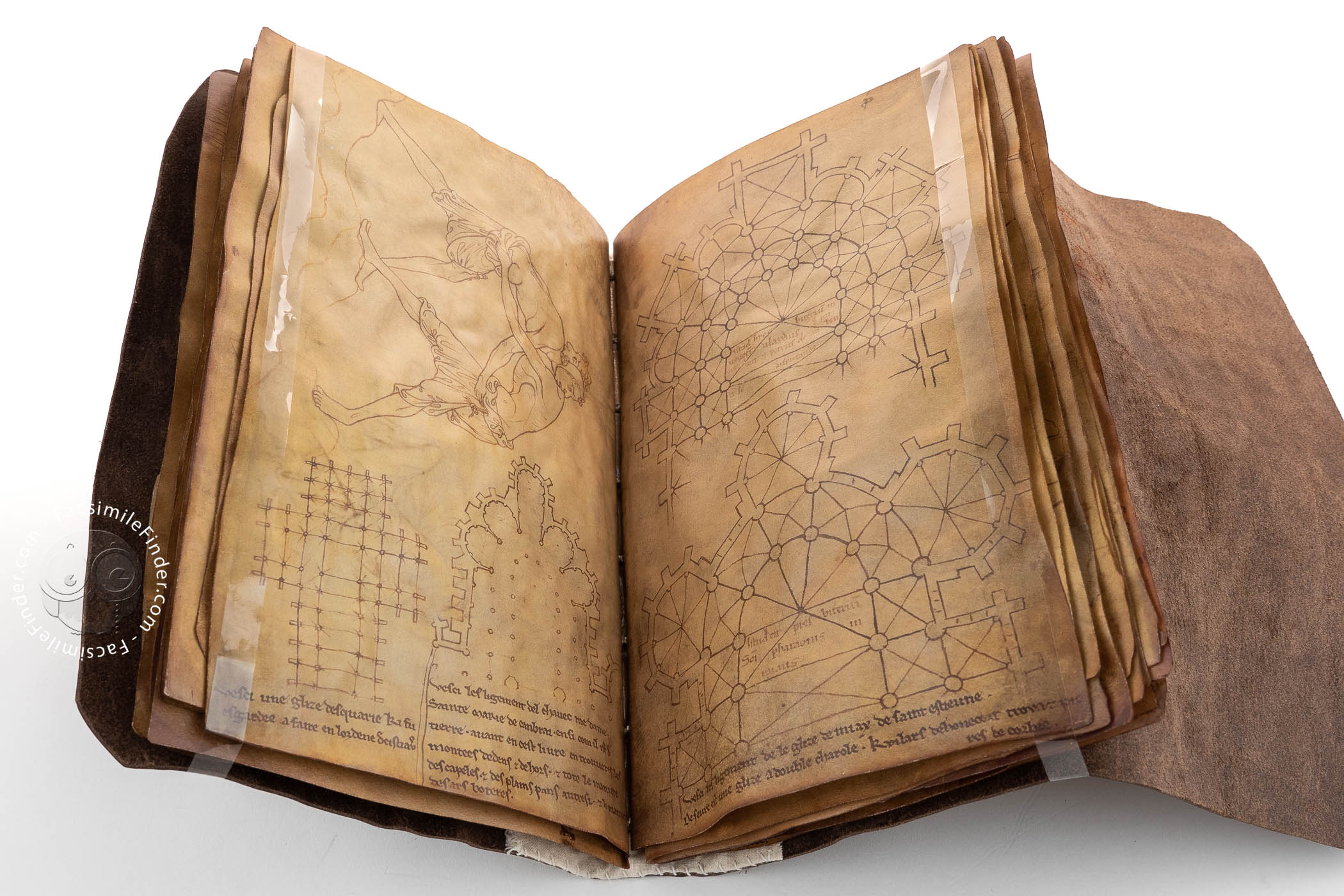
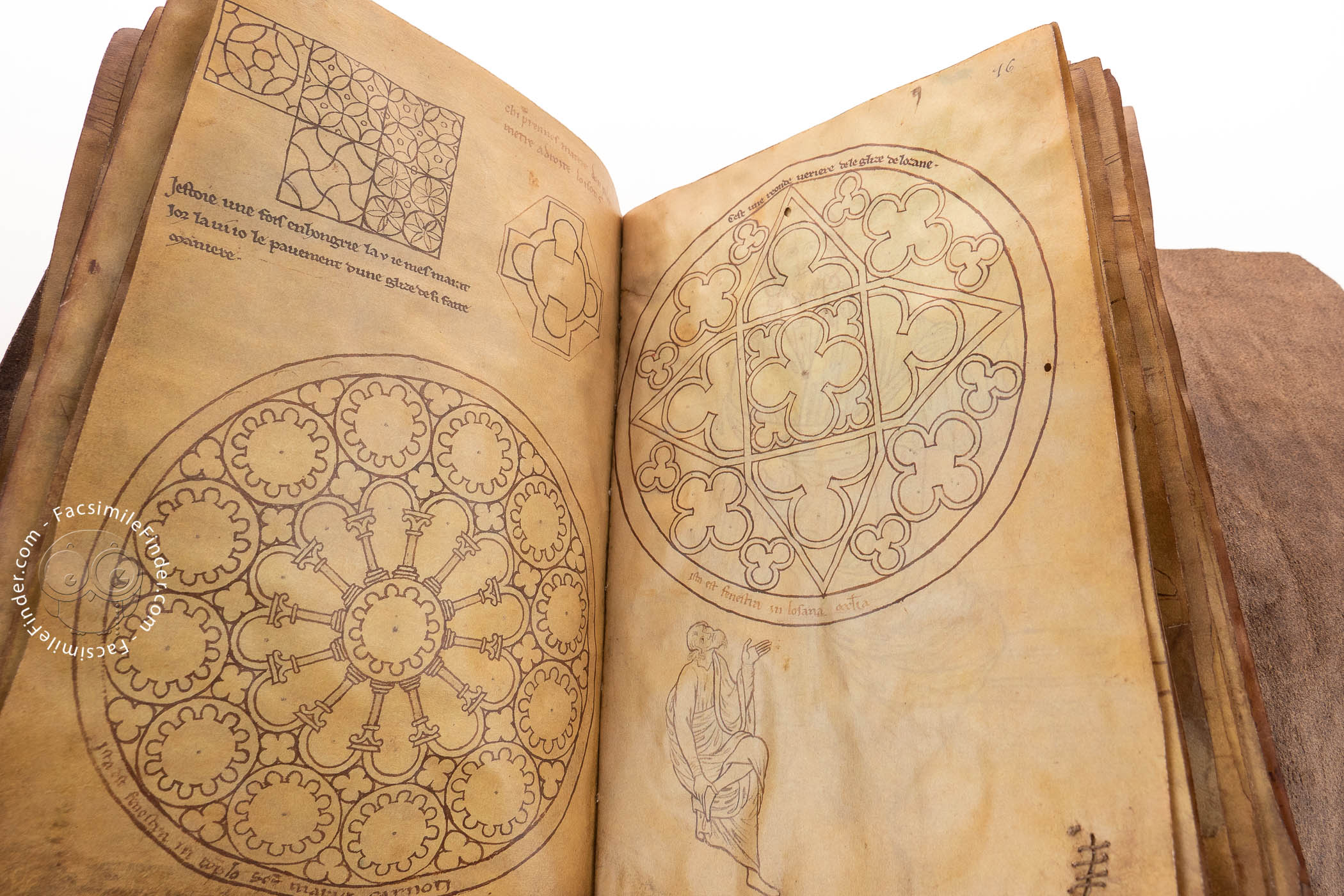
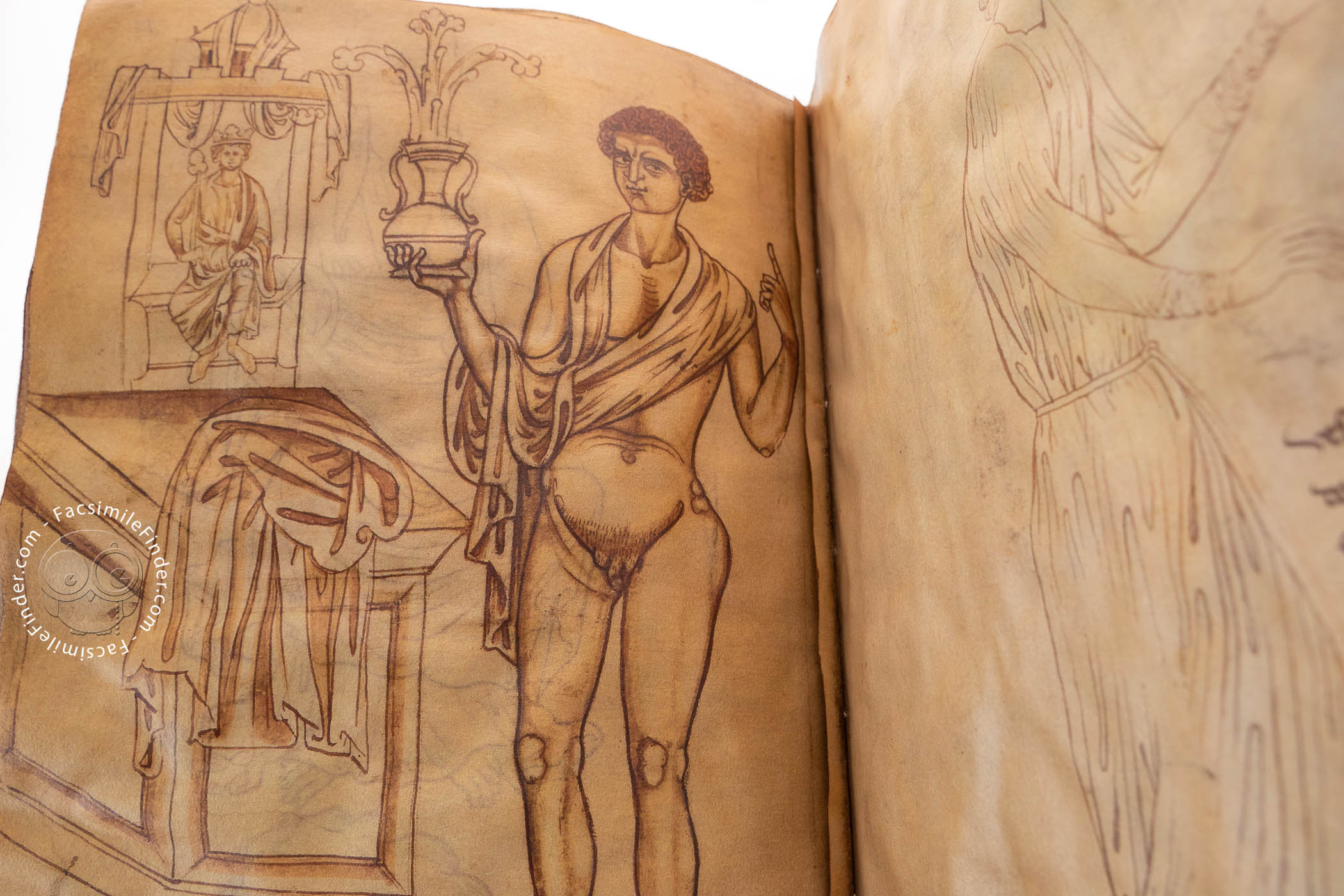
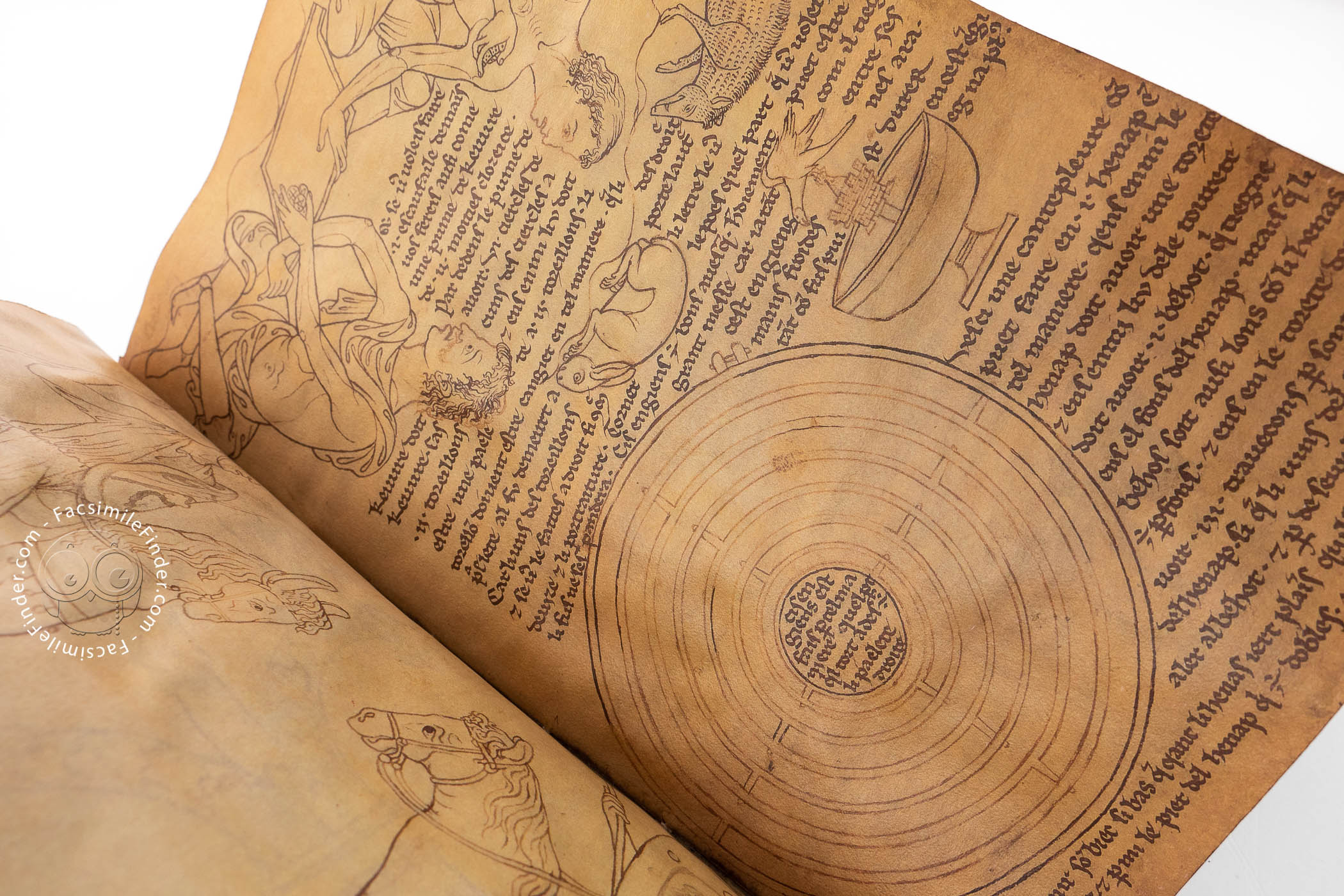
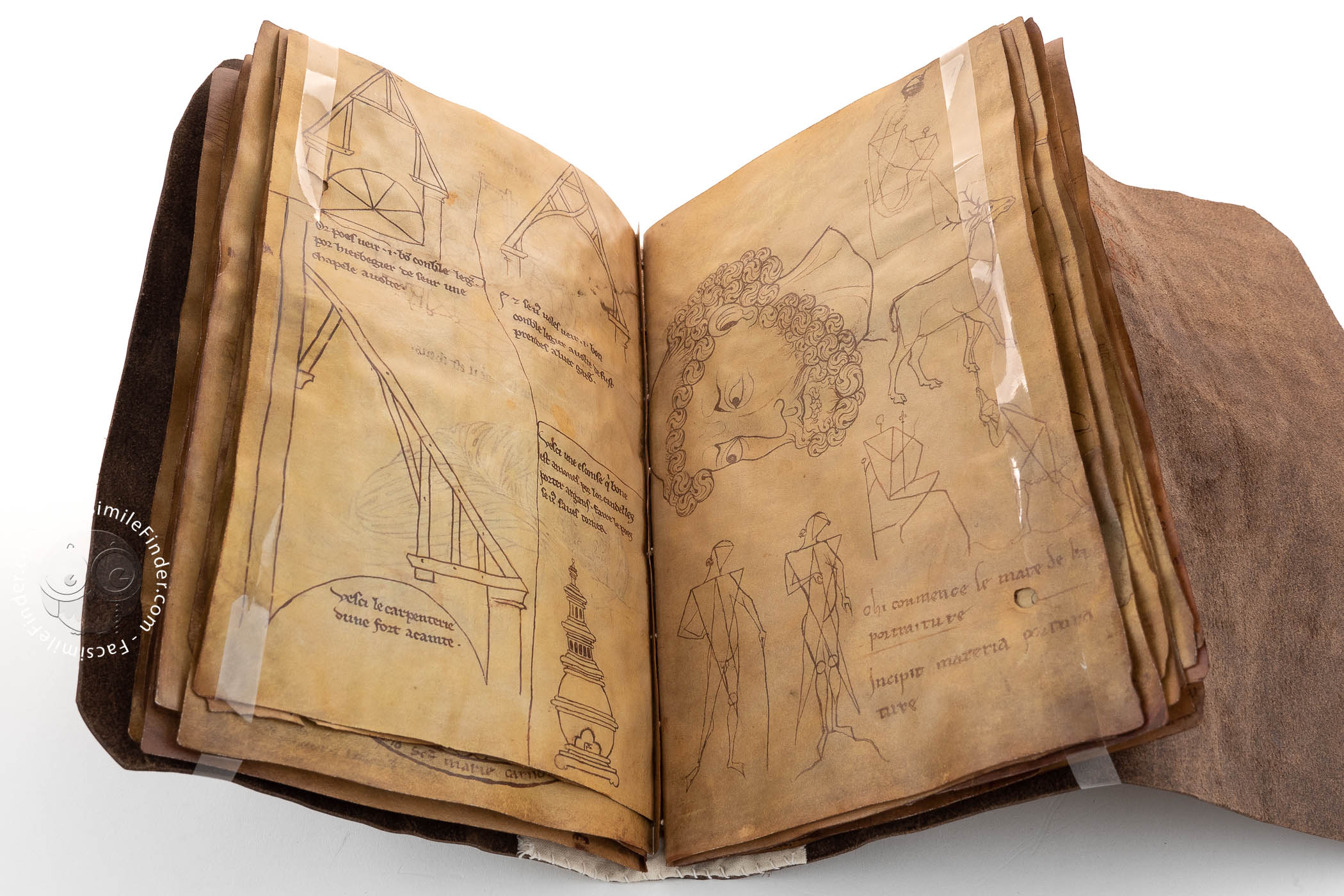

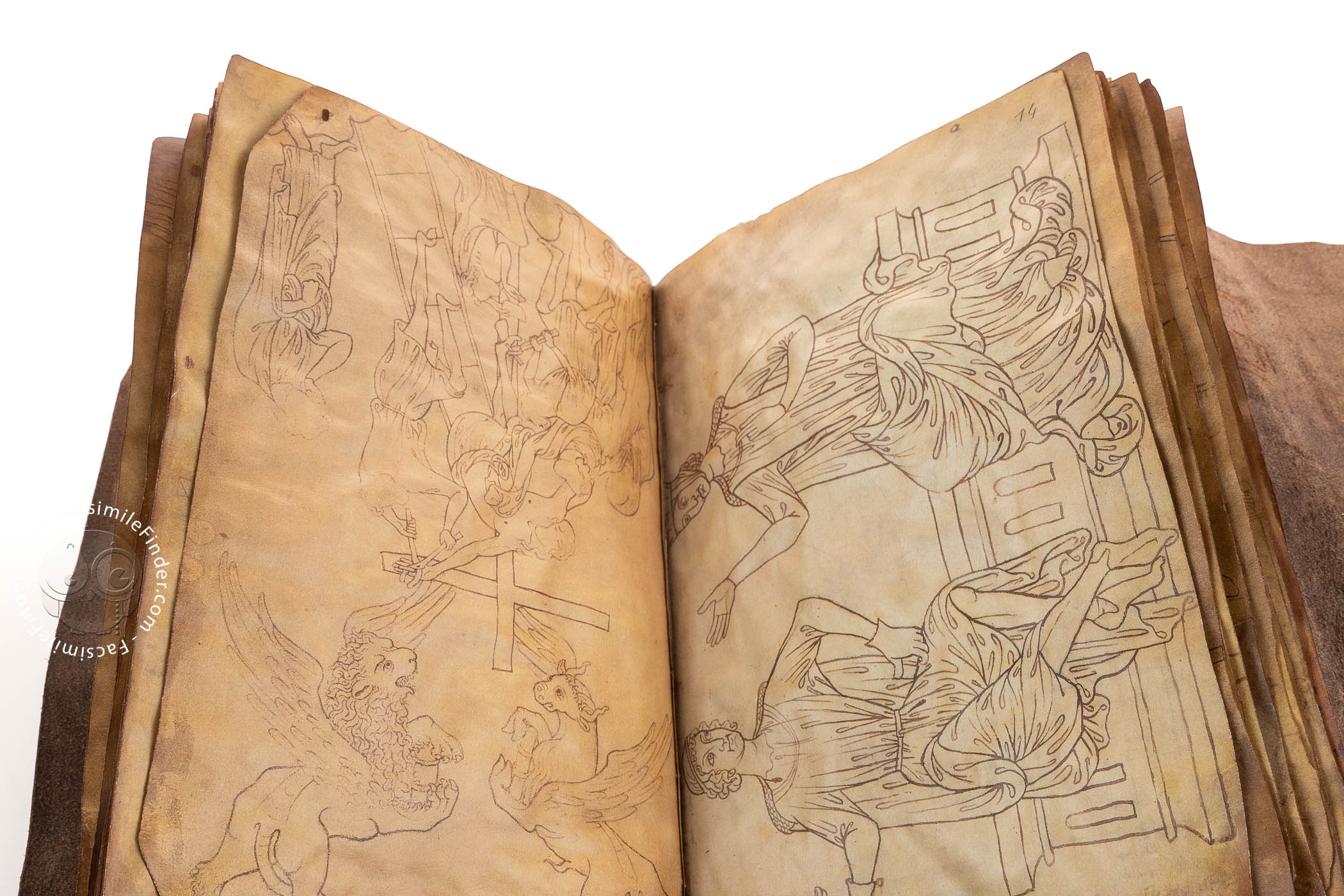
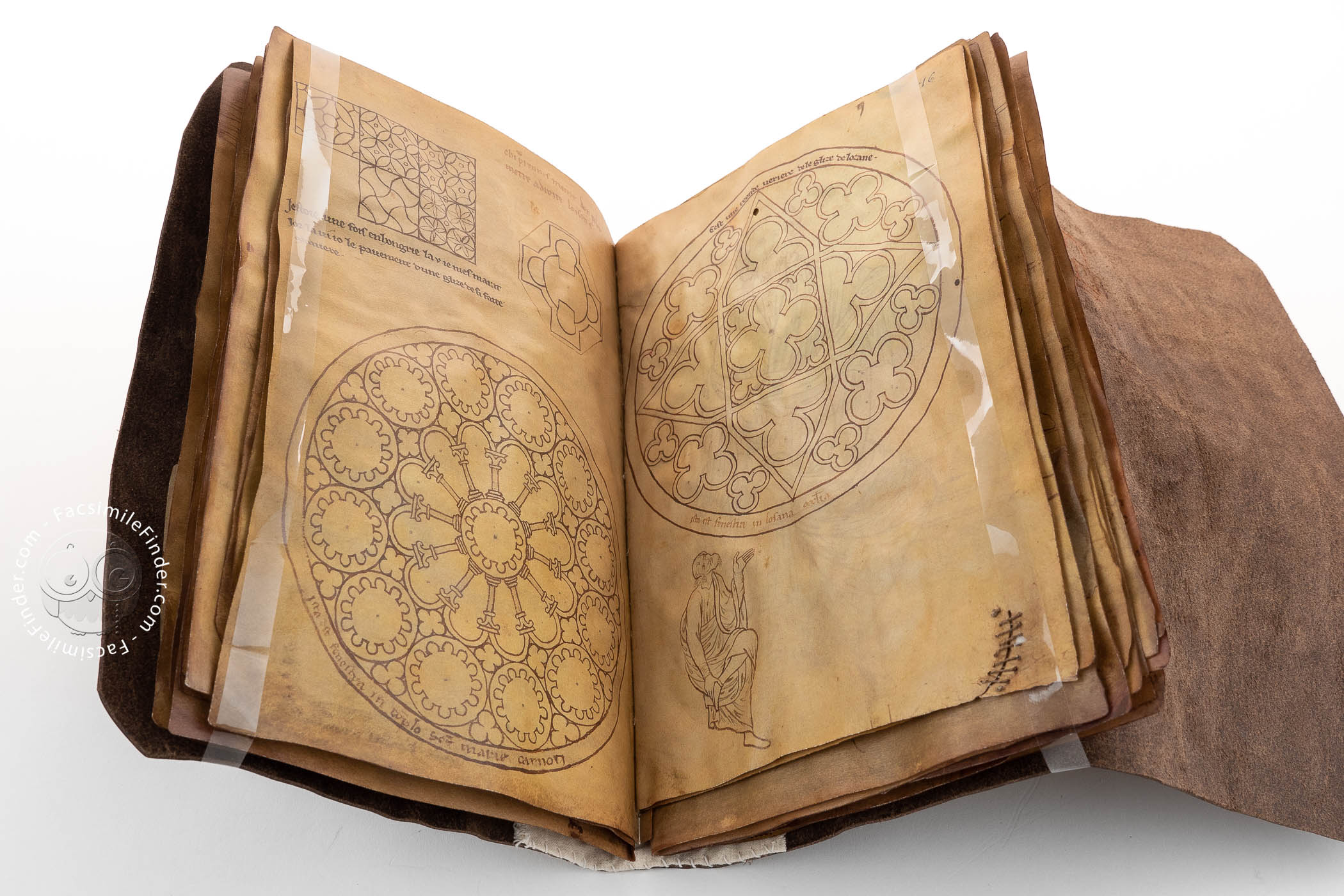
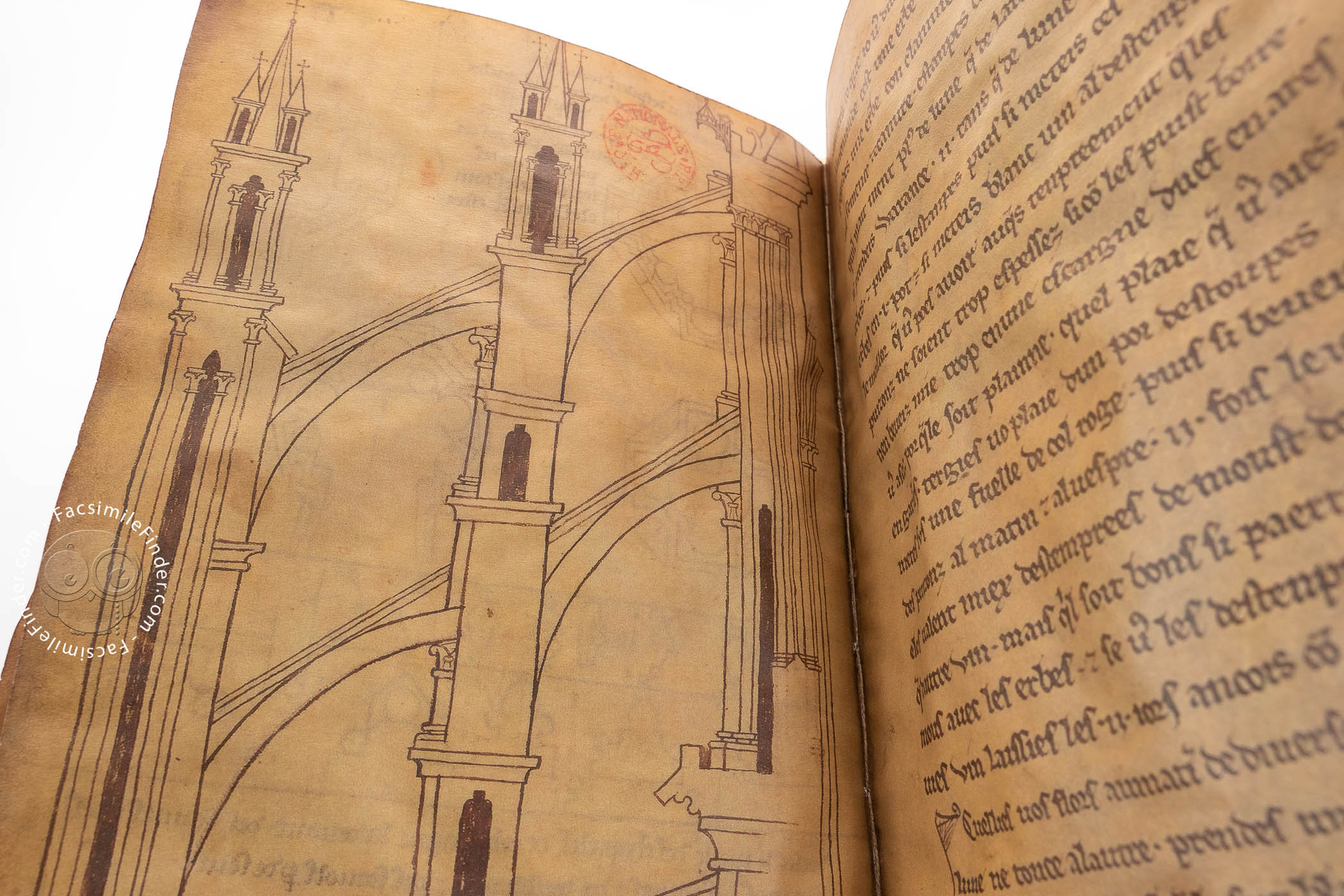


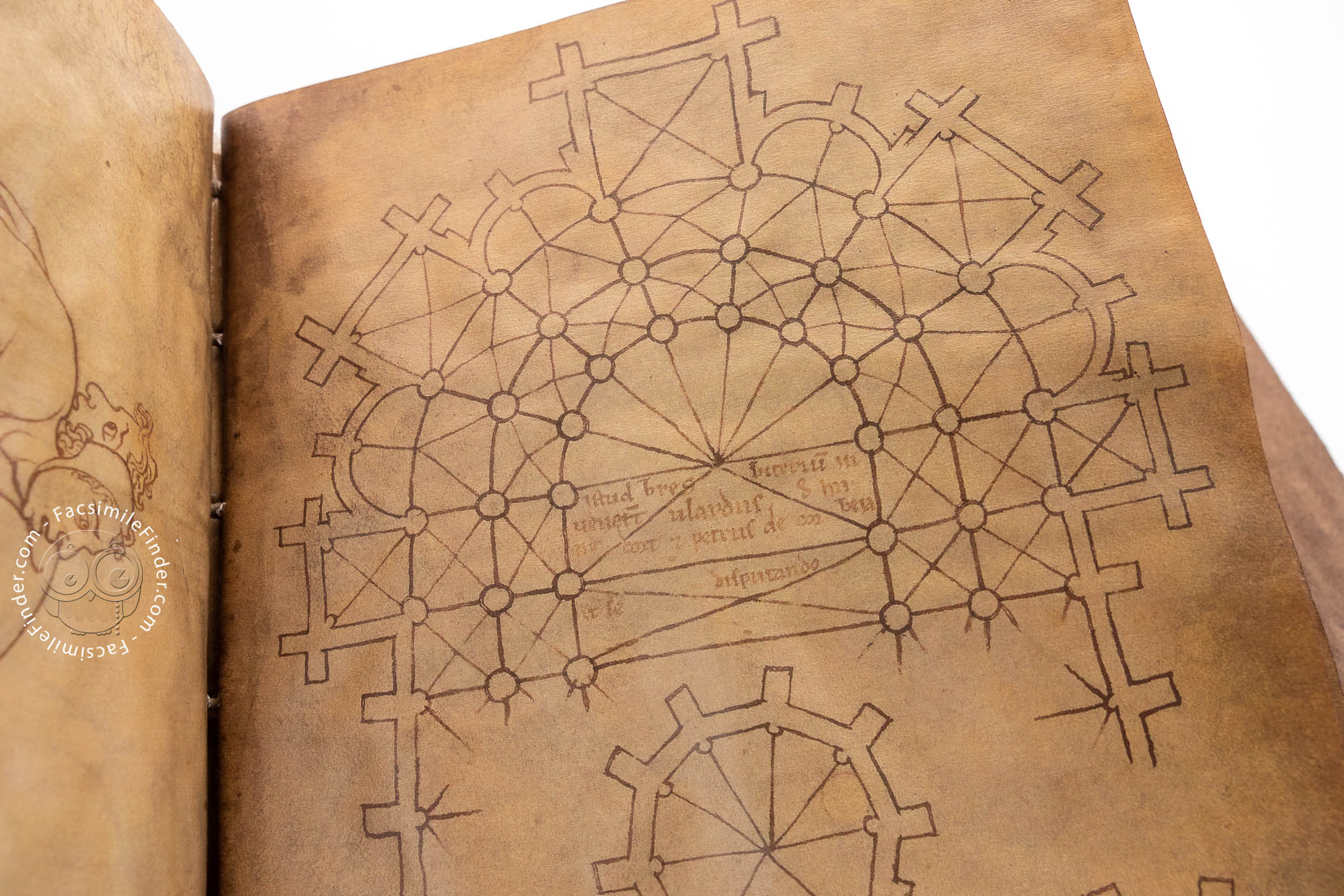
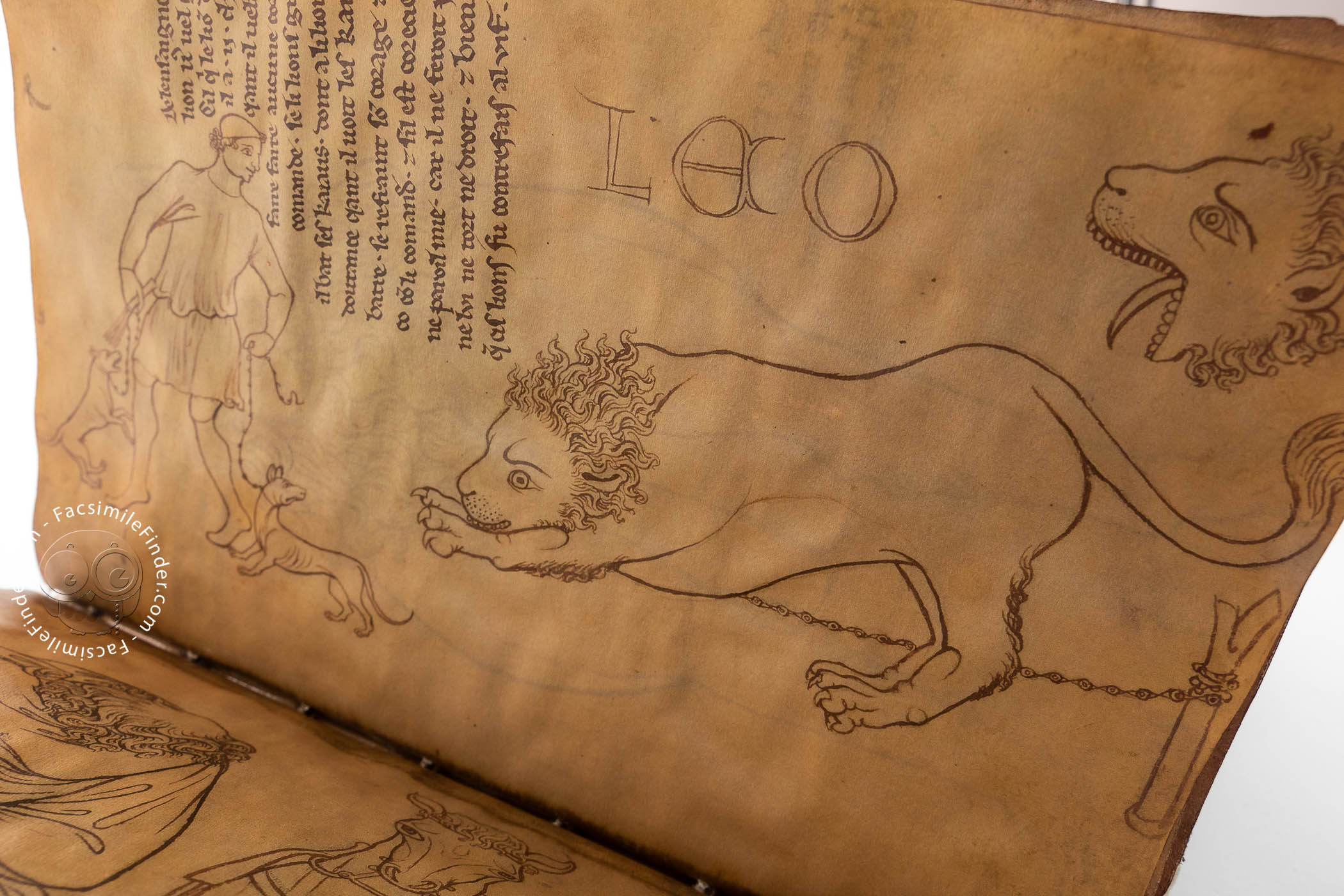
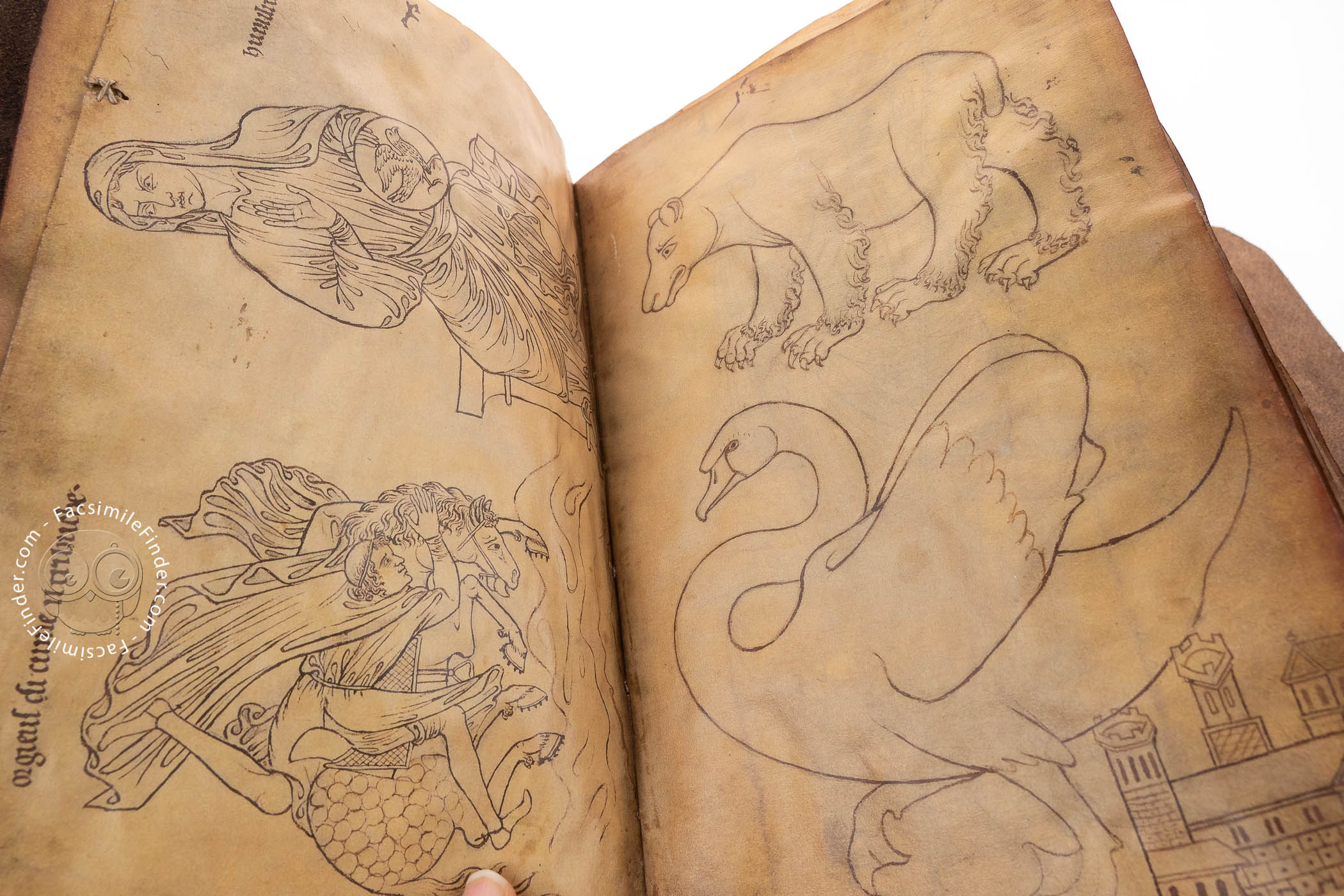

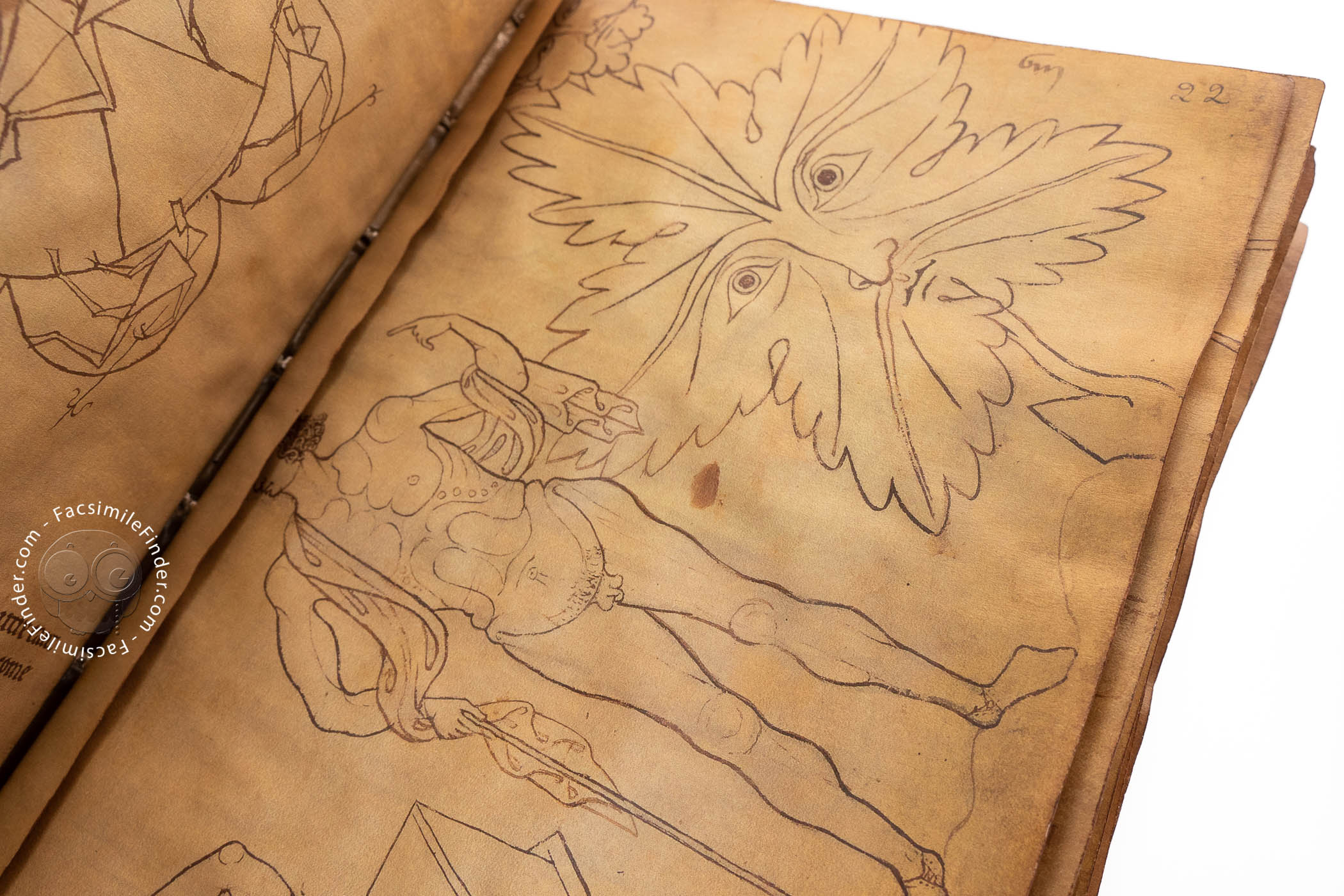
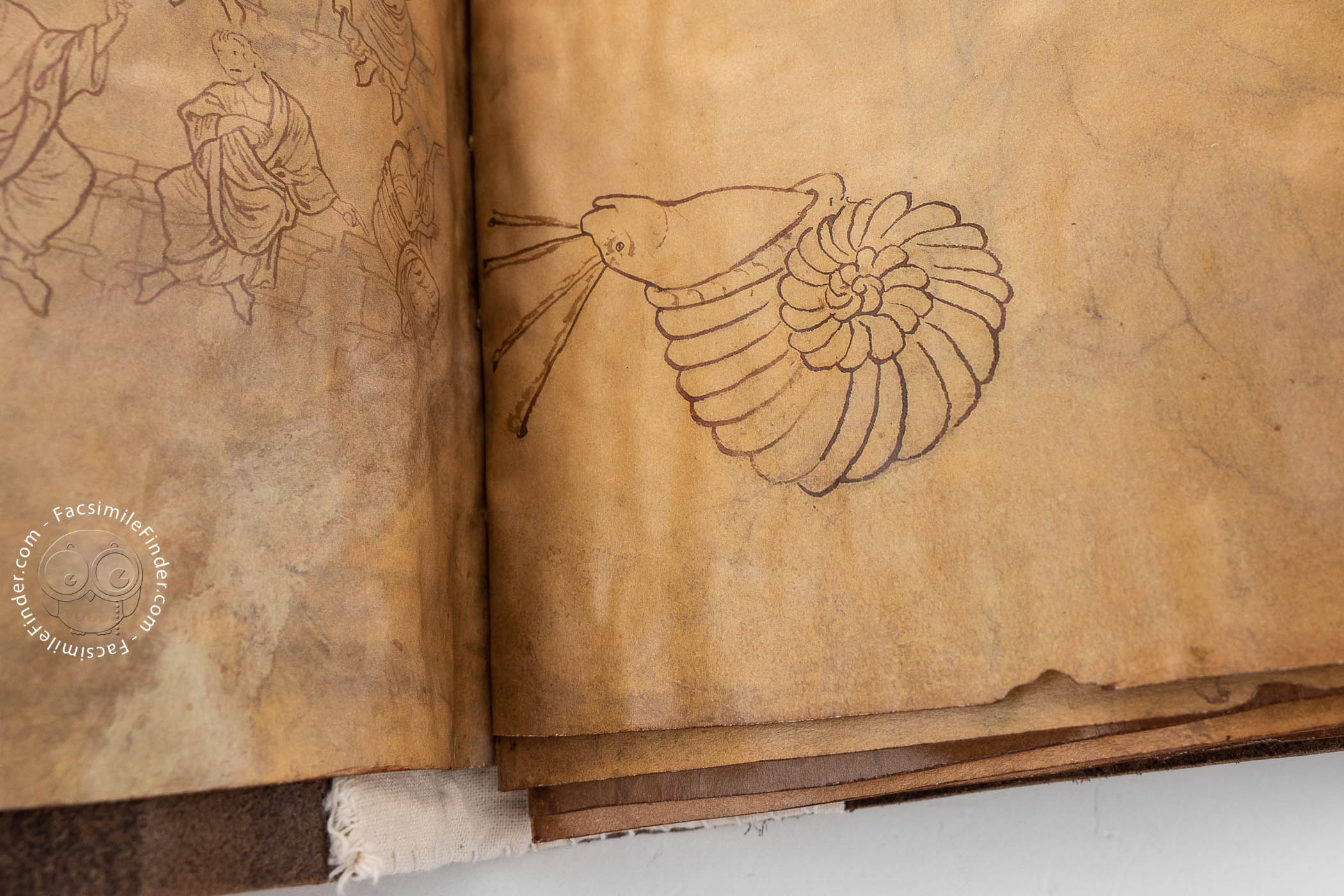
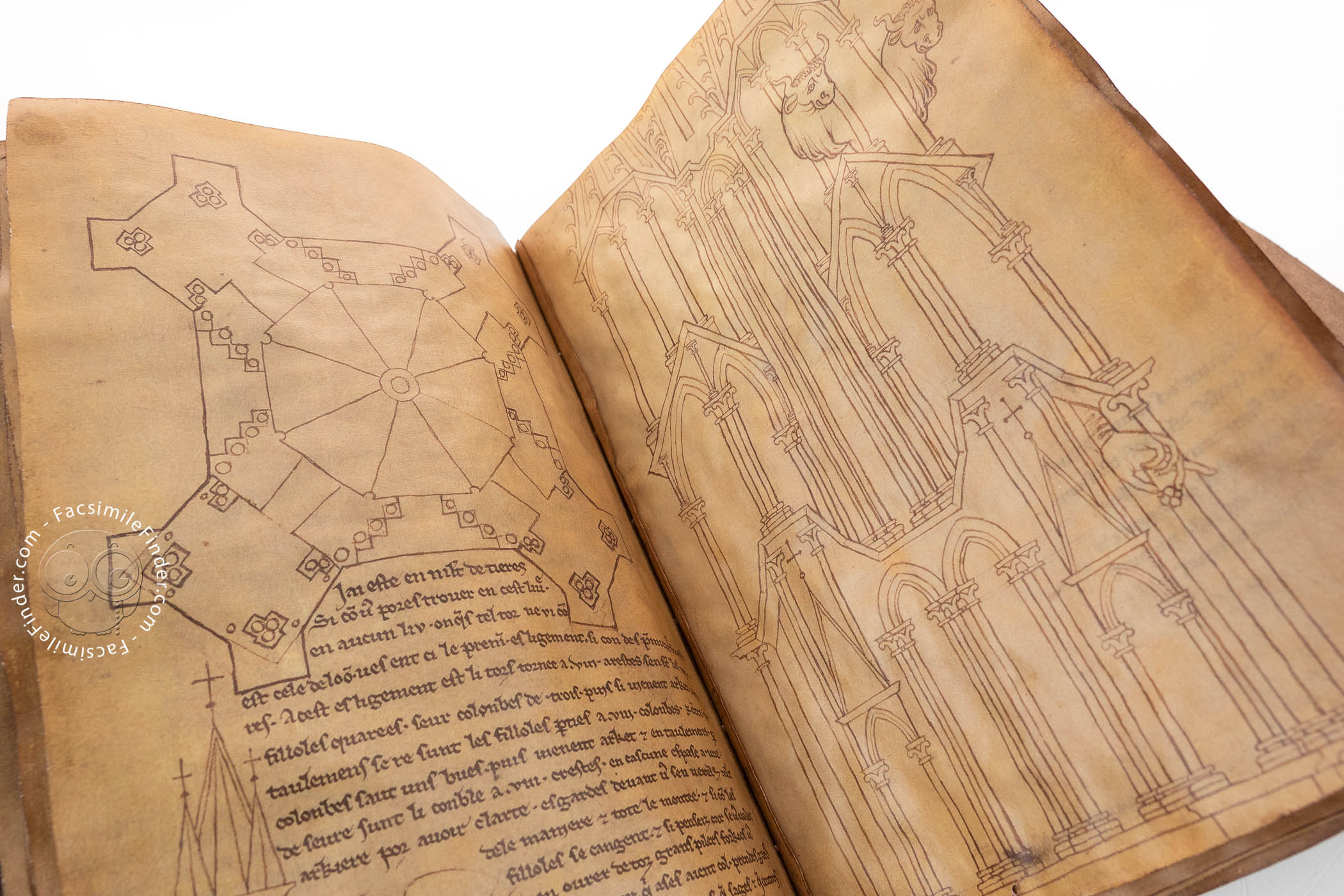
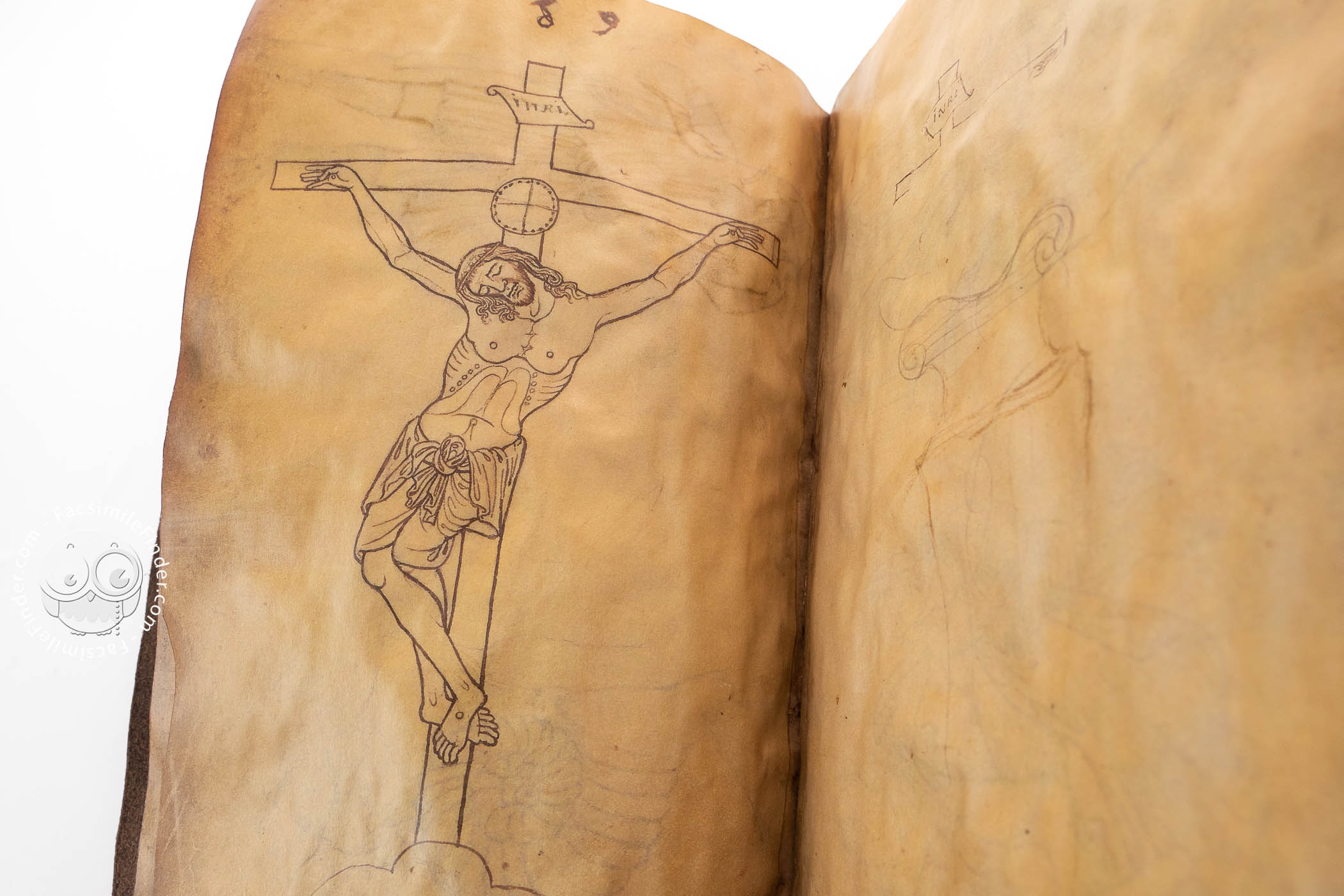
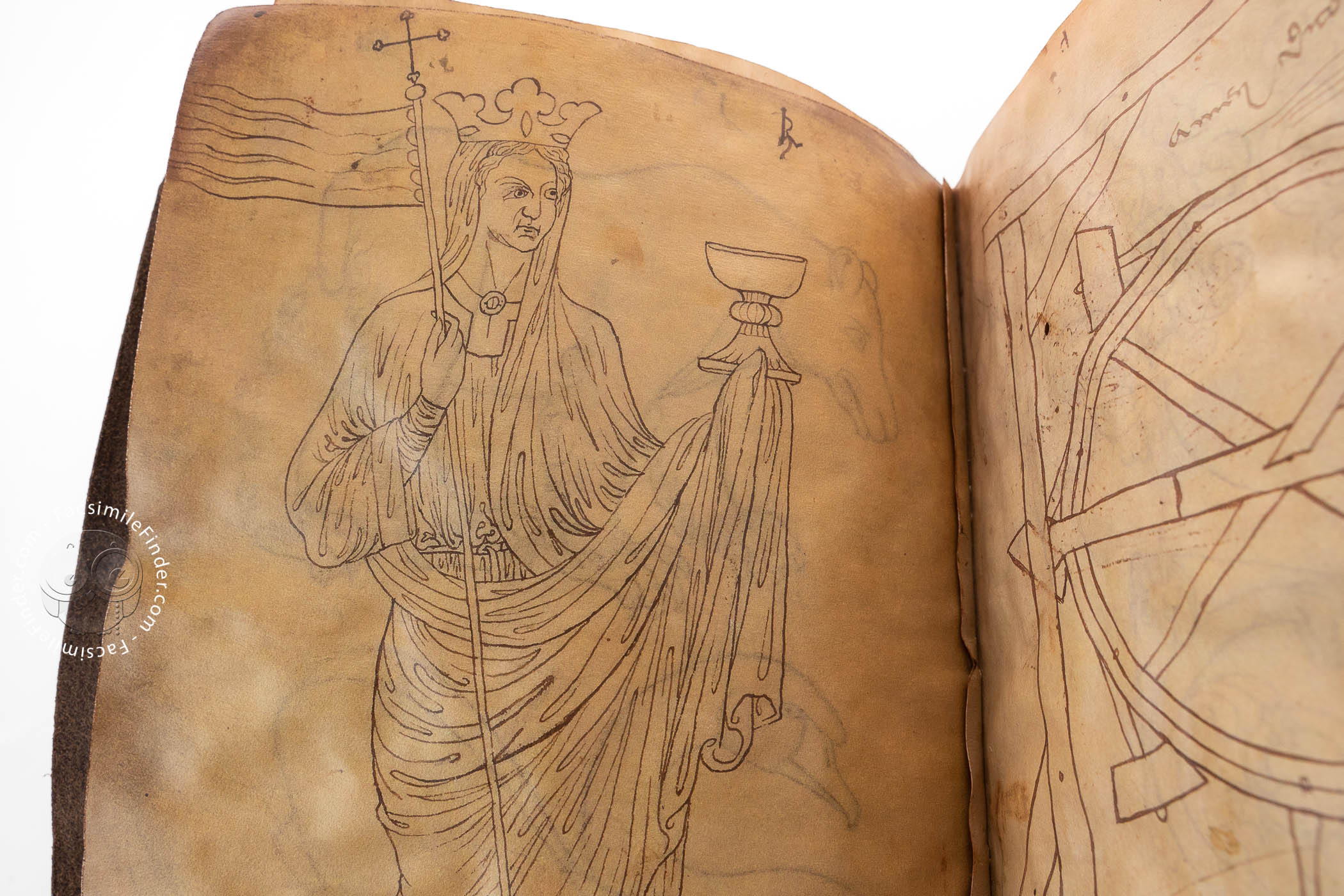
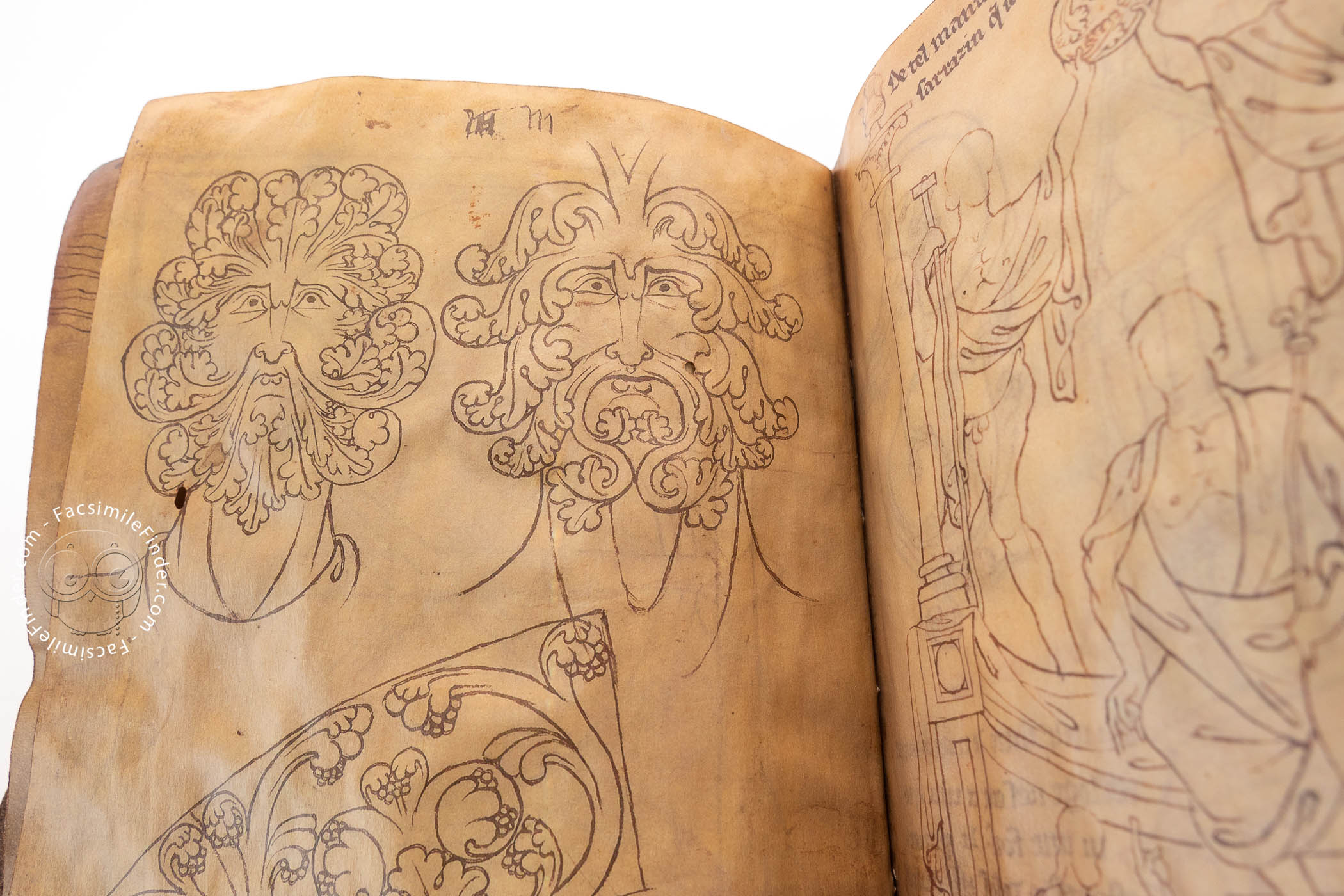
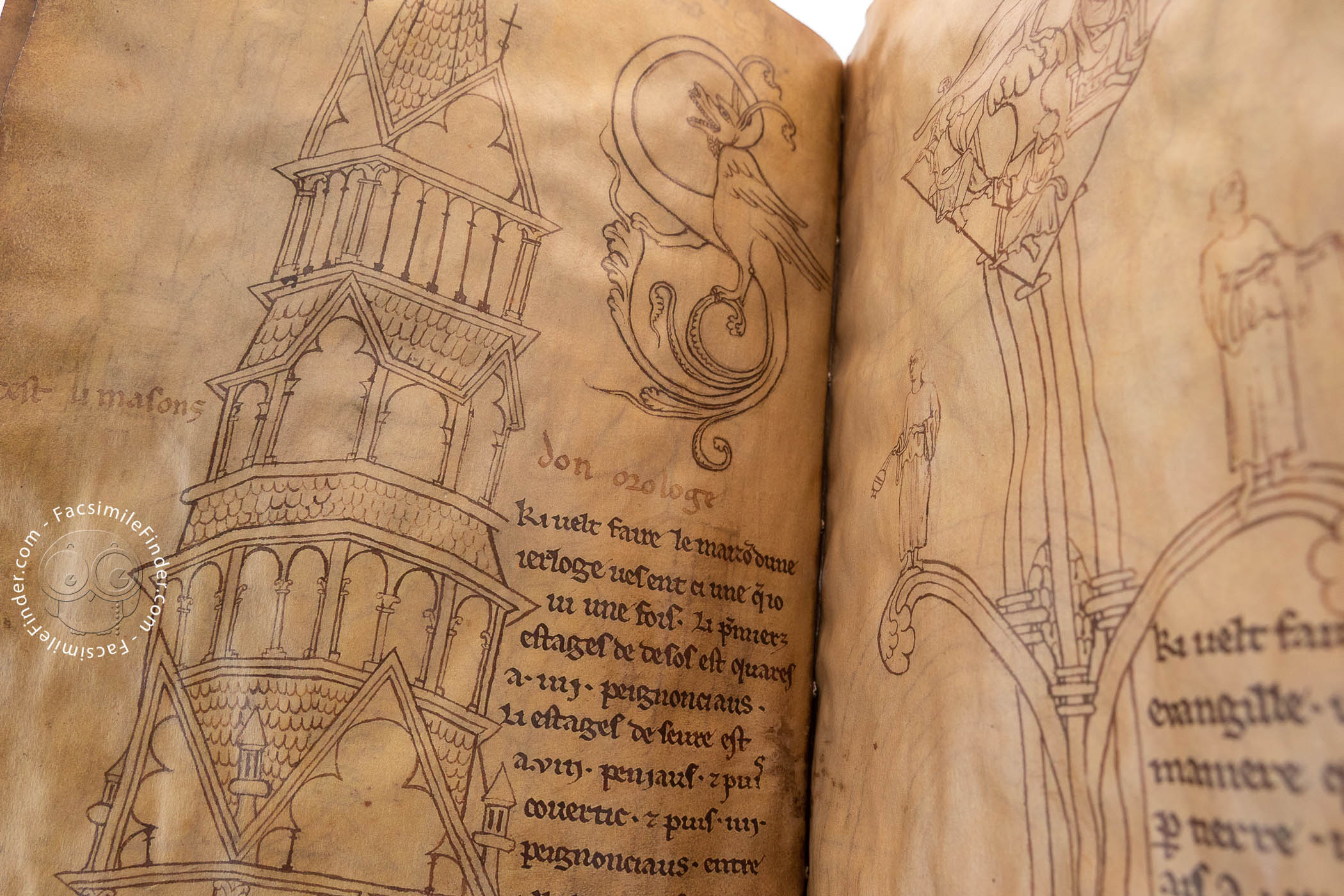
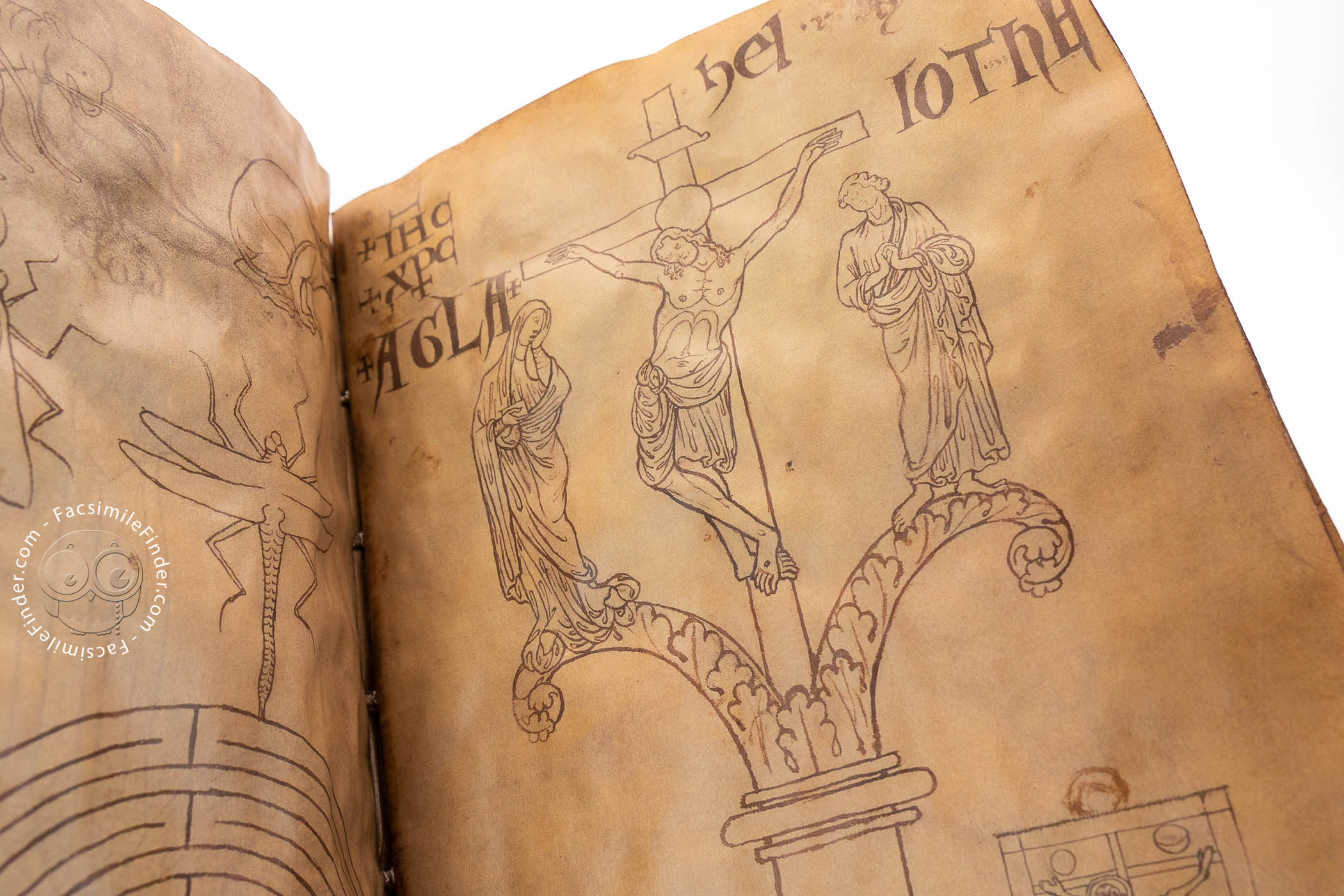

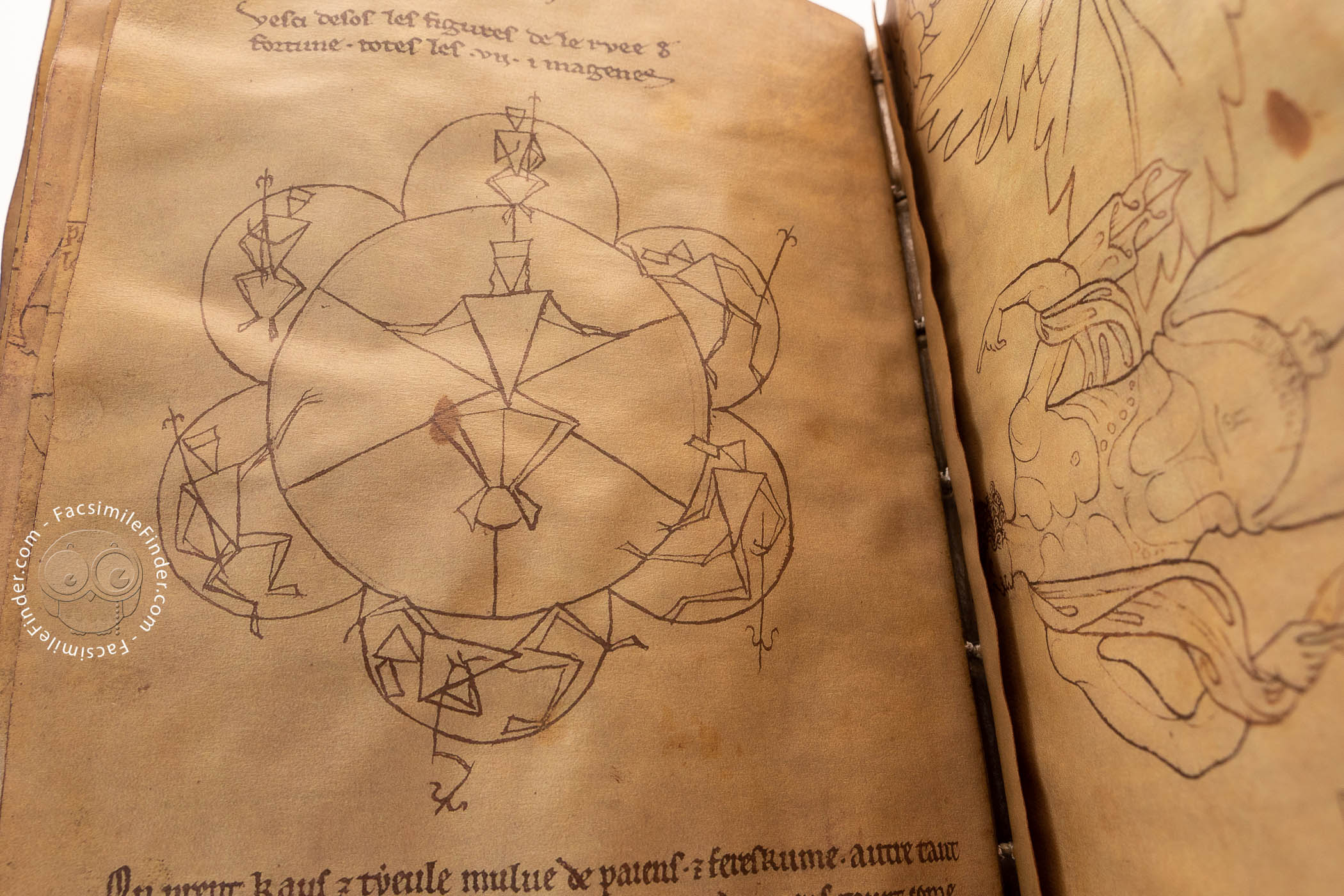
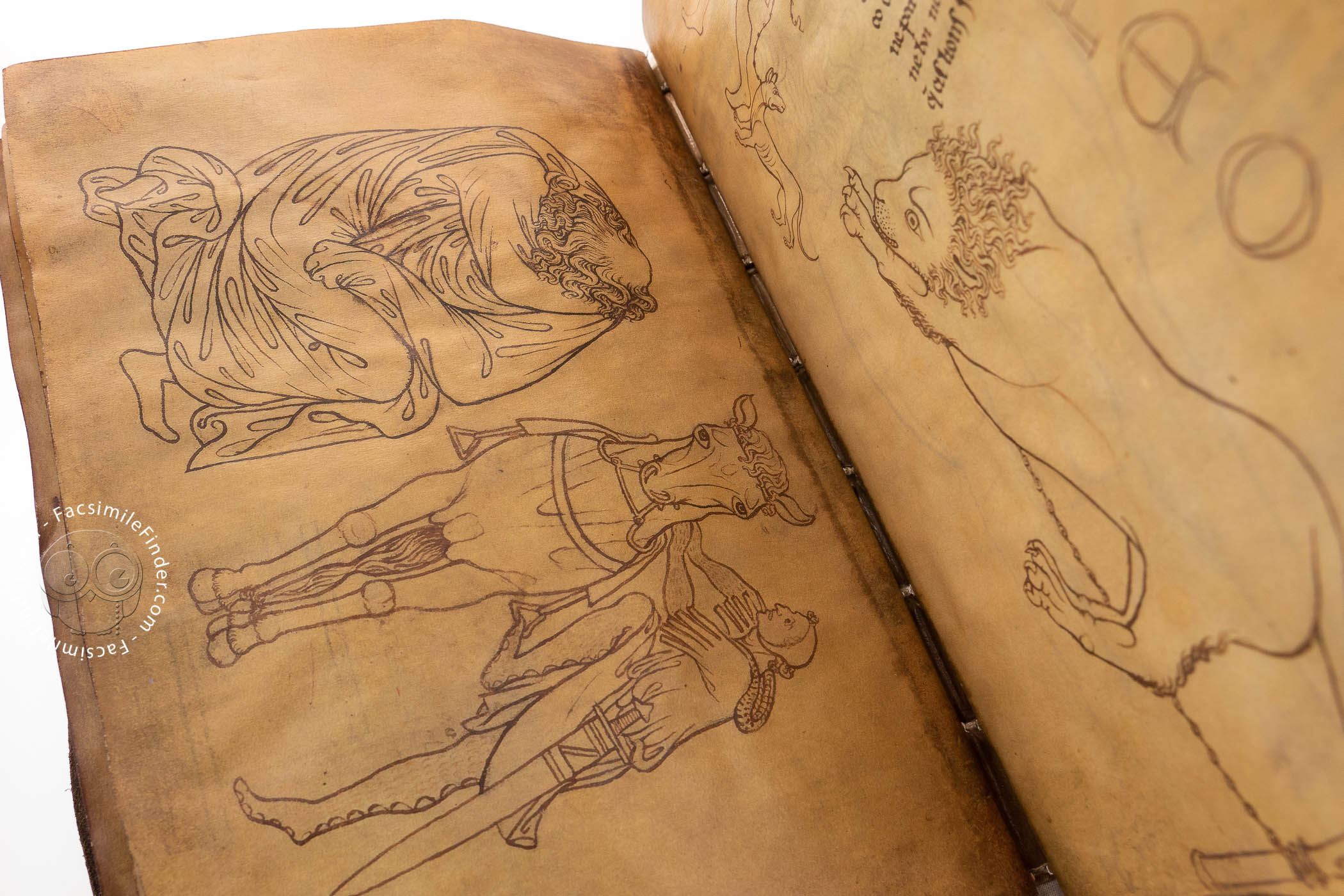
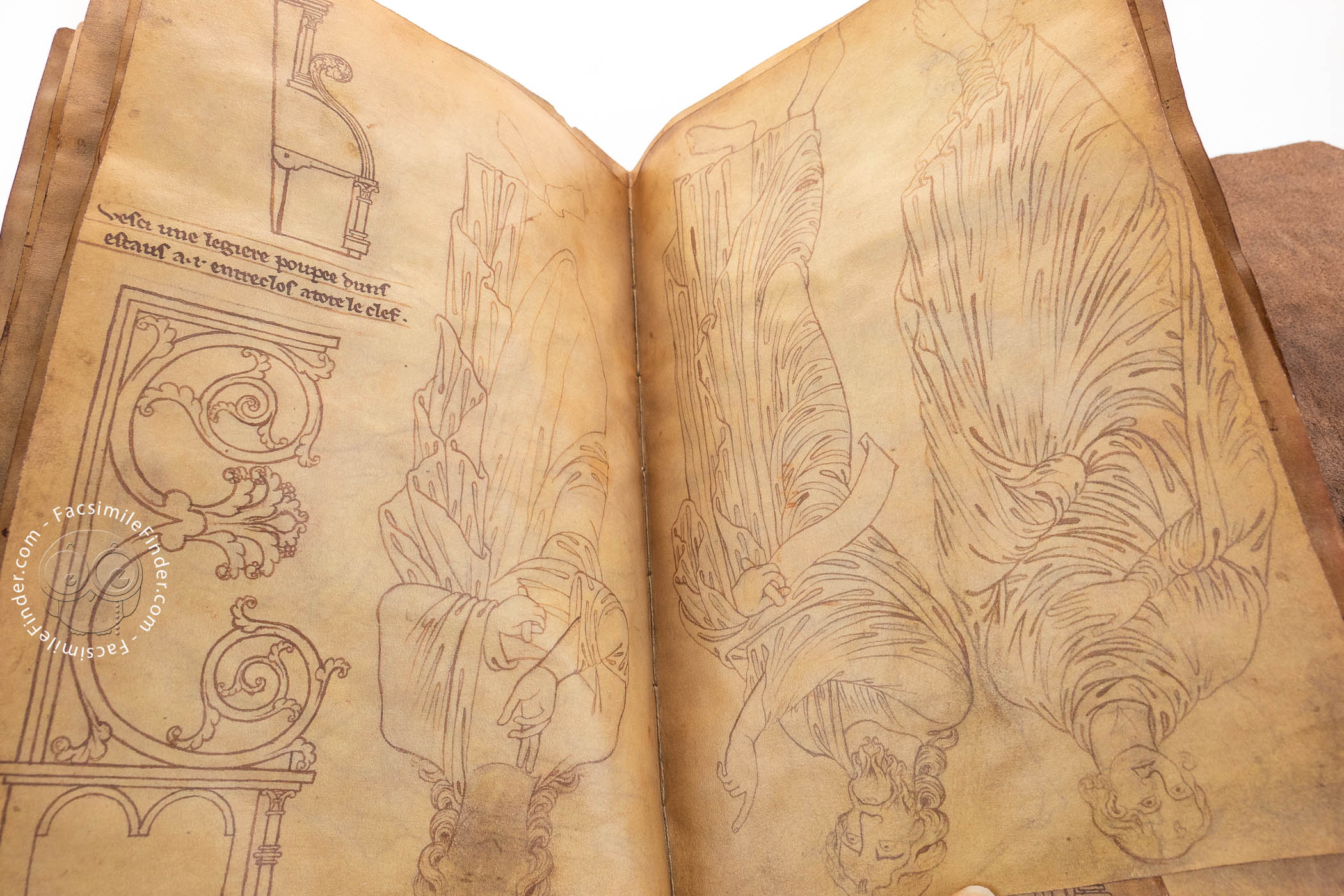
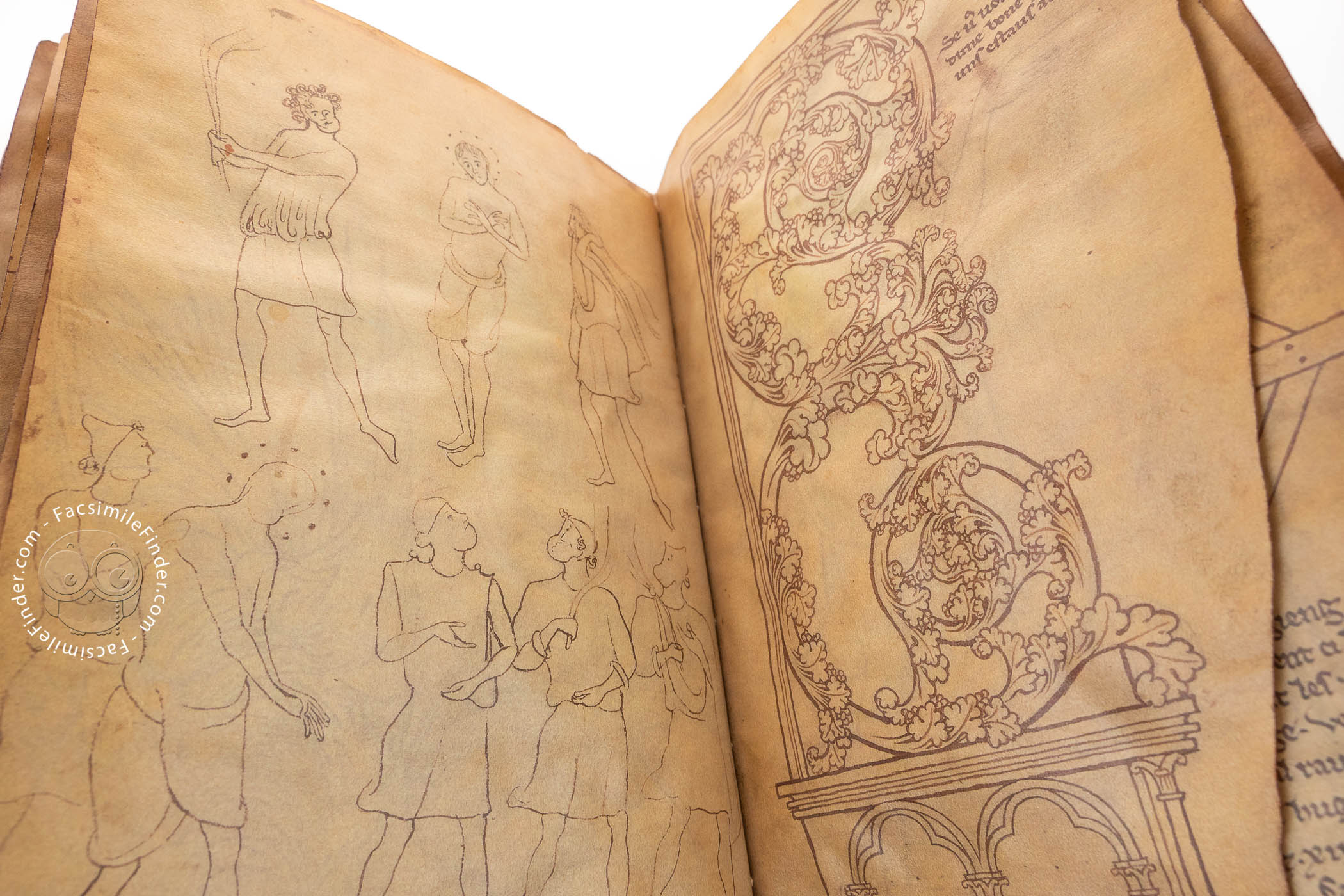
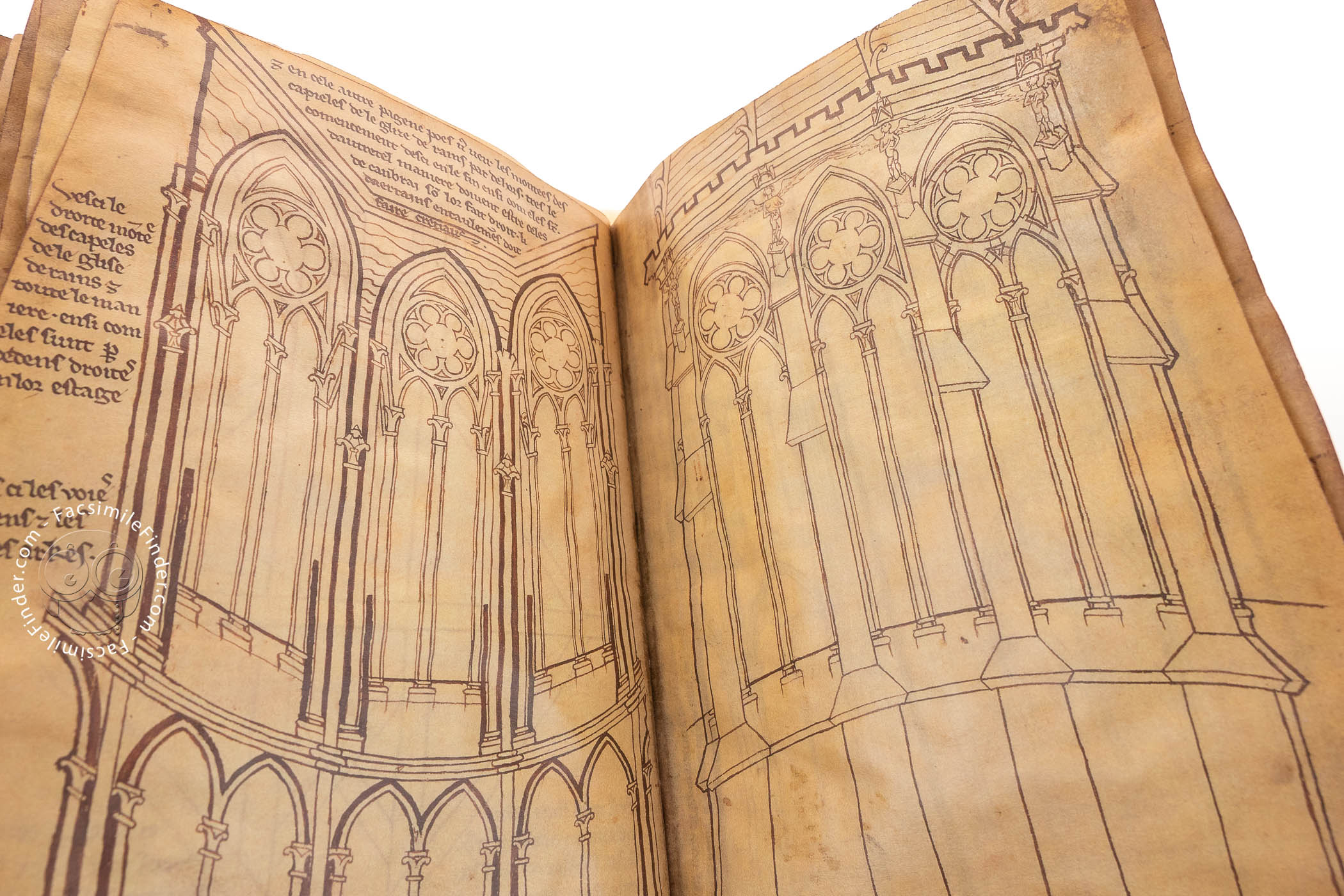
The Portfolio of Villard de Honnecourt is the most famous surviving sketchbook from the Middle Ages. Created around 1220-1240, probably in northern France, it includes around 250 drawings: human figures, animals, buildings, church furnishings, mechanical devices, and geometric schemata. Some are copies of existing works of art in painting or sculpture; others are architectural drawings or schematic renderings that often serve a didactic purpose. Text passages provide labels, instructions for understanding the drawings, and recipes. The human figures are sometimes identifiable and are labeled by inscription as characters from Christian biblical history.
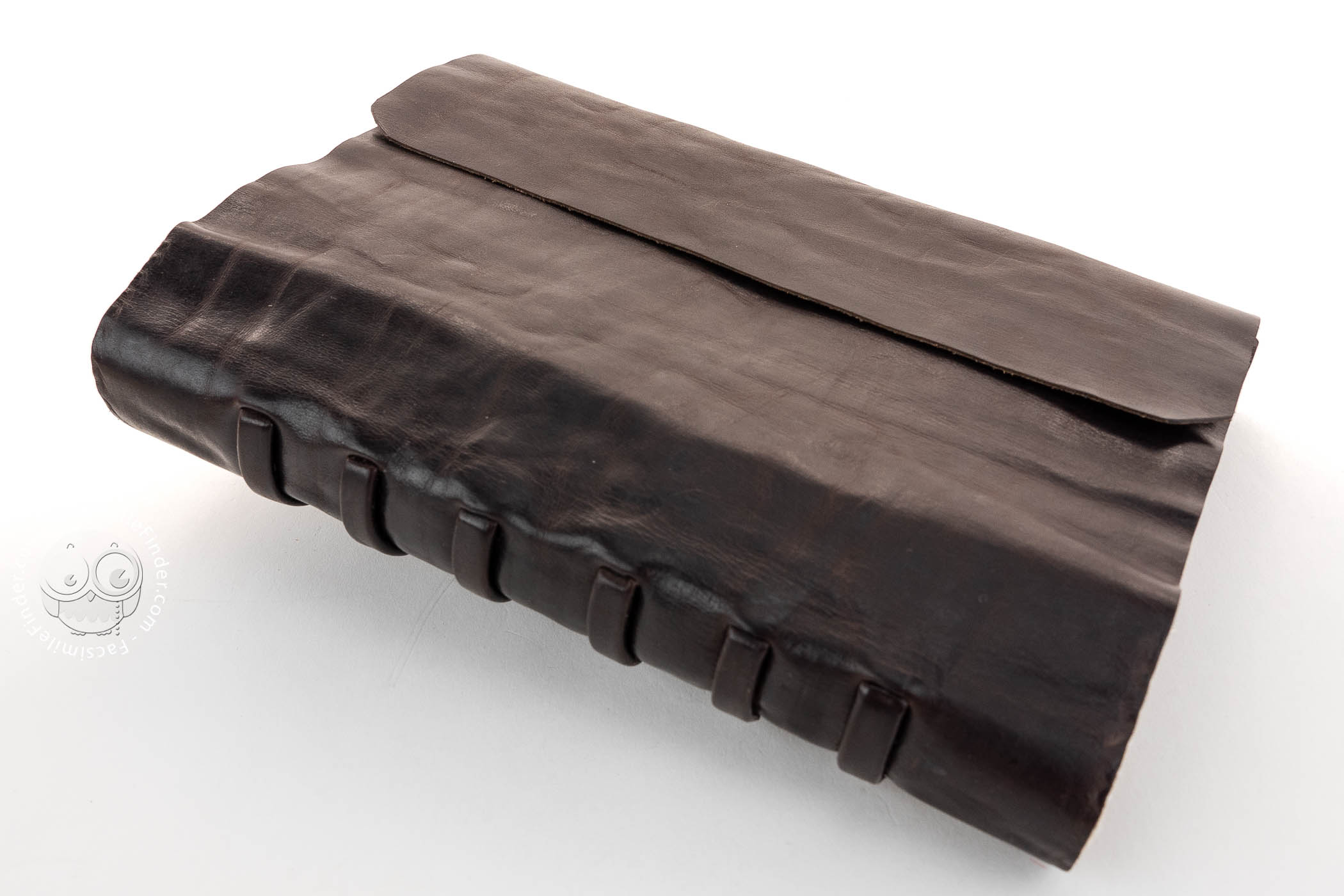
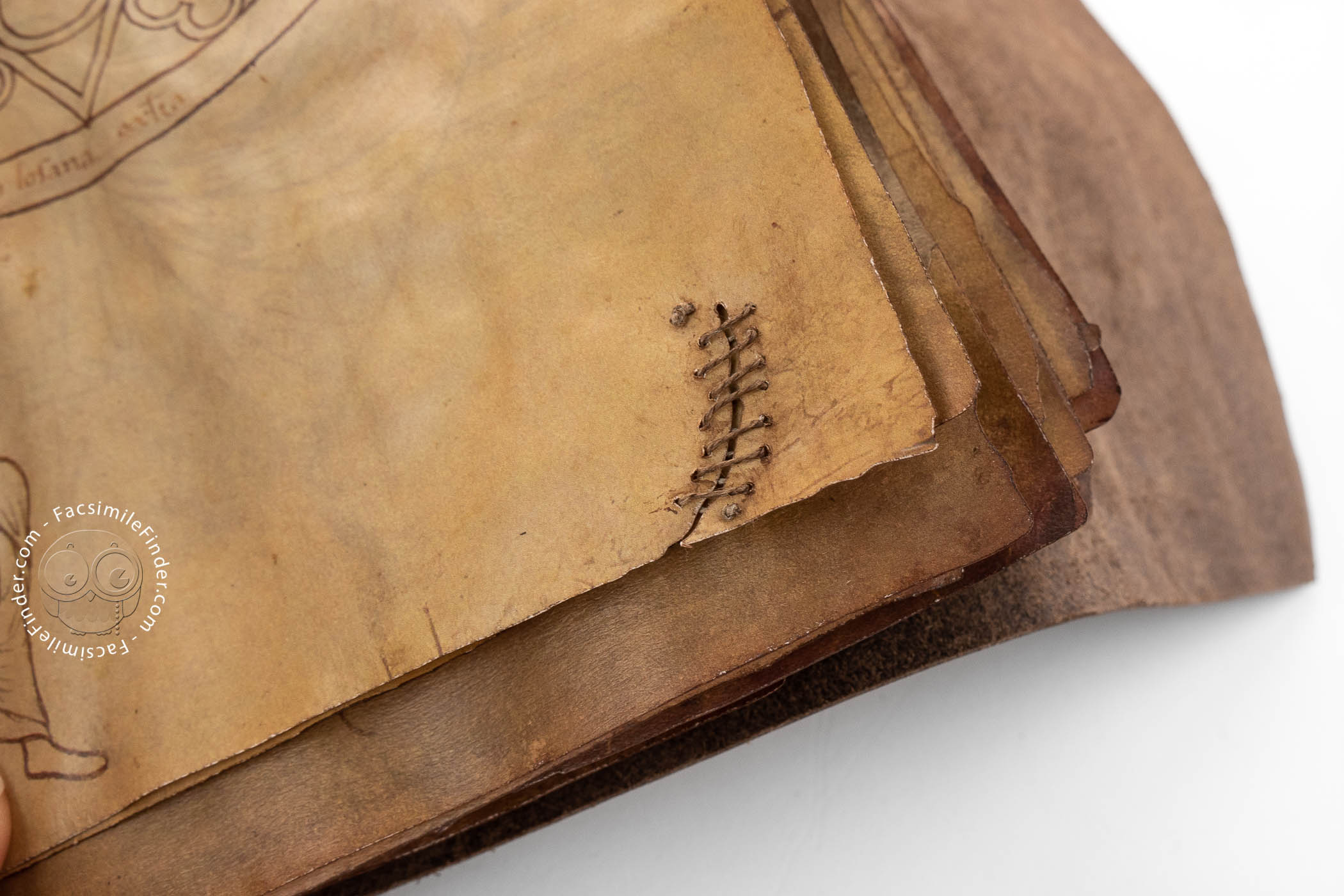
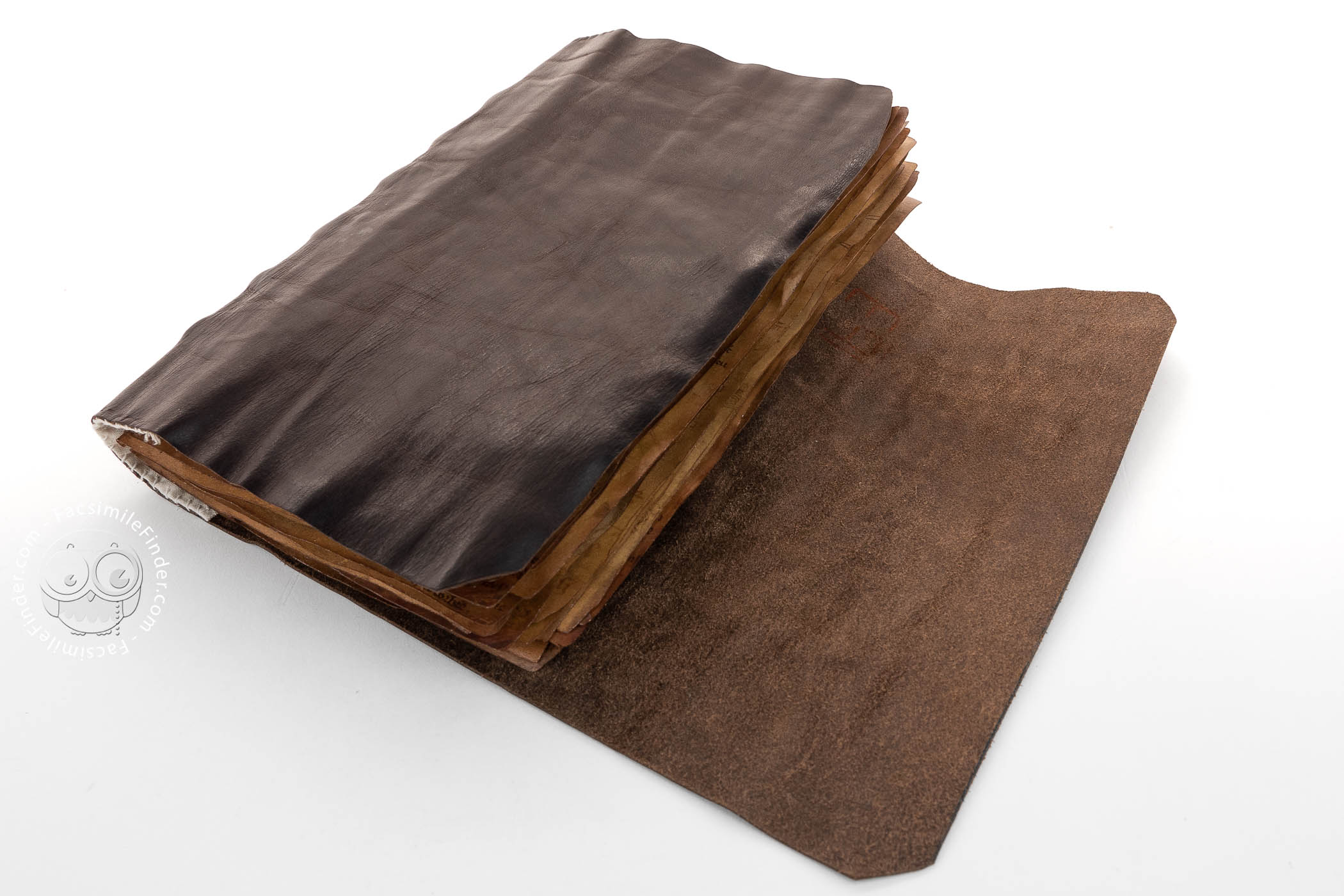
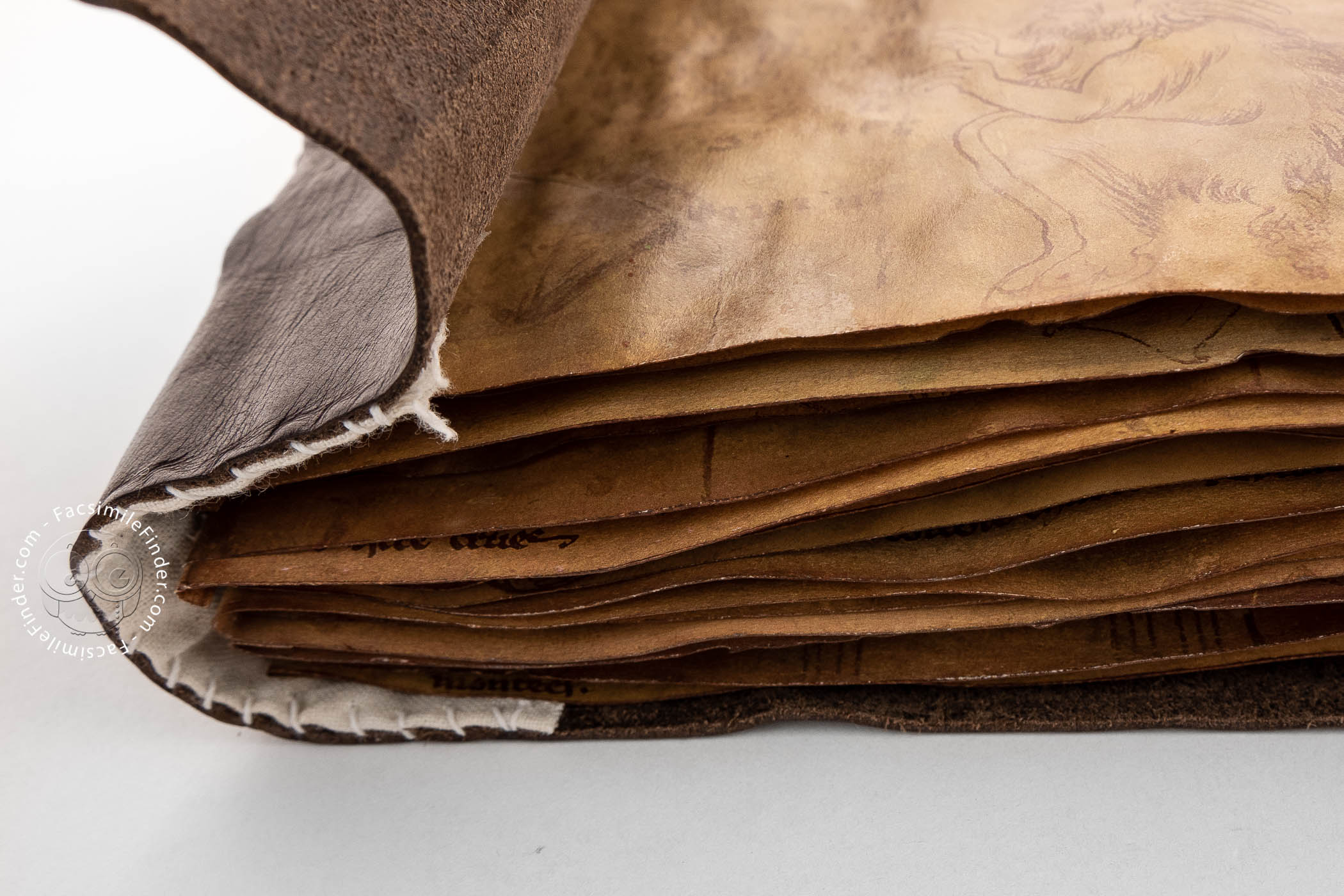
The portfolio was originally a collection of loose leaves that Villard himself shuffled during his lifetime. It is unknown when the leaves were sewn into the pigskin portfolio that probably originally served as a wrapper. In the course of its history, the manuscript has lost as many as thirteen leaves.
A Mystery Man
Villard de Honnecourt is known only from his portfolio. He is identified on a page that shows twelve seated apostles and three more figures (fol. 1v): "Villard de Honnecourt greets you." The inexpertness of his architectural drawings suggests that he was not a practicing architect.
He traveled as far as Switzerland and Hungary, but we do not know his profession or whether he was literate. Even the earliest inscriptions in the manuscript, such as the greeting, were probably written for him by a professional scribe. He may have been a proper amateur (someone who simply loved his subject).
A Puzzling Object
The portfolio is not simply a set of models to copy, since it contains many technical diagrams. It may have begun as a collection of observed works of art. Villard erased material to make room for new content and rearranged pages to create new groupings.
Once he had the inscriptions added, he seems to have regarded it as a sort of instructional manual (for whom it is difficult to say). Villard himself claims that the portfolio offers "sound advice on the virtues of masonry and uses of carpentry . . . [and] help in drawing figures according to . . . the art of geometry" (fol. 1v).
A Unique Resource
As a record of an observer's approach to the visual culture of his own time, the portfolio is unparalleled. Many of the buildings Villard drew were of recent construction. He also had access to older works of art, including a Gospel book of the Court School of Charlemagne that was at the time in the possession of Soissons cathedral, from which he copied two evangelist symbols (fol. 13v).
Showpiece of Trough-Fold Style
Villard rendered drapery in the "trough-fold style," which arose in the region of his native Picardy in the late twelfth century, most famously seen in the Ingeborg Psalter and metalwork sculpture. In this style, cloth falls in deep troughs marked by "hairpin loops," both revealing and partially concealing the limbs beneath.
Many of the human figures, presumably copied from near-contemporary works of art, feature bold "hairpin looped" drapery (fols. 4v, 8r, 16v, and 23v). Villard sometimes filled in the troughs with ink, creating a dramatic effect, as can be seen, for example, in the figures of a king and his retinue (fol. 13r).
A Wide Range of Textual and Visual Accretions
The first group of inscriptions, in French, was authored (but not necessarily written) by Villard. More inscriptions, in French and Latin, and some drawings were added in the mid-thirteenth century, and still more French-language inscriptions were added in the second half of the thirteenth century. All are in Gothic Textualis.
Owned by an Art Historian
André Félibien (1619-1695), who wrote a ten-volume history of Western art, owned the manuscript in the seventeenth century. Acquired in 1719 by the monastery of Saint-Germain-des-Près in Paris, the manuscript entered the Bibliothèque nationale (now Bibliothèque nationale de France) in 1795.
We have 1 facsimile edition of the manuscript "Portfolio of Villard de Honnecourt": Cuaderno de Bocetos de Villard de Honnecourt facsimile edition, published by Siloé, arte y bibliofilia, 2018
Request Info / Price