




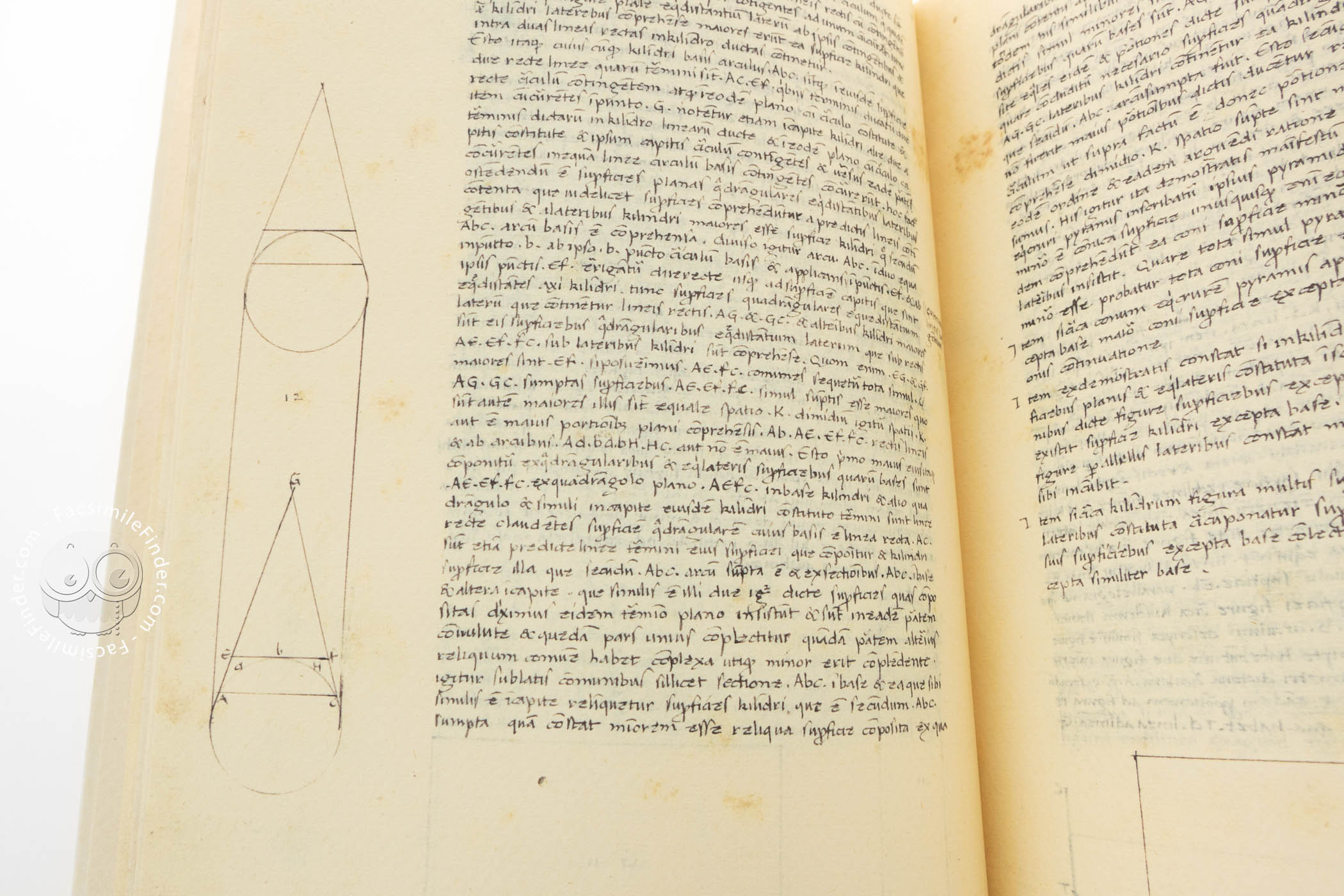
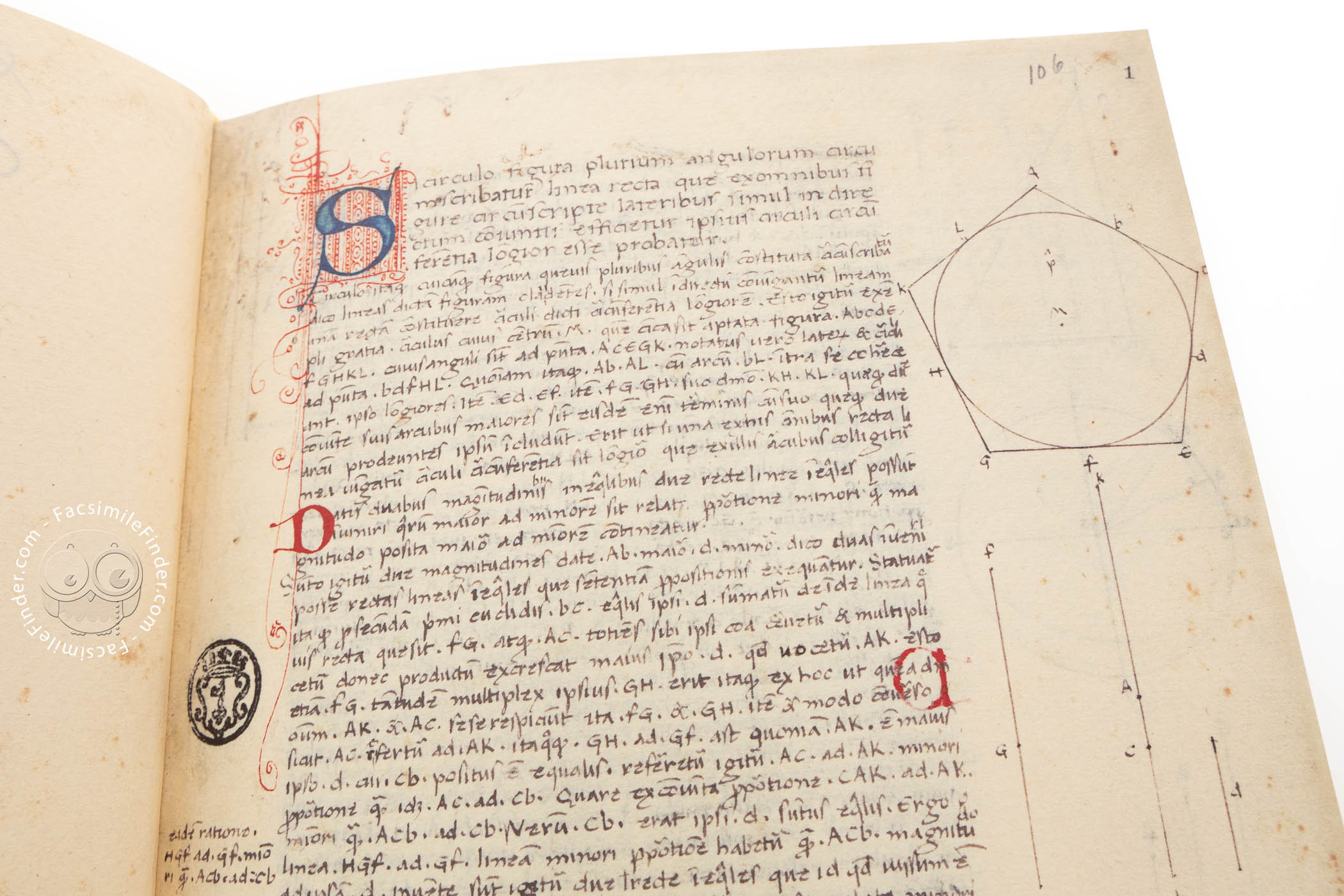
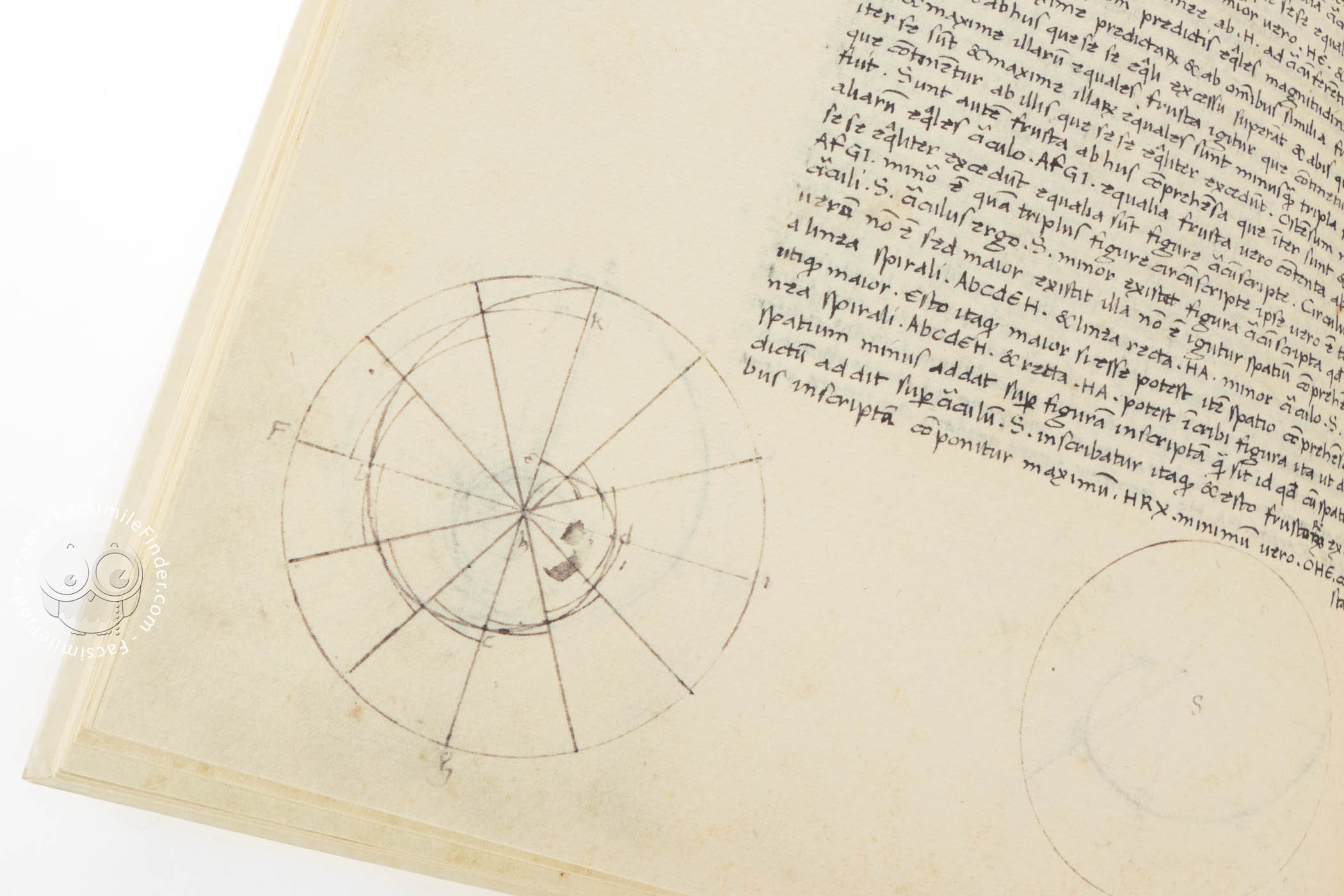
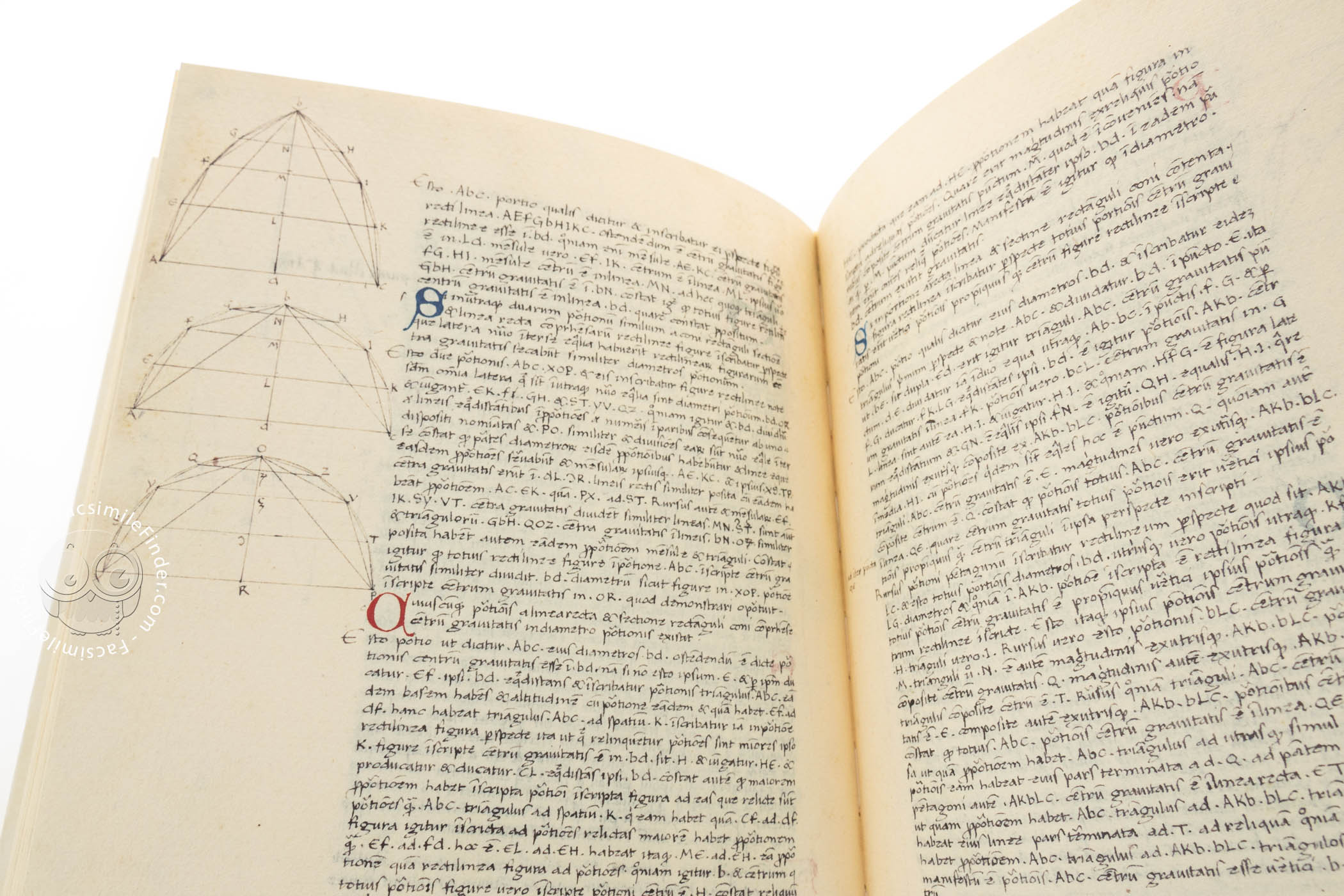
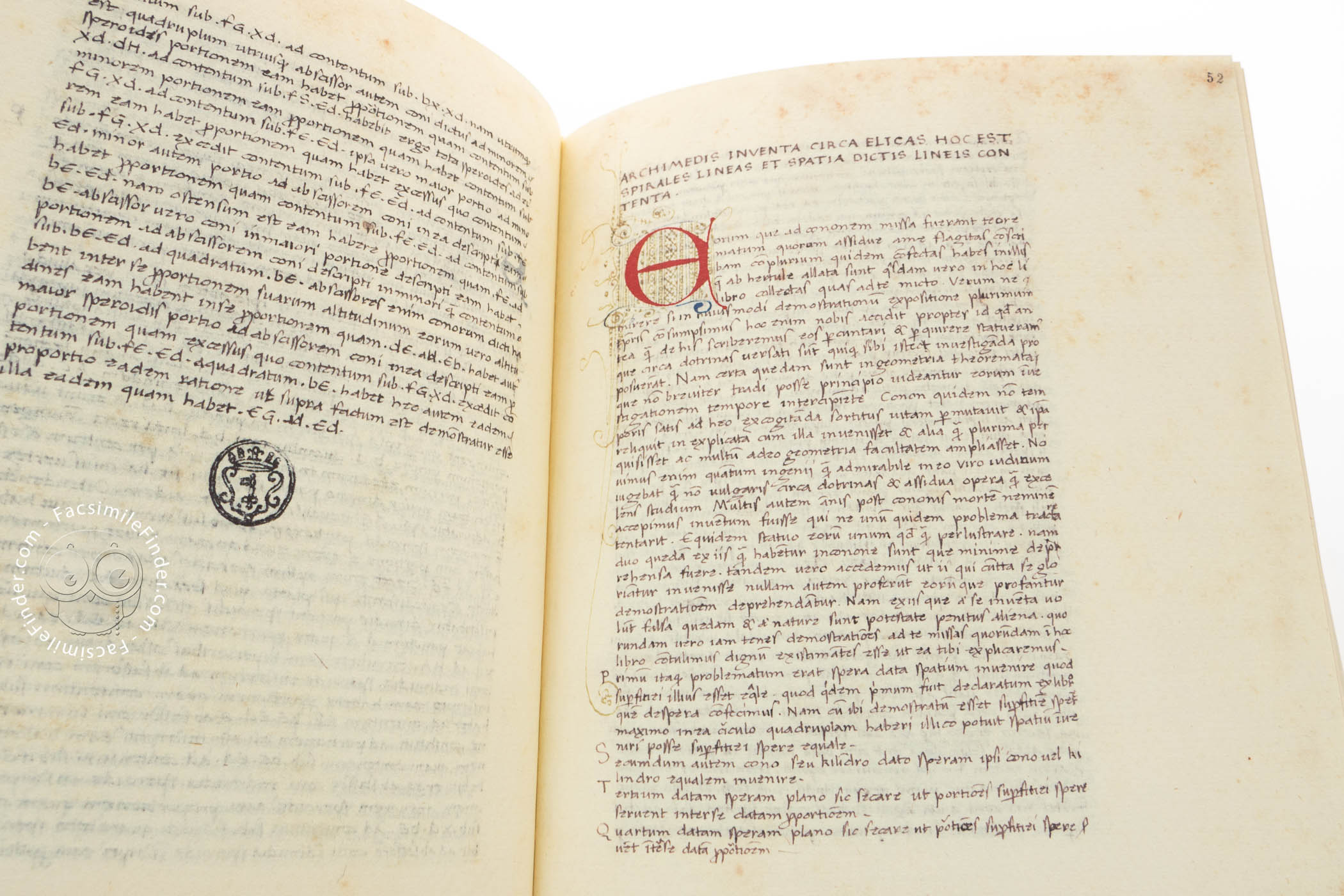
MS Ricc. 106 preserves an extraordinary Renaissance encounter: Piero della Francesca copying the works of Archimedes in his own hand. Identified as an autograph in modern scholarship, the codex repositions the painter not only as a master of light and form, but as a disciplined reader—and maker—of mathematical knowledge.
The volume is closely tied to Sansepolcro: one plausible reconstruction has Piero beginning—and completing—the arduous transcription there after 1468. The watermarks sharpen the chronology: an eagle within a circle suggests that the copying could not have started before c. 1470
Humanist Context
The manuscript transmits the “modern” Latin translation produced from Greek by Jacopo da Cremona under the patronage of Pope Nicholas V around the mid-15th century, a version that circulated among humanists and mathematicians and sharpened the period’s renewed appetite for Greek science. The codex thus belongs to the vibrant intellectual climate in which antique geometry became a living instrument for artists, engineers, and theorists.
Script and Scribal Practice
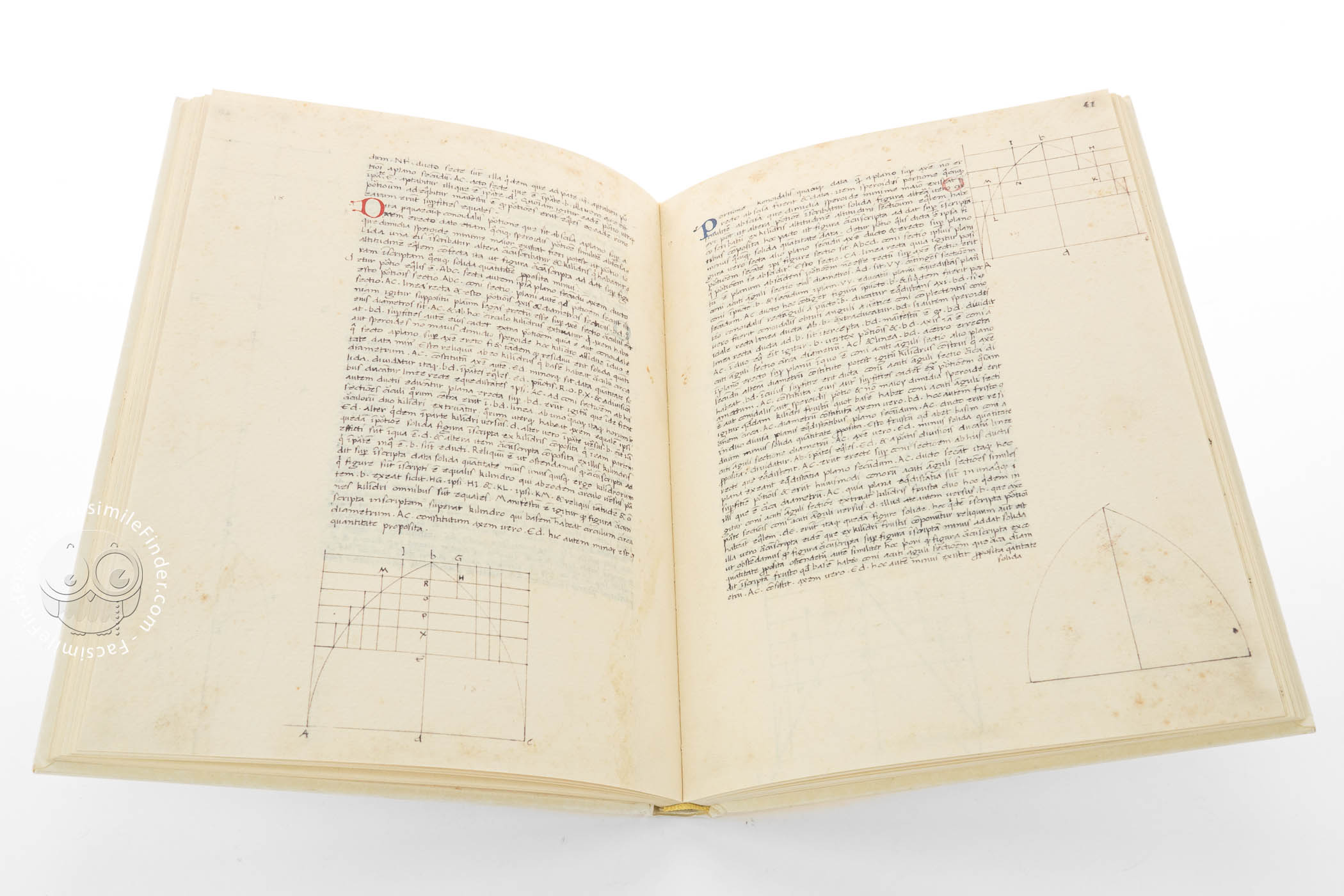
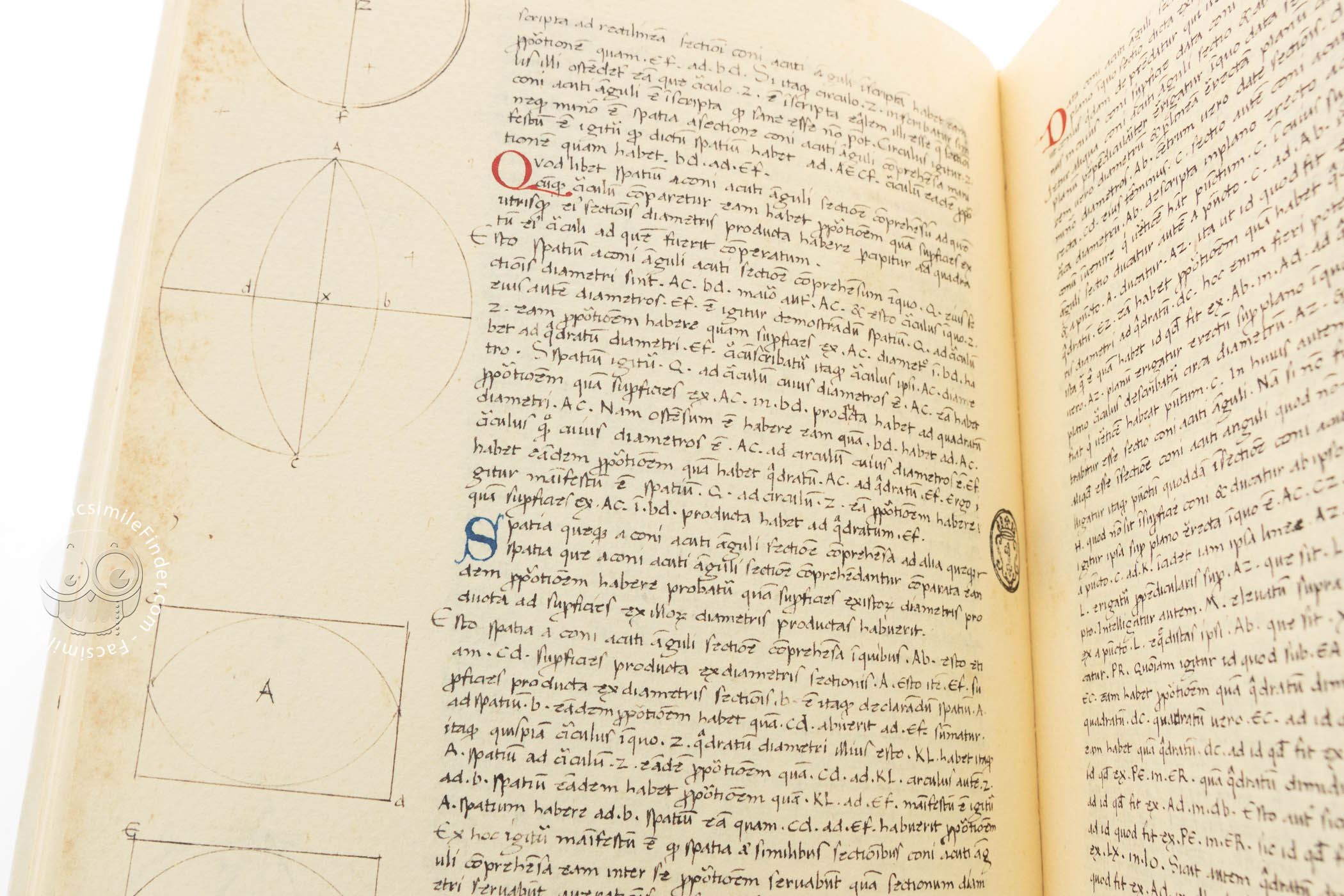
Piero’s hand is recognised through distinctive letterforms and a consistent ductus, while the manuscript also preserves the trace of a second copyist responsible for portions of the text—evidence of a pragmatic, workshop-like rhythm of production. Watermark evidence discussed in the volume suggests a copying campaign that may extend into the later 15th century.
Decoration and Diagram
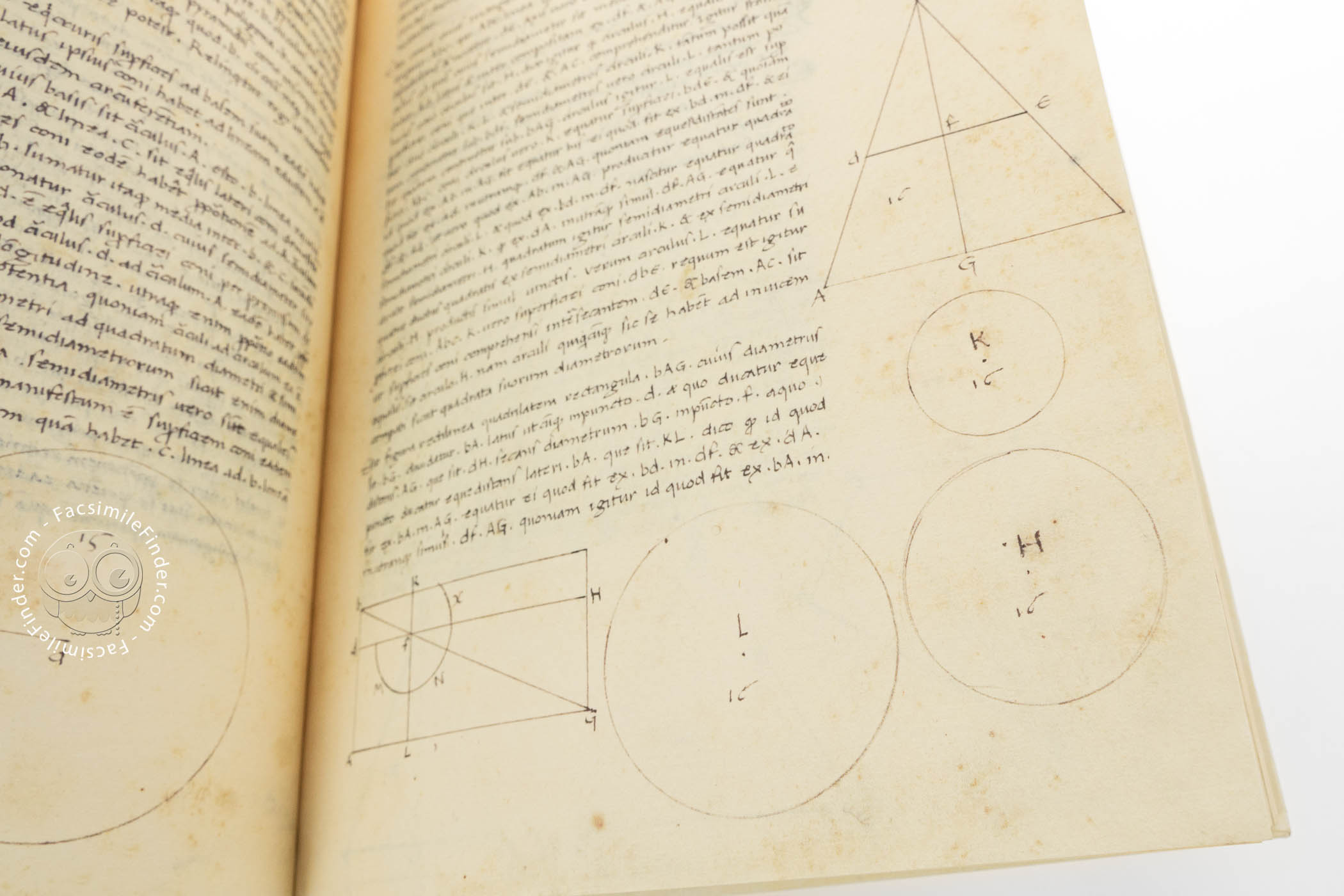
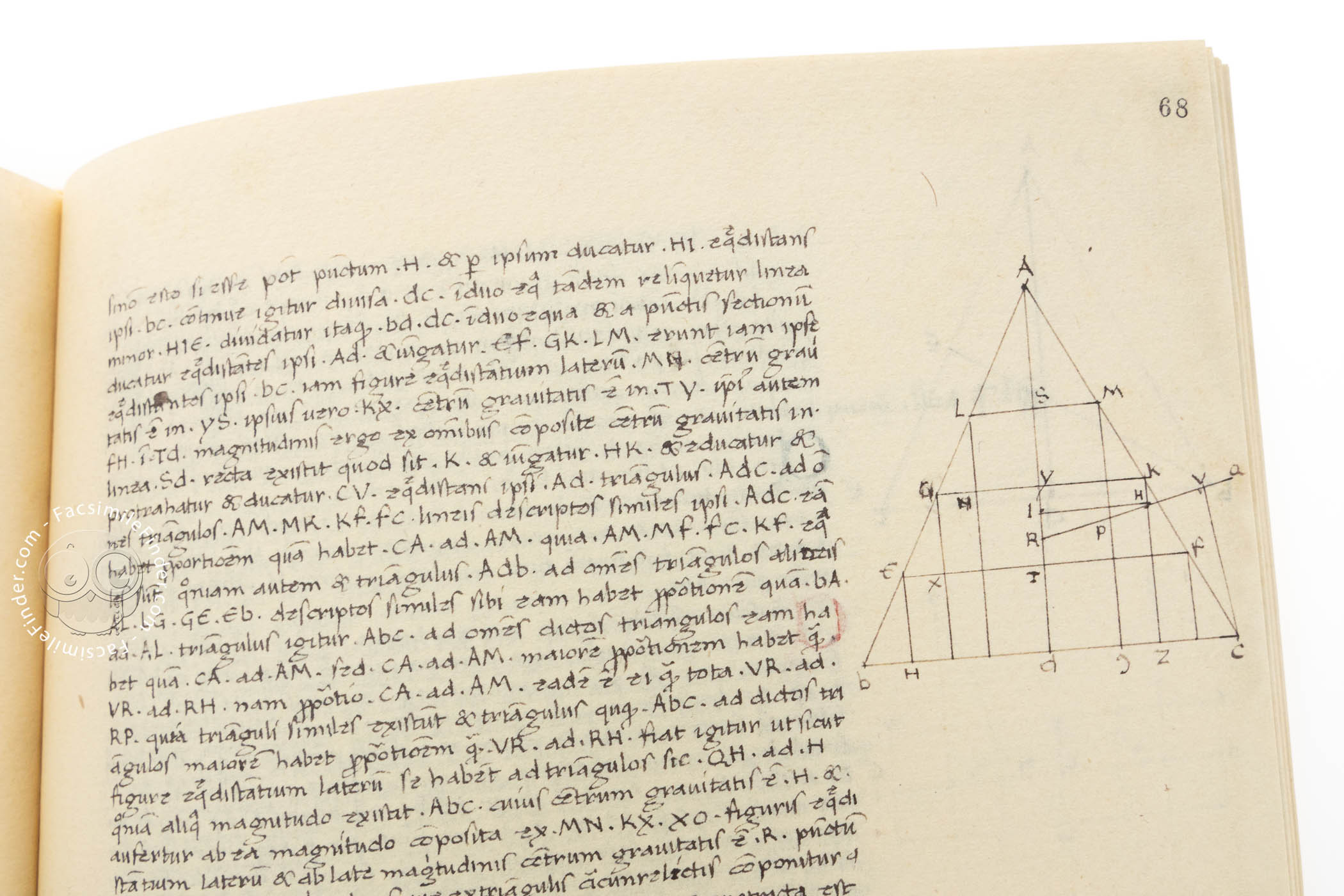
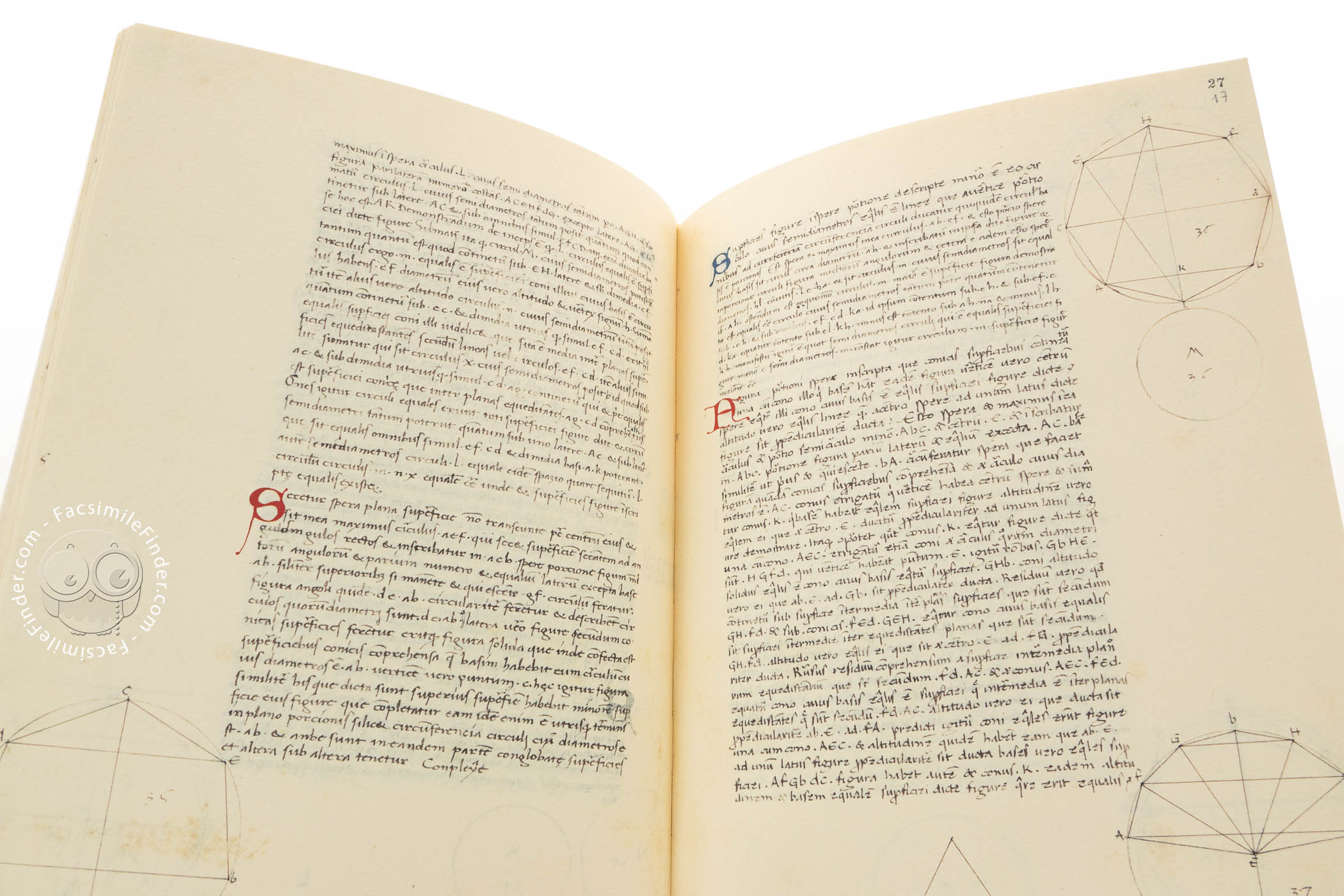
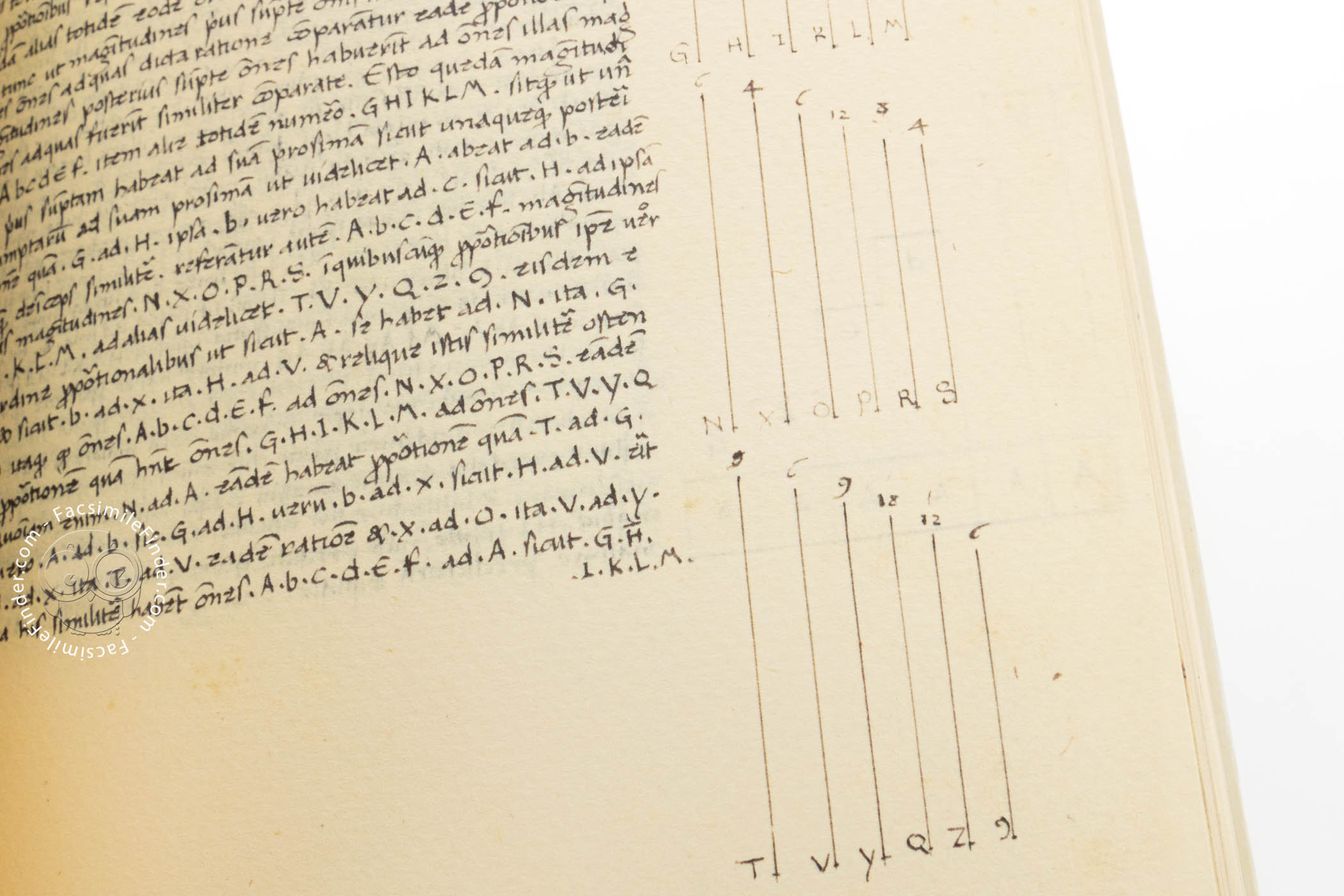
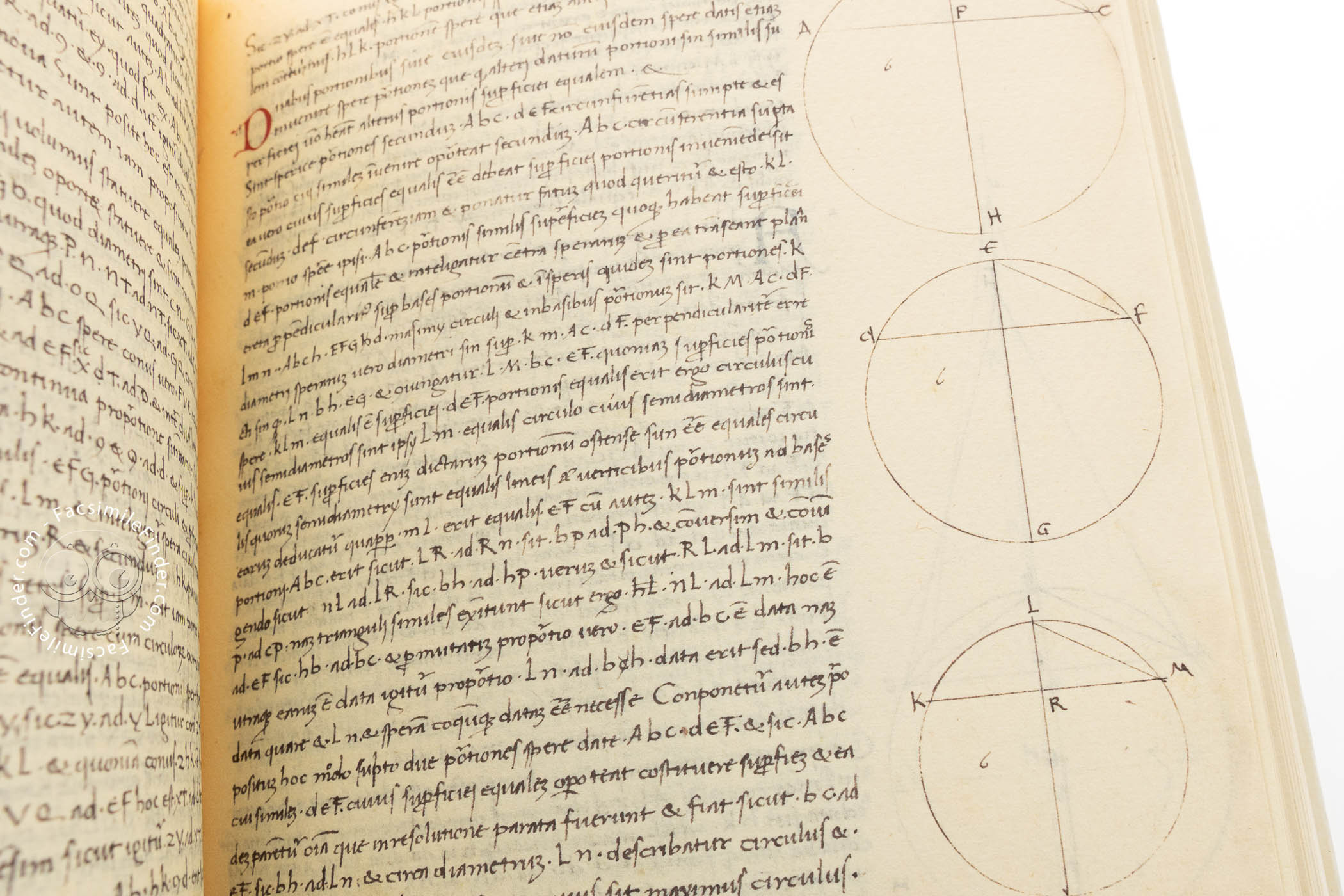
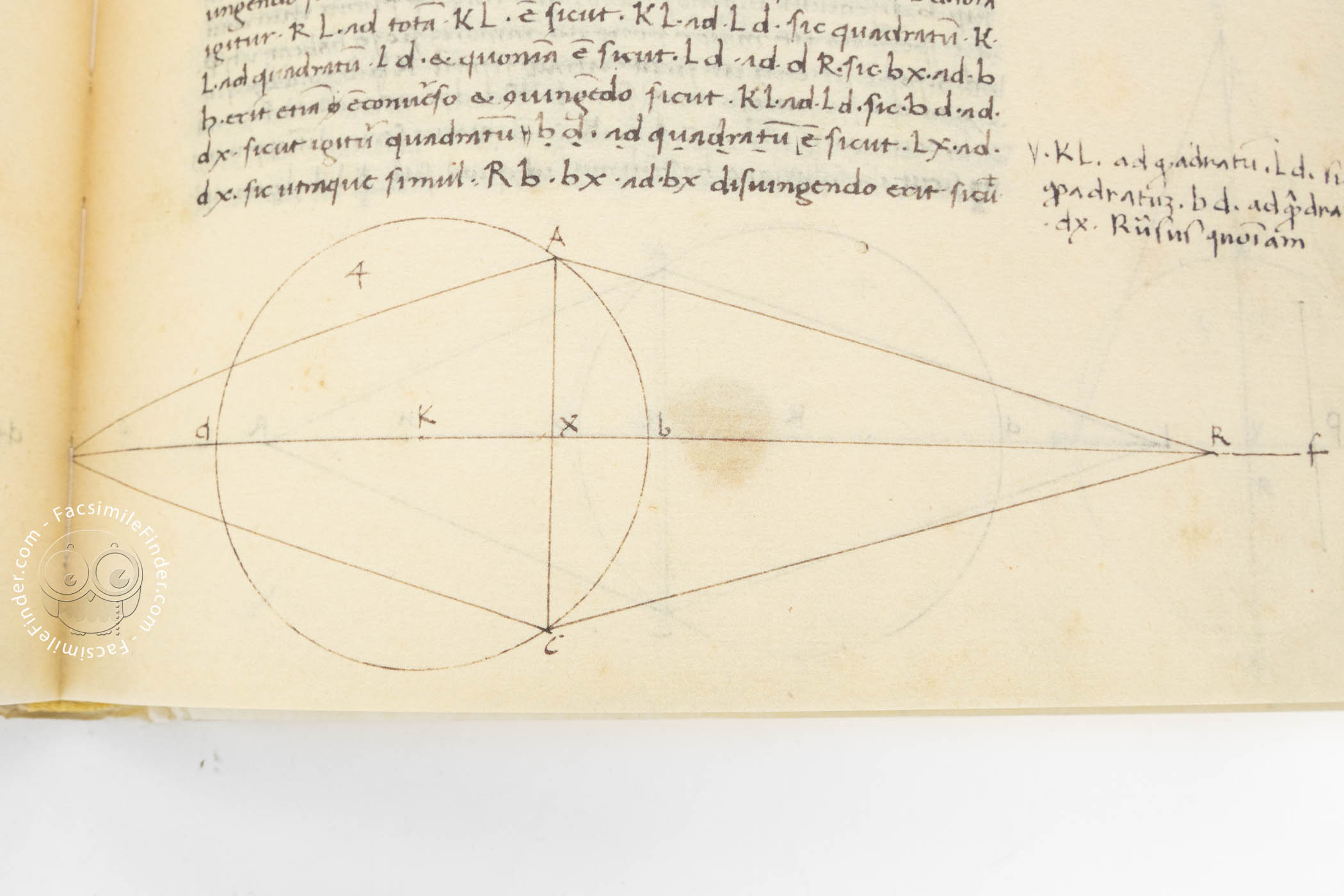
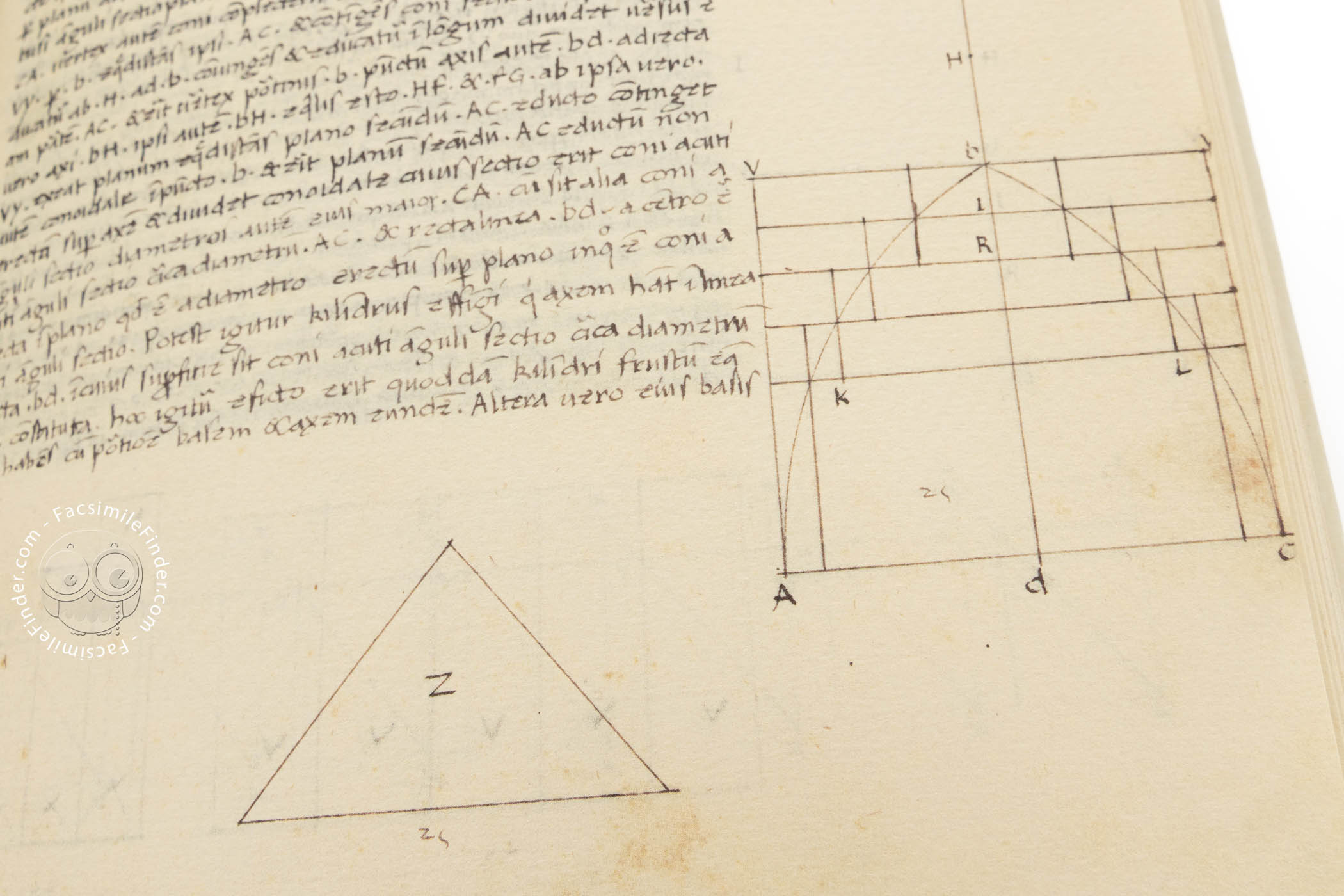
The book is sparingly but deliberately finished: red and blue rubrication, filigreed initials, and restrained pen ornament. Margins sometimes widen to accommodate the geometric figures, which function not as embellishment but as the manuscript’s operative language.
Contents and Purpose
A compact Archimedean corpus unfolds: De sphaera et cylindro (Books I–II), Circuli dimensio, De conoidibus et sphaeroidibus, the Spiralia, treatises on centres of gravity and equilibrium, Quadratura parabolae, and De arena numero.
Read as a whole, Ricc. 106 feels less like a presentation volume than a working book—study made tangible, where pen, proof, and imagination converge.
We have 1 facsimile edition of the manuscript "Piero della Francesca's Archimedes": Archimede di Piero facsimile edition, published by Grafica European Center of Fine Arts, 2007
Request Info / Price