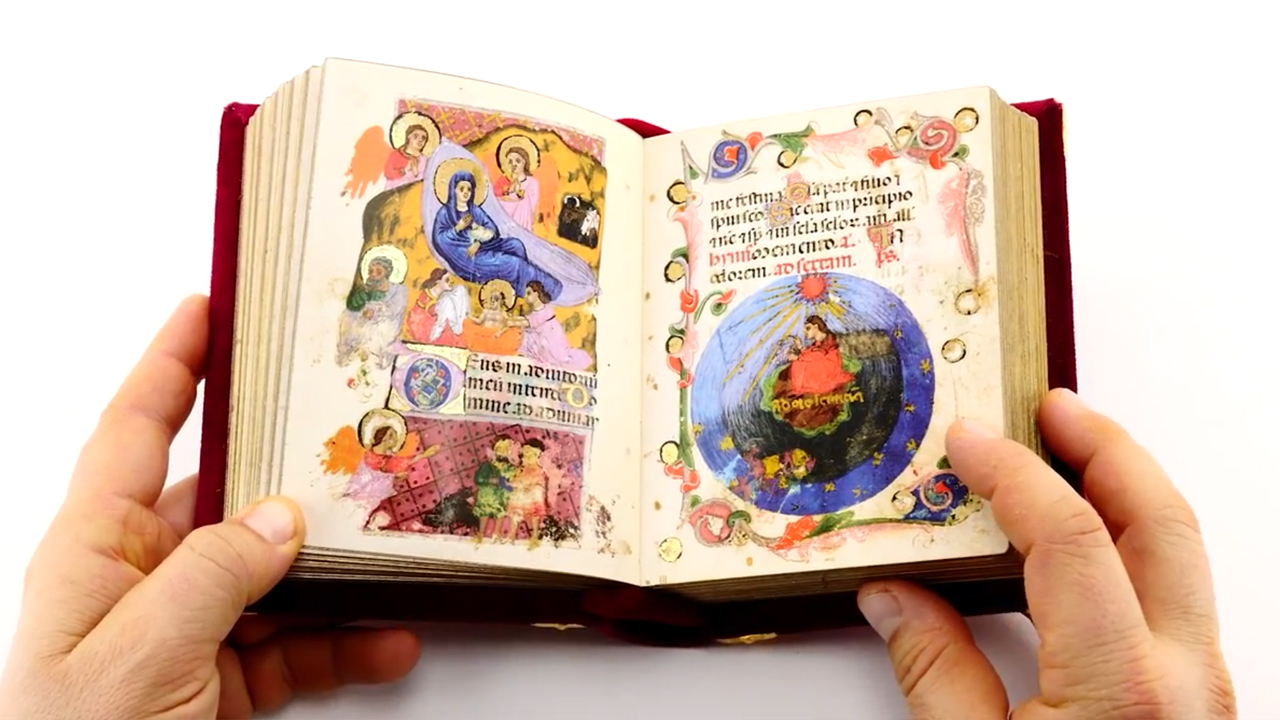
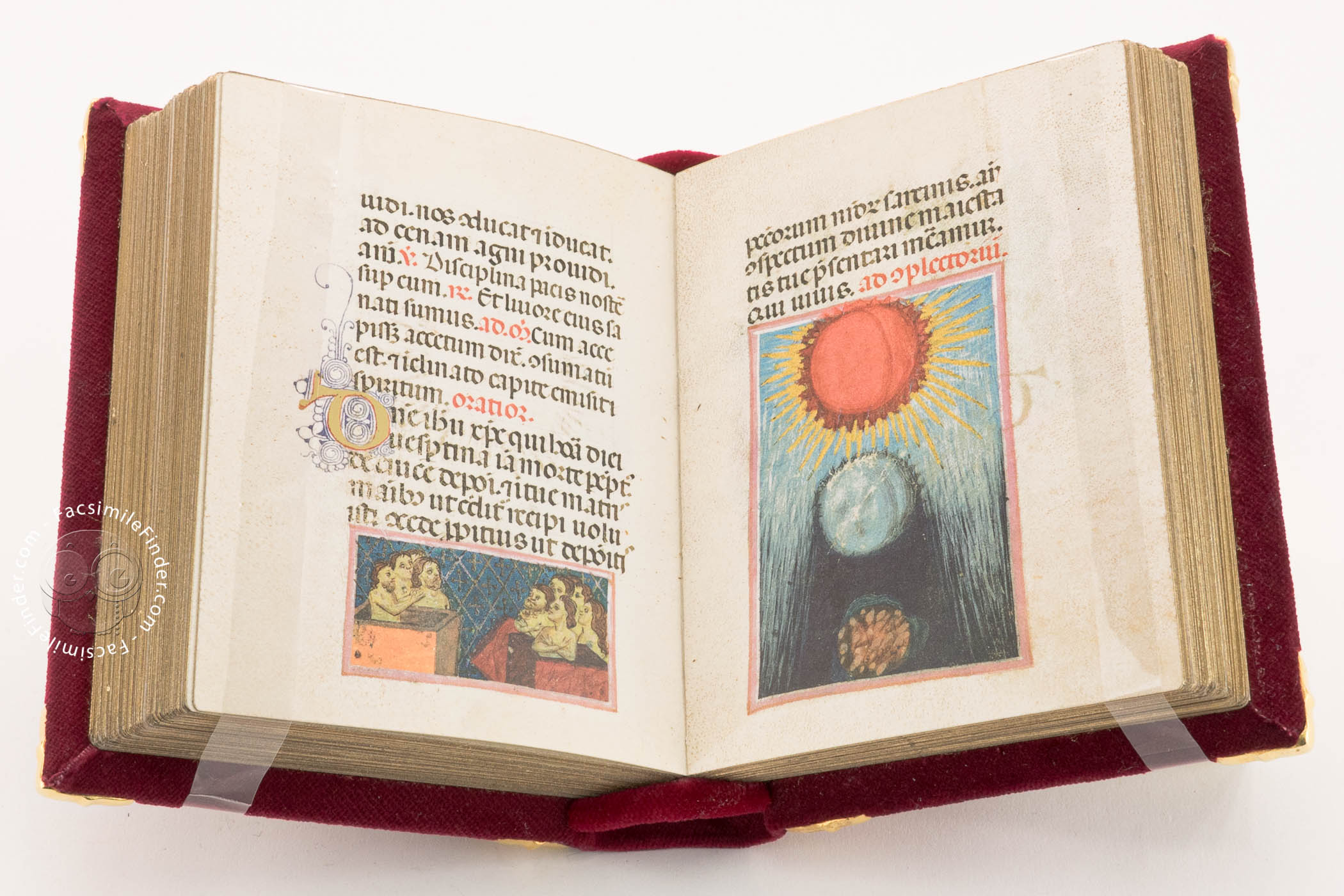
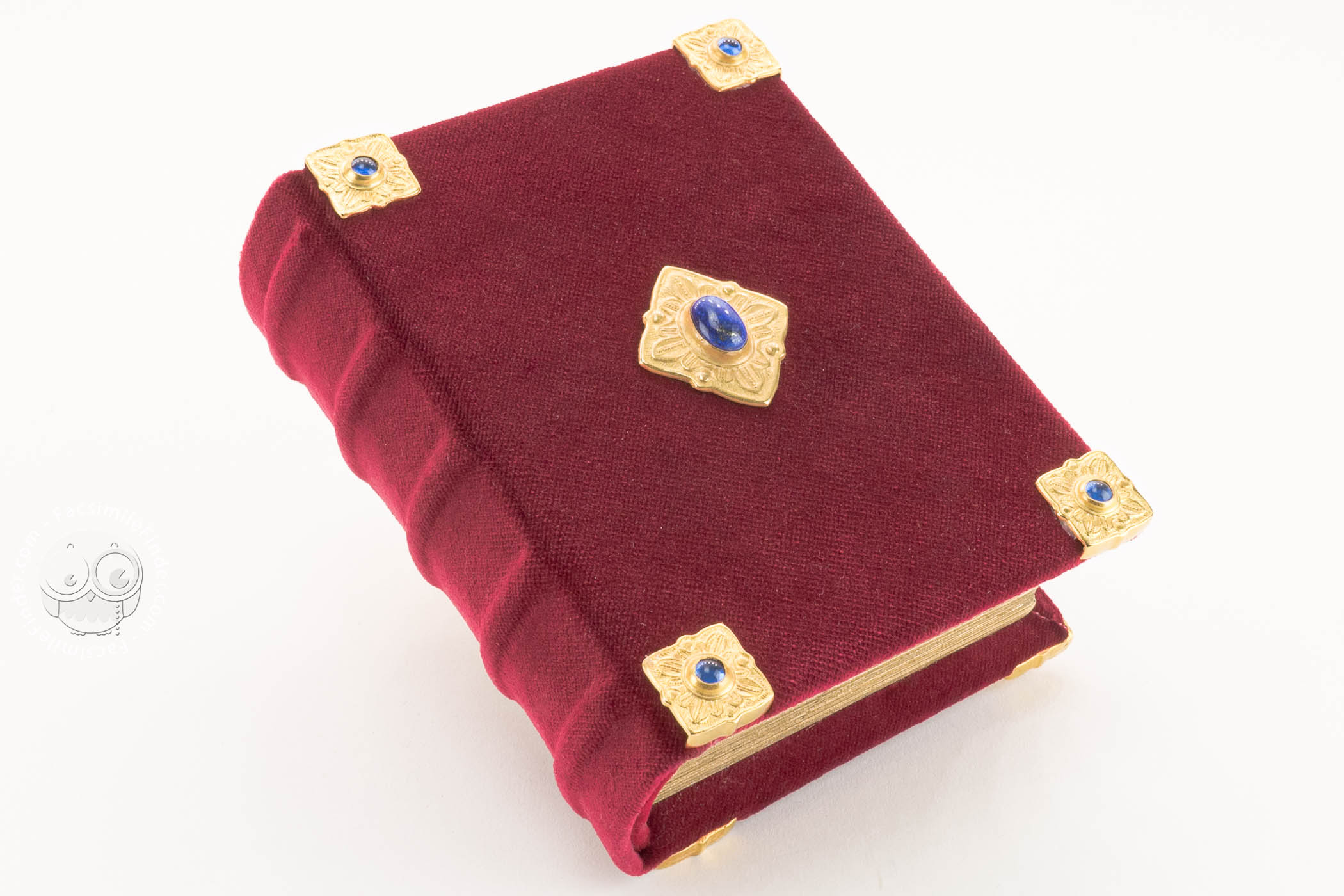
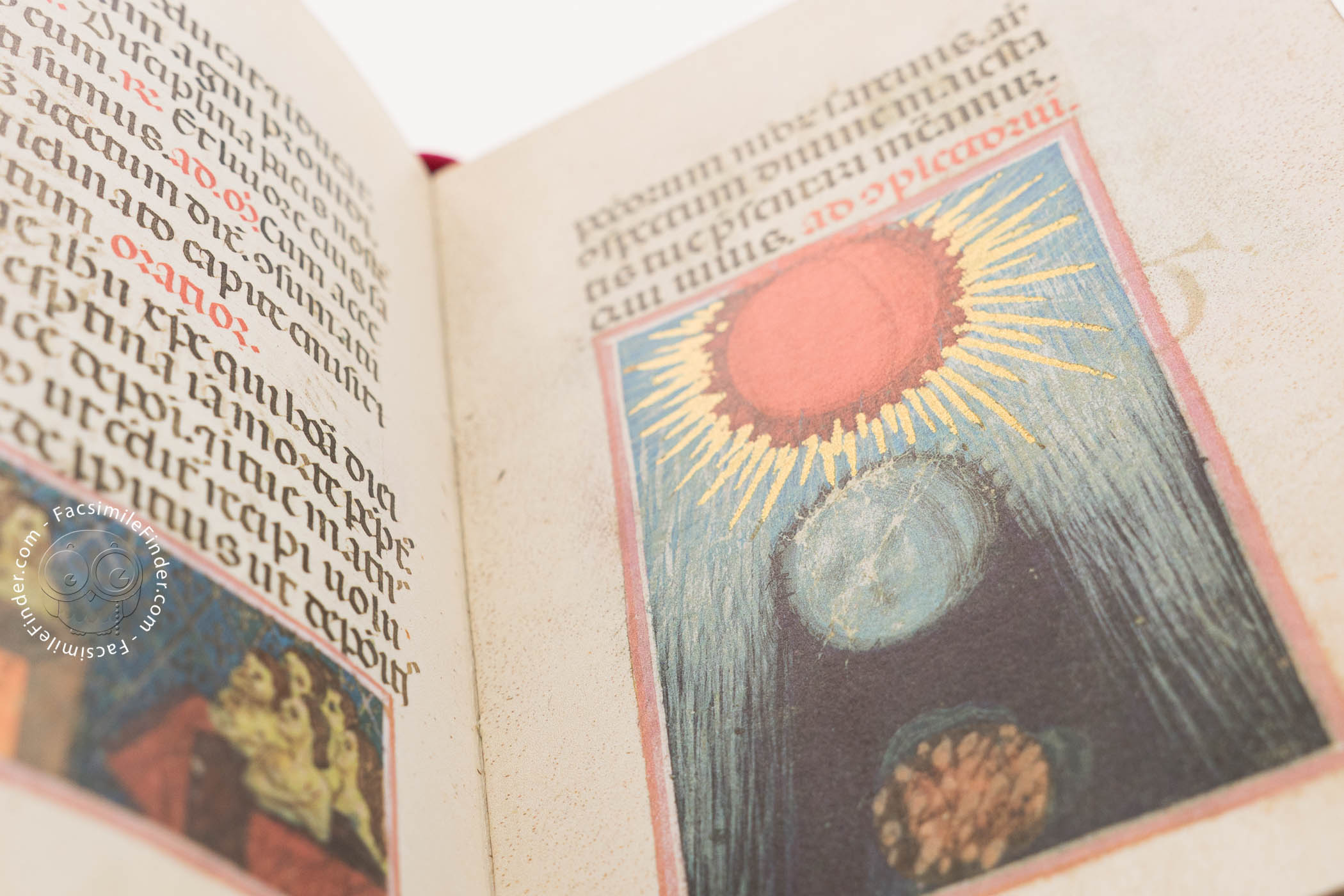
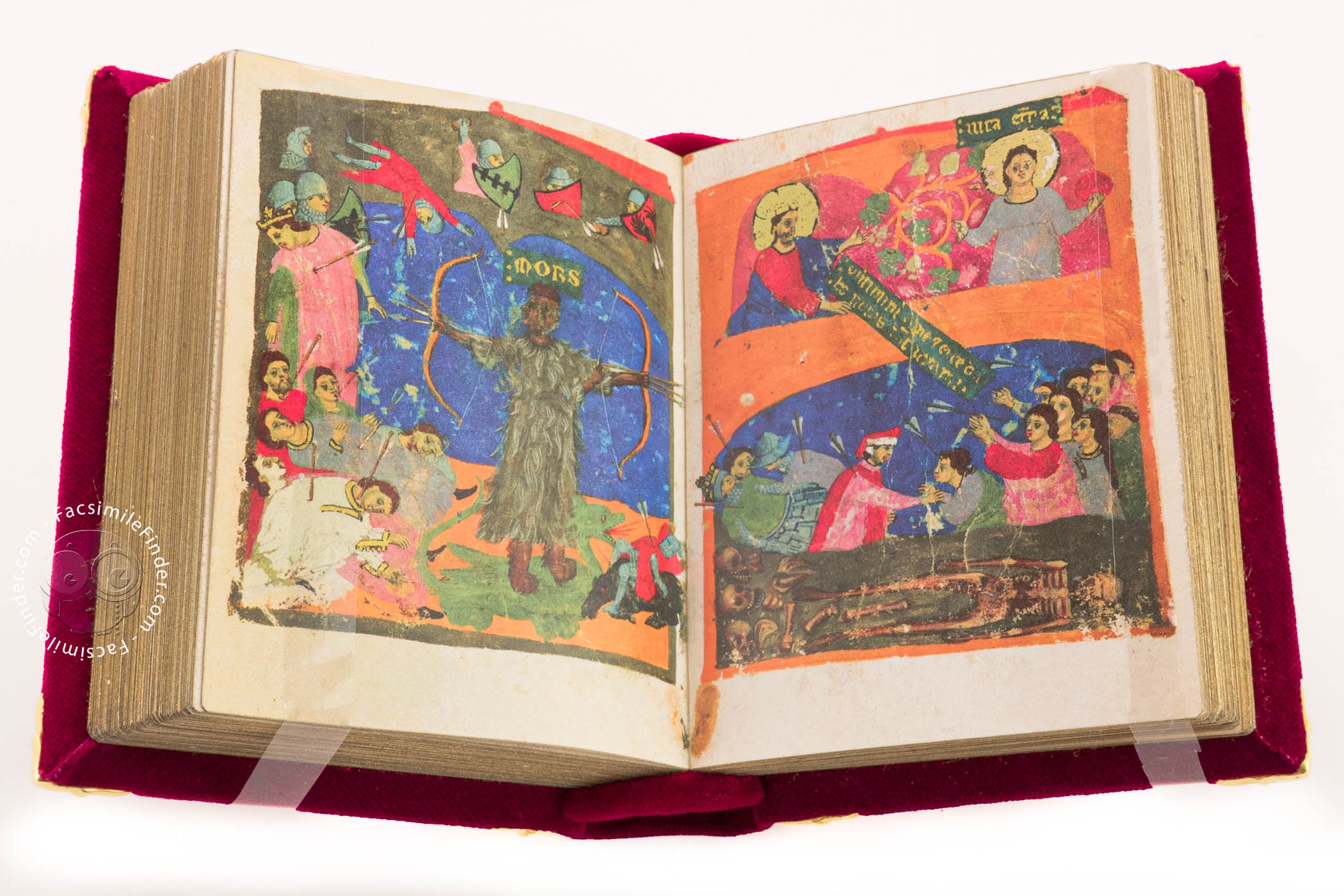
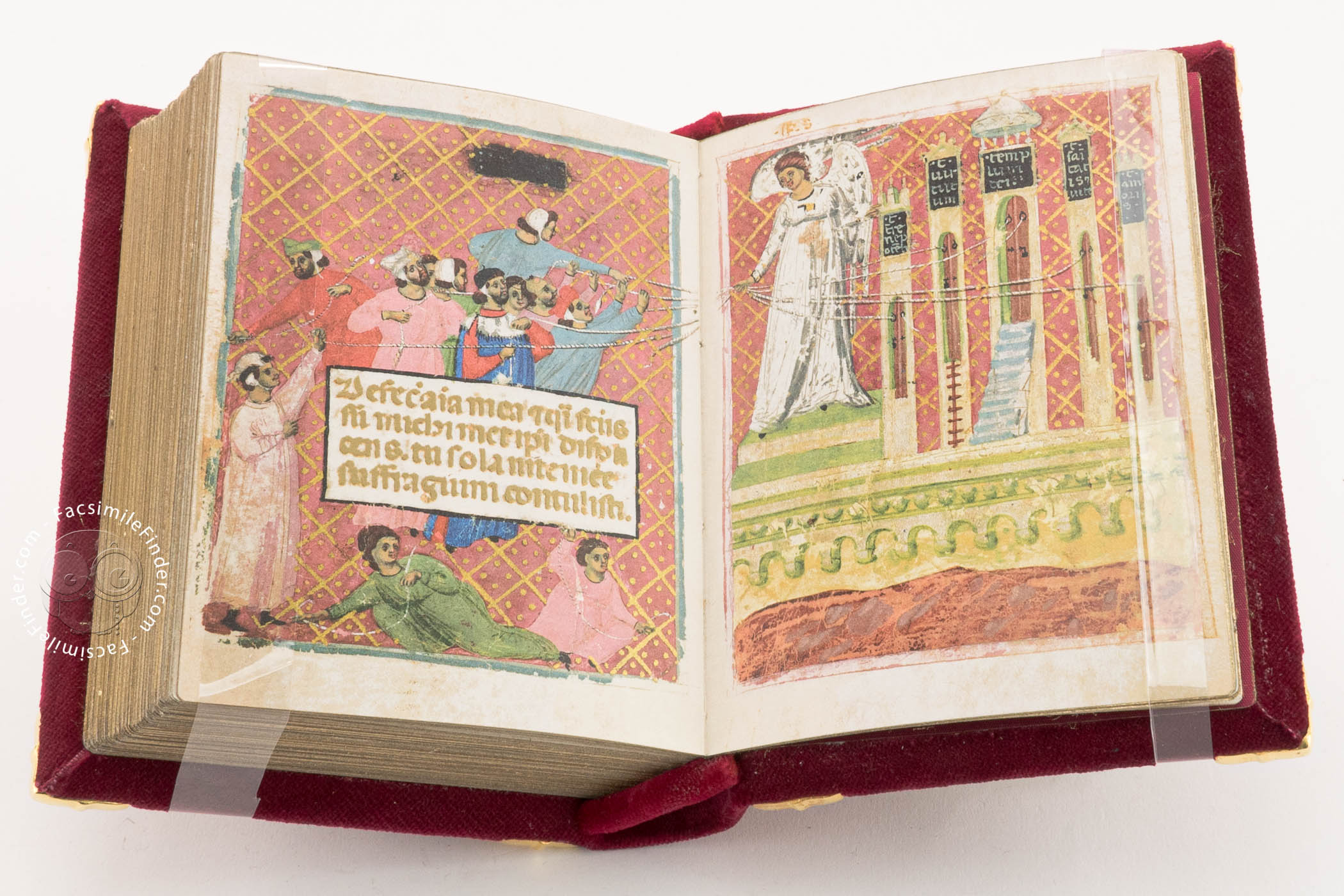
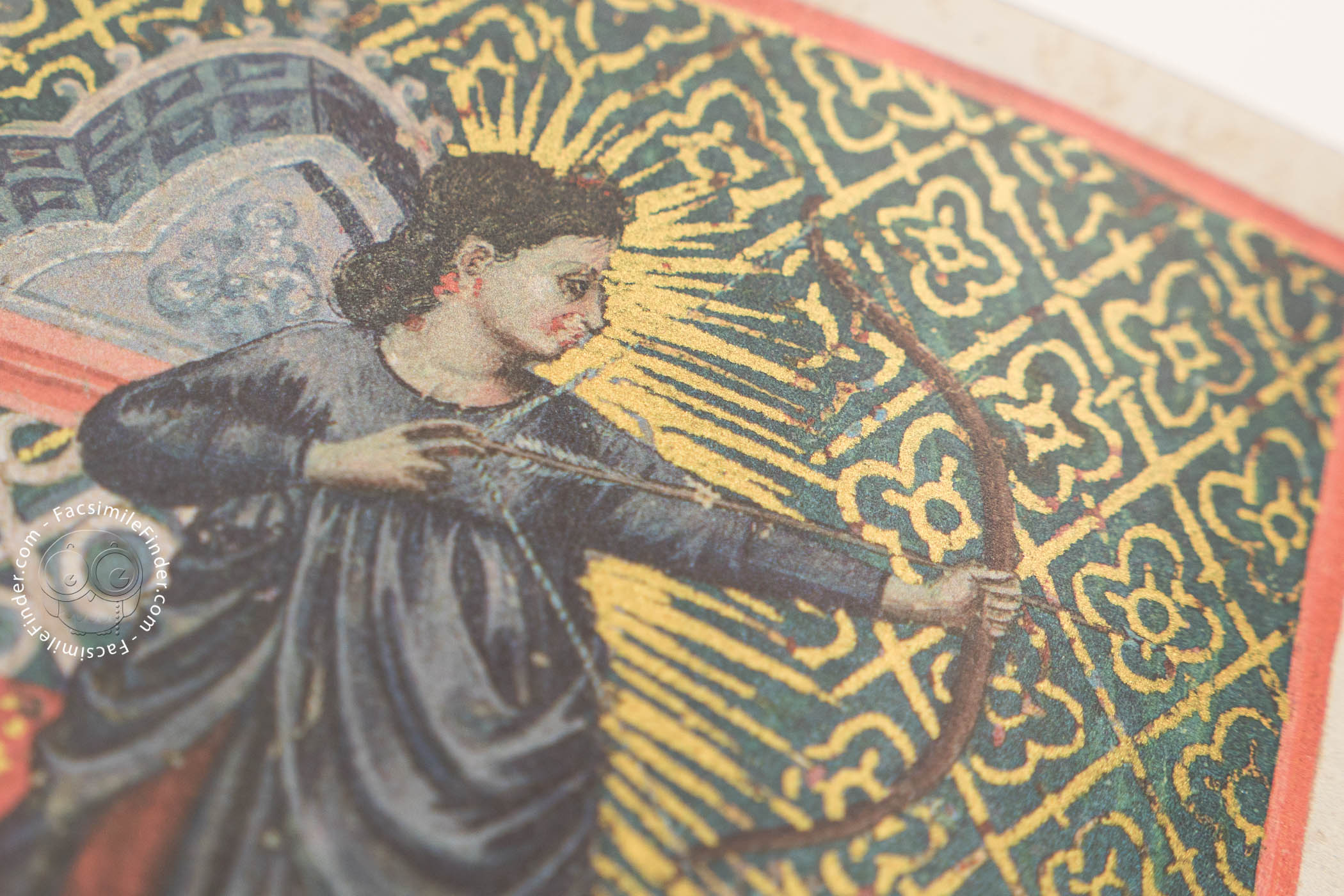




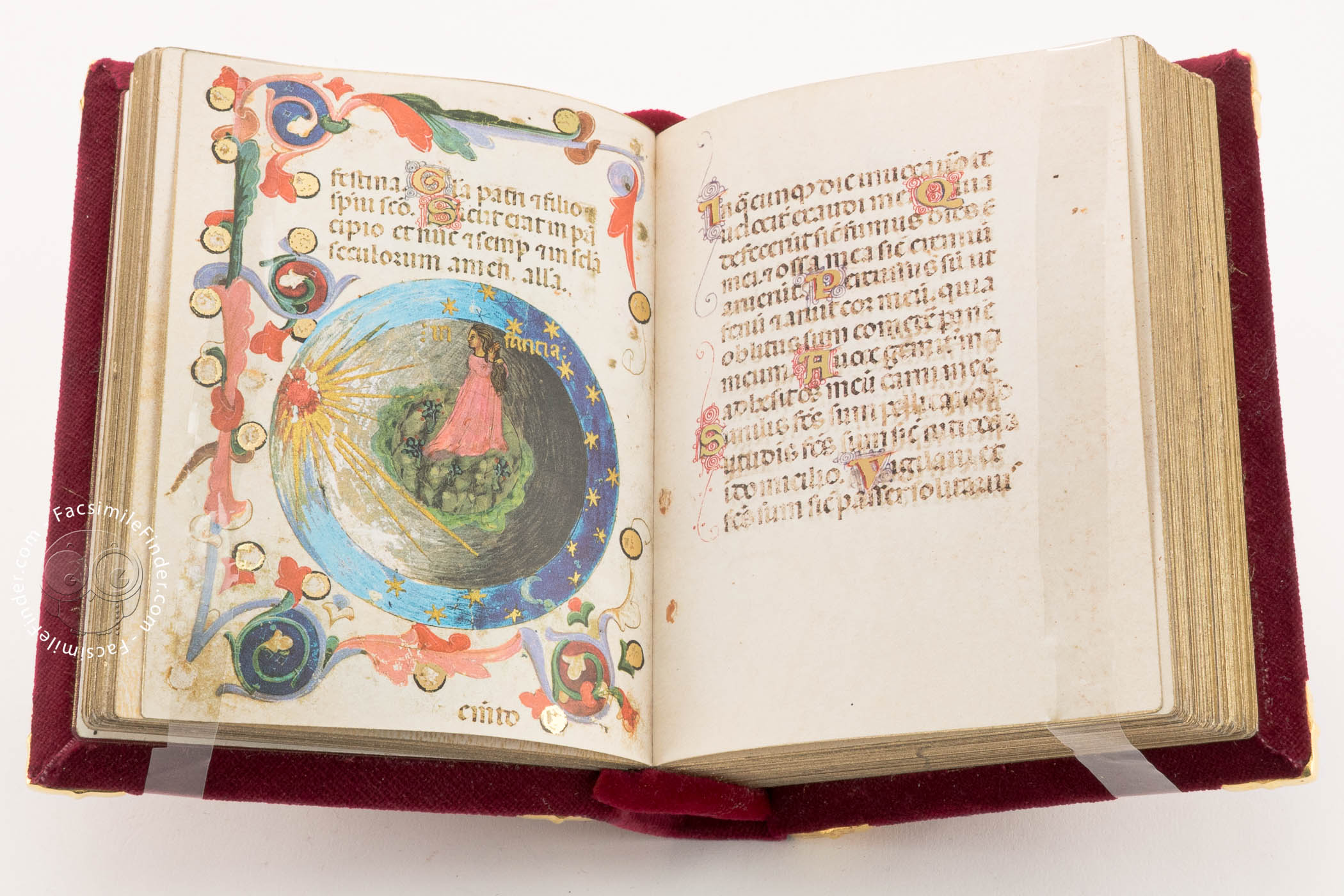
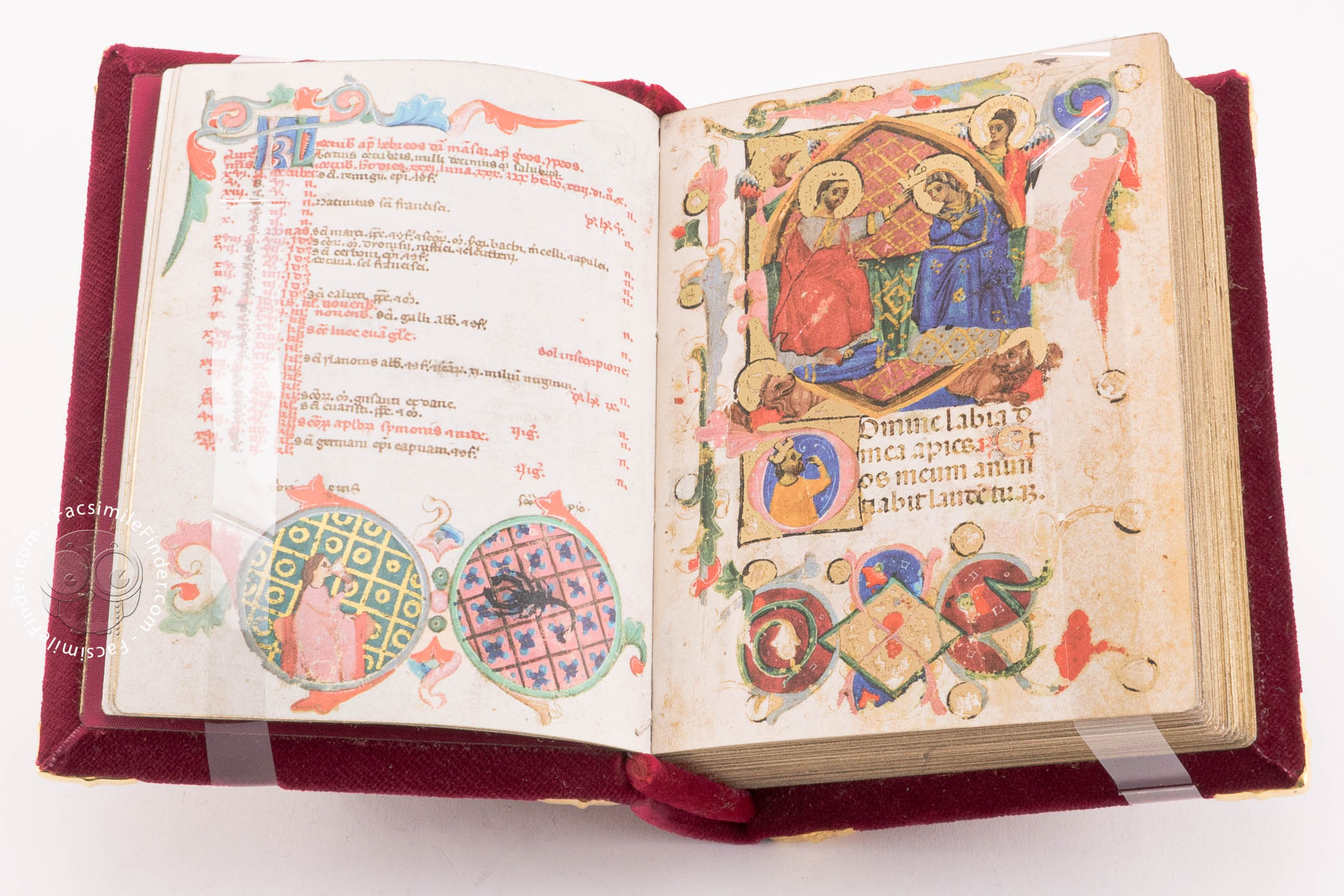
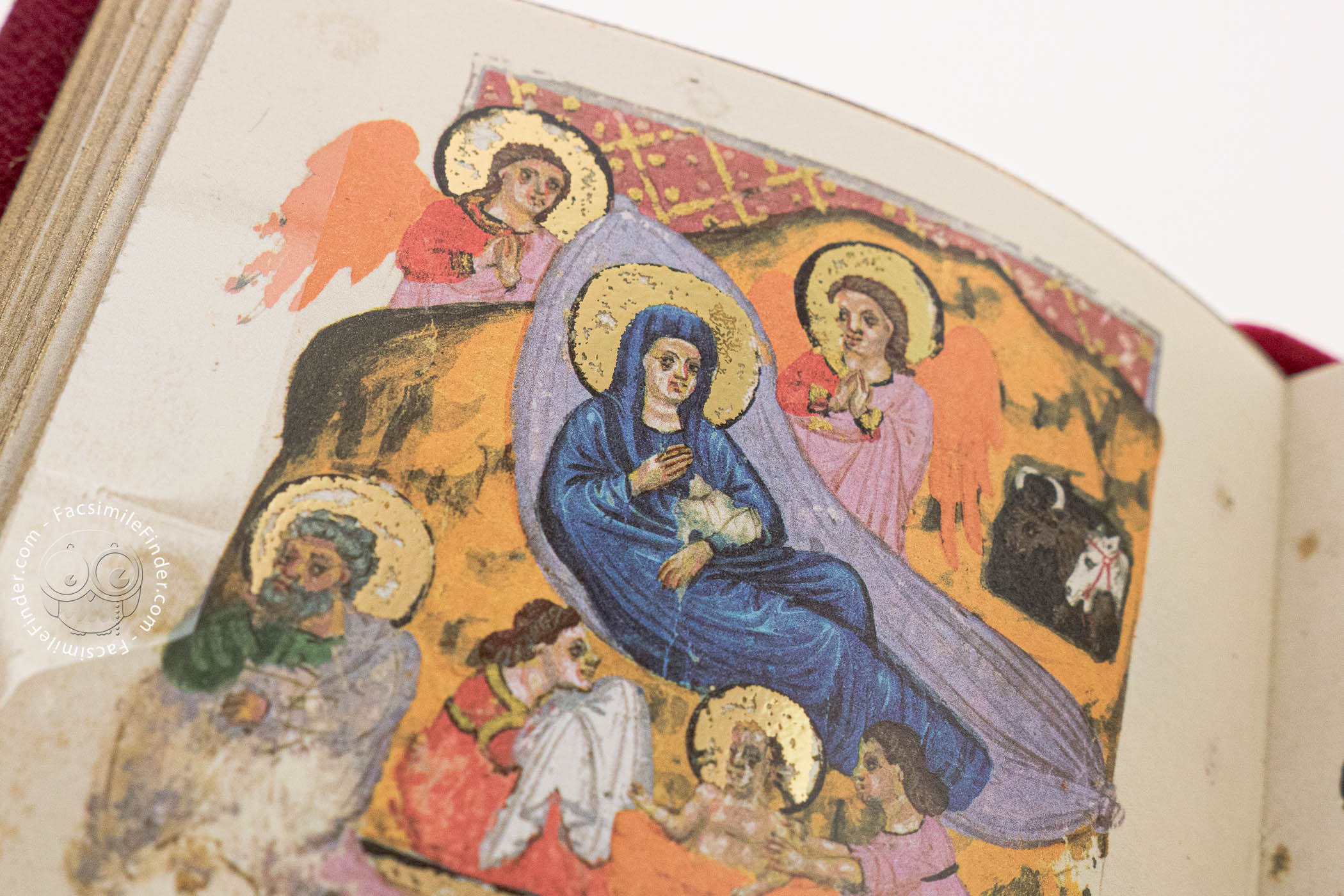
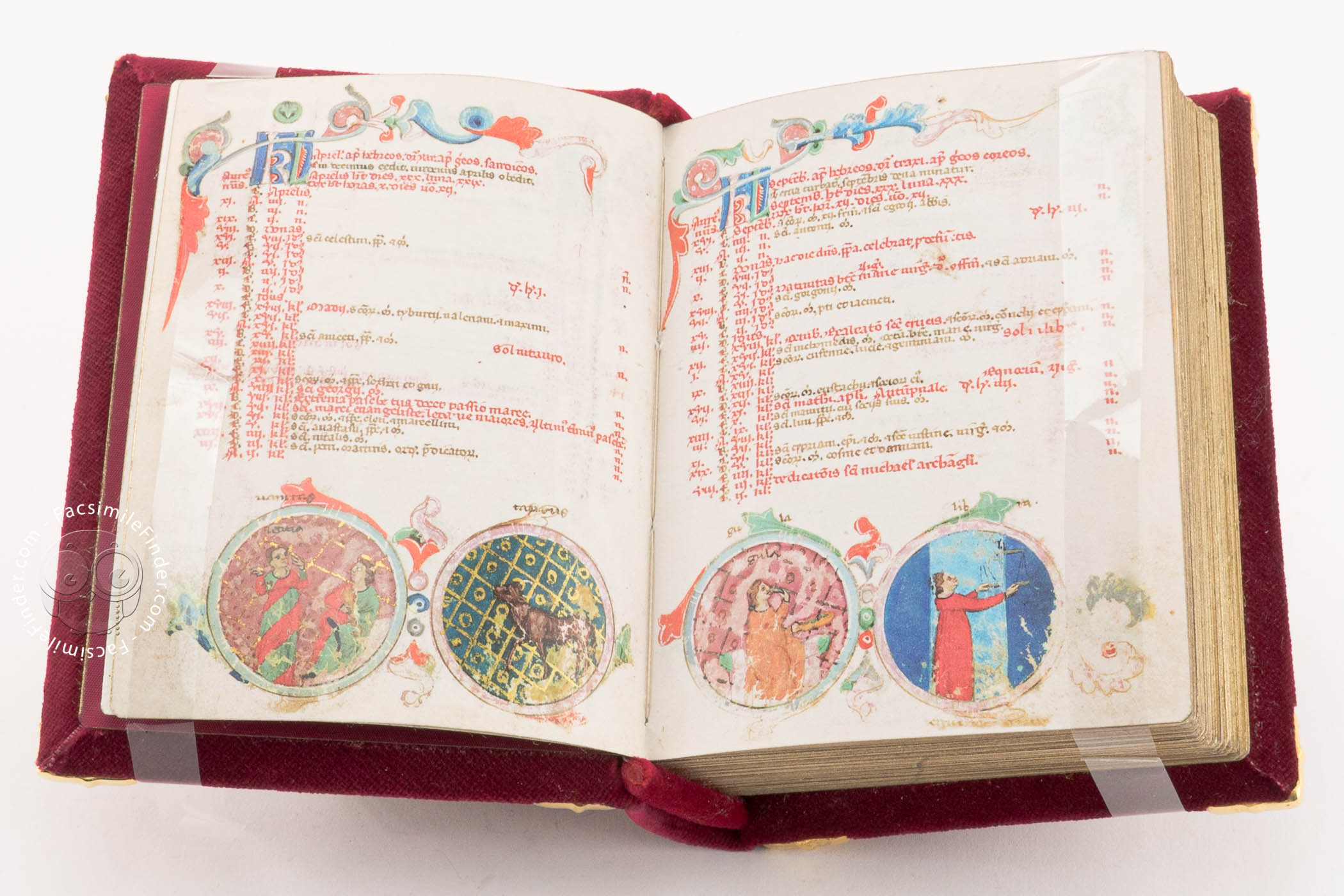


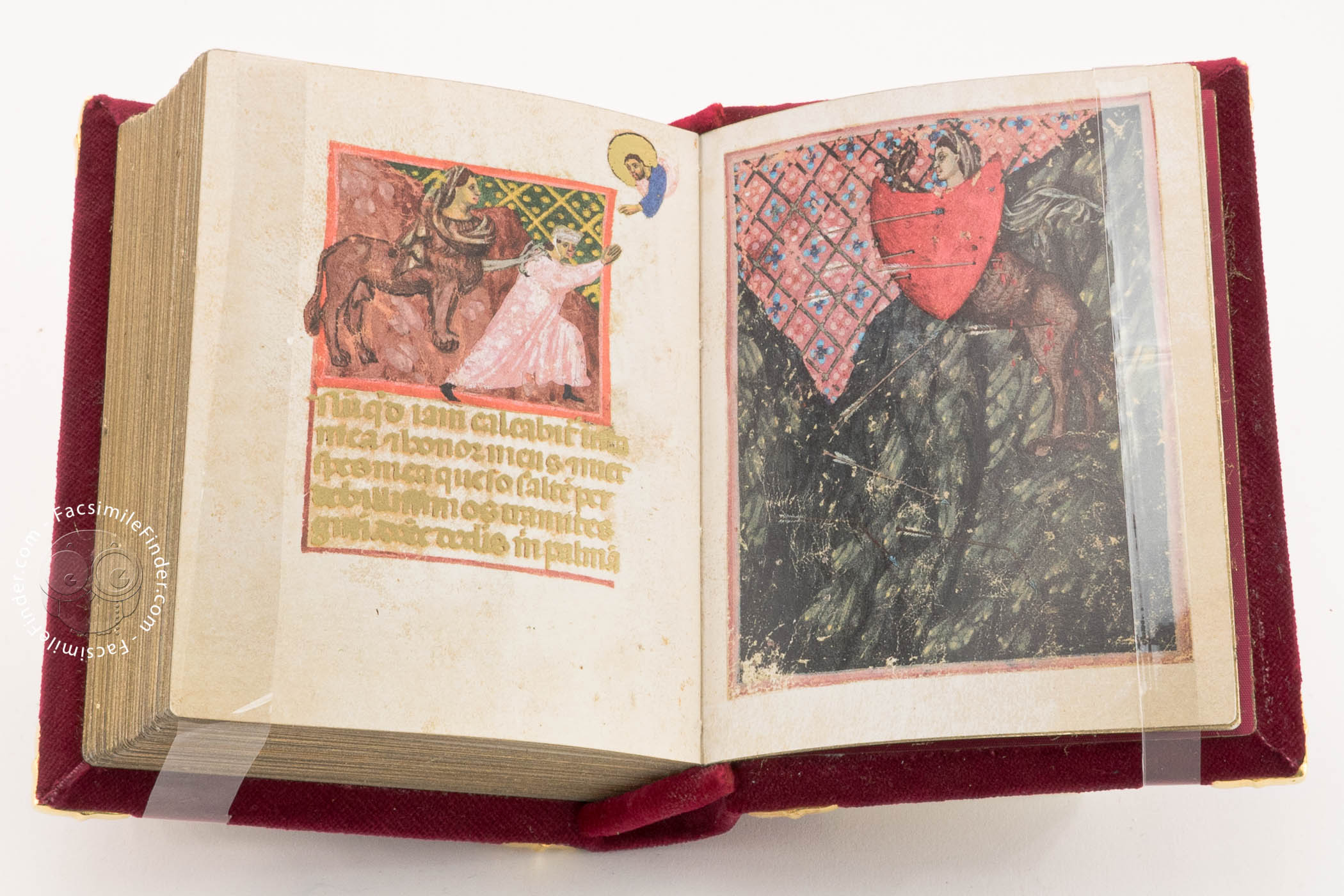
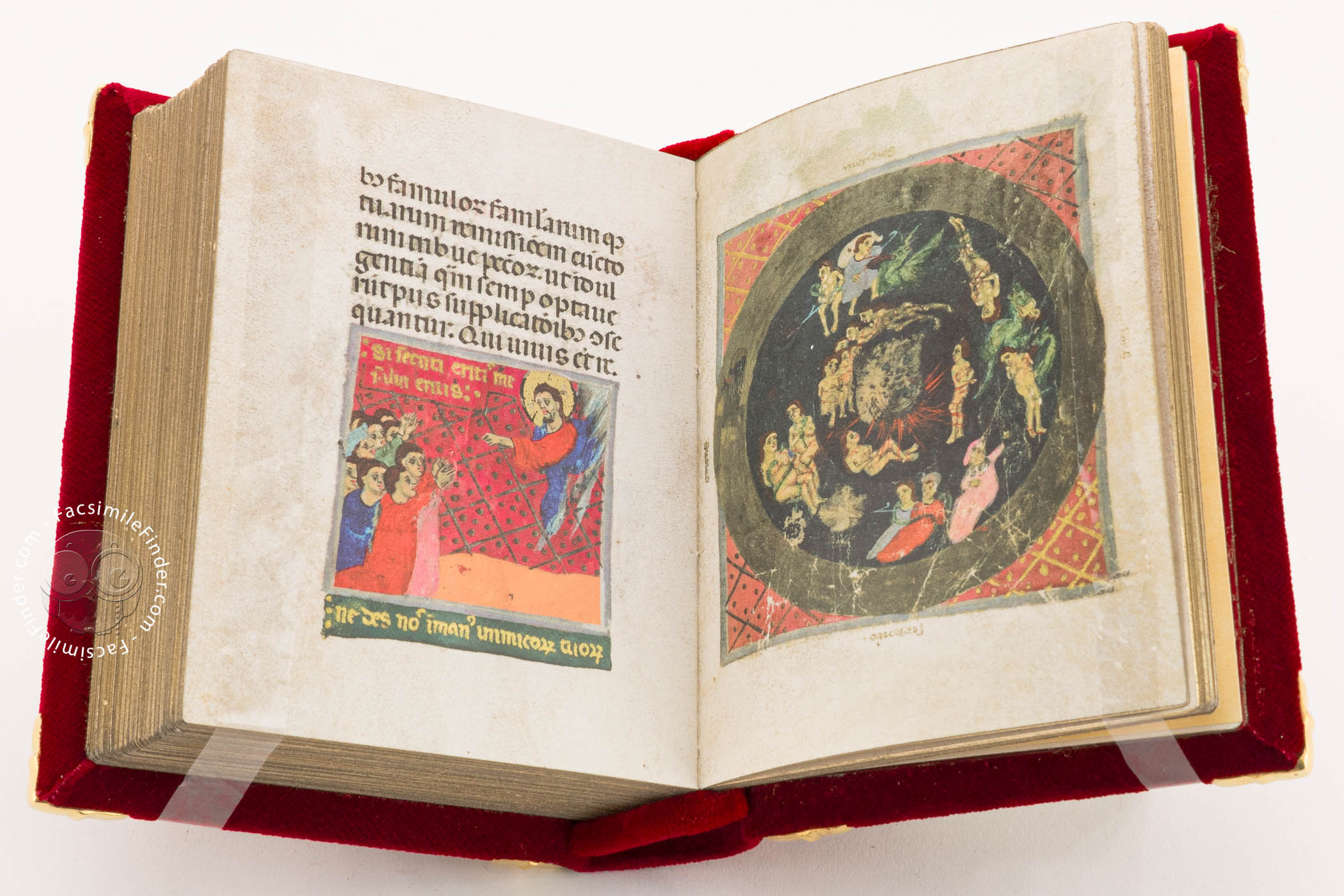
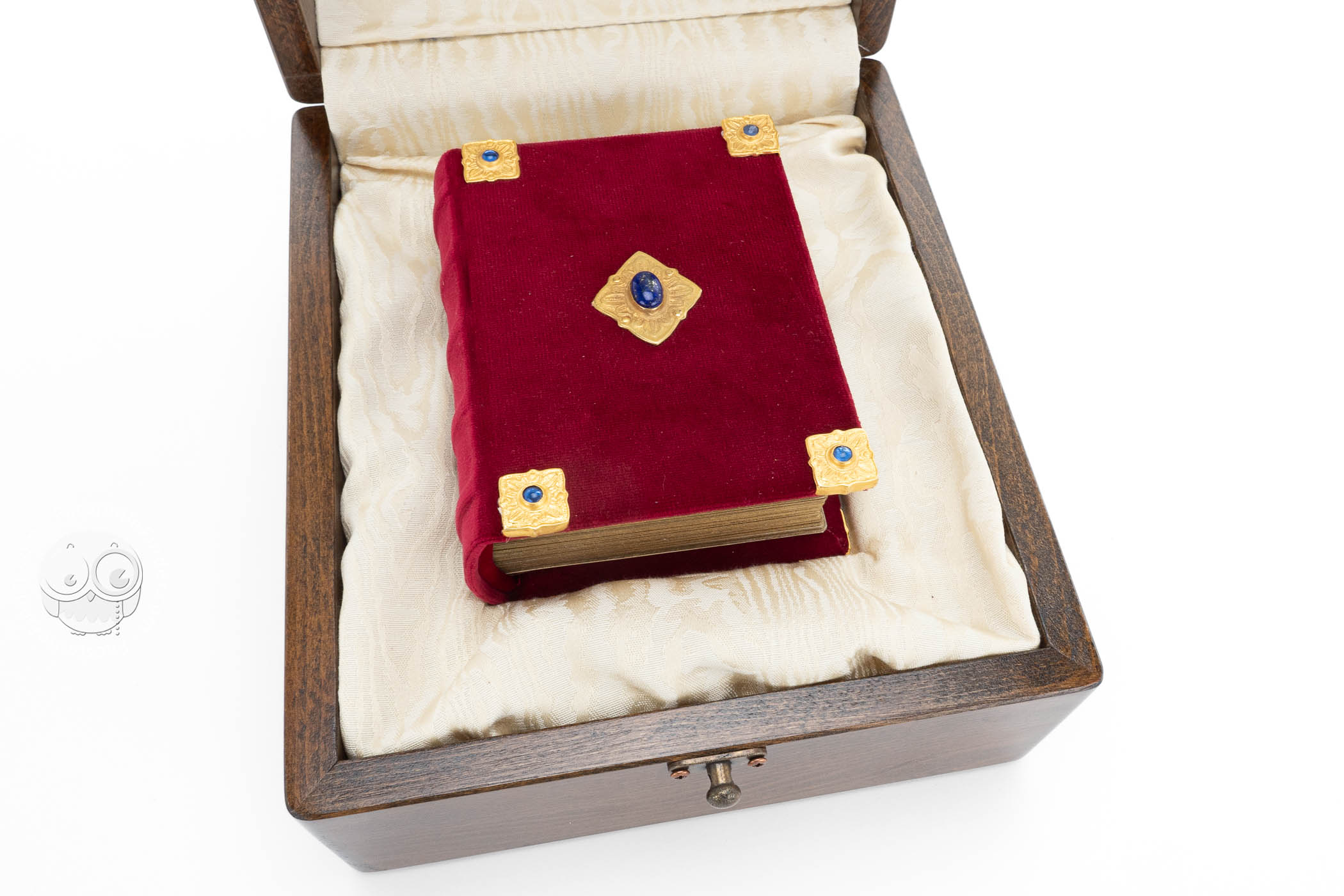
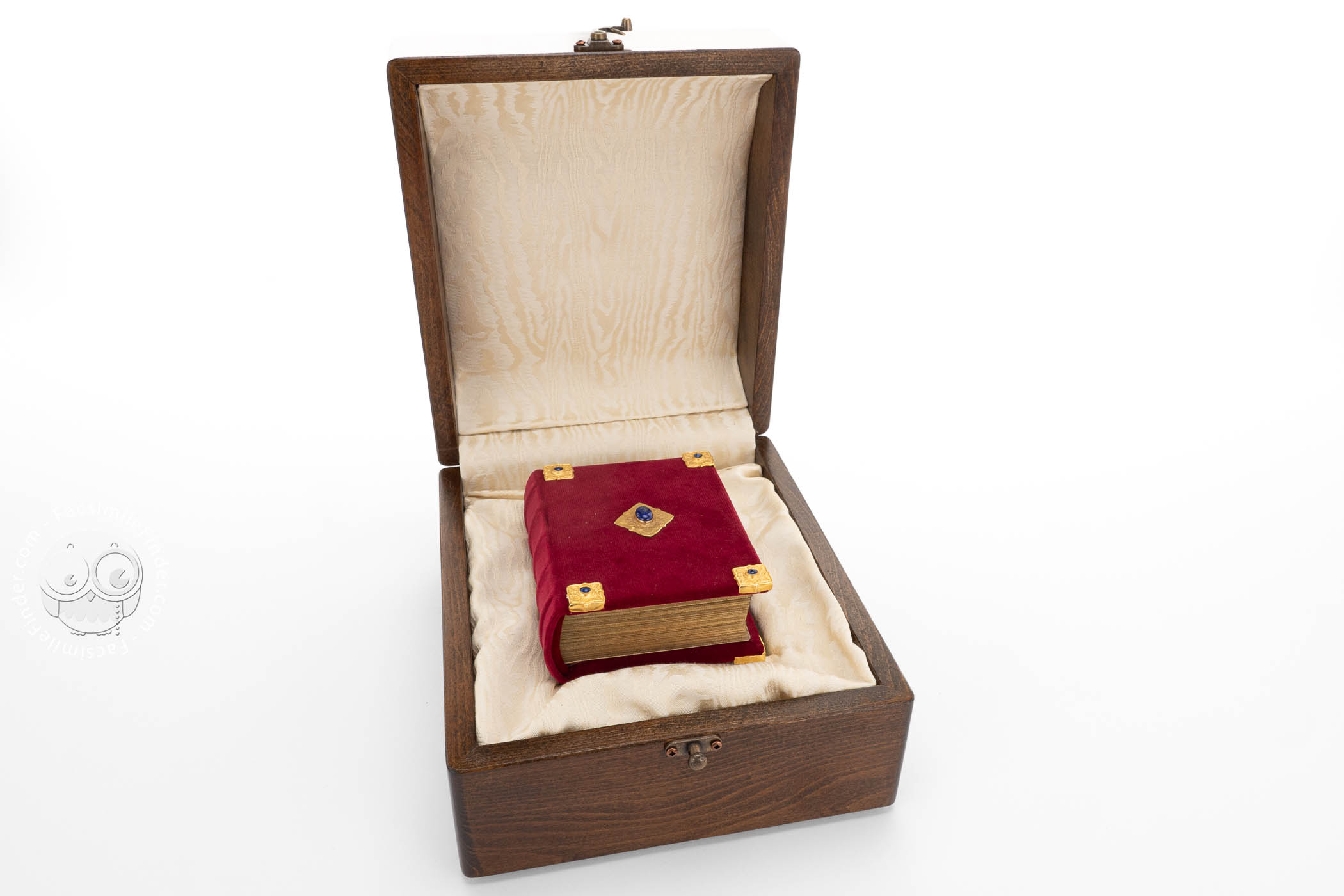
The Officiolum of Francesco da Barberino is a lavishly illuminated book of hours, a prayer book for the private devotions of the Christian laity. Its astonishing pictorial program was designed by Francesco da Barberino, for whom it was made in Padua between 1304 and 1309. Its abstruse imagery was (at least in part) explained by Francesco, which provides a unique insight into this idiosyncratic book. The painted embellishment includes seventy-eight miniatures, two forms of border decoration, and five historiated initials.
Francesco, in writing about the book, called it "officiolum," which indicates that many of its texts are offices (daily Christian prayer services). The manuscript is an early example of the sort of prayer book that would become ubiquitous in Europe in the fifteenth and sixteenth centuries.
Francesco da Barberino, Visual Art Designer
Francesco da Barberino (1264-1348) was a Florentine civil and canon lawyer, notary, author, and designer of paintings. He employed two artists to illuminate his officiolum. We know from his own account that he personally directed the choice of subjects and the form of the miniatures.
A Unique Mix of Subjects
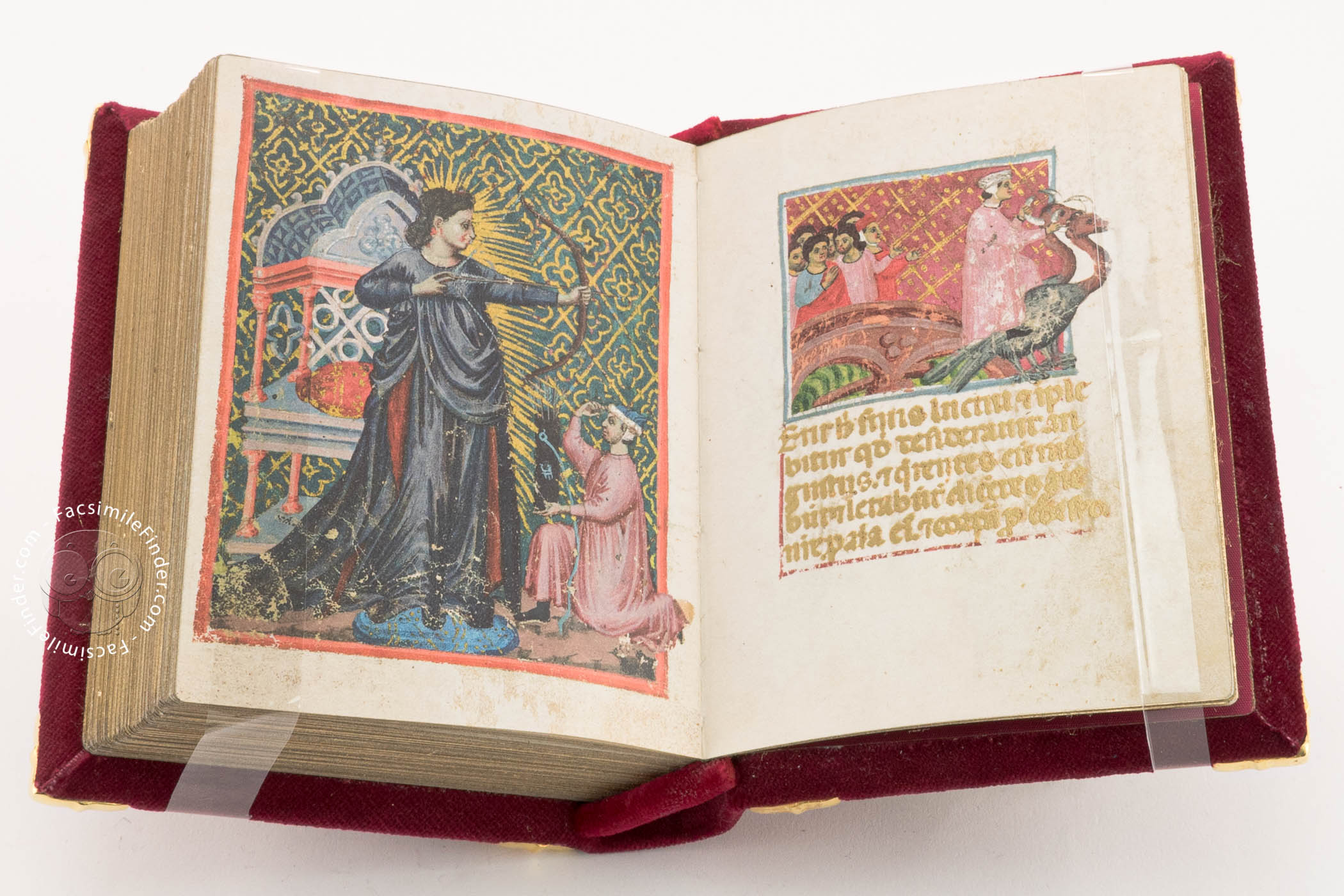
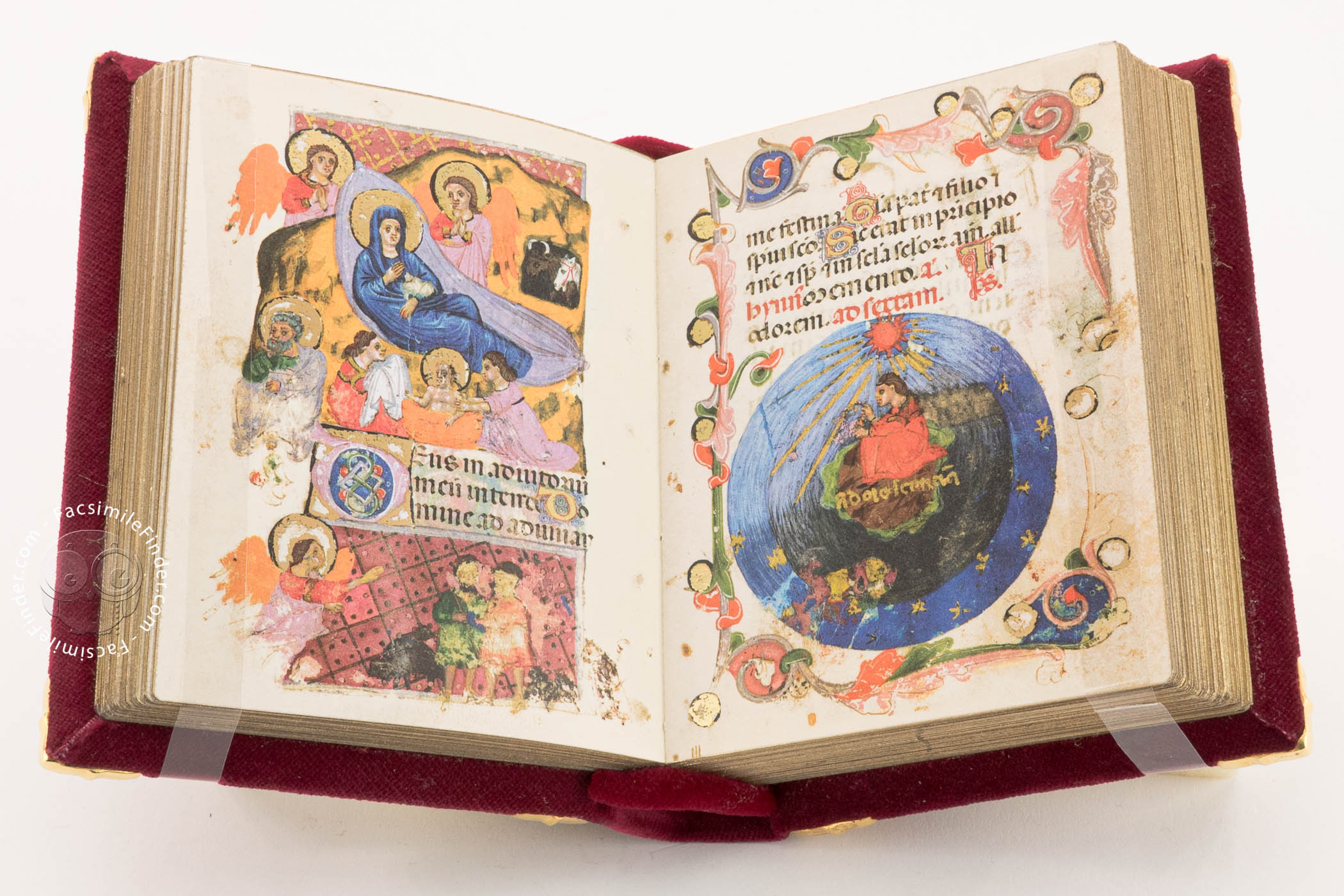
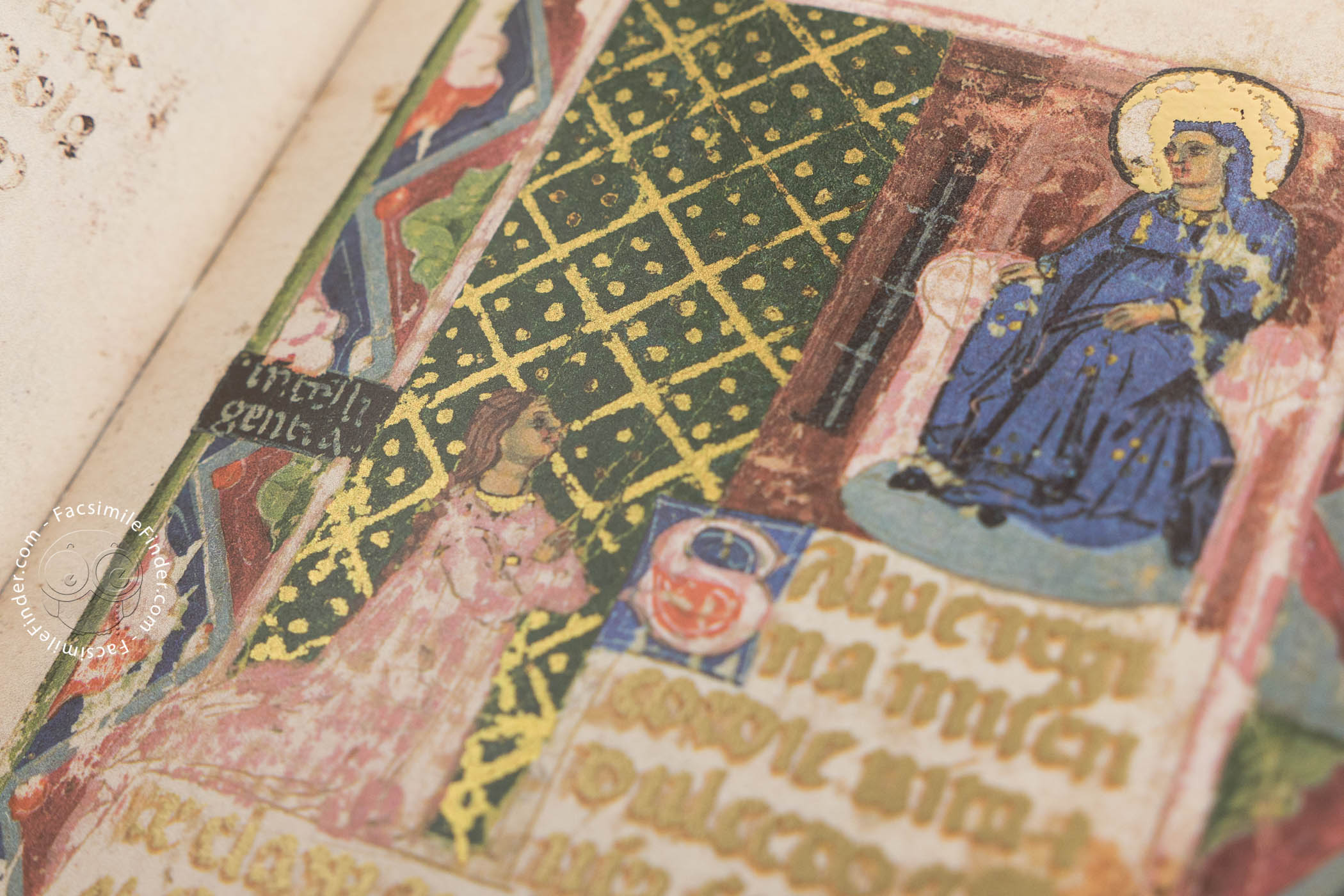
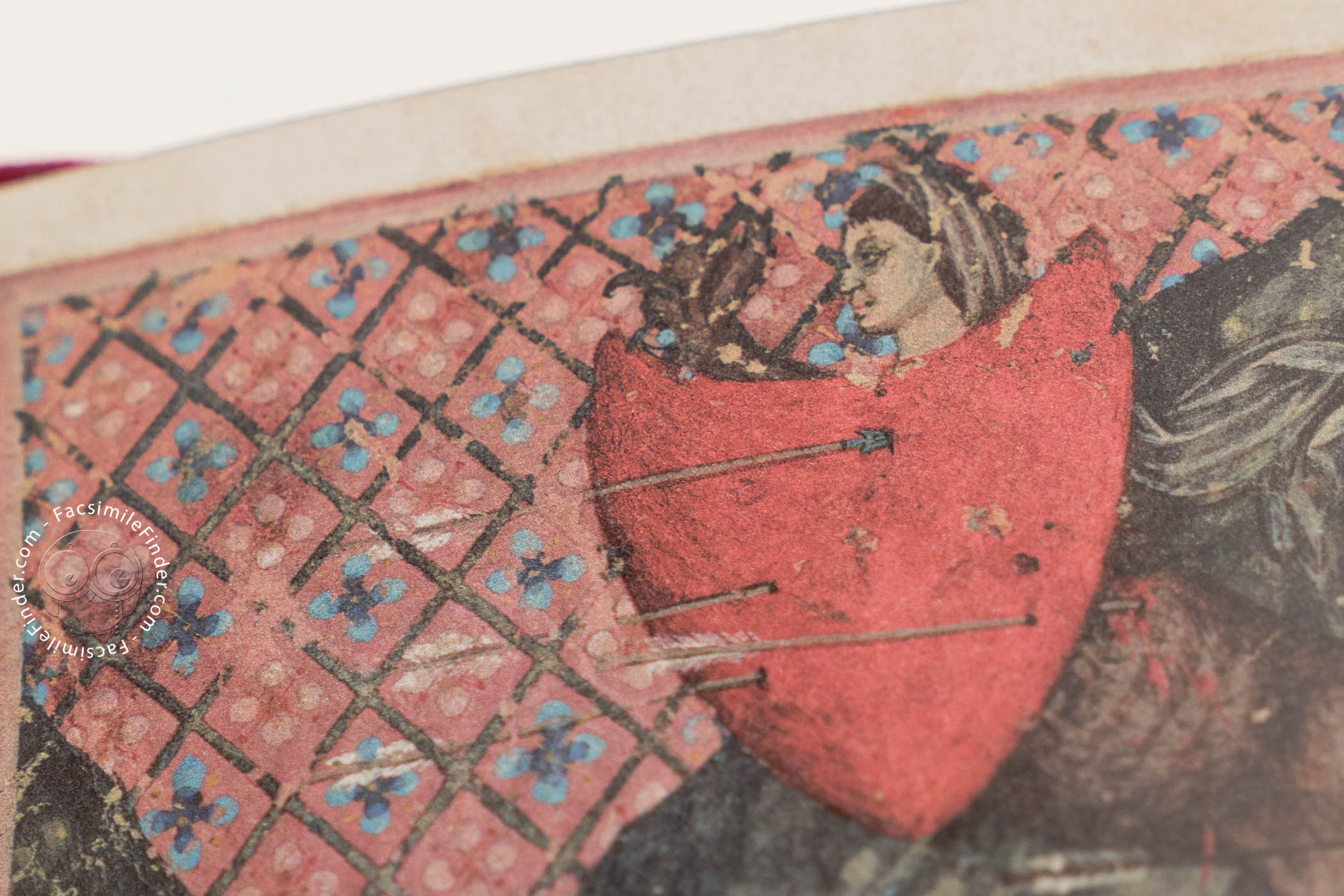
Many of the miniatures depict scenes from the lives of Christ and the Virgin Mary, as would become standard in books of hours. Others are allegorical in content, featuring female personifications of abstract ideas, such as Renown, Mercy, Eternal Life, Understanding, and Hope (fols. 78v, 117r, 118r, 165r, and 170r).
The Ages of Human Development and the Hours of the Day
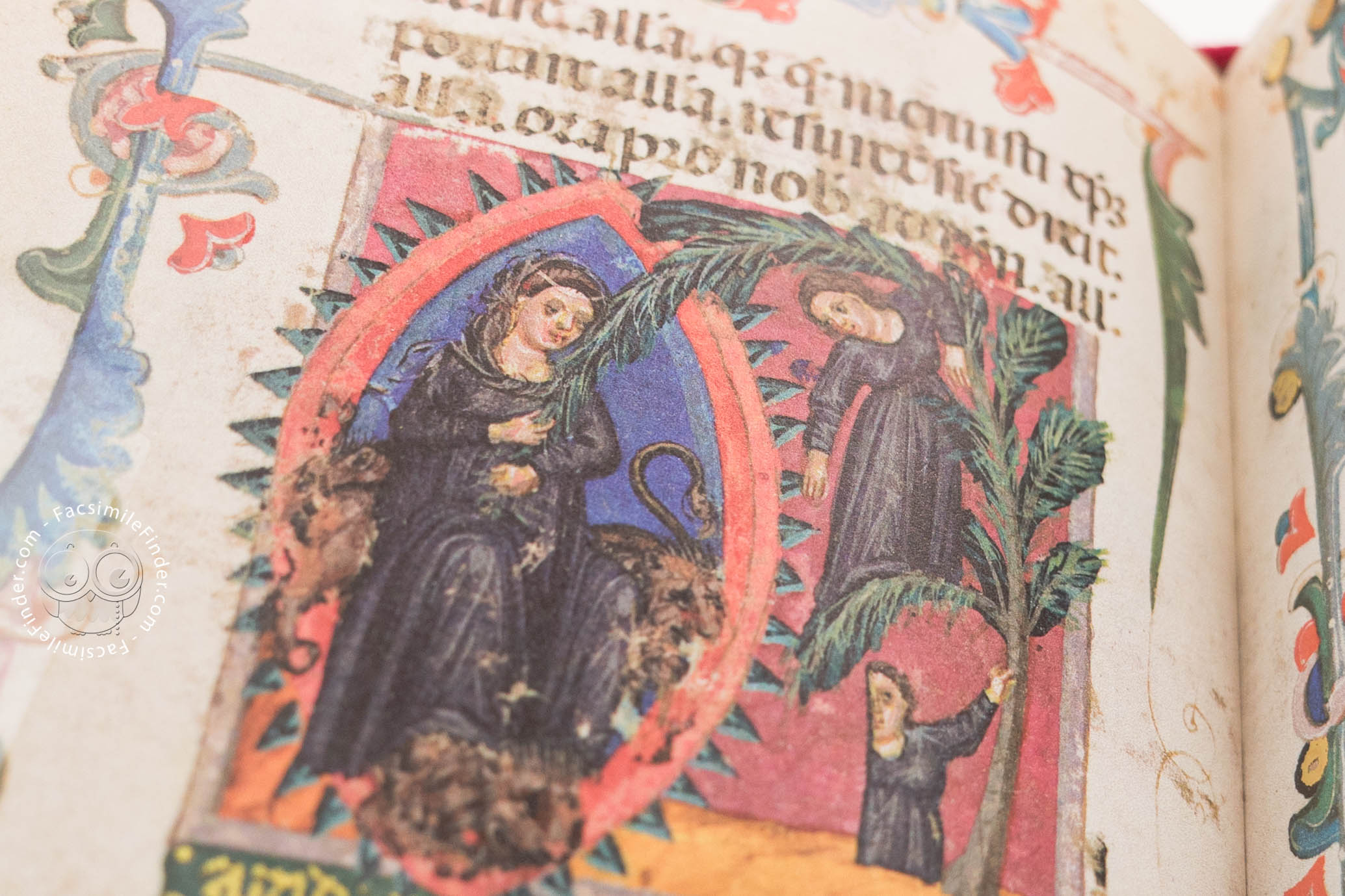
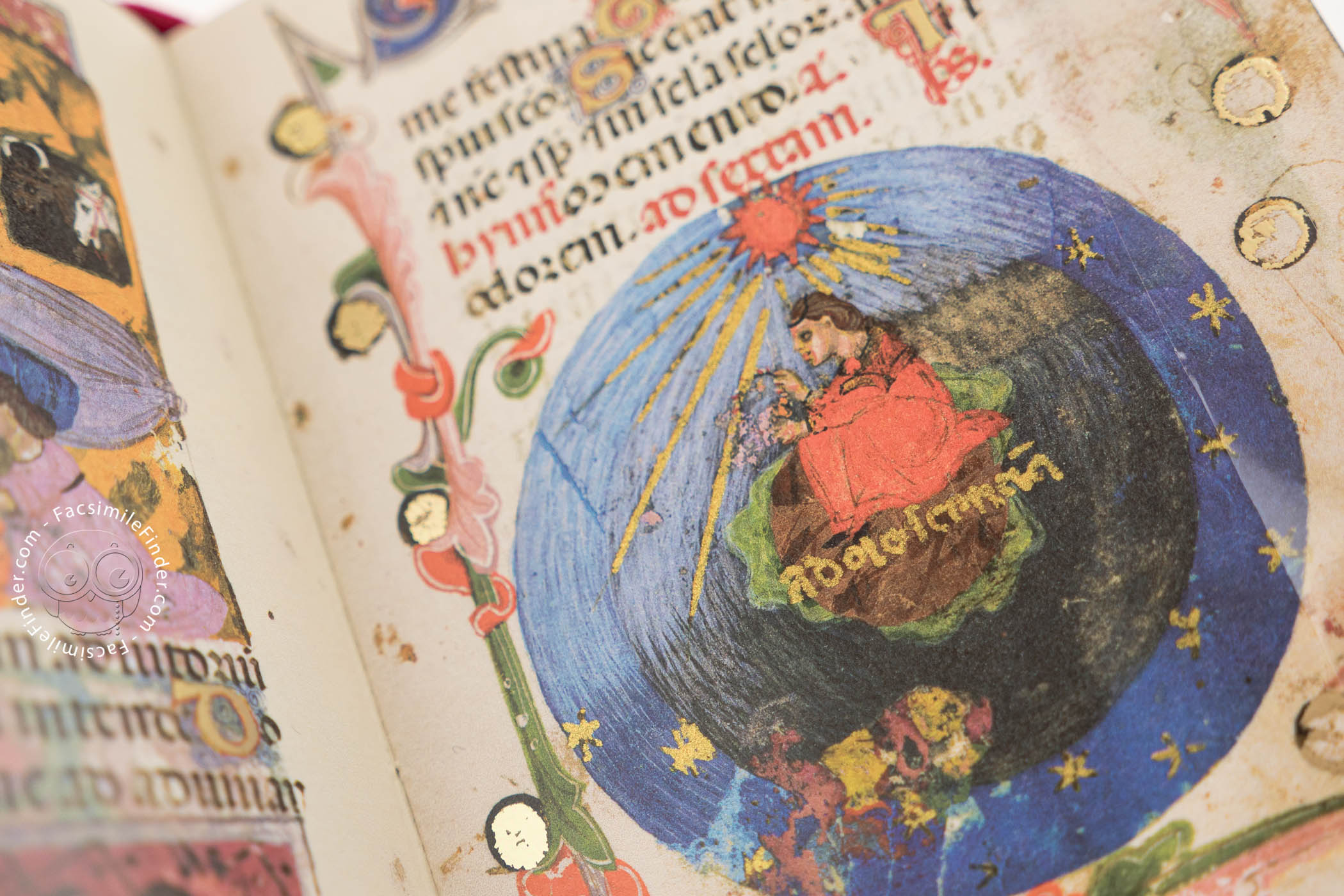
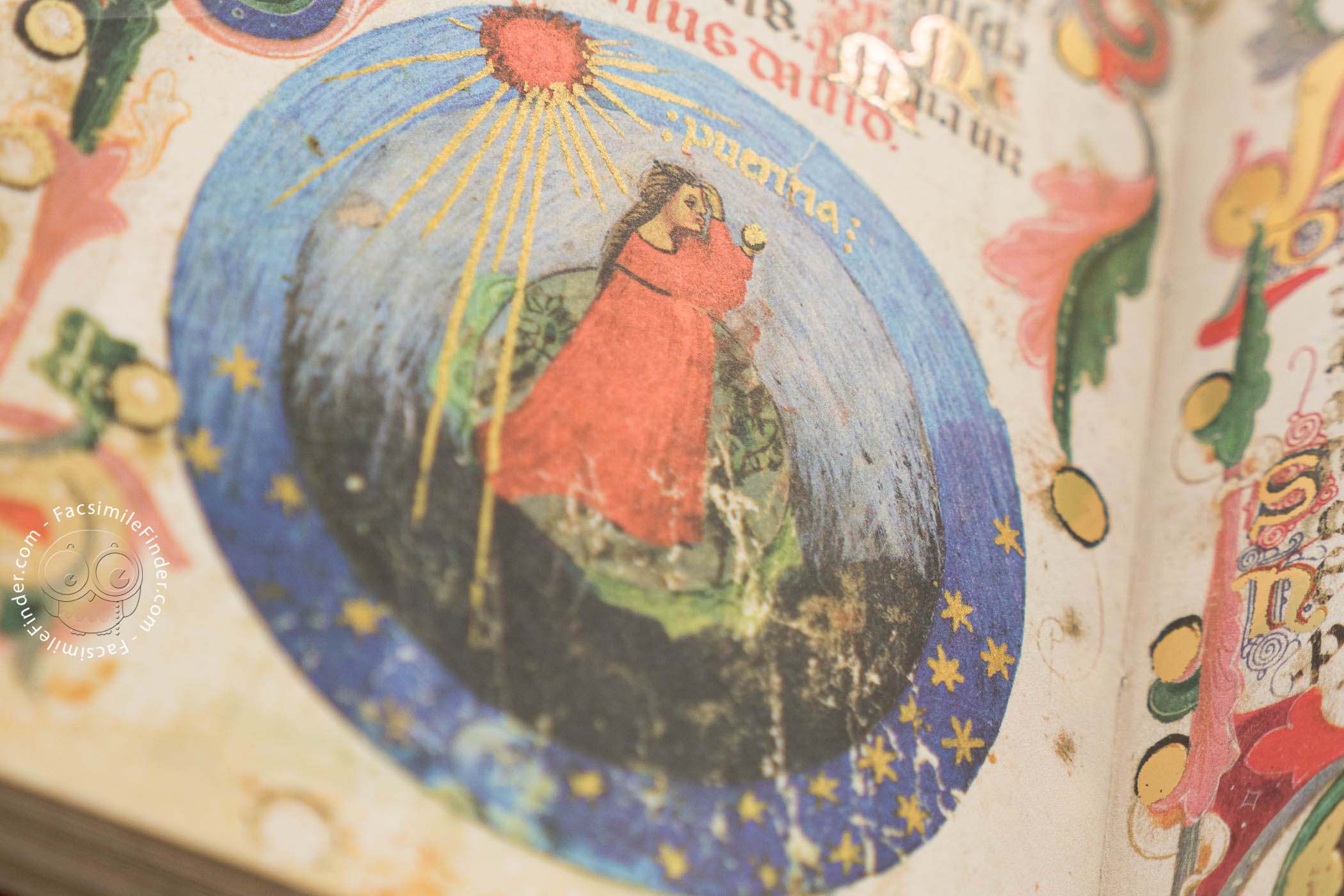
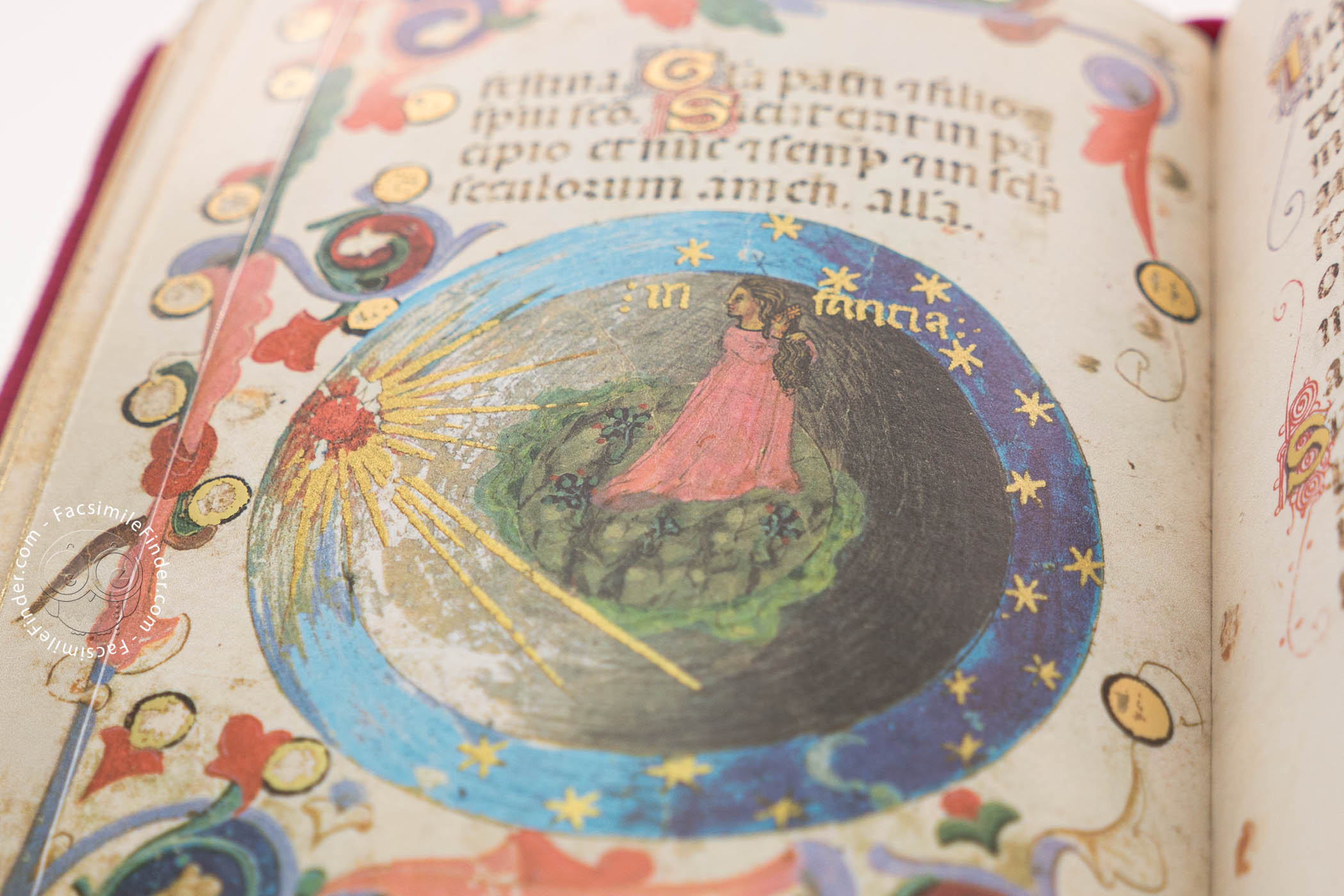
Among the miniatures are representations of six stages of human development from infancy to decrepitude. They are circular in format, representing the cosmos of concentric rings of earth, water, air, and the firmament. The female personification of the age is pictured on earth (fols. 32v, 44v, 49r, 53r, 57r, and 65r).
The miniatures' placement in the text—at the hours of Prime, Terce, Sext, None, Vespers, and Compline of the Hours of the Virgin—serves to equate the span of a life with the passing of a day. That message is highlighted by the placement of the sun in the miniatures, which traces a path across the arc of the celestial realm from left to right.
Circles of Hell and Limbo
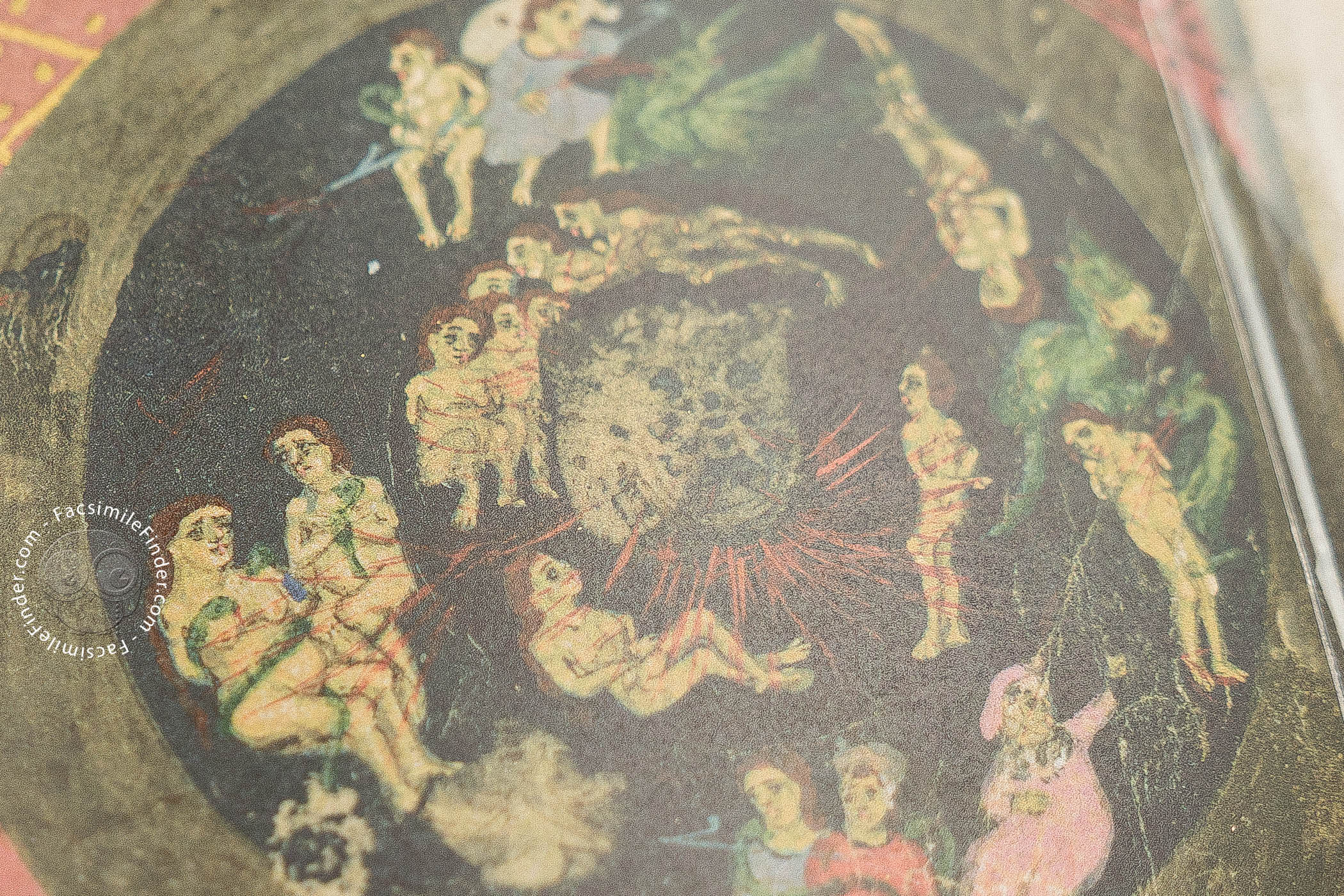
Left to right is explicitly represented as east to west in the remarkable full-page miniature of hell, which names the cardinal points of the compass around its perimeter. Hell is represented as a circle populated by floating figures, some clothed and some naked, with the hell mouth at its center (fol. 156r).
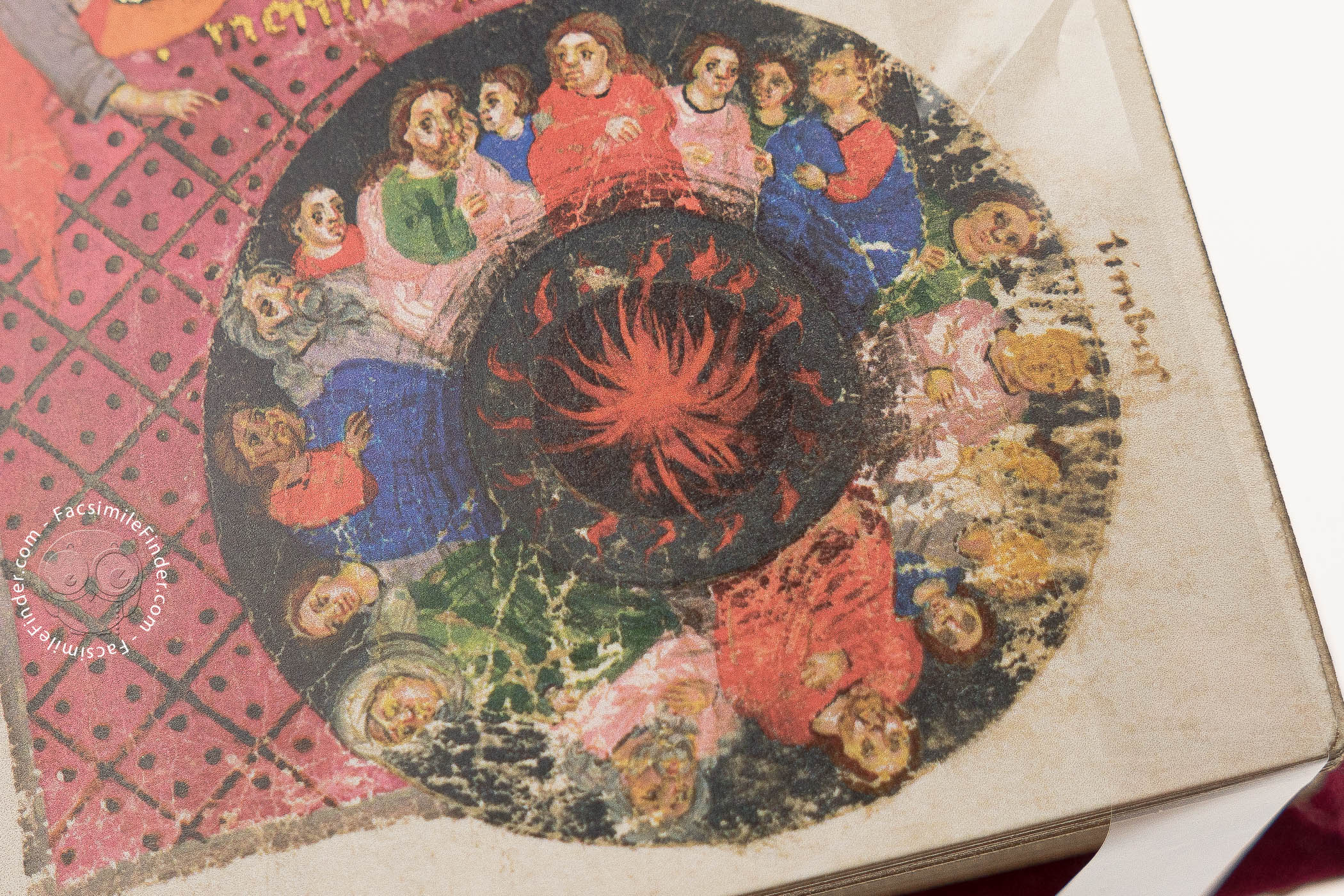
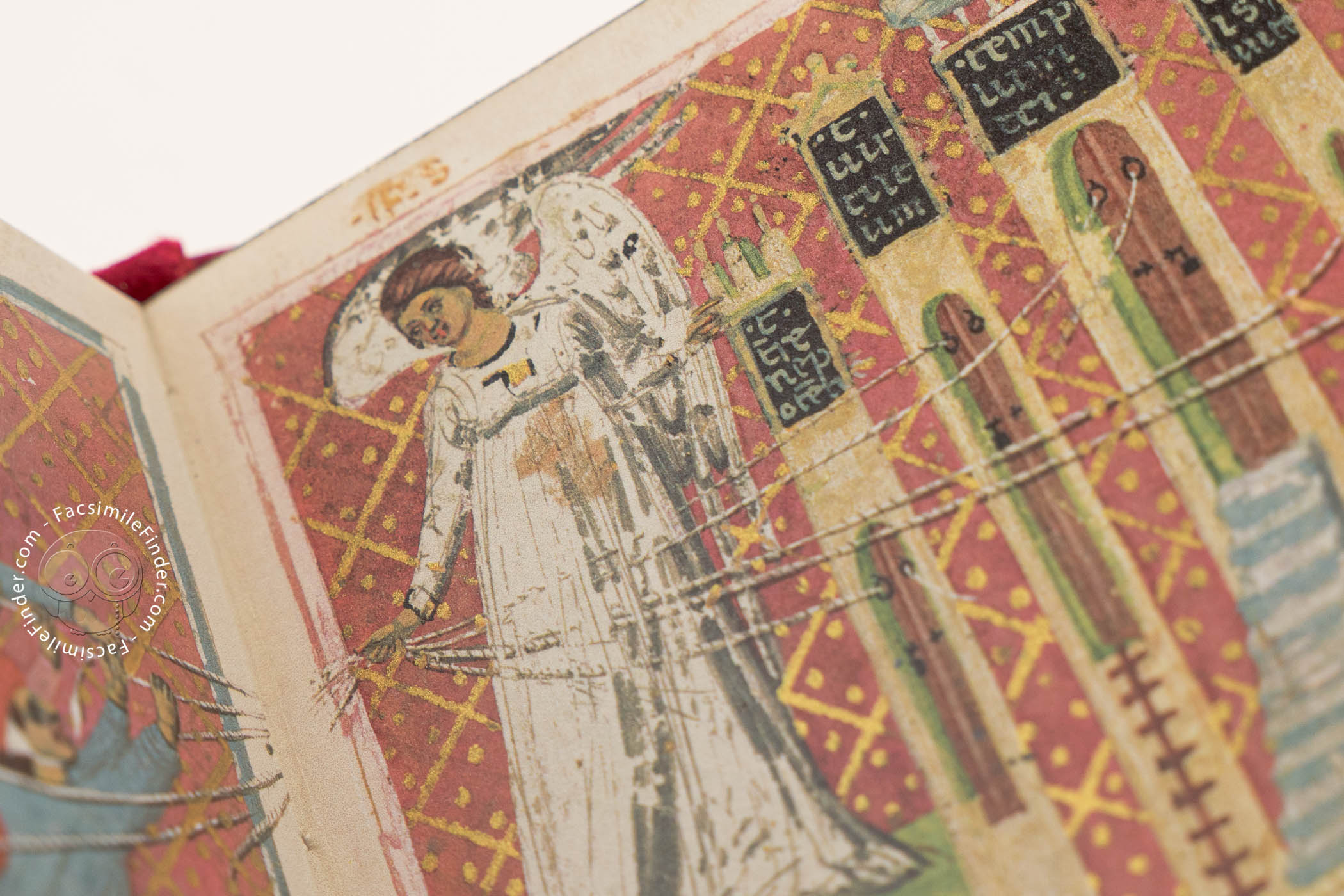
Limbo, the realm of the deceased unbaptized, is represented twice. A full-page miniature of the Descent into Limbo—the resurrected Christ rescuing the Old Testament worthies—shows the broken hardware of the gates of Limbo, as is customary for this subject (fol. 115v). Another miniature depicts an angel descending toward a circular field with the occupants of limbo seated around a fire (fol. 69r).
The manuscript's visions of hell and Limbo are comparable to the imaginary provided by Dante Alighieri in his Divine Comedy.
Hope in Gold
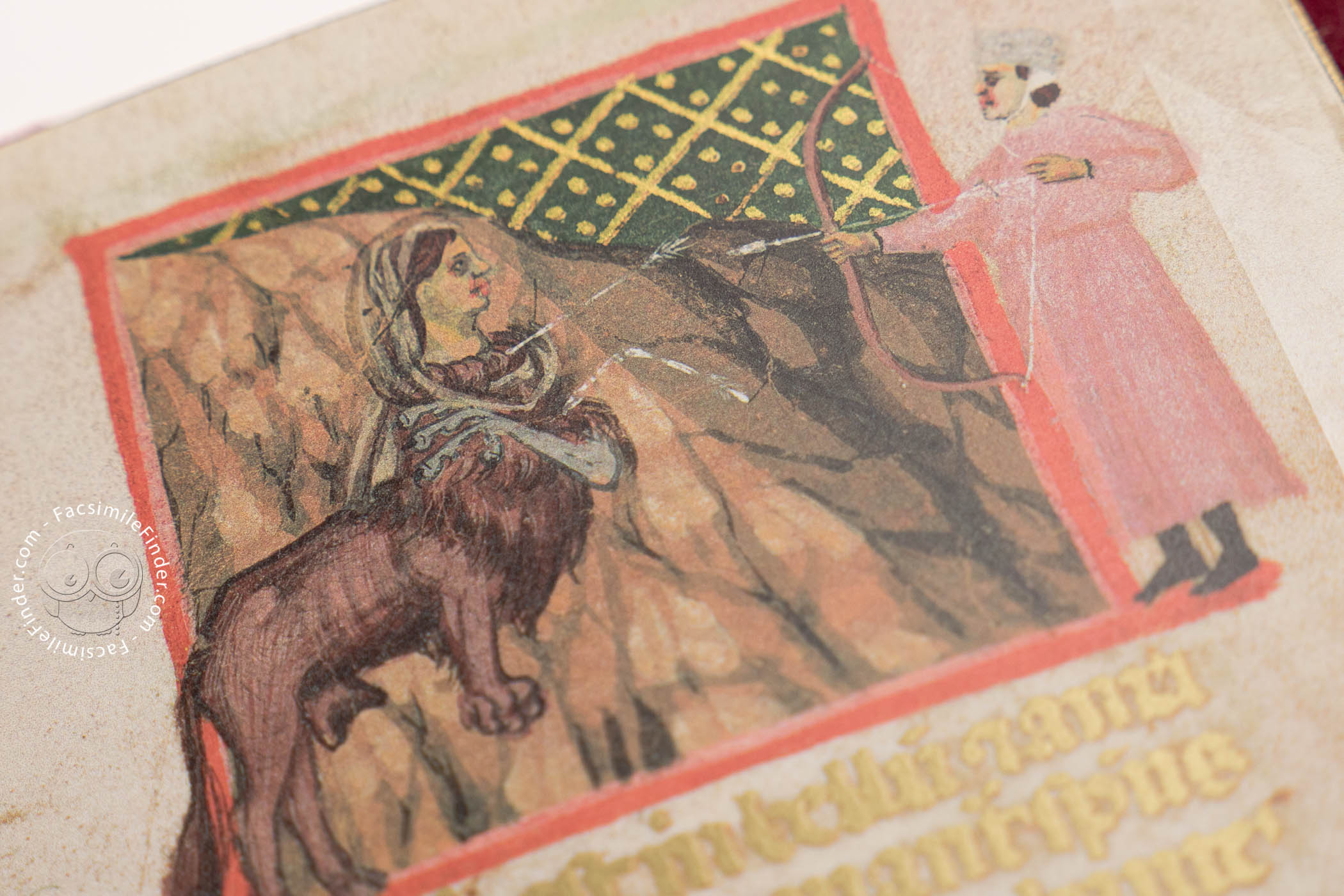
The text is written in Gothic Rotunda, the formal book script of fourteenth-century Italy, the main text in black with rubrics in red, and the final original allegorical text by Francesco in gold. The allegory is a densely illustrated coming-of-age story involving supernatural elements, some Christian. The miniatures identify Francesco as the protagonist, always in a pink robe and, once he reaches adulthood, wearing a lawyer's cap (fols. 166-171).
A Very Personal Book
Francesco is repeatedly pictured in the fourteen miniatures of the allegory, and he is also accorded a miniature near the beginning of the book, where he is shown as a learned man, a book open on his lap and more books strewn around his study (fol. 3v). The manuscript was known from Francesco's description of some of its miniatures. It was assumed to have been lost until it was offered for sale in 2003.
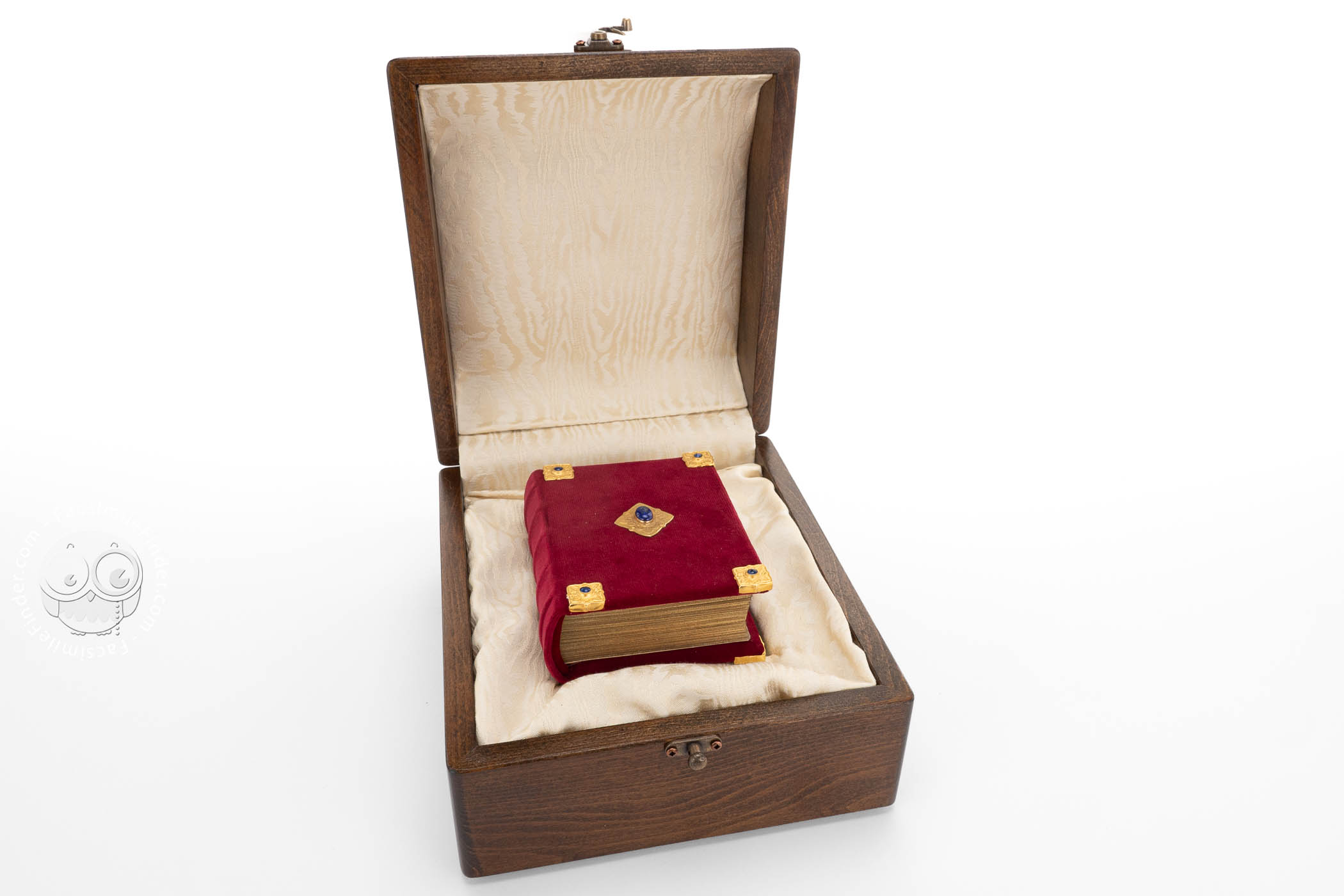
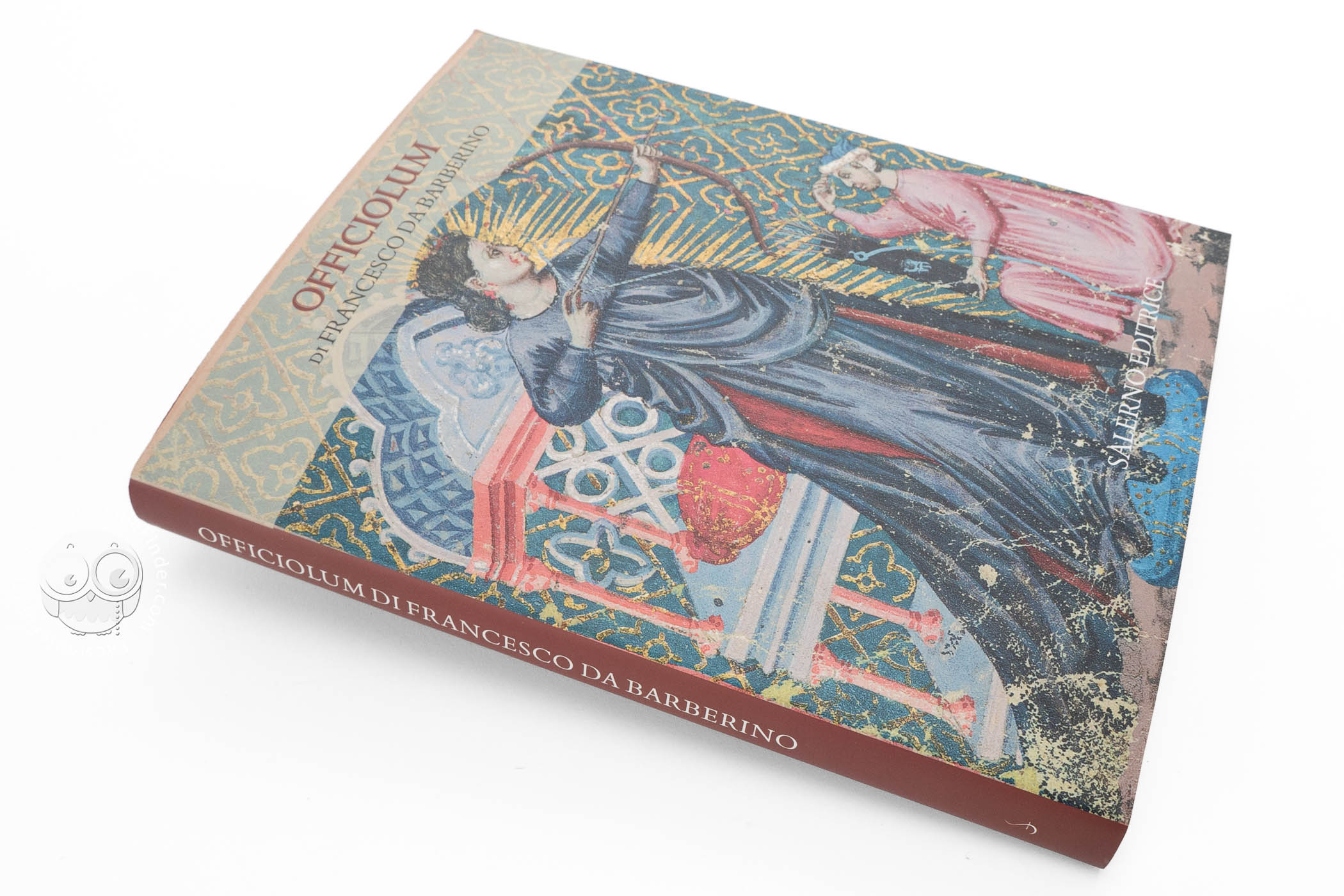
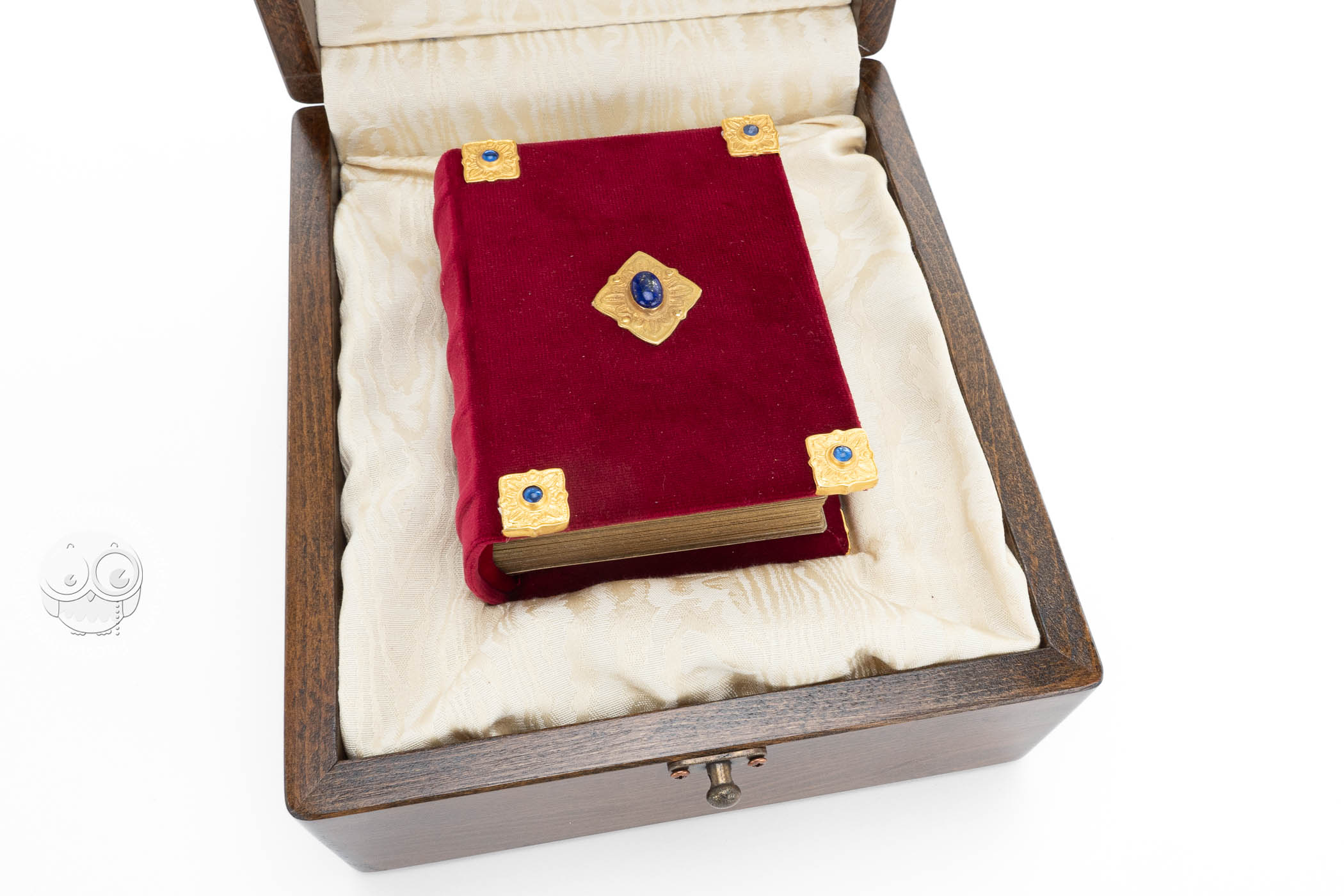
We have 1 facsimile edition of the manuscript "Officiolum of Francesco da Barberino": Officiolum di Francesco da Barberino facsimile edition, published by Salerno Editrice, 2015
Request Info / Price