
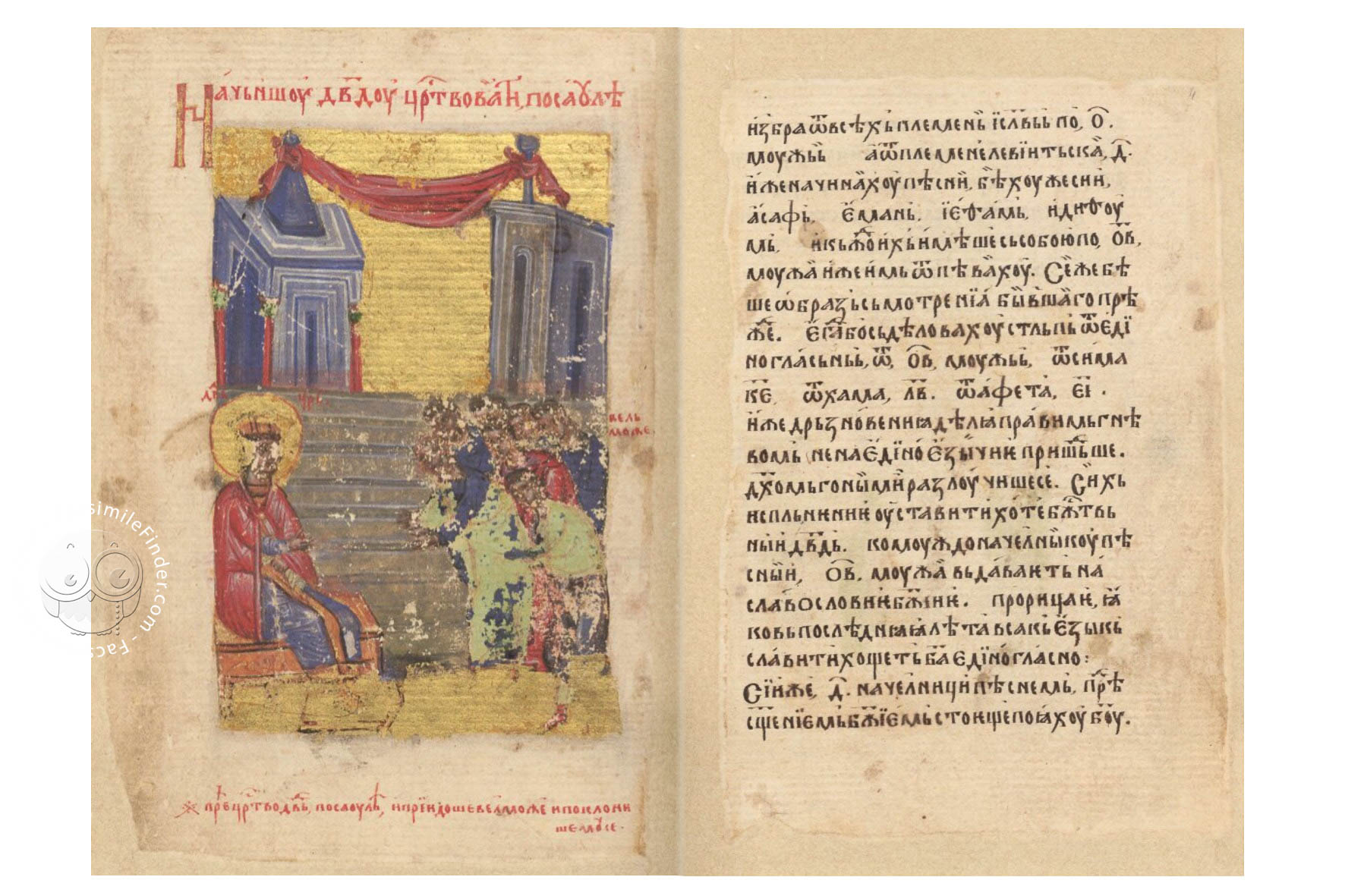
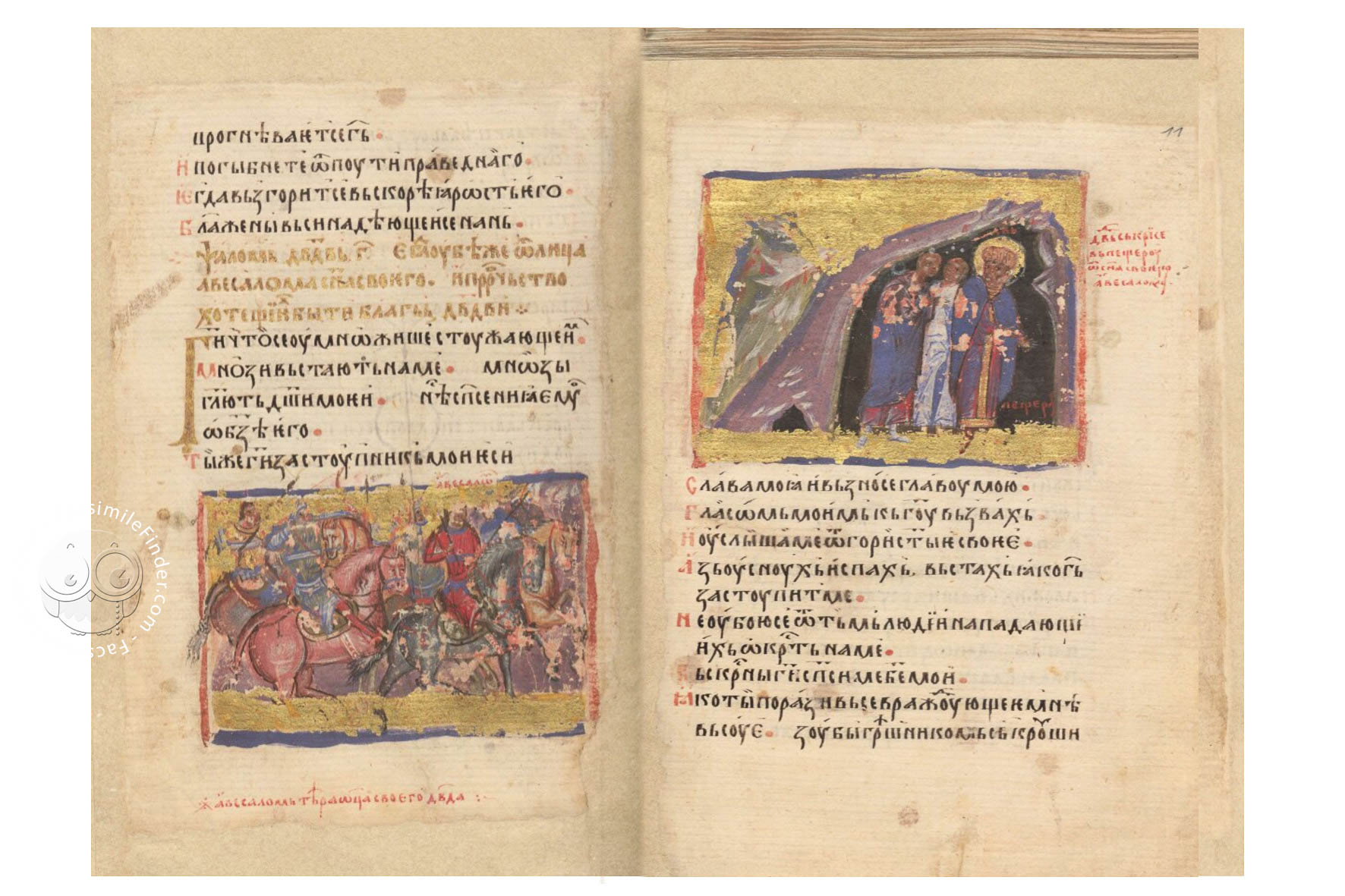
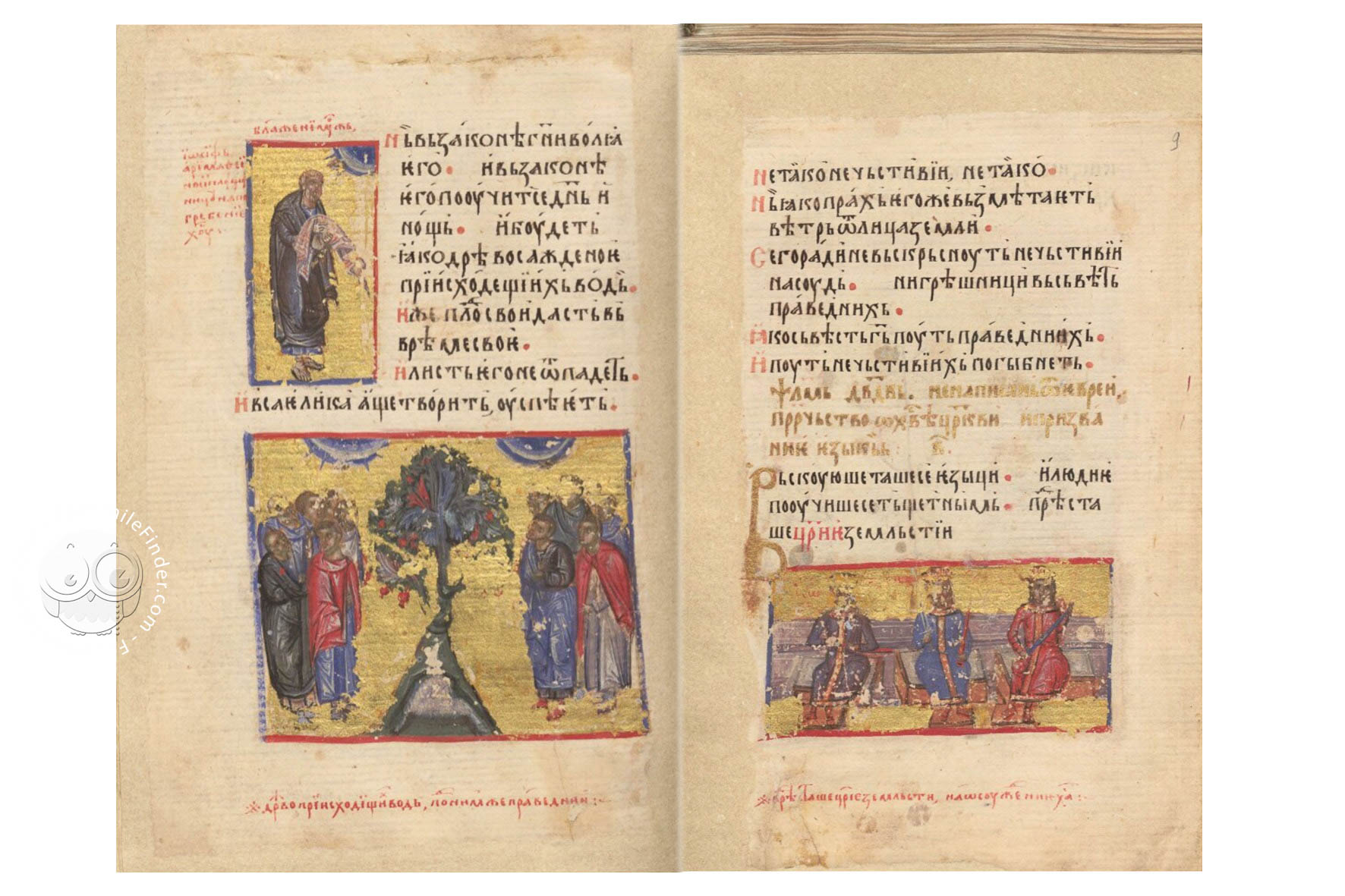
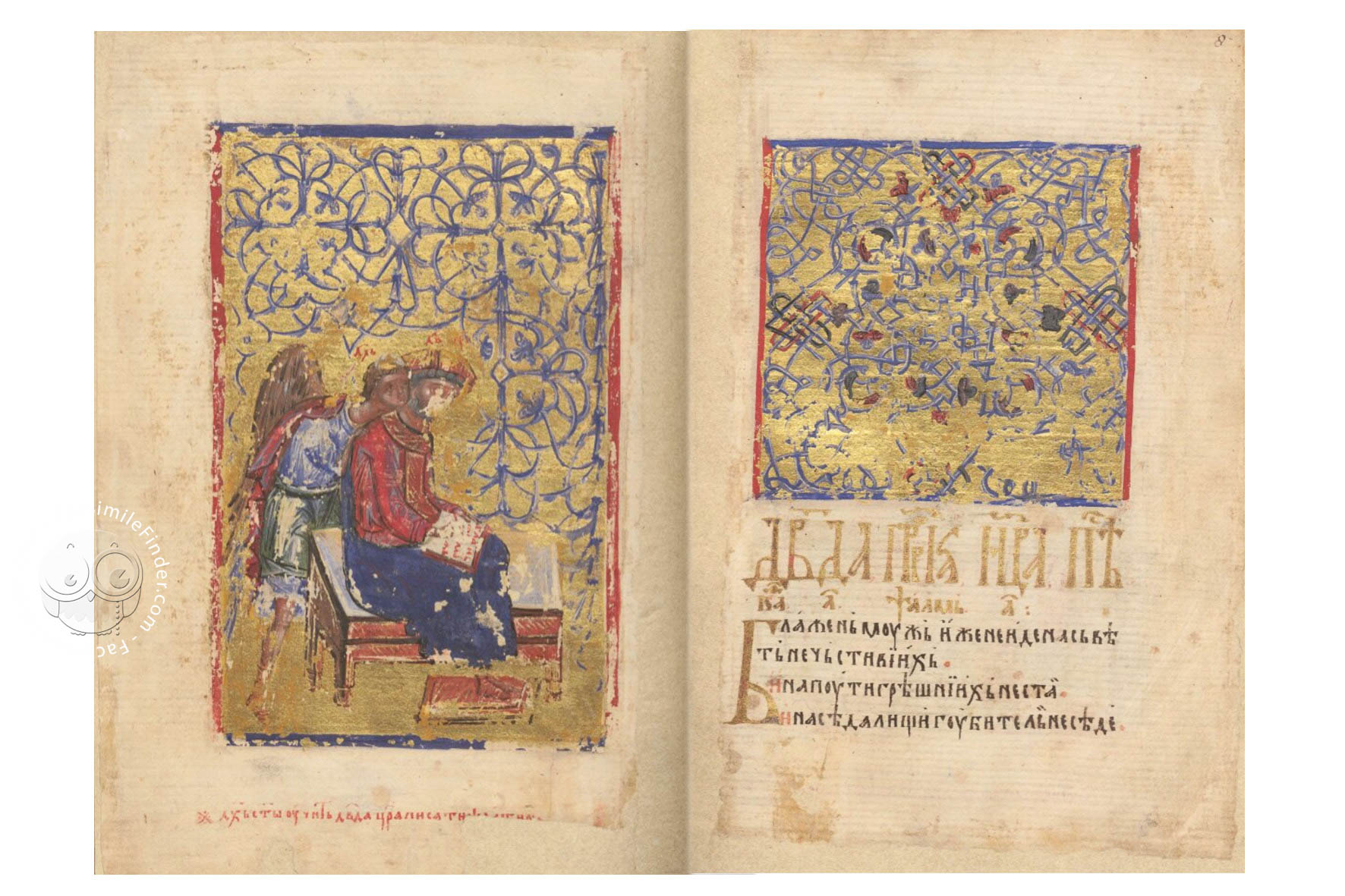
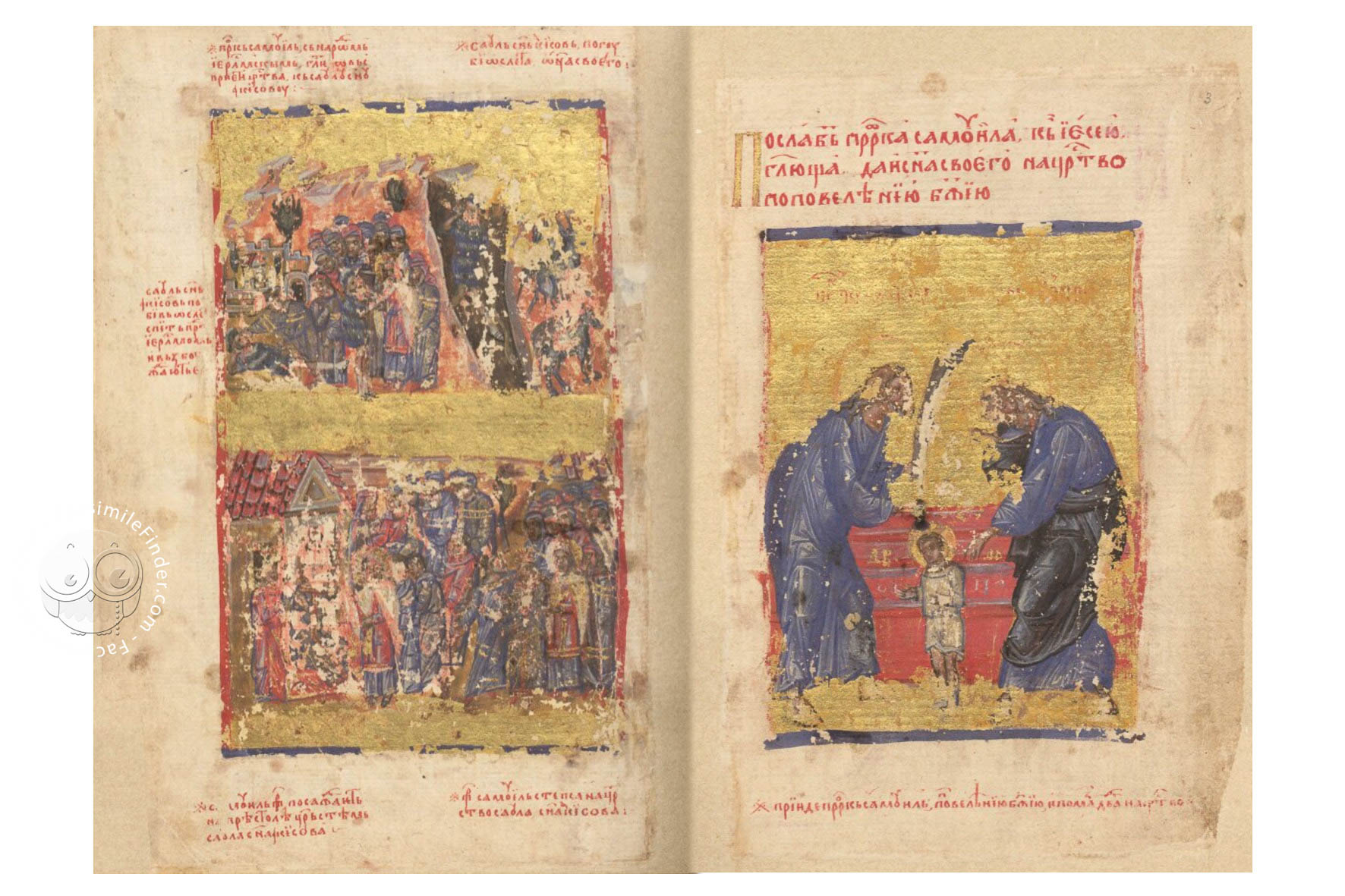
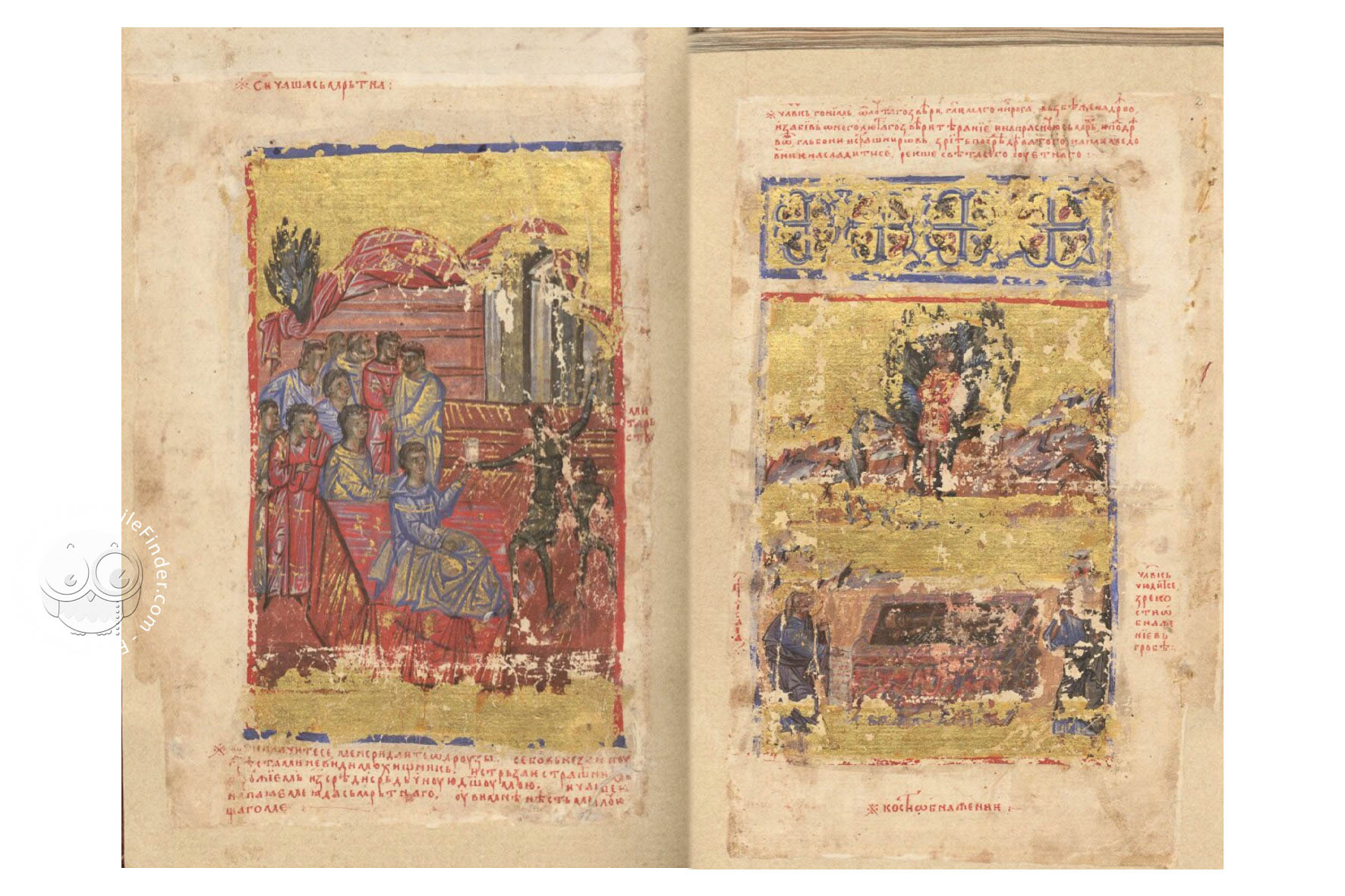
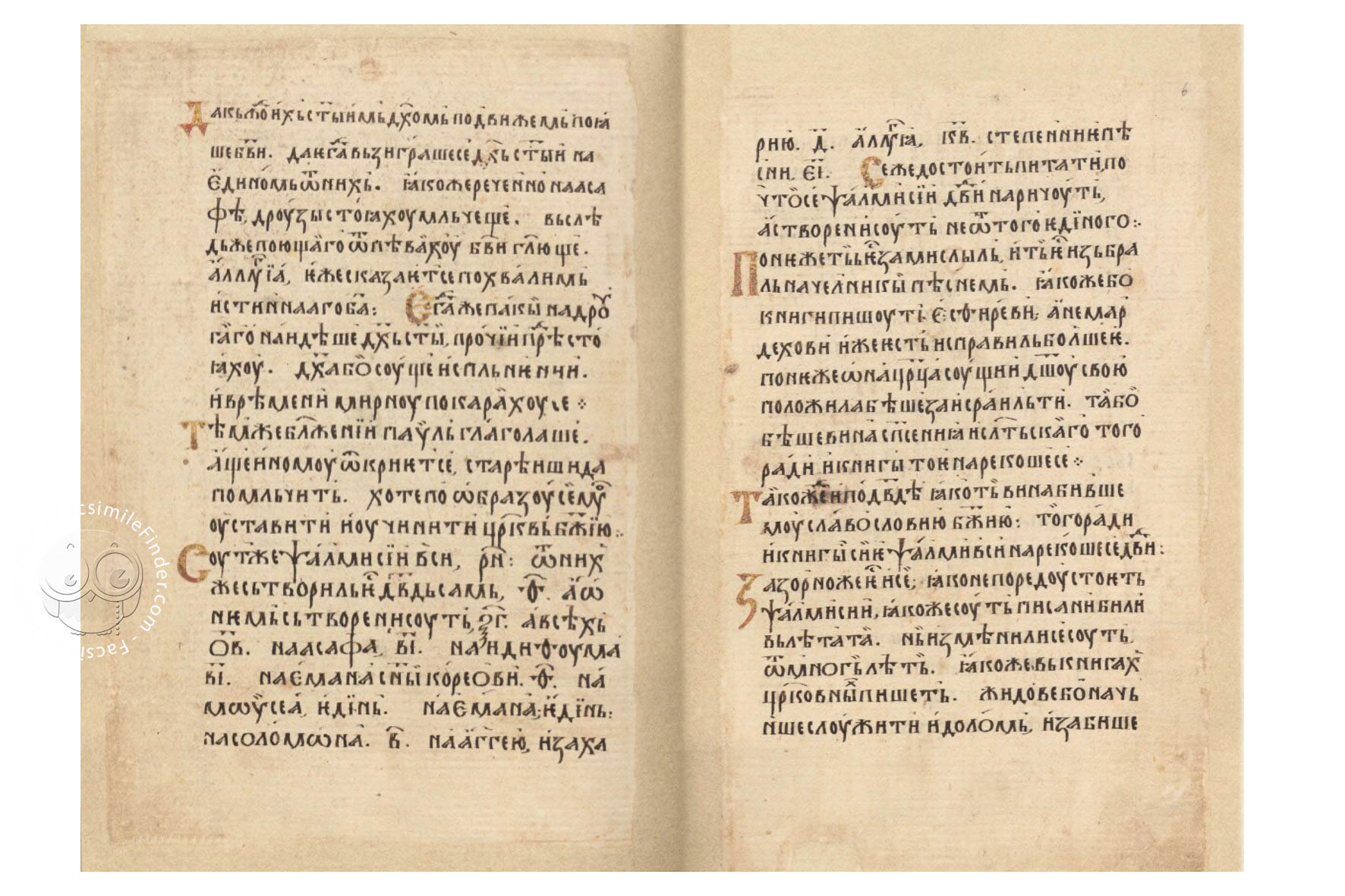
The Munich Serbian Psalter is one of the great monuments of medieval Serbian illumination, a richly illustrated Psalter with additional hymnographic texts created in the late fourteenth century. Written in Church Slavonic of the Serbian recension, it brings together the Psalms, biblical canticles, the Akathist to the Theotokos, and other devotional texts in a form shaped for prayer, meditation, and liturgical memory.
A Serbian Book from the Athonite World
Probably produced at Hilandar Monastery on Mount Athos, the manuscript reflects the spiritual and artistic networks that joined late medieval Serbia to the wider Byzantine Orthodox world. It may have been made for Prince Lazar or his son Stefan Lazarević, figures whose patronage belonged to a period of intense political pressure and religious self-definition on the eve of Ottoman expansion.
Image, Psalm, and Sacred History
The codex is celebrated for its extensive cycle of miniatures, many set against luminous gold grounds. These images do more than decorate the text. They translate the Psalms into sacred history, drawing together scenes from the Old Testament, the New Testament, and patristic interpretation. Their style recalls the monumental fresco traditions of fourteenth-century Serbian churches, where gesture, color, and solemn frontality carried theological force.
A Manuscript of Devotion and Memory
The Munich Serbian Psalter embodies the close union of word and image characteristic of Orthodox manuscript culture. Its pages invite the reader to see the Psalms not only as poetry, but as prophecy, liturgy, and vision. Preserved today in Munich, it remains a rare witness to the intellectual refinement and spiritual intensity of medieval Serbia.
We have 1 facsimile edition of the manuscript "Munich Serbian Psalter": Serbische Psalter facsimile edition, published by Reichert Verlag, 1981
Request Info / Price