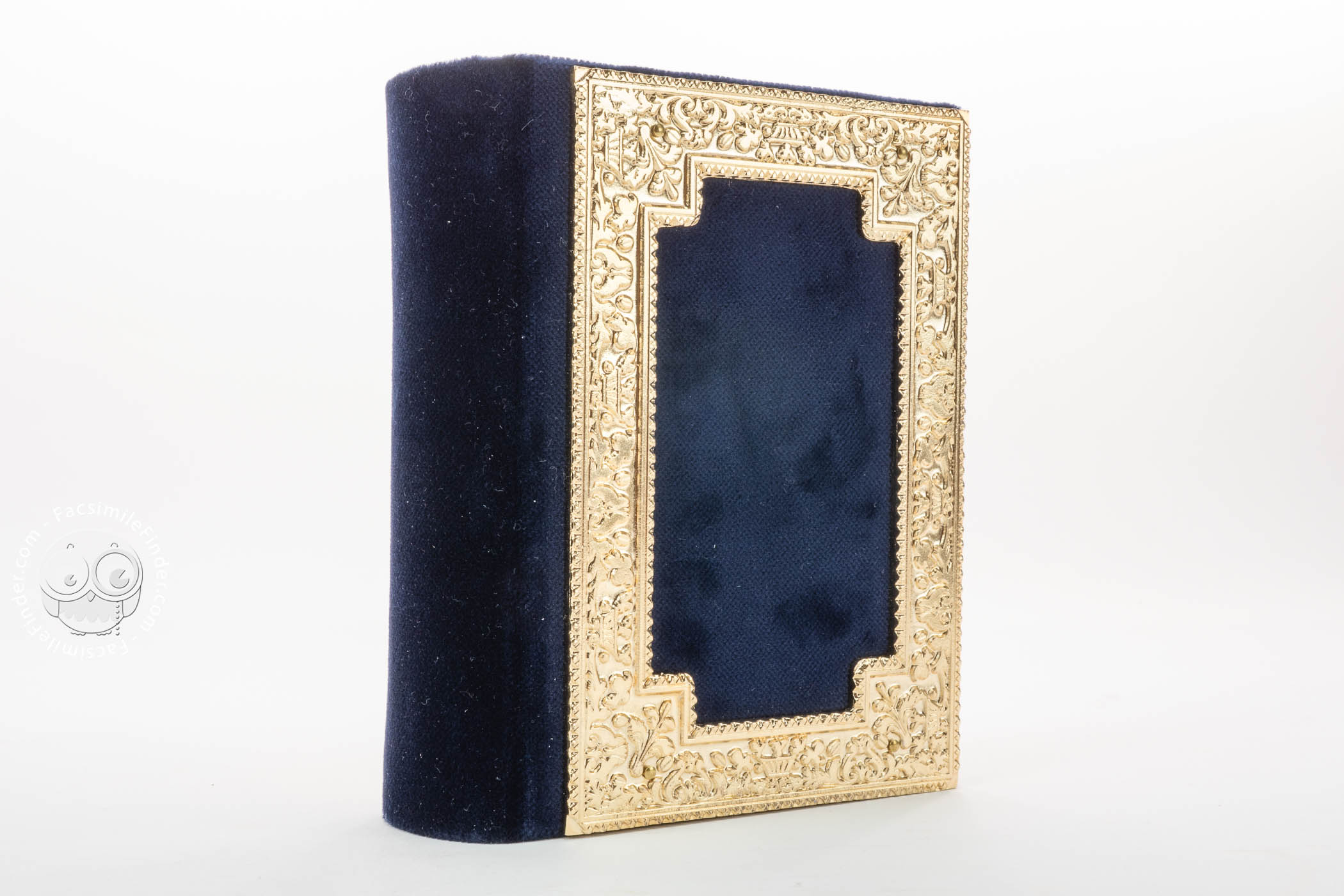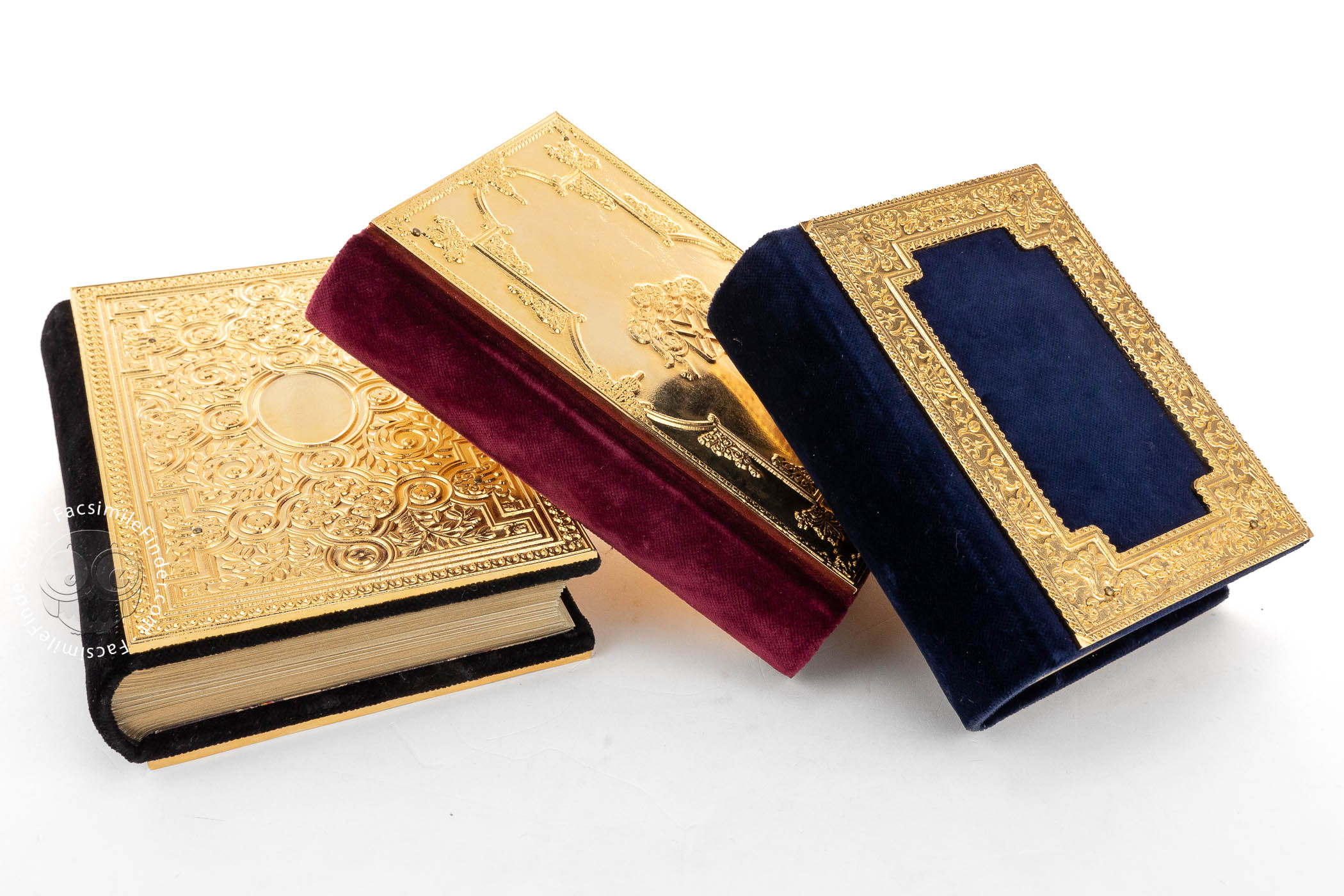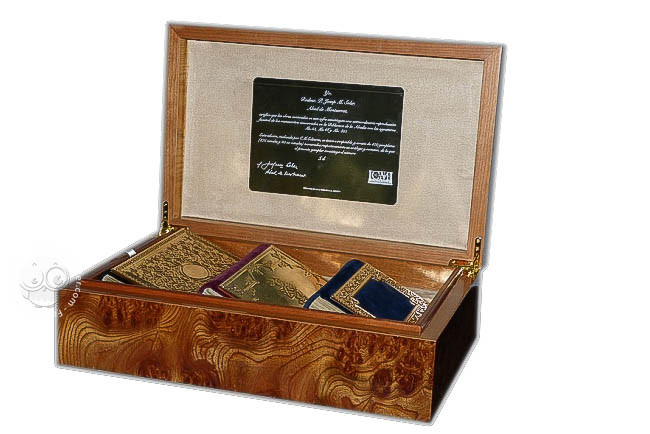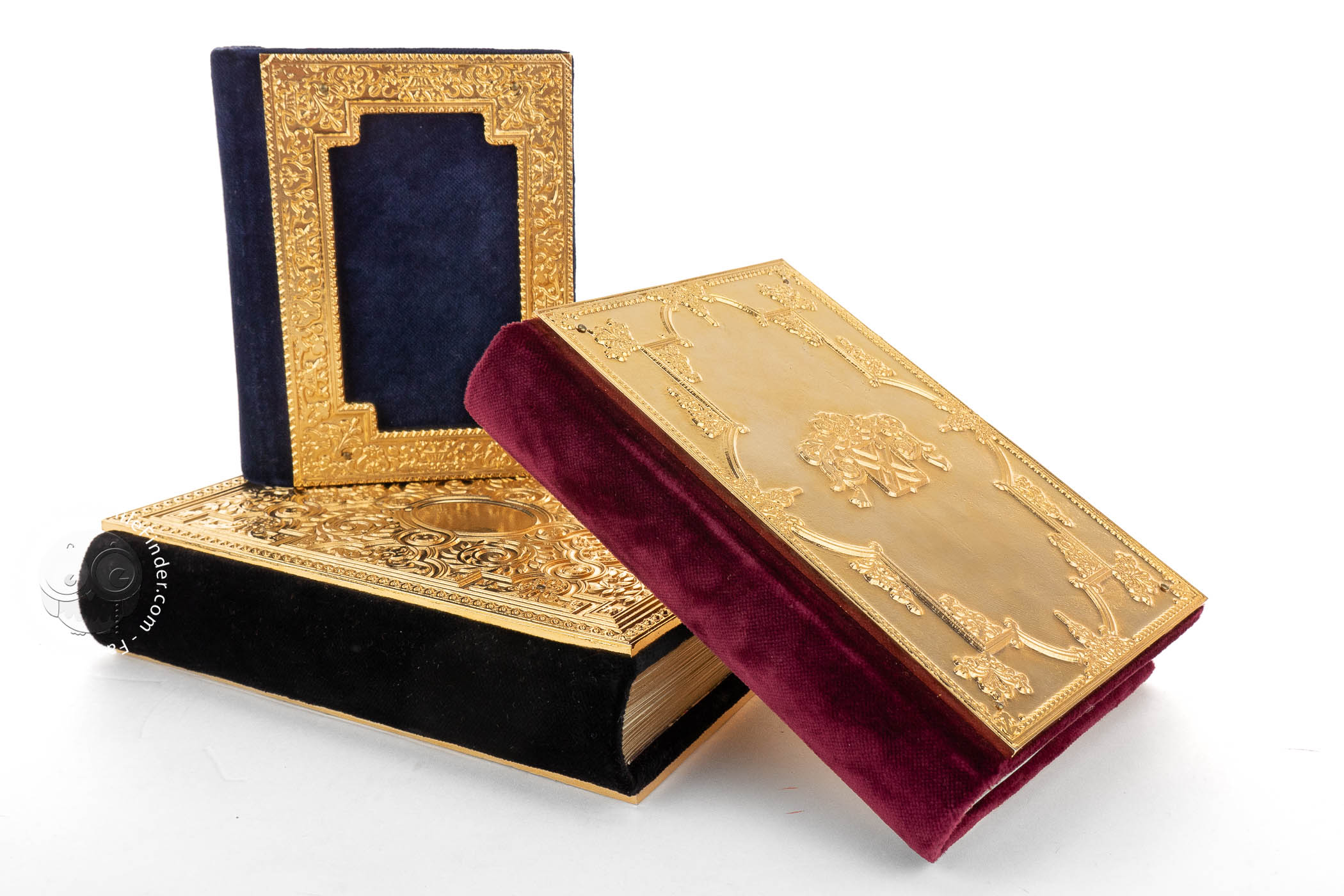
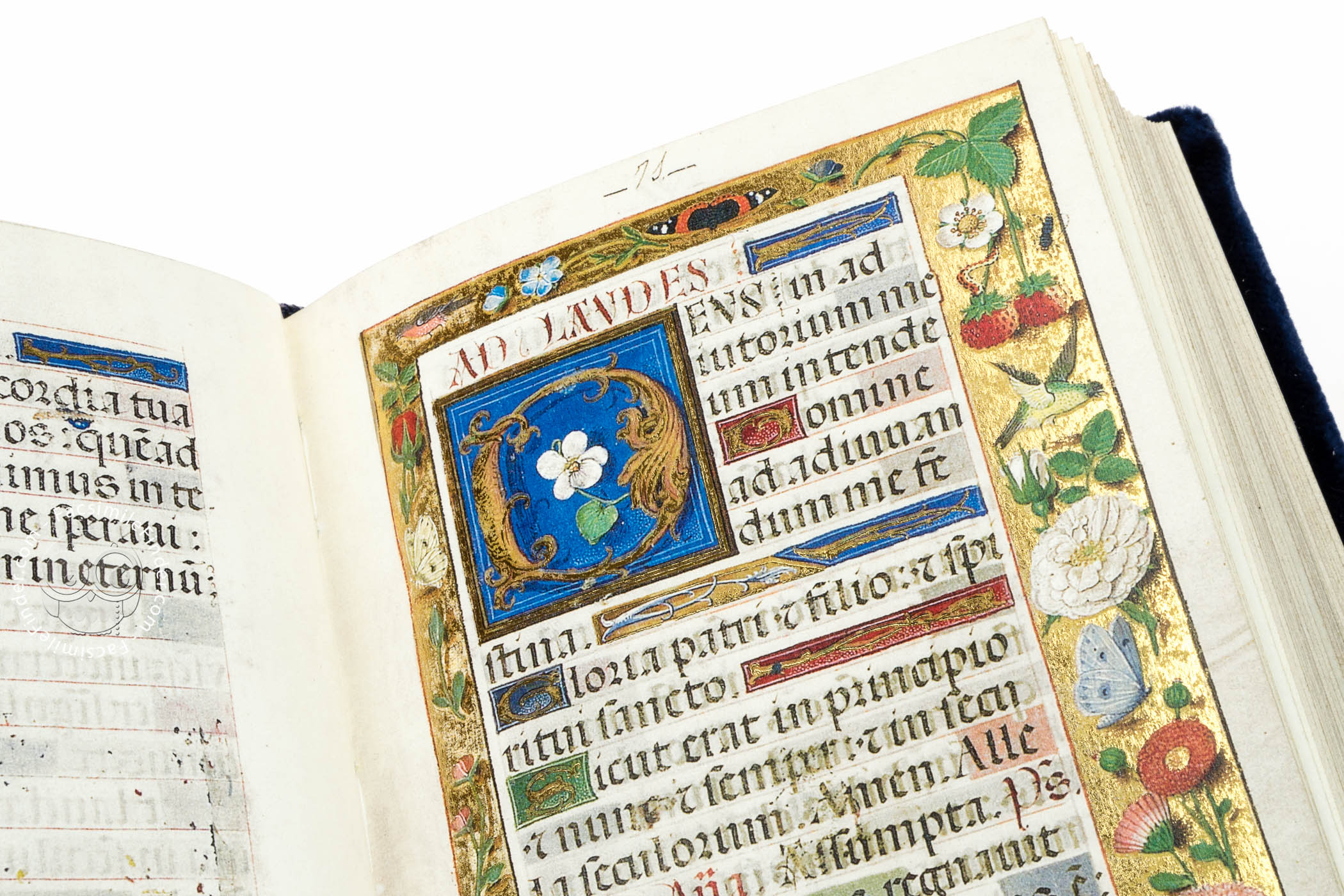
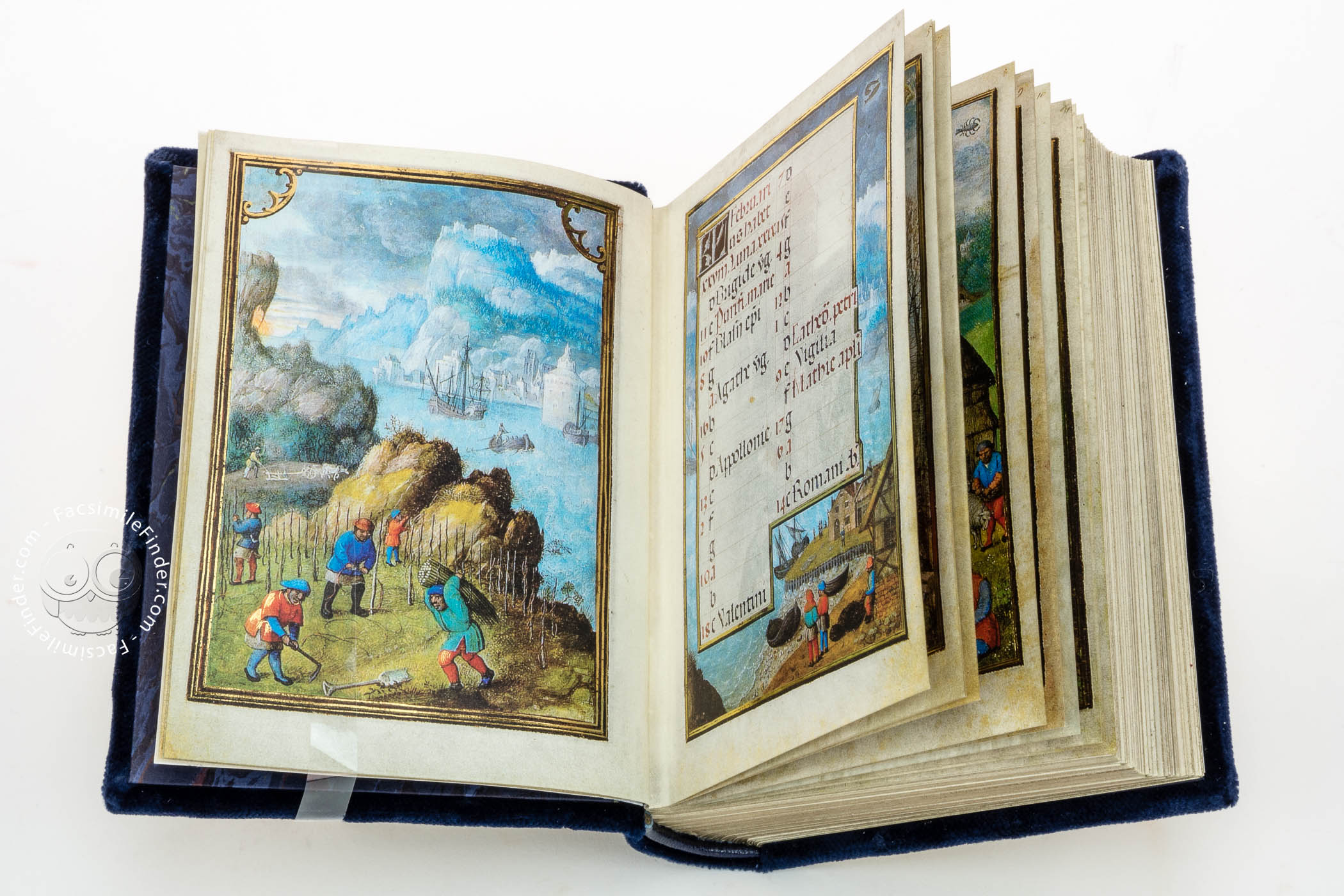

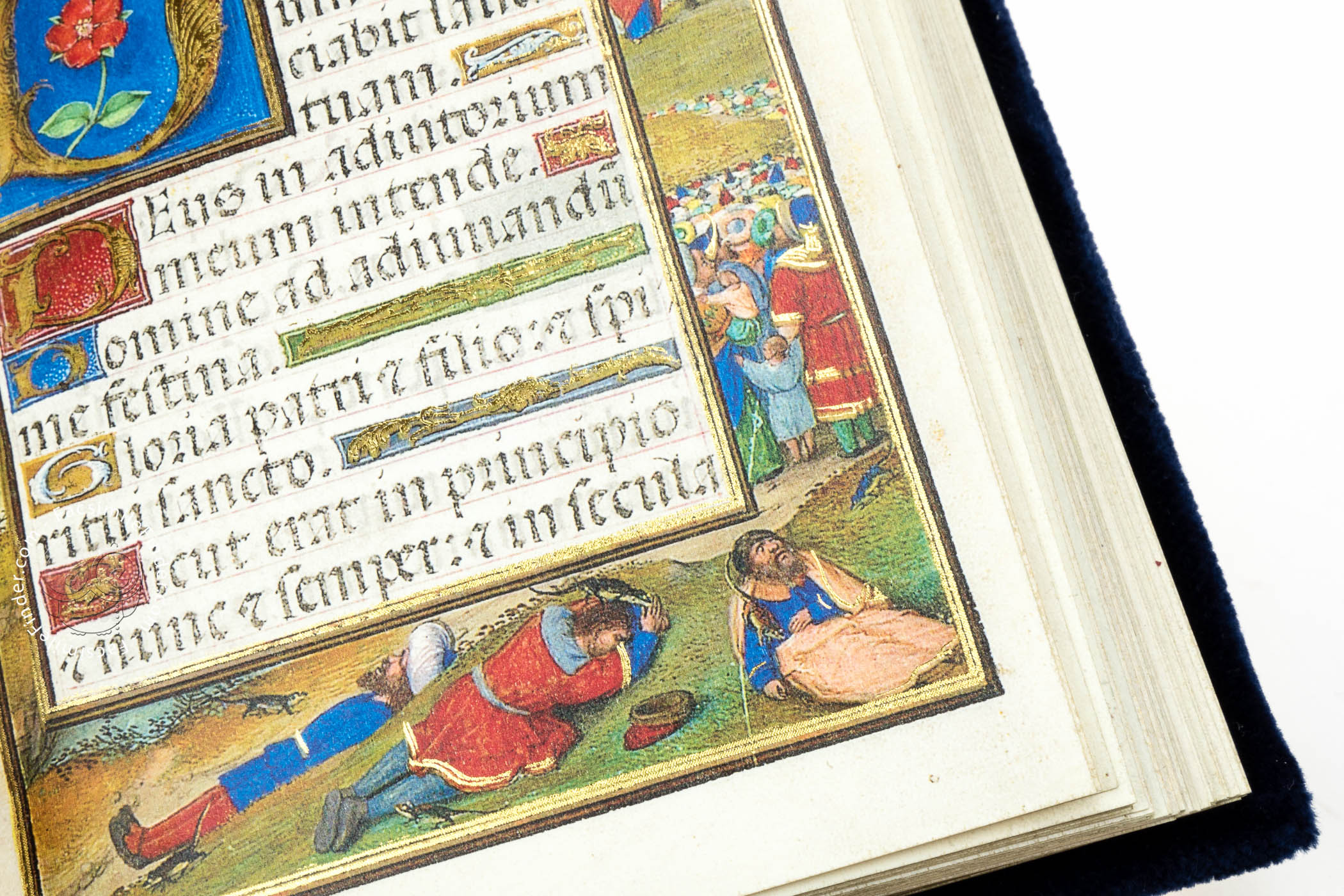
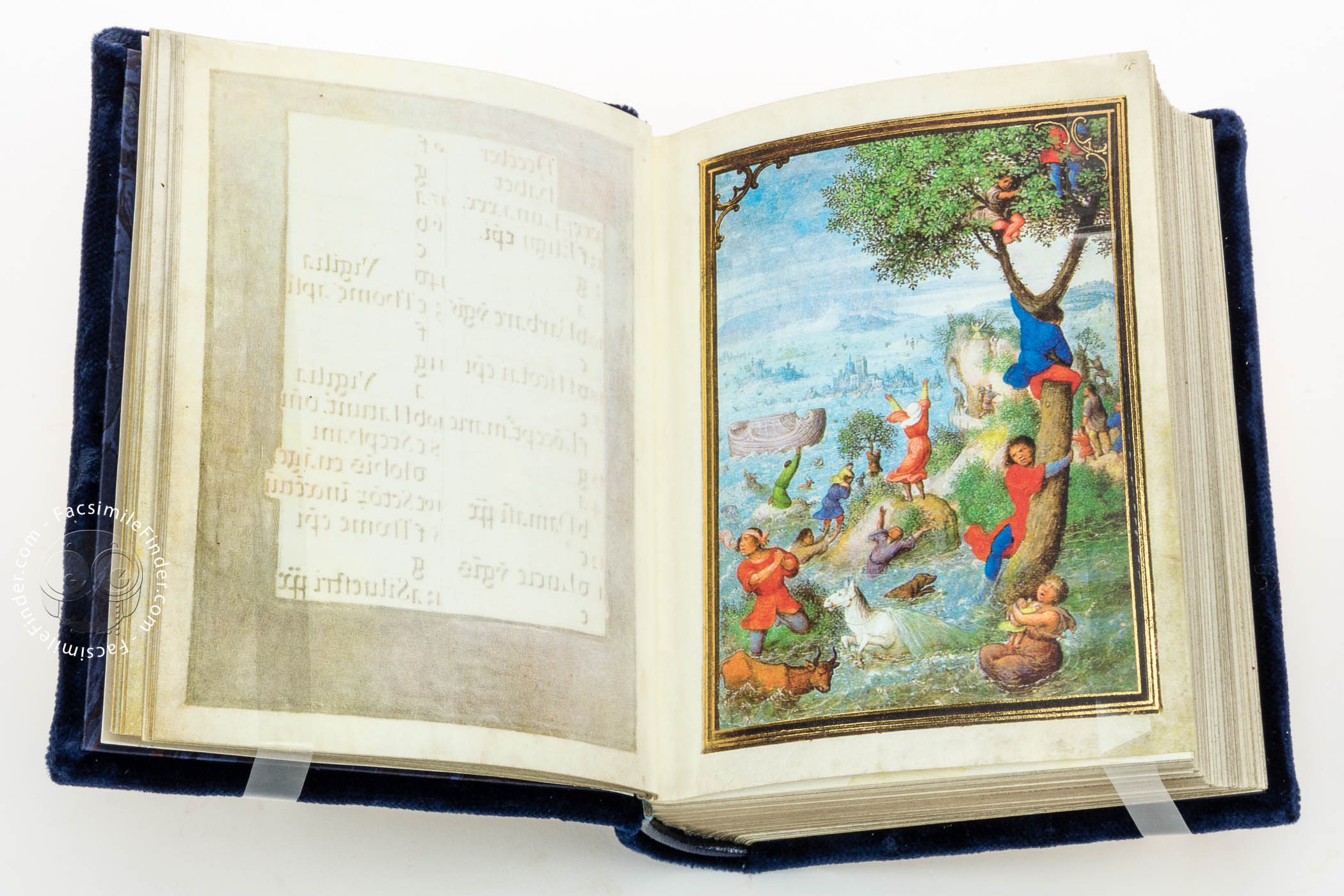


The Munich-Montserrat Hours is a luxury Christian prayer book illuminated by the internationally famed Simon Bening in Bruges around 1535-1540, almost certainly for Alonso de Idiaquez. It boasts the most ambitious landscapes in Flemish illumination, with Bening bringing the nuance of contemporary panel painting to the book's pages. Its extensive illumination includes twenty full-page miniatures, twenty-two smaller ones, and eighteen historiated borders, all of consummate artistry.
The manuscript is a book of hours. Its longest texts are the Hours of the Virgin and the Office of the Dead (Montserrat, pp. 25-164 and 165-266). It has a large number of suffrages (short prayers to saints) arranged according to the hierarchy of saints, beginning with the archangel Michael and ending with virgin saints (Montserrat, pp. 316-354).
Unequalled Atmospheric Landscapes
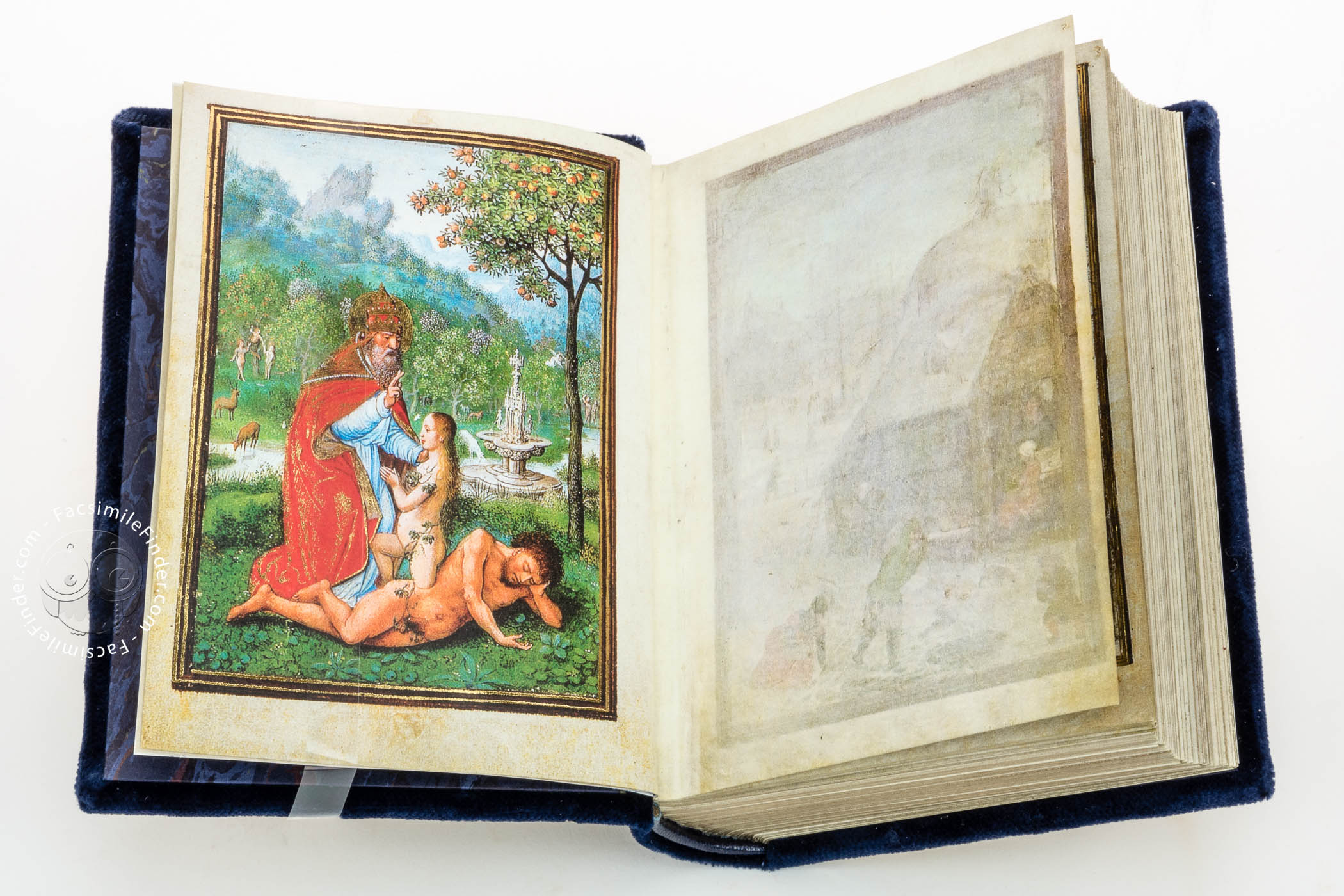
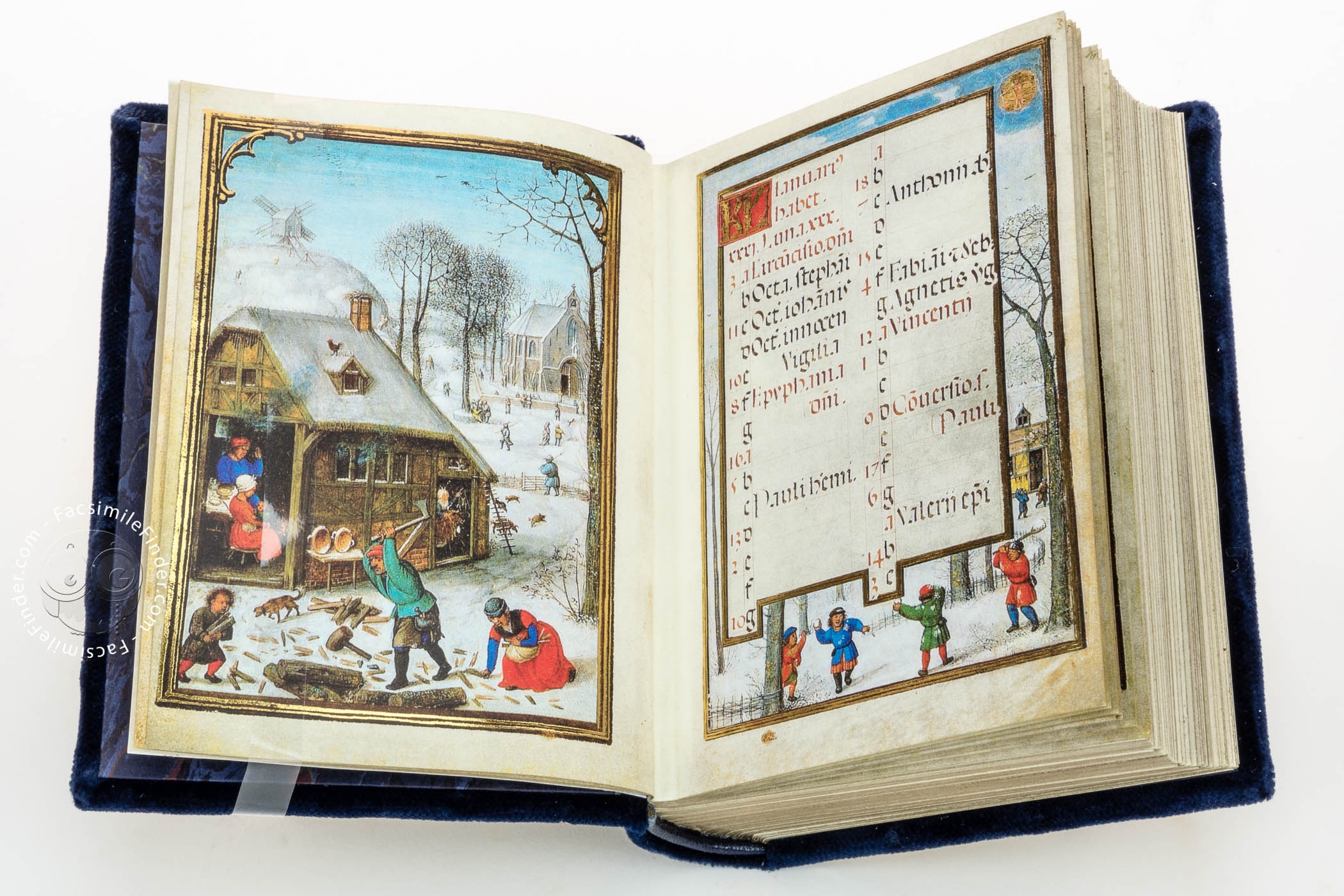
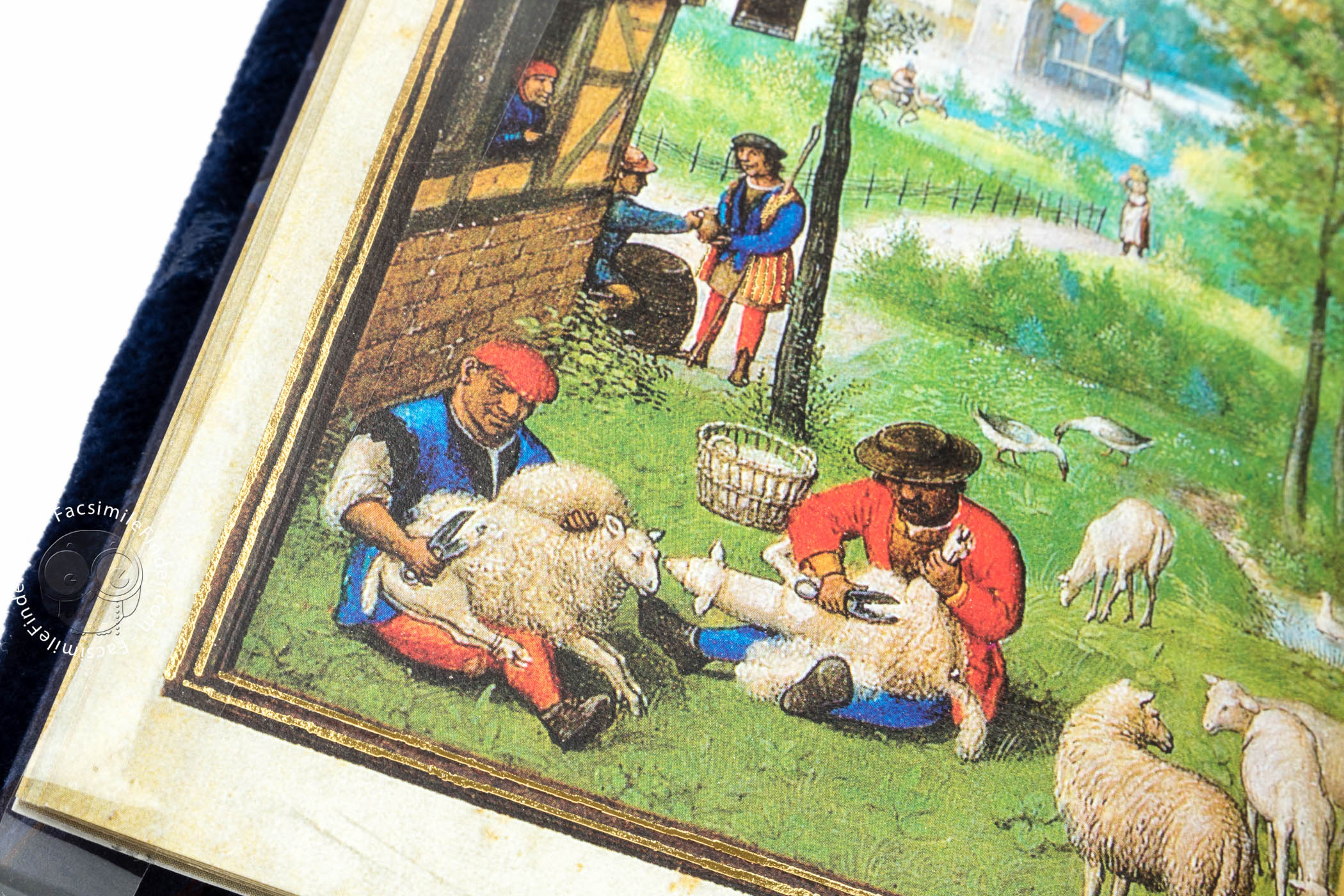
Simon Bening (d. 1561) was well respected in his own time, characterized as "the most pleasing colorist who best painted trees and far distances." In the Munich-Montserrat Hours, deep, atmospheric landscapes are not only a feature of the famous calendar miniatures and borders (Munich, fols. 2-14), but also of the small miniatures, just six or seven text lines in height.
The landscapes are extremely varied, from distant views of populated cities, harbors, and farms to rustic wooded settings. All display Bening's characteristic attention to perspective, achieved by overlapping motifs and rendering features in the far distance in pale pastel blue.
Spotlight on Saint Sebastian
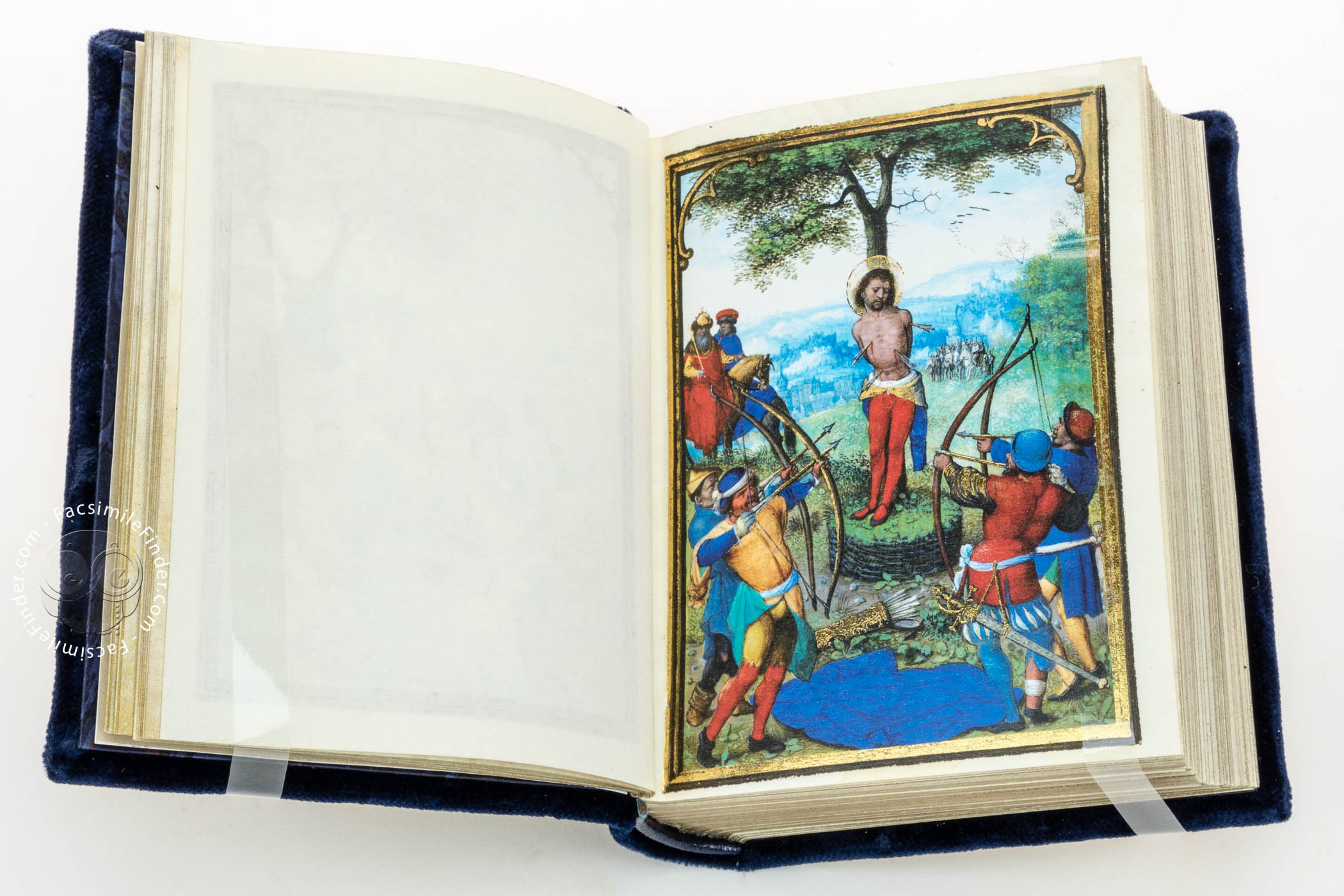
A remarkable feature of the suffrages is the full-page miniature of Saint Sebastian, a tour de force of pathos, evident especially in the saint's slight figure and downward gaze. The scene is set against a vast panorama featuring the distant city of Rome (Los Angeles).
Historiated and Strewn Flower Borders
The full borders are either historiated (i.e., containing identifiable scenes or figures) or of the Flemish strew flower type, with fictive flowers, insects, birds, and berries appearing to have been strewn across golden grounds on which the objects appear to have cast shadows. Among the subjects of the historiated borders are the Expulsion of Adam and Eve from the Garden of Eden and Christ Calling Saint Peter (Montserrat, pp. 25 and 403).
Book for a Spanish Courtier
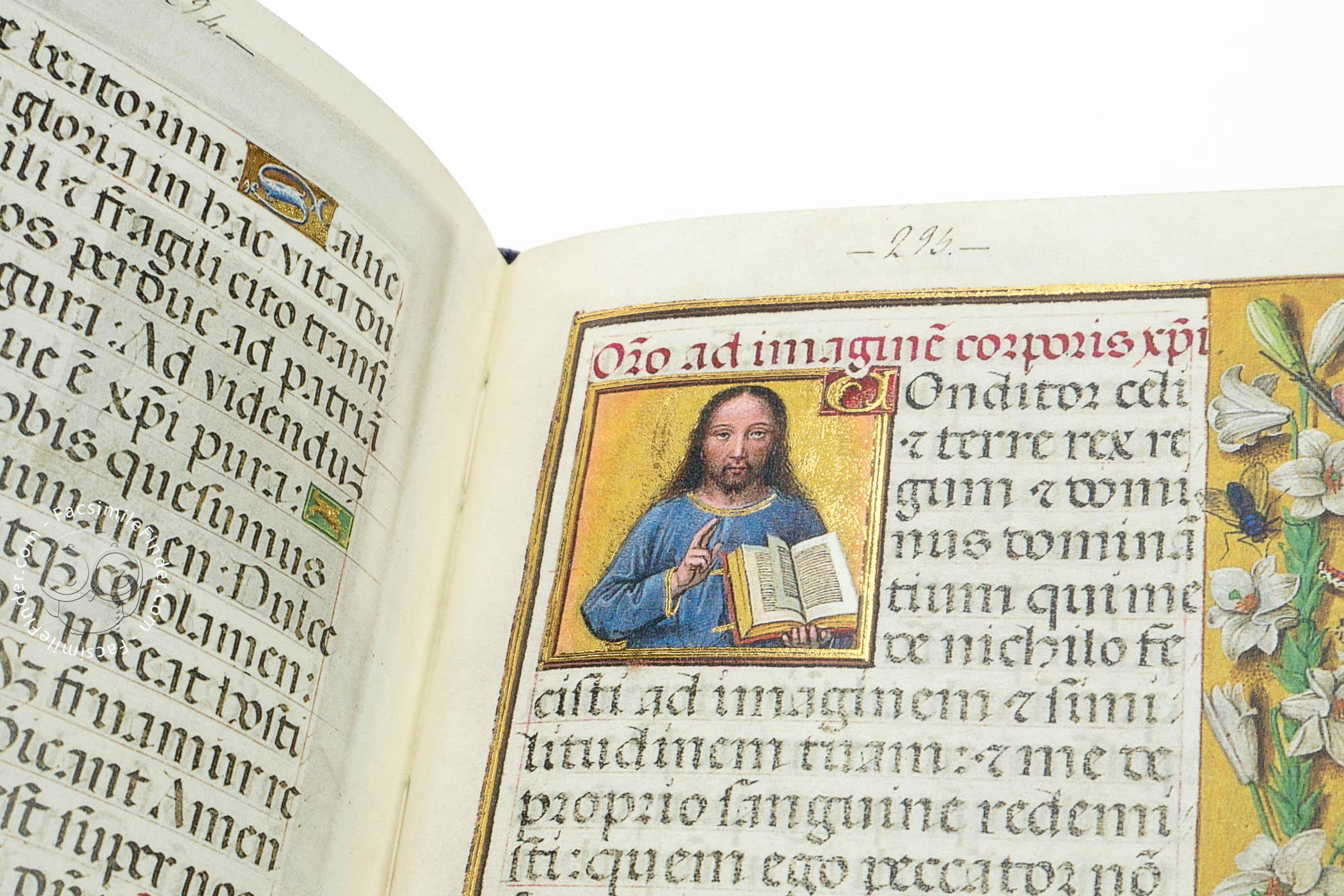
The Munich-Montserrat Hours is written in Gothic Rotunda, the customary script used in Flemish devotional manuscripts for Iberian patrons in this period. The very likely candidate is Alonso de Idiaquez (d. 1557), a member of the court of Charles V (1500-1558), Holy Roman Emperor. He was the founder of the Dominican house of San Telmo in the Basque town of San Sebastián, where the manuscript was examined by the Inquisition in 1578 and found to be orthodox.
Dismembered by the Seventeenth Century
The manuscript was dismembered by the seventeenth century, when the calendar and all of the full-page miniatures were estranged from the main text. Its painted borders, small miniatures, and historiated initials are now preserved in Montserrat. The calendar pages and two leaves with full-page miniatures form a portion of the Flemish Calendar in Munich. Two leaves are in the collection of the J. Paul Getty Museum, and one (more properly termed a cutting) is in a private collection. Another dozen or more are untraced.
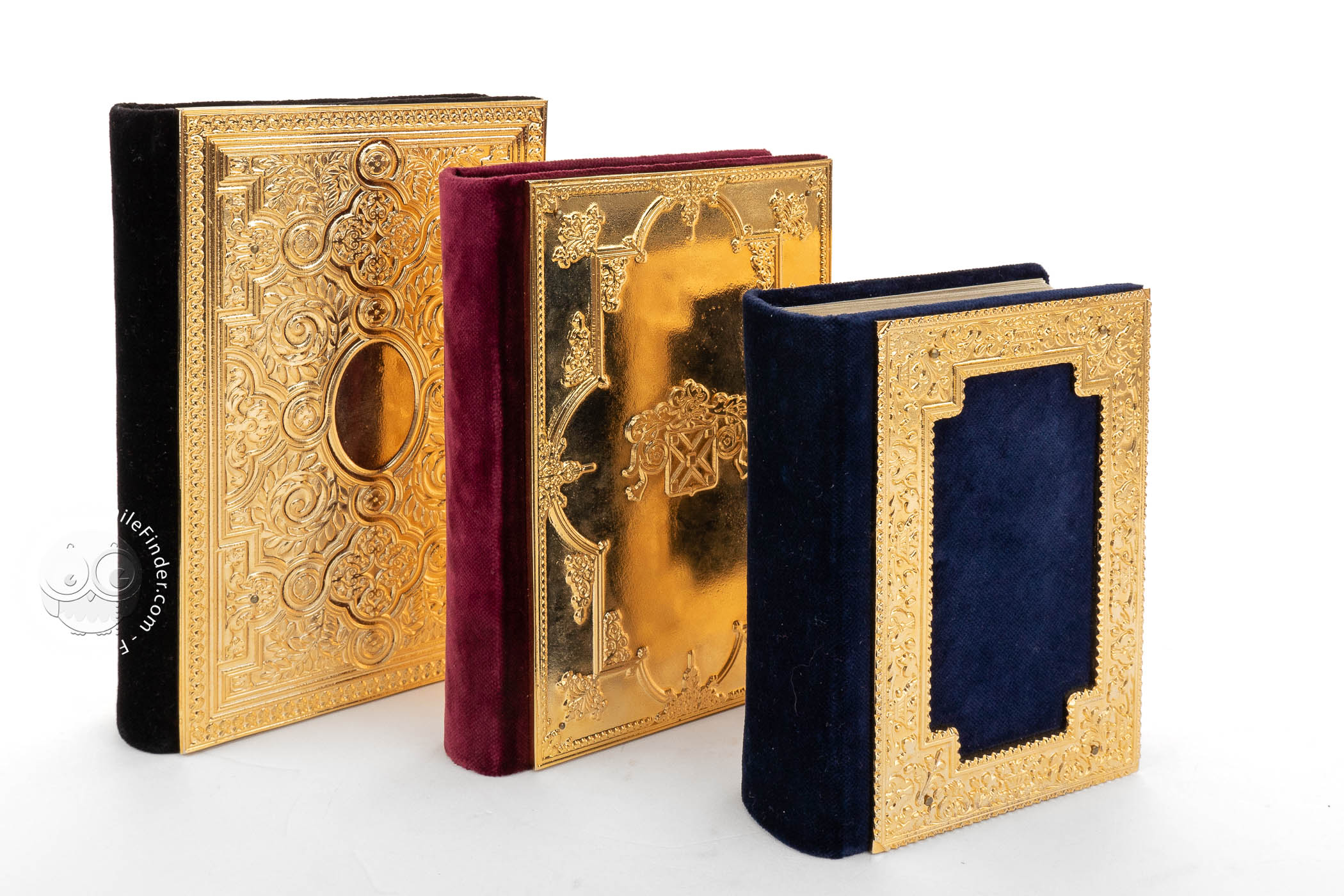
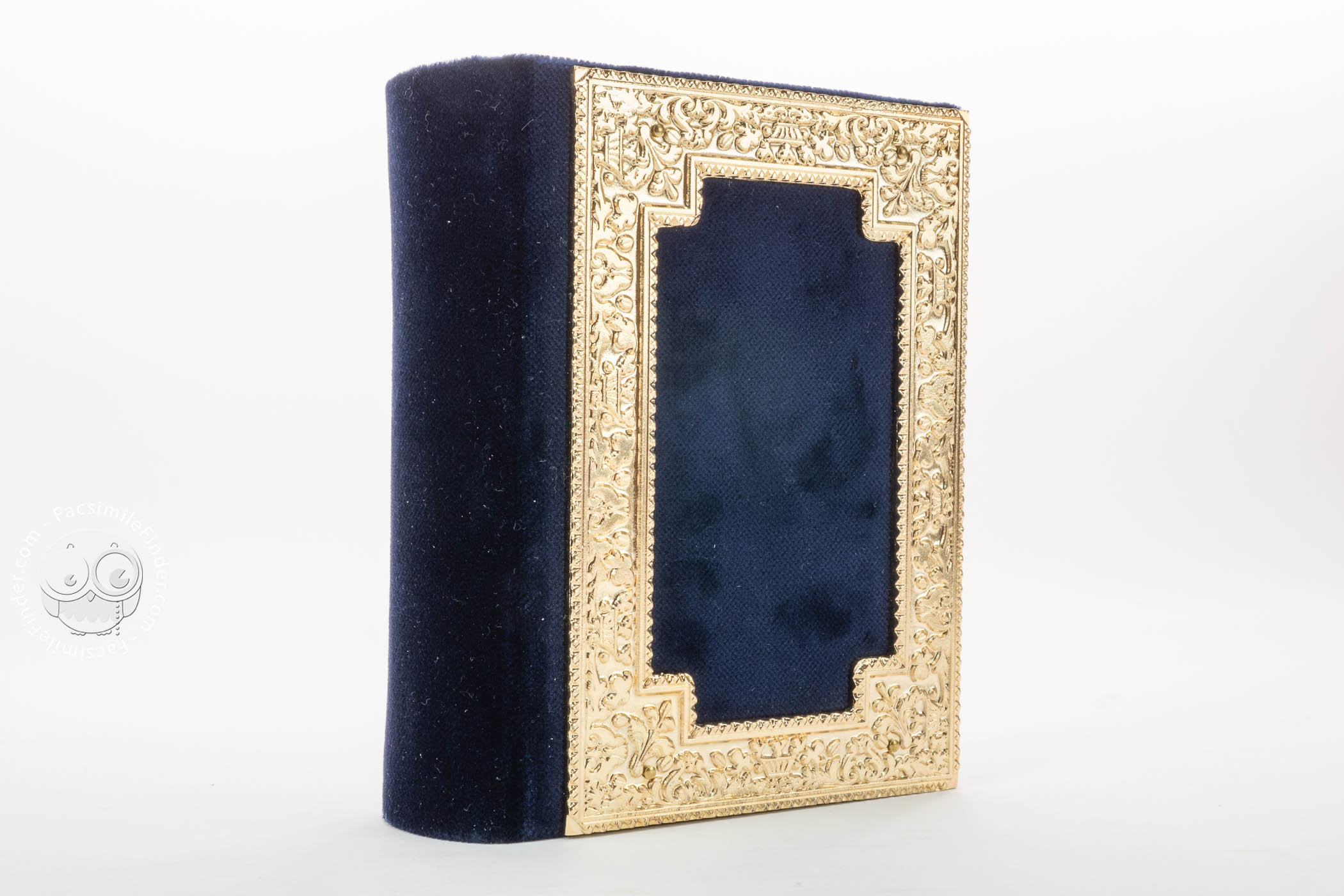
We have 3 facsimiles of the manuscript "Munich-Montserrat Hours":
- Horas de Monaco-Montserrat (Triptico de Montserrat) facsimile edition published by CM Editores, 2014
- Triptico de Montserrat (Library Edition) facsimile edition published by CM Editores, 2014
- Triptico de Montserrat (Deluxe Edition) facsimile edition published by CM Editores, 2014