
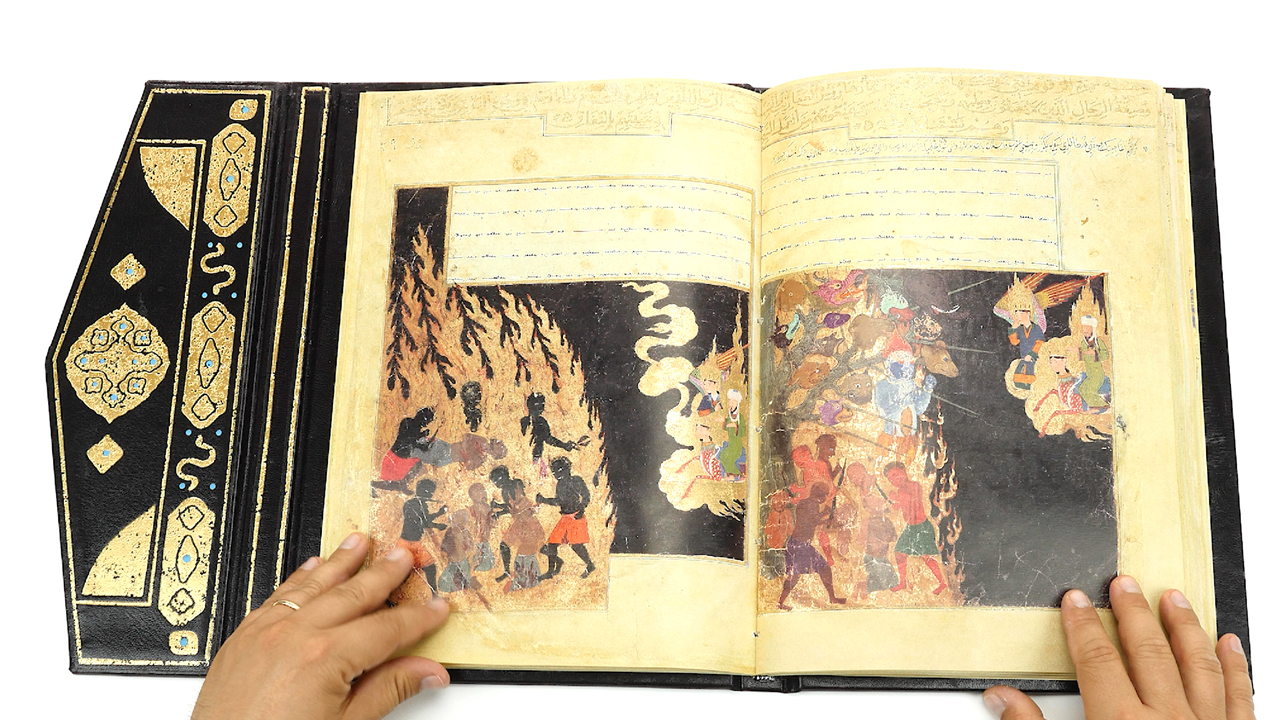
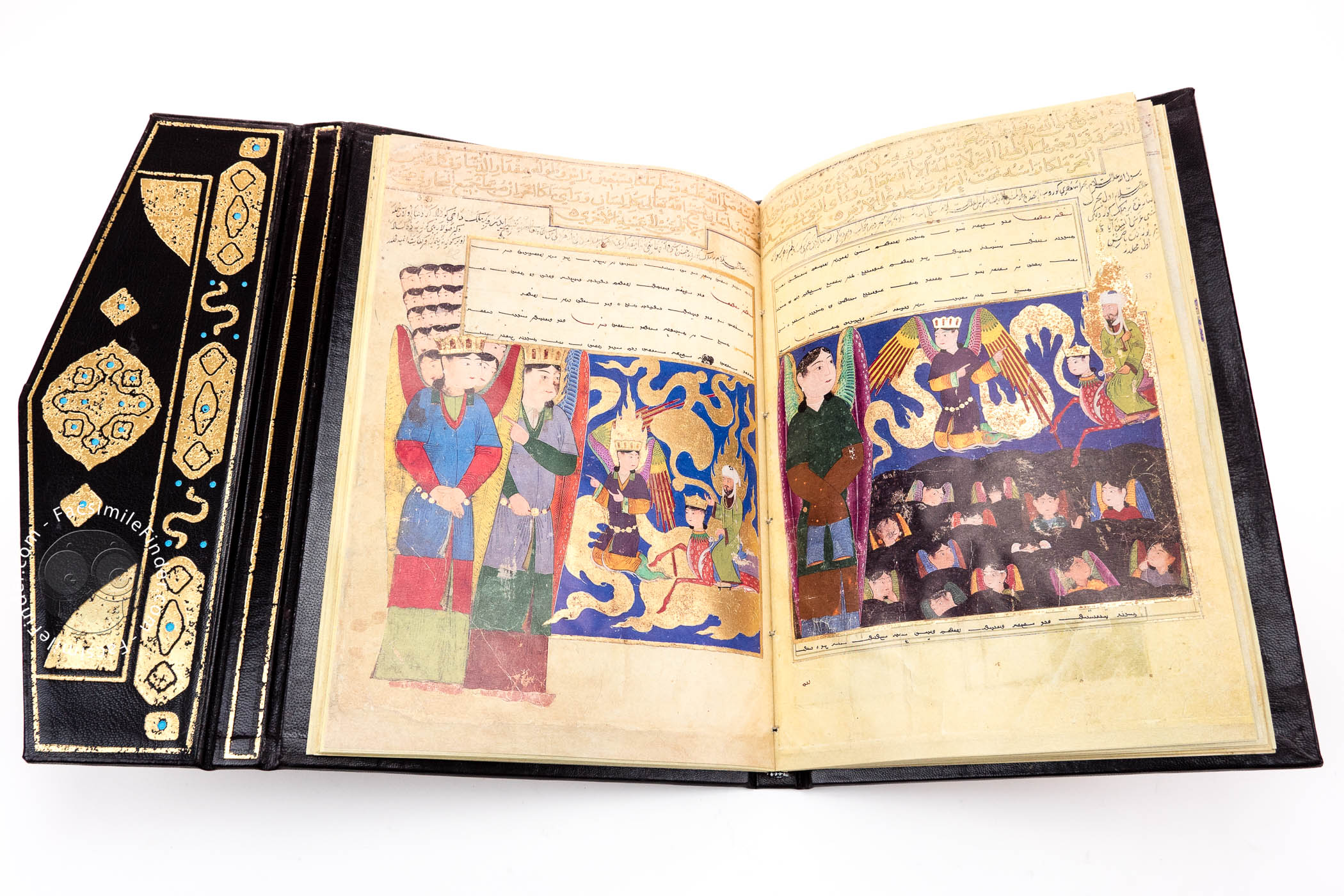
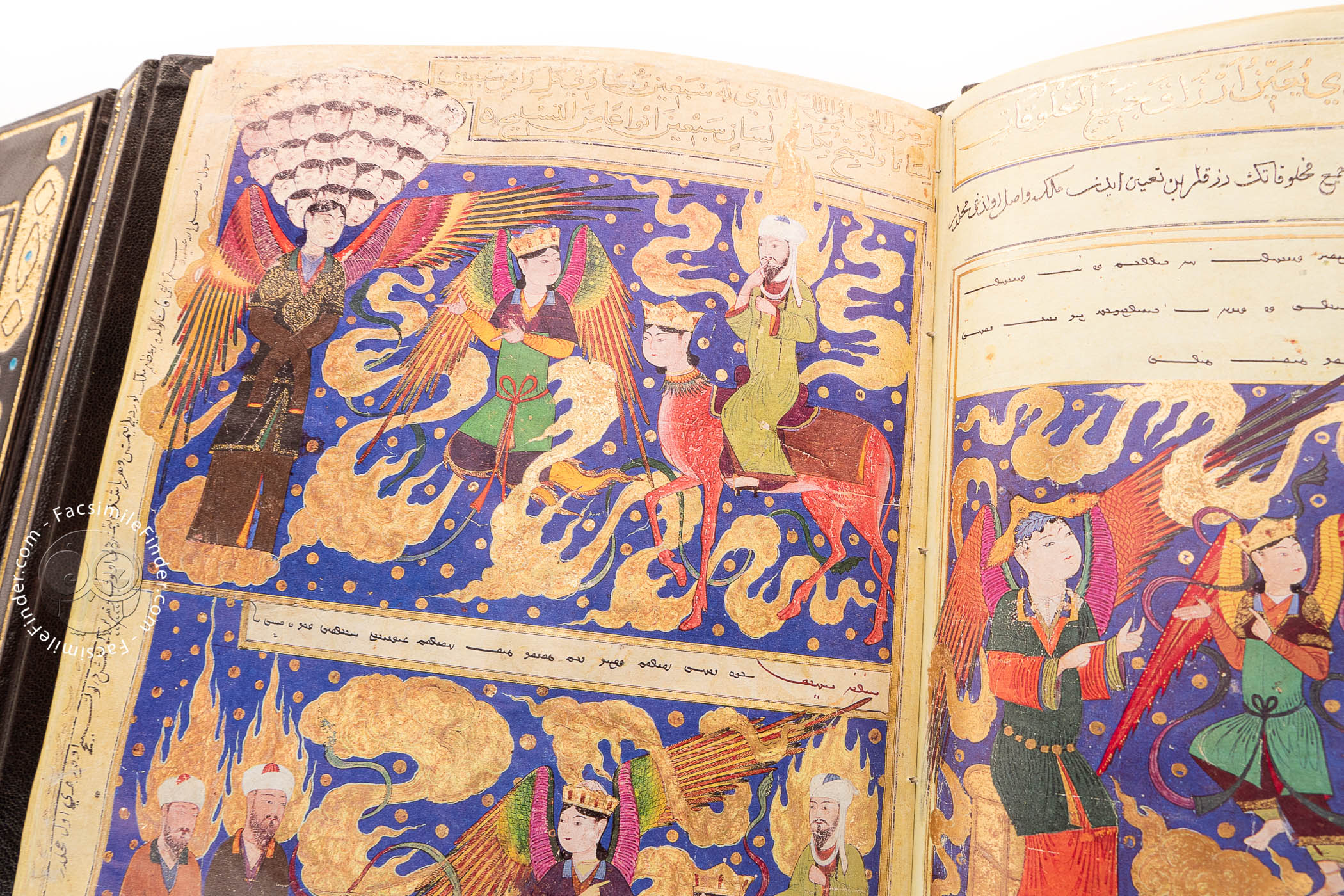

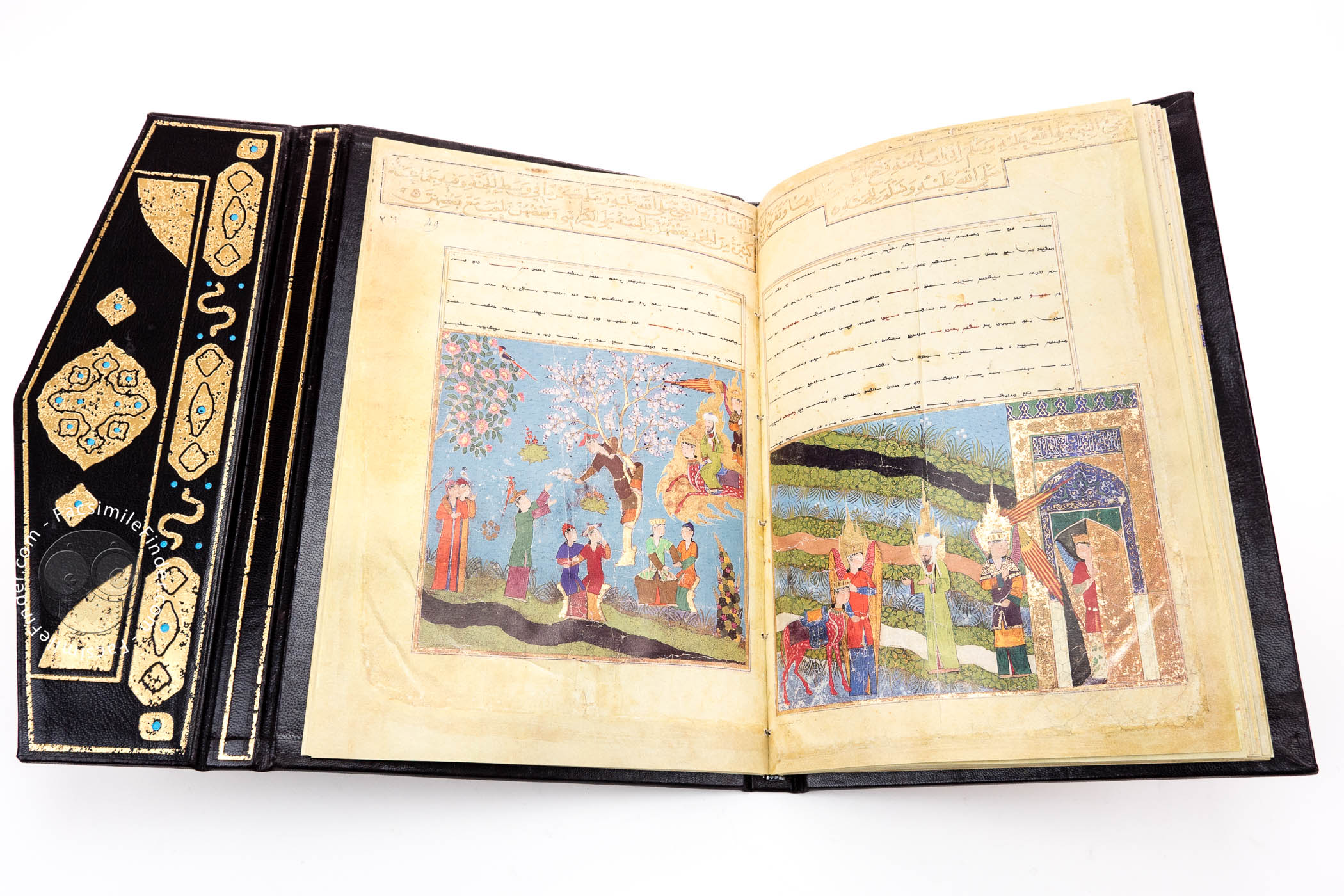
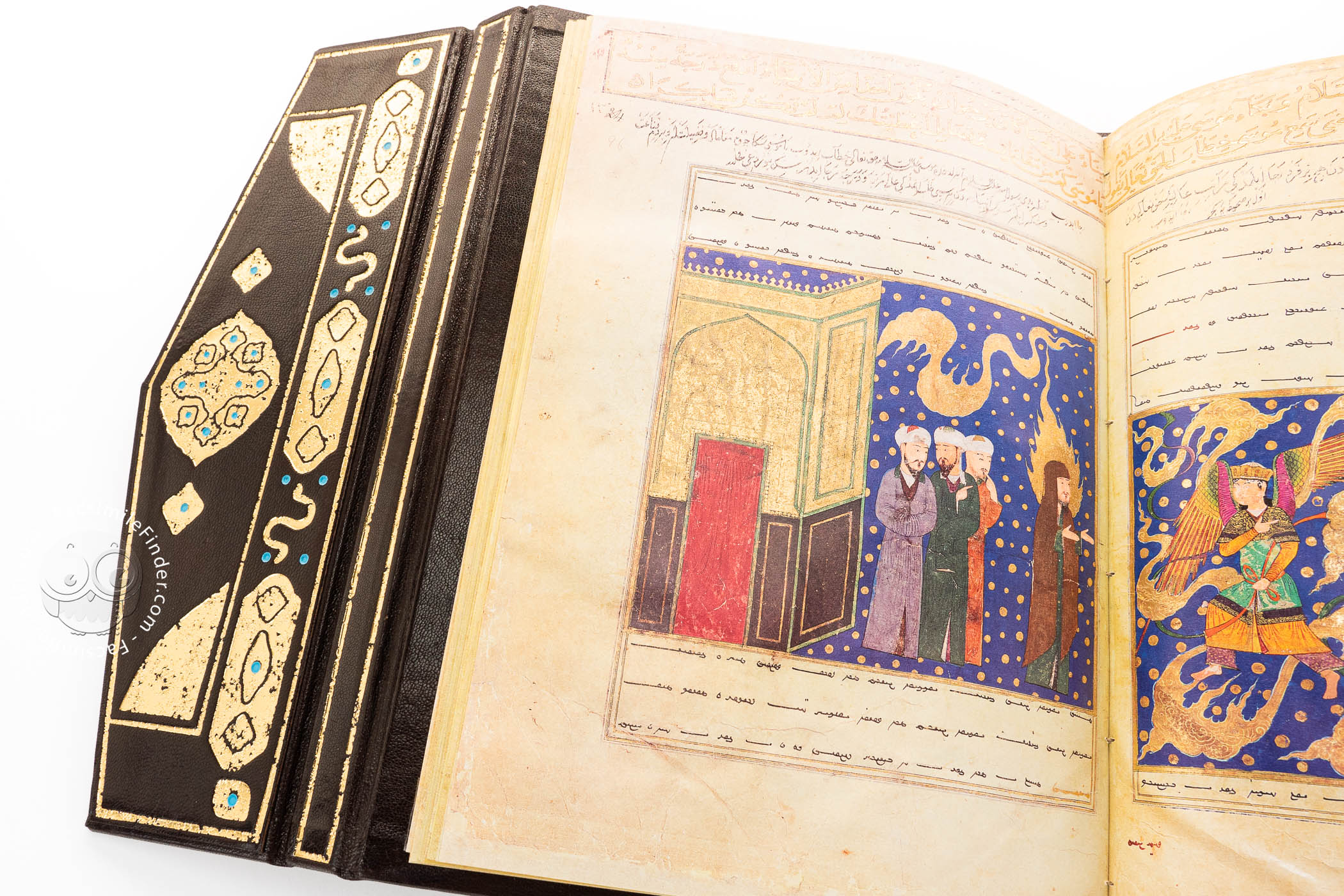
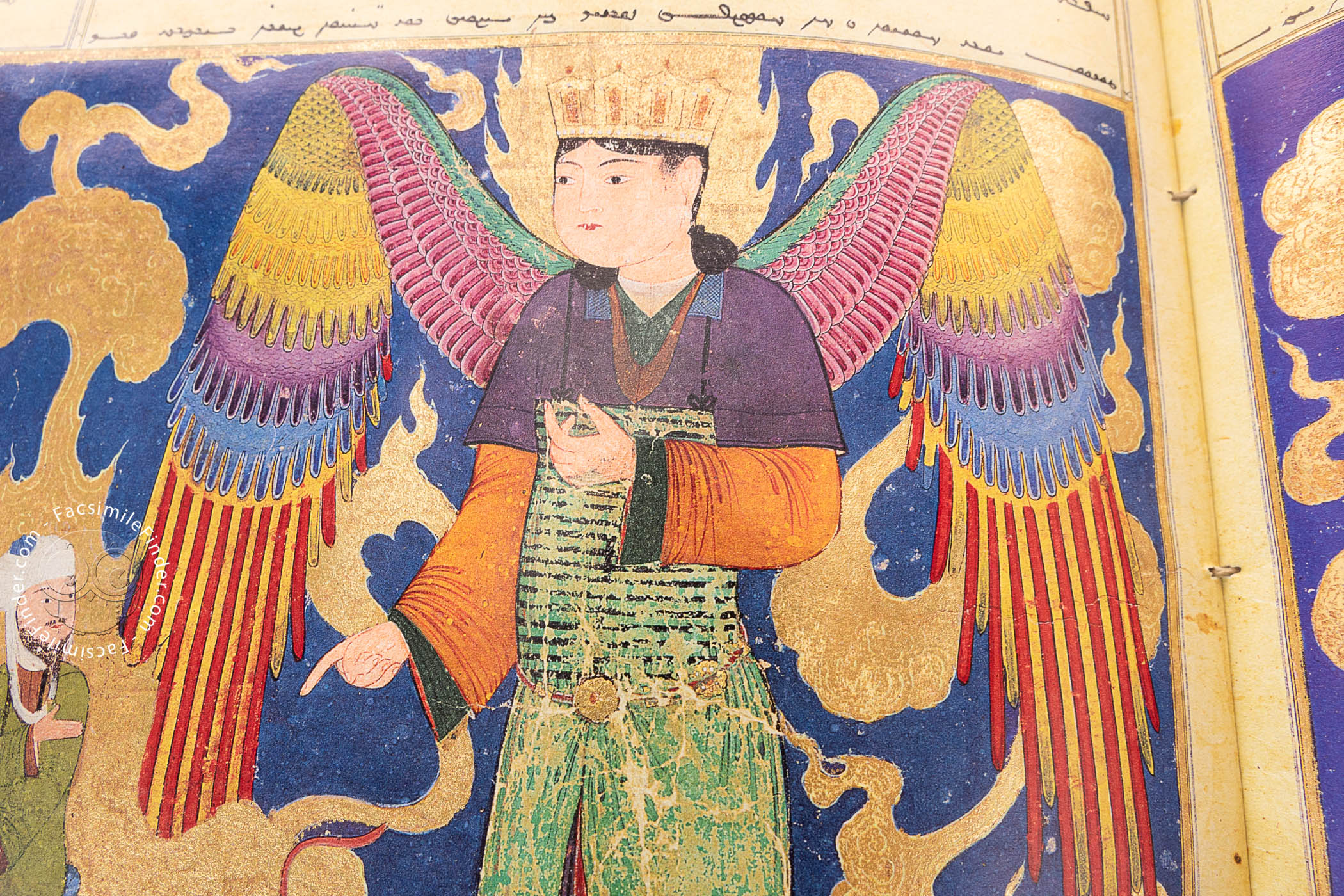

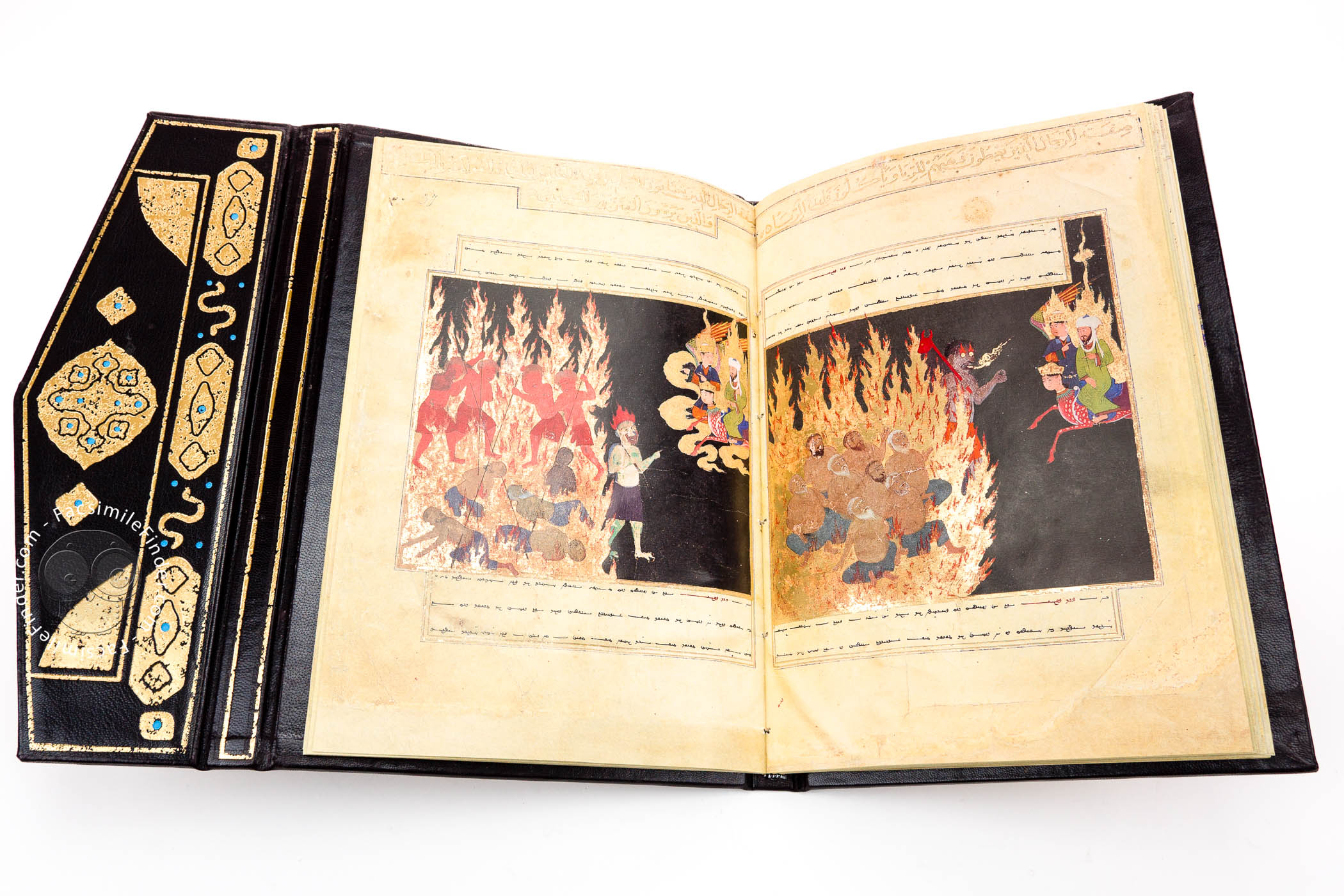
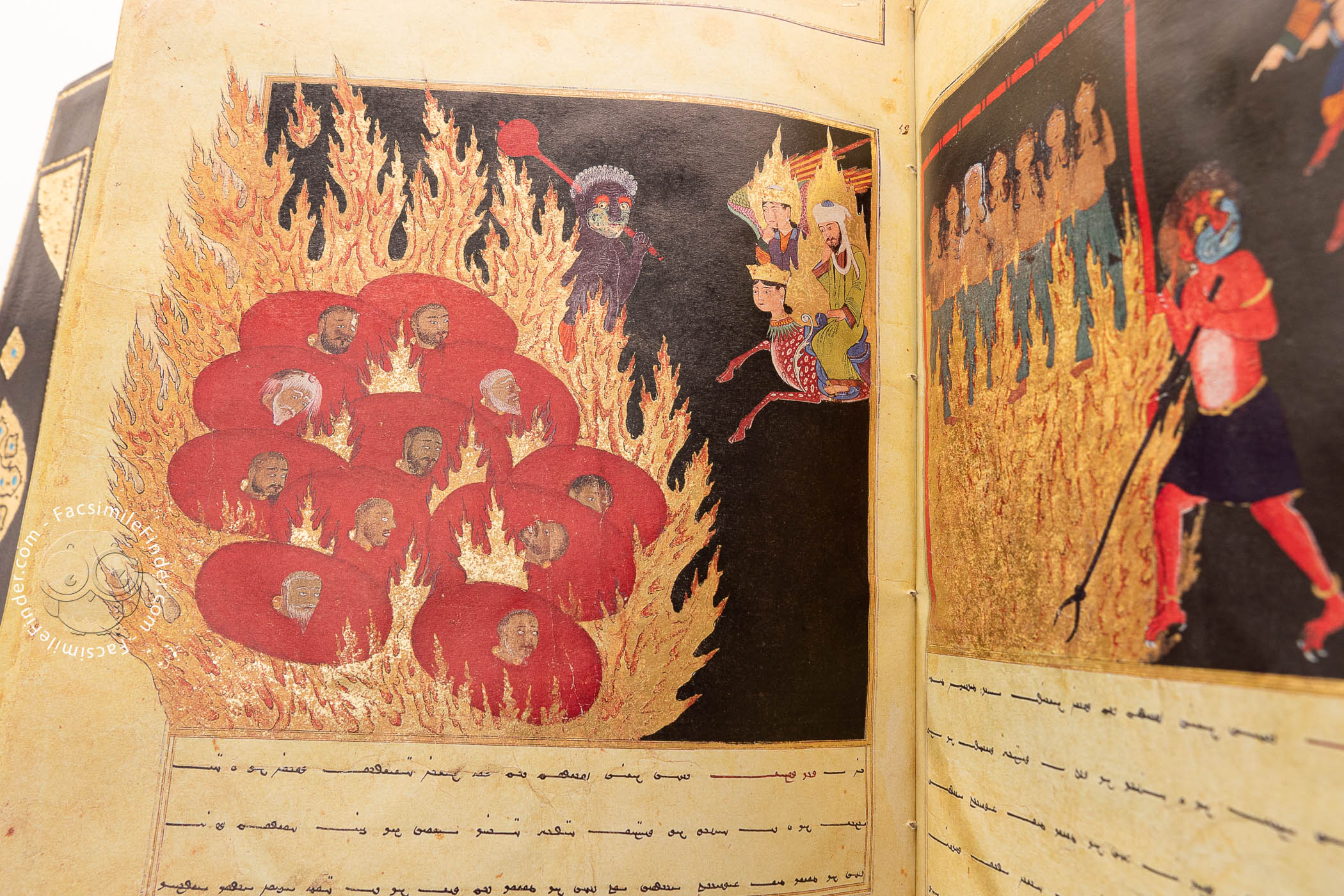
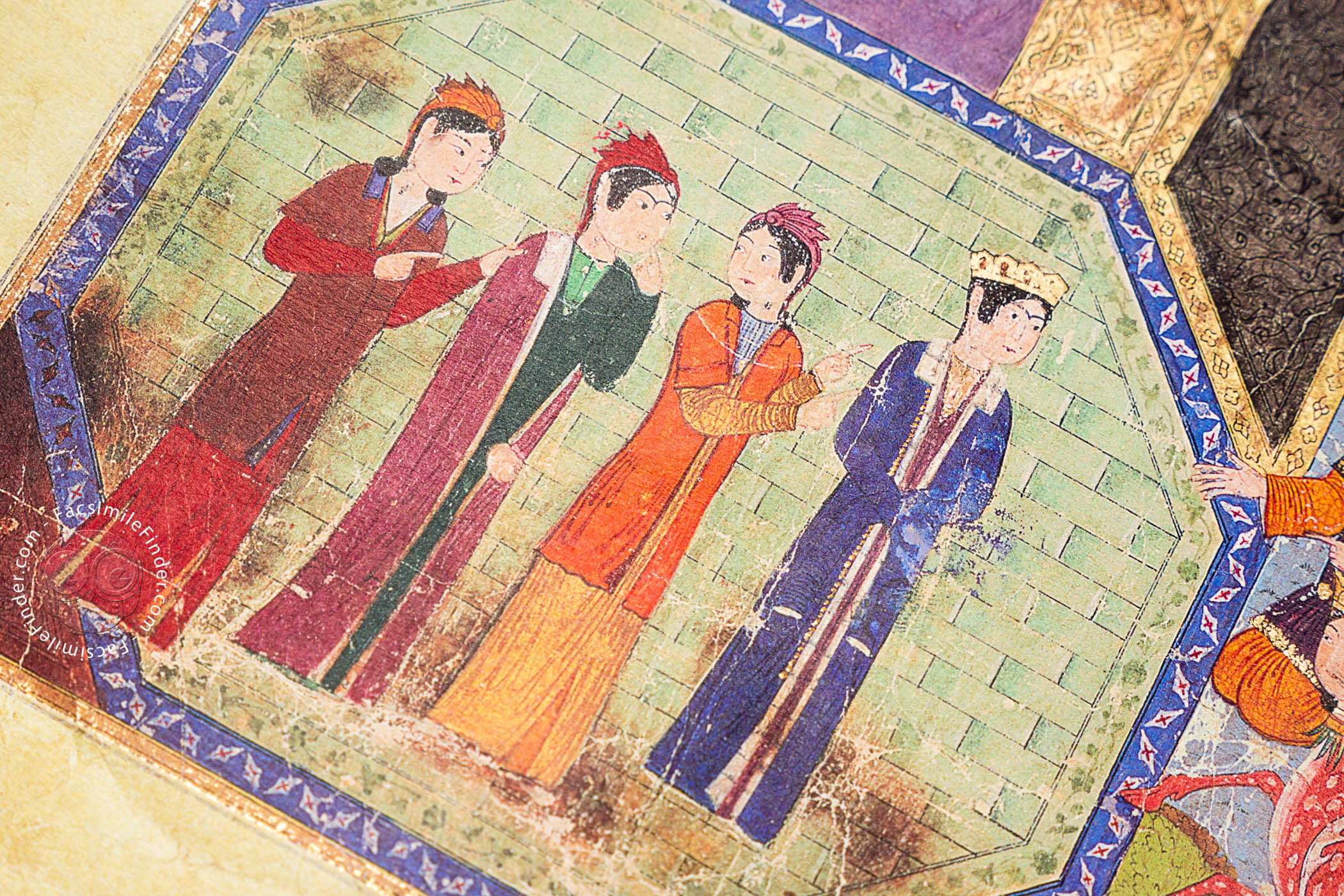
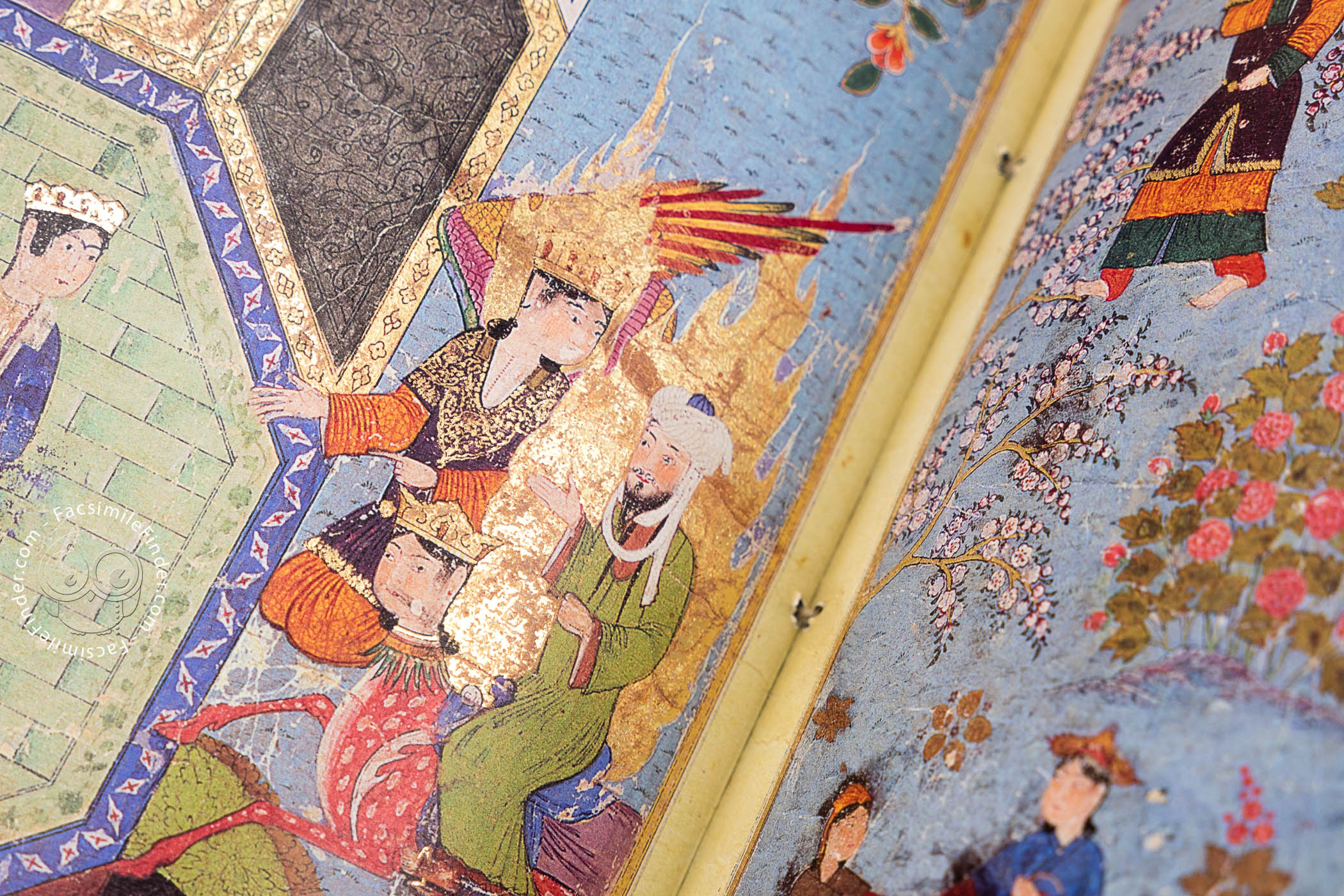



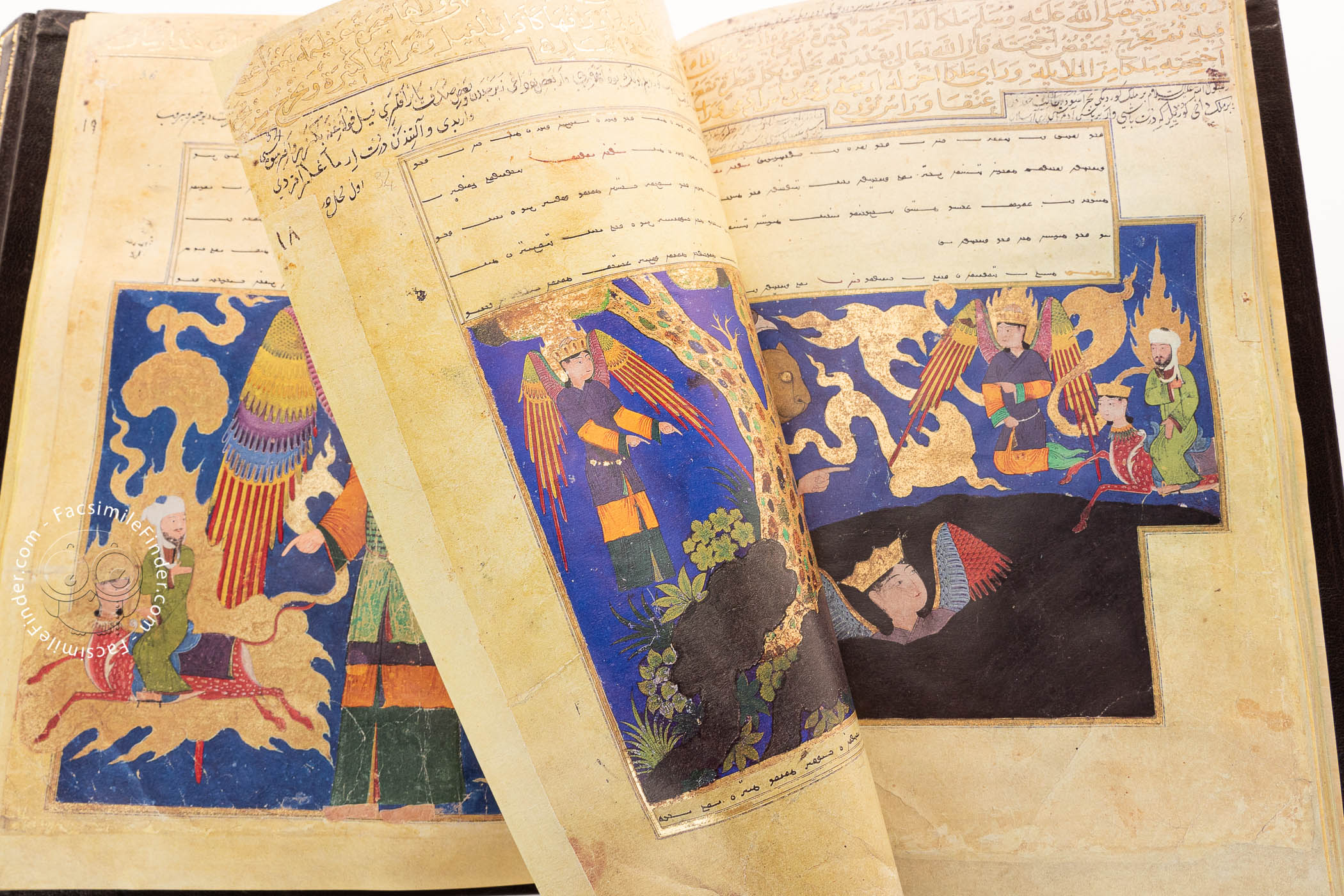
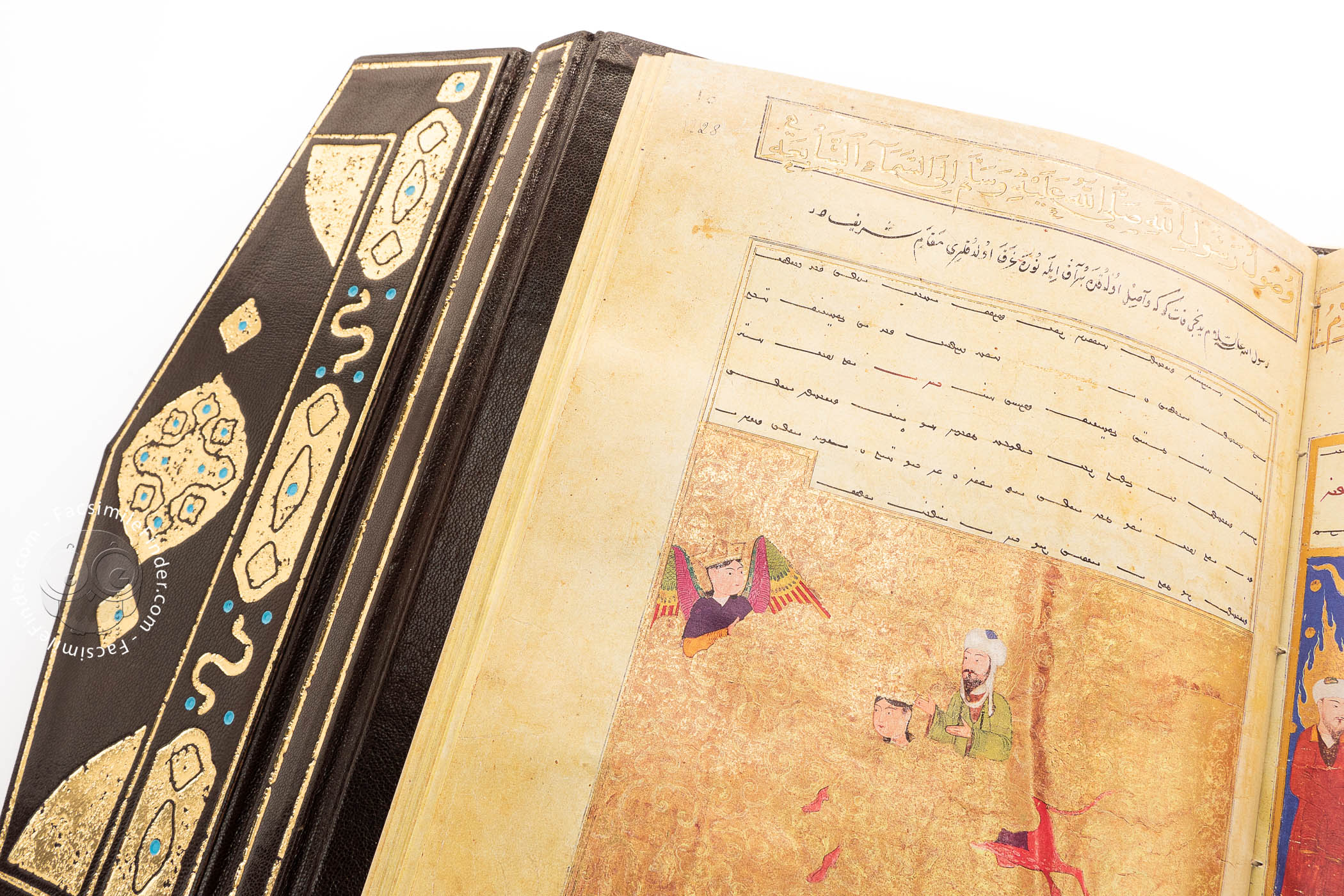
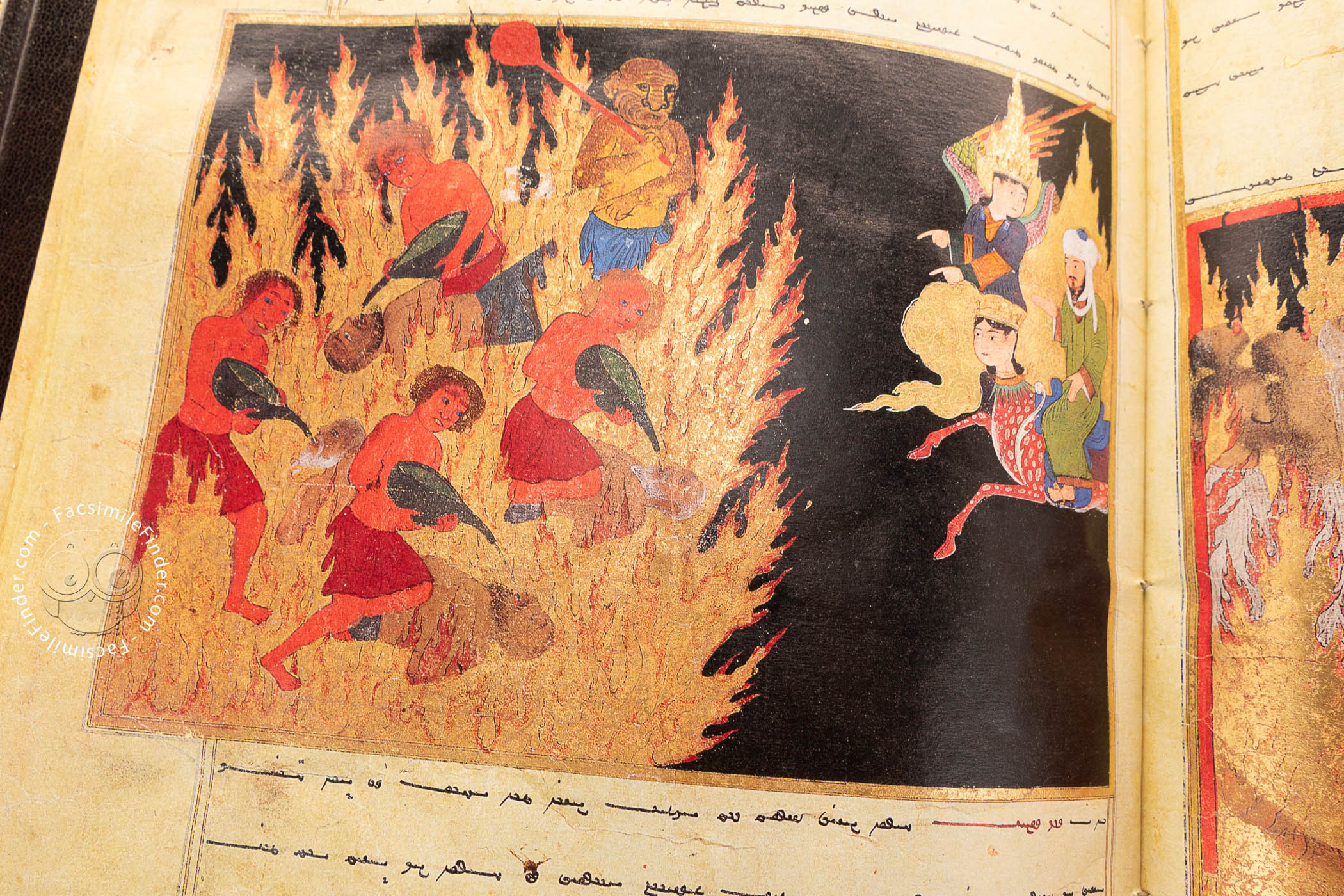

The Book of the Ascension describes and illustrates the Prophet Muhammad's miraculous journey from Mecca to Jerusalem, a pivotal moment in the history of Islam. It was produced in Herat around 1436-1437 for Shah Rukh Mirza, ruler of the Timurid empire. The codex boasts the most elaborate extant picture cycle visualizing the journey, with sixty surviving paintings that draw upon a variety of contemporary styles. As such, the Book of the Ascension embodies the complex cultural heritage of the Timurid dynasty.
The text of the Paris manuscript is an adaptation of a Turkish version of the Ascension, the Miraj Nameh, attributed to Haydar Tilbe, who adapted his work from earlier texts in Arabic and Persian that elaborated on passages from the Koran (the scripture of Islam) and the Hadith (early collections of reports about the deeds of the Prophet).
The Night Journey
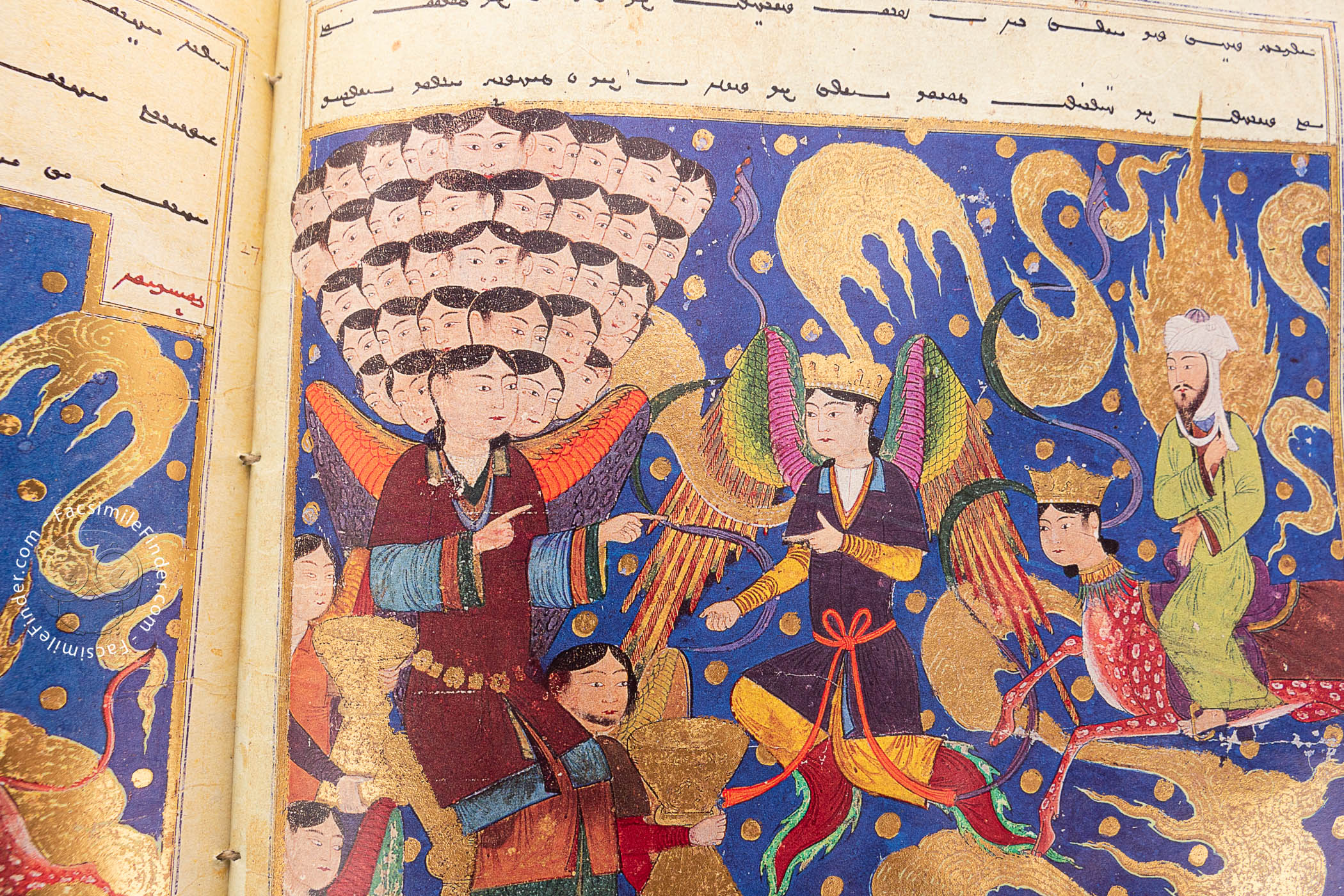
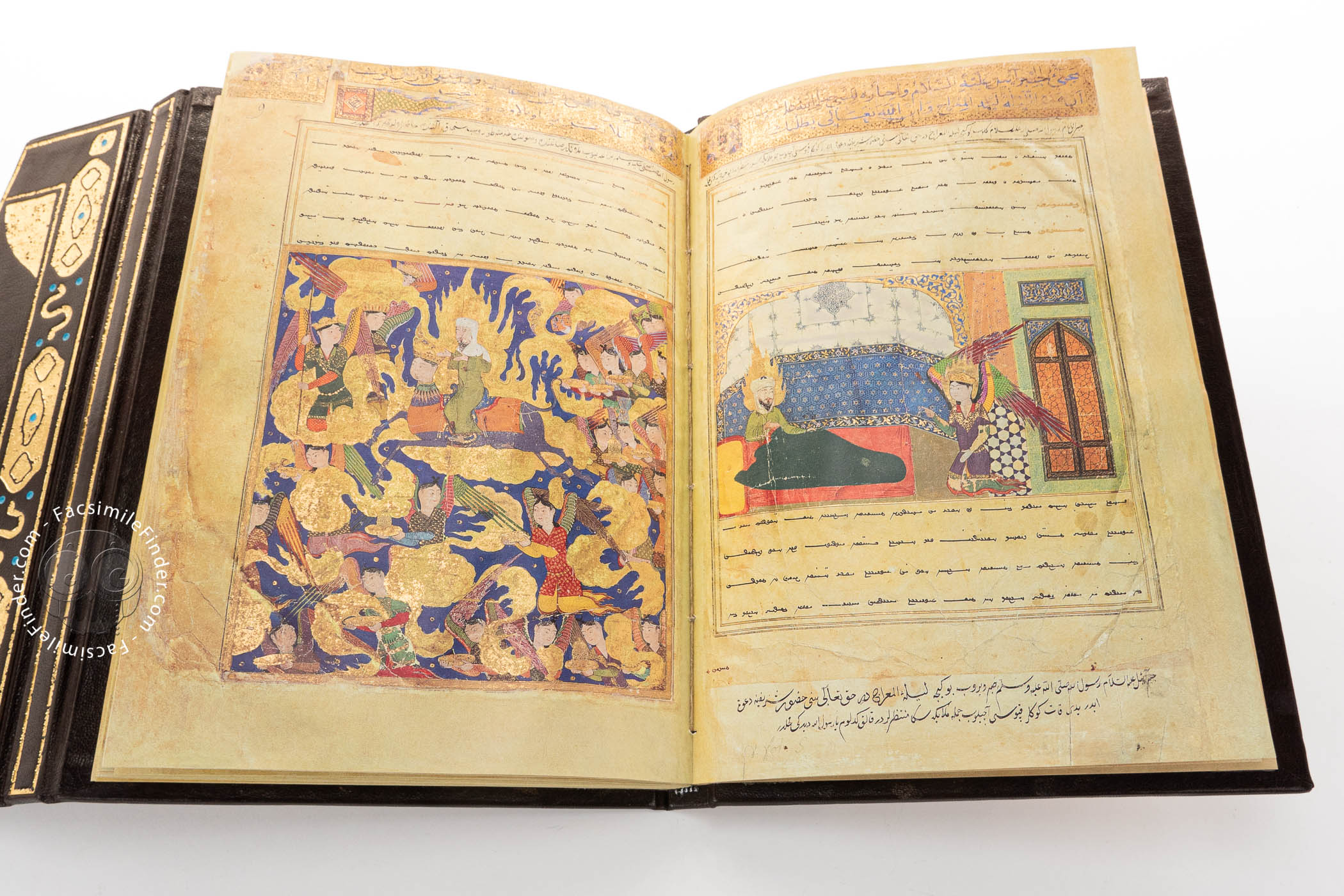
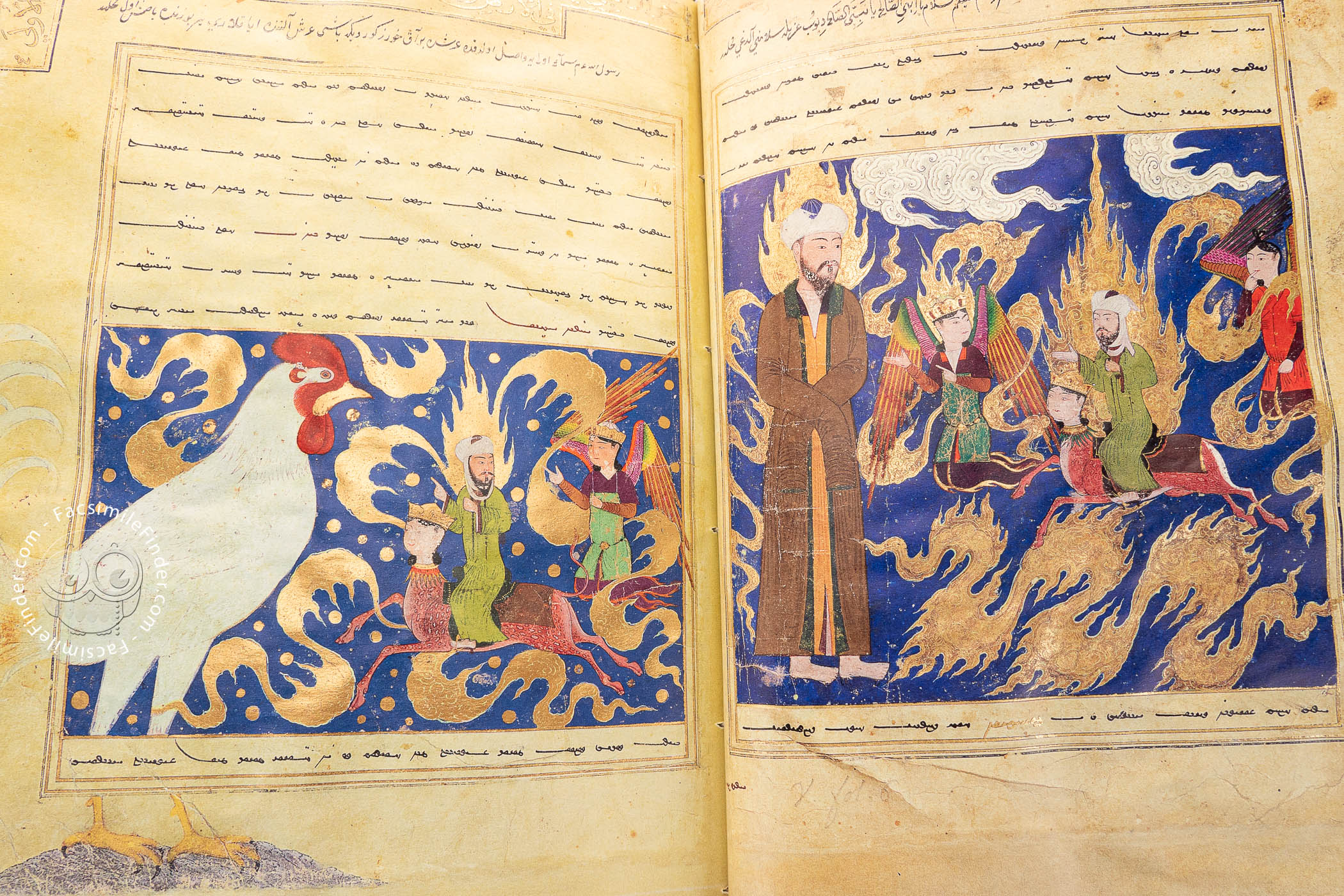
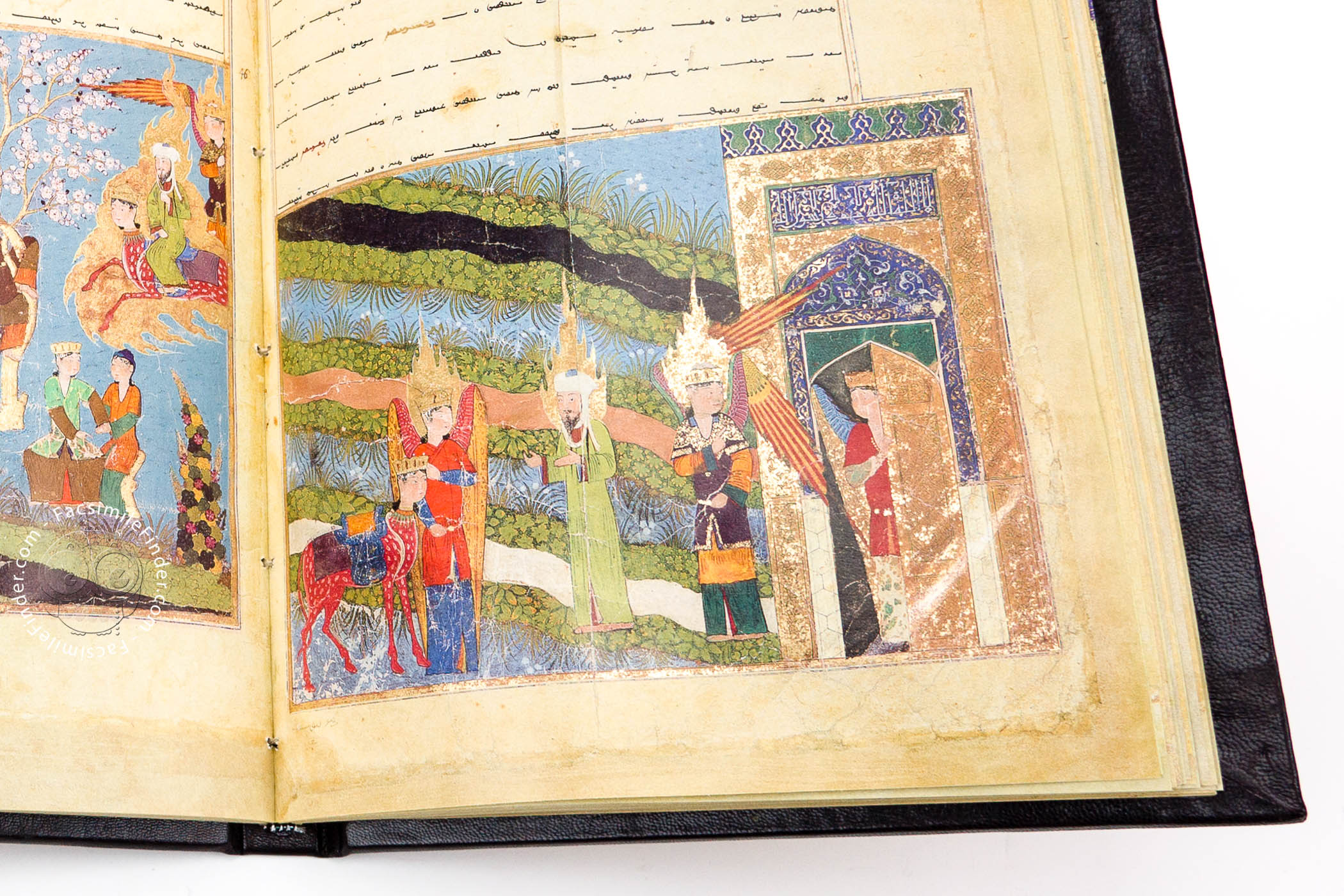
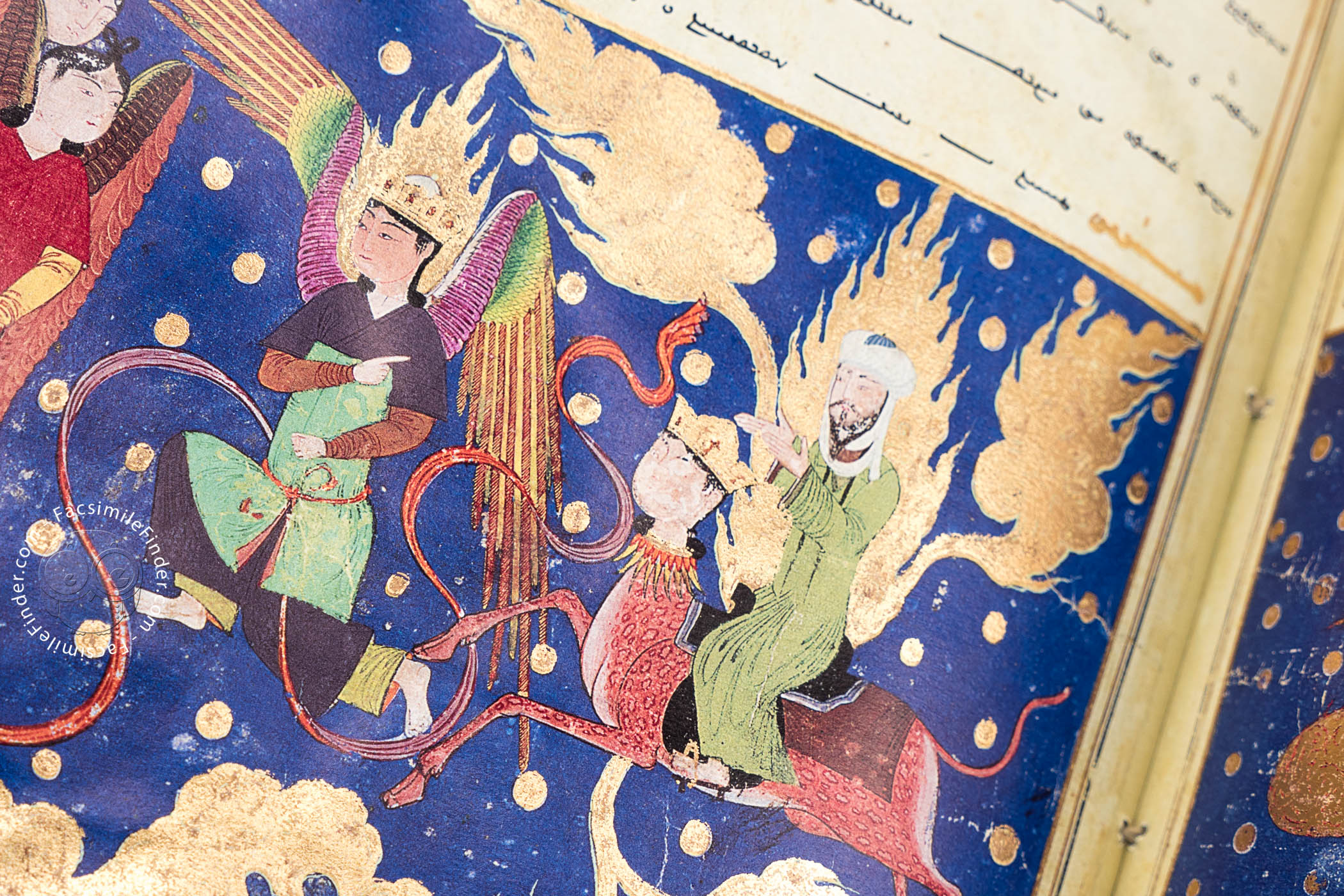
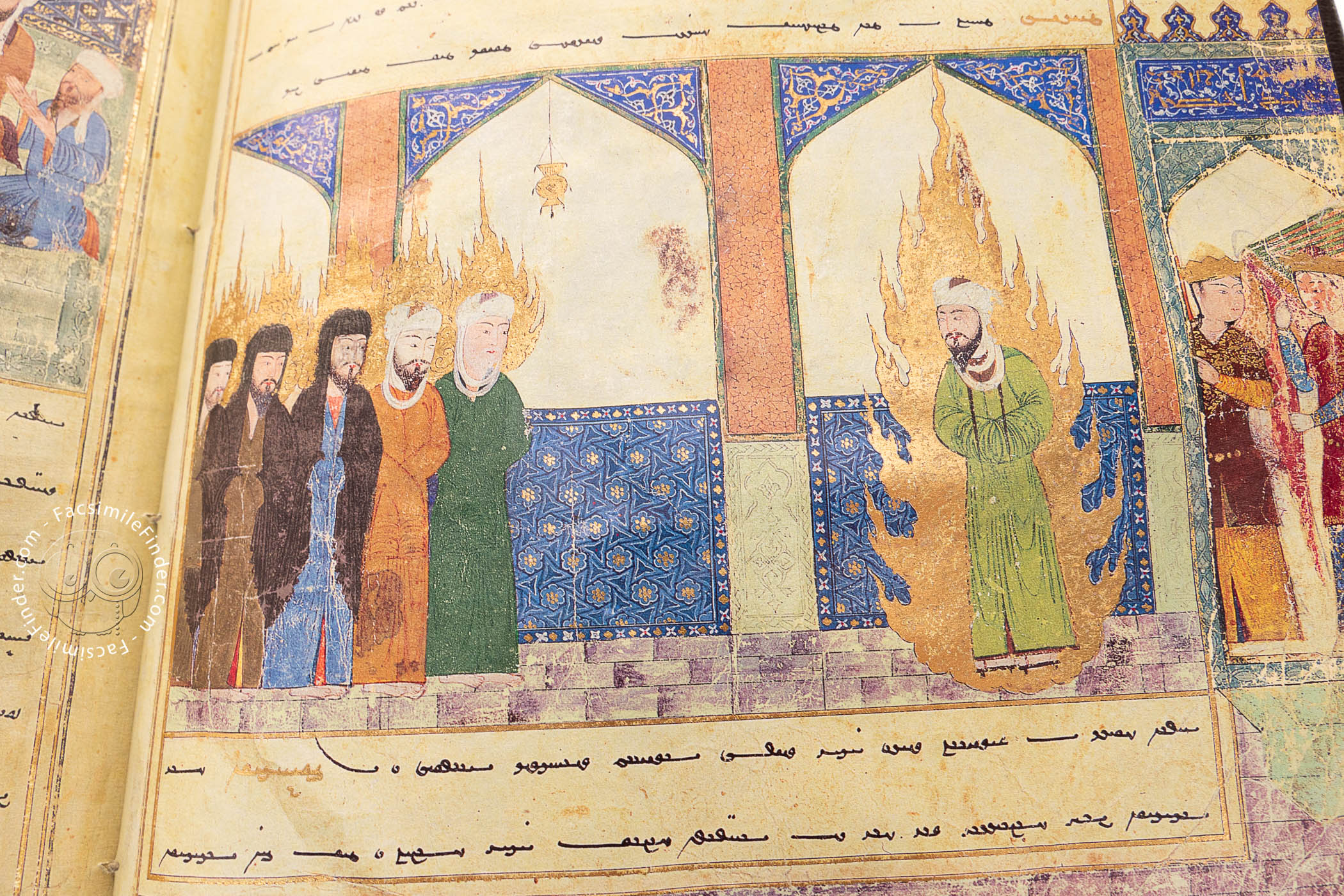
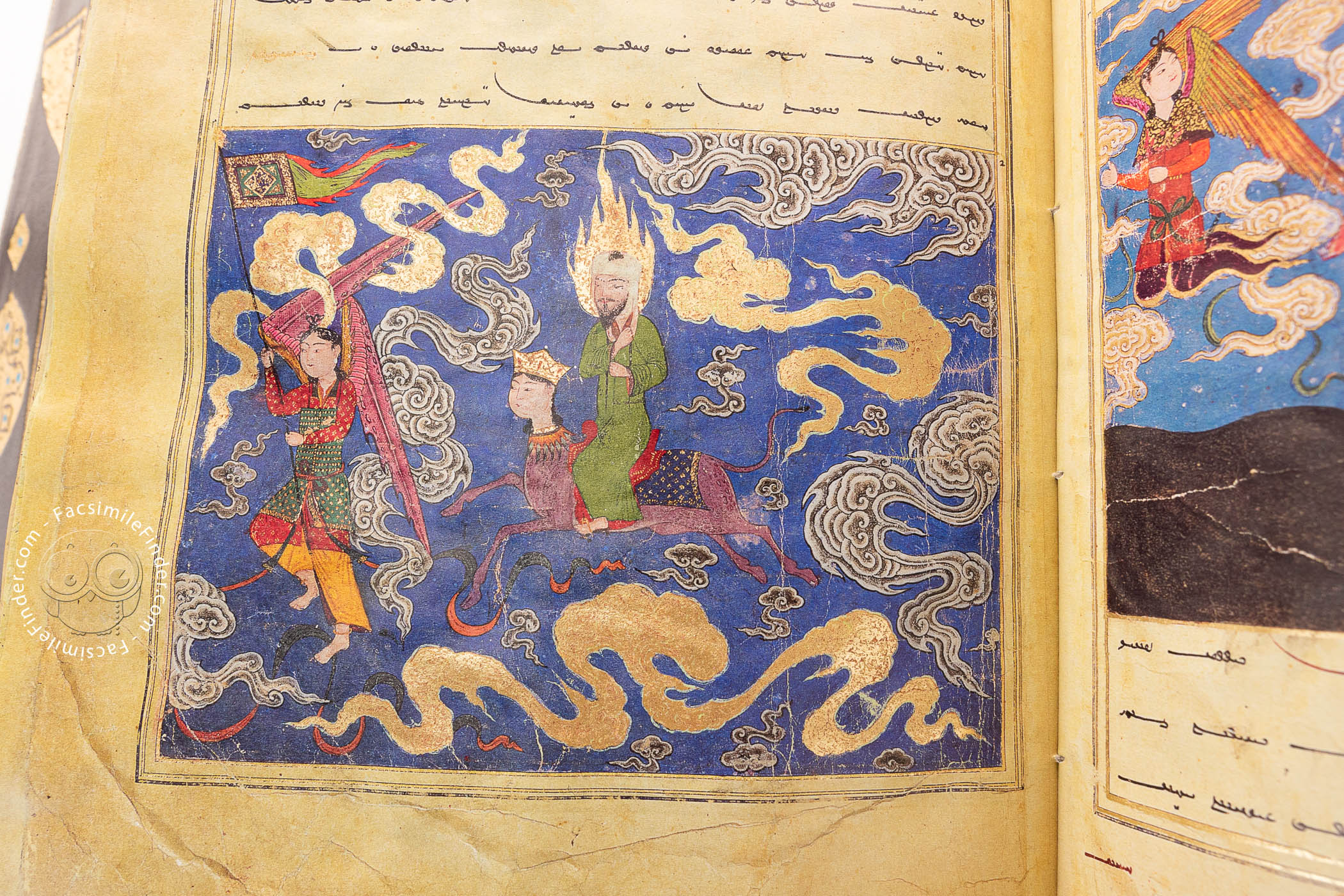
The angel Gabriel (Jibril) and al-Buraq, an unusual steed with the body of a horse and the head of a human, guided the Prophet Muhammad on his ascension (al-mi'raj). From Mecca, they took the Prophet to the al-Aqsa mosque in Jerusalem, and then onwards to the heavens, where he meets earlier prophets.
Ming Motifs
The manuscript's paintings are in vivid hues, with precious lapis lazuli pigment providing the vibrant blue skies of the heavens. Golden clouds fill the celestial sky, reminiscent of the swirling clouds on blue-and-white Chinese ceramics. Indeed, the Timurid empire and Ming China had strong diplomatic connections, which brought Ming pottery to the Timurid court.
Angels and Demons
There are affinities between the paintings in the Book of the Ascension and those in east Asian Buddhist art. The grimacing demons in the manuscript are strikingly similar to those in Tibetan Buddhist paintings (e.g., on fol. 63r). And the seventy-headed angel is reminiscent of an eleven-headed manifestation of the Bodhisattva Avalokiteshvara (fols. 15r, 19v, and 32r).
A Gifted Scribe
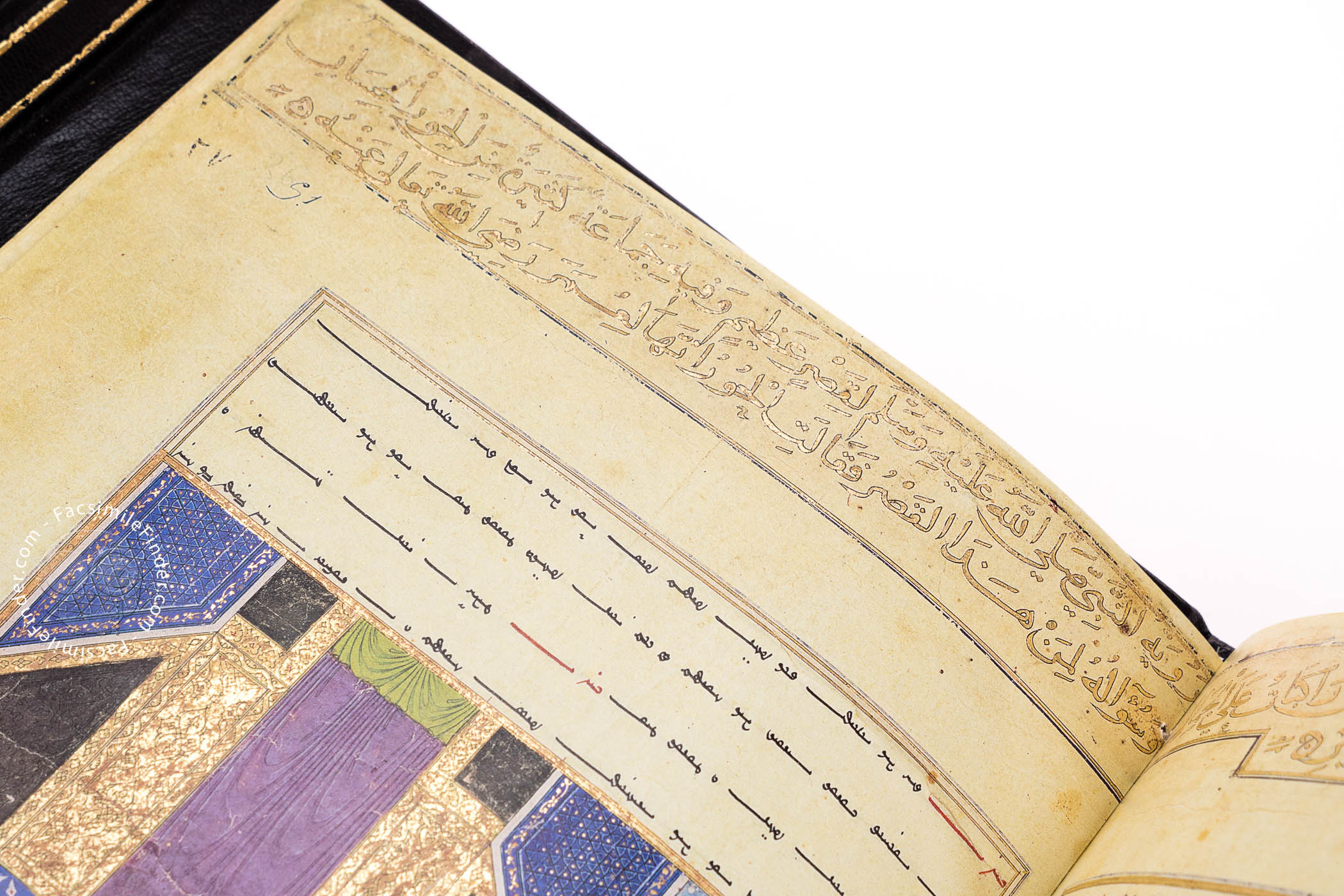
Haru Malik b. Musaka Nukuz, known as Malik Bakhshi (”Malik the Scribe”), wrote the main Turkish-language text in Uyghur Script, reflecting a renewed interest in the script at the Timurid court, where he was active in an official capacity. Unusually for a work written in Uyghur, the text is arranged horizontally for left-to-right reading.
Each segment of the text is carefully framed, often with subtle yet luminous gilded borders. Each page with a miniature includes an Arabic-language picture caption at the top of the page written in gold and–like the main text–enclosed in a delicate golden frame.
From One Court to Another
The Book of the Ascension is followed in the Paris manuscript by an unillustrated abridged Turkish version of the thirteenth-century Memorial of the Saints by Farid al-Din Attar, also the work of the scribe Malik Bakhshi (fols. 69-265). By 1500, the manuscript was at the Topkapı Sarayı in Istanbul.
In Istanbul, two series of annotations were added: the first (ca. 1500) comprises Ottoman Turkish descriptions and commentaries on the paintings inserted in blank space on the existing leaves. The second series of Ottoman inscriptions (second half of the sixteenth century) are found on the original pages and written on twenty-five of thirty-three new pages interspersed among the original leaves.
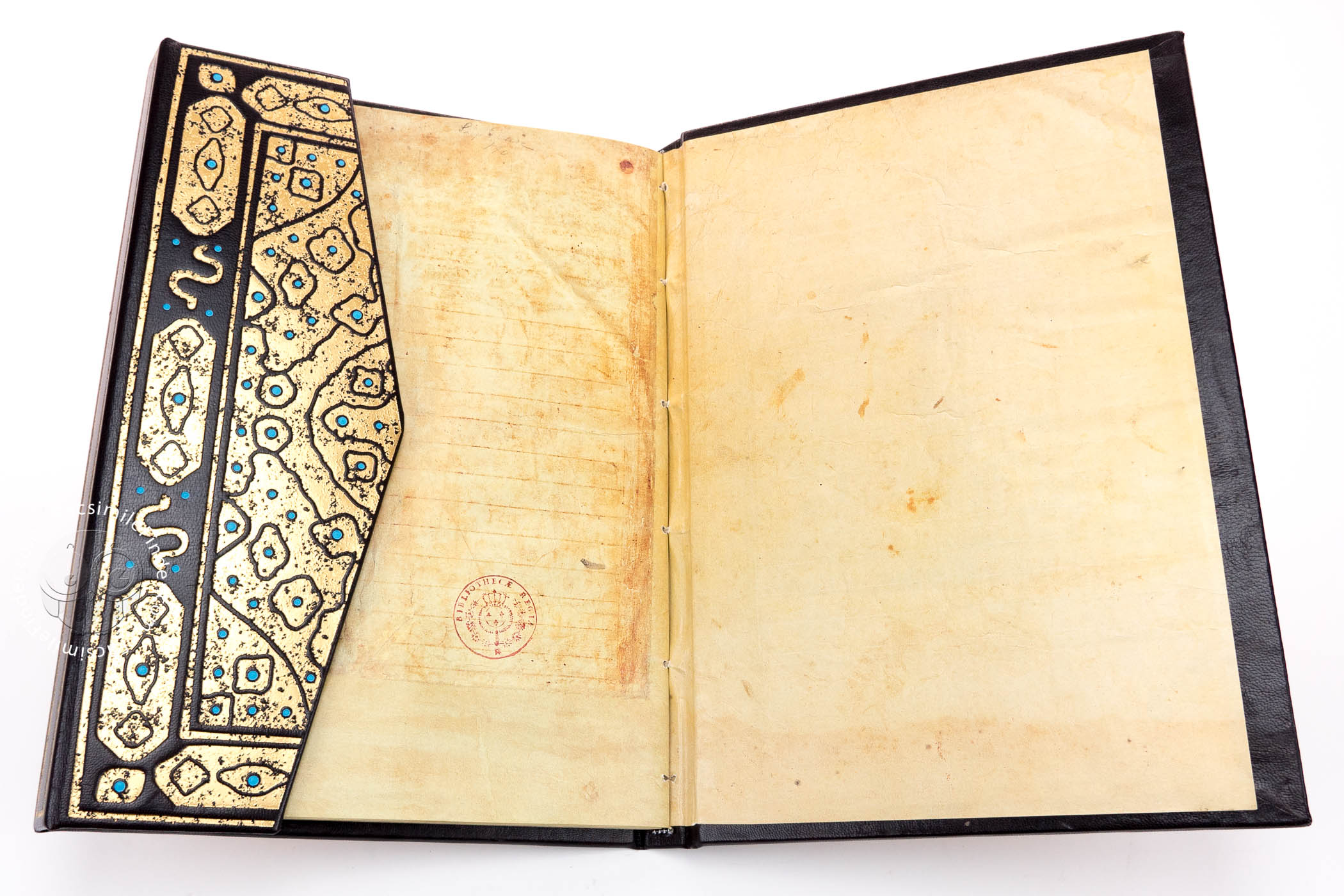
The added inscriptions are all in Arabic scripts. The current binding of brown morocco with a blind-stamped central medallion dates from the sixteenth century.
Arrival in France
The composite manuscript was purchased in 1672 for Charles François Olier de Nointel (1635-1686), who then gave it to Jean-Baptiste Colbert (1619-1683) in 1675. In 1732, Colbert’s library entered the French Bibliothèque du roi (later Bibliothèque nationale, then Bibliothèque imperiale, then Bibliothèque nationale, now Bibliothèque nationale de France). Four leaves with four miniatures were lost at some time after 1855.
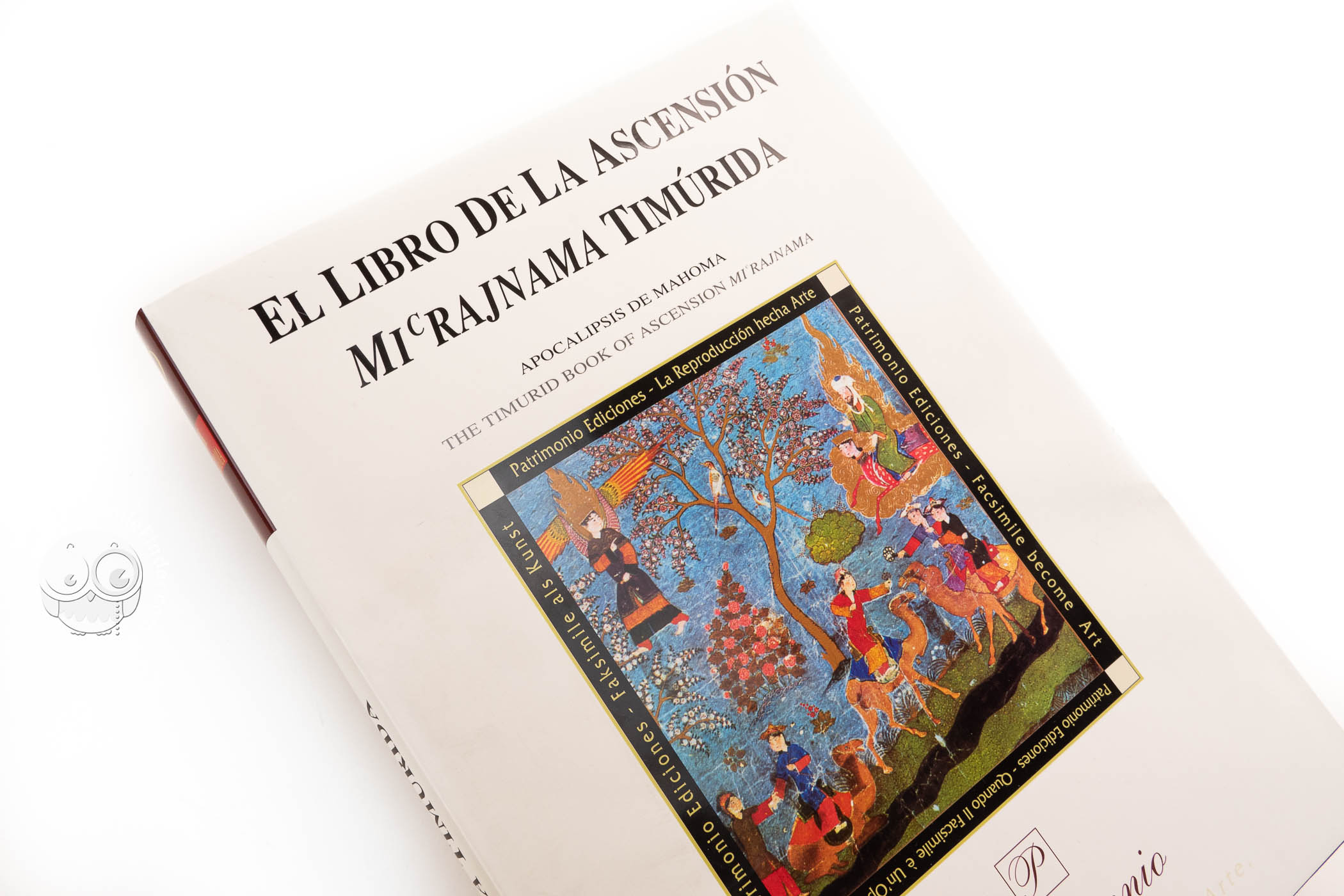
We have 2 facsimiles of the manuscript "Miraj Nameh: Book of the Ascension":
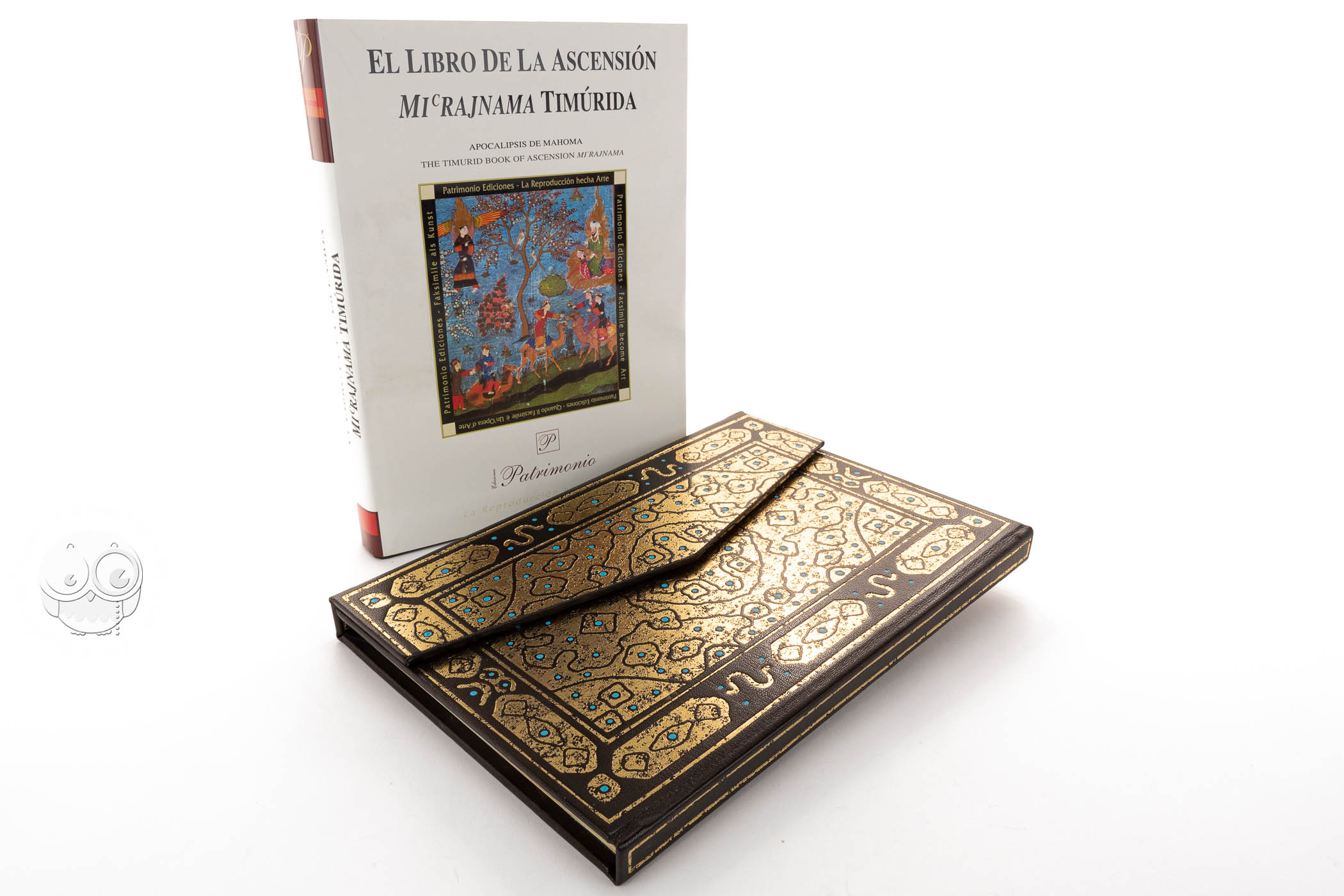
- Mi`Ragnama. Apocalipsis de Mahoma. Libro de la Ascensión Timúrida facsimile edition published by Patrimonio Ediciones, 2008
- The Miraculous Journey of Mahomet: Mirâj Nâmeh facsimile edition published by George Braziller, 1977