
This collection includes:
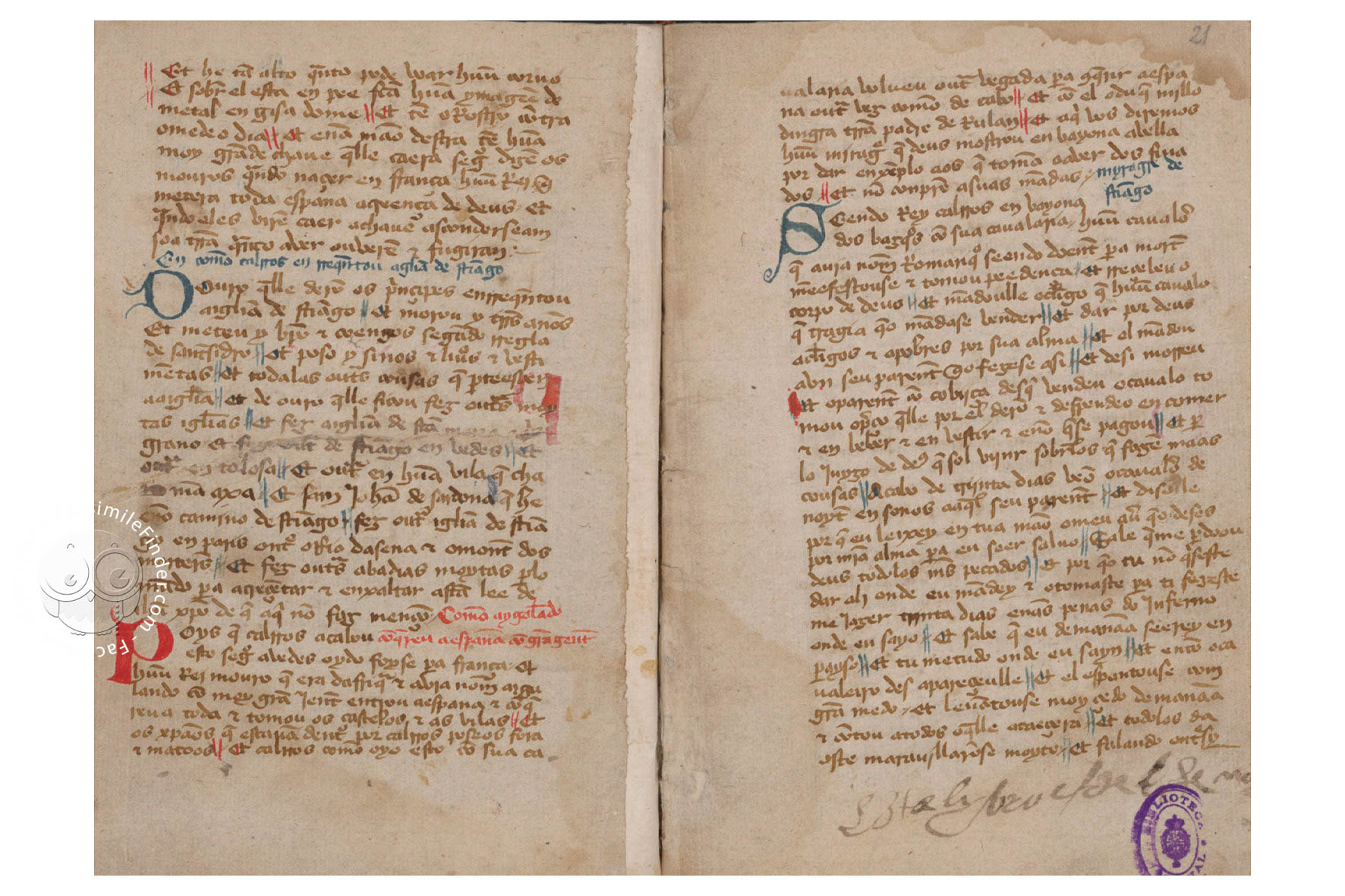
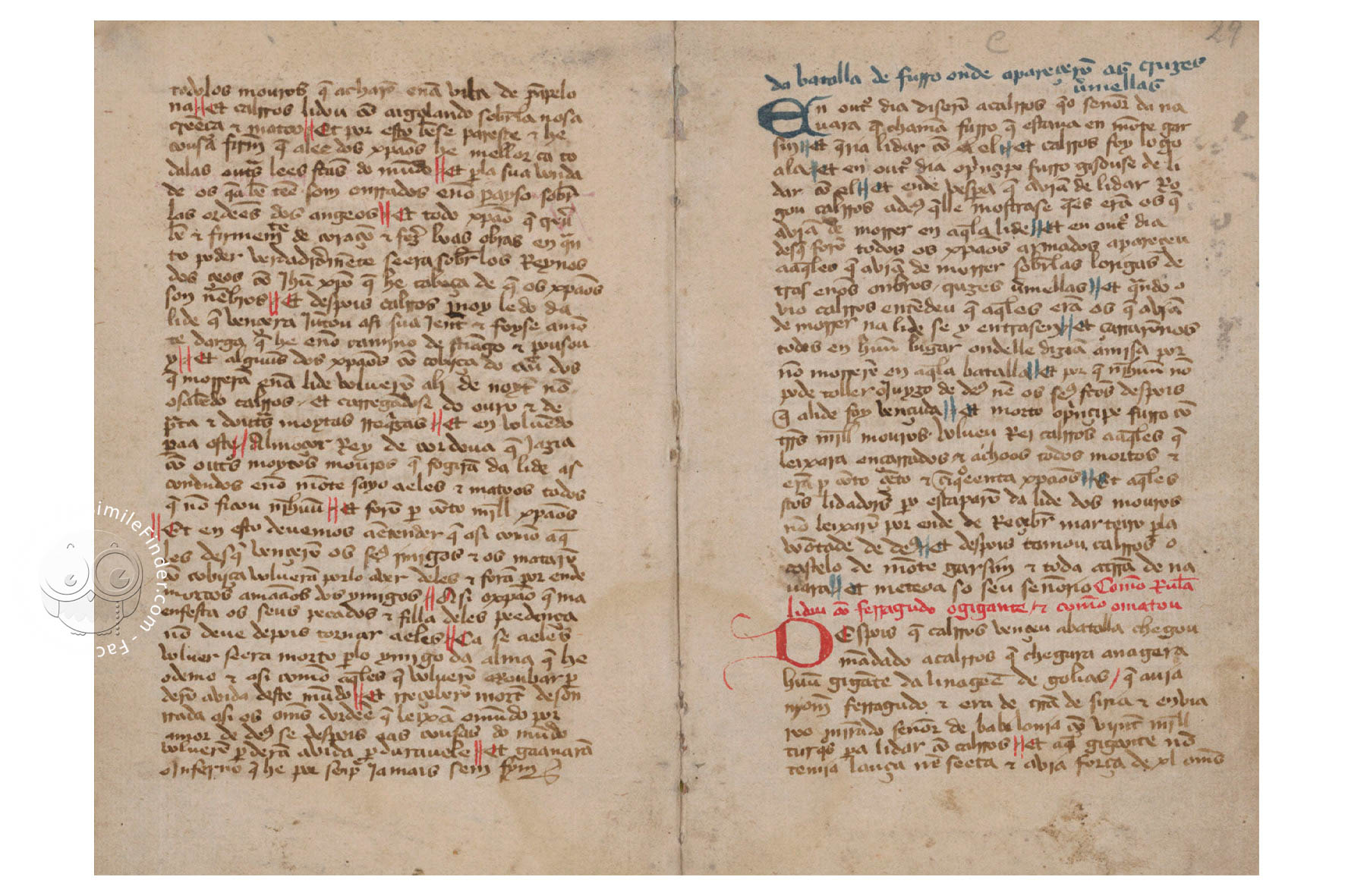
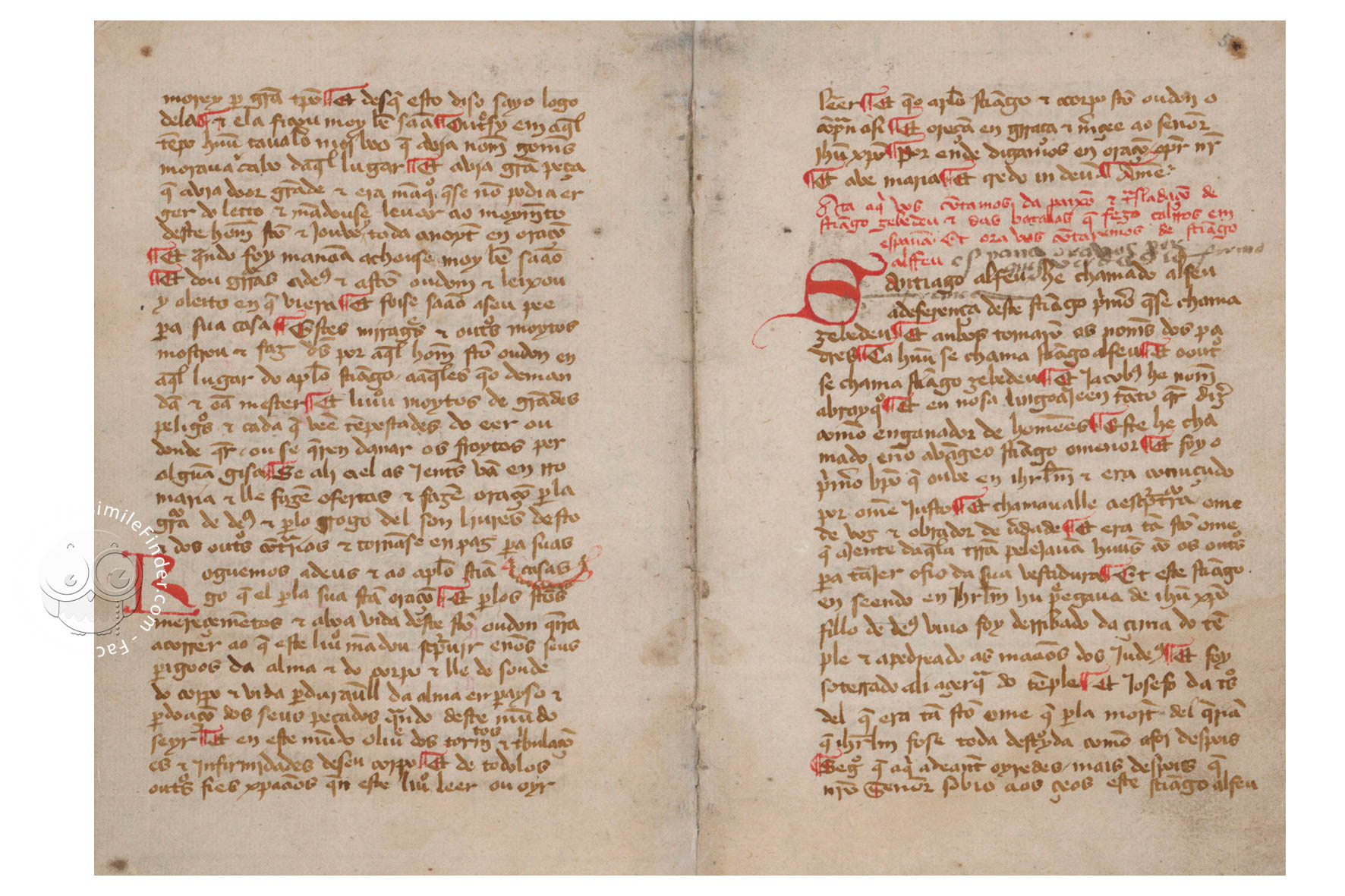
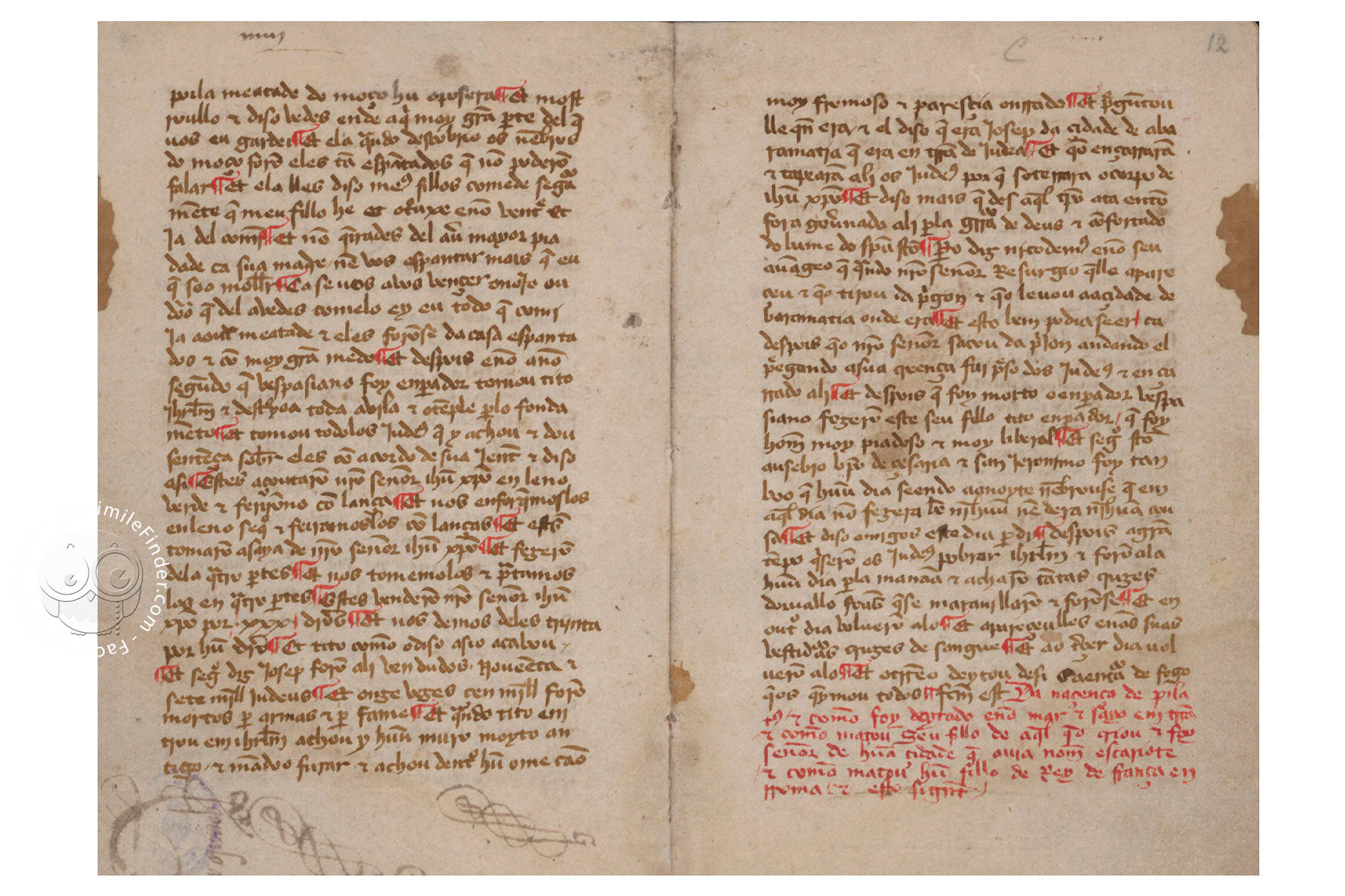
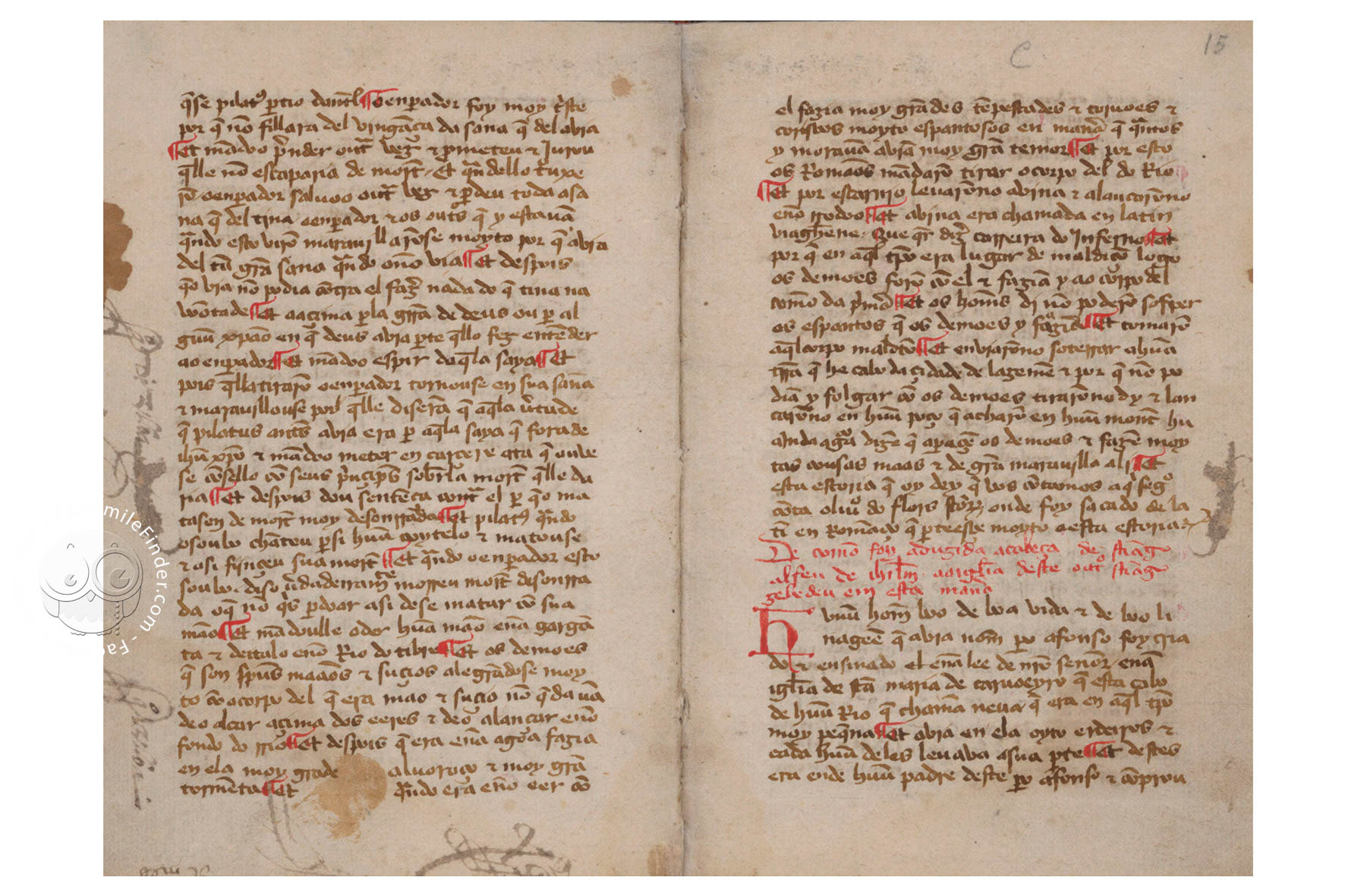
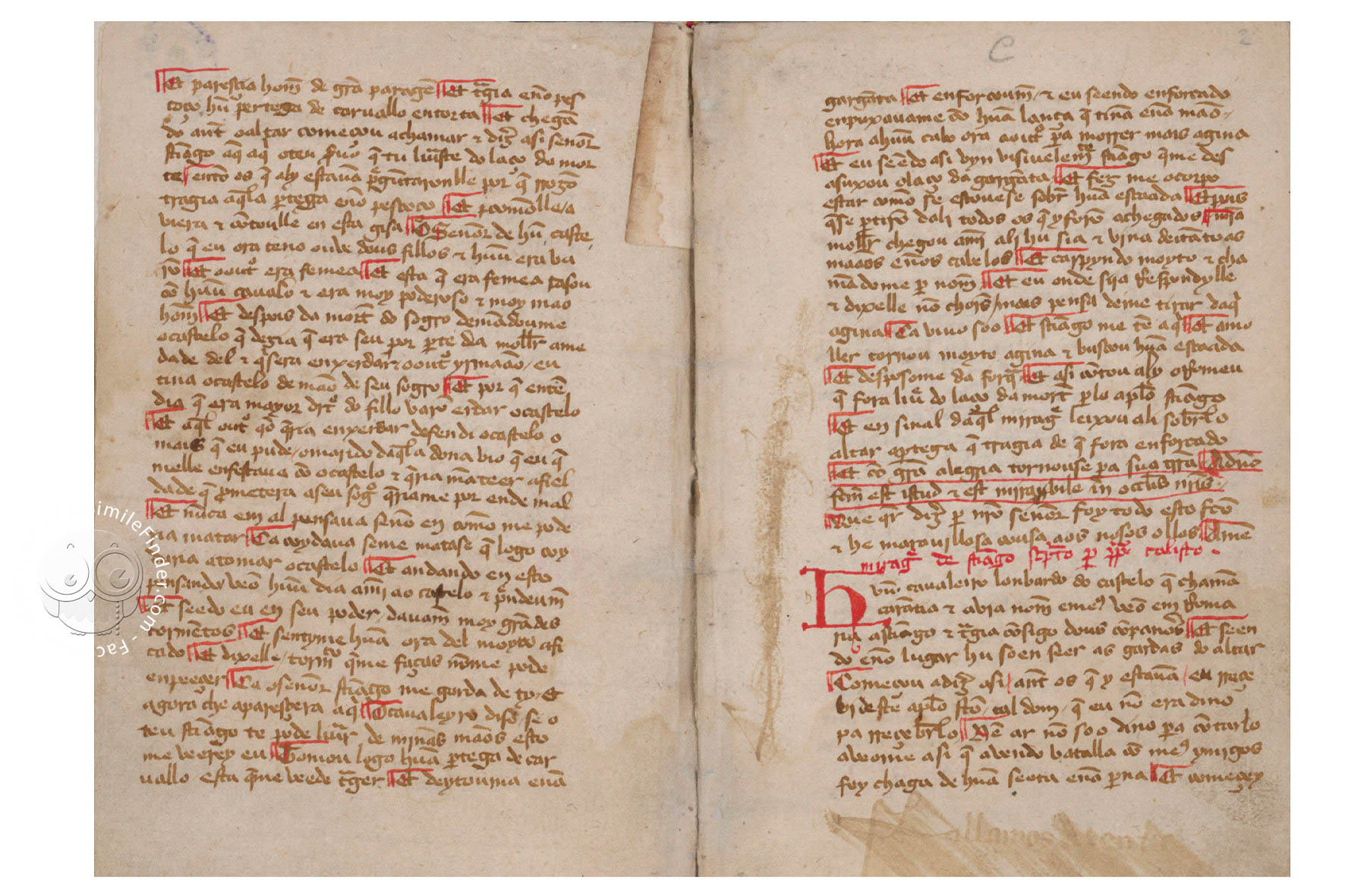
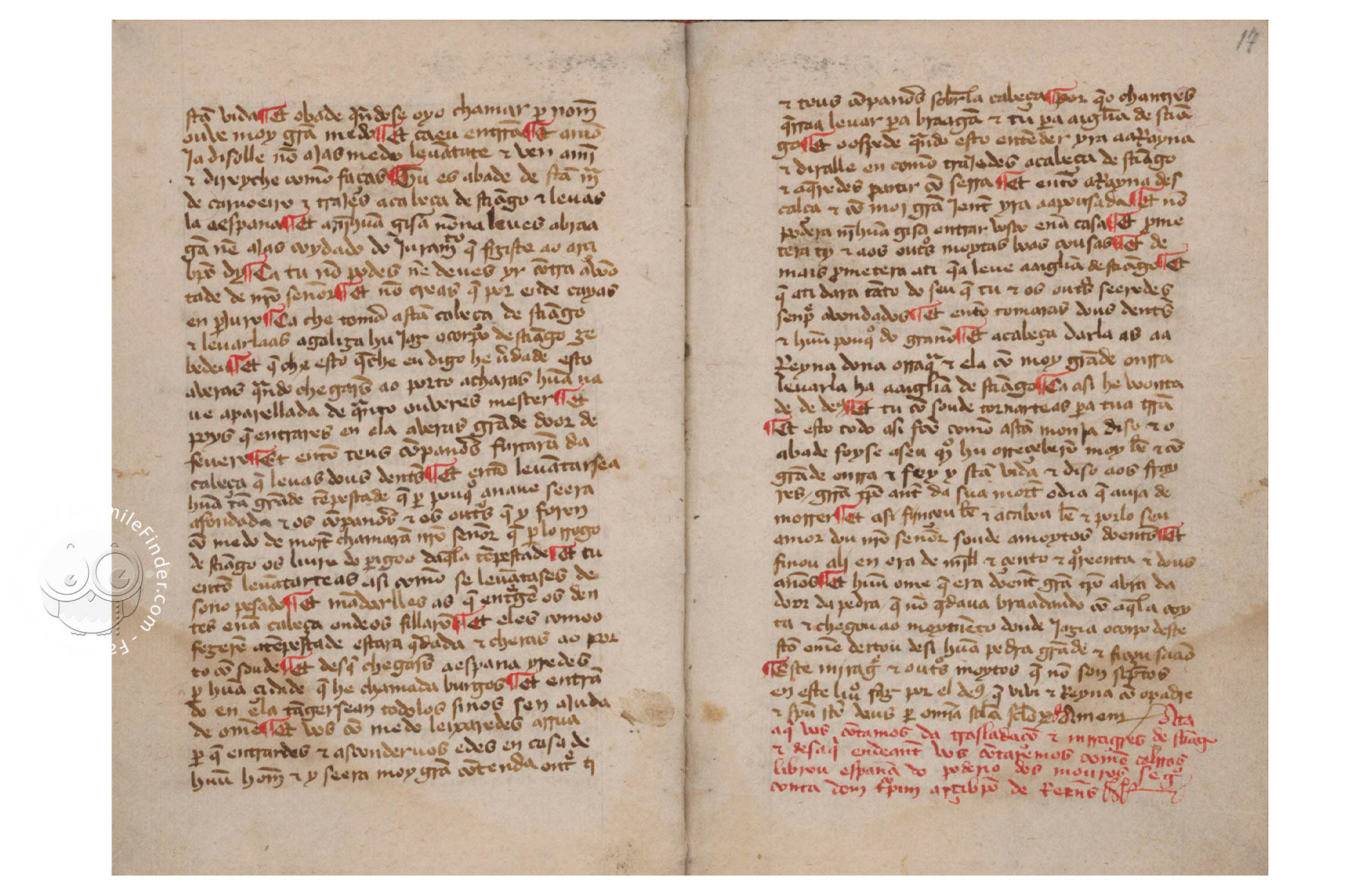
Miracles of Saint James (Biblioteca Nacional de España, MS 7455)
The Miracles of Saint James represents a rare vernacular adaptation of the Liber de Miraculis, the second book of the twelfth-century Liber Sancti Jacobi or Codex Calixtinus. Composed in Galician-Portuguese, this manuscript offers a unique glimpse into how the cult of Saint James the Greater was transmitted to lay audiences through the language of medieval Galicia and Portugal.
Manuscript Description and Provenance
The codex is dated to the late fourteenth or early fifteenth century. Written in a careful Gothic hand with rubricated headings, it likely originated in a clerical or cathedral environment connected to Santiago de Compostela. The manuscript consists of closely written folios bound with later material, including administrative copies appended in its current form.
Composite Content: Pilgrimage, Hagiography, and Legend
MS 7455 is a composite codex, blending the Miragres de Santiago with complementary texts. It includes descriptions of Santiago de Compostela, practical guidance and warnings for pilgrims, and vernacular translations of Saint James’ miracles. Additionally, it contains Galician adaptations of Pseudo-Turpin material, linking the legends of Charlemagne and Roland, demonstrating the manuscript’s rich interplay of hagiography, urban praise, practical guidance, and Carolingian epic tradition.
Textual Importance and Scholarly Editions
As the only known manuscript of the Miragres de Santiago, MS 7455 is crucial for understanding medieval vernacular hagiography and pilgrimage culture in the Iberian Peninsula. It preserves translations and reworkings of miracle narratives from the Latin Calixtine corpus, emphasizing Saint James’s protective power over pilgrims.
Safe Conduct of Pilgrims (Archivo de la Catedral de Santiago de Compostela, Carpeta 9, no. 27)
The Safe Conduct of Pilgrims is a key historical document illuminating the legal and institutional frameworks safeguarding travelers on the Camino de Santiago. Issued under ecclesiastical authority, it guaranteed pilgrims protection, safe passage, and exemption from certain local obligations, reflecting the cathedral chapter’s role in managing one of medieval Europe’s most important pilgrimage networks.
Historical Context and Function
Dating from the late Middle Ages, the Safe Conduct of Pilgrims reflects the administrative sophistication of the cathedral chapter of Santiago de Compostela. Such documents functioned as letters of protection, shielding pilgrims from taxes, tolls, and interference by local authorities. They also underscored the cathedral’s central role as both a spiritual and political institution, capable of issuing official privileges that ensured the safe transit of the faithful through contested territories.
Manuscript Description and Archival Significance
Written in Latin on parchment, the document bears ecclesiastical seals and formulaic legal phrasing characteristic of medieval diplomatic documents. The charter’s physical preservation within the cathedral archive demonstrates the enduring importance of institutional record-keeping in medieval Galicia. Scholars studying pilgrimage law, ecclesiastical authority, and the history of the Camino regard this manuscript as an invaluable source, complementing texts such as the Liber Sancti Jacobi and vernacular works like the Miragres de Santiago in illuminating the lived realities of medieval pilgrimage.
We have 1 facsimile edition of the manuscript "Miracles of Saint James and Safe Conduct of Pilgrims (Collection)": Milagros de Santiago Apóstol y Salvoconducto de los Reyes Católicos facsimile edition, published by Scriptorium, 2004
Request Info / Price