
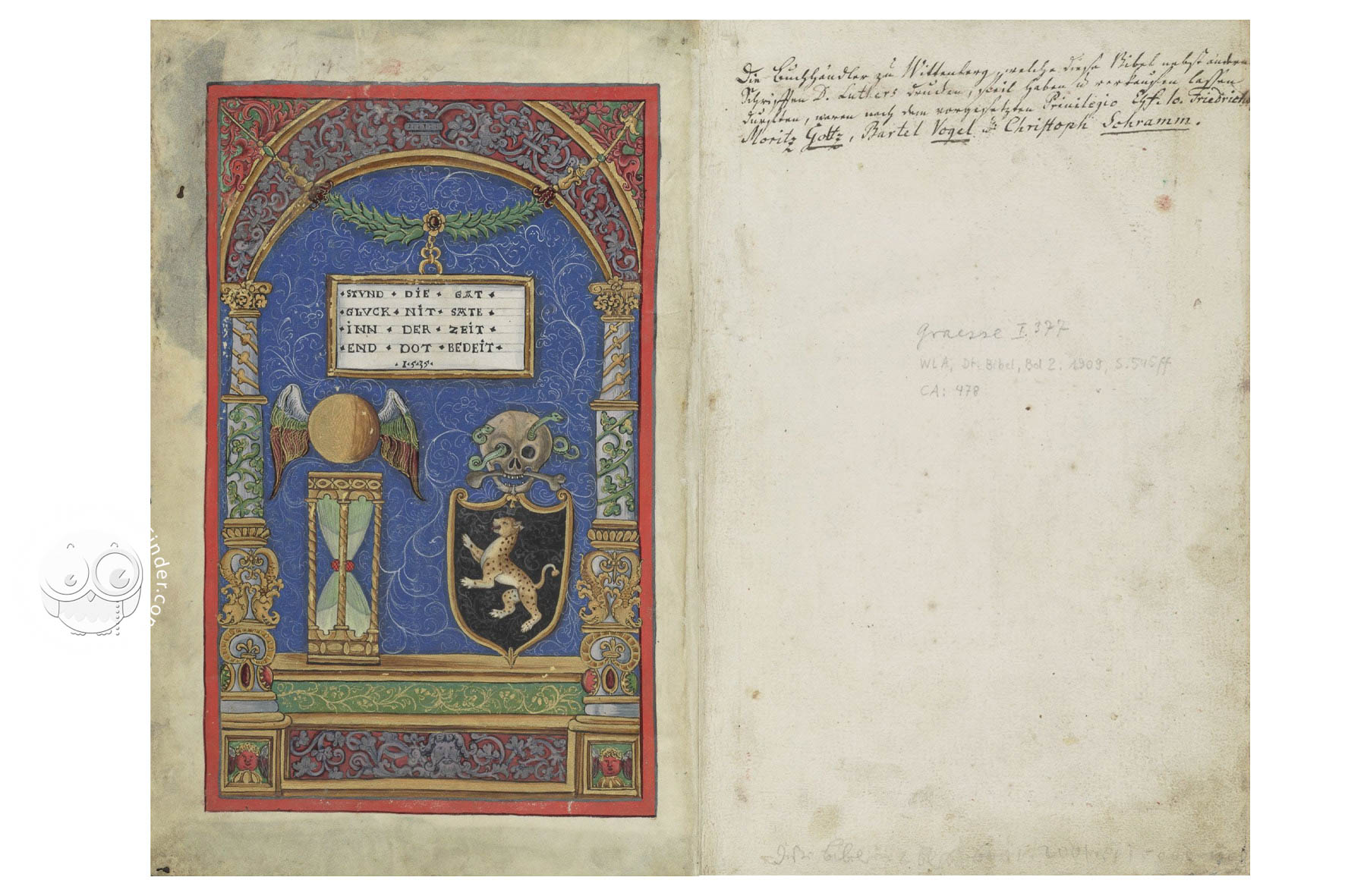
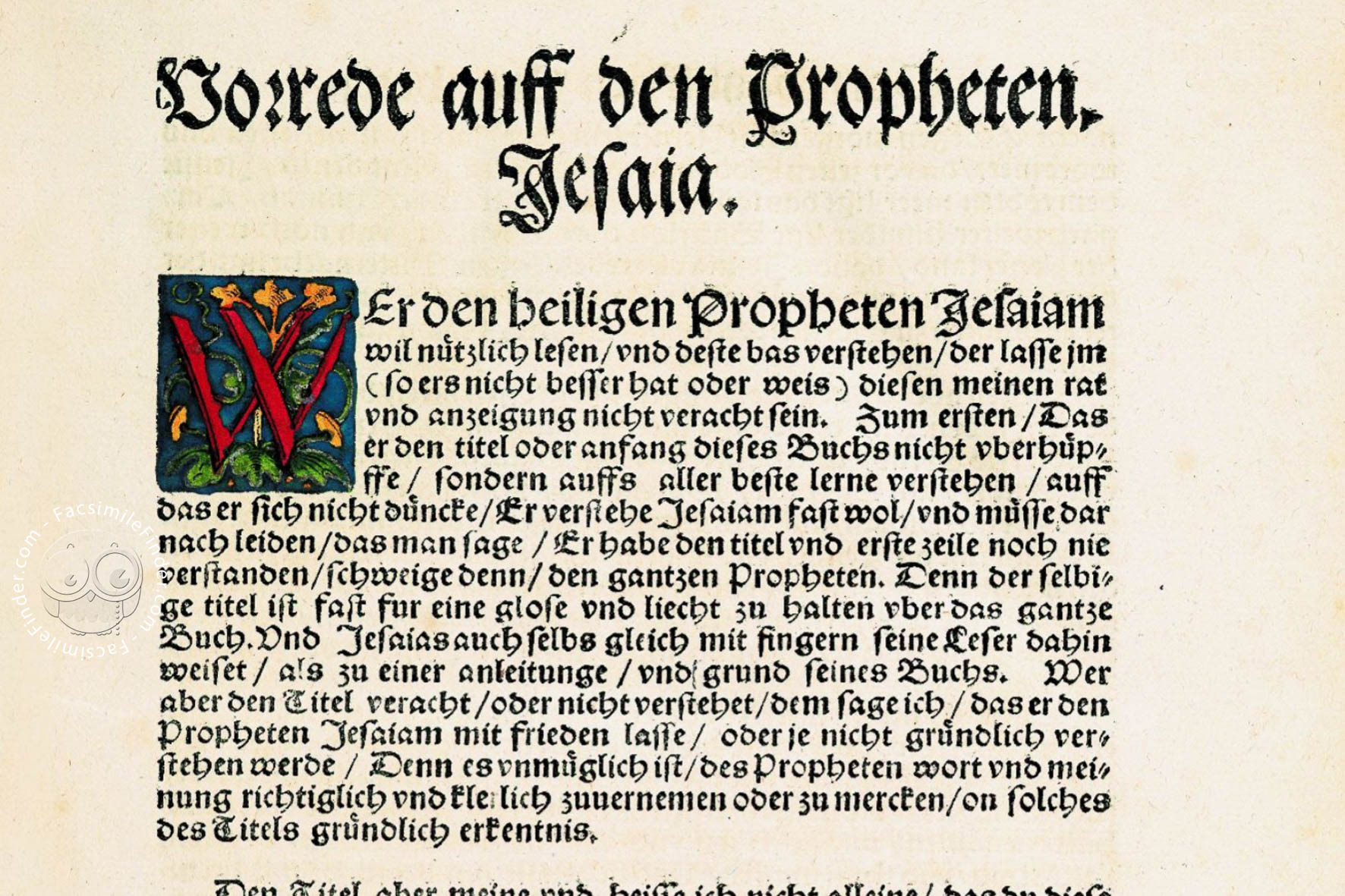
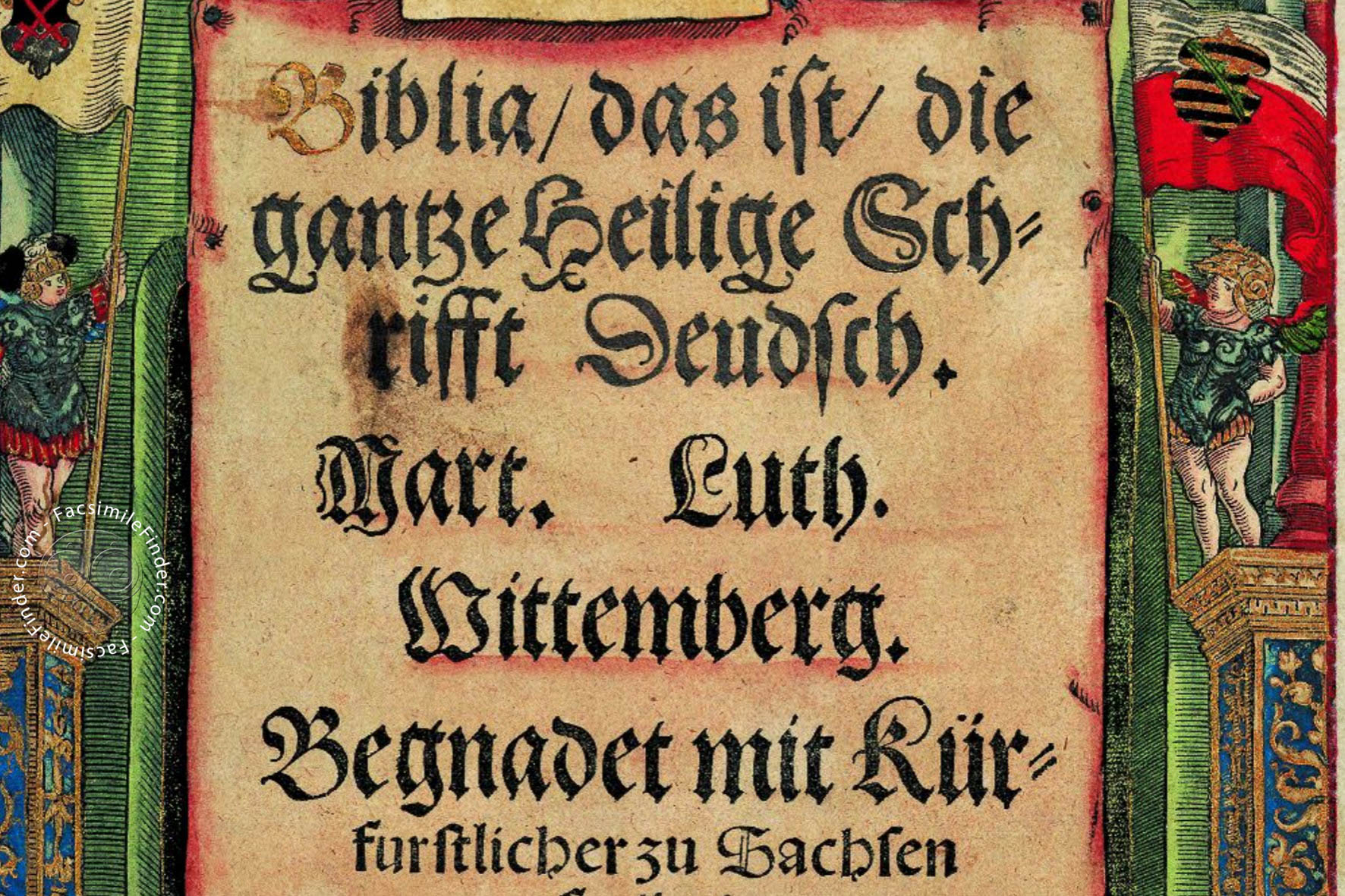
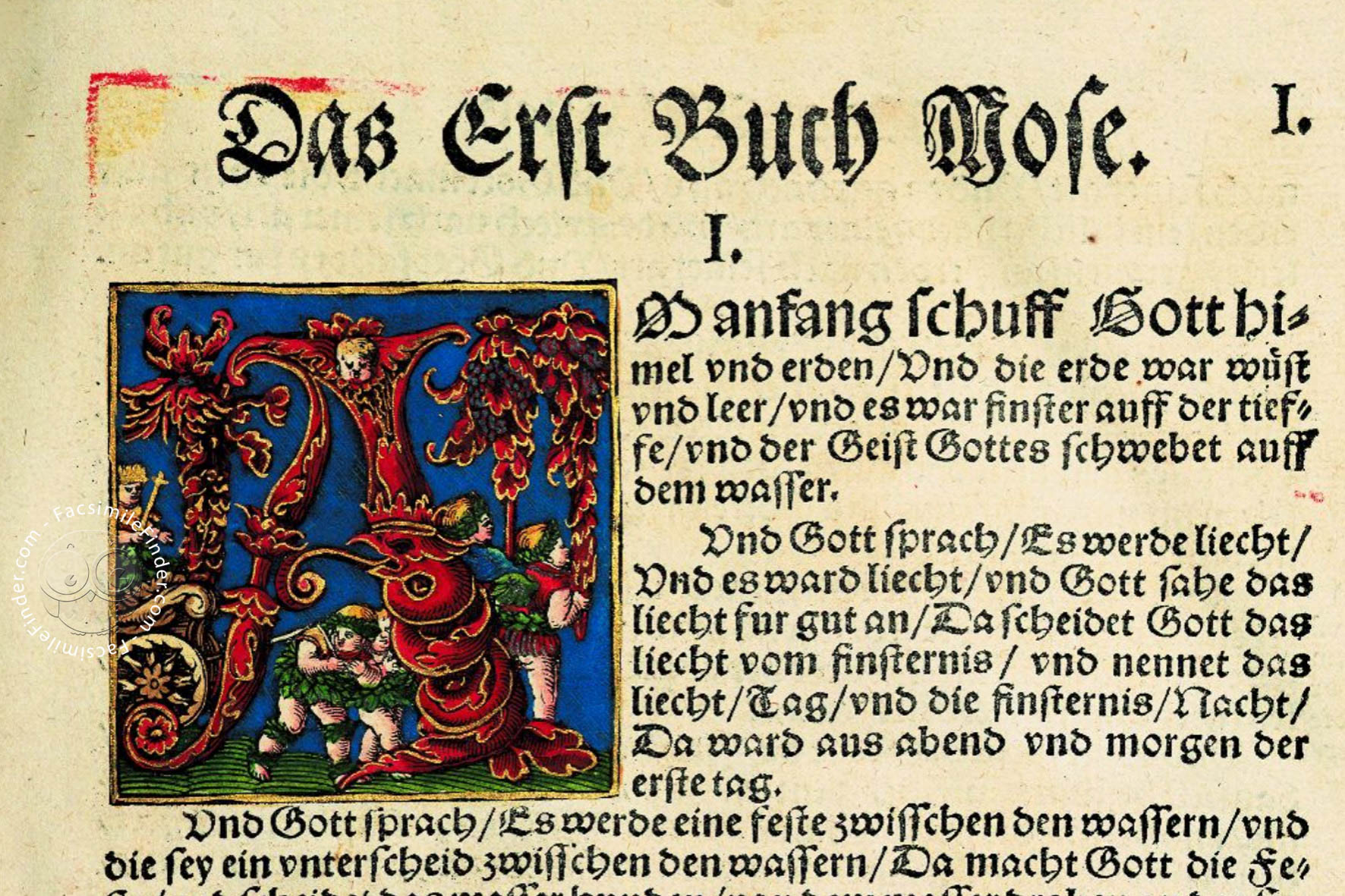
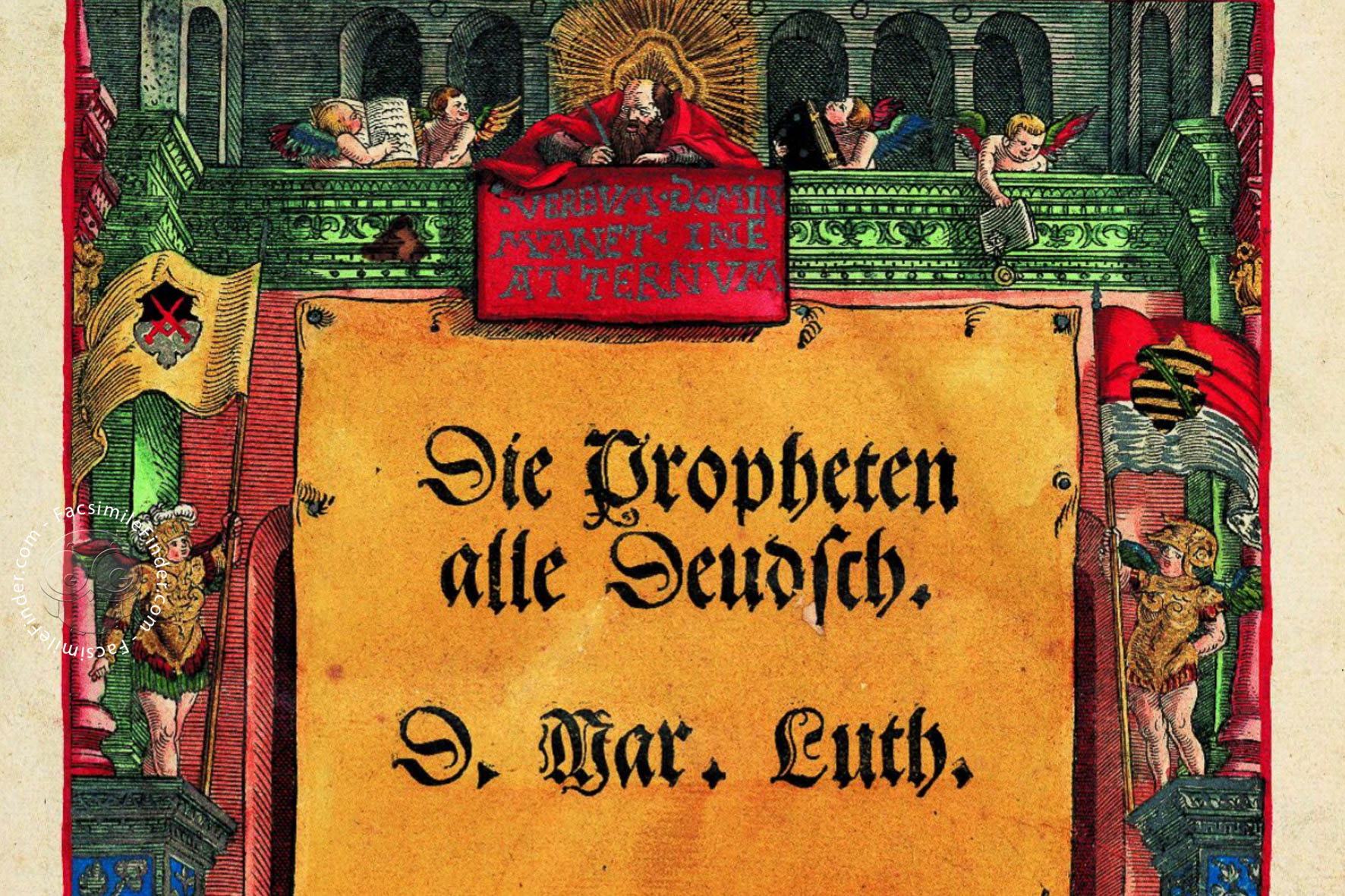
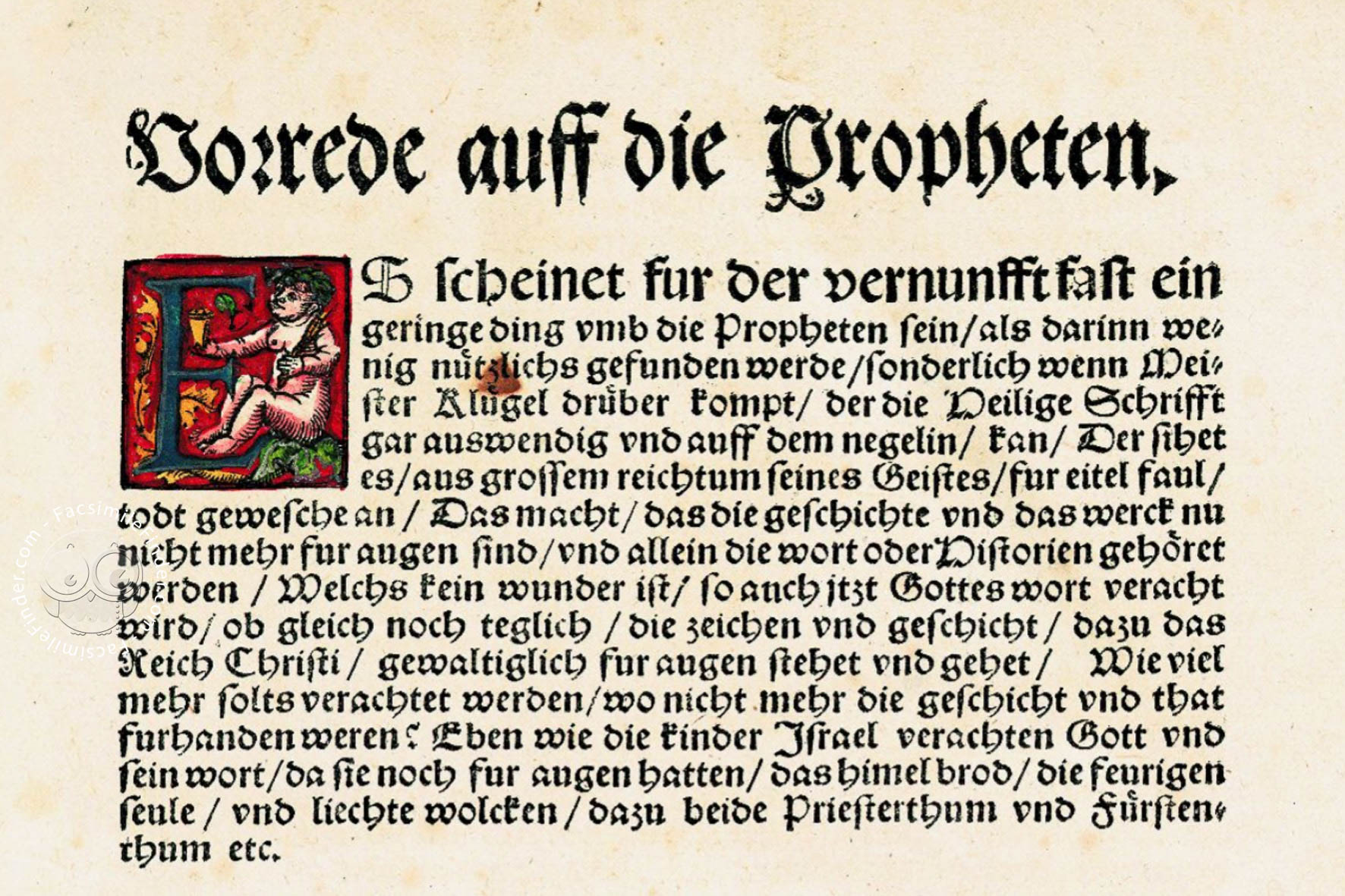
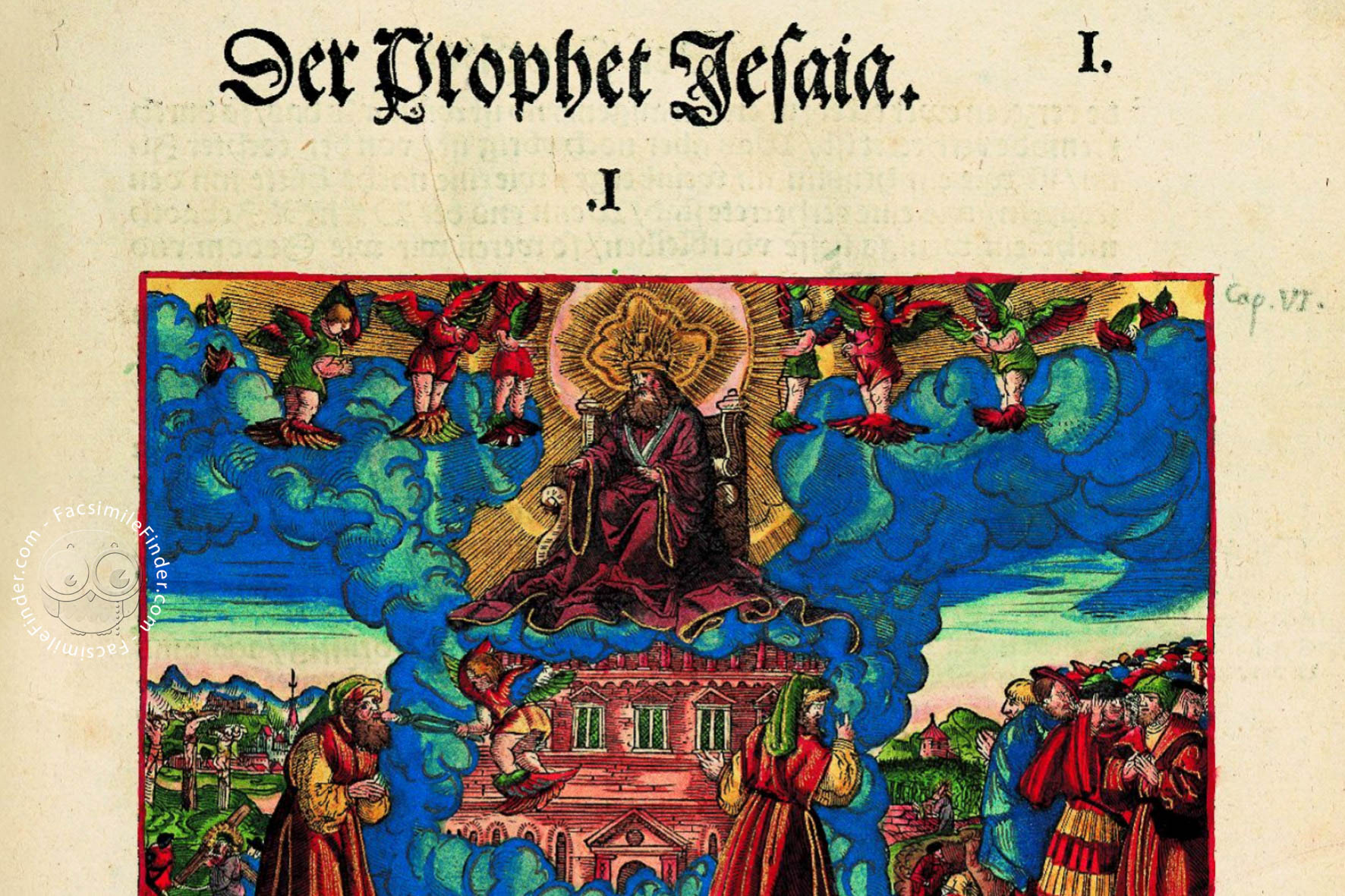
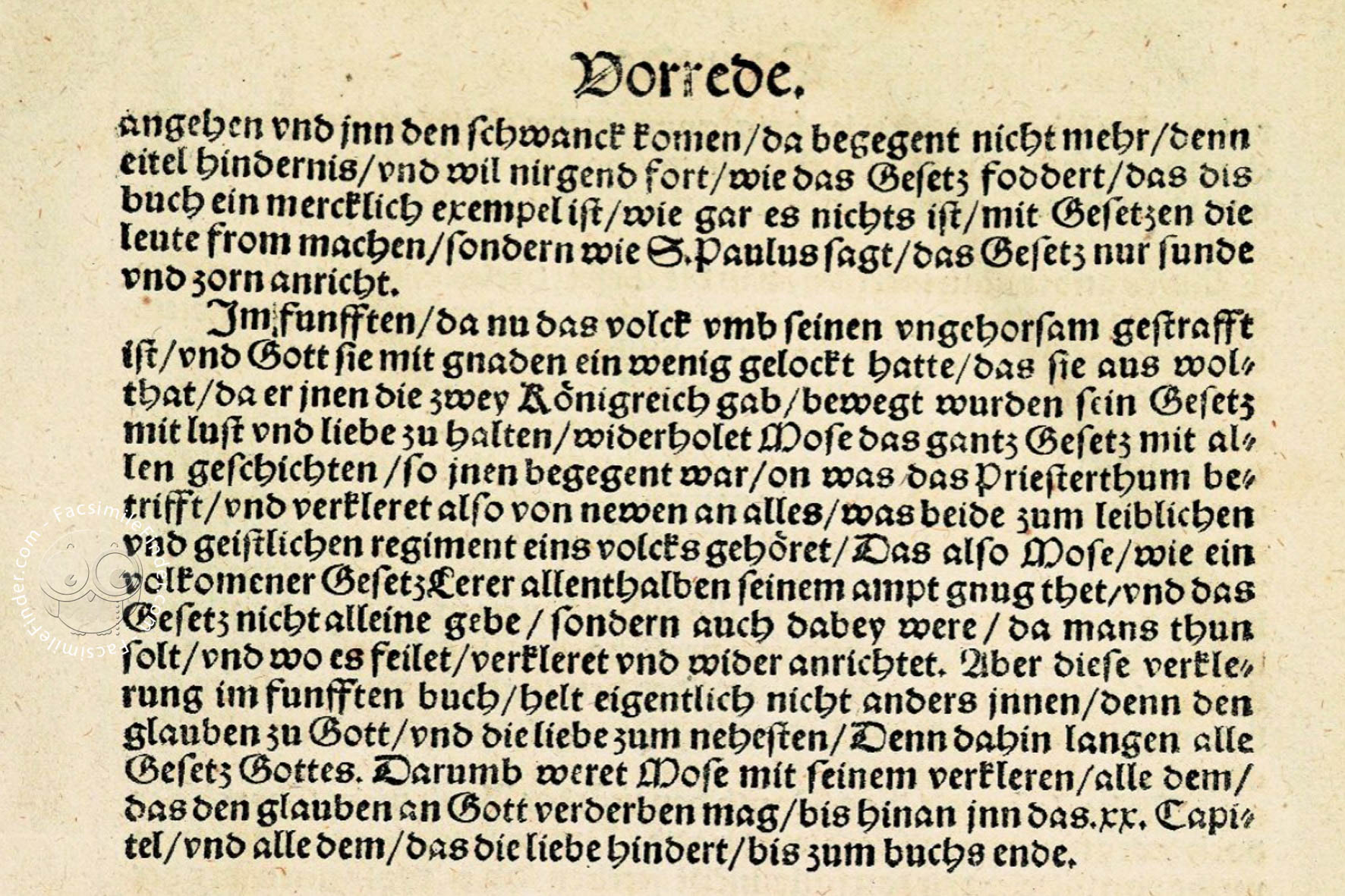
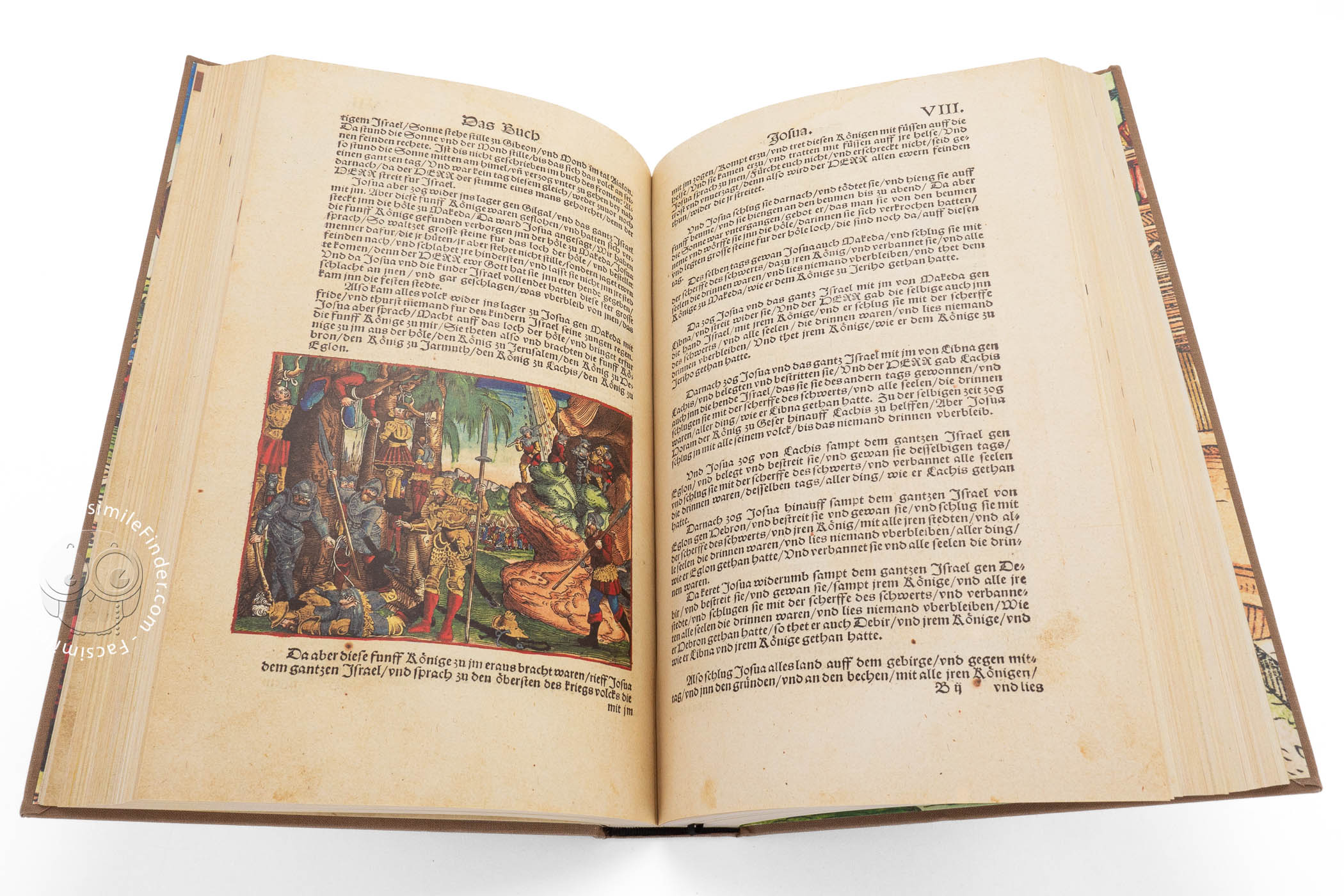
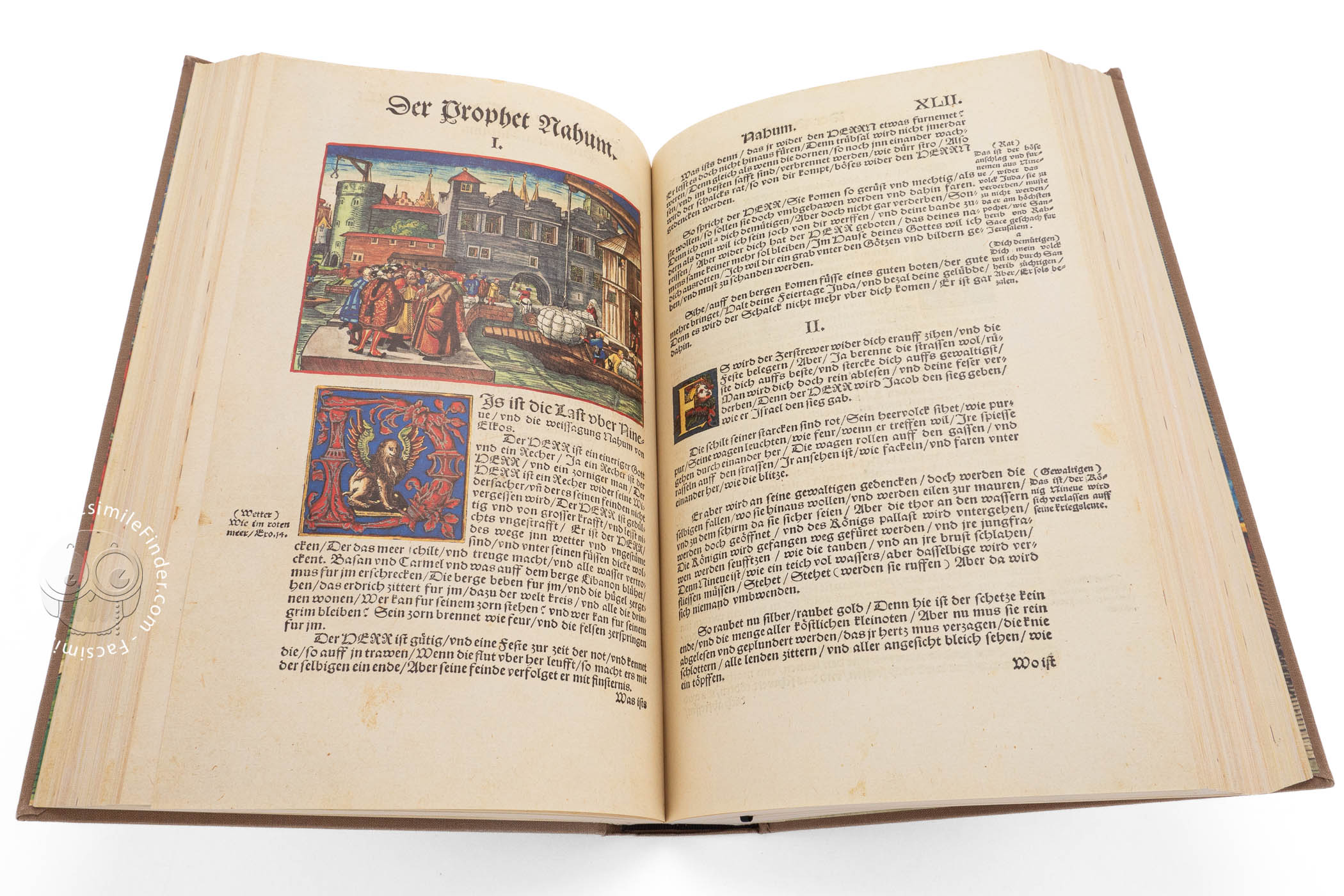
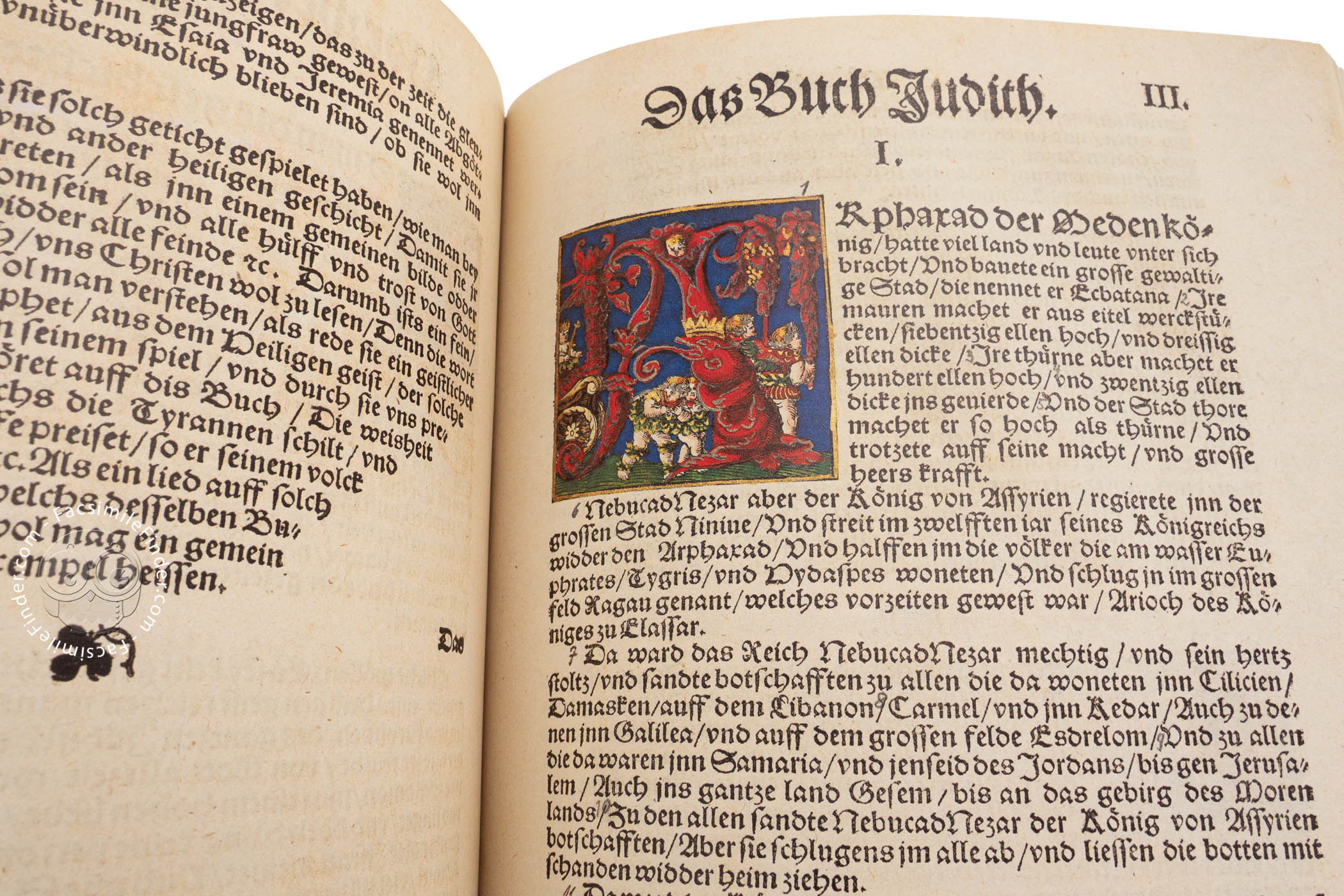
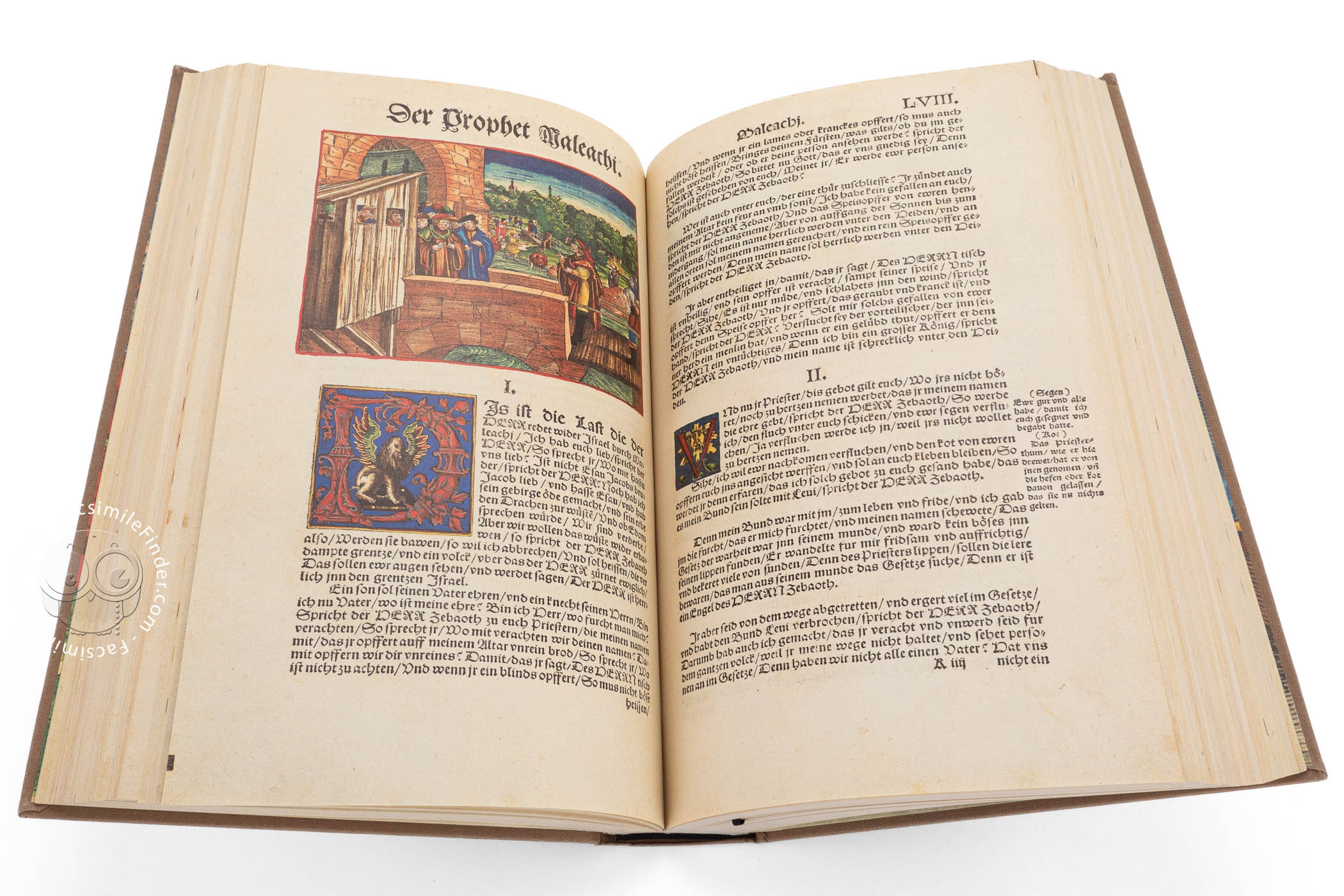
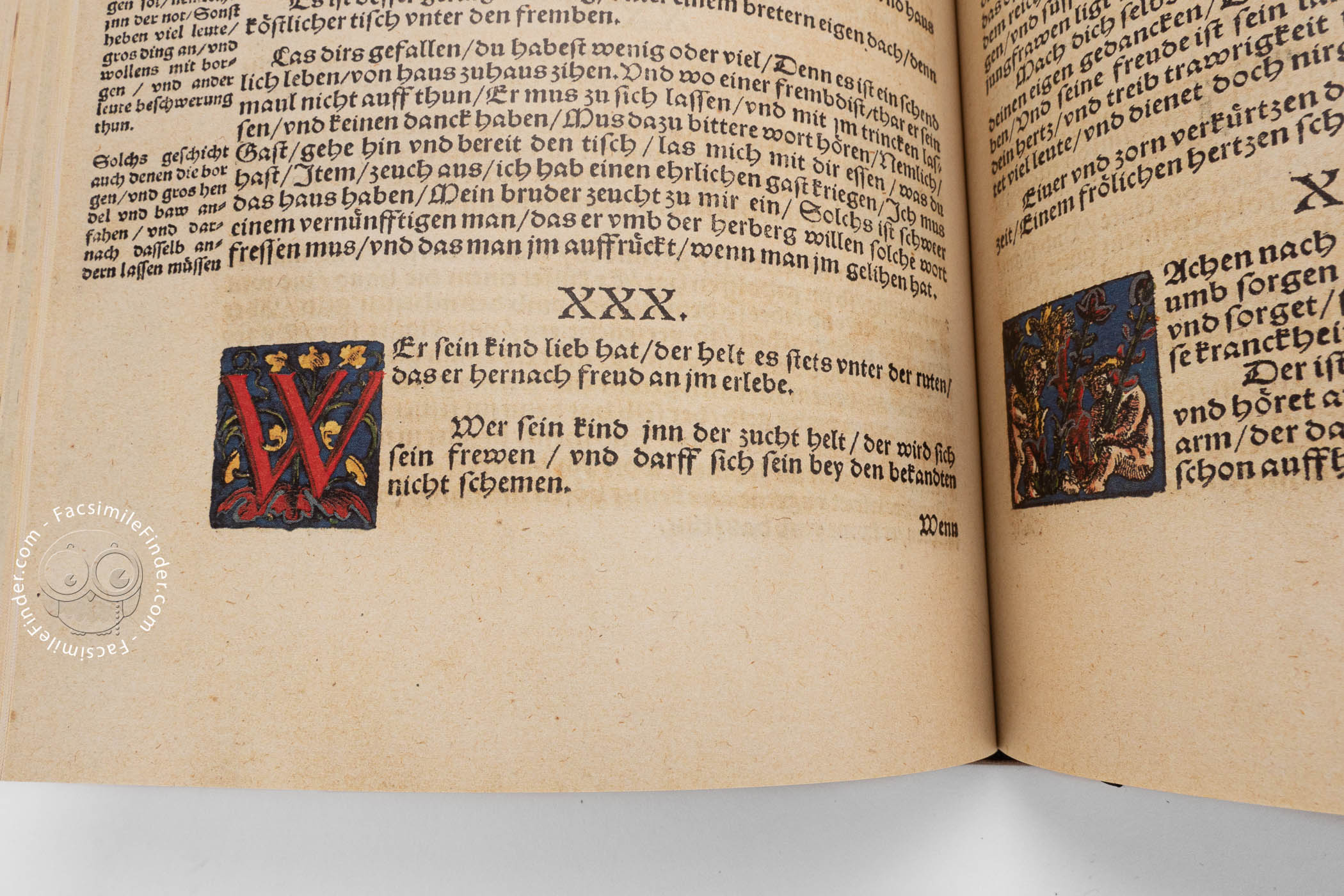
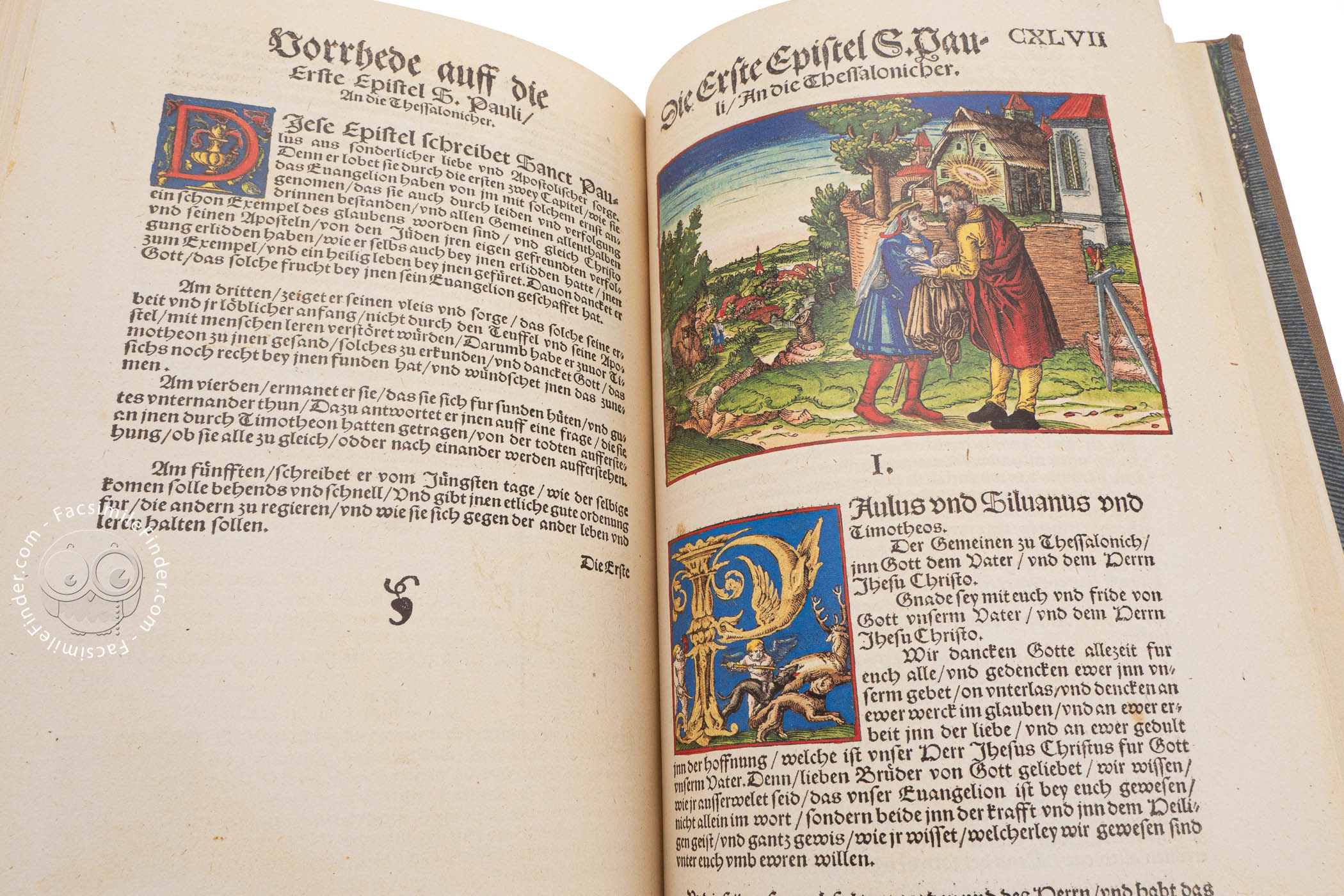
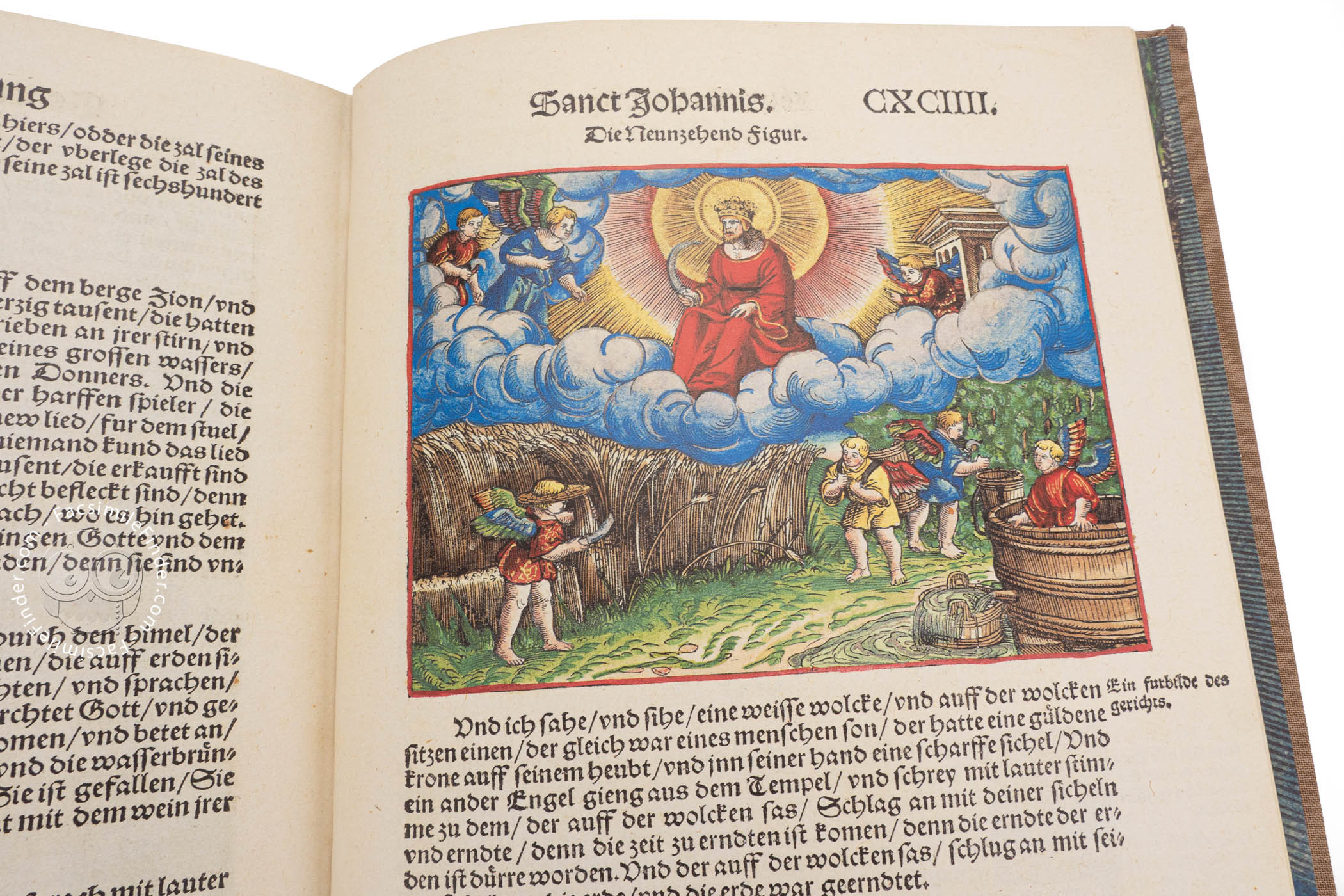
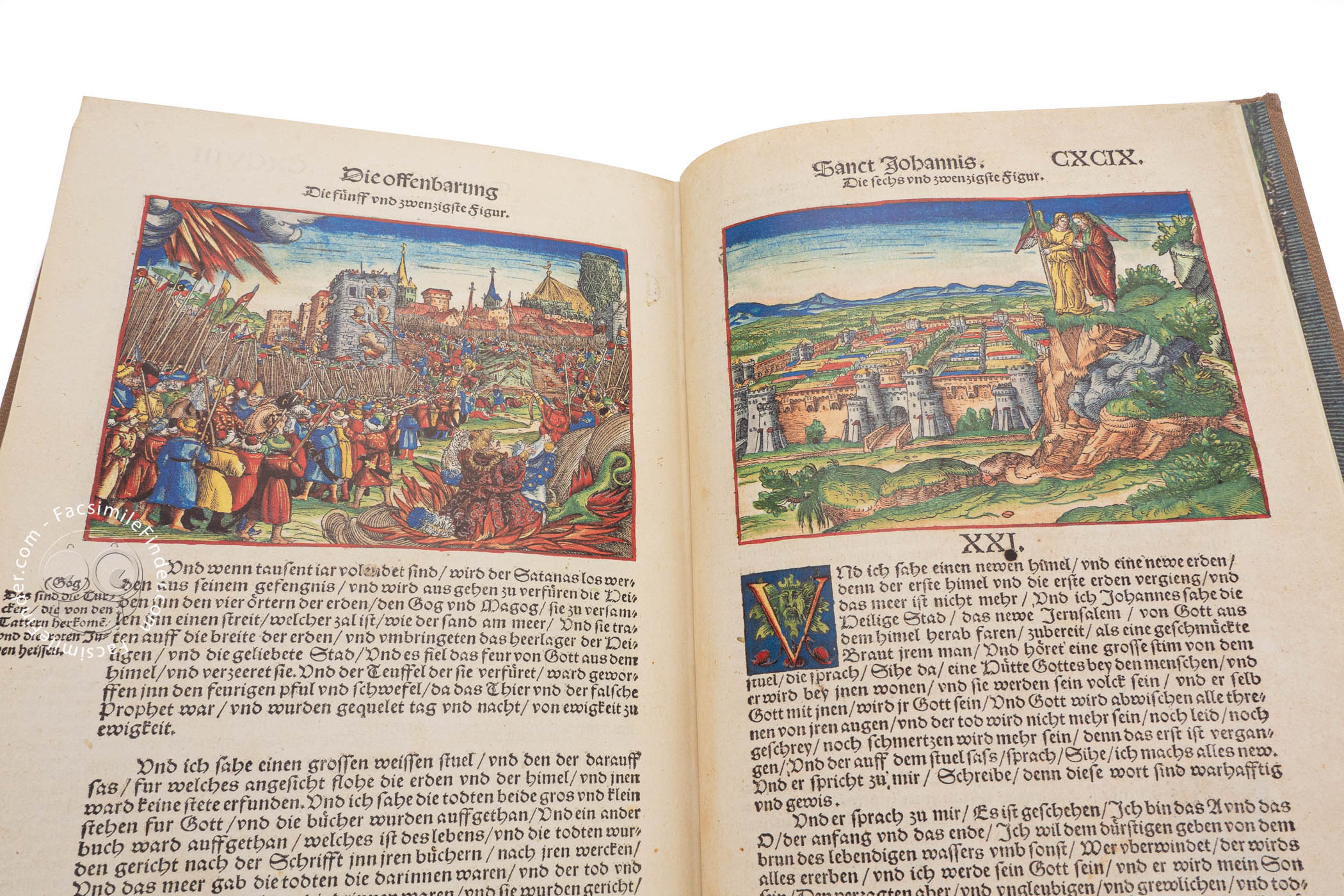
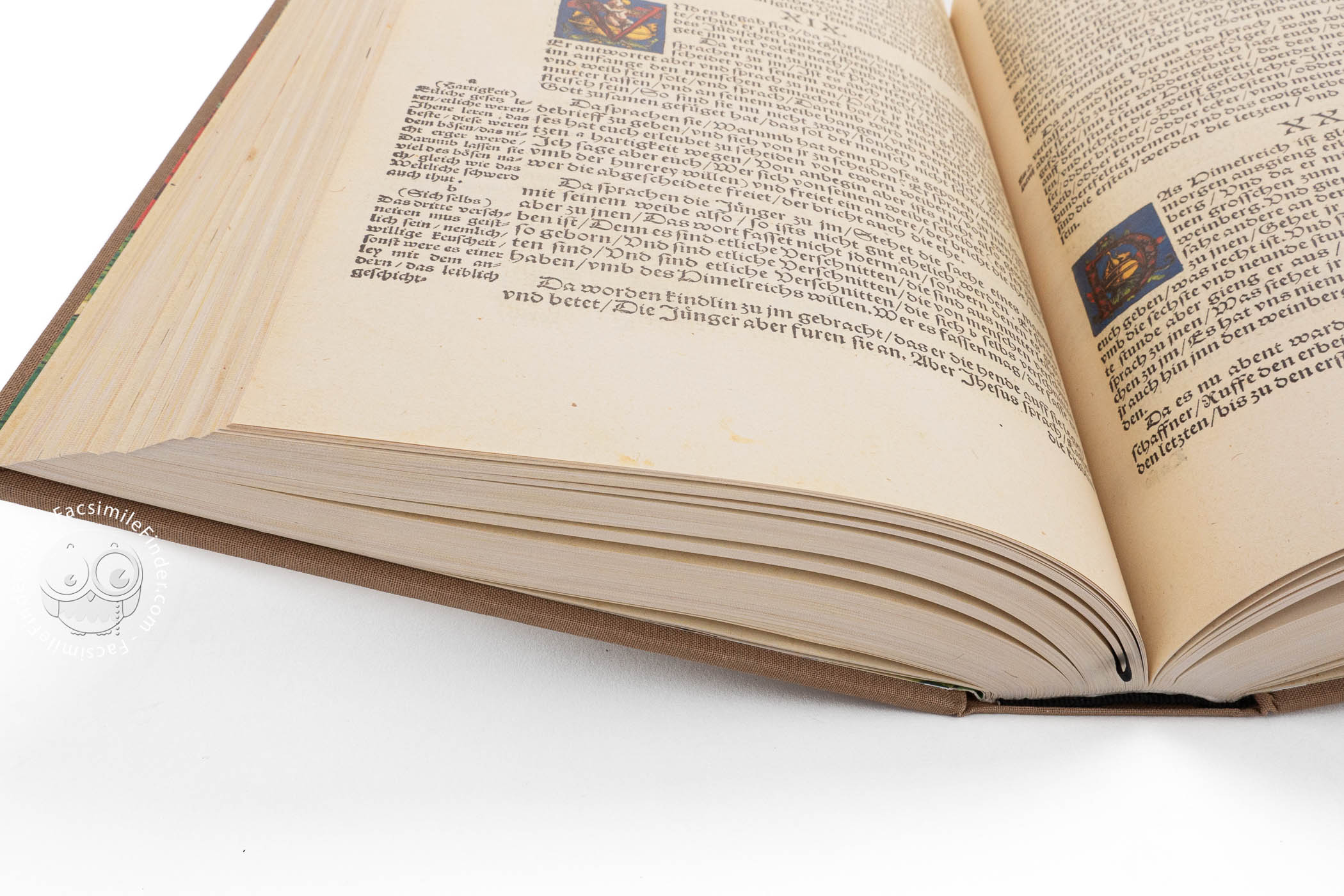
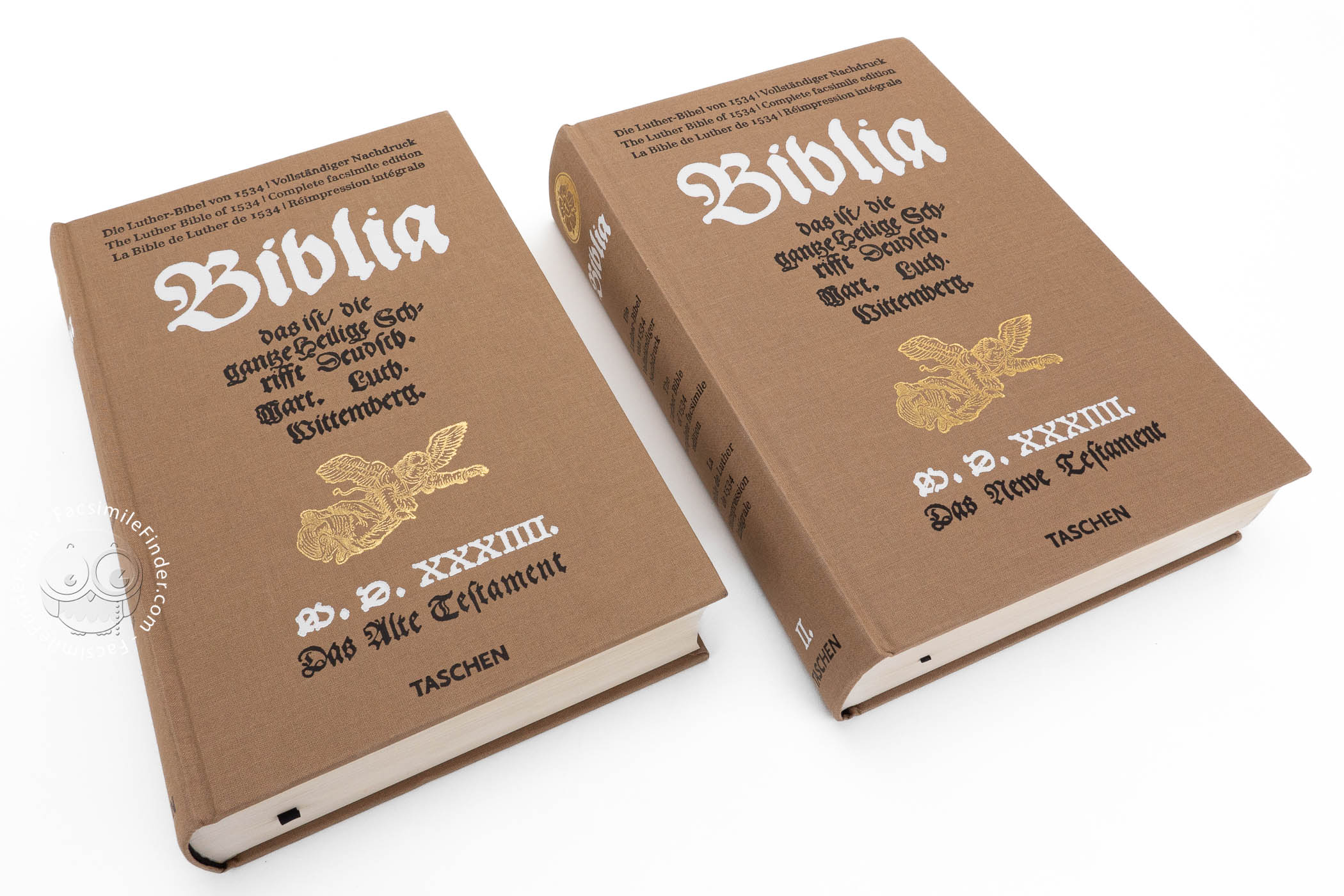
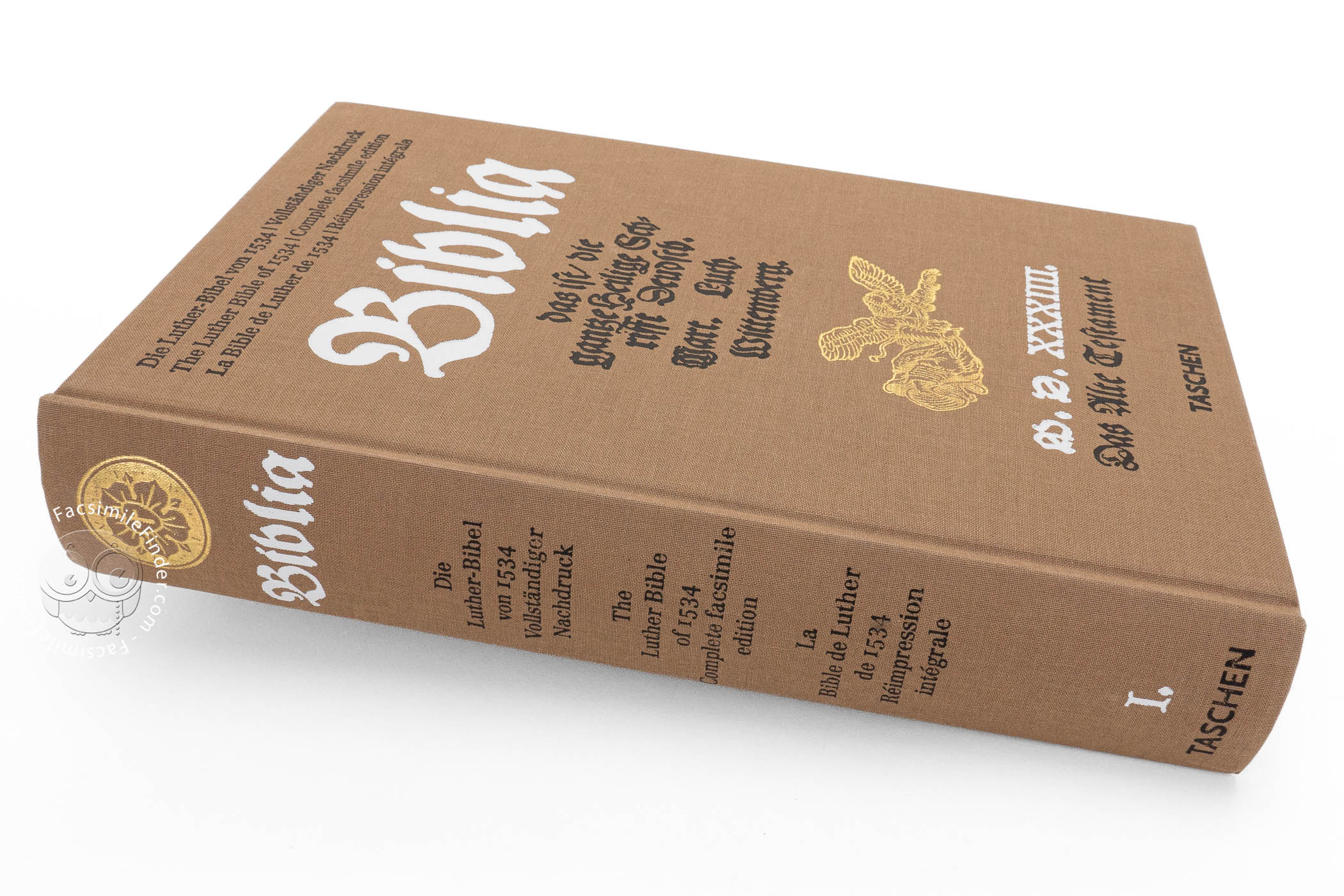
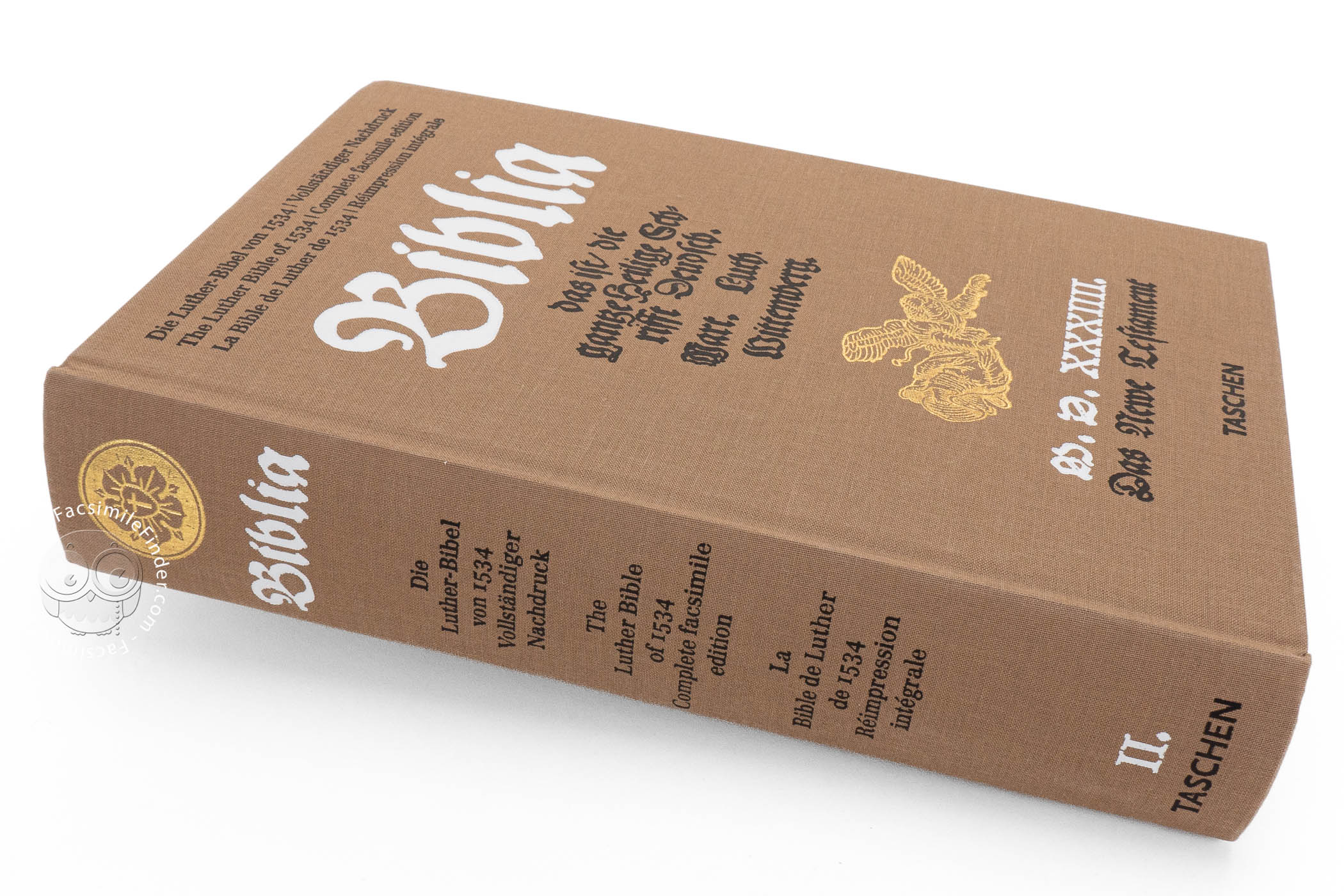
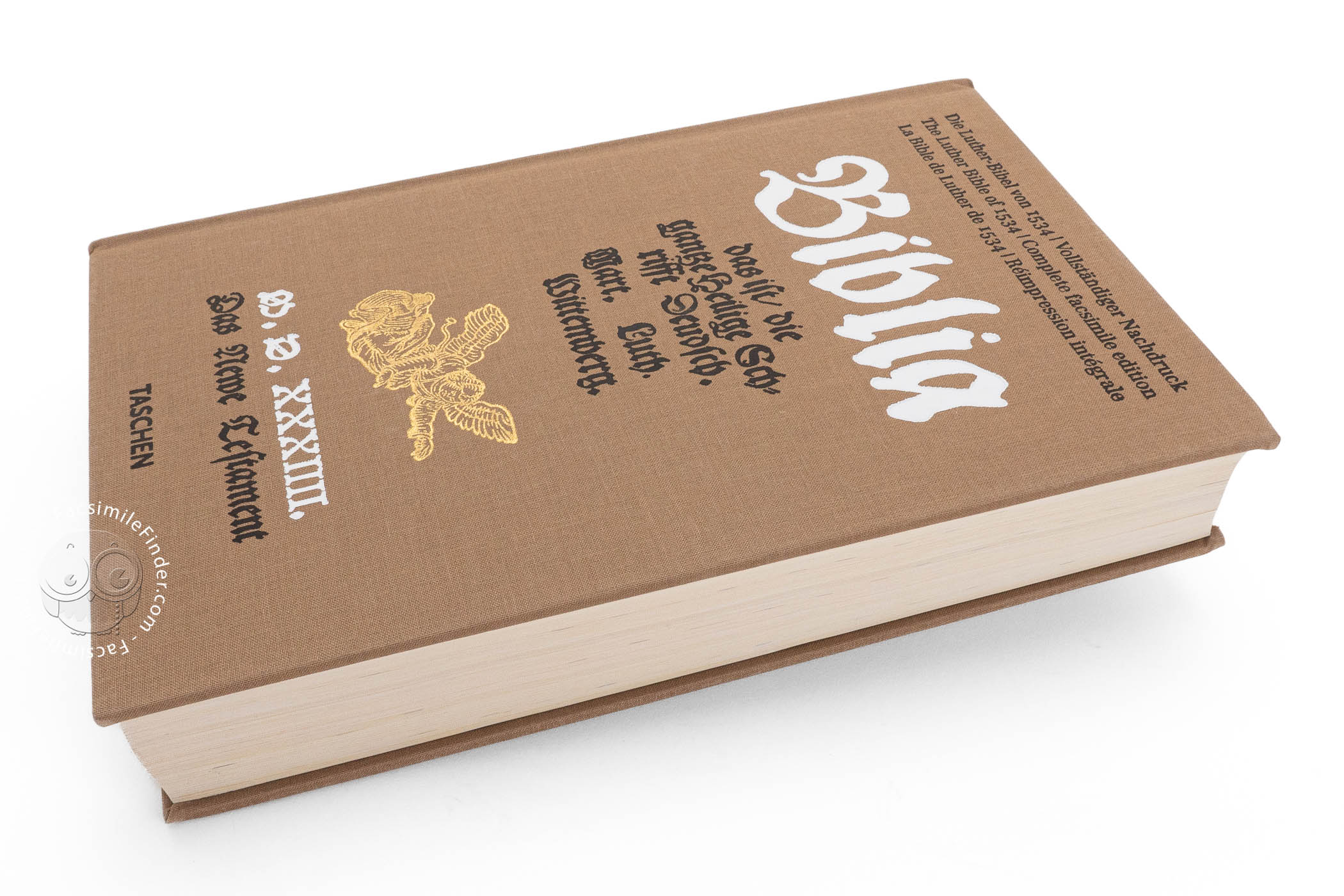
The 1534 Luther Bible is a monumental printed folio whose authority and visual presence deliberately echo the great books of the scribal age. Produced in Wittenberg and preserved today in Weimar, Herzogin Anna Amalia Bibliothek, it embodies the moment when Scripture, print, and vernacular language were bound into a single cultural instrument.
Reformation Milestone
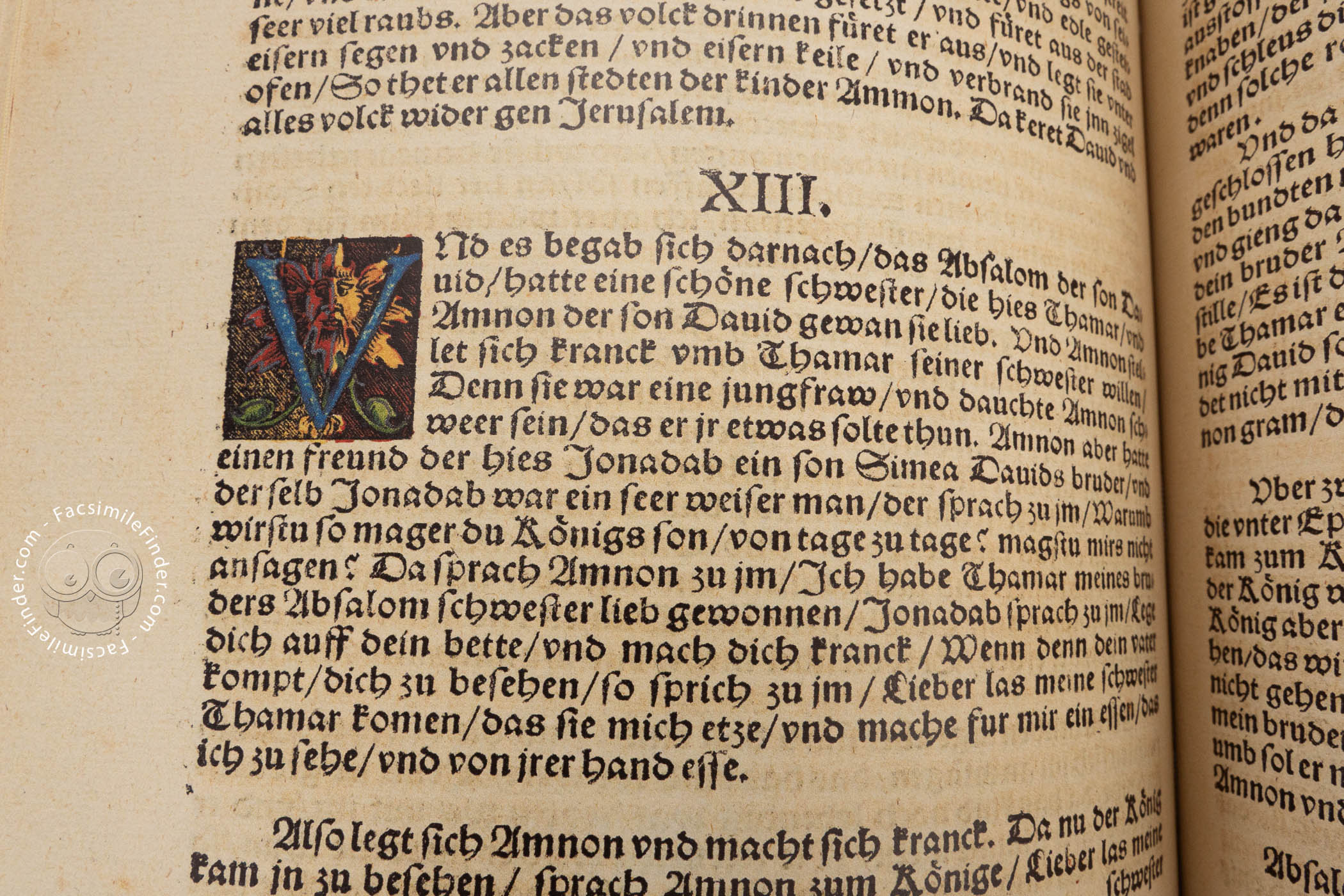
This edition presents Luther’s first complete Bible in German—Old and New Testaments, with the Apocrypha—a whole book designed to stabilise doctrine and reading practice for a wide public, from clergy to educated laity.
Wittenberg Printing House
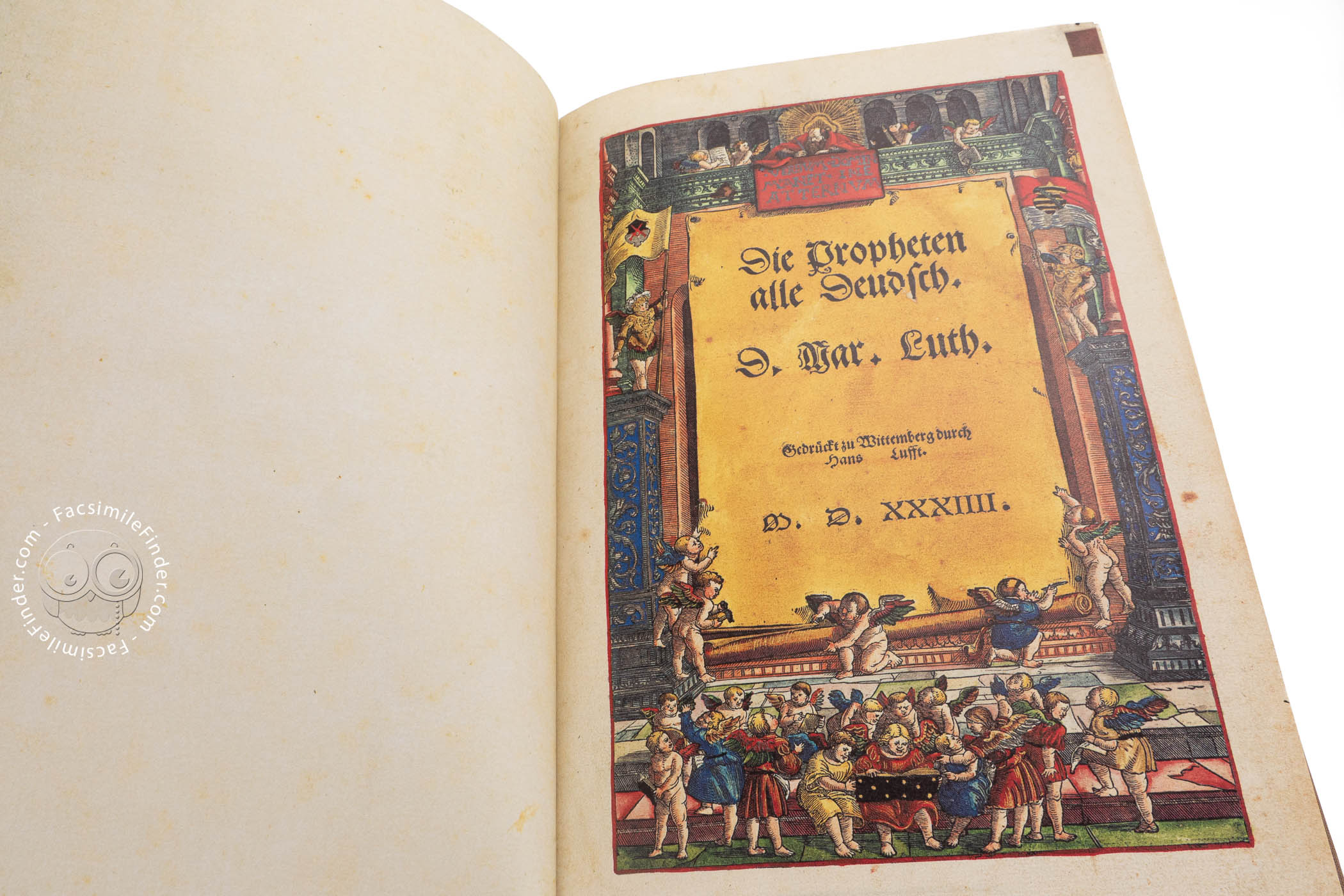
Issued by the Wittenberg printer Hans Lufft, the volume reflects the Reformers’ sophisticated grasp of print as theology’s amplifier: a durable artefact meant for repeated consultation, correction, and transmission.
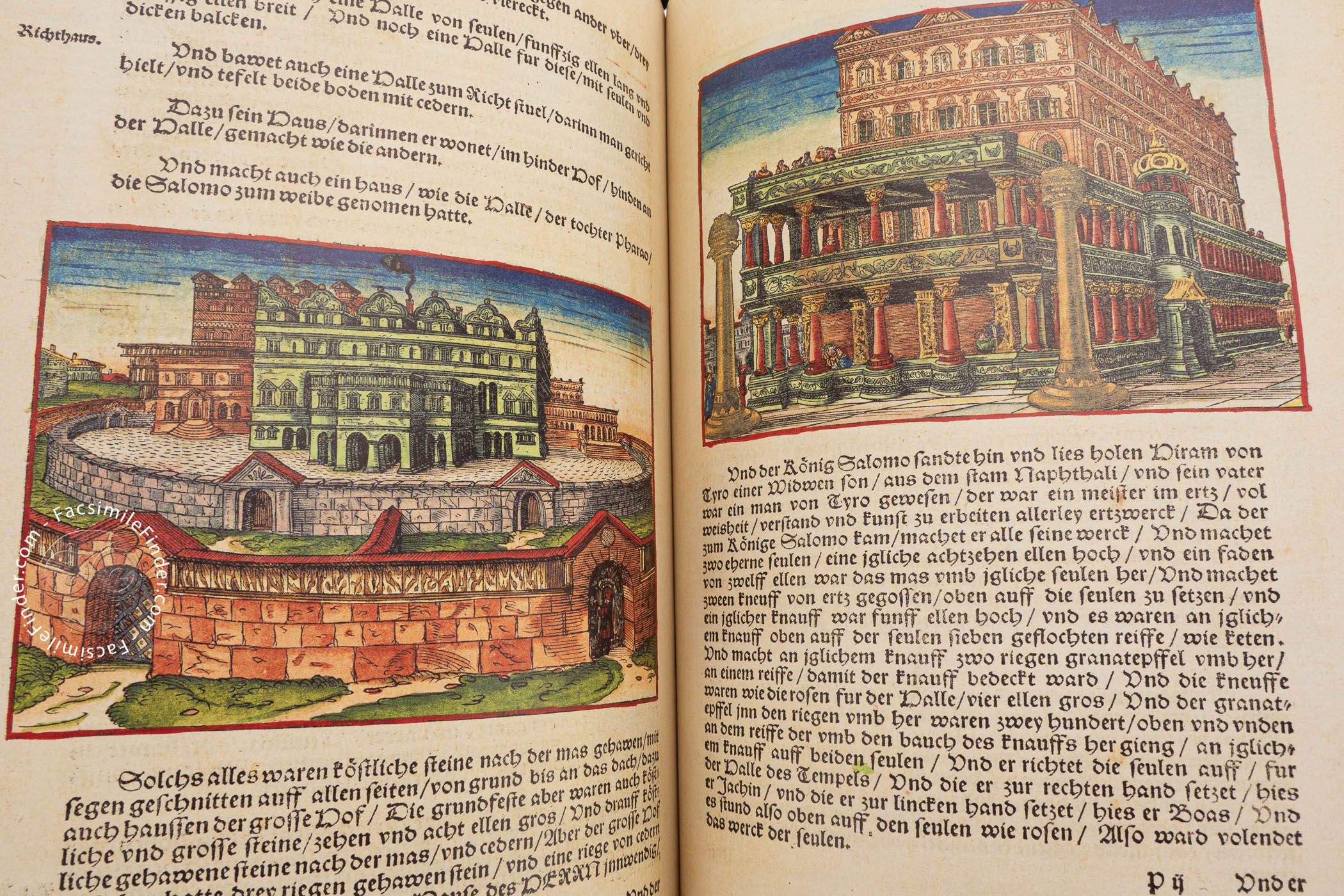
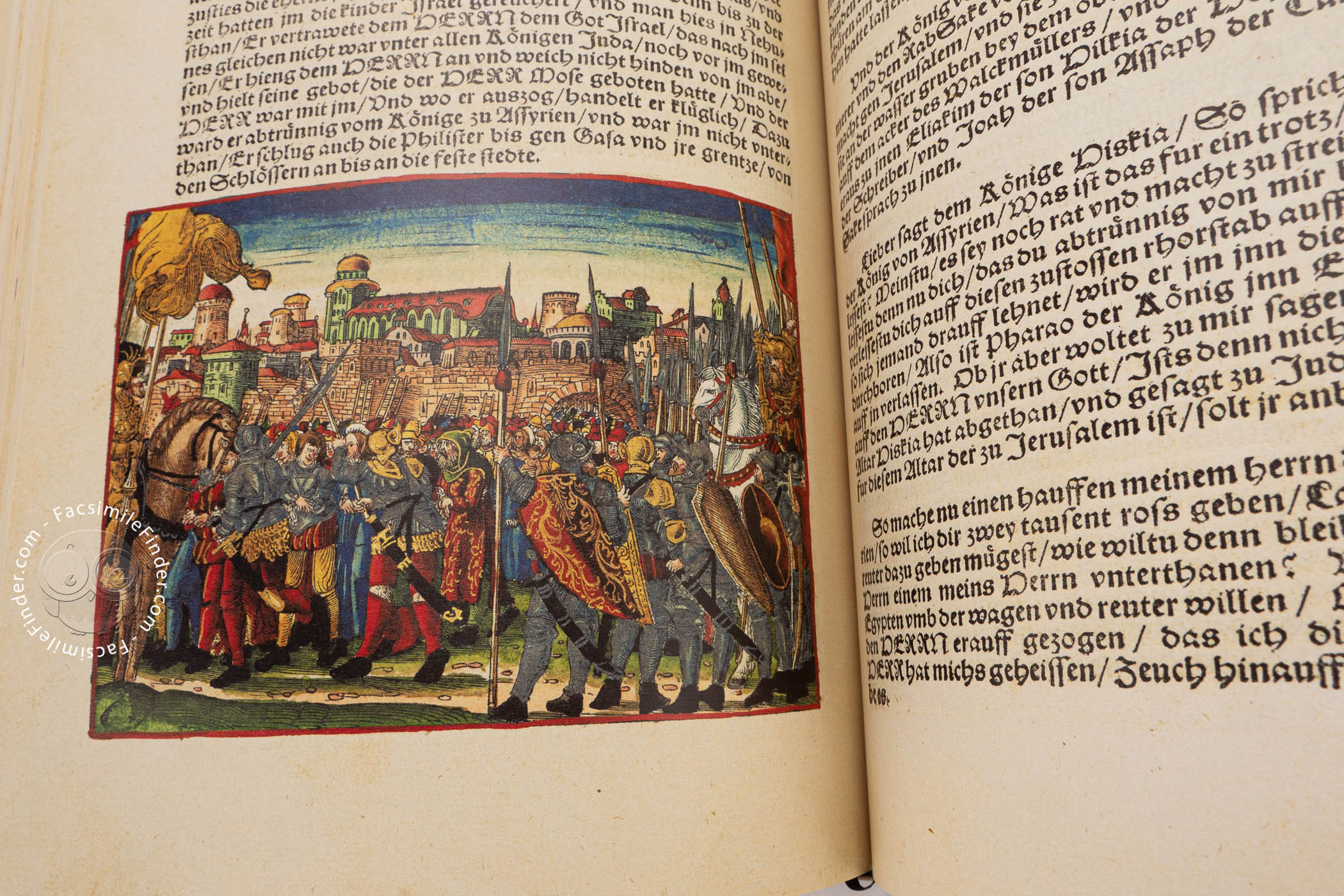
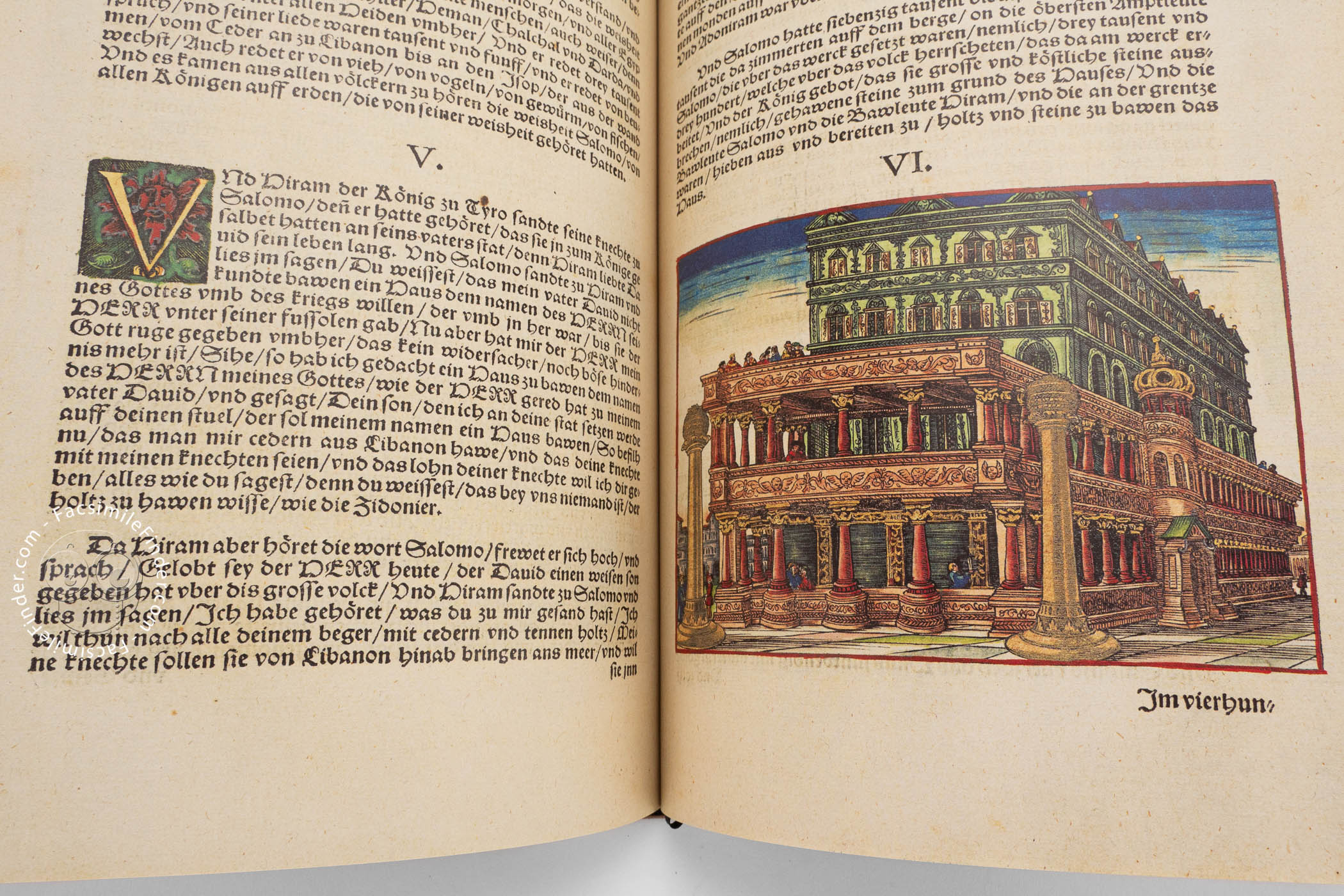
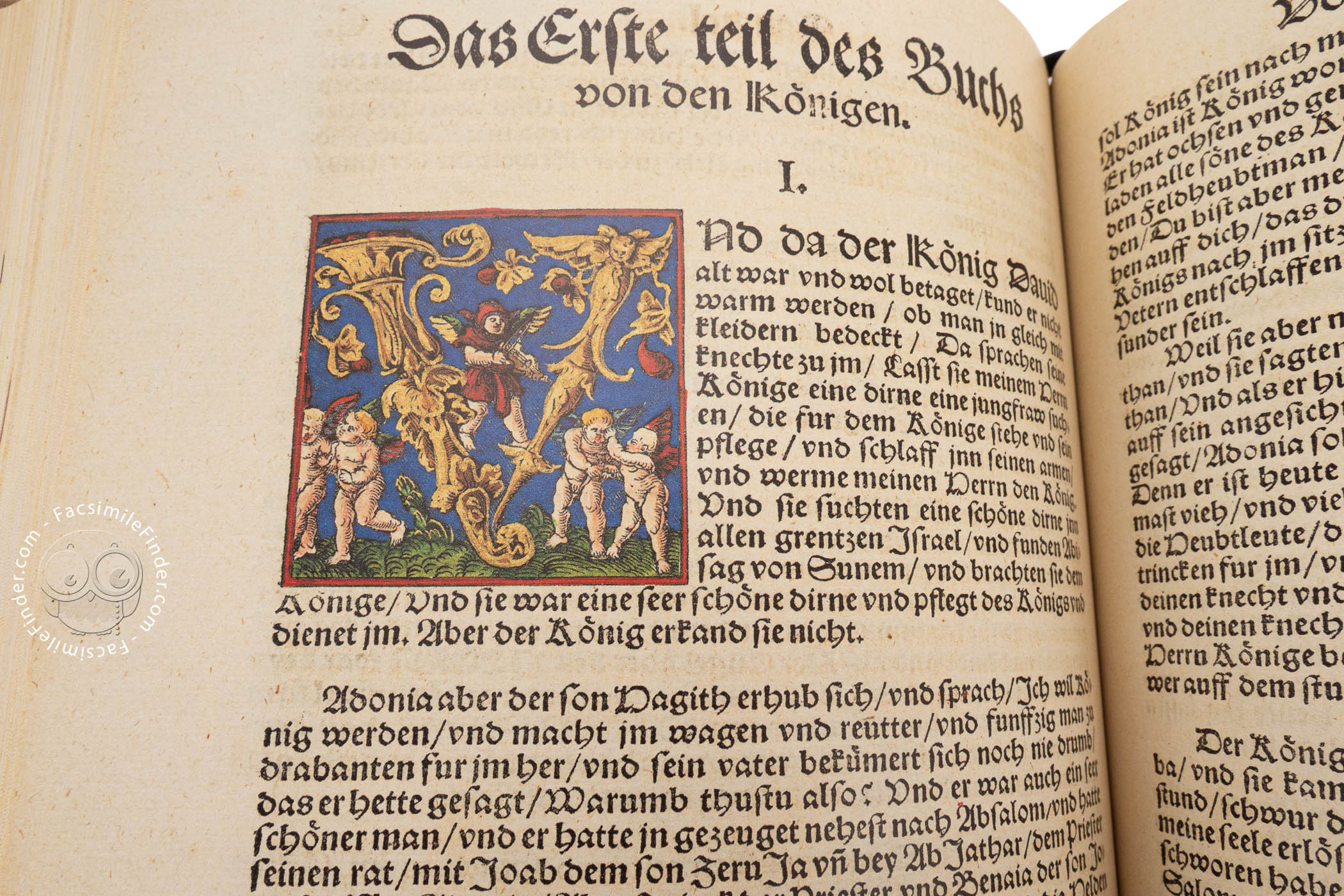
Illustration and Visual Rhetoric
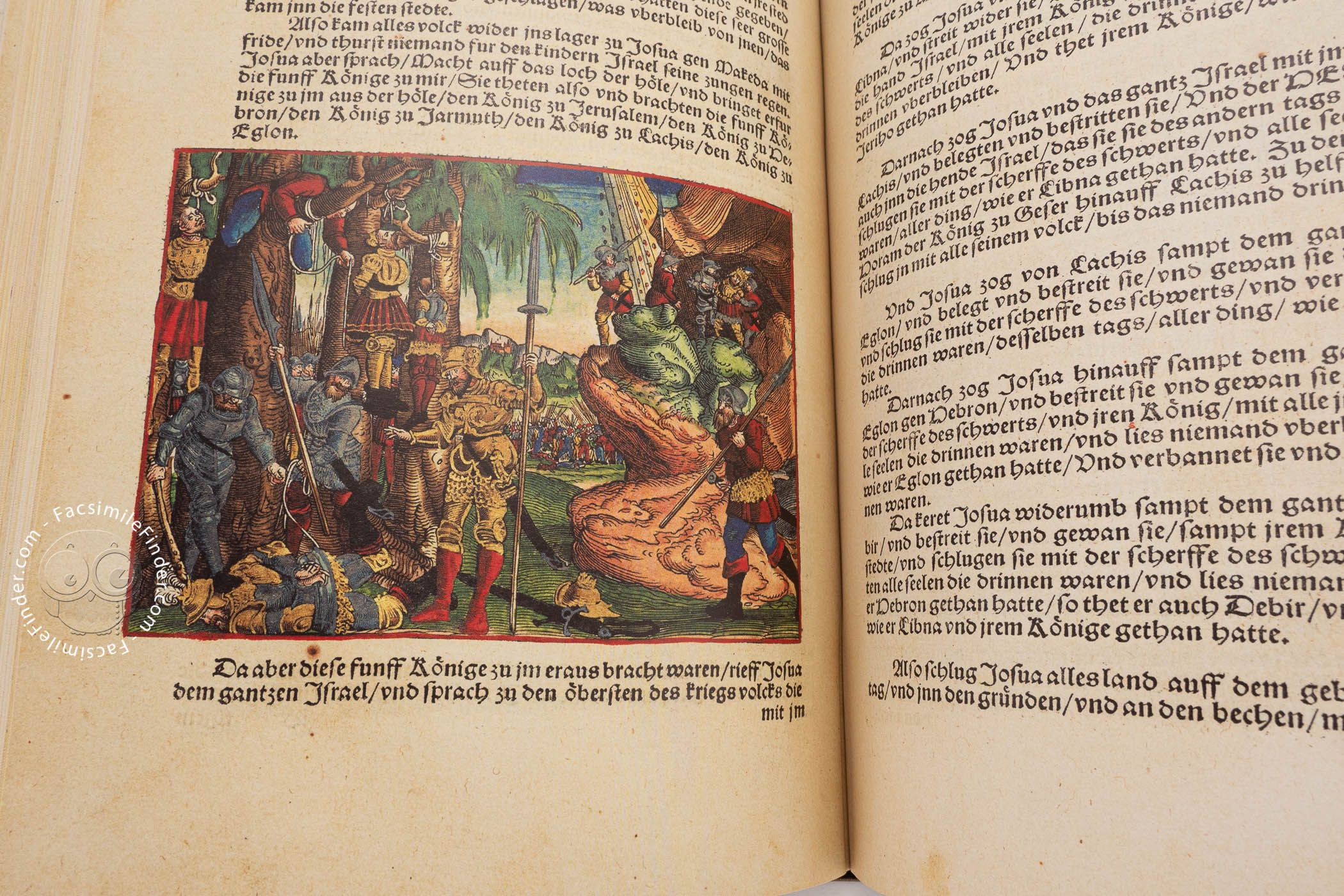
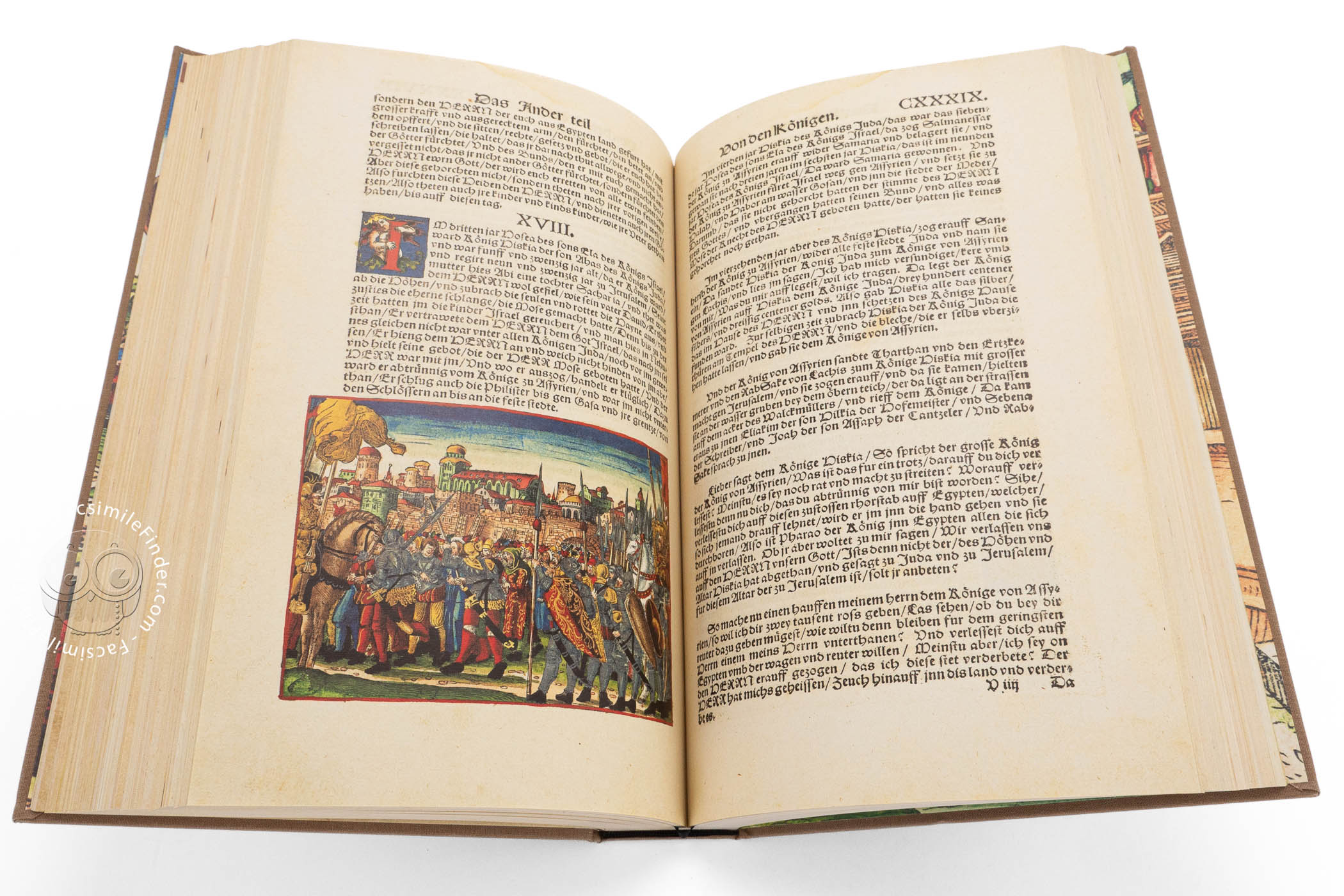
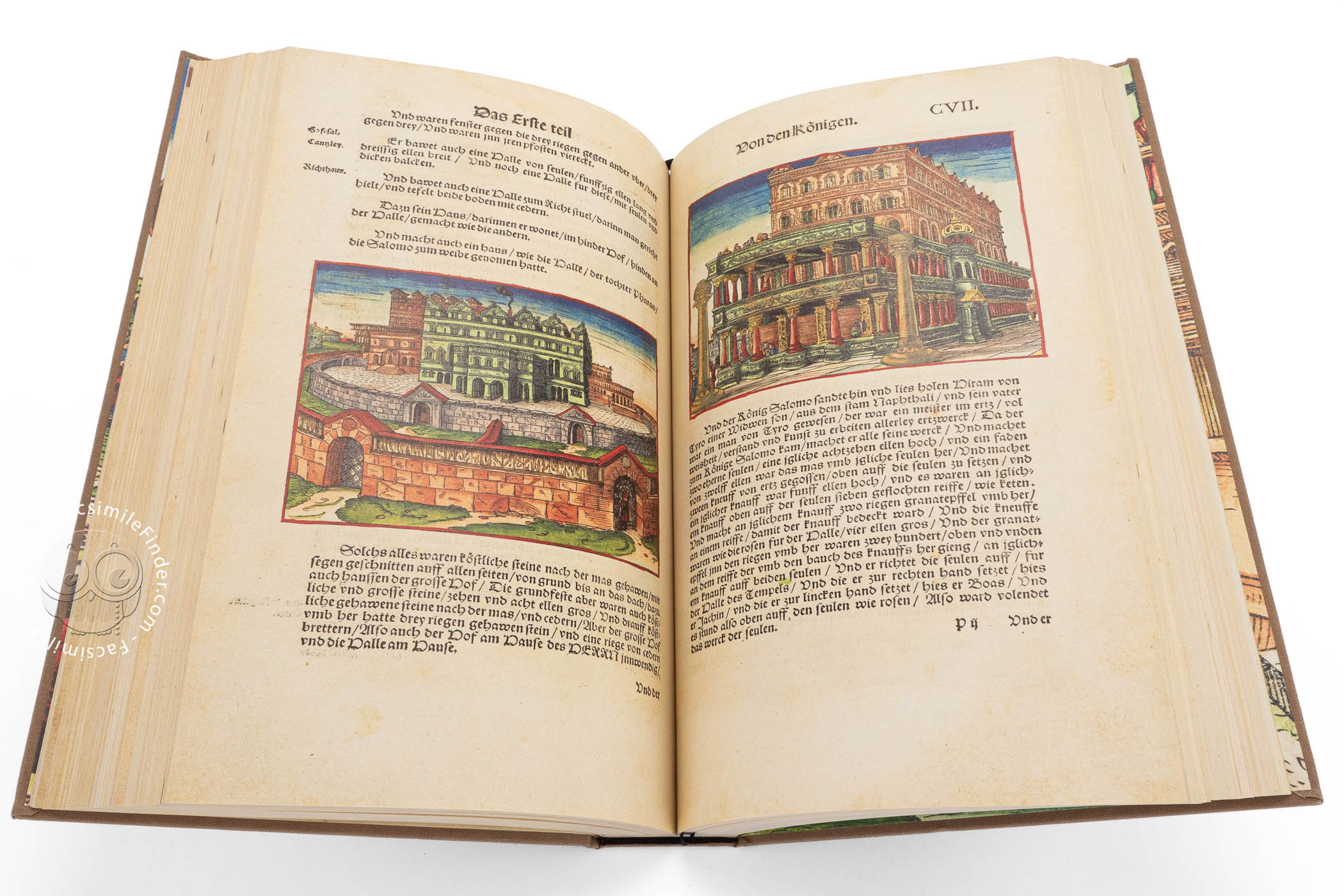
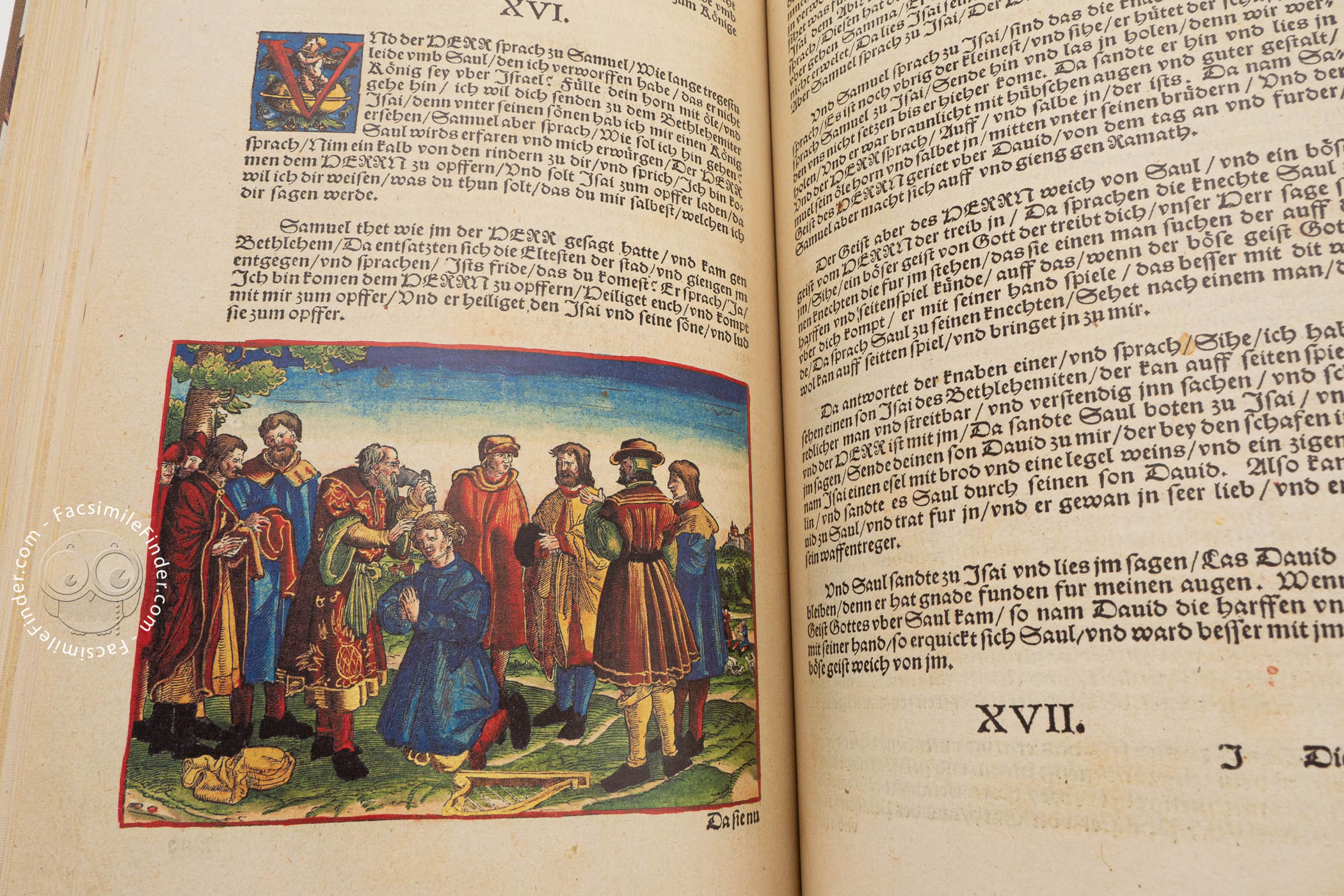
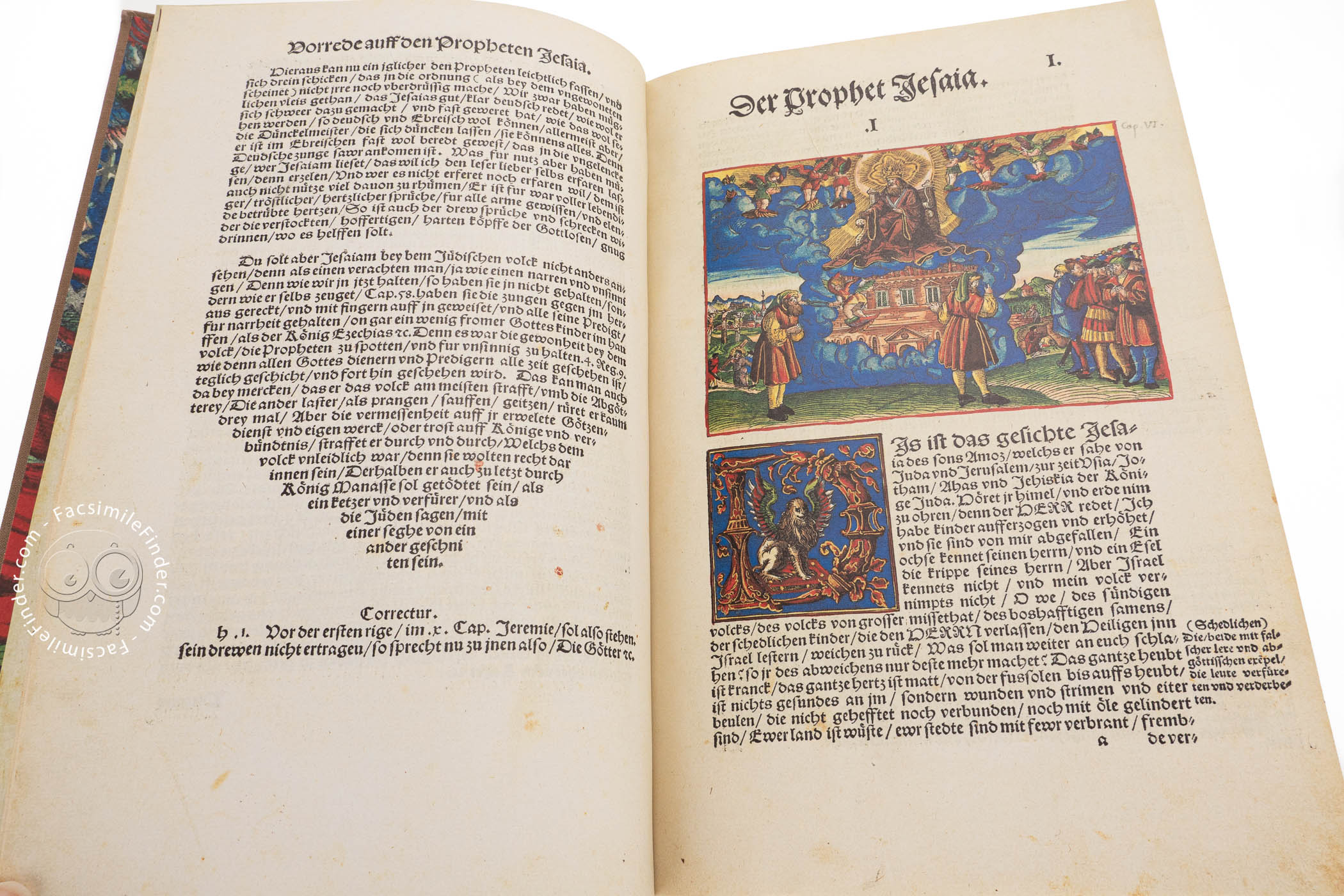
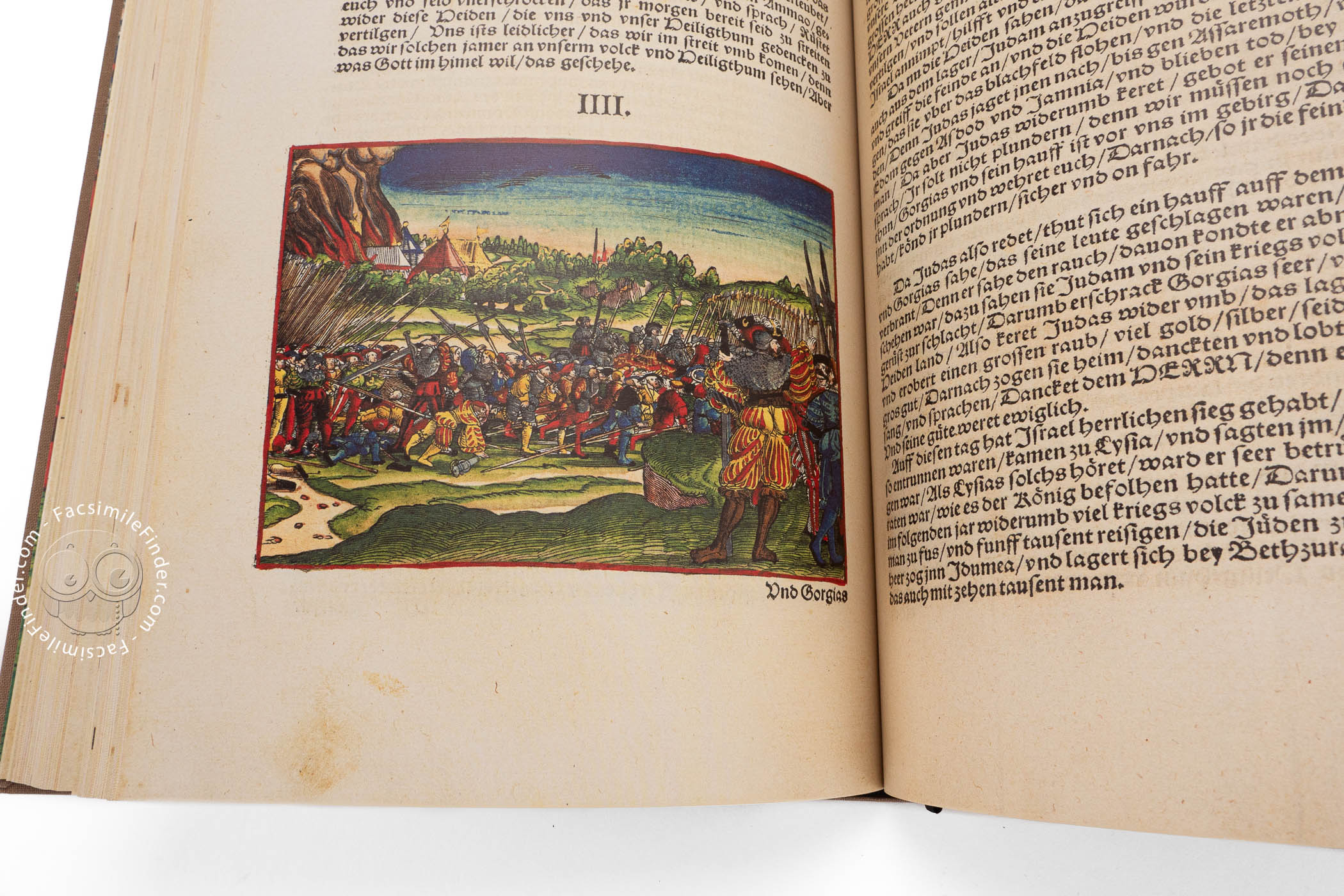
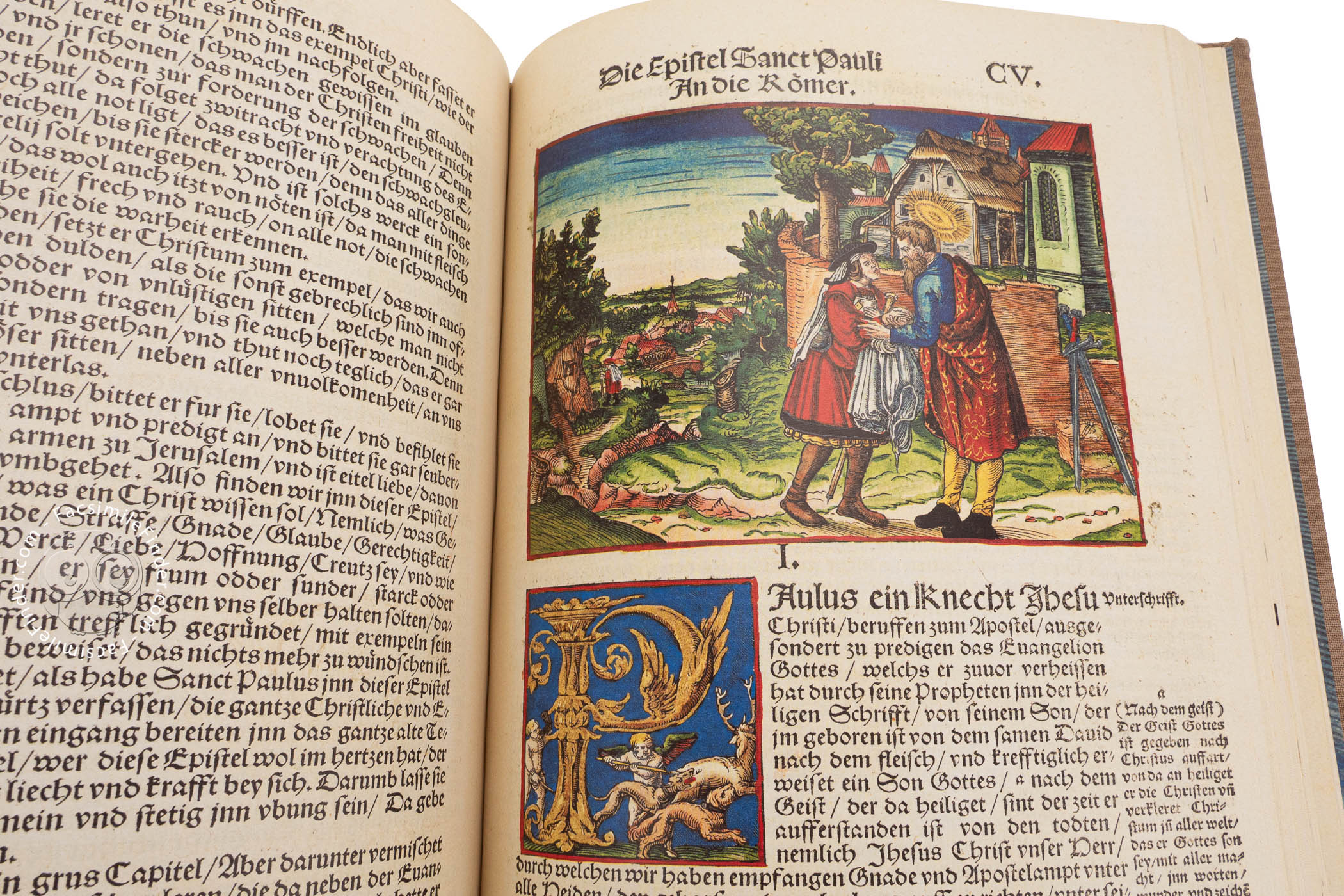
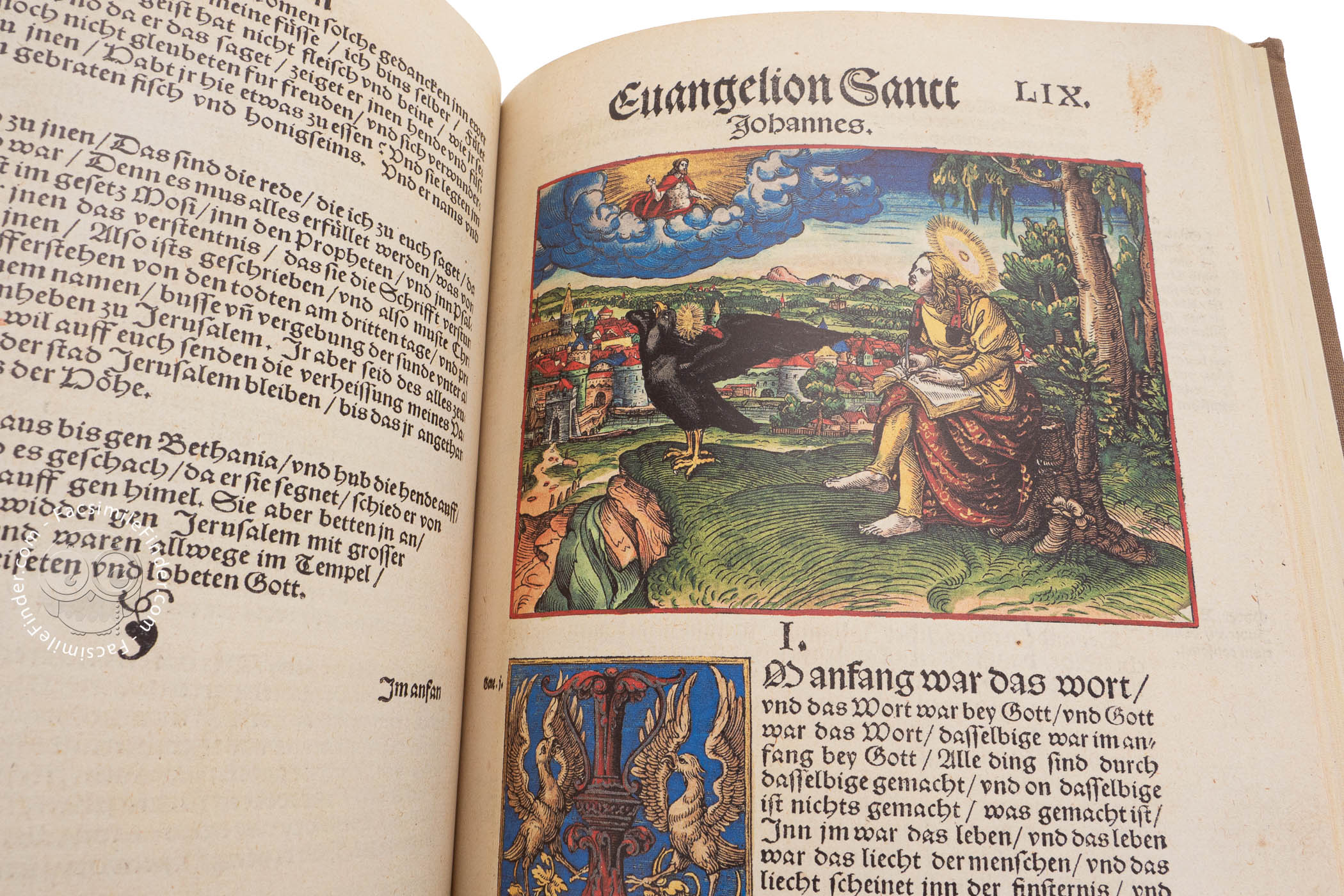
Its woodcut programme does more than ornament the text. 117 distinct woodcuts guide the reader’s eye, clarify narrative sequence, and, at points, sharpen confessional polemic—an inheritance from late medieval biblical illustration, retooled for Reformation argument.
Translation as Spoken German
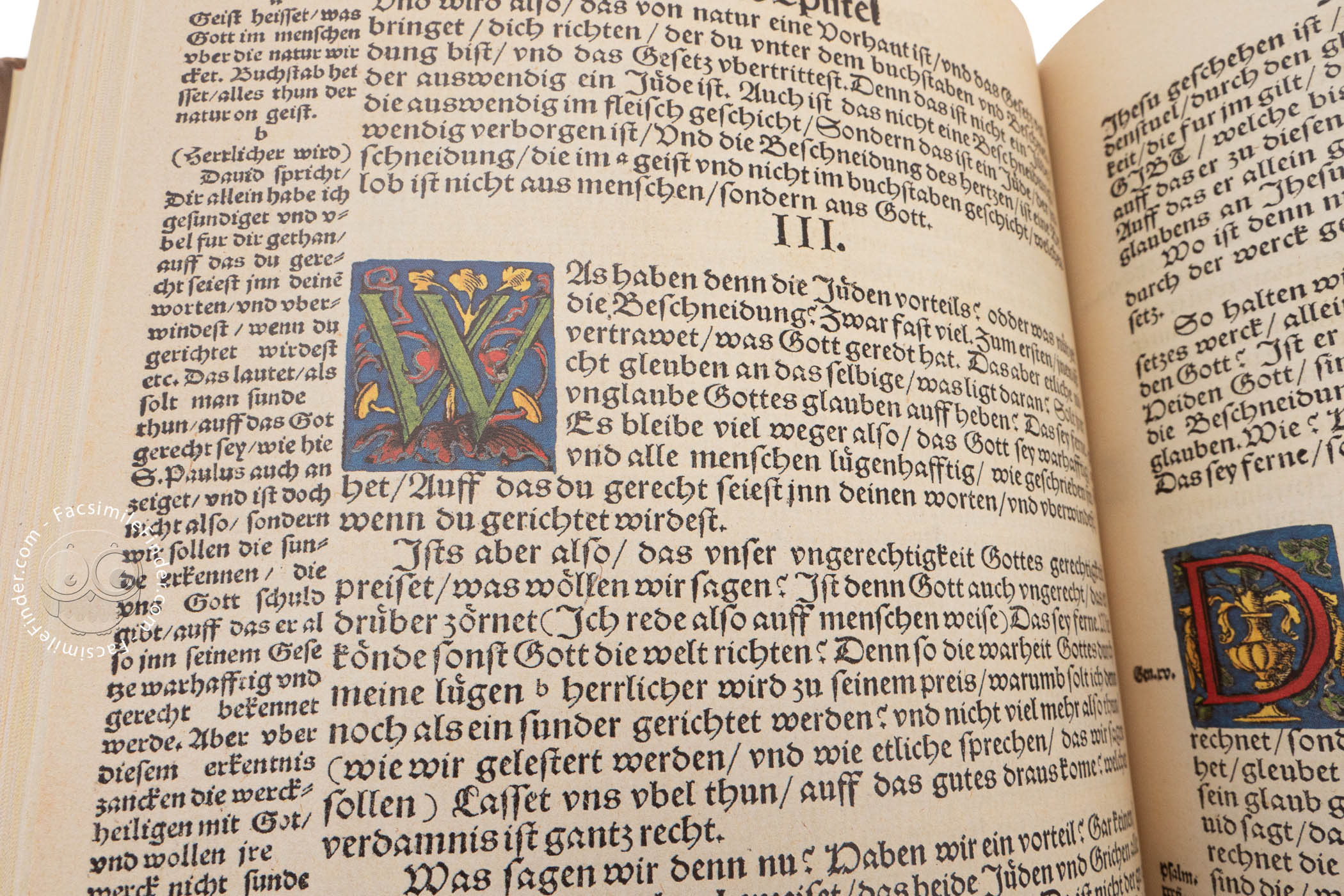
Luther’s German is shaped by an ear for living speech, seeking meaning sense-for-sense rather than word-for-word literalism; the effect is a cadence that reads like preached language set into type.
Legacy
As a physical book—paper, large format, insistently legible—the 1534 Bible testifies to how print culture could make a vernacular Scripture feel both intimate and epoch-making, a household object with continental consequences.
We have 2 facsimiles of the manuscript "Luther Bible of 1534":
- Alten Testaments der Ersten Vollständigen Kupferbibel von 1534 Biblia facsimile edition published by A. Foersters Verlag, 1934
- Biblia, Das Ist, Die Gantze Heilige Schrifft Deudsch facsimile edition published by Taschen, 2003