
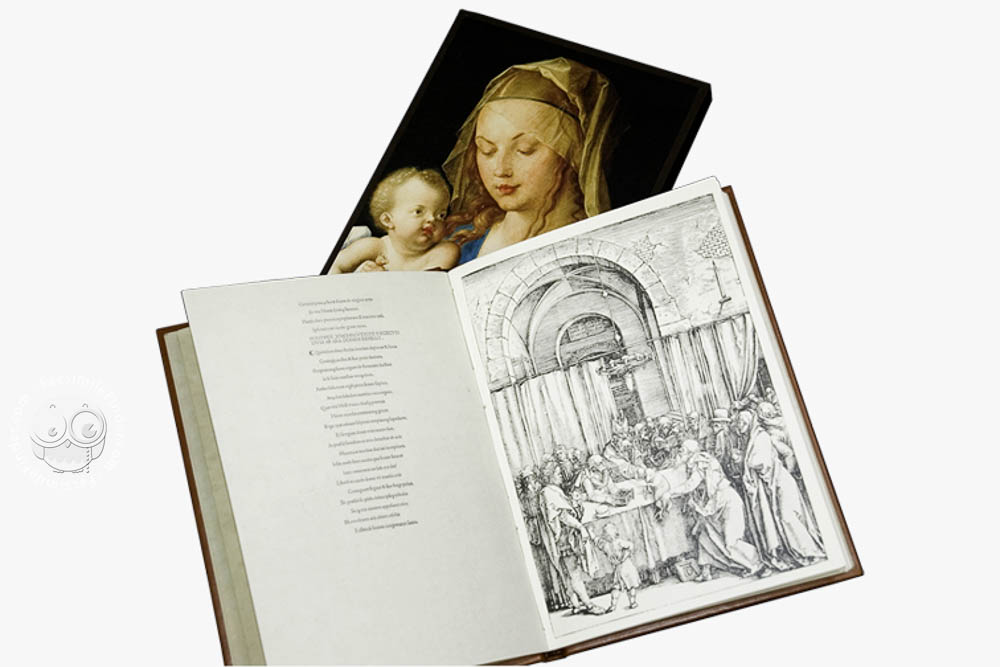
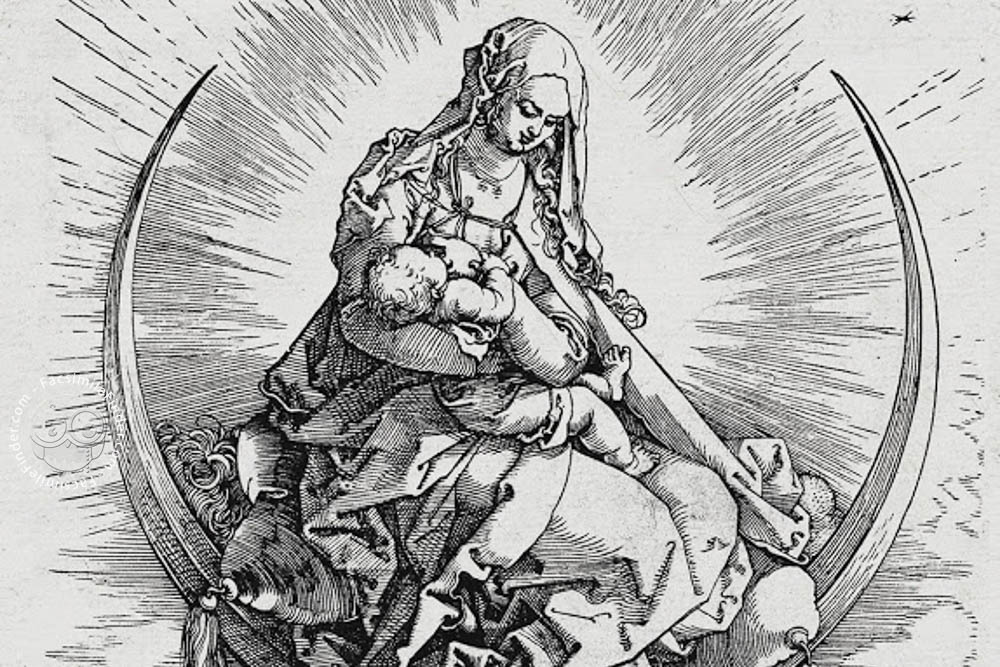
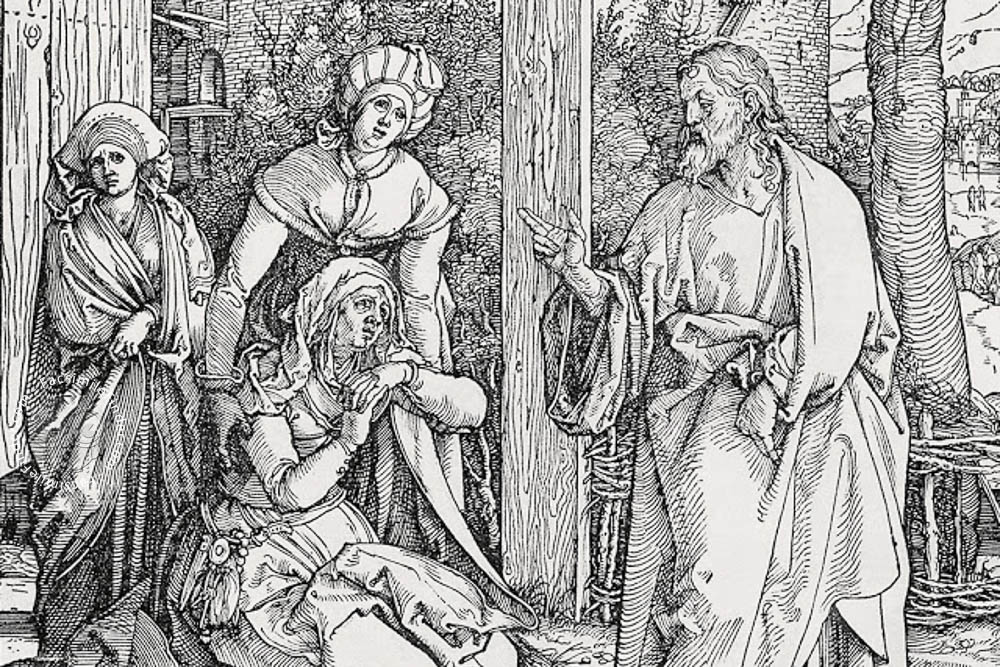
Life of the Virgin is a printed devotional image cycle, one of Albrecht Durer’s most celebrated enterprises in woodcut. Conceived as a sequence of Marian scenes and issued in book form in 1511, it gathers a title page and nineteen narrative illustrations, transforming the familiar story of the Virgin into a coherent visual book meant to be read page by page as well as contemplated image by image.
A Printed Marian Narrative
The series took shape over several years in the early sixteenth century rather than all at once. Individual blocks were designed across the first decade of the 1500s and only later brought together for publication, giving the cycle an unusual sense of growth and culmination. In the 1511 edition, the images were paired with Latin letterpress text on the versos, with the text compiled by Benedictus Chelidonius and the edition printed in Nuremberg by Hieronymus Höltzel. The result is a work that belongs fully to the history of the printed book: a collaboration of artist, humanist text, and press.
Scale, Style, and Invention
Unlike the monumental rhetoric of some of Dürer’s other graphic series, the Life of the Virgin works on a more intimate scale. Its appeal lies in the richness of its settings—domestic interiors, architecture, and landscape—and in the expressive variety of its figures, whose gestures carry the emotional charge of the narrative. Dürer gives sacred history a strikingly observed physical world, so that devotion is joined to close attention, narrative pacing, and visual intelligence.
The Madrid Set
The surviving set associated with the Biblioteca Nacional de España is especially revealing because it is described as a complete series of twenty prints assembled from impressions of different states and editions: some before 1511, some from the 1511 text edition, and others from later sixteenth-century printings. That layered material history reminds us that this is not a unique handwritten codex, but a work of reproducible art whose life continued through circulation, rebinding, and collecting. It stands, therefore, as a landmark of early print culture: a Marian book in which the serial woodcut became a vehicle for memory, meditation, and artistic authorship.
We have 1 facsimile edition of the manuscript "Life of the Virgin": La Vida de la Virgen de Alberto Durero facsimile edition, published by CM Editores, 2015
Request Info / Price