
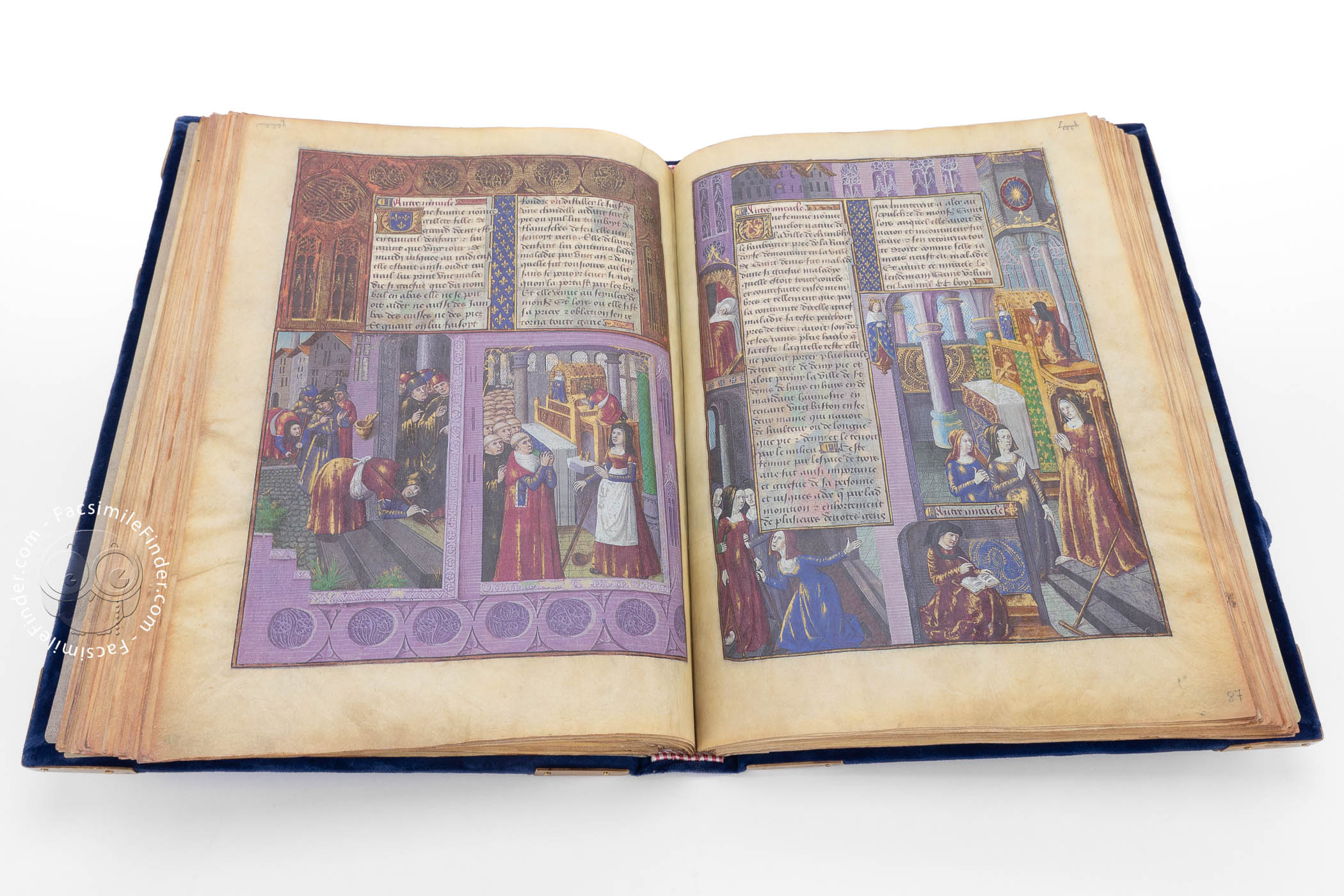
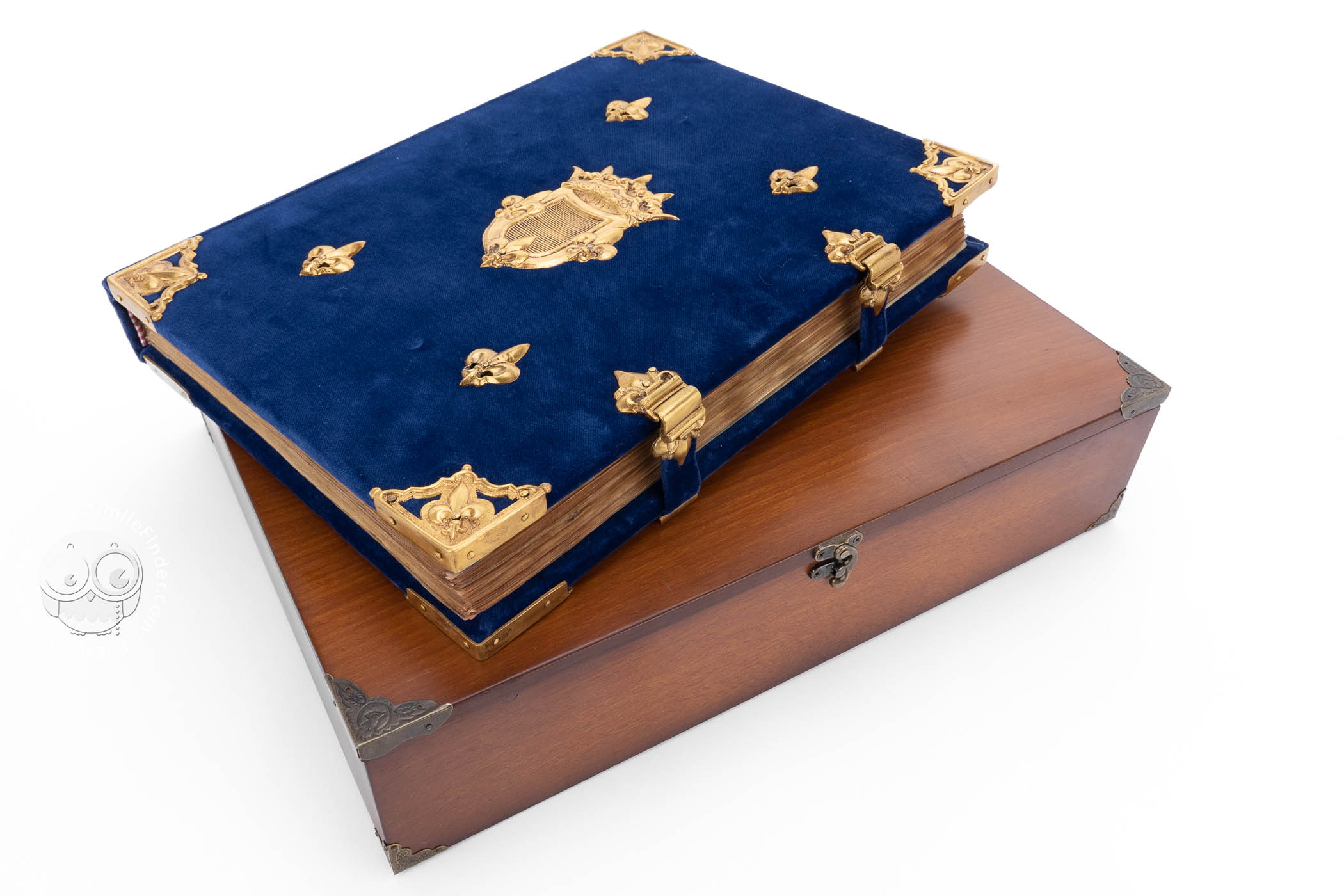
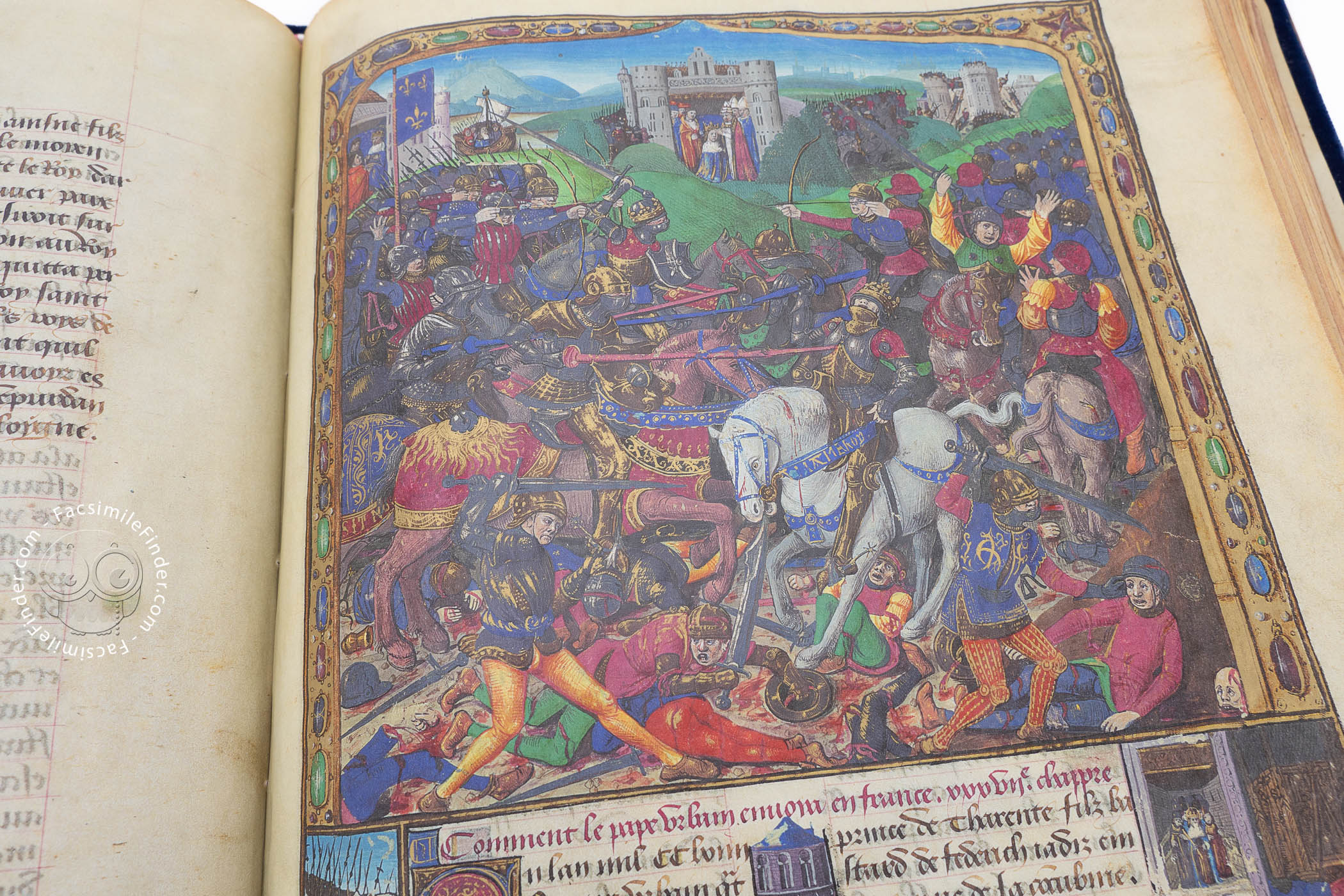
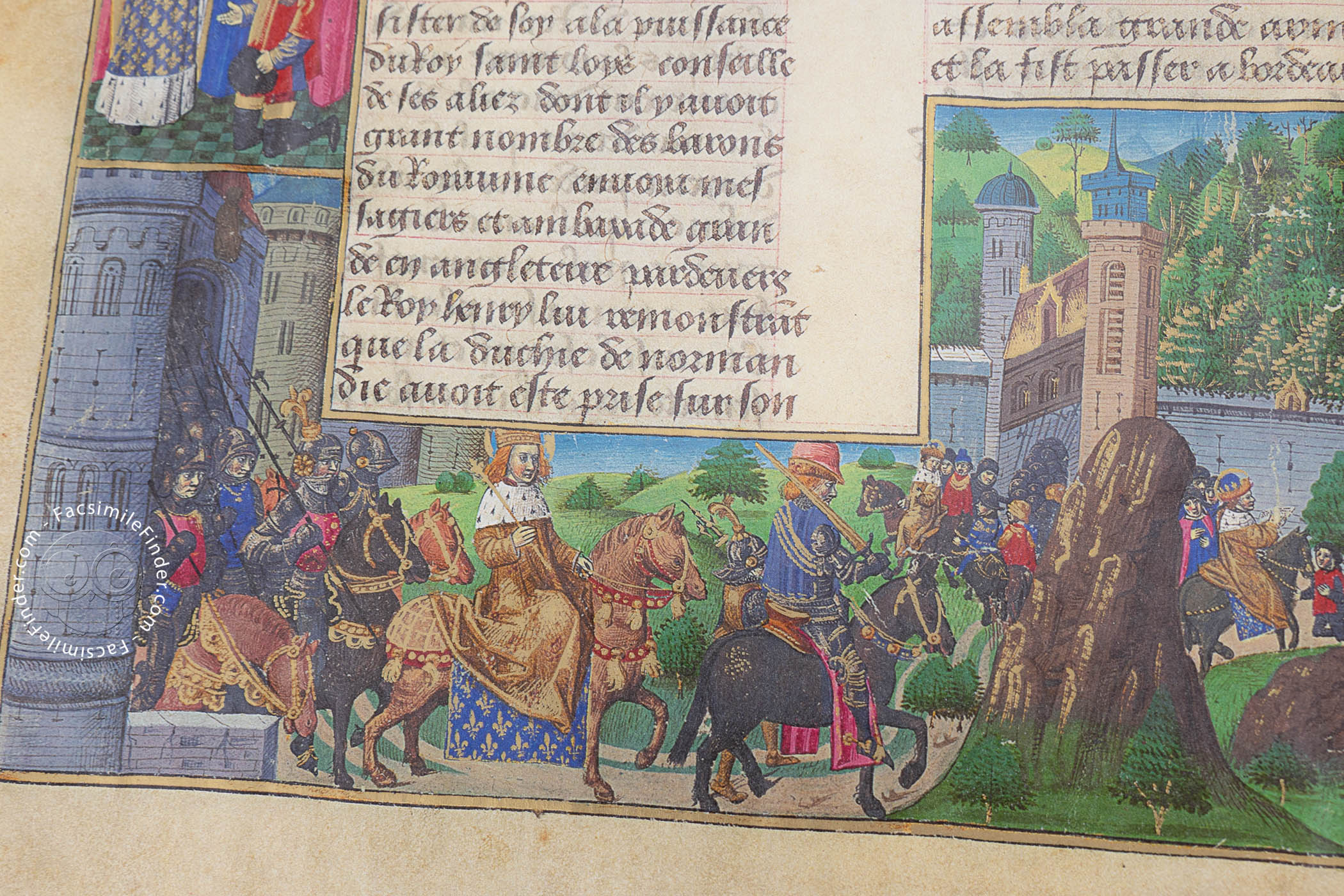

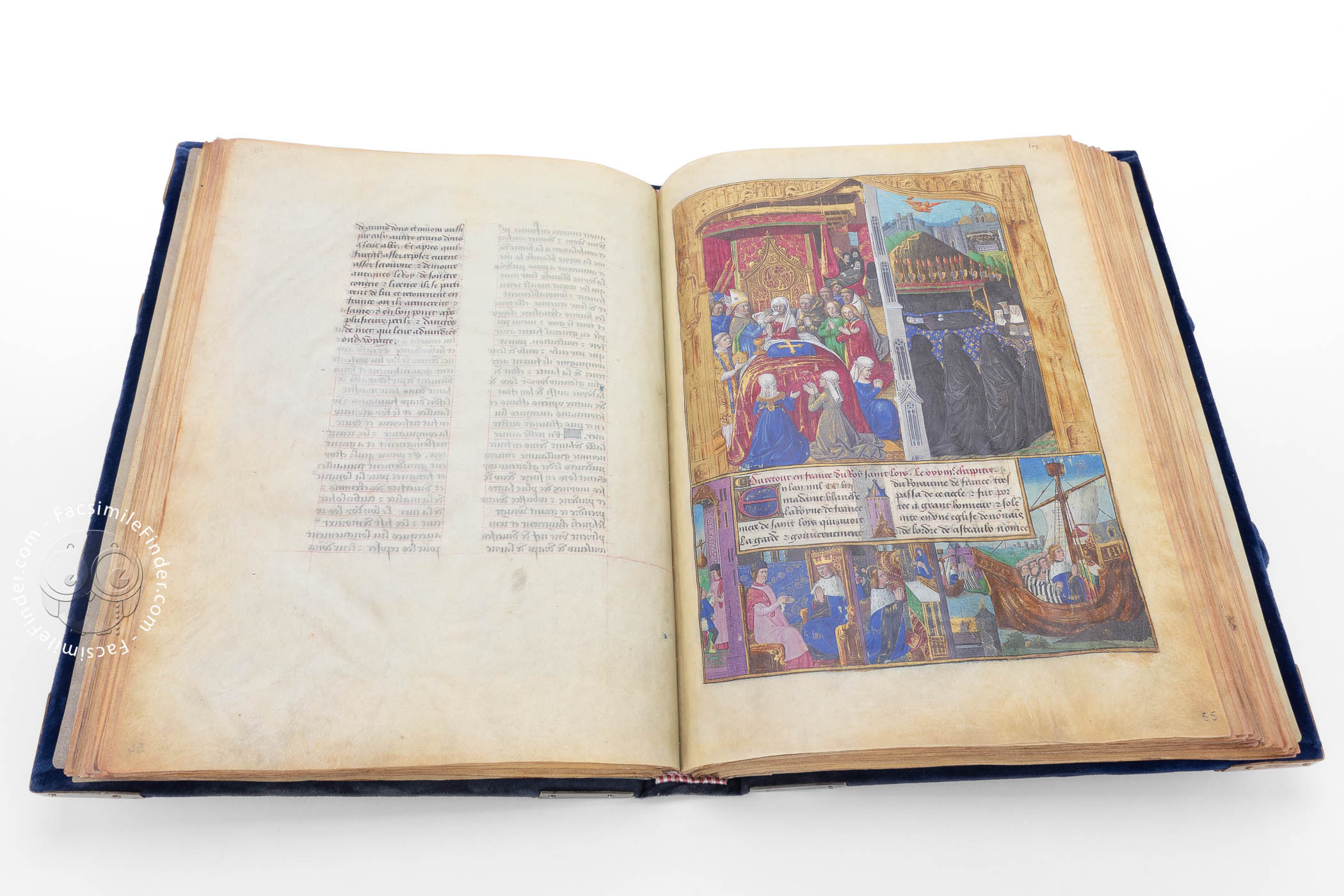

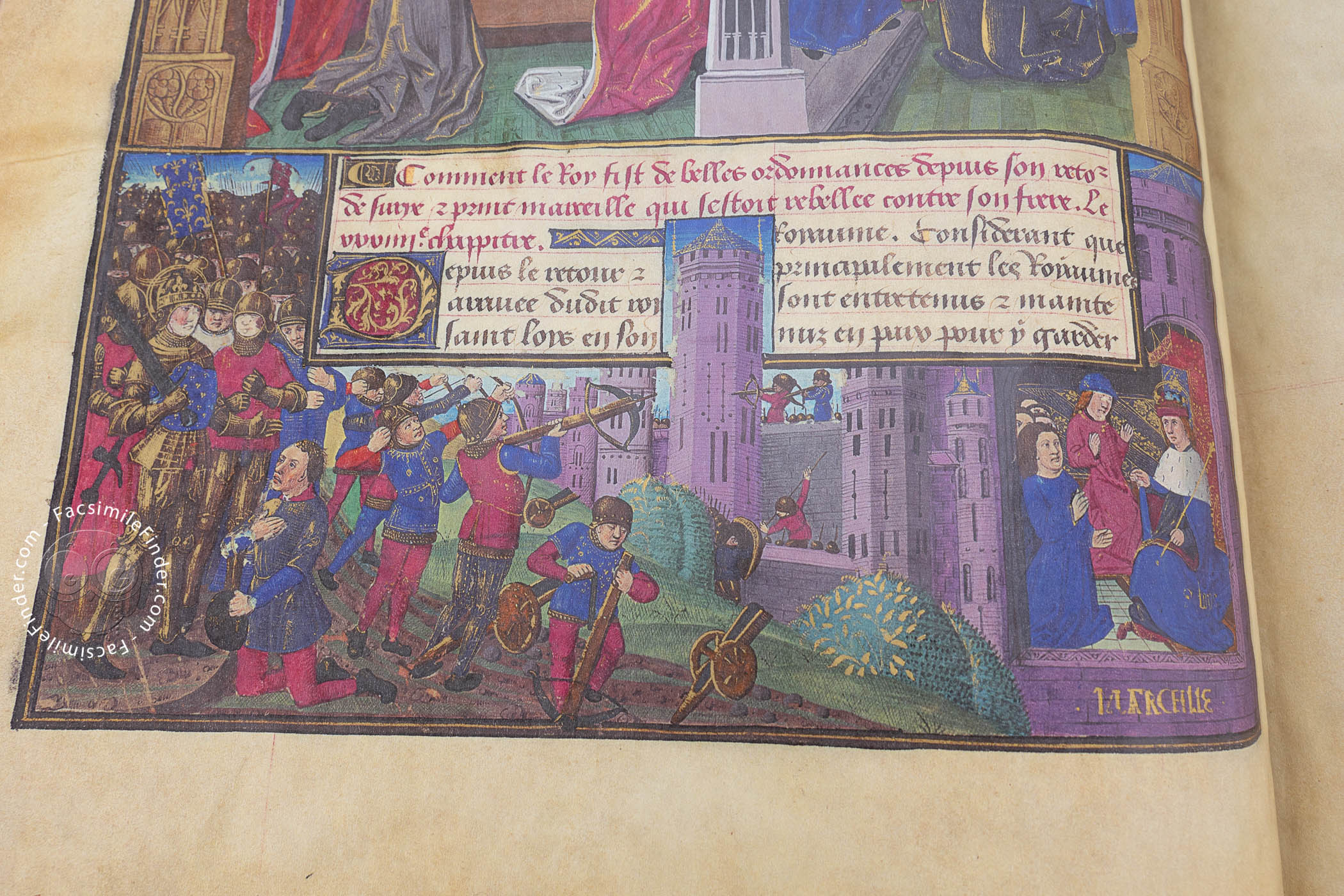
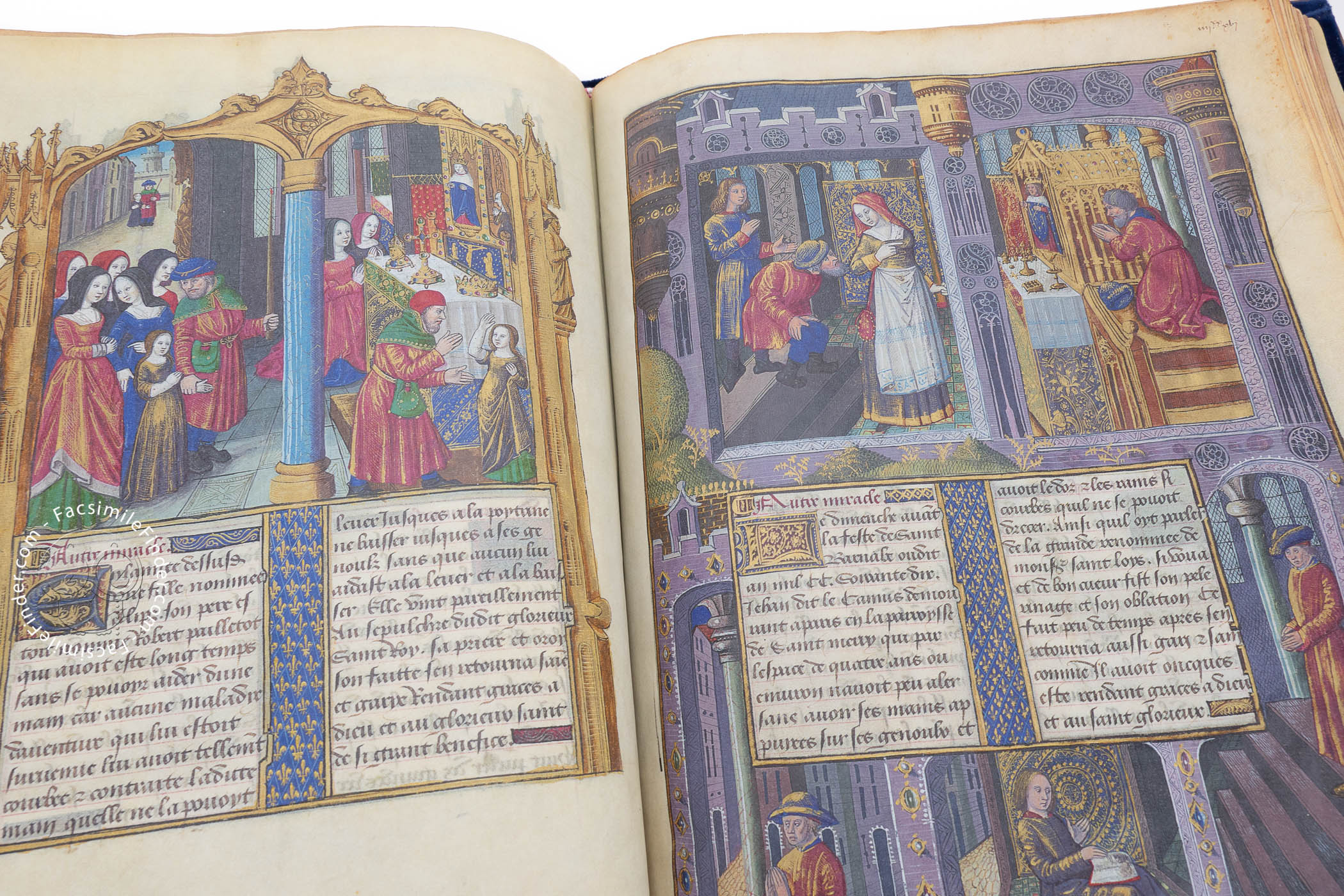
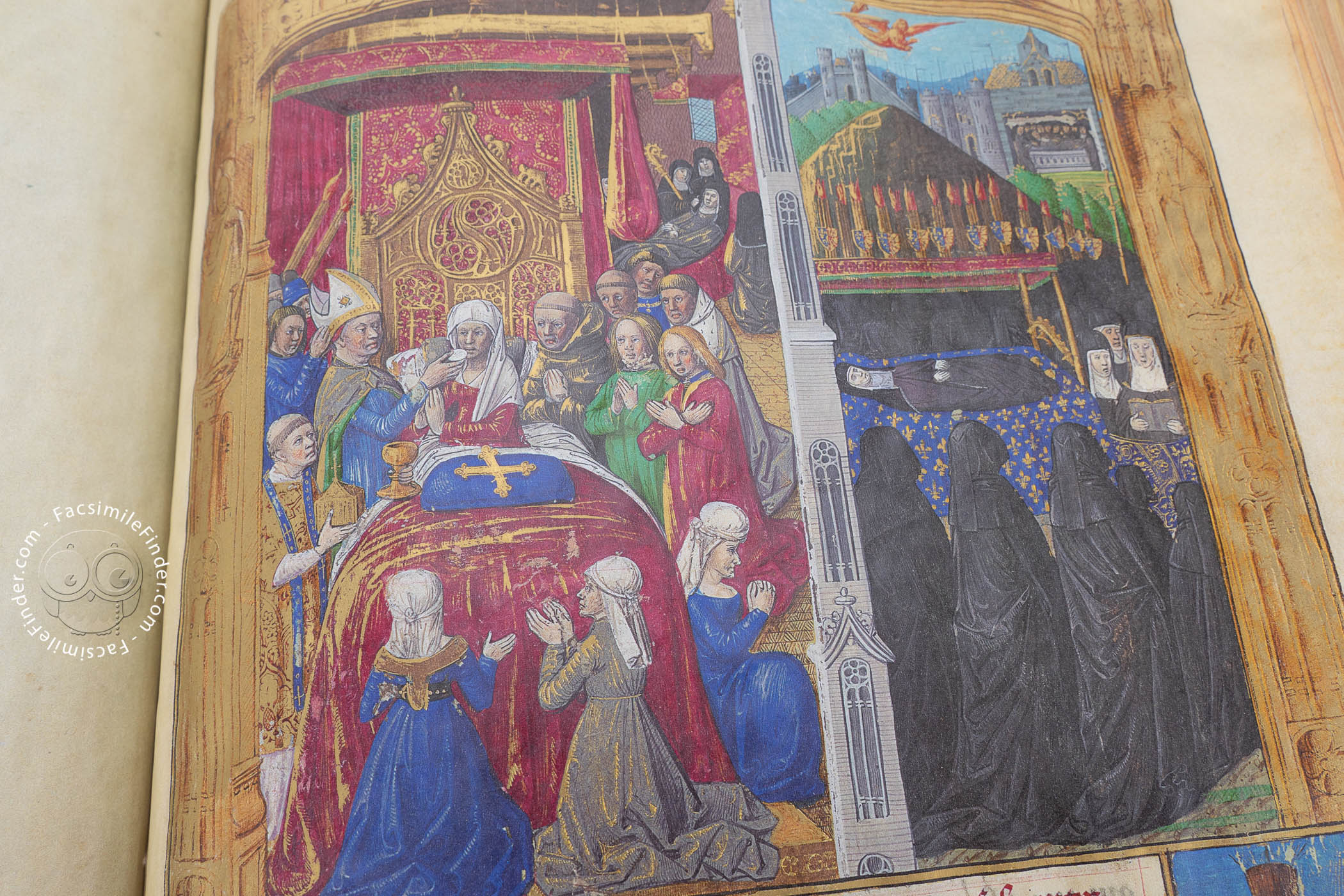
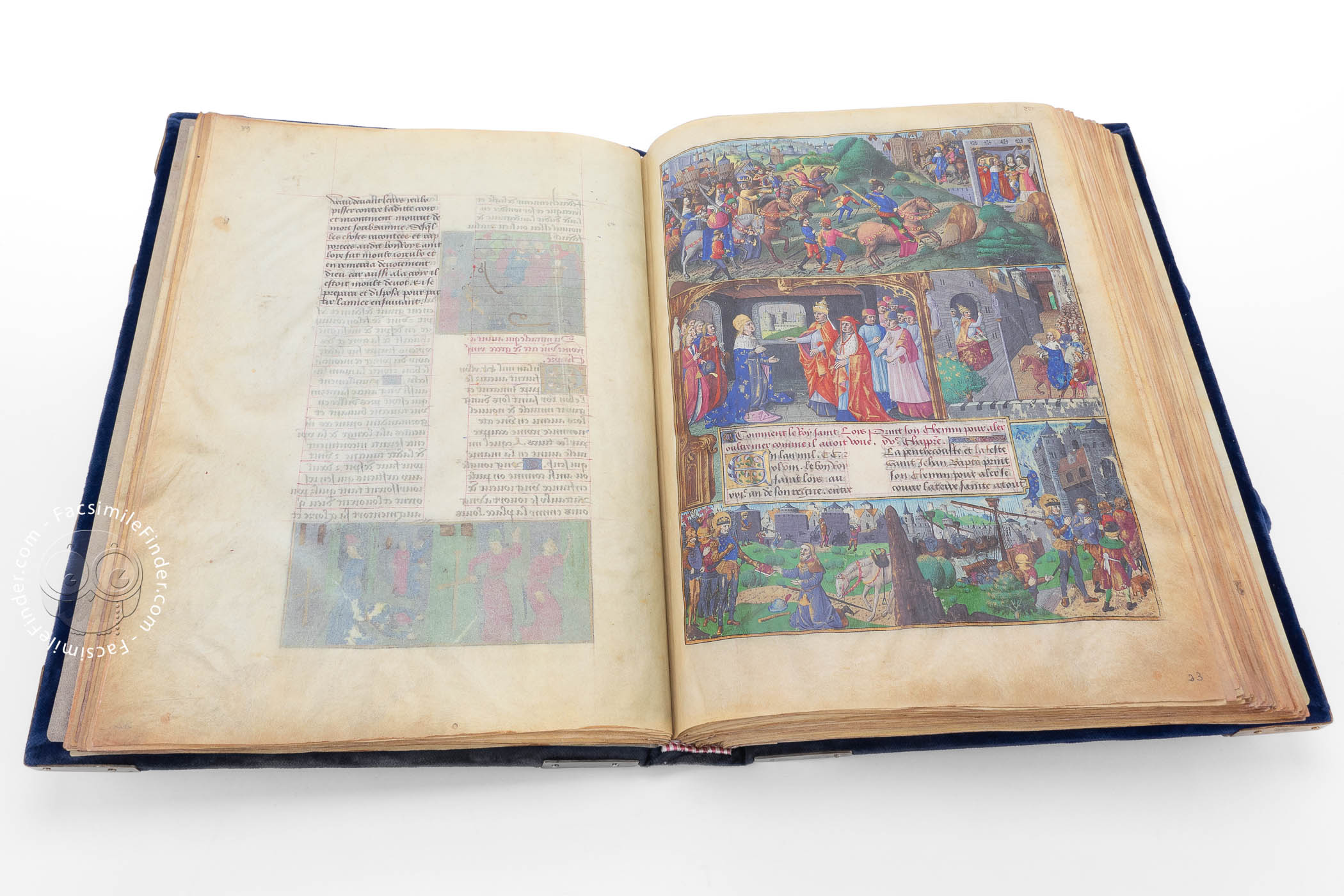
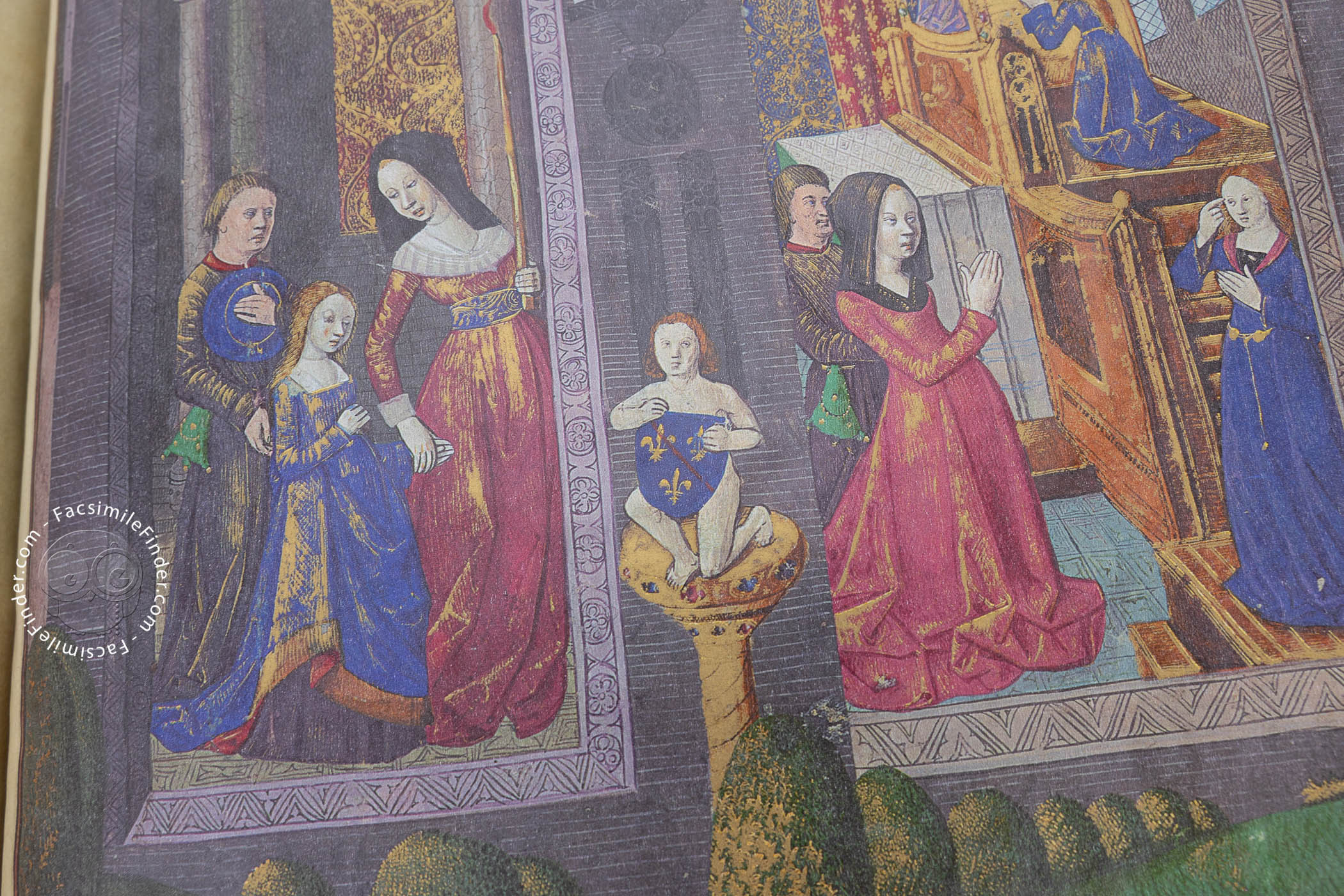
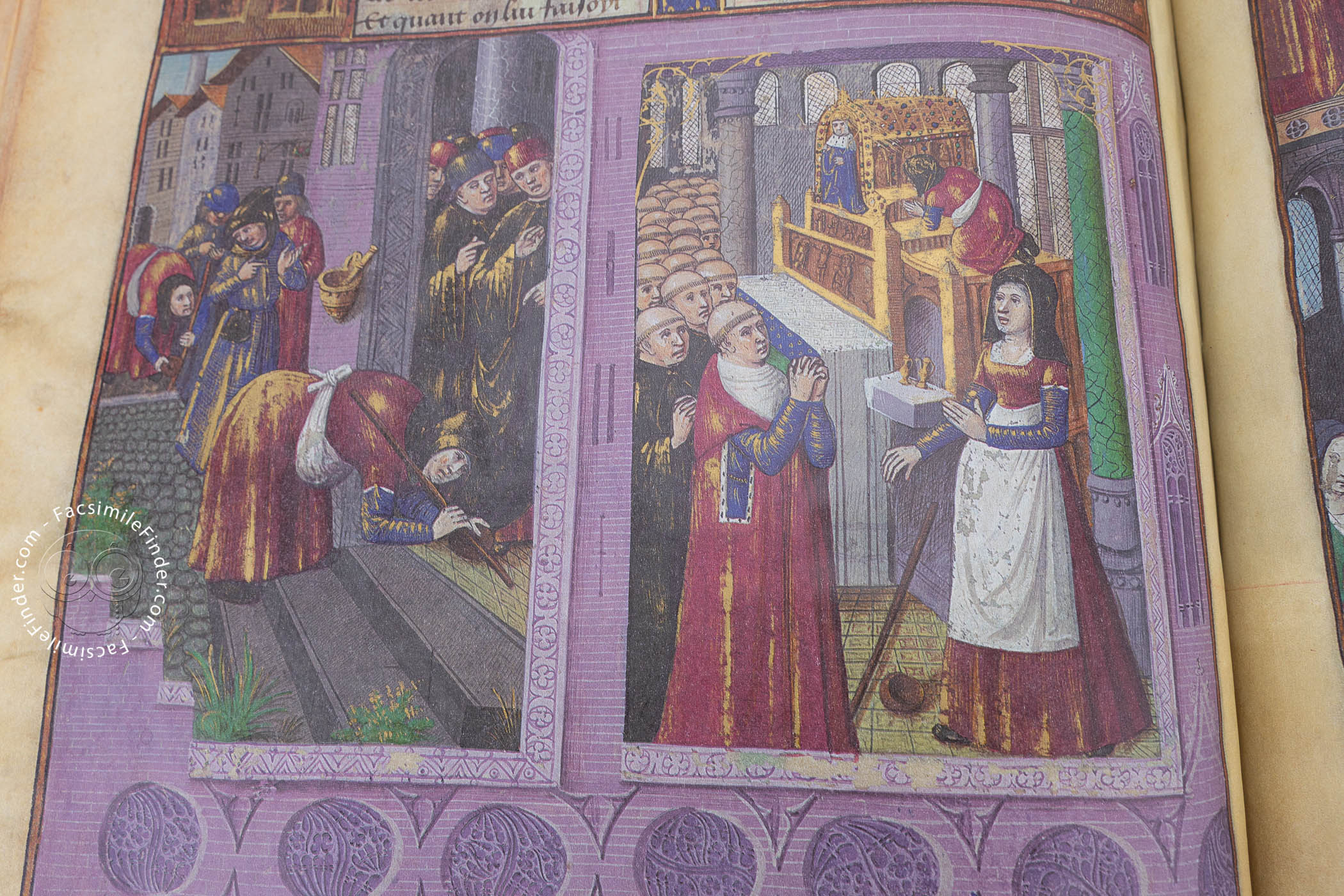
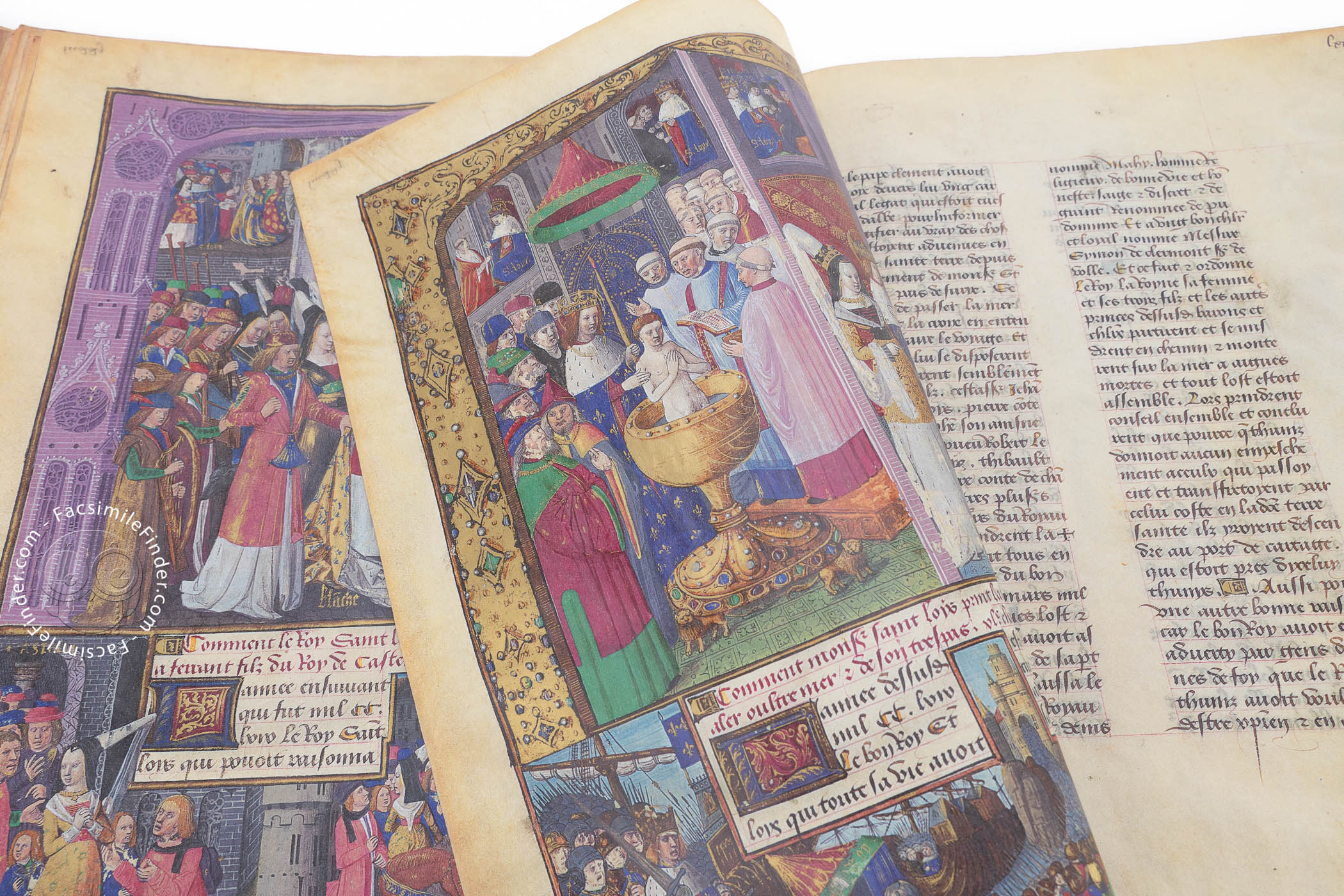
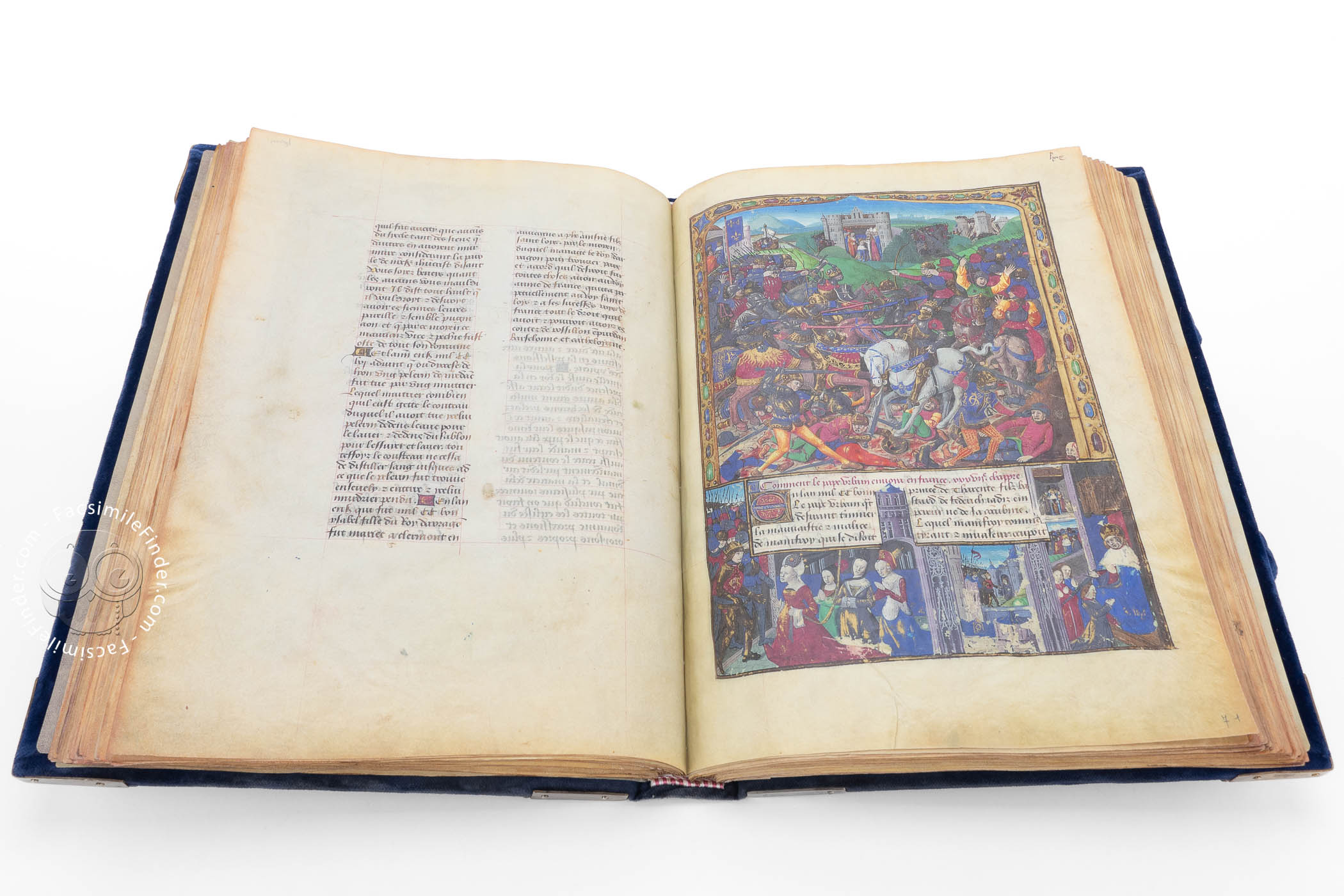


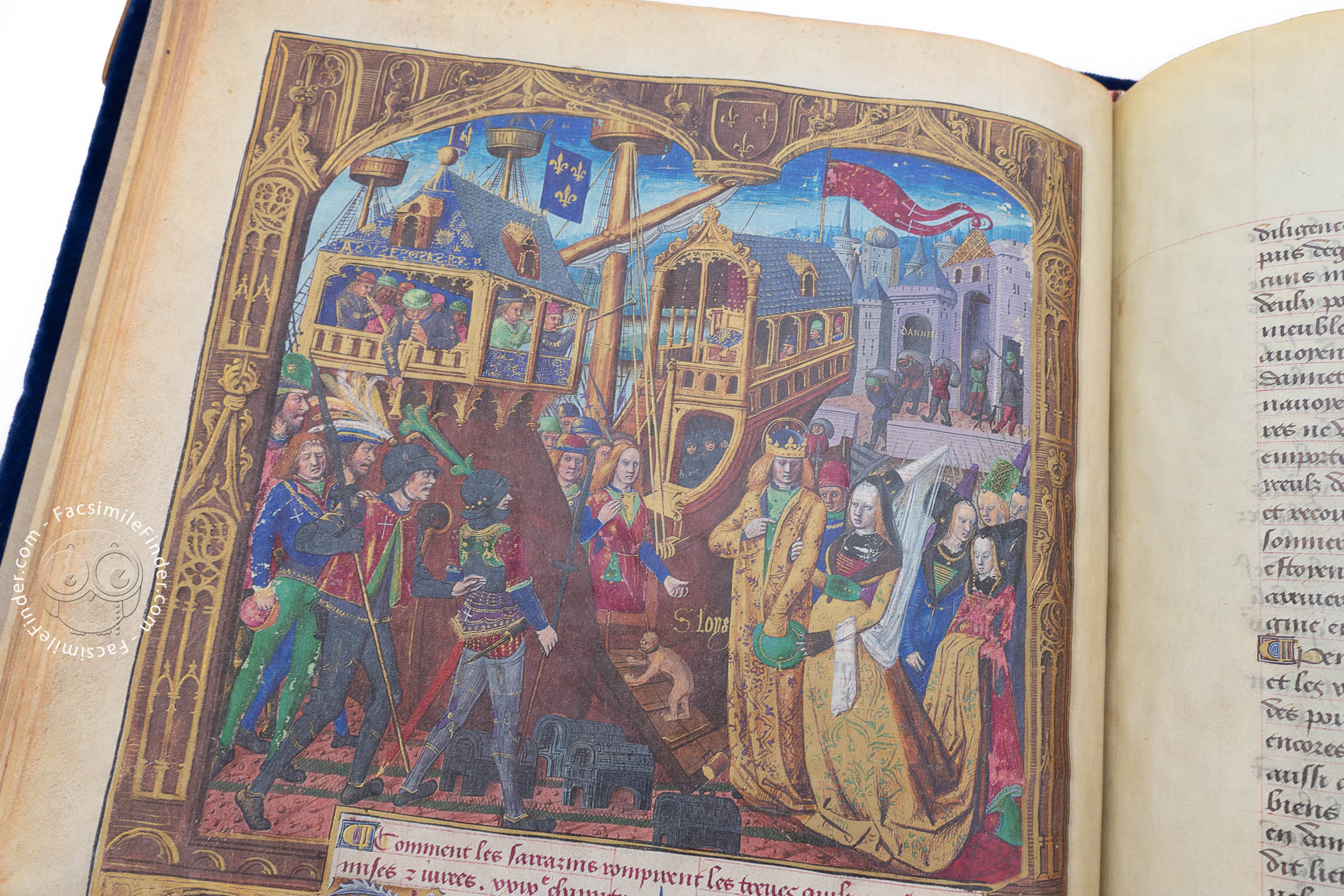
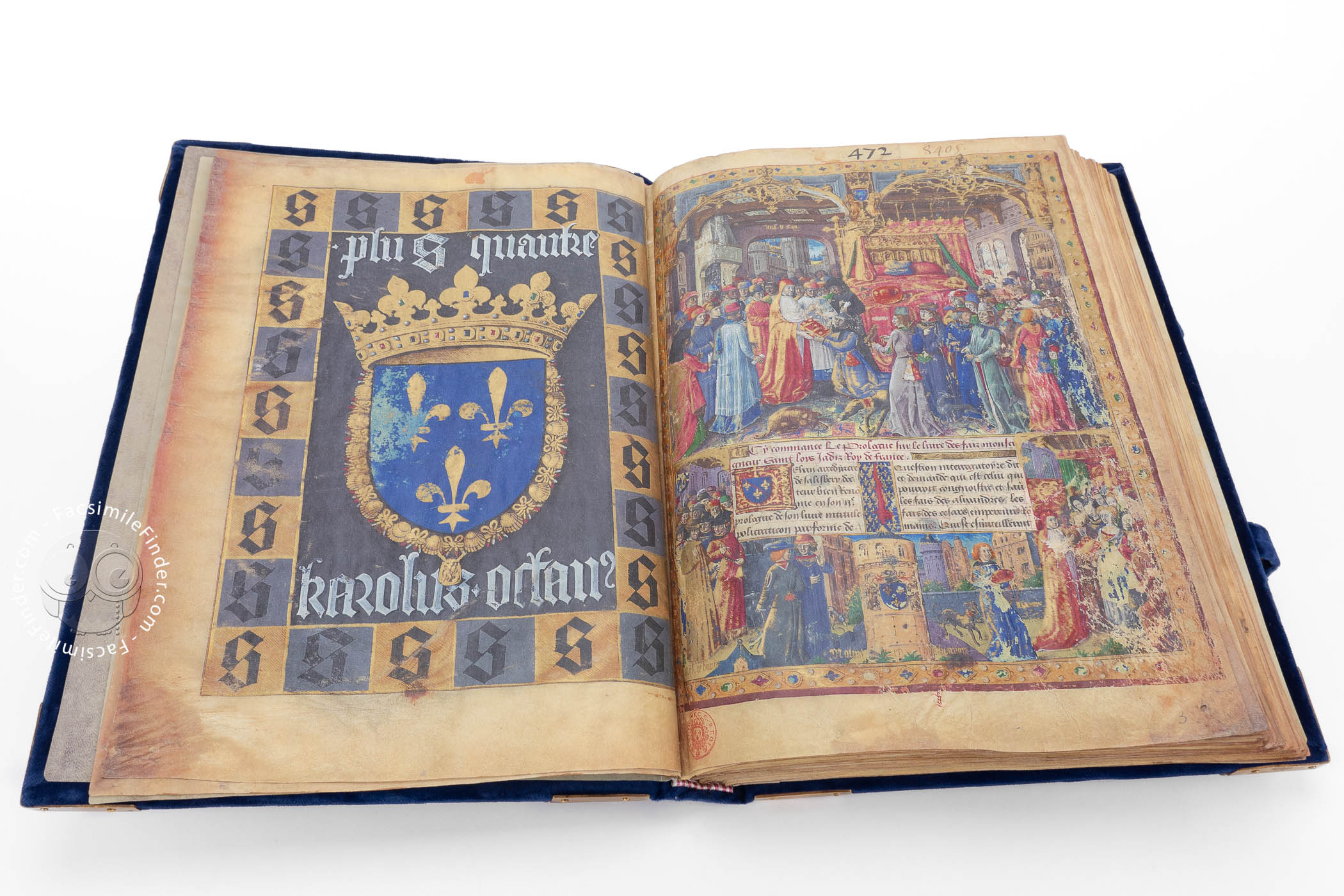
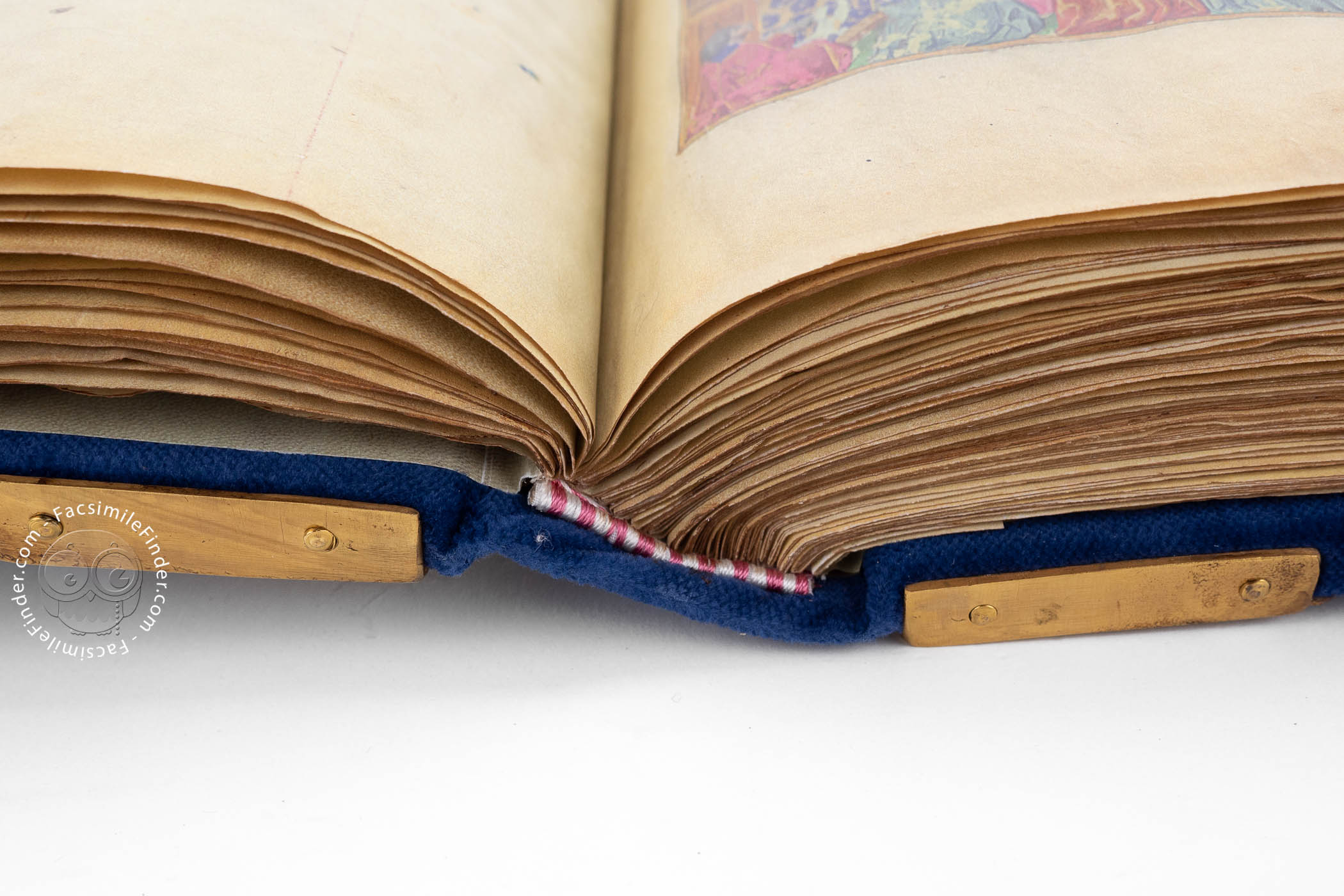
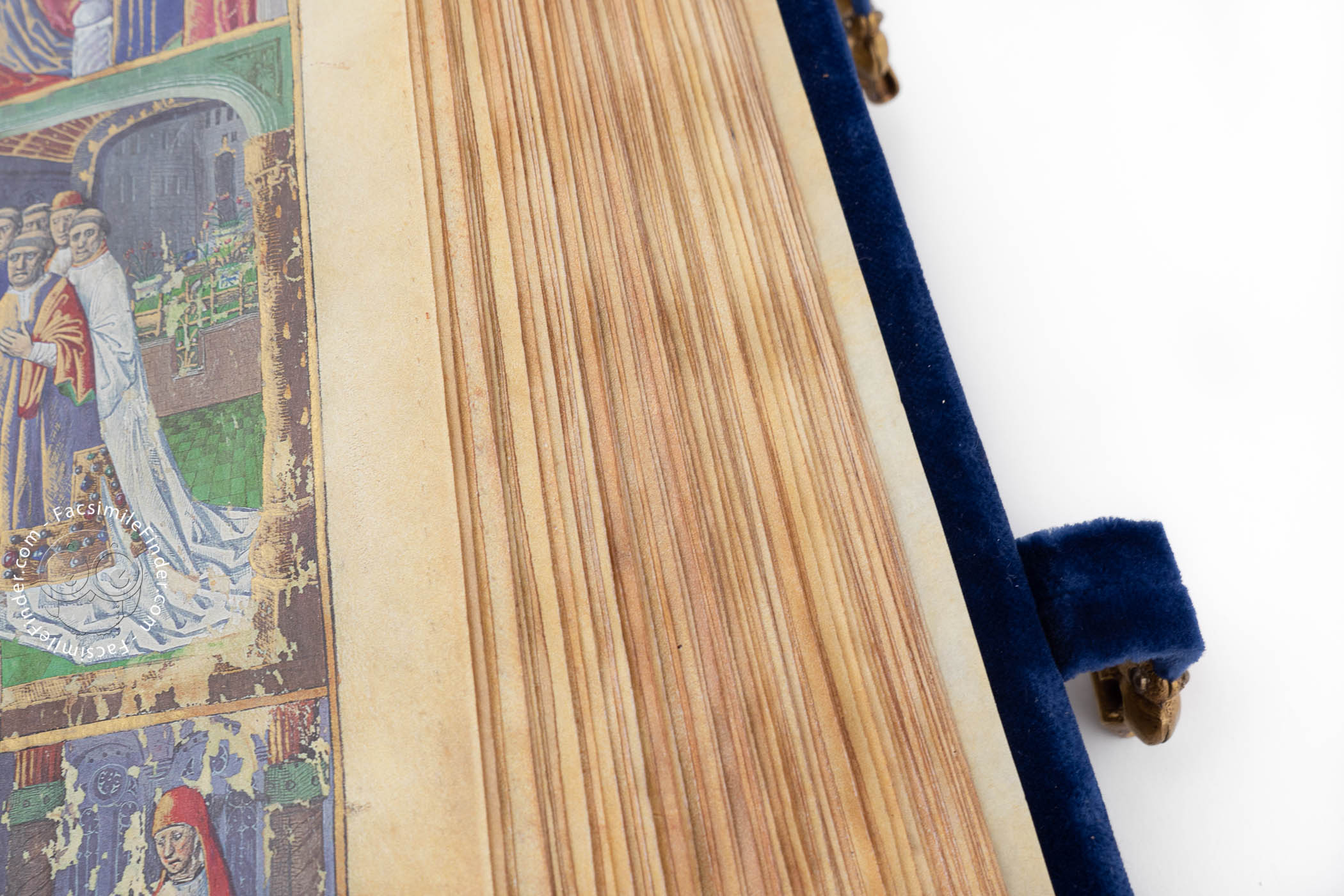

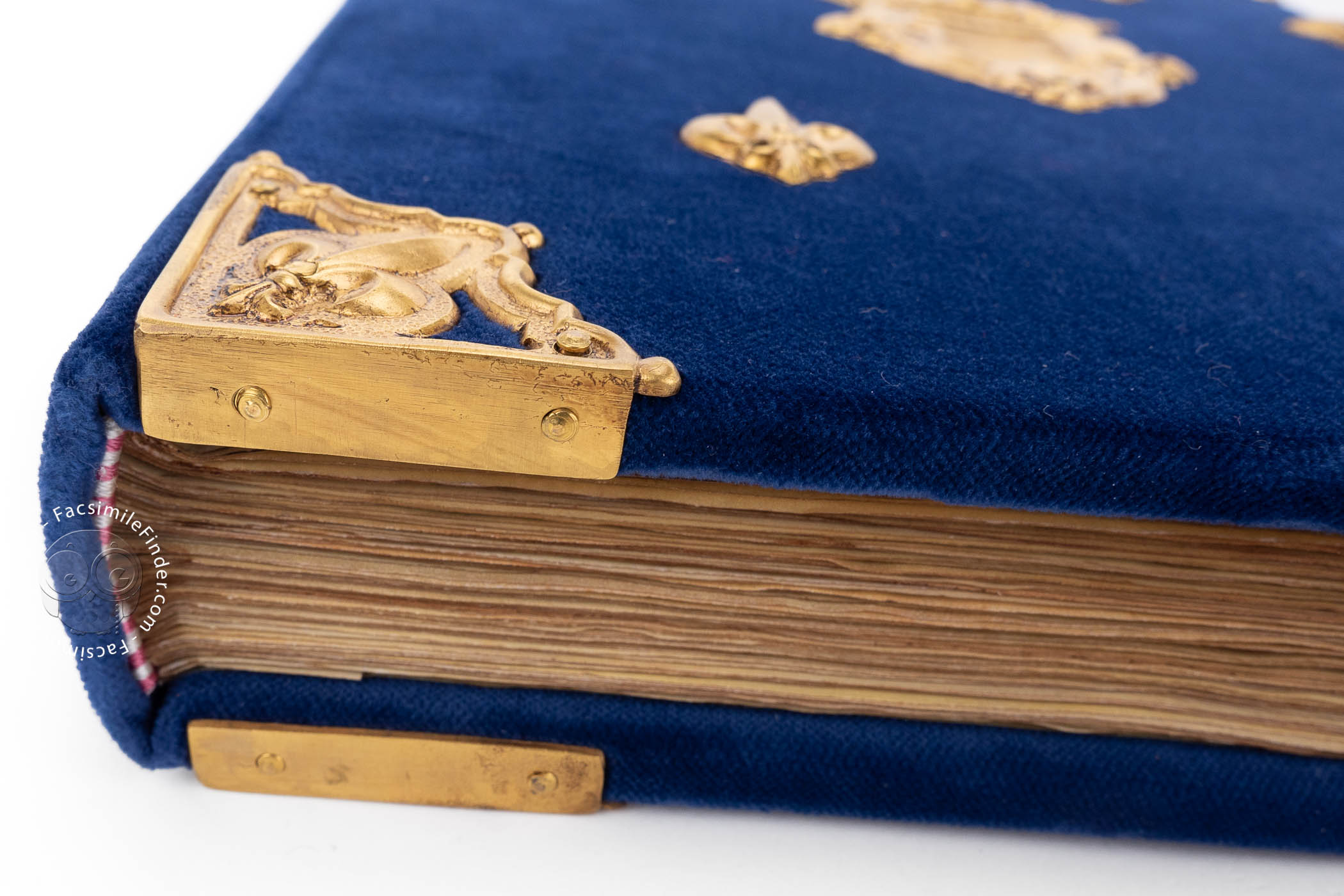

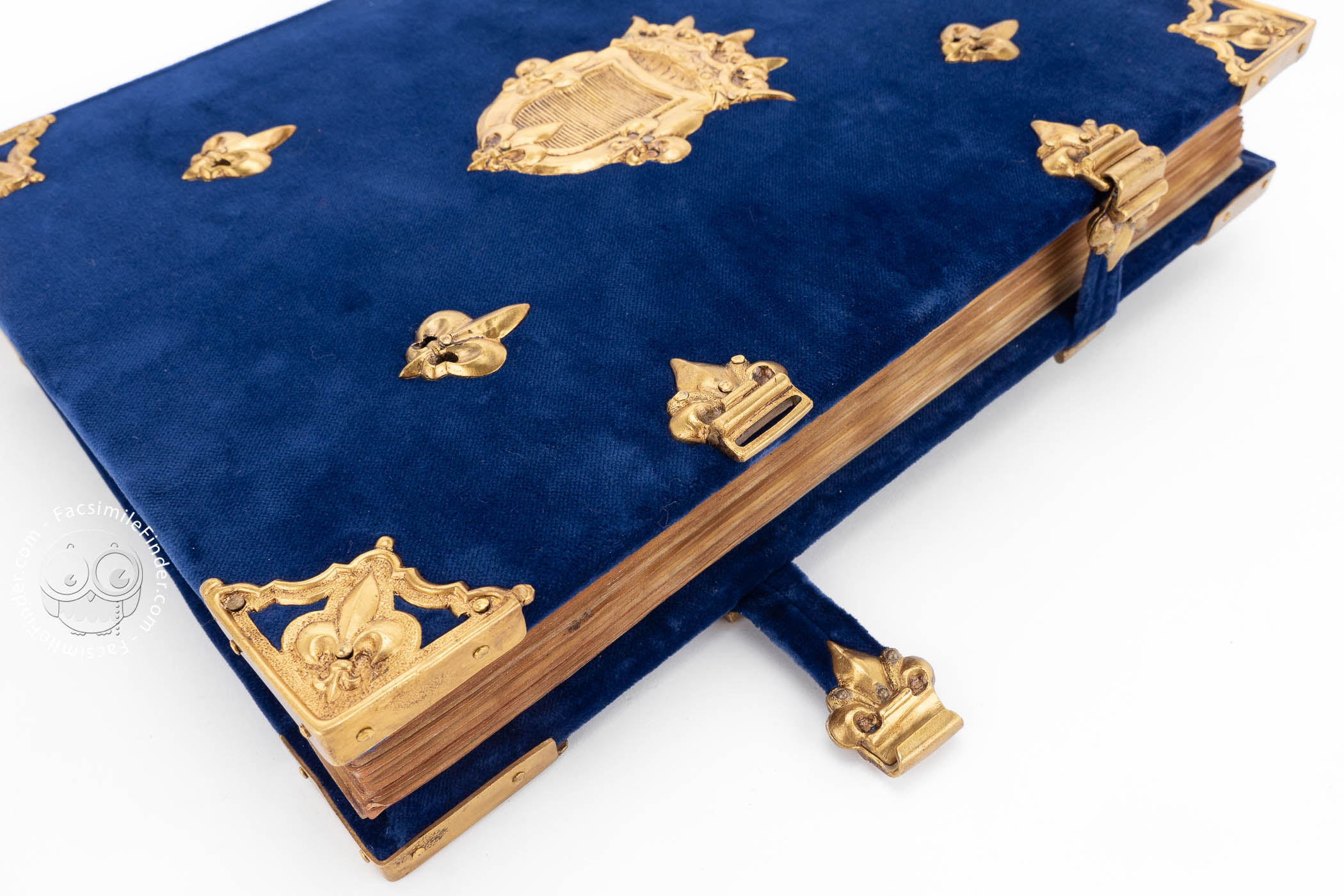
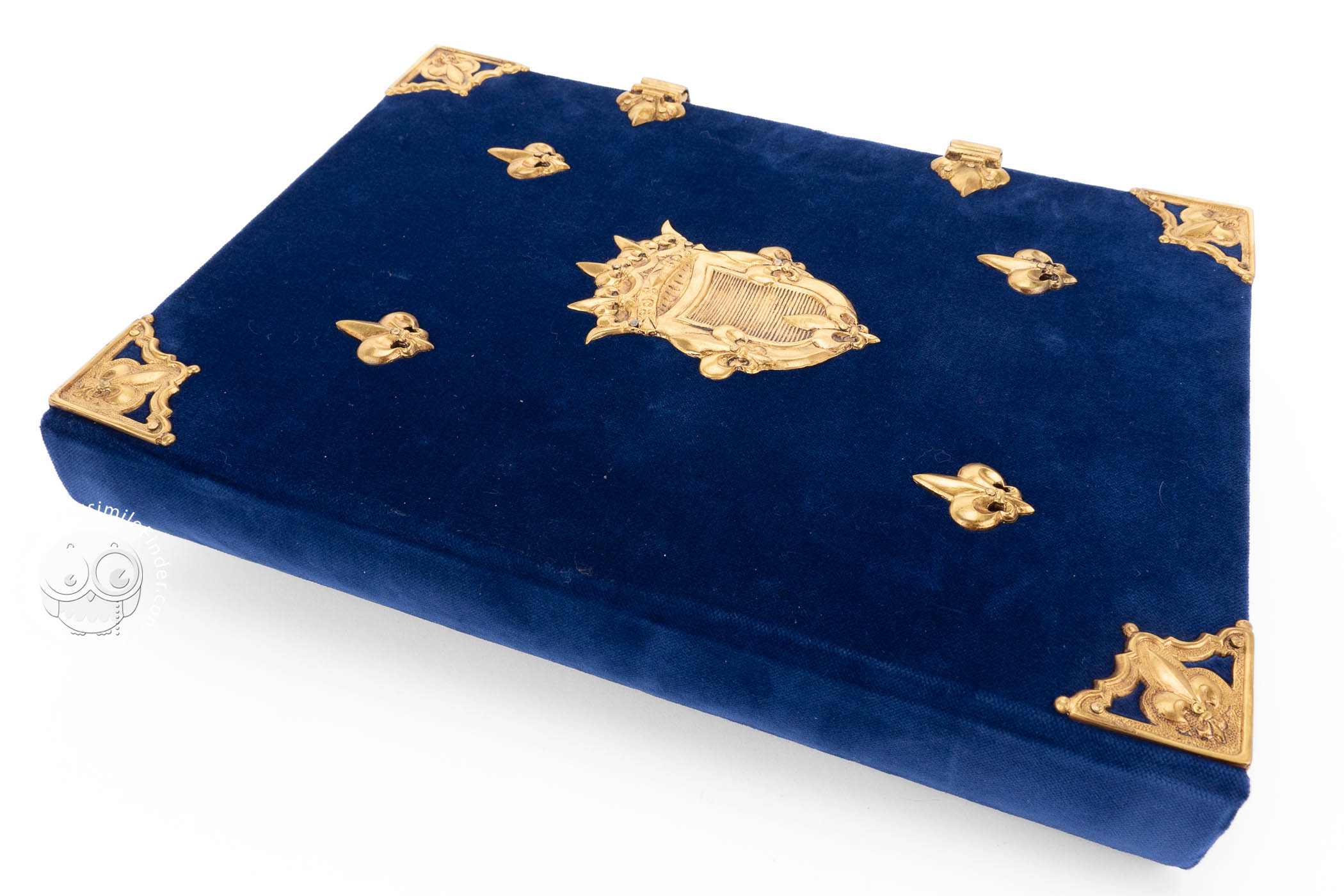

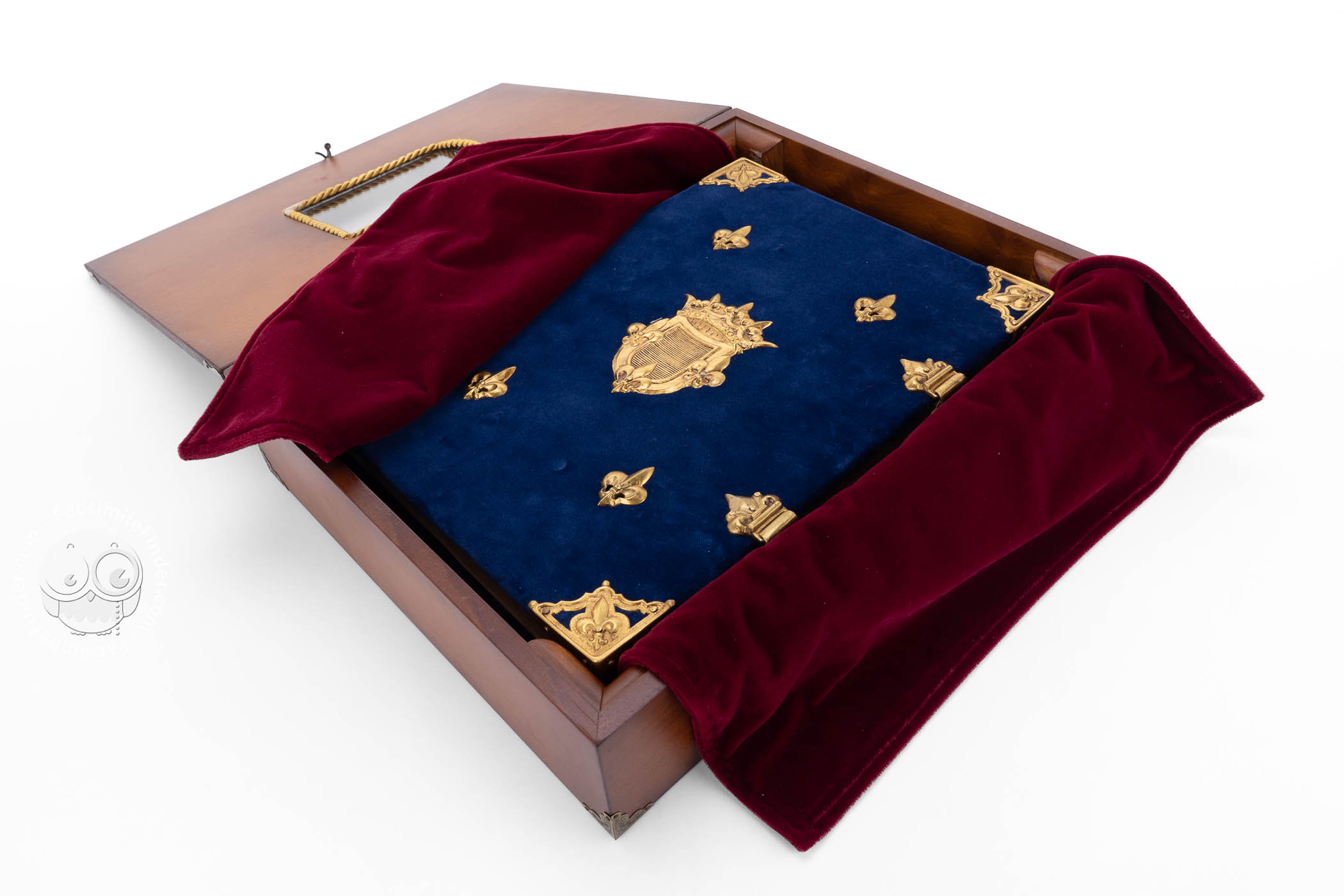

The Life and Miracles of Saint Louis is a manuscript biography of King Louis IX of France. Illuminated in Paris ca. 1482 by the Master of Cardinal Bourbon and associates, the book boasts 122 miniatures: forty-four portraying episodes in Saint Louis's life and seventy-eight depicting miracles affected at his tomb. It was made at the behest of Cardinal Charles de Bourbon for presentation to a duchess of Bourbon, perhaps Jeanne de France, and was subsequently owned by Charles VIII, King of France, who had Jean Bourdichon add a heraldic frontispiece.
Forty-four scenes trace the king’s ascetic discipline, political prudence, and crusading fervor; seventy-eight more recount the miracles at his tomb, where devotion and dynastic memory intertwined.
A Courtly Manuscript of Northern Renaissance Refinement
Executed by the Master of Cardinal Bourbon with contributions from Jean Bourdichon, the book exemplifies the Northern Renaissance at the French court: luminous palettes, finely modelled figures, and an eye for the ceremonial dignity of kingship. The imagery elevates Louis as both ideal monarch and Christian exemplar, uniting justice, compassion, and princely magnificence.
A Gift of Dynastic Significance
Likely intended for a duchess of Bourbon, the volume also entered the library of Charles VIII, who added a heraldic frontispiece to affirm its value as a political and devotional artefact. The manuscript stands today as a masterwork in which history, hagiography, and royal ideology converge, offering one of the most compelling pictorial visions of medieval sanctity and kingship.
Insights from the Commentary
A Vision of Kingship Rooted in Justice
Louis IX emerges as a ruler whose authority was inseparable from a profound commitment to social equity. His reign, shaped in dialogue with the political intelligence of Blanche of Castile, sought to curb aristocratic abuses, stabilize the economy, and protect the vulnerable. Hospitals, charitable foundations, and mechanisms of public relief were established across the kingdom, supervised at times by the king himself. These initiatives created a climate of material stability and administrative coherence, unusual for the thirteenth century and long remembered as an age of balance and prosperity.
A Cult Sustained by Memory and Devotion
The miracles narrated in the manuscript mirror the fervor that developed at Louis’s tomb, where acts of healing and intercession multiplied. Such stories affirmed the image of a sovereign whose moral authority continued beyond death, binding royal identity to sanctity and shaping a model of Christian governance that endured across dynasties.
A European Arbiter
Louis’s reputation extended far beyond France. His steady diplomacy, resistance to corruption, and pursuit of peace among Christian princes earned the respect of allies and adversaries alike. Even within the courts of the Islamic world, his integrity elicited admiration during the Crusades, where accounts describe him as a figure of rare fairness. The manuscript translates this legacy into a visual meditation on ethical kingship, presented as both historical memory and political ideal.
We have 1 facsimile edition of the manuscript "Life and Miracles of Saint Louis": Vida y Milagros de San Luis facsimile edition, published by Siloé, arte y bibliofilia, 2016
Request Info / Price