
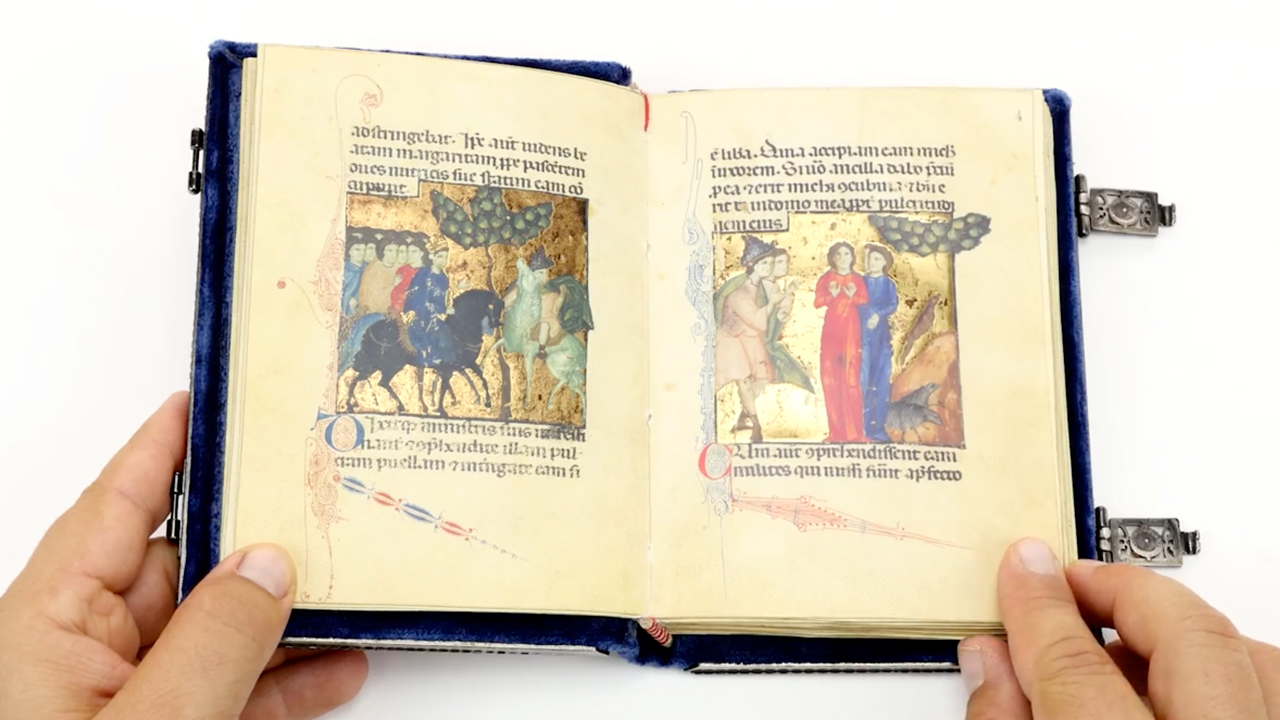
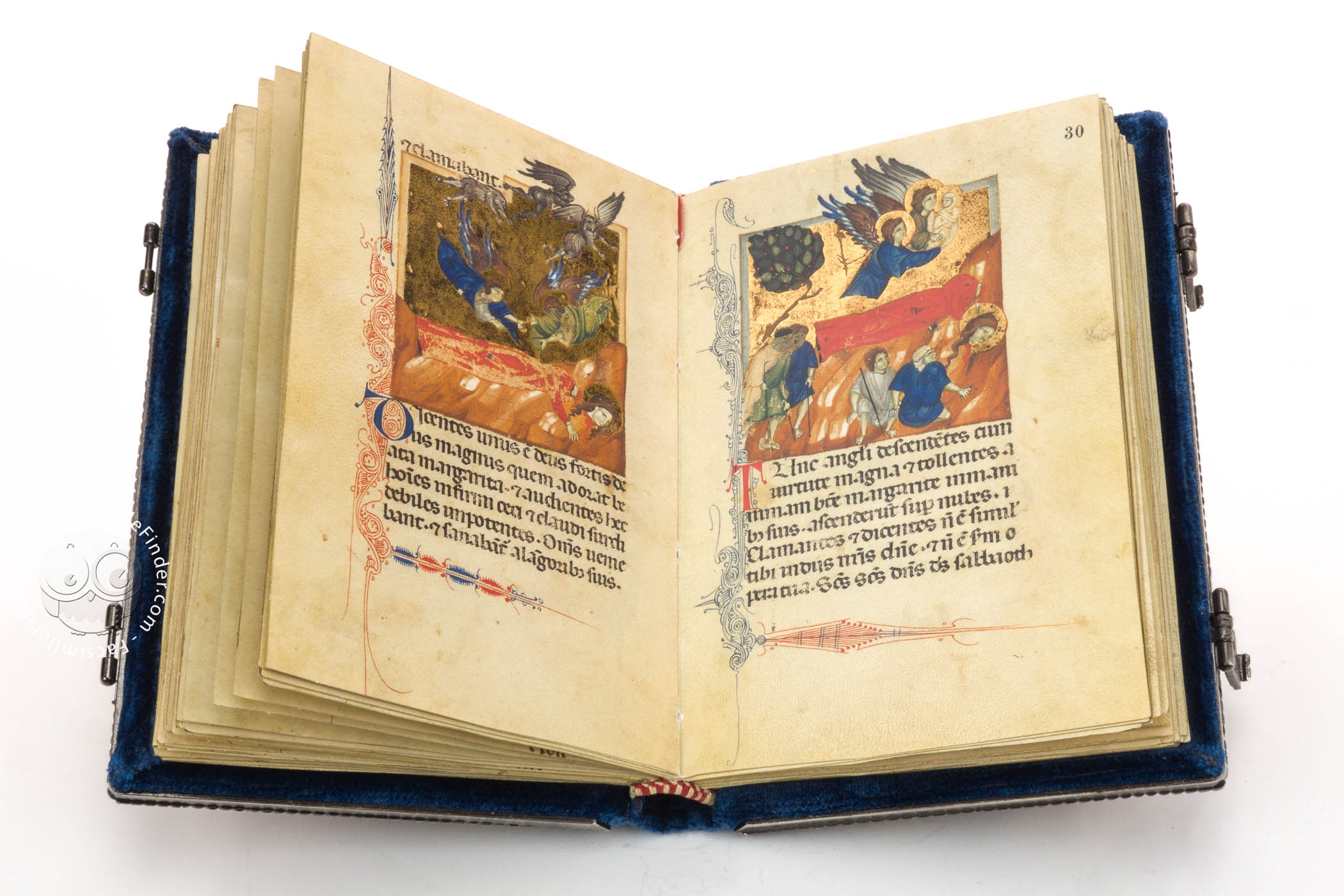



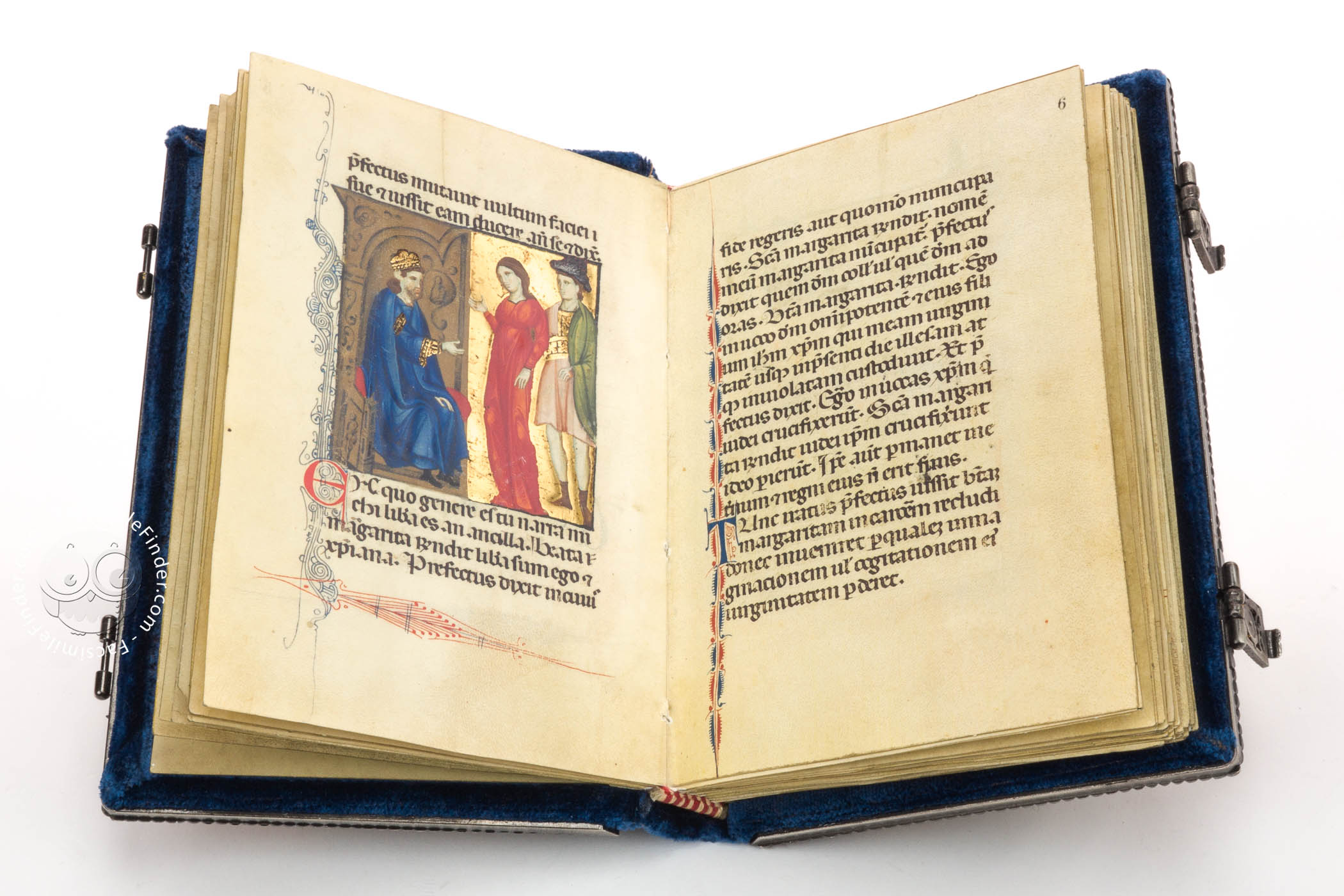
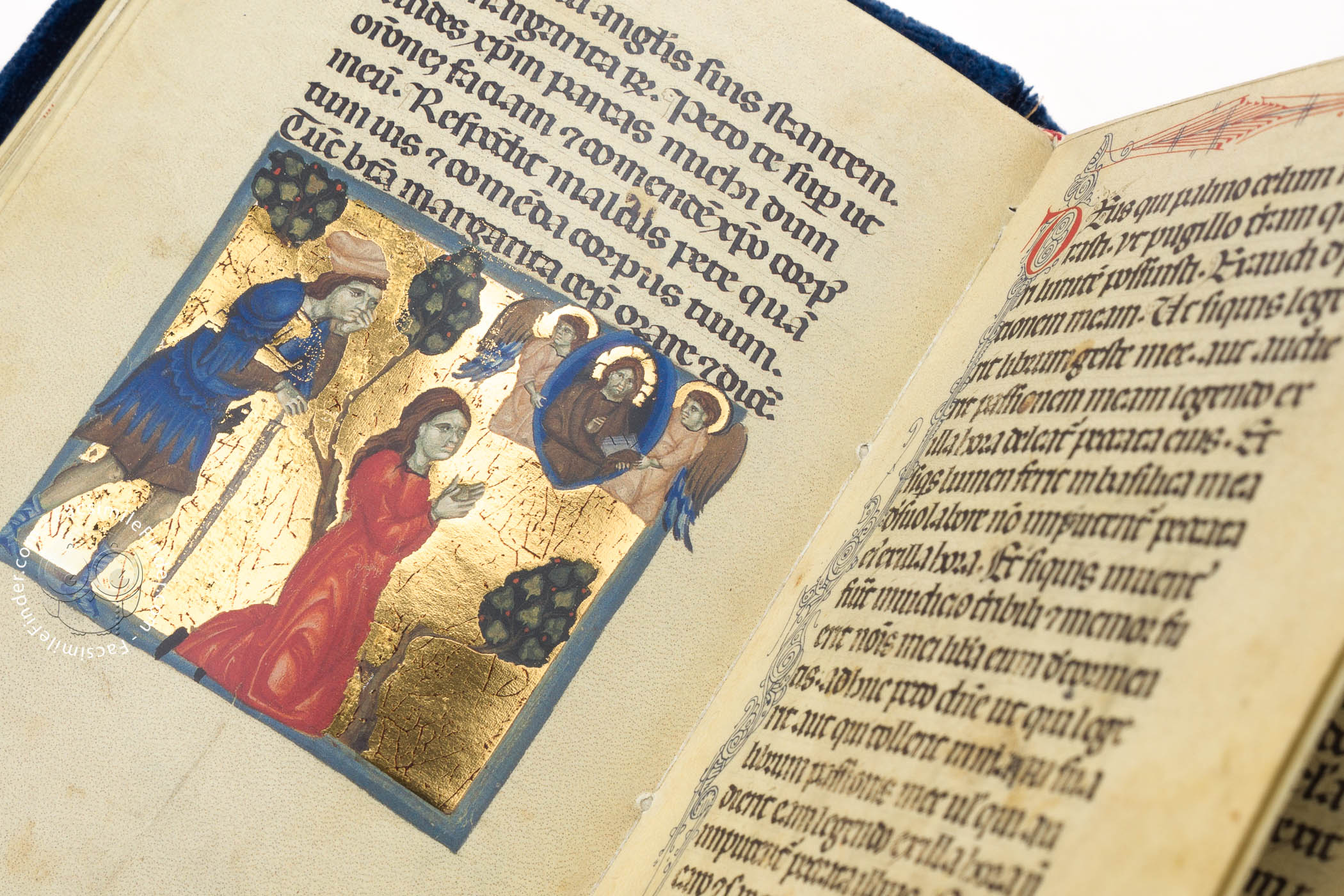
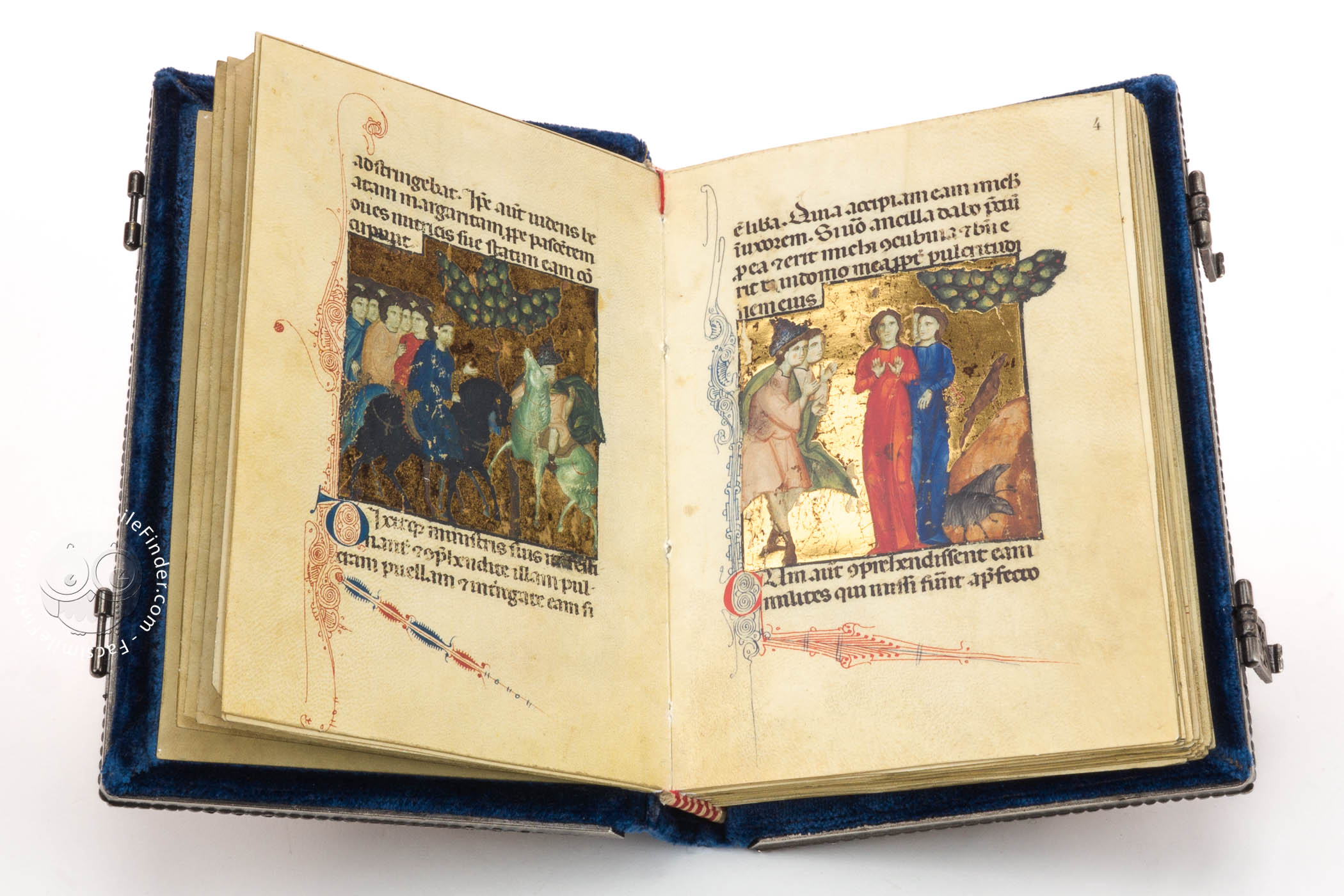
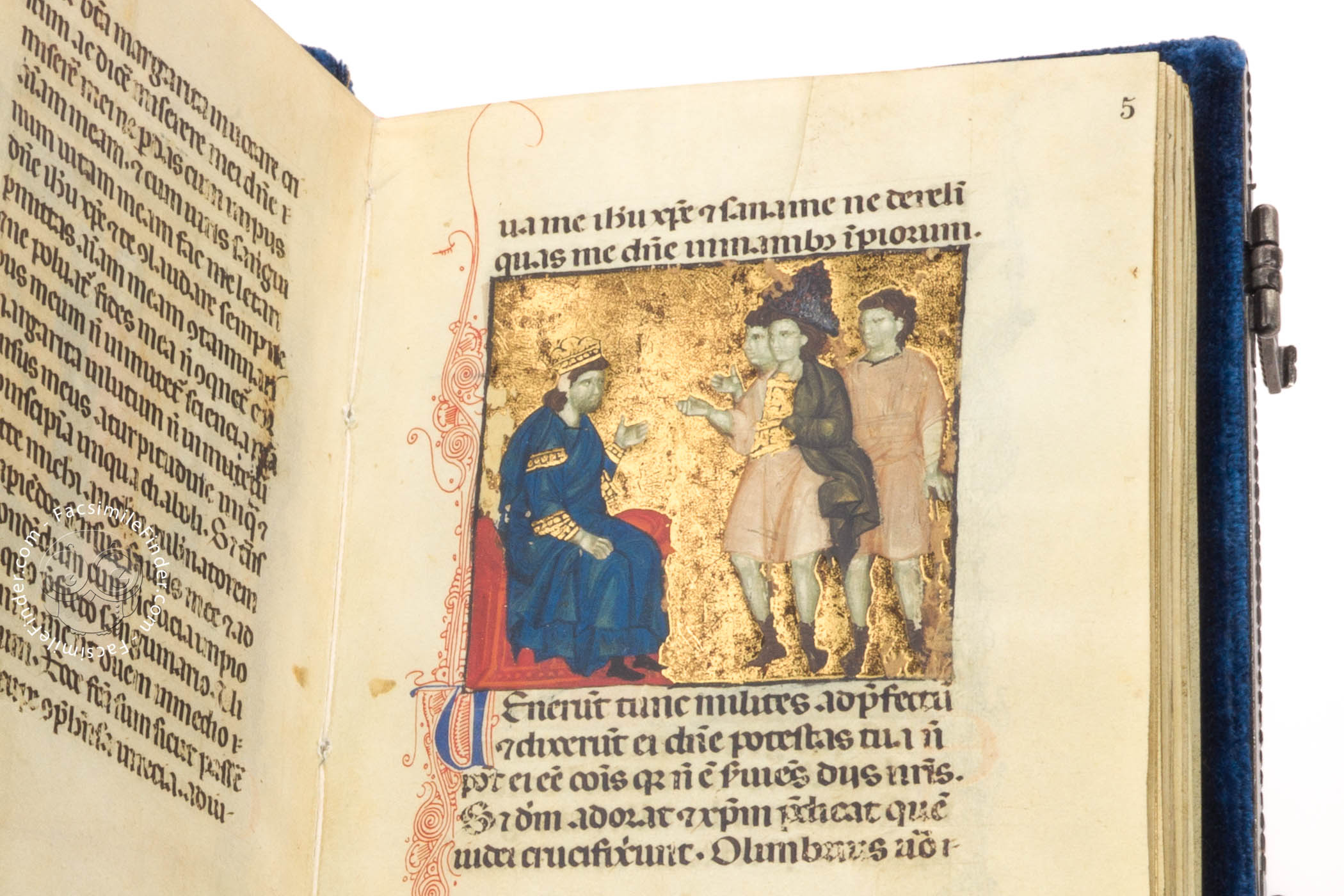

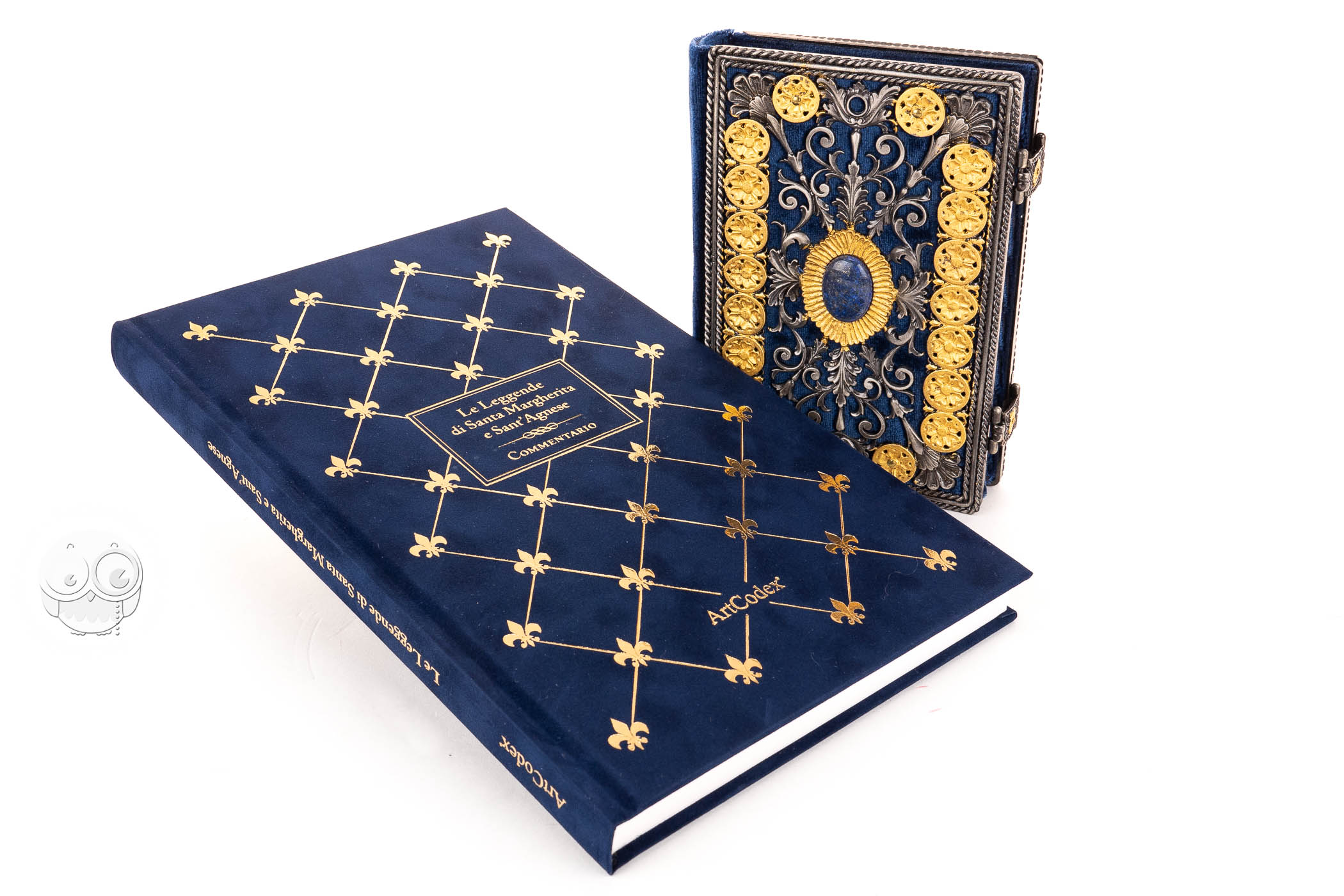
The Legends of Saint Margaret and Saint Agnes is a splendidly illuminated late thirteenth-century manuscript of the Latin-language biography, including posthumous miracles, of Saint Margaret of Antioch and a fine example of the "Second Style" of painting in Bologna. An Italian-language biography of Saint Agnes was added in the first half of the fourteenth century, and three Italian-language prayers were added later in the same century. The Margaret legend features thirty-three miniatures with gold-leaf backgrounds and two historiated initials.
The legendary Saint Margaret refused to renounce her Christian beliefs, which led to a series of tortures and torments and the saint's eventual beheading. The text of the Riccardiana manuscript recounts her youth, torture, temptations, successful conversion of heathens, and death.
Bologna's "Second Style"
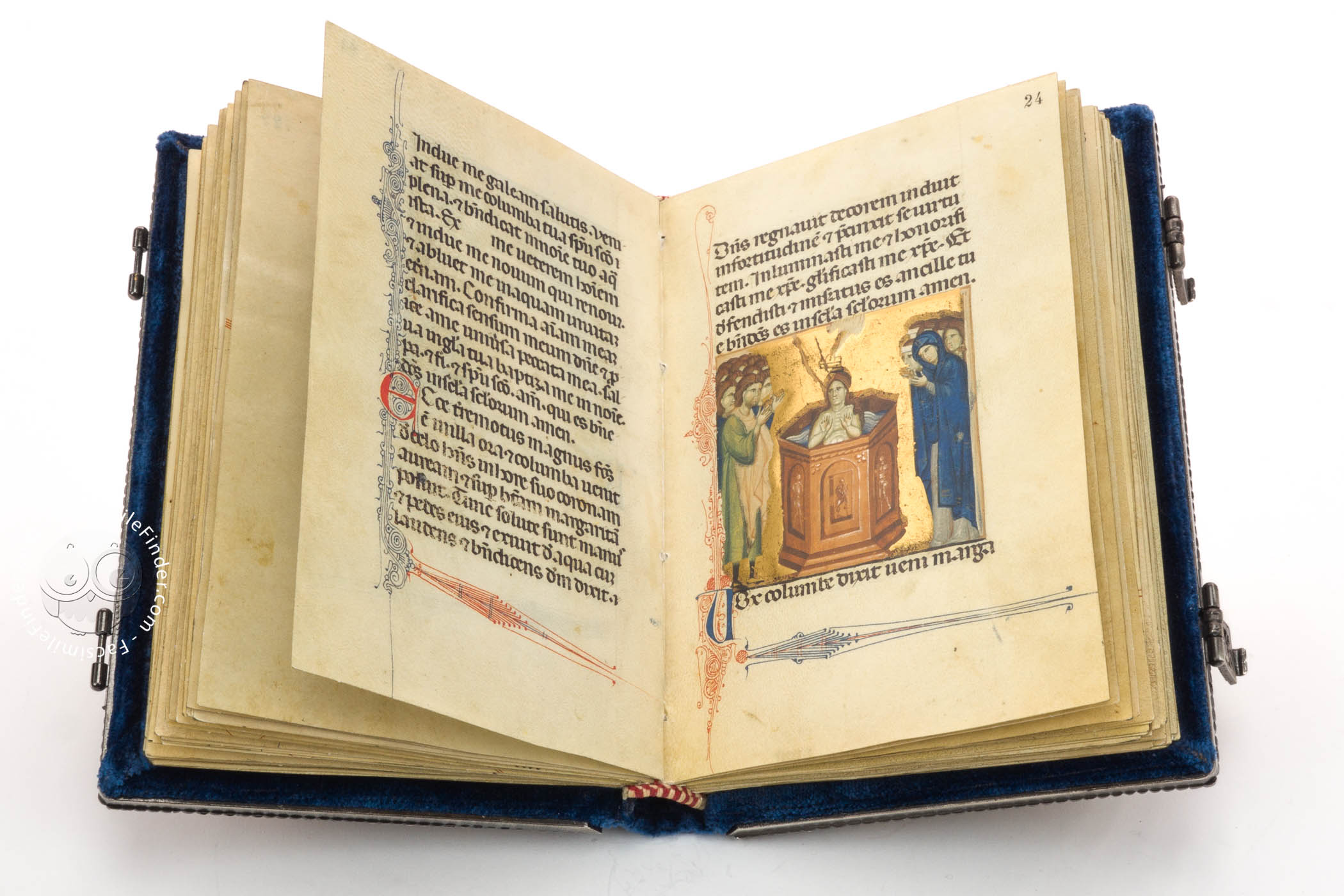
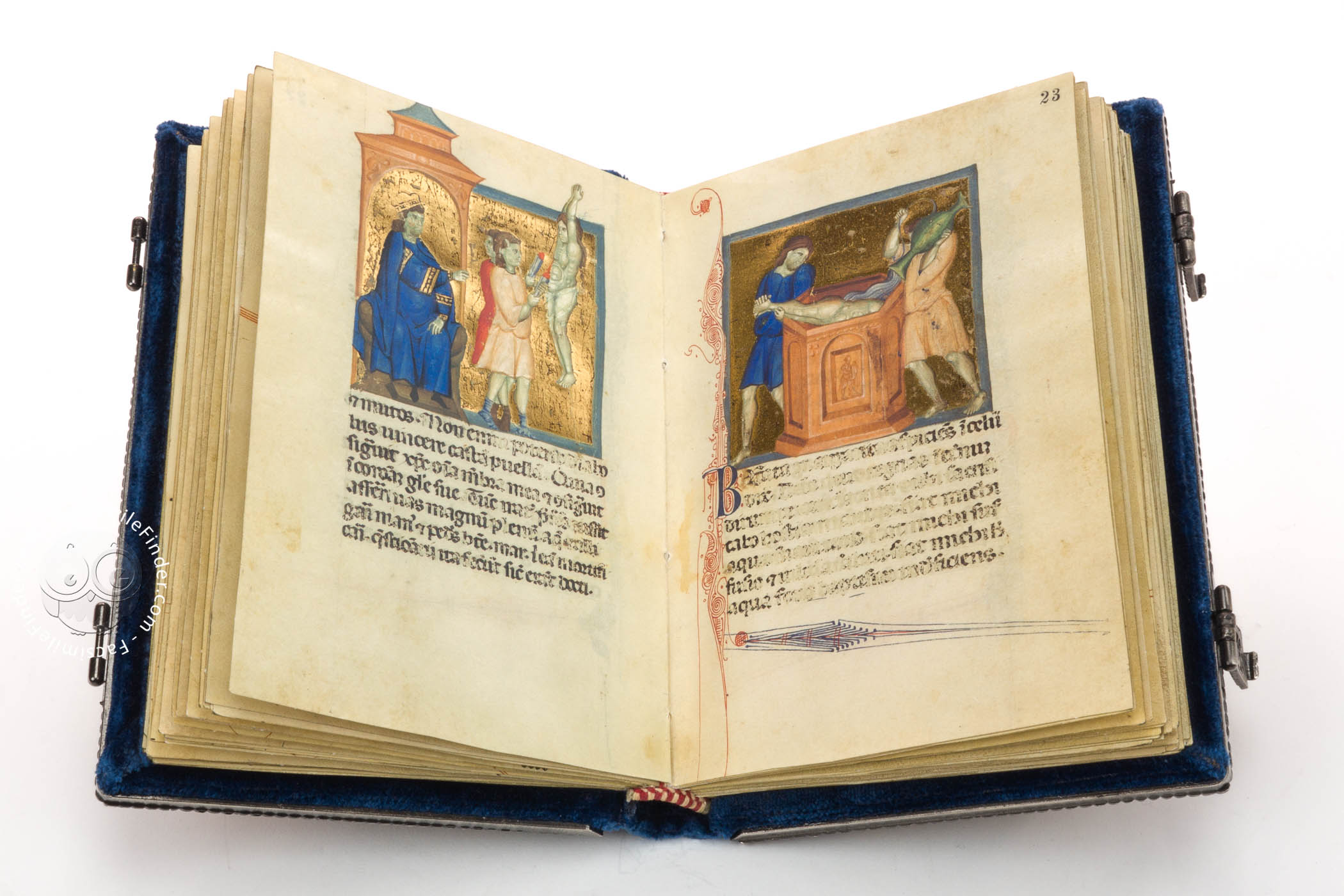
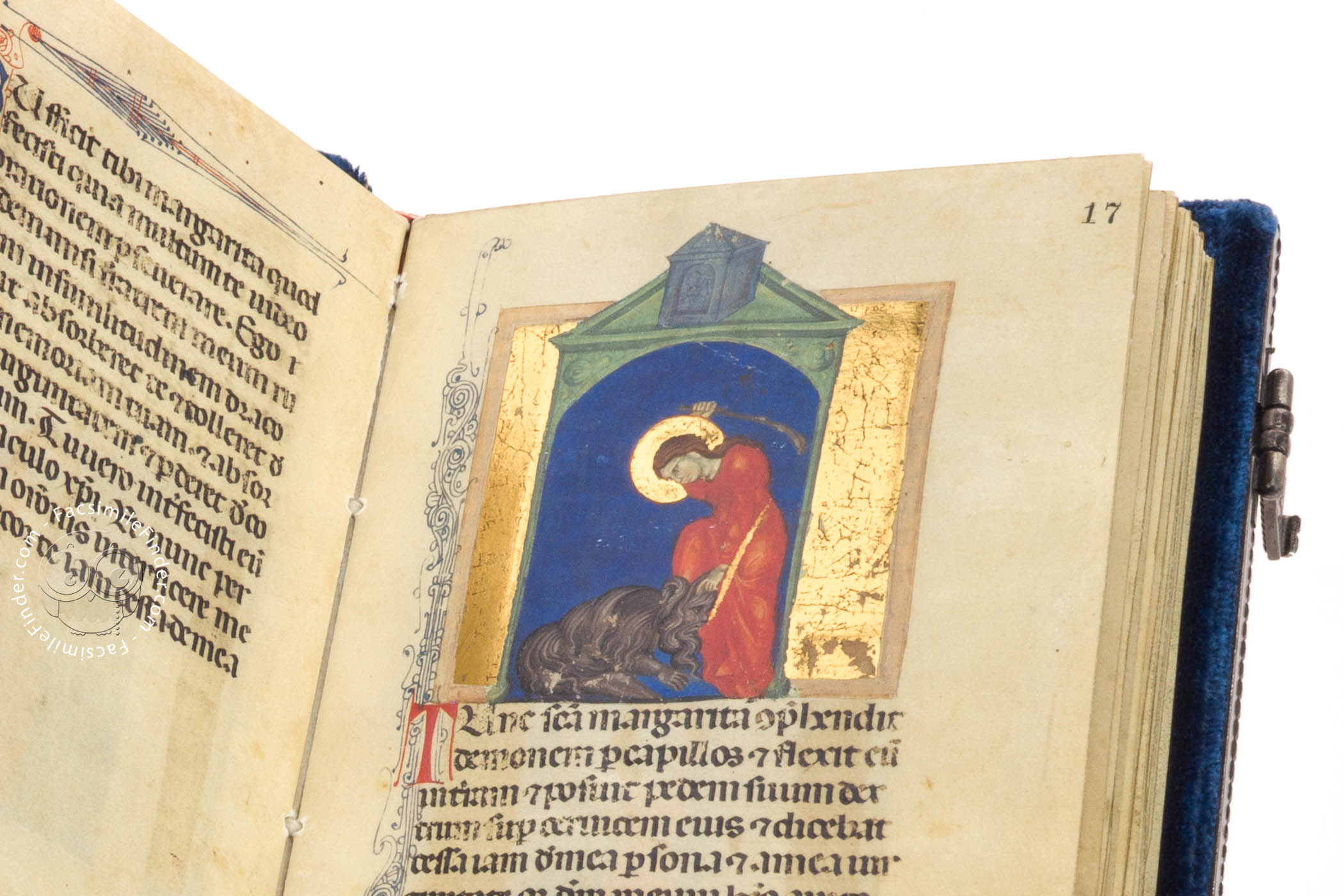
The miniatures are in the strongly Byzantinizing "Second Style," practiced in Bologna in the later thirteenth century, distinguished from the more stylistically eclectic painting of the mid-thirteenth-century "First Style." The gold-leaf grounds of the paintings and the strong emotional quality of the figures are hallmarks of the style.
Margaret's Trials and Tribulations
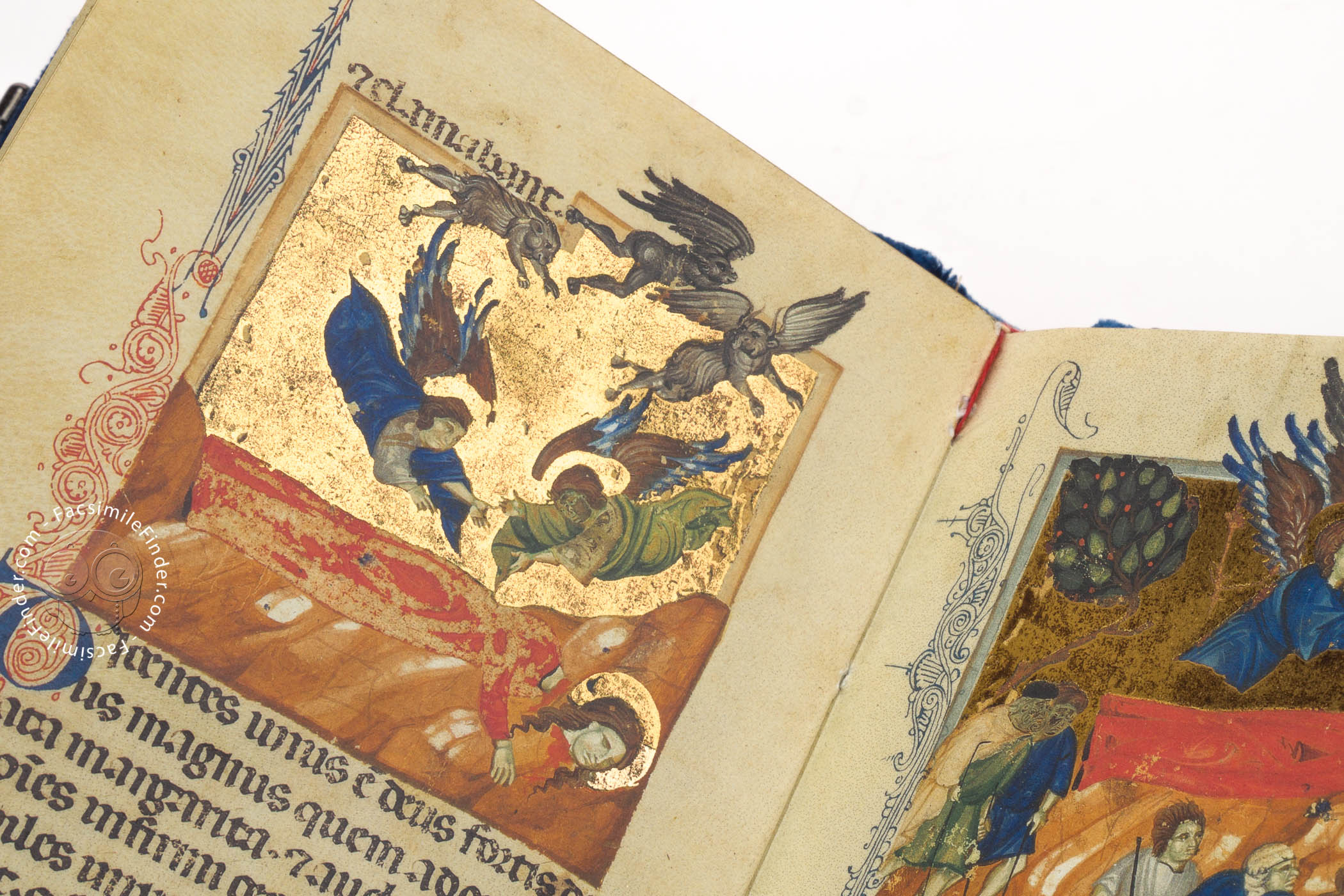
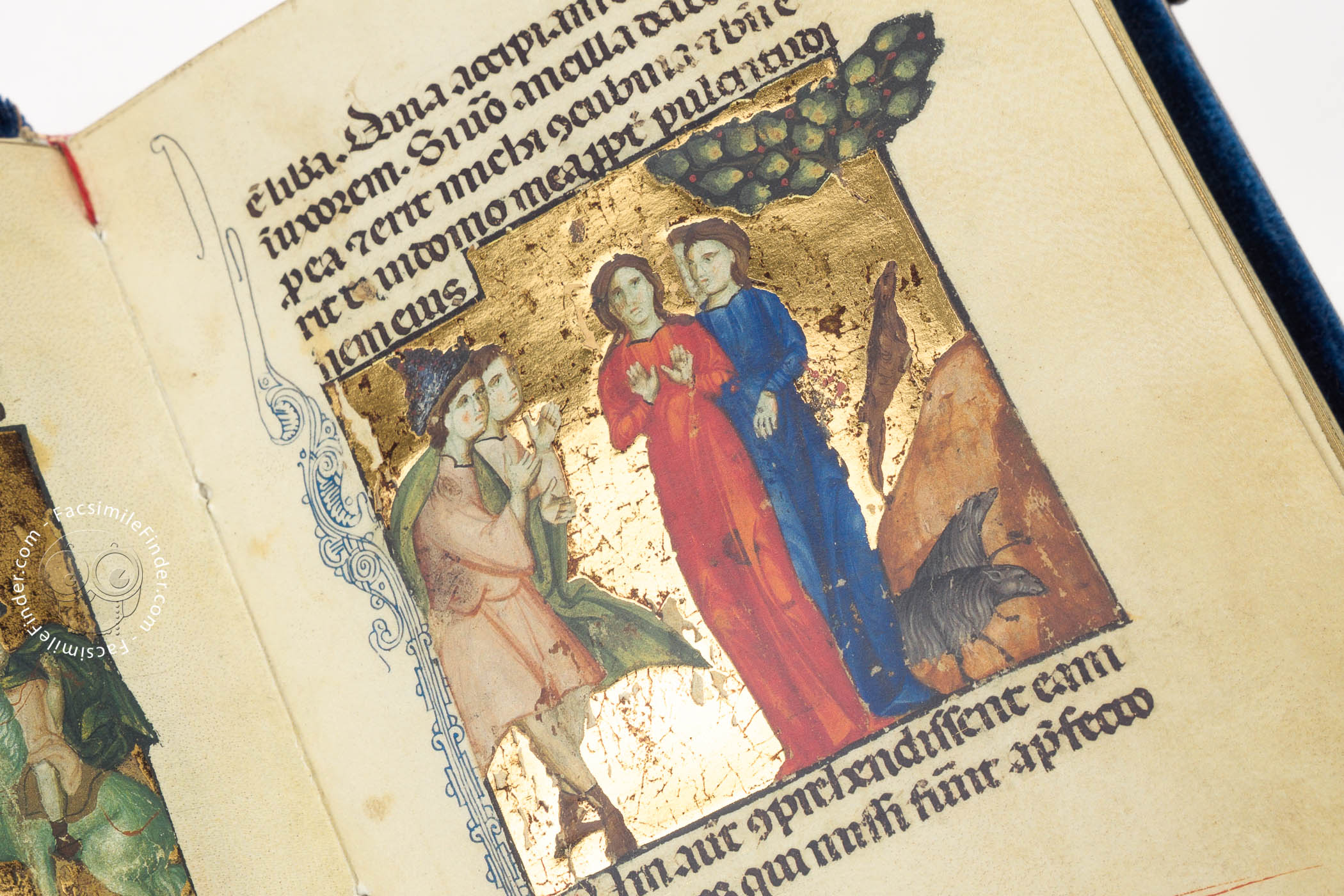
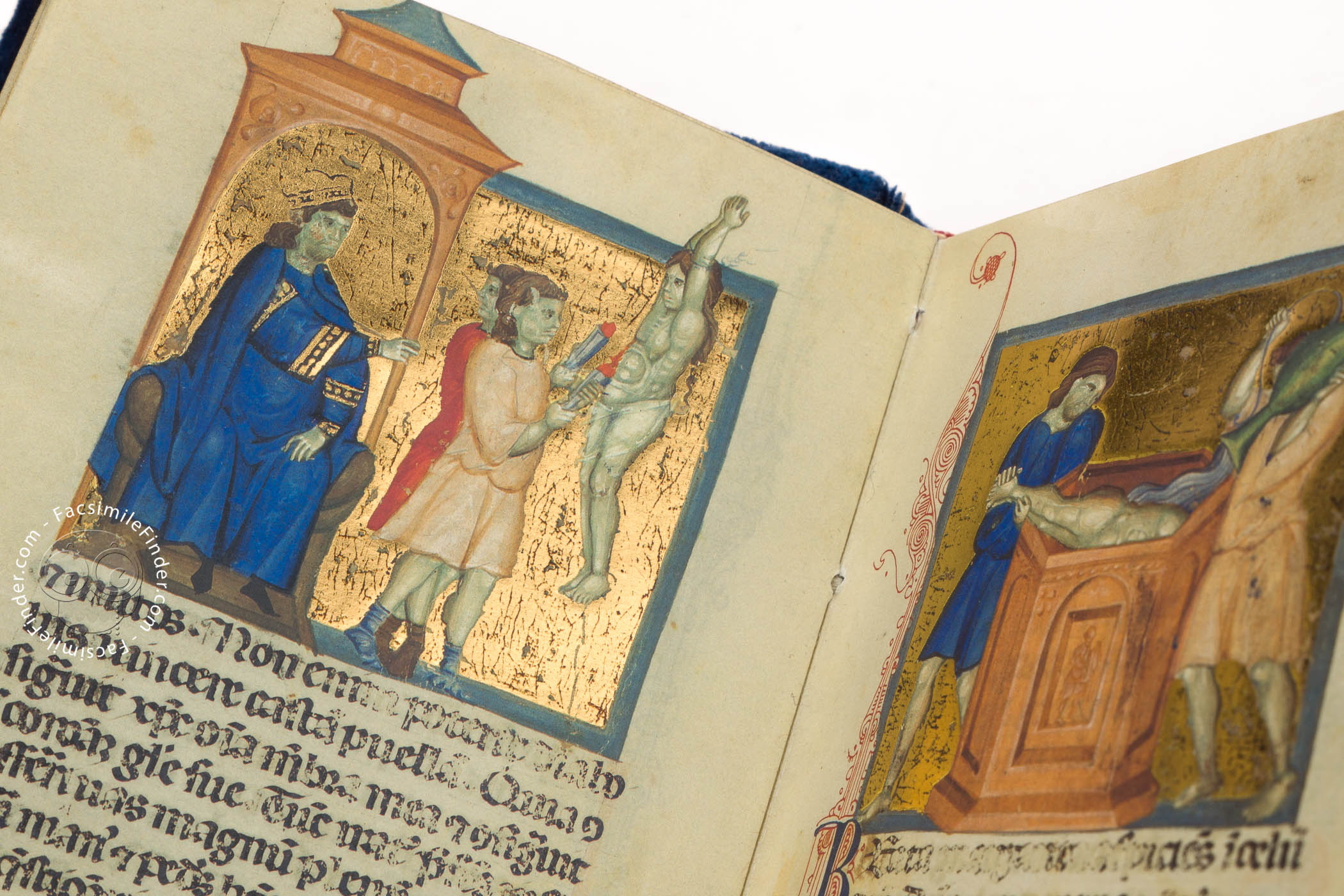
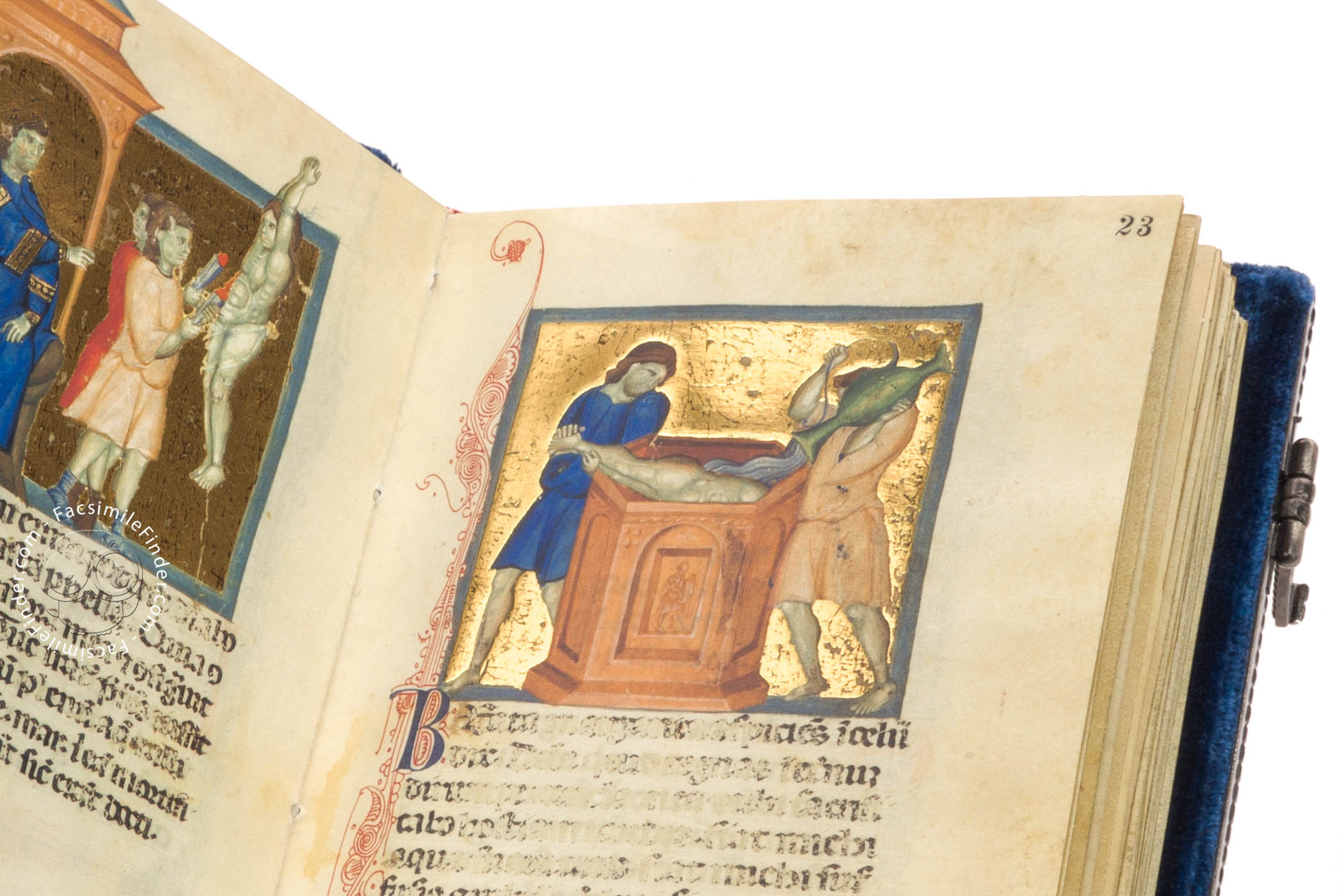
The miniature cycle begins with a scene of the young Margaret grazing the sheep of her nursemaid (fol. 3r) and extends to an image of her tomb (fol. 30v). The focus is on the torments she suffers. Many occur at the command of her suitor, including imprisonment, flagellation, having her flesh torn with a hook, burning, and being thrown in a vat of water (fols. 6v, 8v, 10r, 11v, 22v, 23r, and 24r). She also combats the devil in the guise of a dragon and a hairy human (fols. 13v, 14r, 14v, 15r, 16r, and 17r).
An Author Writing and a Saint Blessing
The Margaret text opens with a historiated initial P containing a portrait of Theotimus, the purported early author of the saint's legend. He is shown in a voluminous red robe writing at a desk (fol. 1r). An enigmatic scene of something being dropped from a vessel into a bowl held aloft by a male figure occupies the inner margin. In the bas-de-page ("bottom of the page"), the saint is pictured as a bust-length figure looking out and blessing the reader.
Bold Pen-Flourished Initials
The texts were written by three scribes: one—a certain Iacobus—wrote the legend of Saint Margaret; another, the legend of Saint Agnes; and a third, the three prayers. The final fifteen leaves of the book are blank. The Margaret text boasts pen-flourished initials that include extensive flourishing, often in two colors and with striking angular forms, especially in the lower margins.
From the Library of a Famous Music Theorist
Florentine humanist and music theorist Giovanni Battista Doni (d. 1647) owned the manuscript in the seventeenth century. Gabriello Riccardi (1705-1798) acquired Doni's library around 1730. Not long thereafter, in 1737, Riccardi opened the family library to the public. The manuscript's current conservation binding of parchment over pasteboard dates from 2009.
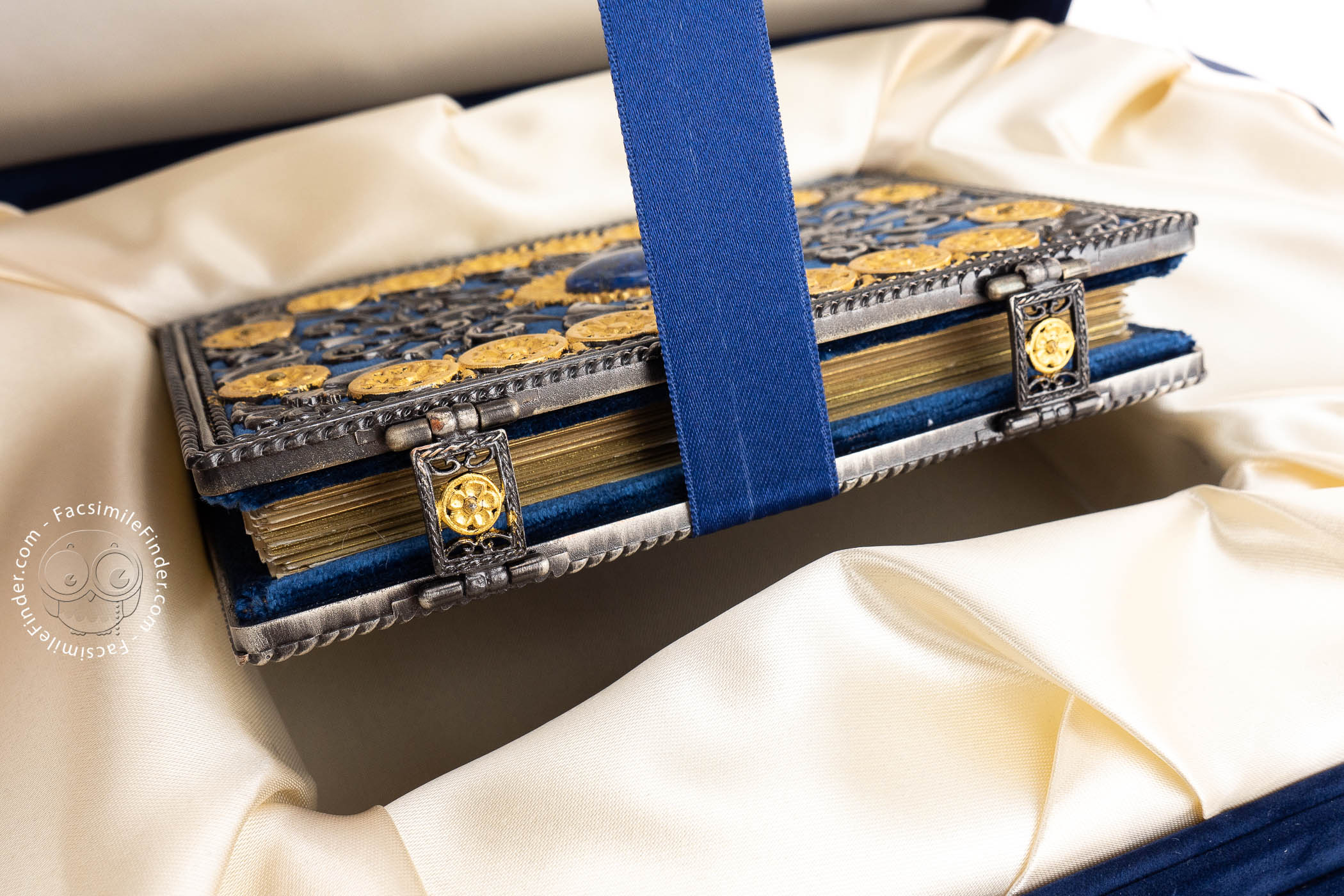
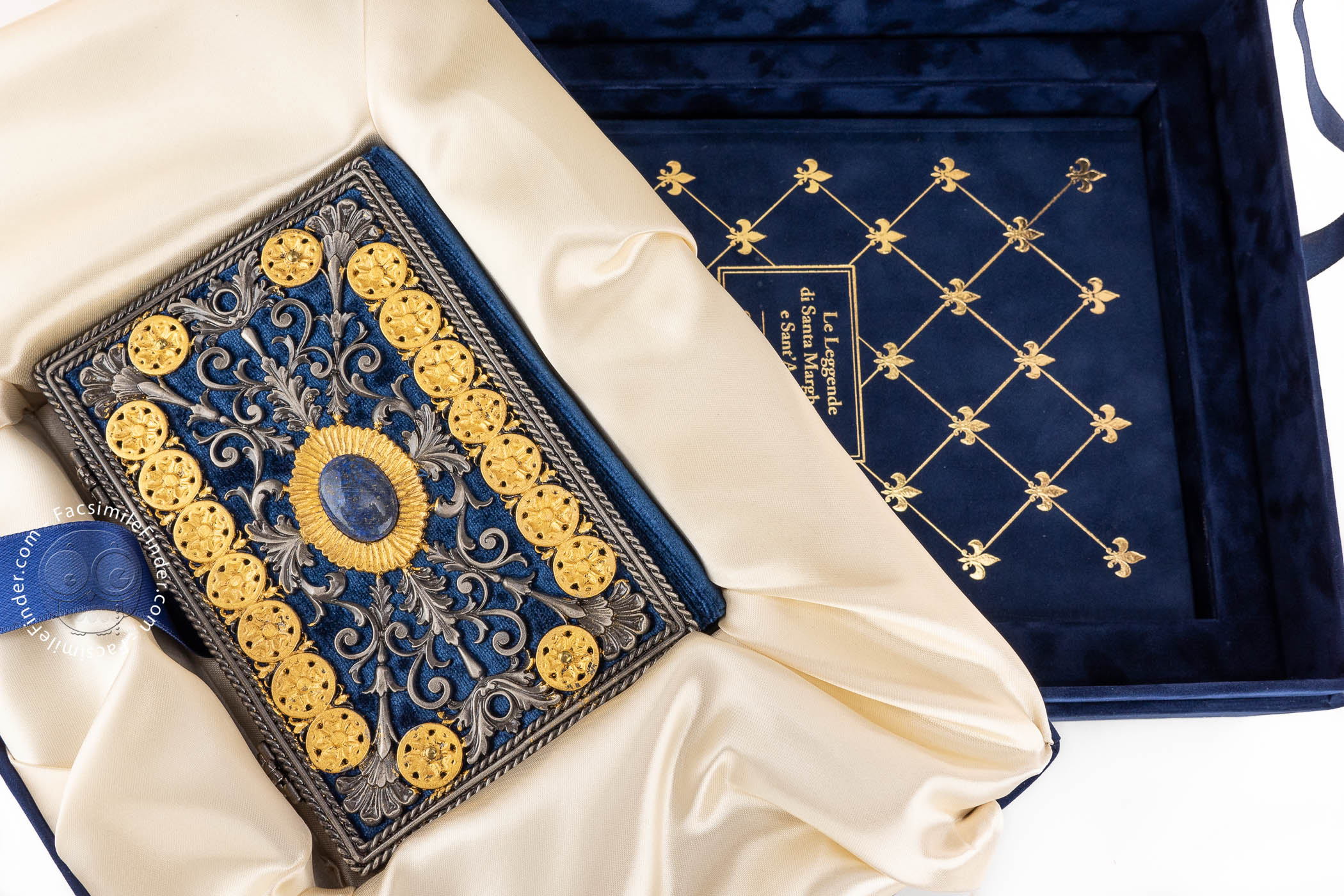
We have 1 facsimile edition of the manuscript "Legends of Saint Margaret and Saint Agnes": Leggende di Santa Margherita e Sant'Agnese facsimile edition, published by ArtCodex, 2009
Request Info / Price