
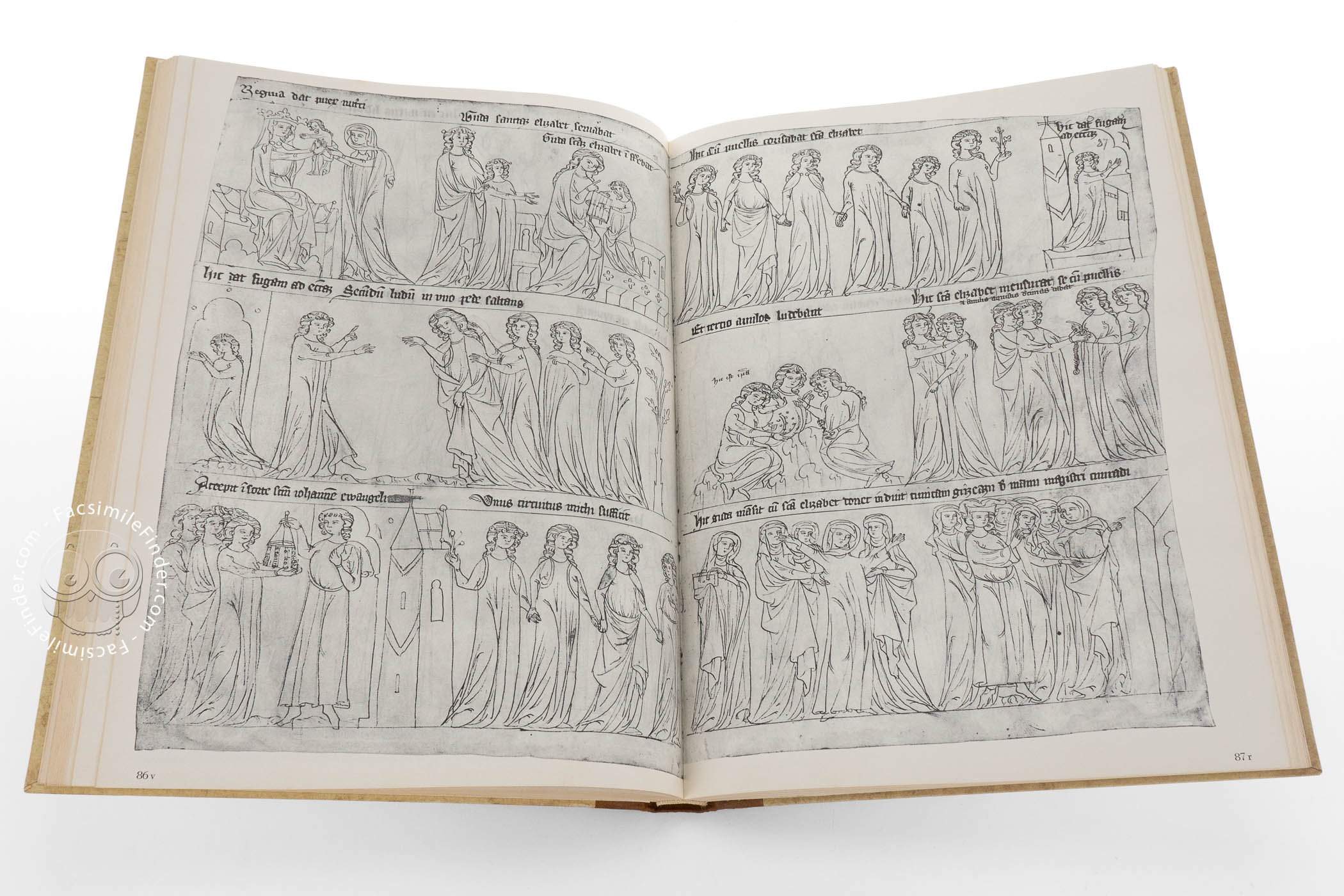
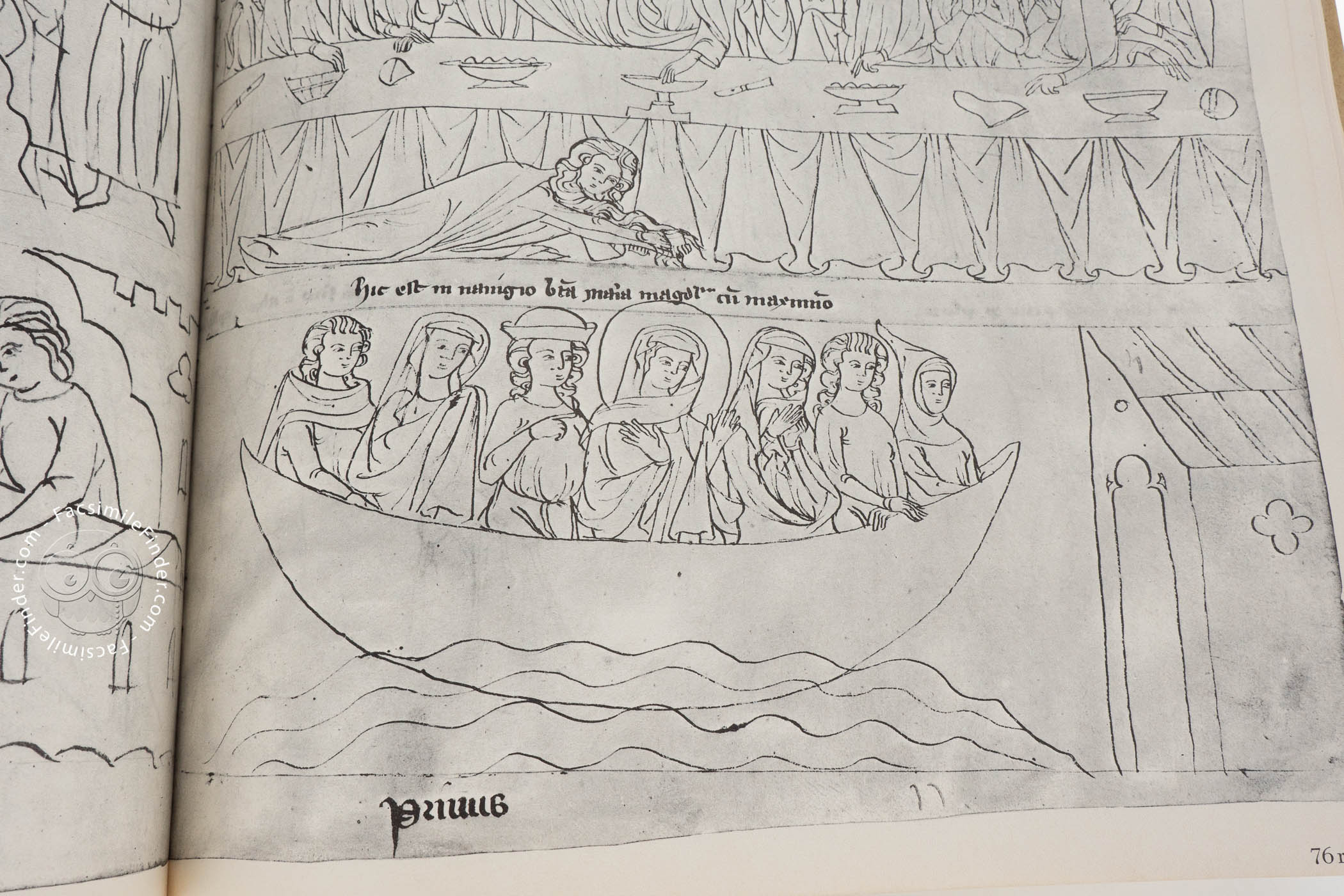
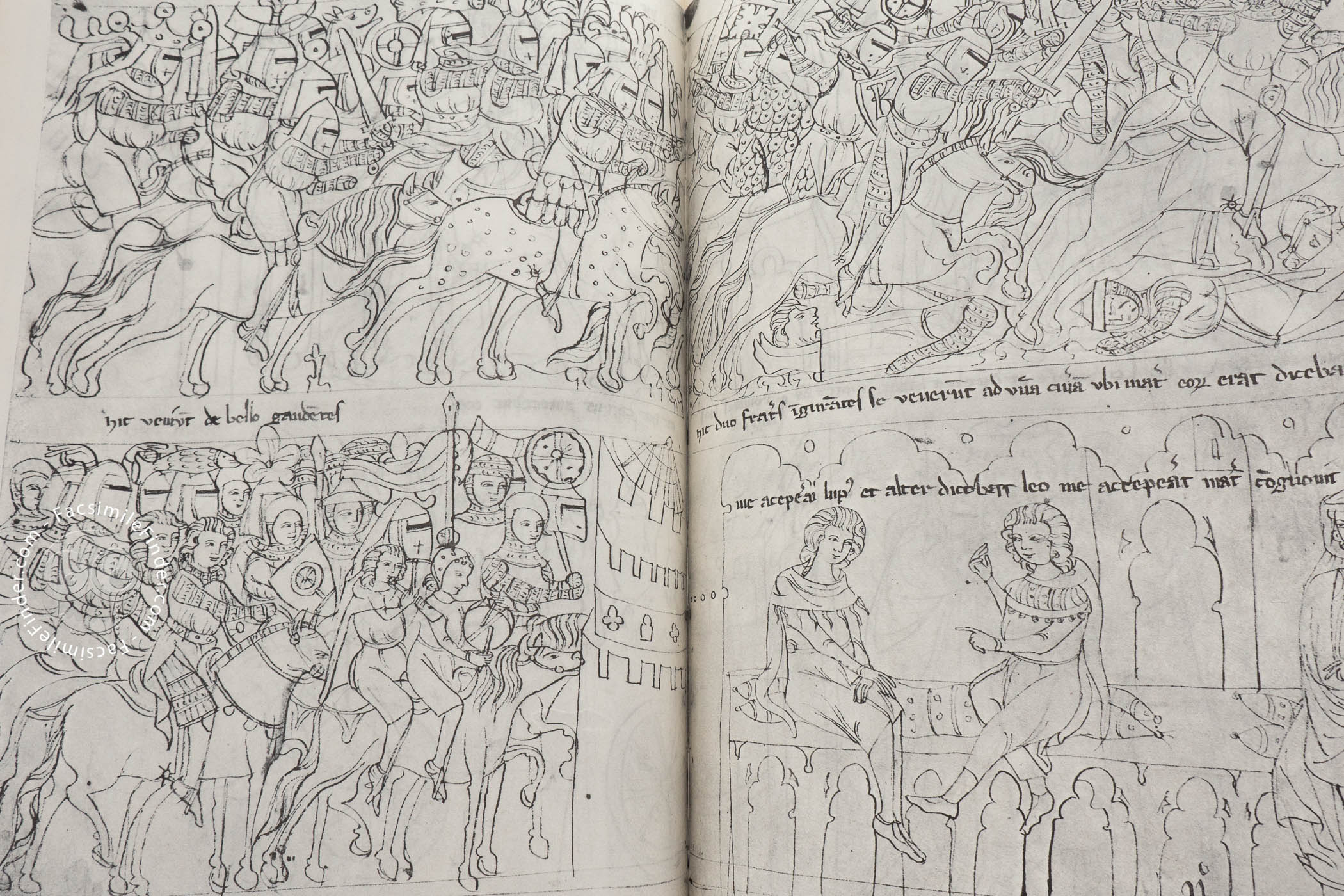
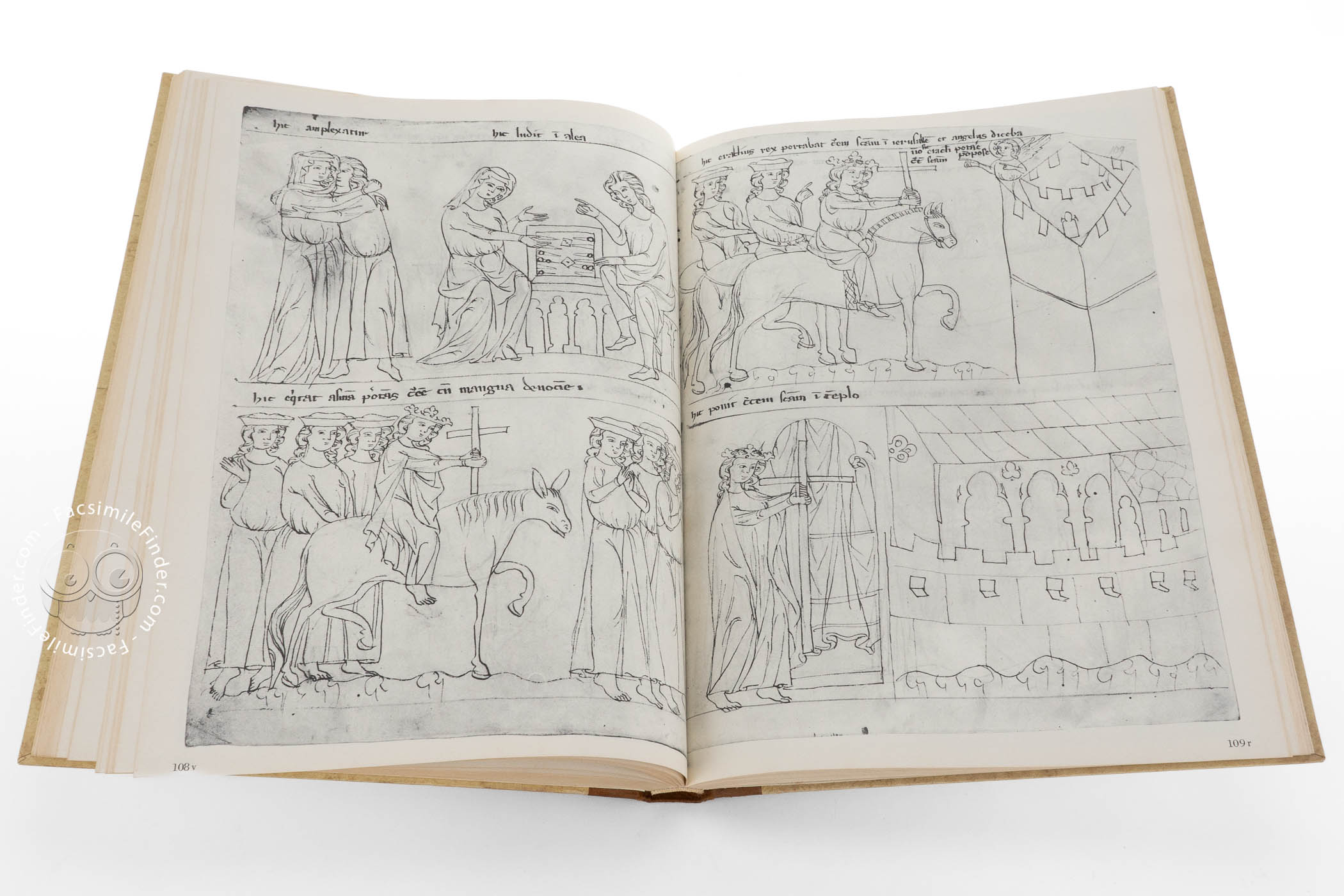
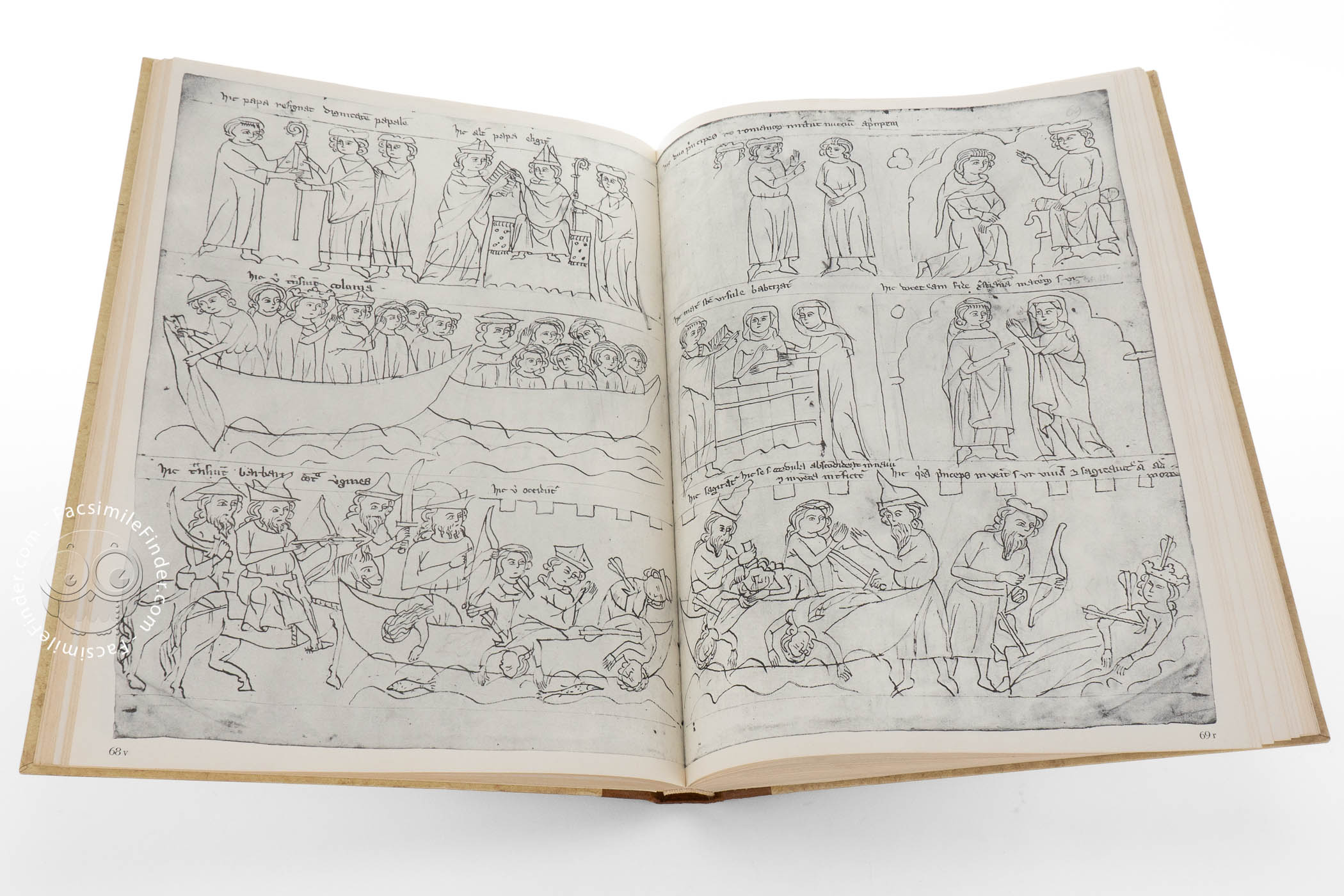
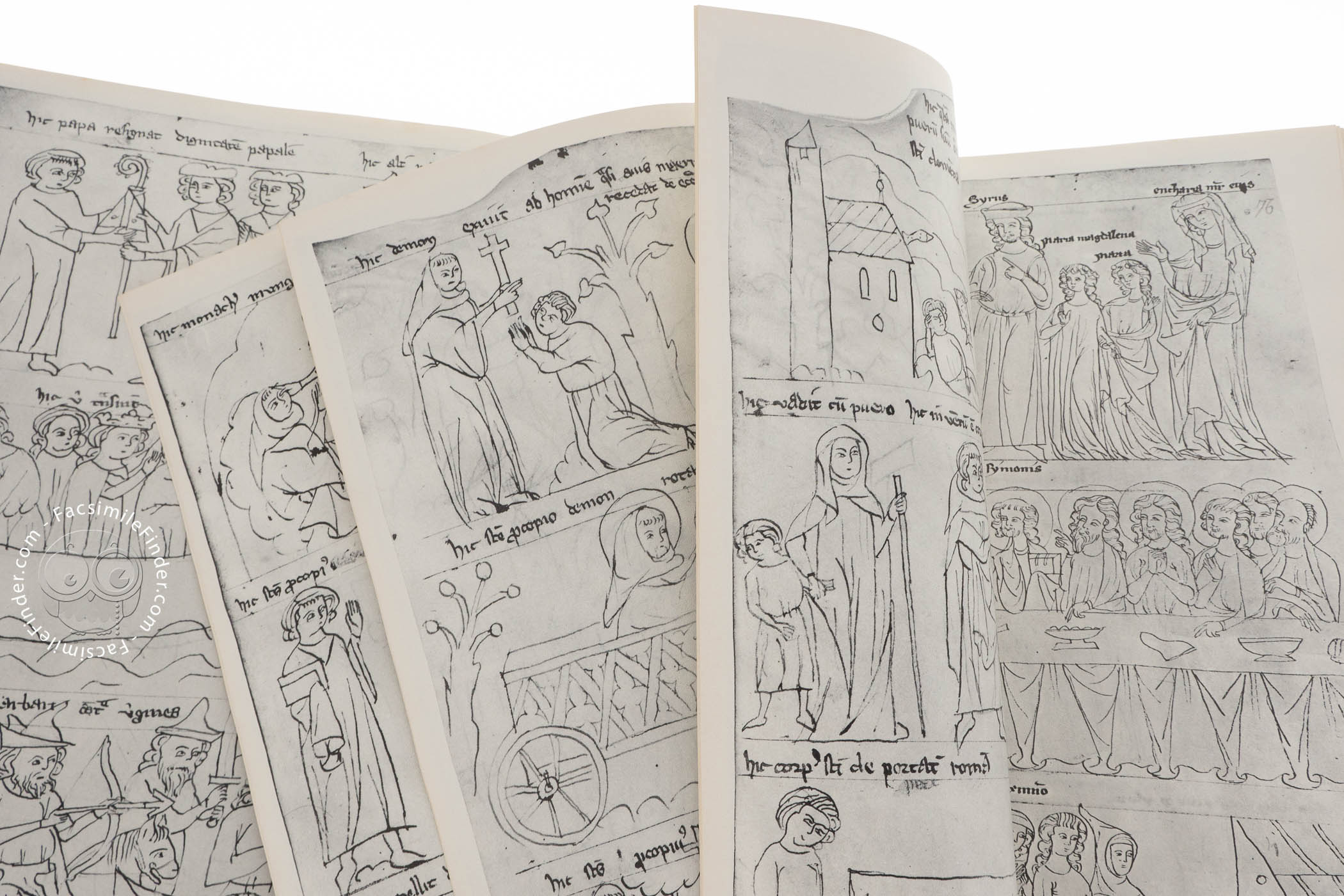
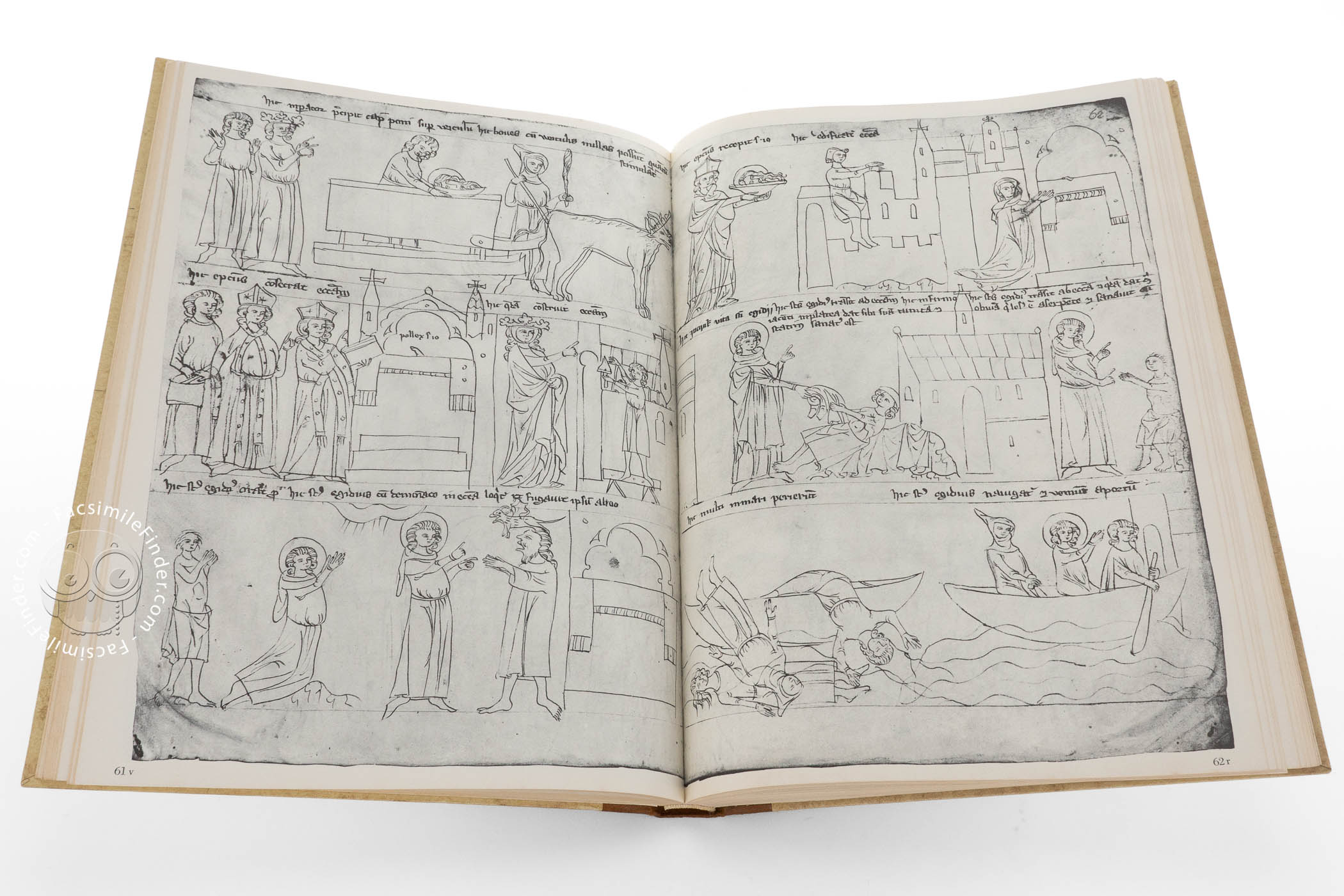
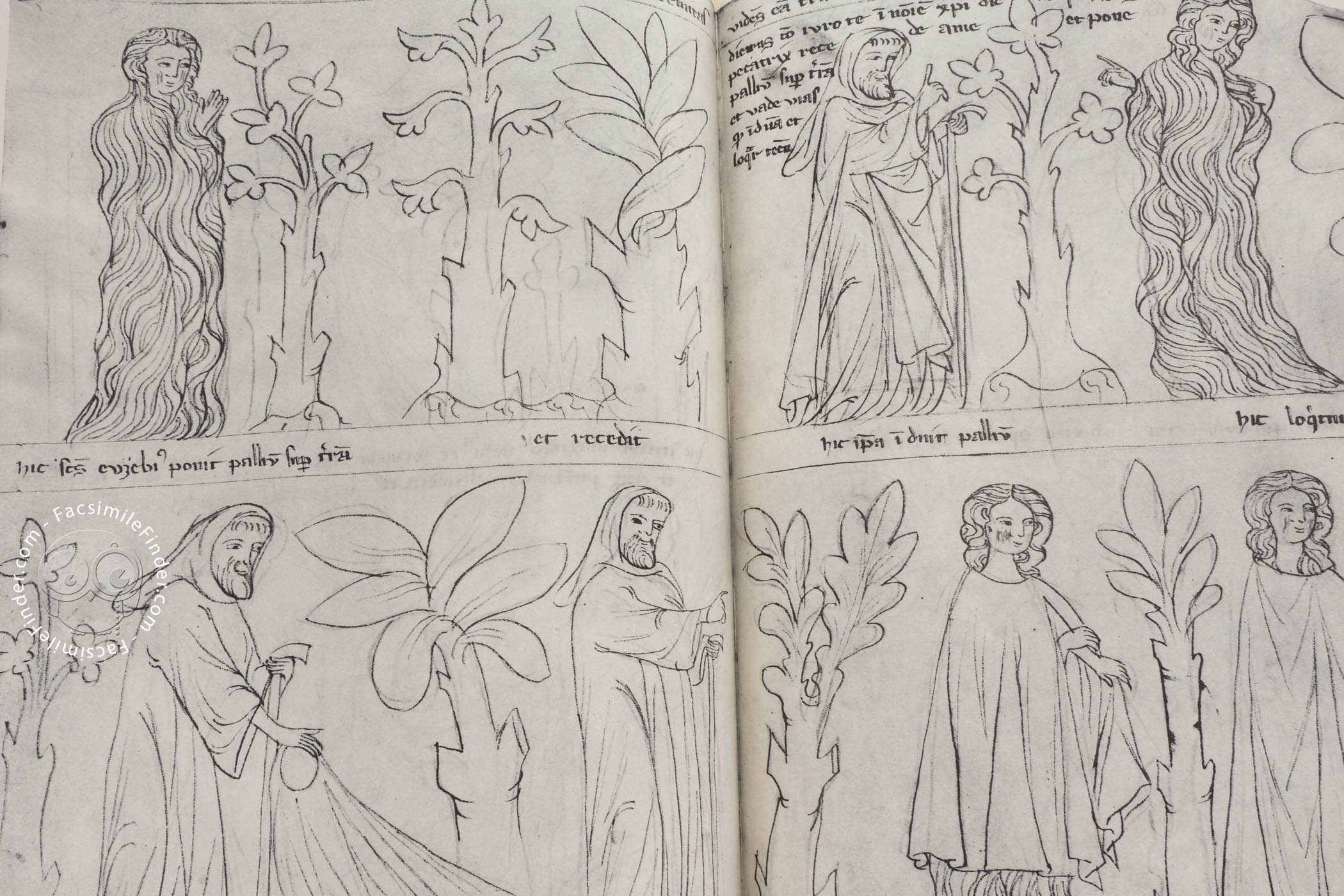
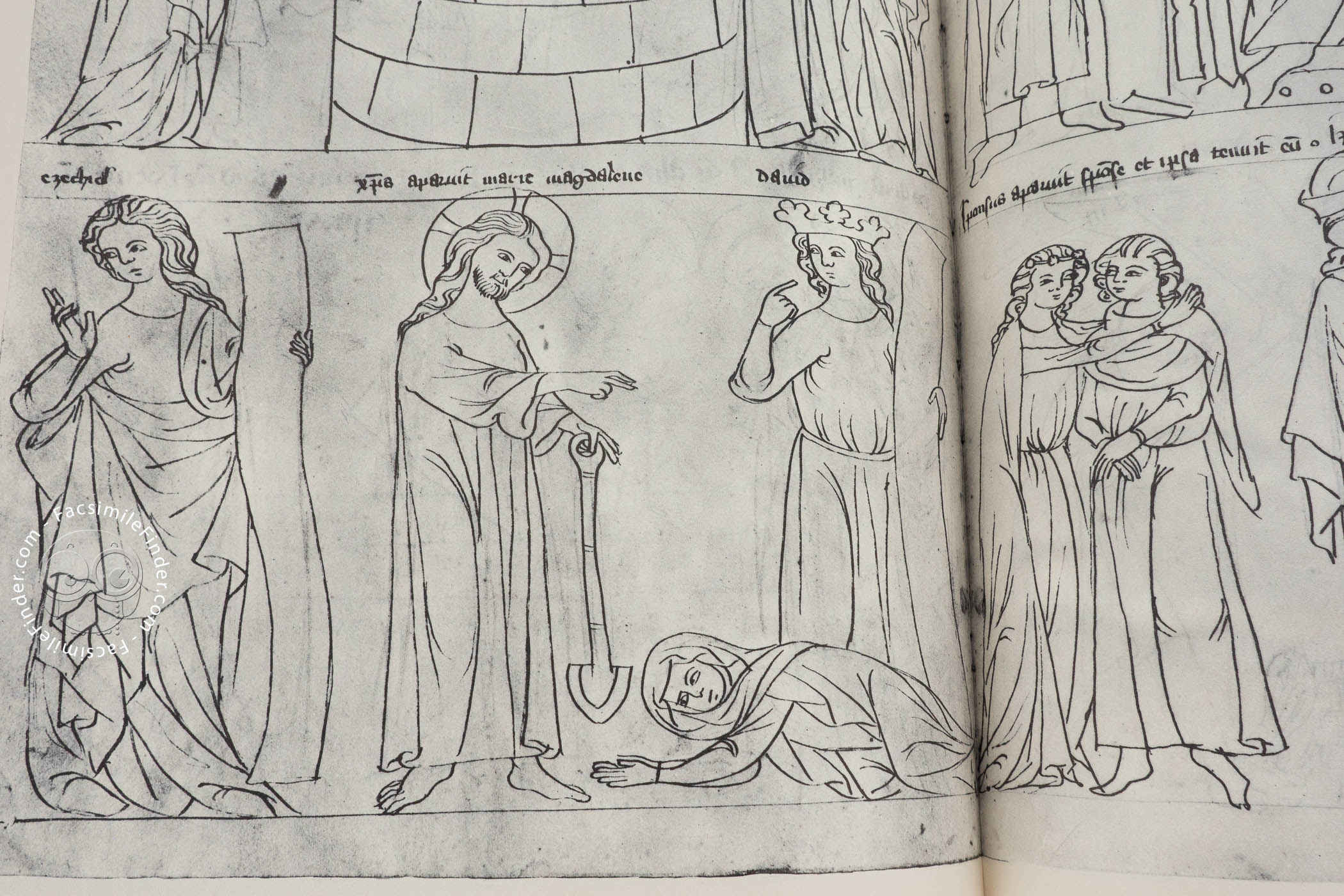
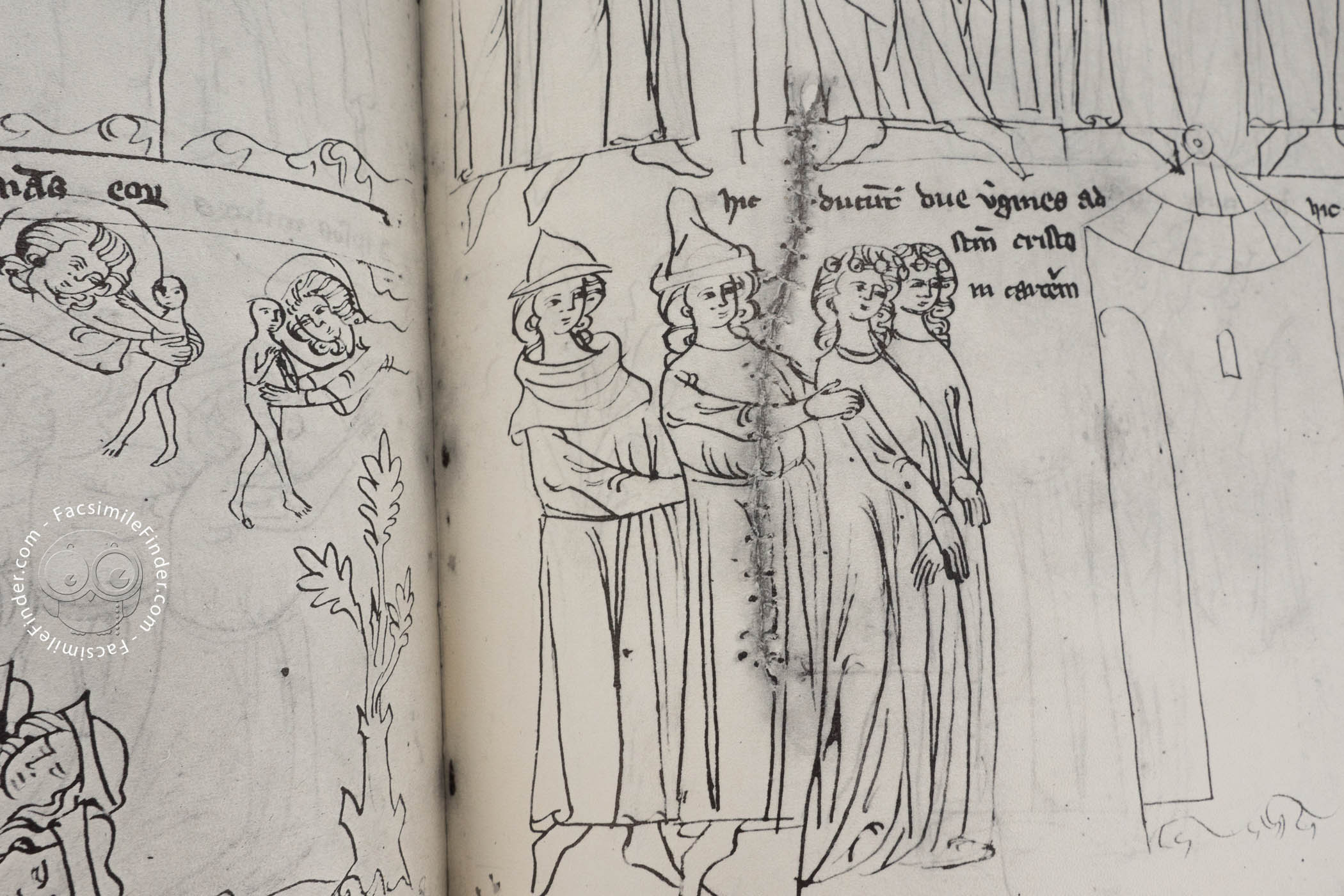
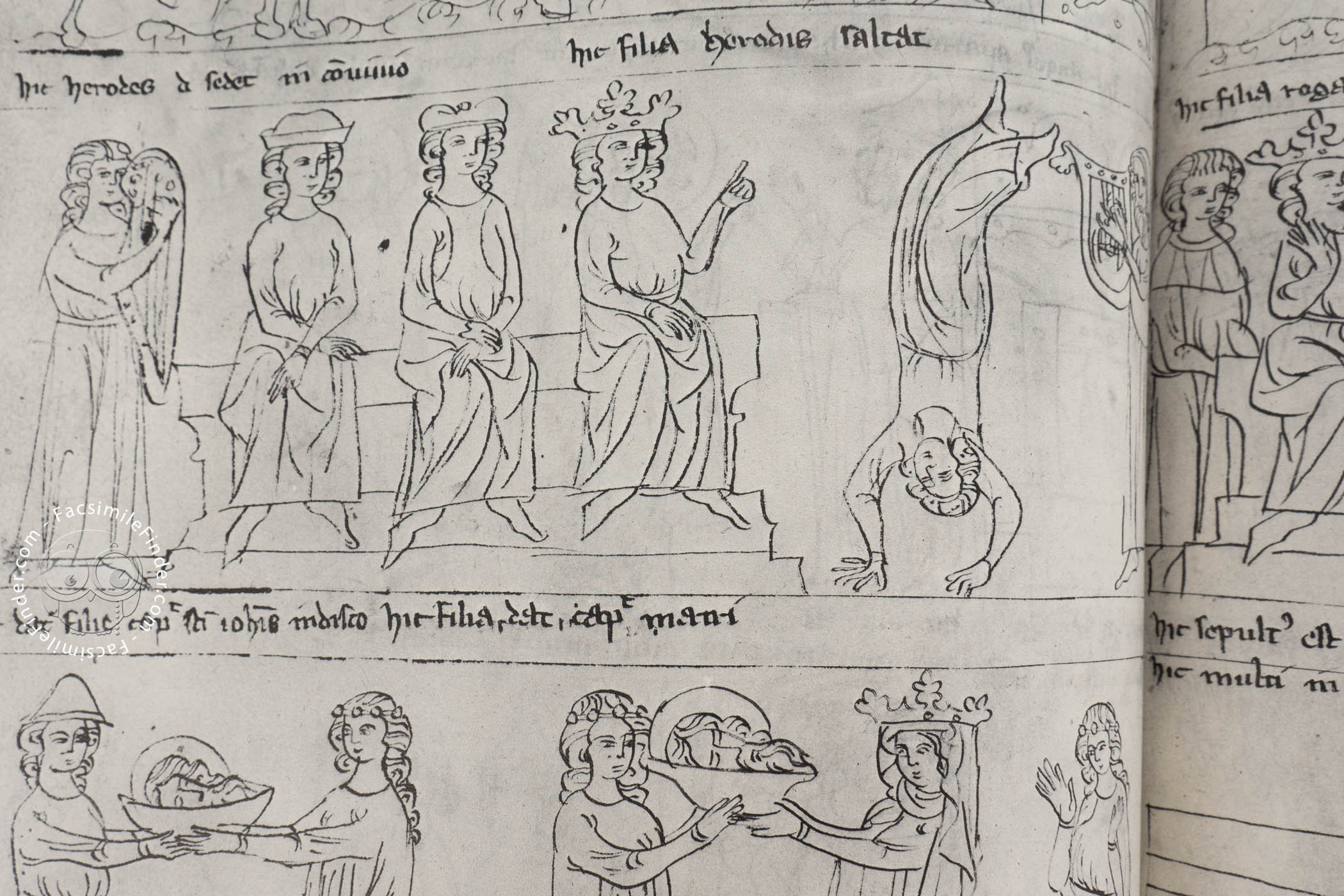
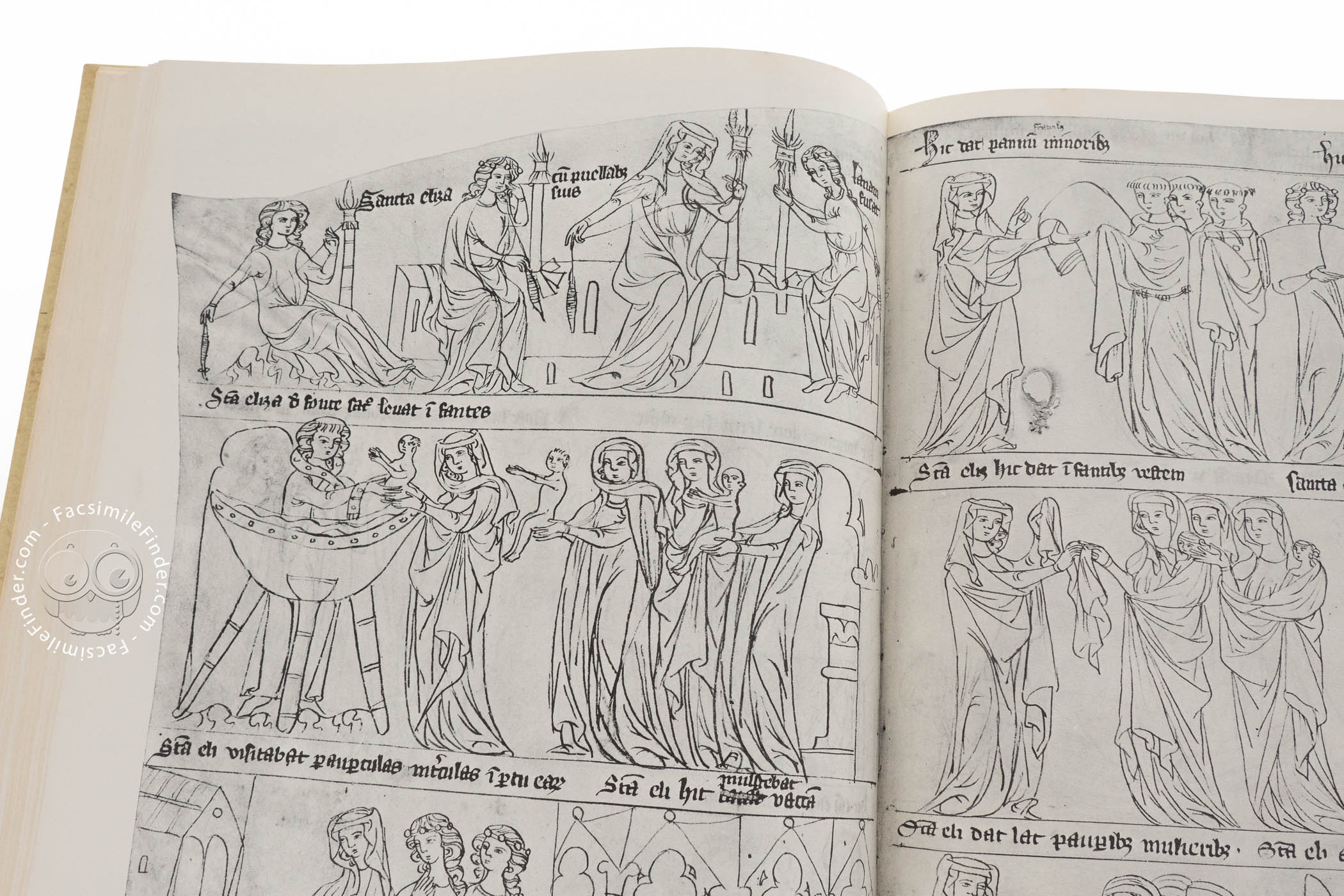
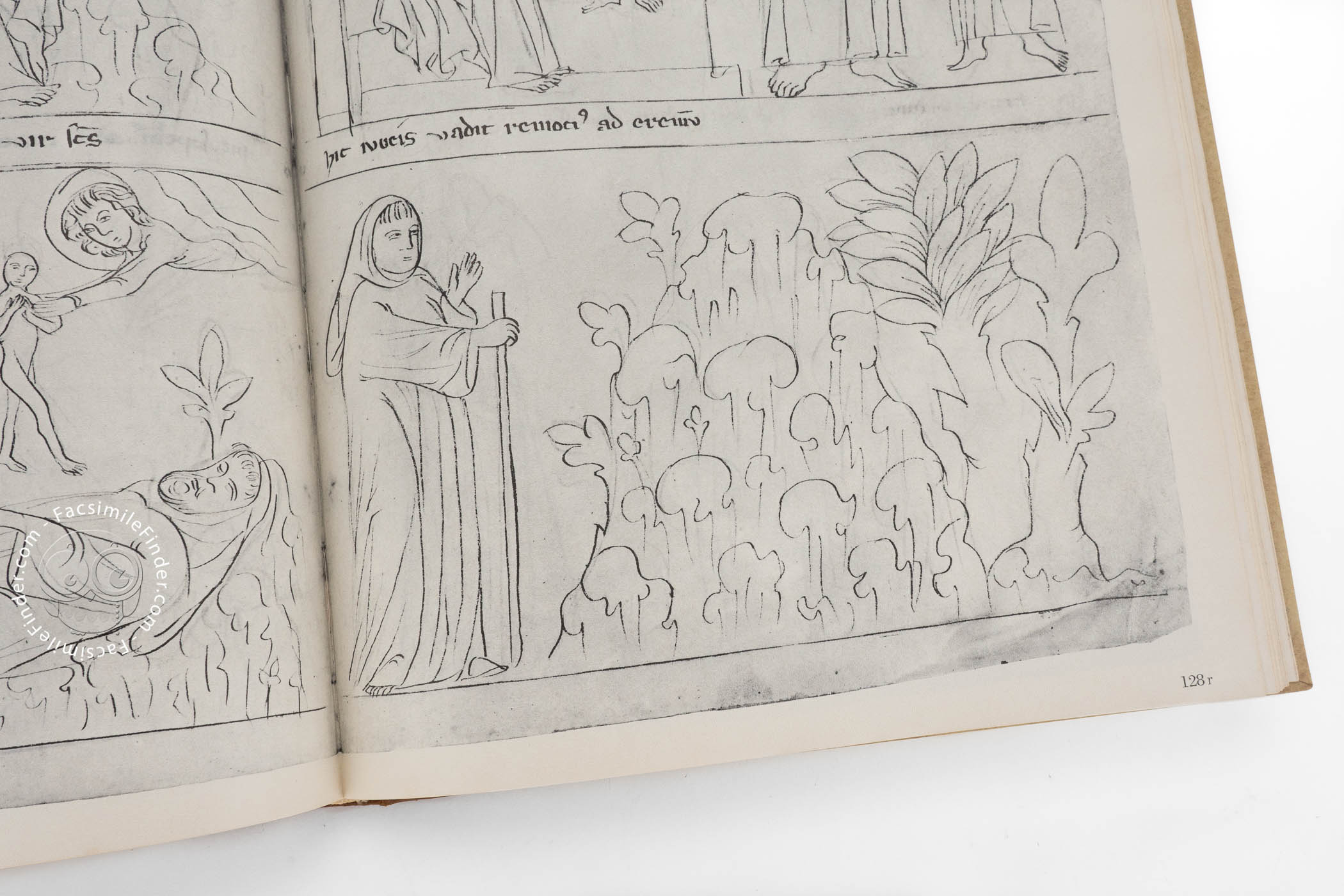
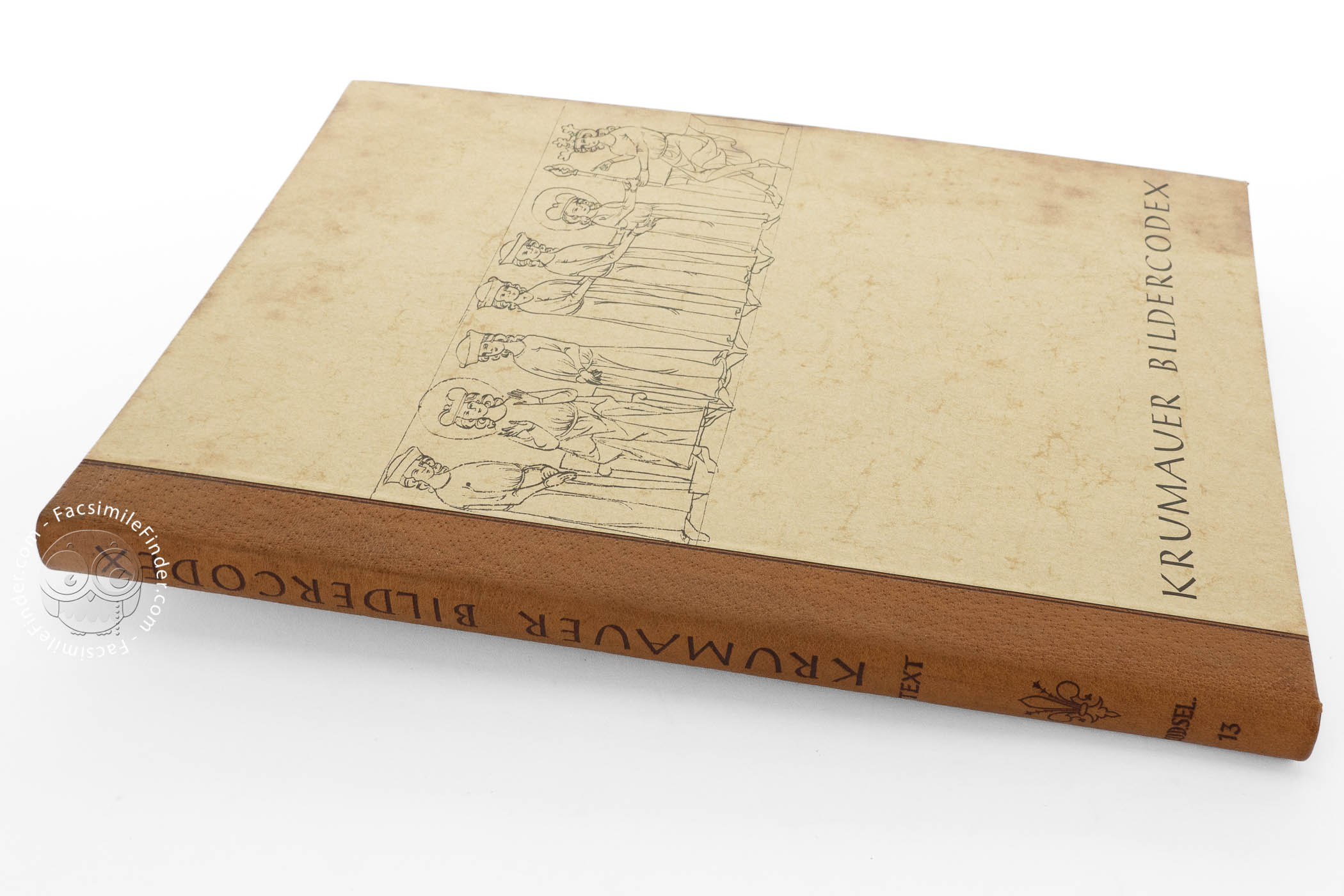
The Krumlov Picture Codex is a large collection of pictorial biographies of Christian saints and other legends, preceded by a pictorial representation of the Christian theological principle of typology—the so-called Biblia pauperum, literally "Bible of the poor"—and by a pair of pictorial parables. It was created in the 1340s, perhaps at the behest of Peter II of Rosenberg, probably in Krumlov in southern Bohemia. It boasts 342 pages of drawings with Latin-language inscriptions, most in two or three horizontal registers: altogether more than 1,000 scenes.
Peter of Rosenberg and Krumlov
Peter II of Rosenberg (1326-1384) was a member of one of the most powerful noble families of fourteenth-century Bohemia. The family seat had been at Krumlov since 1302. The picture codex may have been made to edify Peter, who then donated it to the Franciscan monastery for men and women in Krumlov founded in 1350 by his mother.
A Restrained Palette
The codex is composed entirely of images drawn in brown-black ink. The drawings are the work of three artists. Several scribes wrote captions relating to the figures and scenes in and atop the pictures, in red in the Biblia Pauperum and the parables (fols. 1v-31v).
Following the frontispiece showing the Virgin and Child on a Crescent Moon (fol. 1r), the stories and concepts unfold, whether in one, two, or three registers, across the openings of two facing pages.
Pictorial Biblical Exegesis and Instructional Stories
The Biblia pauperum (fols. 1v-28r) is a visual expression of the Christian method of scriptural interpretation whereby persons or events in the Hebrew Bible—the Christian Old Testament—are understood to be types that prefigure persons or events in the New Testament or in Church history. In the Krumlov codex, the Christian subjects are interspersed among scenes taken from Hebrew scripture. The Biblia pauperum section of the codex is followed by visualizations of the Parable of the Talents and the Parable of the Royal Banquet (fols. 28r-31v).
Bohemian Saints Highlighted
The Krumlov Picture Codex makes a bold visual argument for the importance of Bohemian saints. The pictorial biographies of Wenceslas (d. 935), Duke of Bohemia, and his grandmother Ludmilla (d. 921), Duchess of Bohemia inaugurate the section of saints' lives (fol. 32r-48v).
The legends of saints of local interest are immediately adjacent to the pictorial biographies of saints widely venerated. For example, the story of Saint Christopher begins on the same page that the legend of Saint Ludmilla ends. Not all the biographies are of saints. The book includes, for example, a moralizing life of Judas Iscariot, the apostle who betrayed Christ (fols. 102v-104r).
Diptych of the Woman of Sin and the Assumption of the Virgin
A pair of facing full-page drawings separates the pictorial biography of Saint Ulrich (890-973), Bishop of Augsburg, from that of the Irish Saint Brendan, the Voyager (d. 577). Both subjects are unusual. At the left is a hybrid figure with a female human head wearing a crown of peacock feathers labeled with the names of six of the seven cardinal or deadly sins (fol. 155v). This appears opposite a representation of Christ receiving the Virgin in heaven, flanked by representations of four scenes from the life of the Virgin relating to the Incarnation of Christ (fol. 156r).
From Krumlov to Vienna
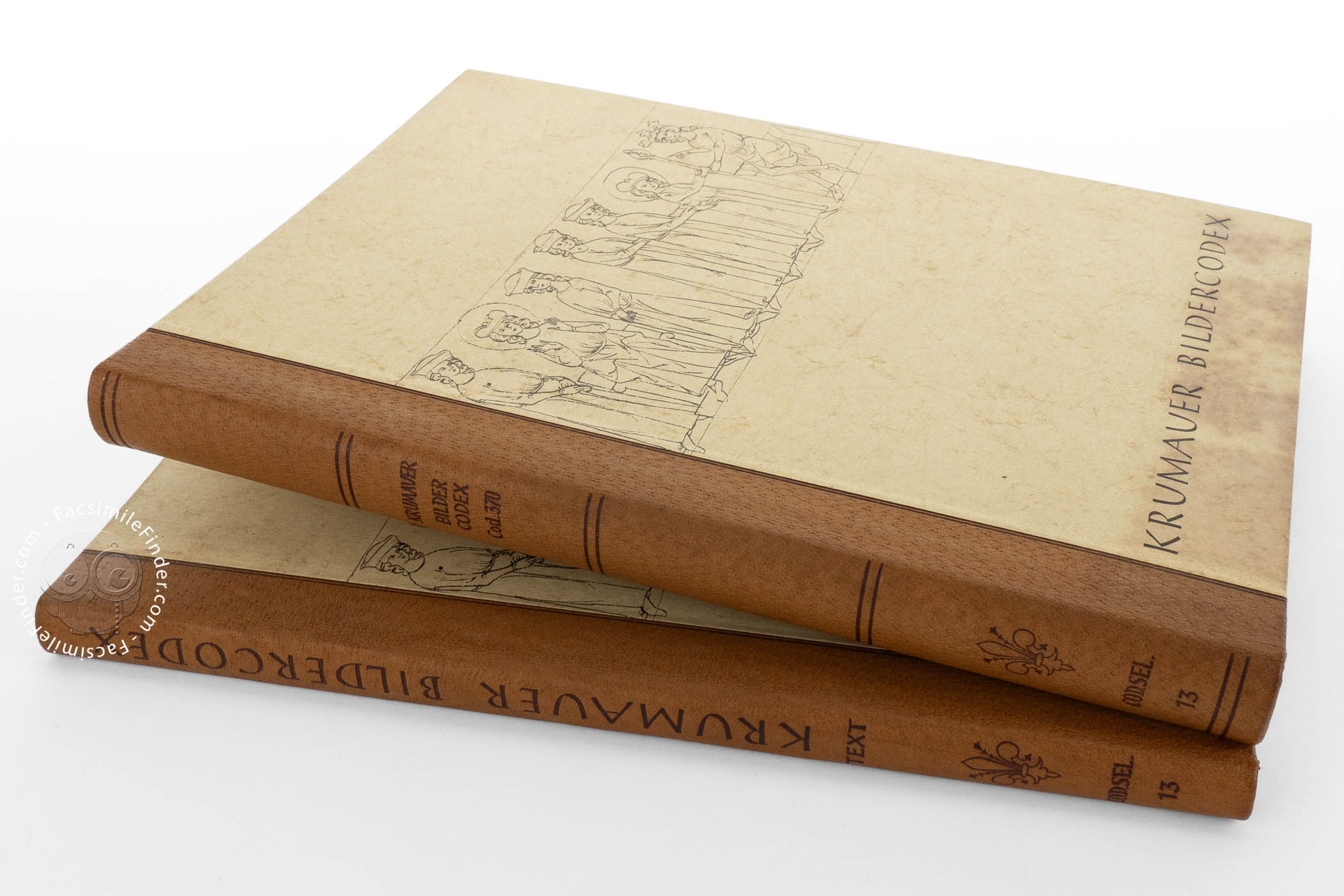
Although the manuscript includes no biographies of Franciscan saints, it was in the library of the Franciscan nuns' convent in Krumlov in 1782, when Joseph II (1741-1790), Holy Roman Emperor, had the book transferred to the Hofbibliothek in Vienna (eventually the Österreichische Nationalbibliothek). The current binding of gold-tooled parchment over pasteboard dates from 1966.
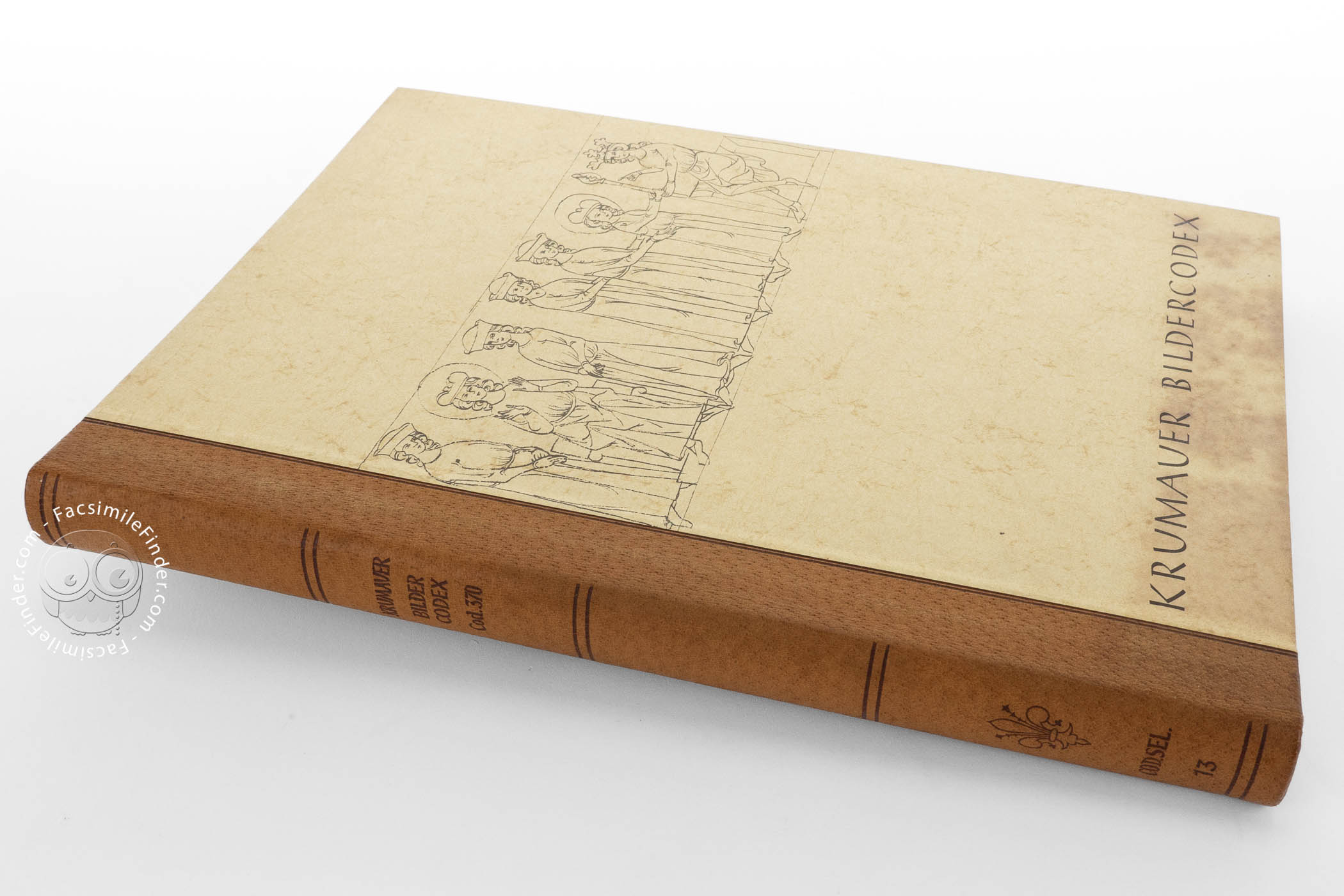
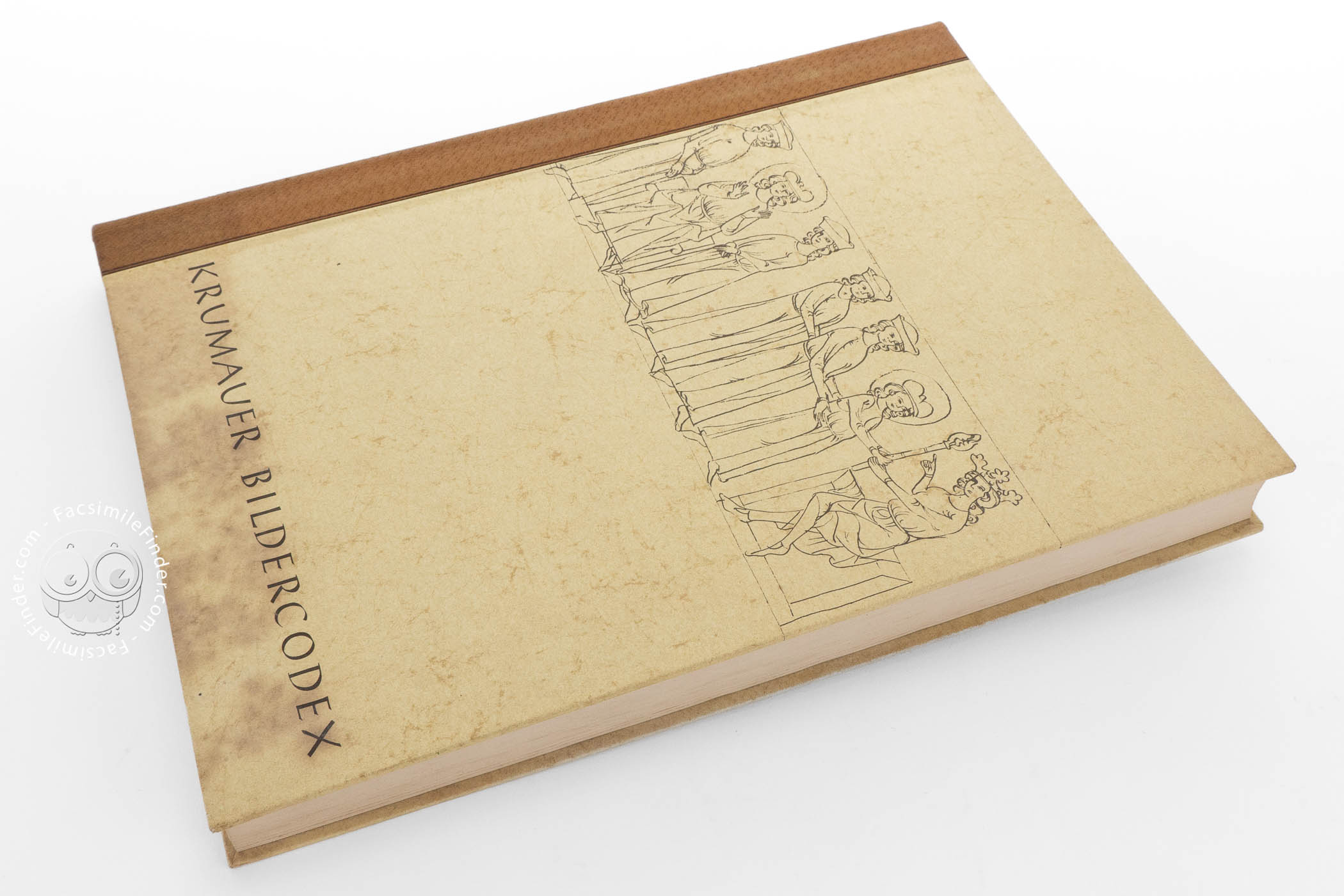
We have 1 facsimile edition of the manuscript "Krumlov Picture Codex": Krumauer Bildercodex facsimile edition, published by Akademische Druck- u. Verlagsanstalt (ADEVA), 1967
Request Info / Price