

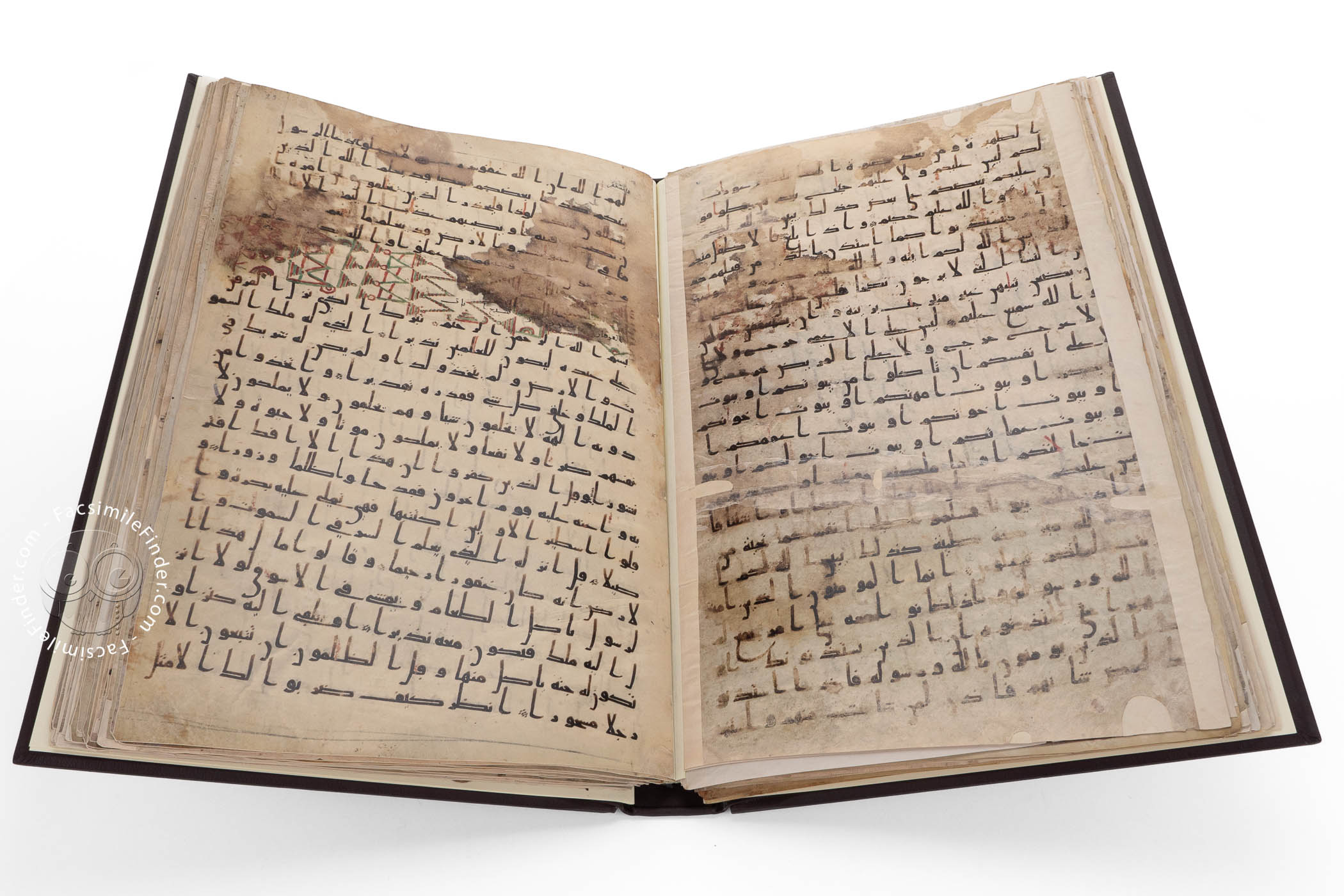
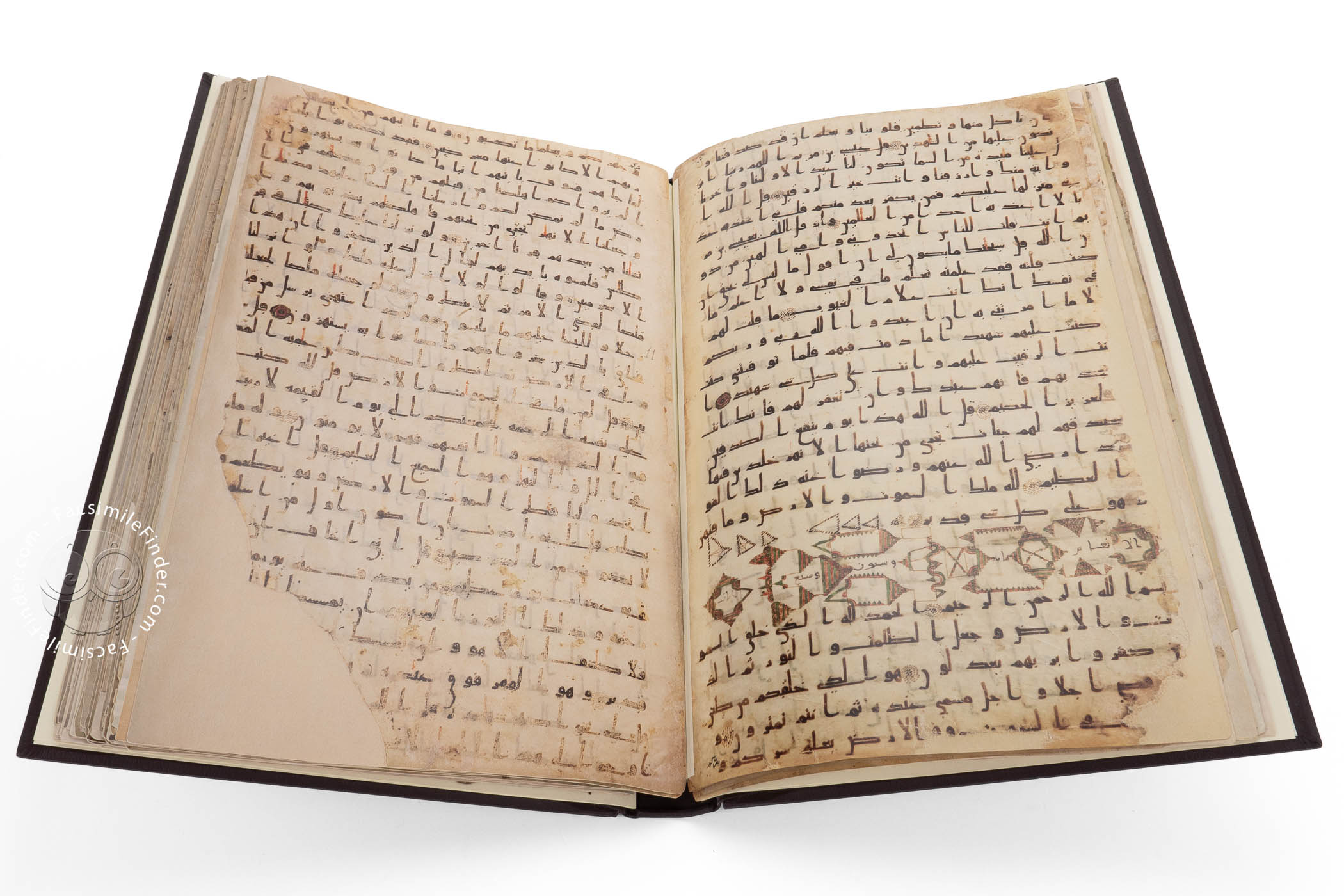
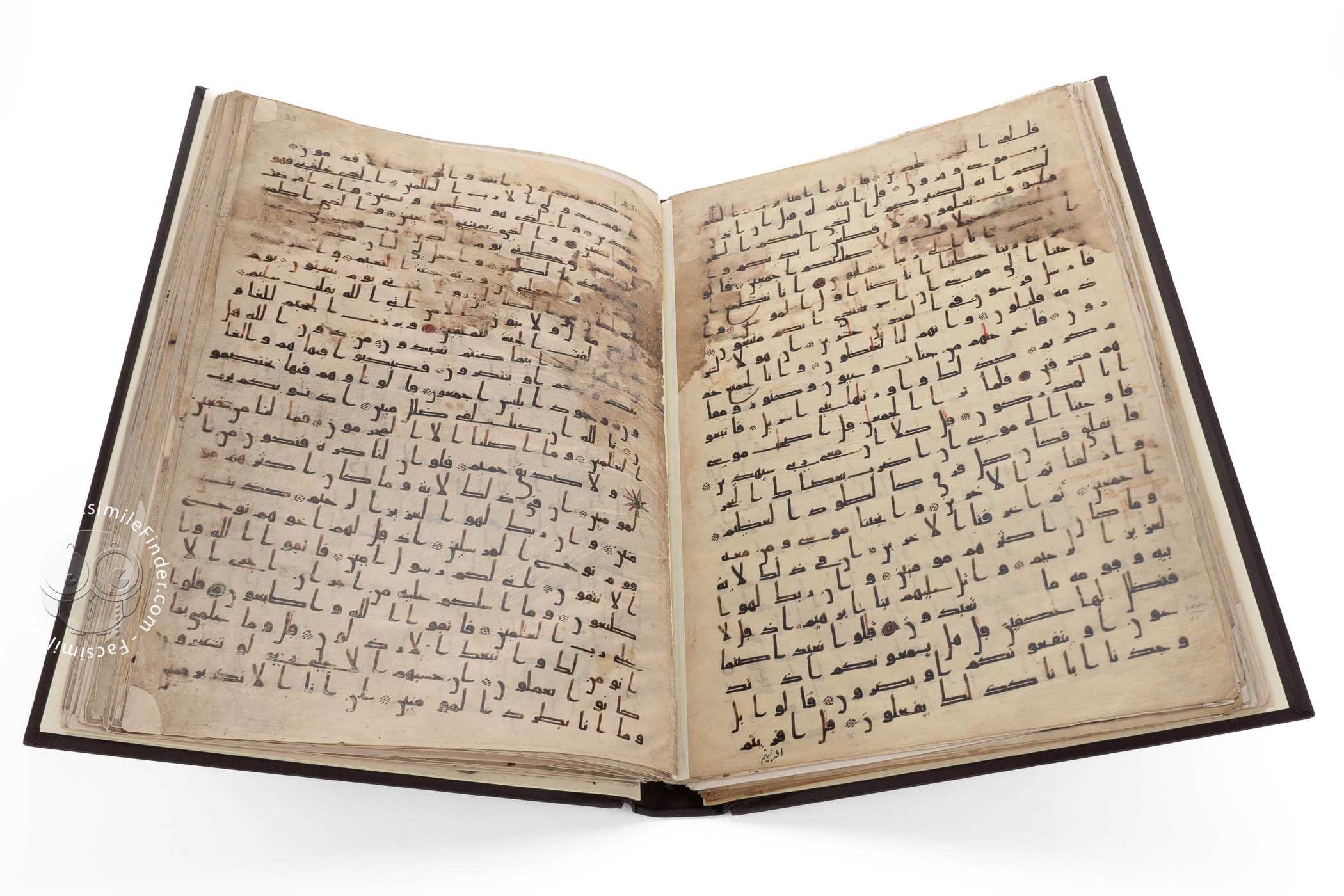
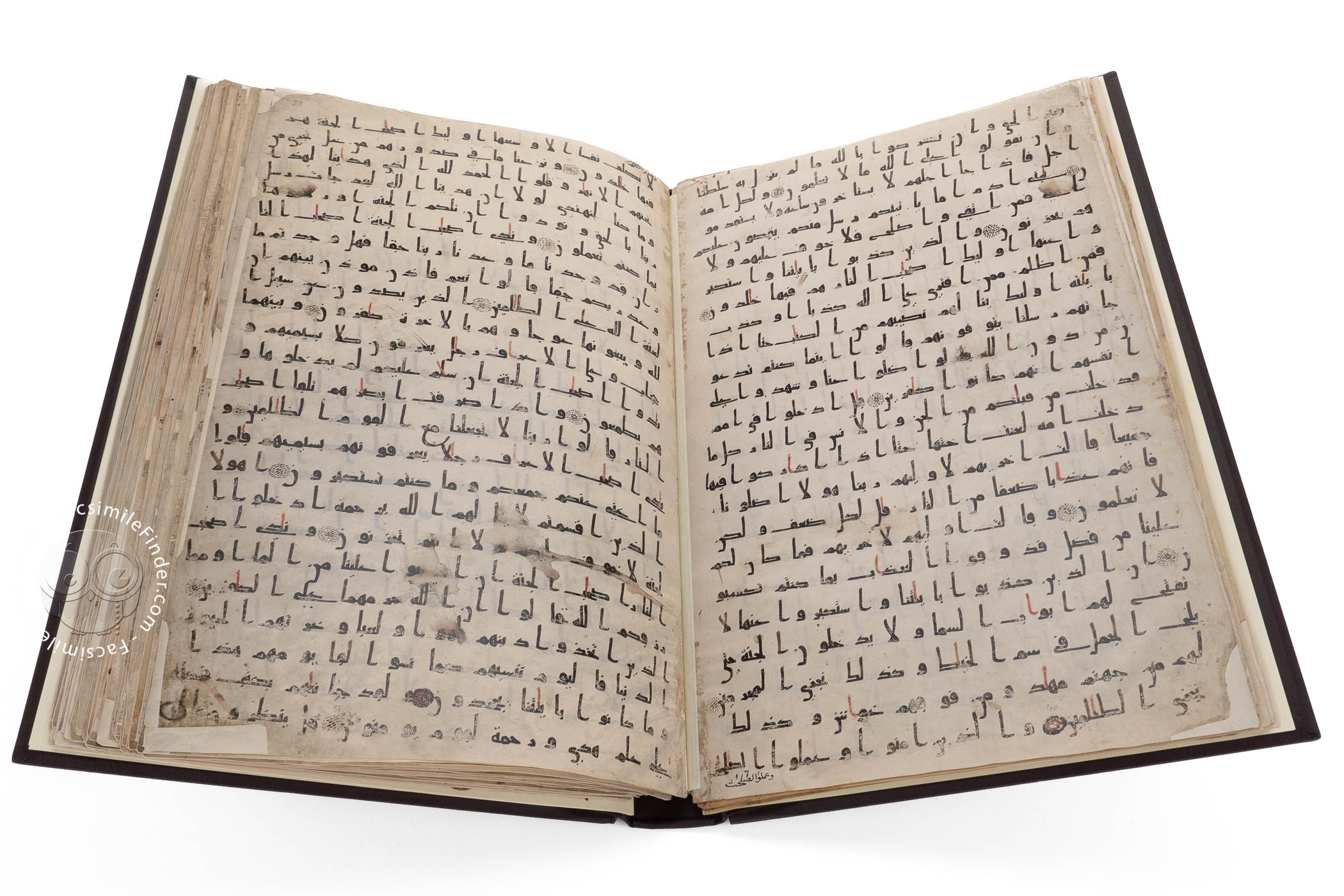
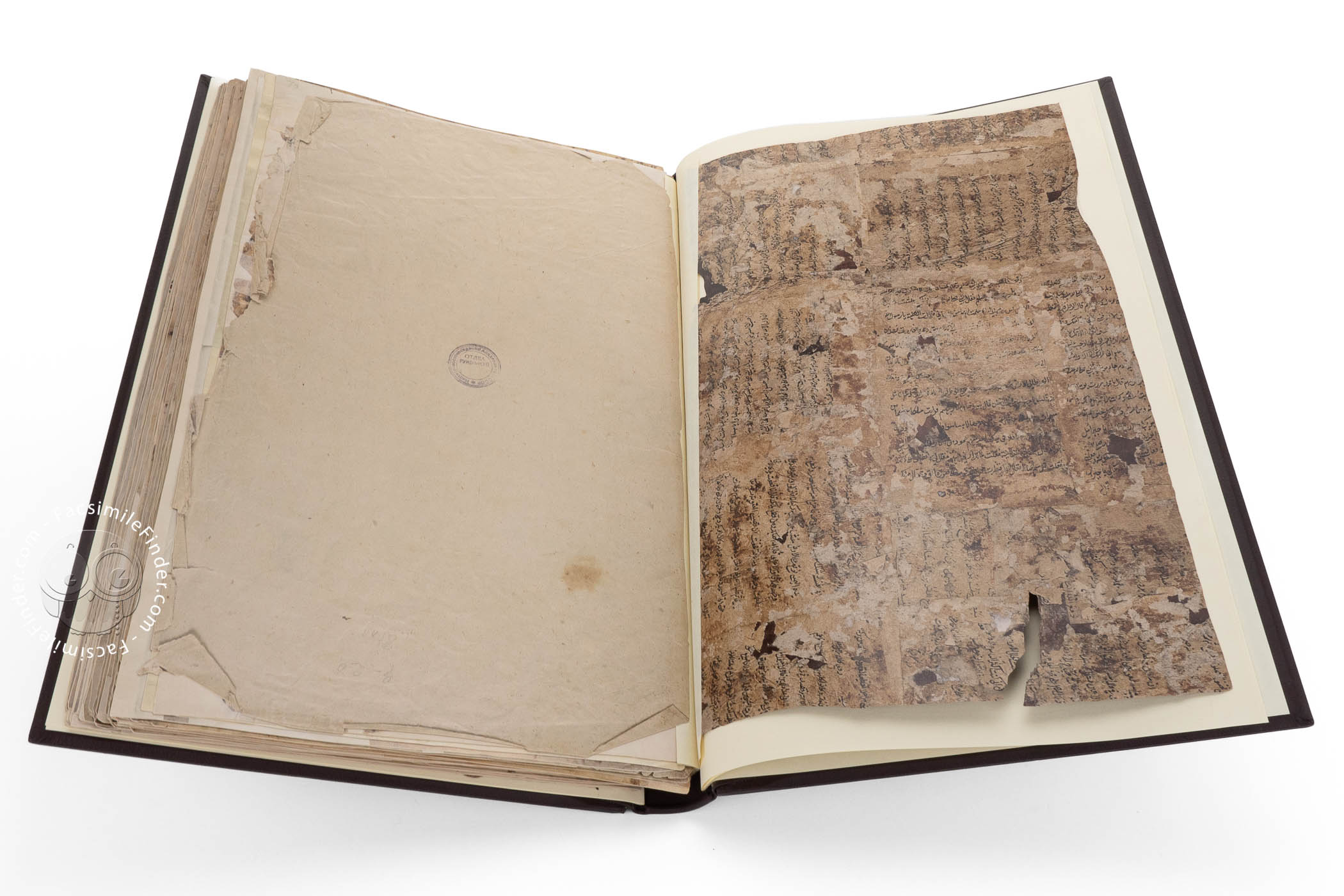
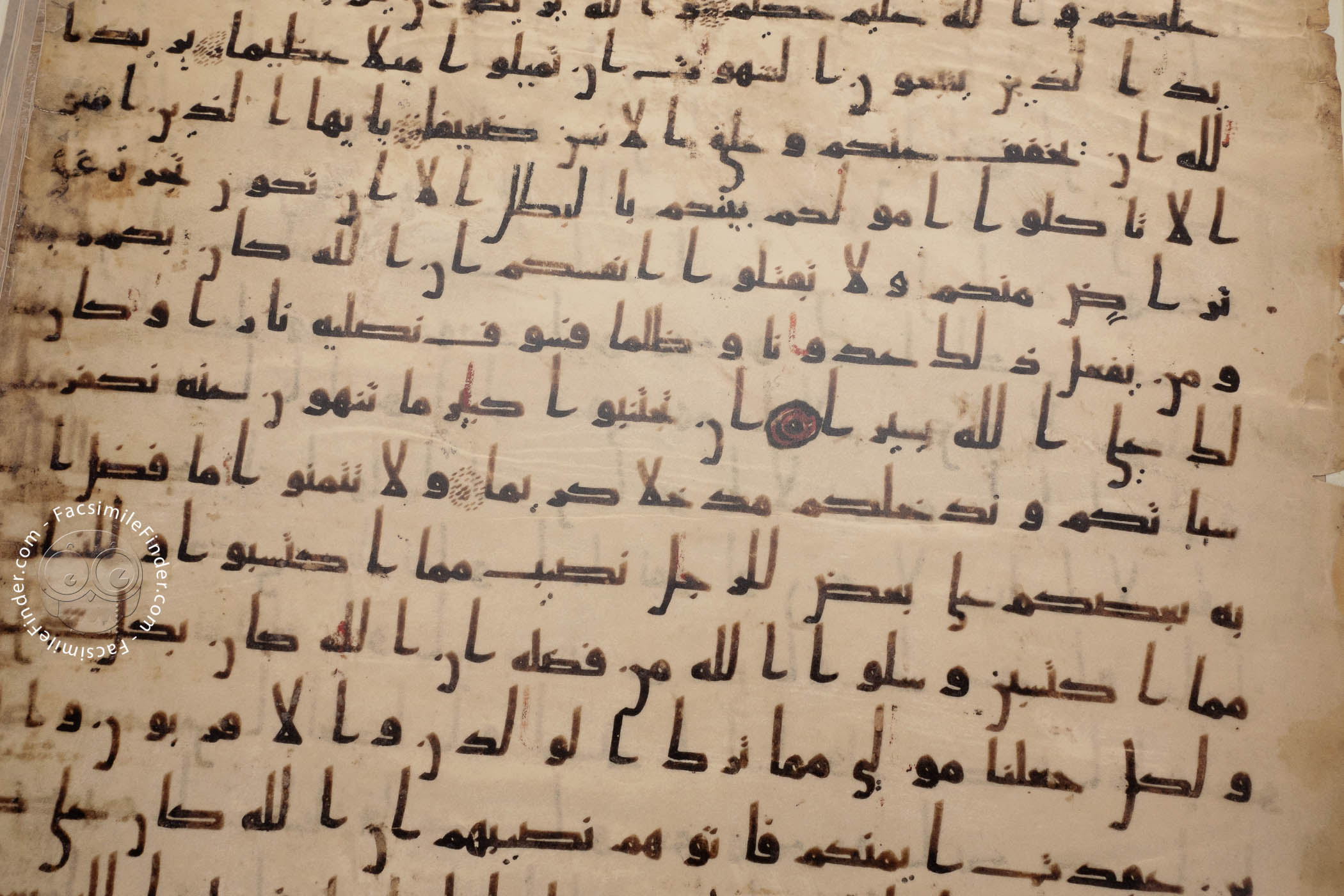
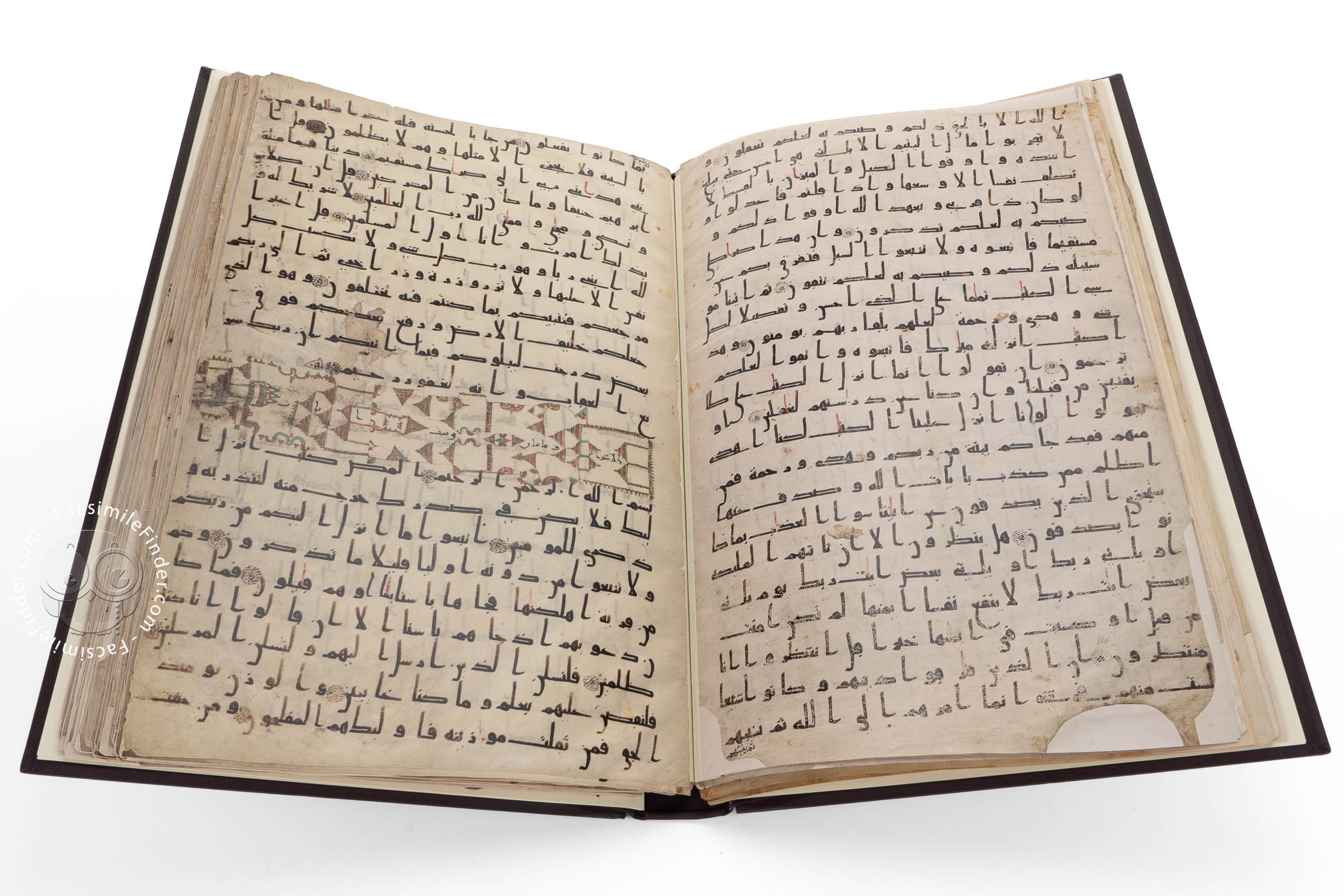
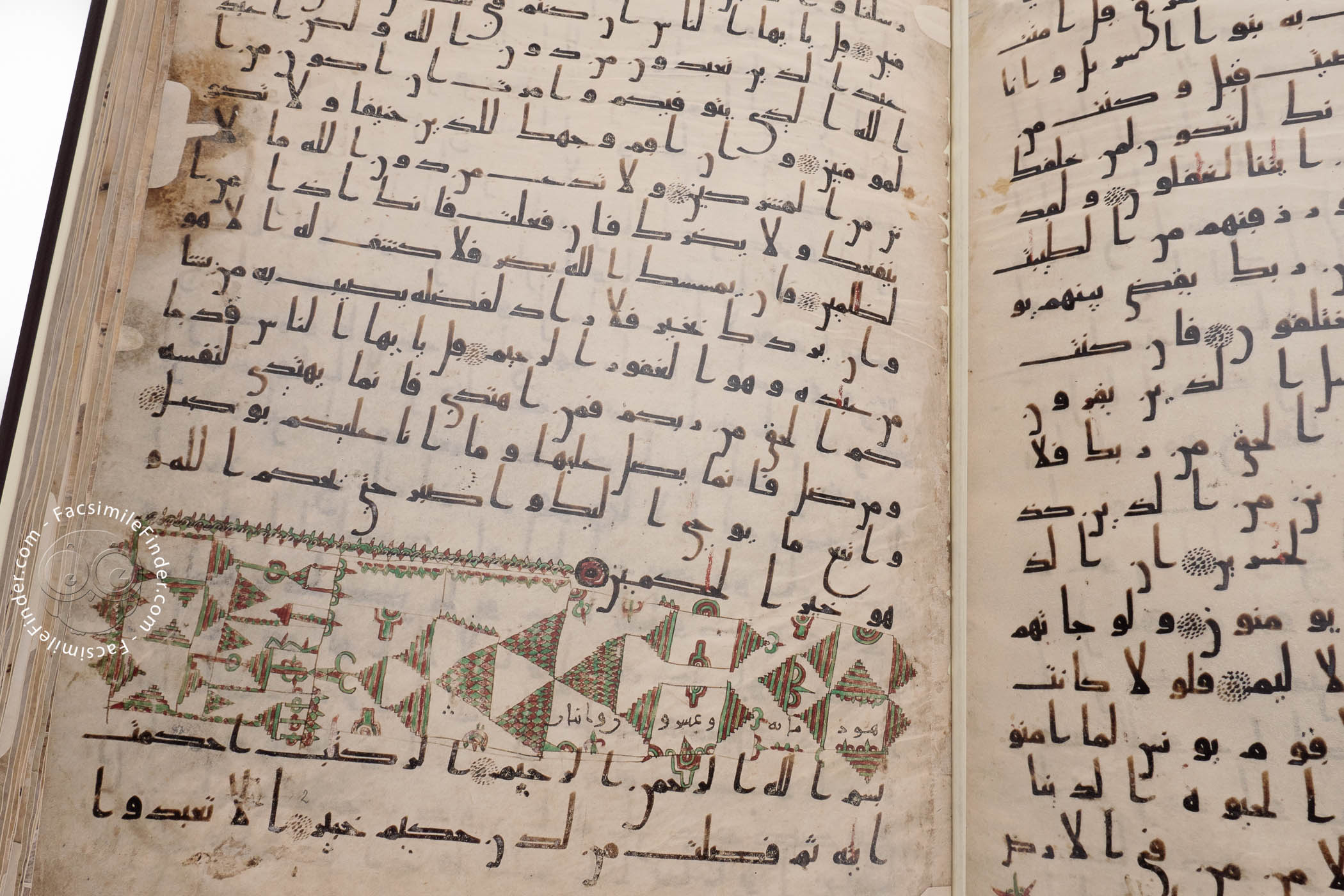
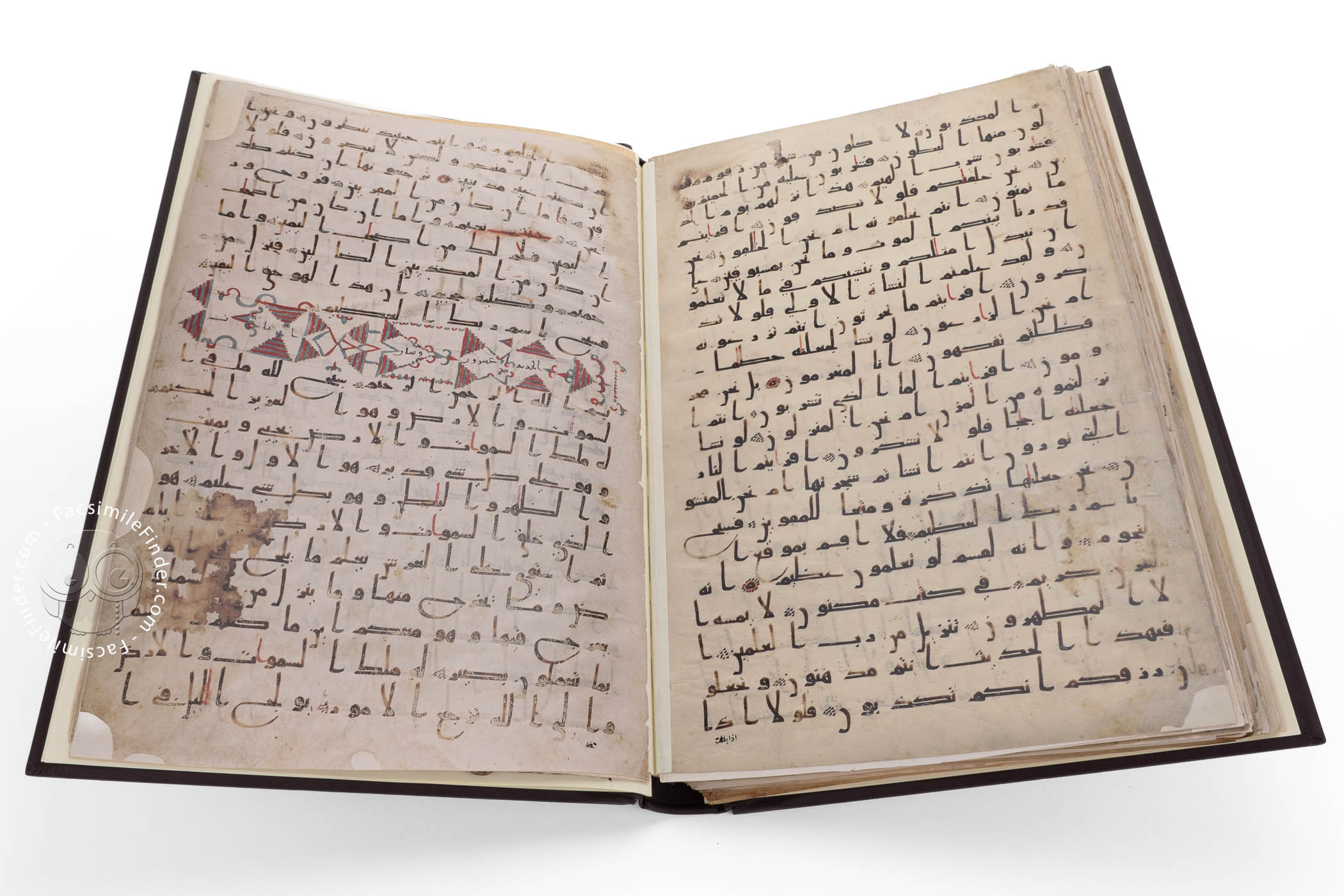
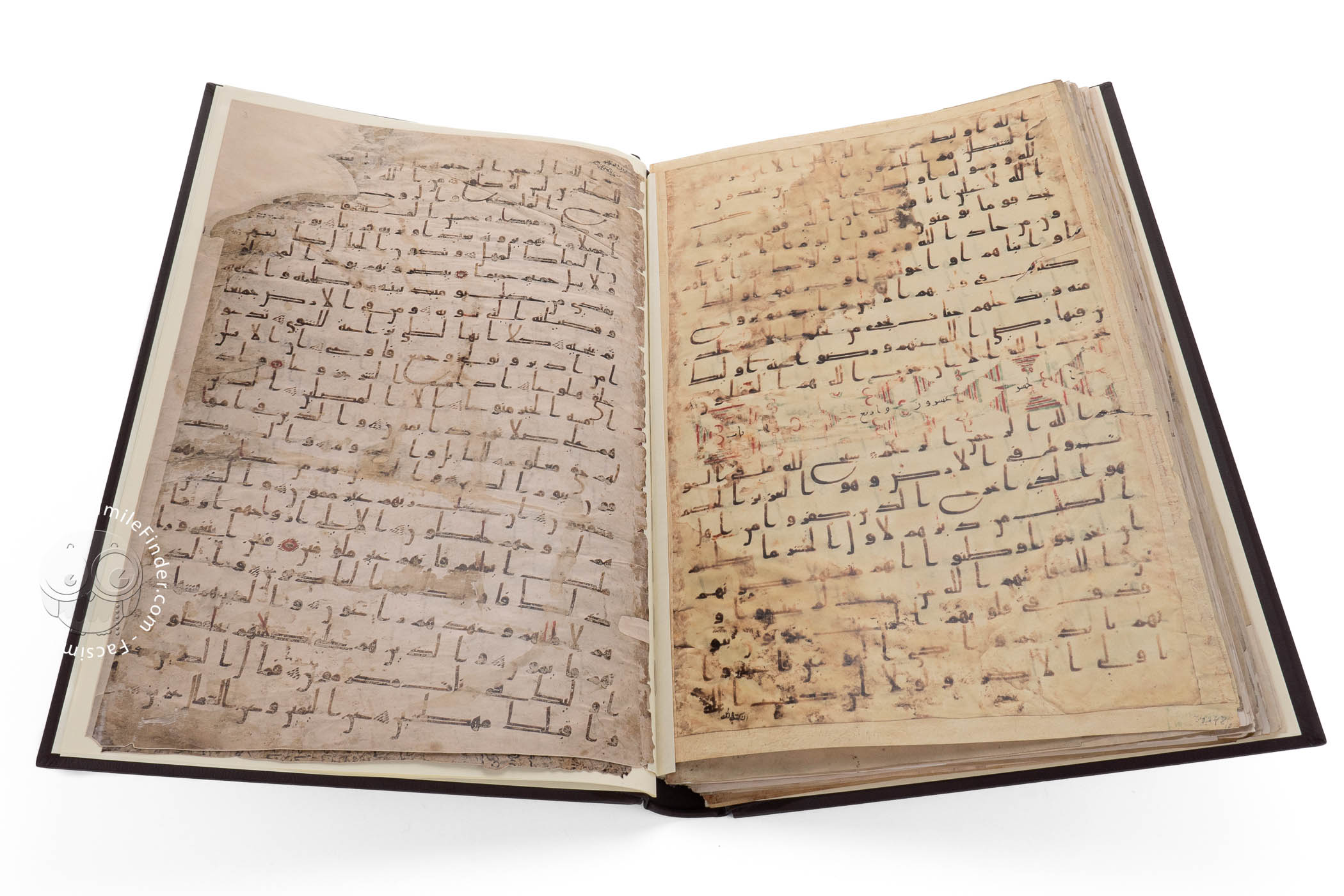
The Katta Langar Koran is a fragment comprising about half of one of the earliest surviving manuscripts of the most sacred text of Islam. Probably written in the last quarter of the eighth century in or near Medina, it is one of the earliest surviving substantial fragments of the text as it was established by Uthman, the third temporal and spiritual head of the faith. It is of unsurpassed importance as an early witness to the authoritative text of the Koran (= "recitation") written in Hijazi, the local script of the western Arabian Peninsula.
The Koran is understood as the word of God transmitted to the Prophet Muhammad by the archangel Gabriel over the course of twenty-three years. It comprises 114 suras (chapters), which vary in length from just a few verses to pages long.
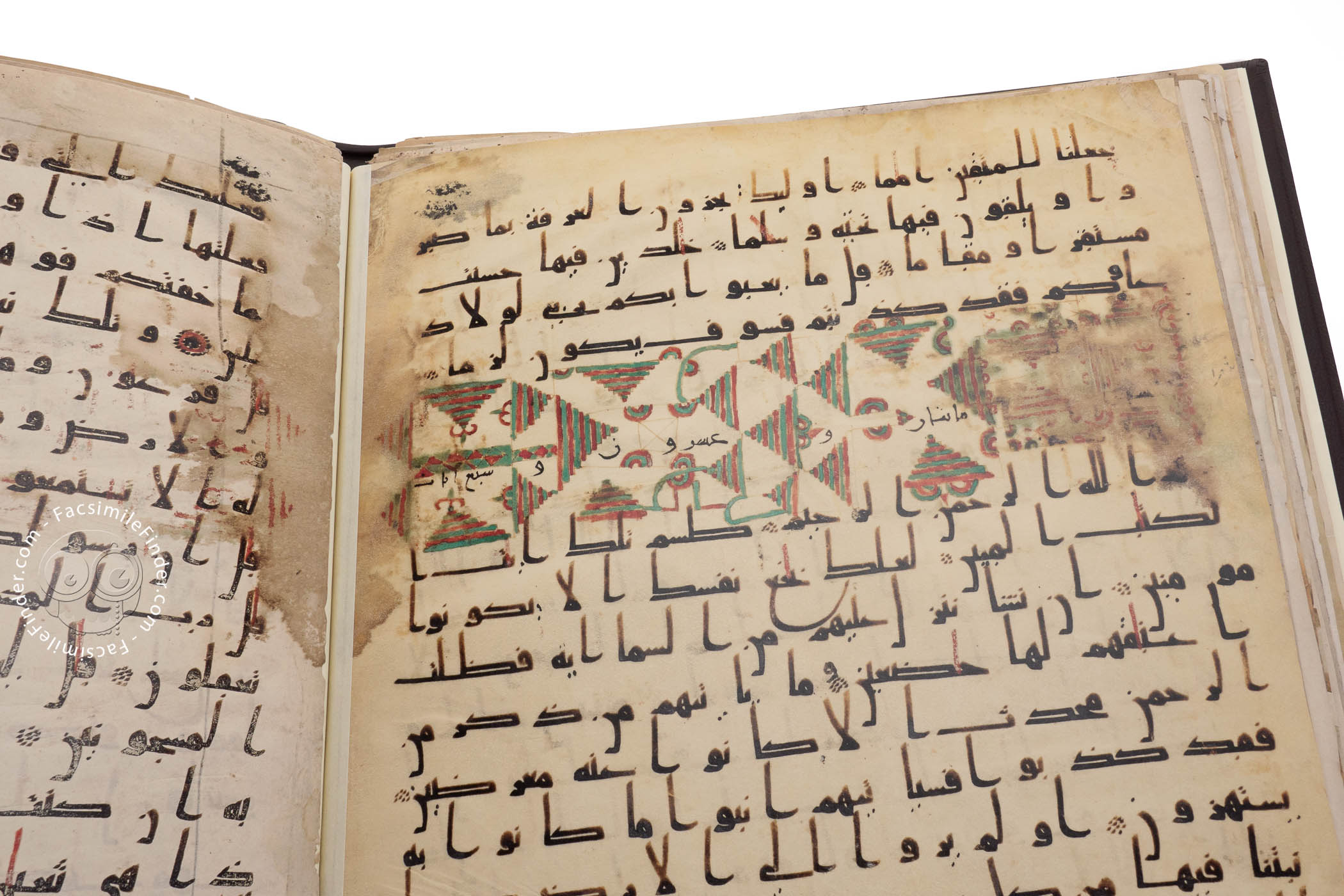
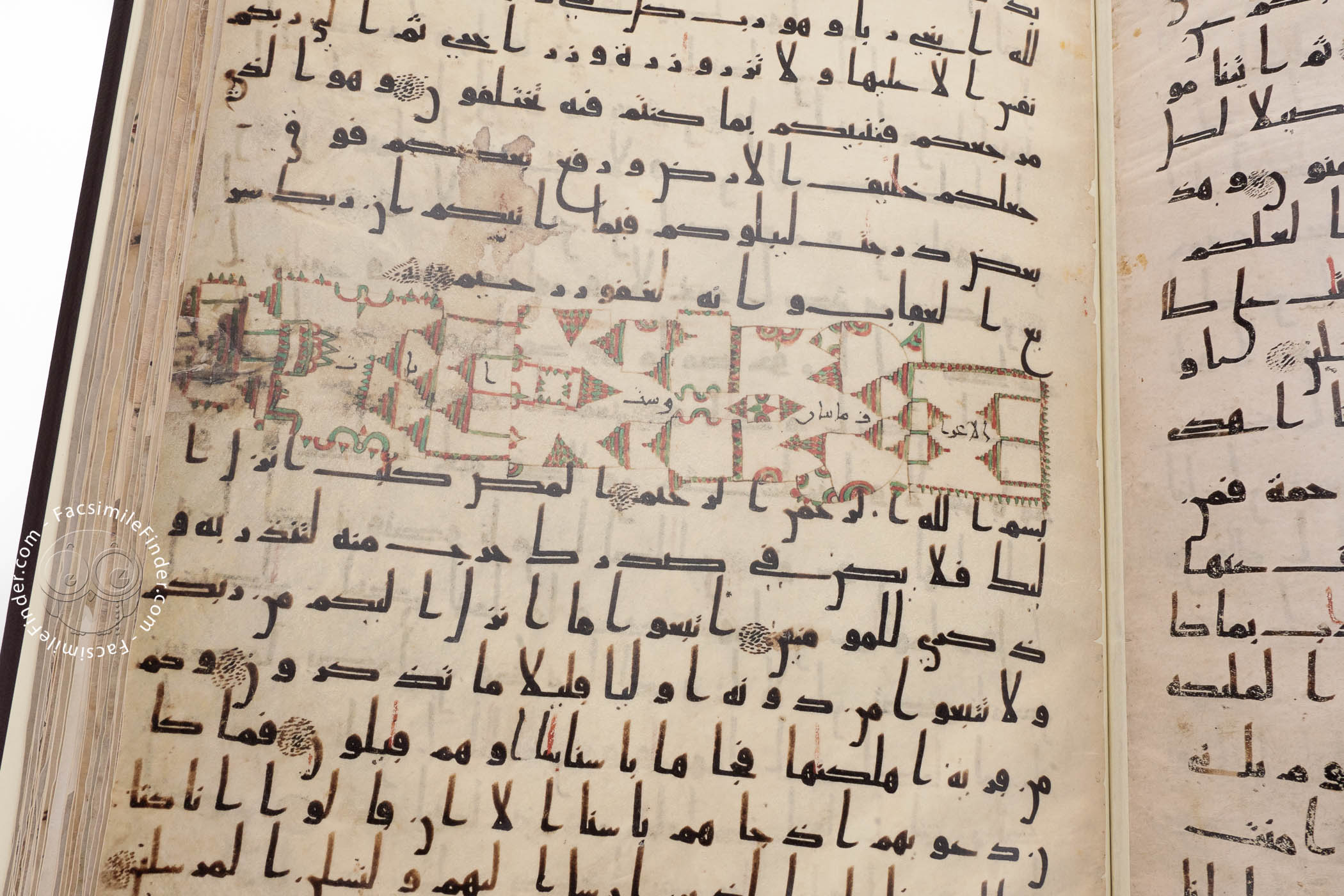
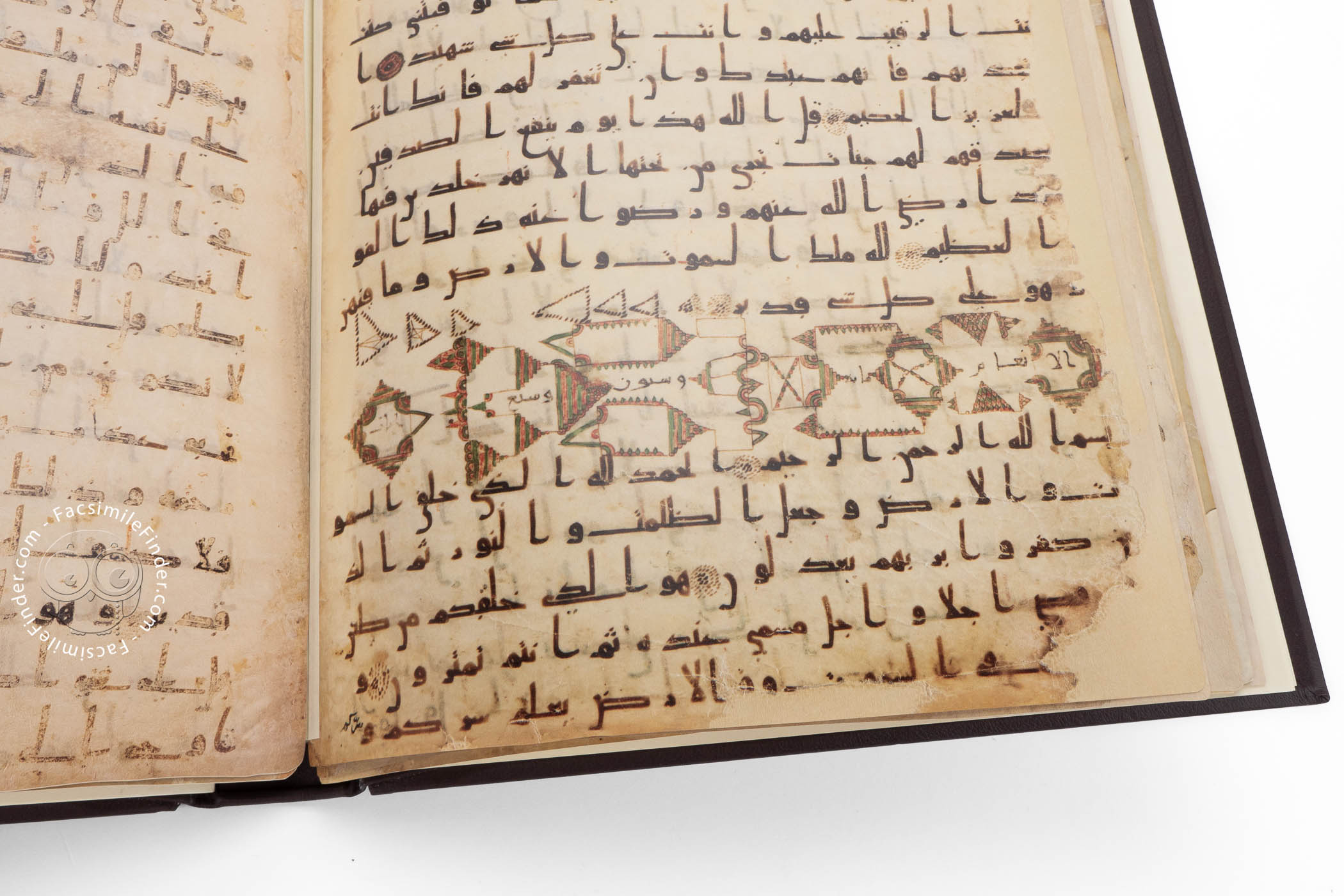
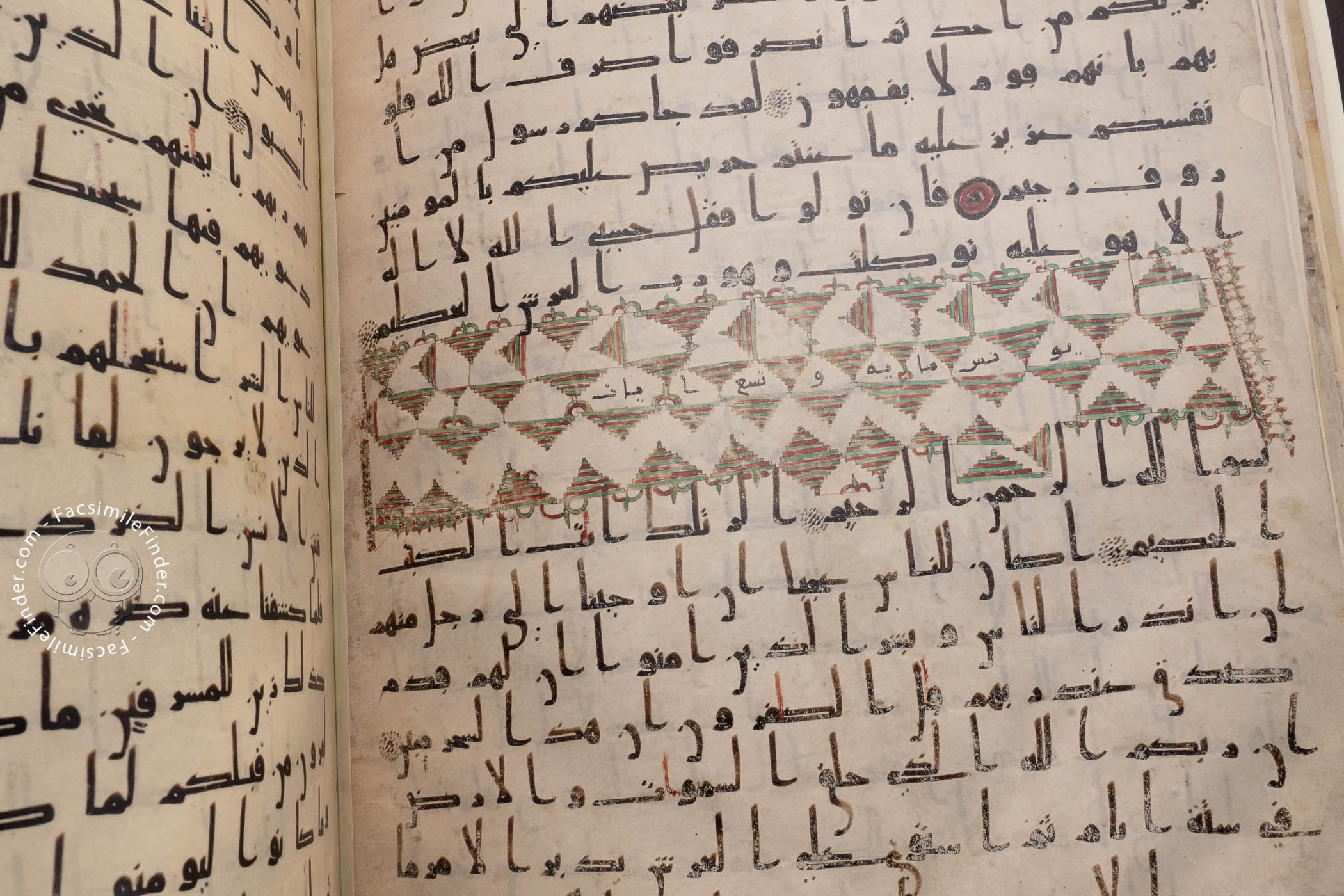
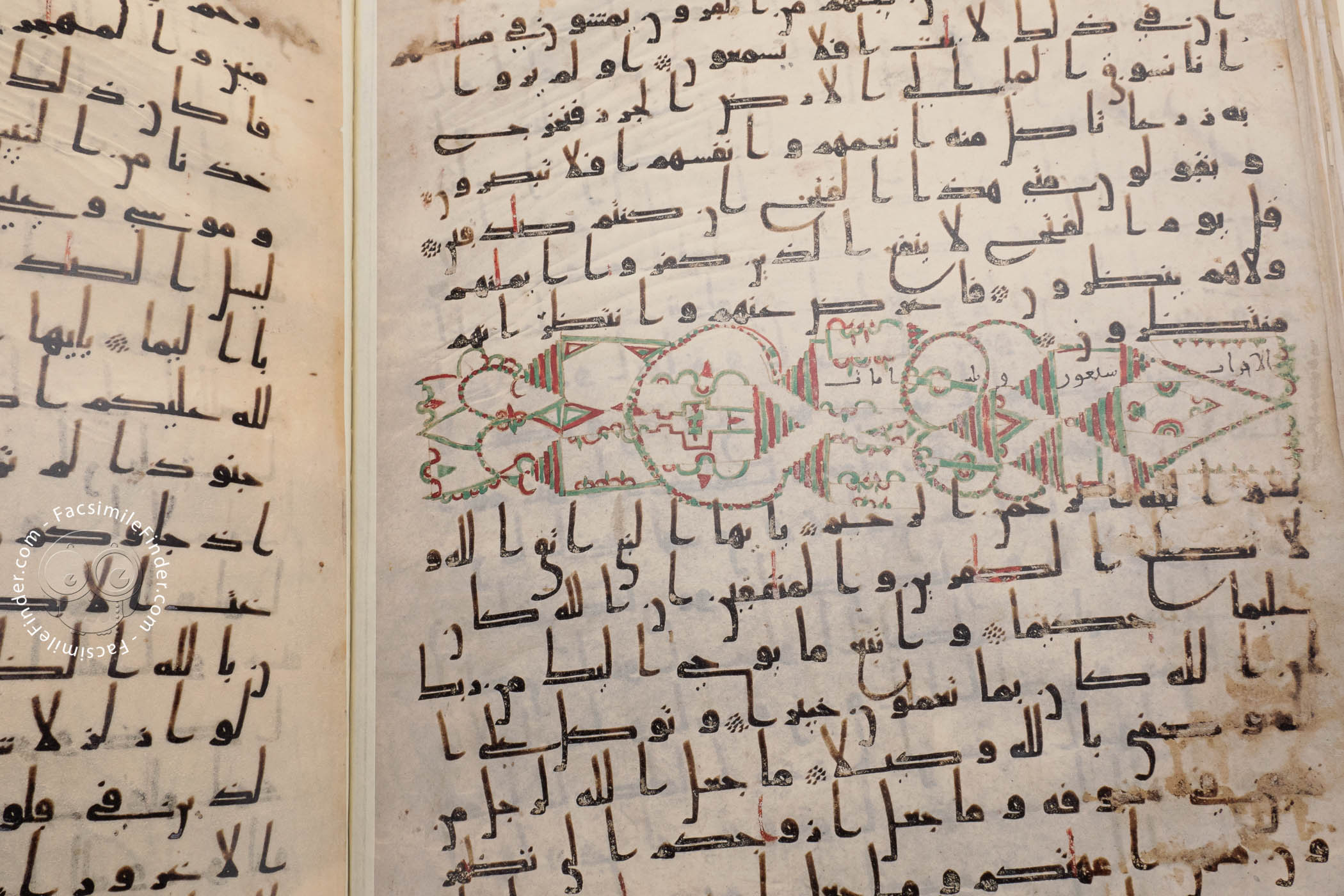
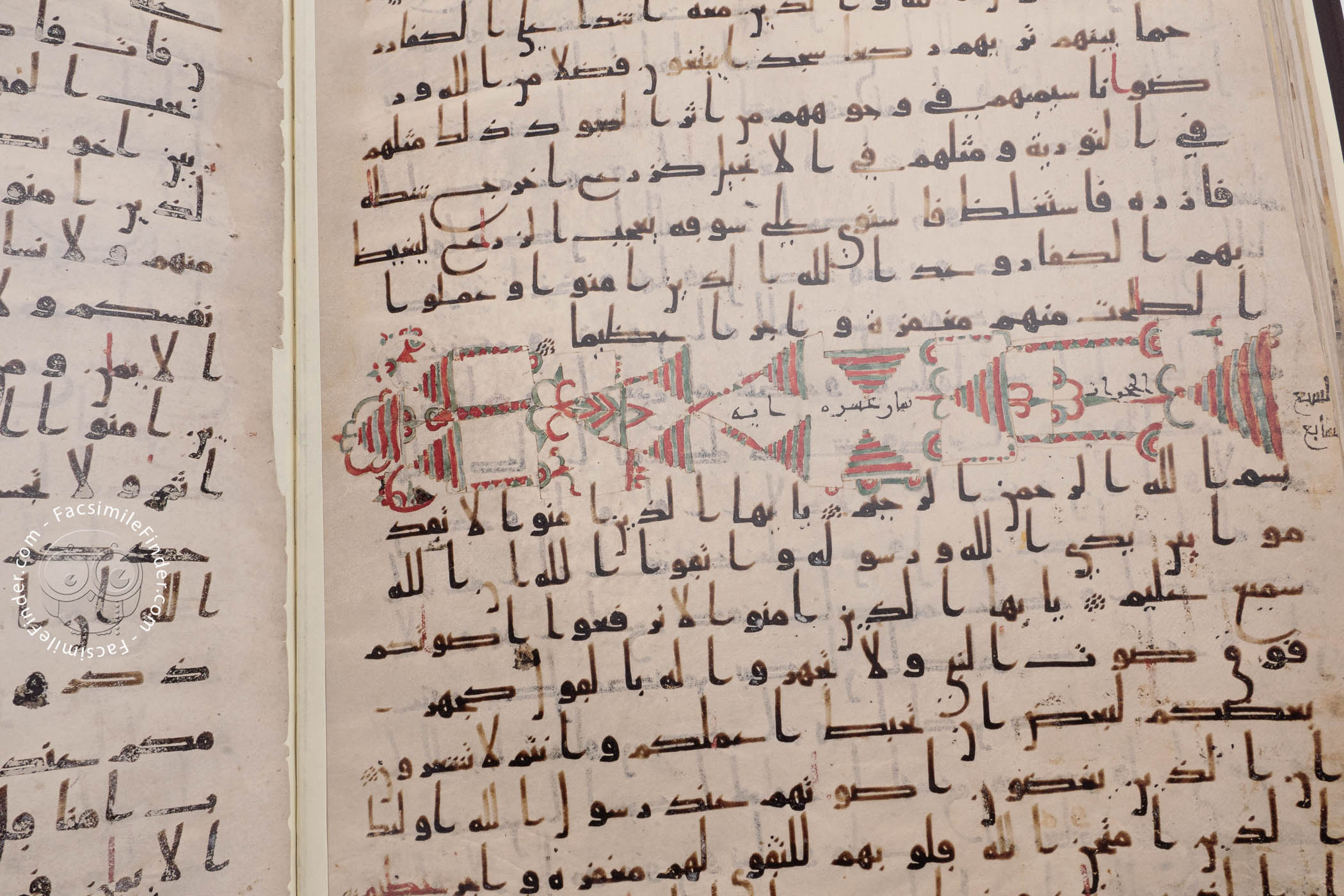
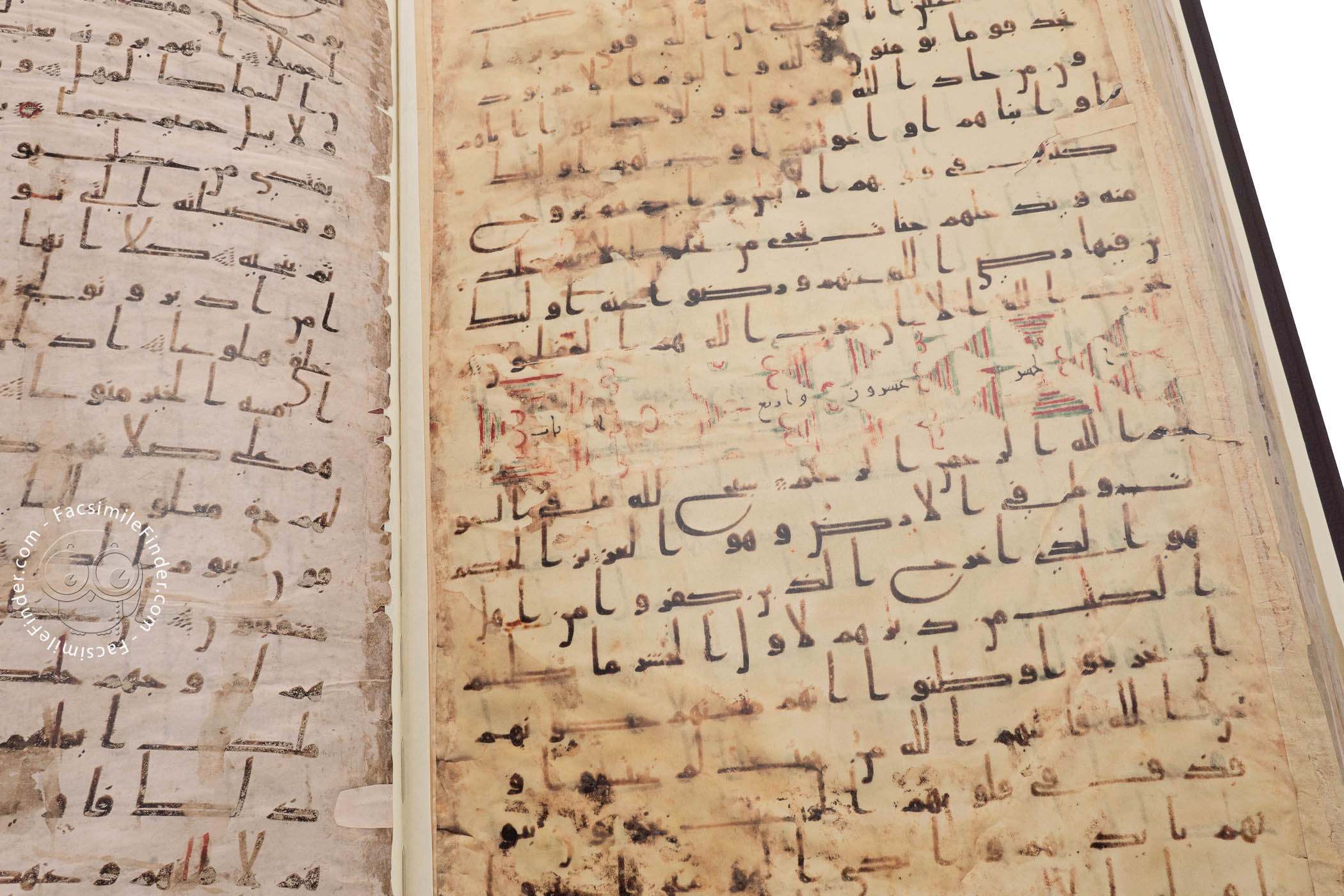
Chapter Dividers in Colored Inks
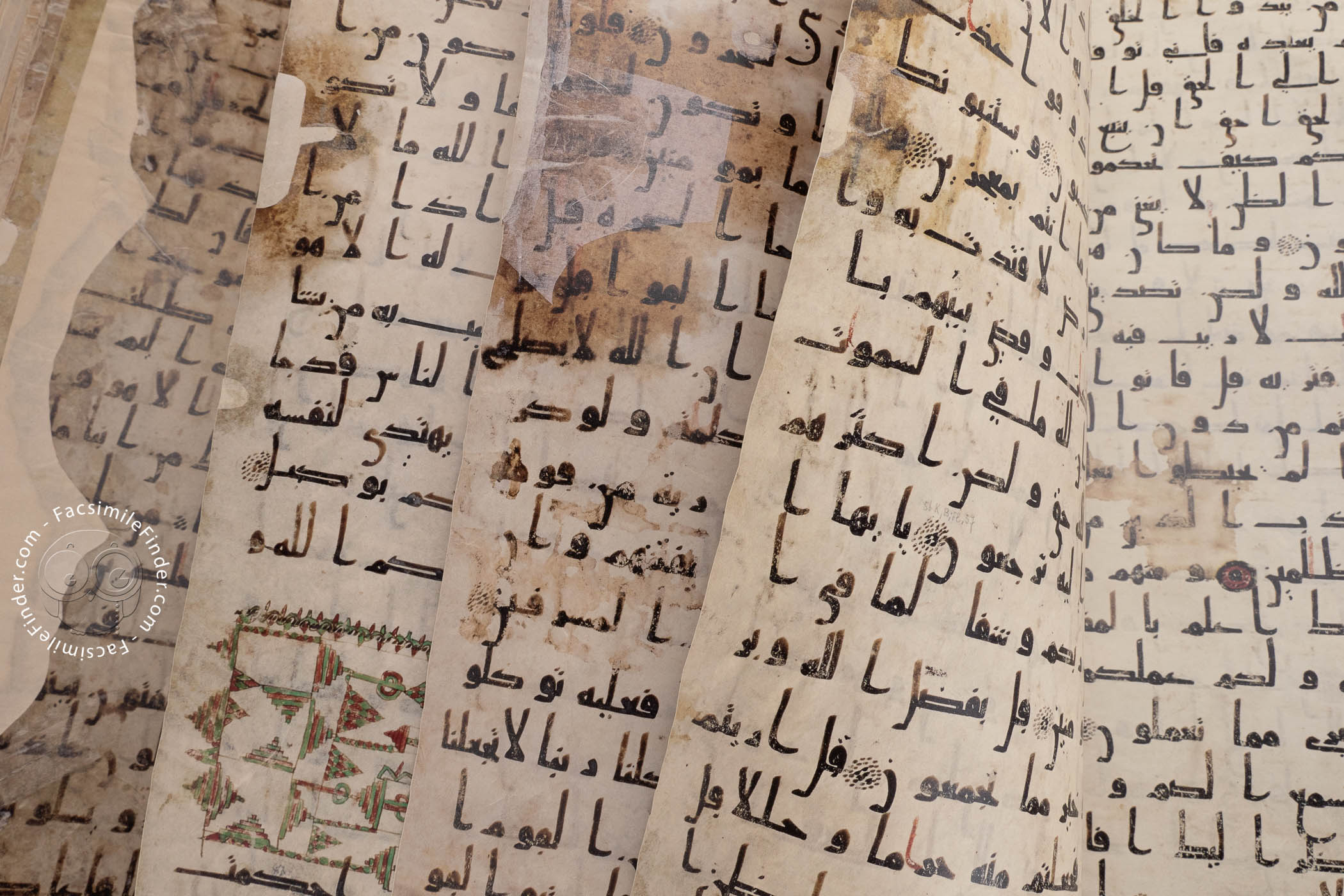
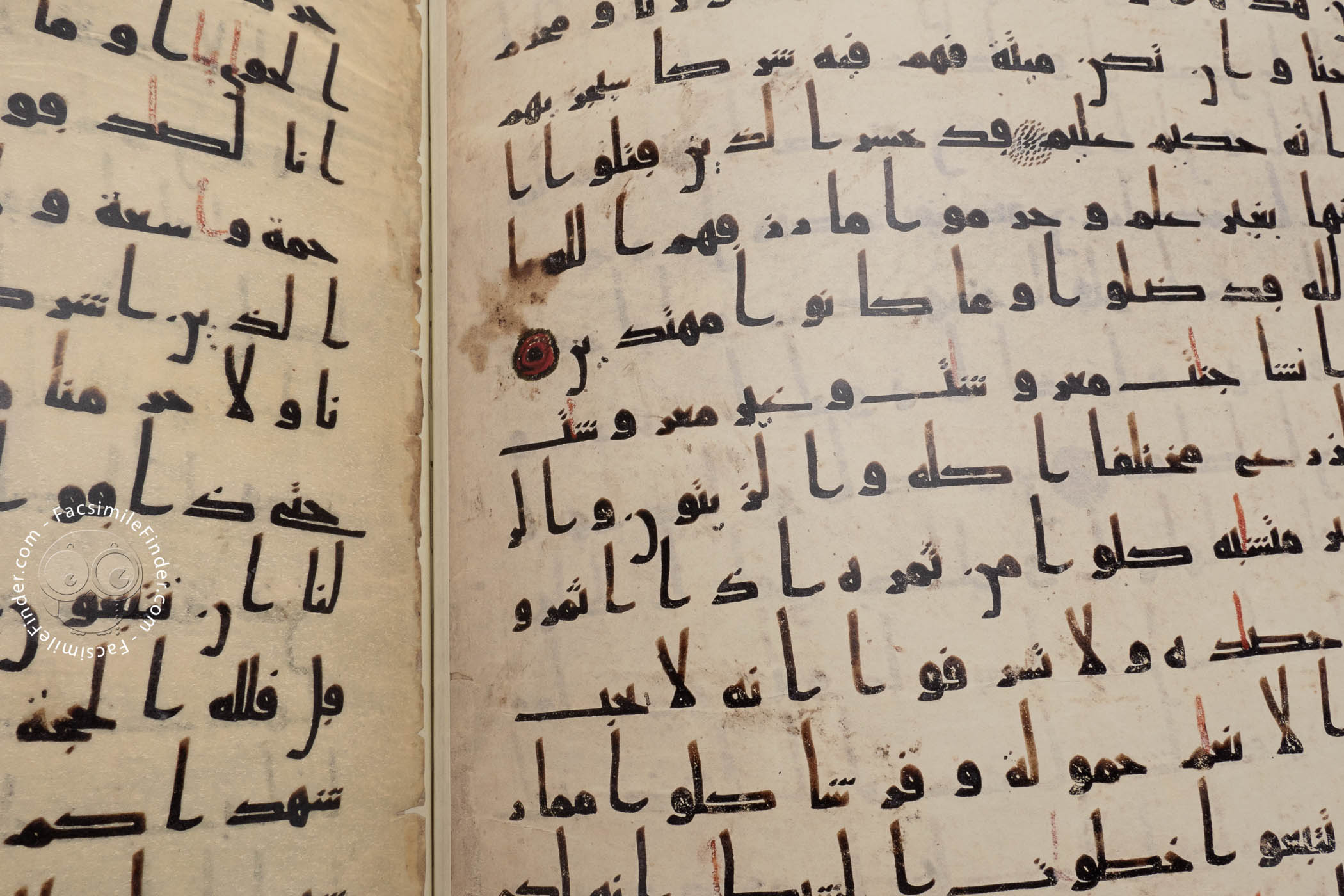
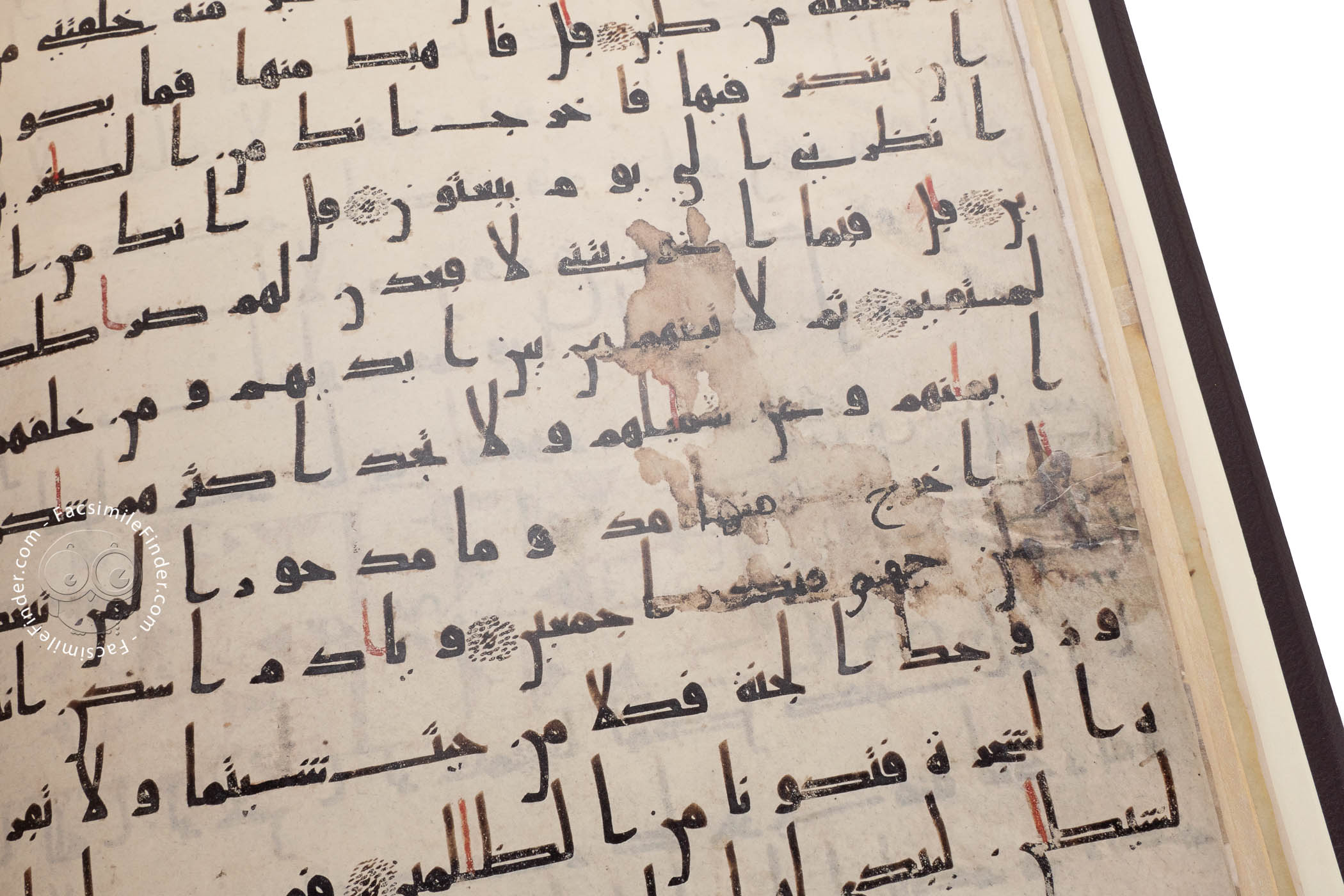
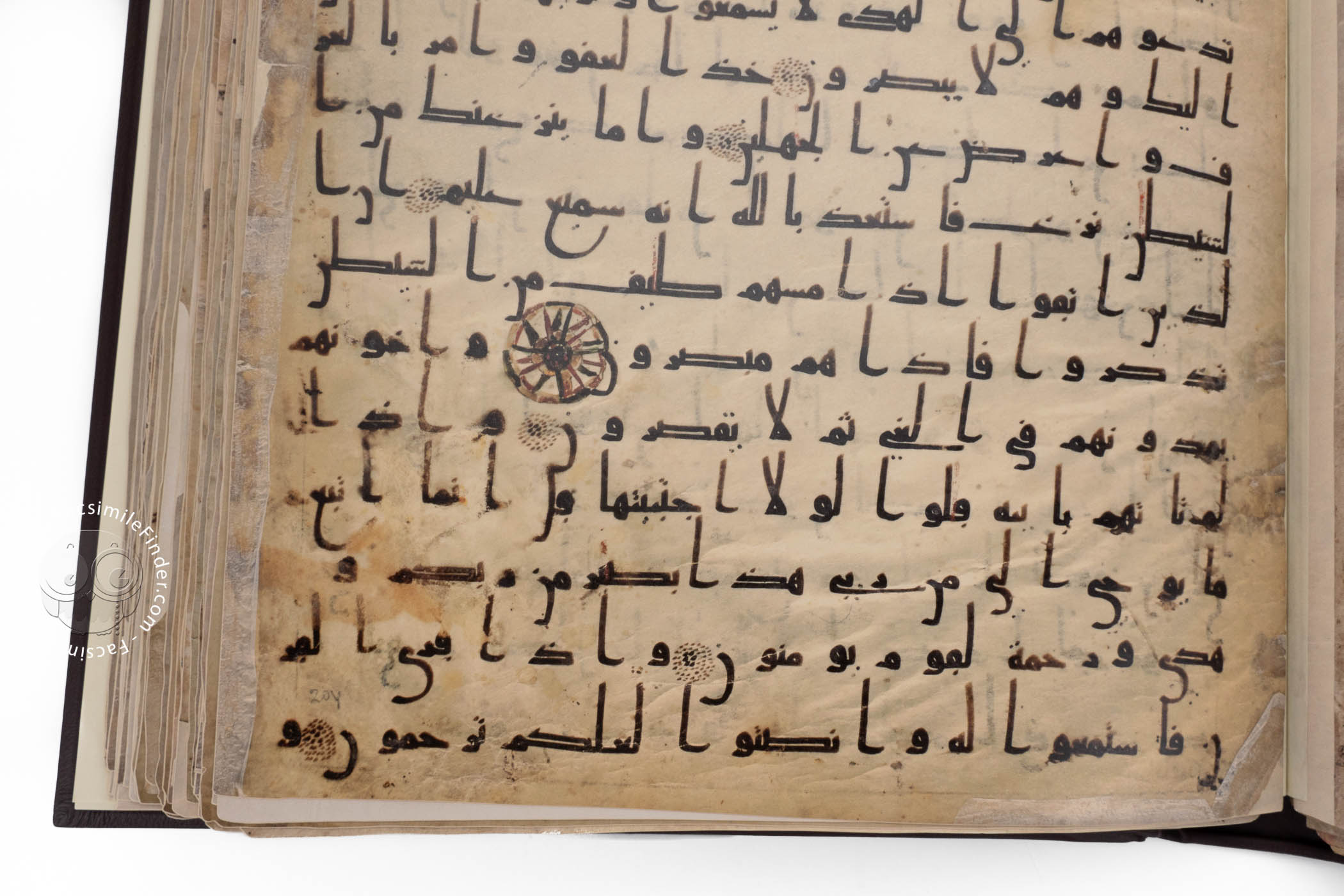
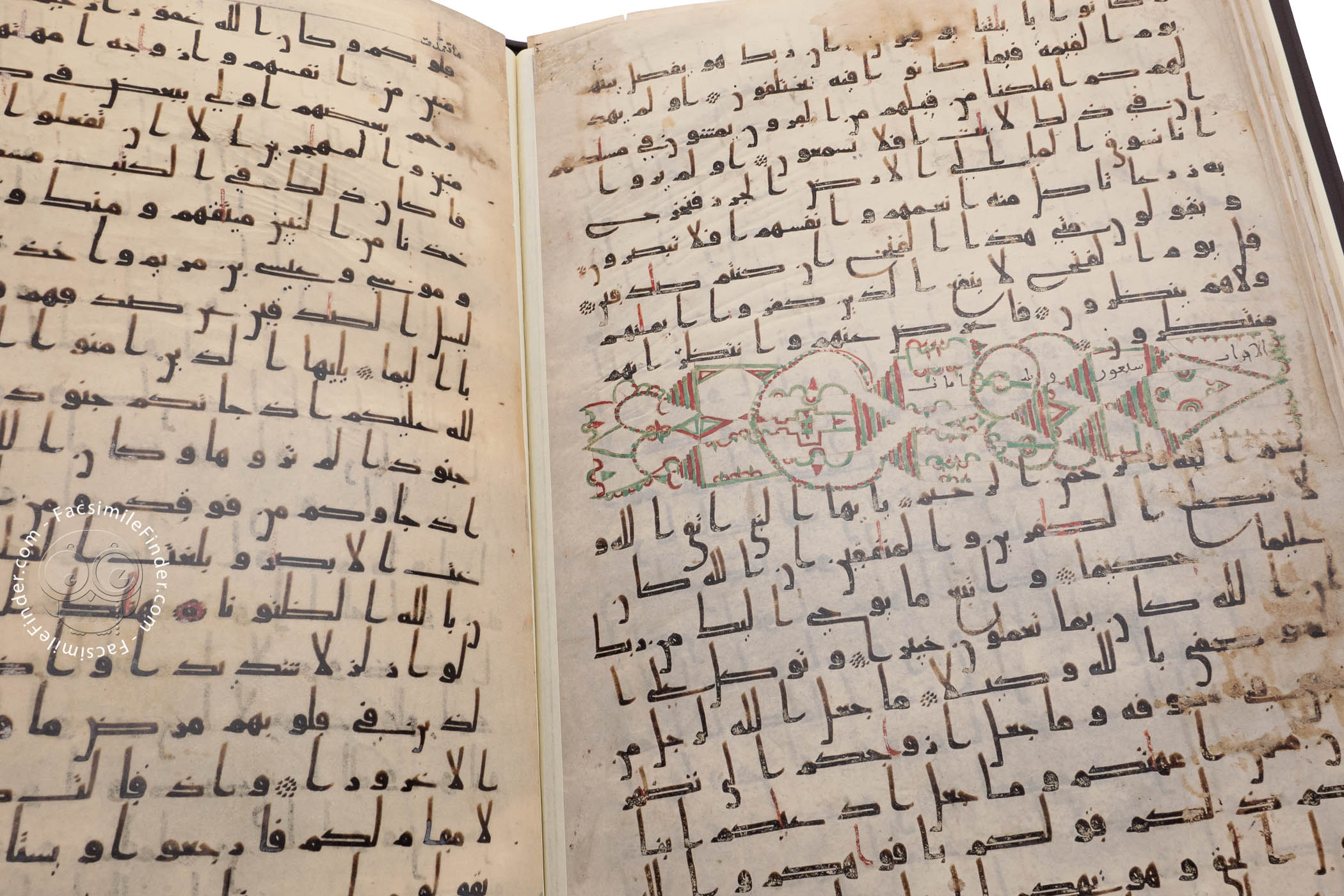
The sayings revealed to the Prophet were written in the Katta Langar Koran in brown/black ink by at least two scribes in late Hijazi (or early Abbasid) script with diacritics to distinguish consonants of the same basic form. Some vocalizations (vowel marks) have been added, and some of the letters retraced, but it is impossible to date these interventions. The individual verses are separated by clusters of dots, which often had to be squeezed in to fit an already existing text.
Blank spaces originally separated the suras. At some point in the ninth century, geometric designs dominated by triangles and semicircles, in red and green ink, were inserted into these blank spaces. The names of suras and the number of verses were written in small archaic script within these geometric designs. At the same time that the geometric chapter separators were added, designs were added to mark clusters of ten, 100, and 200 verses, those for groups of 100 verses being star-shaped and those for 200 verses being wheel-shaped.
An Oral Text
In essence, the Koran is memorized, recited, and heard. Nevertheless, by the mid-seventh century, the need was felt to establish an authoritative written version of the text, and the Prophet's son-in-law Caliph Uthman ibn Affan (d. 656) initiated an effort to create a uniform text based on Medina tradition. Although the Katta Langar Koran displays some variants, it substantially follows the Uthmanian text.
A Substantial Fragment
The surviving leaves of the Katta Langar Koran constitute almost half of the Uthmanian text, embracing most of chapters 2-71. The earliest and rarest Koran manuscripts, including the Katta Langar Koran, are written in Hijazi script and are in a vertical (portrait) format, with pages taller than they are wide, a script and format that came to be supplanted already in the ninth century.
A Scholarly Owner
The largest share of the fragment, comprising 81 leaves, was purchased in 1936 by the Institute of Oriental Studies. That fragment was formerly in the collection of Iriney (Selim) Georgeivich Nofal (1828-1902), a Syrian orientalist who lived in St. Petersburg.
Leaves Preserved in Uzbekistan
The twelve leaves in Katta Langar are preserved with two leaves from another Koran manuscript in a nineteenth-century binding of blind stamped red morocco signed by Muhammad Nasir. Oral tradition has it that this fragment was once much more extensive, perhaps so extensive as to make up most of the now-missing leaves. It is rumored that at least some of these leaves are currently in private possession.
The leaf preserved at the Institute of Oriental Studies in Tashkent was once in the possession of Muhammad Sharif-Jan Makhdum Sadr-I Diya (d. 1932). The two leaves in Bukhara came from the library of Muhammad Siddiq b. Amir Muzzaffar (1857-1927).
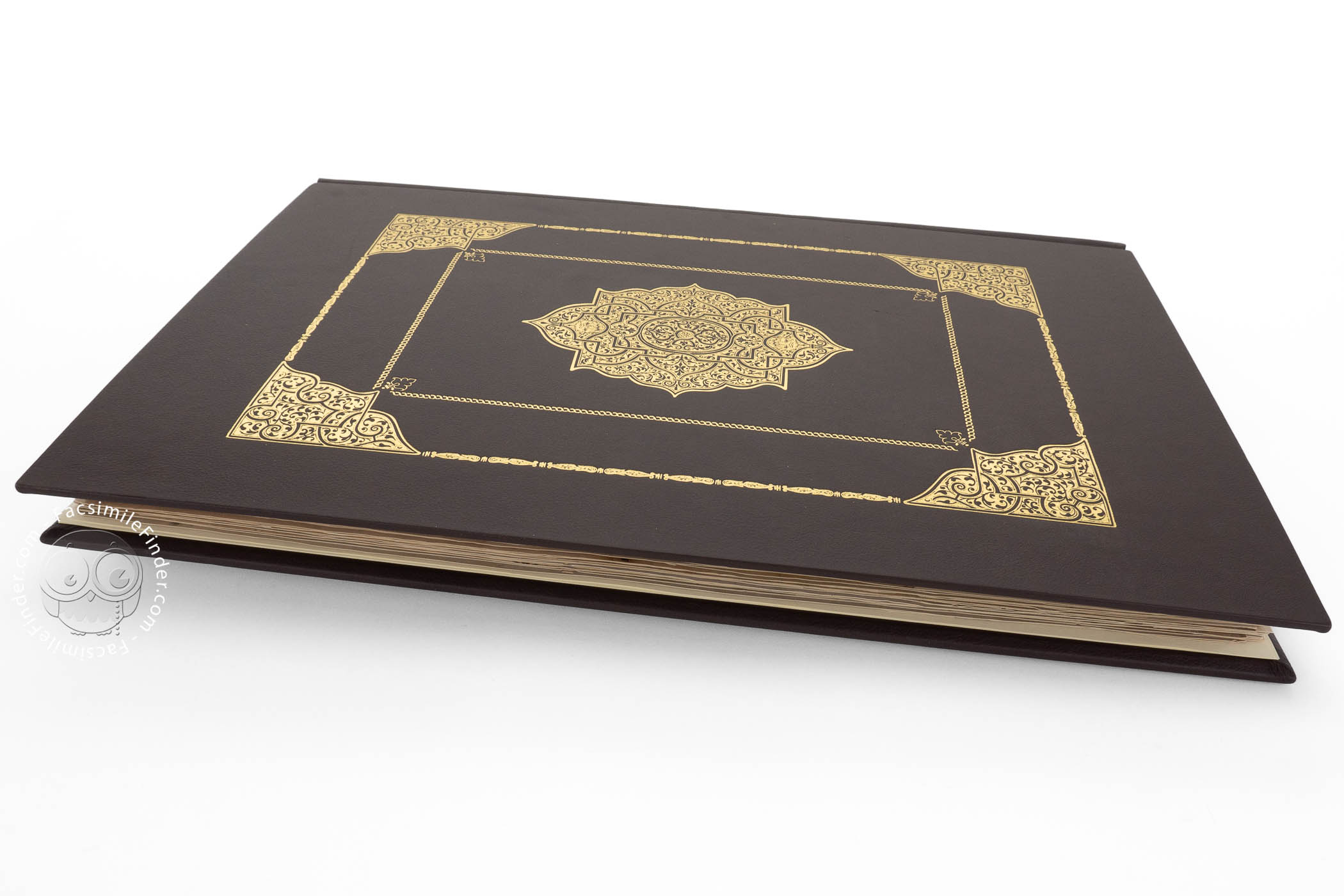
We have 1 facsimile edition of the manuscript "Katta Langar Koran": Katta Langar Koran facsimile edition, published by Mueller & Schindler, 2026
Request Info / Price