
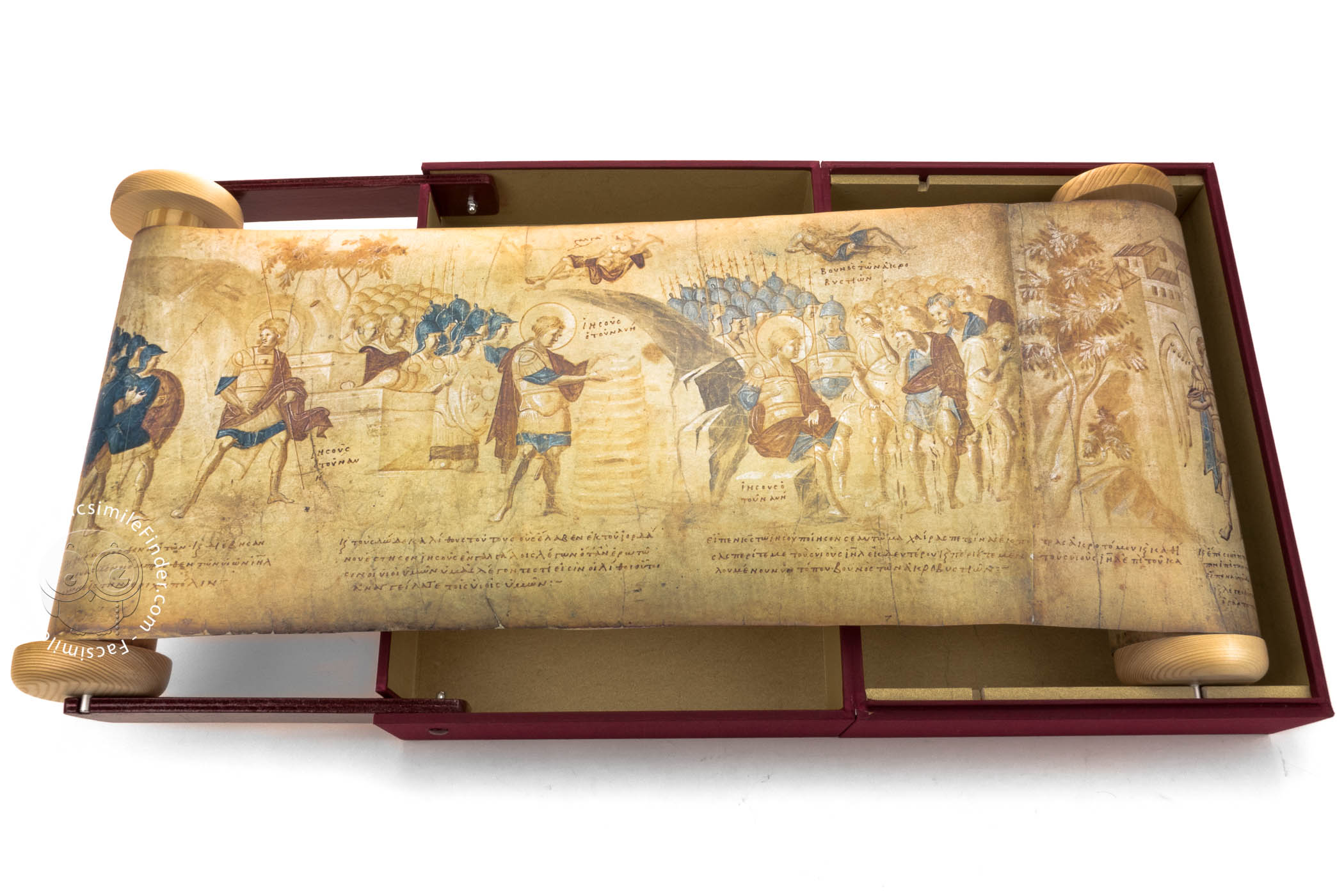

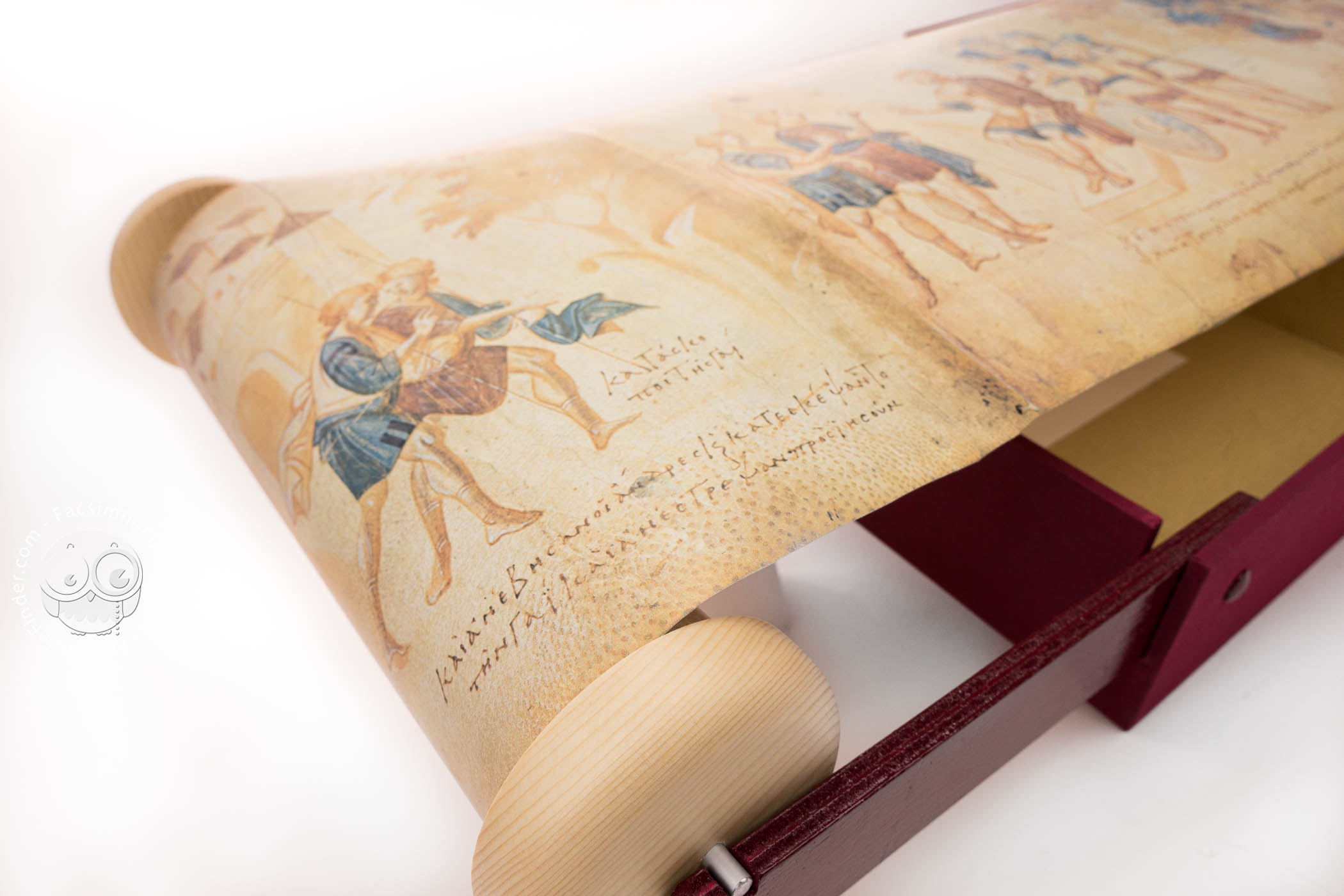
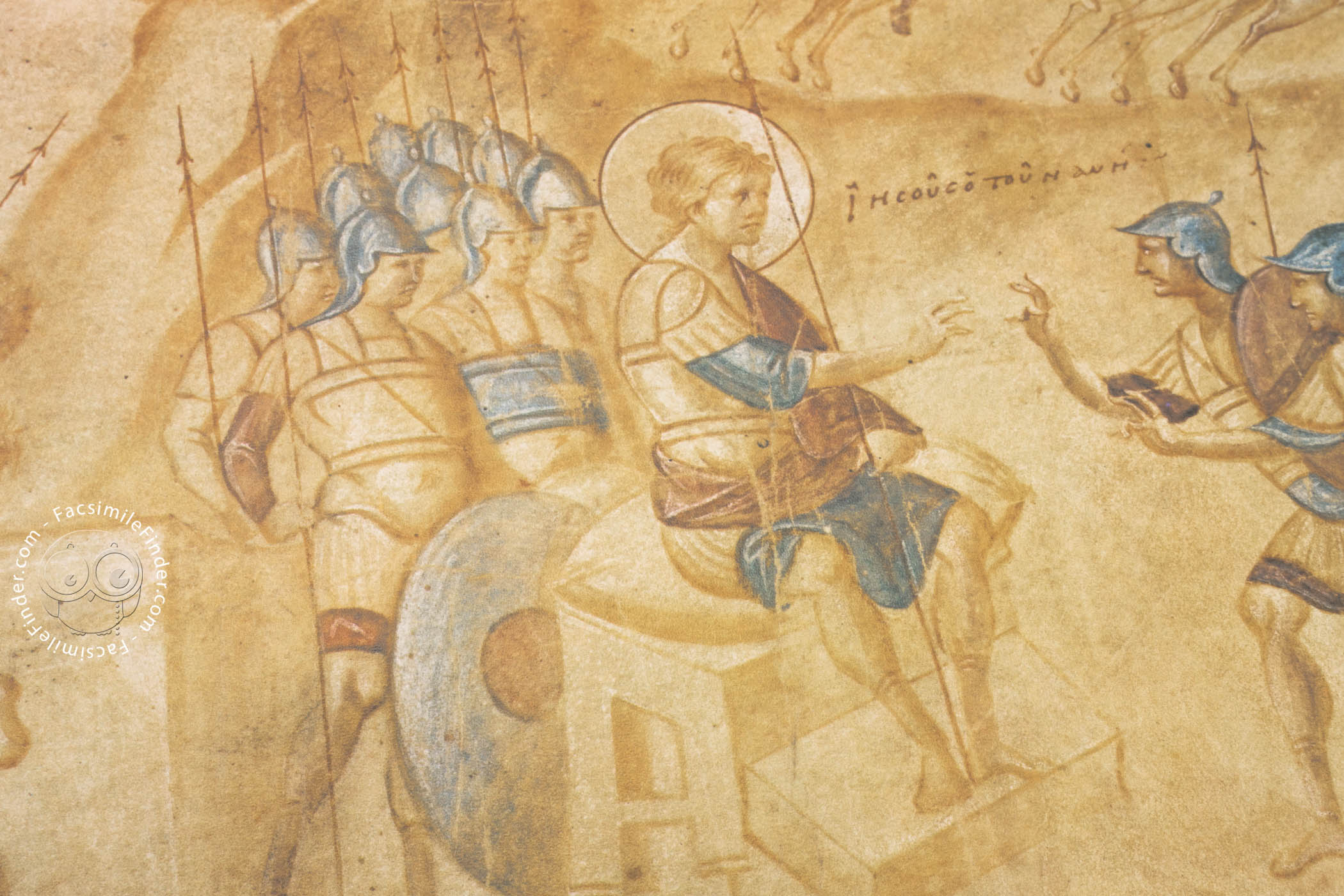
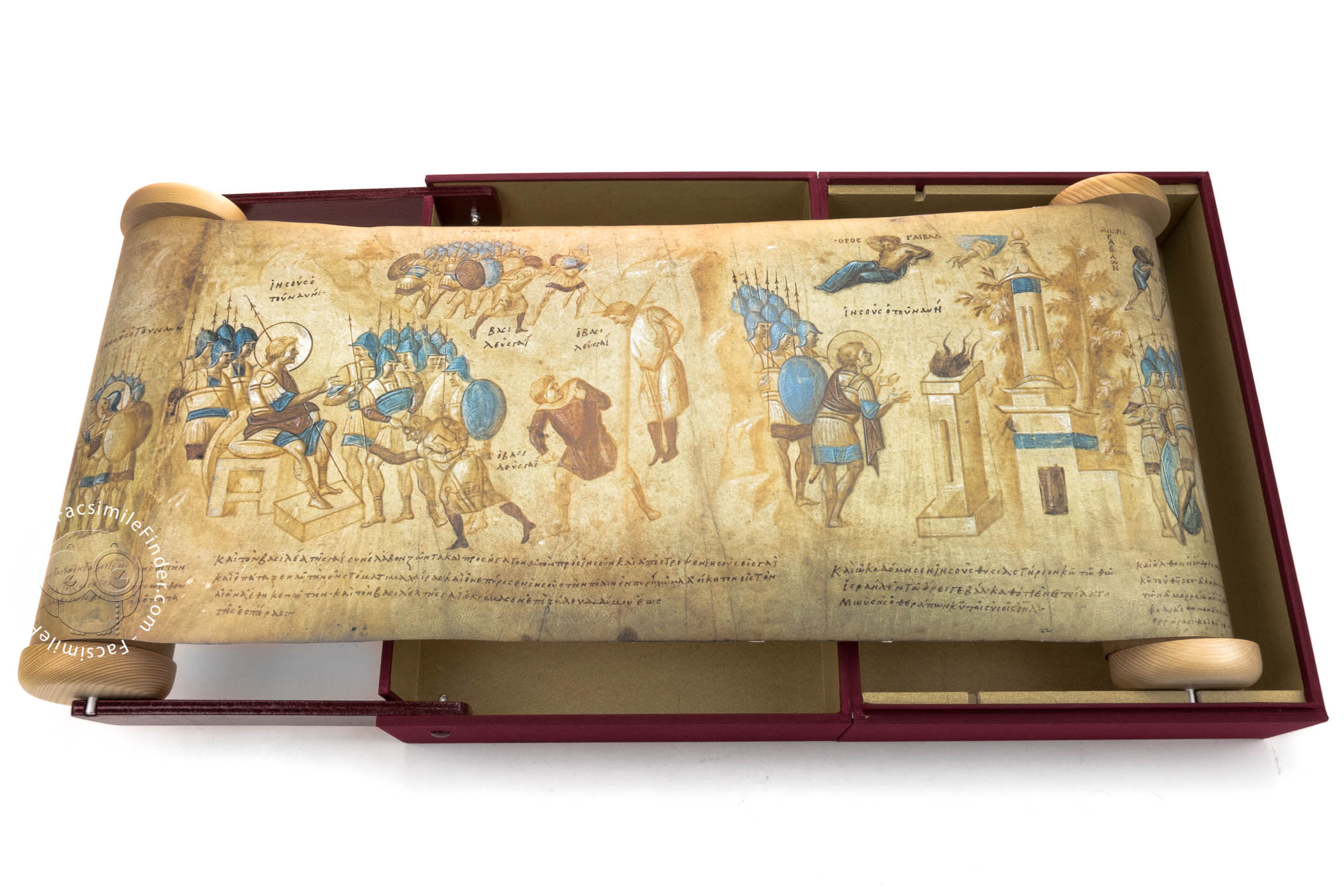
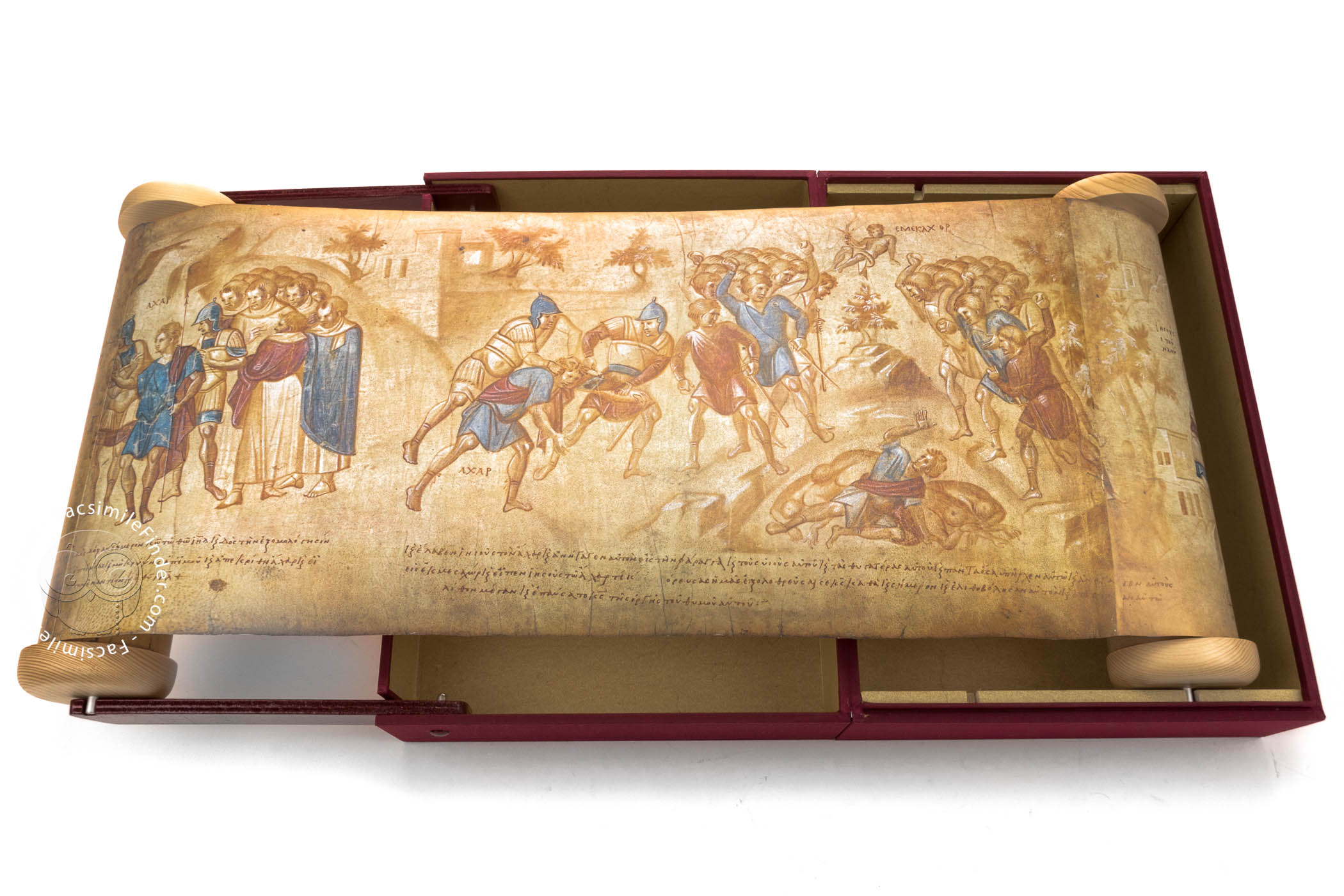
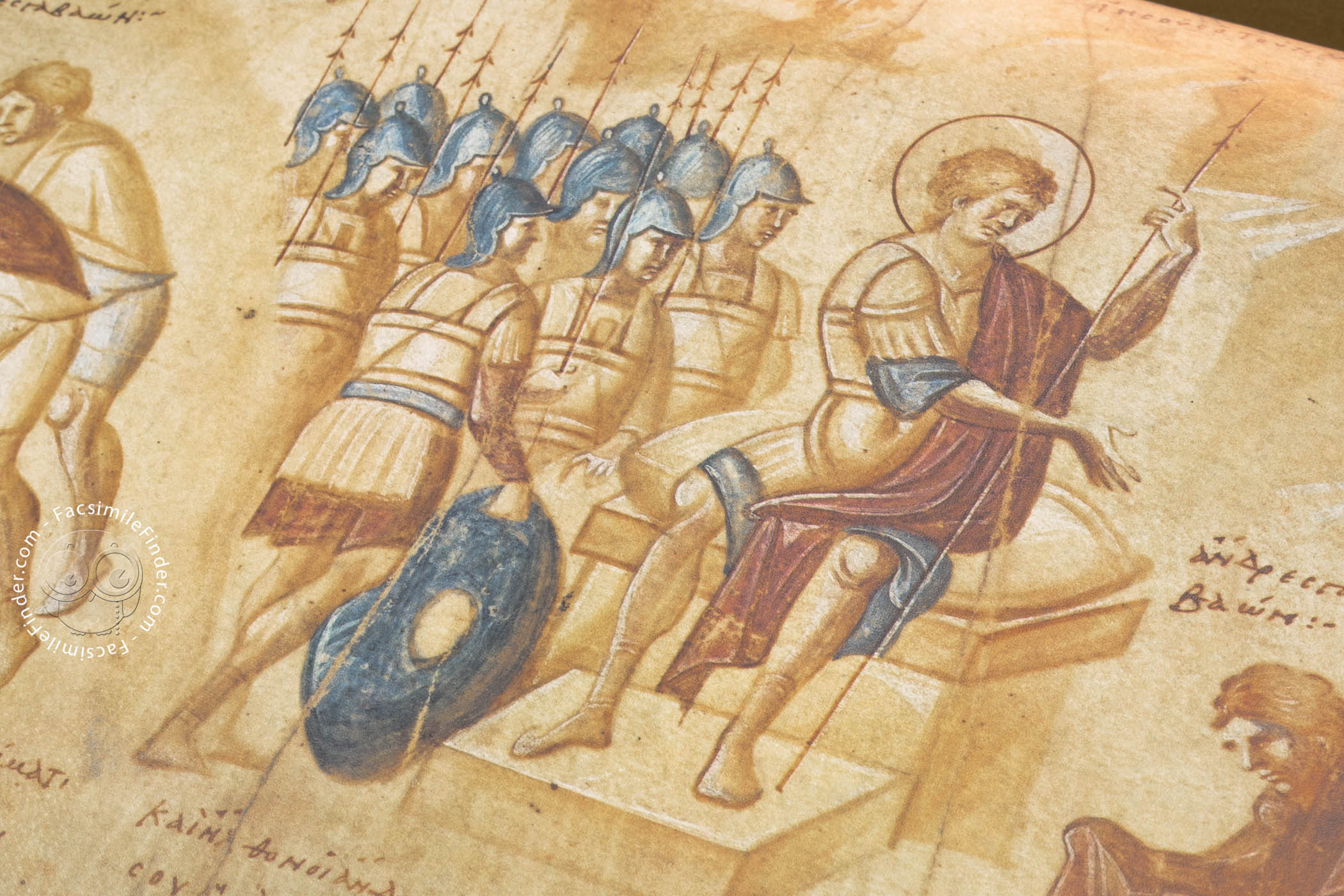
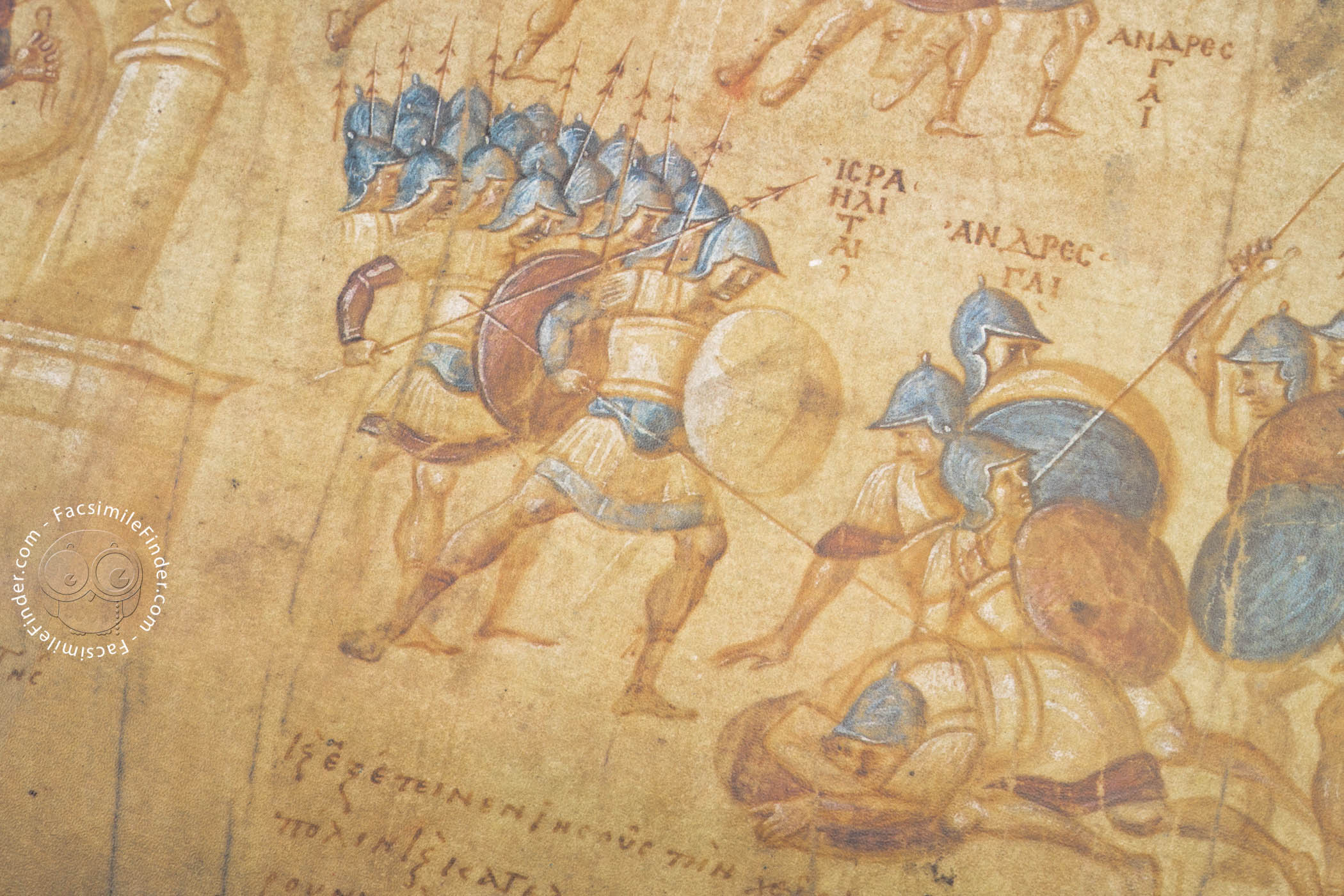
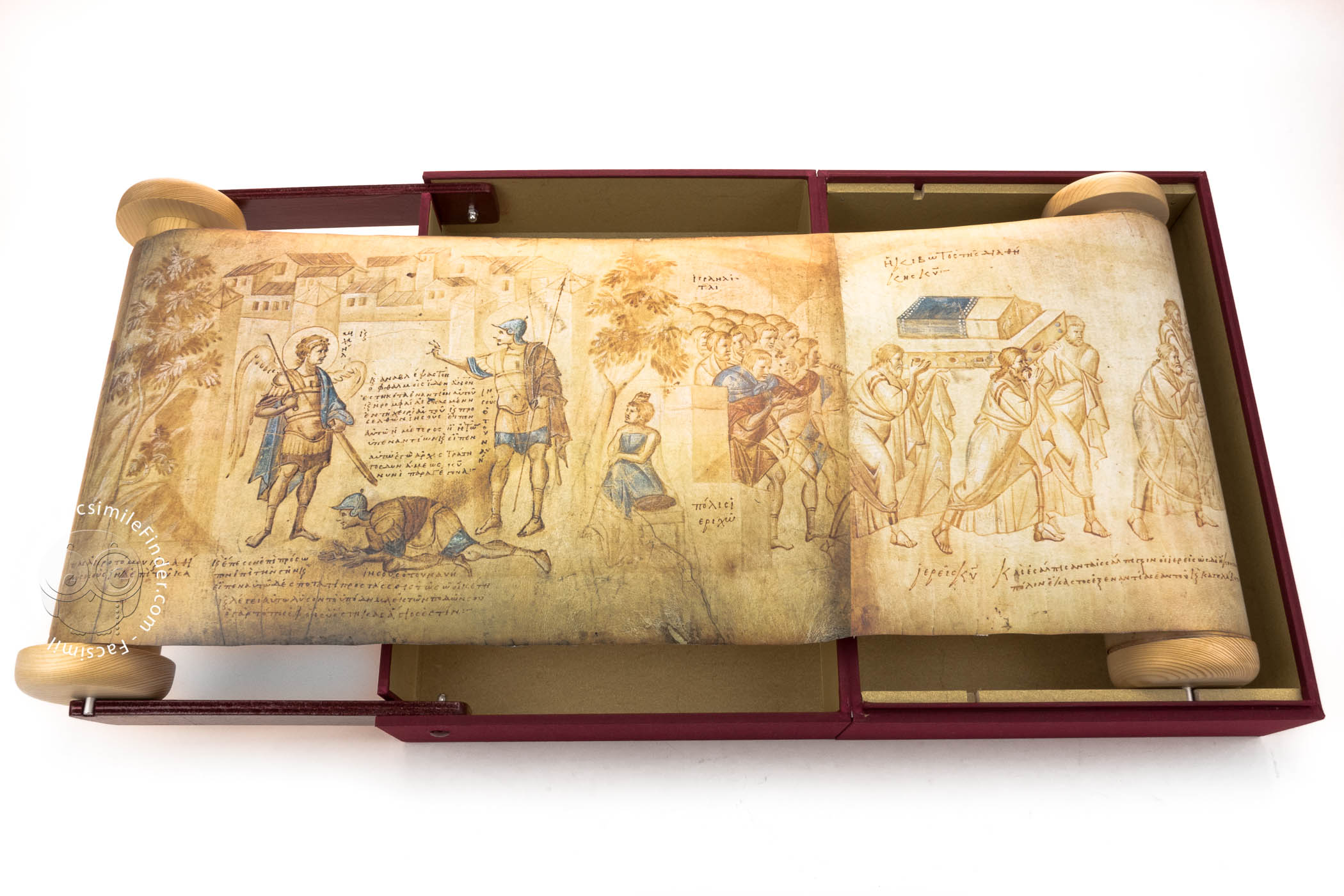
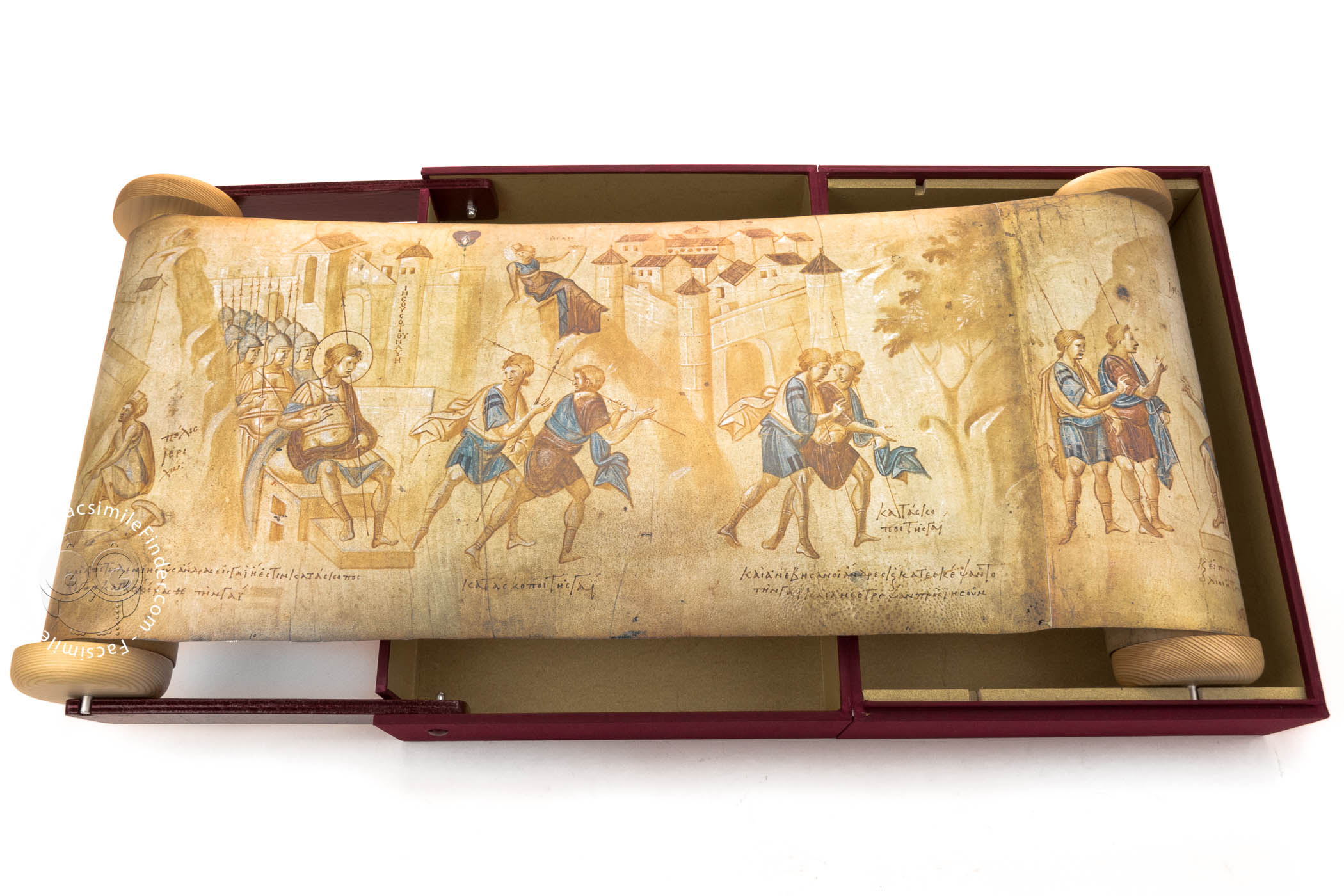

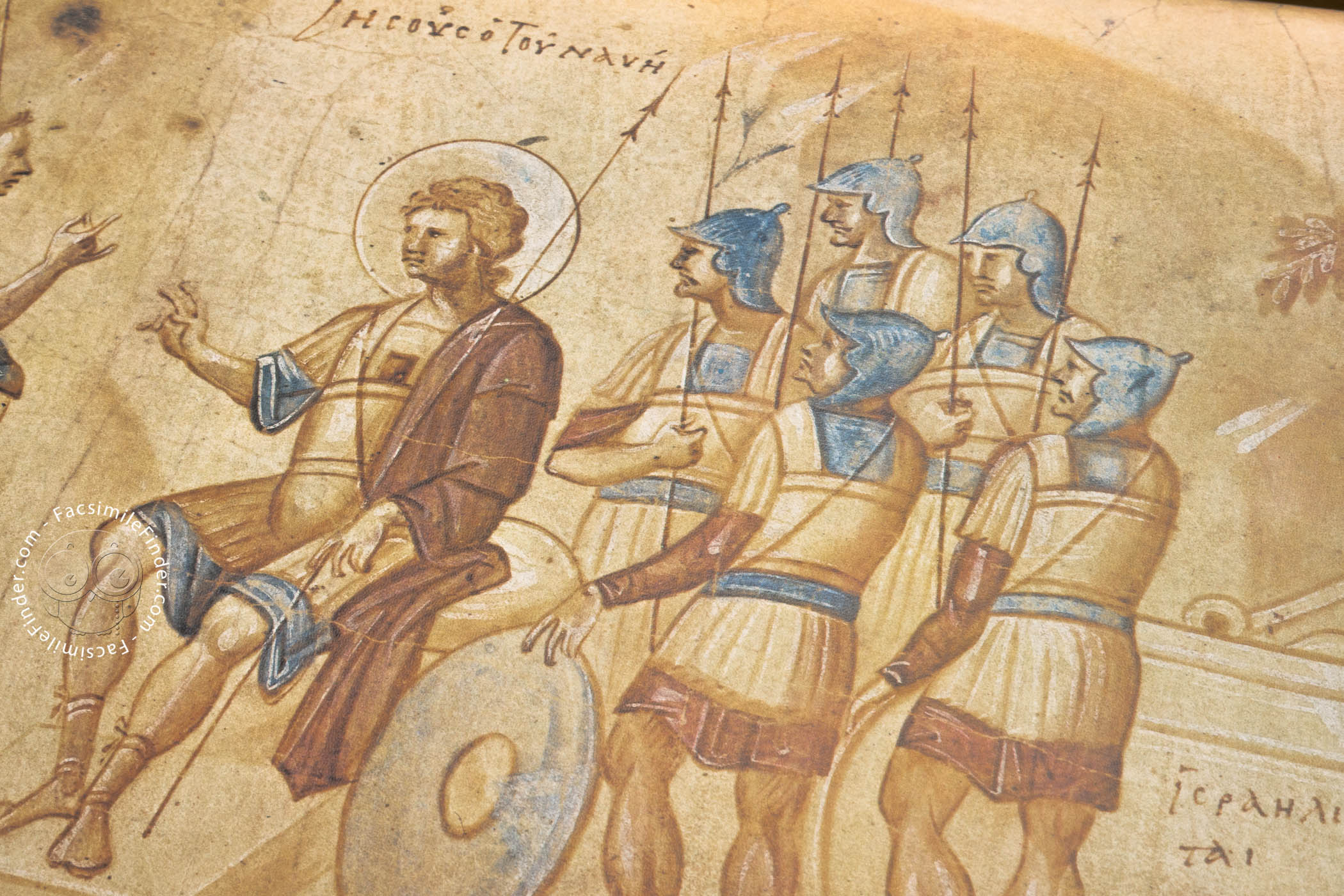
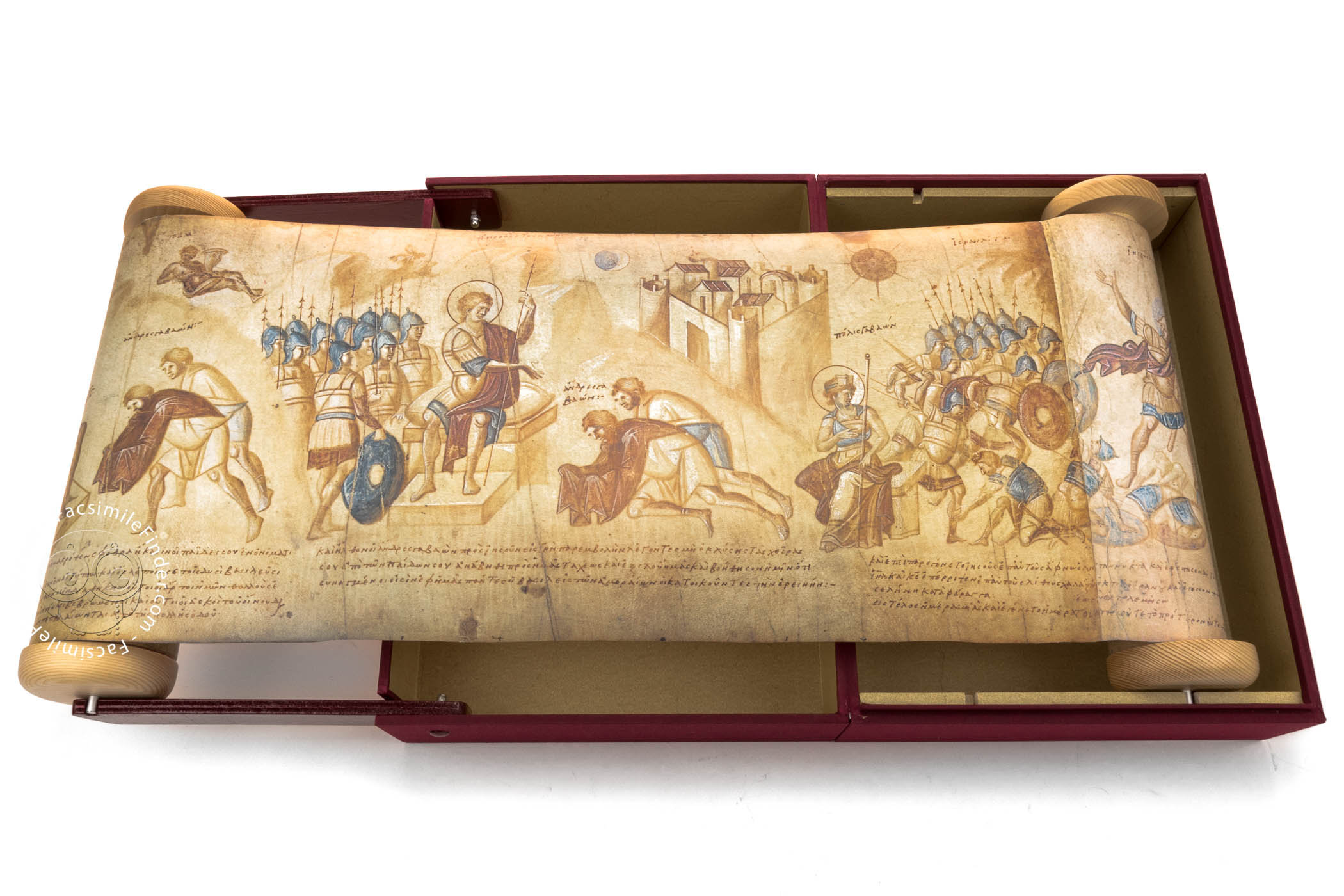
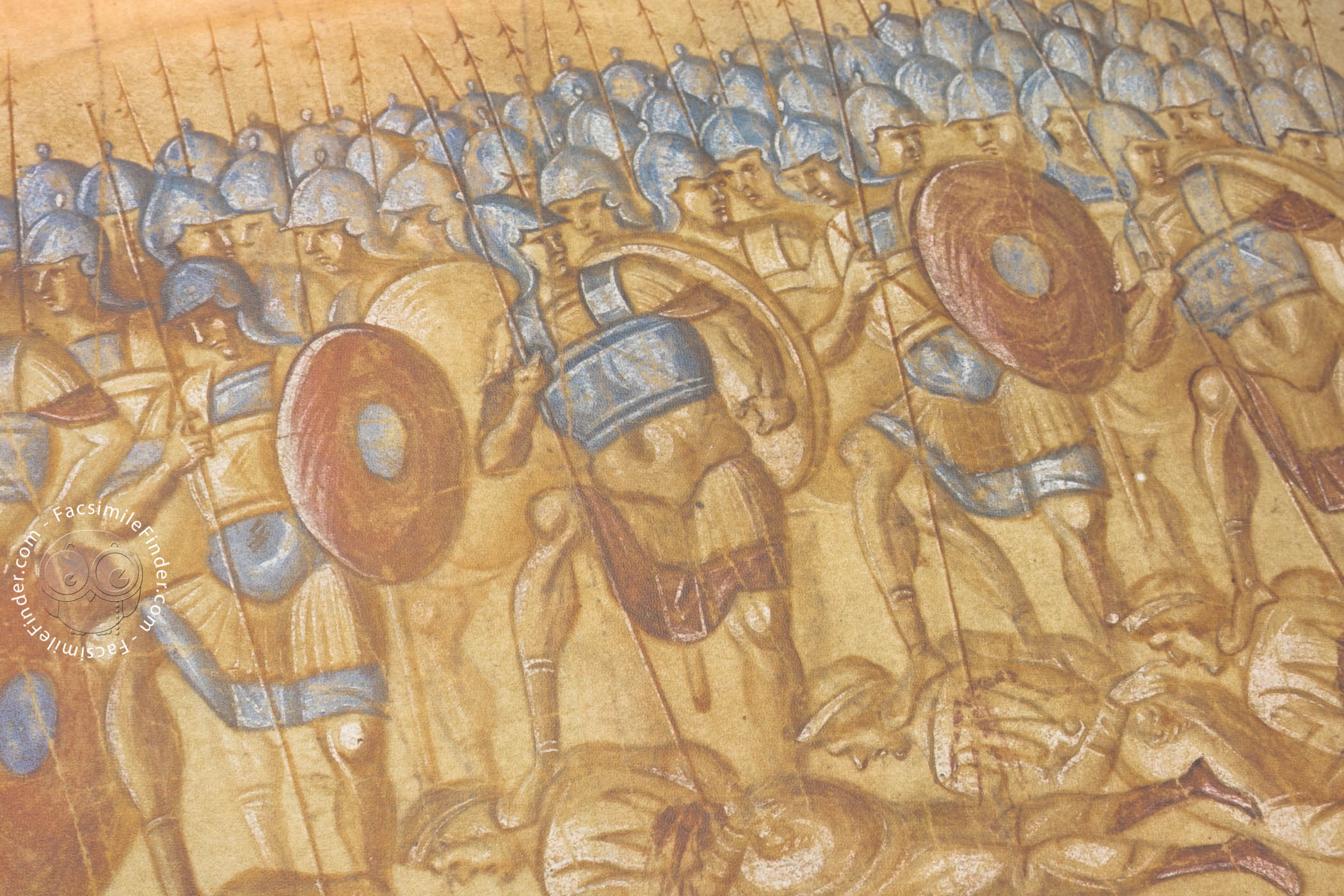

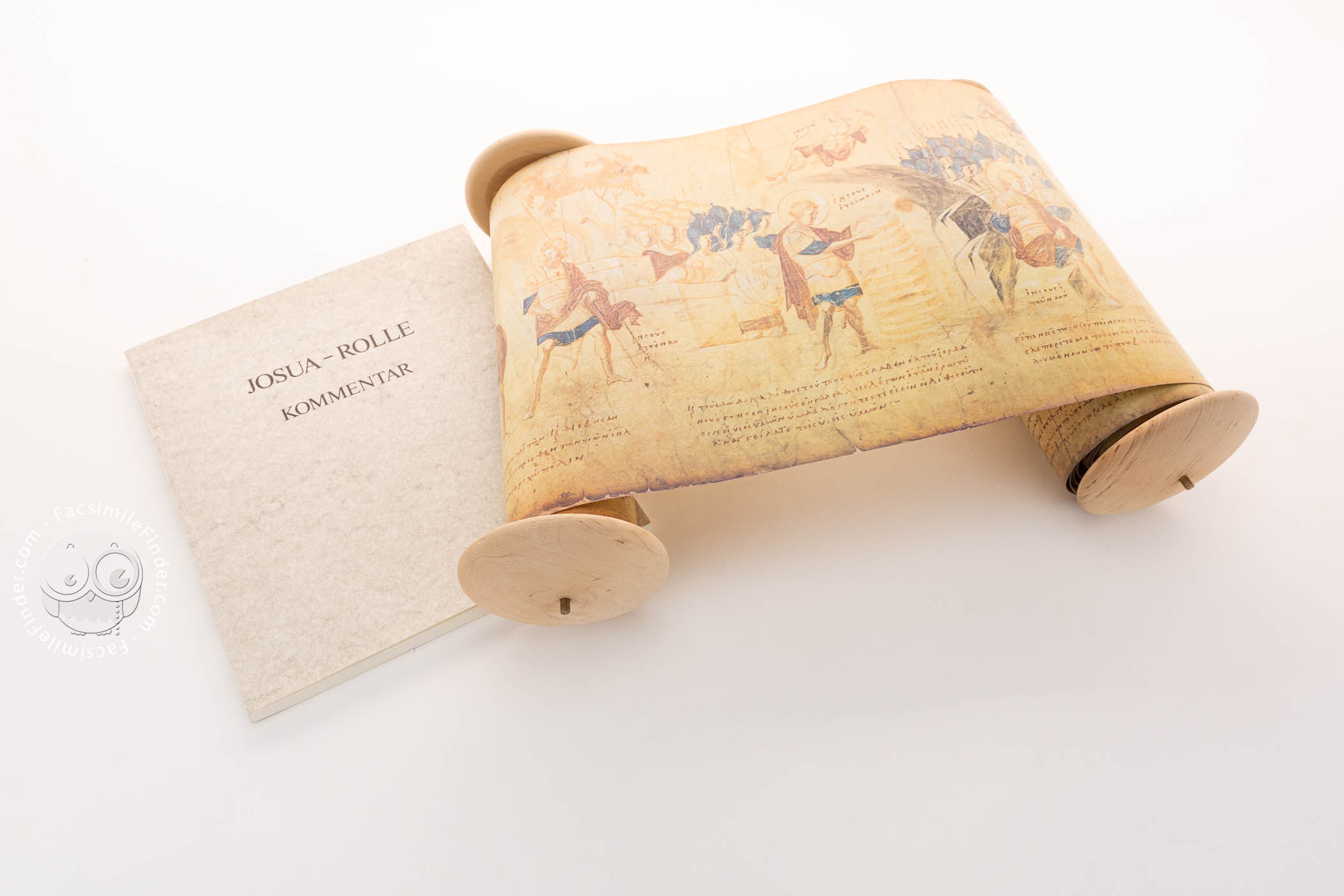
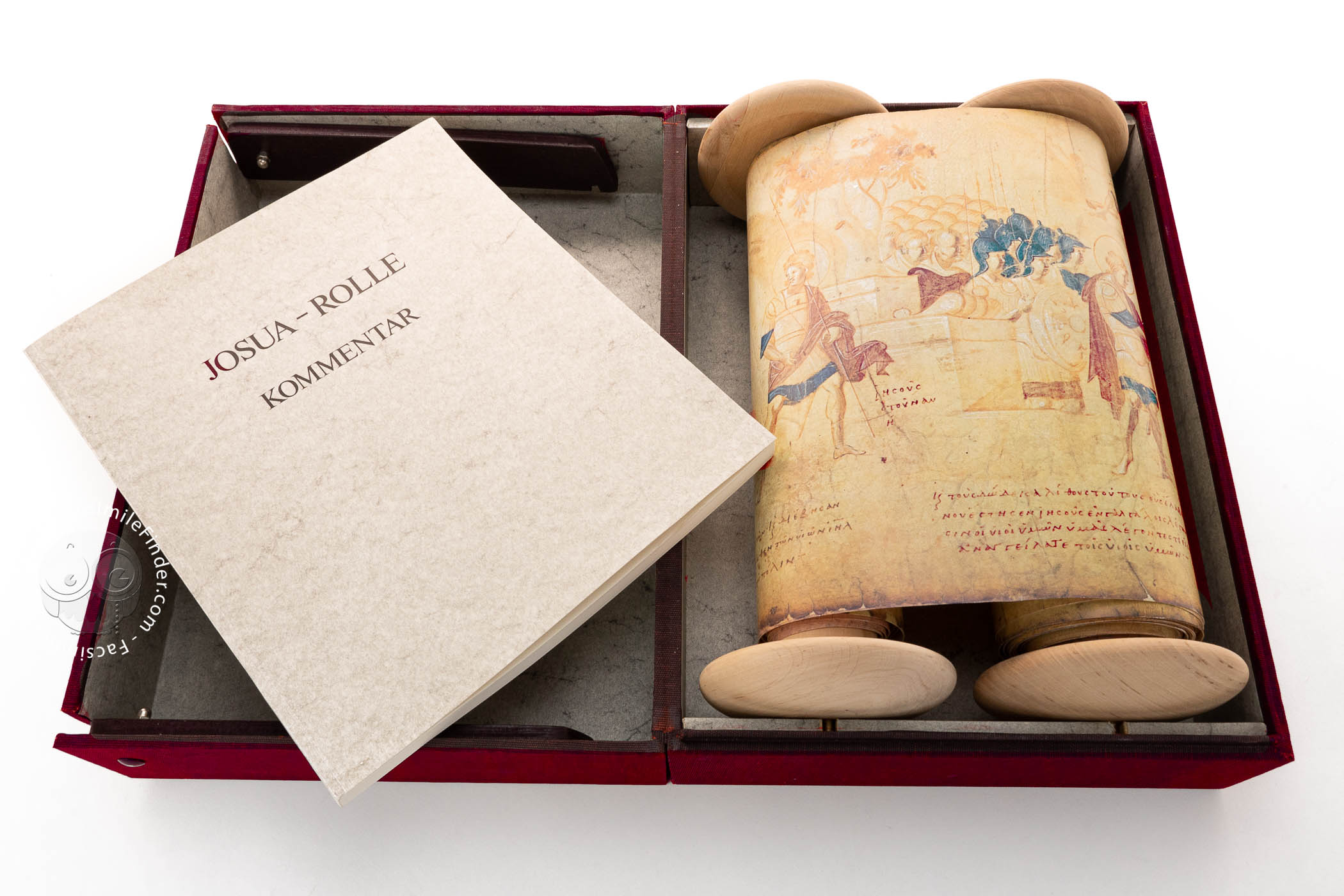
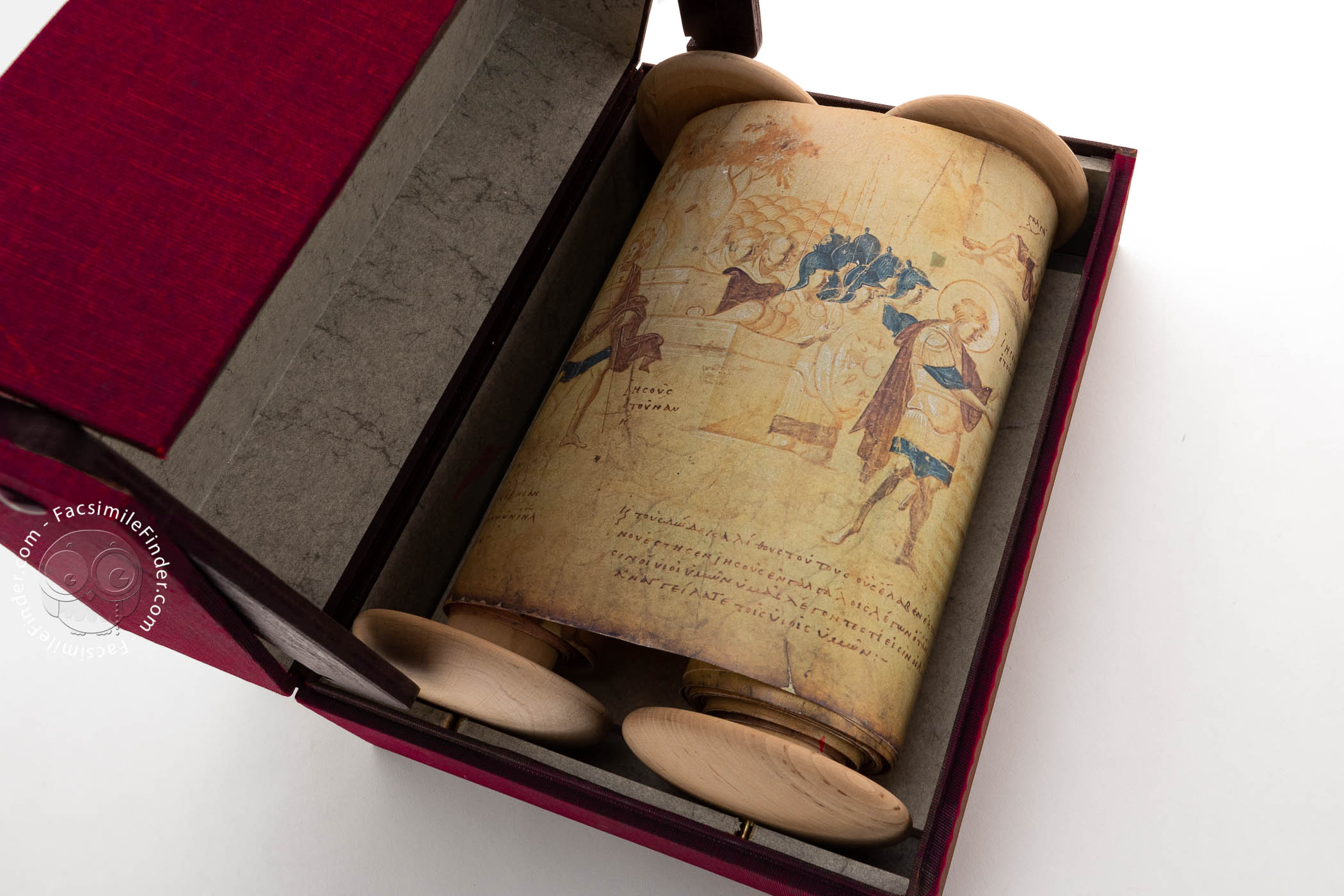
The scroll illustrating a portion of the biblical book of Joshua known as the Joshua Roll is a masterwork of the Byzantine manuscript tradition. It presents a long, continuous horizontal sequence of thirty-six scenes from the biblical narrative according to the Greek version of the book of Joshua, with brief excerpts from the text below. It was created in Constantinople in the mid-tenth century. Although the Joshua Roll has been the focus of many studies and lively debate, its purpose and function remain disputed.
The story of the Israelite military leader Joshua and his armies' conquest of Canaan, including the destruction of Jericho, is revealed as the viewer unfurls the roll.
A Subtle Palette
The dynamic narrative images are executed in a limited palette. Ocher, blue, and purples are used to highlight otherwise monochromatic renderings. Gradations of value convey depth, mass, and movement in the figures. The simple colors and spare execution—appropriate to the roll format, which invites flexing of the parchment support—bestow an ethereal atmosphere to the scenes.
Tenth-Century Revival of an Antique Form
The images on the roll are not formally divided but flow one after another, separated only by an architectural or landscape element. The rotulus form is one of the work's most surprising features since rolls were uncommon across Greek and Latin manuscript production by the tenth century.
The Joshua Roll may be a copy of an earlier scroll, perhaps a design for or record of a relief sculpture. It features gaps in some places, which suggests that parts of the older work were difficult for the scribe to decipher.
Redacted Text in the Service of Image
The text is written on the lower part of the scroll, chronicling the deeds of the great leader of the Israelites. At times the text lines appear to follow the contours of some of the figures, which indicates that the text was written after the execution of the miniatures. The text represents a choice of selected passages edited to fit and function as supporting commentary to the images.
Majuscule Writing
The cursive Greek Majuscule used for the biblical narrative appears to be the work of a single scribe. The additional captions written in a calligraphic Greek Uncial might be attributable to Basileios kalligraphos (Basil the scribe), whose name is found in an inscription on the verso.
A Celebration of Military Victory?
The impetus behind the creation of the Joshua Roll remains unclear. Scholars have linked the roll's theme of military accomplishment and strong leadership to Byzantine victories that may have closely predated the scroll. Some have proposed that the roll was made at the behest of Basil Lekapenos, called the Parakoimomenos, an imperial administrator and documented art patron.
A Study for a Triumphal Column?
Some of the Joshua Roll's compositions were adapted for the thirteenth-century Vatopedi Octateuch. A series of carved ivory panels in The Metropolitan Museum of Art and the Victoria and Albert Museum appear to copy several of the scroll's compositions, suggesting that it was available as a model for artists working in a variety of media.
In Italy by 1500
The Joshua Roll remained in Constantinople until the thirteenth century. Although it is unclear how it got there, the roll appeared in Italy by about 1500. Some of its most notable owners include Niccolò Leonico Tomeo, a scholar of Greek and philosophy, and Ulrich Fugger (1526-1584) of the renowned Augsburg banking family.
In the second half of the sixteenth century, the roll entered the Bibliotheca Palatina, the state library of the Palatinate in Heidelberg. It was one of hundreds of Palatina manuscripts taken to the Vatican via Munich in 1622/1623 as spoils of the Thirty Years War. The roll's fifteen sheets were detached from each other in 1902.
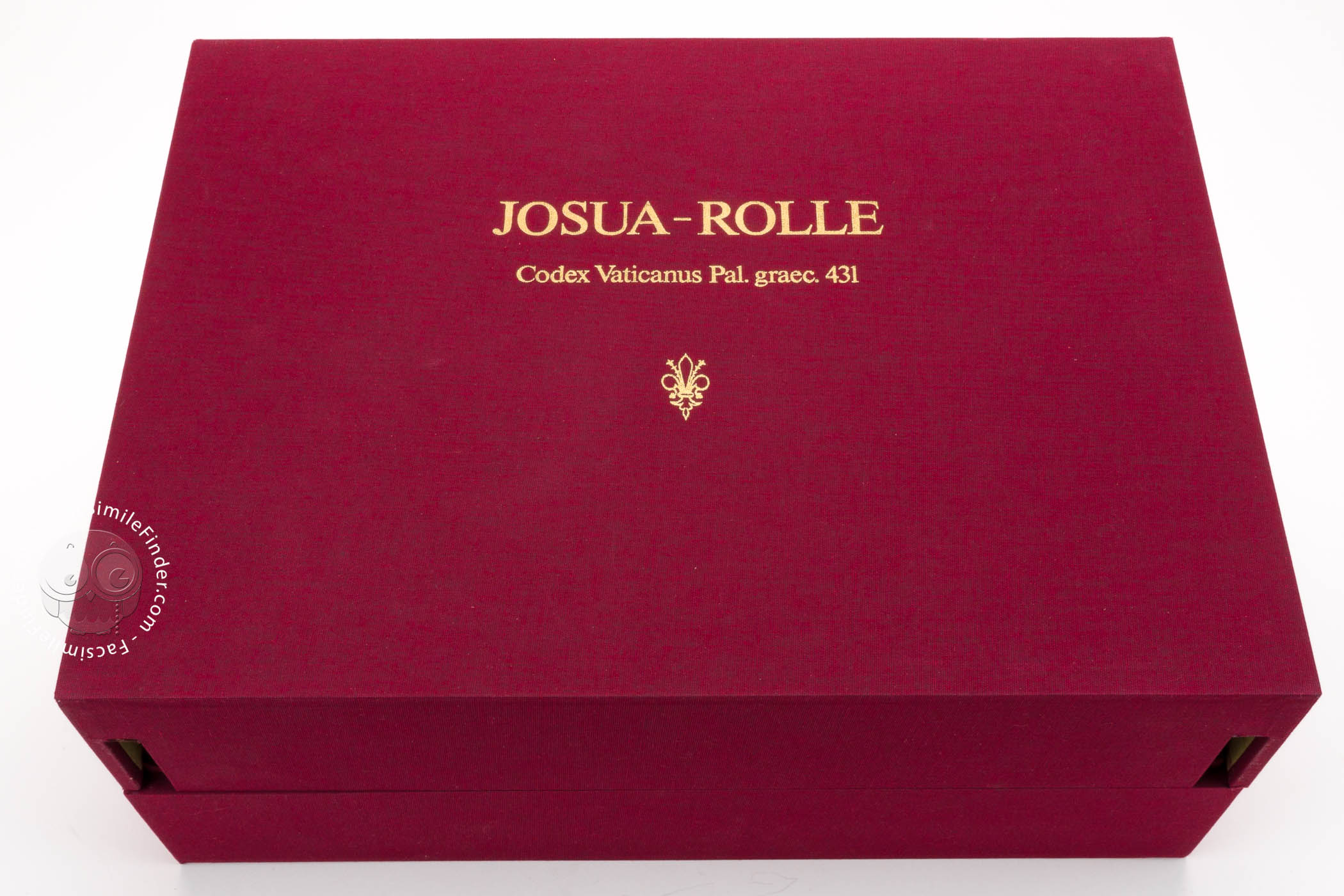
We have 1 facsimile edition of the manuscript "Joshua Roll": Josua-Rolle facsimile edition, published by Akademische Druck- u. Verlagsanstalt (ADEVA), 1984
Request Info / Price