



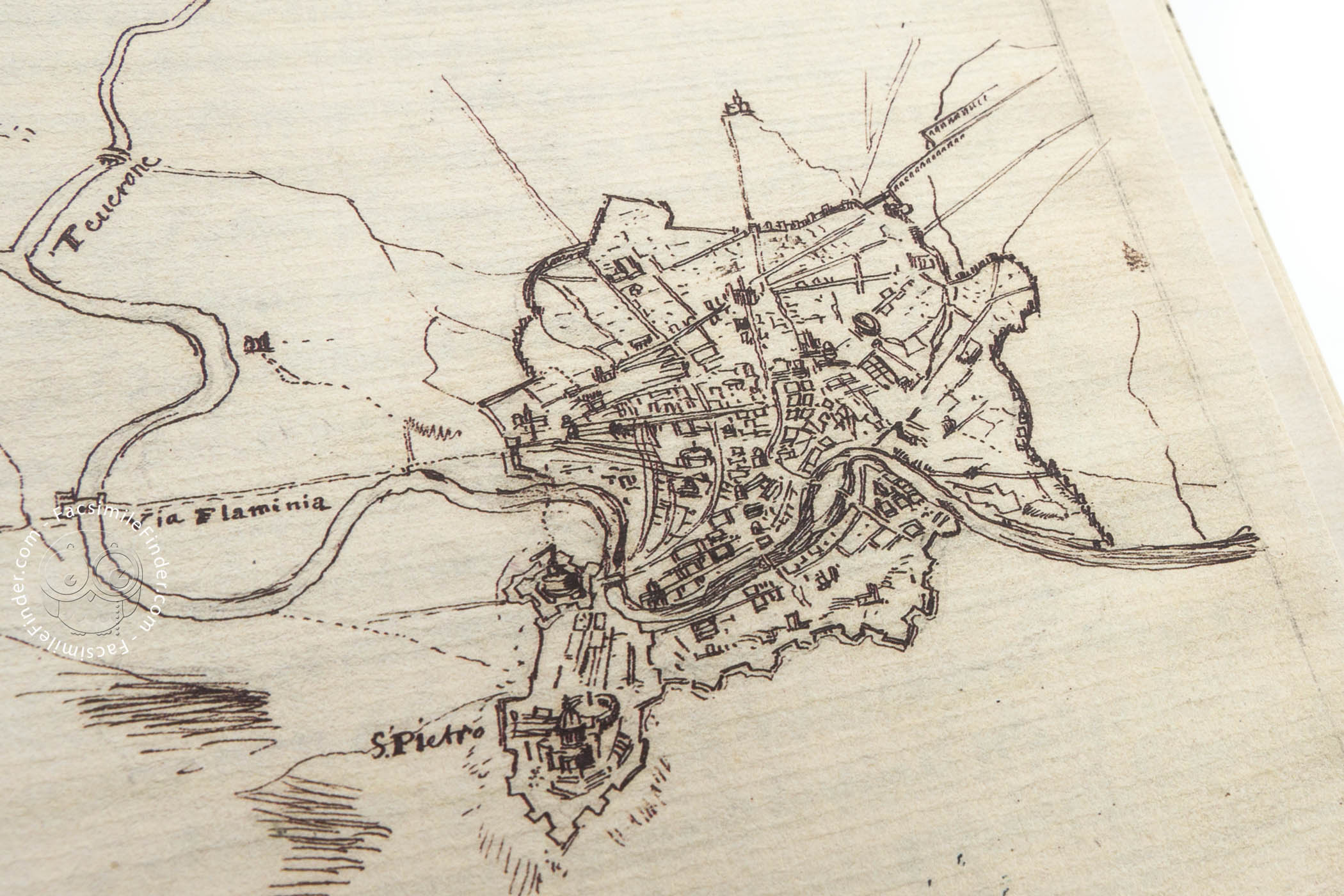
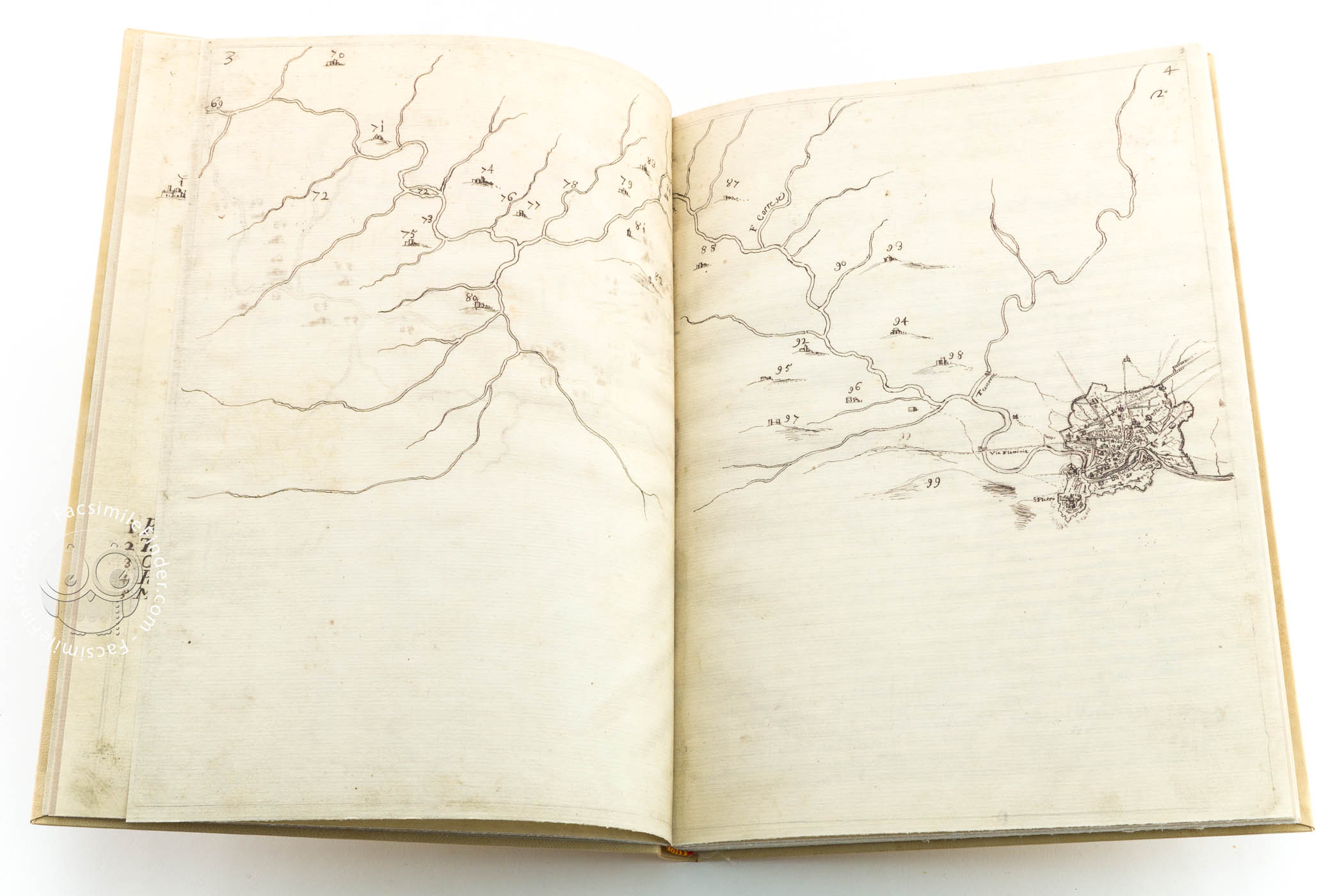



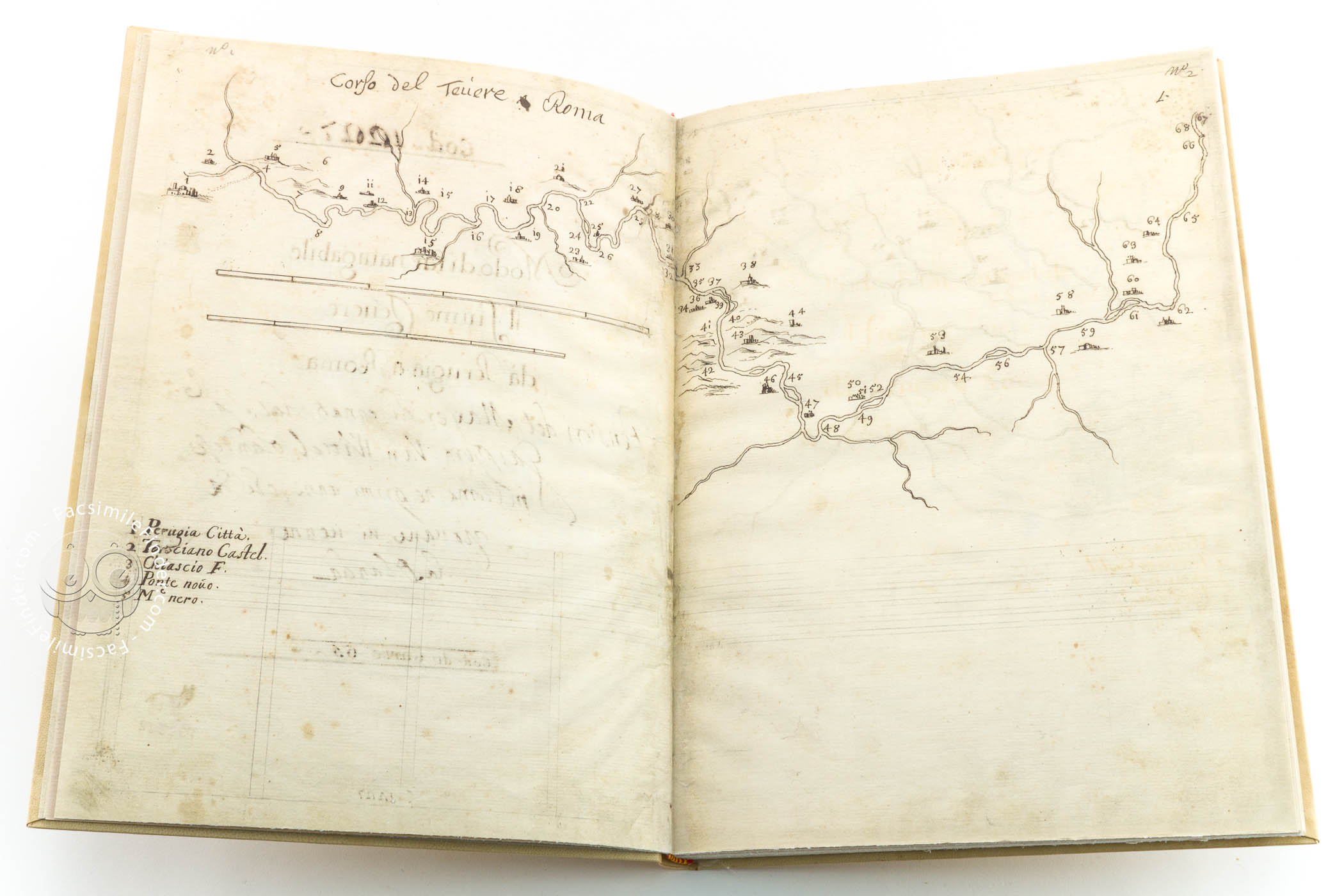

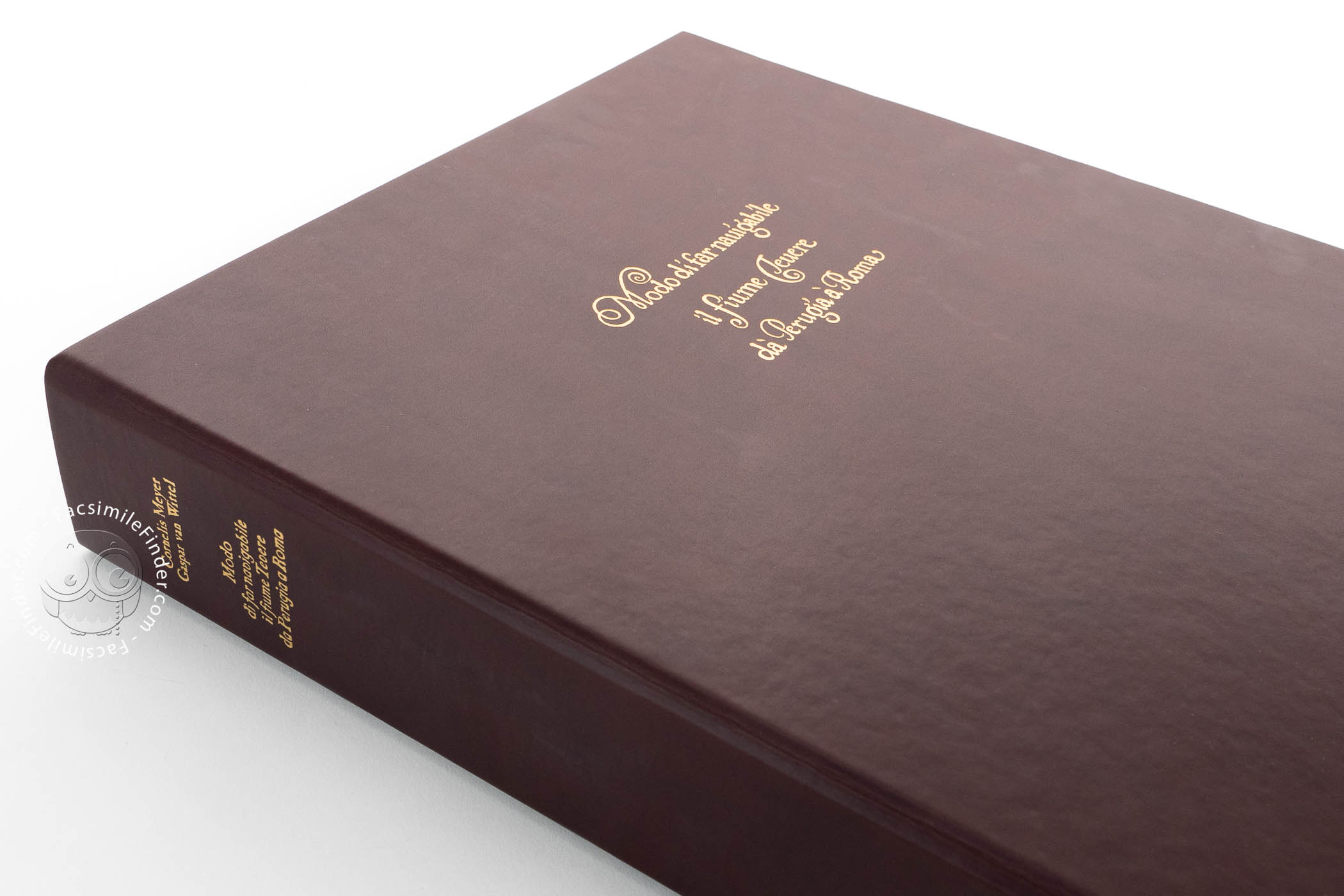
Conceived at the hinge-point between hydraulic ambition and papal governance, this 1676 manuscript is Cornelis Meyer’s richly argued proposal for making the Tiber navigable from Perugia to Rome—an enterprise imagined to stabilize supply, stimulate commerce, and bind the inland territories of the Papal States more tightly to the capital.
Historical Context and Patronage
The work was prepared for Pope Clement X and appears to have been intended as a presentation copy: a carefully written, elegantly illustrated dossier designed to persuade at the highest level. Its abrupt incompletion—both in portions of text and in the final drawings—aligns with the pope’s death in 1676, which halted the initiative as it was taking shape.
Script, Layout, and Graphic Program
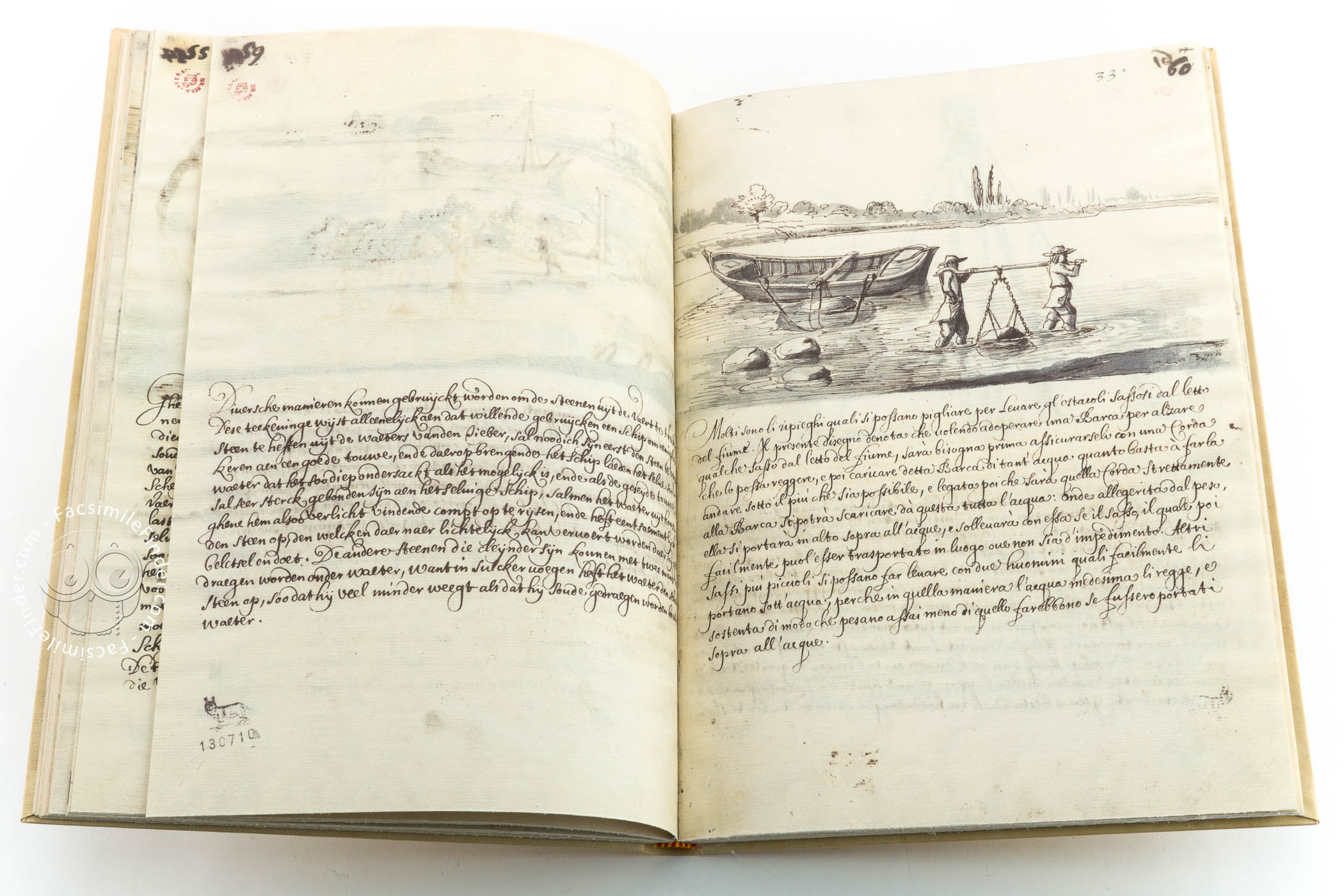
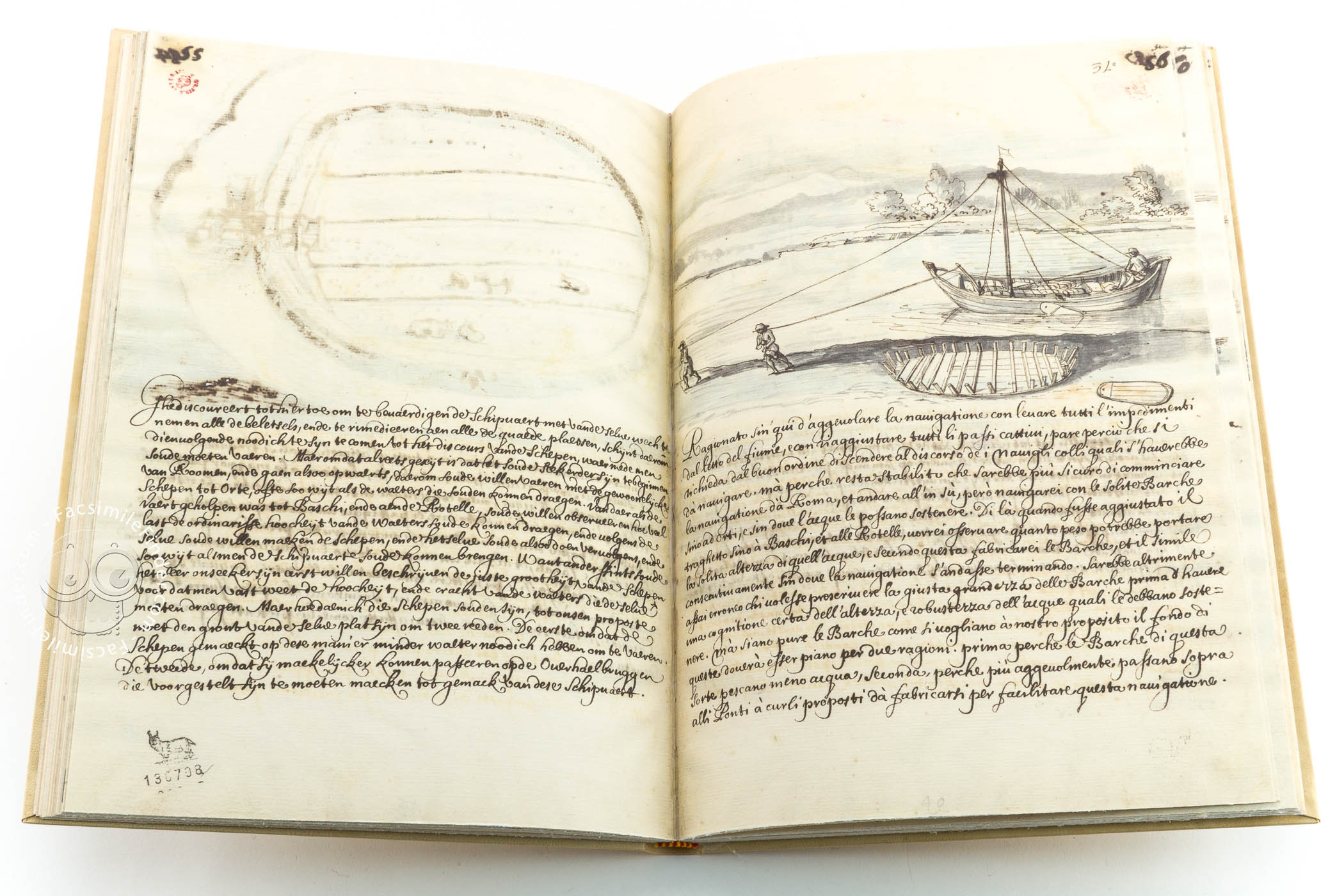
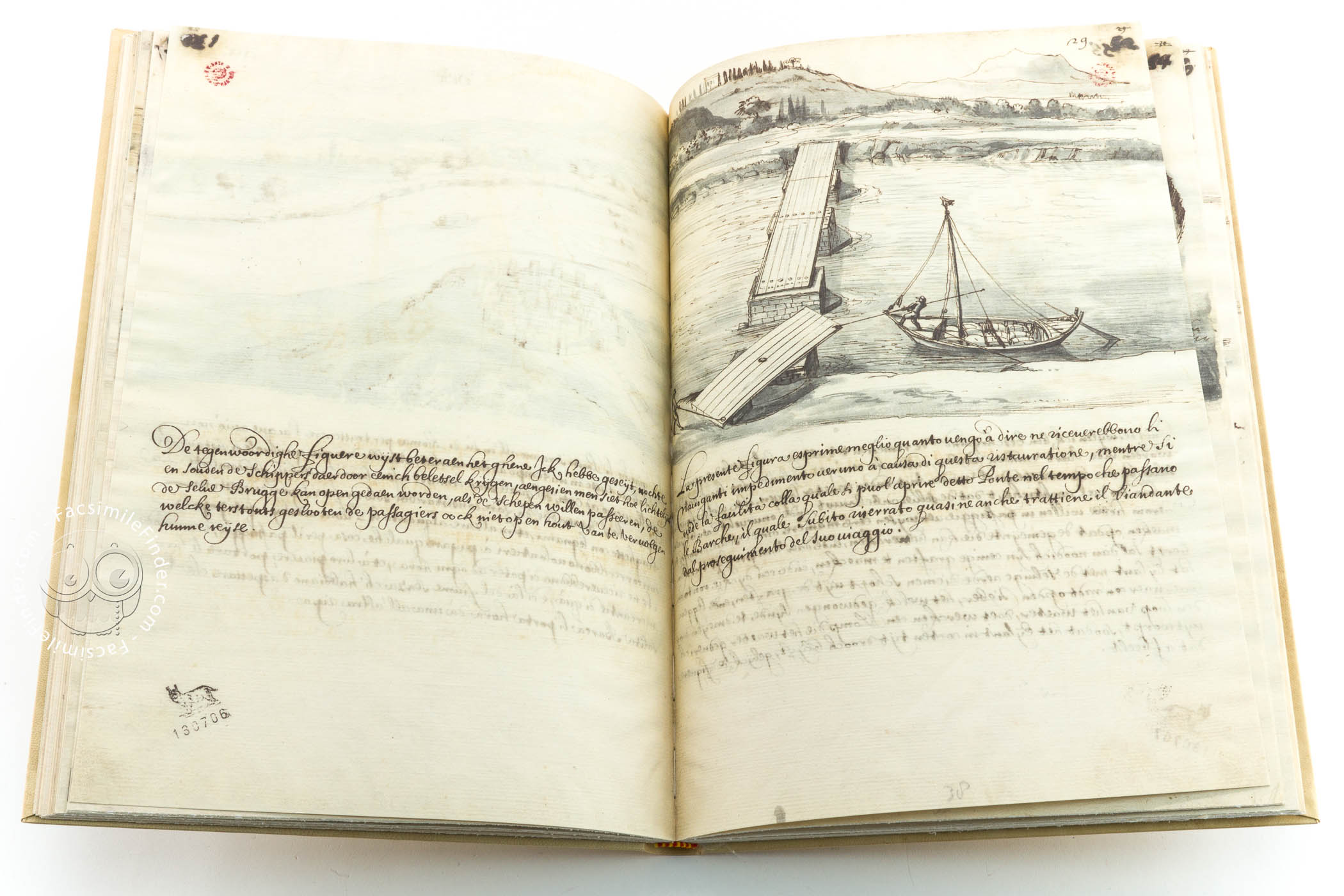
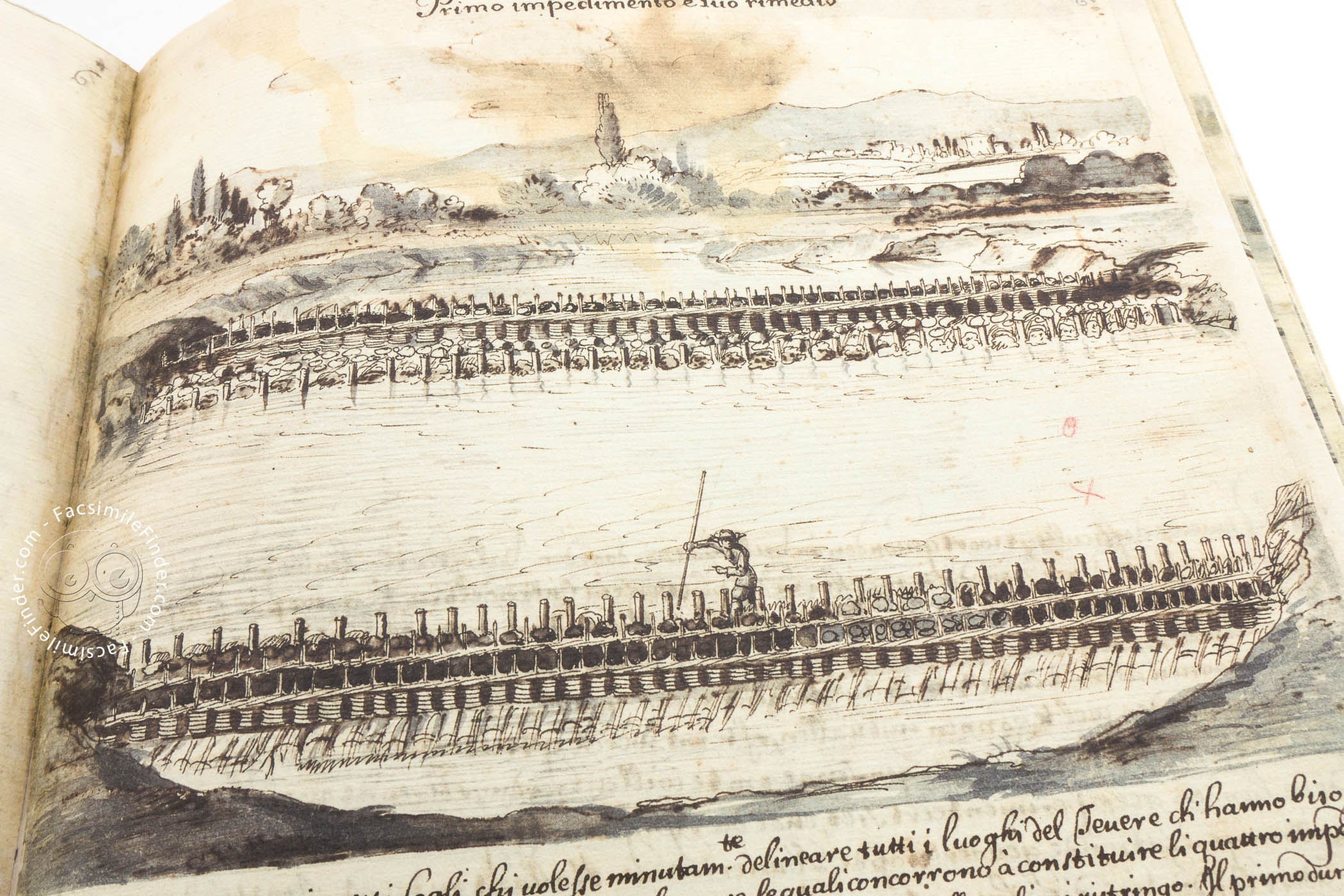
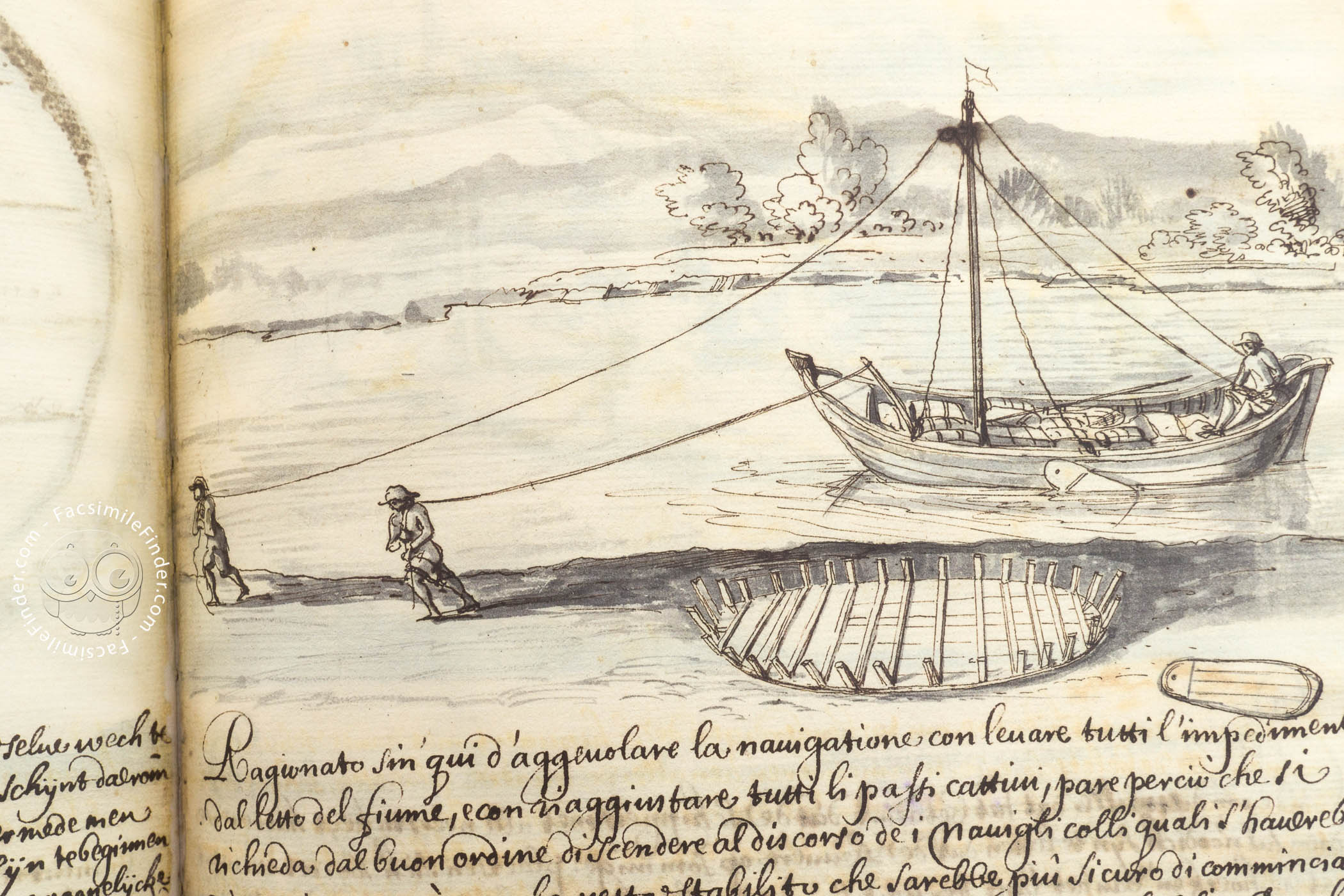
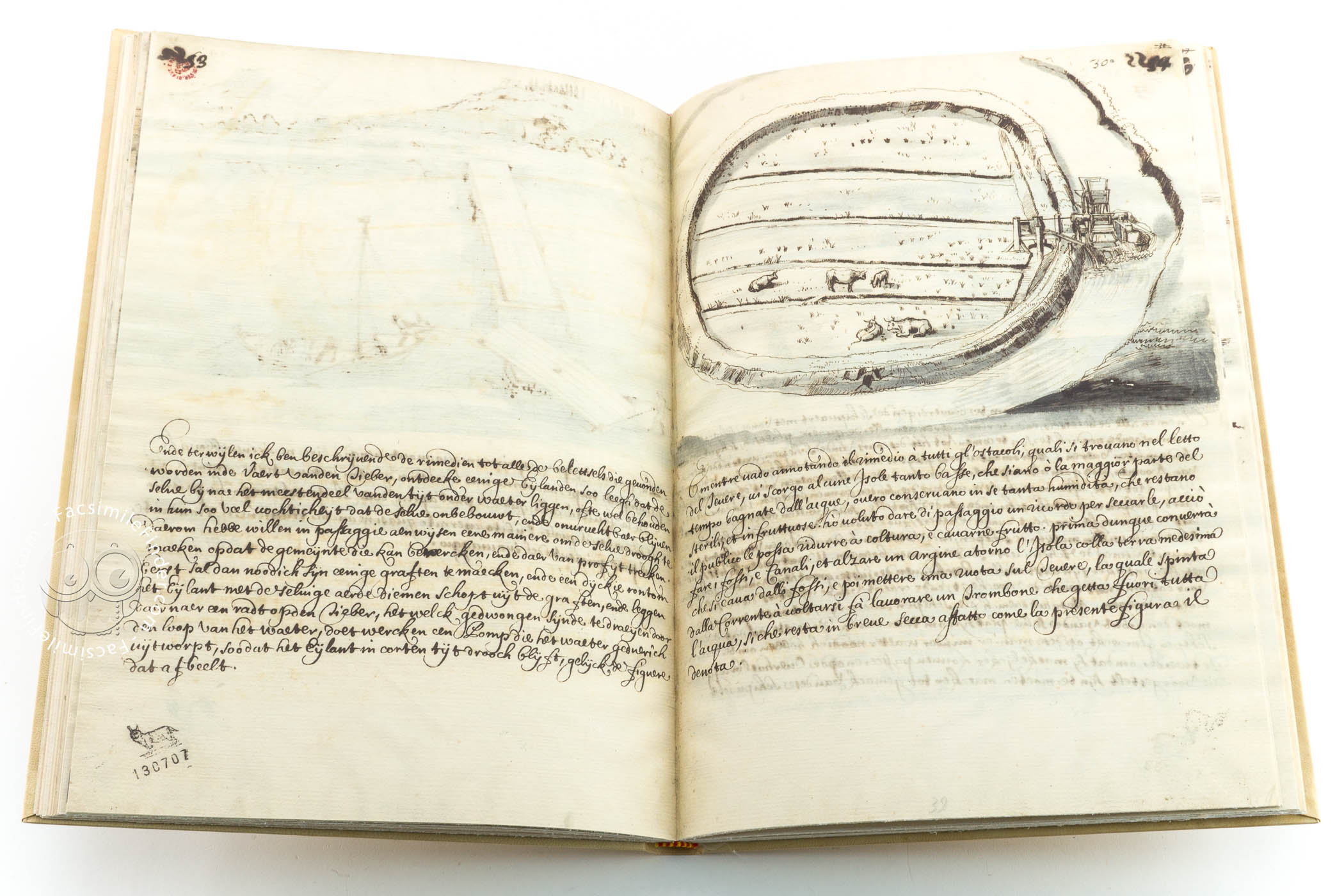
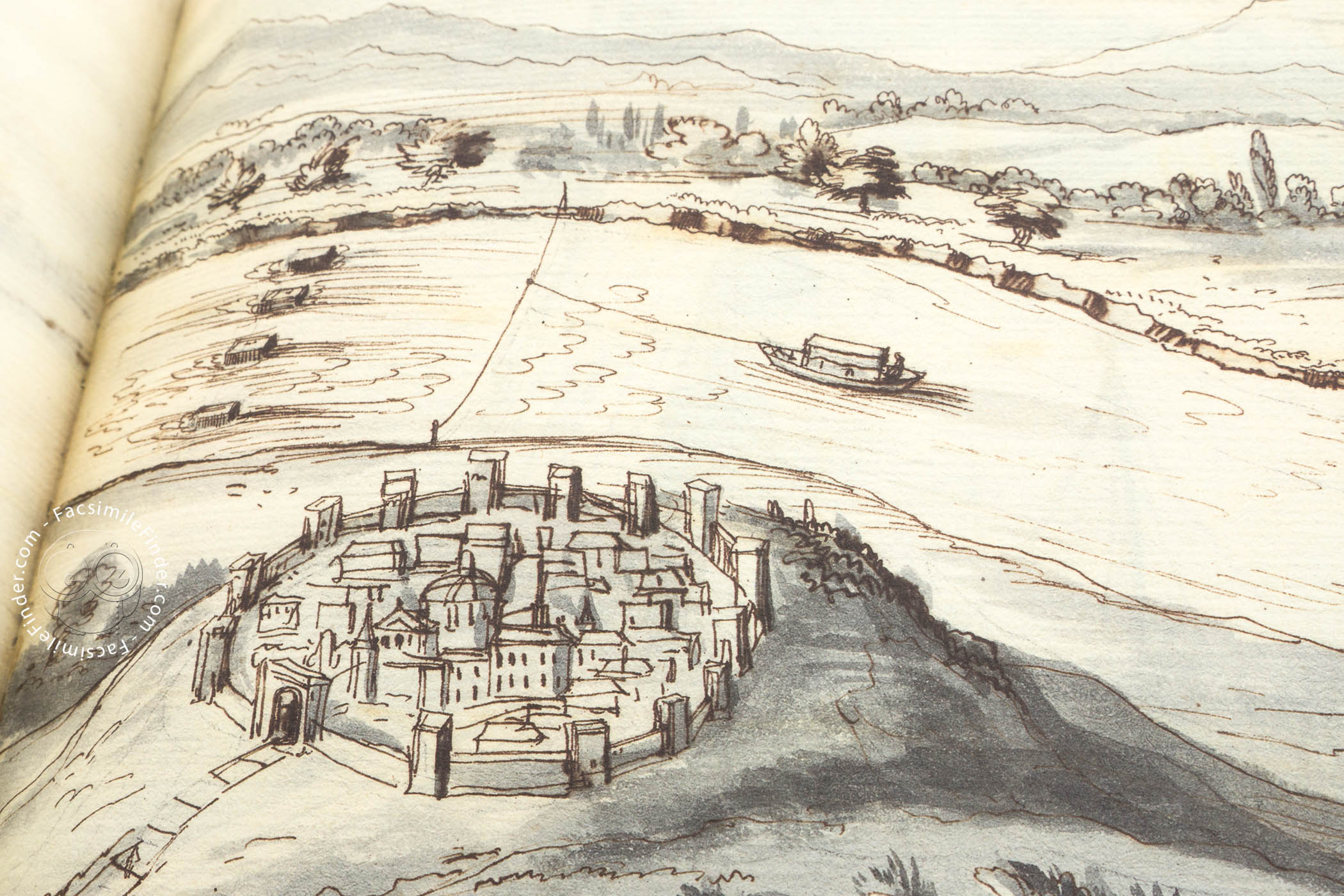
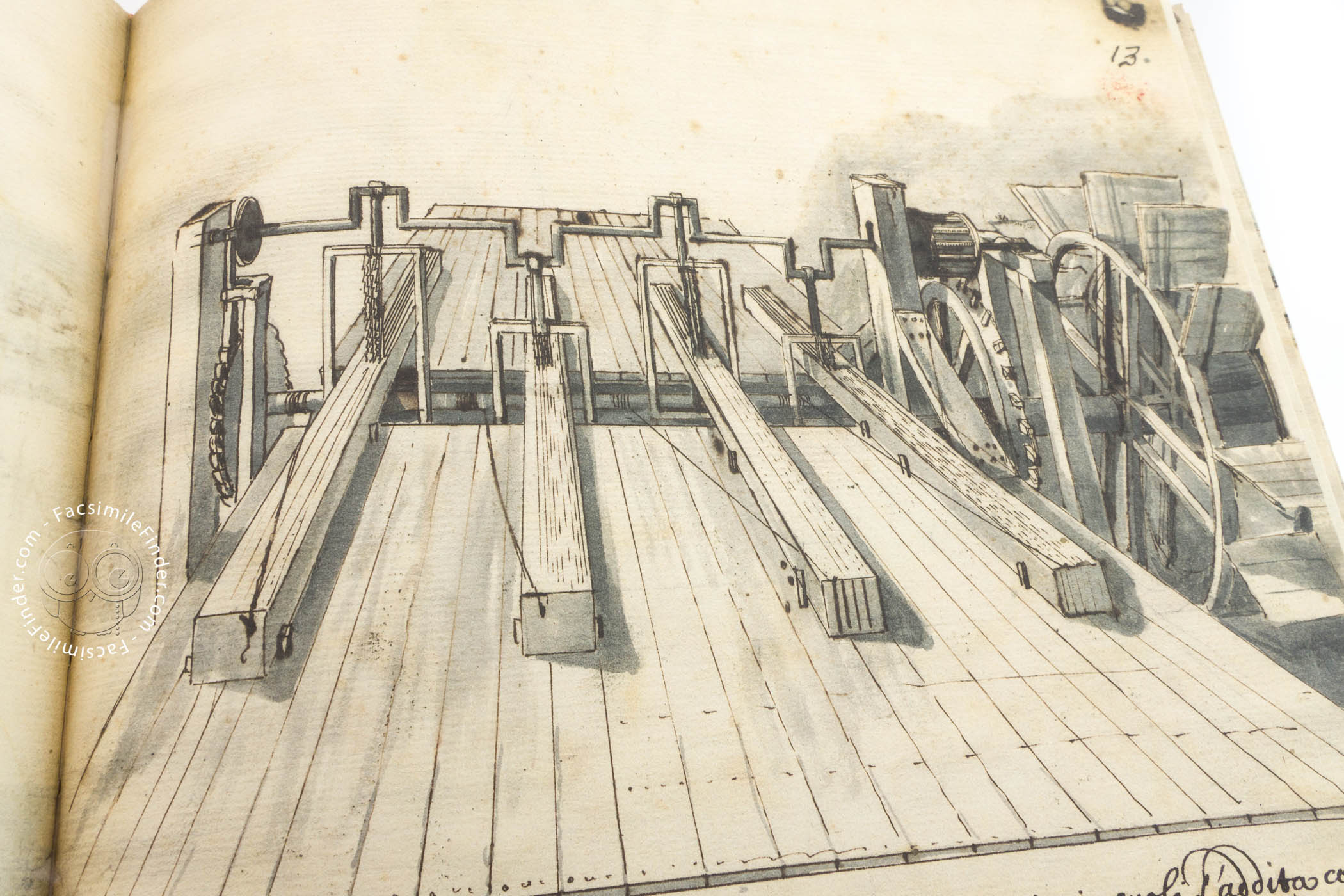
Written in a chancery italic hand, the manuscript is structured bilingually: Italian text accompanies the images, while Meyer’s Dutch text faces it across the opening. Fifty drawings attributed to the young Gaspar van Wittel occupy the upper portion of the right-hand pages, hovering above Meyer’s Italian explanations like visual proofs set over legal argument.
Materials, Format, and Bookmaking Choices
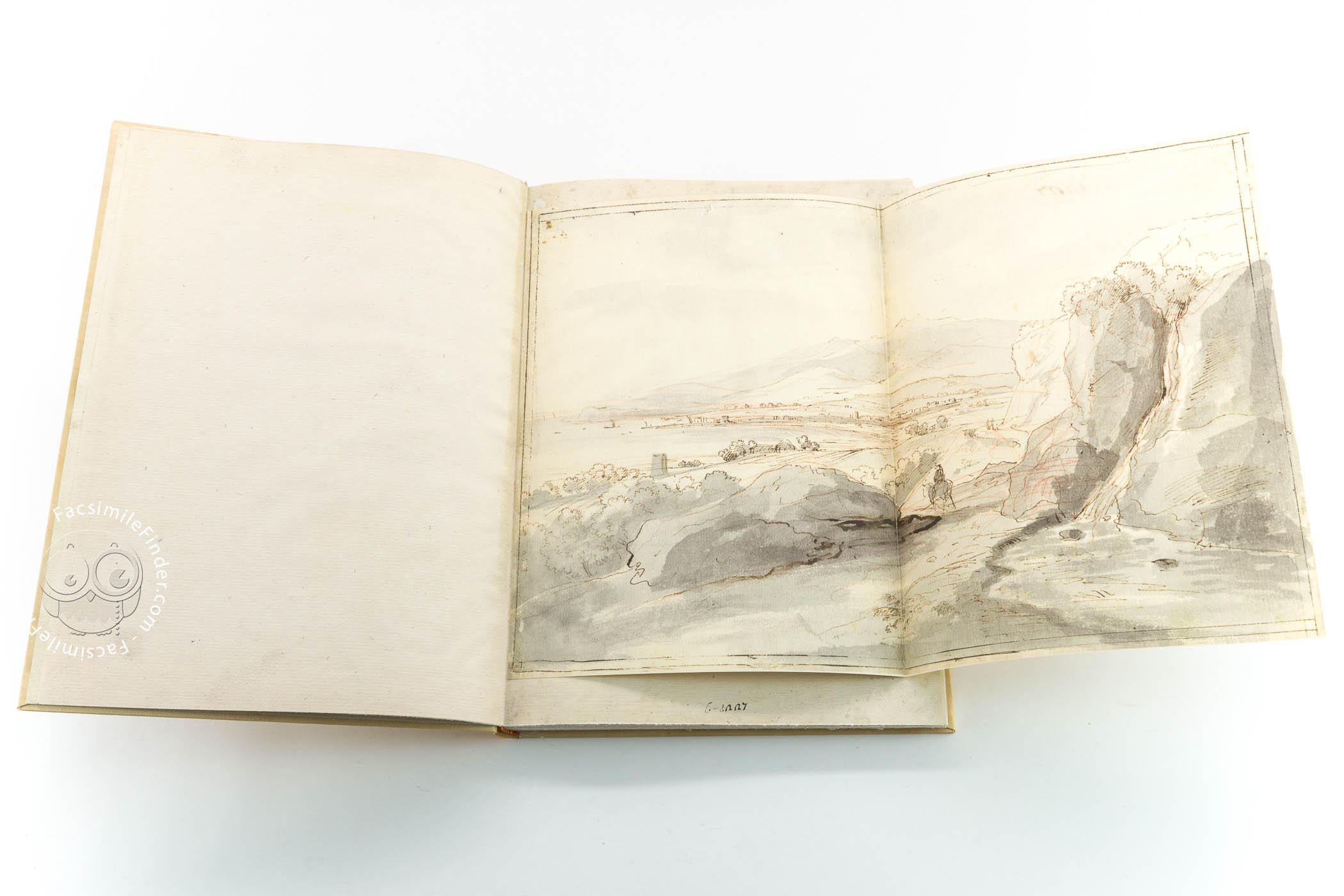
The manuscript is built around a substantial frontispiece drawing pasted in and folded to fit the volume, followed by 65 lightly ruled paper leaves. The support is carefully specified—metal-gall inks, grey ink, sanguine, and washes—suggesting a deliberate coordination of text and image as a single argumentative surface.
Watermarks recur across the guards and gatherings, while the volume’s earlier sewing and irregular quires reveal an adaptive structure designed to keep the spine from swelling under inserted single leaves.
Unfinished Leaves and the Project’s Afterlife
The dossier’s incompletion is not merely textual: the first leaf and final drawings remain unfinished, and from one point the Italian commentary falls away entirely.
In the closing pages, Van Wittel even repeats earlier compositions—an echo that suggests the book’s purpose had collapsed, and that the remaining leaves may have been treated almost as a notebook once Clement X’s death ended the enterprise.
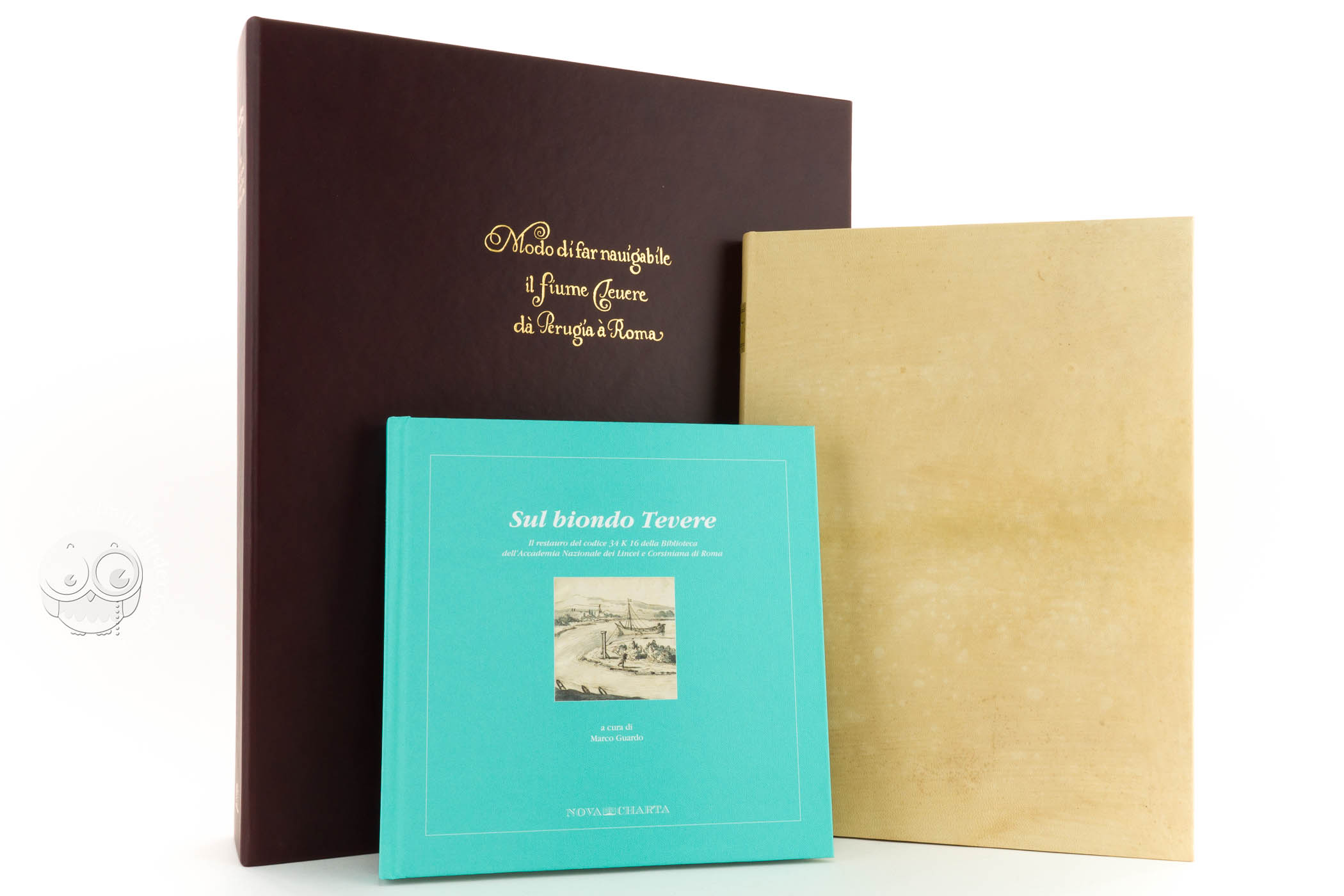
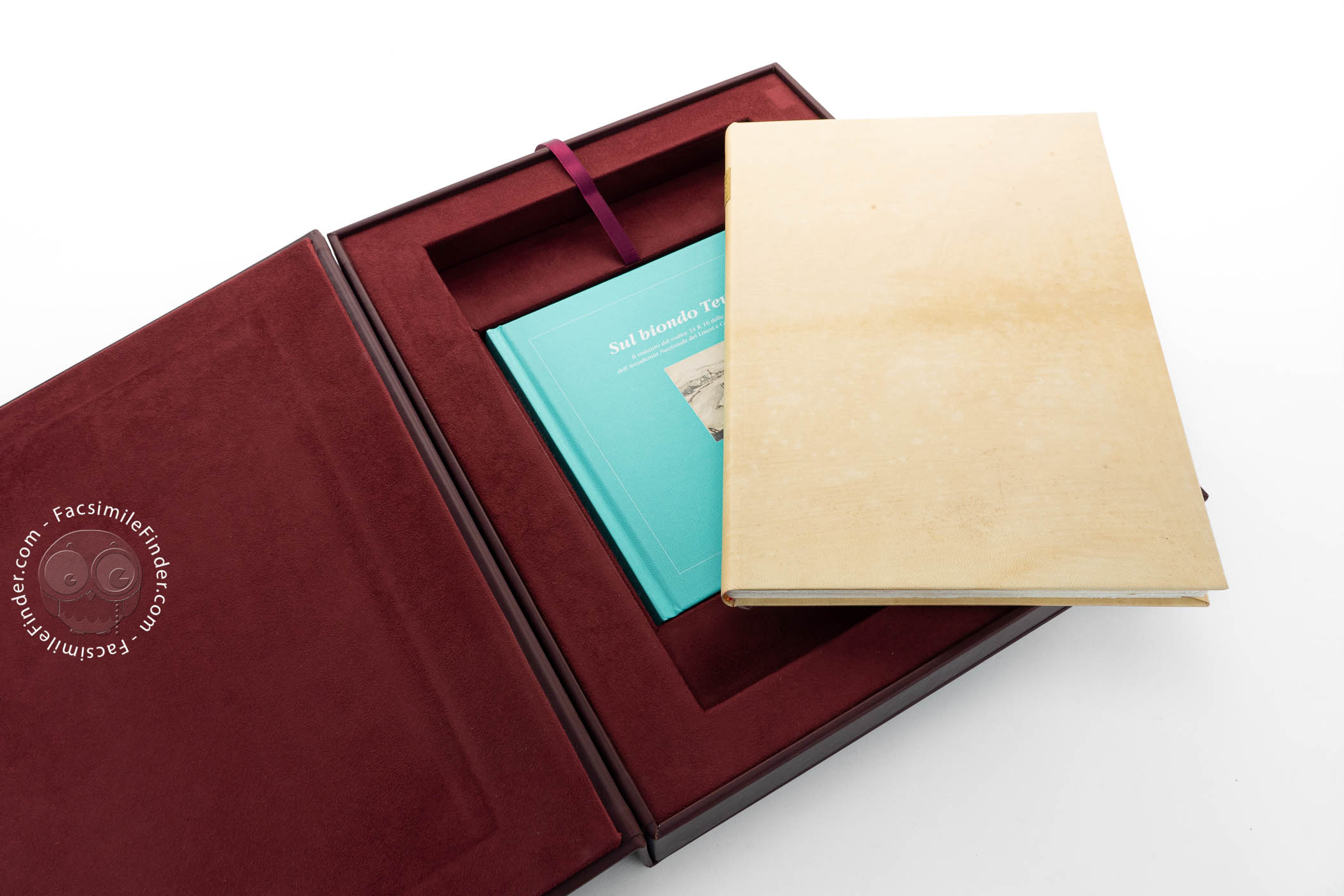
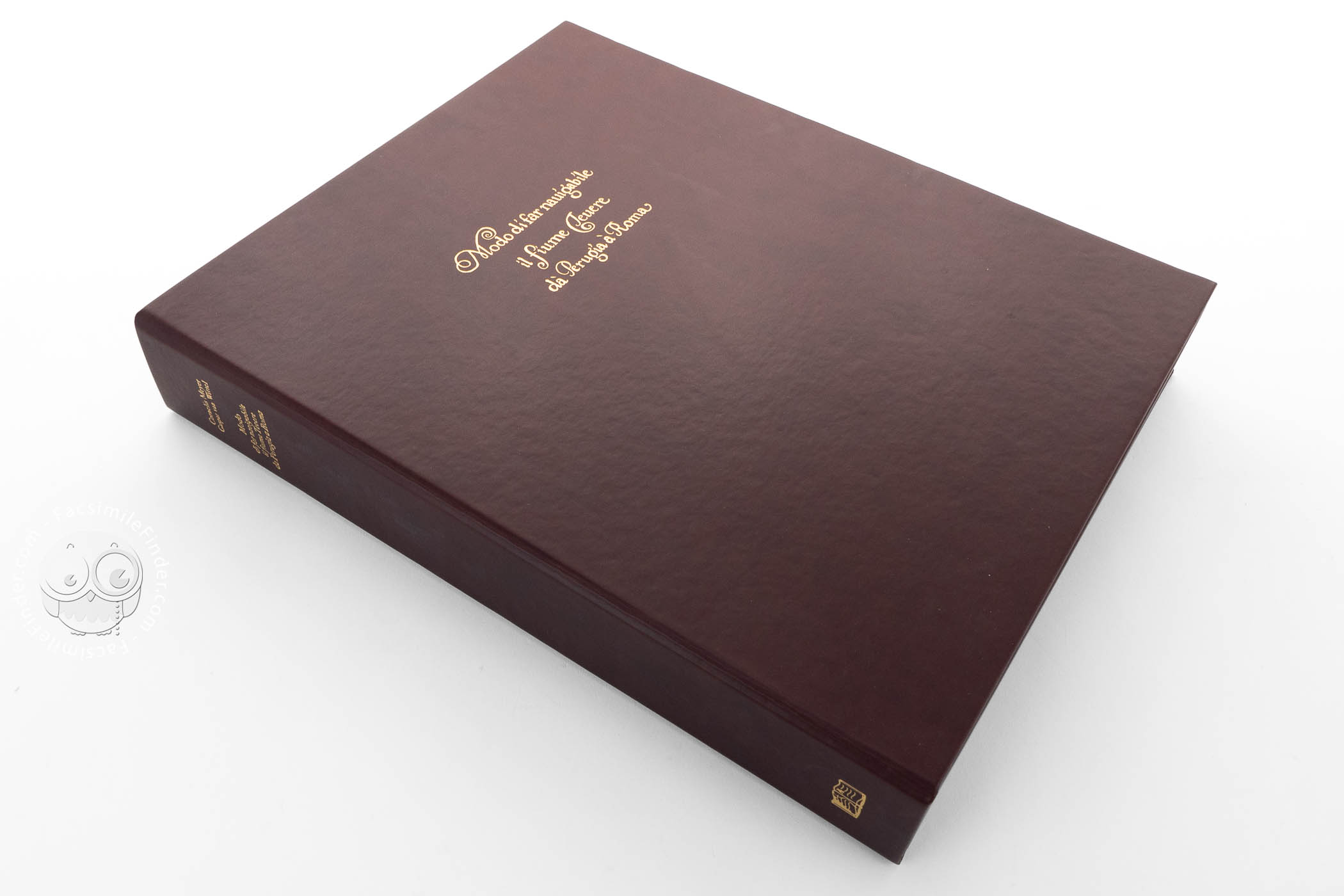
We have 1 facsimile edition of the manuscript "How to Make the Tiber Navigable from Perugia to Rome": Modo di Far Navigabile il Tevere da Perugia a Roma di Cornelis Meyer facsimile edition, published by Nova Charta, 2012
Request Info / Price