


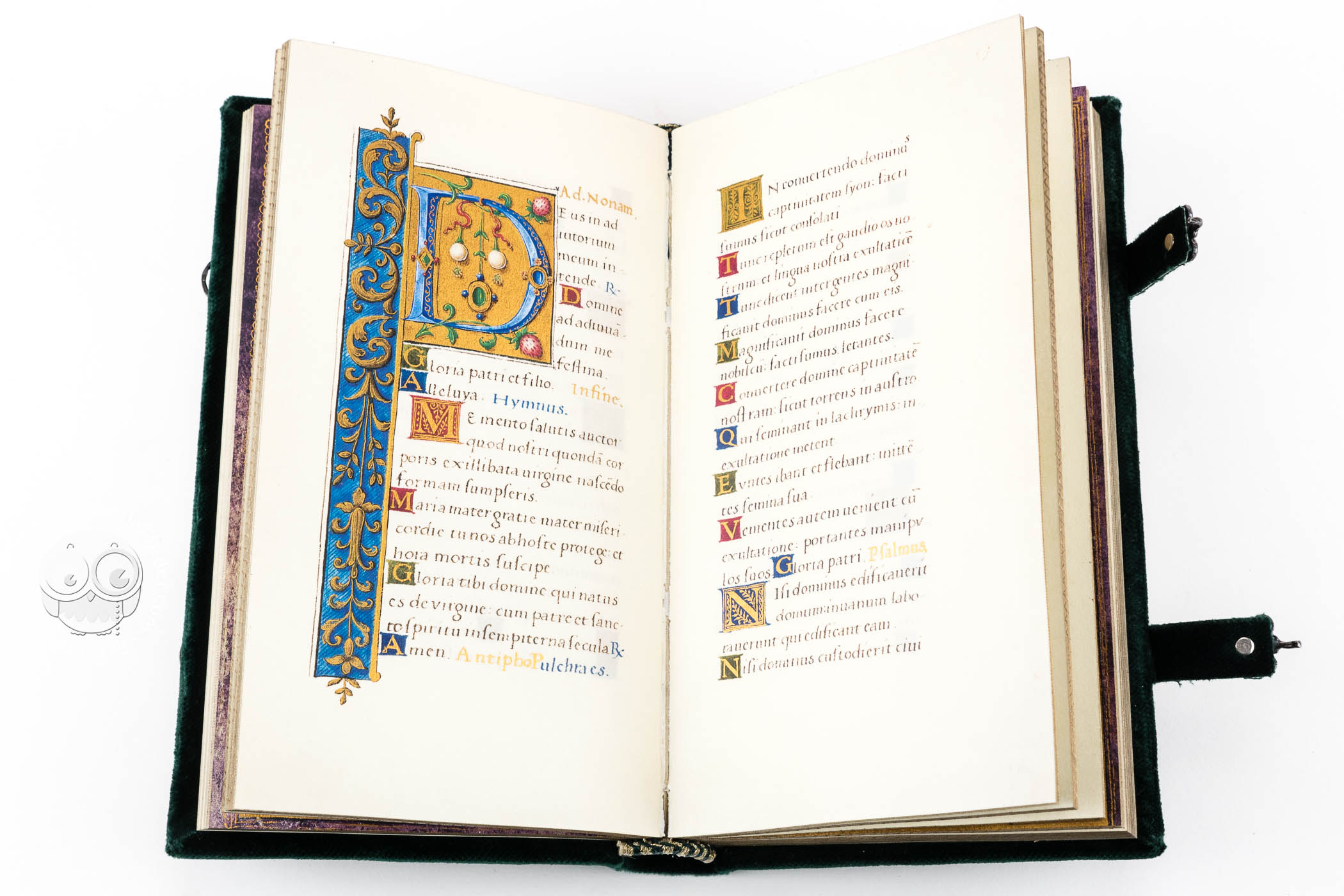
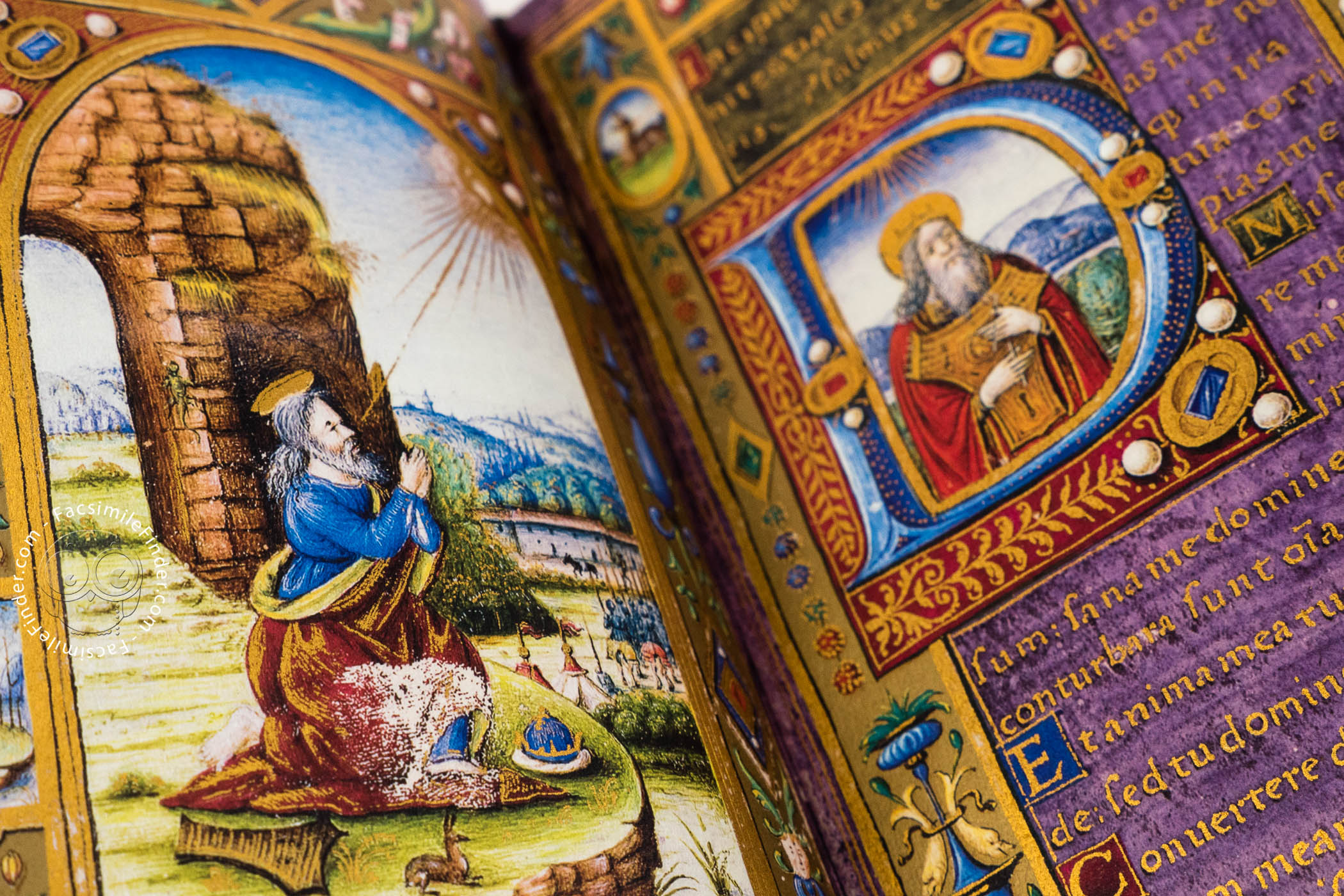
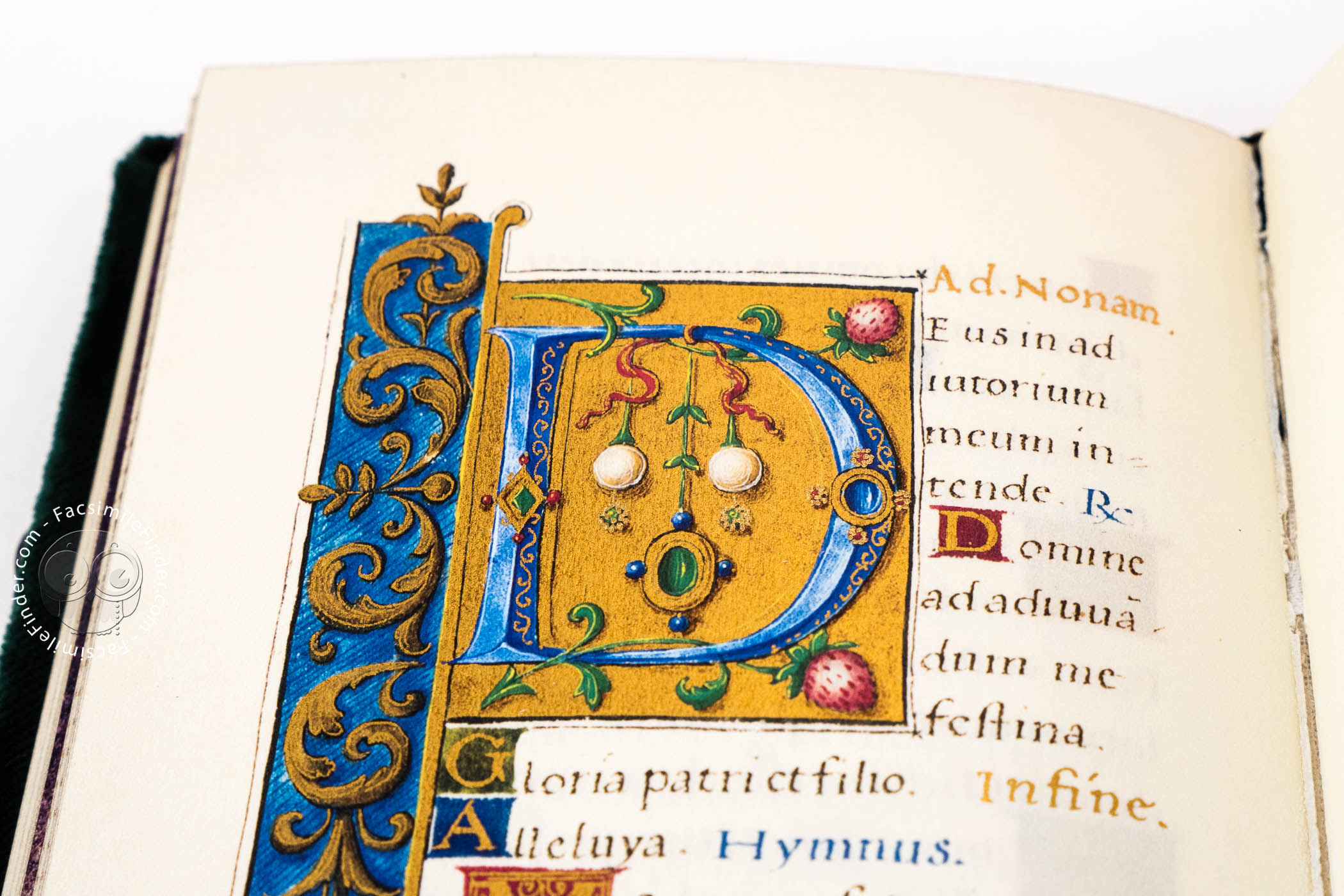
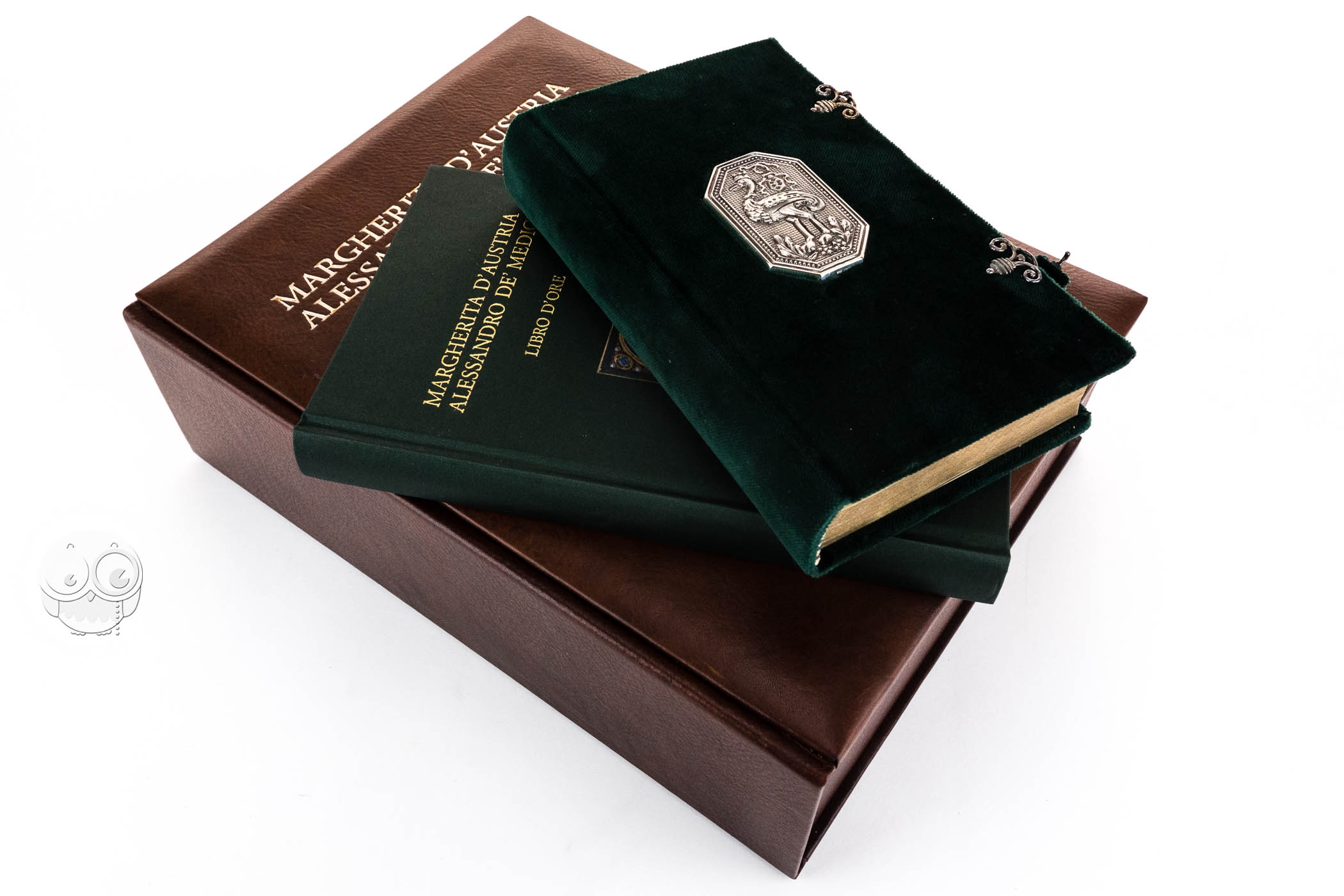
The Hours of Margaret of Austria and Alessandro de' Medici is a Christian prayer book commissioned by the young duke of Florence, Alessandro "il moro" ("the black," for his dark complexion). He gave it to his bride, Margaret of Austria, the illegitimate daughter of Holy Roman Emperor Charles V. The book was created in Florence between 1532, when Alessandro became duke, and 1536, when the couple married. Its intensely colored illumination, attributed to Giovanni Boccardi and his son, Francesco, includes five full-page miniatures and elaborate classicizing borders.
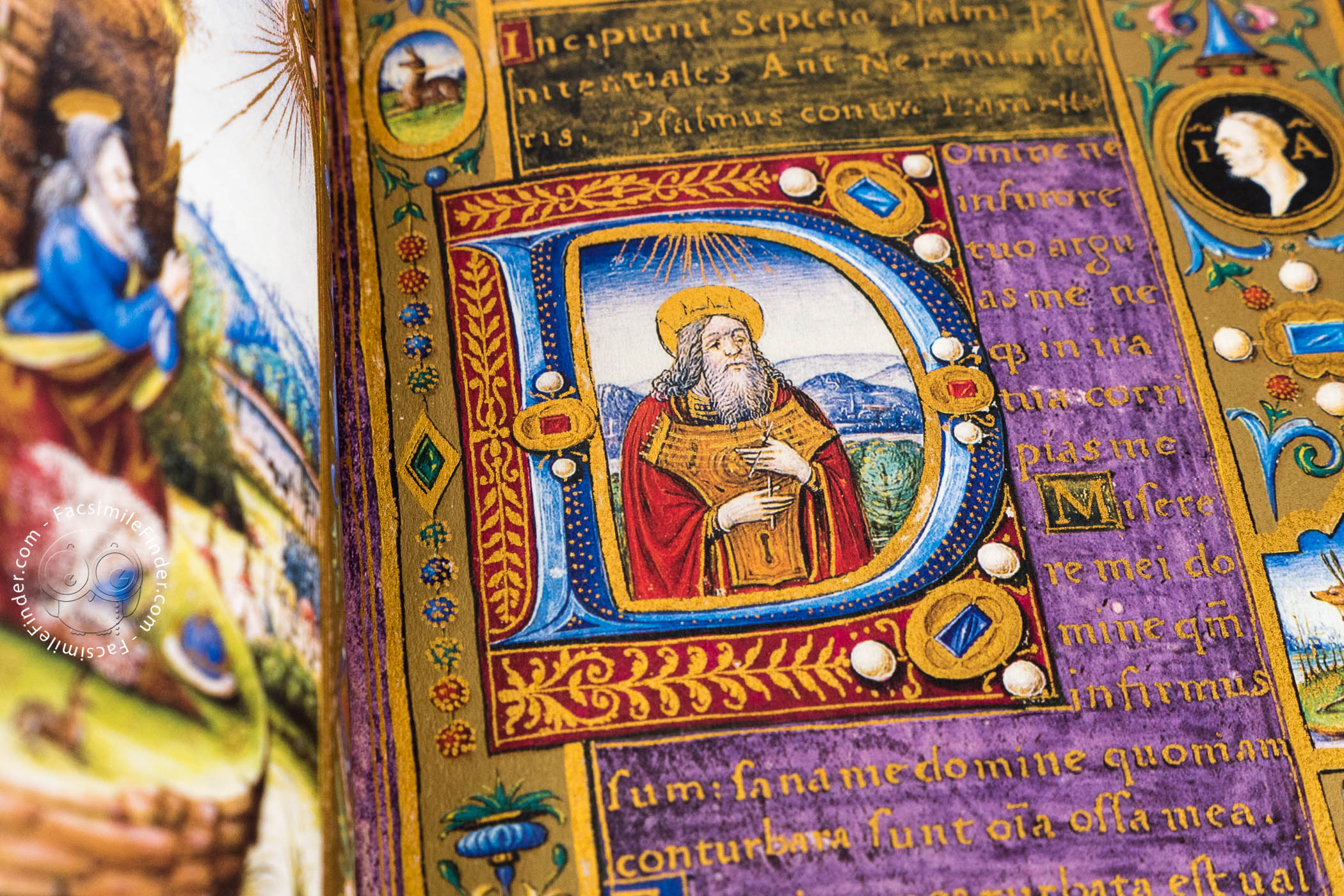
The manuscript is a book of hours, a collection of prayers and prayer services for private contemplation by the laity. Its principal text is the Hours of the Virgin. The book also includes a calendar, the Penitential Psalms, the Office of the Dead, and a large collection of suffrages (short prayers) to saints.
Humanistic Illumination
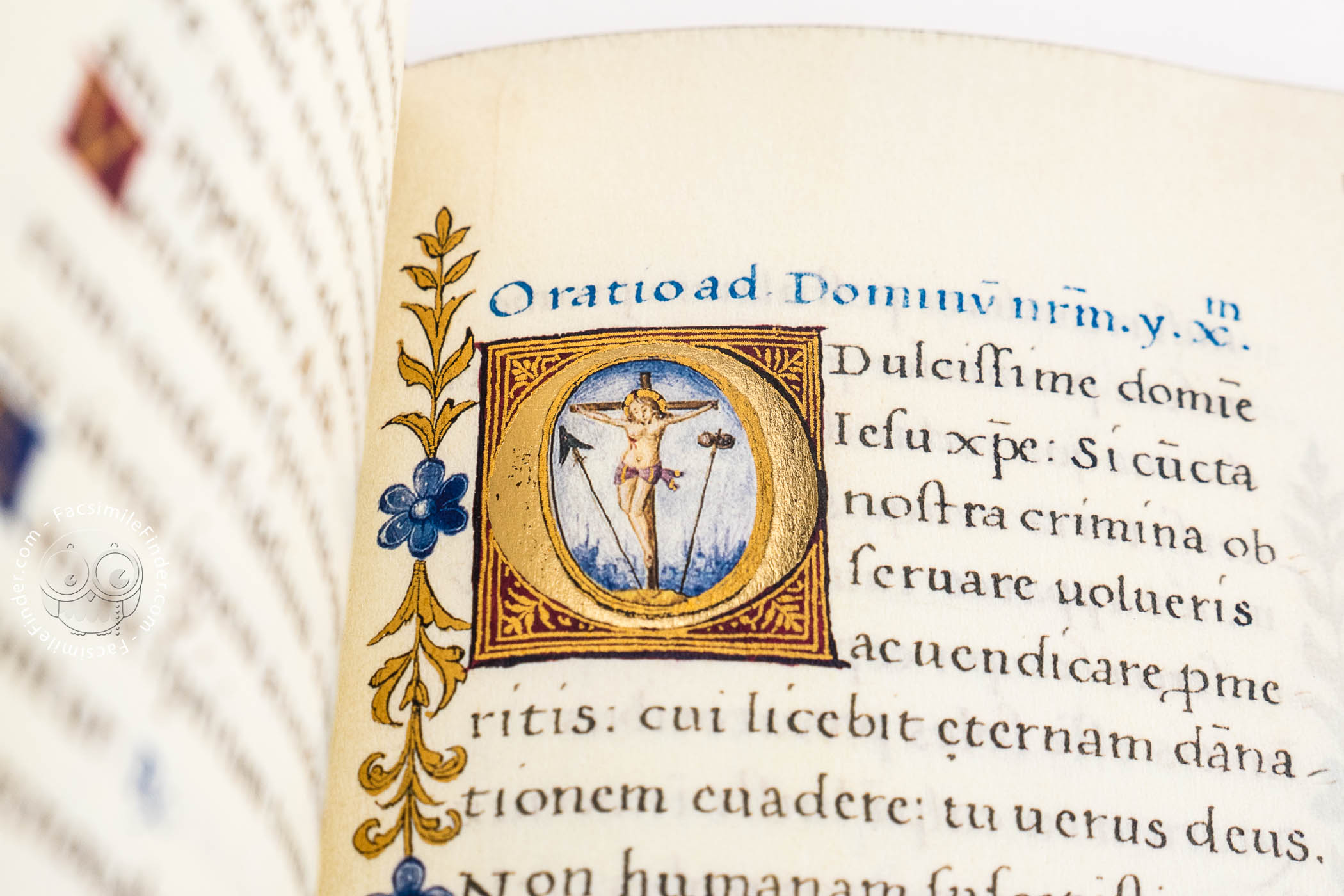
The manuscript's illumination reflects the keen interest in classical antiquity that lies at the root of humanism, the intellectual movement that arose in Florence in the fourteenth century and continued to hold sway into the sixteenth. Giovanni and Francesco Boccardi have created a devotional book that imitates the aesthetic of humanistic manuscripts of ancient literary texts.
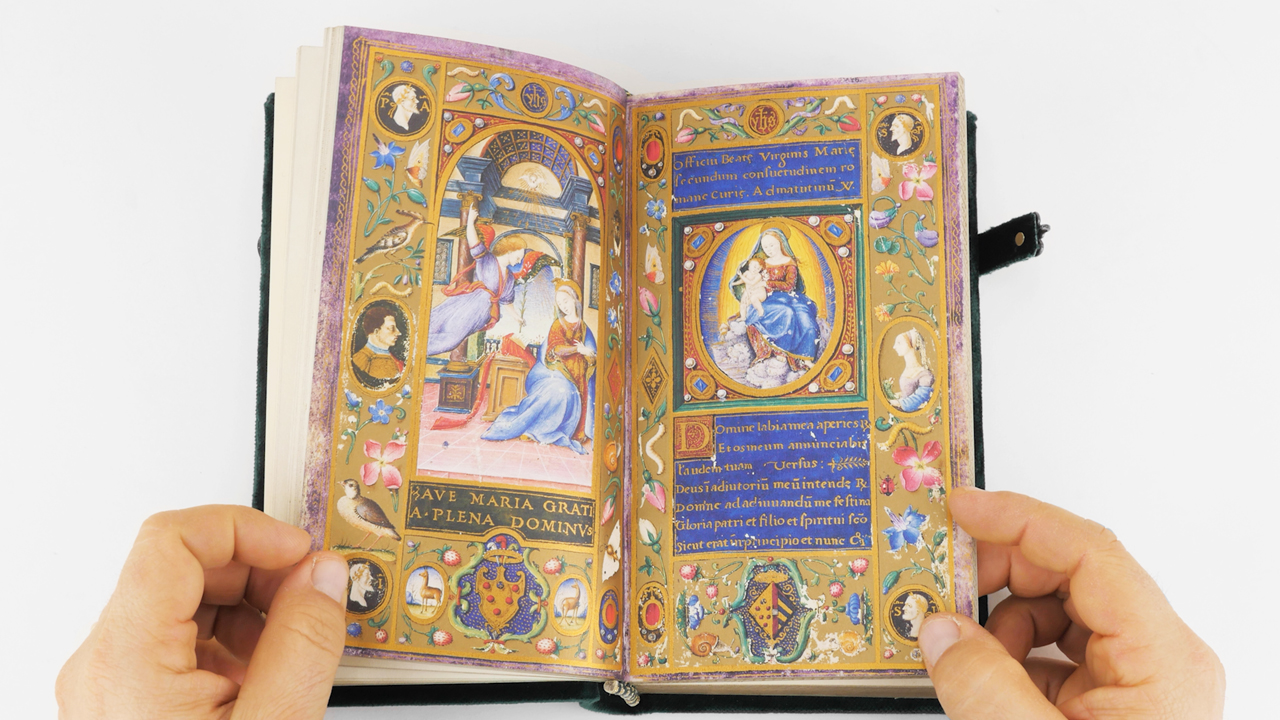
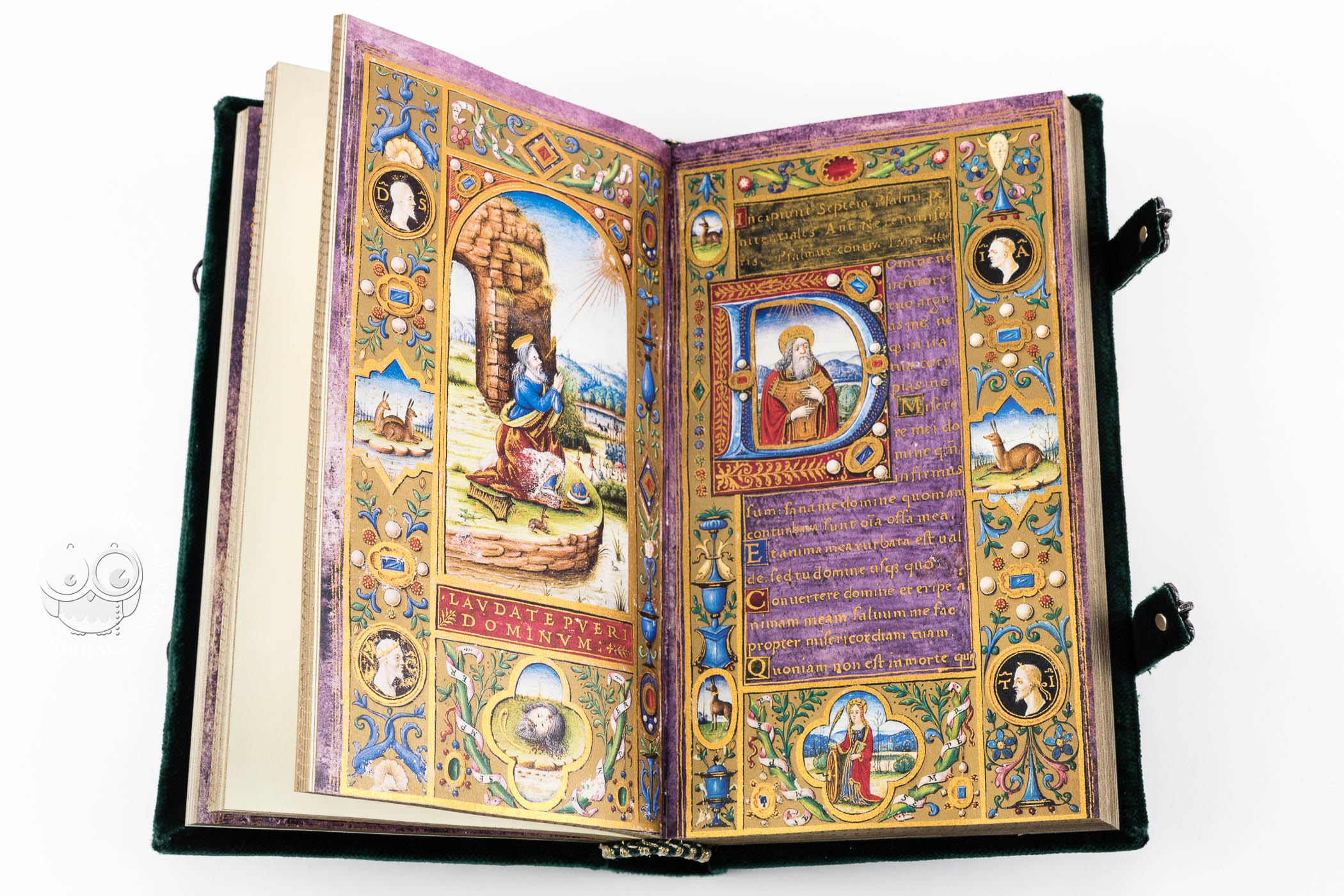
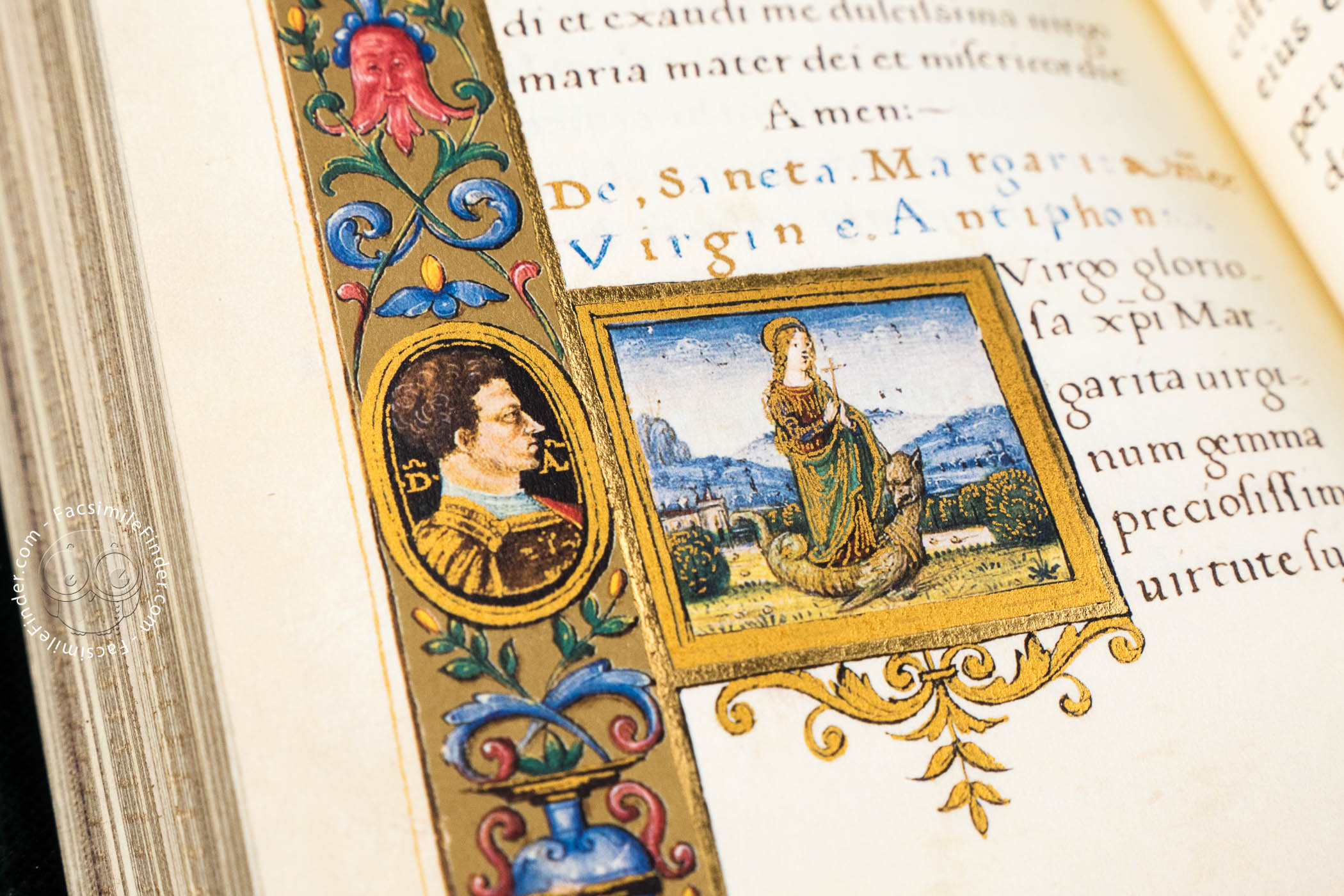
Classicism is manifest most conspicuously in the full borders, where fictive ancient carved cameos join fruits, flowers, birds, insects, and precious gems (e.g., fols. 75v-76r). The partial borders feature decorative motifs, including masks and ornamental vessels, derived from ancient Roman wall painting (e.g., on fols. 16v and 17r).
A Girl Abducted
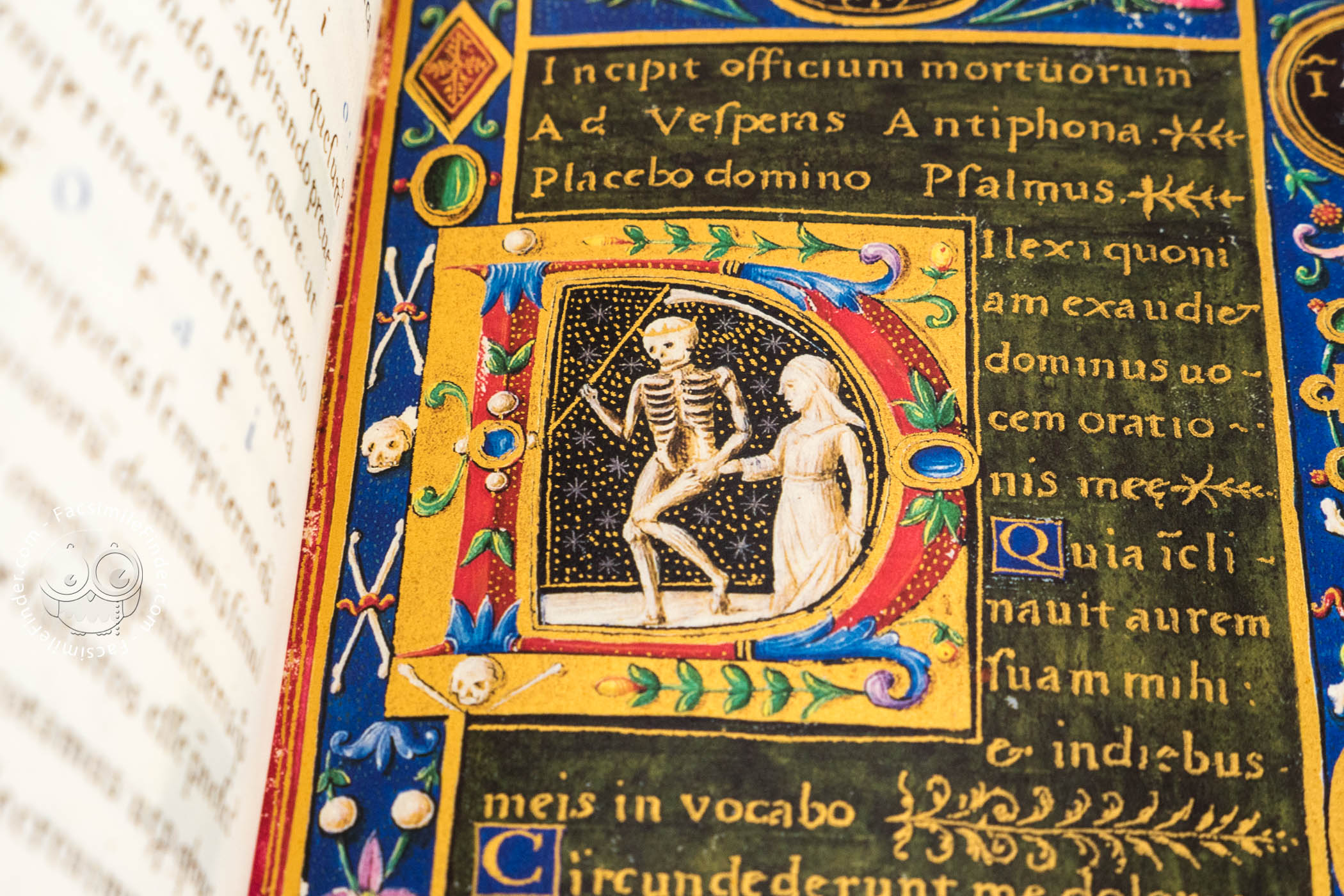
The historiated initial D for the Office of the Dead presents the figure of Death, represented as a crowned skeleton wielding a scythe, leading a girl by the hand, presumably to an early death (fol. 91r). This subject is unusual, and its meaning remains unexplained.
A Celebration of the Young Couple
Visual allusions to Alessandro and Margaret appear throughout the manuscript. The borders of the pages introducing the Hours of the Virgin (fols. 25v-26r) include their portrait busts, the Medici coat of arms, and the combined arms of the Medici family and the Holy Roman Emperor impaled (side by side on the same shield).
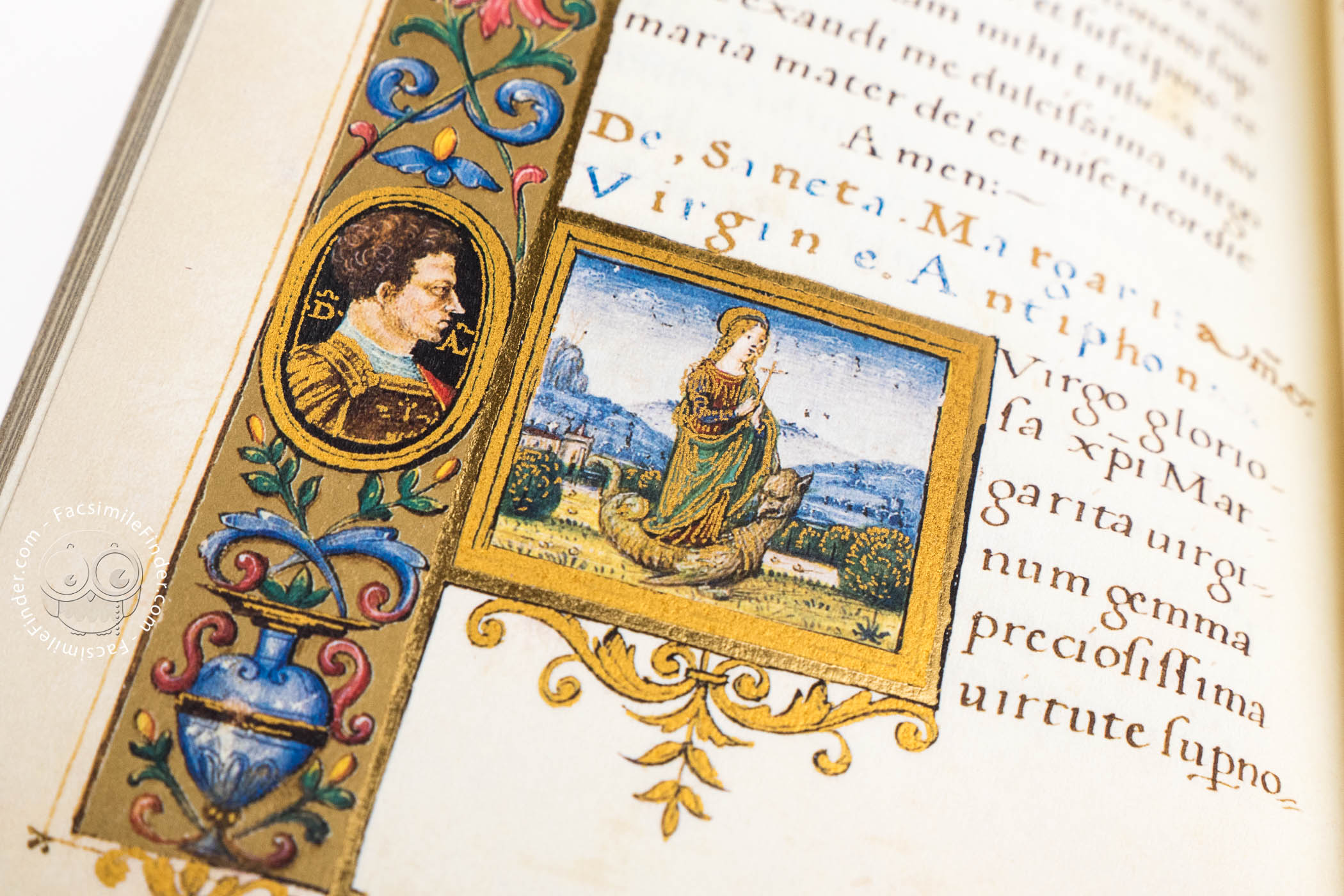
Saint Margaret, the bride's namesake, appears in the lower border of the page that opens the Office of the Dead (fol. 91r) and again at the book's suffrage to the saint (fol. 145v). Both images show the legend in which she escapes unharmed from the belly of Satan, who had taken the form of a dragon. Each of these pages also features a portrait bust of Alessandro labeled A.D. (for Alexander Dux).
Humanistic Writing
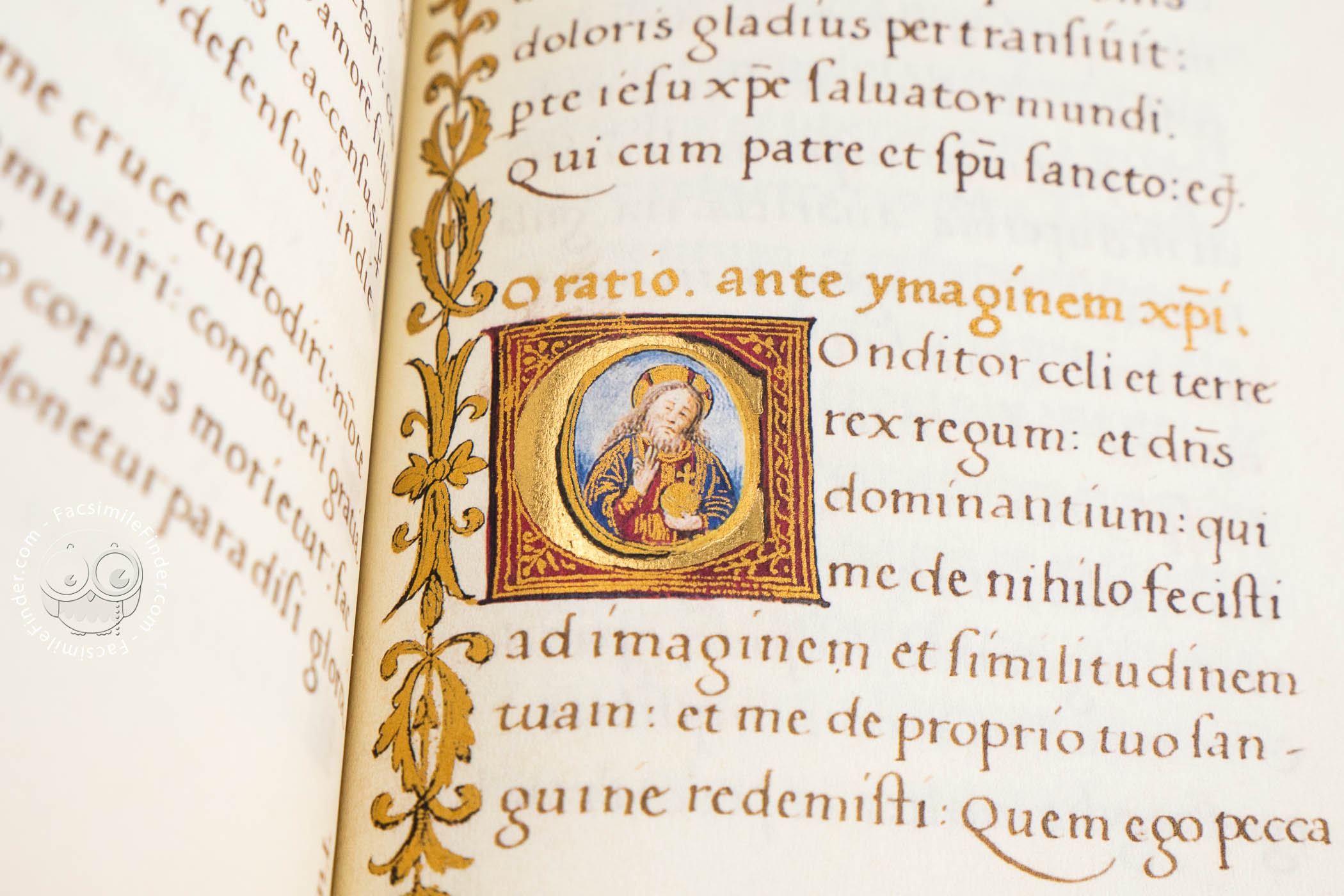
The main text is written in Humanistic Minuscule, a script developed in humanistic circles in Florence in rejection of the prevailing Gothic scripts. Although the text is mostly in Latin, there are a few Italian-language rubrics.
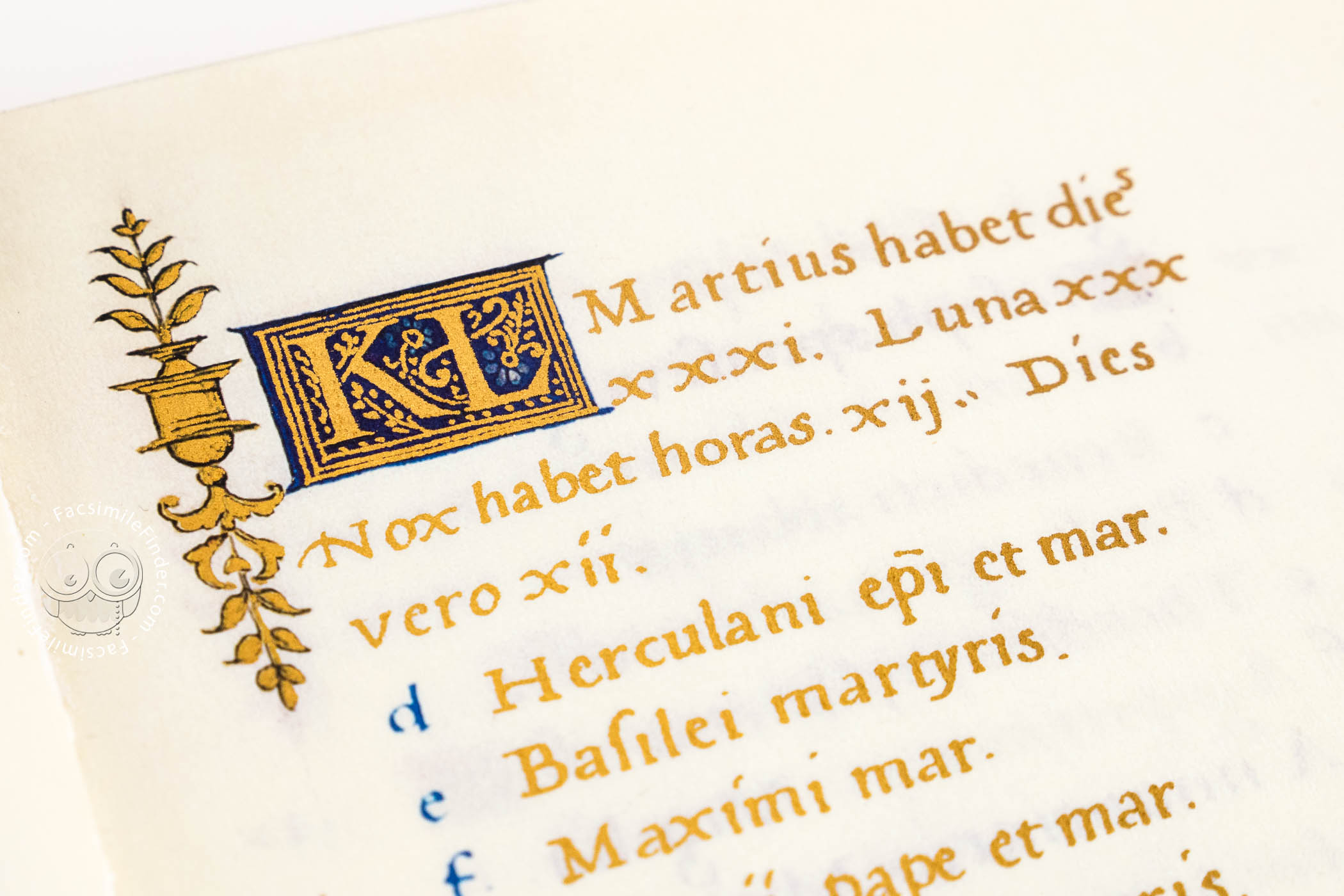
The presentation of some rubrics and beginnings of major sections of text in gold capital letters on colored backgrounds is borrowed from humanistic manuscripts to enhance the book's splendor (e.g., fols. 25v-26r and 75v-76r).
From the Collection of an Art Lover
Florentine nobleman, cardinal, and art patron Neri Maria Corsini (1685-1770) acquired the manuscript before 1738. His descendant Tommaso Corsini (1835-1919) donated the family collection in 1883 to the Accademia Nazionale Reale dei Lincei (now Accademia Nazionale dei Lincei e Corsiniana).
We have 1 facsimile edition of the manuscript "Hours of Margaret of Austria and Alessandro de' Medici": Libro d'ore di Margherita d'Austria e Alessandro de' Medici facsimile edition, published by Istituto dell'Enciclopedia Italiana - Treccani, 2007
Request Info / Price