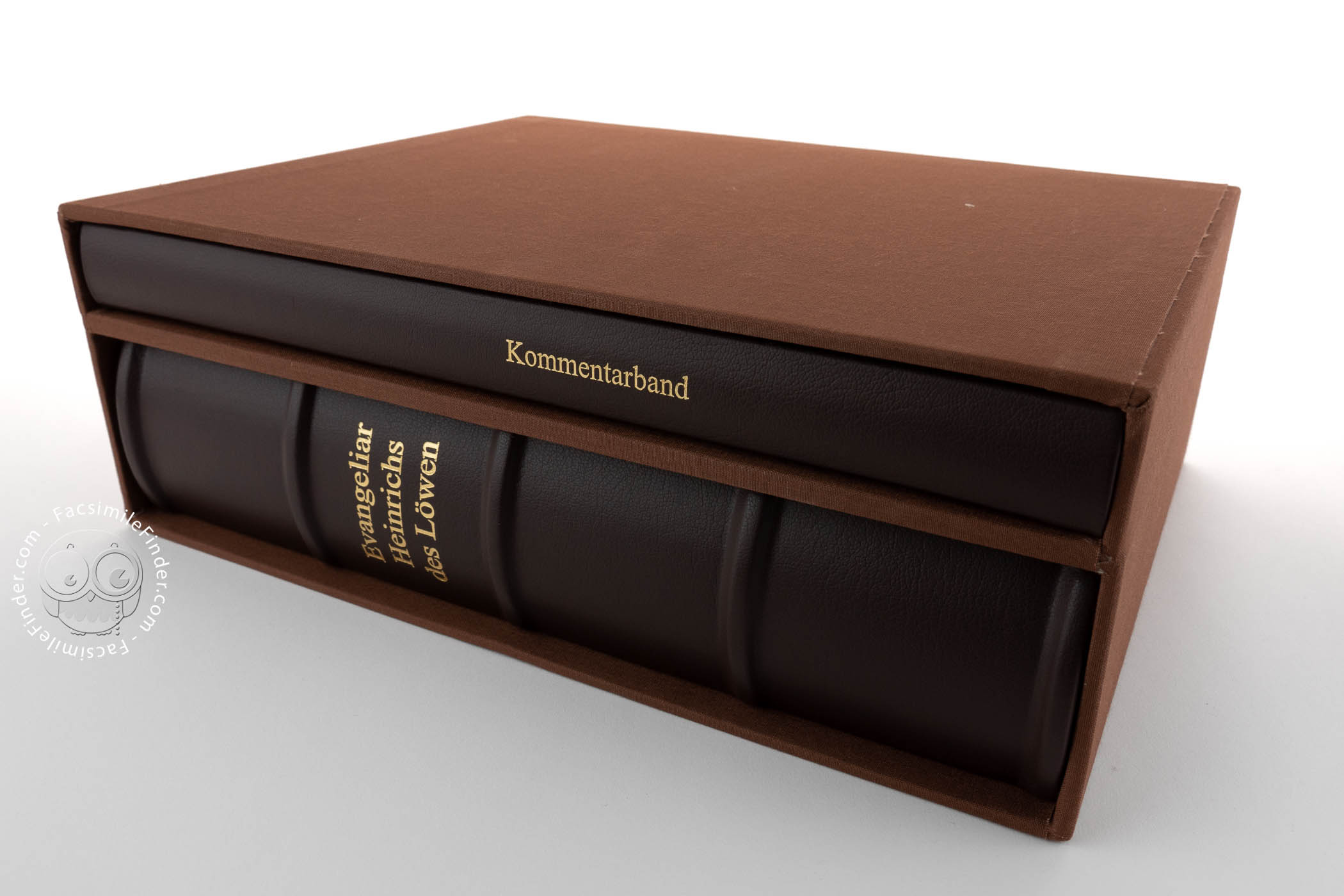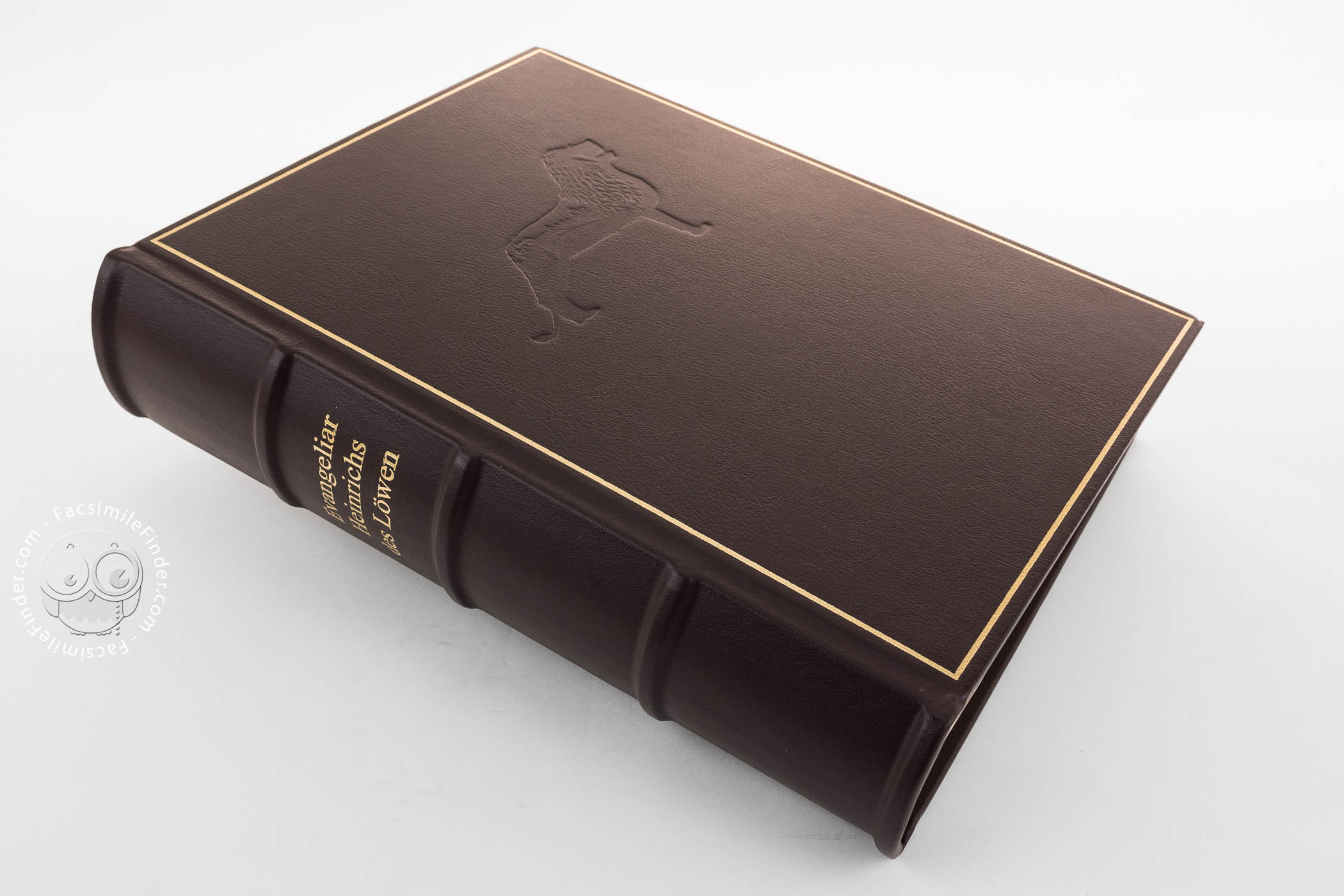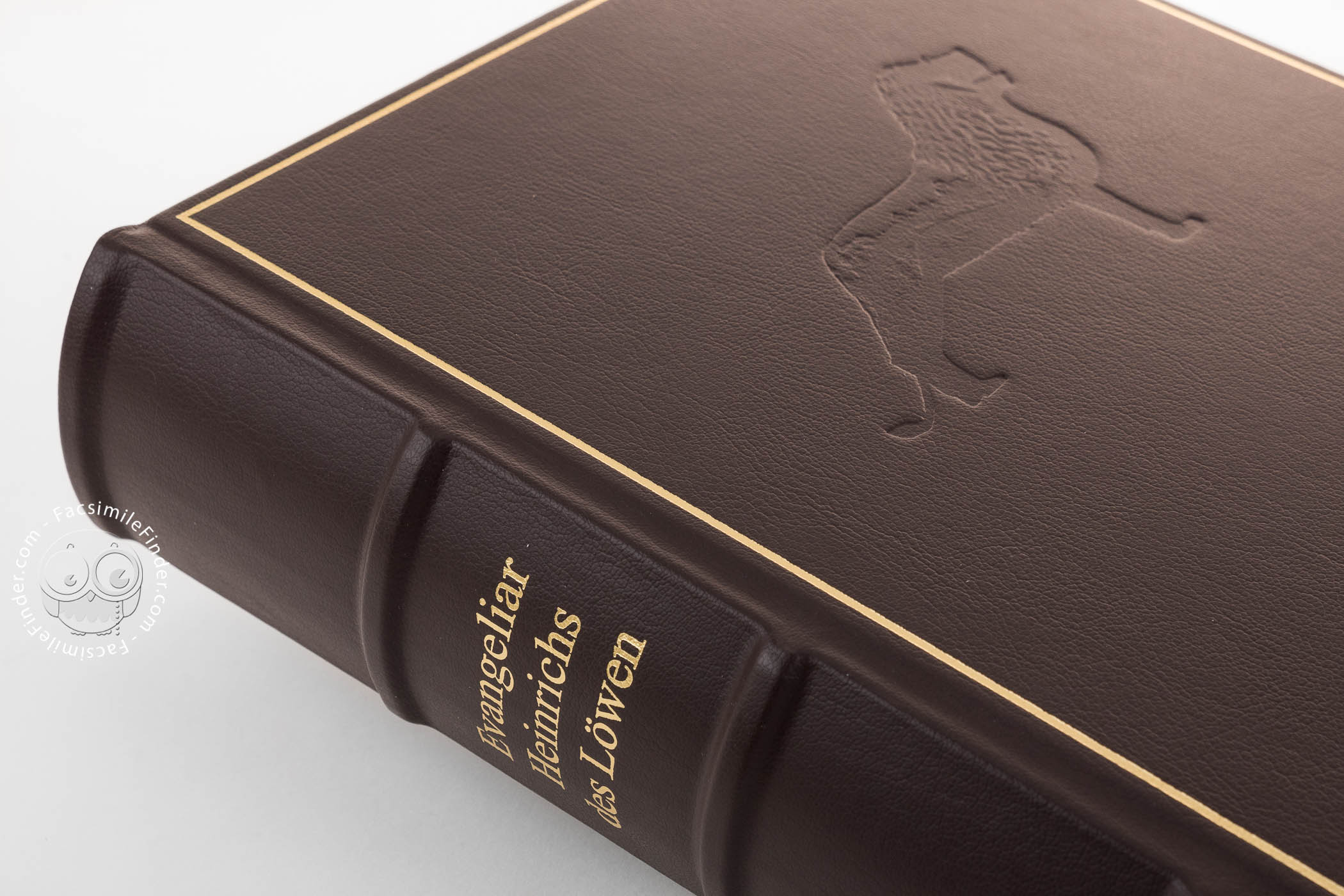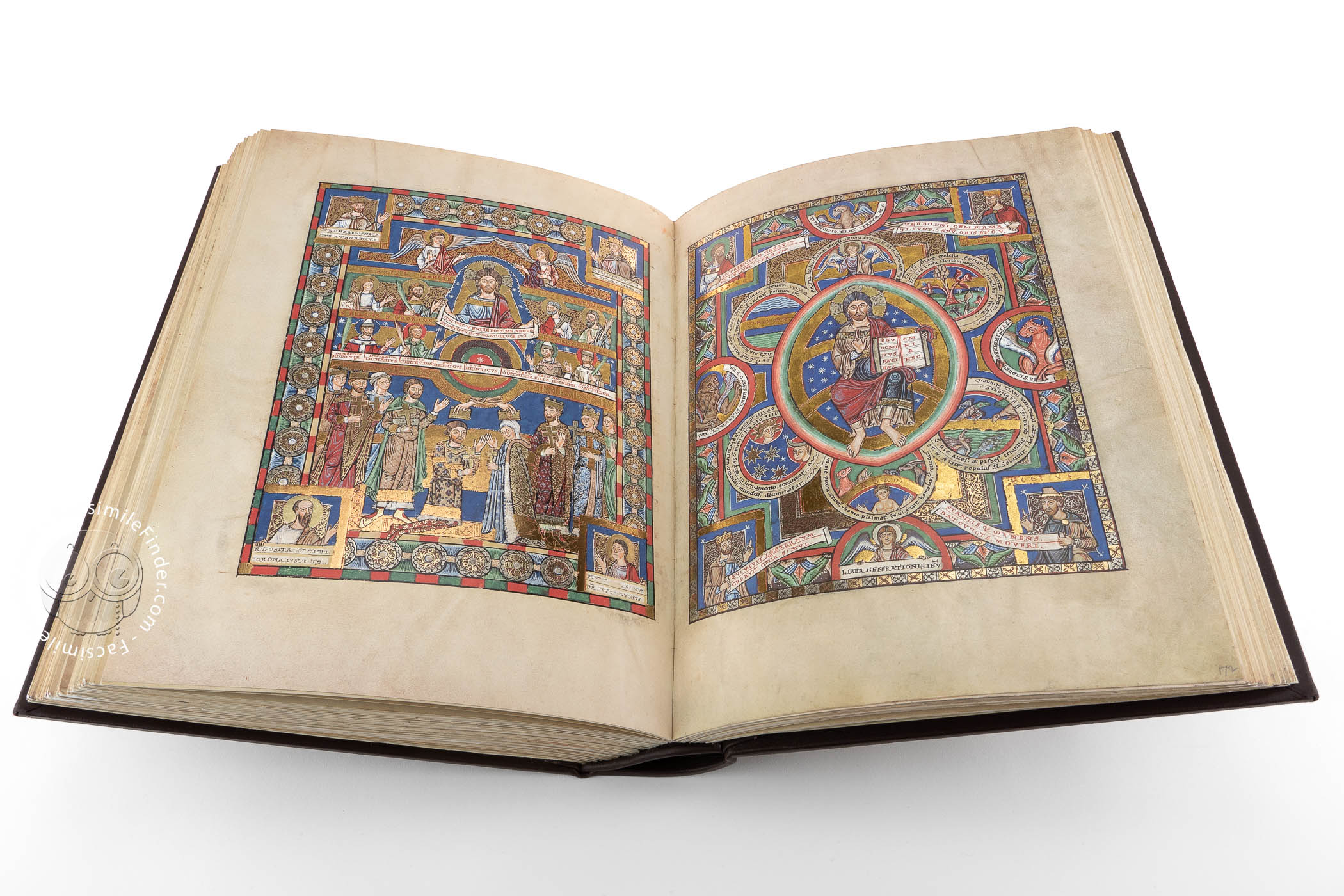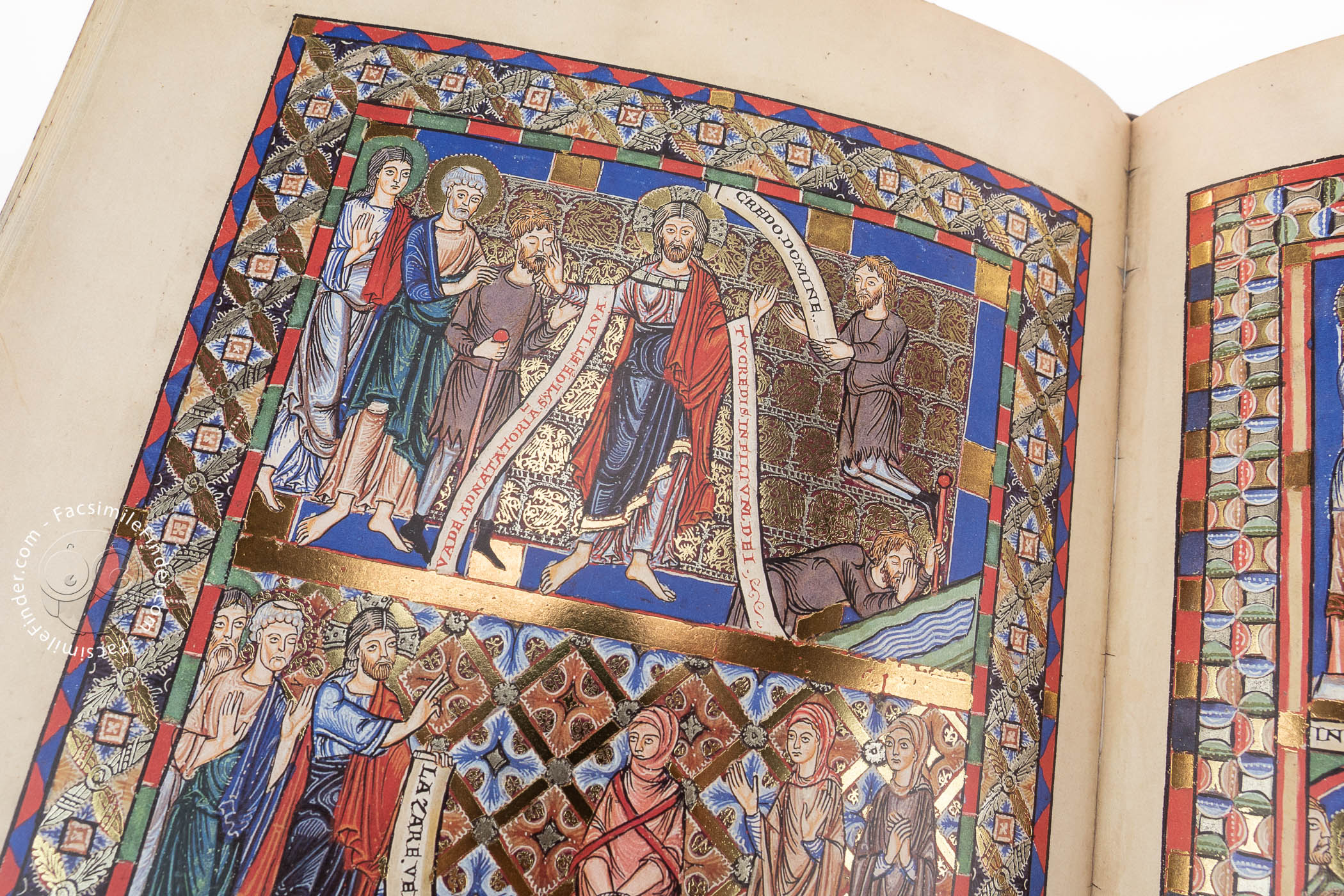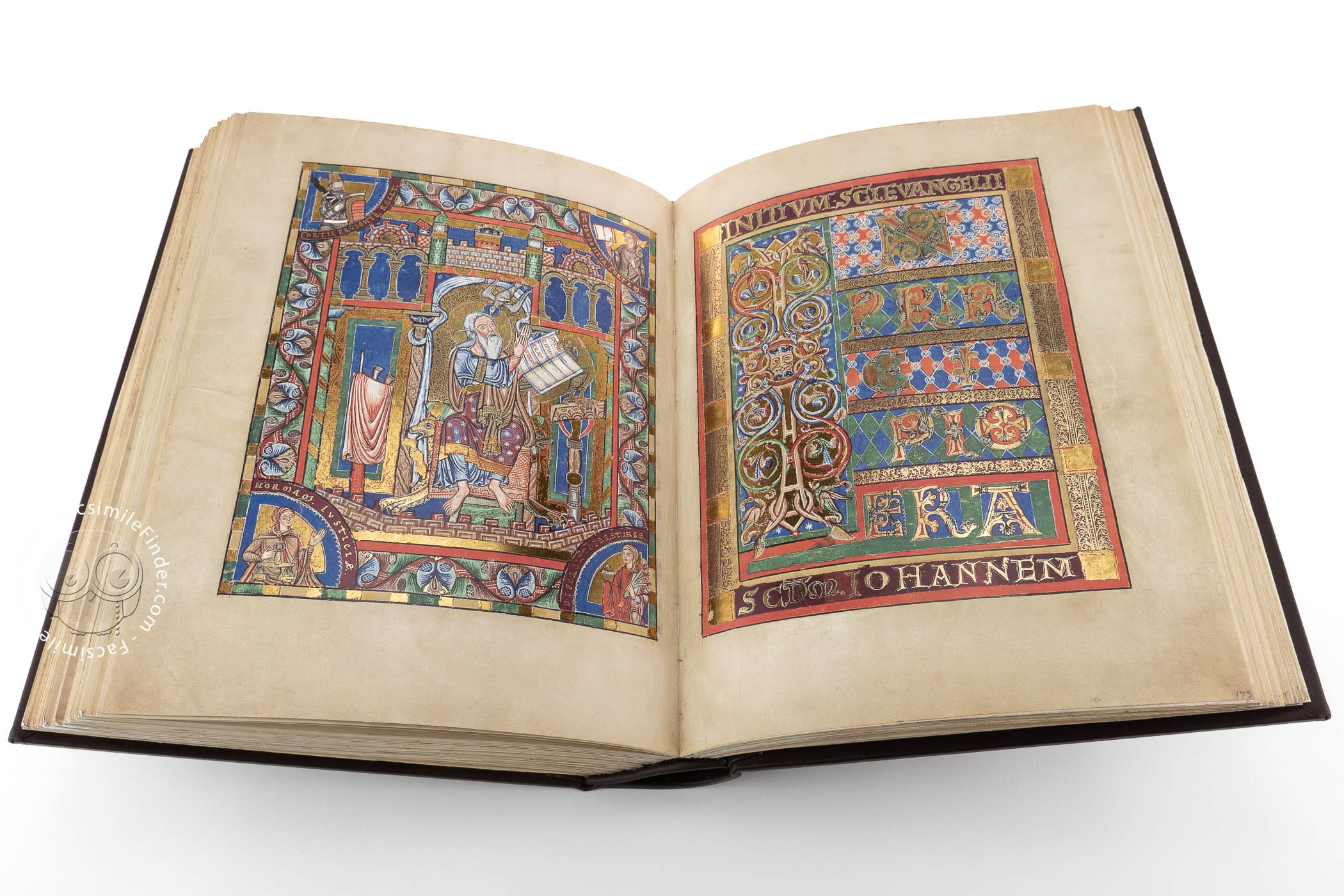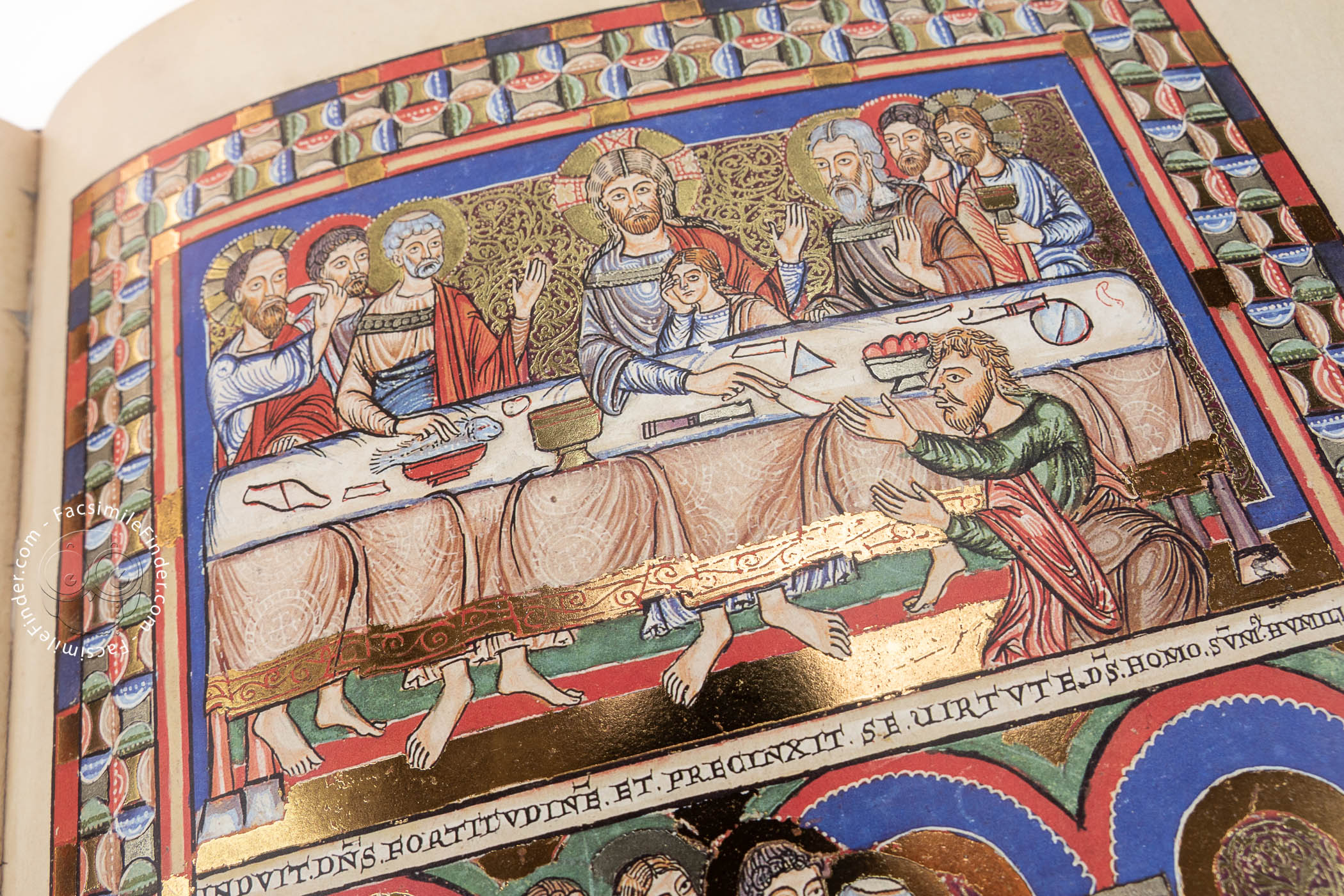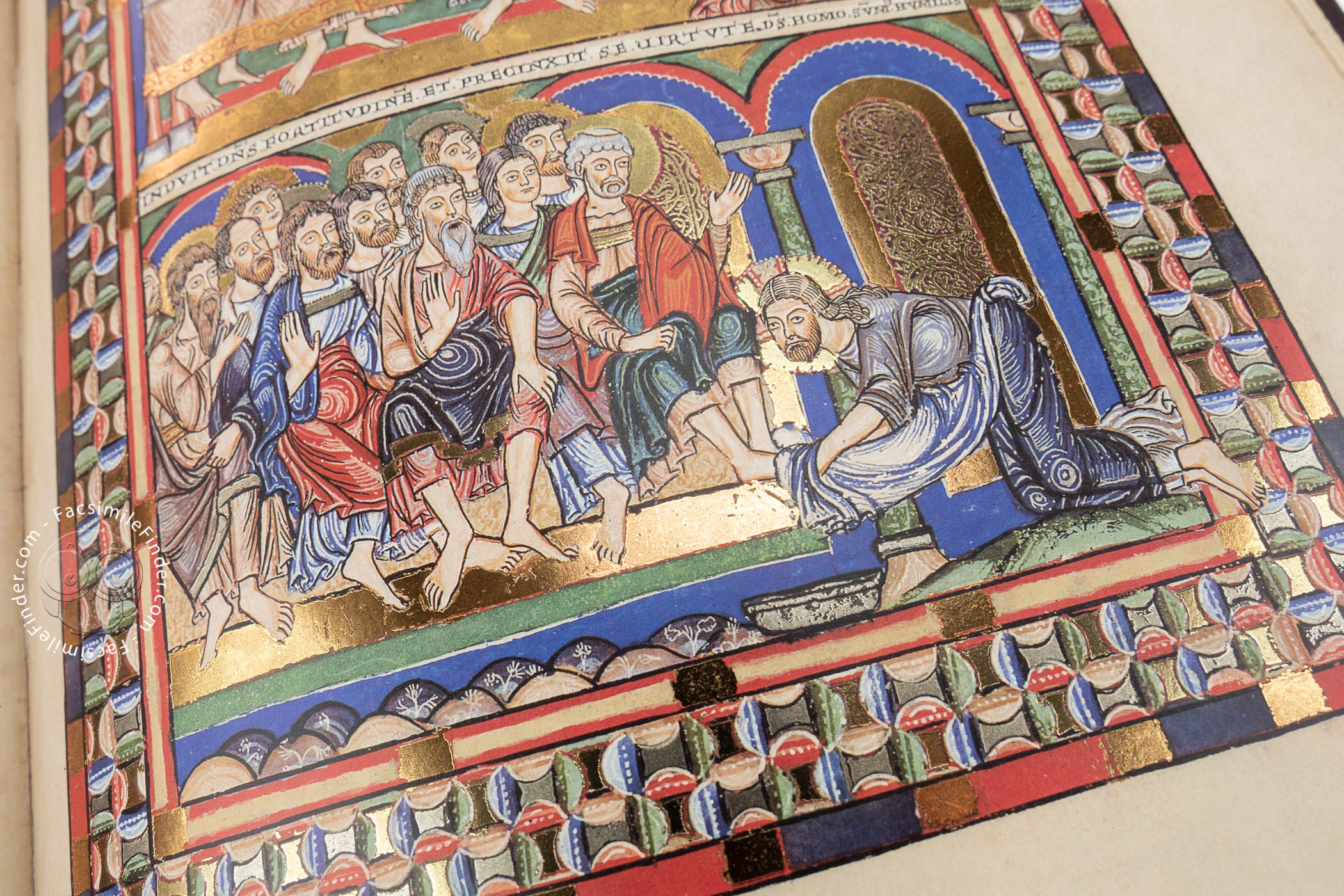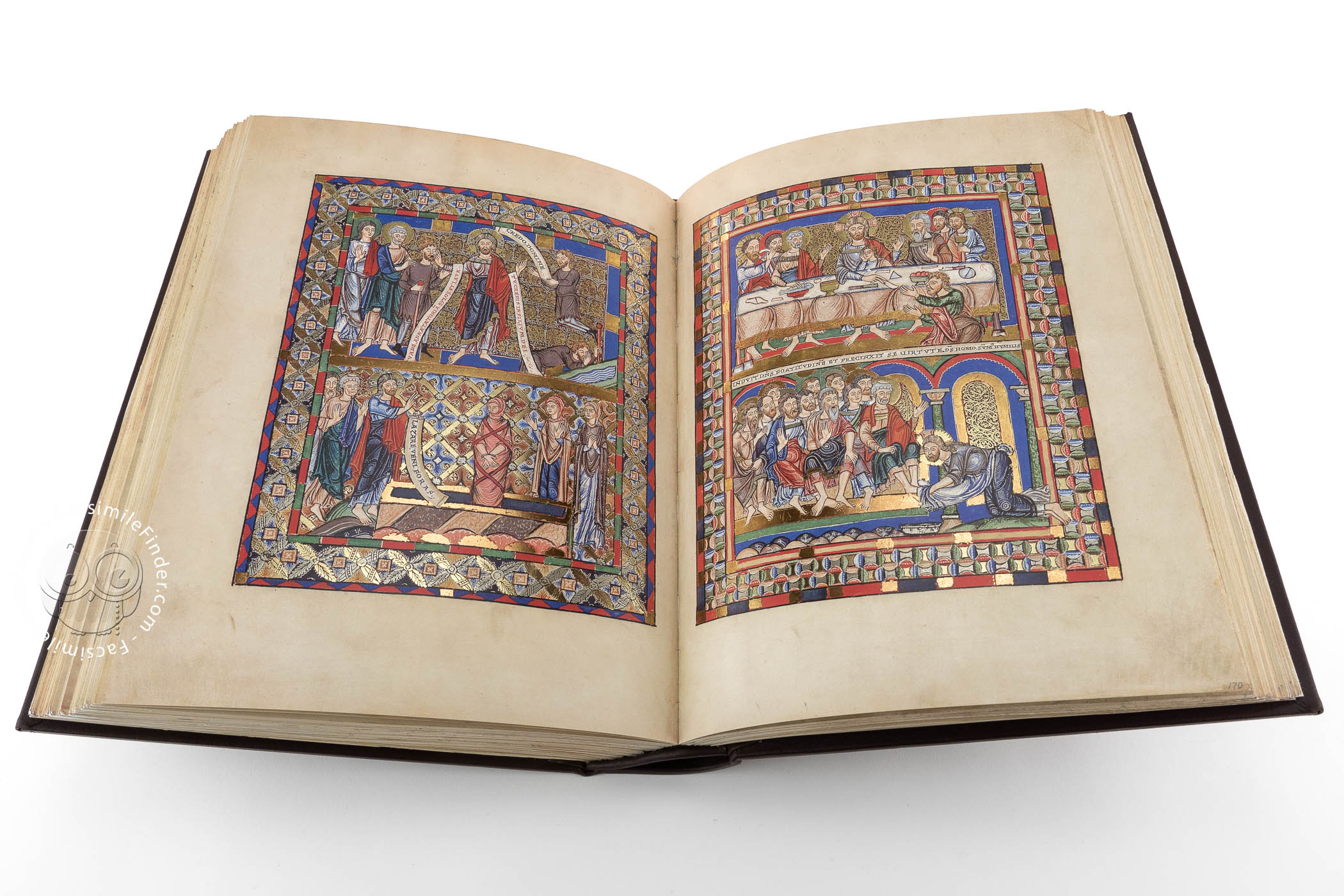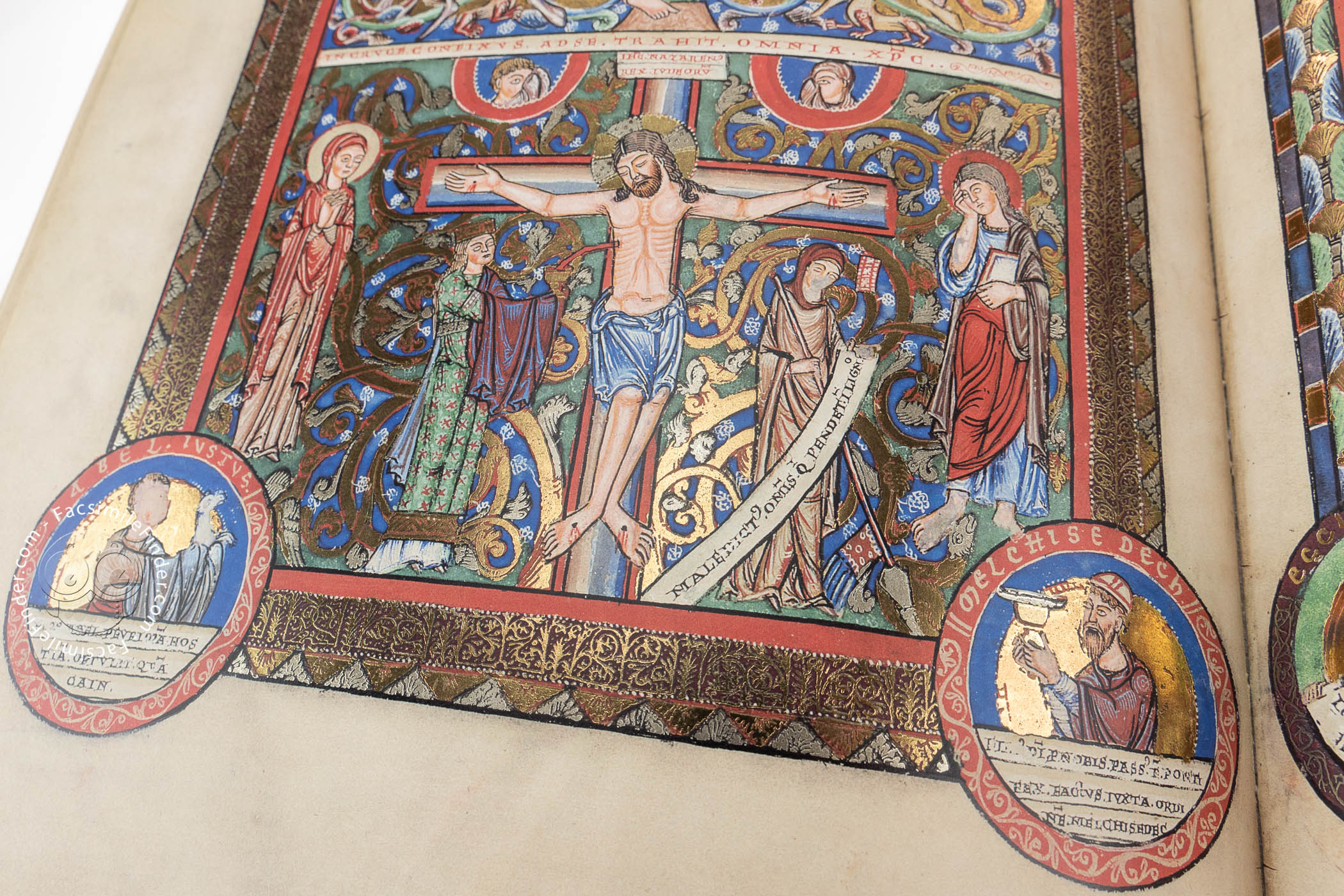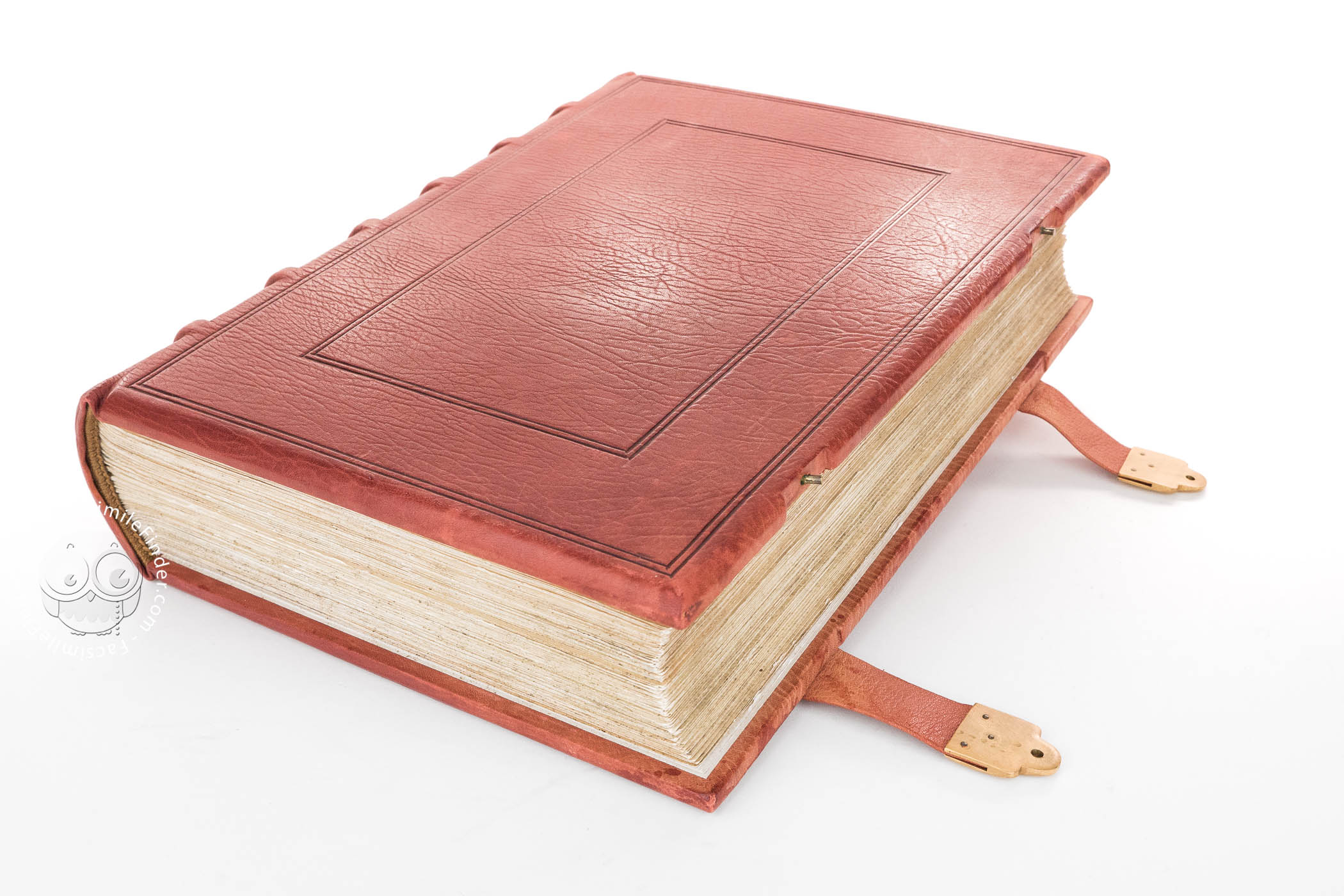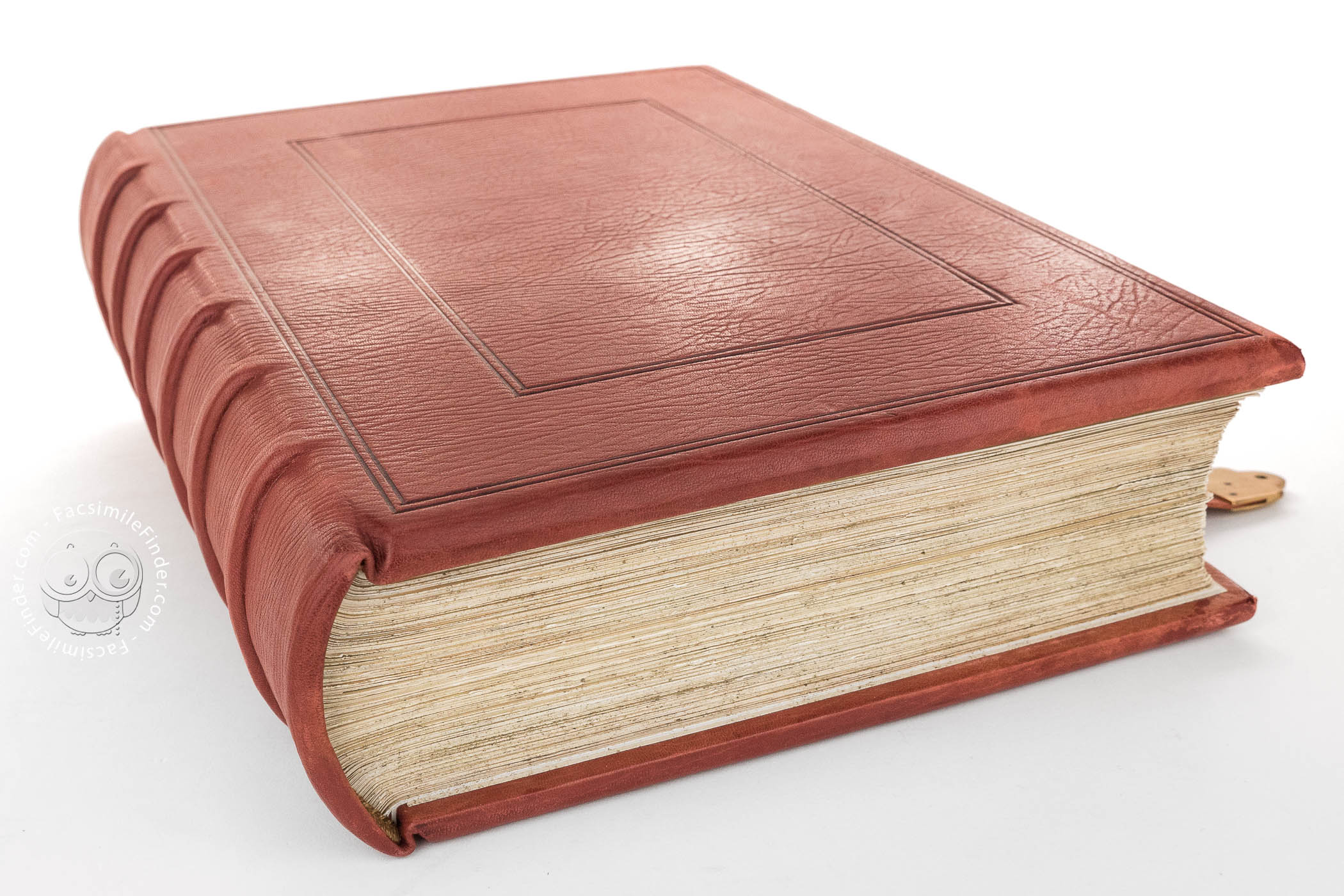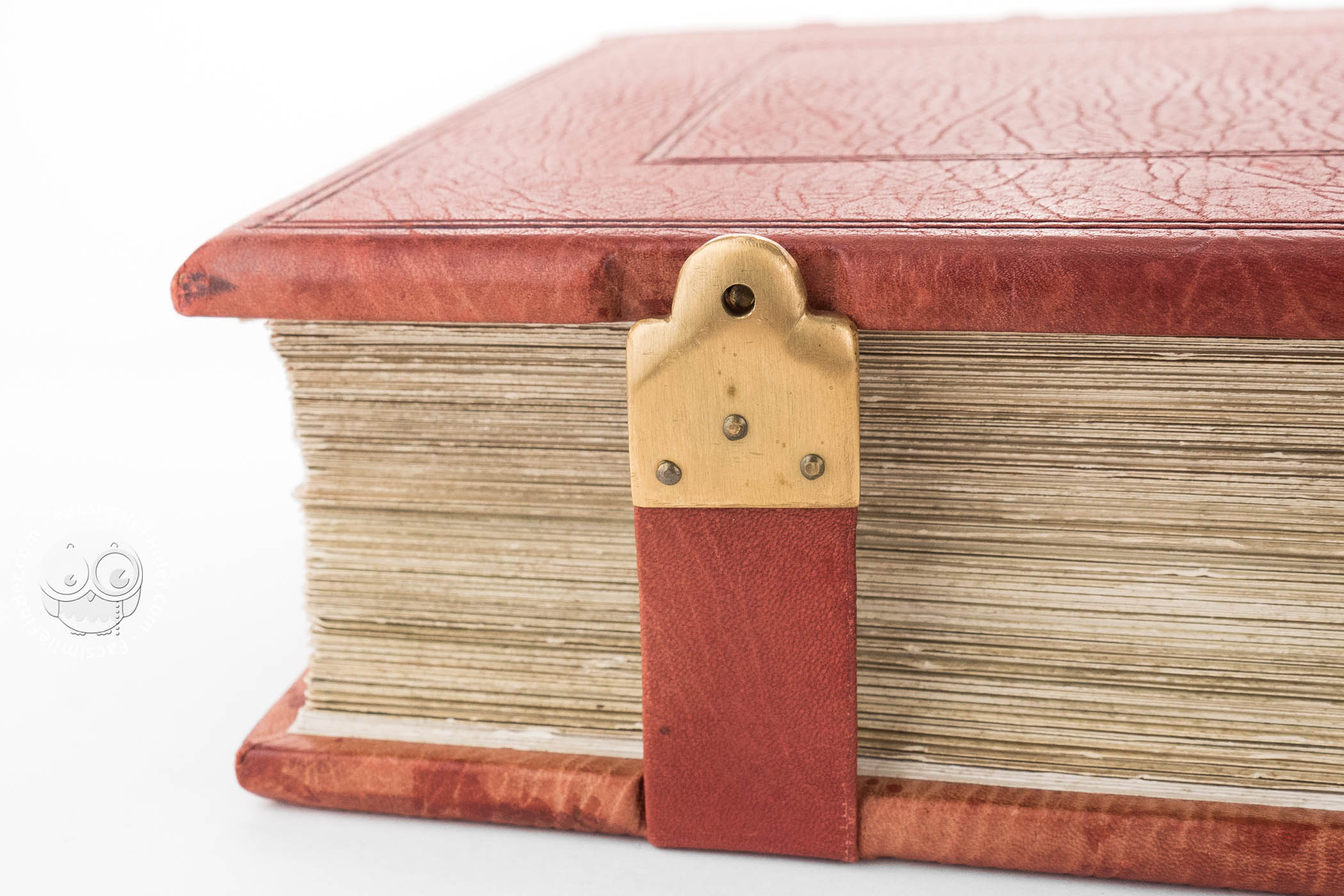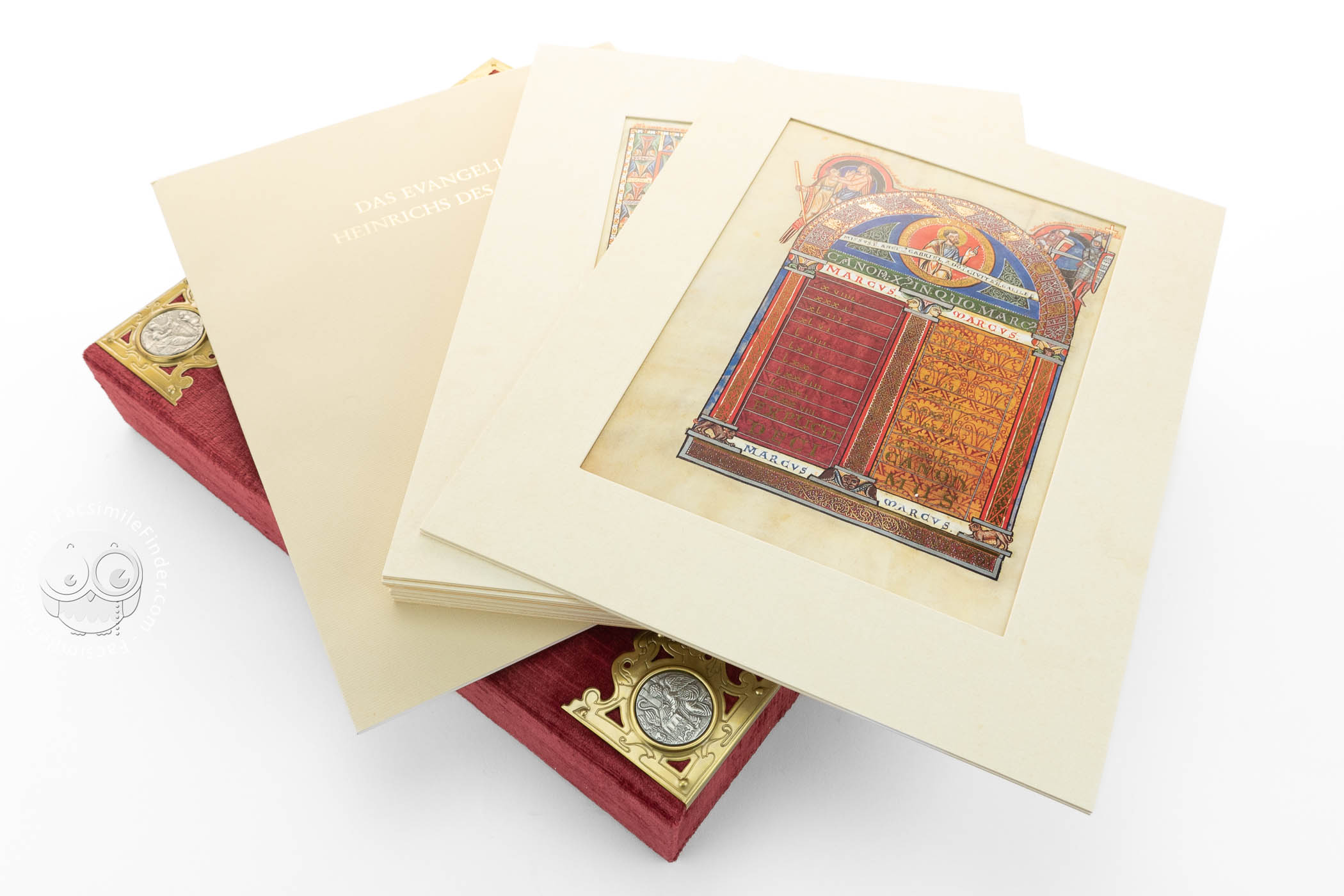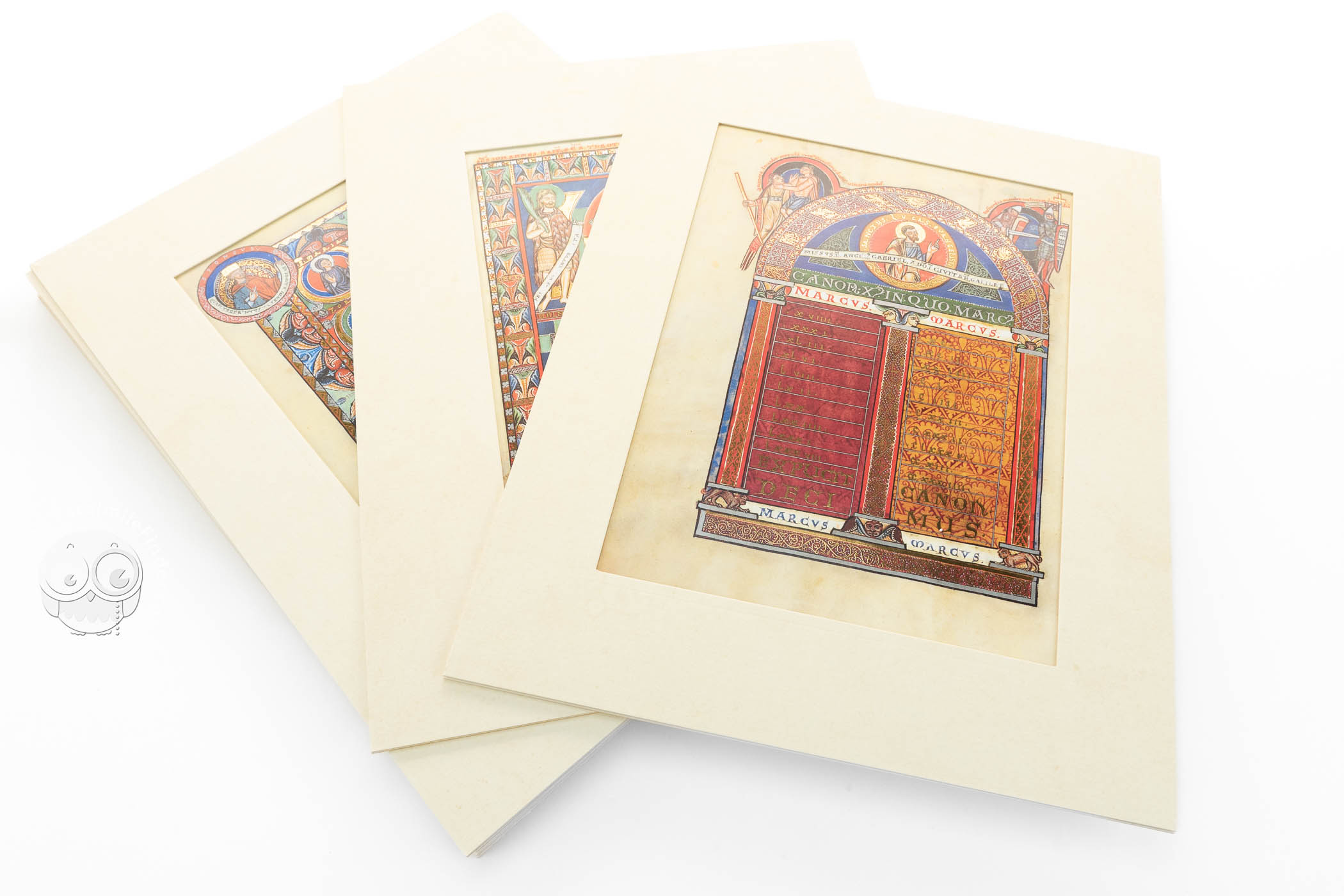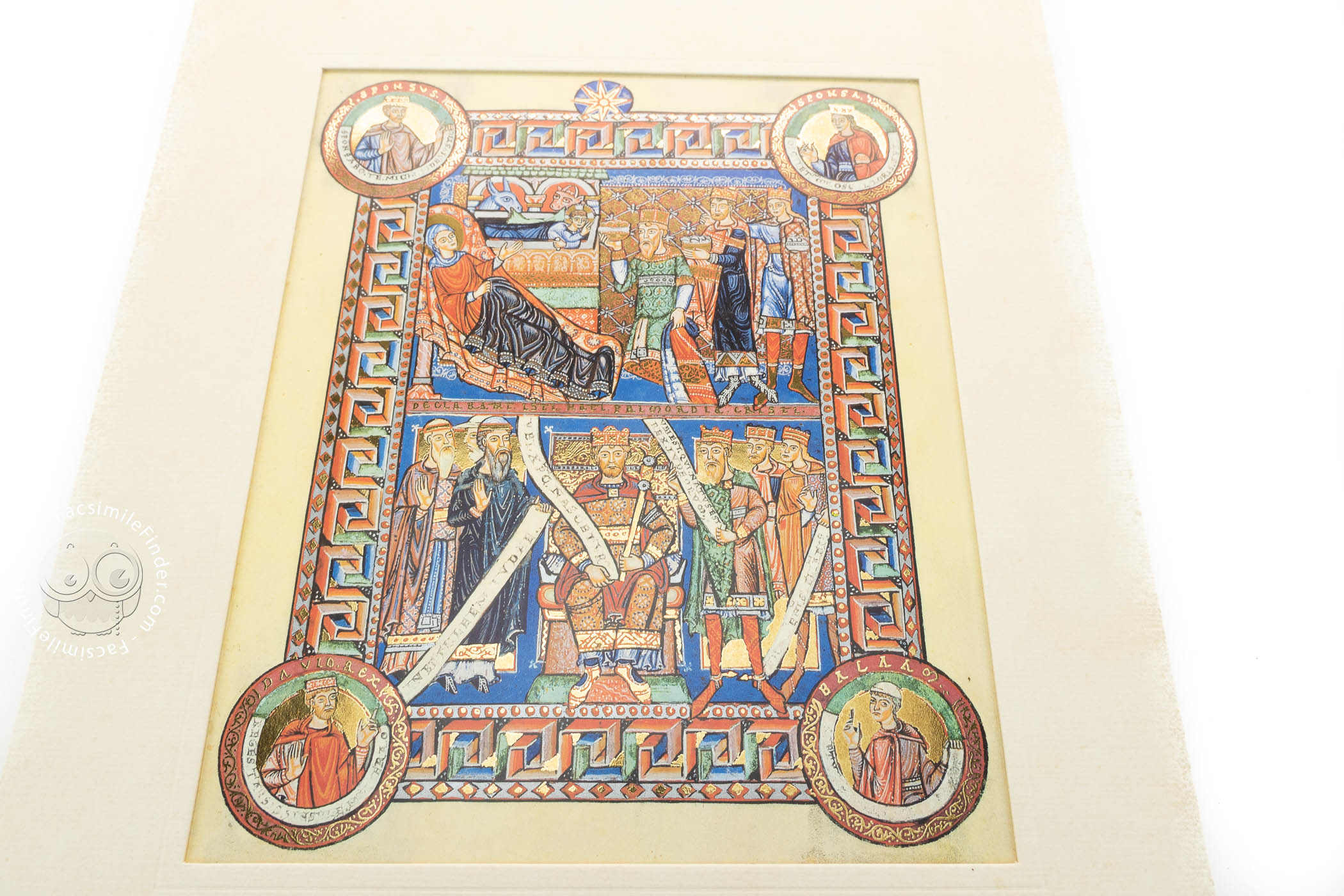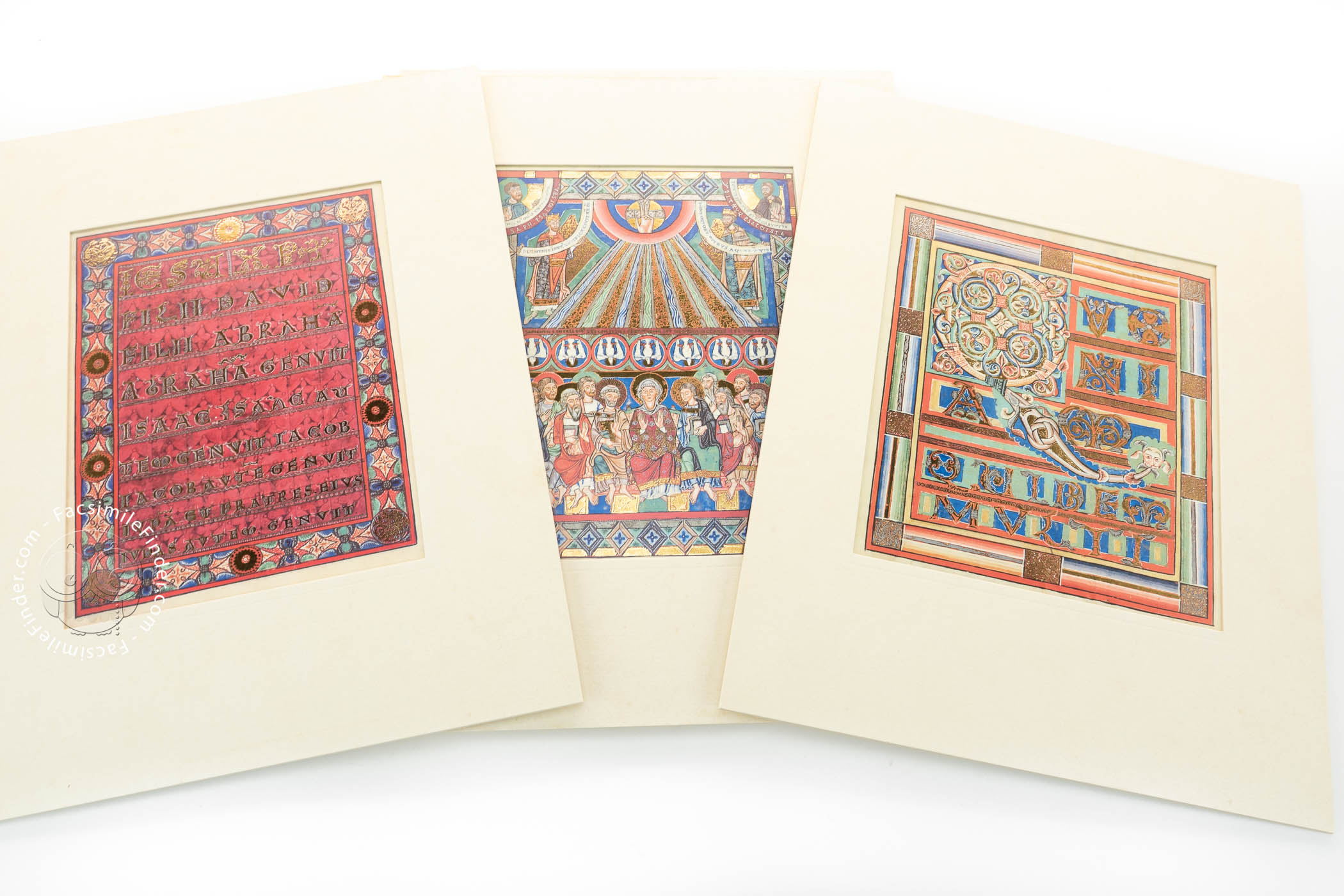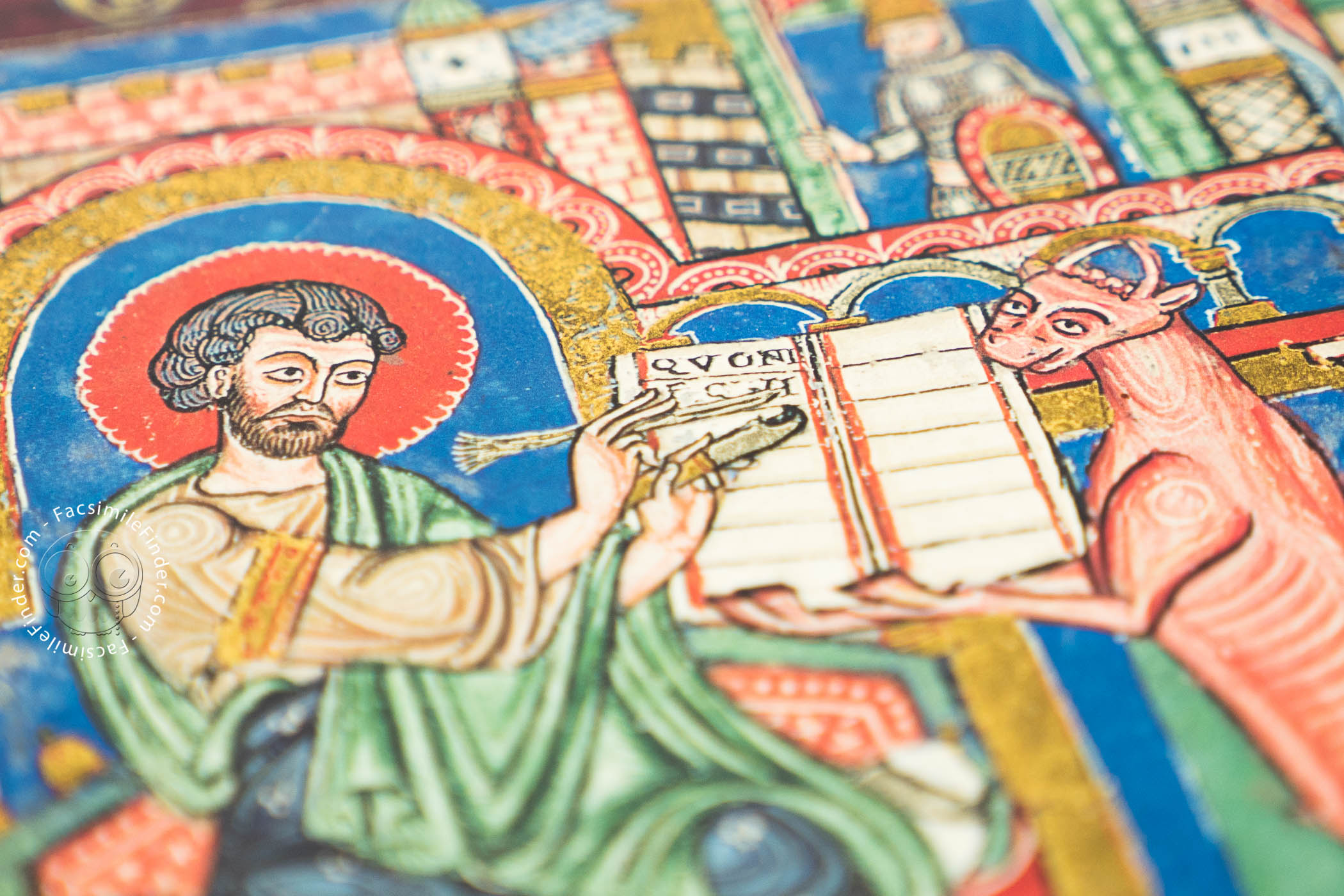


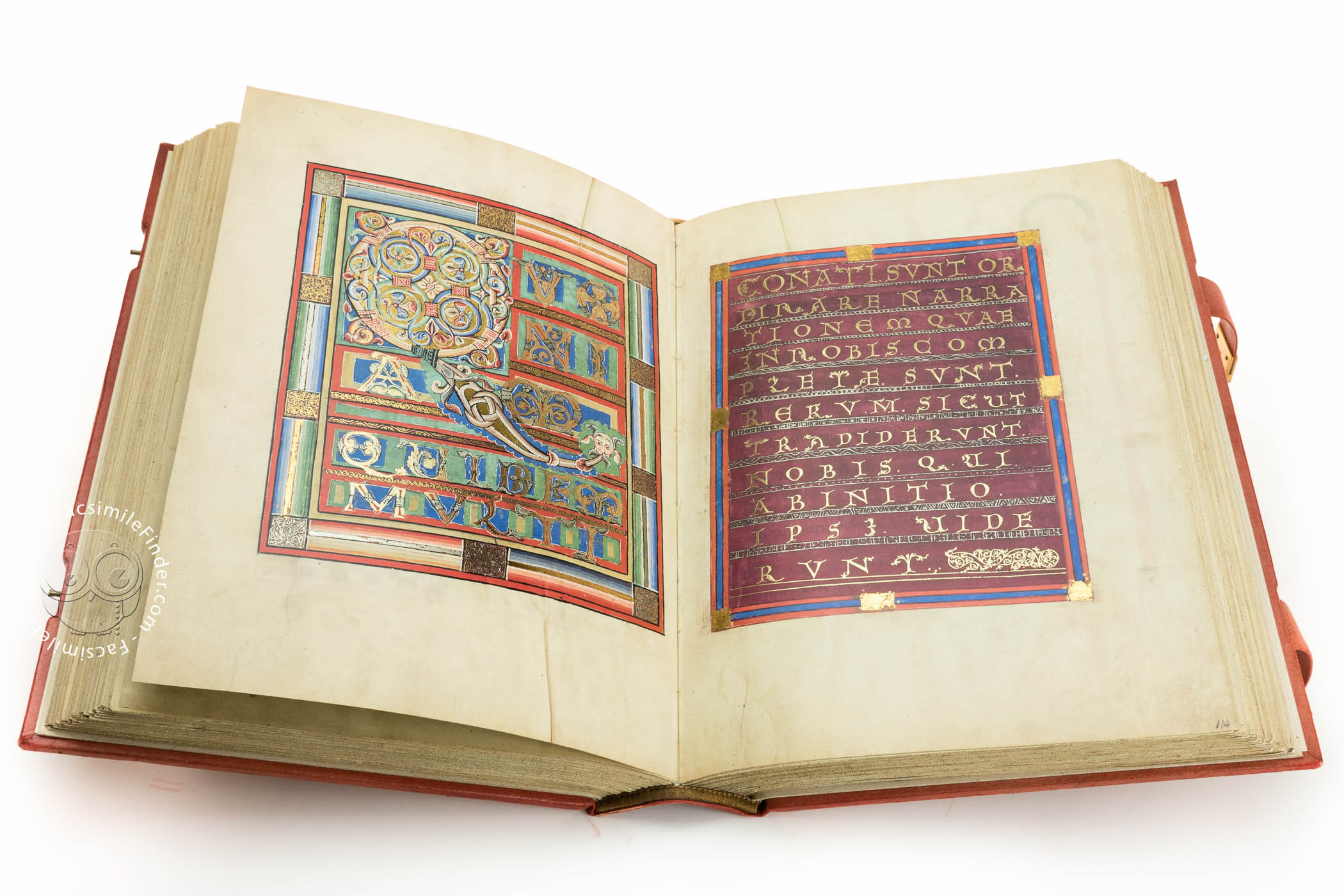
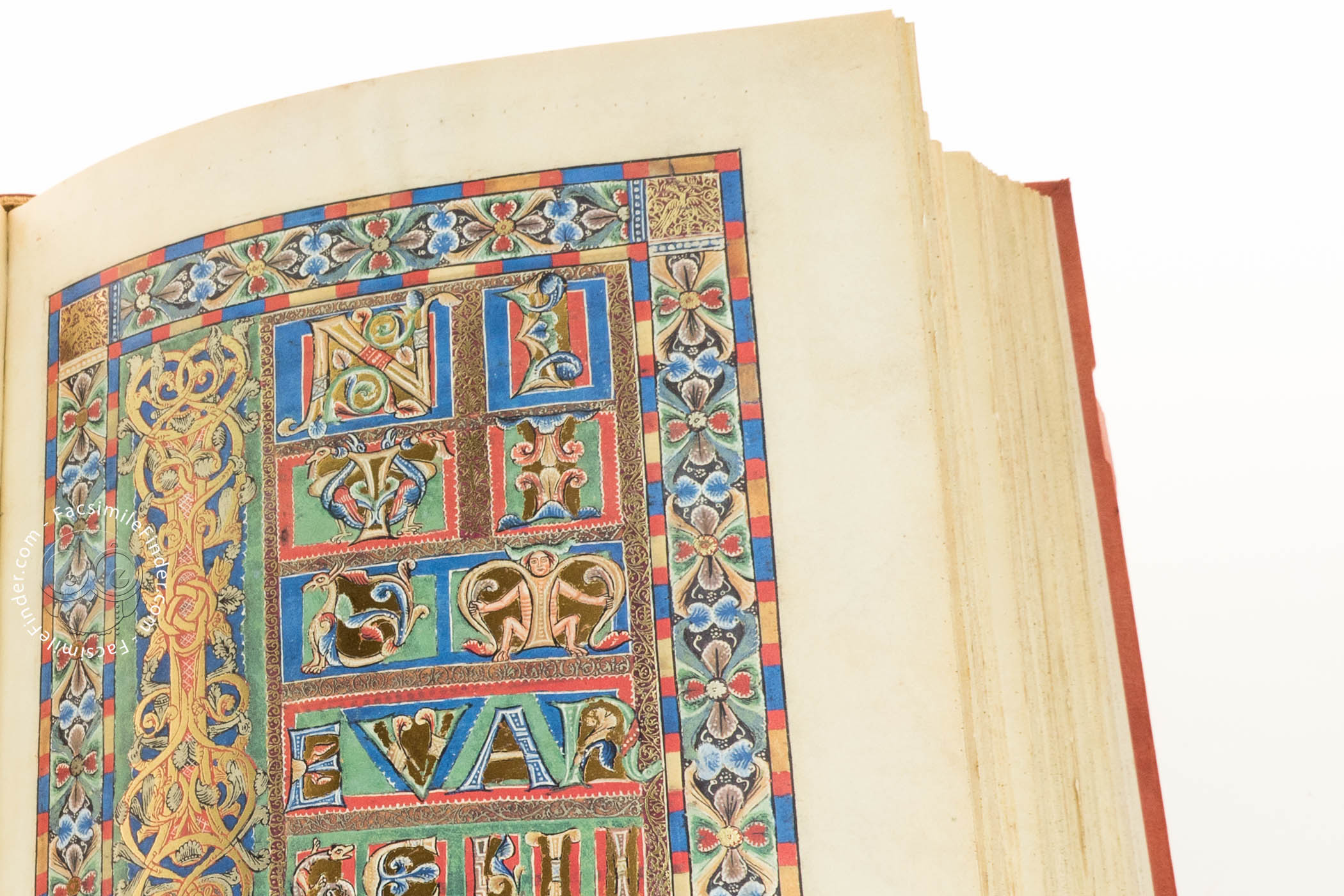
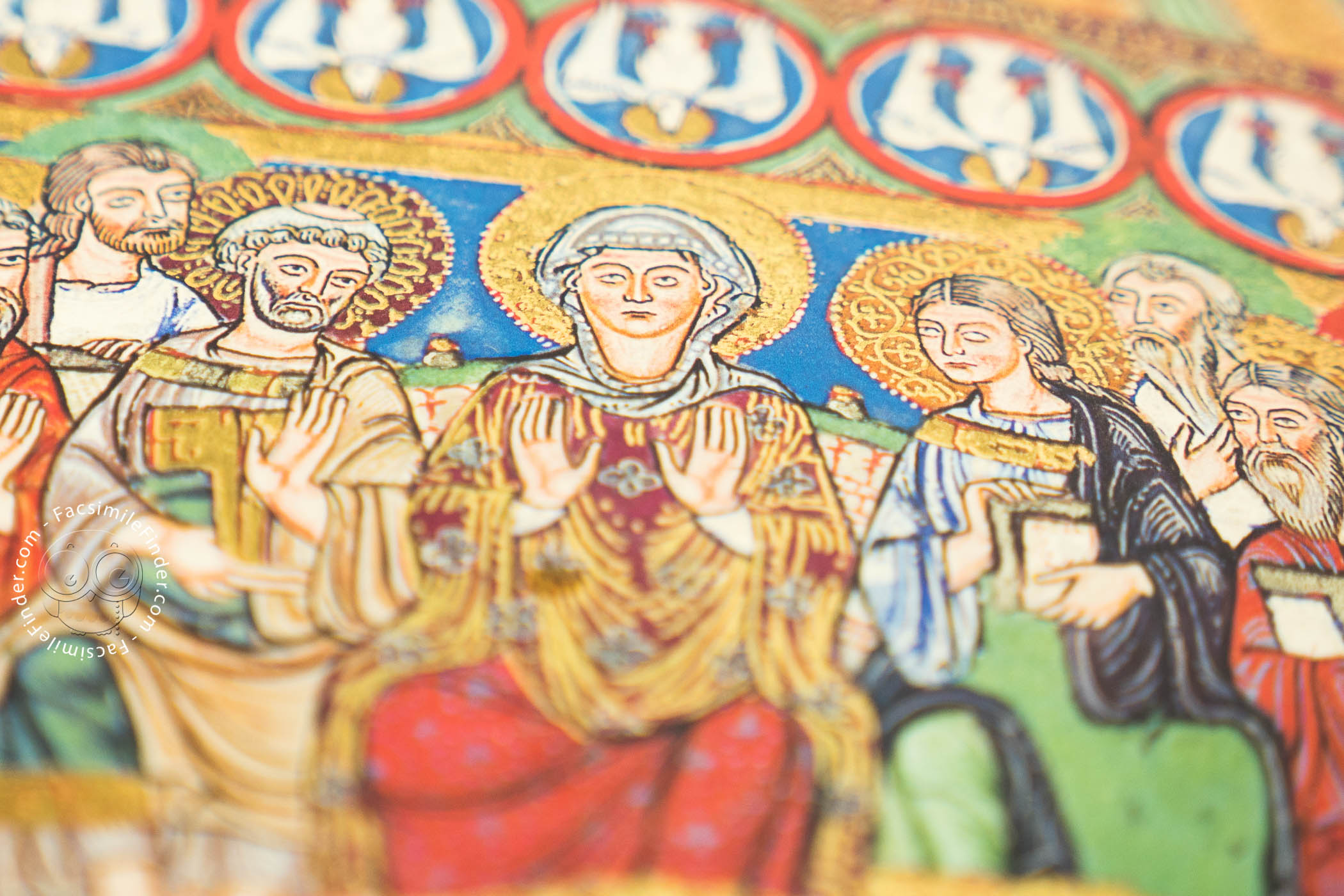


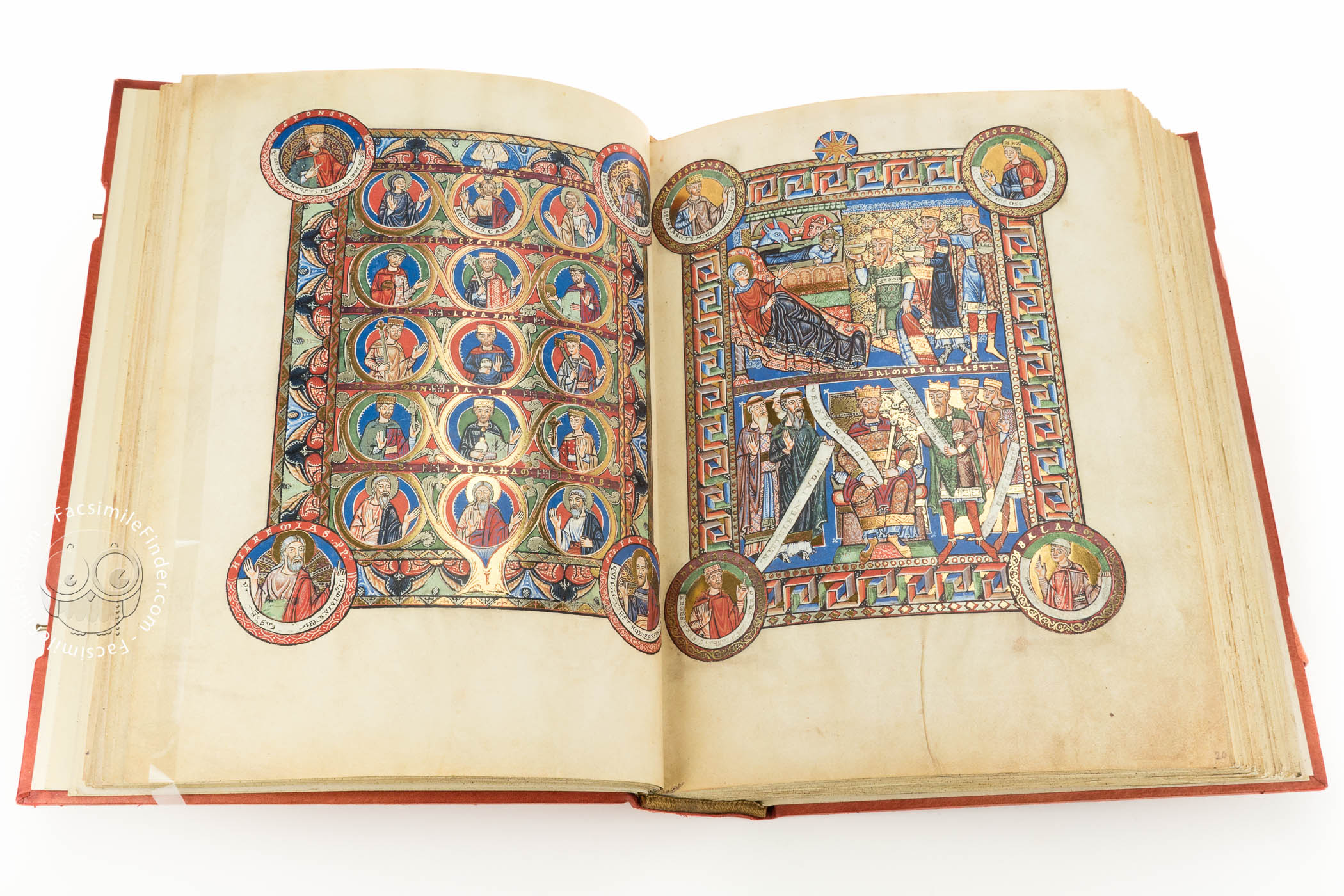
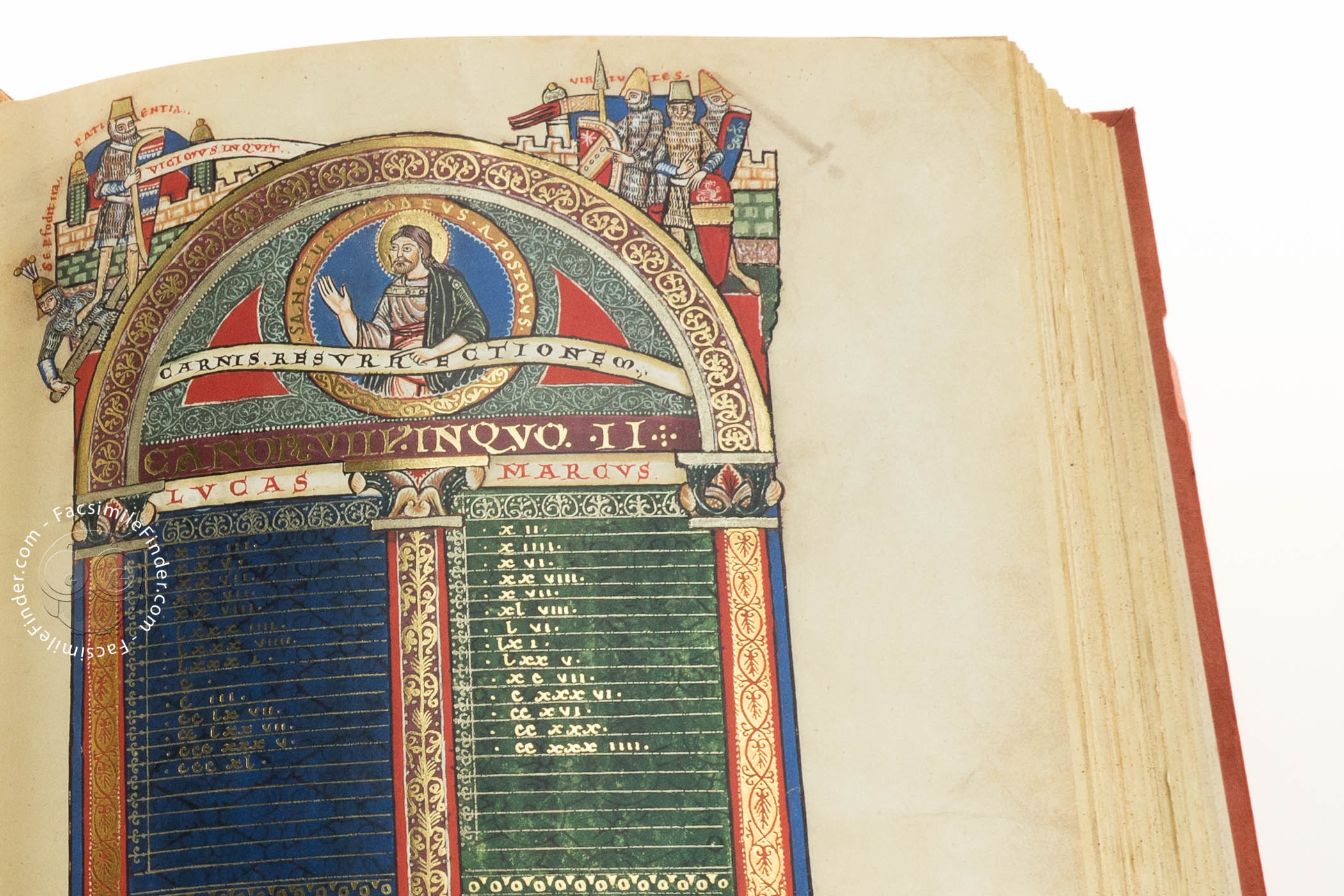

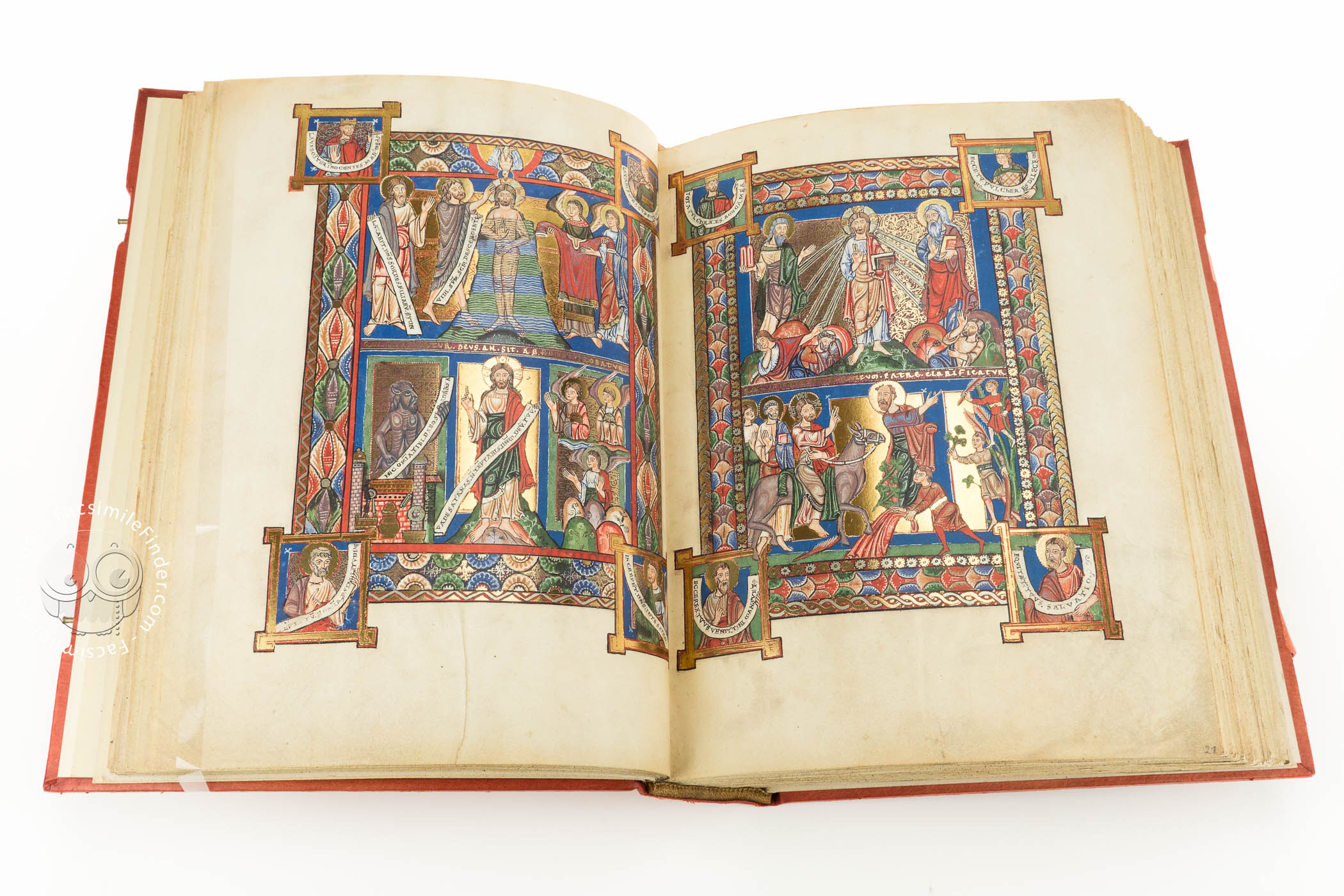
The Gospels of Henry the Lion is a splendid monument of German Romanesque art. Henry, "the lion," Duke of Saxony, and his second wife, Matilda, commissioned it to be made at the Benedictine monastery of Saint Peter at Helmarshausen for presentation to the cathedral church of Saint Blaise at Brunswick (Braunschweig) in Lower Saxony. It must have been created at some time between their marriage in 1168 and Matilda's death in 1189. It boasts twenty-four full-page miniatures, nine fully painted text pages, and seventeen decorated canon table pages.
The main text consists of accounts of the life of Christ attributed to Saints Matthew, Mark, Luke, and John from the Christian Bible. The illumination, with generous use of gold and silver, is stunning both for its sumptuous coloration and its lively subjects rich in narrative detail.
Scenes Illustrating the Gospels
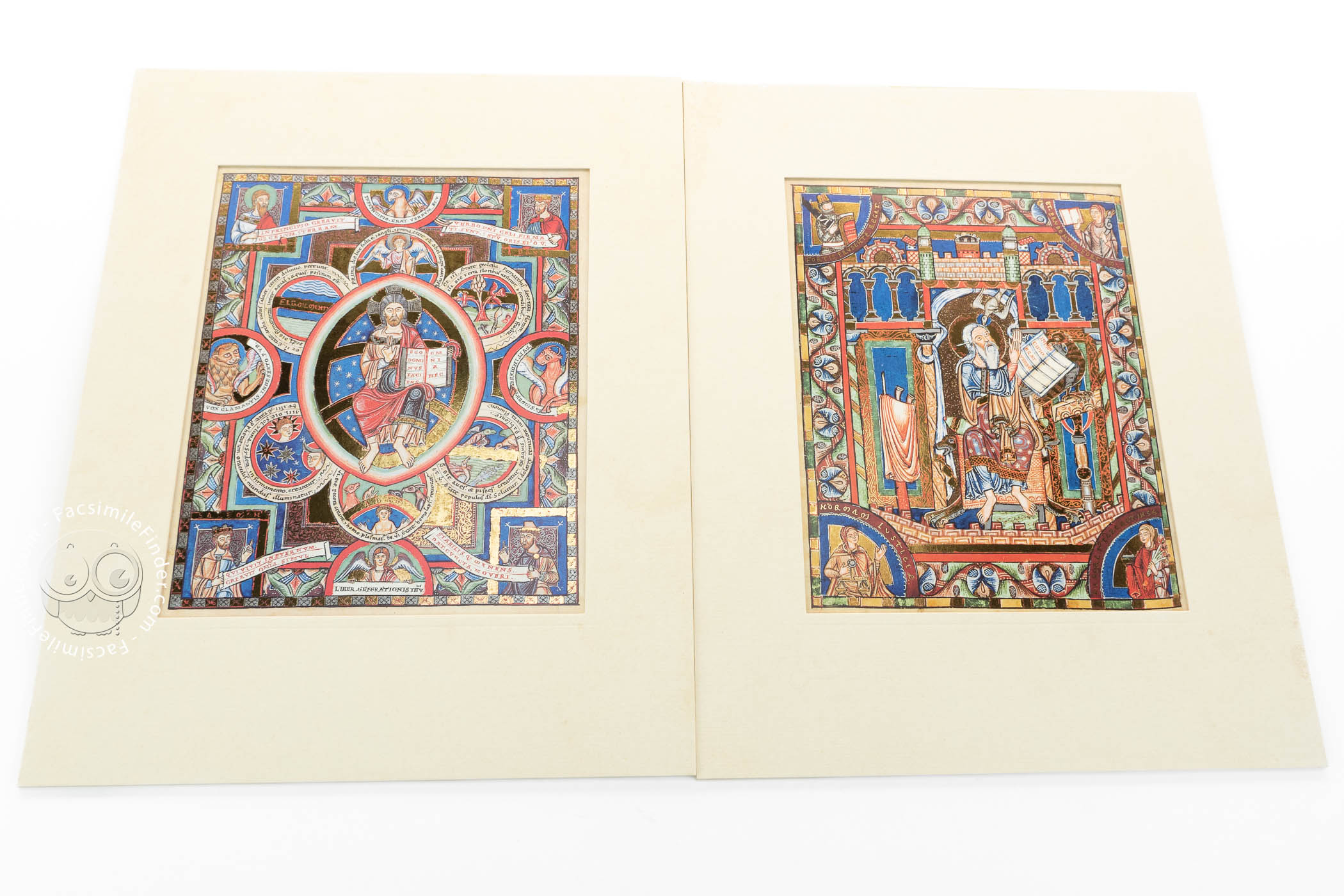
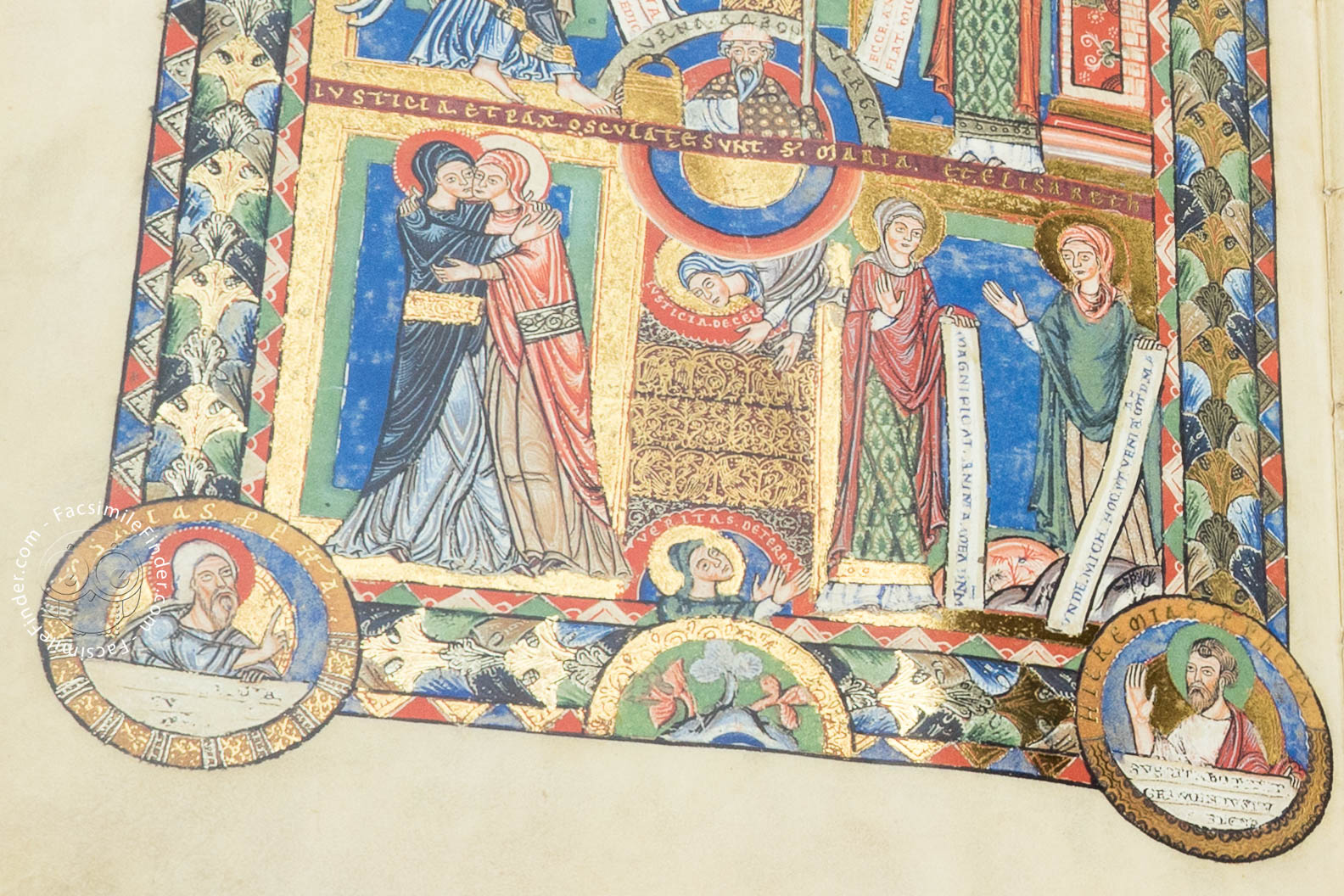
The grand full-page miniatures appear in four groups, each group introducing one of the Gospels. Most depict scenes described in the text. There is a focus on Christ's infancy and Passion, as we would expect, but there are some rarely illustrated episodes. The most unusual subject is a parable of the Good Samaritan, presented in two episodes, the traveler being robbed and beaten above, and the Samaritan rescuing him (fol. 112r).
The Ducal Couple before the Virgin
The manuscript's first miniature depicts the duke and duchess presenting the manuscript to the enthroned Virgin Mary (fol. 19r). Indeed, the couple appears so prominently here and elsewhere in the book that it can (and has) been called the Gospels of Henry and Matilda.
Henry holds the golden book aloft as Saint Blaise, in bishop's miter, and Saint Giles of Provence present the ducal couple to the Virgin in heaven. The presence of Saint Giles, who was associated with fertility, may point to the manuscript's having been made in the 1170s, before Matilda gave birth to a male heir.
Duke and Duchess Crowned
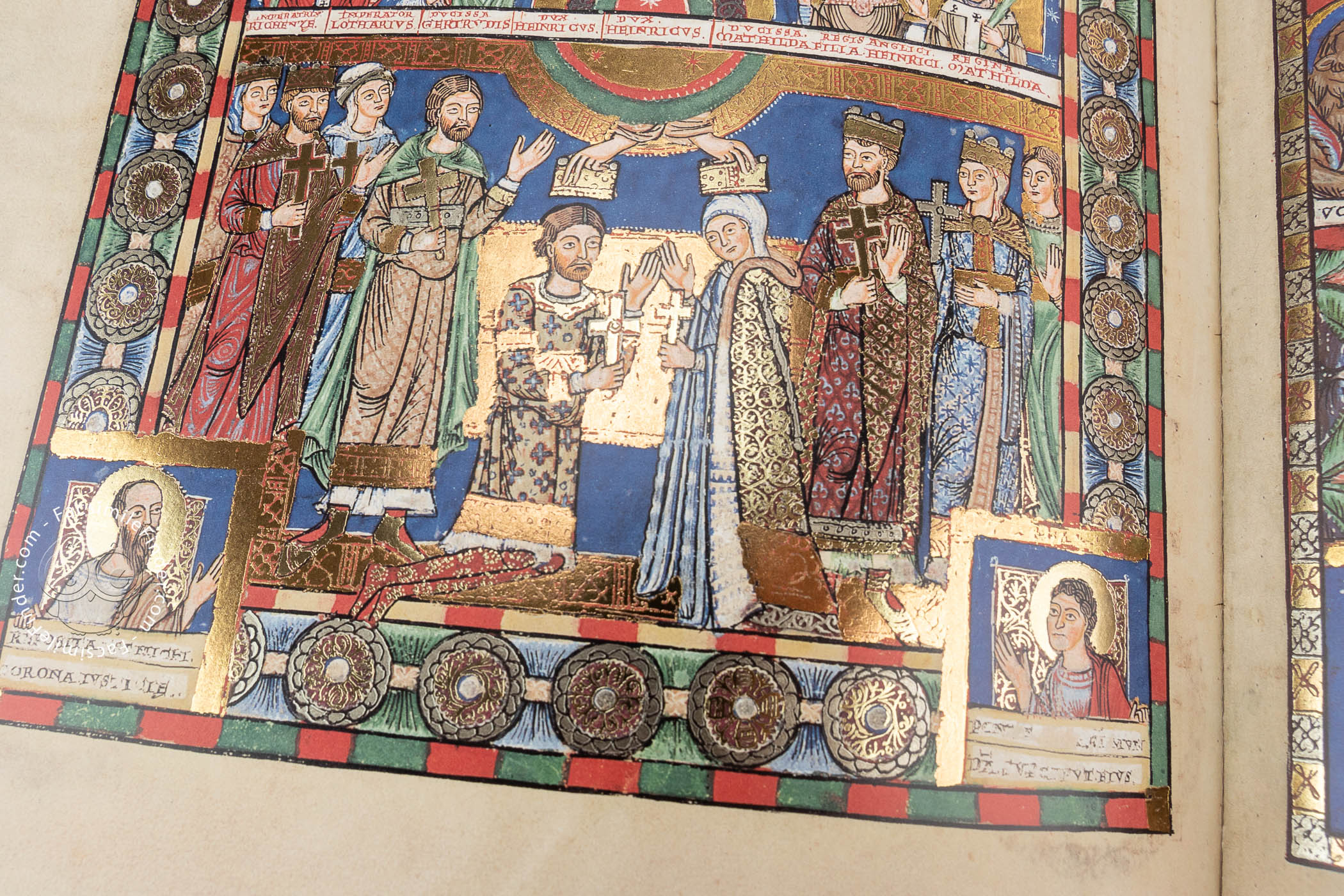
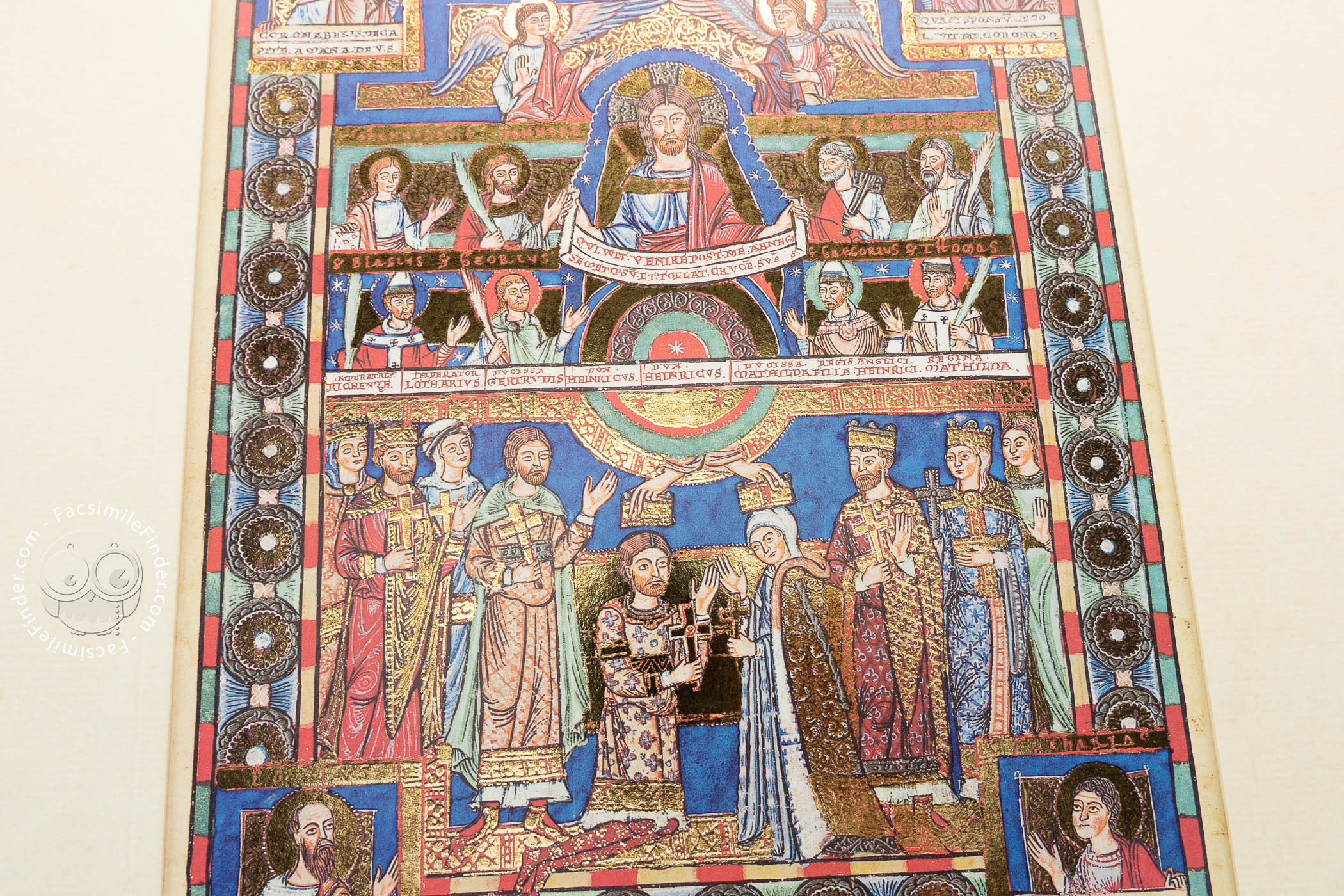
The final miniature in the book is an extraordinary scene of the couple being crowned by two (crossed?) hands of God. The duke kneels, but the duchess stands, and both are accompanied by parents and grandparents. They include Lothair II (1075-1137), Holy Roman Emperor (Henry's grandfather), and Henry II (1133-1189), King of England (Matilda's father).
Focus on the Harmony of the Gospels
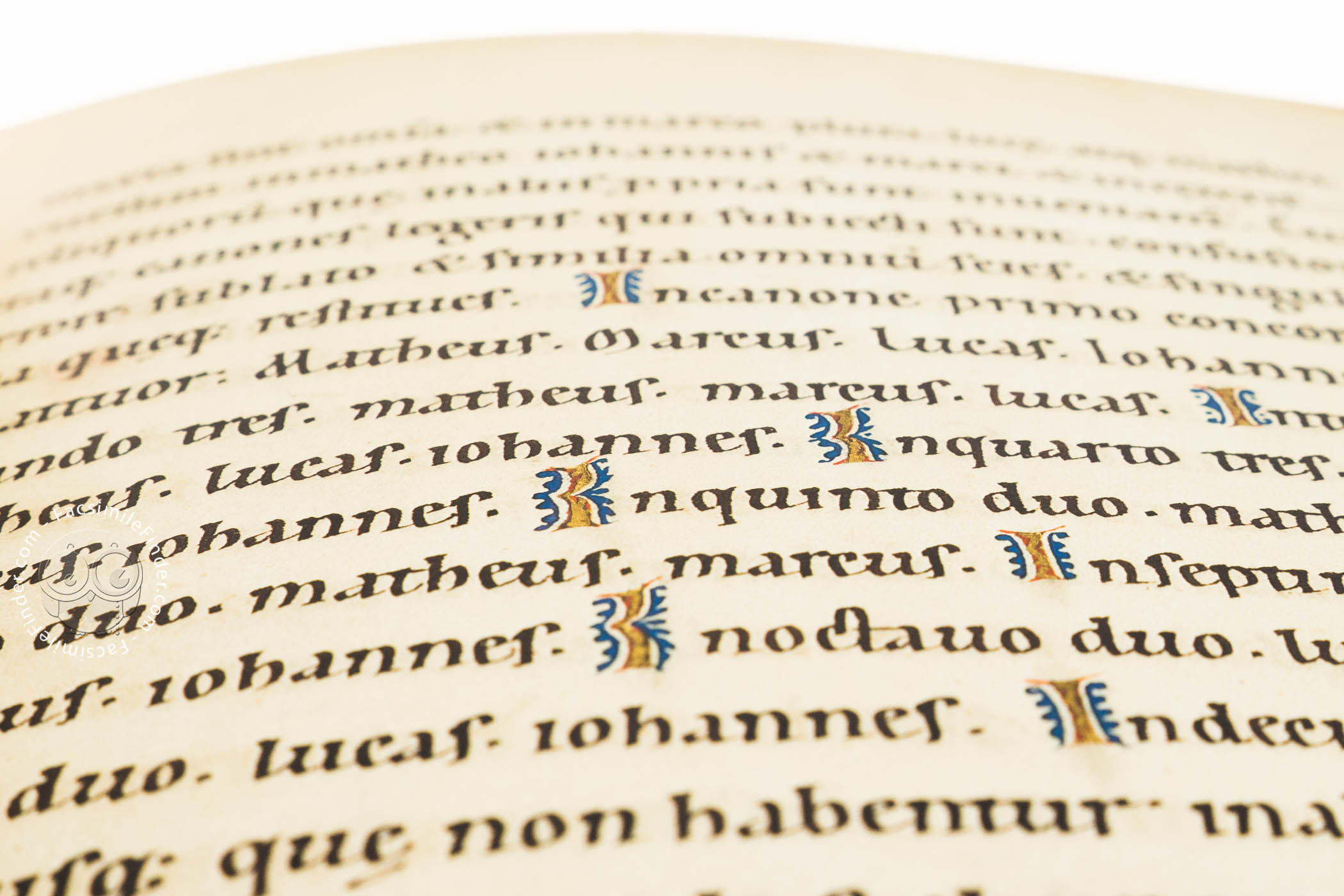
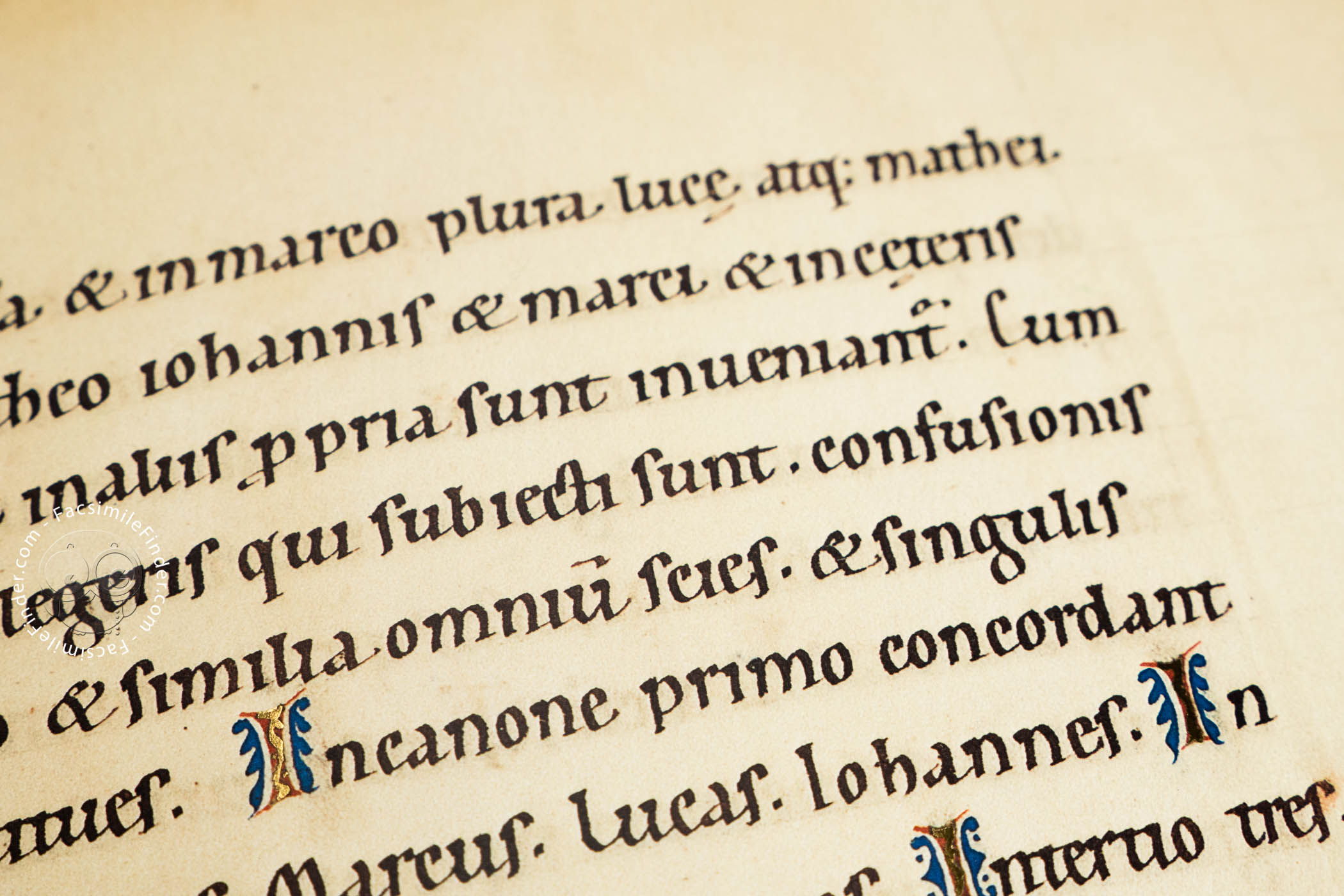
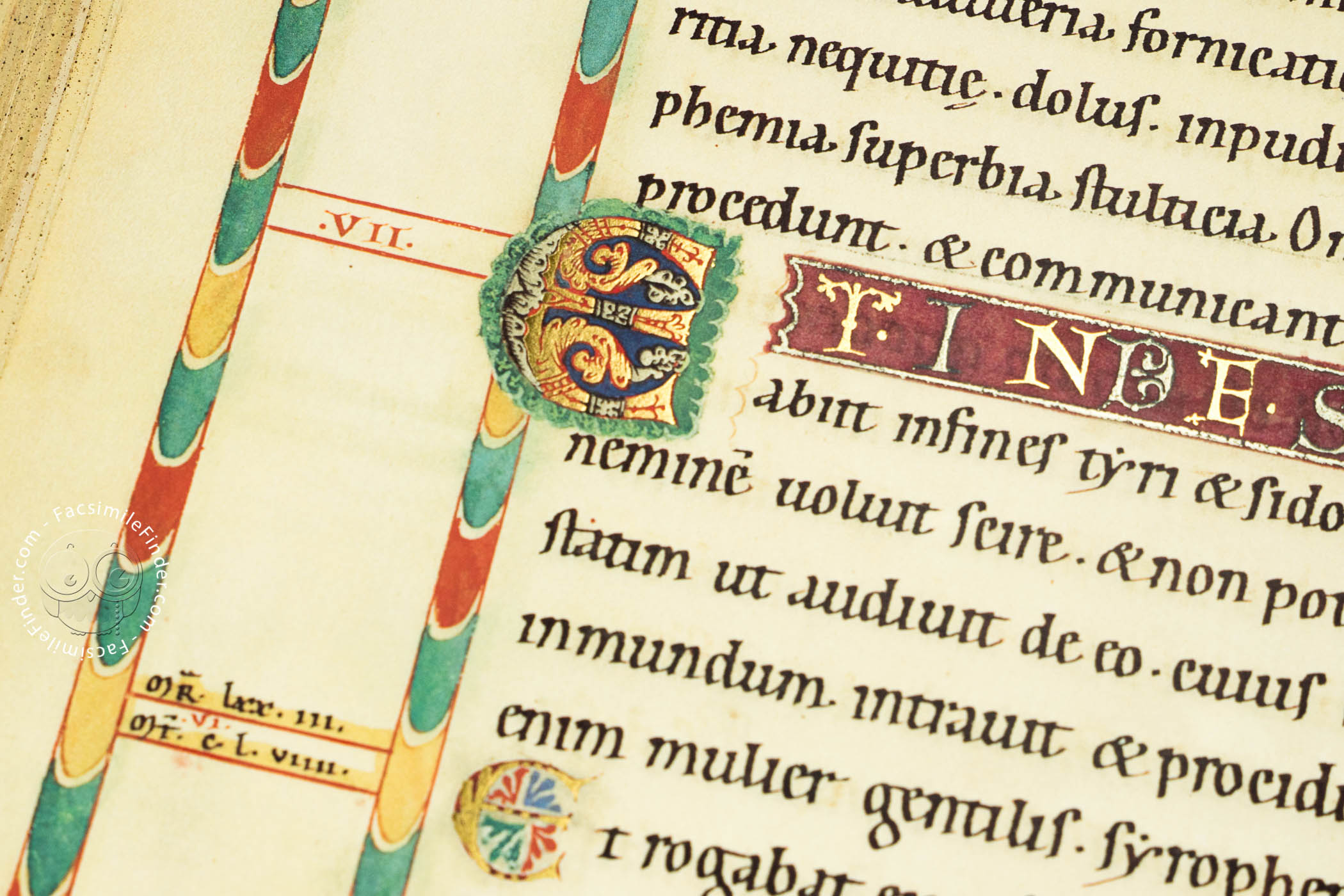
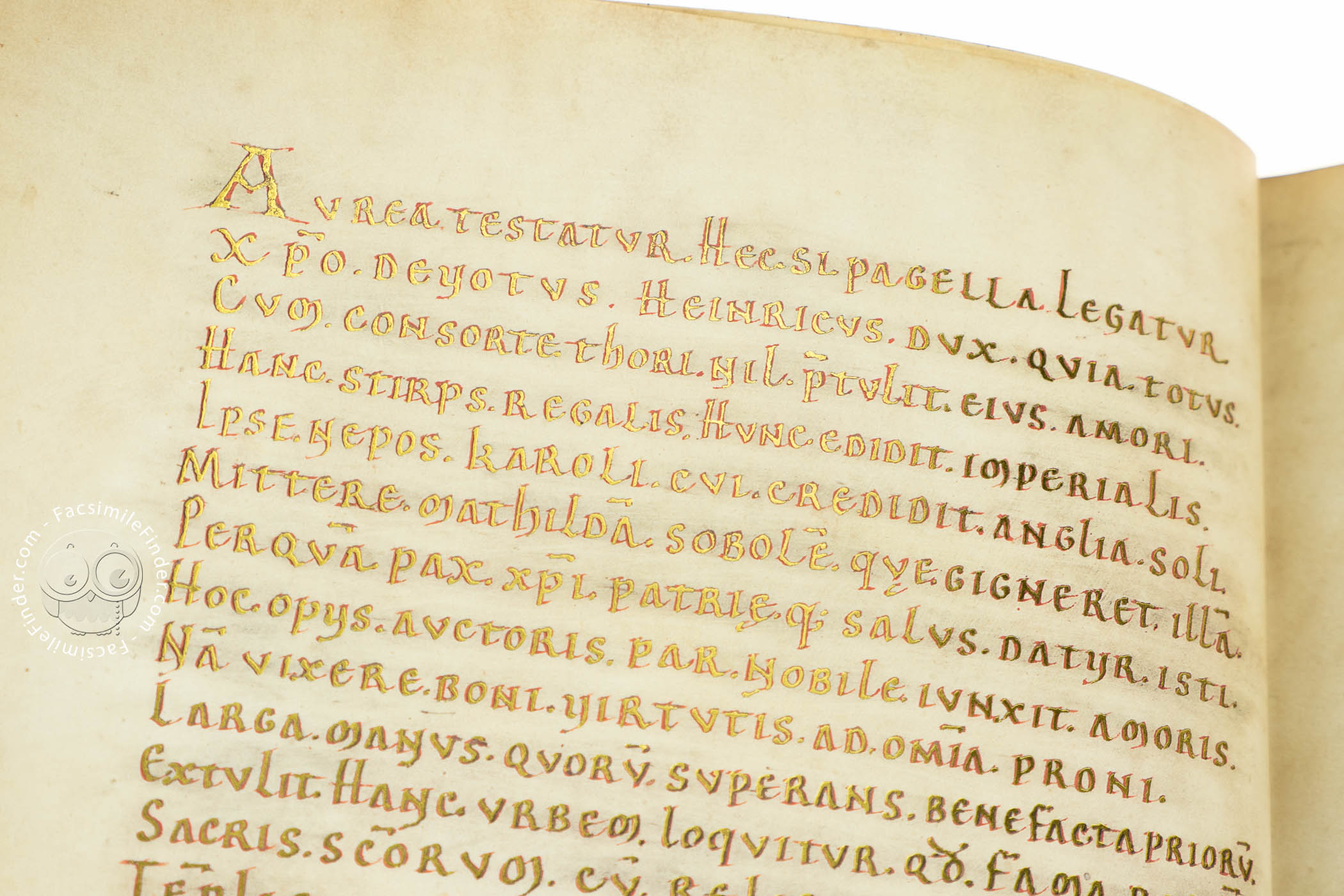
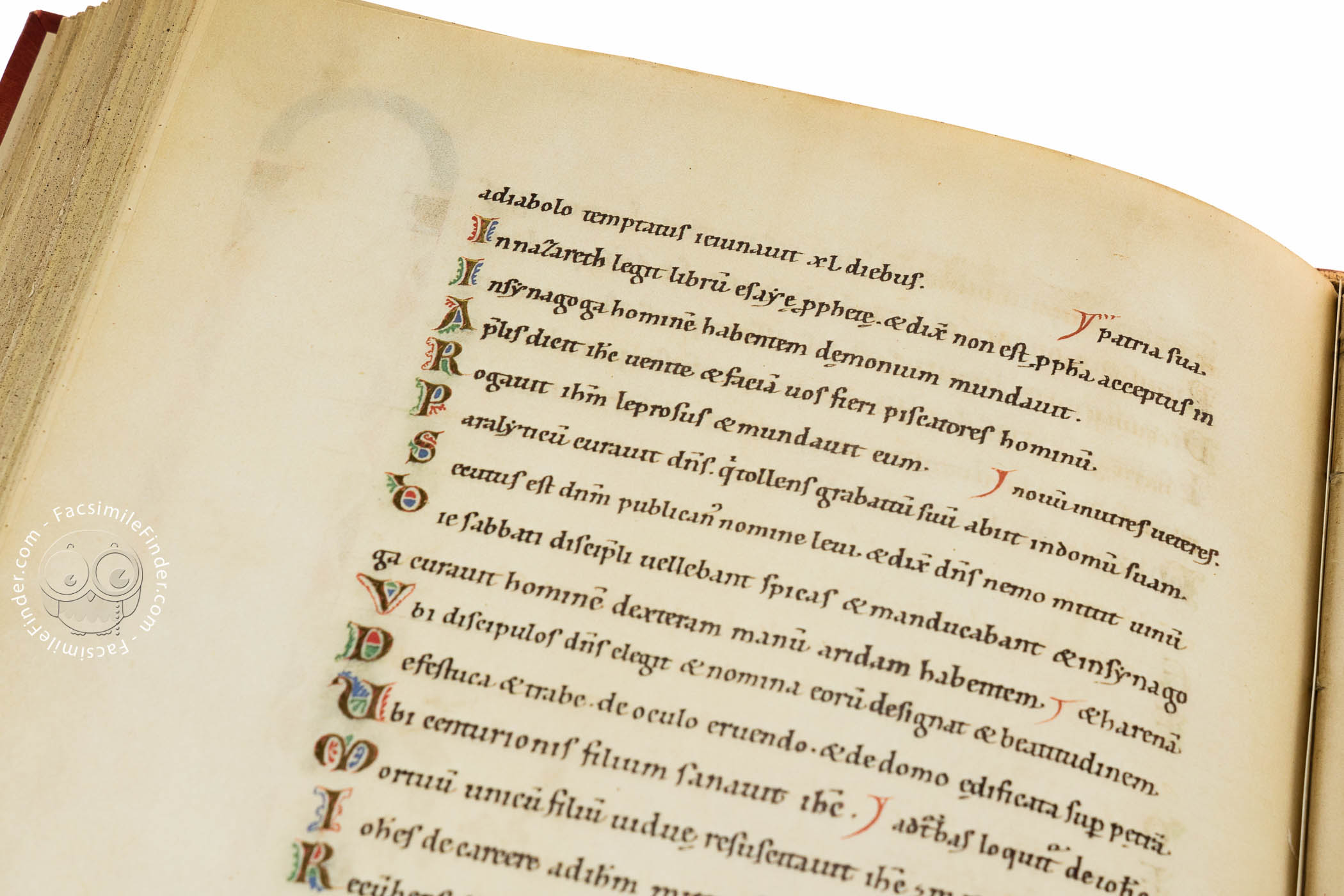
The text was written entirely by Herimann, a monk of Helmarshausen named in the verse dedication poem (fol. 4v). He wrote in a Transitional Script showing few traces of the innovations that characterize much twelfth-century writing. Decorated initials abound, and every page of the manuscript sparkles.
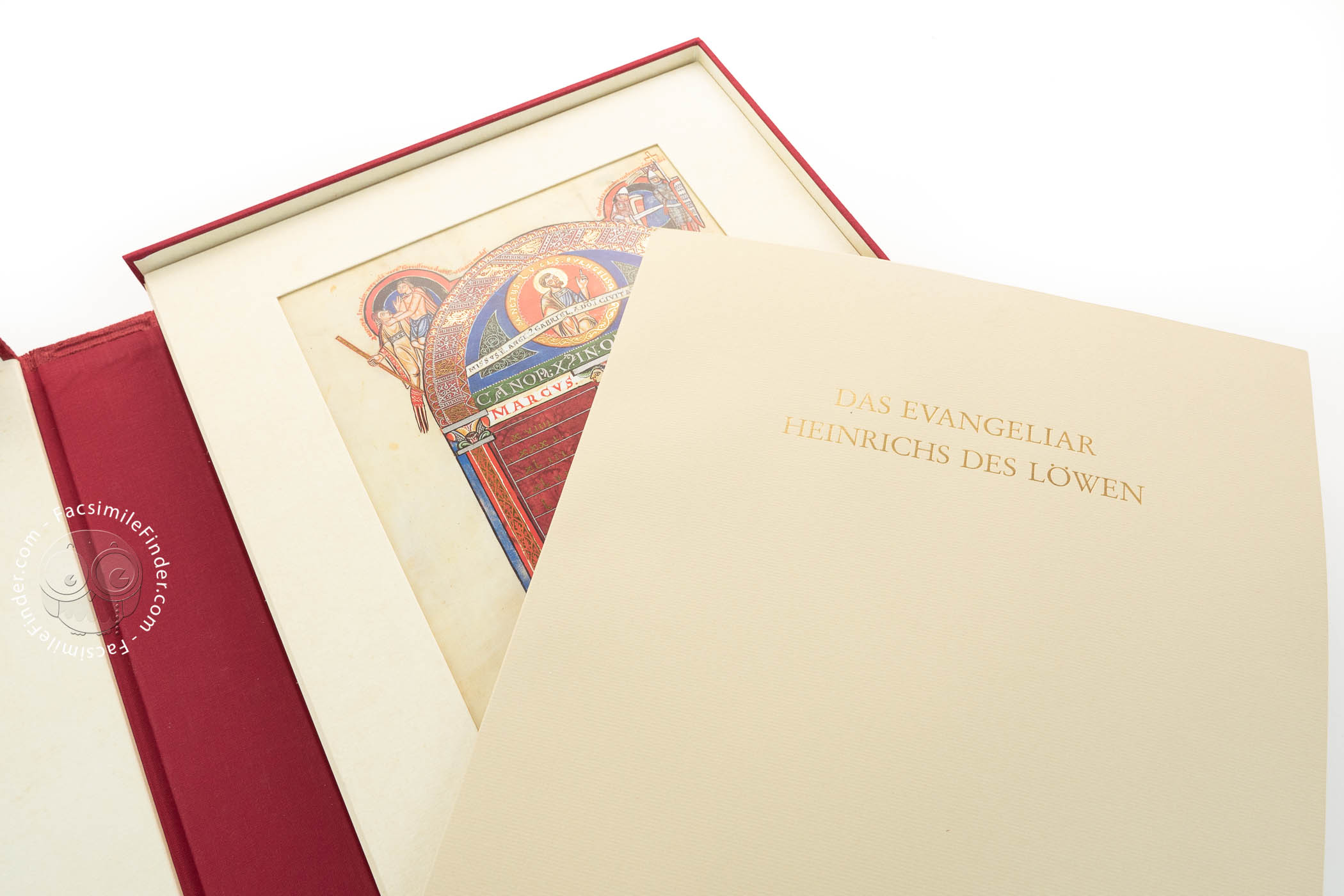
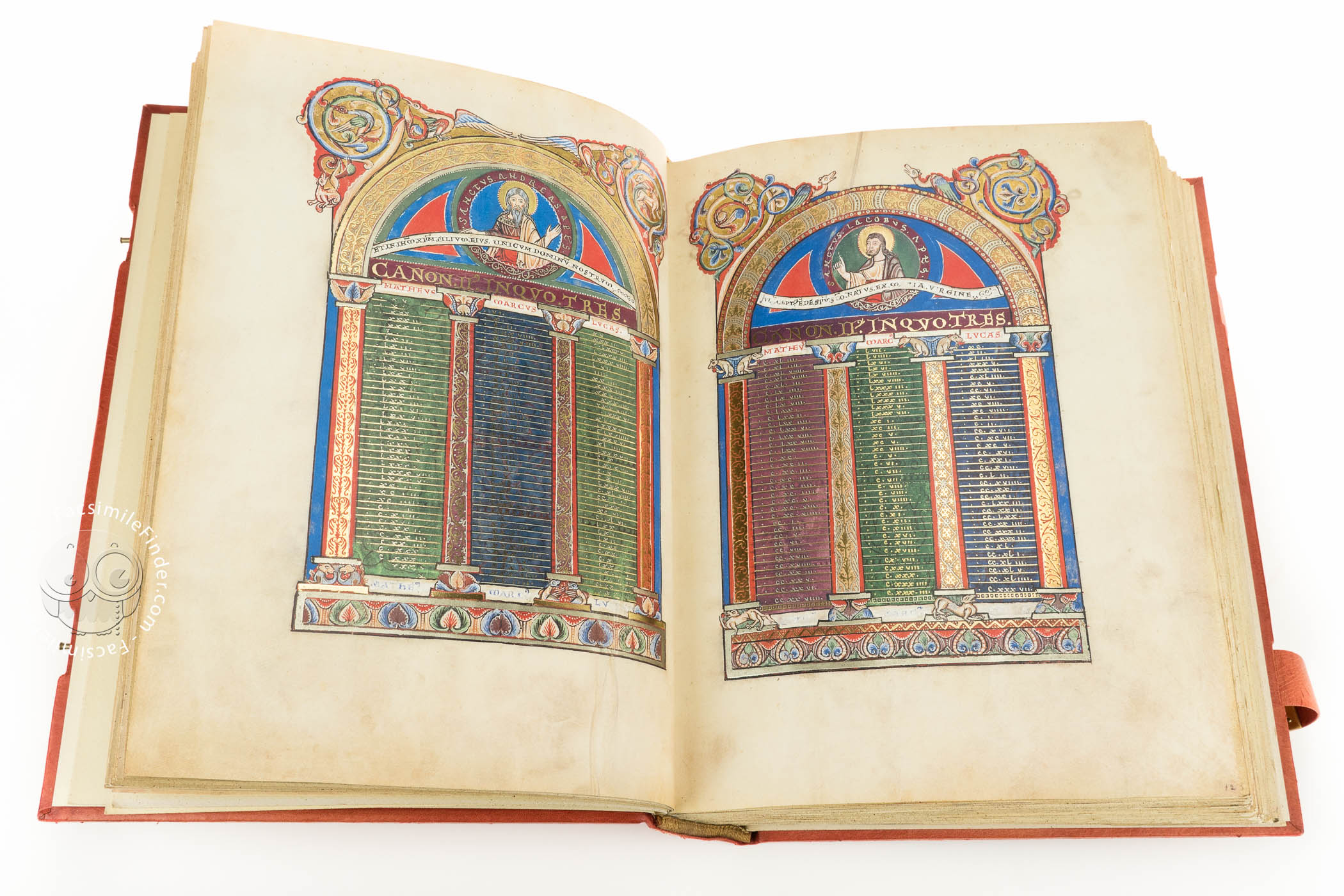
A remarkable feature is the decorative emphasis placed on the numbers originally given to sections of Gospel text by Ammonius of Alexandria in the third century. Although the numbers (together with the numbers of the parallel passages in the other Gospels) are routinely found in medieval Gospel books, it is unusual to afford them a separate column (decorated with slim painted columns and an arch), as seen here.
Treasure Binding Made in Prague
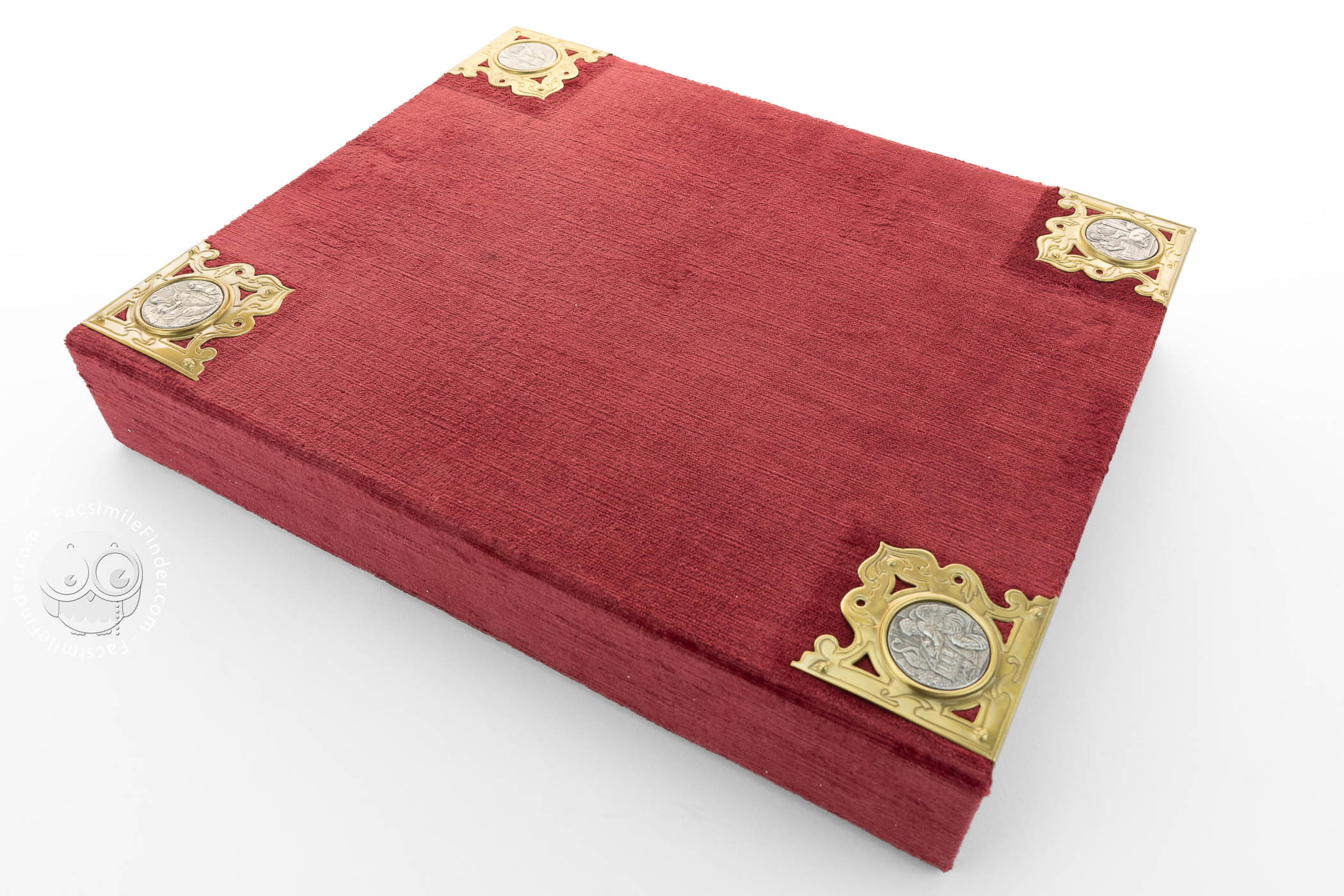
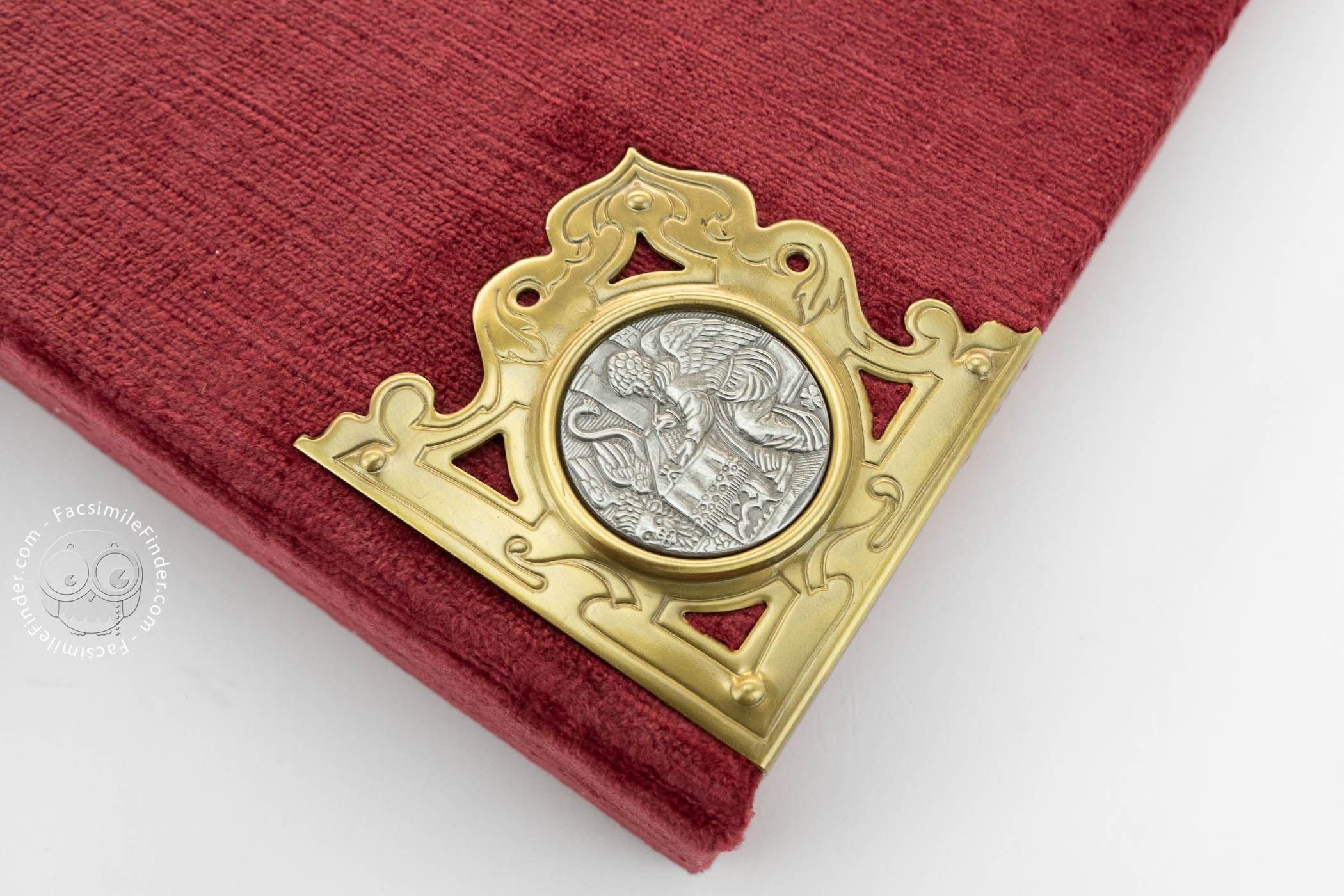
The manuscript made its way, probably in the fourteenth century, to the treasury of the cathedral of Saint Vitus in Prague. In 1594, it was rebound at the expense of Jiří Barthold Pontanus z Breitenberka (d. 1616): this binding is of red silk over boards with silver and silver-gilt furnishings. Relics of Saints Mark and Sigismund are preserved under a rock crystal on the front cover.
Return to Germany
Georg V (1819-1878), King of Hanover, purchased the manuscript from the cathedral. After Hanover's defeat in the Austro-Prussian War of 1866, the king fled to Austria with his manuscript. Now owned jointly by the Herzog August Bibliothek in Wolfenbüttel and the Bayerische Staatsbibliothek in Munich, the manuscript was purchased by the government of the Bundesrepublik Deutschland (West Germany) at auction in 1983 for a record-breaking price.
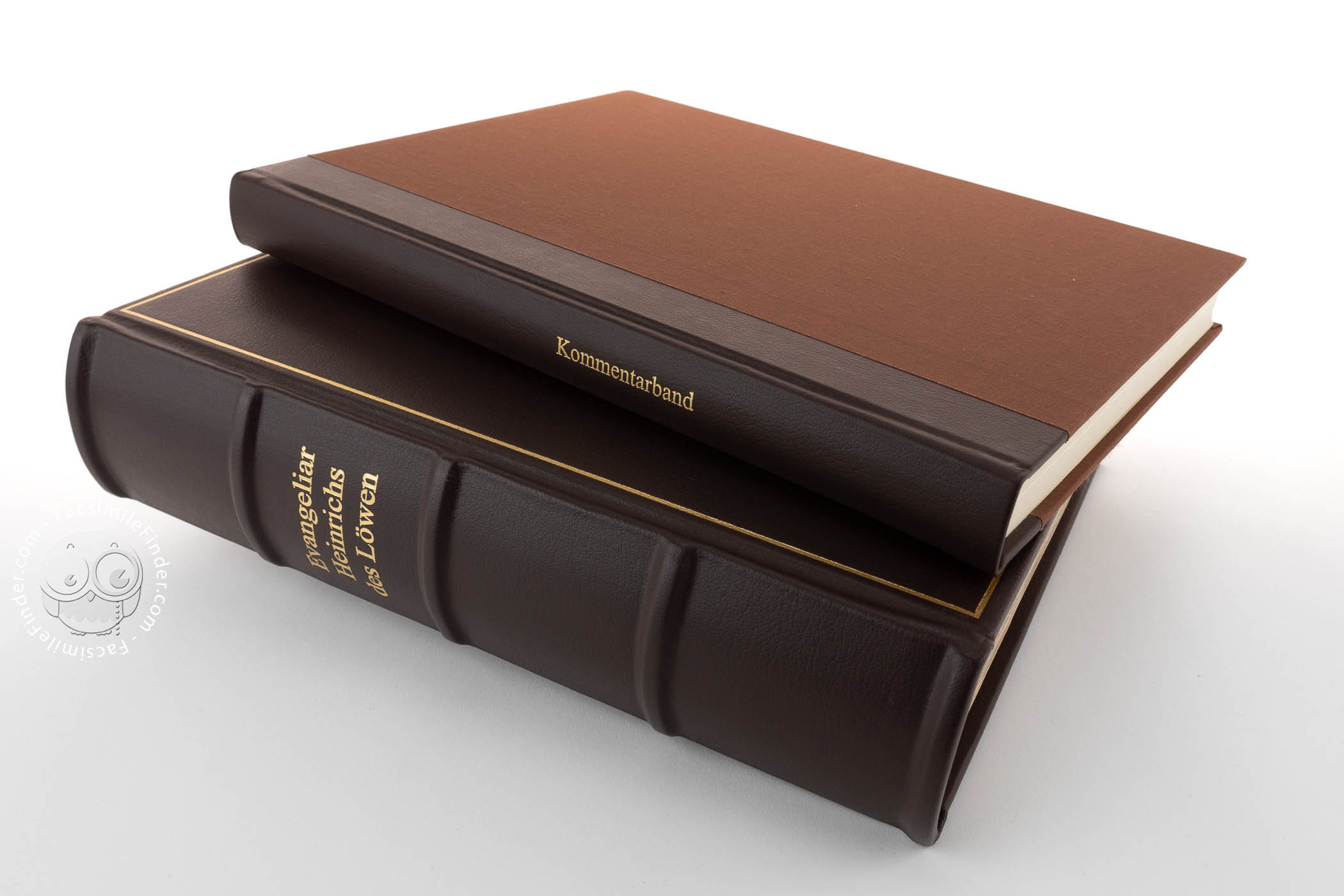
We have 3 facsimiles of the manuscript "Gospels of Henry the Lion":
- Evangeliarium Heinrici Leonis facsimile edition published by Insel Verlag, 1988
- Evangeliar Heinrichs des Löwen facsimile edition published by Insel Verlag, 1988
- Evangeliar Heinrichs des Löwen (Collection) facsimile edition published by Coron Verlag, 1986