
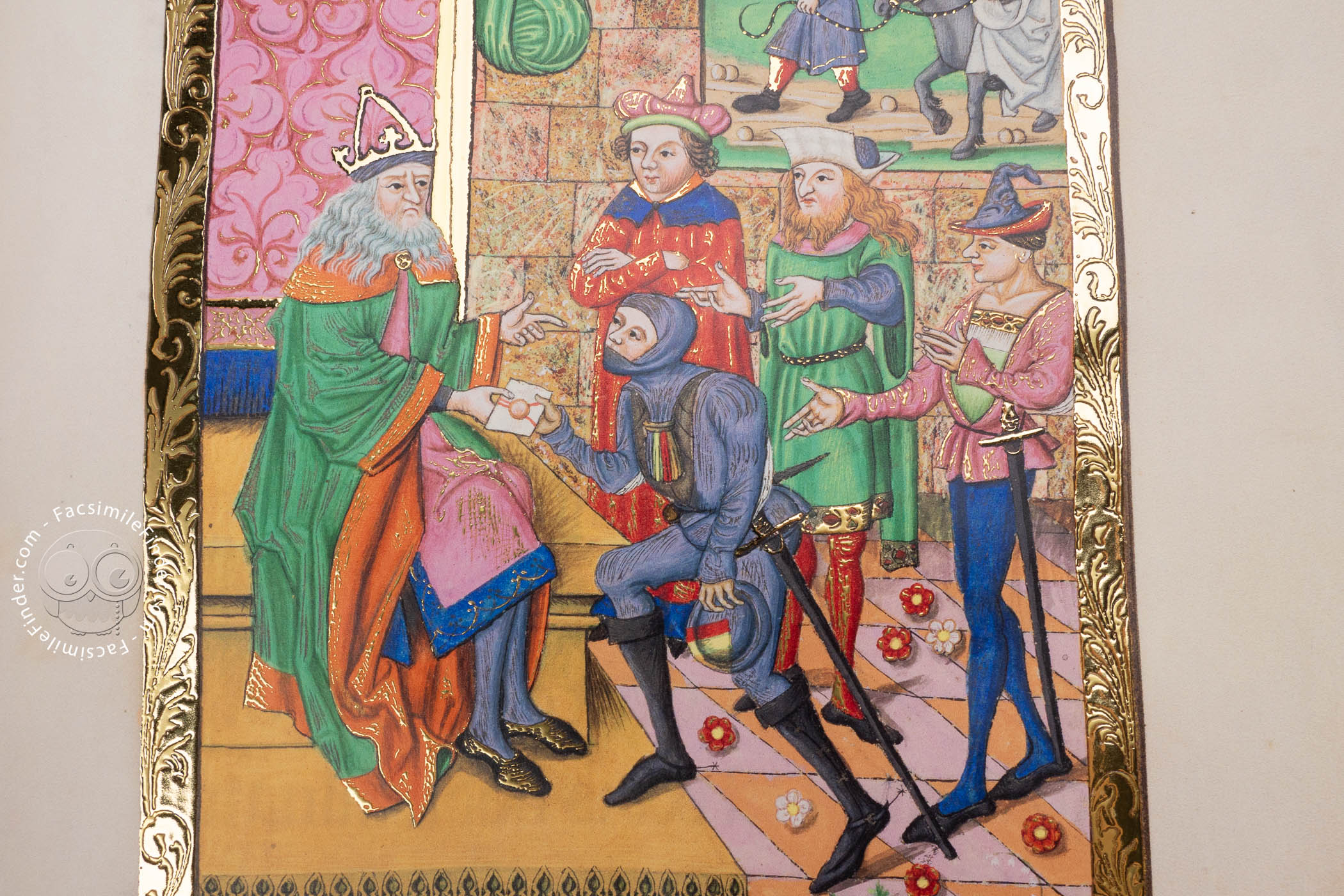
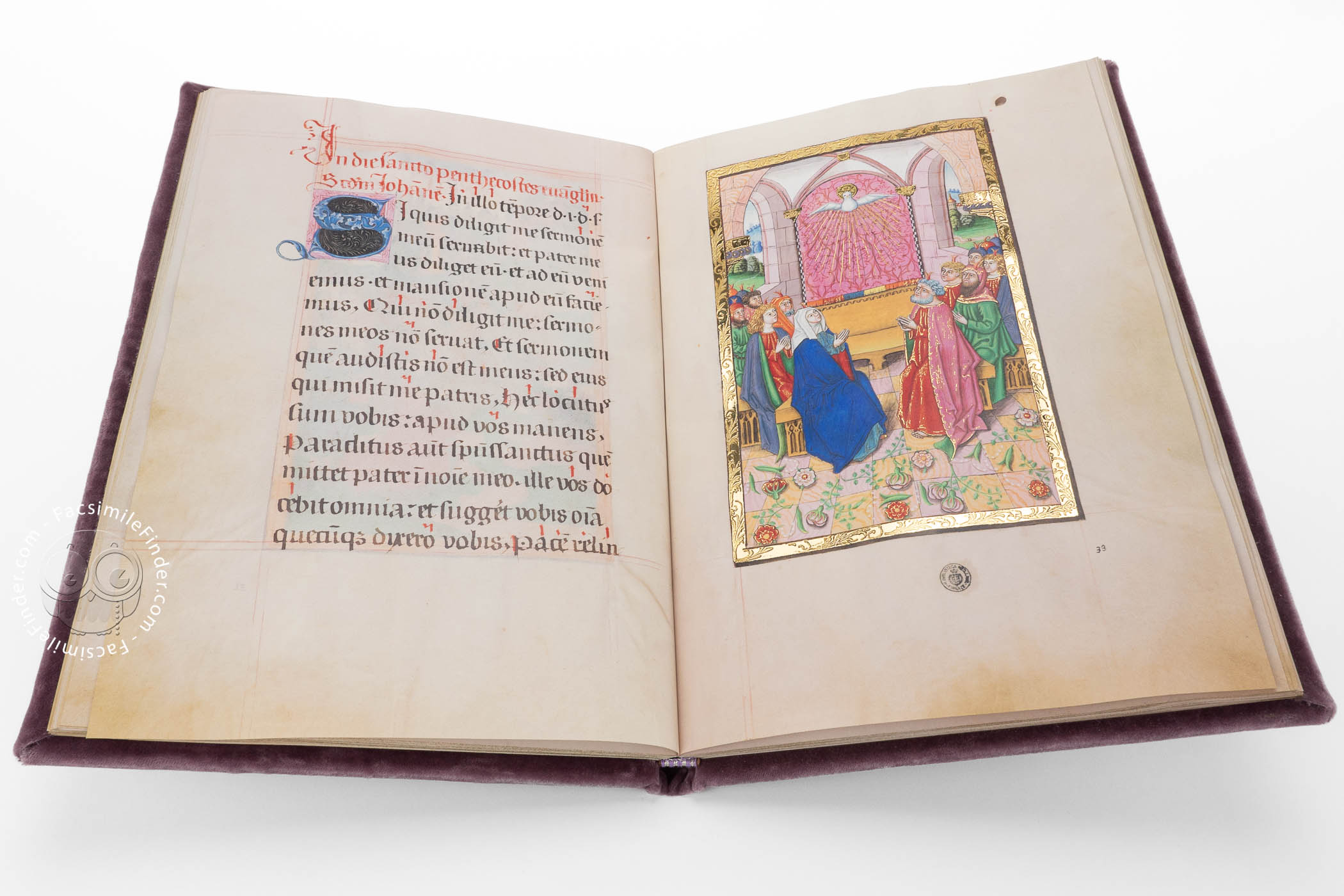
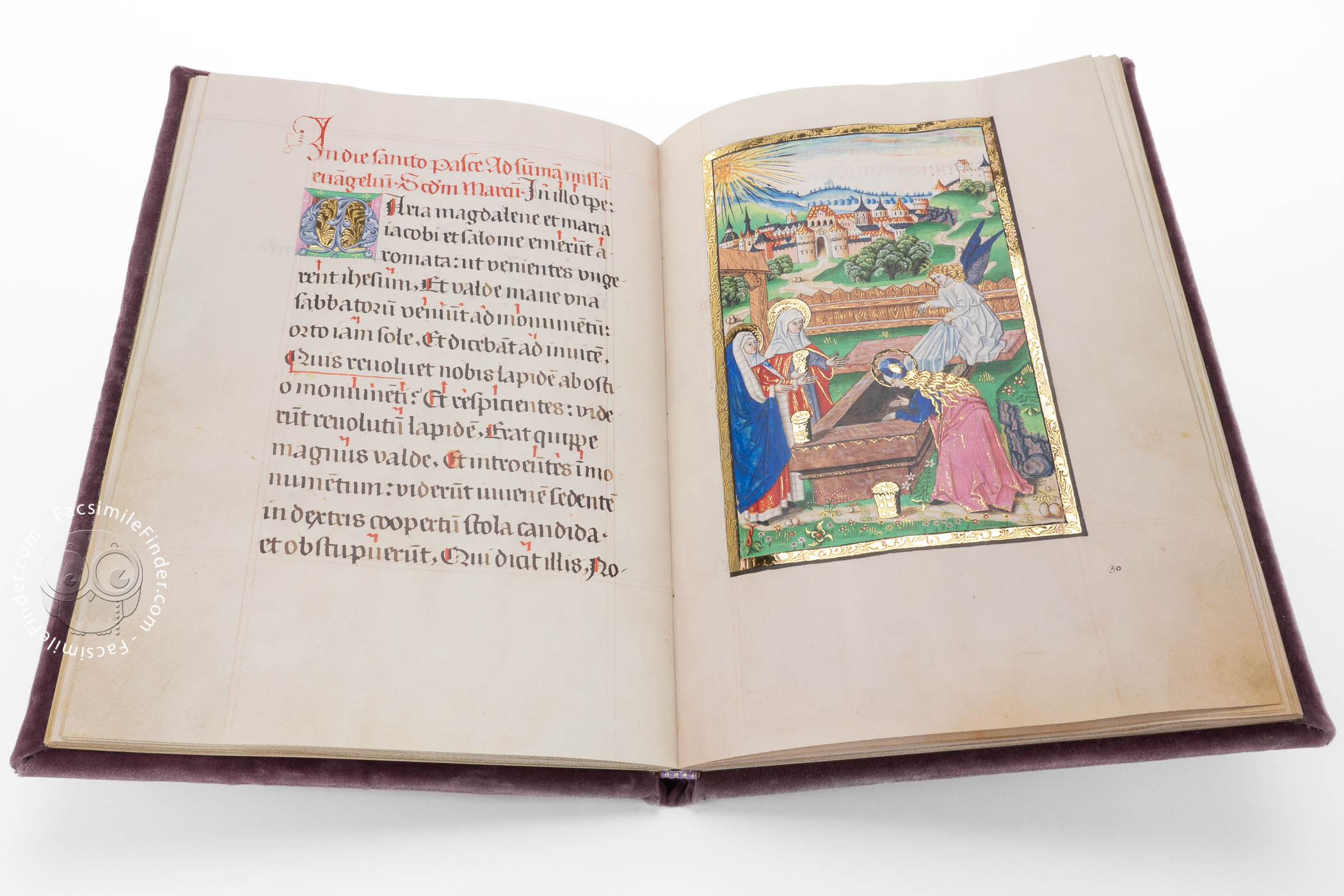
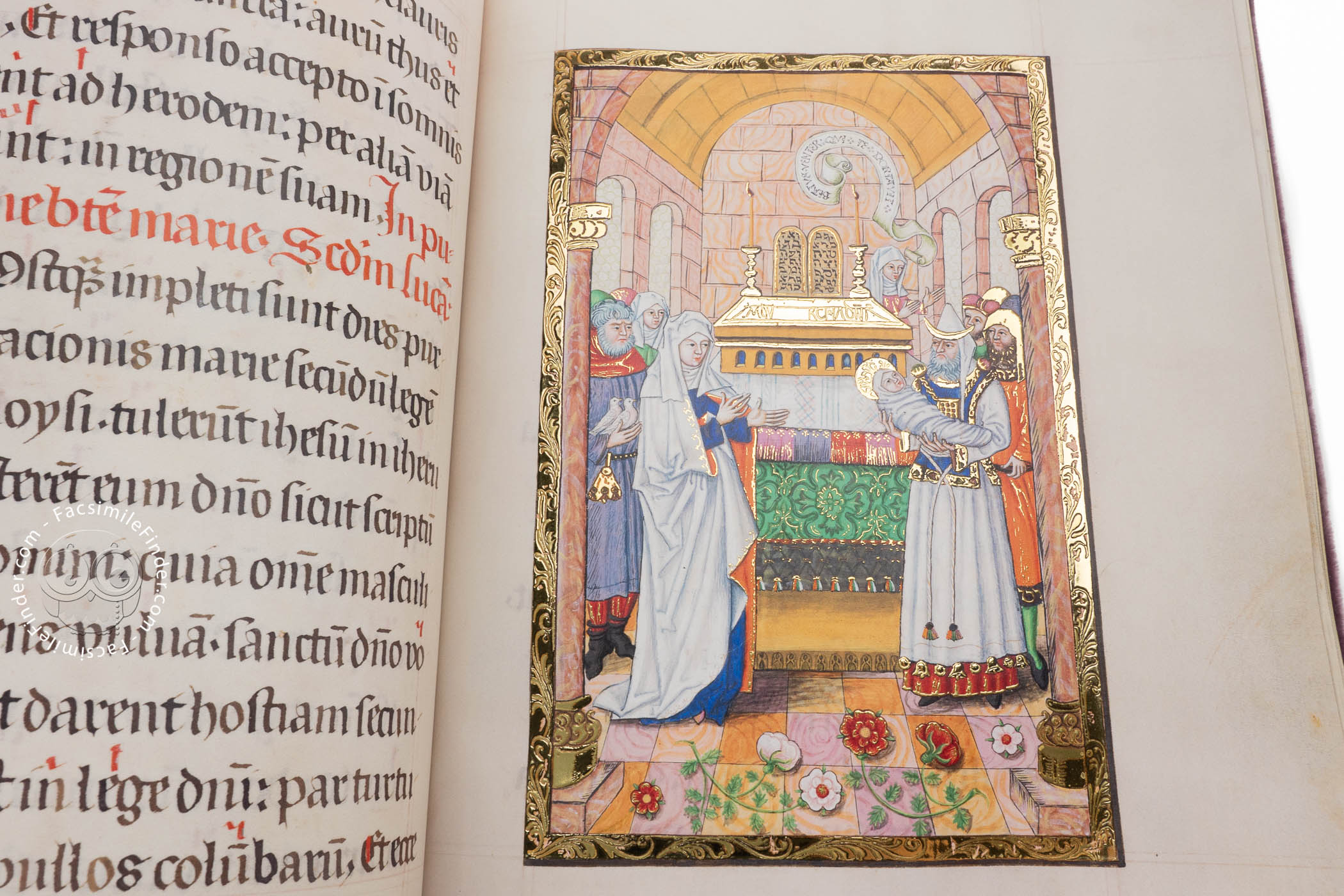
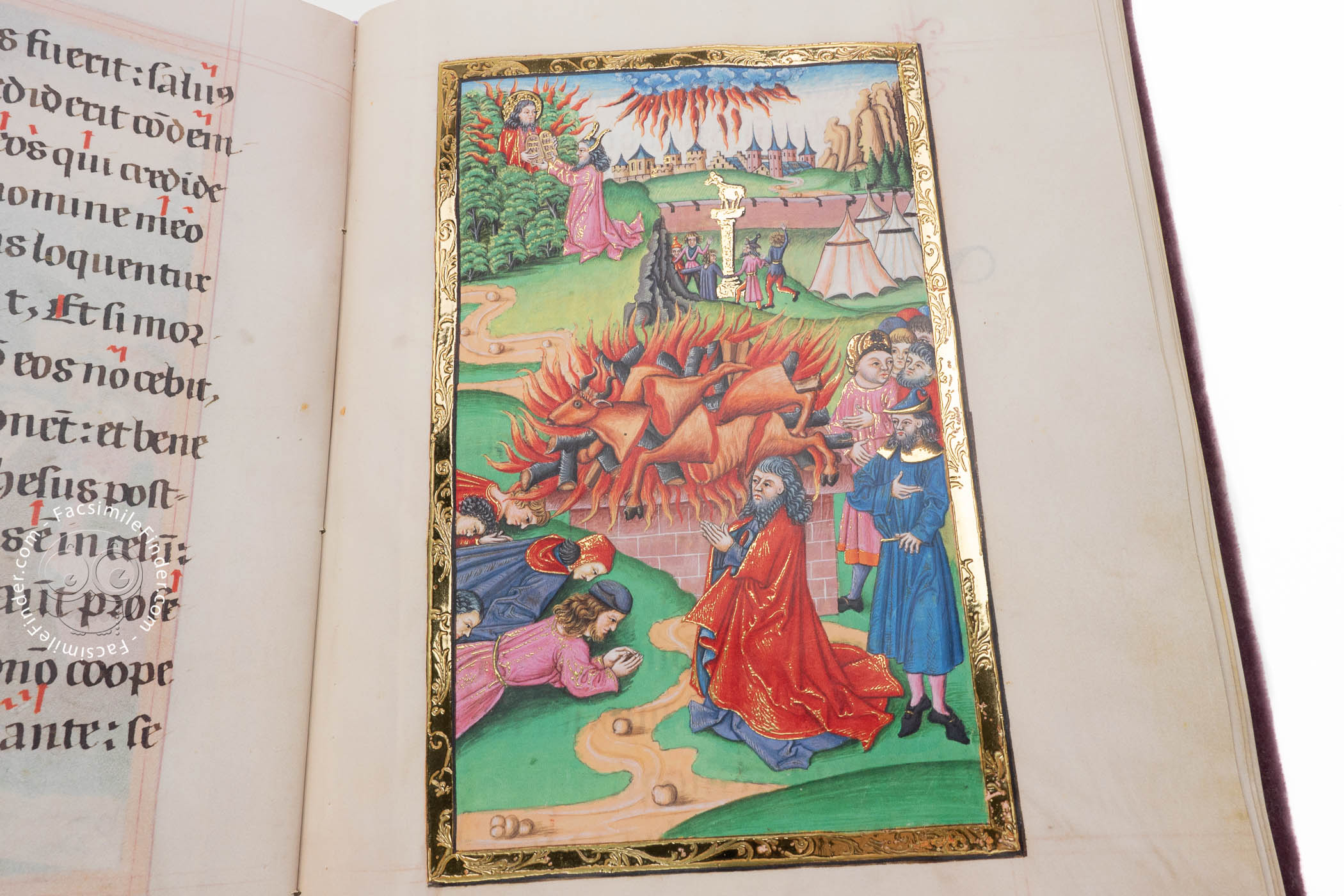
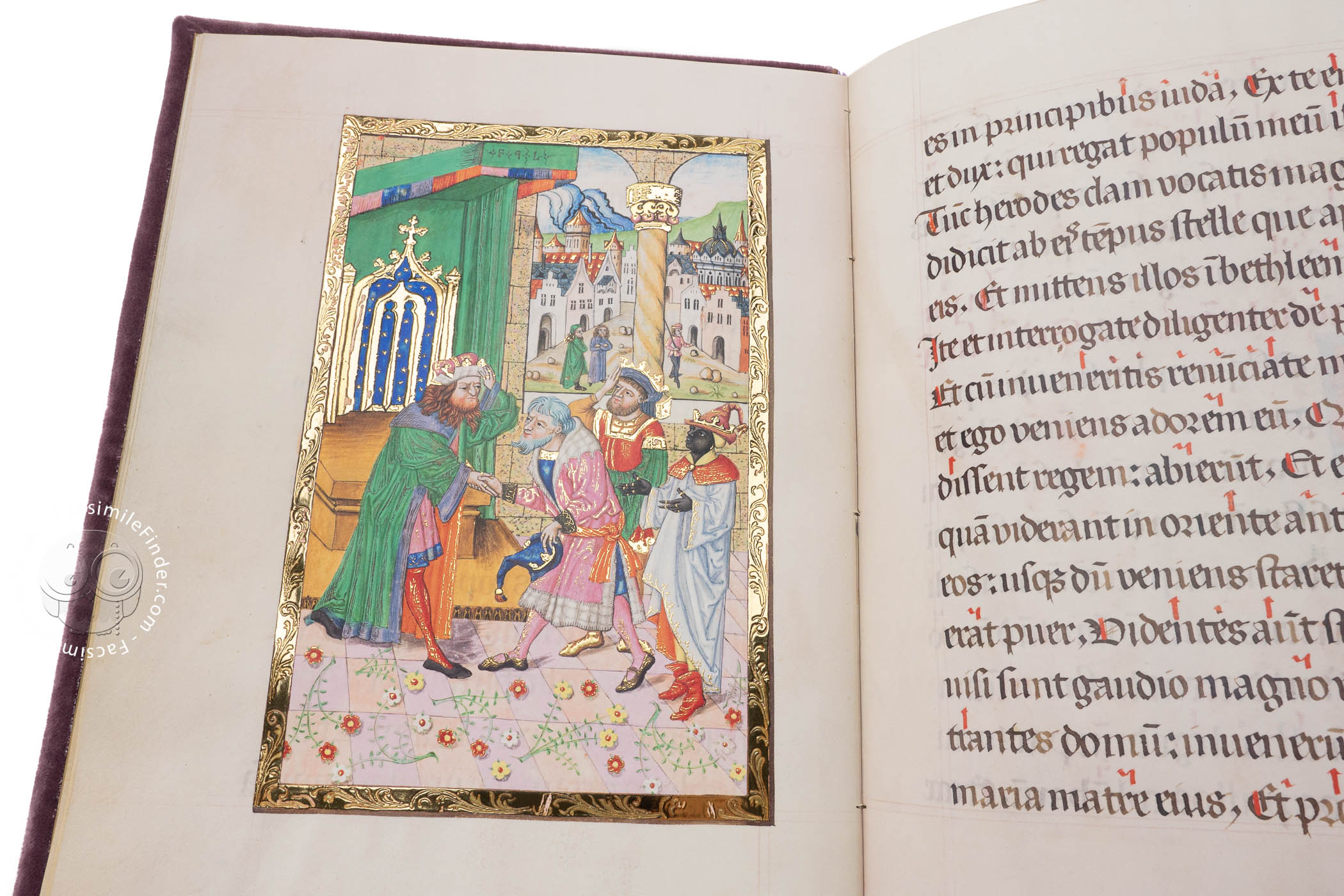
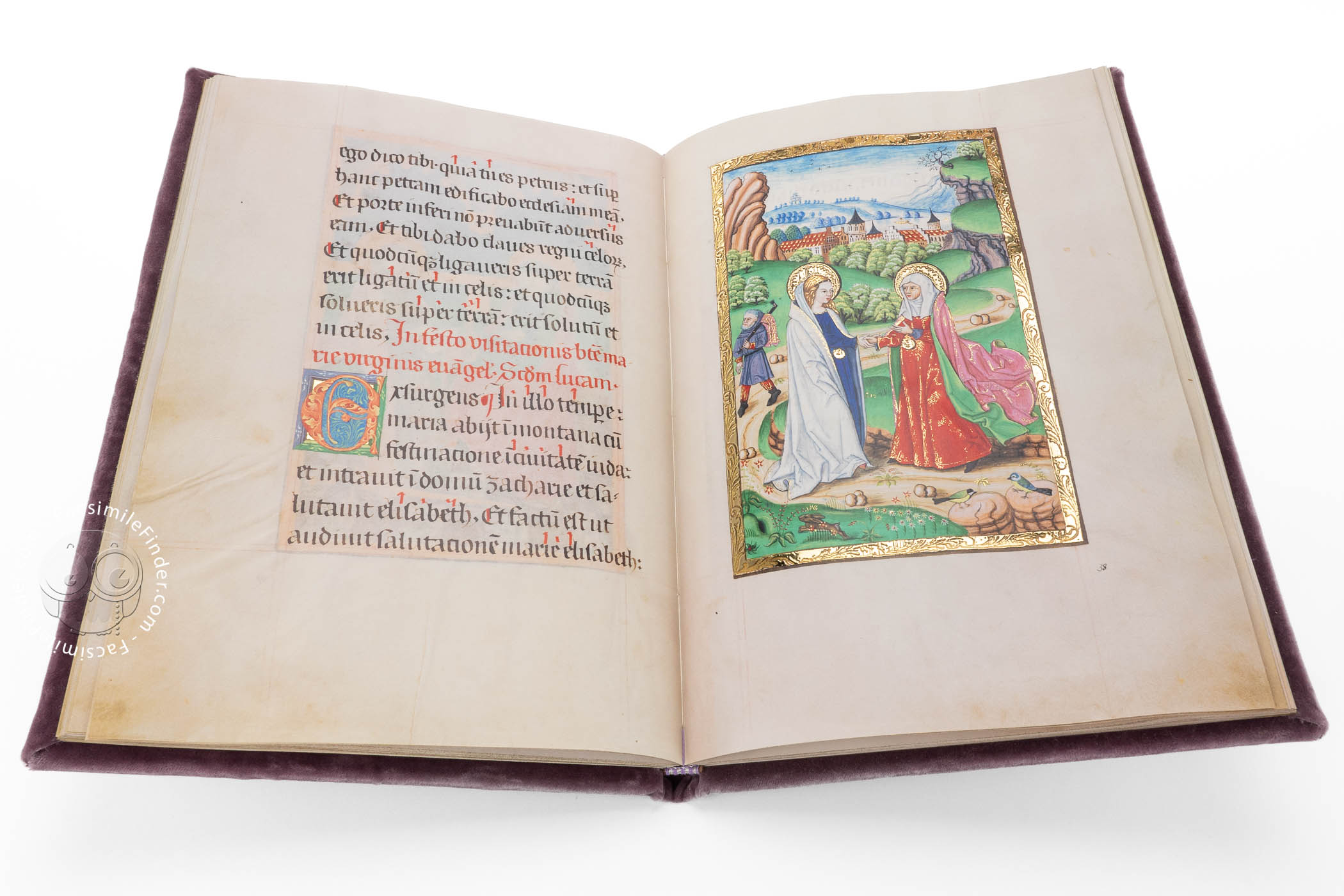
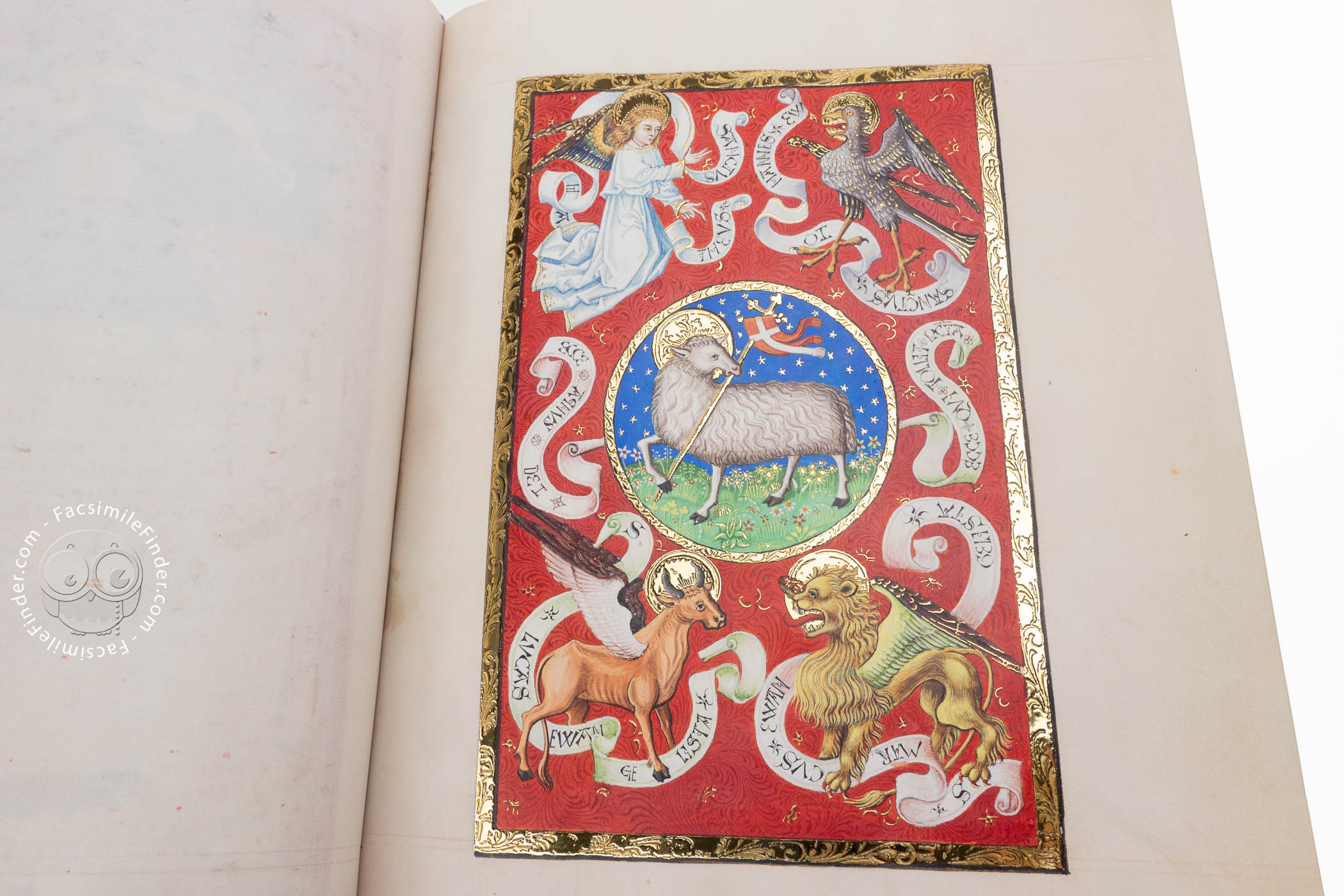
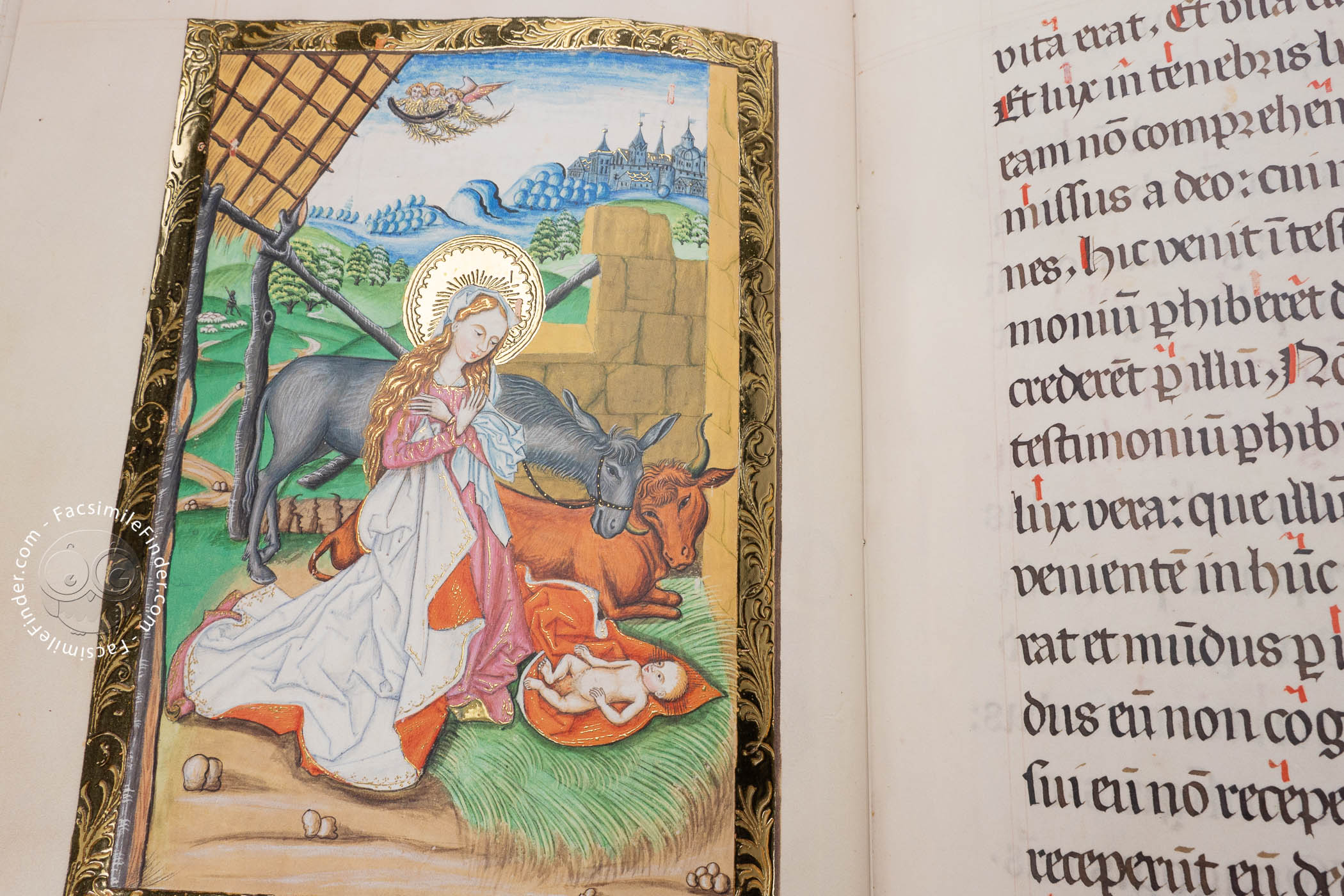
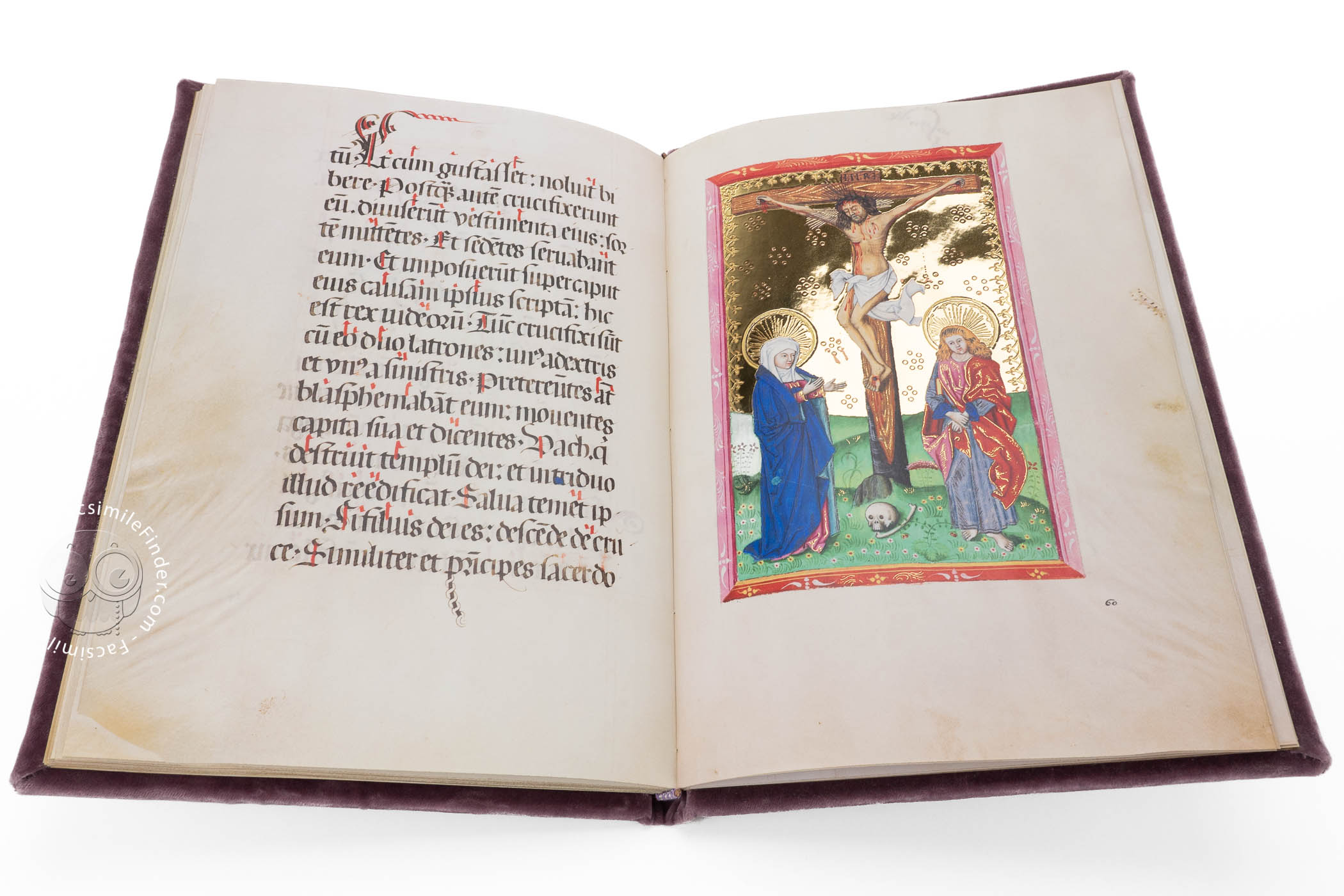
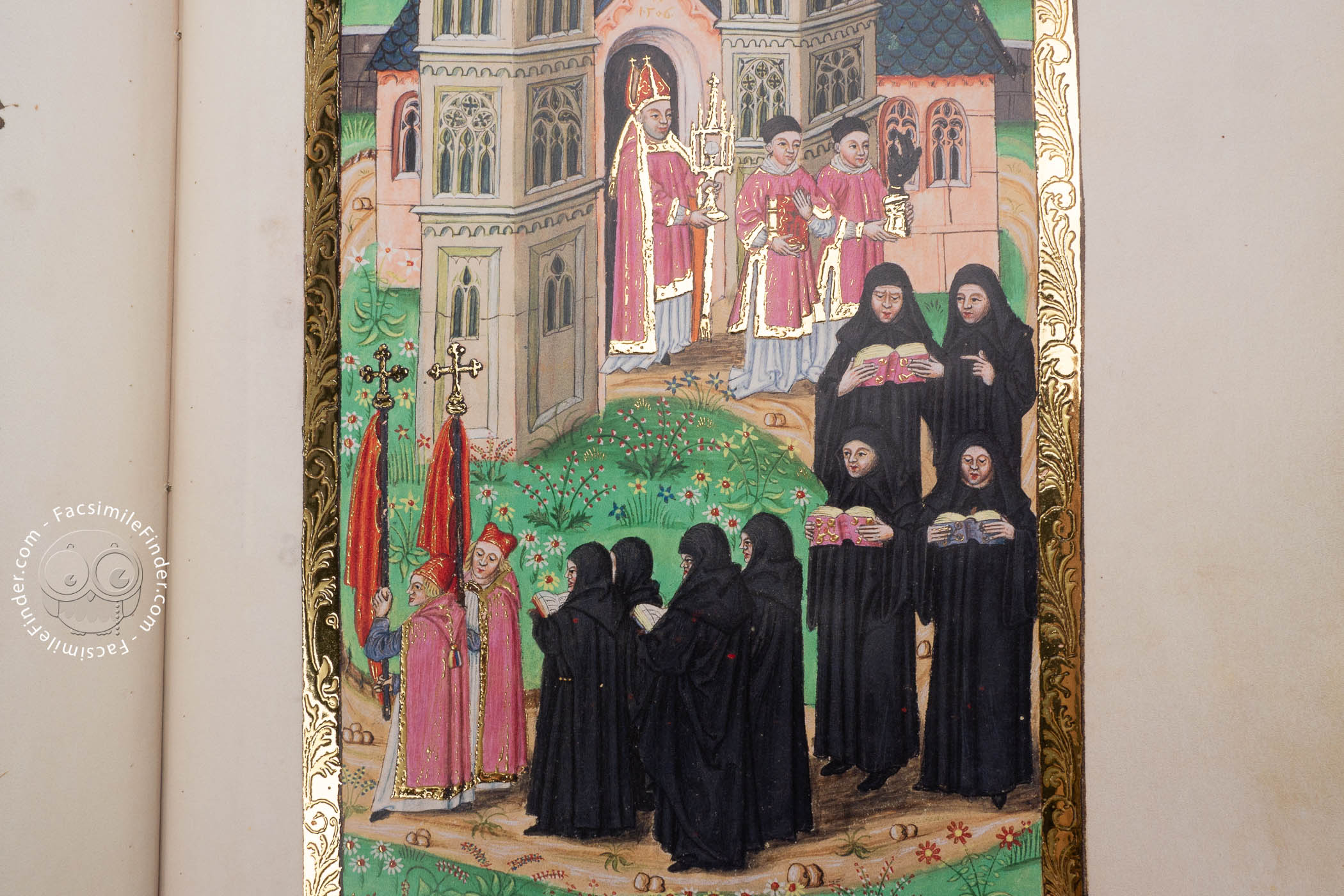


The Gospel Lectionary of Würzburg is a stately Christian liturgical manuscript of readings from the Gospel accounts of Christ's life, arranged in an annual sequence for use at Mass. It was created in 1507 at the Benedictine monastery of Sankt Stephan in Würzburg at the behest of its abbot. The illuminator, Georg Lester, signed his work. His miniatures are distinguished by brilliant color and a generous use of burnished gold leaf, often featuring tooled designs. He based the compositions of eight of the thirty full-page miniatures on engravings by the fifteenth-century master engraver Martin Schongauer.
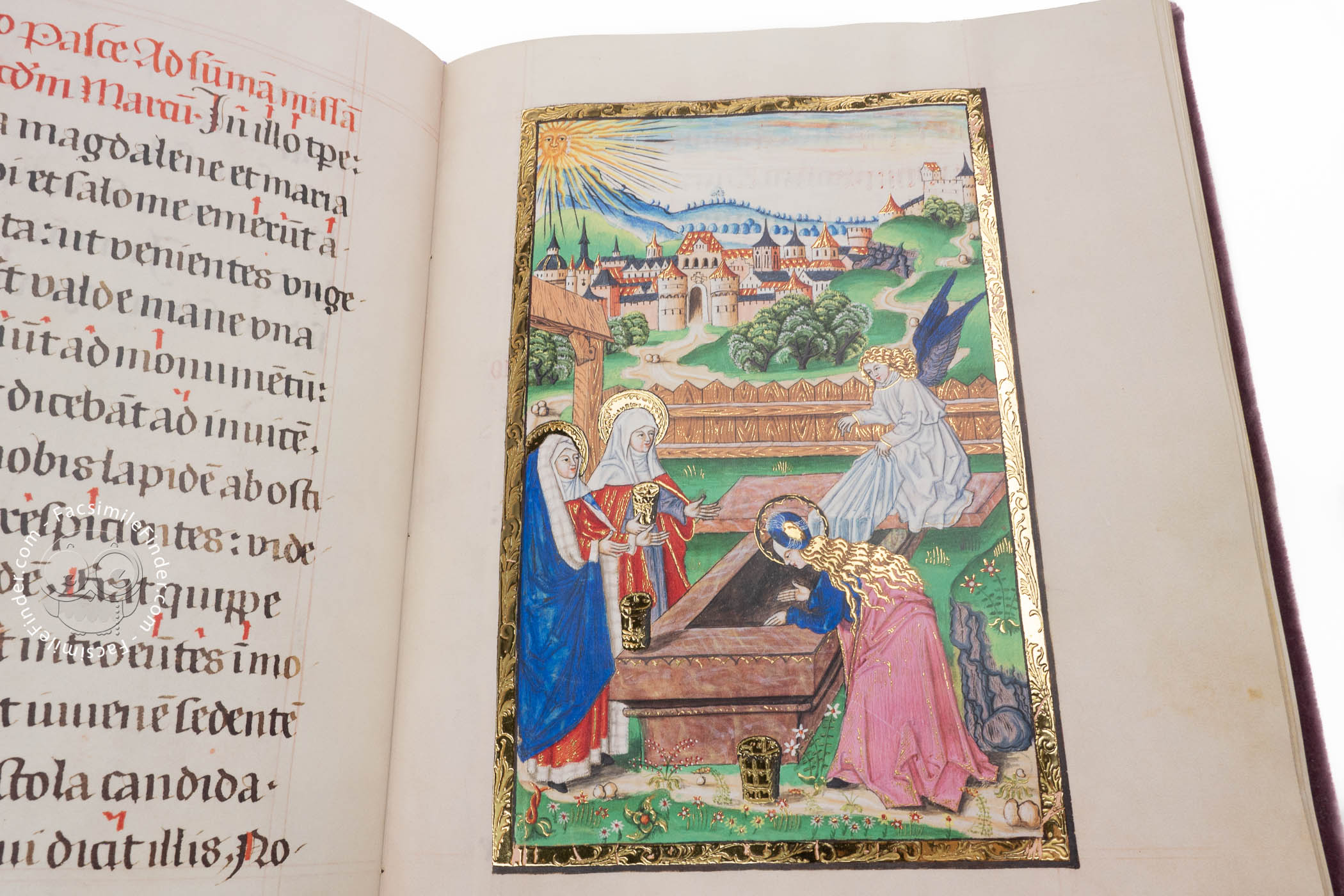
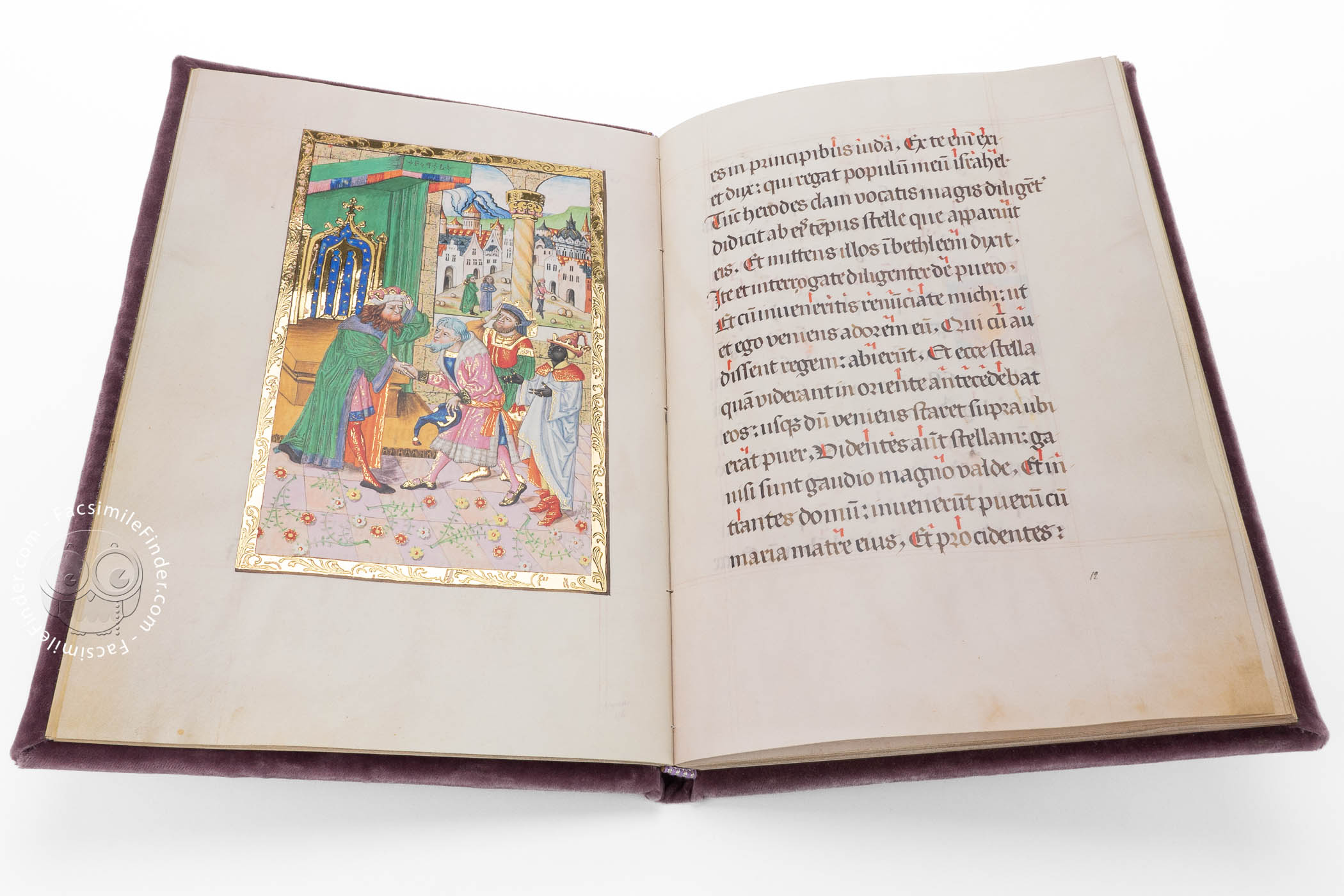
Lester imbued the paintings with a sumptuous quality that derives not only from the brilliance of the palette but also from careful attention to the depiction of richly embroidered robes and landscape features, as well as the inclusion of strewn flowers in the foreground of some miniatures.
The Abbot and the Monk-Artist
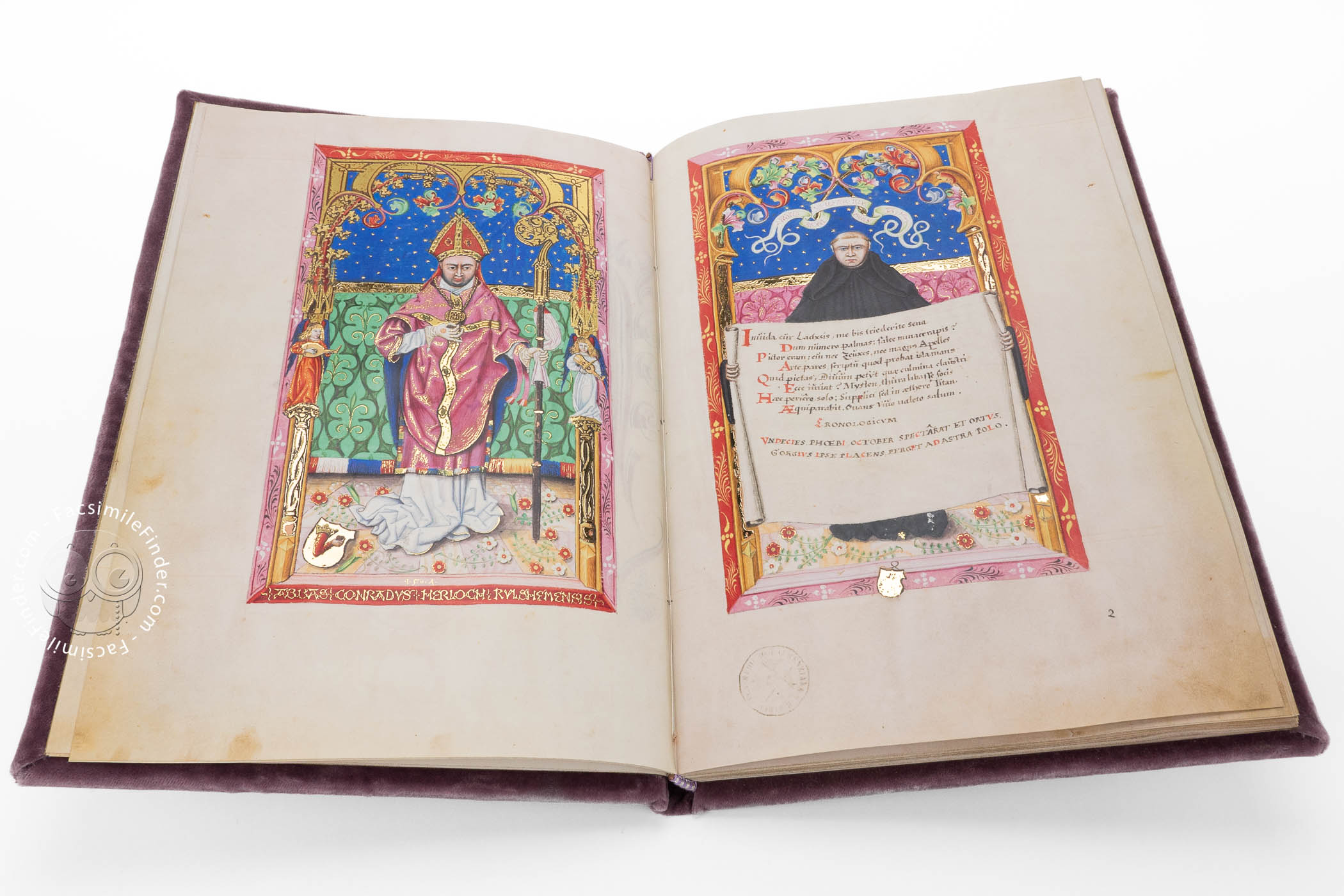
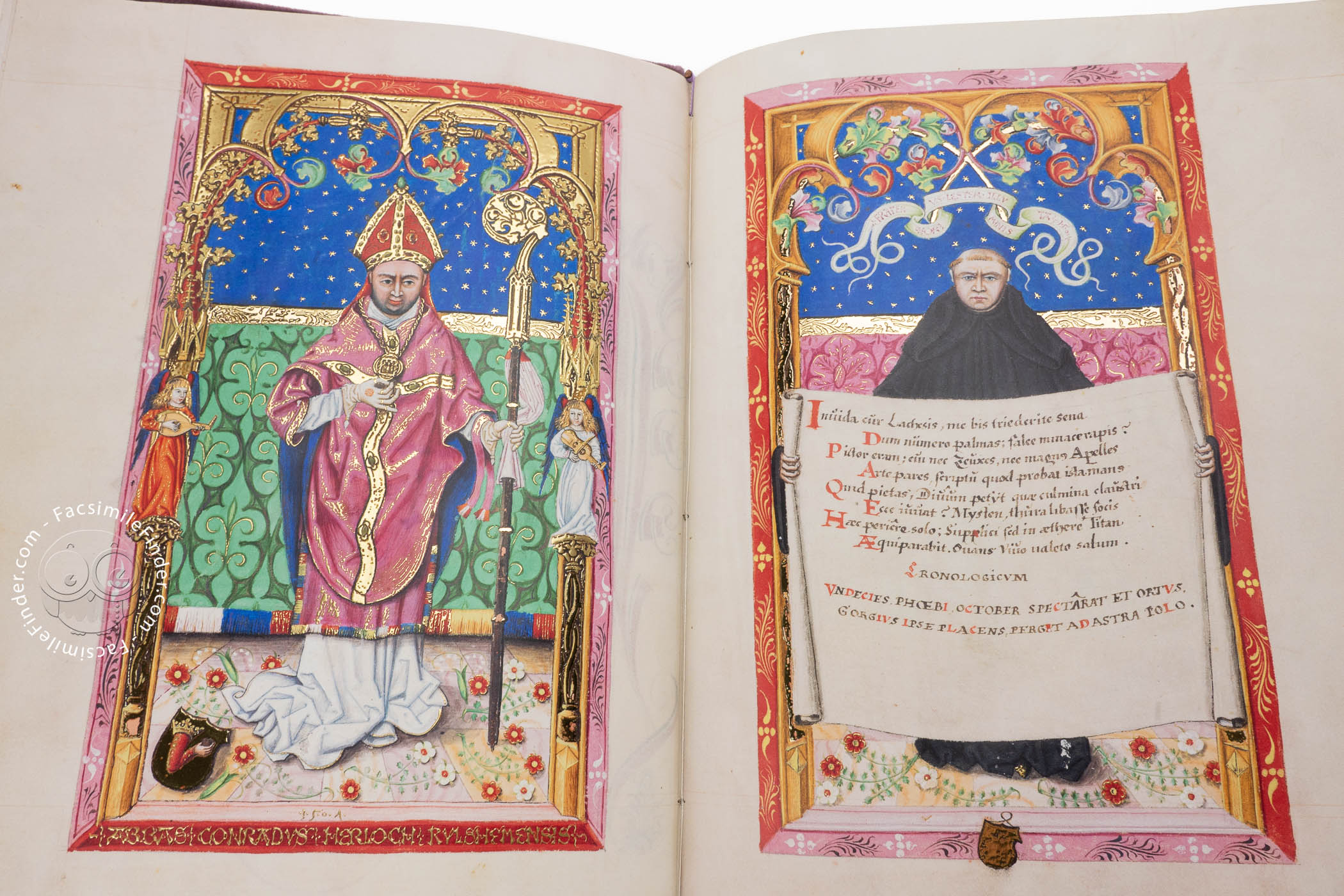
The book opens with a two-page frontispiece depicting Konrad Herloch (d. 1519), abbot of the Benedictine monastery of Sankt Stephan in Würzburg on the left-hand page, and the illuminator, Georg Lester, holding an unfurled scroll with a dedicatory text filled with classical allusions on the right. Each is pictured in a stylized architectural niche with delicate tracery and backed by a colored cloth of honor (fols. 1v-2r).
Grand Compositions
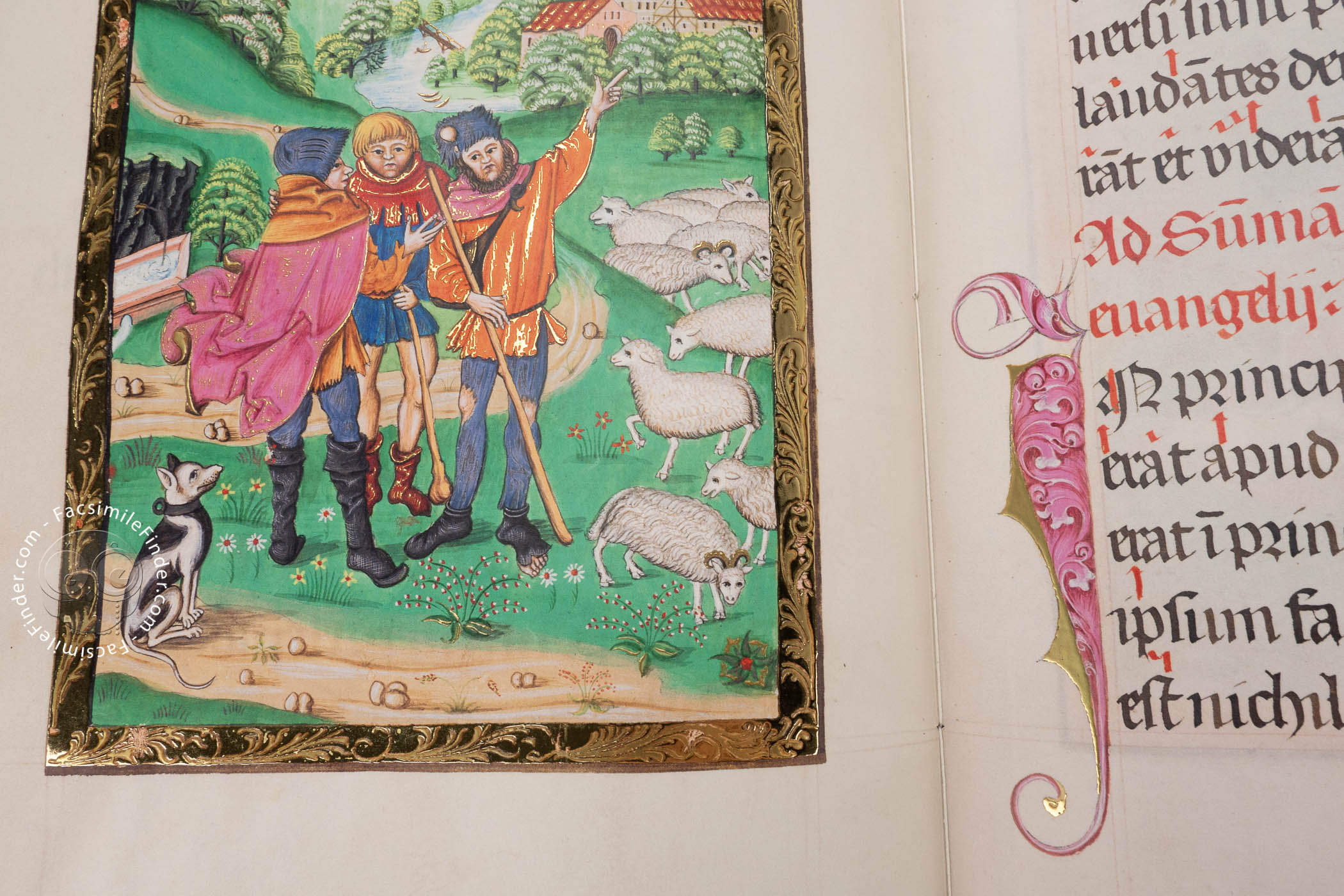
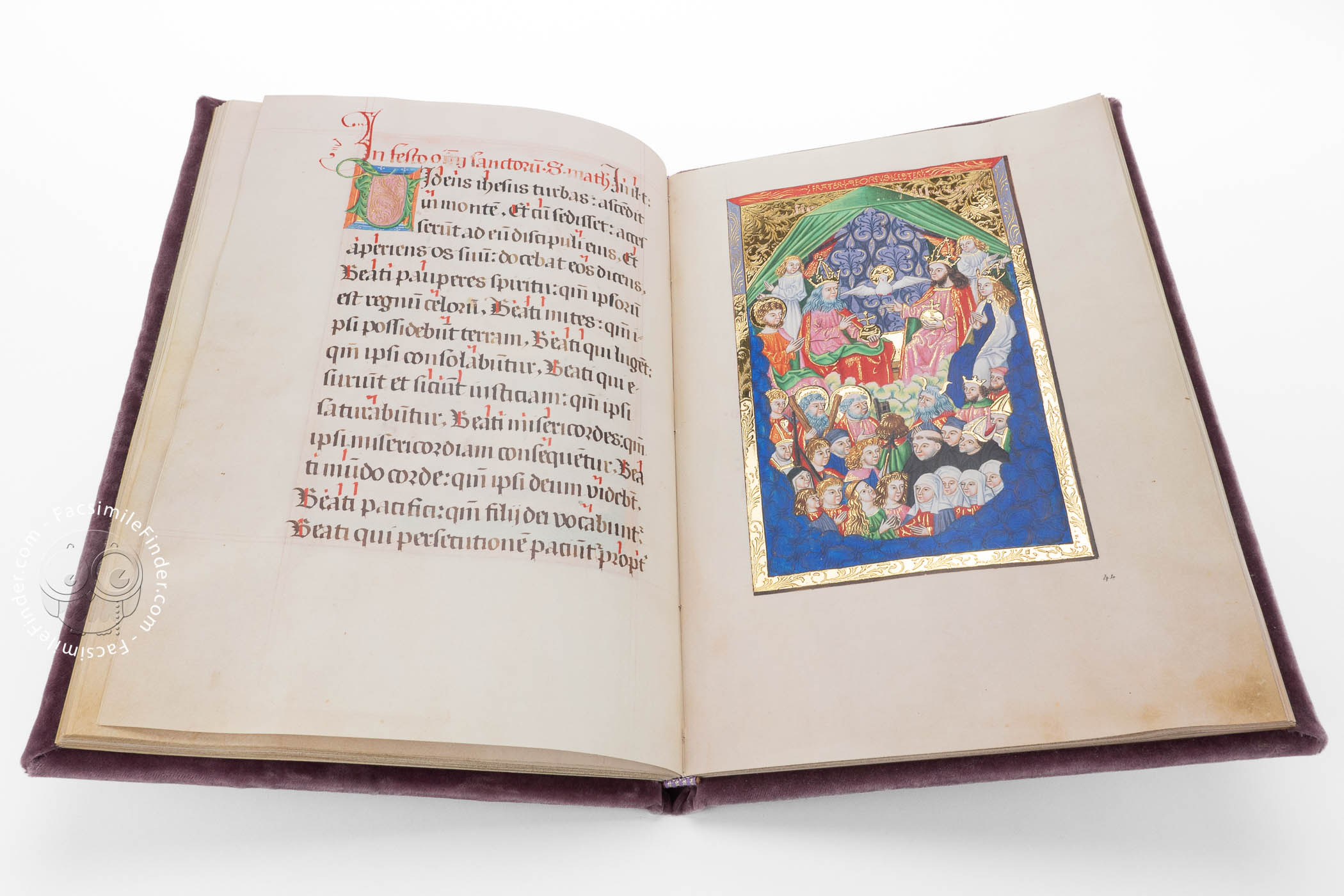
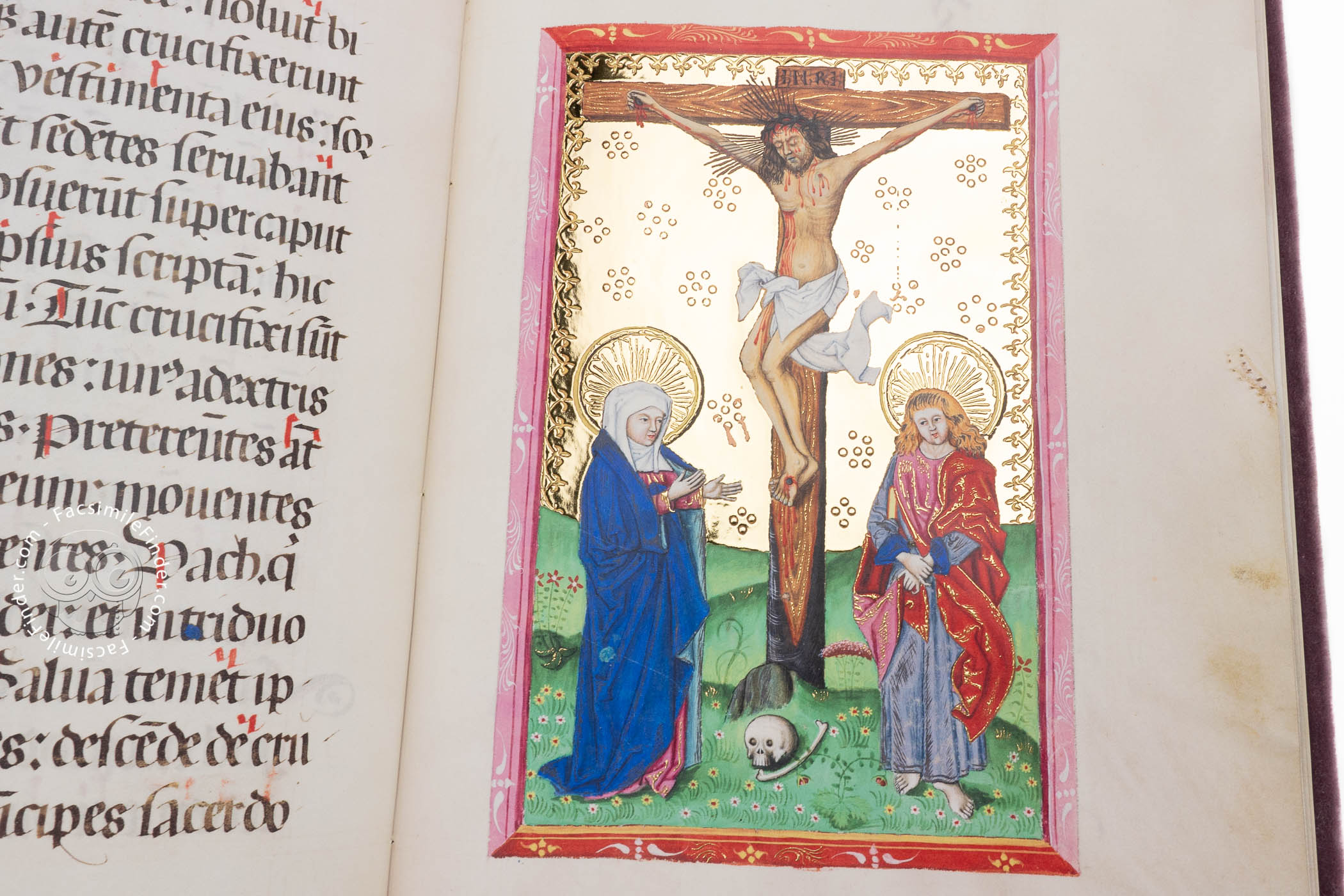
Most of the paintings depict the events in the life of Christ that are commemorated on the major feast days of the Christian year and appear near the text of the Gospel reading for that feast. They include the Annunciation, the Visitation, the Presentation in the Temple, the Last Supper, and the Crucifixion, that last pictured against a burnished and punched gold background (fols. 16r, 38r, 13r, 36r, and 60r).
Moses, Abraham, and Saint Kilian
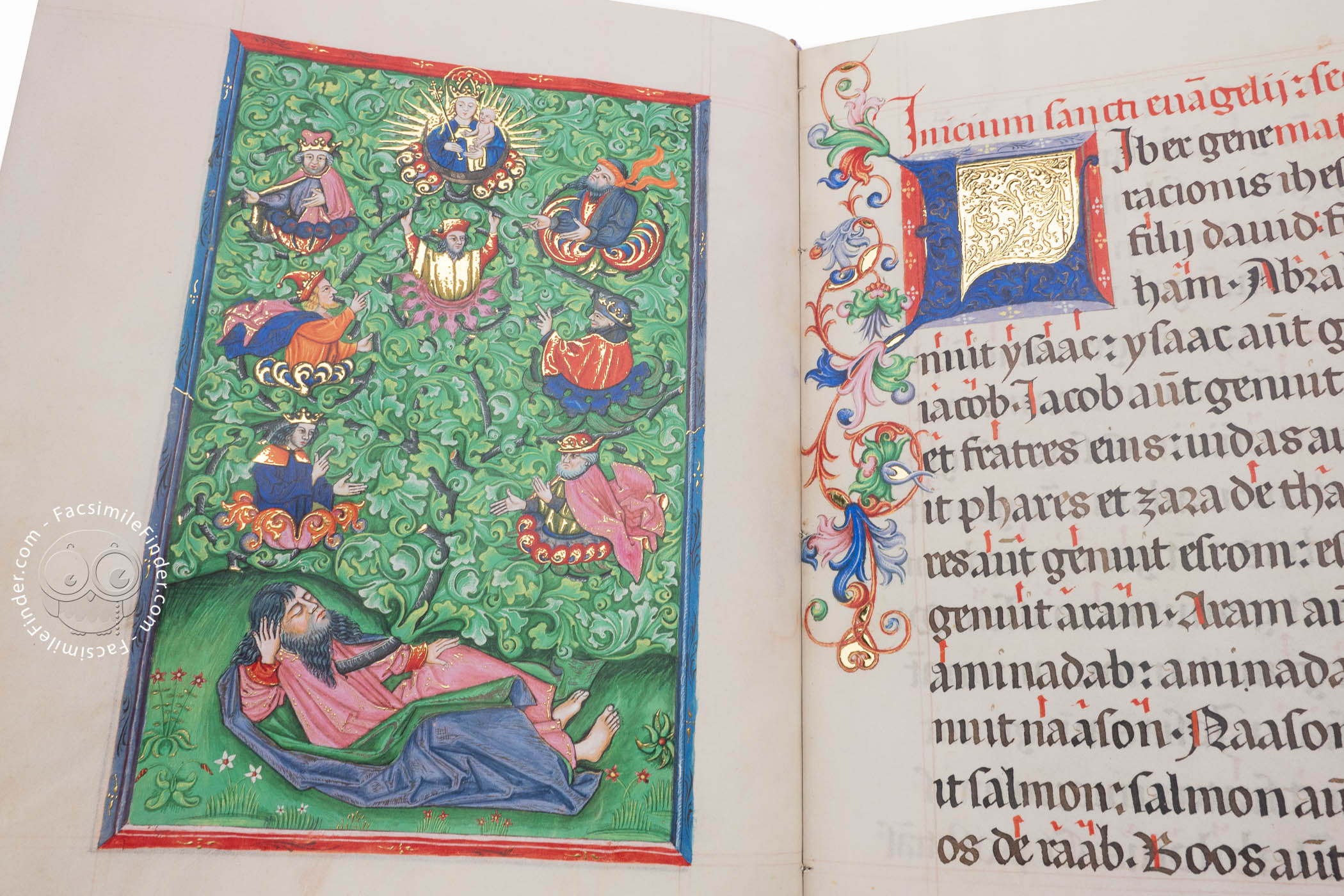
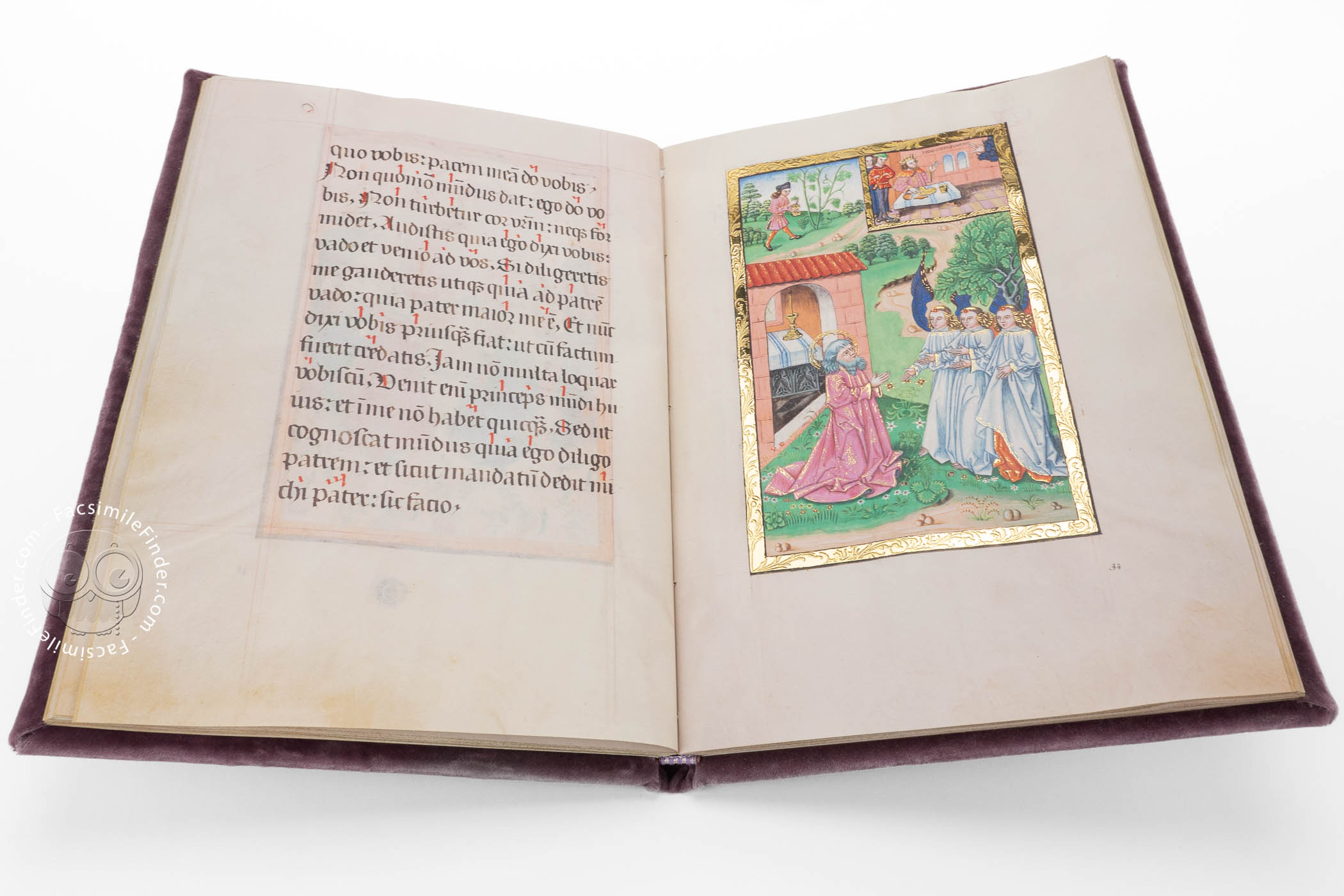
Somewhat surprisingly for a book with texts drawn exclusively from the Gospels, two miniatures depict events described in the Old Testament. The reception of the Decalogue by Moses is depicted in the background of a scene of Aaron leading an animal sacrifice (fol. 32r). Abraham receives three heavenly messengers in a bucolic landscape (fol. 34r).
A miniature of the martyrdom of the seventh-century bishop of Würzburg, Saint Kilian, and his companions, Saints Colman and Totnan, marks their feast day. Kilian has already been beheaded, and two soldiers raise their swords against his companions. The scene unfolds before a detailed southern German townscape (fol. 40r).
Music Notation in Red
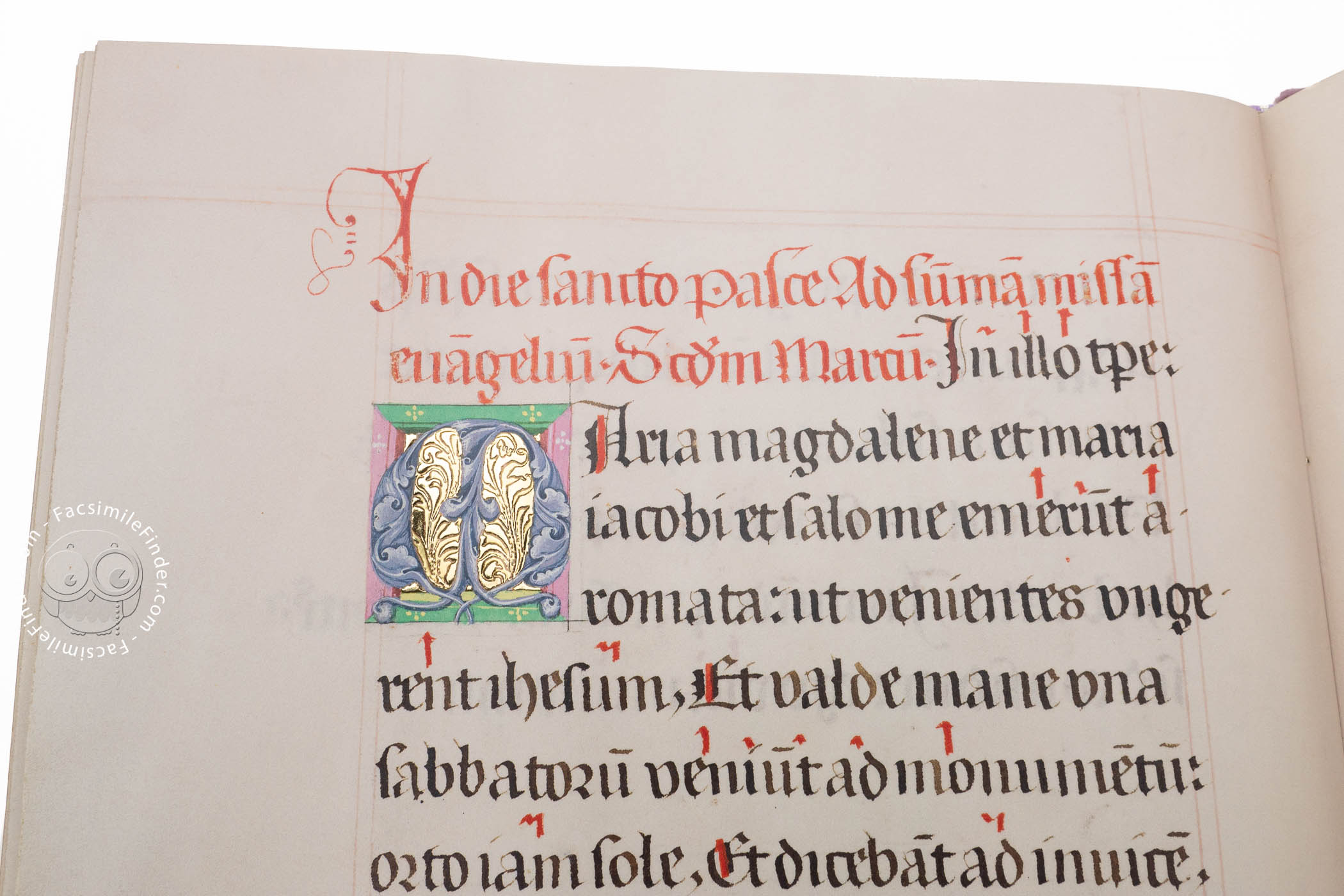
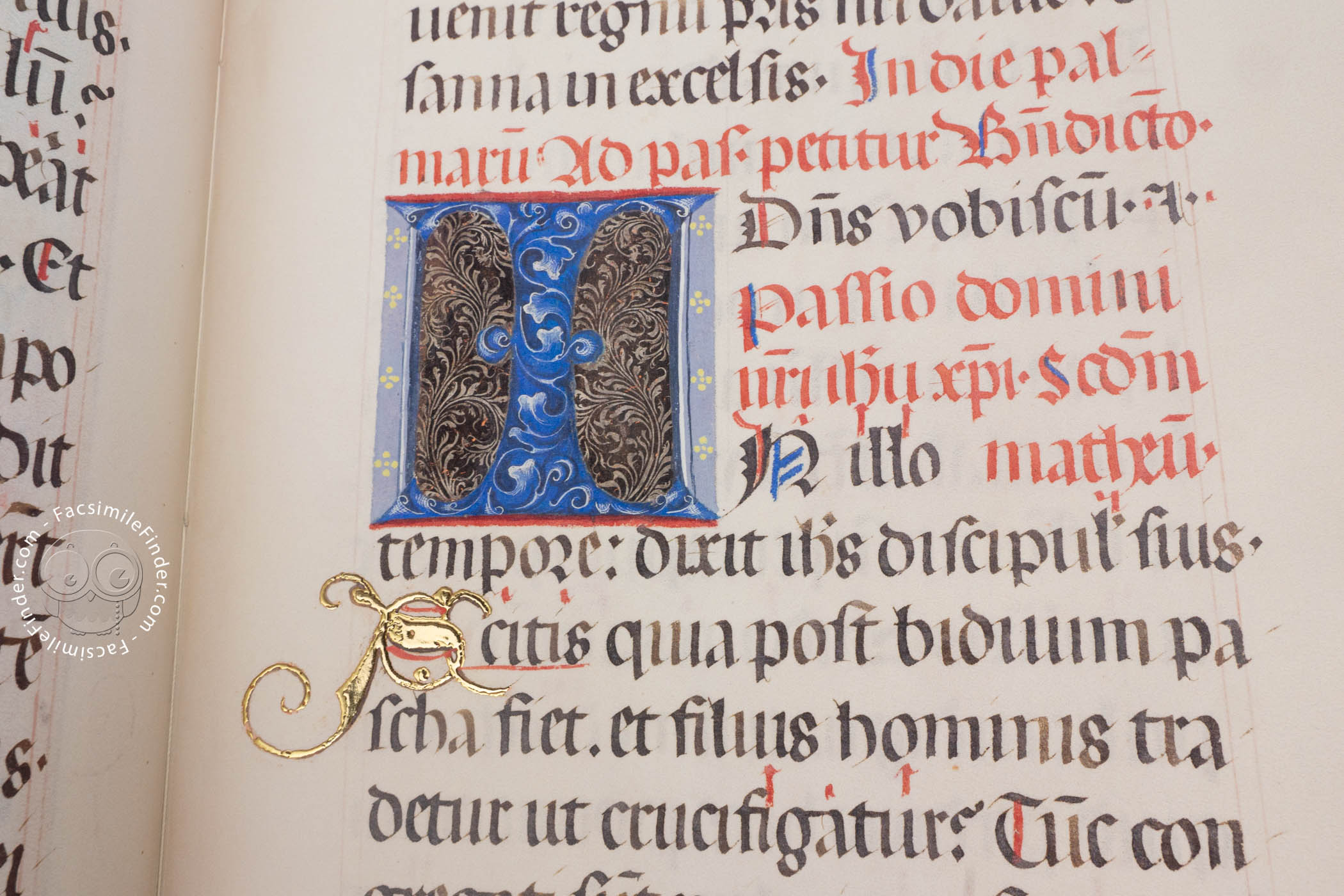
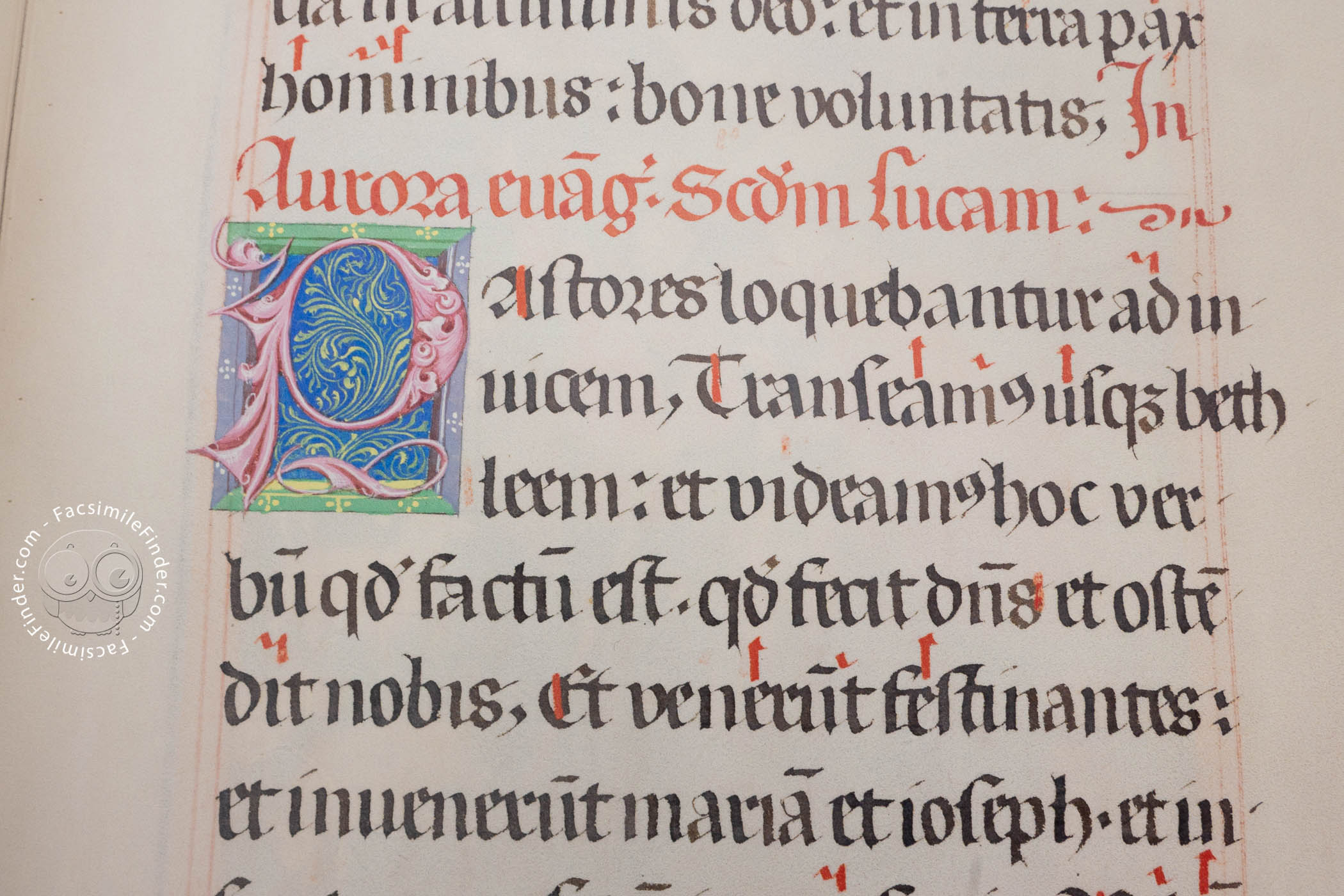
The text is written in long lines (a single column) in the most formal script of the time, Gothic Textualis. The melodies for intoning the readings in the context of the Mass are indicated in red in Hufnagel (horse-shoe nail) notation, named after the shape of its basic one-note neume. The painted initials feature scrolling fleshy acanthus decoration.
Purchased by the Grand-Duke
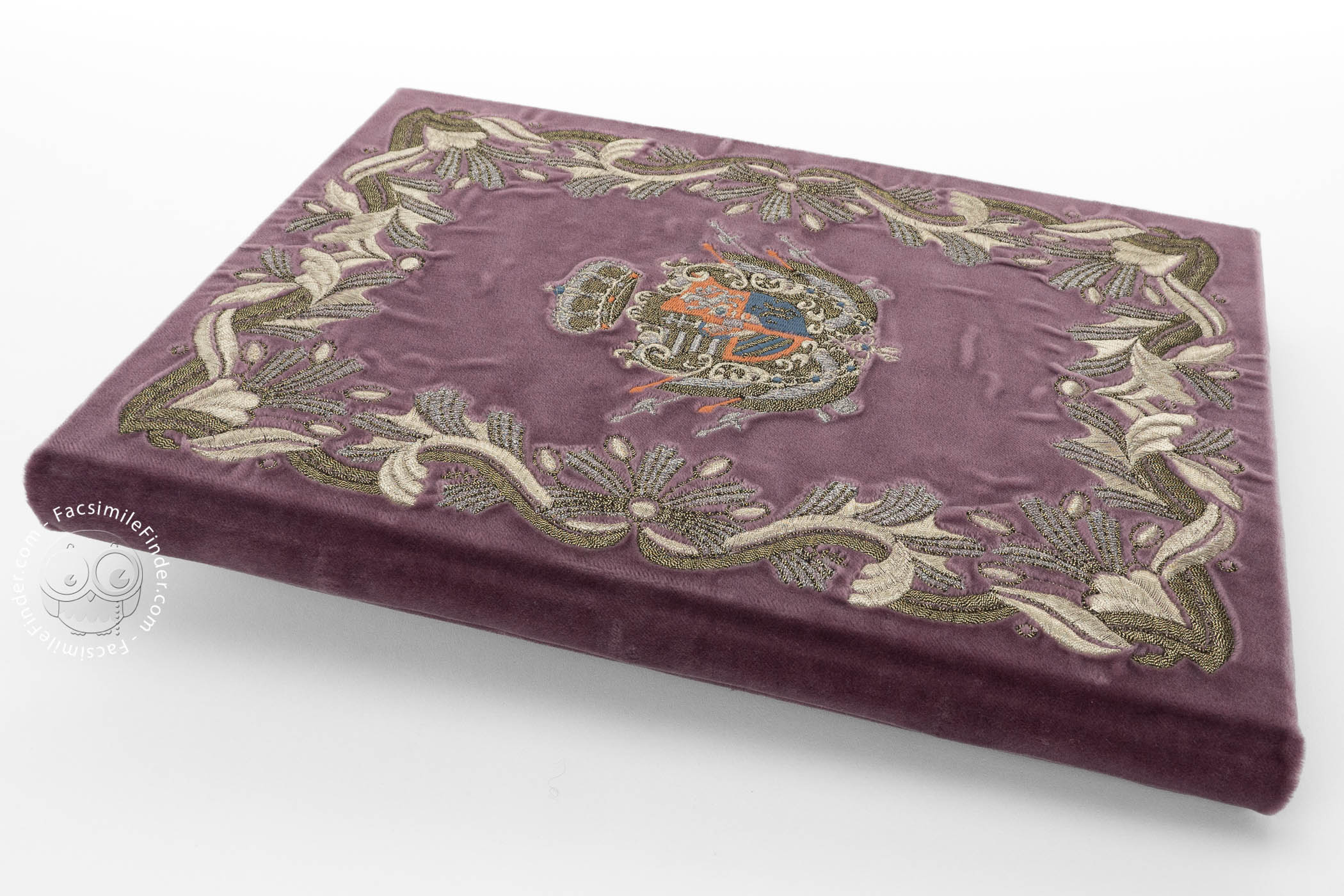
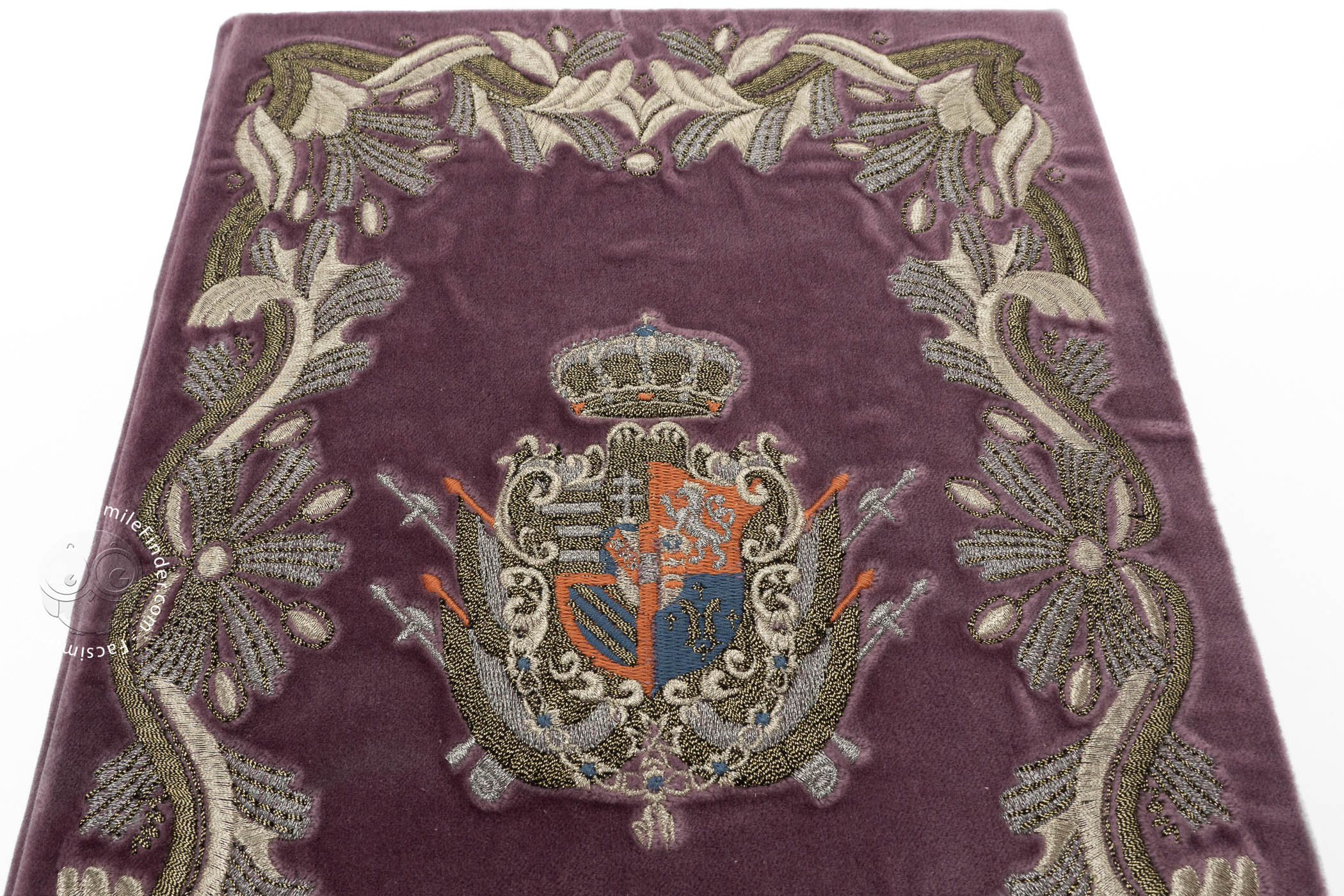
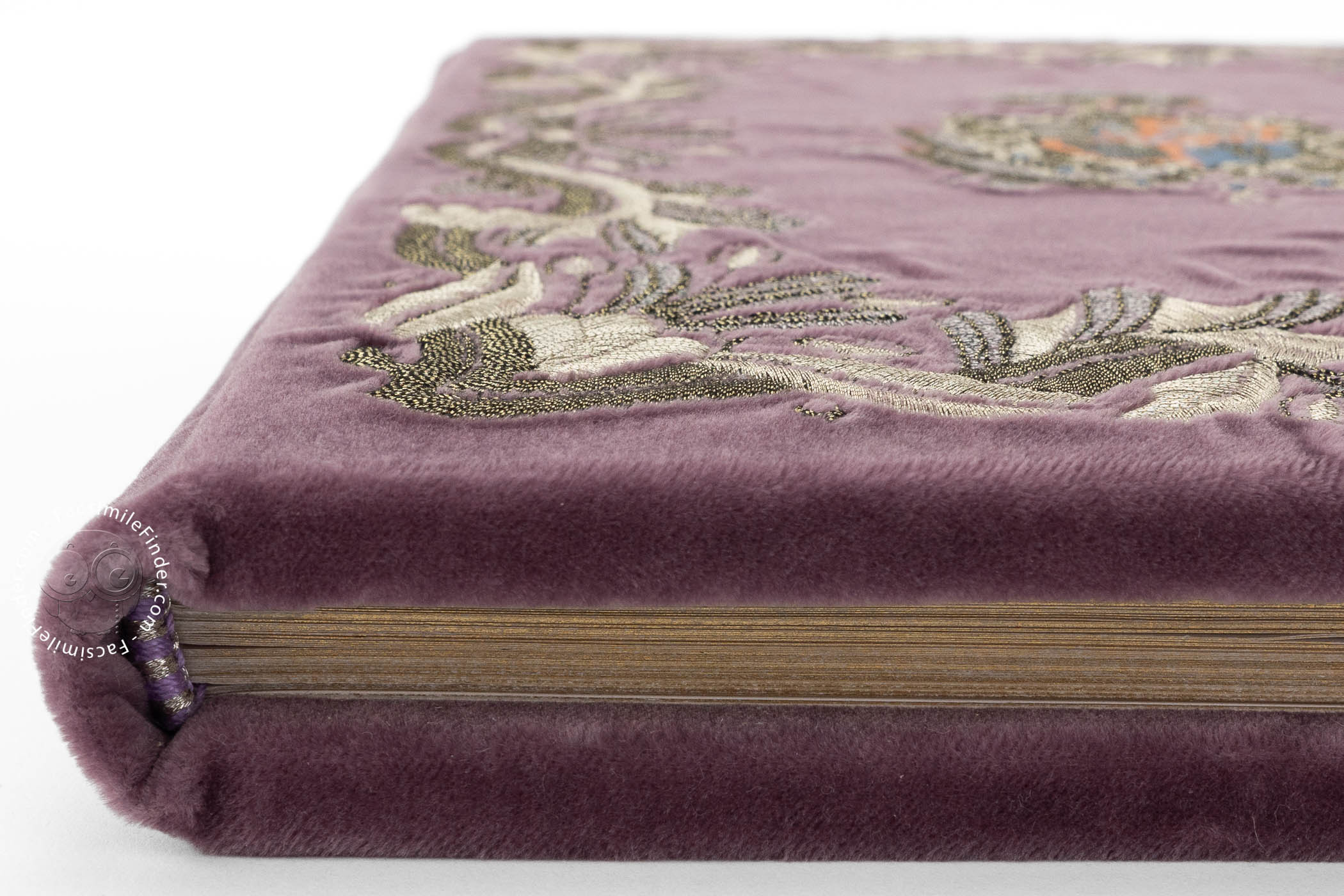
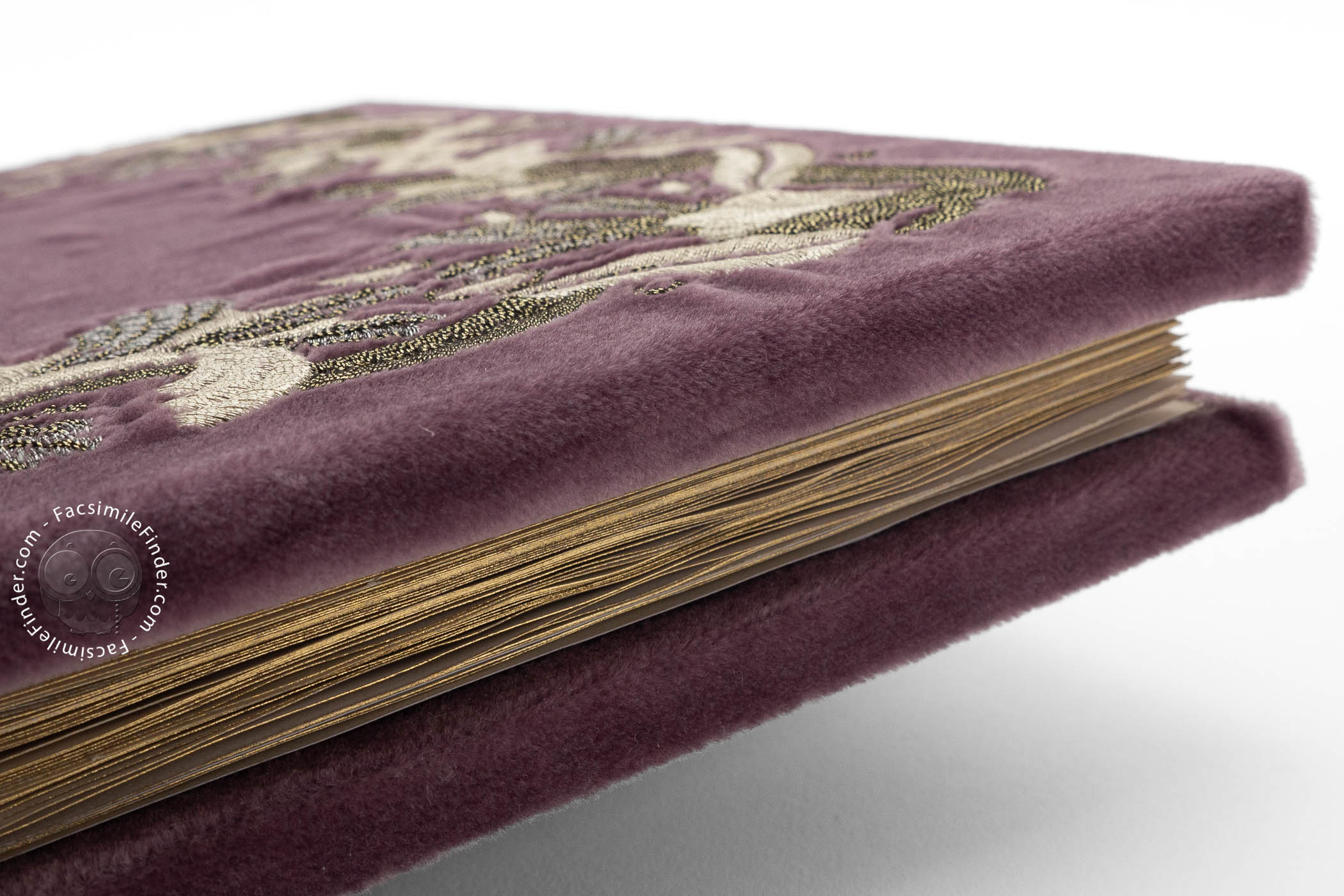
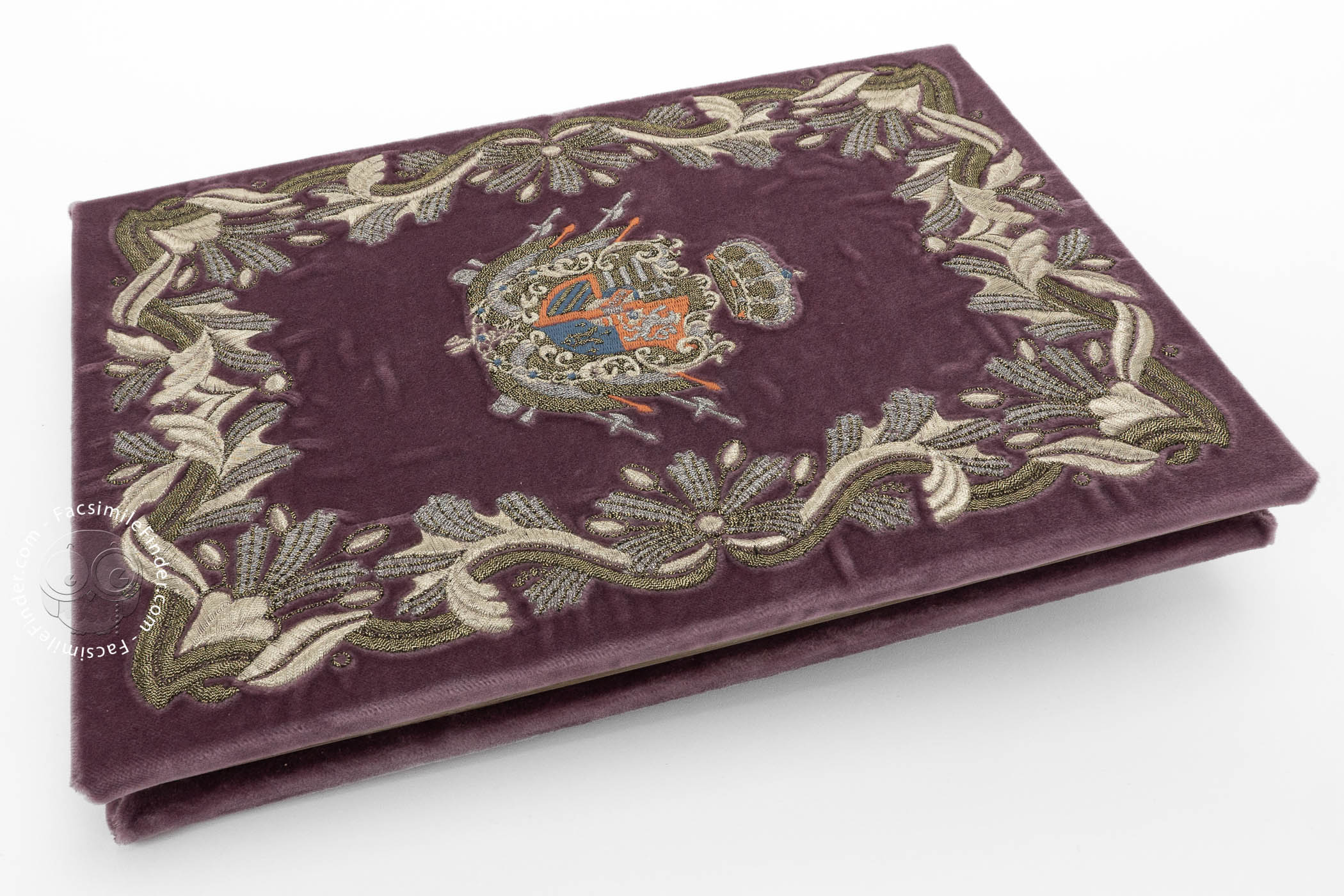
The manuscript remained at Sankt Stephan until its secularization in 1802. Fernando III (1769-1824), Grand-Duke of Tuscany, purchased the manuscript in 1823 for the Bibliotheca Medicea Laurenziana. It is preserved in an embroidered binding featuring the coat of arms of the Grand Duke of Tuscany.
We have 1 facsimile edition of the manuscript "Gospel Lectionary of Würzburg": Evangelistarium del Granduca di Toscana Ferdinando III Asburgo-Lorena facsimile edition, published by Imago, 2021
Request Info / Price