
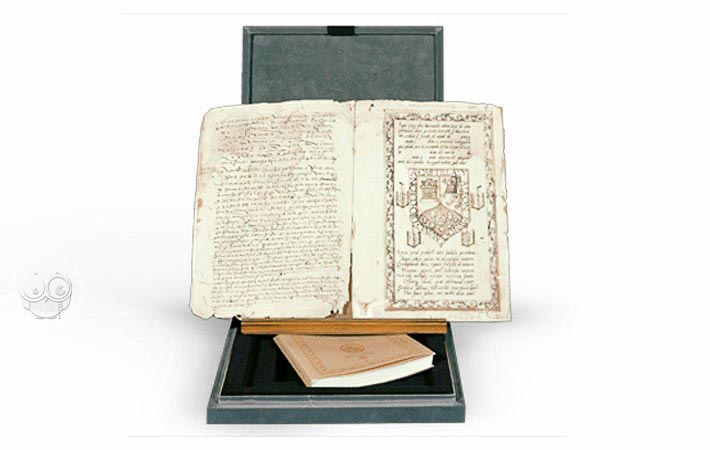
Ferdinand Columbus Will is a notarial manuscript document whose importance lies in the cultural ambition it records. Preserved today in the Archivo Histórico Provincial de Sevilla as Legajo 4o de 1539, it is the written instrument through which Ferdinand Columbus—known in Spain as Hernando Colón—ordered the future of his estate, his burial, and, above all, his library at the end of his life in 1539.
A Humanist Legacy in Legal Form
What makes this will remarkable is the way a legal document becomes a reflection of Renaissance intellectual culture. The text does more than distribute property. It sets out provisions for the preservation of an exceptional library and reveals Ferdinand Columbus as a figure shaped by humanist learning, bibliophilic ambition, and a deep concern for the endurance of knowledge. In this sense, the will transforms personal inheritance into a broader cultural project, linking memory, books, and legacy in a single written act.
Writing, Order, and Permanence
The significance of the manuscript is less visual than archival. Its authority resides in organization, formula, and documentary precision: the very instruments through which a private collection could be imagined as something lasting and institutional. The will bears witness to a mind committed not only to collecting books but to arranging their future with care and foresight.
A Document of Cultural Memory
This manuscript stands at the intersection of law, memory, and the history of the book. Through its measured legal language, it preserves the final intentions of one of the great collectors of the early modern world. It is therefore both a personal testament and a foundational document in the history of the Biblioteca Colombina, embodying the moment when a private passion for books was shaped into a lasting cultural inheritance.
We have 1 facsimile edition of the manuscript "Ferdinand Columbus Will": Testamento de Hernando Colón facsimile edition, published by Testimonio Compañía Editorial, 1993
Request Info / Price