
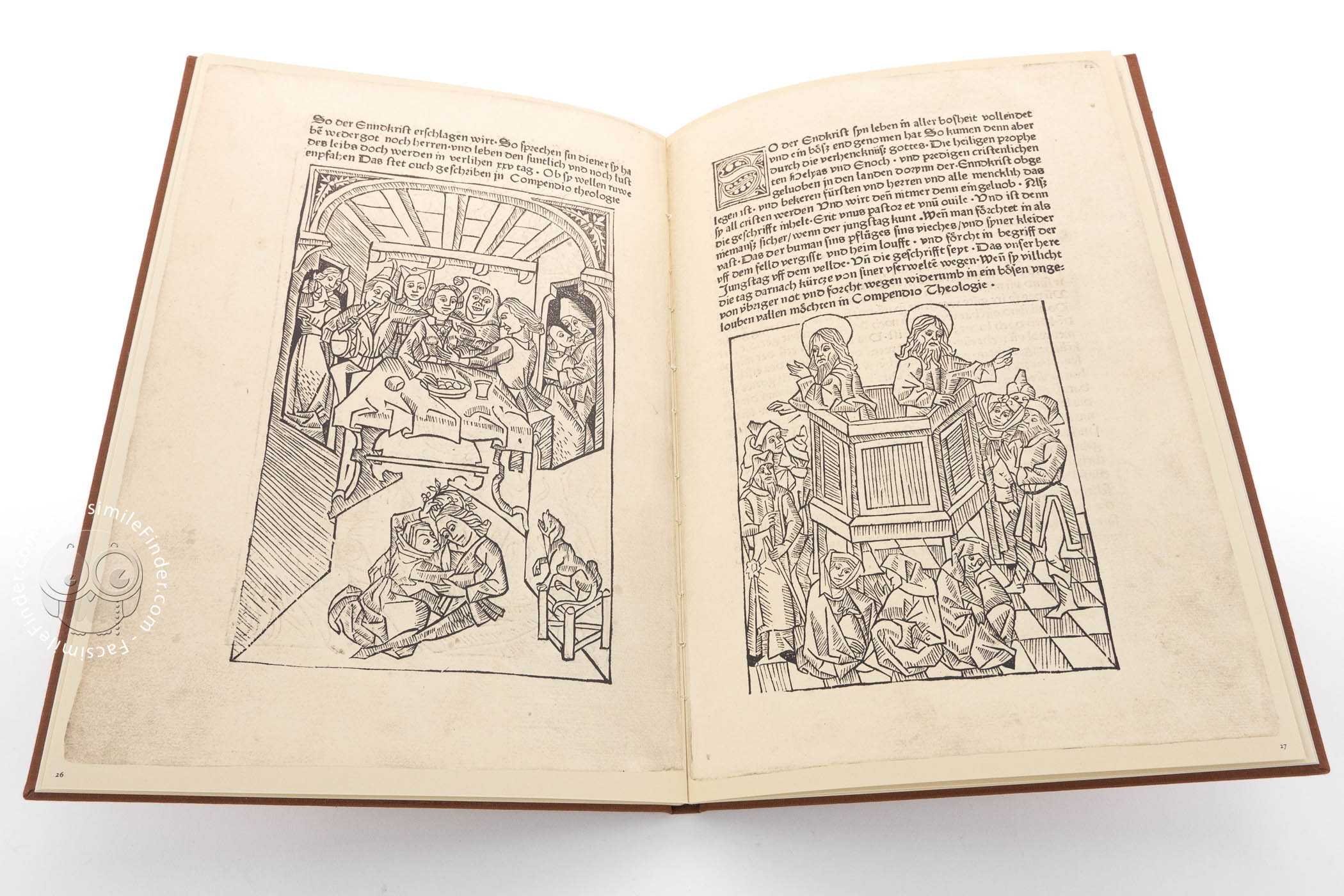

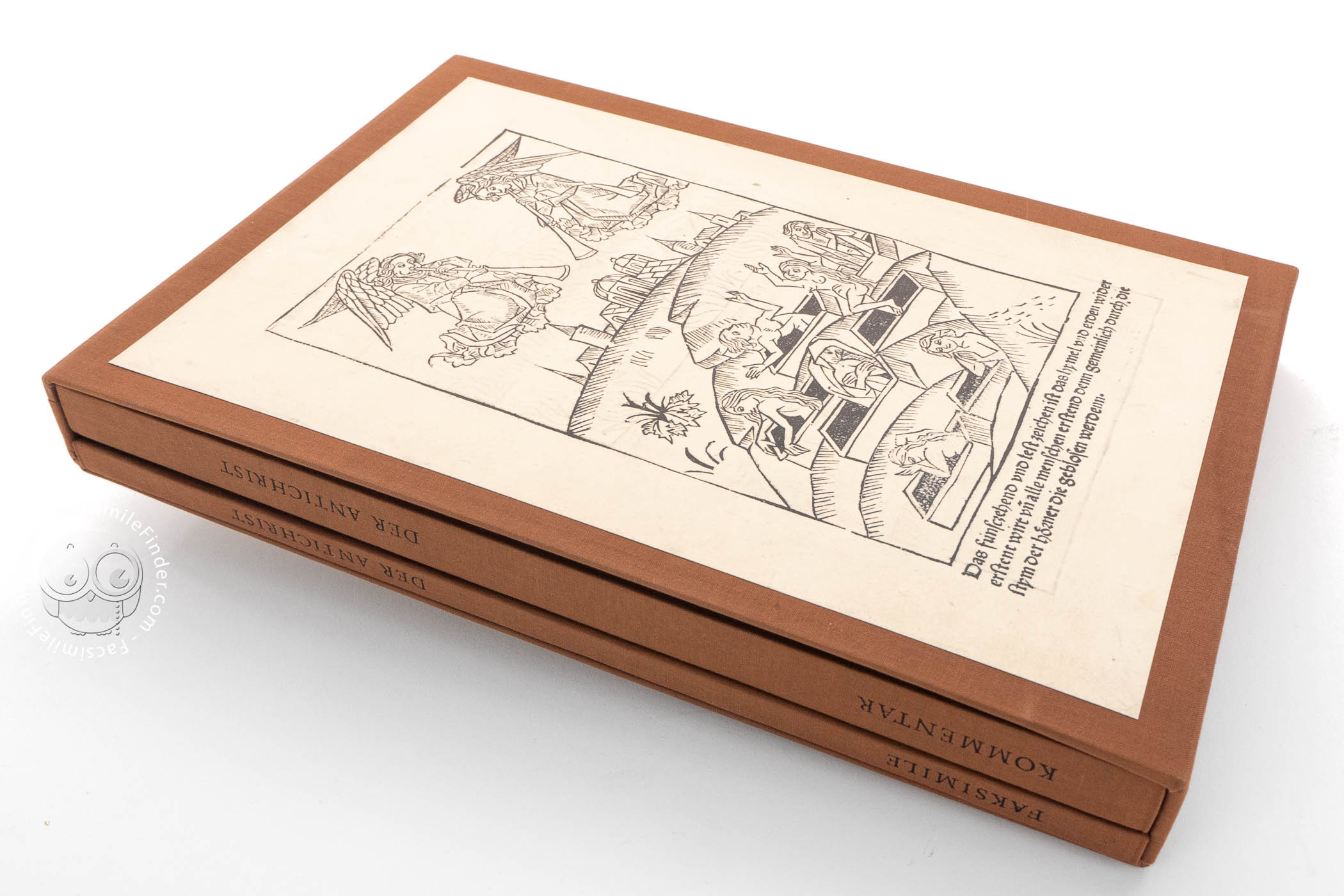
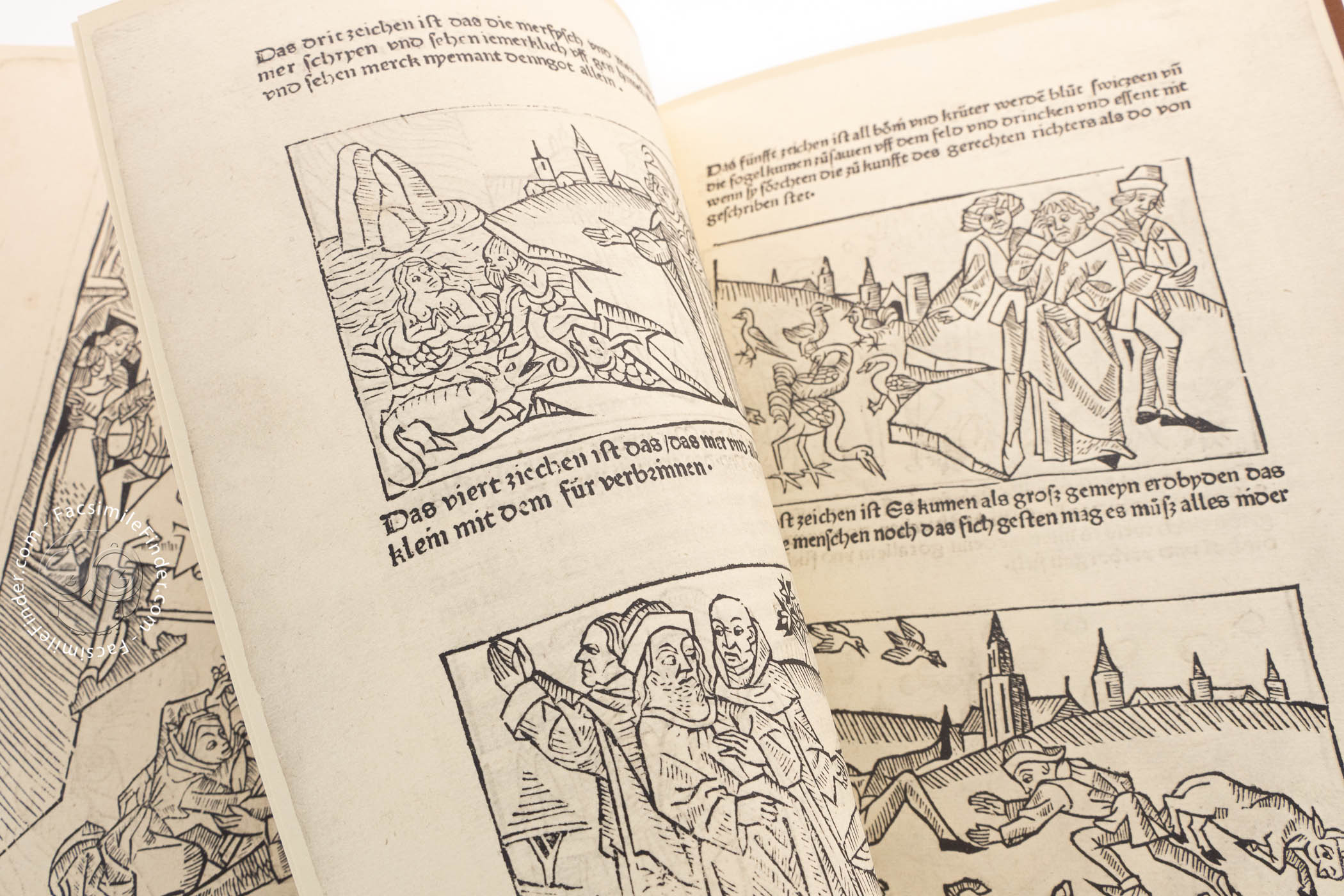
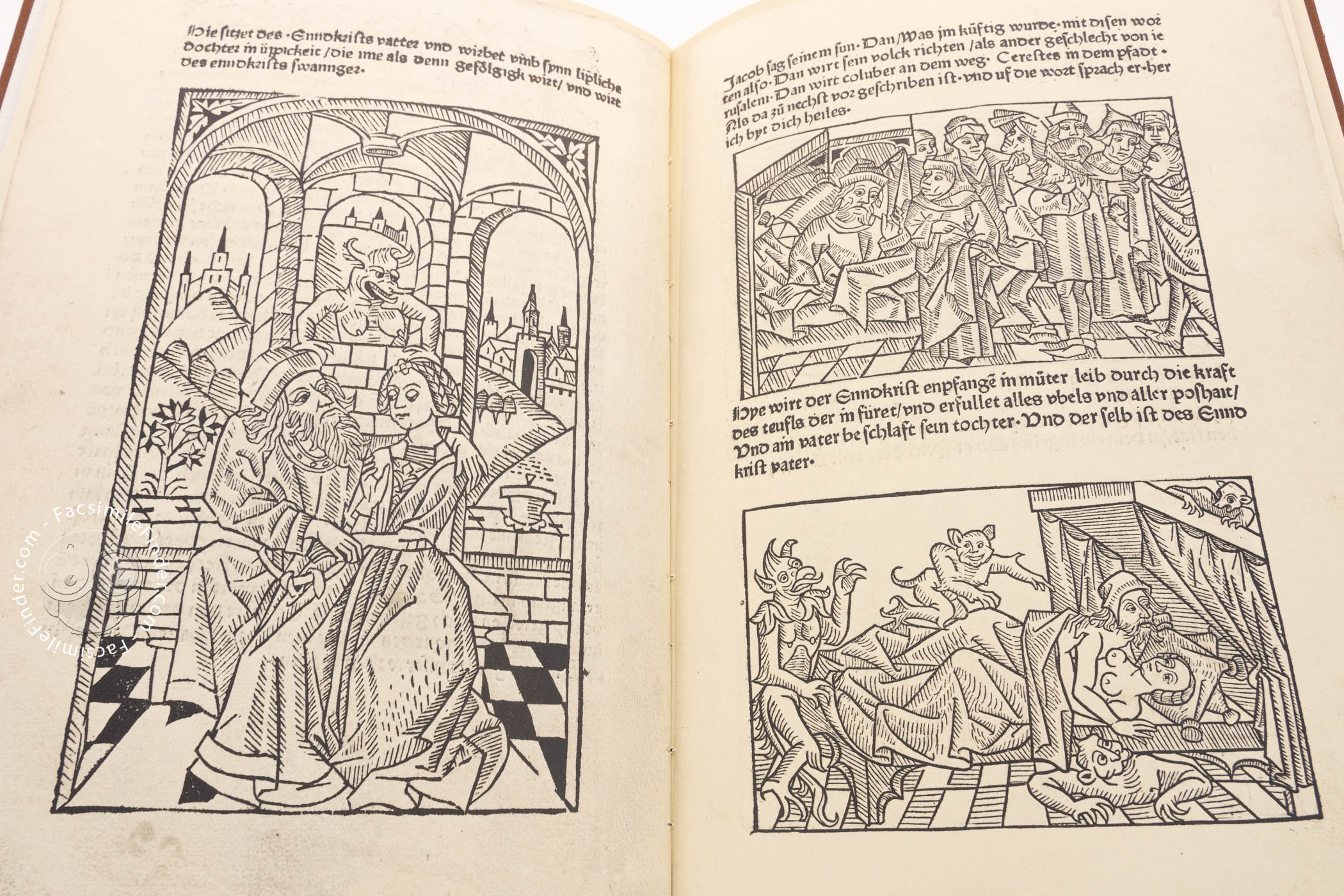
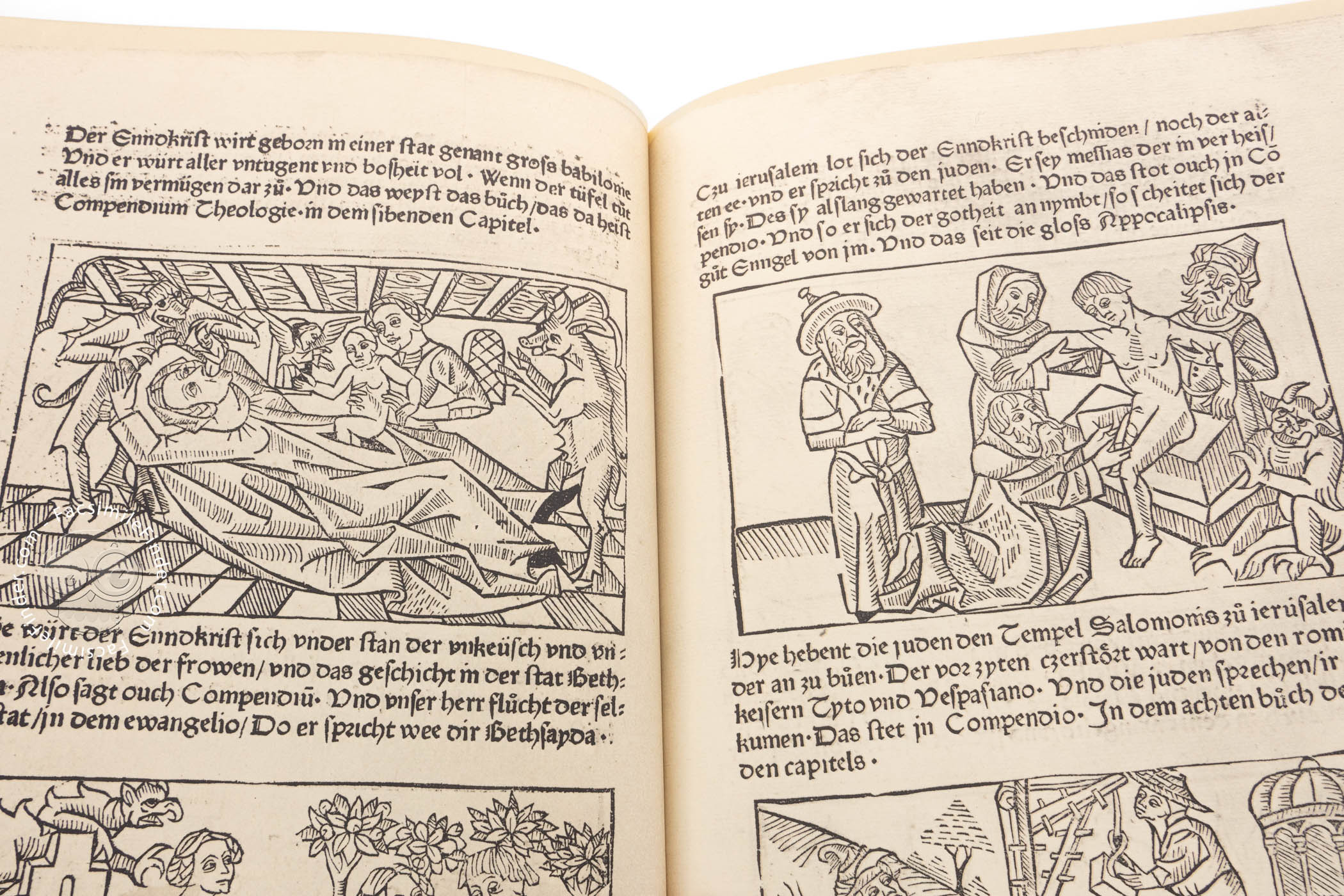
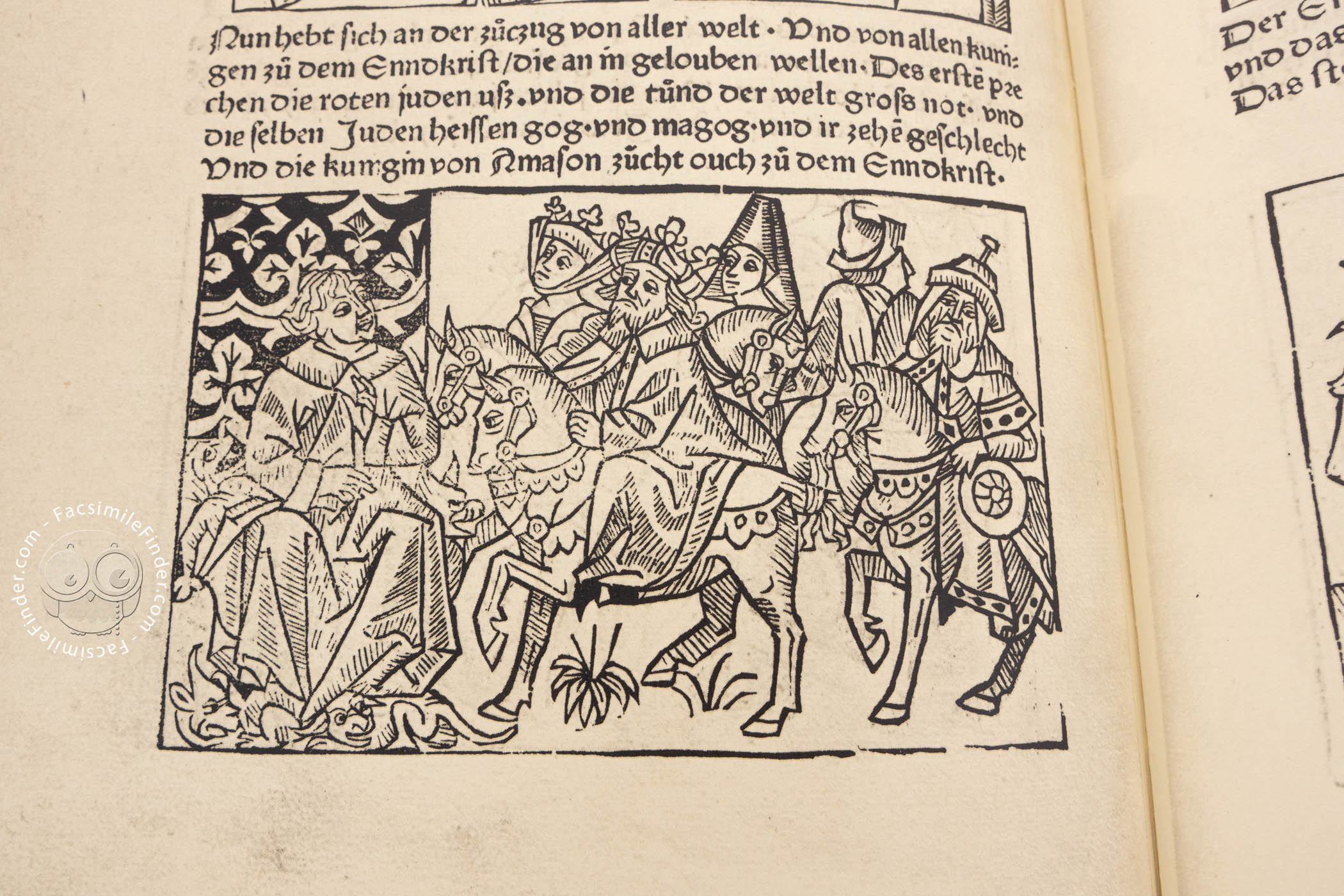
Enndkrist is a compact German incunable that turns late-medieval end-time imagination into something immediate, legible, and vividly seen. Printed in Germany around 1480, it gathers two widely circulated narratives: the career of the Antichrist and the Fifteen Signs that herald the Last Judgement. Its survival in Frankfurt preserves a striking witness to how early print carried apocalyptic teaching into broader urban readerships.
Eschatological Context
The book belongs to a world in which sermons, devotional compendia, and vernacular reading fed a heightened culture of Endzeiterwartung.
The Antichrist legend is framed as a counter-history to Christ—false preaching, false wonders, coercion—while the Fifteen Signs unfold as a cosmic sequence meant to provoke fear, penitence, and moral readiness.
Woodcut Narrative
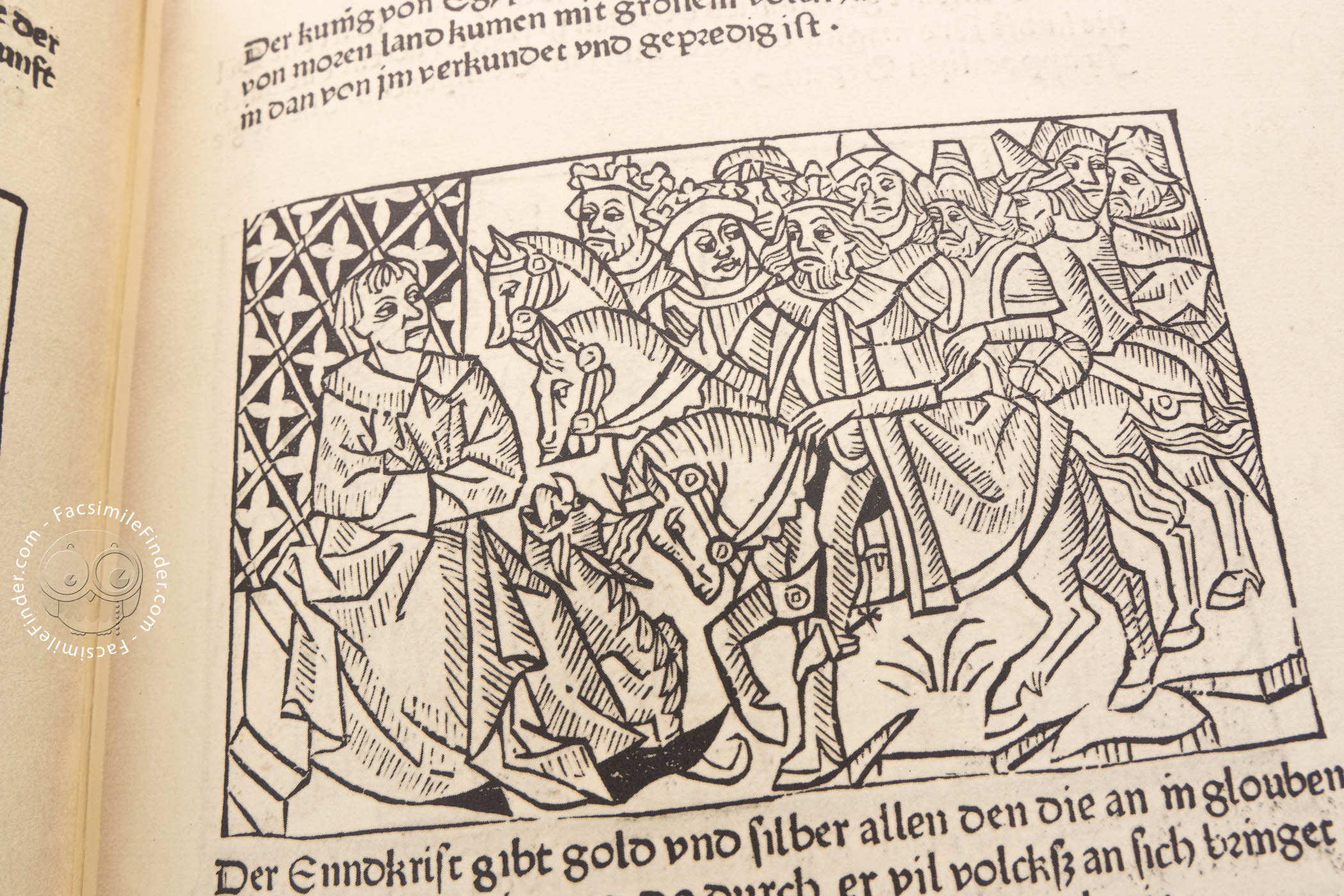
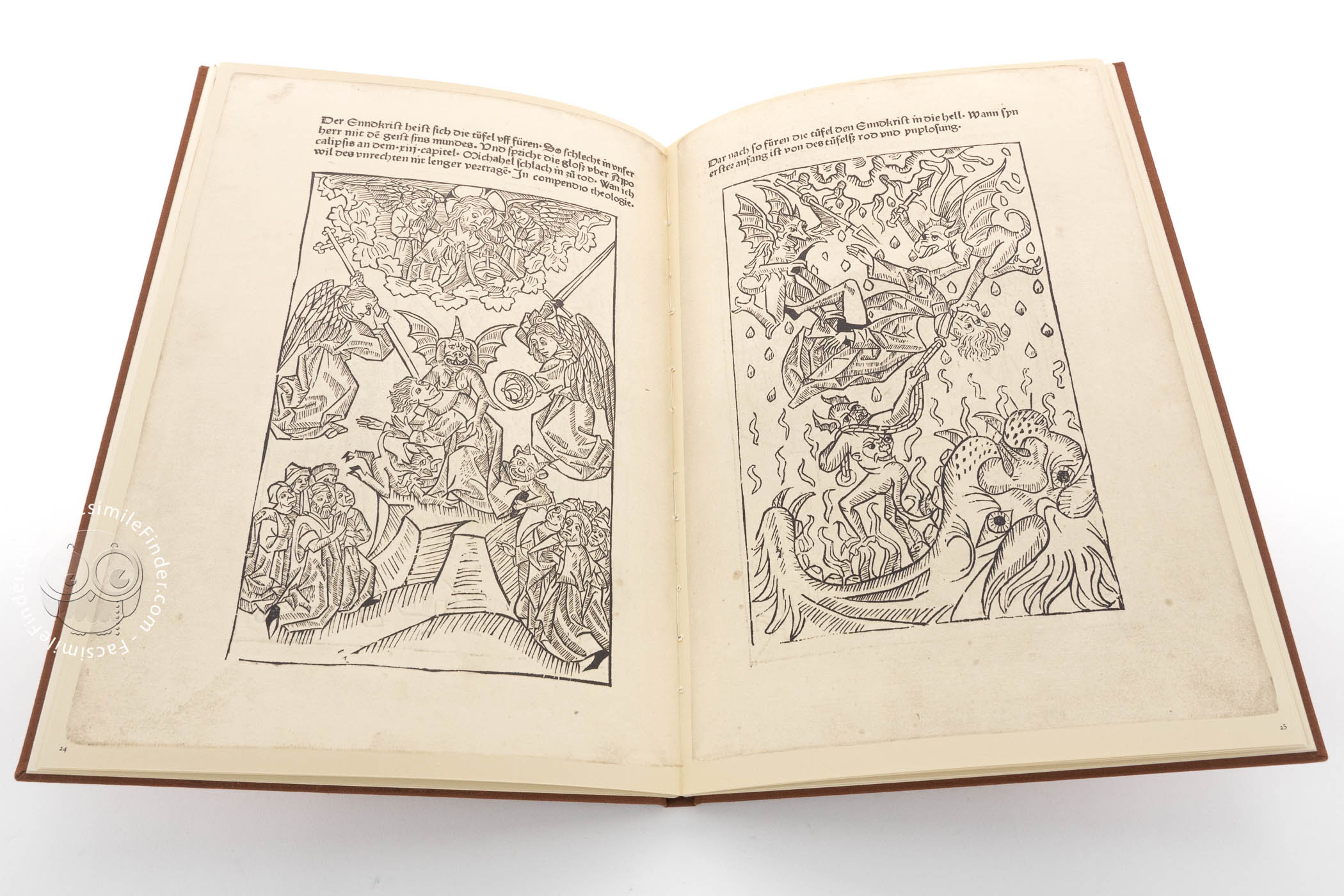
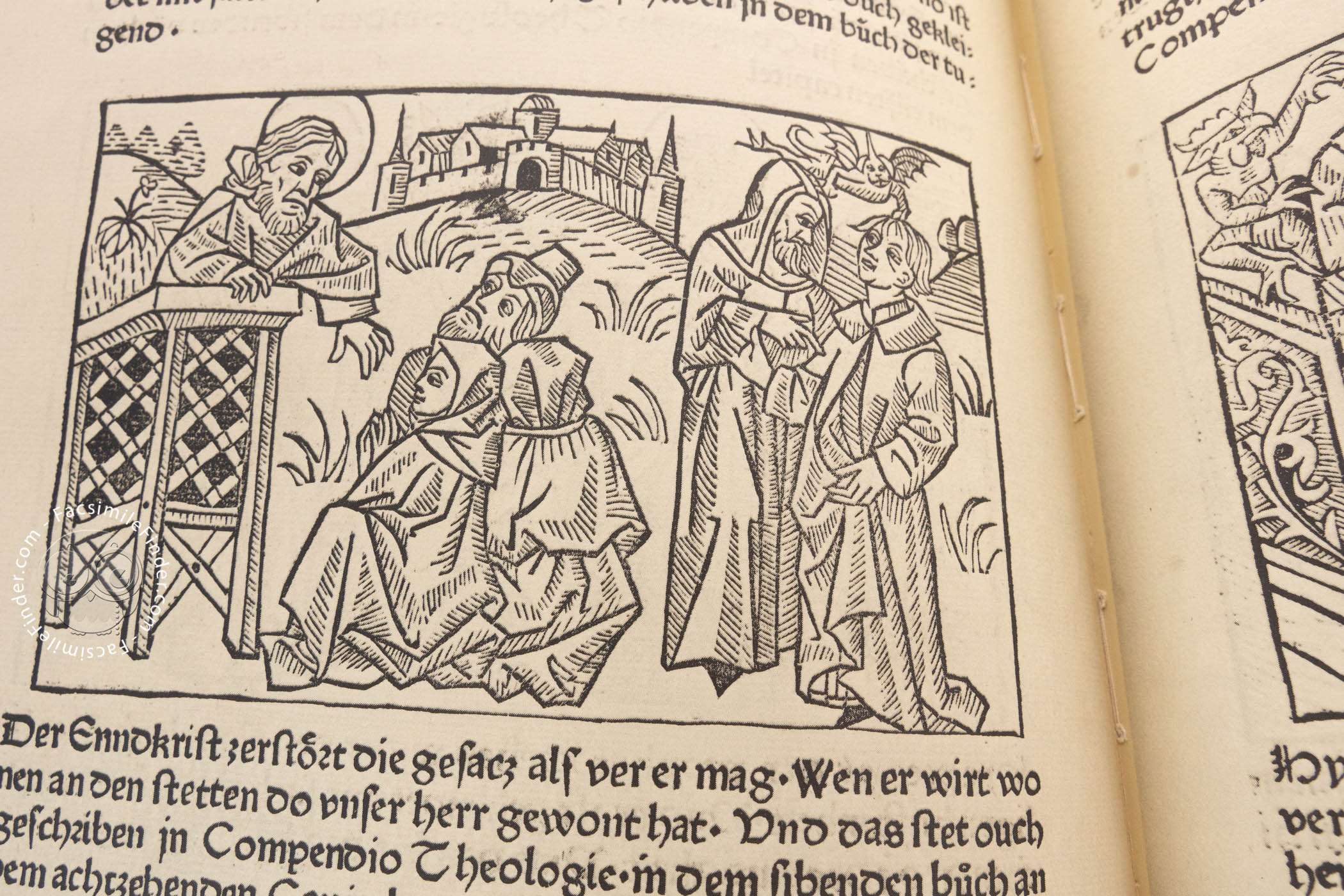
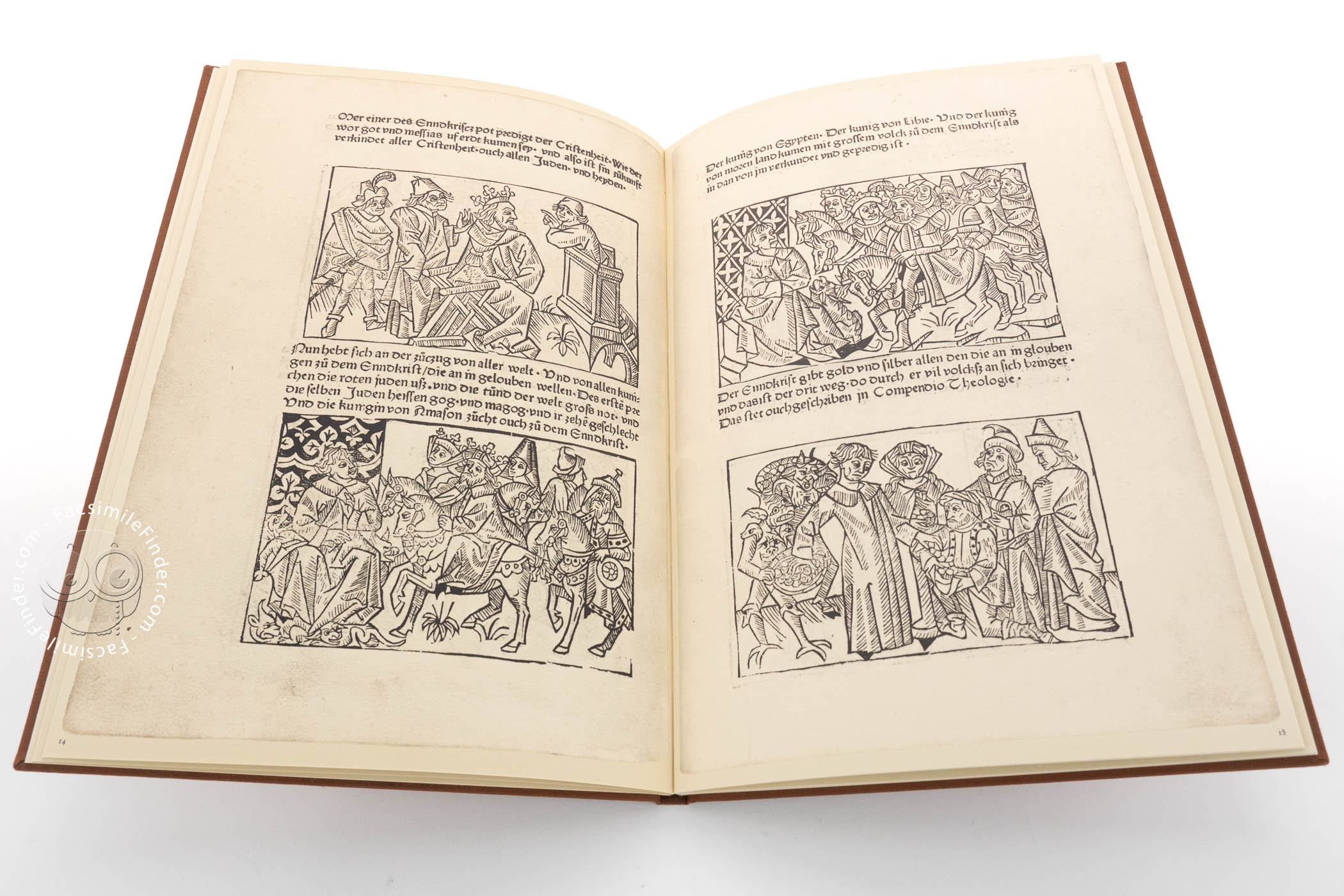
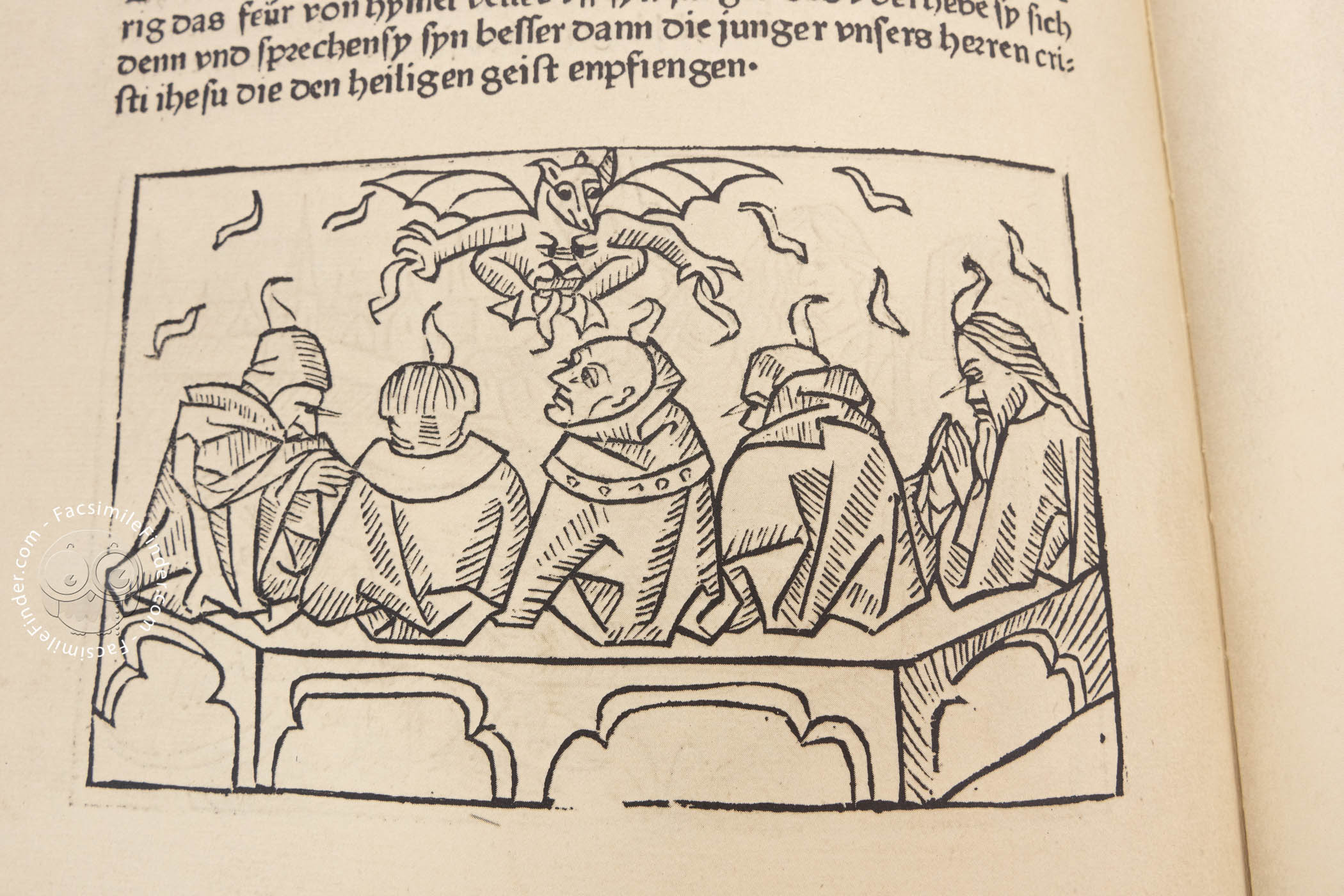
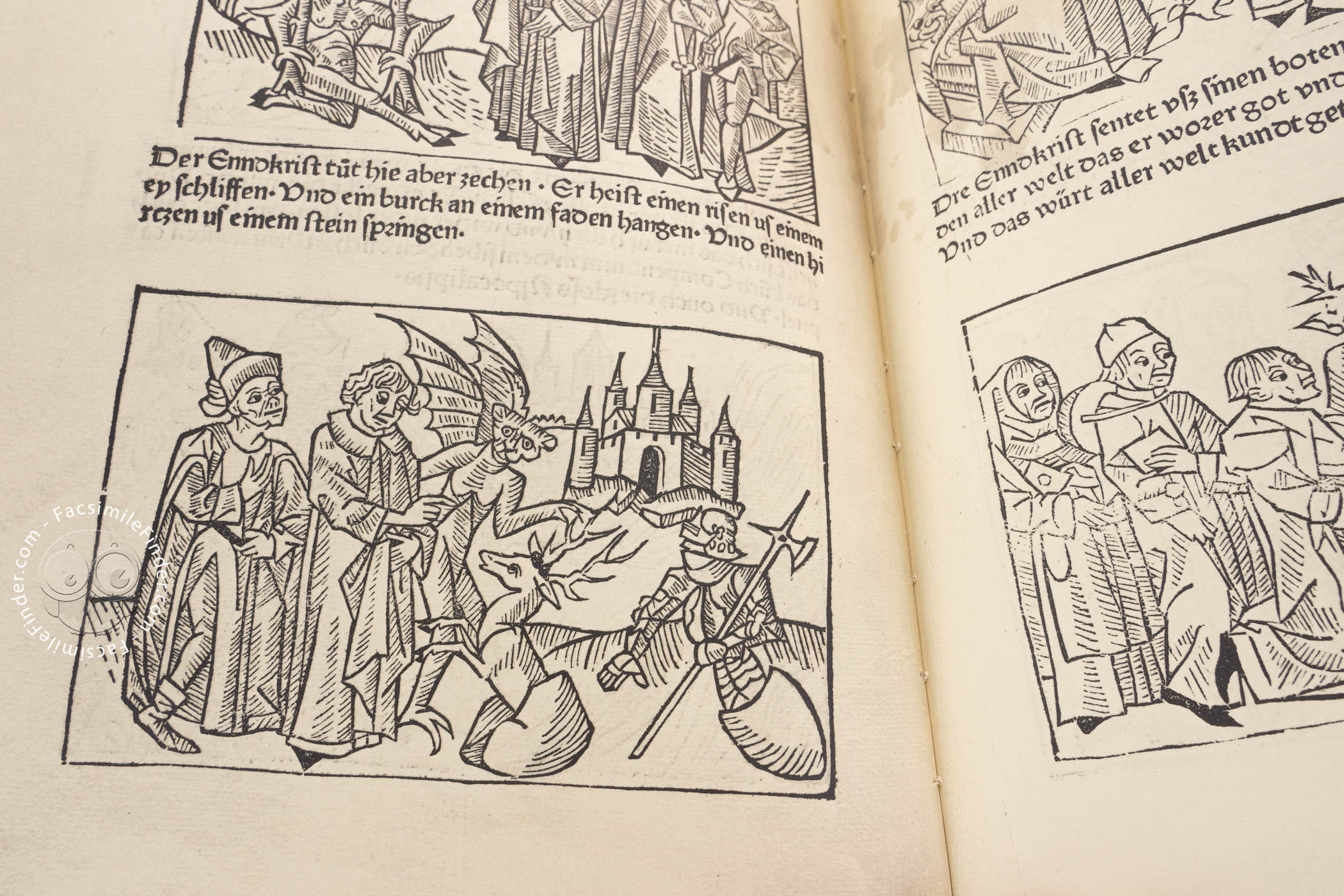
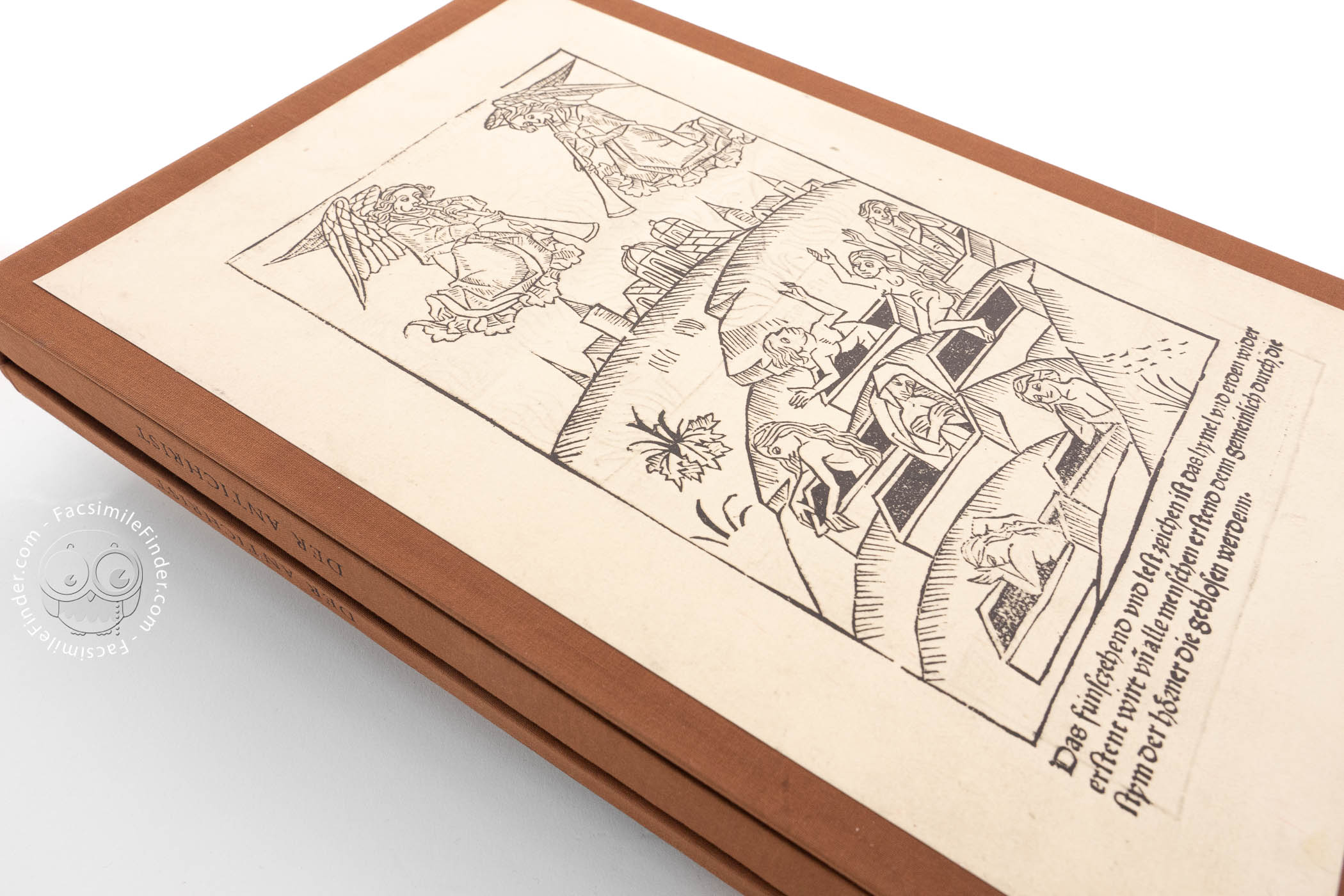
Its most arresting feature is the cycle of 62 woodcuts (xilography), designed to disclose the secrets of the last days with emphatic, sometimes abrasive clarity.
These images do not merely decorate: they structure the reading, compressing complex theology into memorable scenes of persuasion, violence, catastrophe, and judgement.
Sammelband and Provenance
The Frankfurt copy has a biography of its own, preserved not only in paper and ink but in the way it was kept and handled. It survives as part of a Sammelband, bound together with other late 15th century prints, and covered in a late-medieval brown leather binding ornamented with fillet lines and stamped tools.
Early ownership notes record the book in the hands of Frater Conradus Ranstat in the early 16th century, and later—perhaps in the Baroque period—with Johannes Schuler of Mühlhausen, traces of a long devotional afterlife beyond its first audience.
Text–Image Architecture
What makes Enndkrist distinctive is its almost cinematic alternation of instruction and vision. The work fuses two traditions—Antichrist and the Fifteen Signs before the Last Day—that originally had no relation, yet were joined because both press inexorably toward the world’s end.
Each section opens with a longer introductory text, but the core experience is predominantly images with brief explanatory captions, and the Fifteen Signs culminate in an extended explanation and an unusually personal prayer.
Even the title Enndkrist is chosen for its deliberate double sense: a translation of “Anti-” and an allusion to the “end” (Ennd) of the world itself.
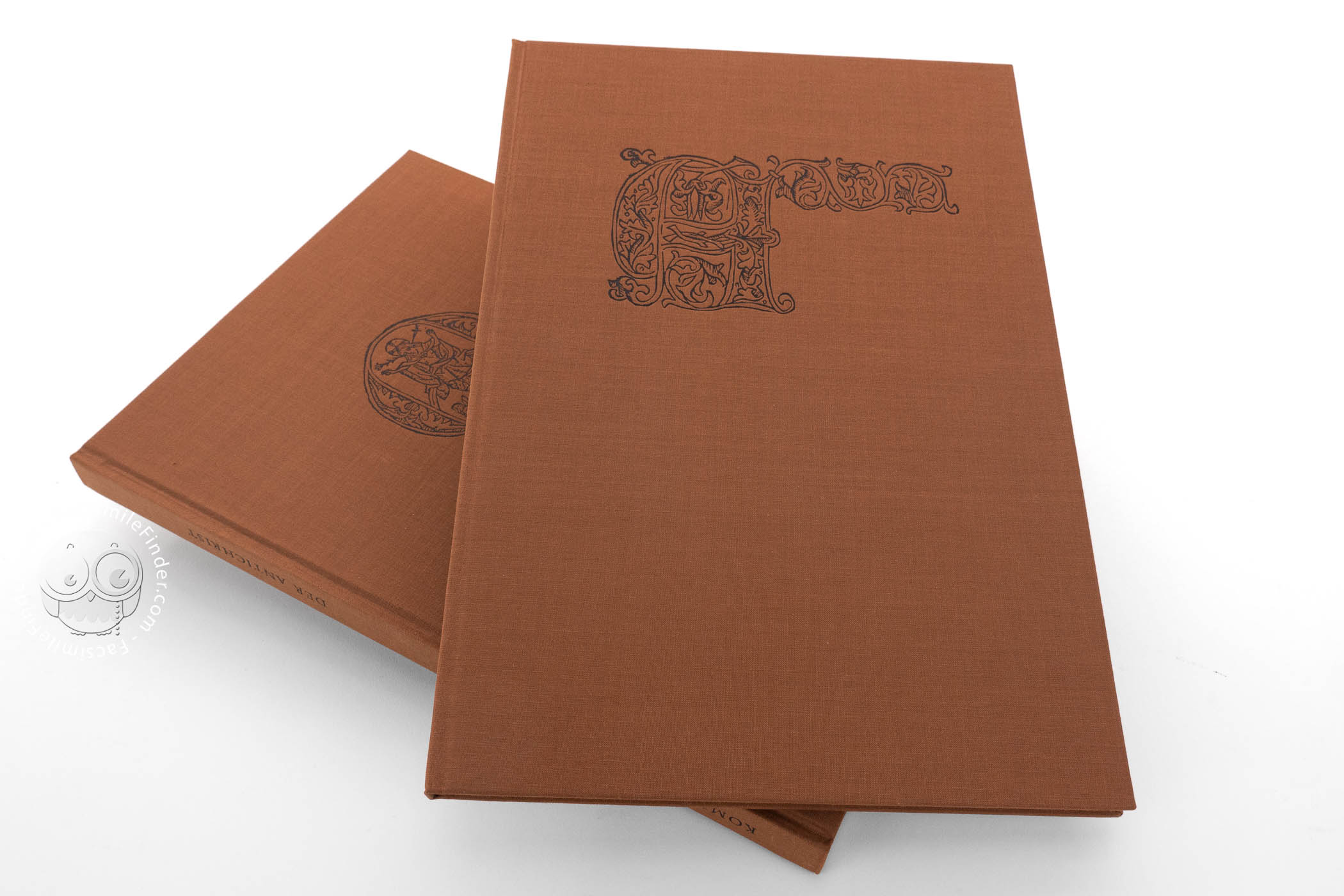
We have 1 facsimile edition of the manuscript "Enndkrist": Der Antichrist facsimile edition, published by Friedrich Wittig Verlag, 1979
Request Info / Price