
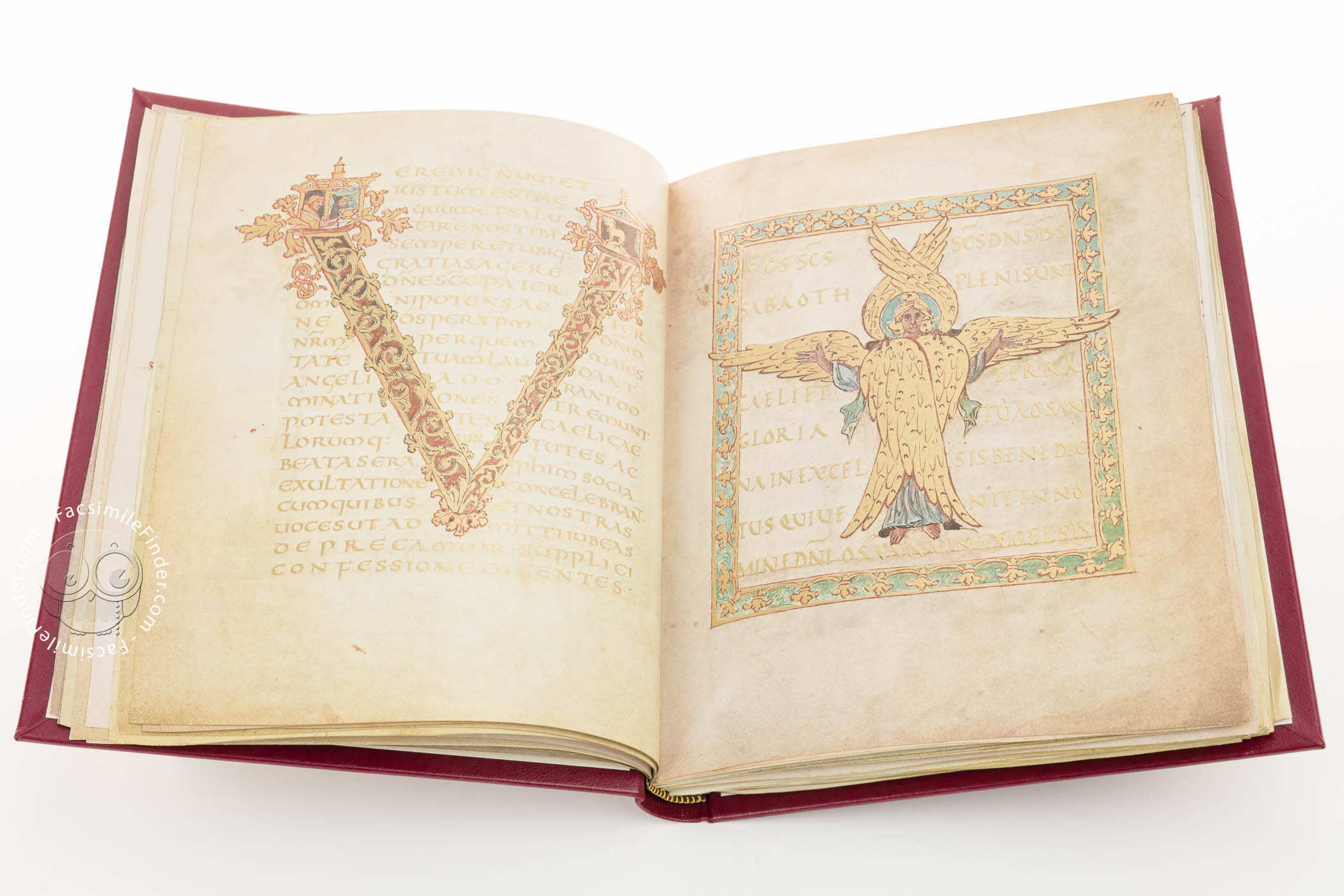
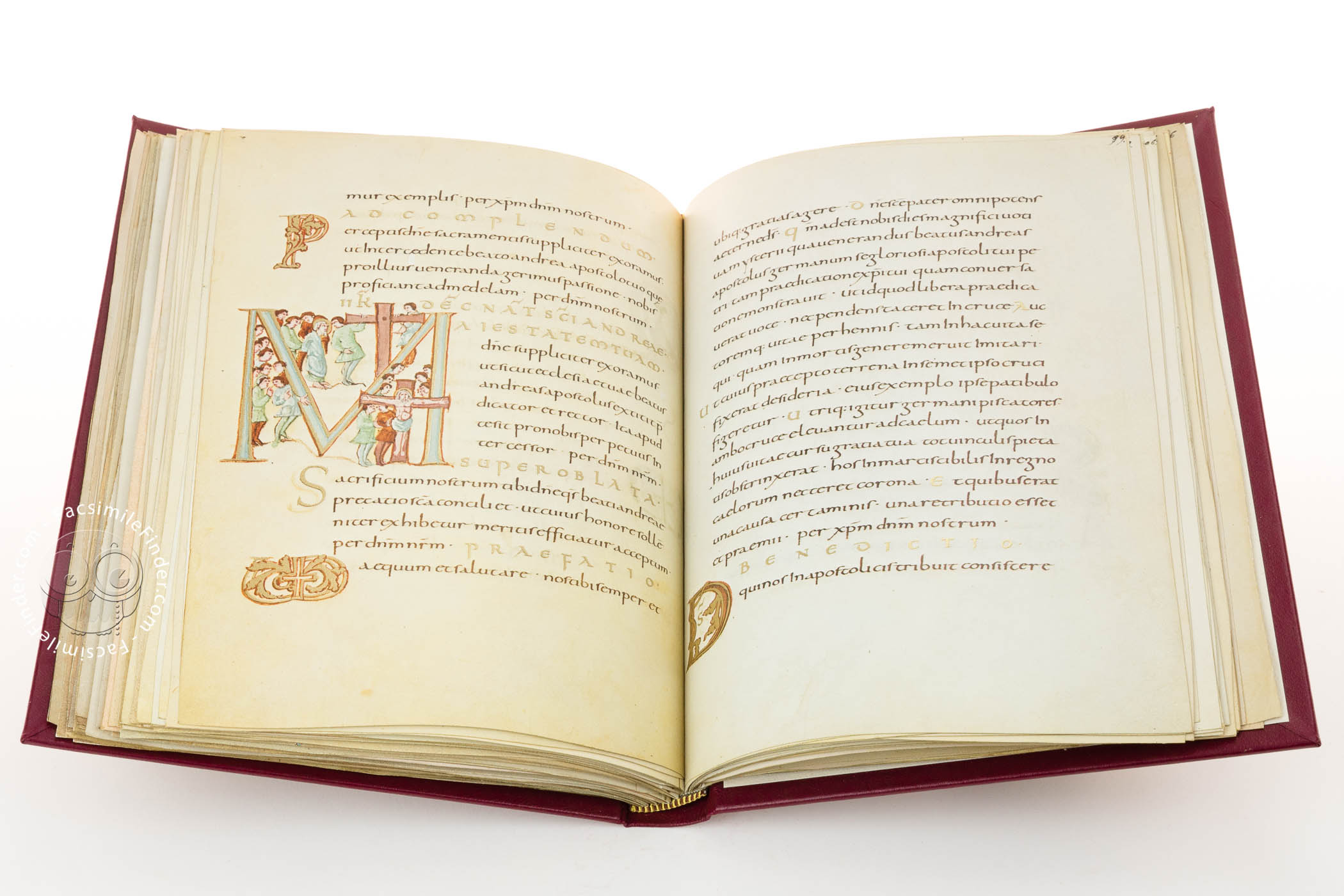
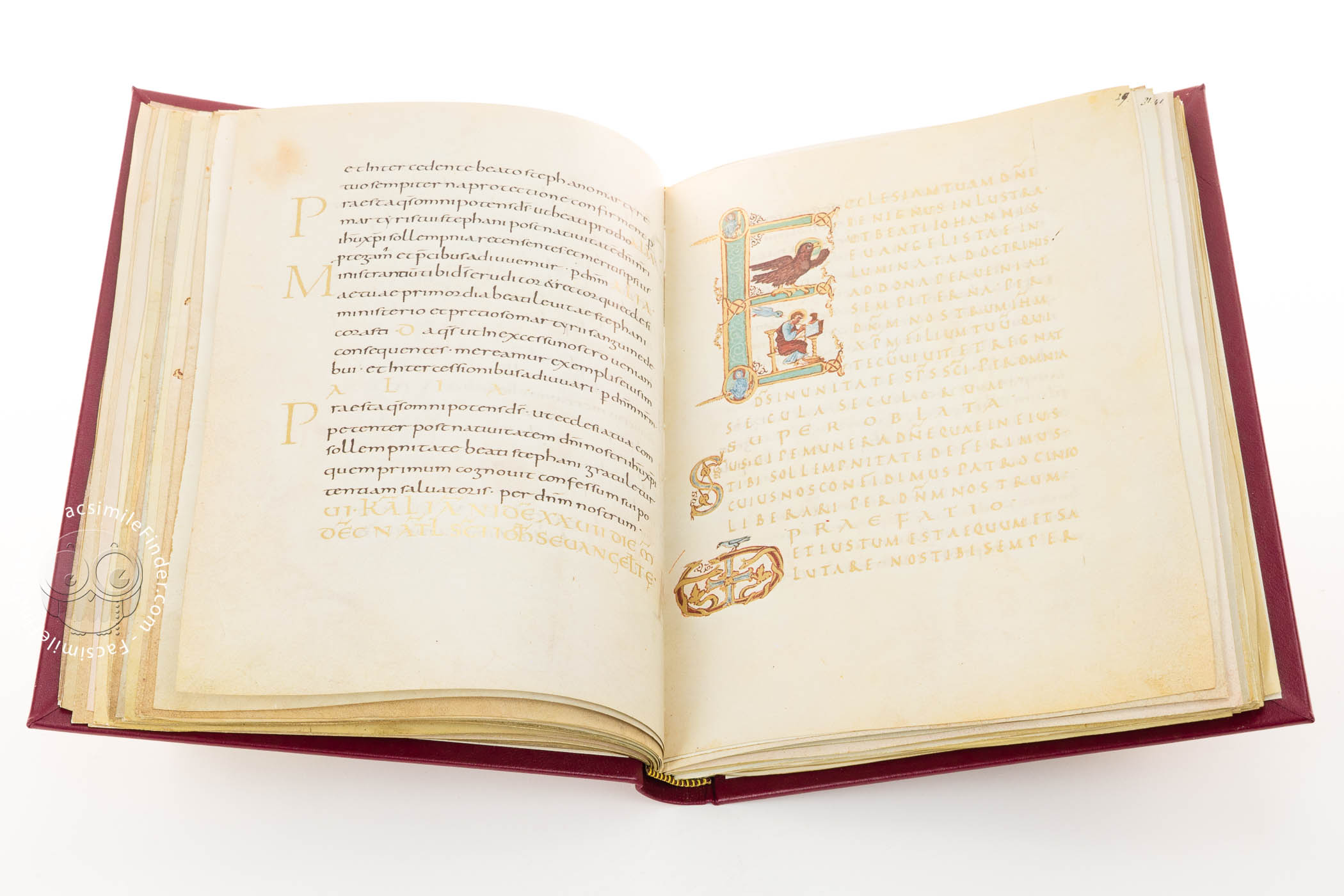

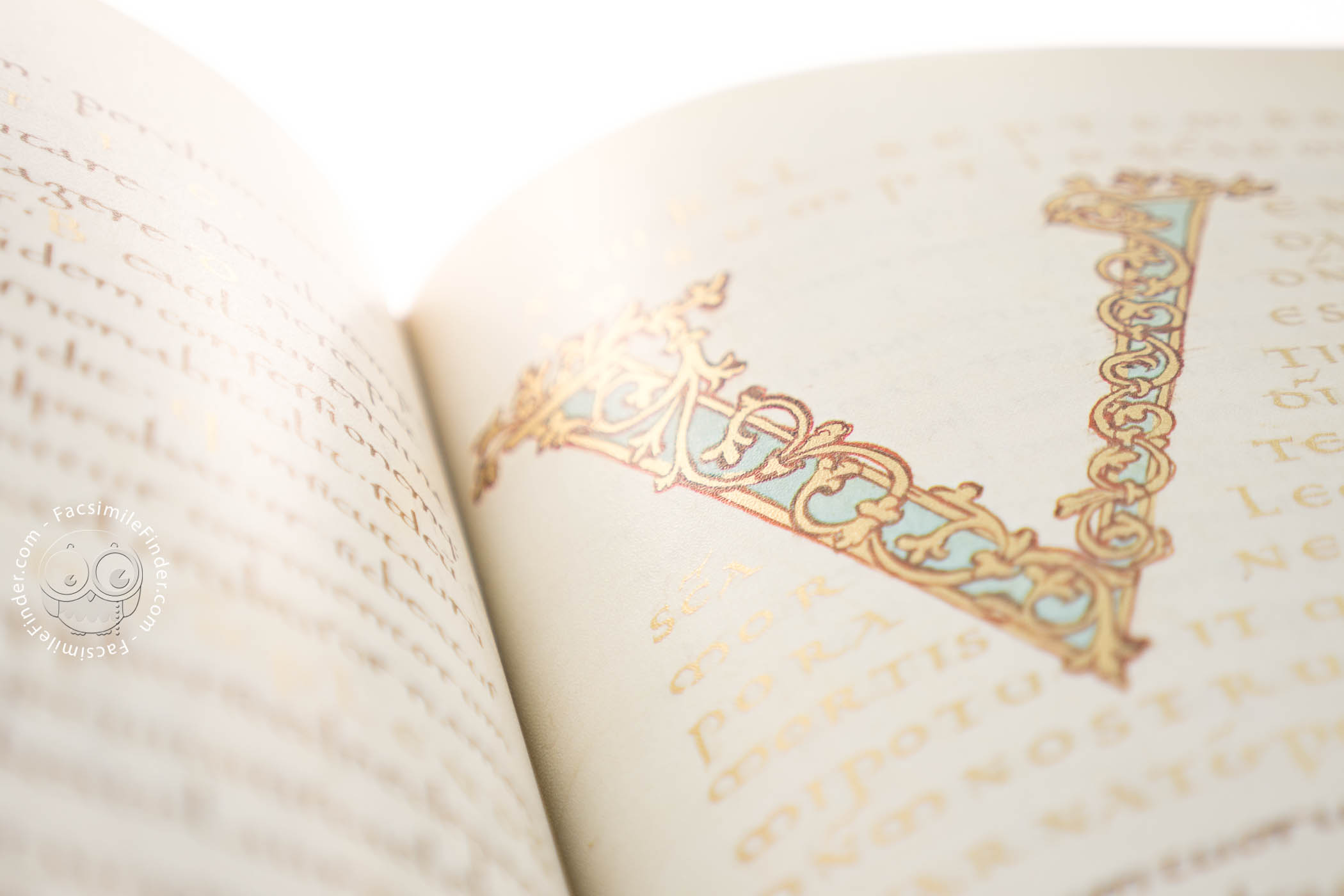

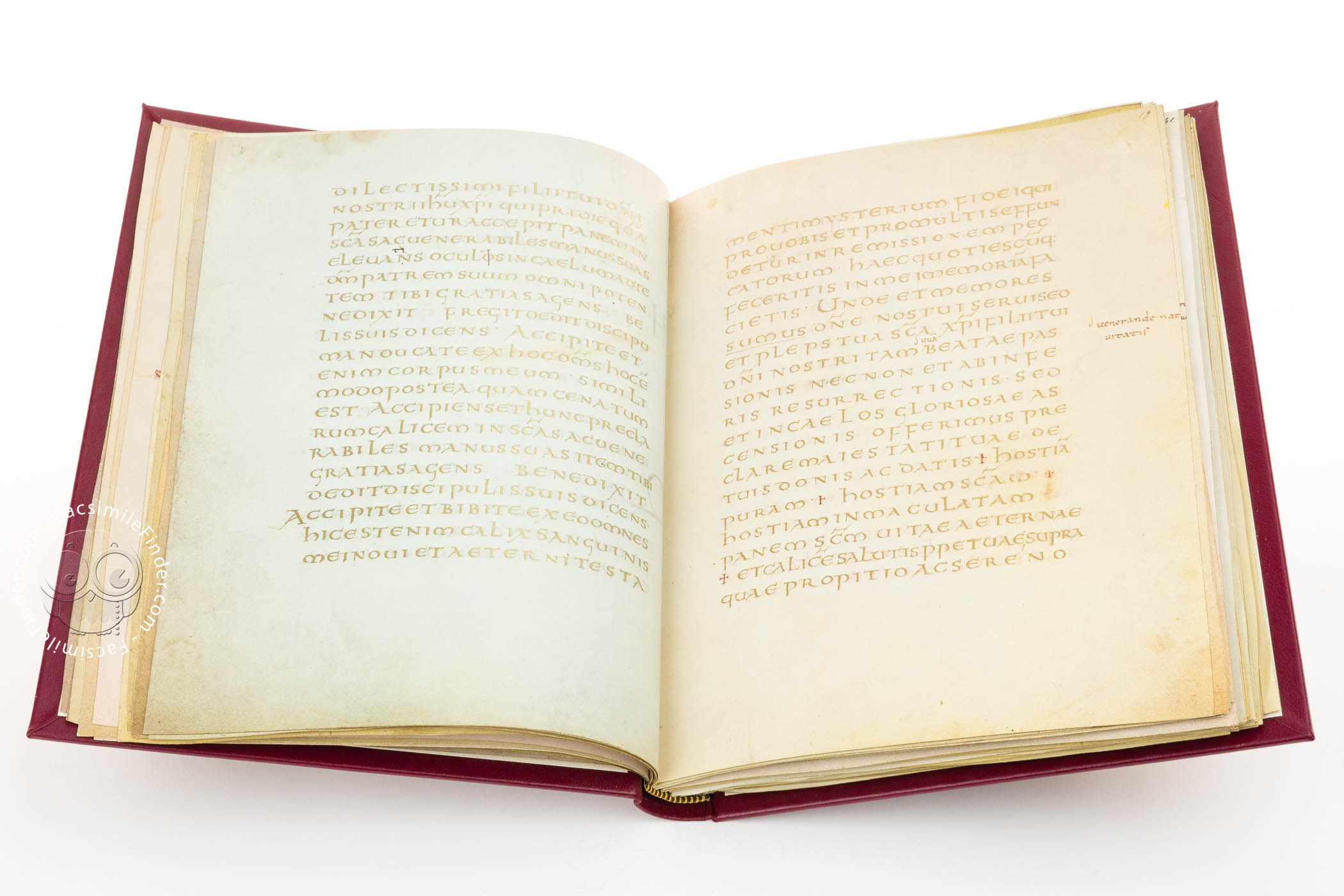
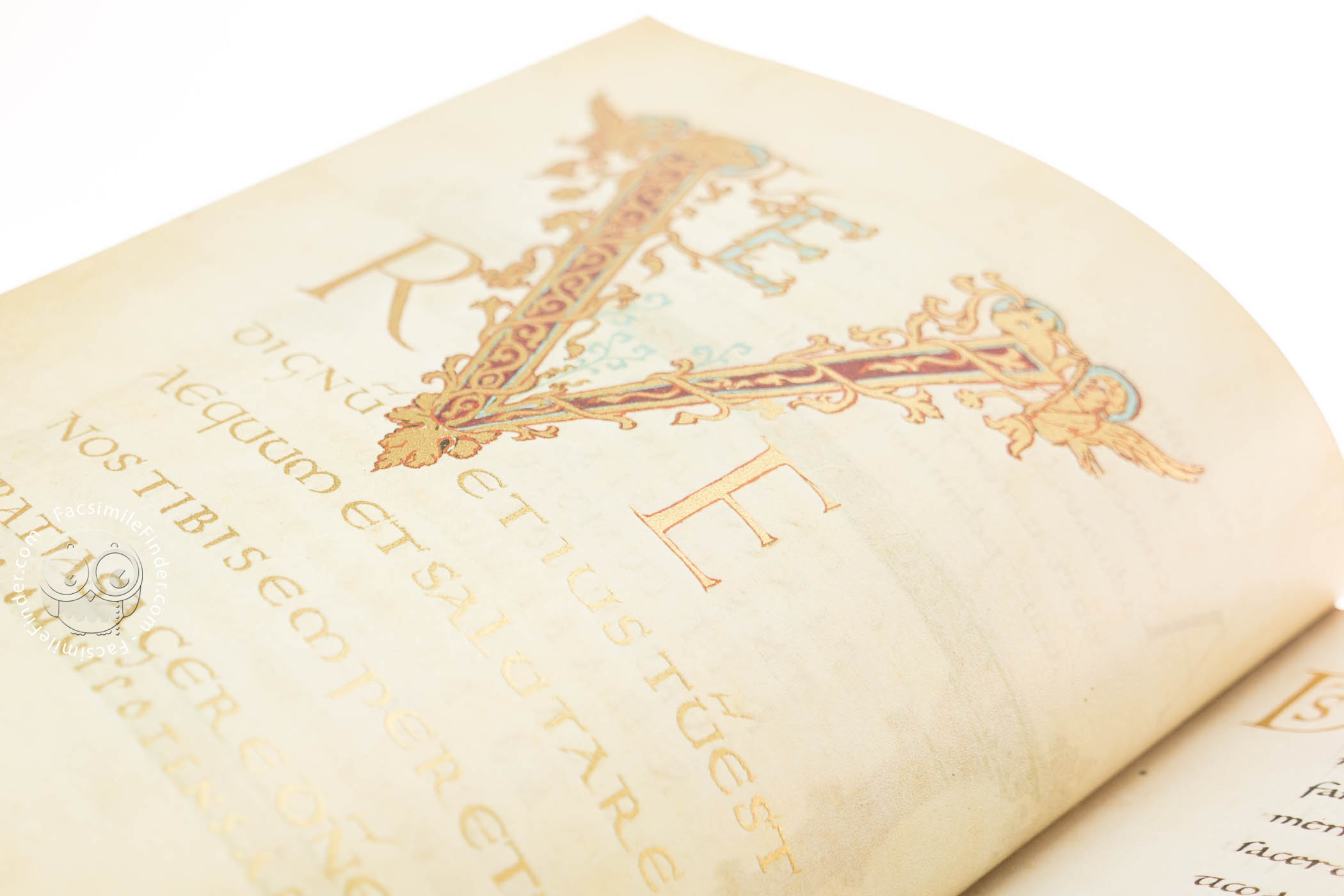
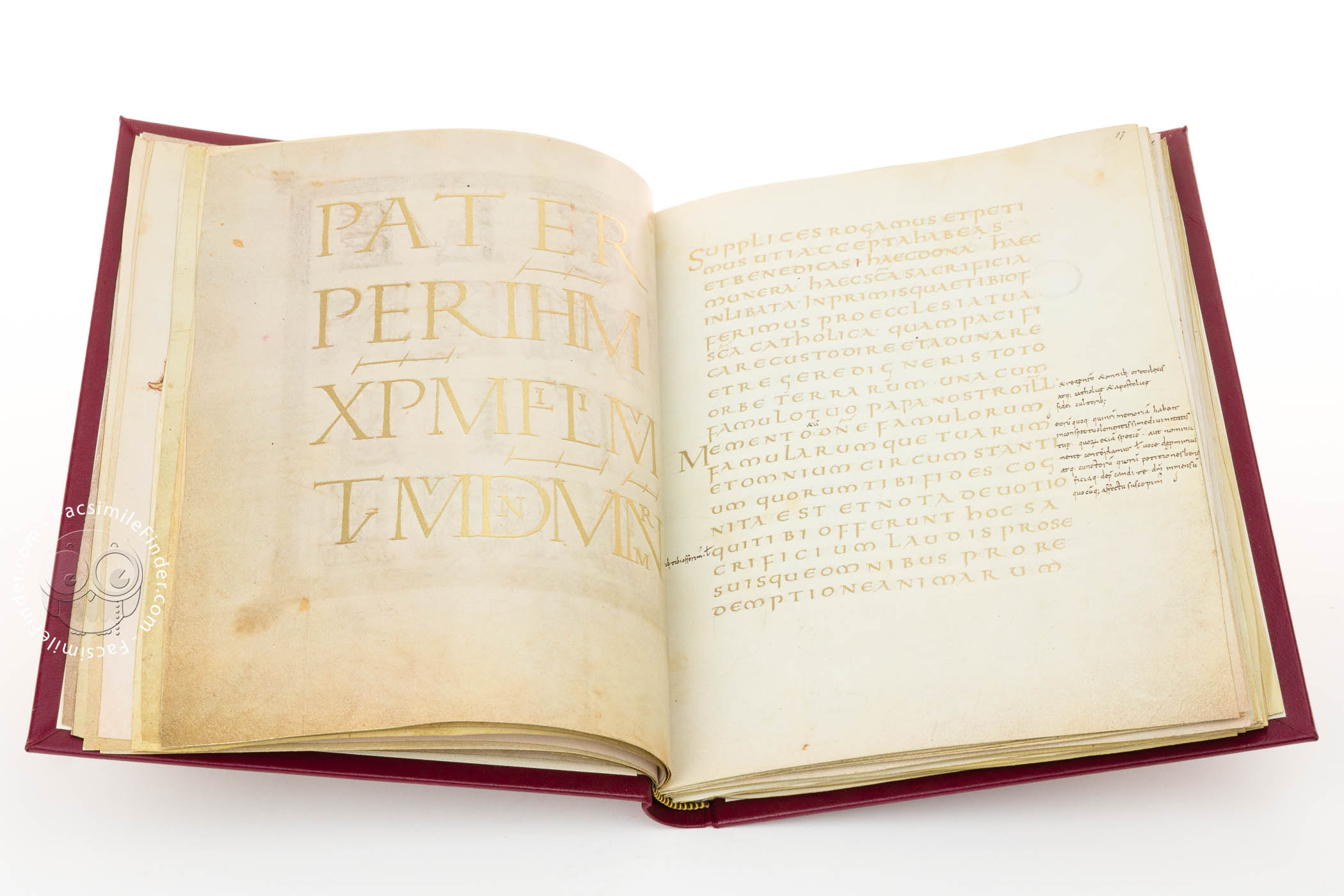
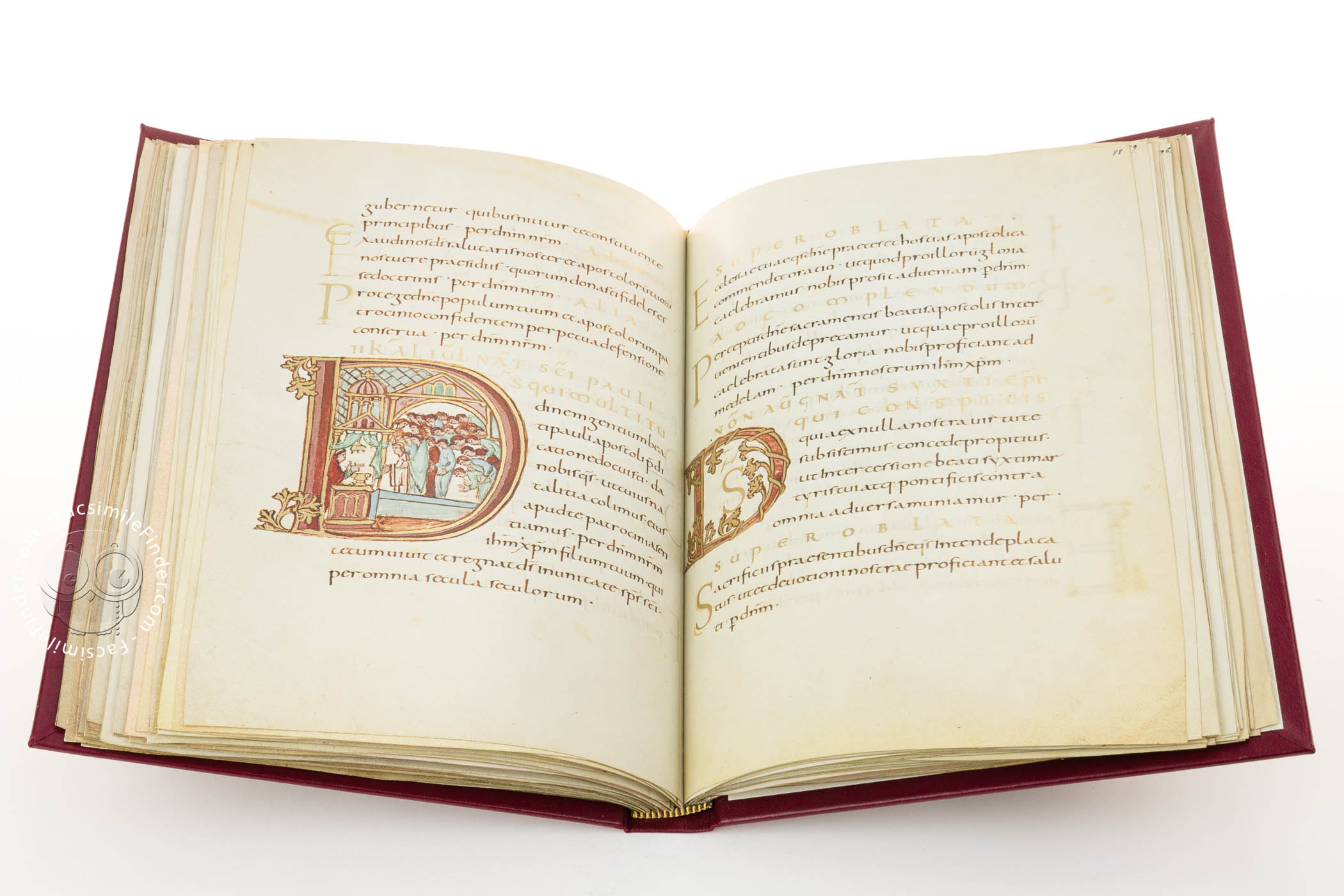
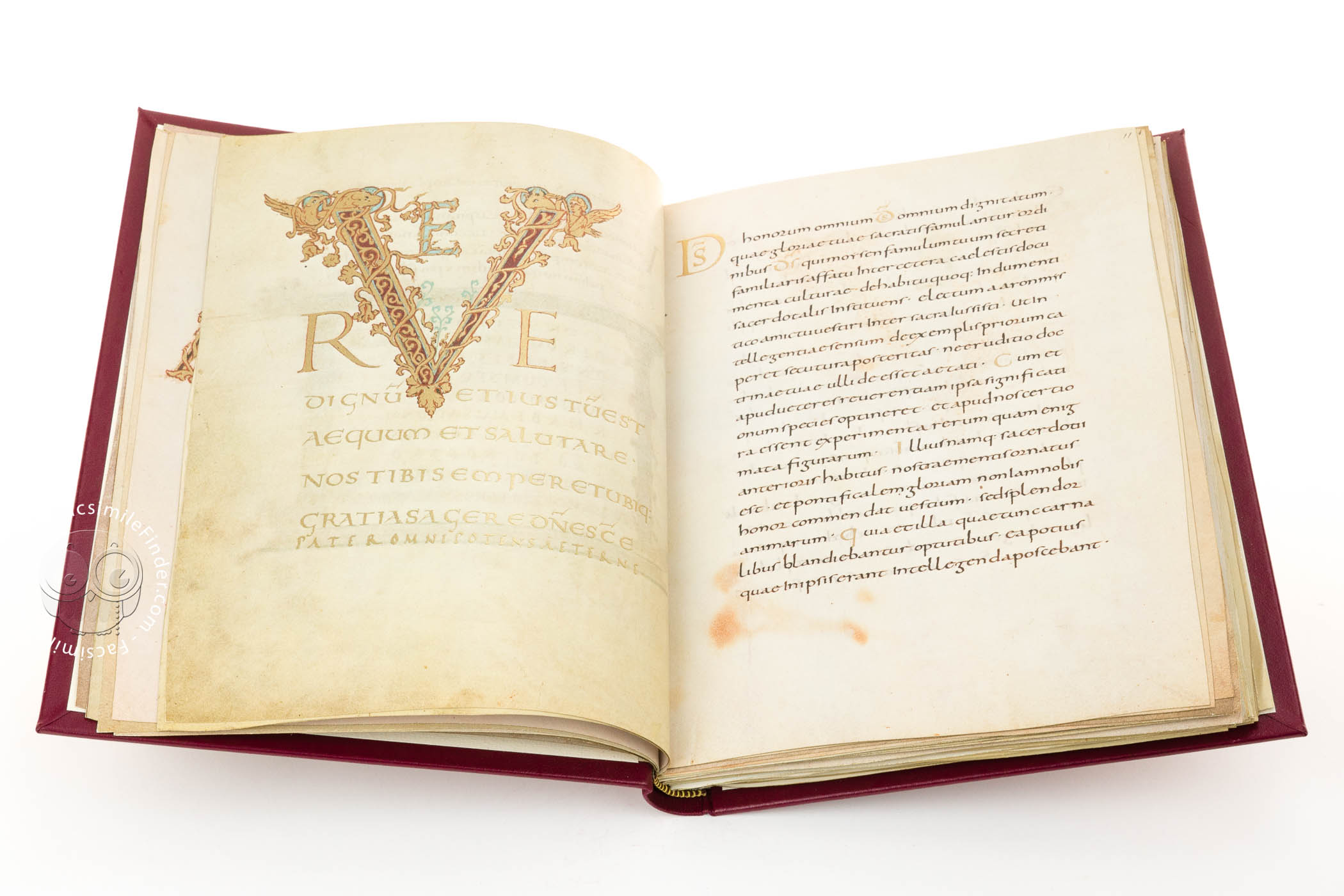
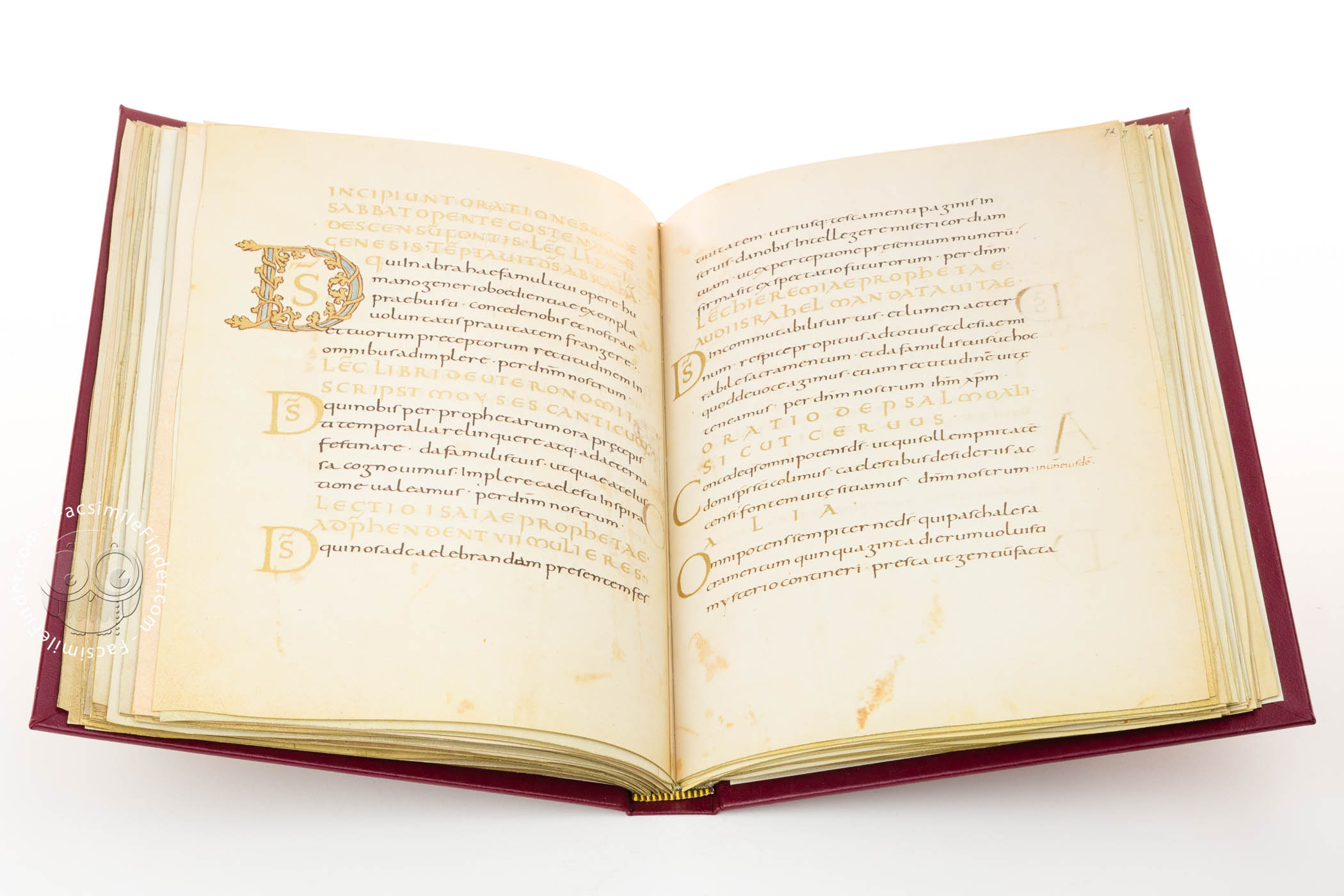
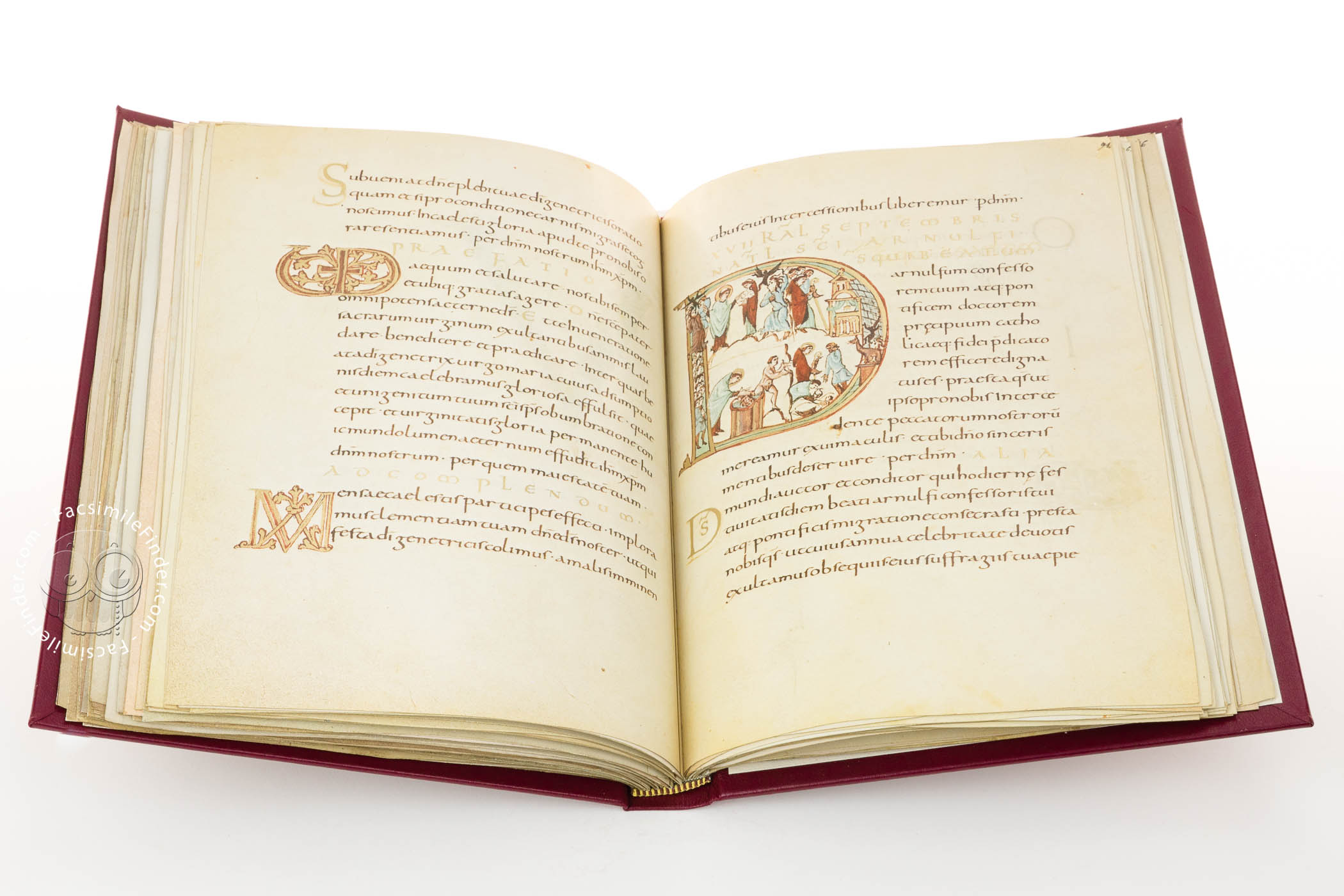
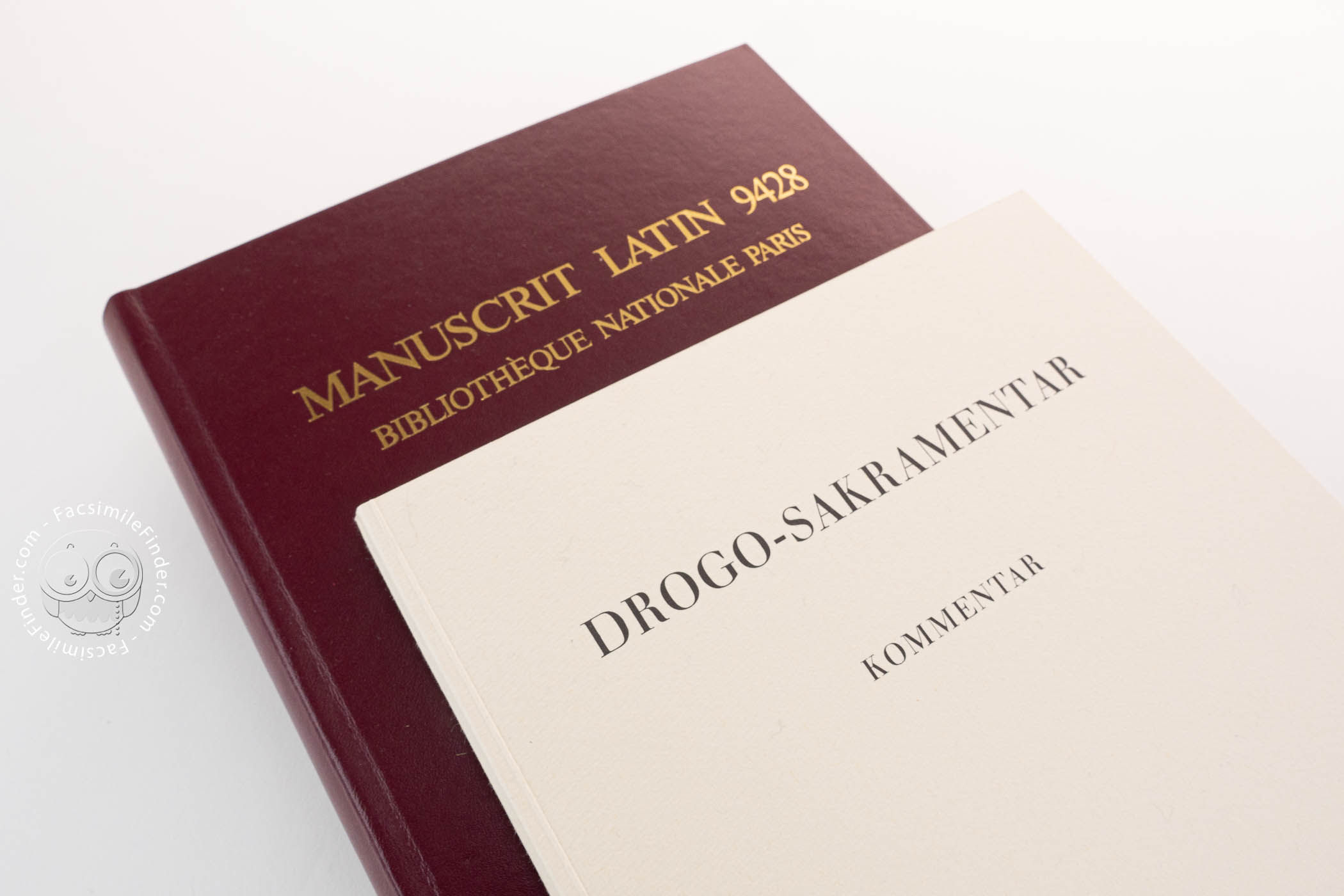
The Drogo Sacramentary is a sumptuous manuscript of the prayers said by the celebrating priest at the Christian Latin Mass. Written and illuminated in Metz around 844-855 for Drogo, Archbishop of Metz, it boasts the earliest surviving extensive program of historiated initials in a medieval manuscript. Partly written in gold, the text has a stately appearance that contrasts with the liveliness of the human figures that occupy the manuscript's painted initials. The book's decorative program features forty-one historiated initials and six decorated text pages.
The painted embellishment features golden leafy vines inspired by the Mediterranean acanthus plant. This abundant acanthus ornament, a signature feature of Carolingian painting, twines through the manuscript's initials and the framing elements of the decorated text pages.
A Distinctive Carolingian Style
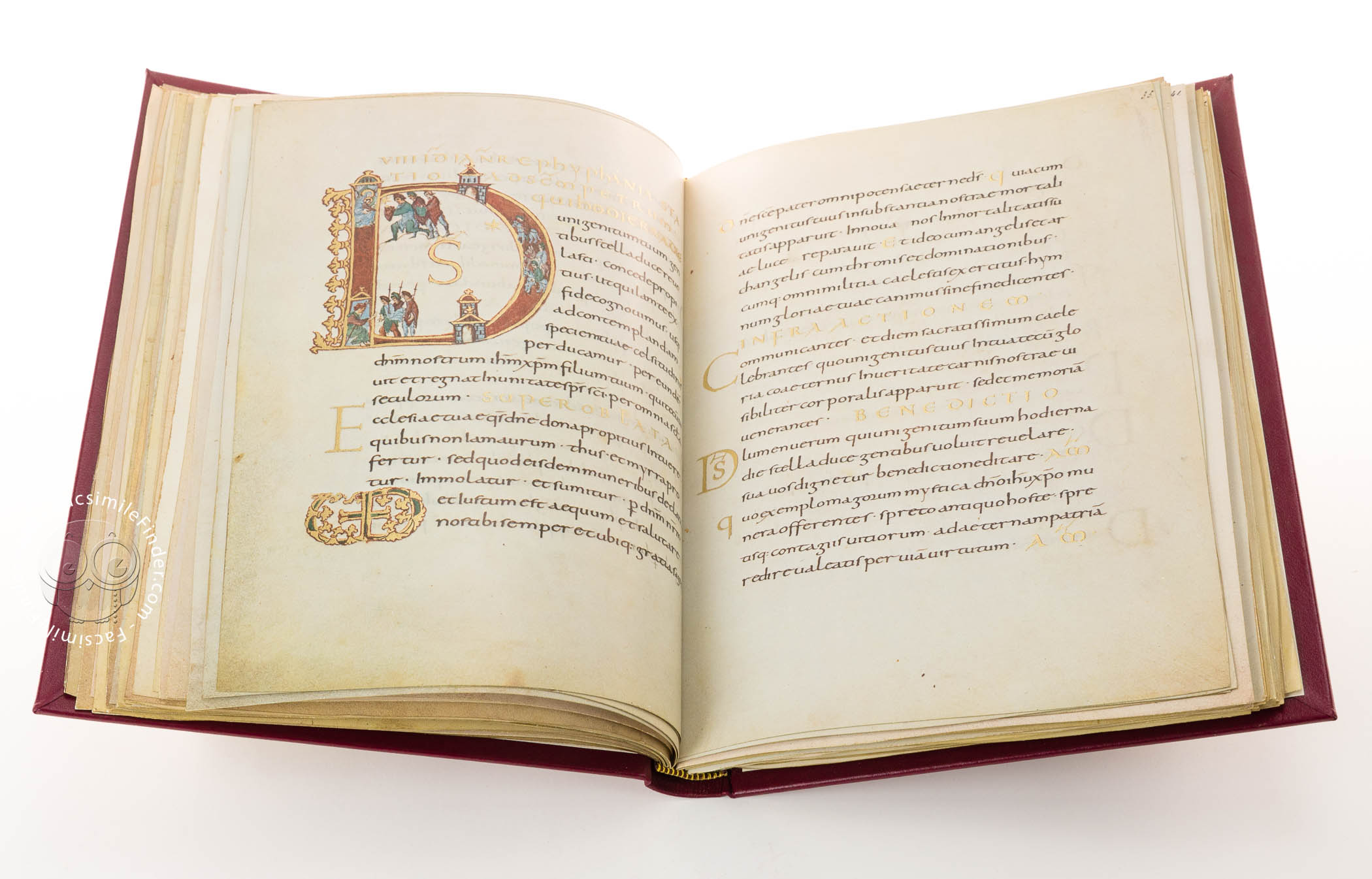
The scenes in the historiated initials (i.e., enlarged initial letters containing narrative scenes or identifiable figures) feature human figures with exaggerated hand gestures painted in feathery brushstrokes reflecting an aesthetic associated most famously with the Utrecht Psalter.
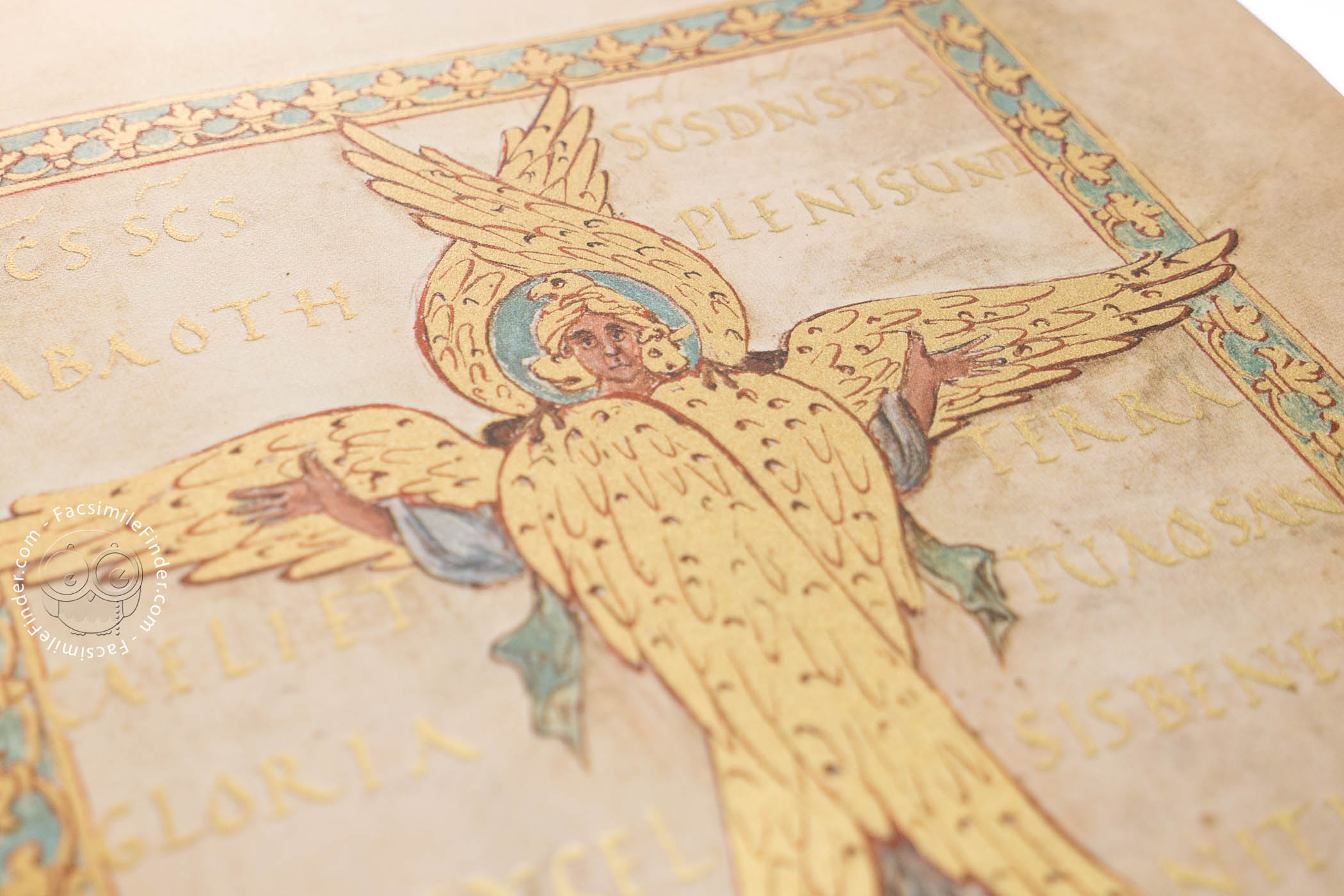
The illuminator also created a monumental image of the tetramorph, a vision of the Old Testament prophet Ezekiel. This creature with four heads (those of a man, a lion, a calf, and an eagle) is pictured with multiple huge golden wings partially covering its anthropomorphic body, which has feet, following Ezekiel's description, both human and bovine (fol. 15r).
Tiny Figures Tell a Big Story
The subjects of most of the initials are the events commemorated on the feast days they mark. The largest—occupying nearly the full height of the page—are the initials of the main Christmas and Easter masses. The Christmas story unfolds in three small scenes occupying the ends of the initial C and a roundel in the middle of the letter, where three shepherds are pictured gesturing and looking up to the Nativity above (fol. 24r).
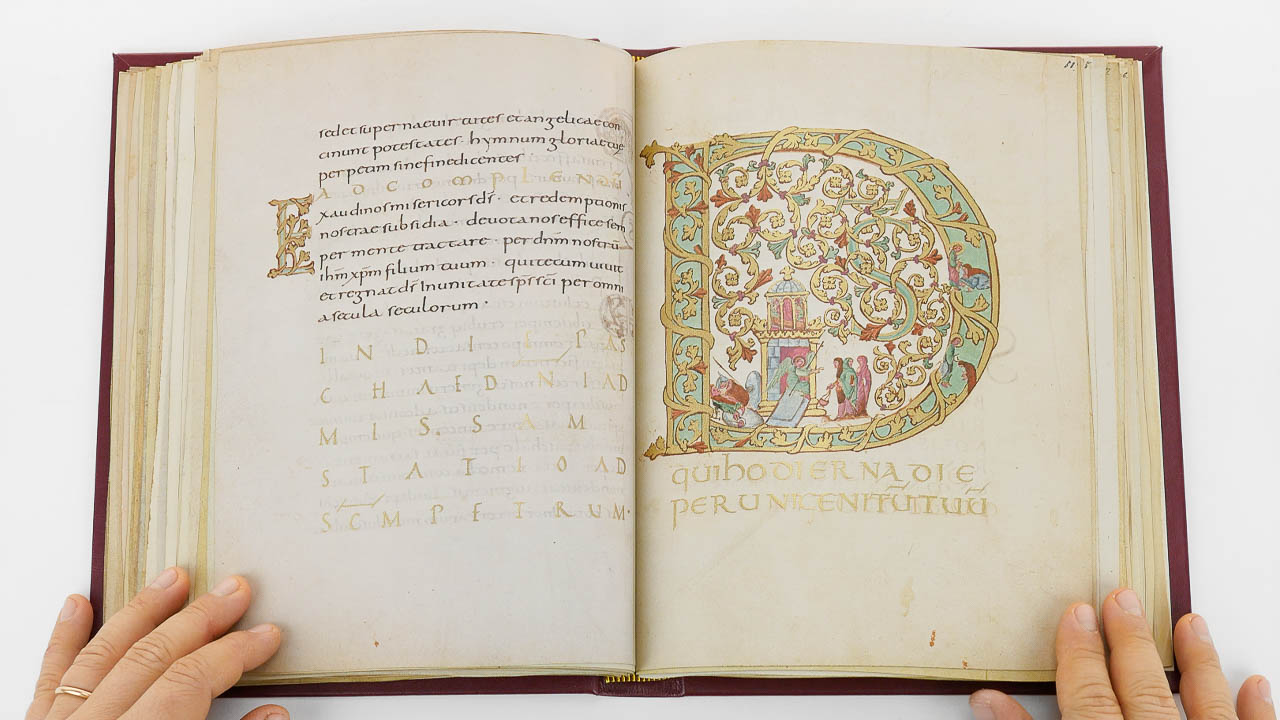
In the Easter initial, the scene of the Women at the Tomb shares the area enclosed by the letter D with acanthus vines and the letter S, forming the abbreviation DS for deus ("God"). Two tiny vignettes of Christ's post-Resurrection appearances to women are nestled in the body of the initial (fol. 58r).
Drogo, a Patron of the Arts
Three closely related manuscripts were illuminated for Drogo (801-855), Archbishop of Metz, who was the illegitimate son of Charlemagne (742-814). They form the "Drogo Group" of Carolingian illumination. The other two are Gospel books (Paris, Bibliothèque nationale de France, MSS lat. 9383 and lat. 9388).
Drogo spared no expense in commissioning these books for his church at Metz: the sacramentary had (and still partially retains) a treasure binding that included two carved ivory plaques, now reassembled on the eighteenth-century binding.
The Liturgy of the Mass in Gold
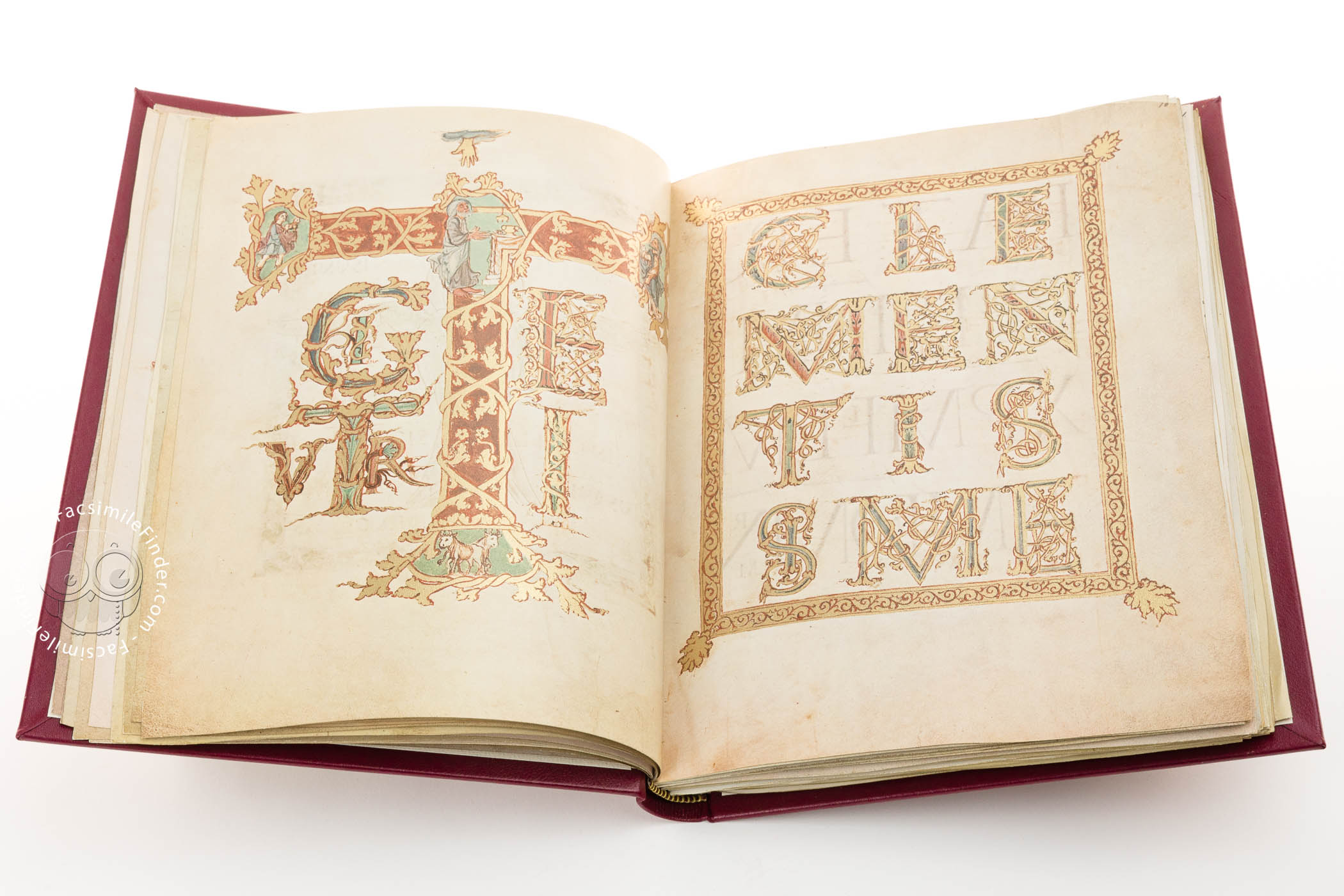
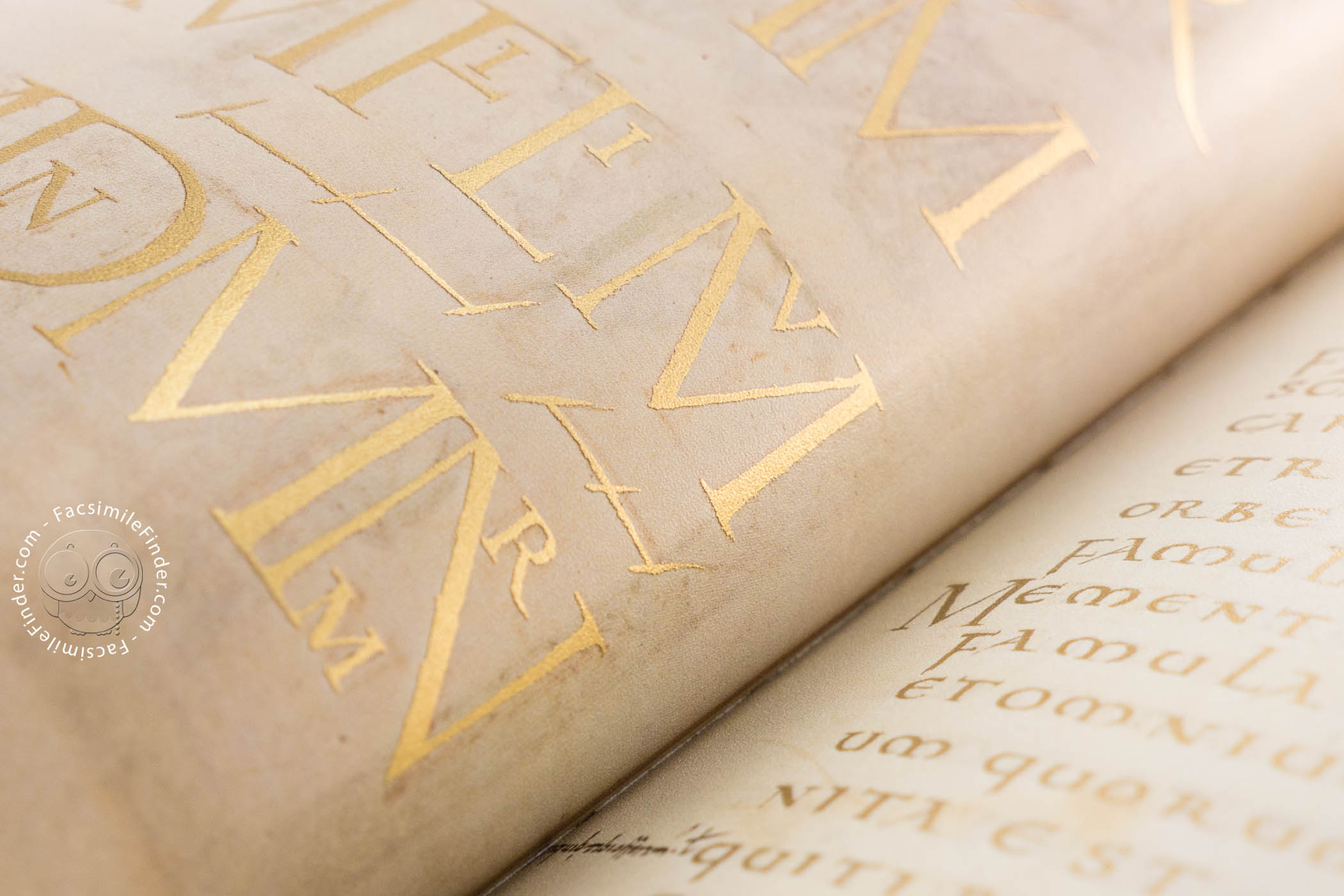
The Canon of the Mass (the prayers said as the Eucharistic elements are prepared) is presented in painted and golden letters that draw from the letterforms of Square Capitals, Uncial, and Rustic Capitals, scripts found in the manuscripts of late antiquity and borrowed to create impressive display scripts in the Carolingian period (fols. 14r-21r).
Clear Hierarchy of Scripts
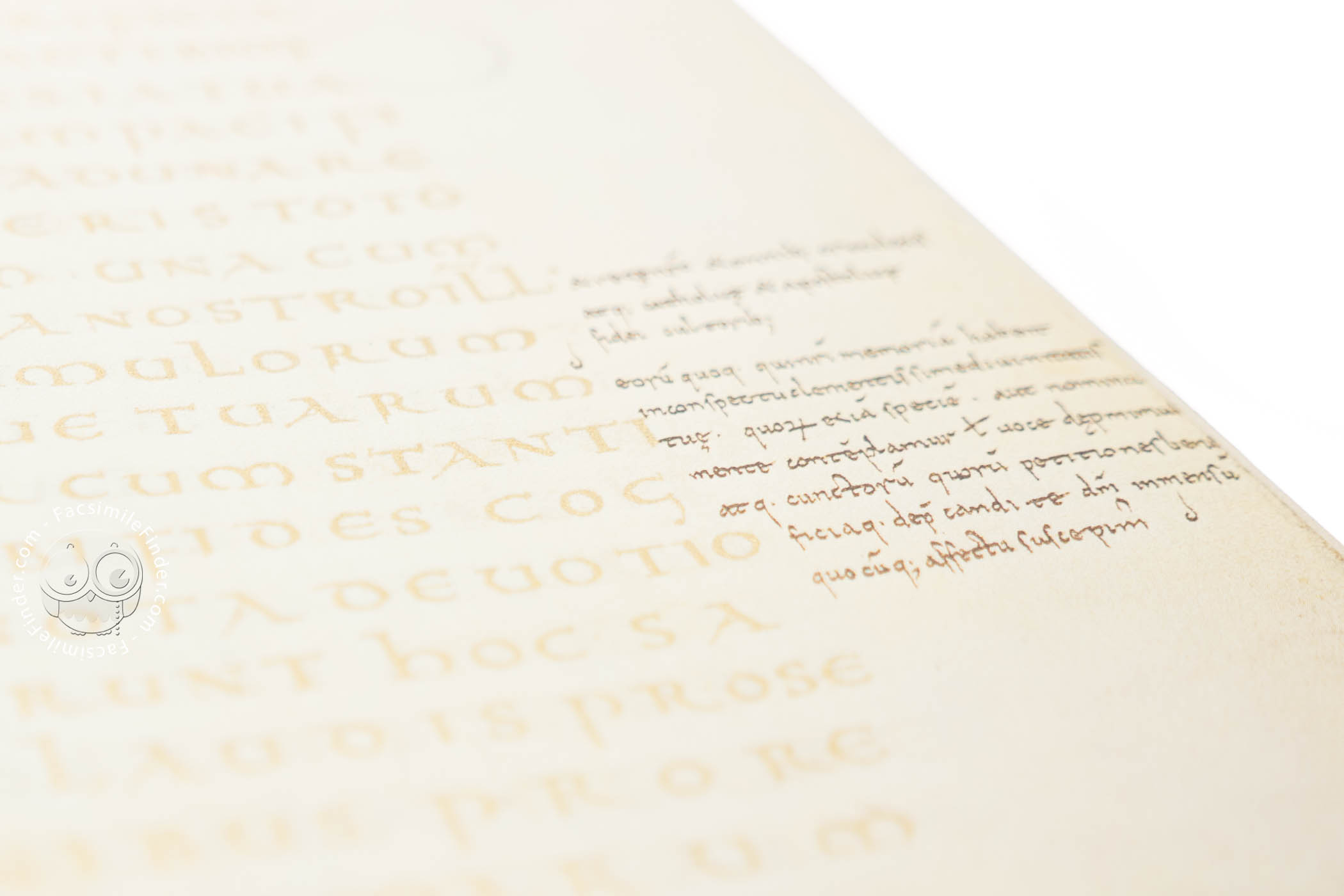
The scribe wrote most of the prayers in Caroline Minuscule, the eminently legible book script of the period. The rubrics, in Uncial script, are in gold, as are the opening words of many of the prayers. A special emphasis is placed on a sequence of prayers for the Easter season, with texts in gold Uncial and Rustic Capitals (fols. 57v-60r).
Customized for Metz
The sacramentary was customized for its use at Metz by the inclusion of two masses for the feast of Saint Stephen (patron saint of the cathedral). Also included are prayers for the celebrations of Saints Gorgonius and Arnulf, both of local significance.
All three manuscripts of the Drogo Group were in the treasury of the cathedral Saint-Etienne in the tenth century and remained there until the Napoleonic period, when they were transferred (in 1802) to the Bibliothèque nationale (now Bibliothèque nationale de France).
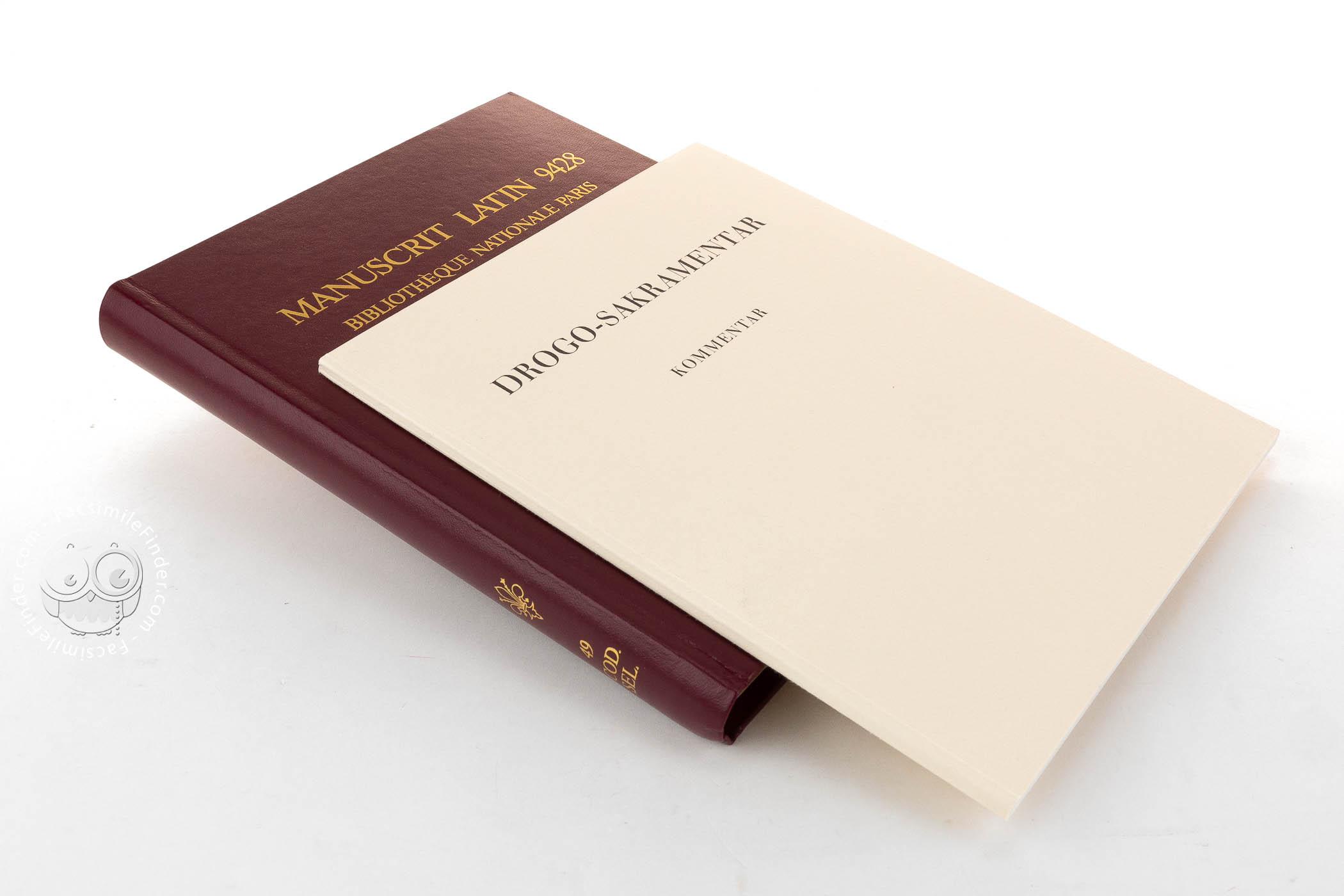
We have 1 facsimile edition of the manuscript "Drogo Sacramentary": Drogo-Sakramentar facsimile edition, published by Akademische Druck- u. Verlagsanstalt (ADEVA), 1974
Request Info / Price