
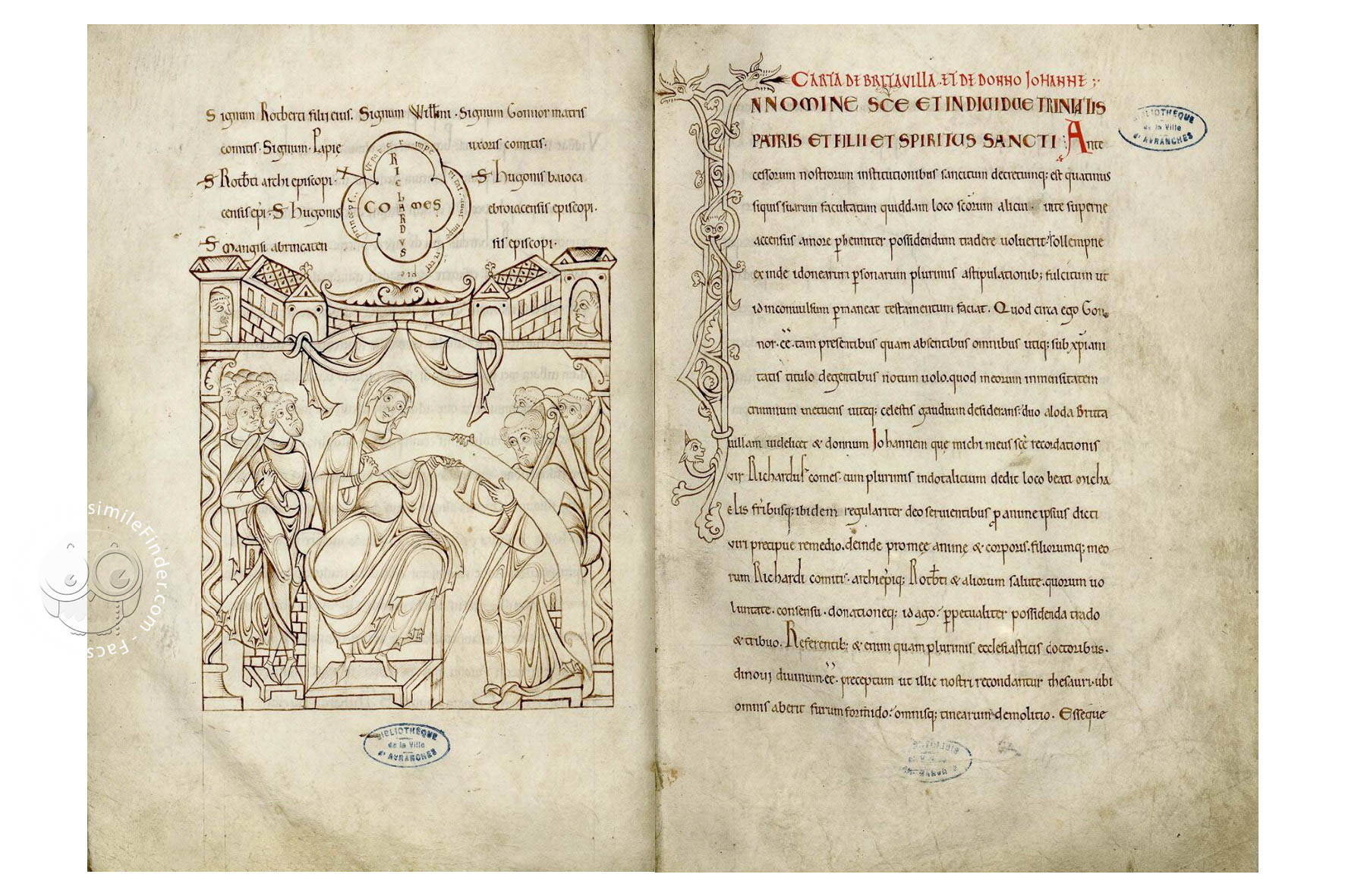
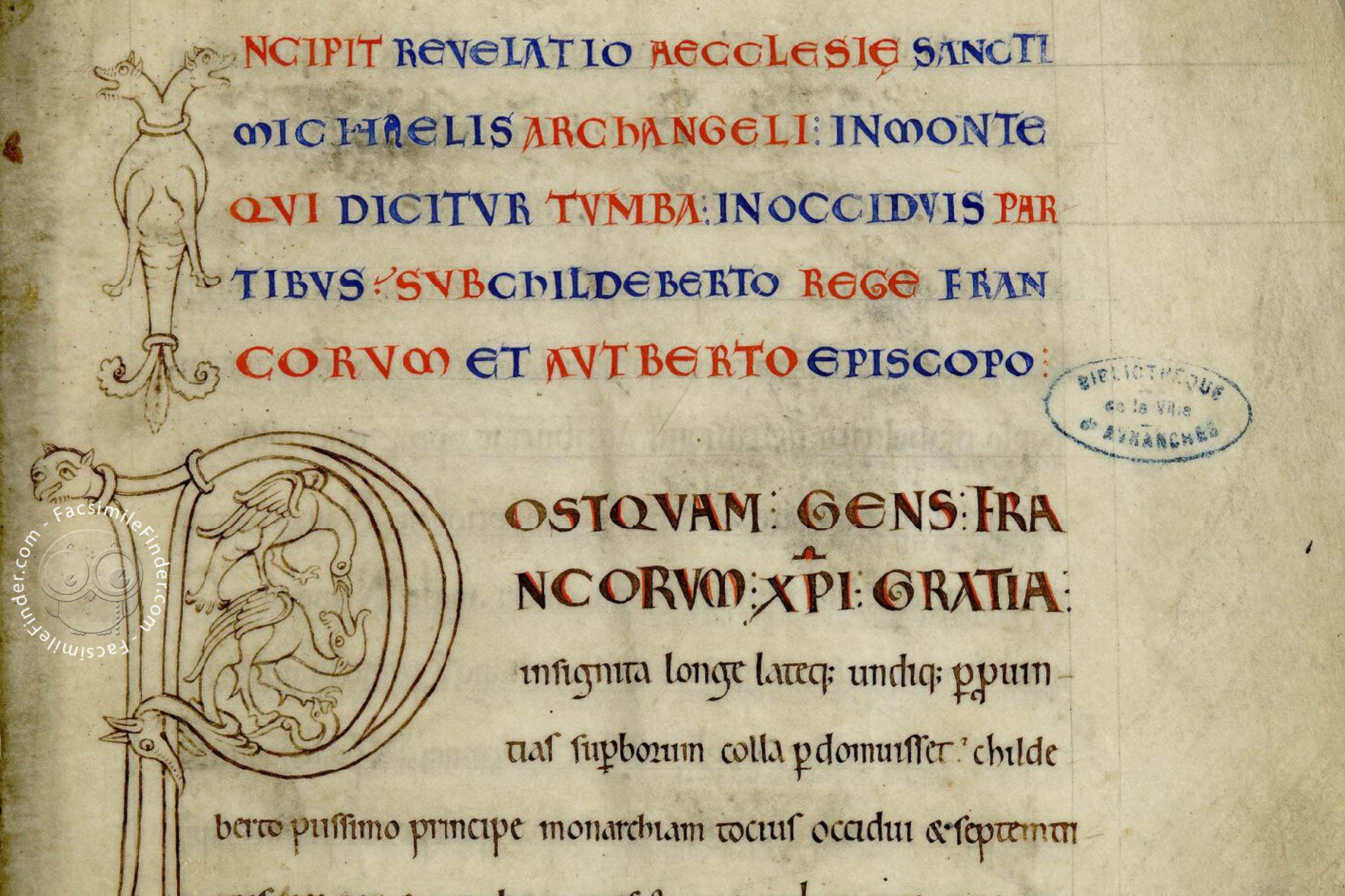
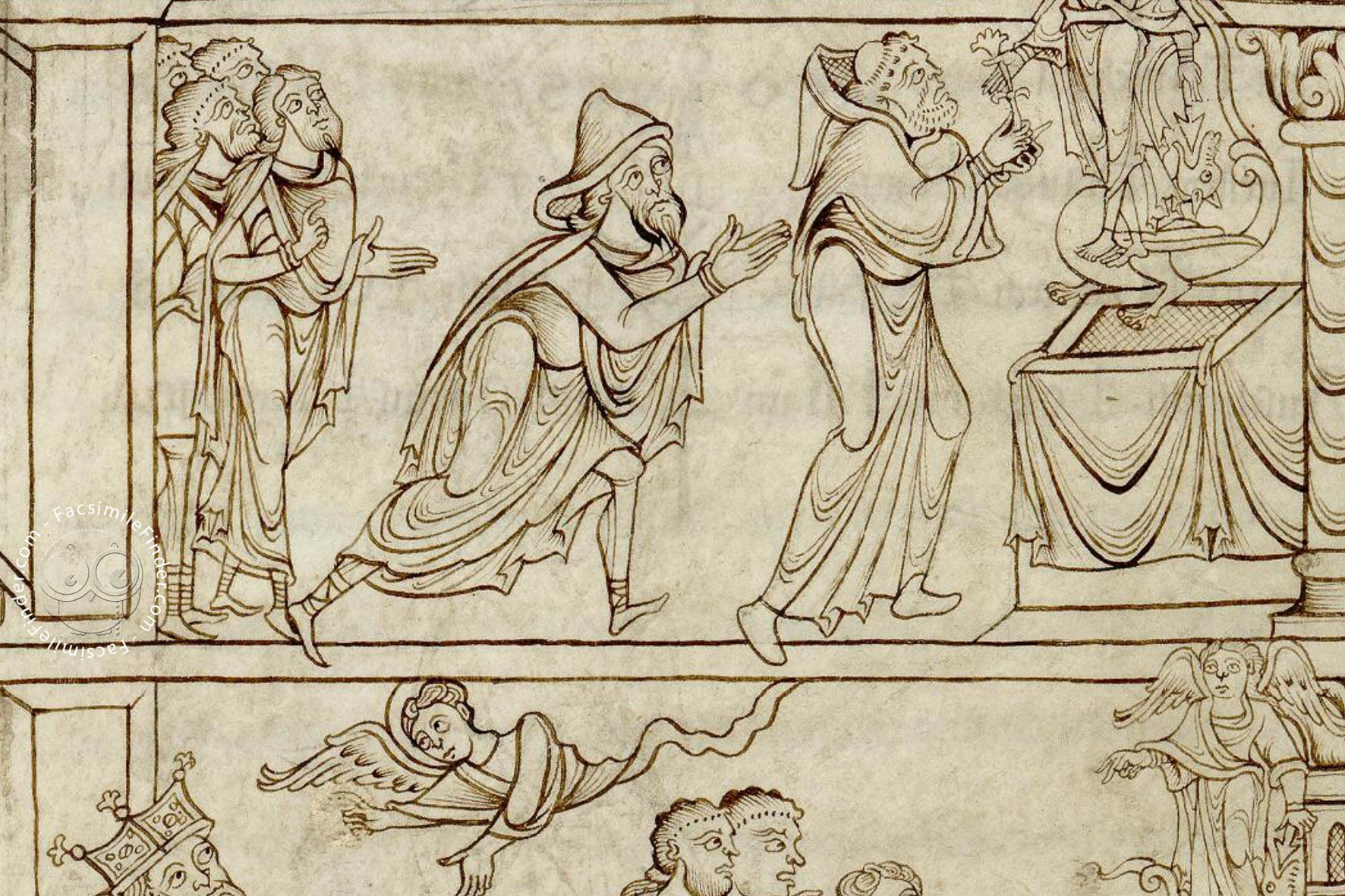
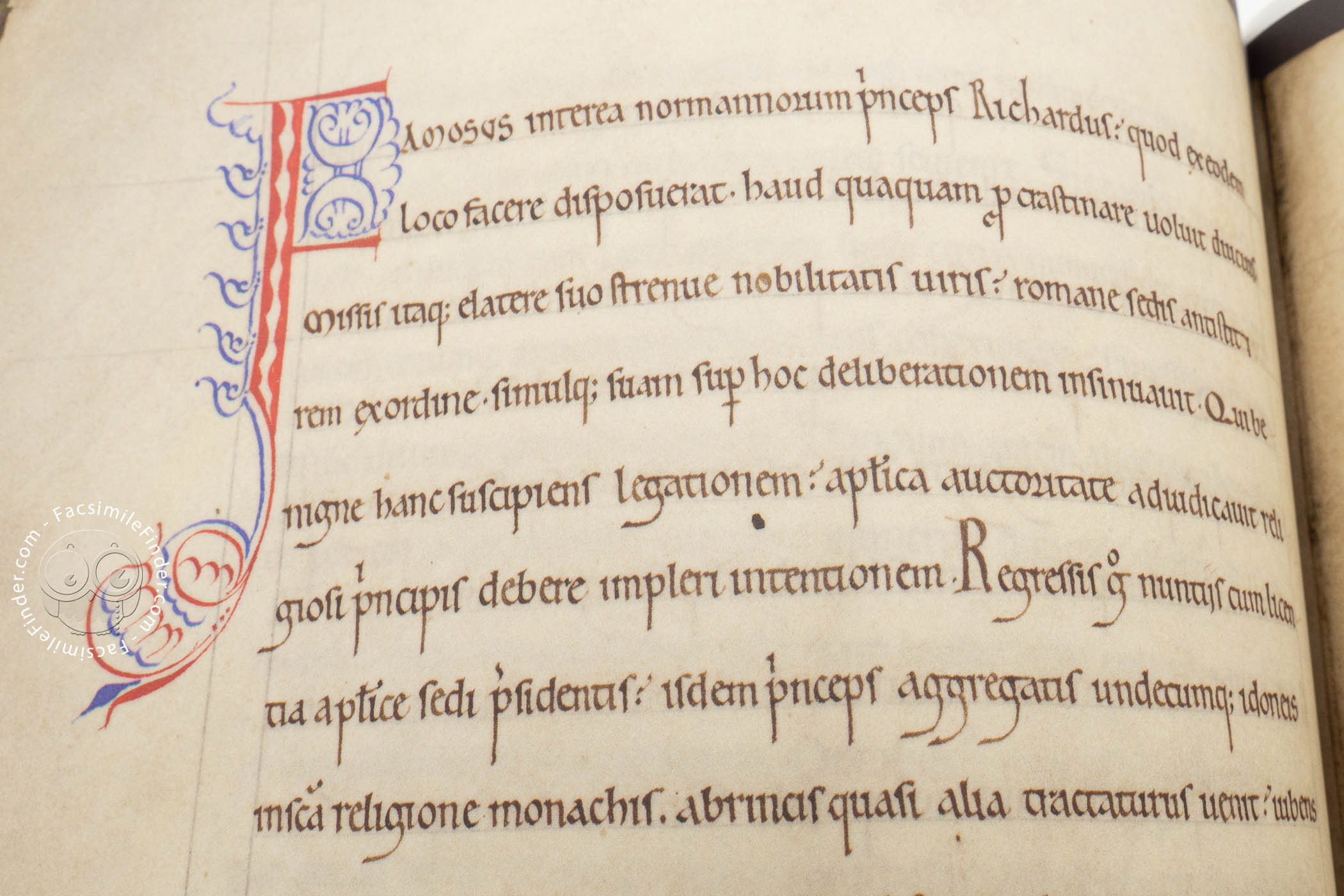
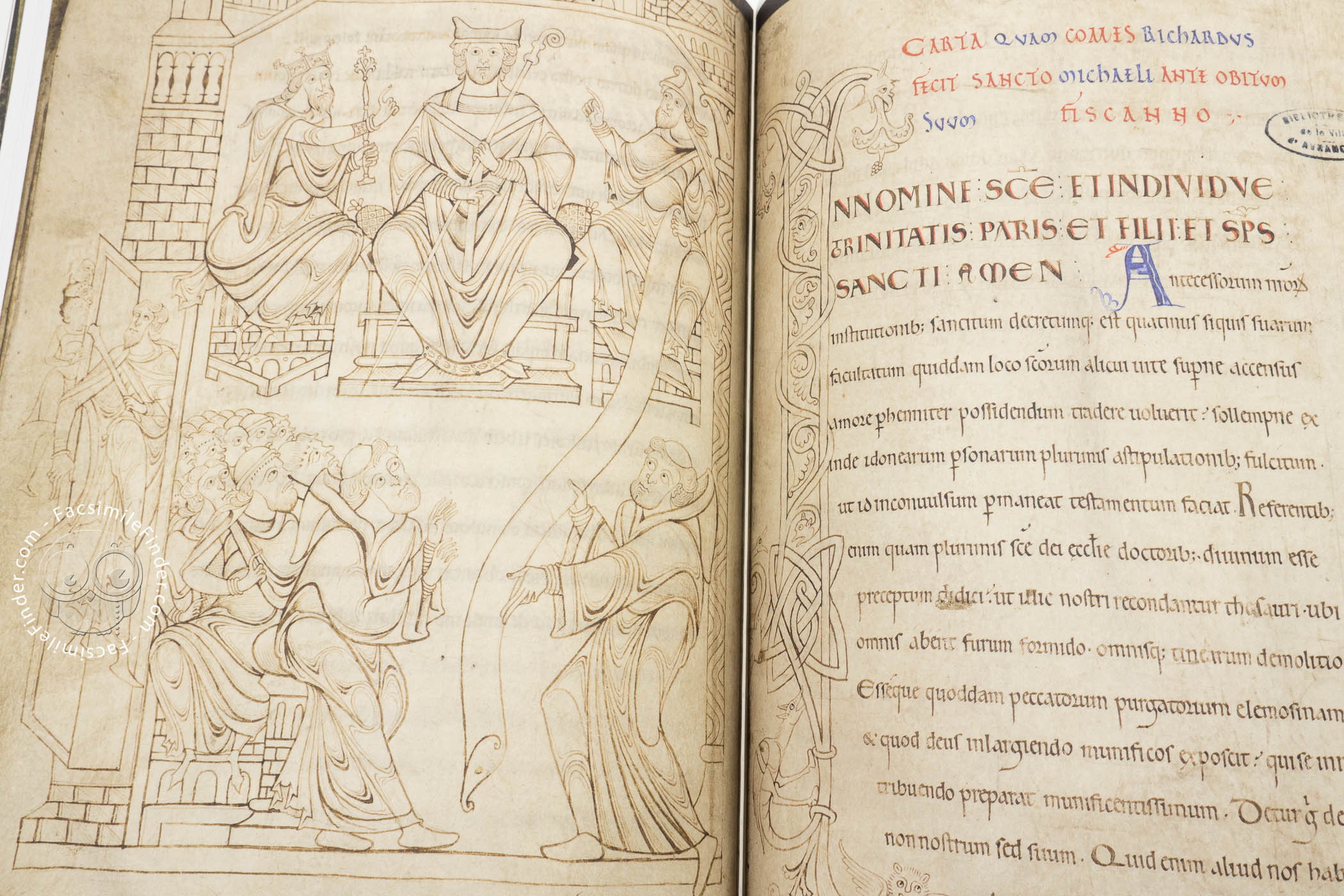
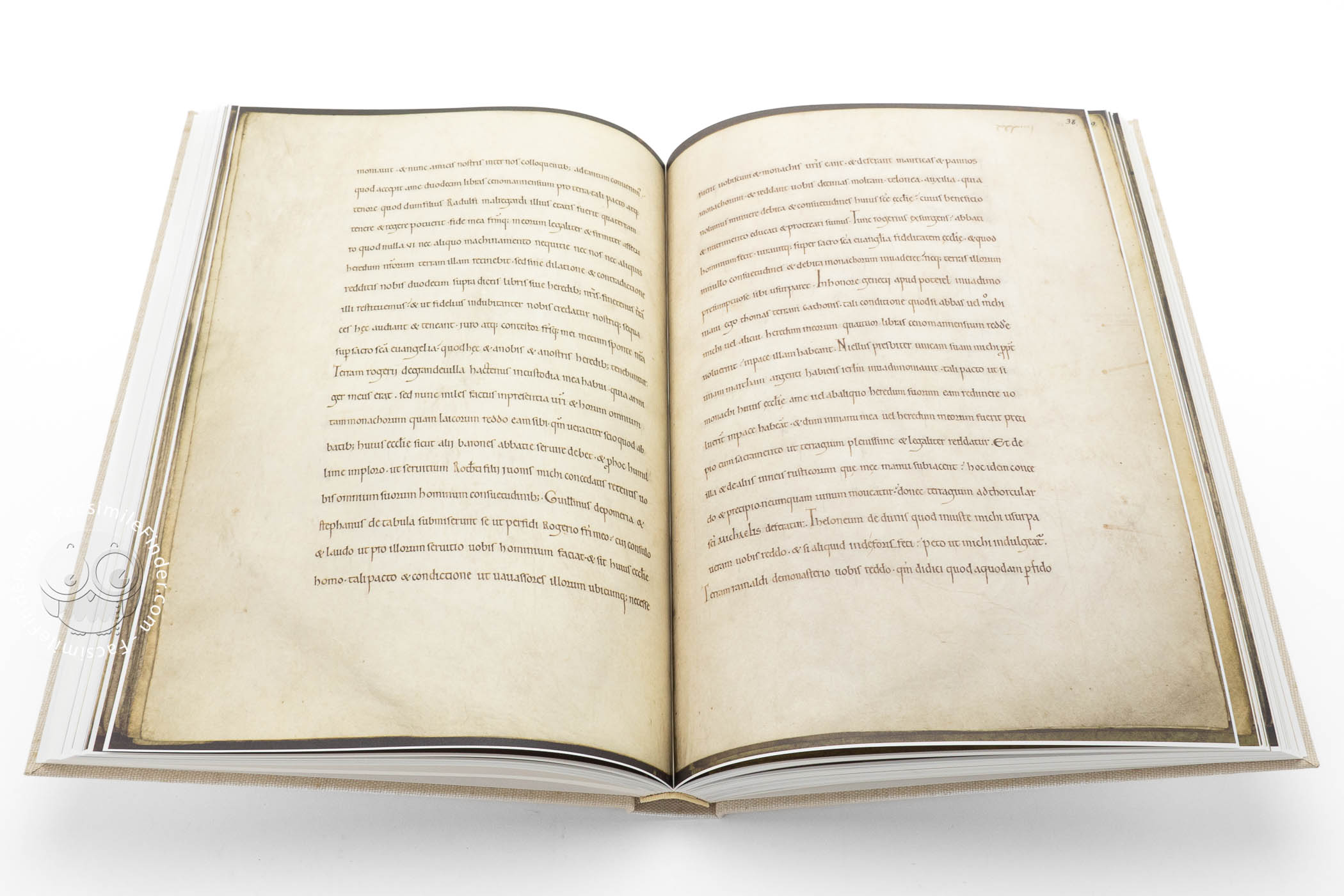
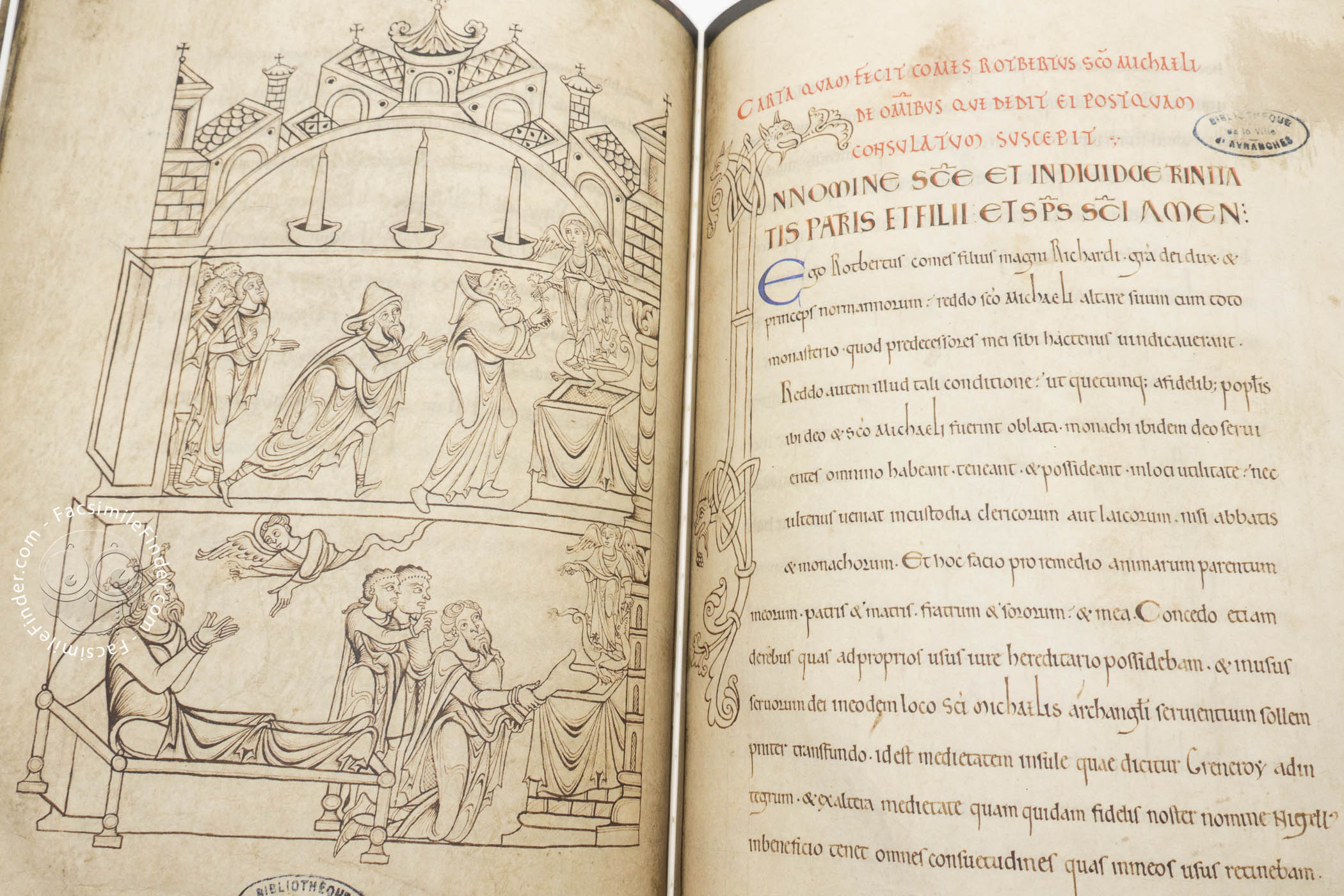
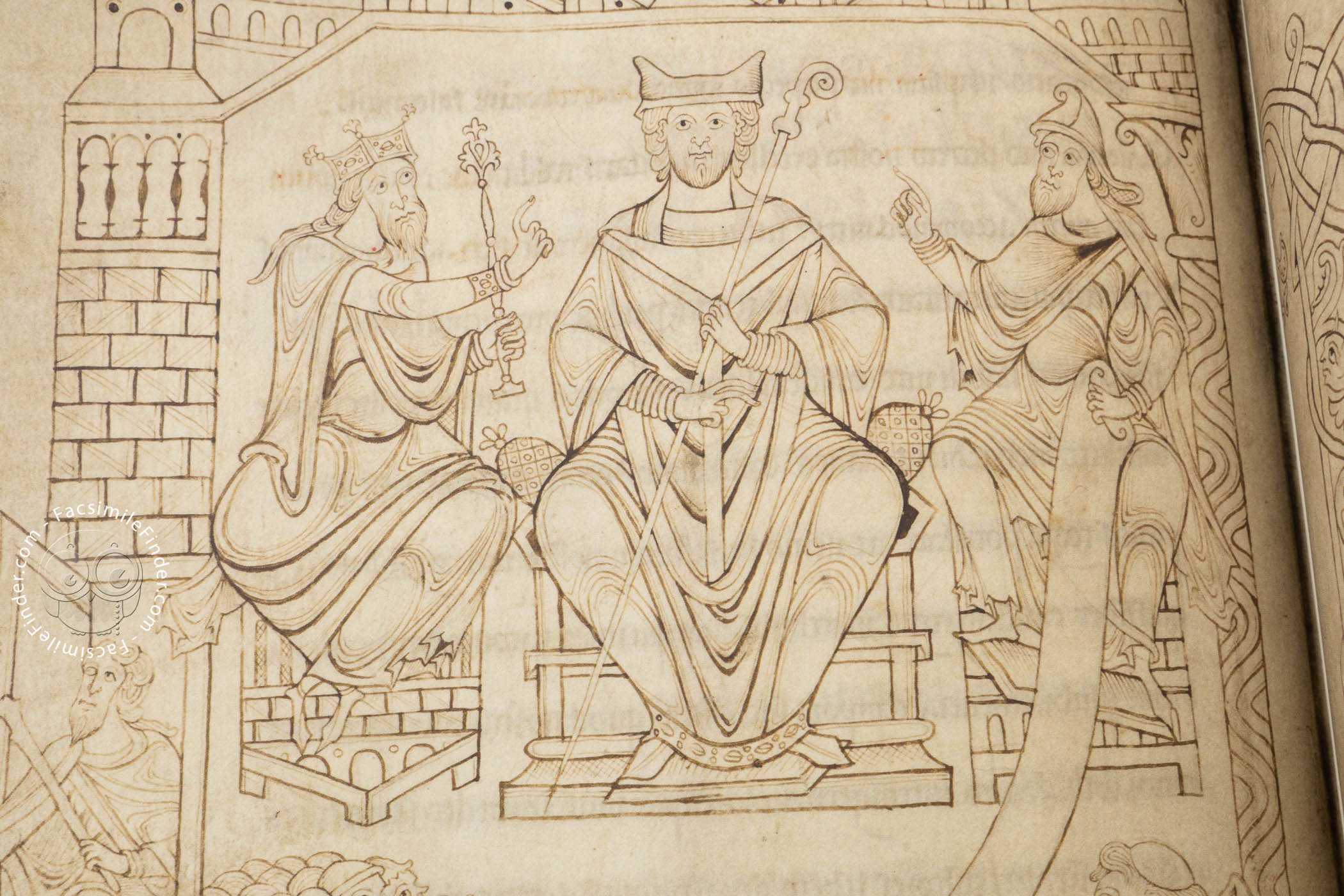

The Cartulary of Mont-Saint-Michel is a handsome illuminated manuscript of a collection of documents relating to the Benedictine monastery of Mont-Saint-Michel off the coast of Normandy. Made at the behest of the abbot—either Bernard or Geoffrey—in the mid-twelfth century at Mont-Saint-Michel, it is the only surviving cartulary from the important abbey and pilgrimage site. It is justly famous for its four accomplished drawings depicting the legendary founding of the church on the island and the abbey's more recent history.
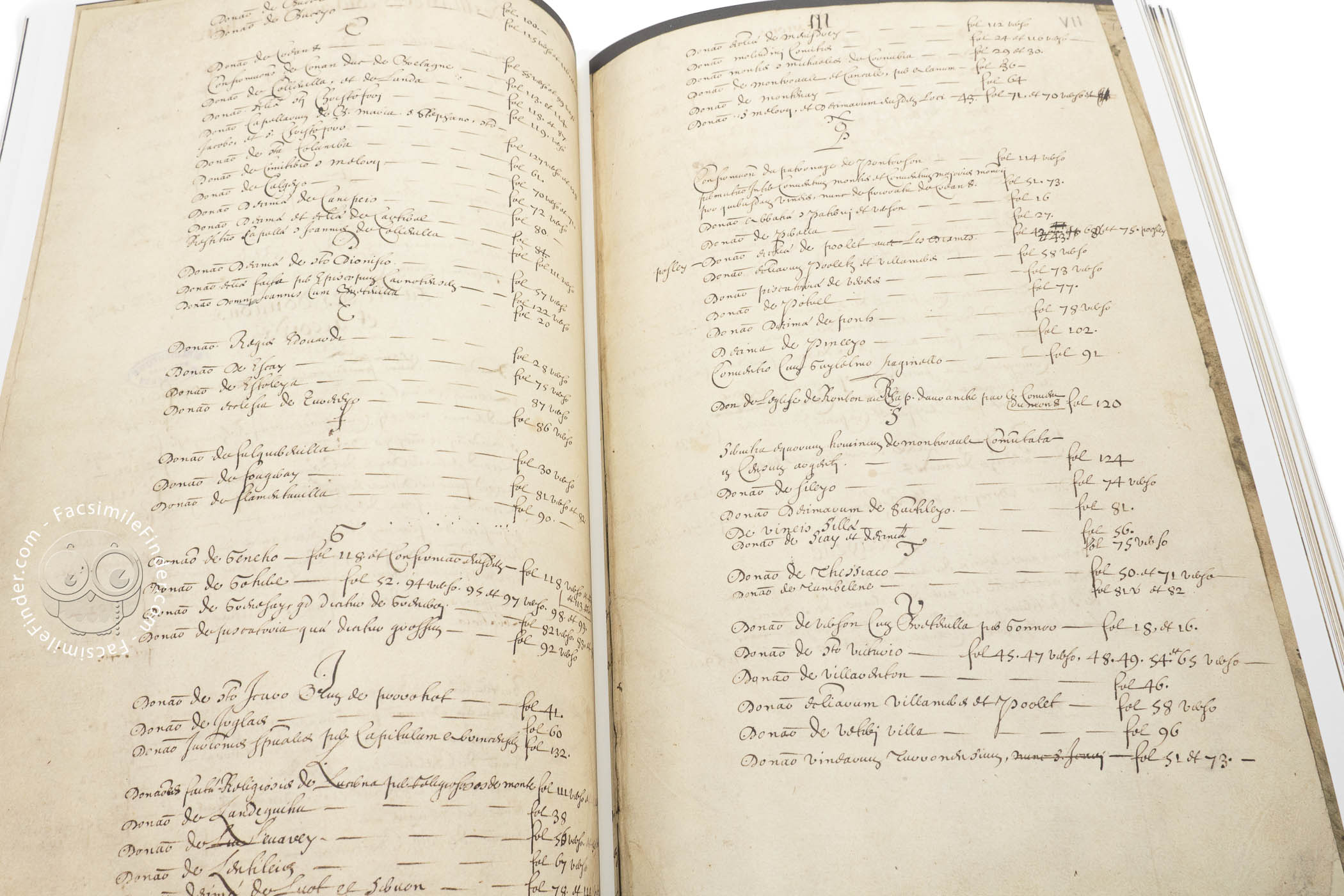
Known as the cartularium niger ("black cartulary") in the seventeenth century, the manuscript opens with legendary literary texts before the cartulary proper (copies of single-sheet documents), which is followed by administrative annals from the abbacy of Robert de Torigny (d. 1186), with later additions.
The Vision of Saint Aubert
The manuscript is justly famous for its four completed illustrations. The first depicts Saint Aubert, an eighth-century bishop of Avranches, reclining in bed and experiencing the vision that led him to establish a religious community on the tidal island (fol. 4v). An angel forcefully presses its finger into Aubert's forehead, as described in one version of the legend.
The scene is set in an interior within a complex architectural structure of towers and fortifications, with lively figures peering out from windows and towers. Two engage in combat with maces and shields, and others play musical instruments. This setting has been variously identified as the episcopal palace at Avranches, the monastery of Mont-Saint-Michel, and an imagined mechanical water clock that helped the angel wake Aubert from sleep. The gold leaf is surely an addition, probably of the thirteenth century.
Illustrated History
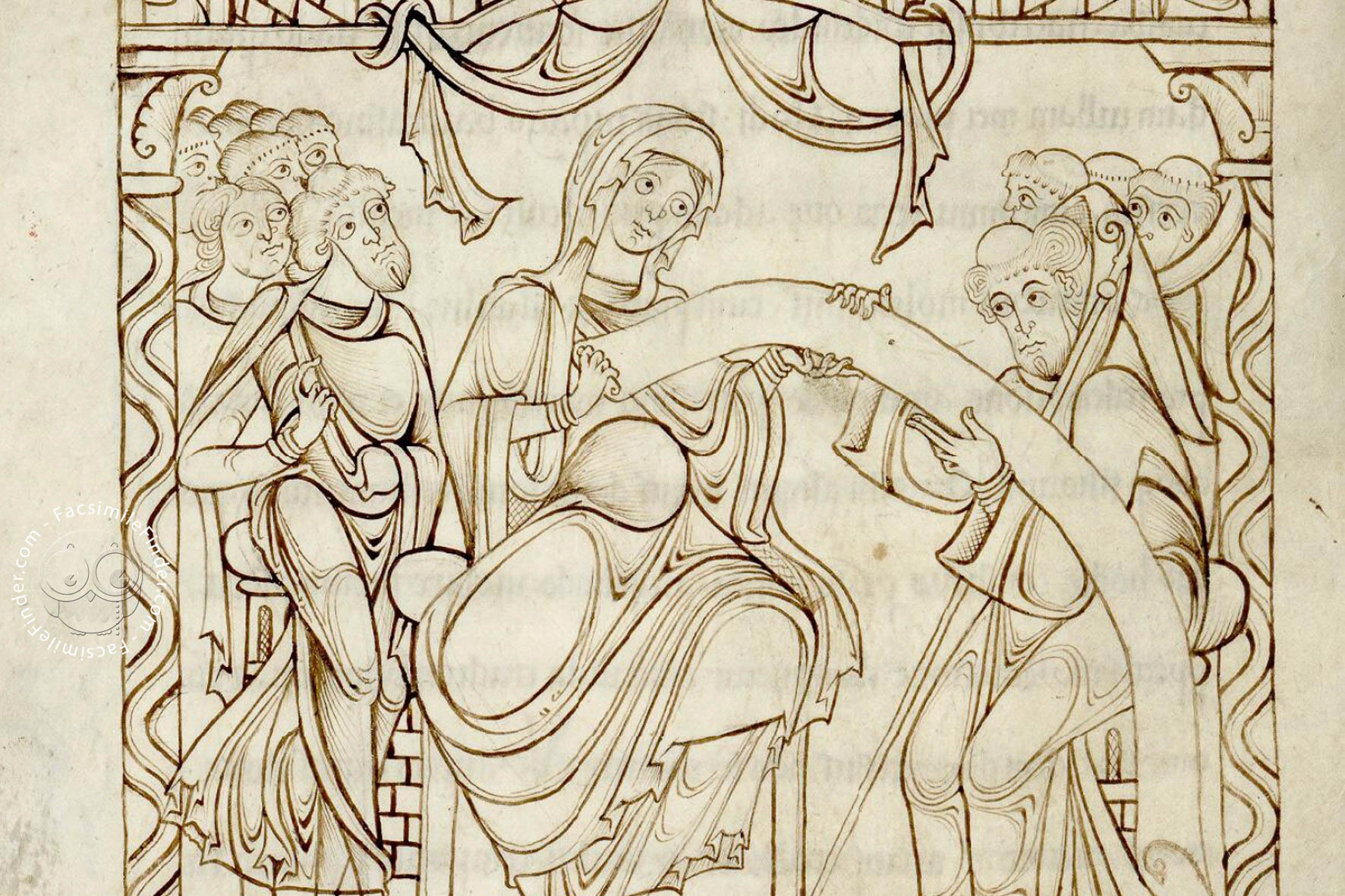
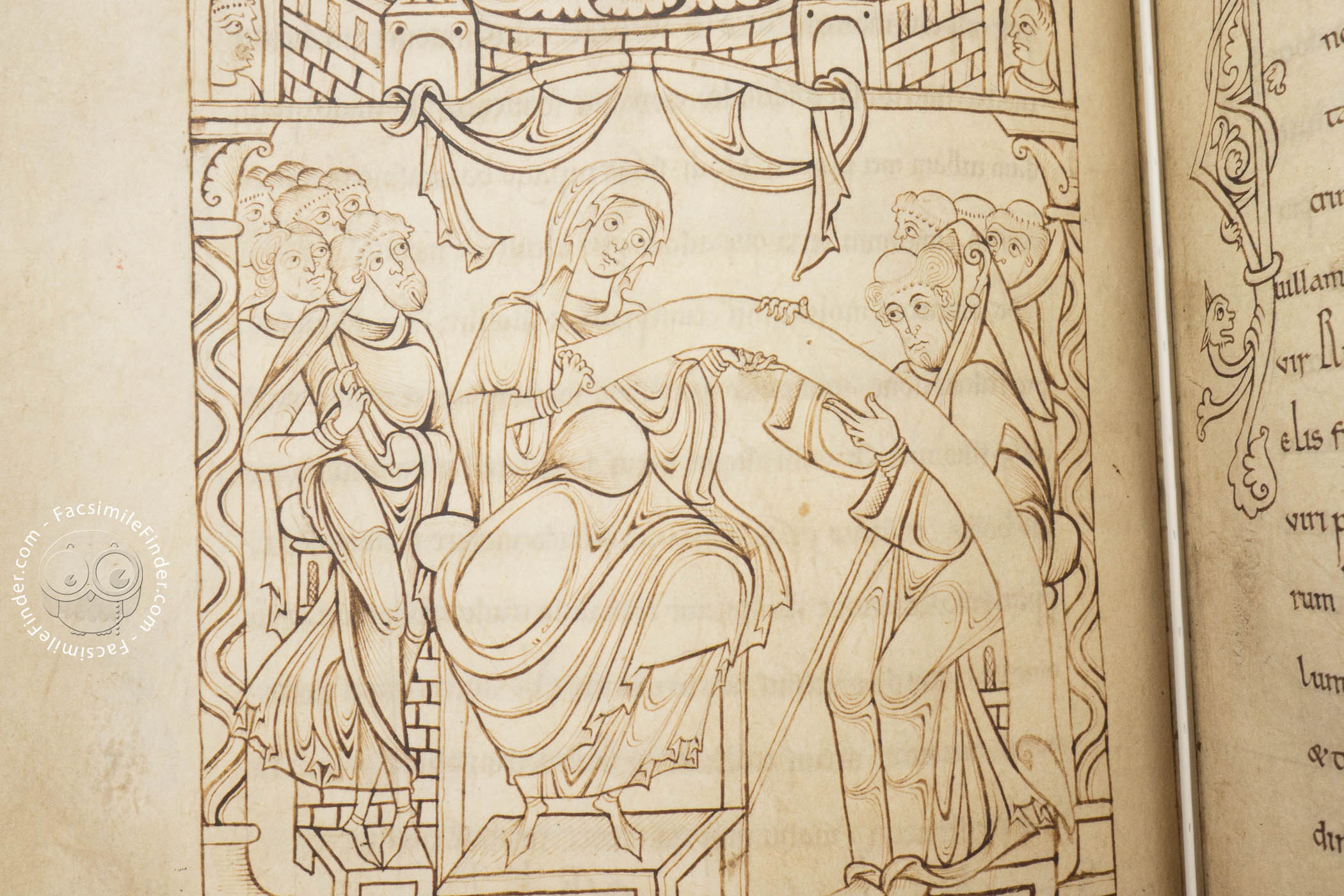
Another drawing shows Pope John XIII (d. 972) authorizing the introduction of Benedictine monks (fol. 19v), as described in the text that starts on the facing page. The next features Gunnor, widow of Richard I (d. 996), Duke of Normandy, presenting a charter to Abbot Hildebert in 1015 (fol. 23v).
The last drawing is a bit of a puzzle. In the upper register, Robert I (d. 1035), Duke of Normandy, is shown ceding rights over the abbey to the archangel Michael. In the lower register, Michael passes the rights on to the abbot or, perhaps, Edward the Confessor (1003-1066), King of England, who established a Benedictine priory on Saint Michael's Mount in Cornwall (fol. 25v).
Legend and History
The cartulary opens with the hagiographic Revelatio ("vision") about the erection of a church on the site in the eighth century and the Introductio monachorum ("introduction of monks"), an account of the installation of Benedictine monks (fols. 5r-16v). The cartulary follows, ending in medias res (fols. 17r-112r).
A Handsome Book
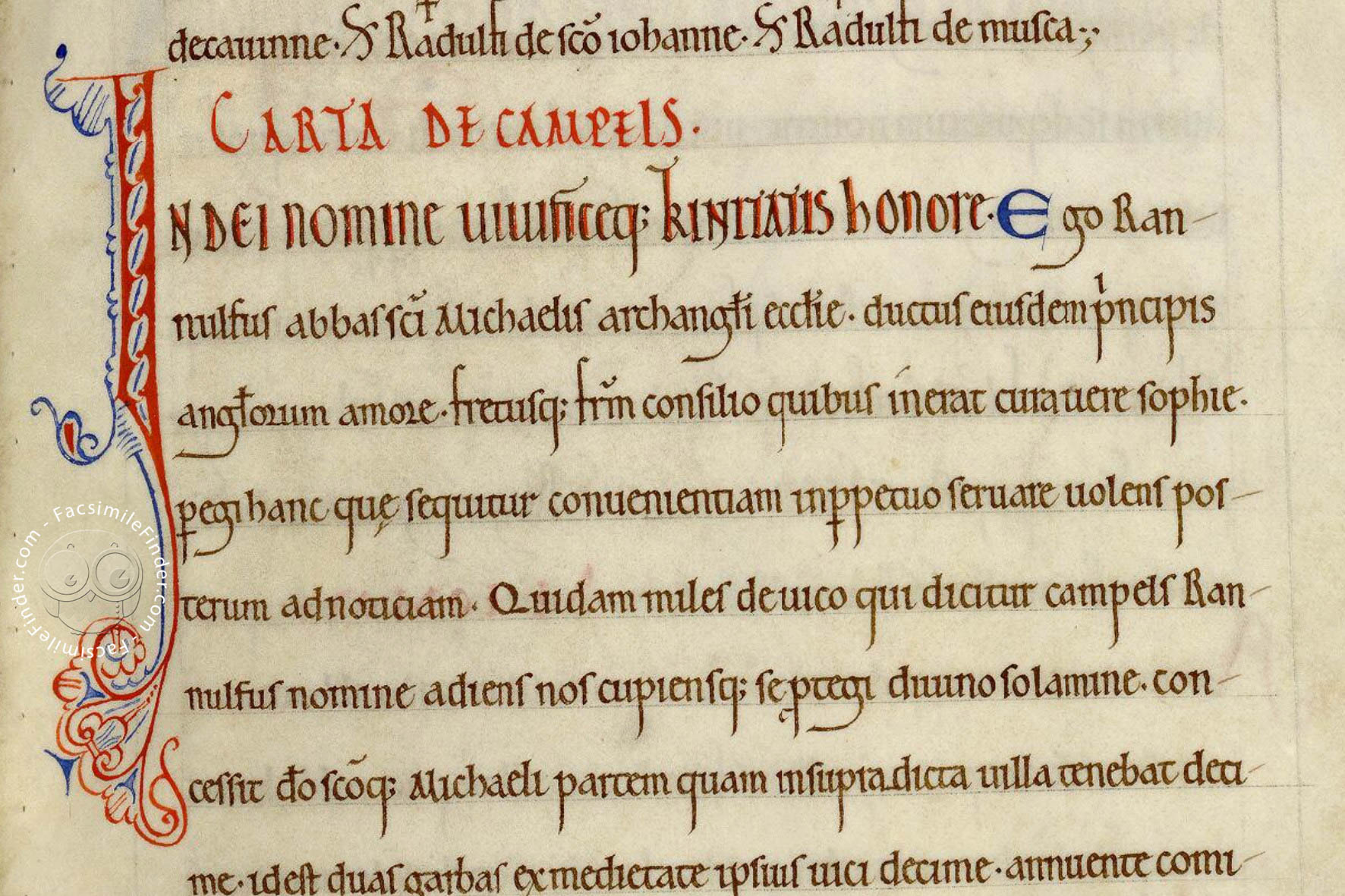
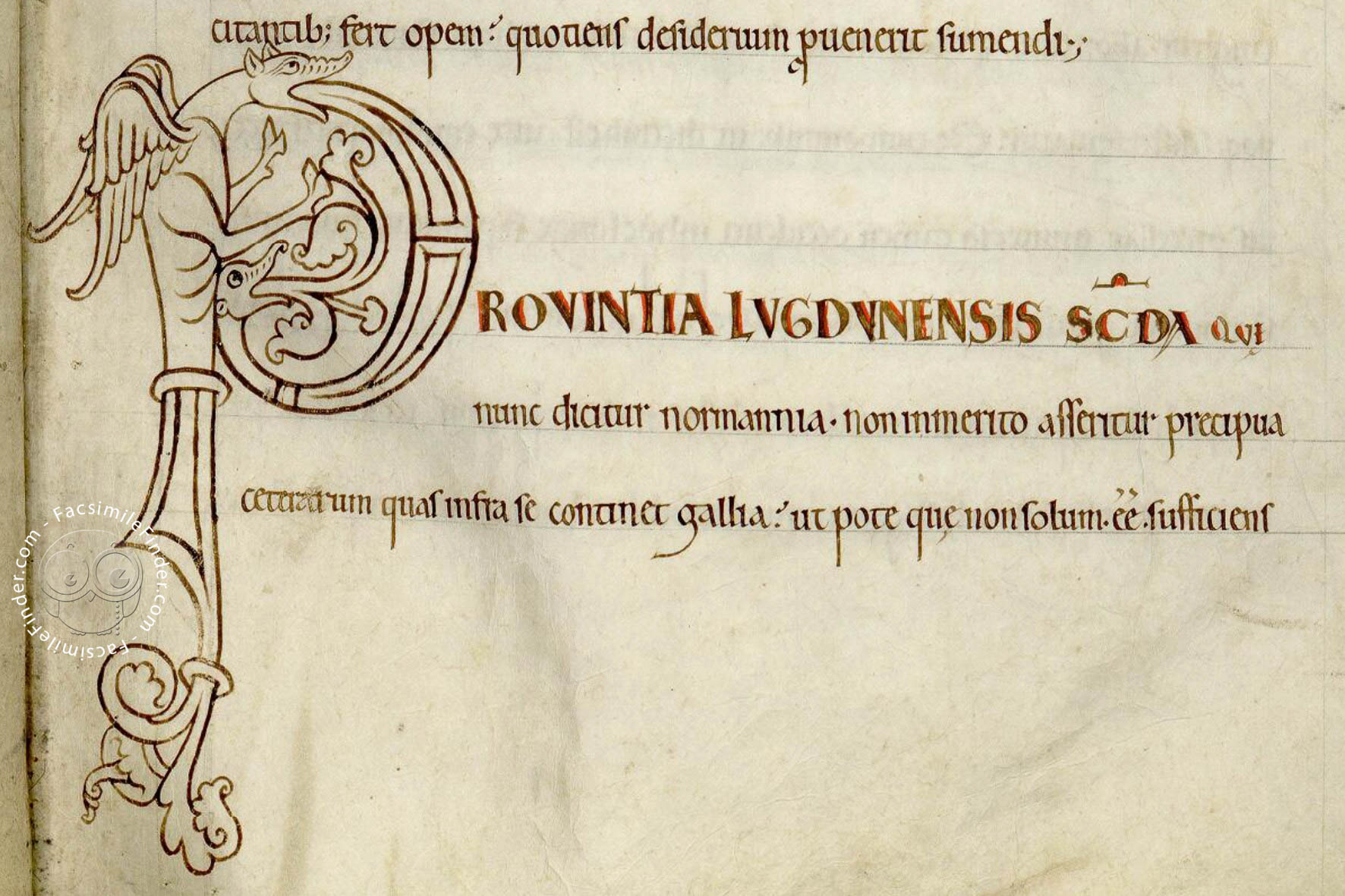
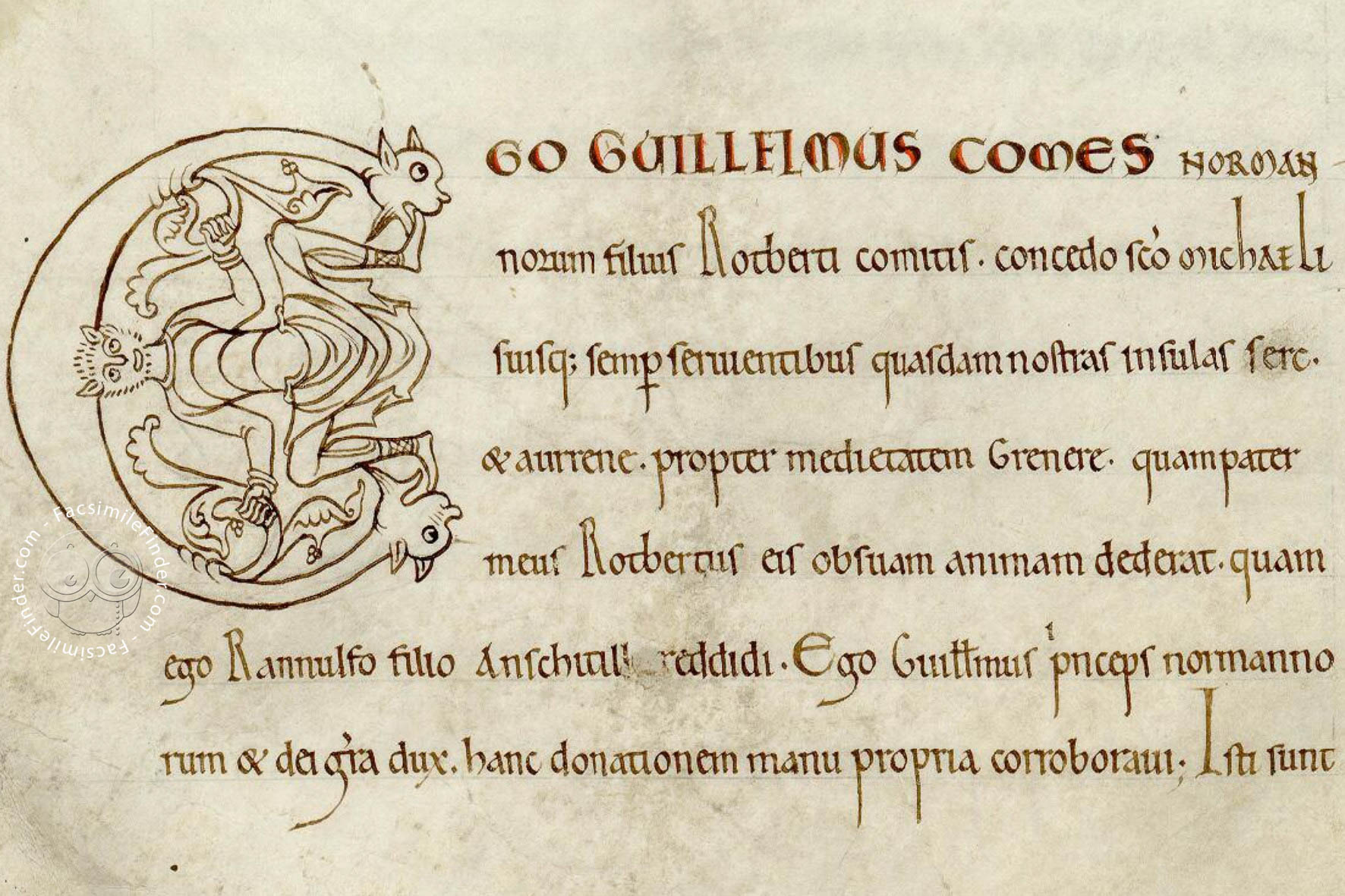
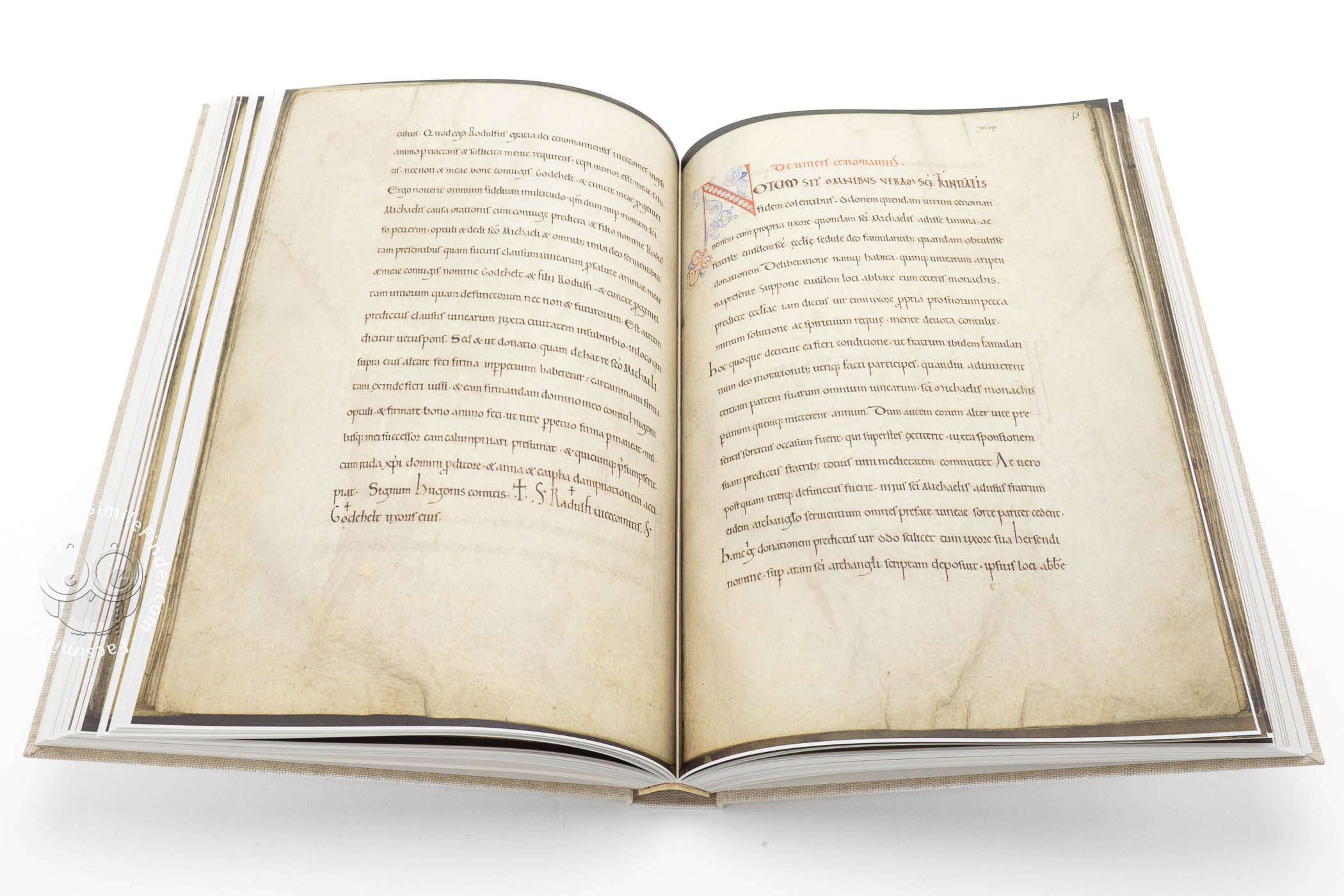
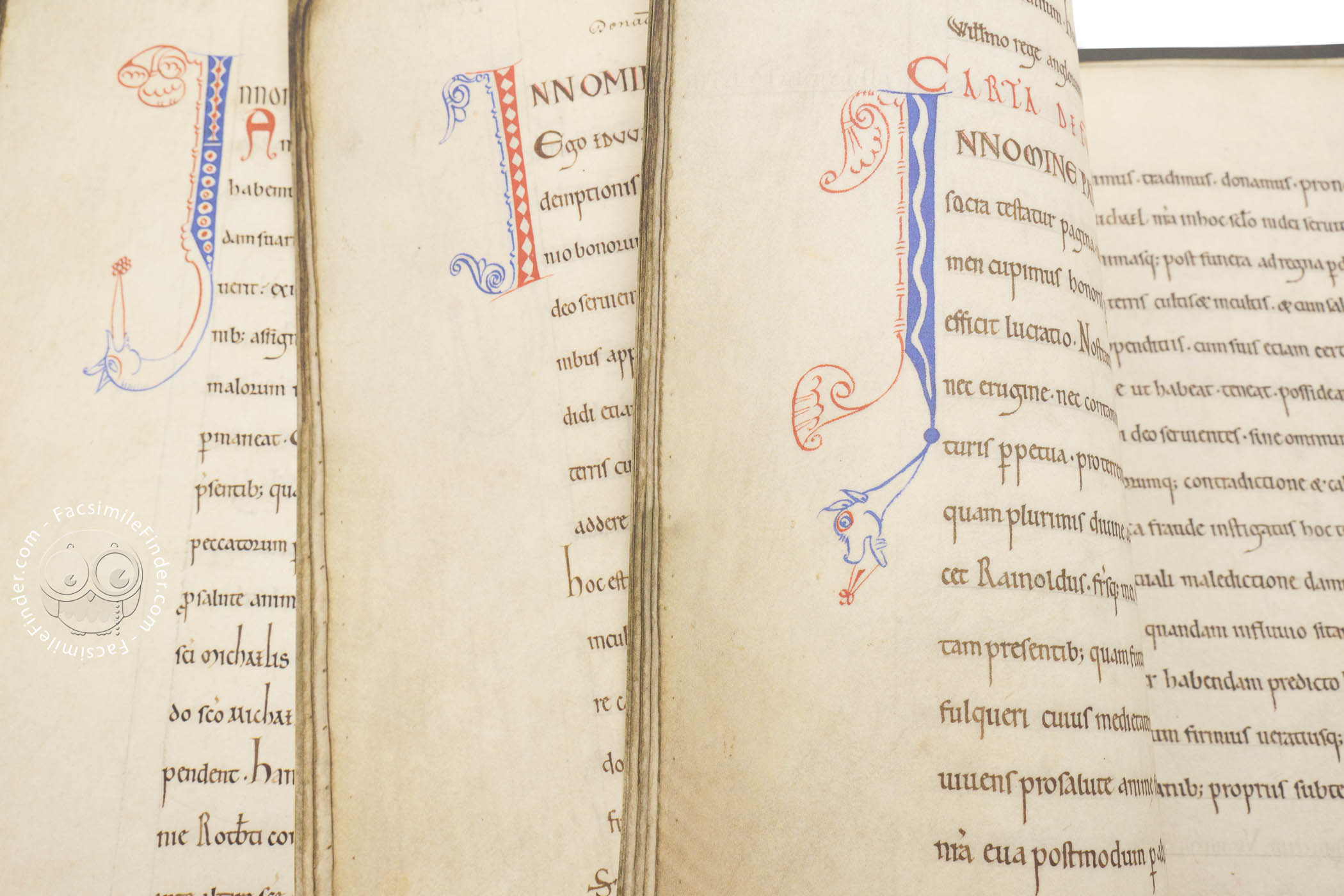
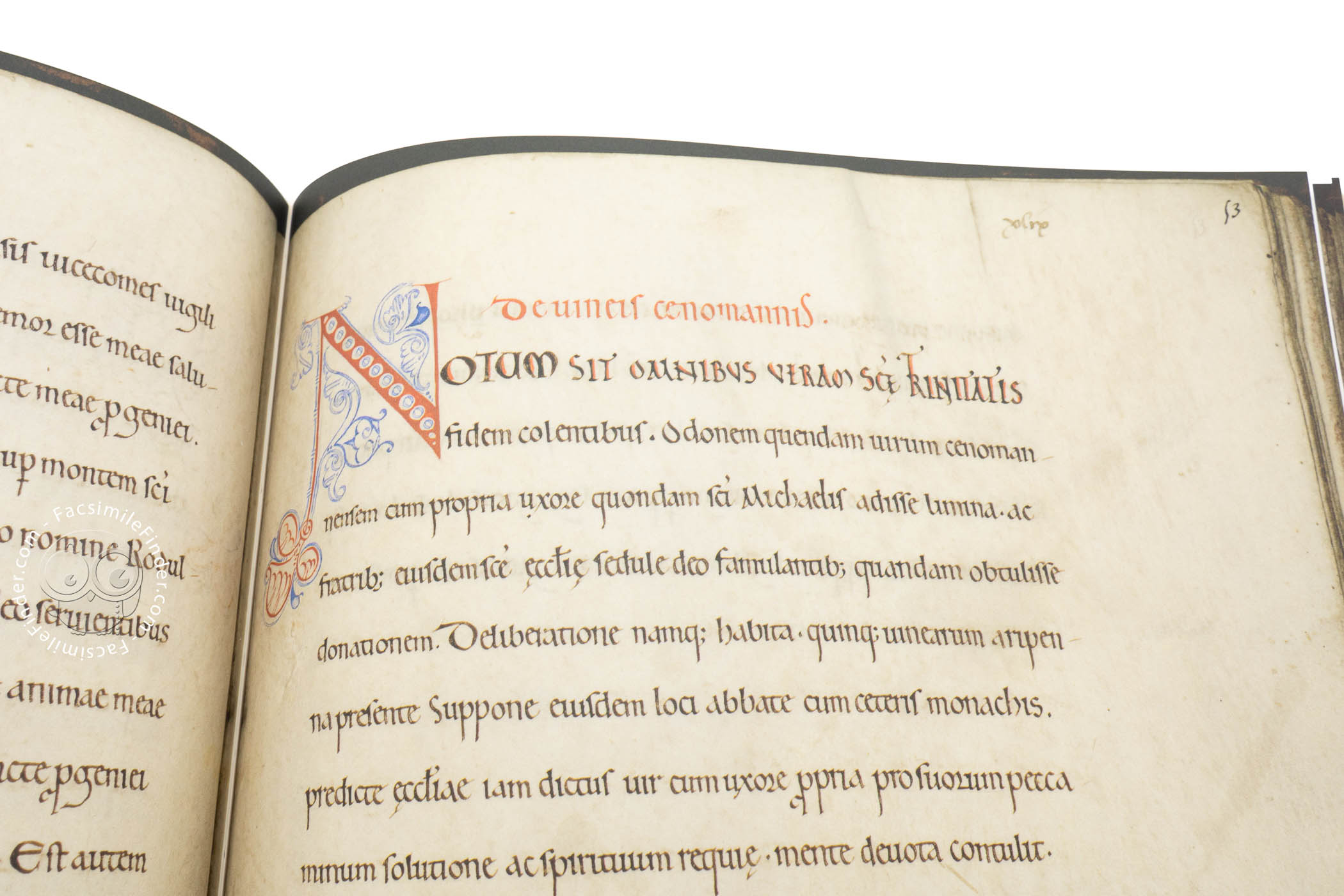
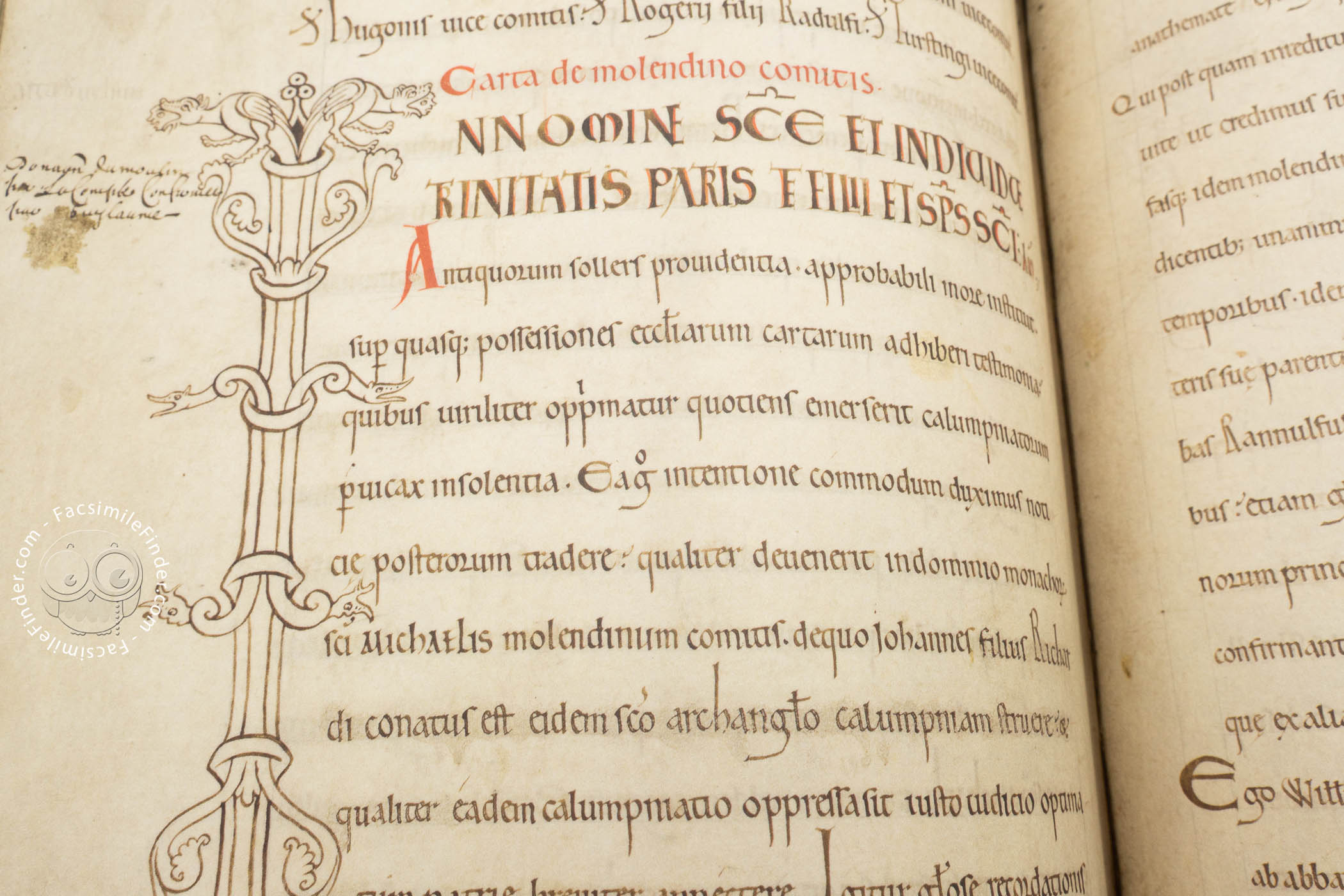
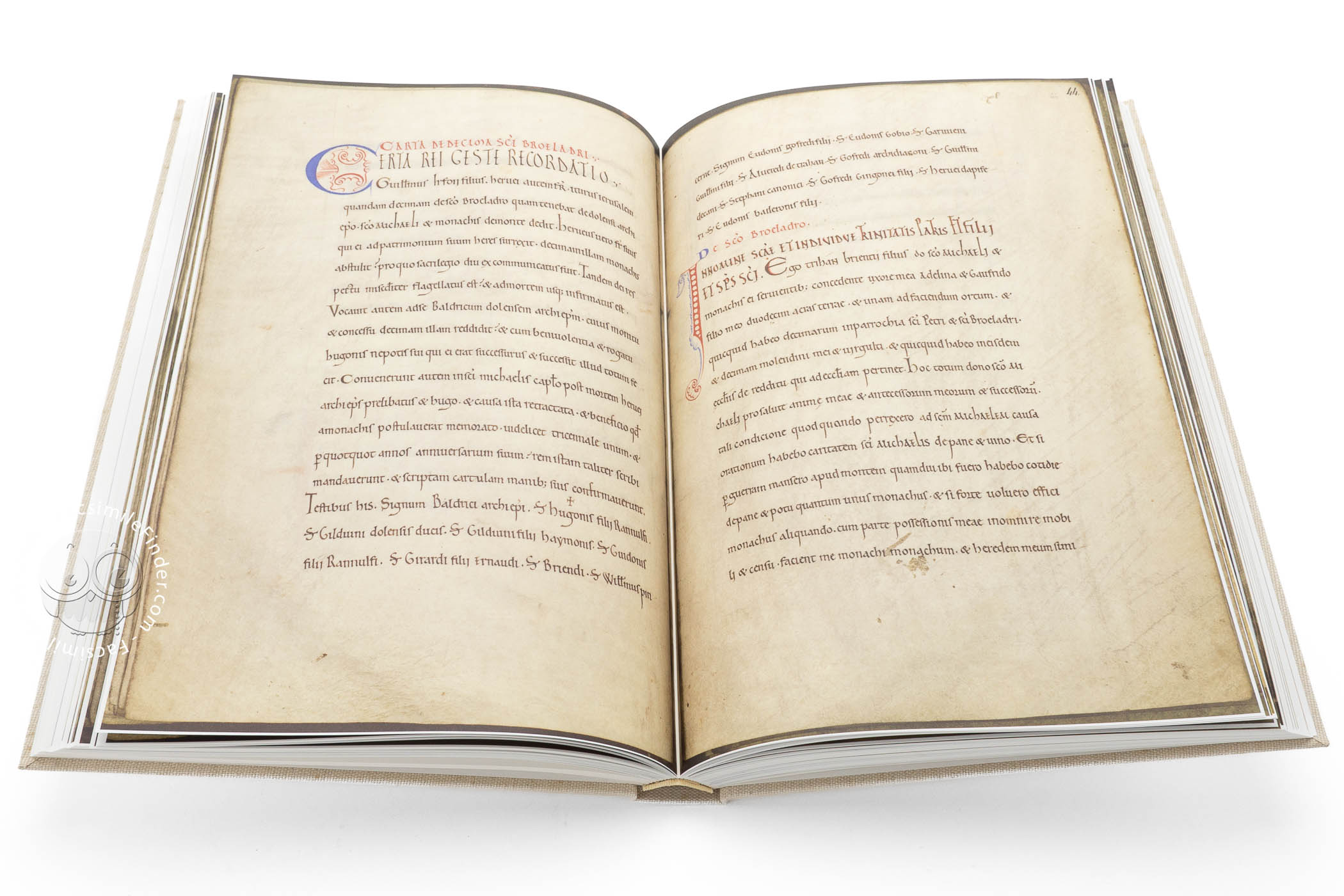
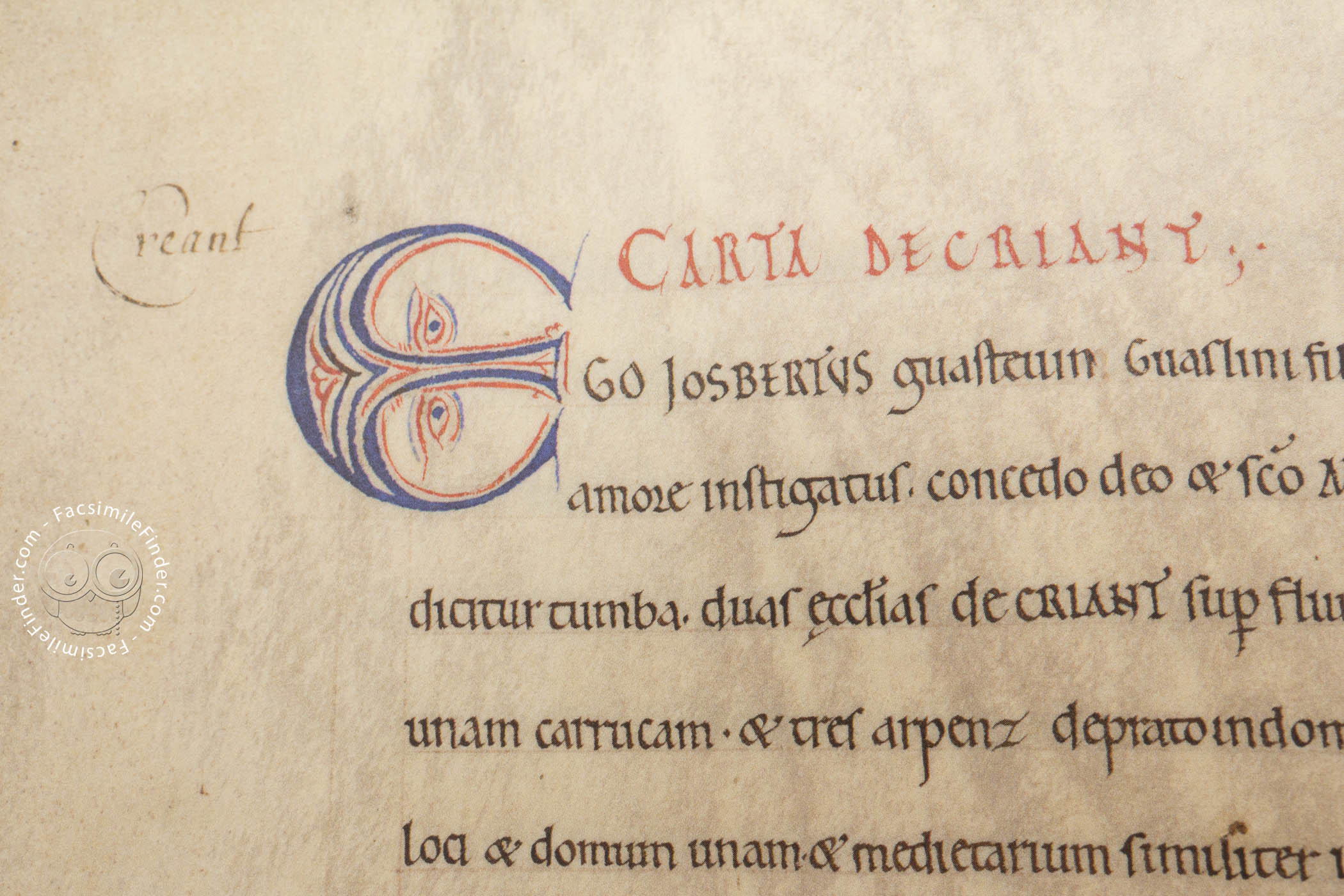
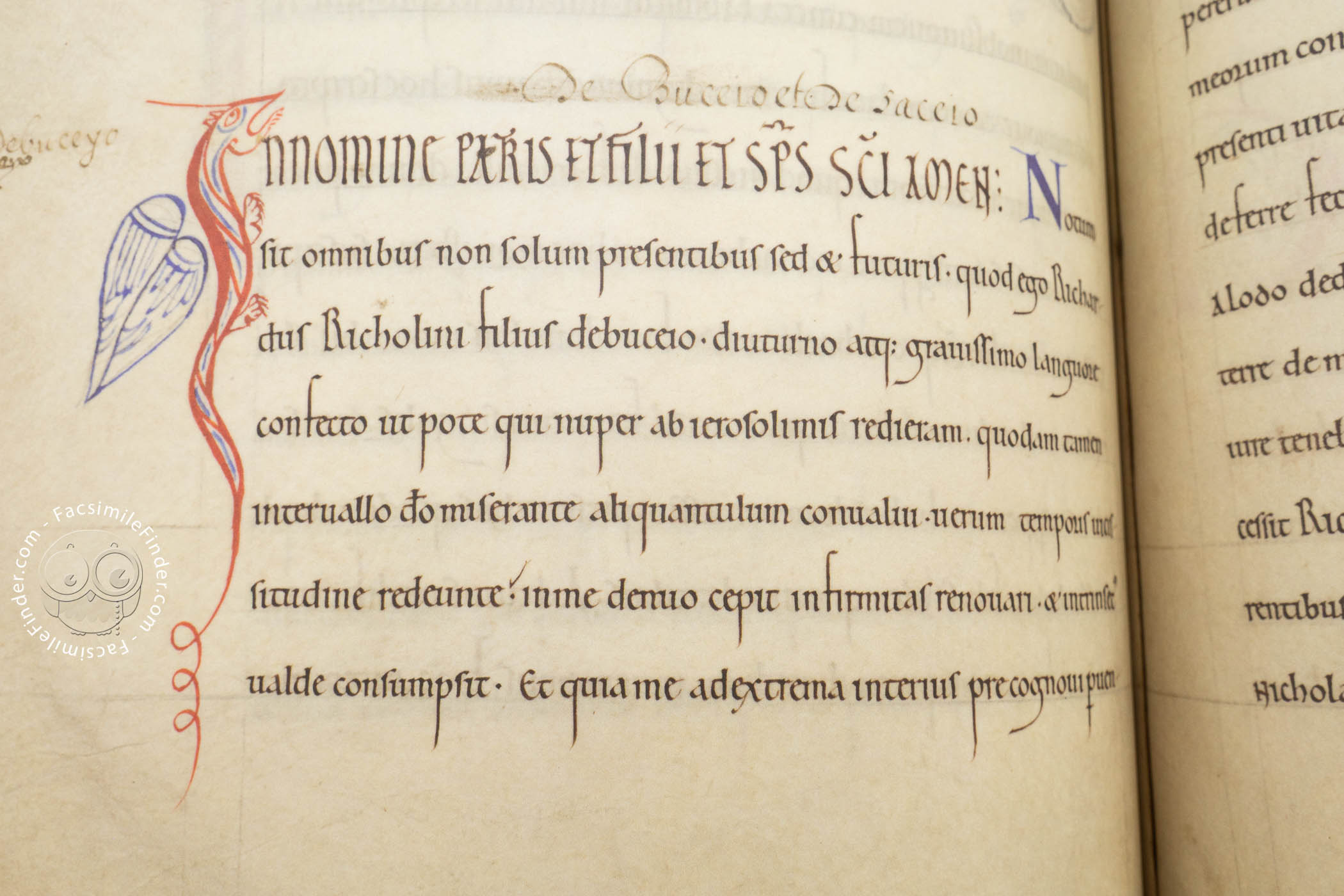
As is customary in monastic cartularies, the documents are arranged with the most important (those involving grants from popes, kings, and dukes) first, followed by charters grouped by the geography of the lands to which they pertain. The text is written in long lines (a single column) in a stately Transitional Script. The individual charters are introduced by enlarged letters, either single-color penwork initials with foliate and zoomorphic elements or red and blue pen-flourished initials.
Transfer at the Time of the French Revolution
The manuscripts of Mont-Saint-Michel were removed to Avranches in 1791, destined for a district library that never materialized. The cartulary, along with the other books from the monastery, was housed at the École centrale du département de la Manche from 1795 to 1808, when it was transferred to the Bibliothèque municipale (now Bibliothèque patrimoniale). The binding was restored in 2004.
We have 1 facsimile edition of the manuscript "Cartulary of Mont-Saint-Michel": Cartulaire du Mont-Saint-Michel facsimile edition, published by Les Amis du Mont-Saint-Michel, 2005
Request Info / Price