
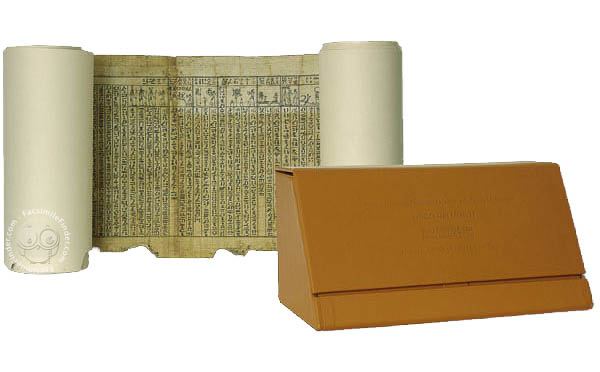

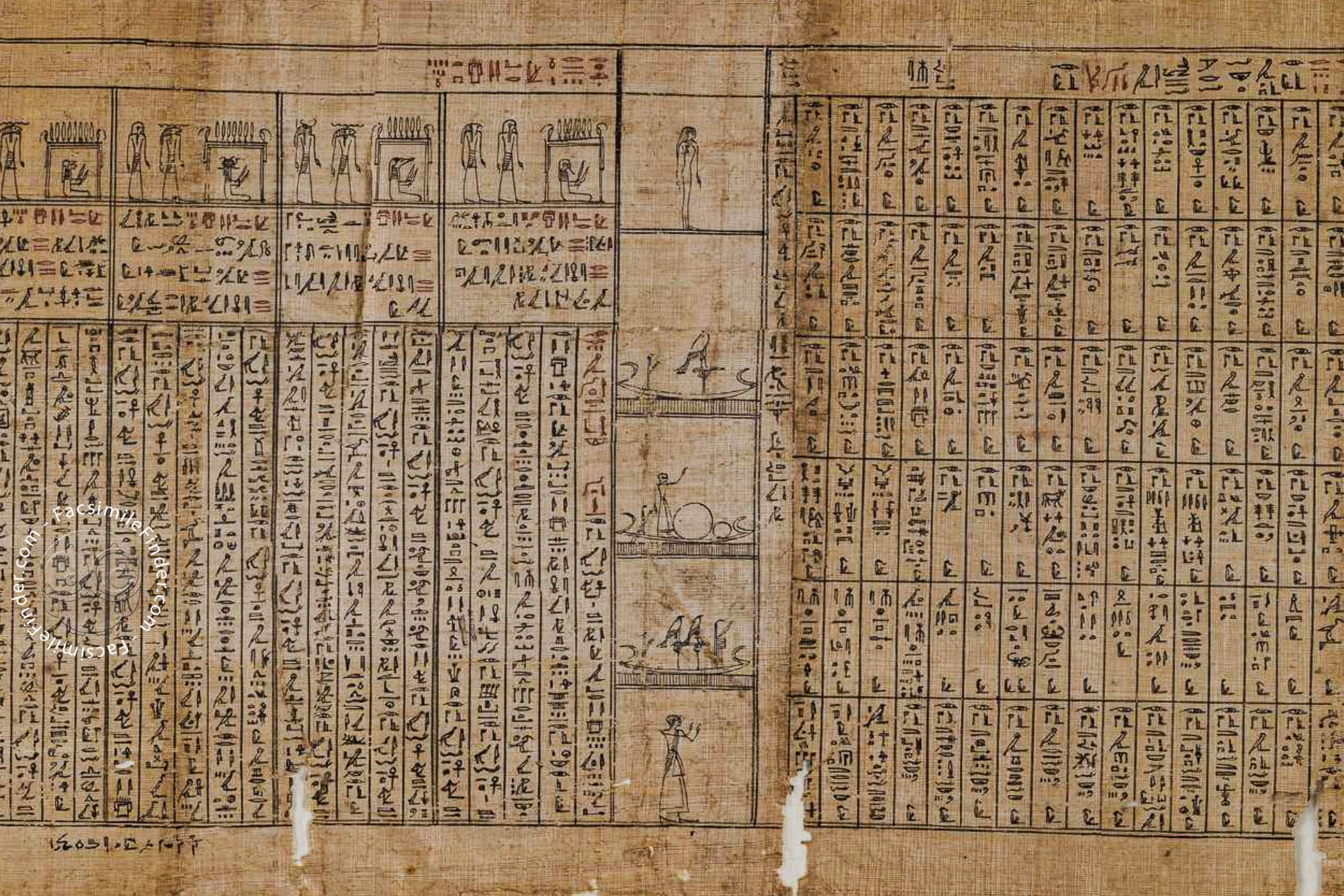
Nearly nineteen meters of papyrus, read from right to left, carry the 165 chapters copied for a man named Iuefankh, son of the mistress of the house Tasheretemenu. The Book of the Dead of Iuefankh, now Cat. 1791 in the Museo Egizio in Turin, was produced in Egypt, probably at Thebes, in the late Ptolemaic period of the second and first centuries BCE.
A Funerary Corpus in Its Last Egyptian Form
By the time this roll was copied, the body of spells the Egyptians called “Going Out in the Day” had served the dead for well over a millennium. Its sequence here follows the arrangement settled during the Twenty-Fifth and Twenty-Sixth Dynasties, which scholars call the Saite recension and which outlasted by centuries the dynasty that named it.
Cursive Hieroglyphs and Vignettes in Line Drawing
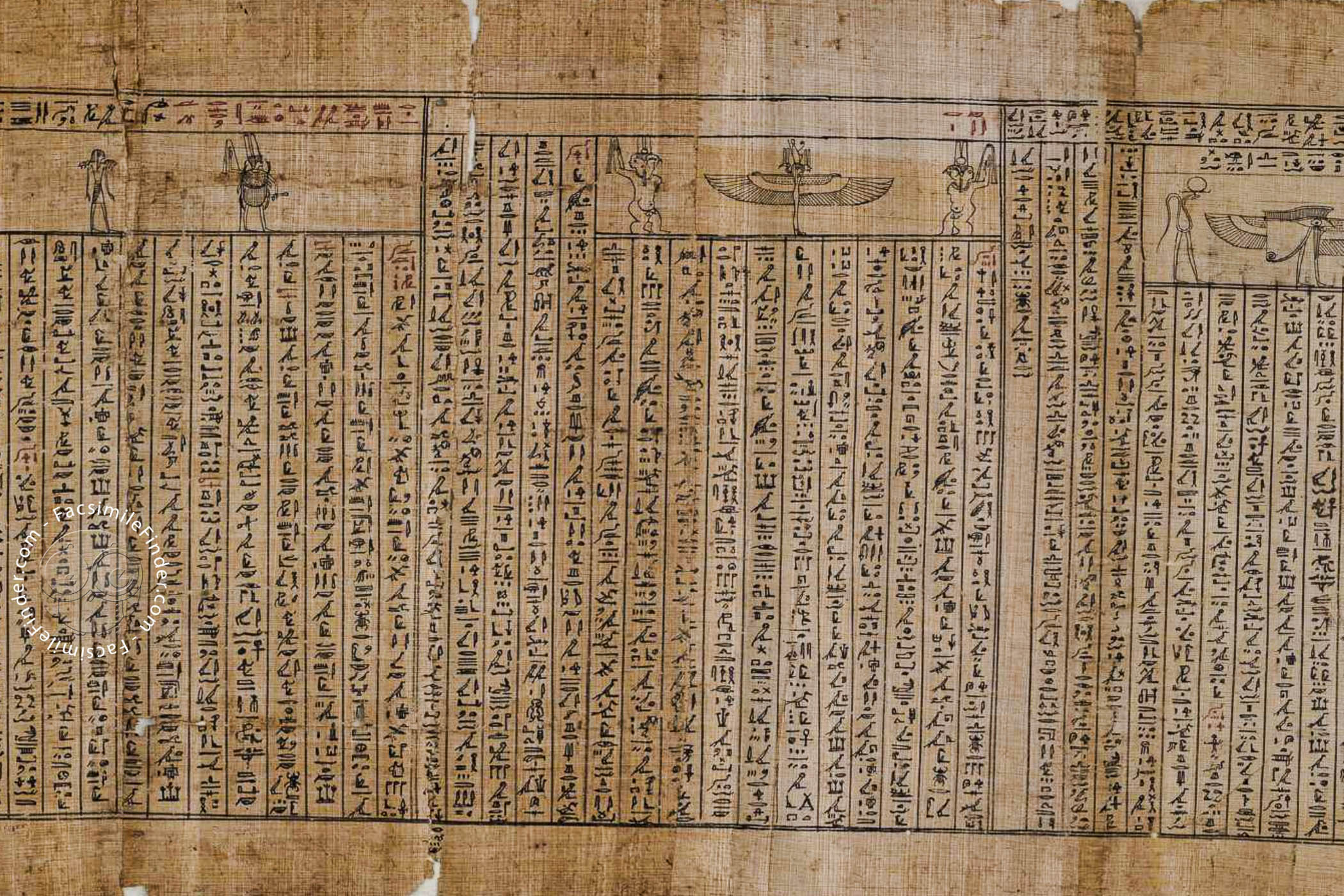
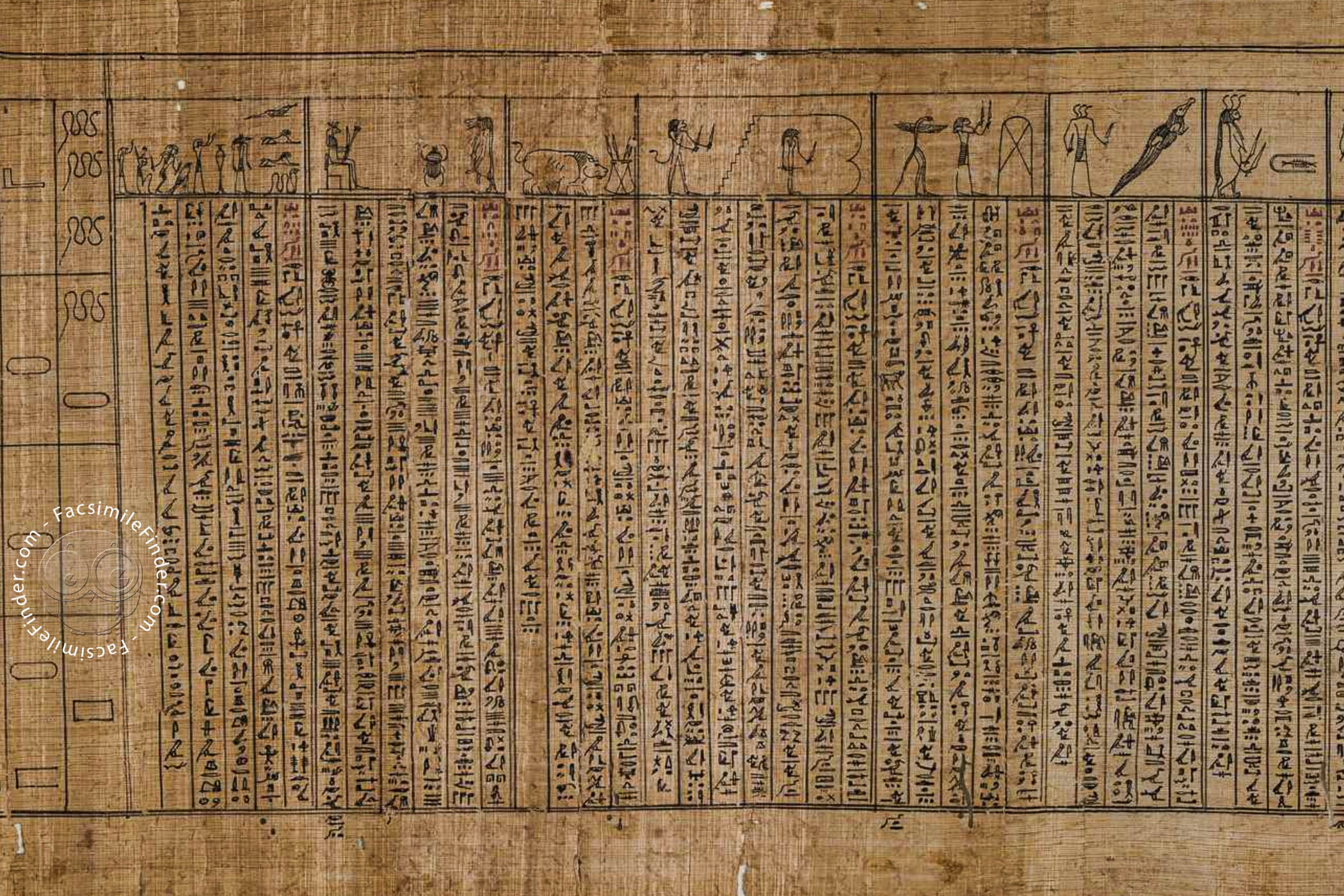
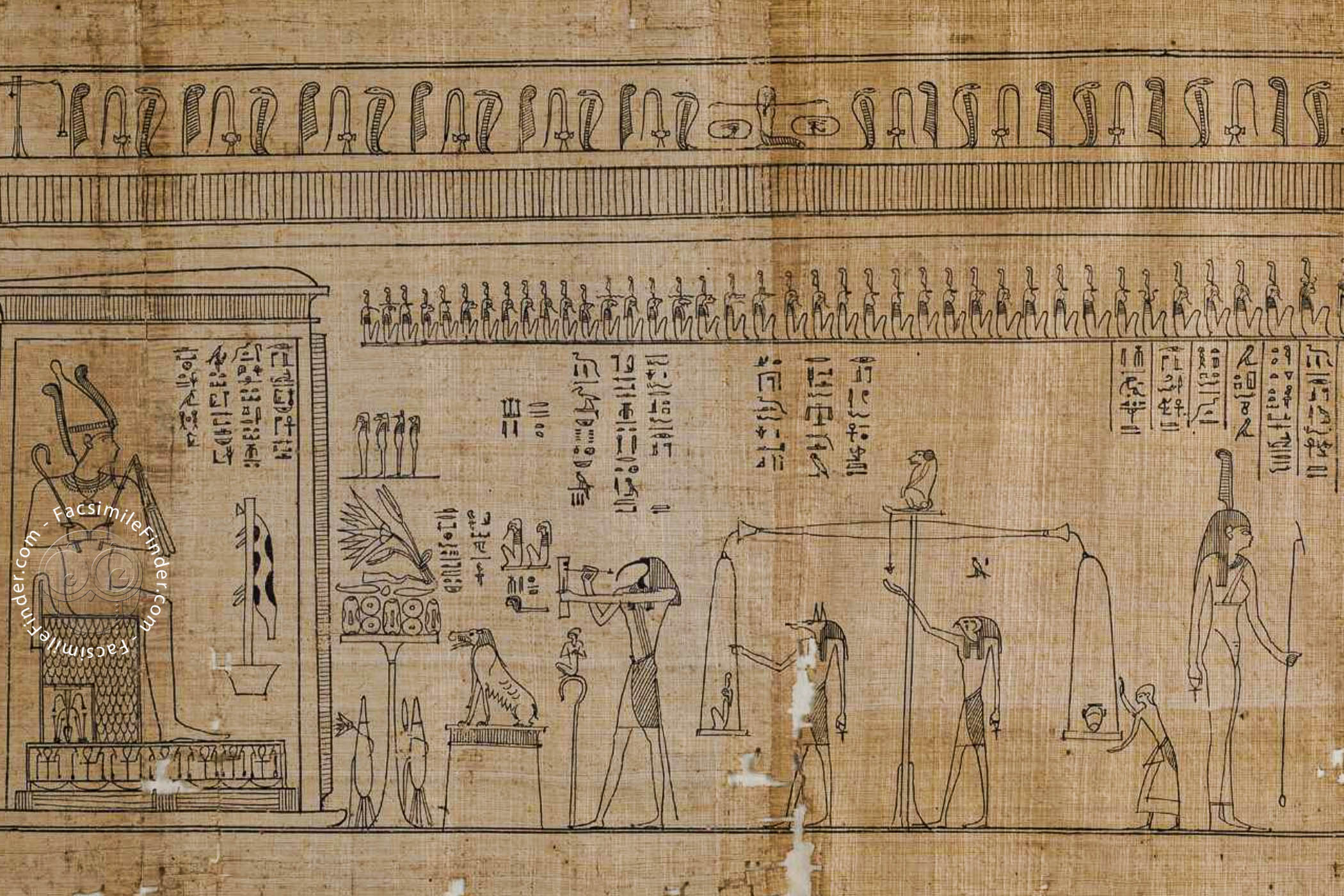
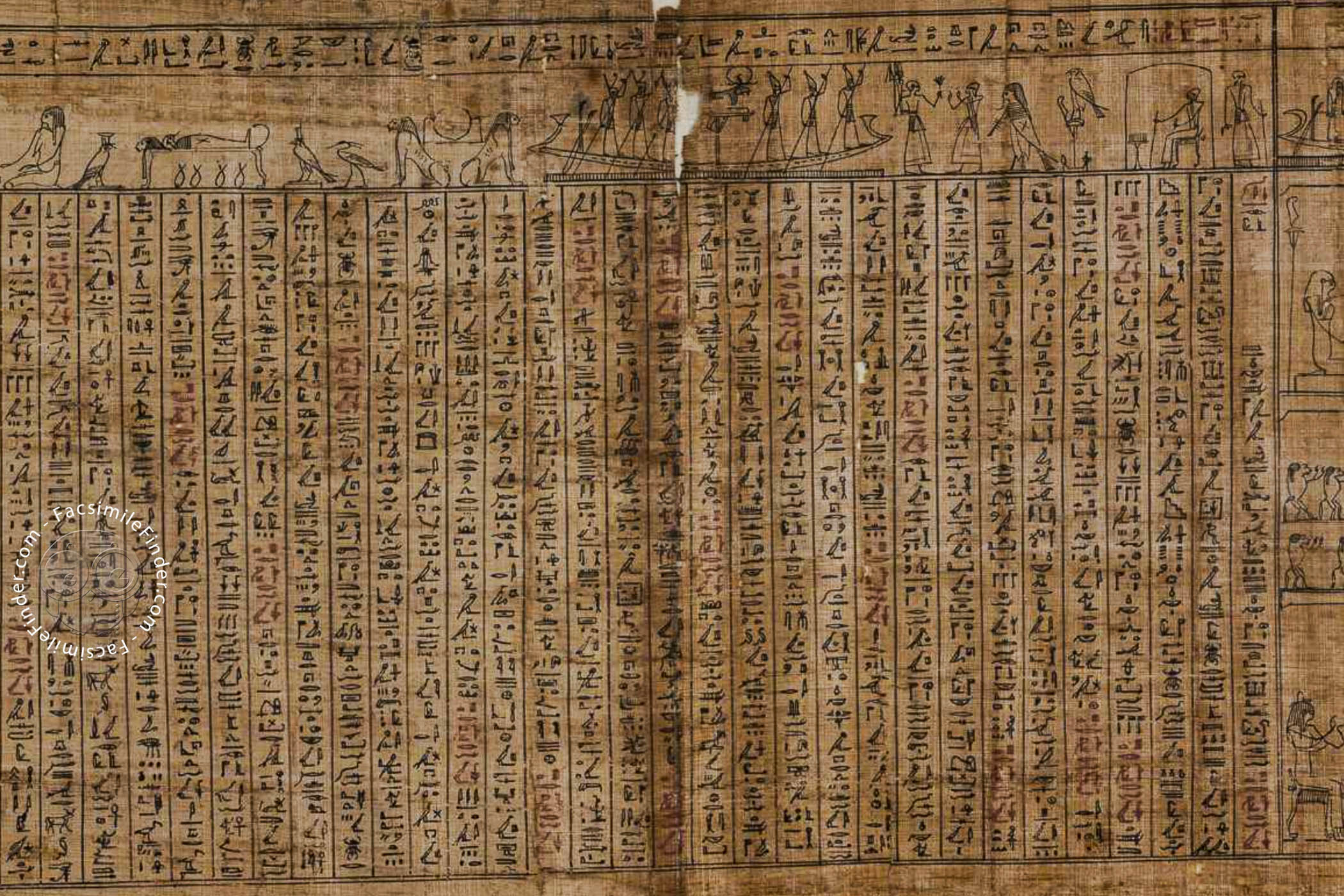
The text runs in cursive hieroglyphs, with demotic also recorded on the roll. Vignettes punctuate its length, executed as line drawings rather than painted: each condenses the substance of its chapter into a single image.
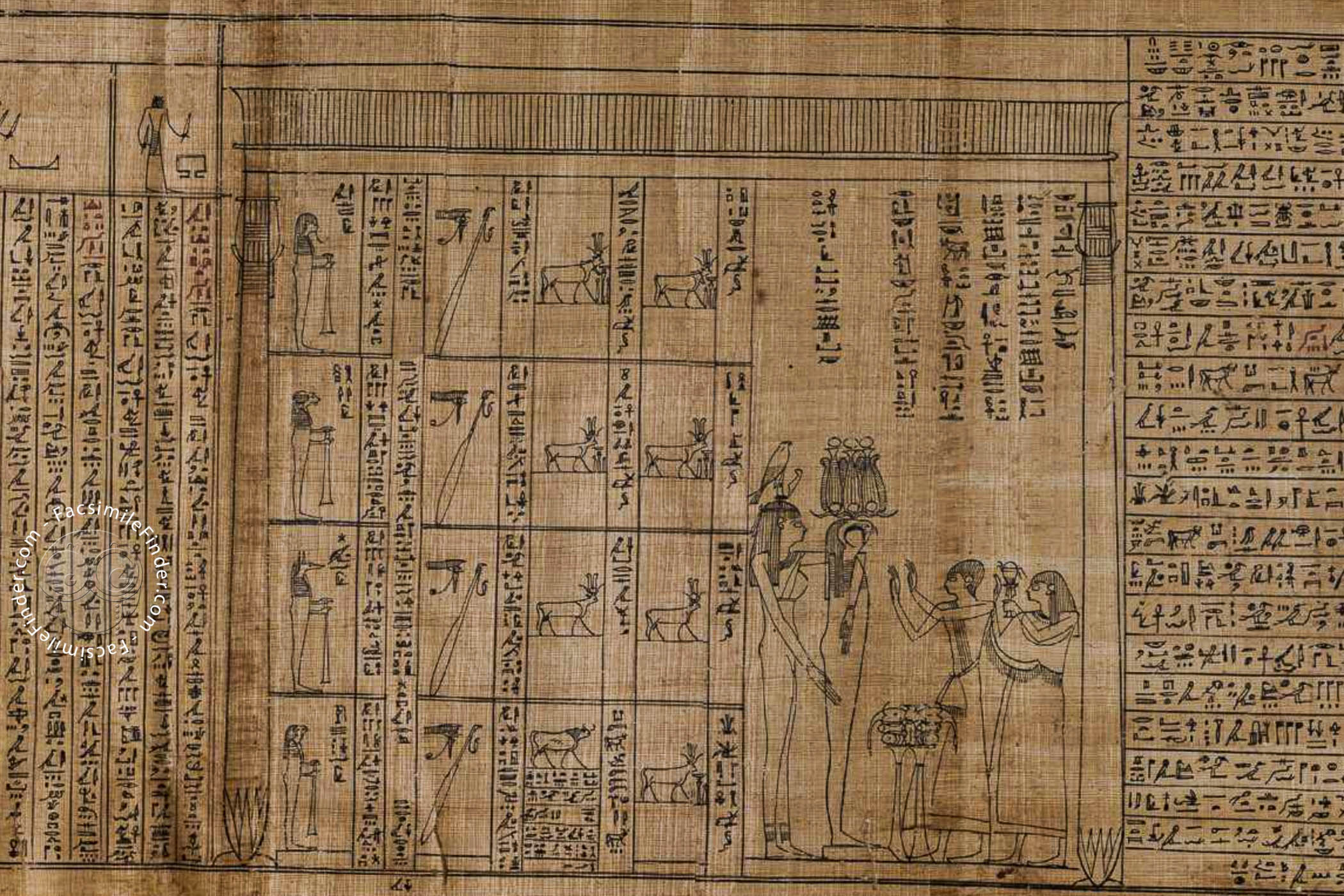
A long funeral procession unfolds across one section; elsewhere Iuefankh stands before the scales where Horus and Anubis weigh his heart against Maat.
Burial Equipment and the Numbering of the Book of the Dead
The roll was buried with Iuefankh as part of his funerary goods, a guide to the obstacles, gatekeepers, and judgments awaiting him. Champollion examined it in Turin; Richard Lepsius, who came in 1836 and again in 1841, published it in 1842 and numbered its sections, a sequence of 165 that remains the standard reference system for the Book of the Dead.
A Private Roll That Became a Measure
Every other copy is still described against a scheme drawn from this one, made for a man whose name survives because his papyrus did.
We have 1 facsimile edition of the manuscript "Book of the Dead of Iuefankh": Libro dei Morti facsimile edition, published by Il Bulino, edizioni d'arte, 2007
Request Info / Price