
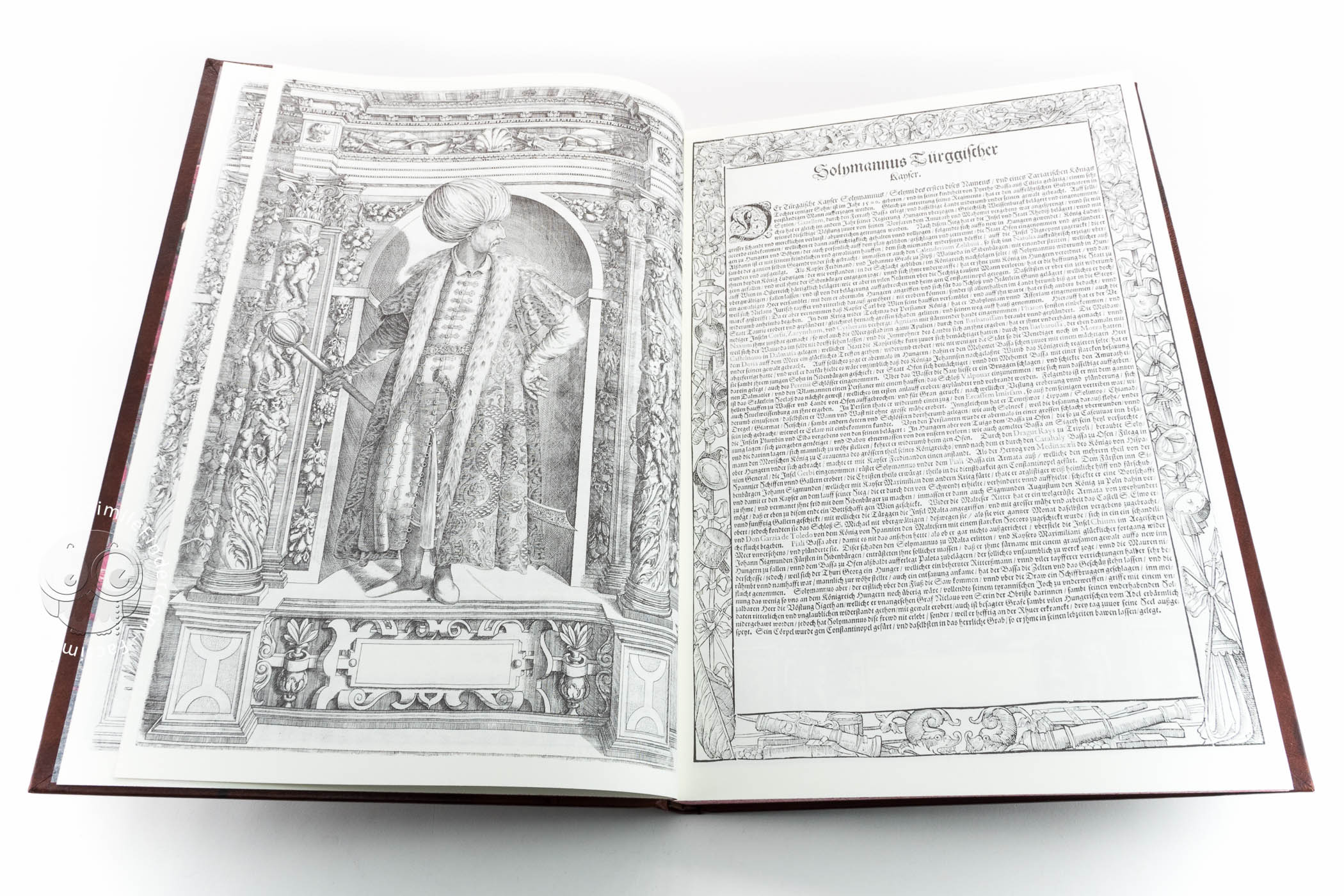
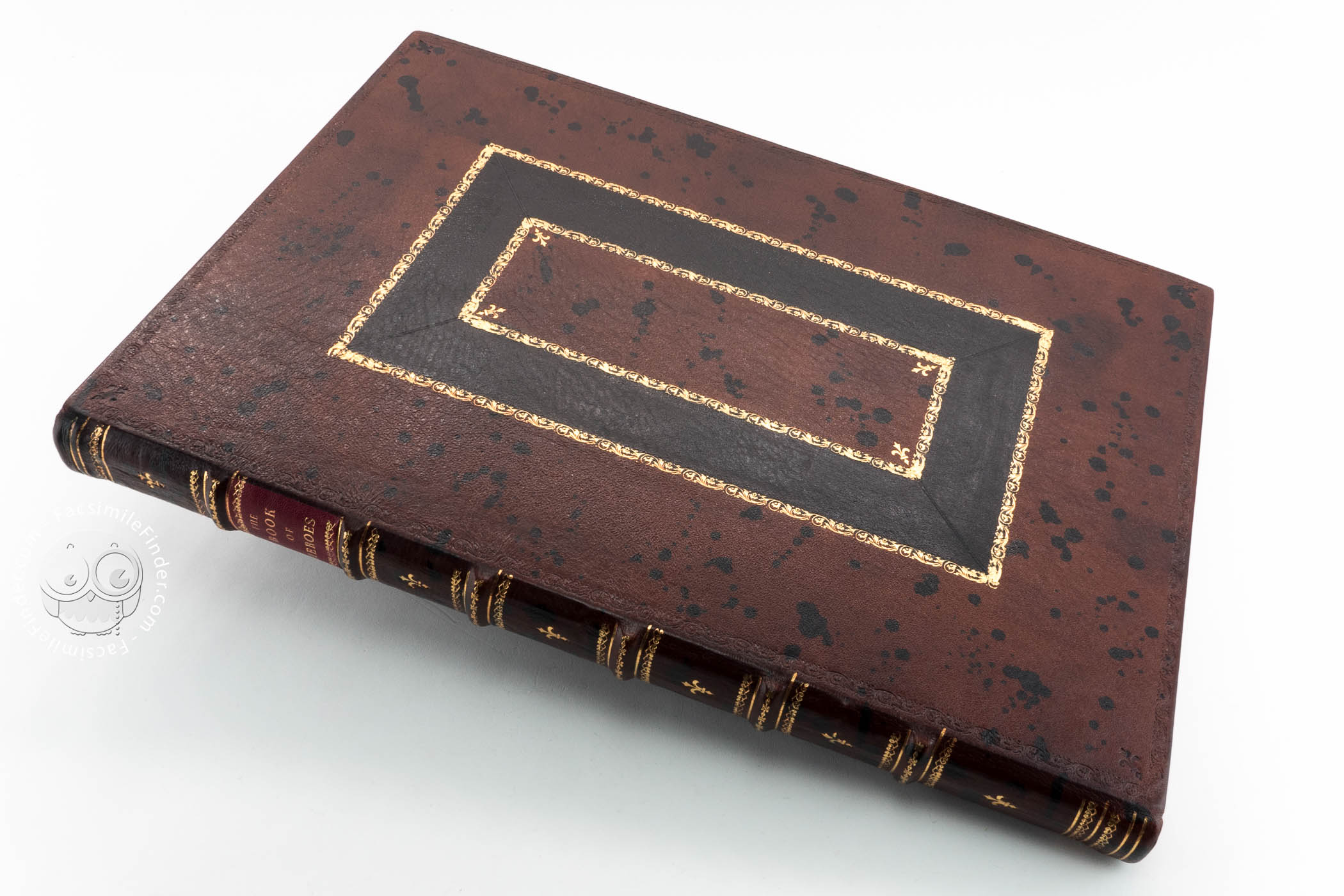

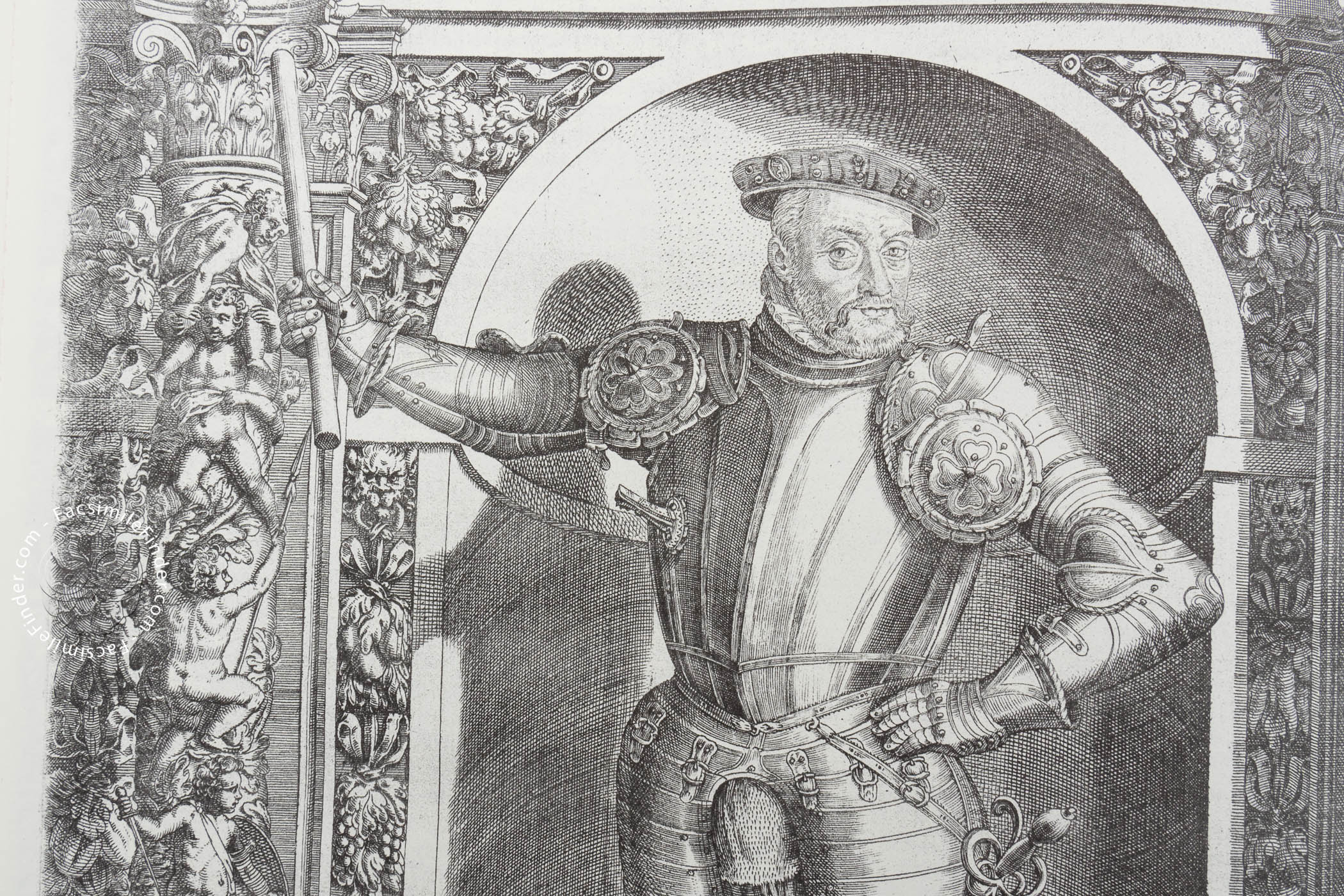
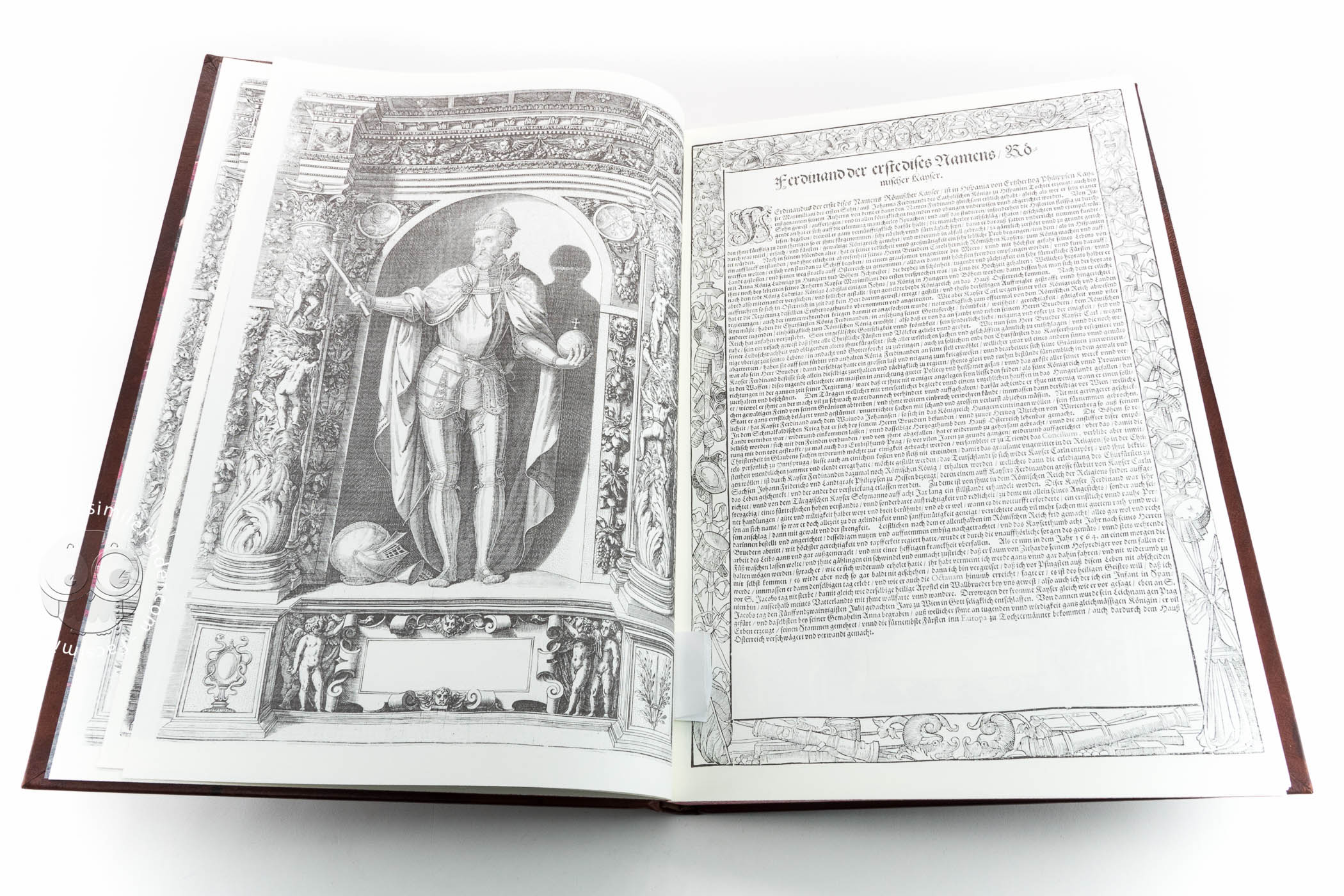
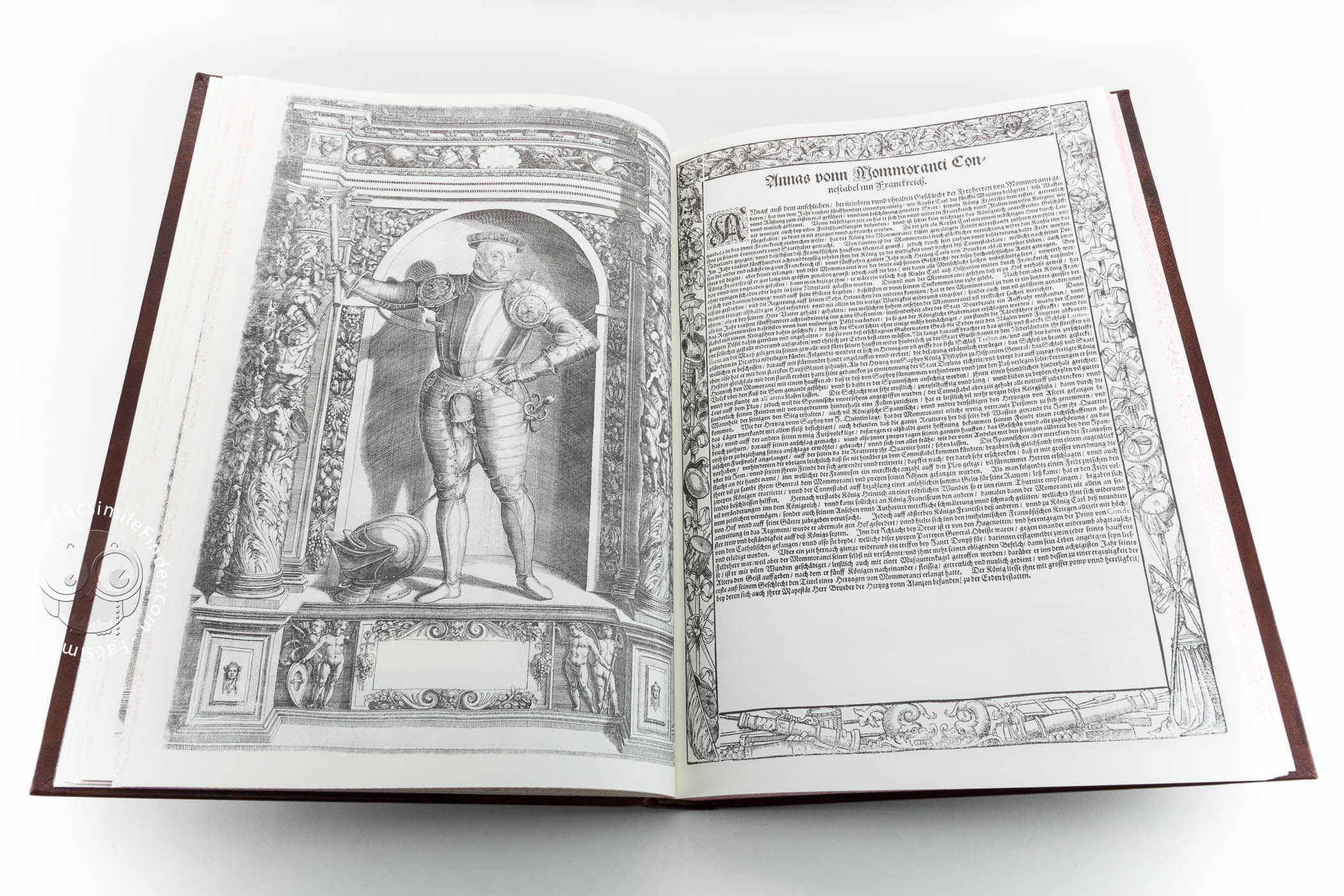
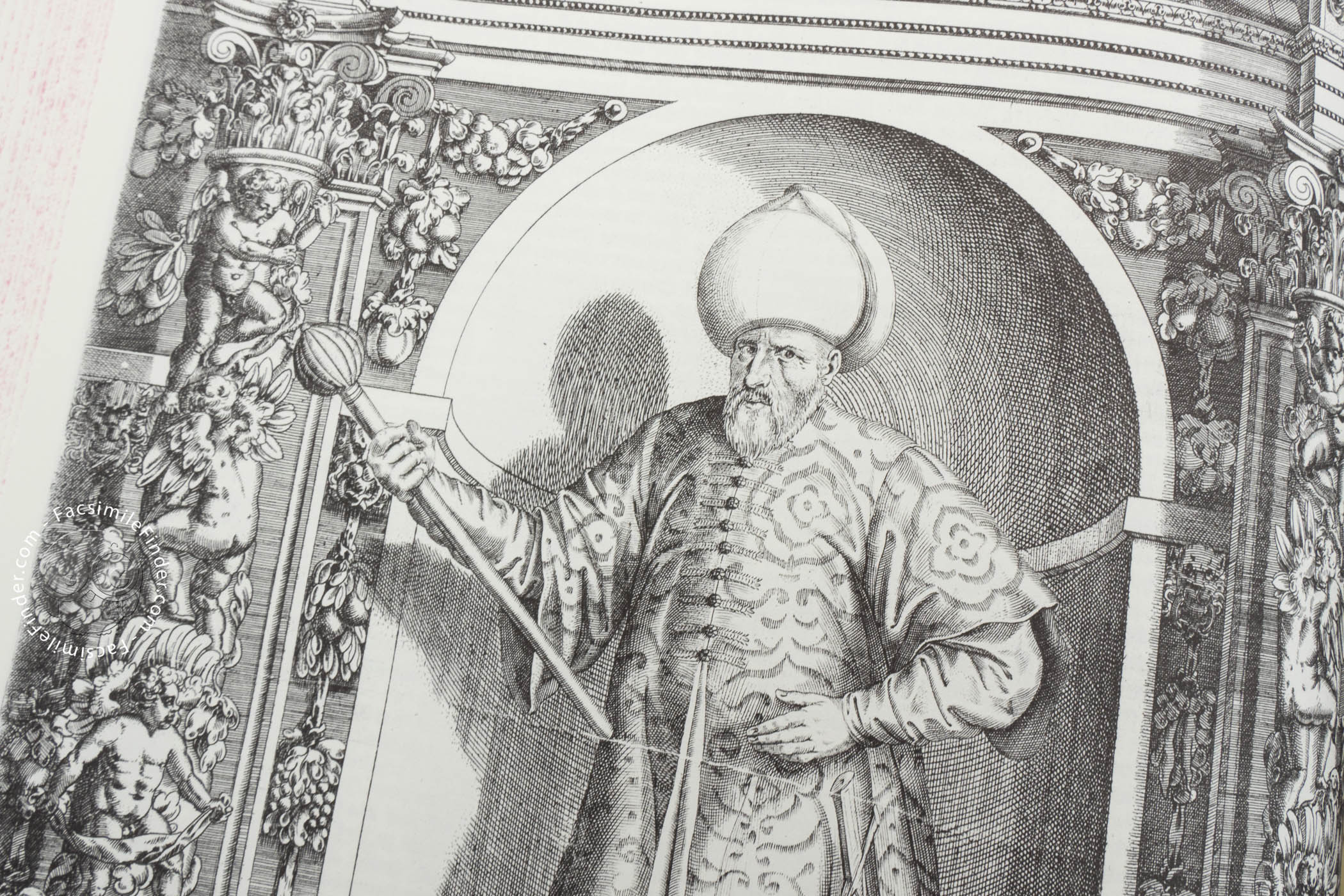
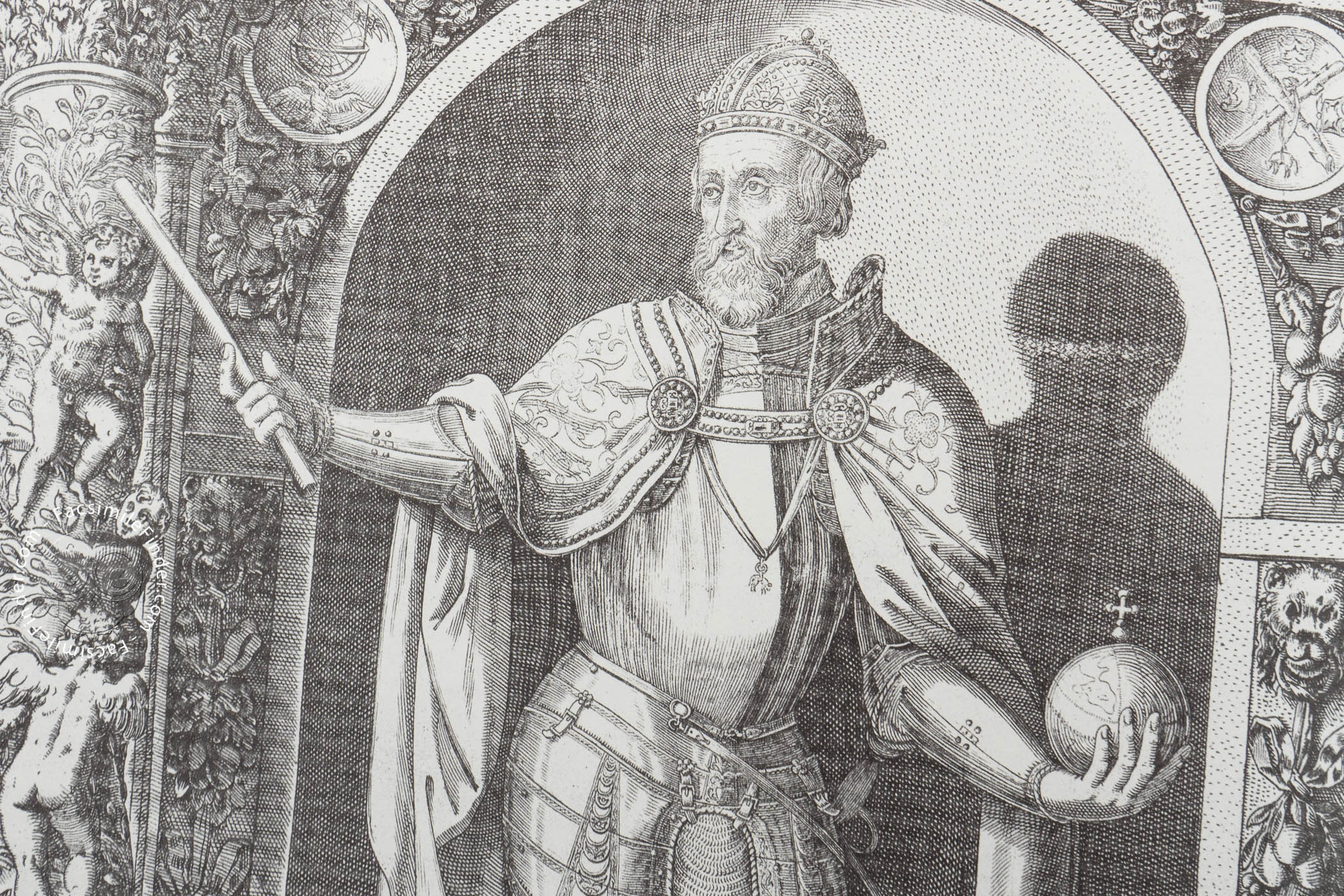
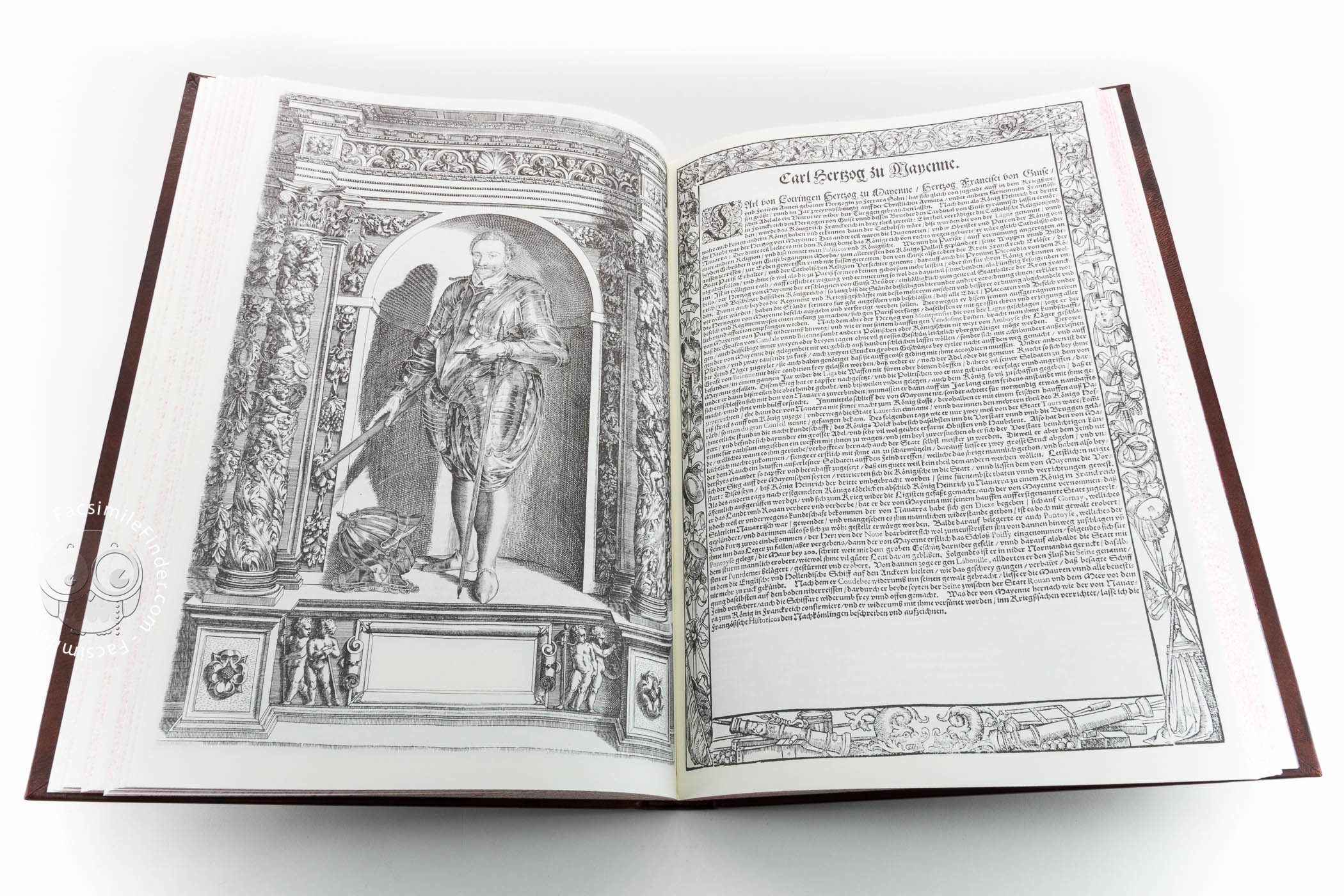

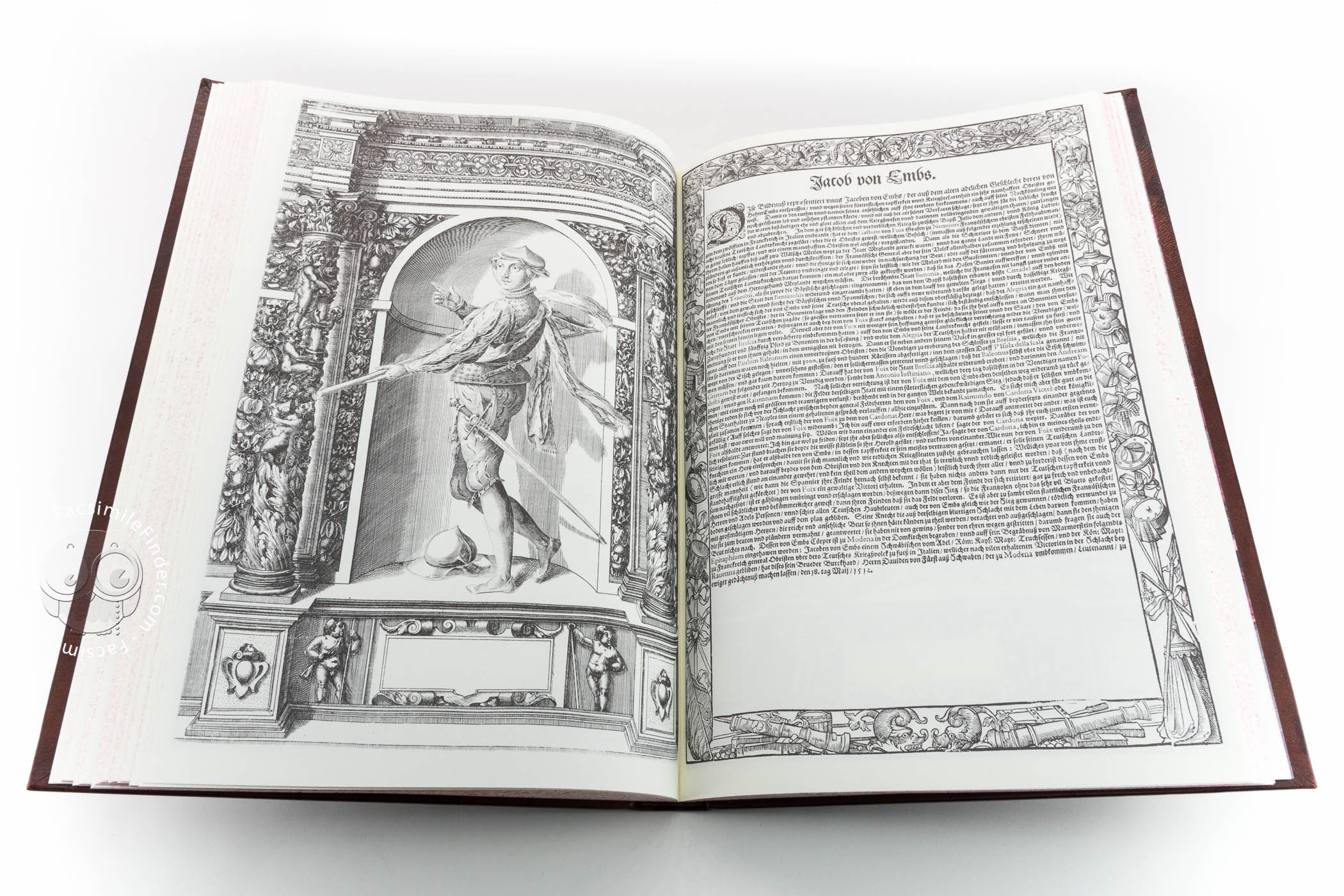


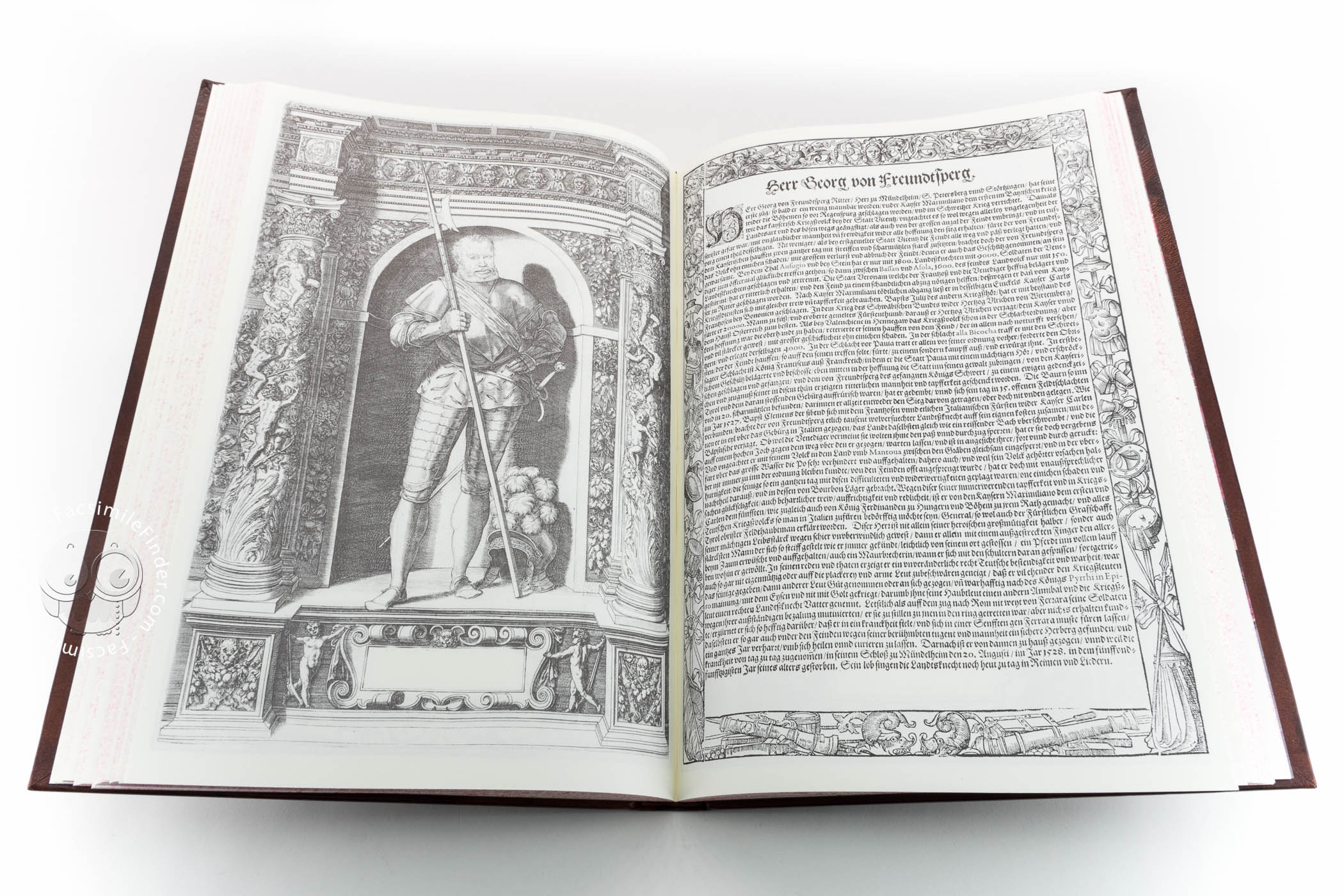

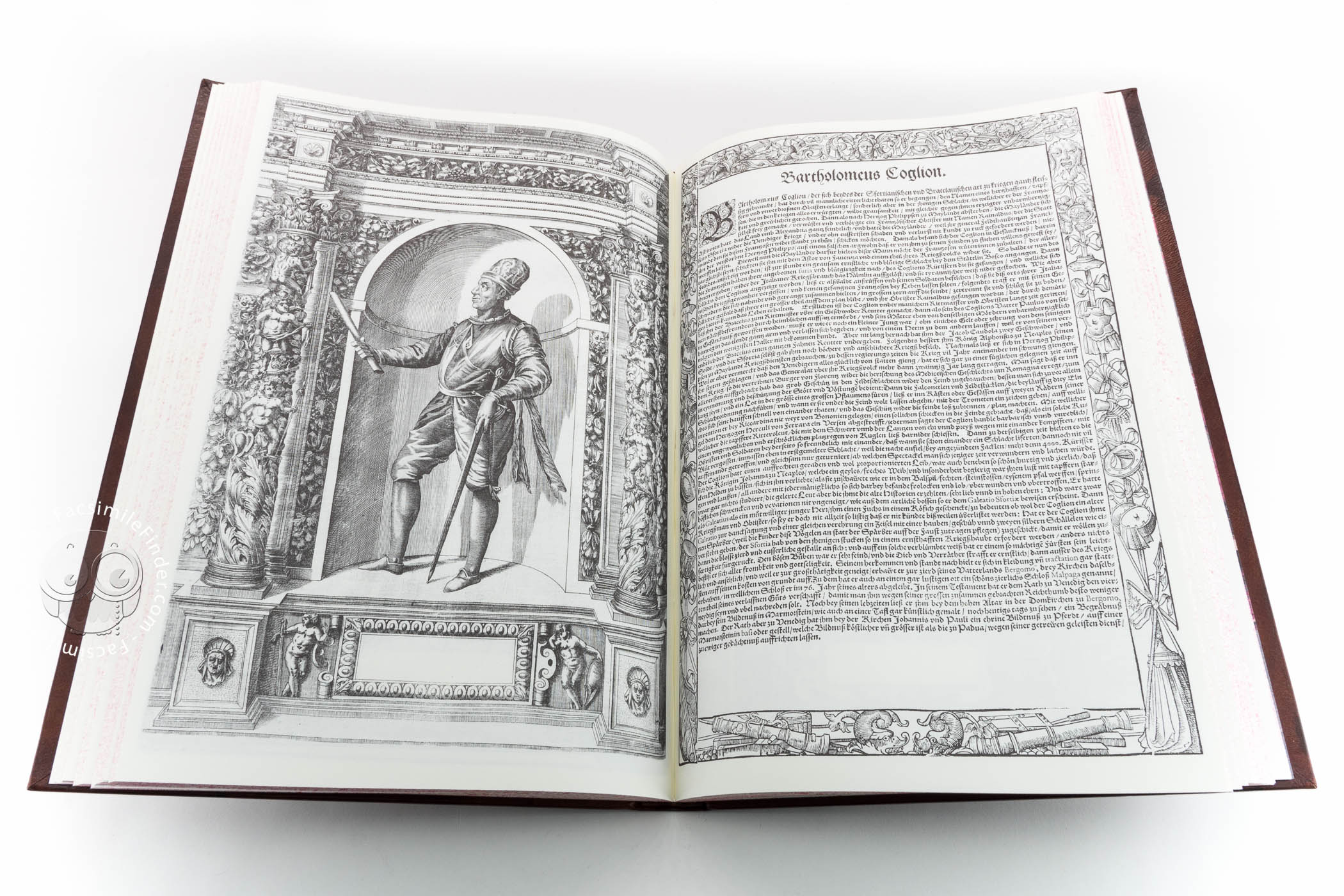
The Book of Heroes gathers martial memory into a work of unusual ambition. Conceived around the collections of Archduke Ferdinand II of Tyrol, it emerged from his celebrated Heroes’ Armoury, where armour and weapons associated with monarchs and commanders of the fifteenth and sixteenth centuries were displayed on life-size figures, accompanied by portraits and inscriptions. The effect was deliberately theatrical: these armoured presences stood before the viewer as if history itself had been made corporeal.
More than a catalogue, the volume transforms objects of war into instruments of remembrance, preserving the fame of men whose deeds were judged worthy of entry into an “Honourable Society.”
A Theatre of Arms and Fame
What distinguishes this book is the union of portraiture, armour, and biography. Ferdinand’s collecting was shaped by a humanistic fascination with the viri illustres, the exemplary men of history, and by a desire to preserve both their likenesses and their relic-like martial equipment.
The book thus stands at the meeting point of chivalric memory and Renaissance scholarship, where the armour of a hero could be treated almost like a saintly relic, and where military renown became a visual language of dynastic culture. Ferdinand even included himself among these heroic figures, commemorating his own campaign against the Ottomans.
Print, Memory, and Habsburg Identity
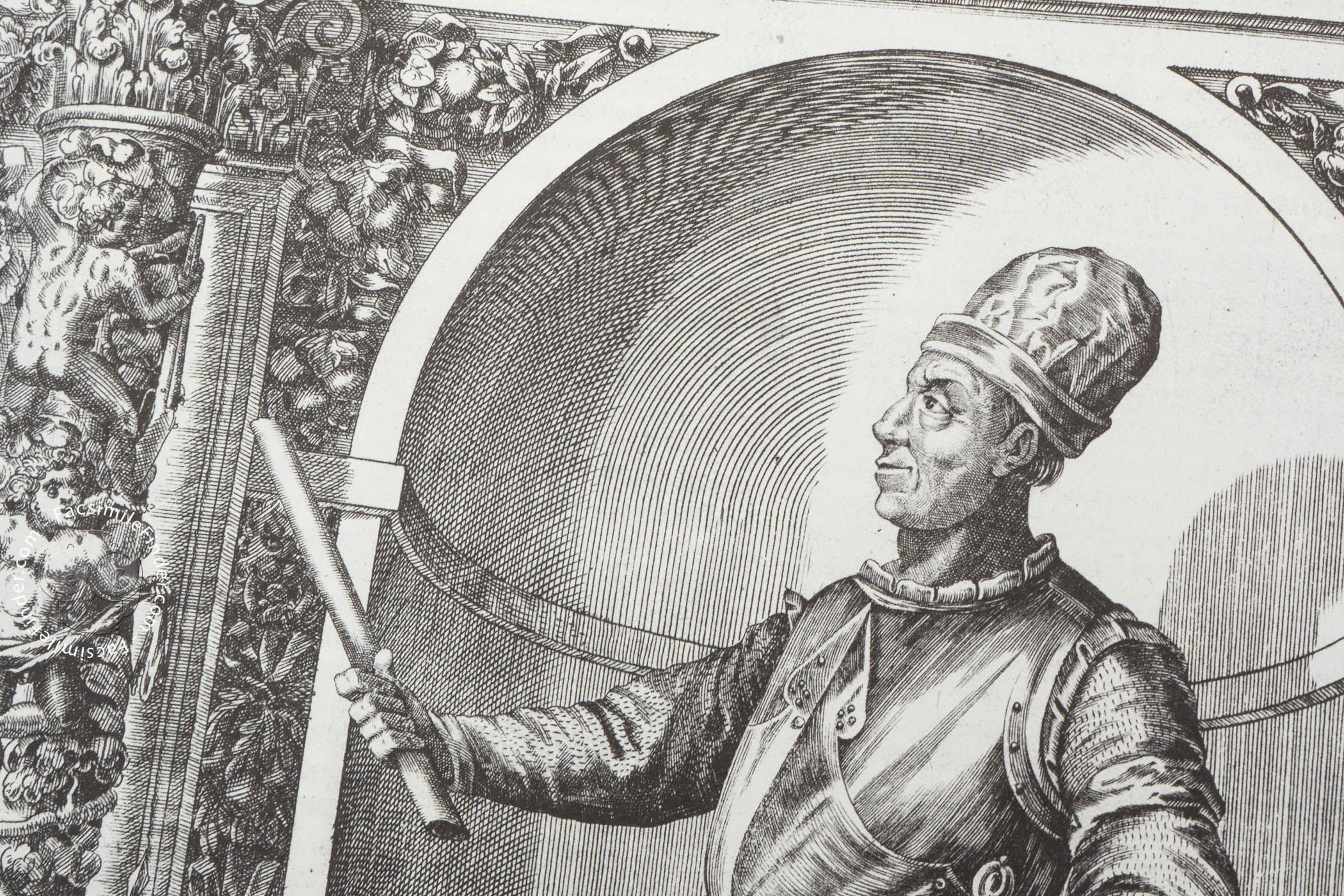
Published posthumously in Latin in 1601 and in German in 1603, the Armamentarium Heroicum became the first printed and illustrated collection catalogue of its kind. Its 125 engraved plates, associated with Jakob Schrenk von Notzing and executed by Dominicus Custos after designs by Giovanni Battista Fontana and others, give the book both documentary authority and ceremonial splendour. It is, in the end, a monument in printed form: a work that turns collecting into historical memory, and memory into Habsburg self-fashioning.
An Heir to the Chivalric Imagination
The Book of Heroes also preserves something more elusive than armour or likeness: it preserves the ideal of heroic lineage. Each figure participates in a larger genealogy of honour, where personal courage, dynastic service, and imperial memory are woven together. In this sense, the book does not merely look backward. It instructs its viewers and readers in how power wished to remember itself—through disciplined bodies, named achievements, and visible emblems of rank.
What survives is therefore not only a record of celebrated warriors, but a carefully staged vision of nobility as historical performance, shaped by the Habsburg court’s conviction that arms, images, and memory could together confer a lasting afterlife on worldly fame.
We have 1 facsimile edition of the manuscript "Book of Heroes": Book of Heroes facsimile edition, published by Bernardinum Wydawnictwo
Request Info / Price