
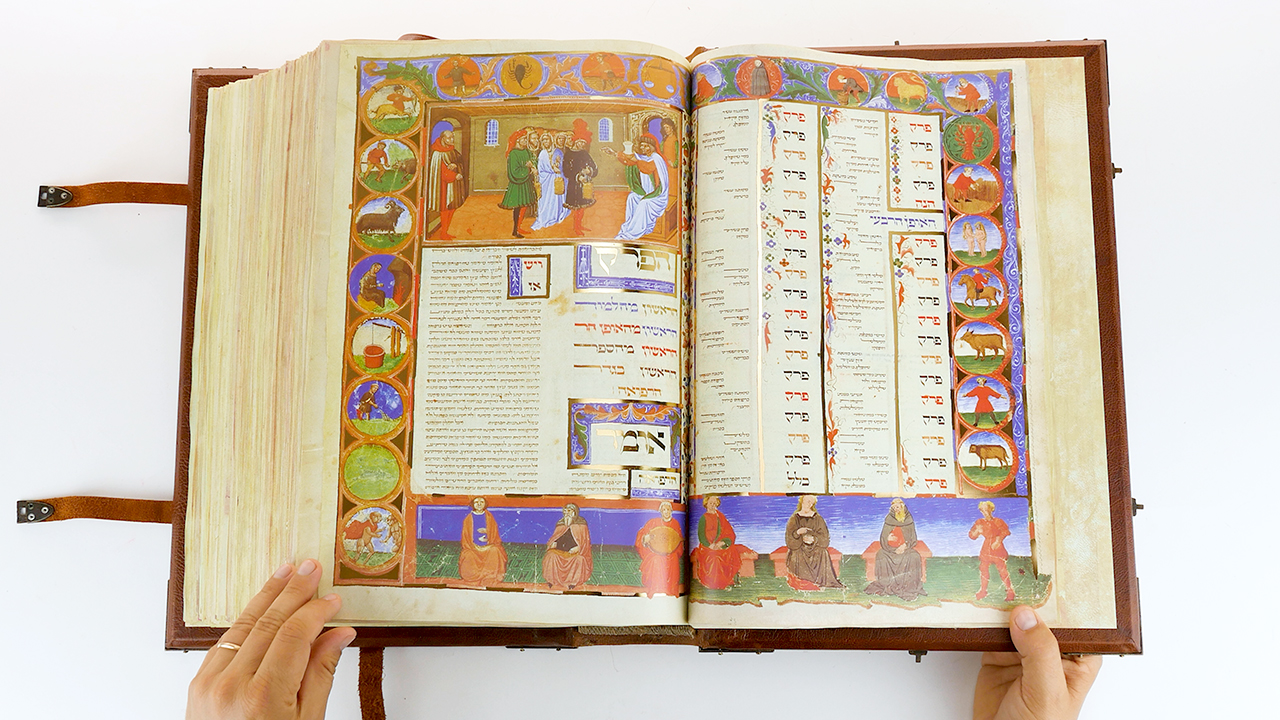
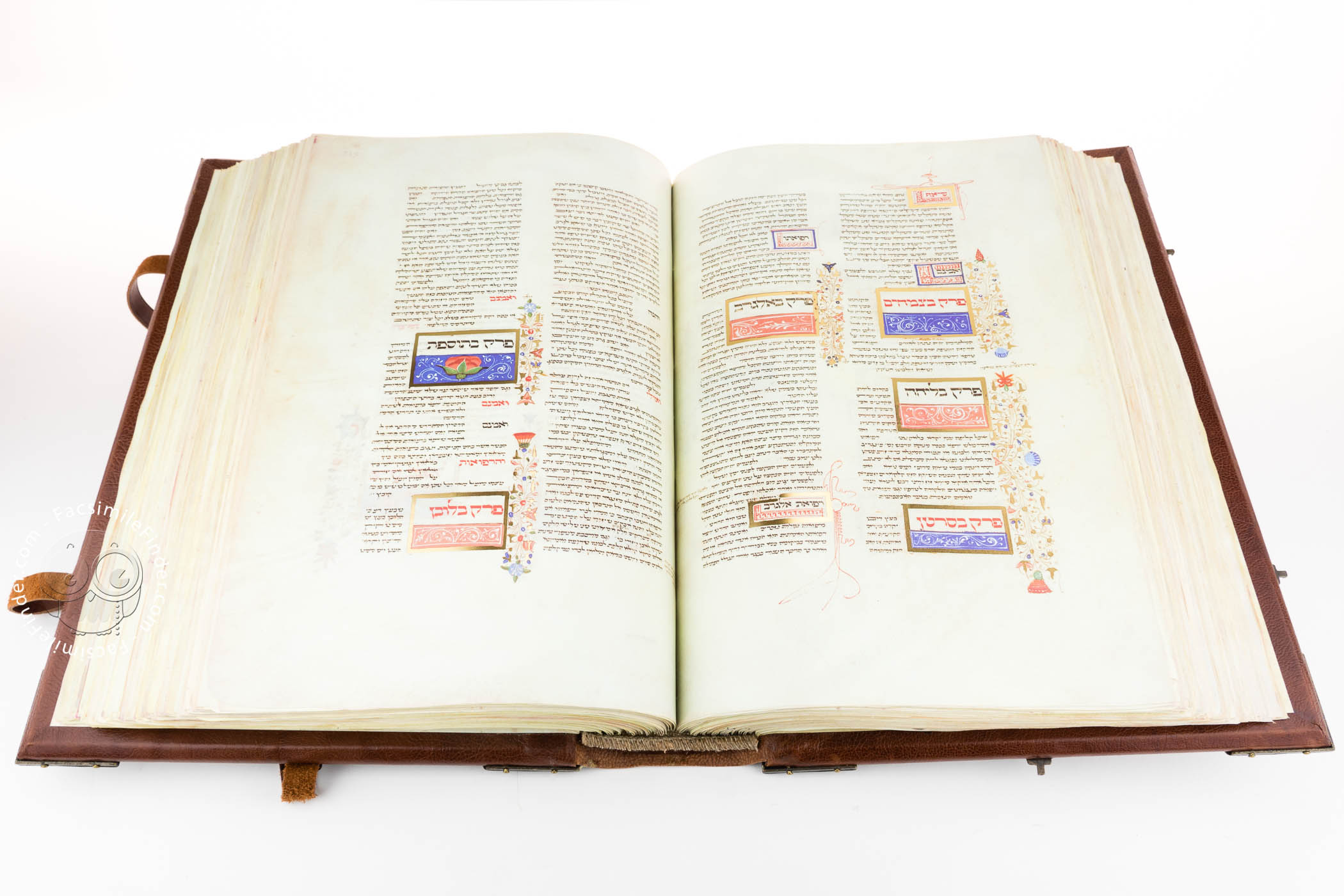


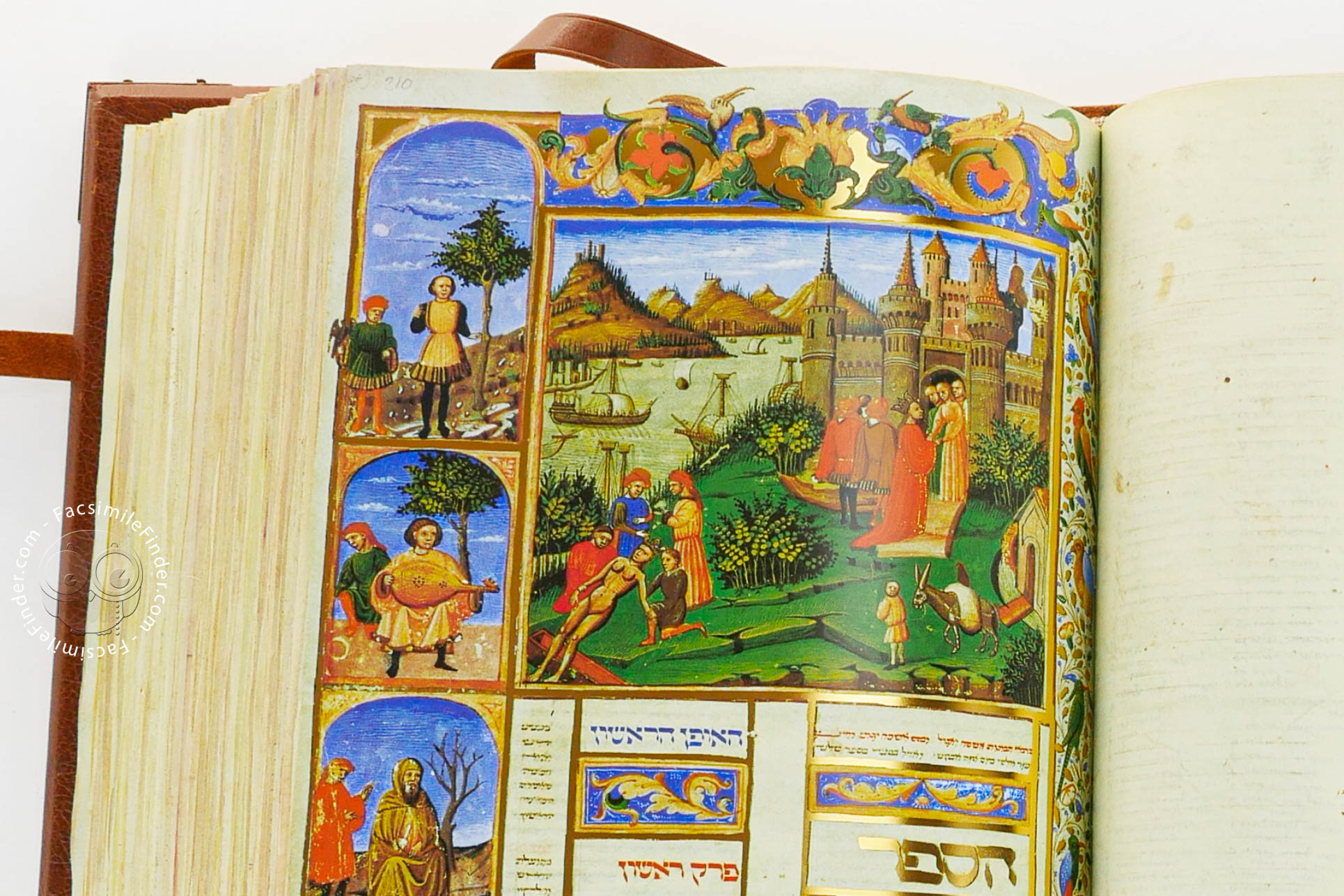
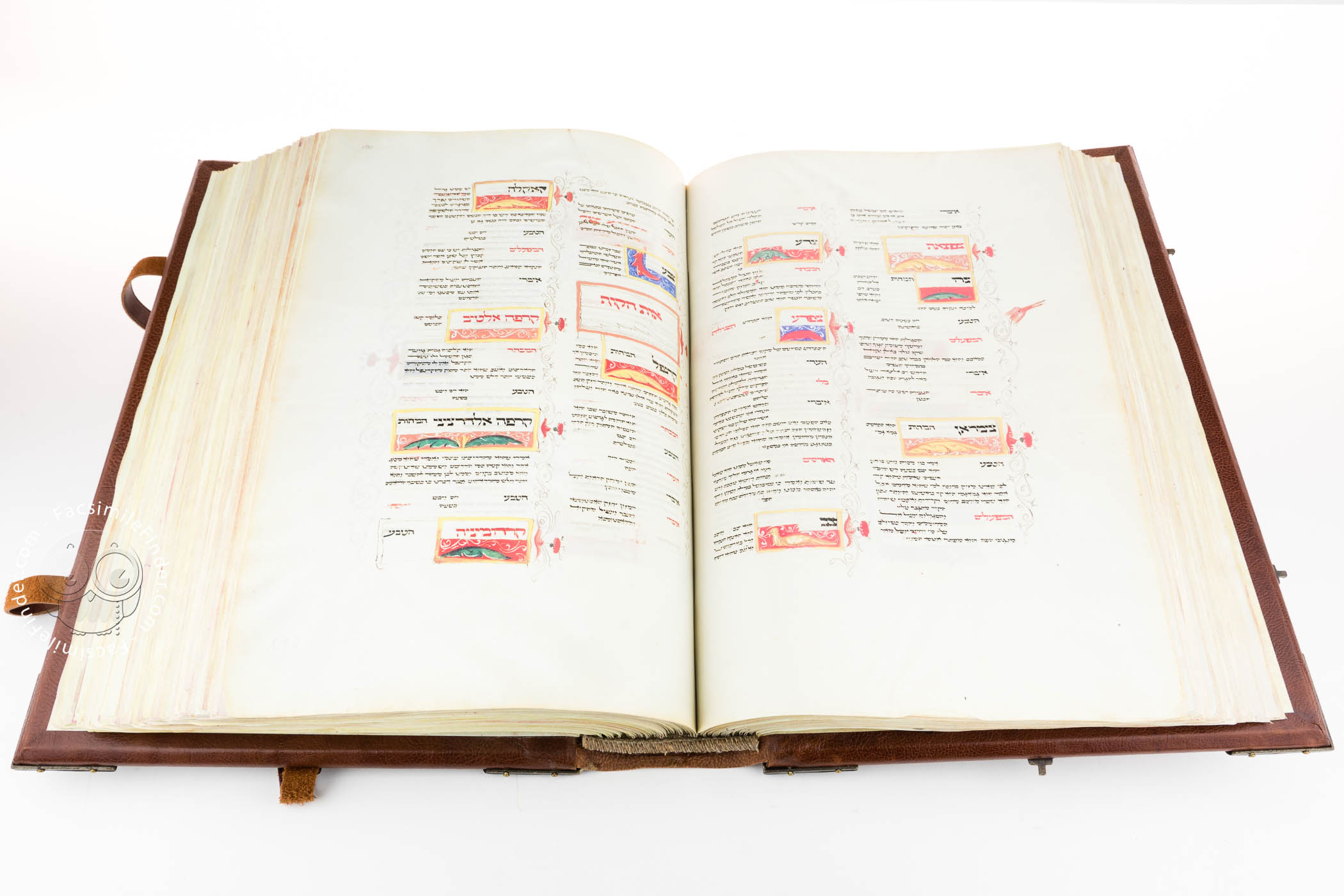
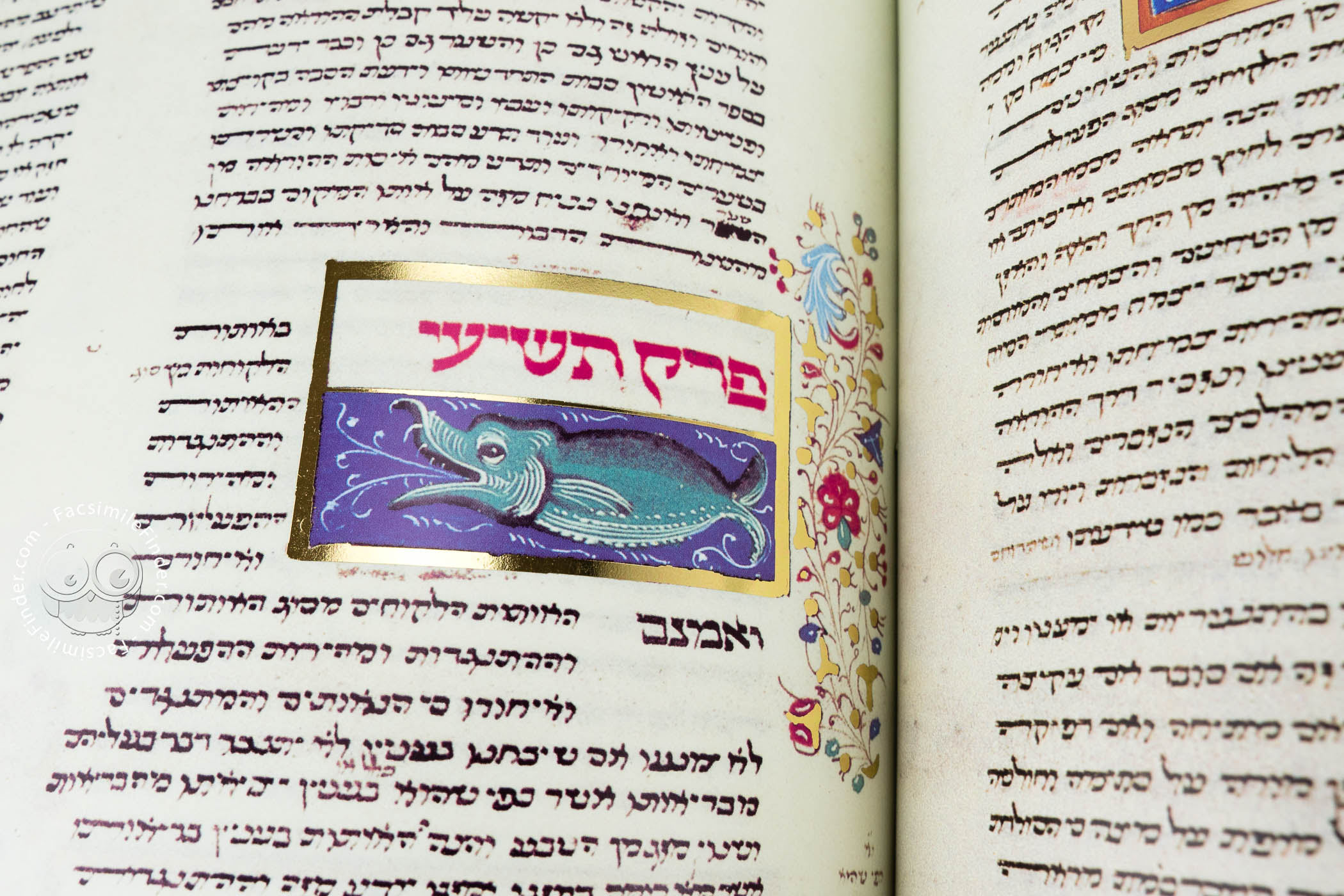




The Canon of Medicine by Avicenna in Bologna is the sole surviving codex of the complete Hebrew translation by Natan ha-Meati of the most comprehensive textbook of medicine known to medieval and early modern Europe. Copied and illuminated in Italy in the mid-fifteenth century, it is the most important illuminated secular Hebrew manuscript to survive to our time. It is a sumptuously illuminated volume with six large miniatures on pages with painted borders, smaller miniatures, and hundreds of painted headword panels. The scribe has been identified as Yshaq ben Obadiah ben David.
The Persian philosopher Ibn Sina (aka Avicenna; 980-1037) composed his encyclopedia in the Arabic language, and it was translated into other languages, including Latin, Hebrew, Persian, and Urdu. Those translations had a wide-ranging influence on medicine in Europe and Asia.
Eclectic Illumination
The illuminators of the Bologna manuscript drew from a variety of regional styles. Many competing theories about them have been put forward. The current thinking is that the illuminators were Jewish artists strongly influenced by the Bolognese illuminator known as the Master of the Brussels Initials but working in a style that reflects aspects of Venetian, Lombard, Ferrarese, Florentine, and French illumination.
A Treatise in Five "Books" with Prologue
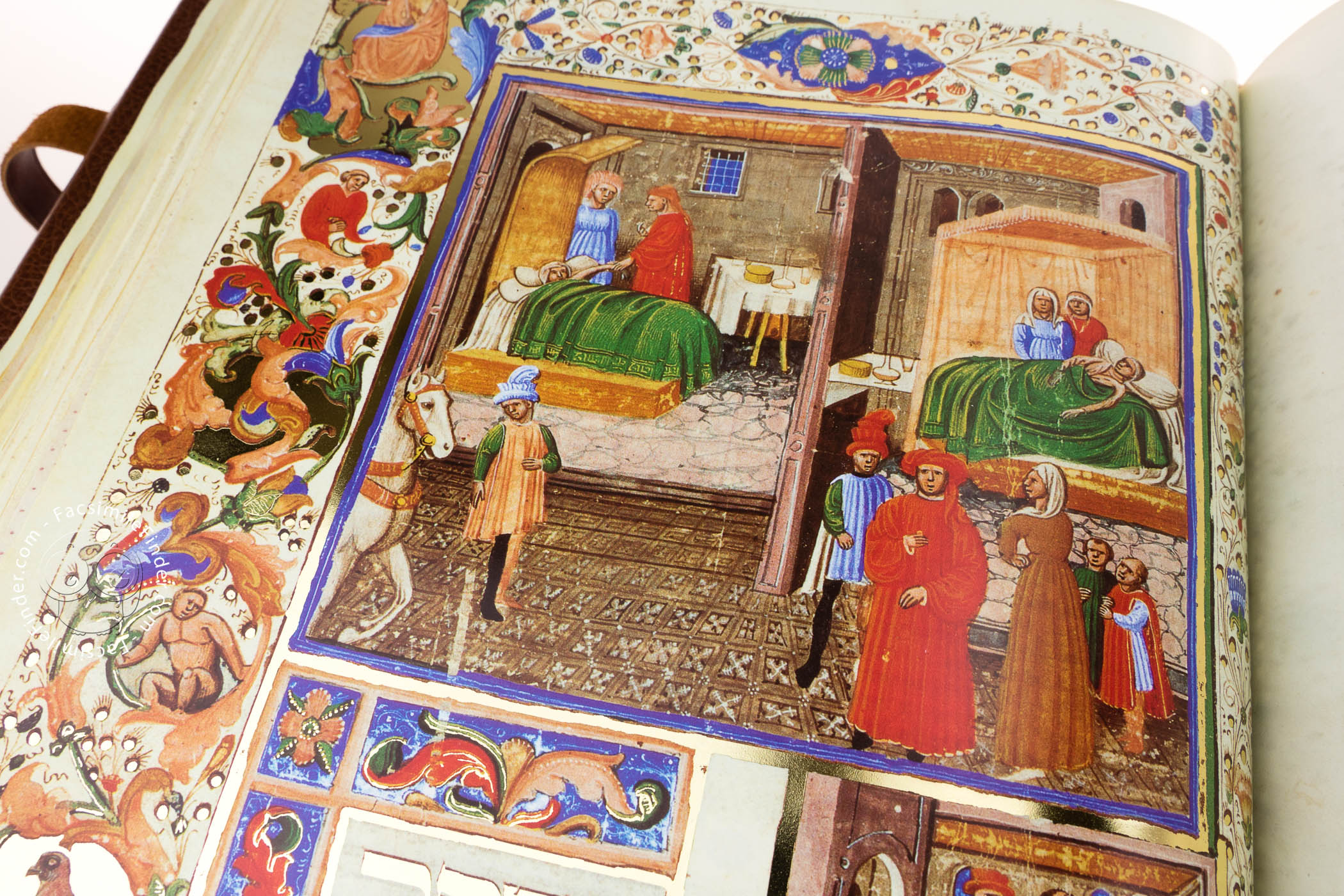
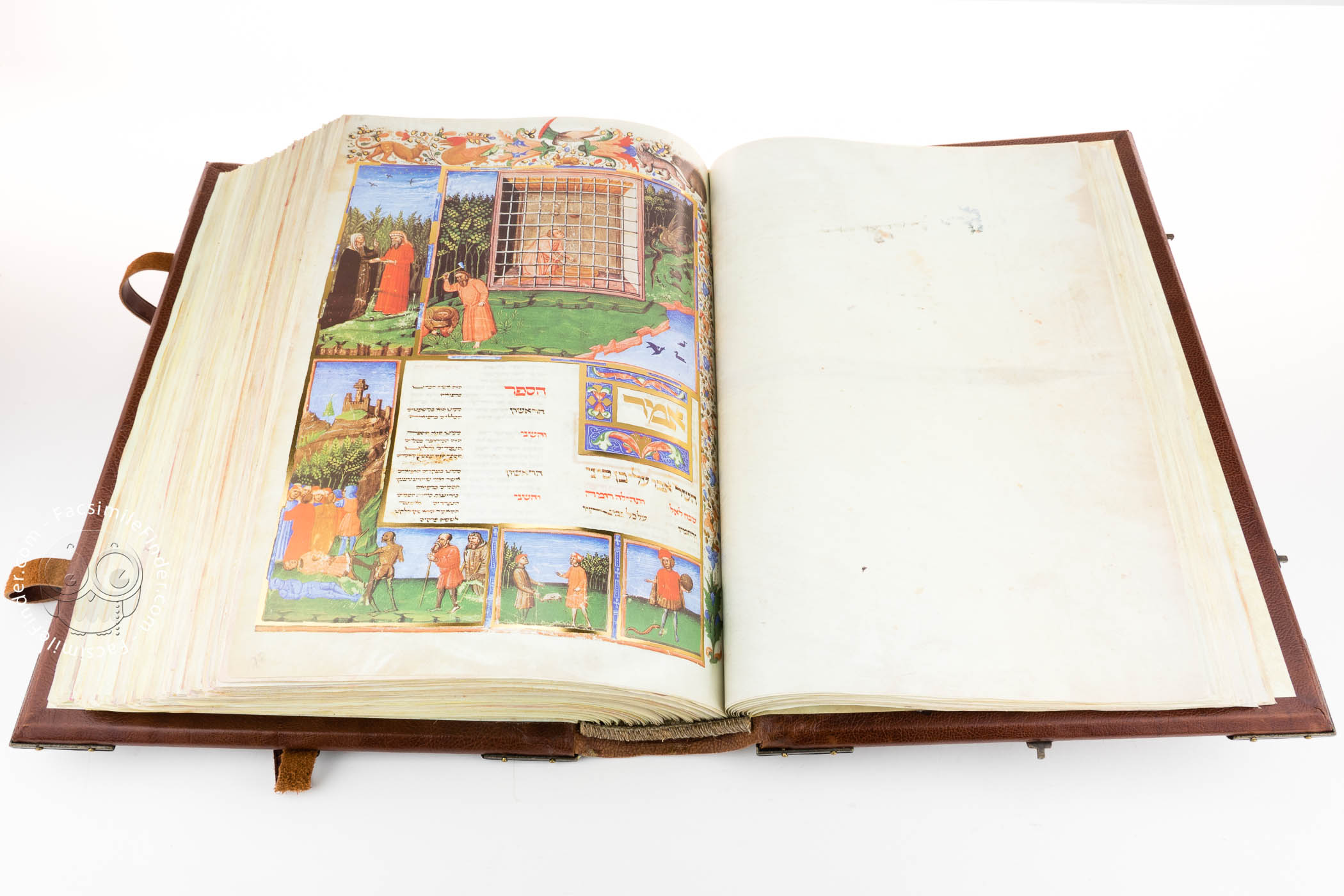
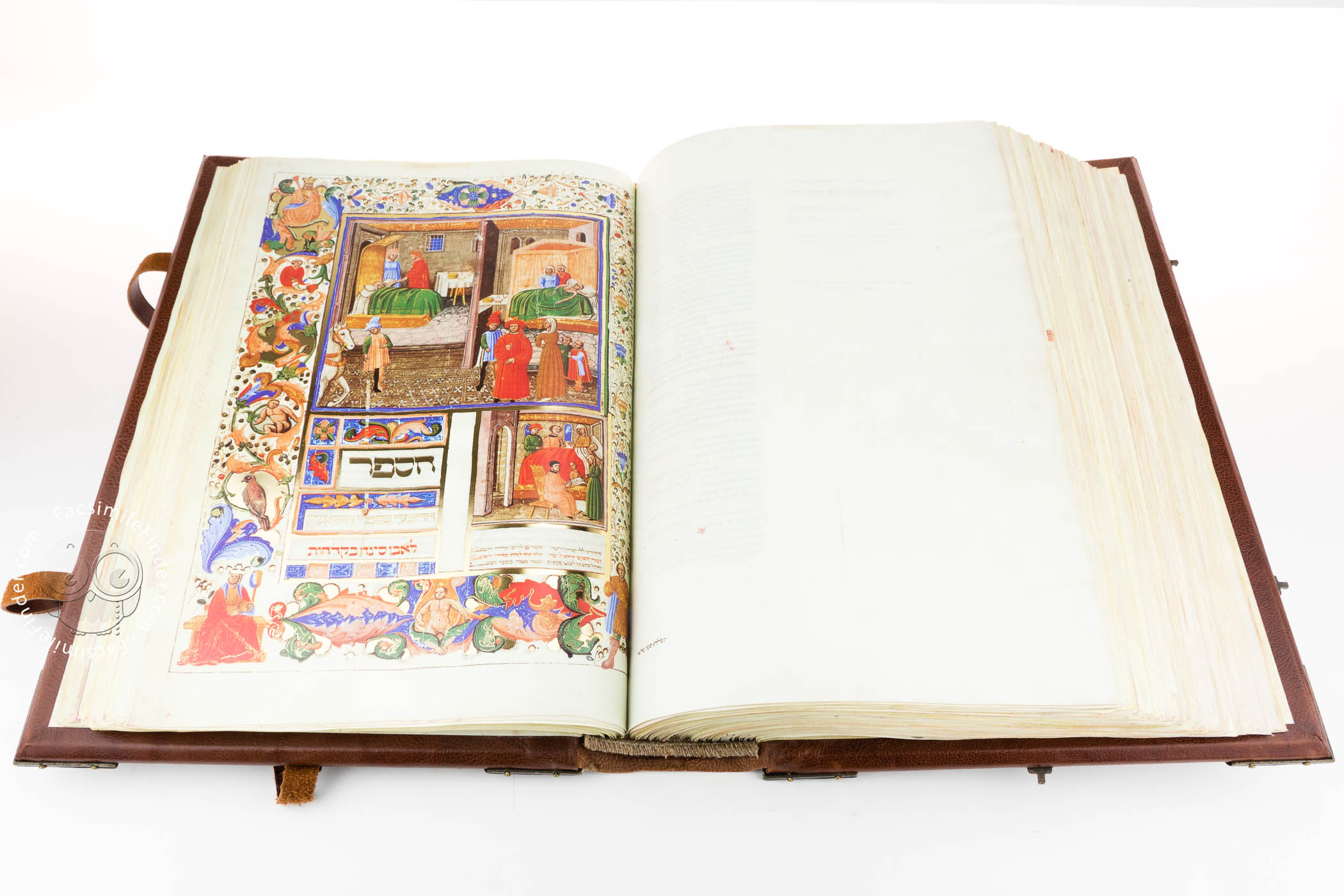
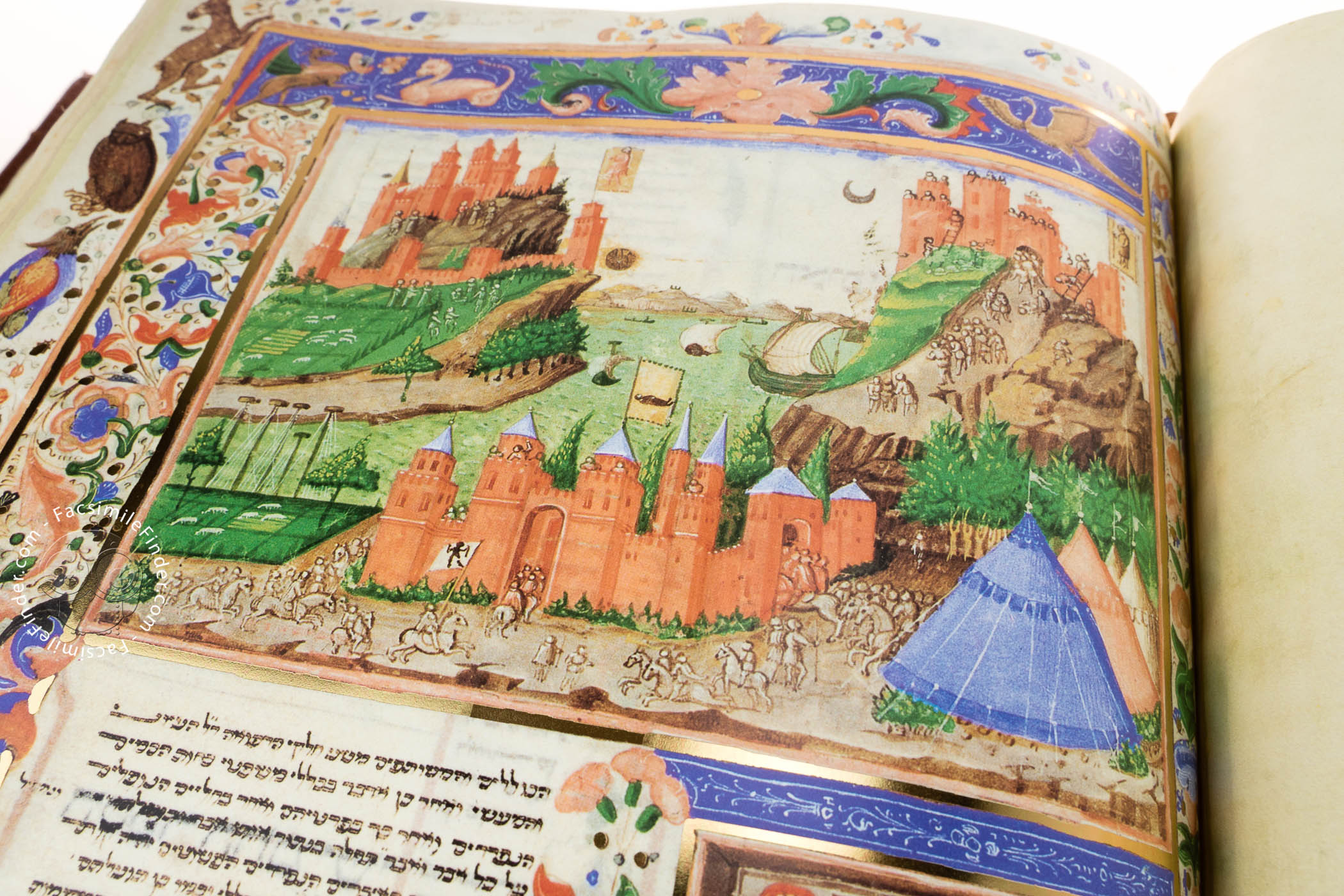
The major decoration comprises the six miniatures that introduce the prologue and the text's five books, which are focused on (1) generalities, including anatomy, (2) medical preparations from a single ingredient, (3) localized diseases, (4) systemic conditions, and (5) compound medicines.
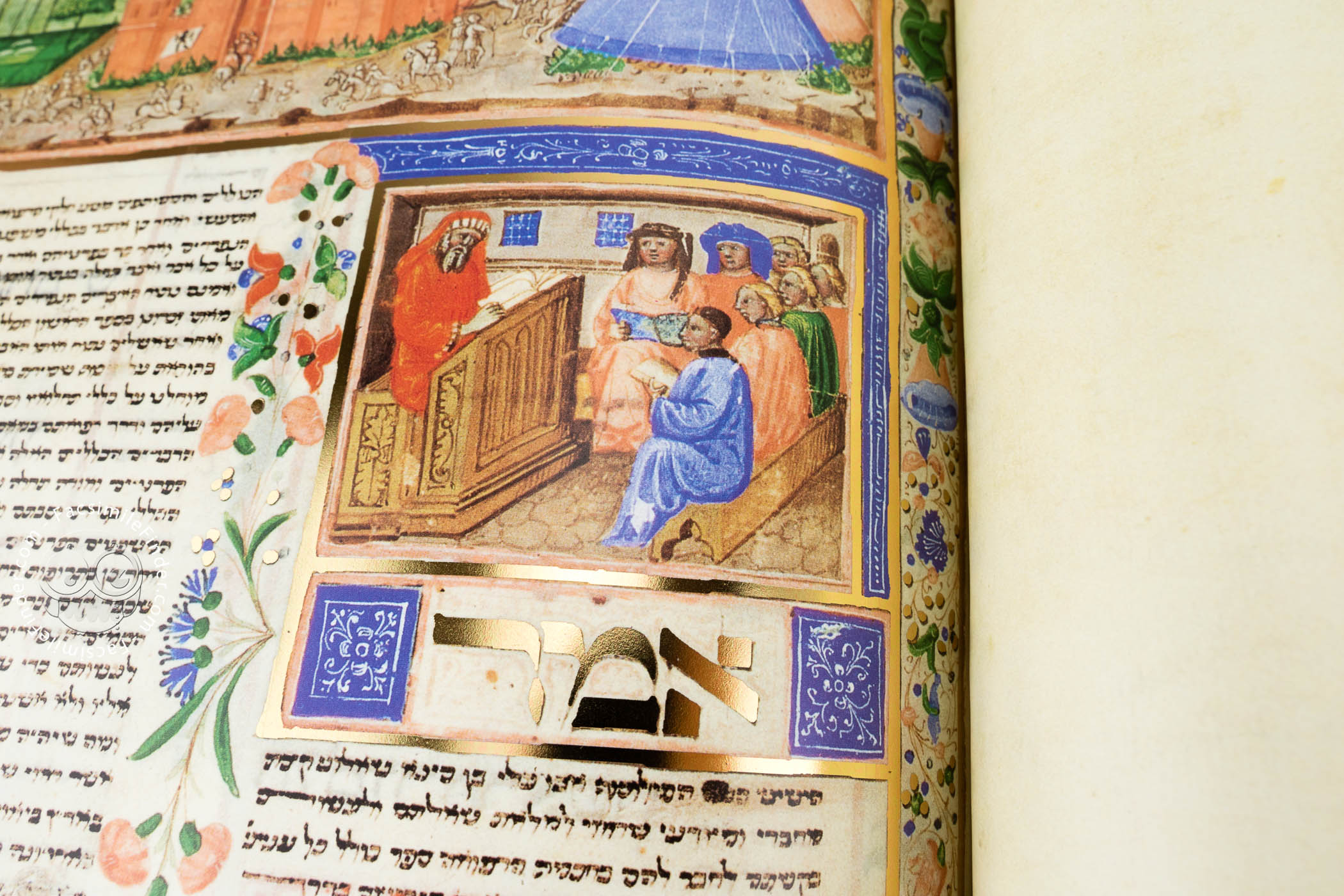
The subjects of two of the large miniatures are difficult to interpret. The others represent the examination of a urine specimen; an episode involving Robert II (d. 1134), Duke of Normandy, and a poisoned arrow; a medical visit; and a contemporary apothecary (fols. 7r, 210r, 402r, and 492r).
Zodiac Man and Woman
A drawing shows the zodiac man, an astrological diagram mapping the zodiacal signs to specific parts of the human body, from Aries ruling the head to Pisces ruling the feet, that was used as a guide for timing medical treatments. It is paired with a drawing of a woman (fol. 41r).
Focus on the Here and Now
Avicenna states in his autobiography that he is principally interested in the theoretical aspects of medicine. Nevertheless, his text addresses many practical concerns. He is the first, for example, to describe measles. The miniature of a contemporary Italian apothecary is justly famous for the glimpse it provides into the practice of fifteenth-century medicine.
Italian Rabbinic Script
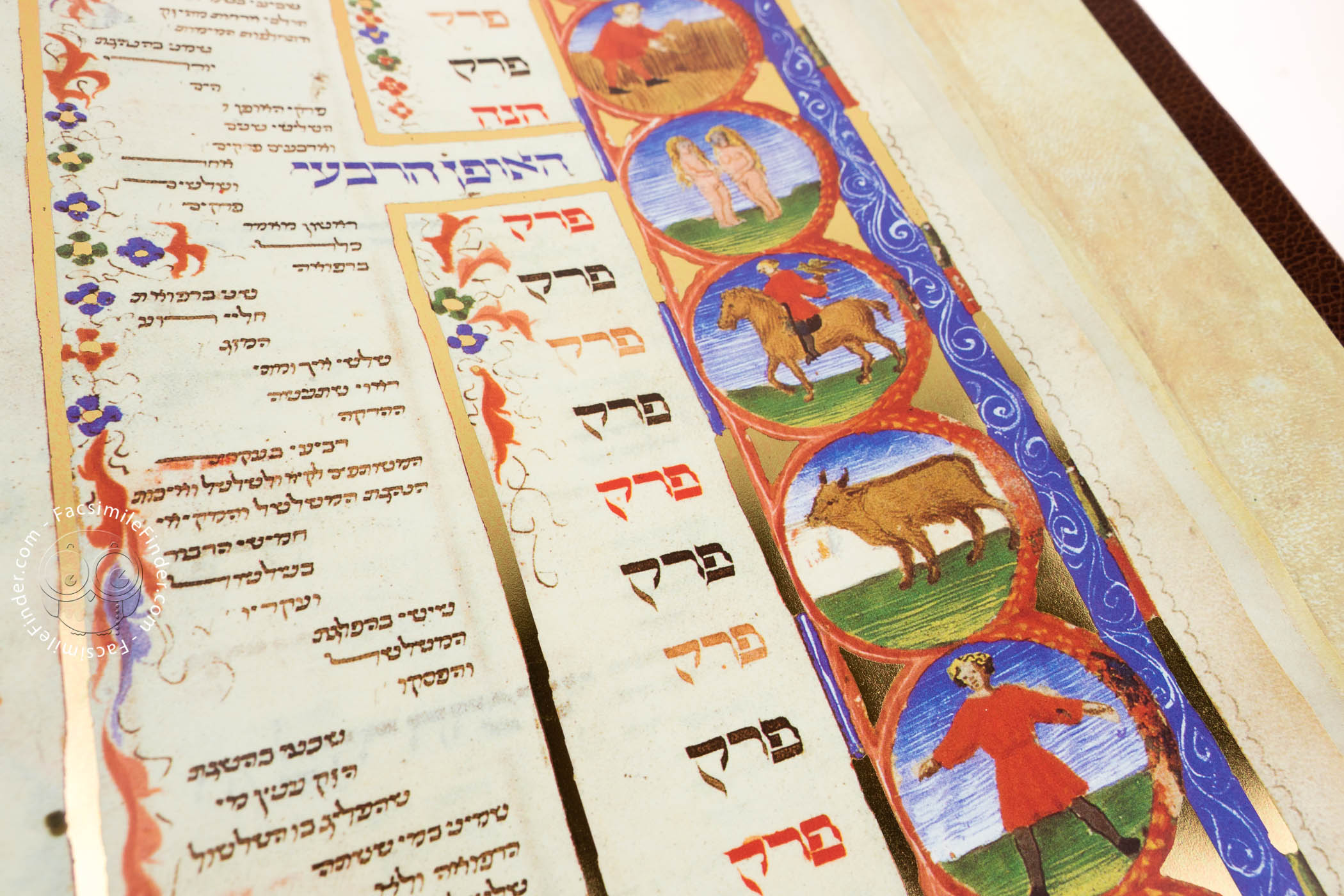
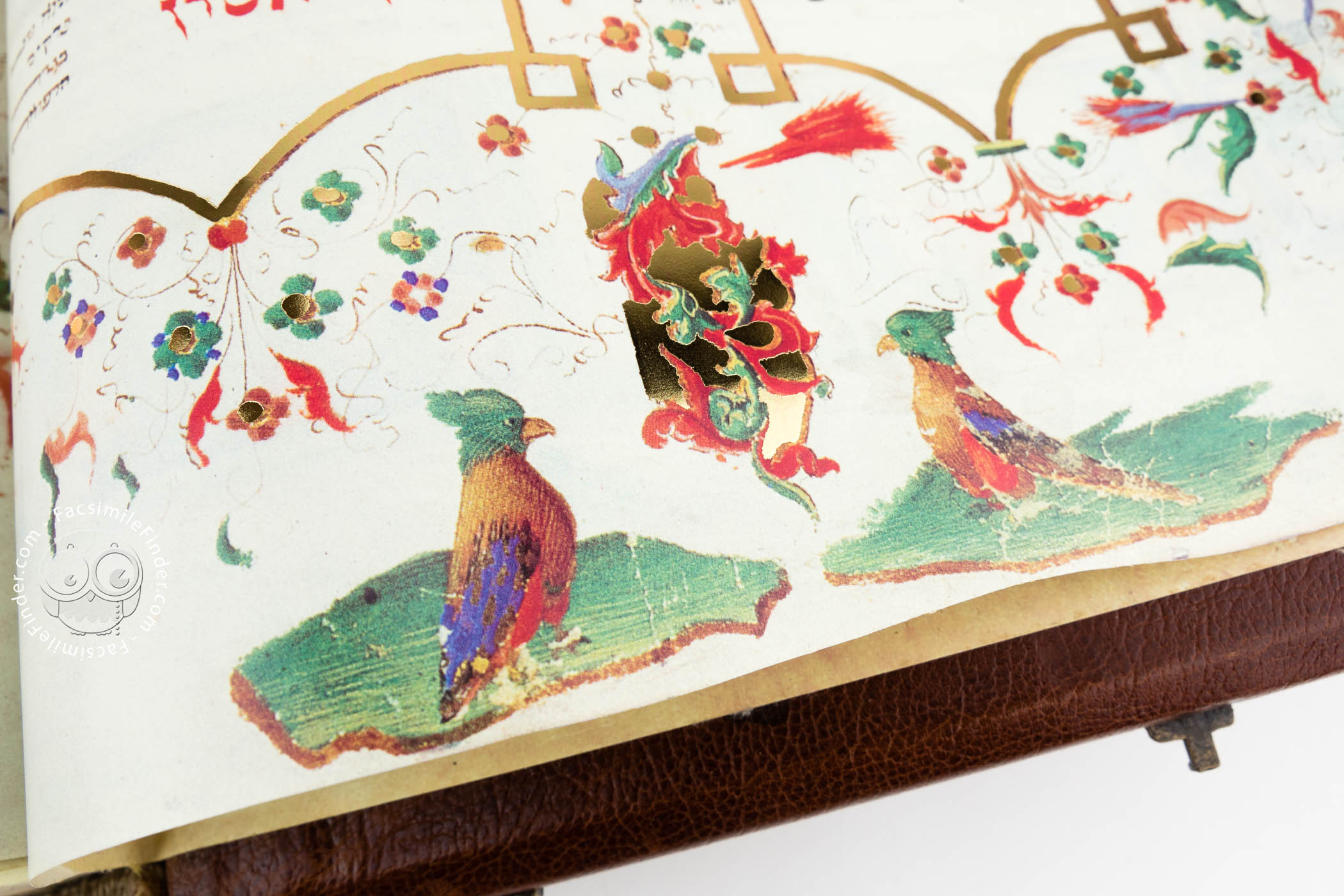
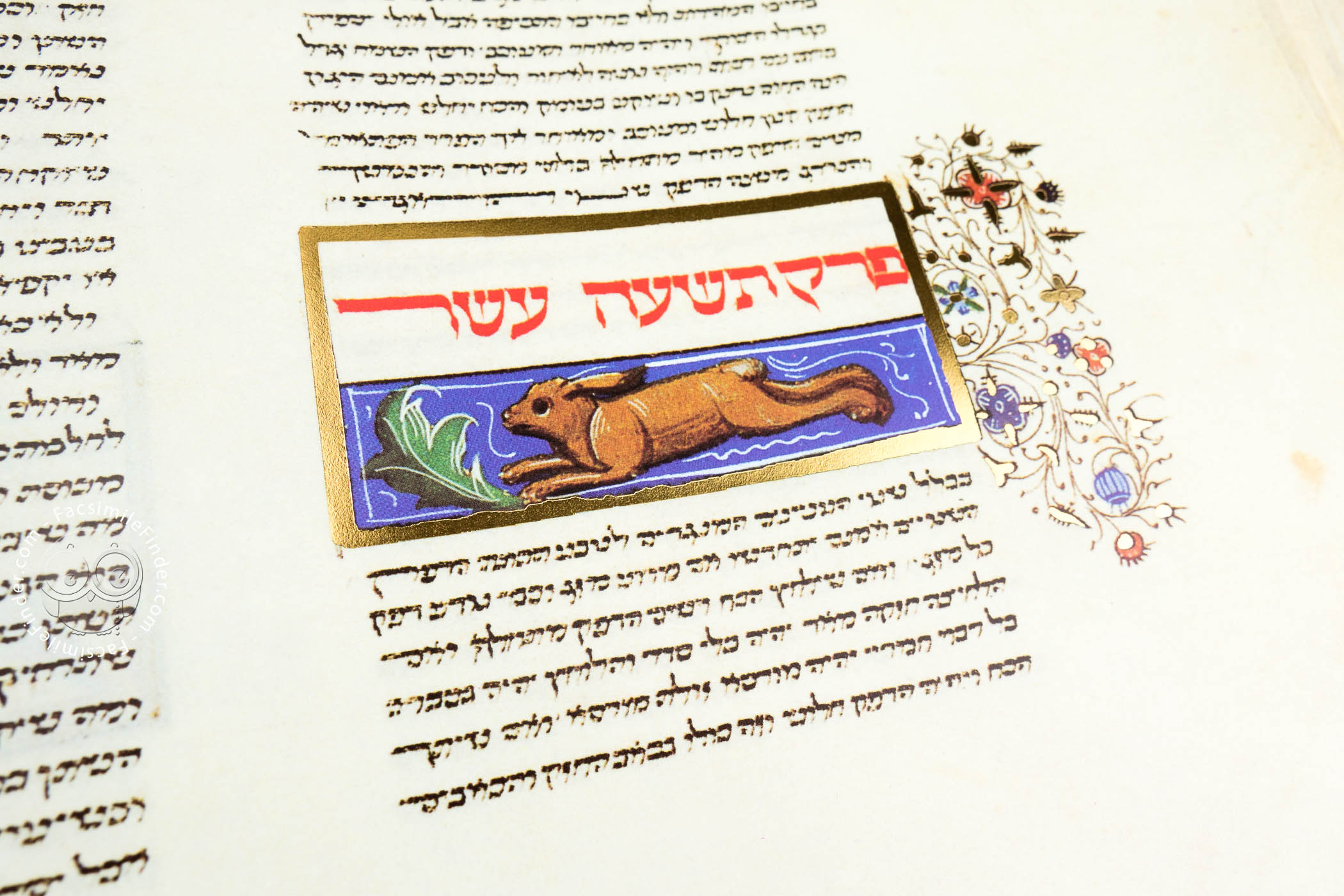
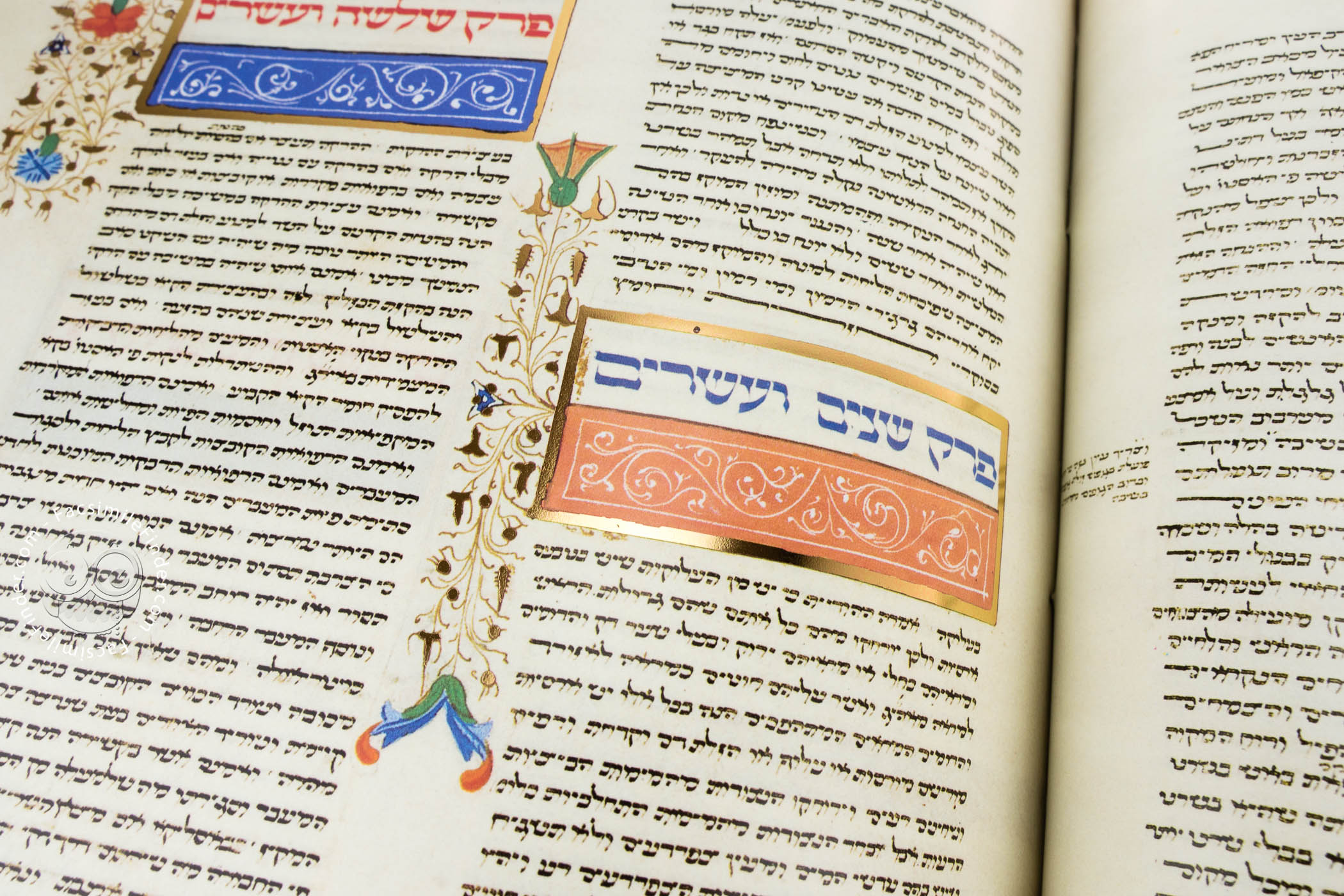
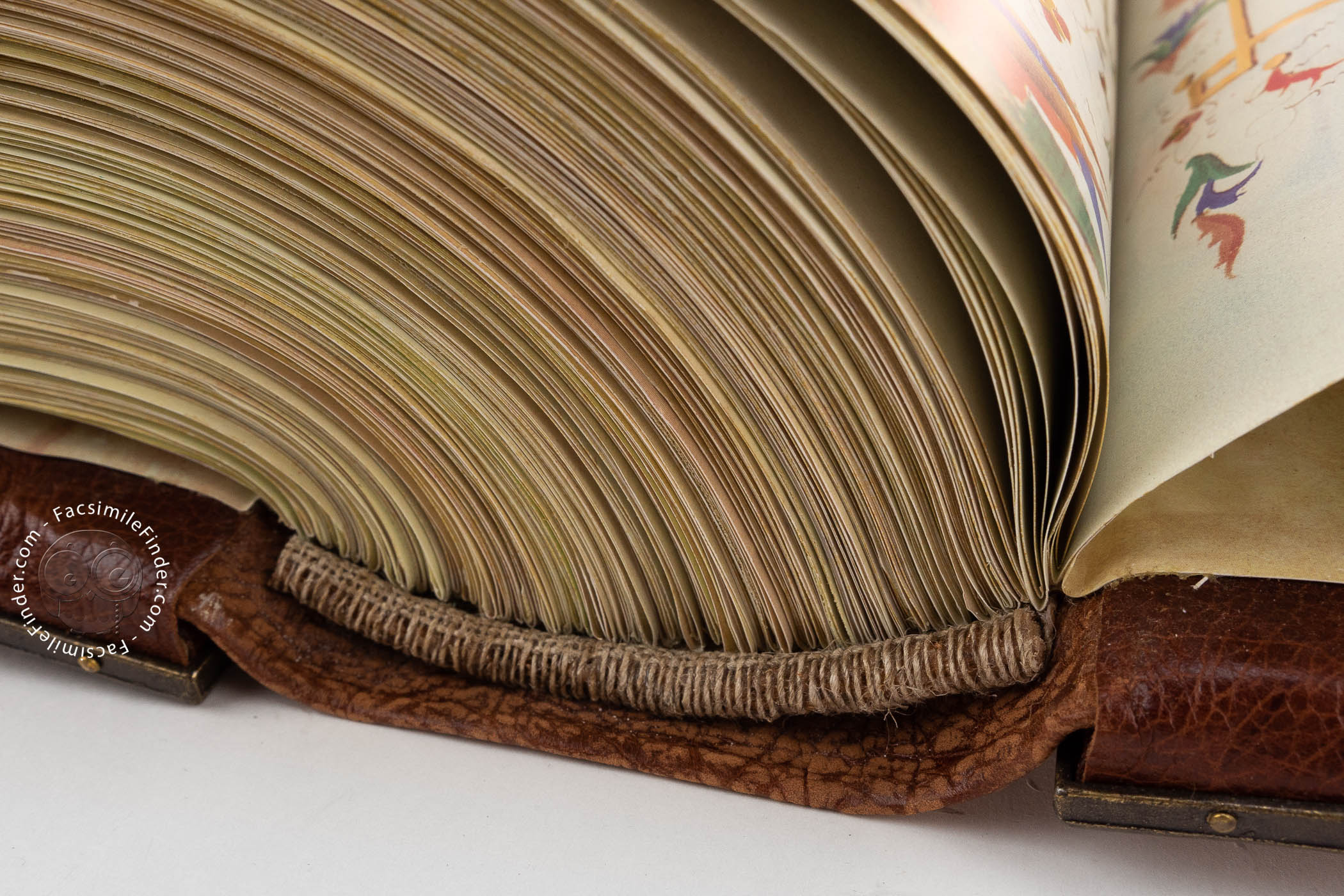
Yshaq ben Obadiah ben David, otherwise known to have been active in Florence, wrote the text in two columns of Hebrew Cursive. The manuscript is handsomely embellished with decorated headwords and border decoration featuring naturalistic animals.
A Sojourn in Paris
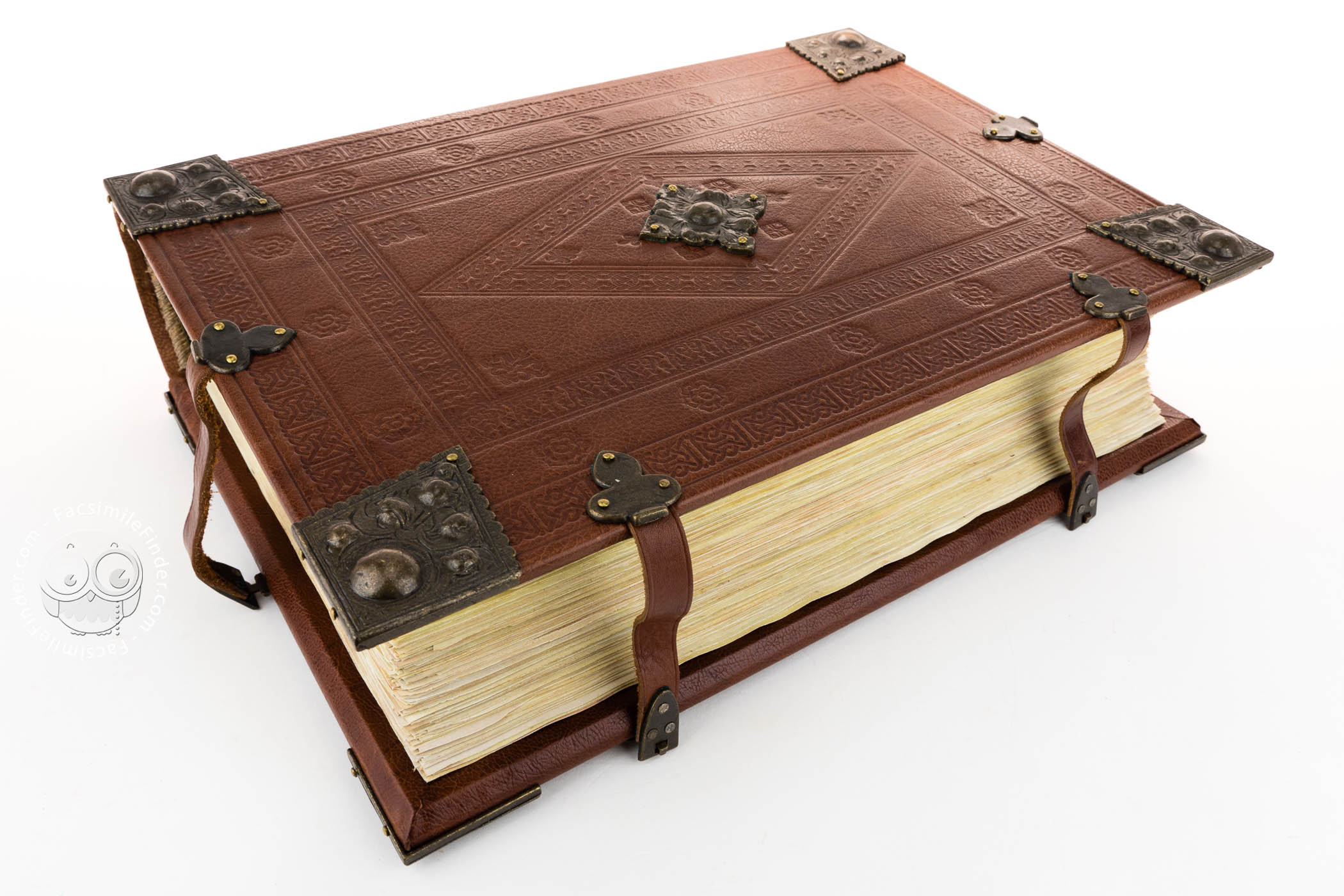
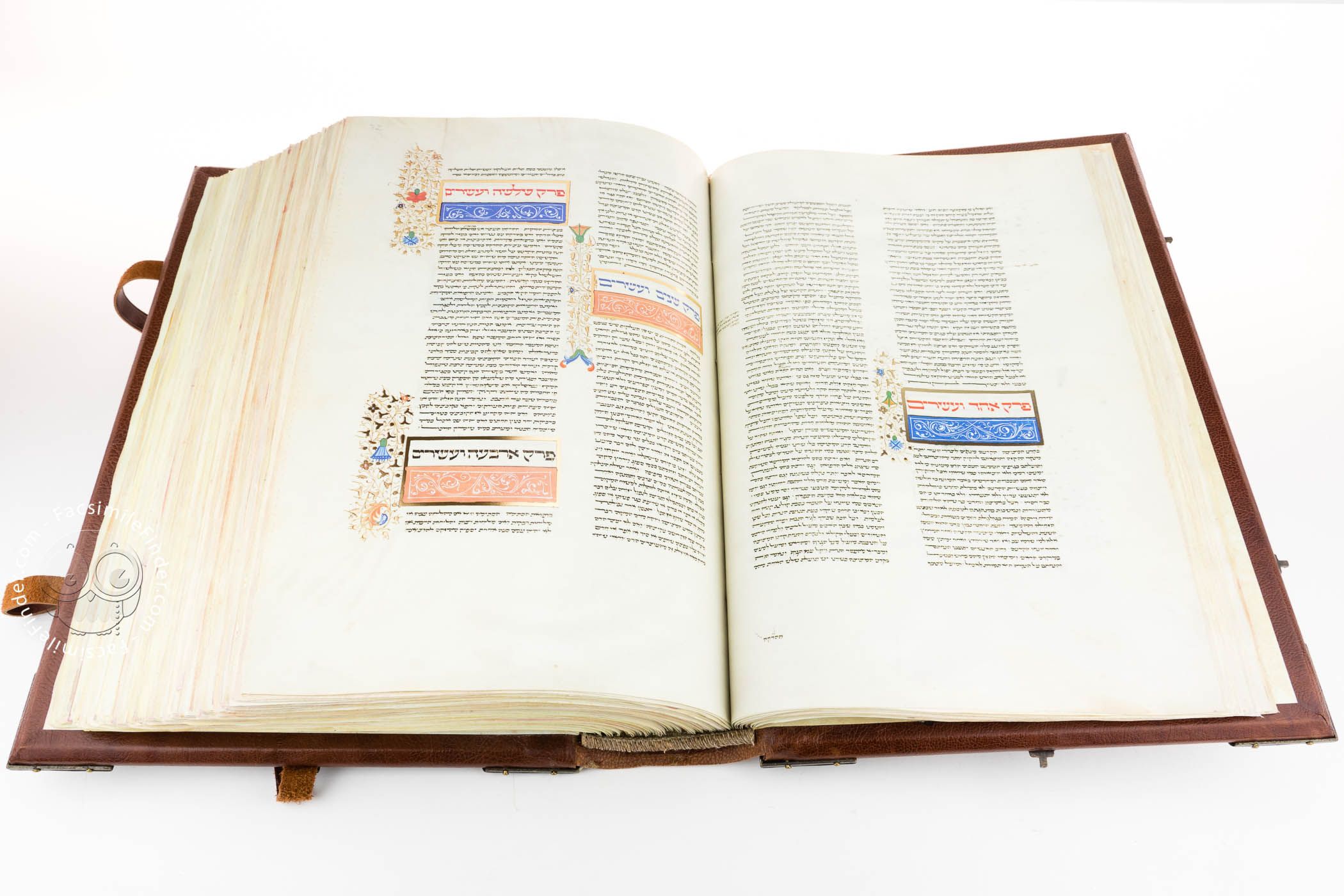
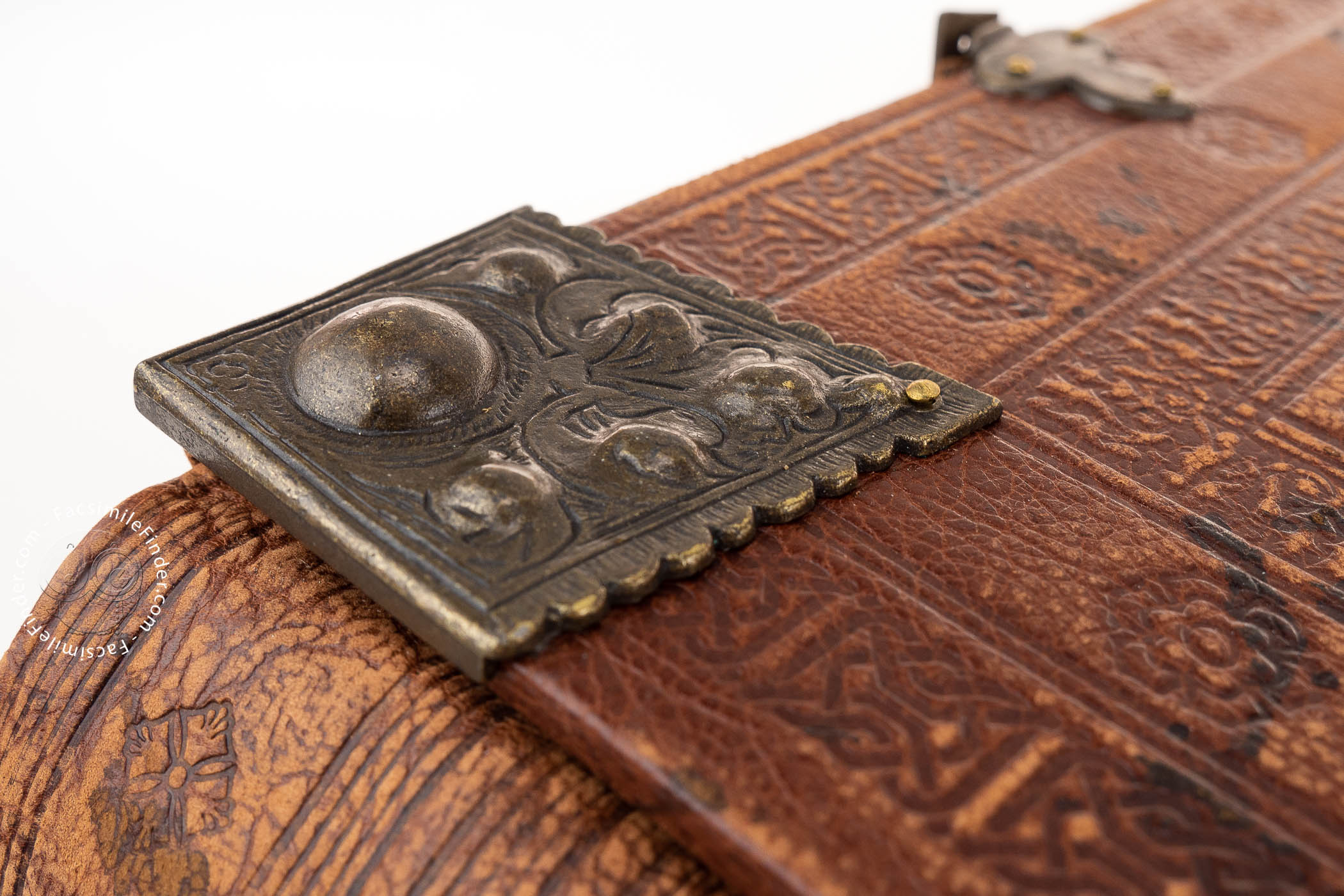
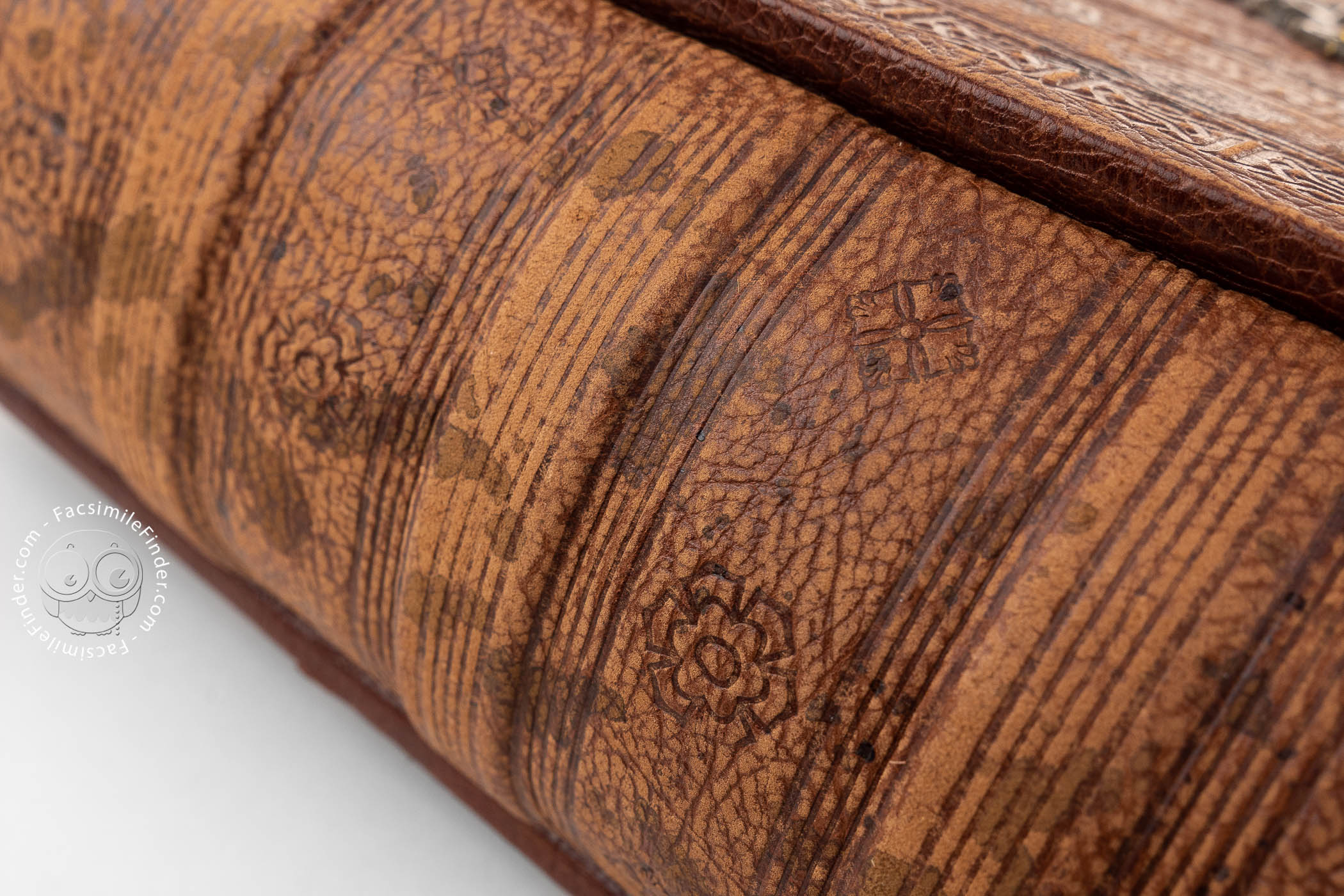
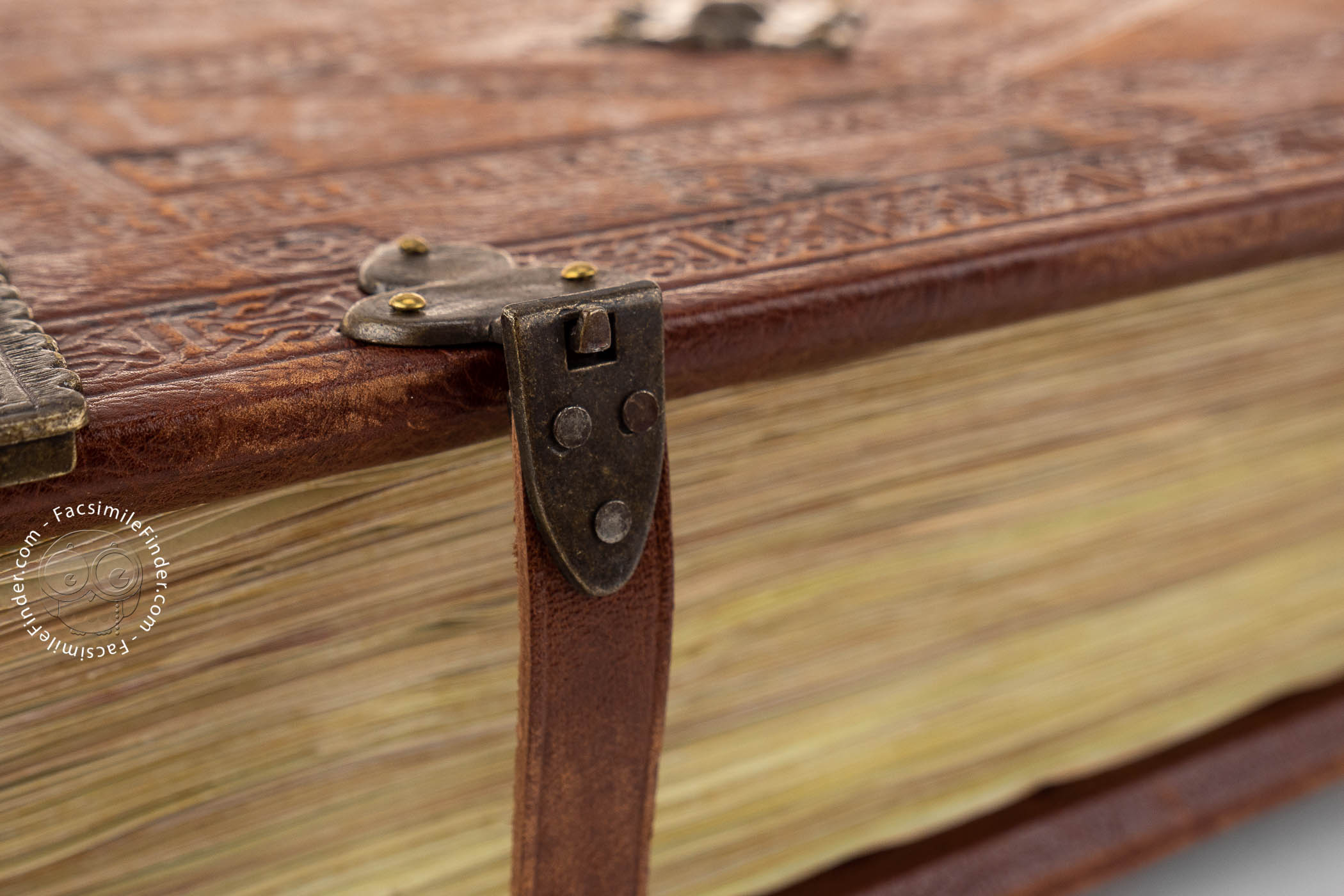
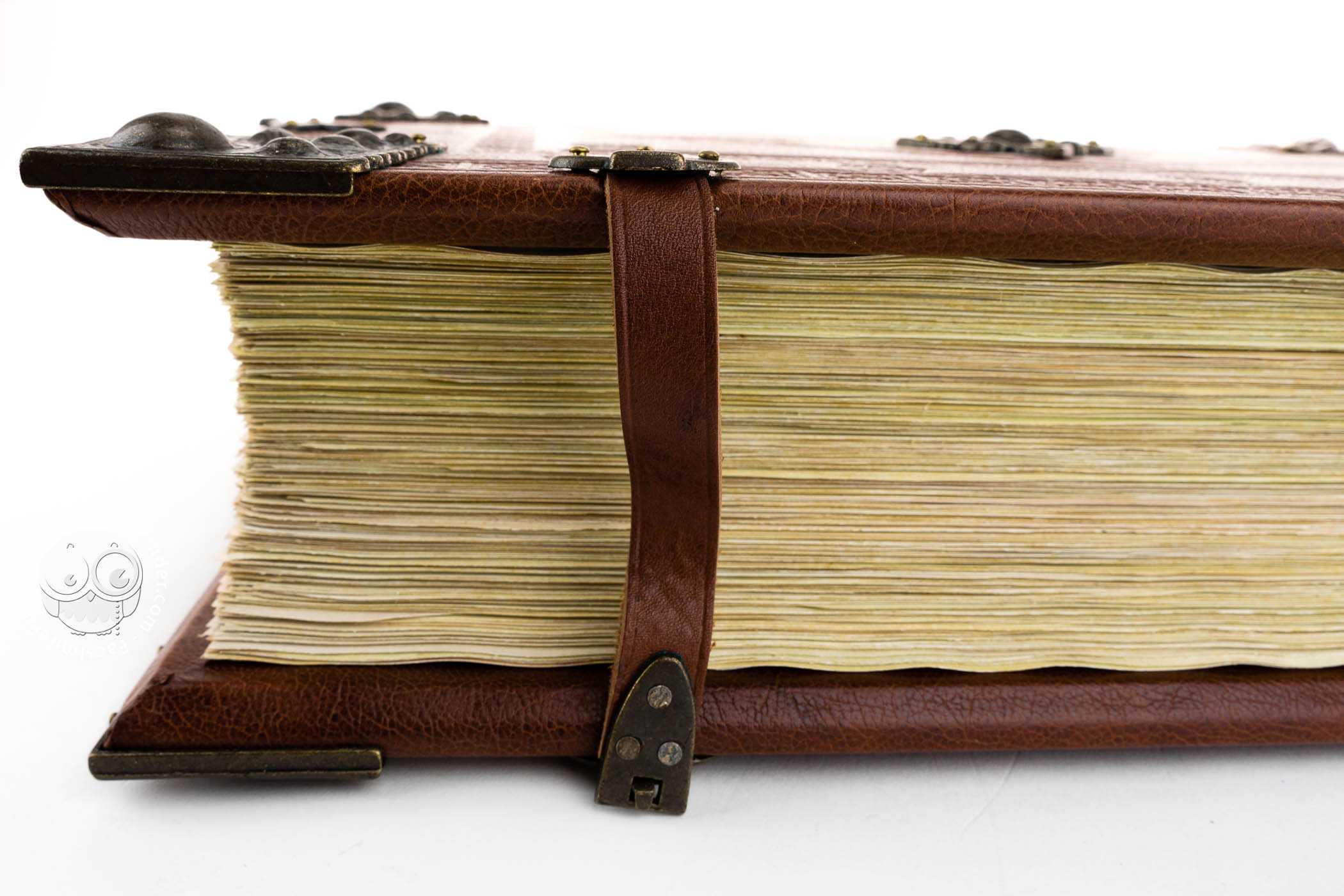
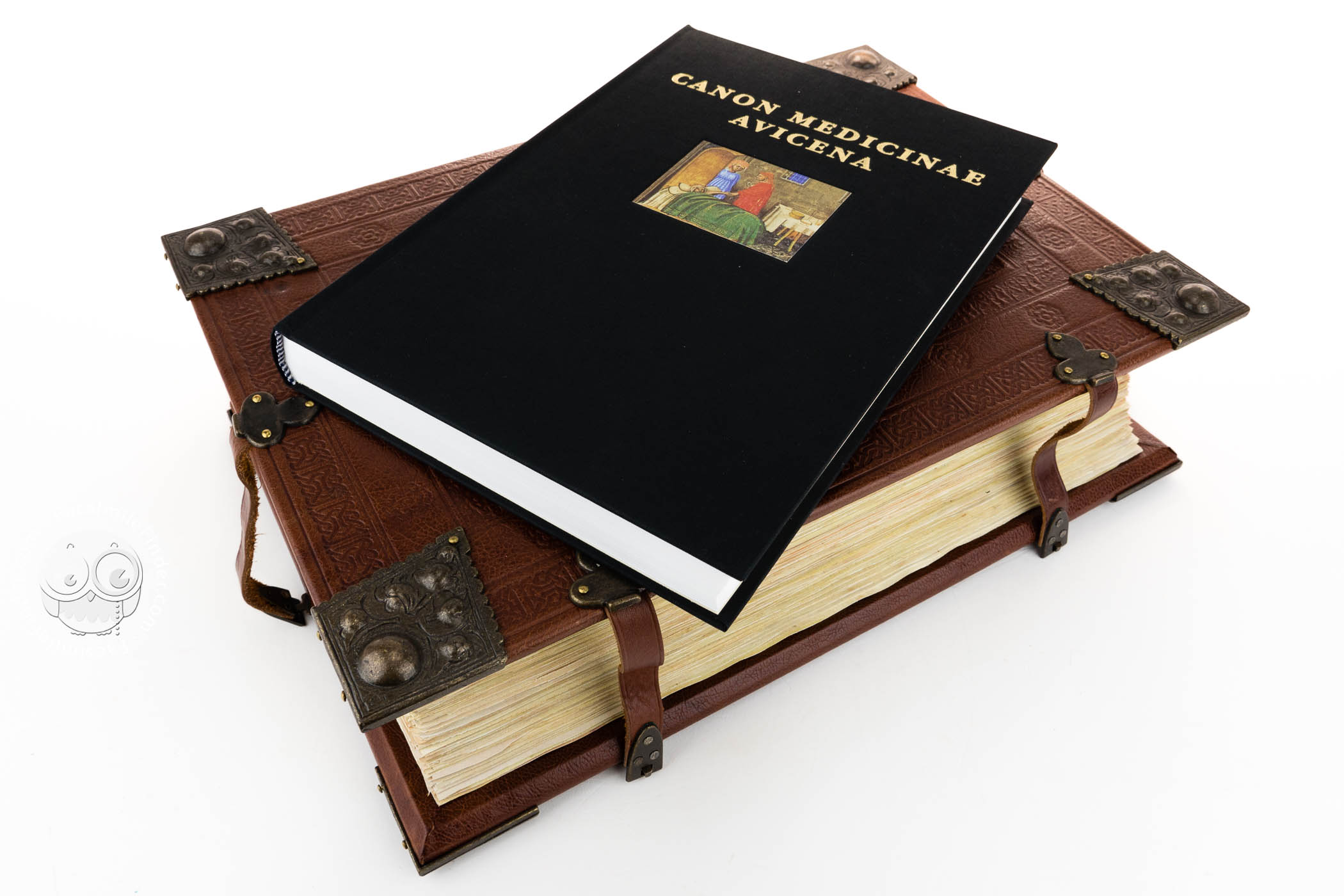
The manuscript, by the end of the sixteenth century housed in the library of the Convento di San Domenico in Bologna, was taken to Paris in 1796 during the French occupation of Italy, where it entered the Bibliothèque nationale. It was returned in 1815 to Bologna's Biblioteca Pontificia (now part of Biblioteca Universitaria). The manuscript’s blind-tooled leather binding dates from the sixteenth century. It is distinguished by metal furnishings of central bosses, cornerpieces, and strap-and-pin closures.
We have 1 facsimile edition of the manuscript "Canon of Medicine by Avicenna": Canon Medicinae Avicena facsimile edition, published by AyN Ediciones, 2002
Request Info / Price