


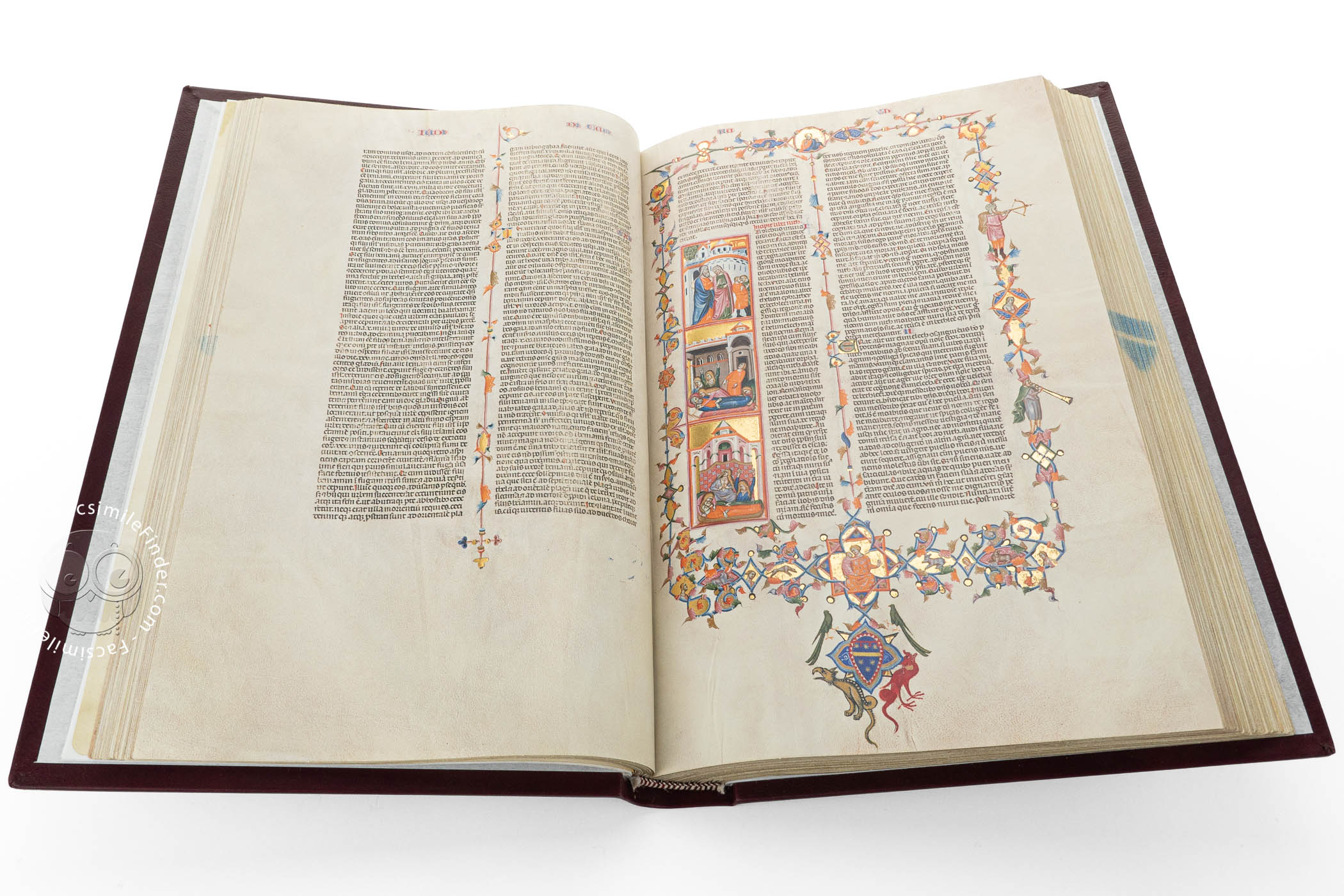
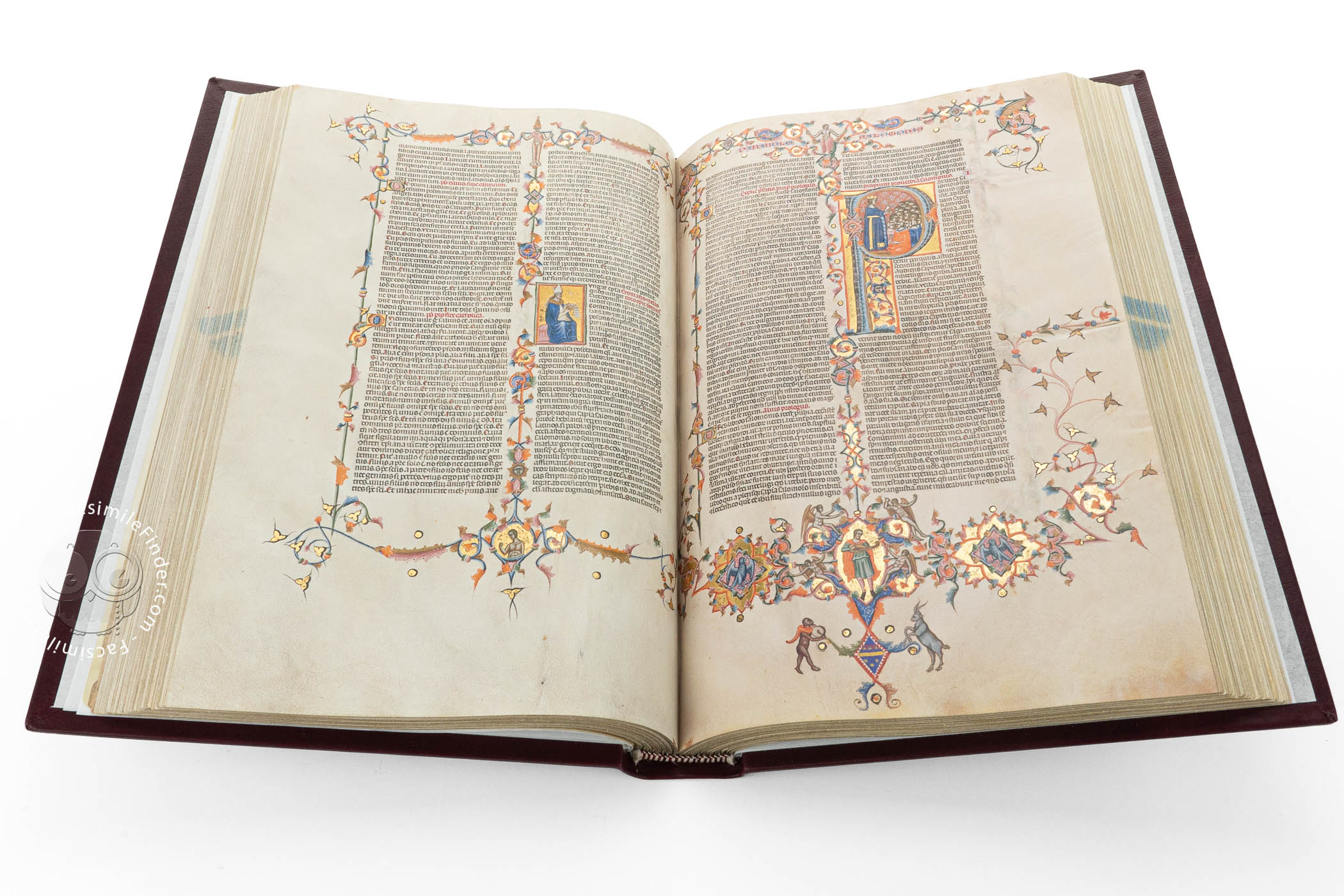
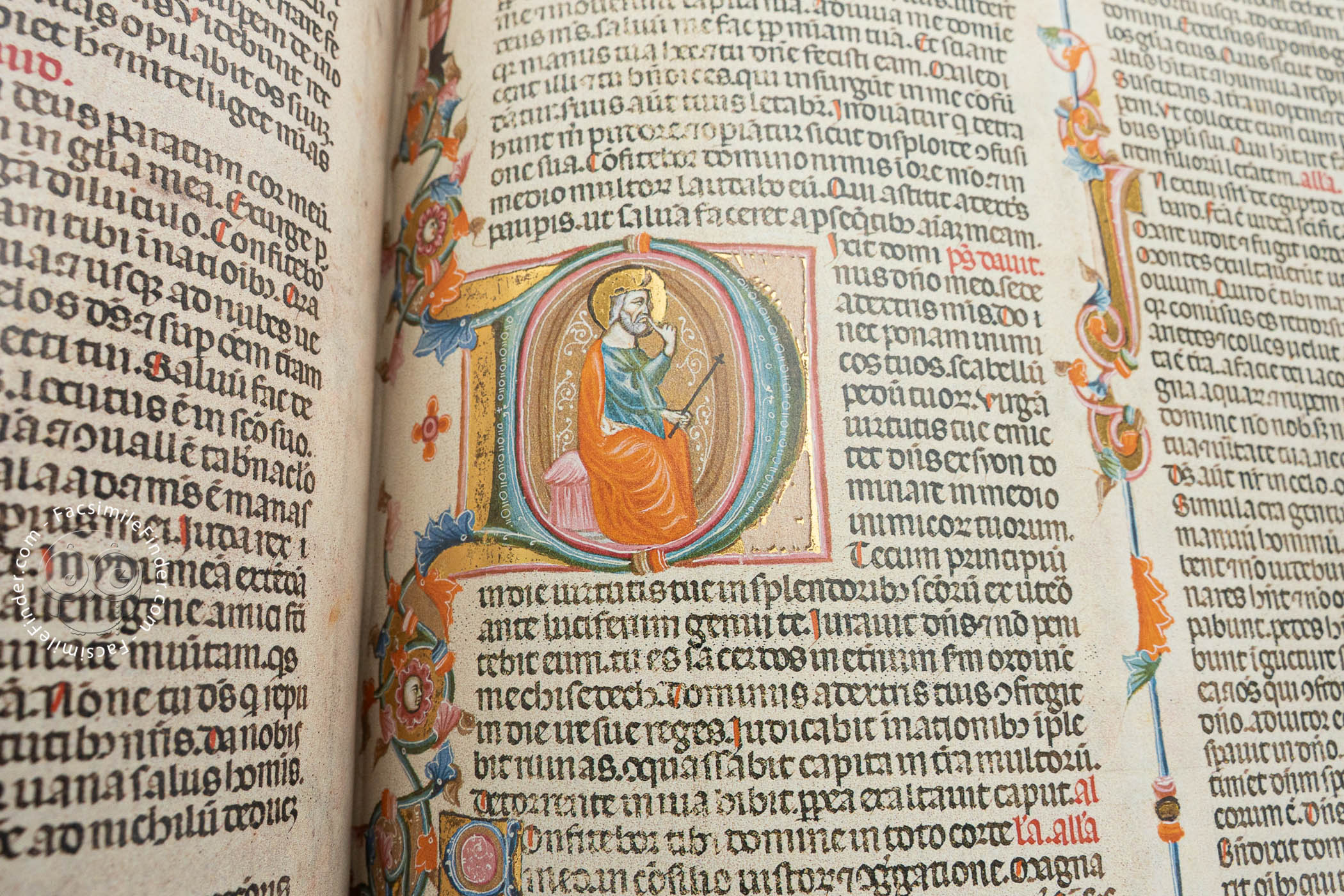
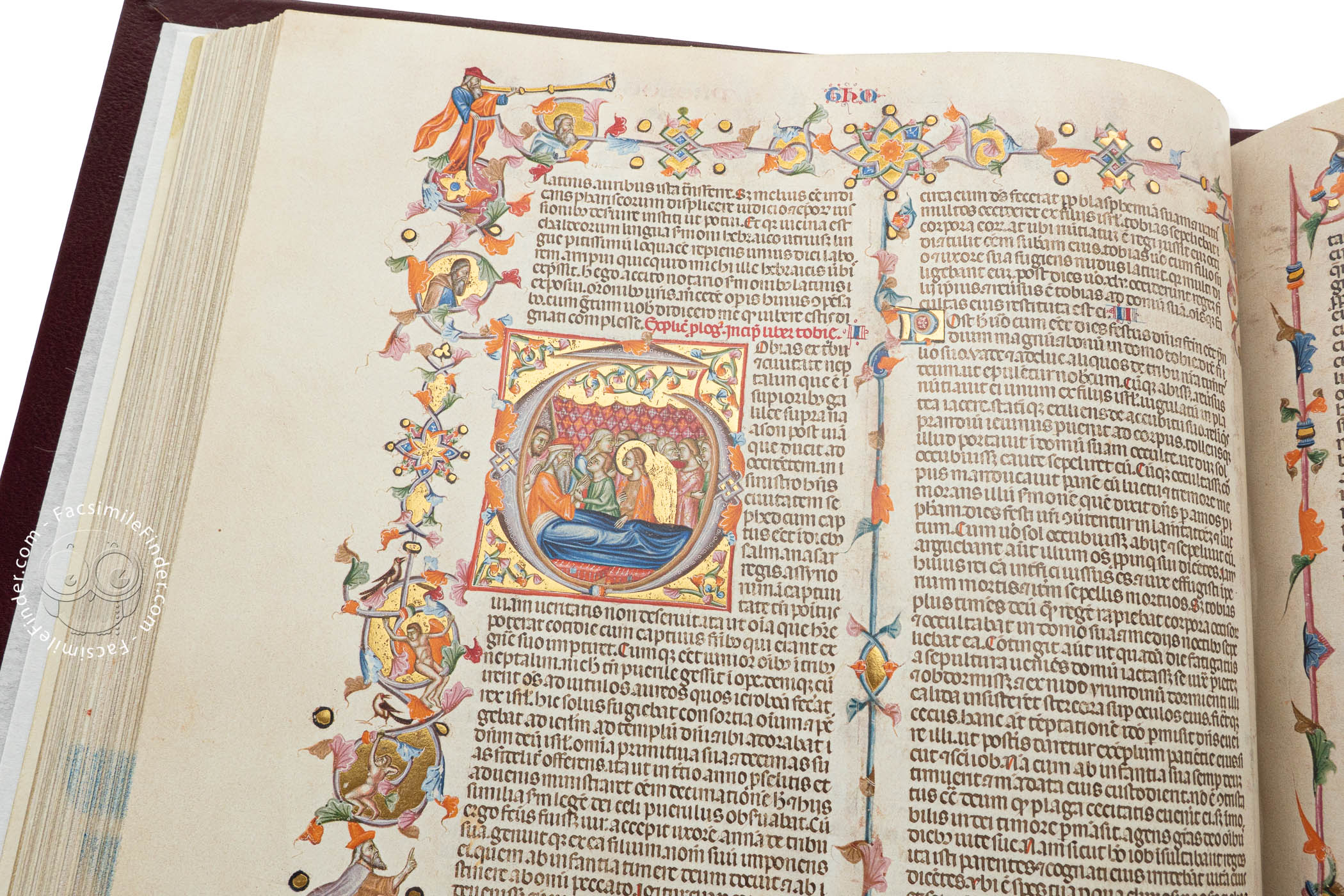
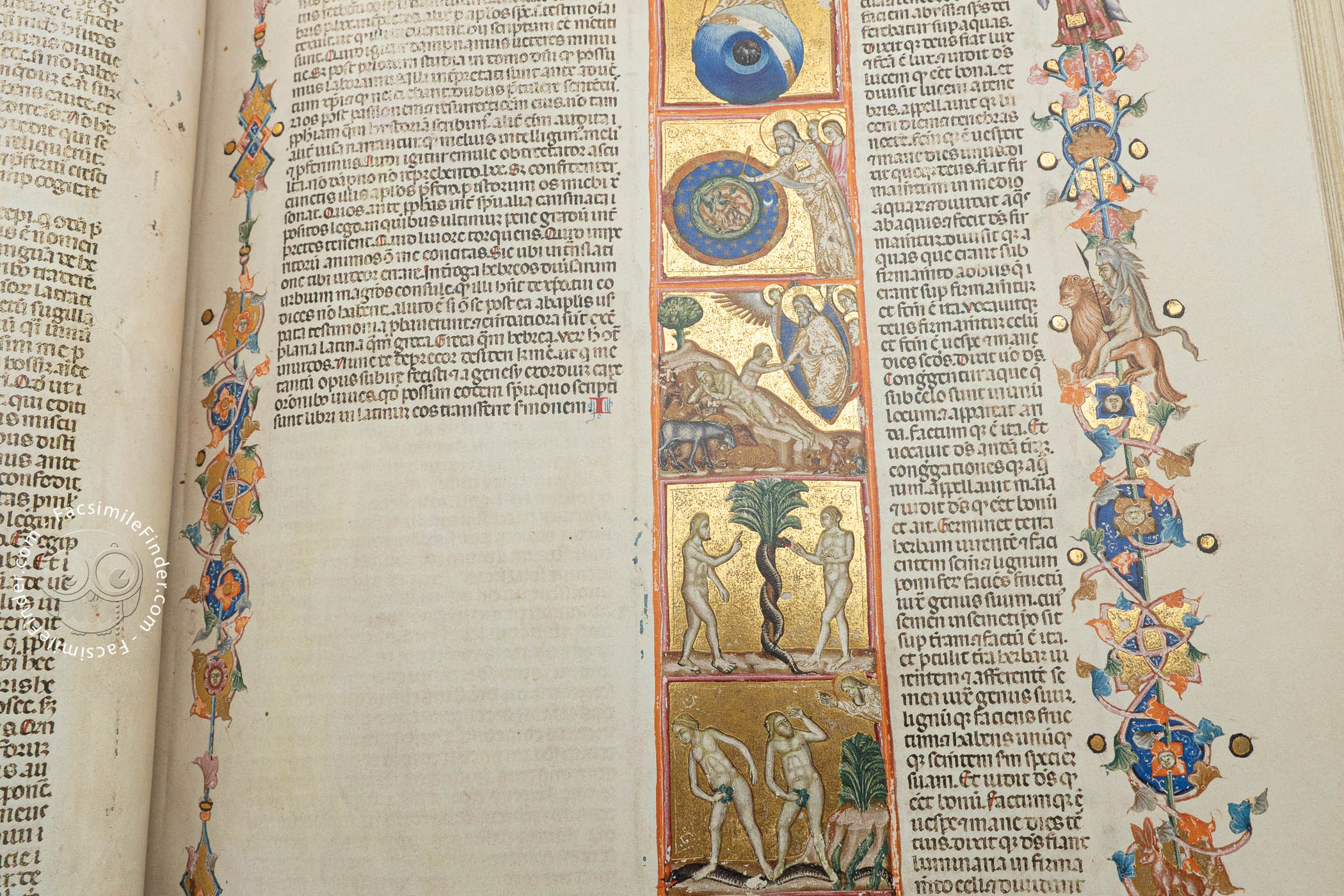
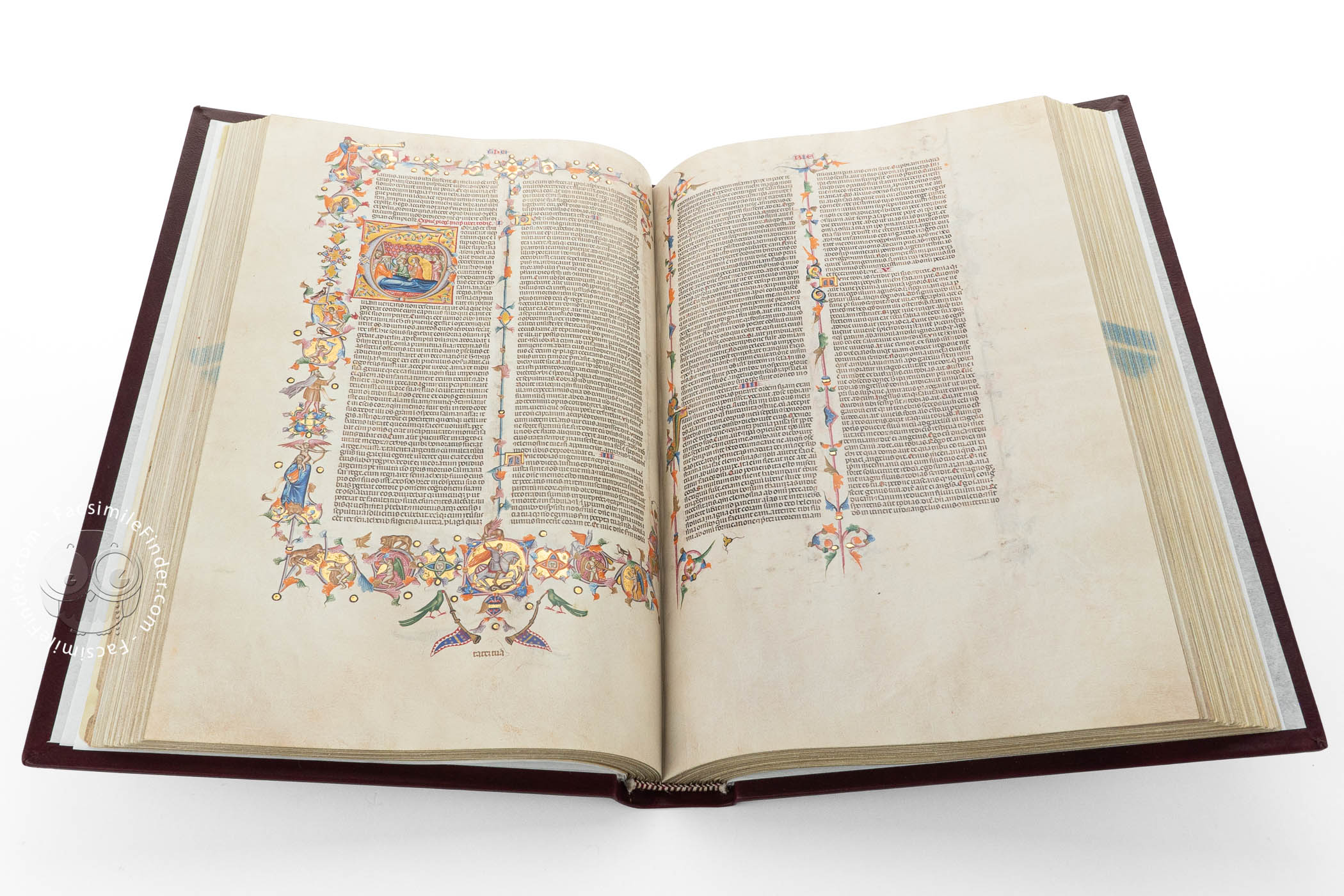
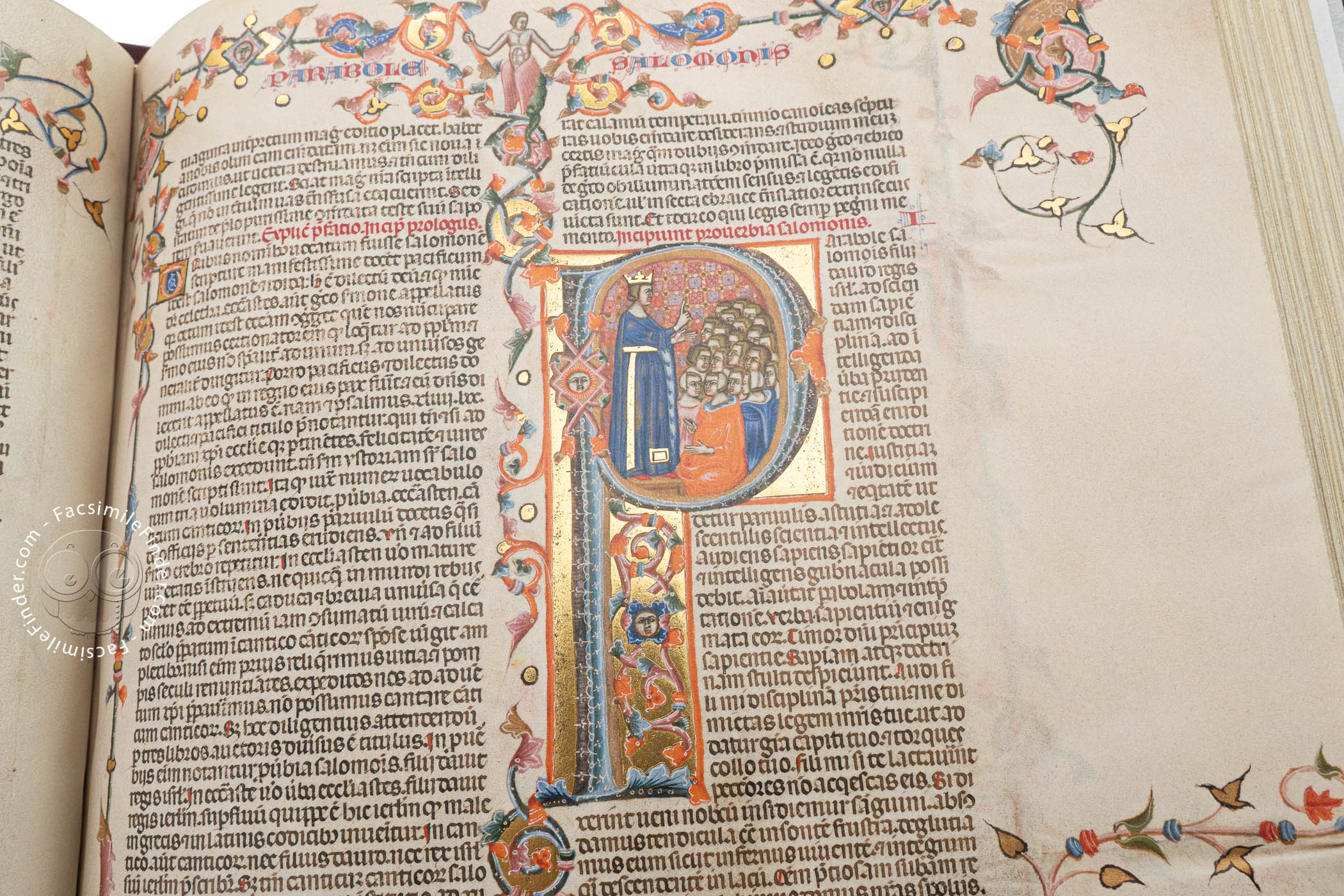
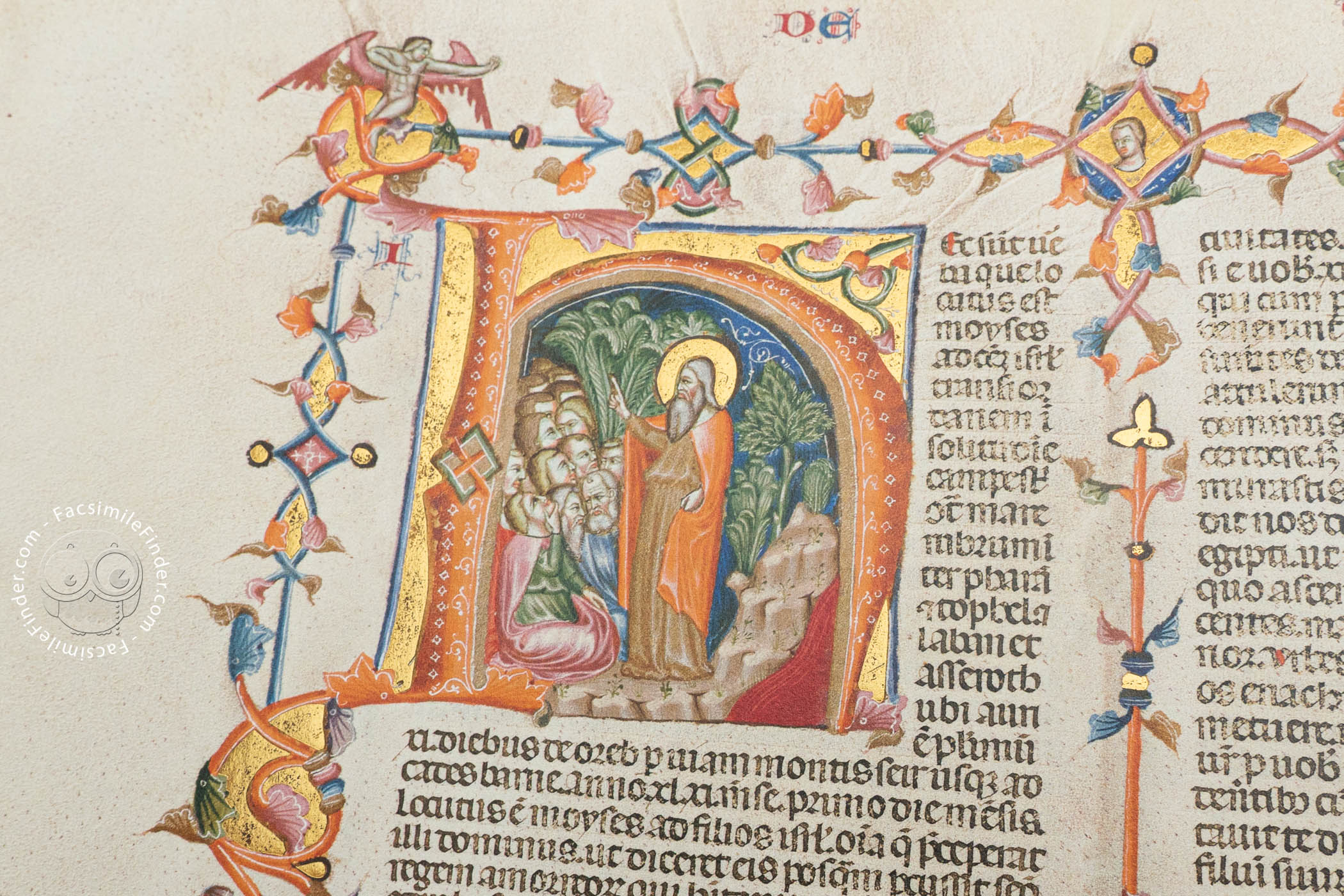
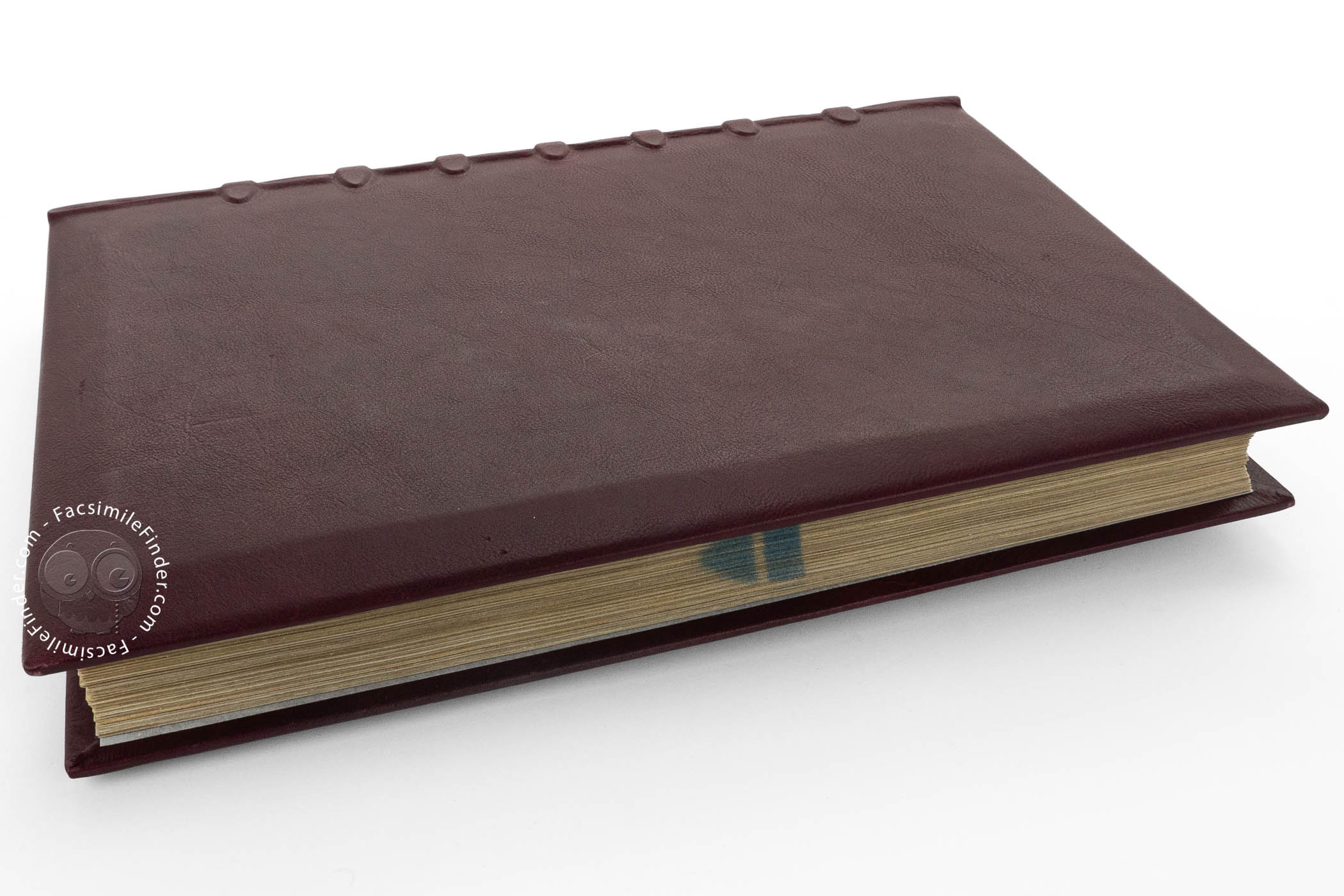
The Anjou Bible is a glorious monument of Neapolitan painting, displaying its characteristic stylistic mélange of French illumination and new trends in Tuscan art. It was created around 1340 at the court of Robert, "the wise," King of Naples, perhaps intended as a gift for his granddaughter and heir to the throne, Joanna I, Queen of Naples. It opens with a pair of imposing full-page frontispieces celebrating Robert and his family, painted by Cristoforo Orimina. More than a hundred historiated initials, all with painted extensions, embellish the text of the Christian Vulgate Bible.
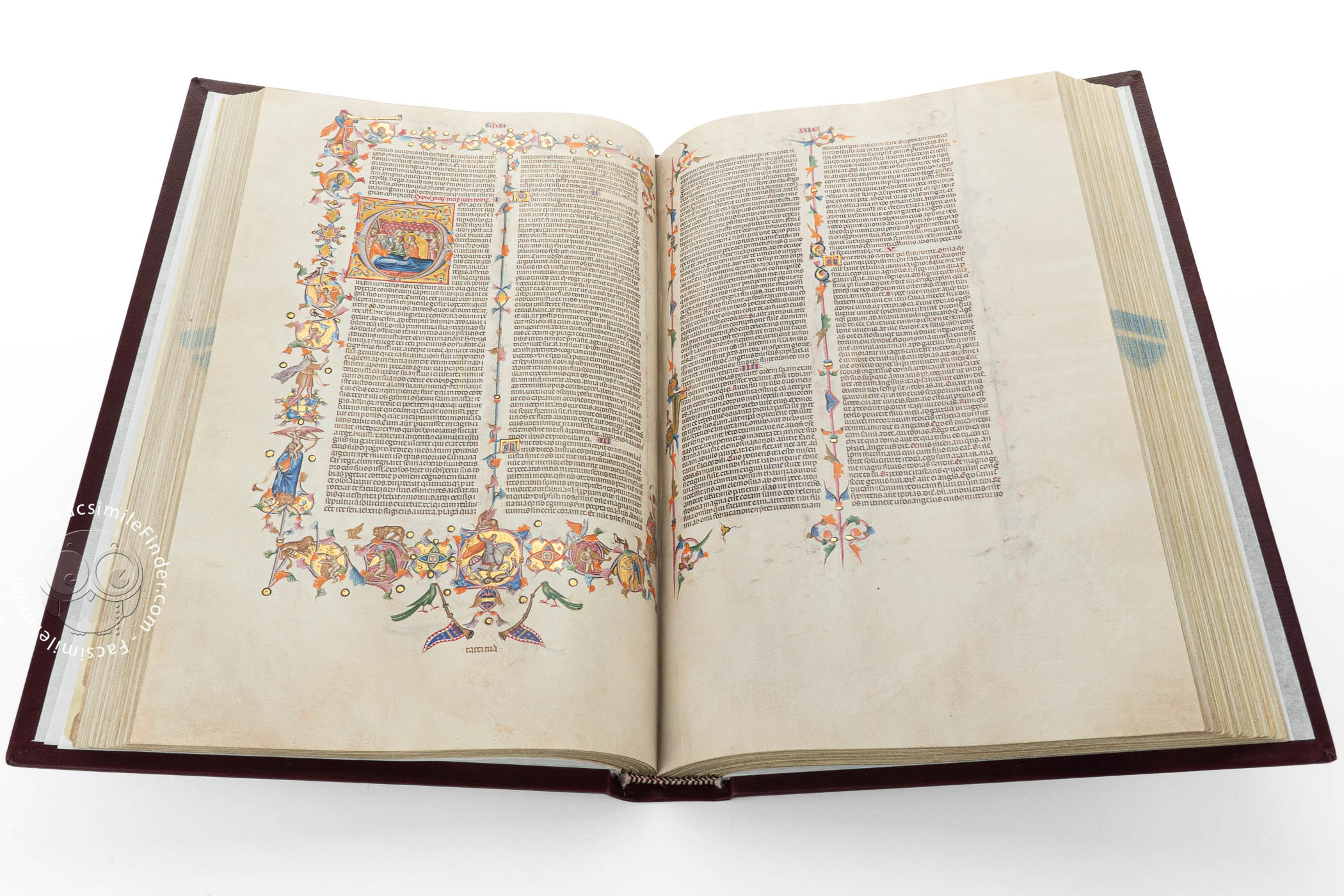
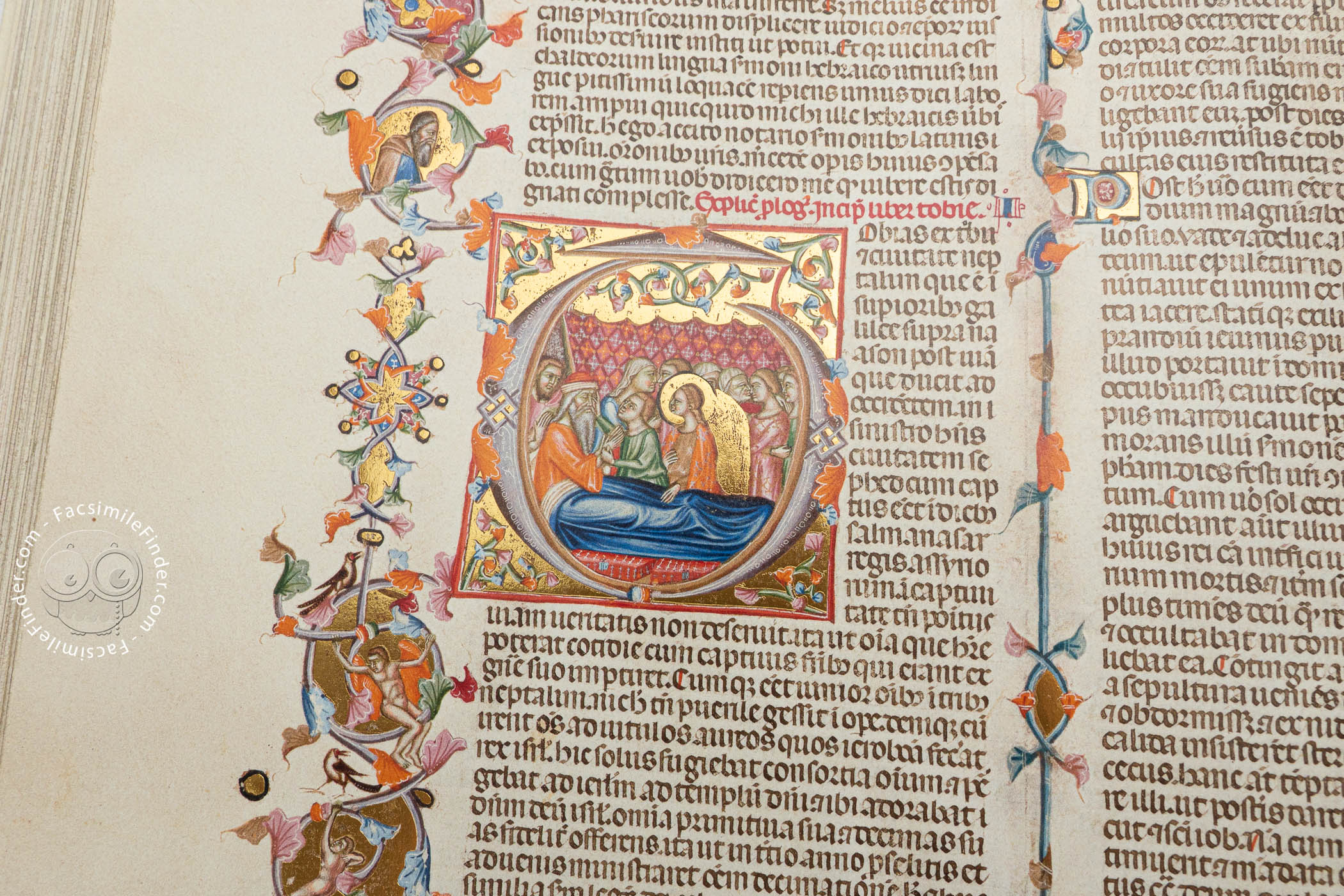
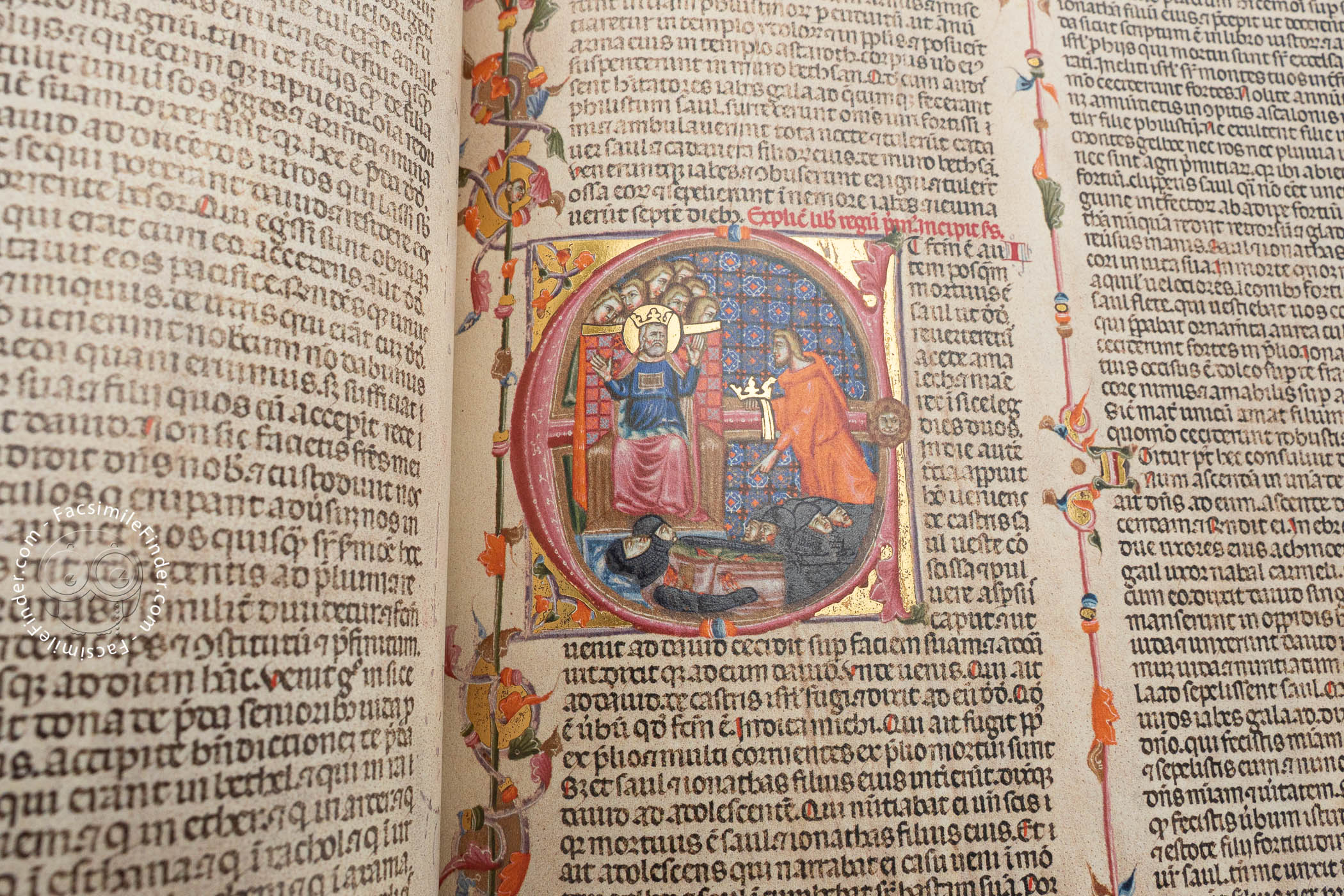
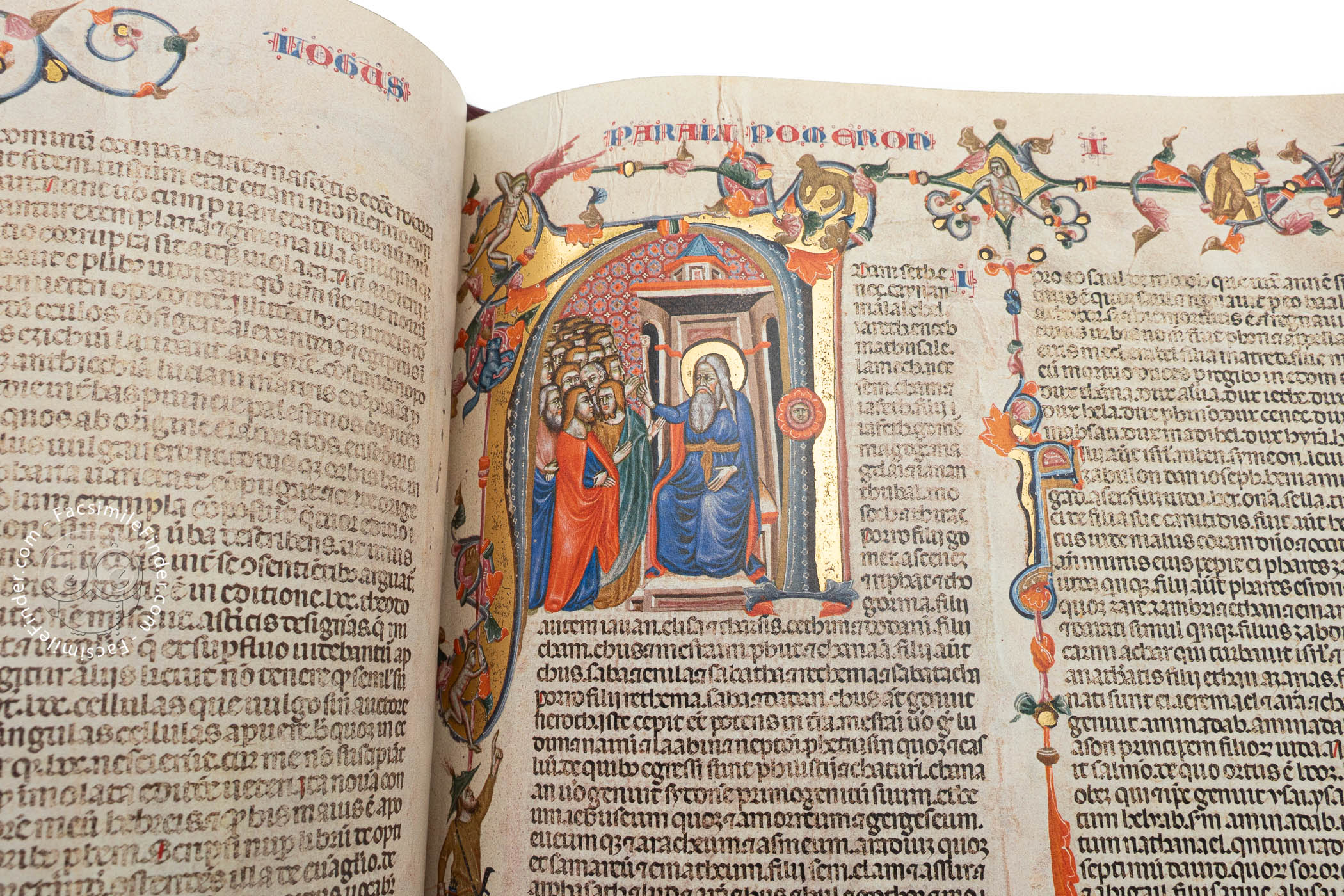
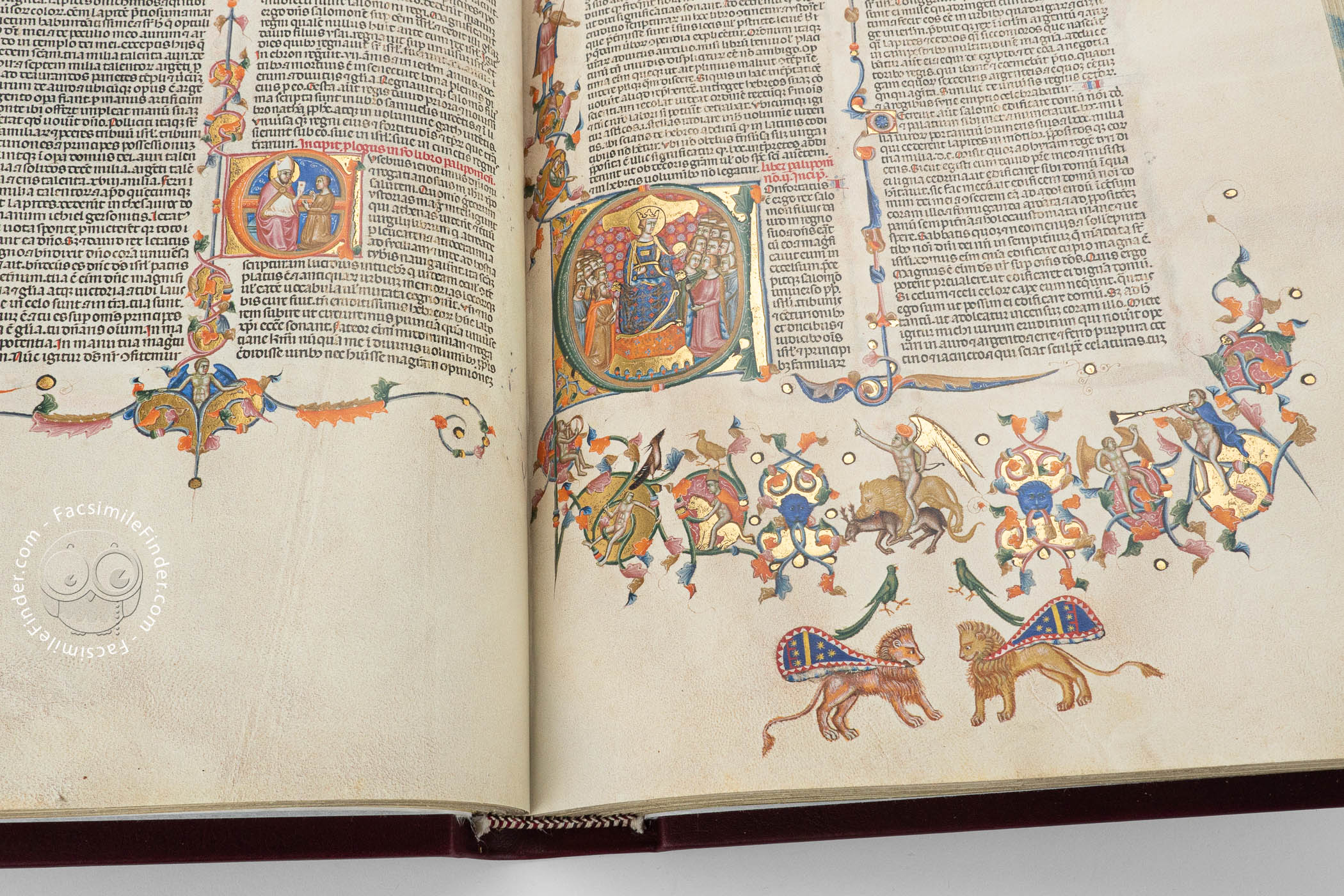
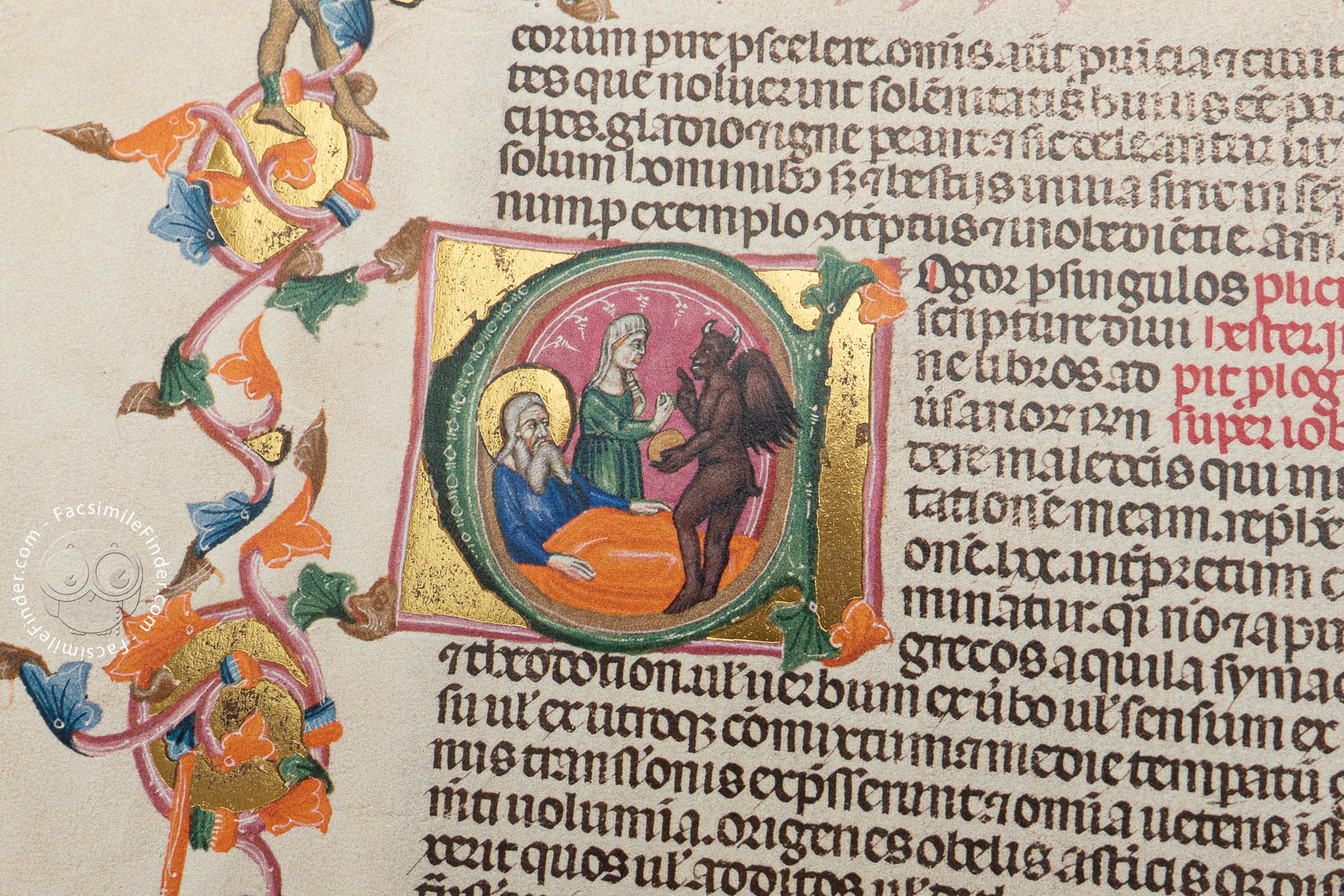
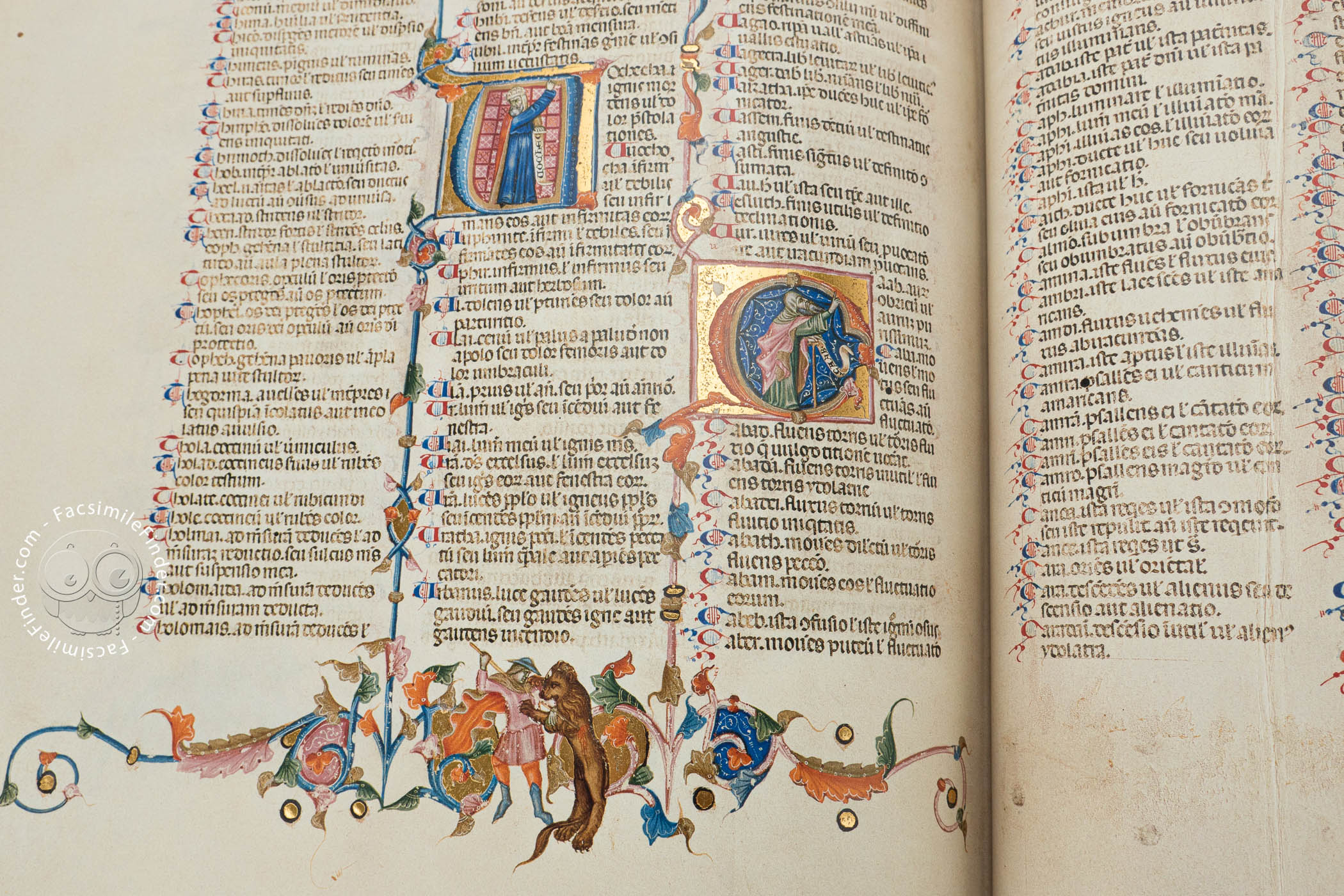
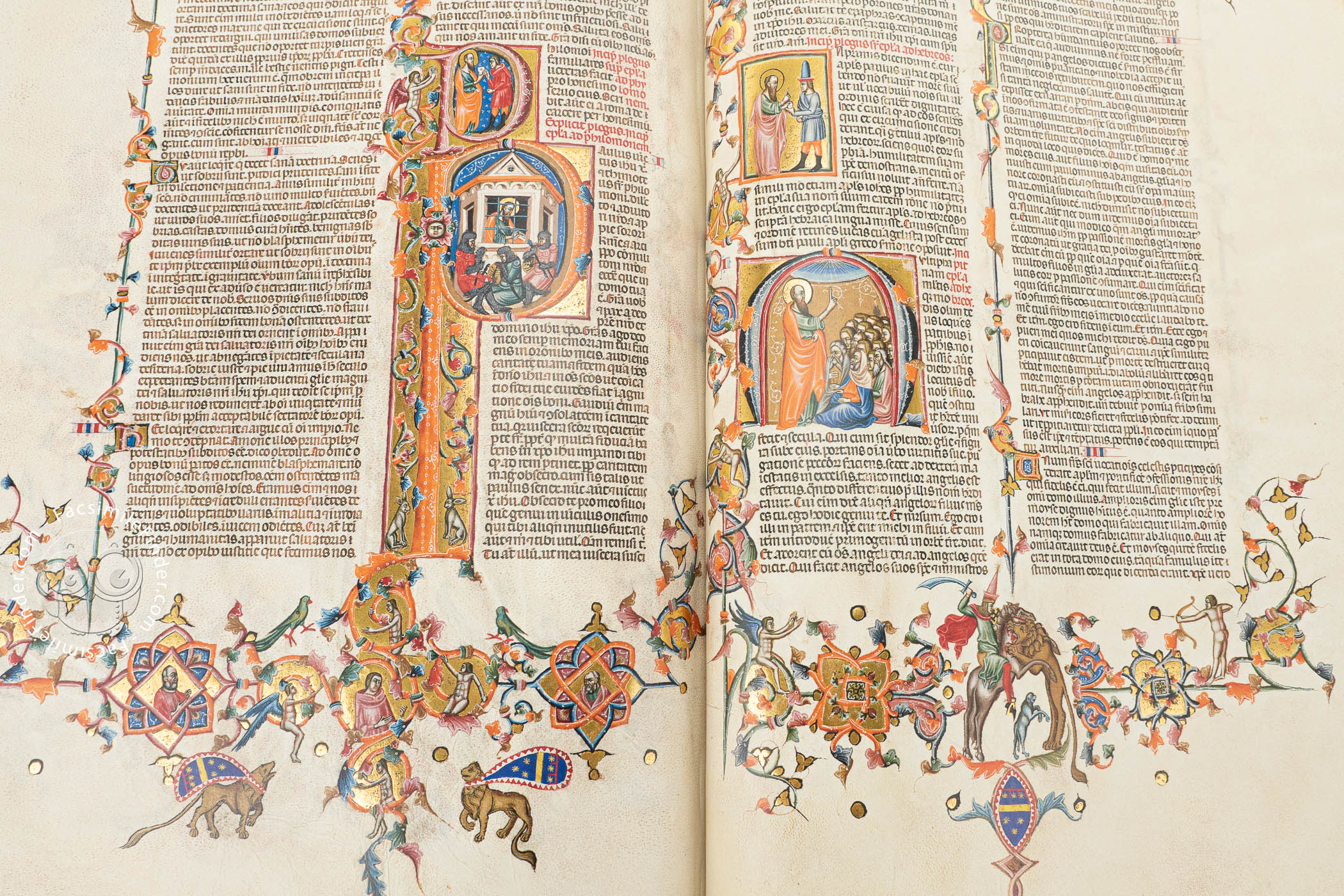
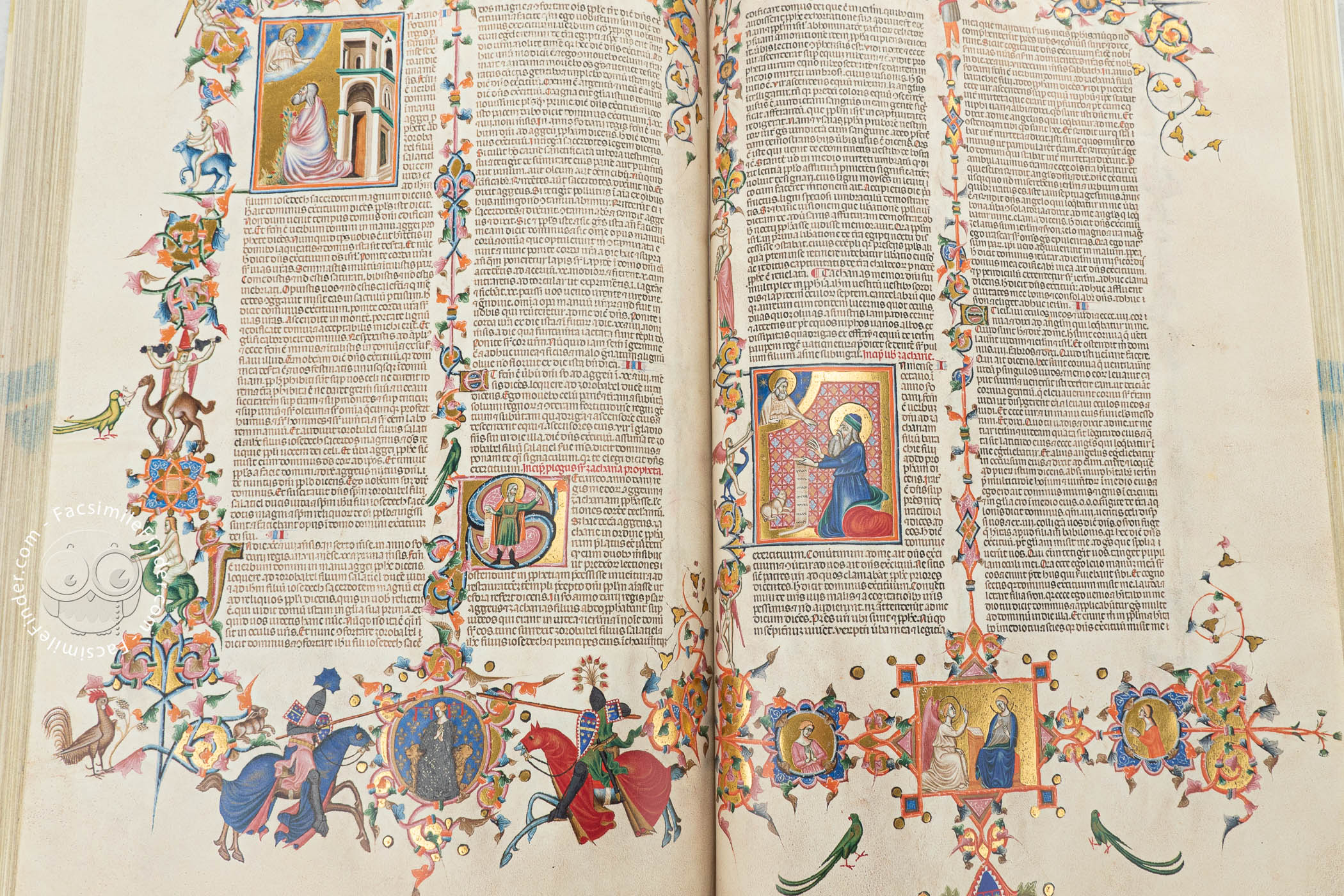
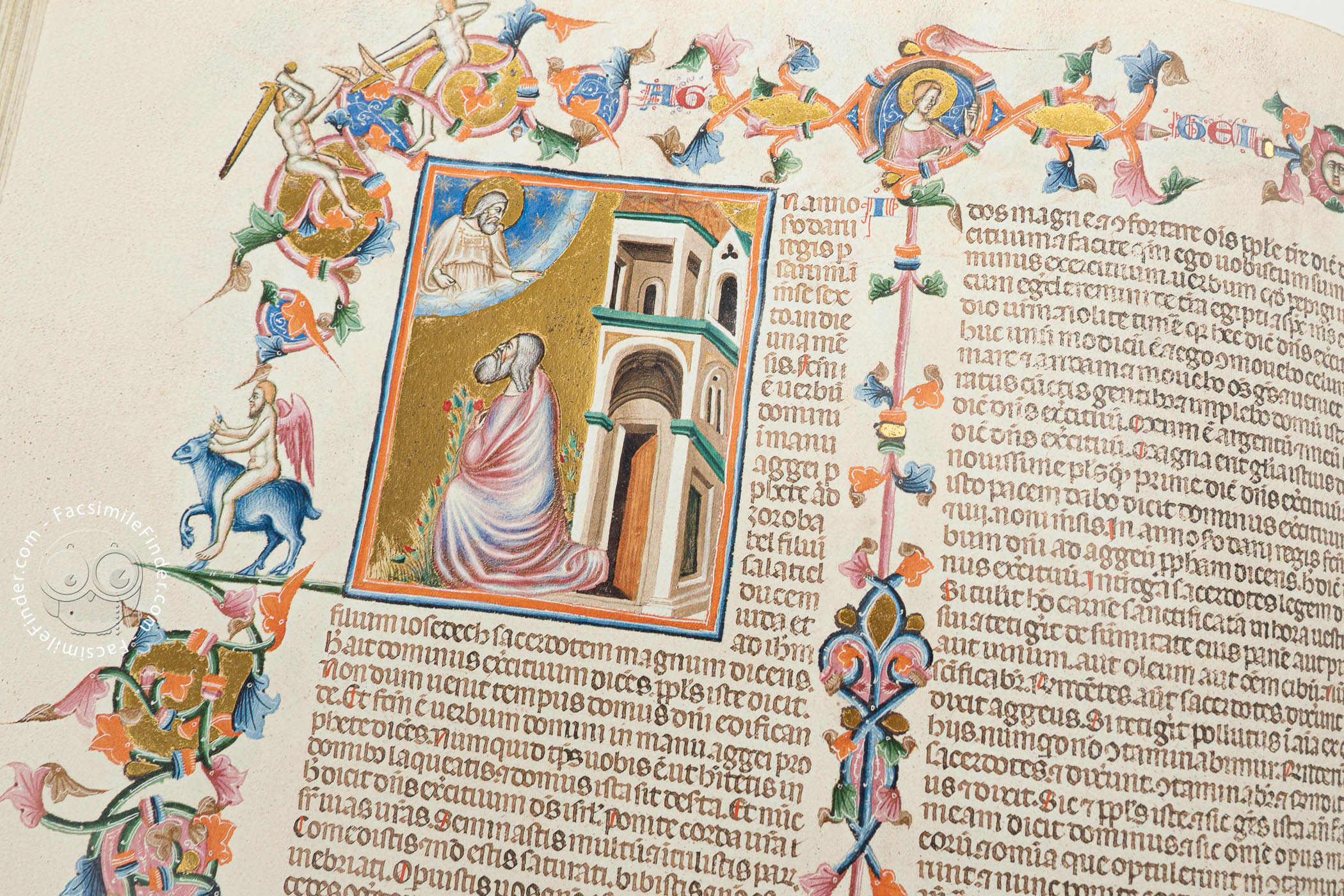
The historiated initials—painted initials depicting a narrative episode or identifiable figures—introduce every biblical book and the prologues. There are many author portraits, but also scenes illustrating the biblical text.
Courtliness Personified
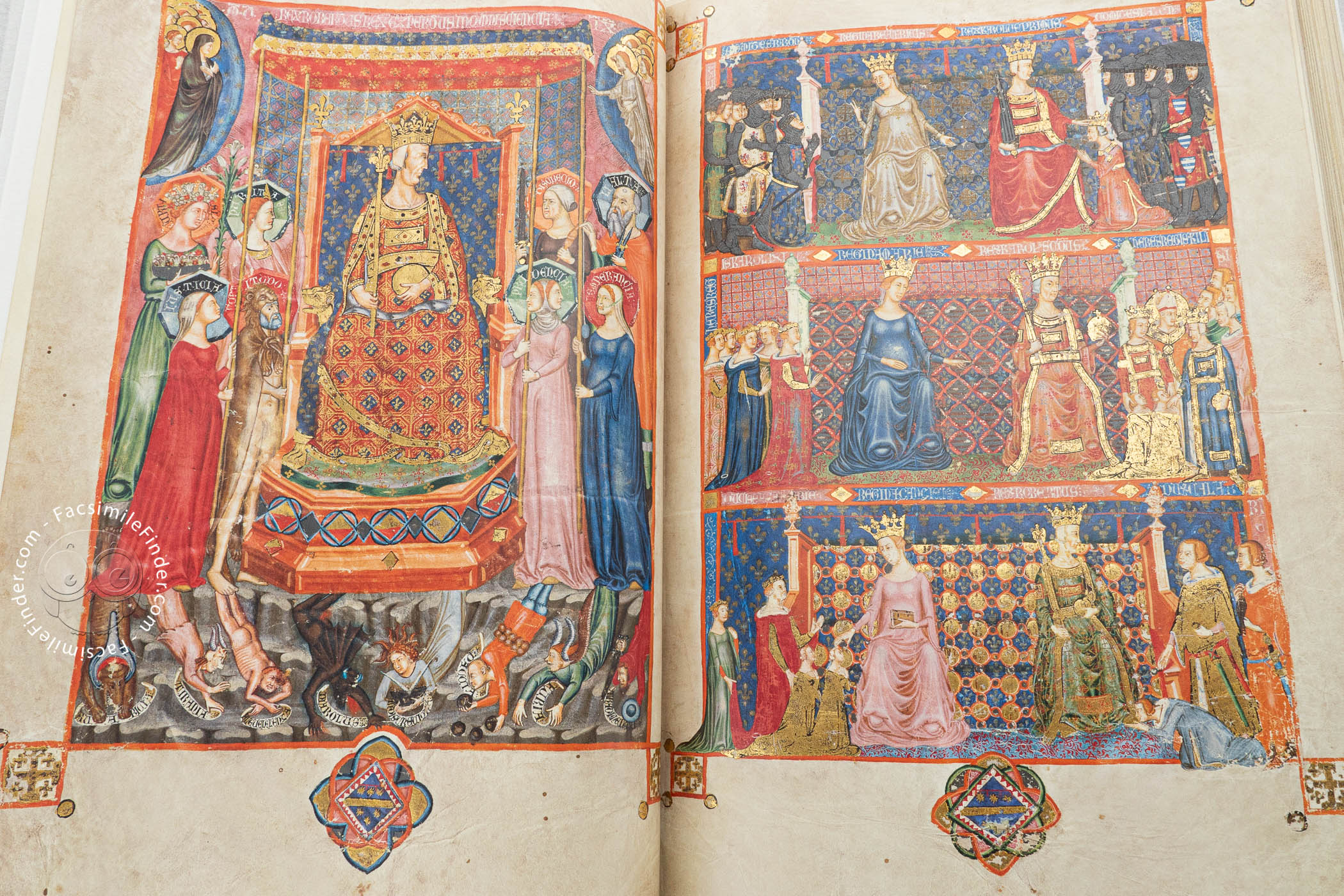
The Bible opens with a representation of Robert (d. 1343) in Byzantine-style robes enthroned on a stool with golden lion-head and lion-paw finials before a cloth decorated with the heraldry of the Capetian house of Anjou. He holds an orb and scepter and is labeled "king expert in all the sciences" (fol. 3v).
Robert is flanked by personifications of the four cardinal virtues (justice, fortitude, prudence, and temperance) of classical antiquity and four medieval courtly virtues (courtliness, purity, discretion, and loyalty). These stately figures are understood to defeat eight vices pictured as smaller figures diving into the abyss below.
Focus on the Angevine Dynasty
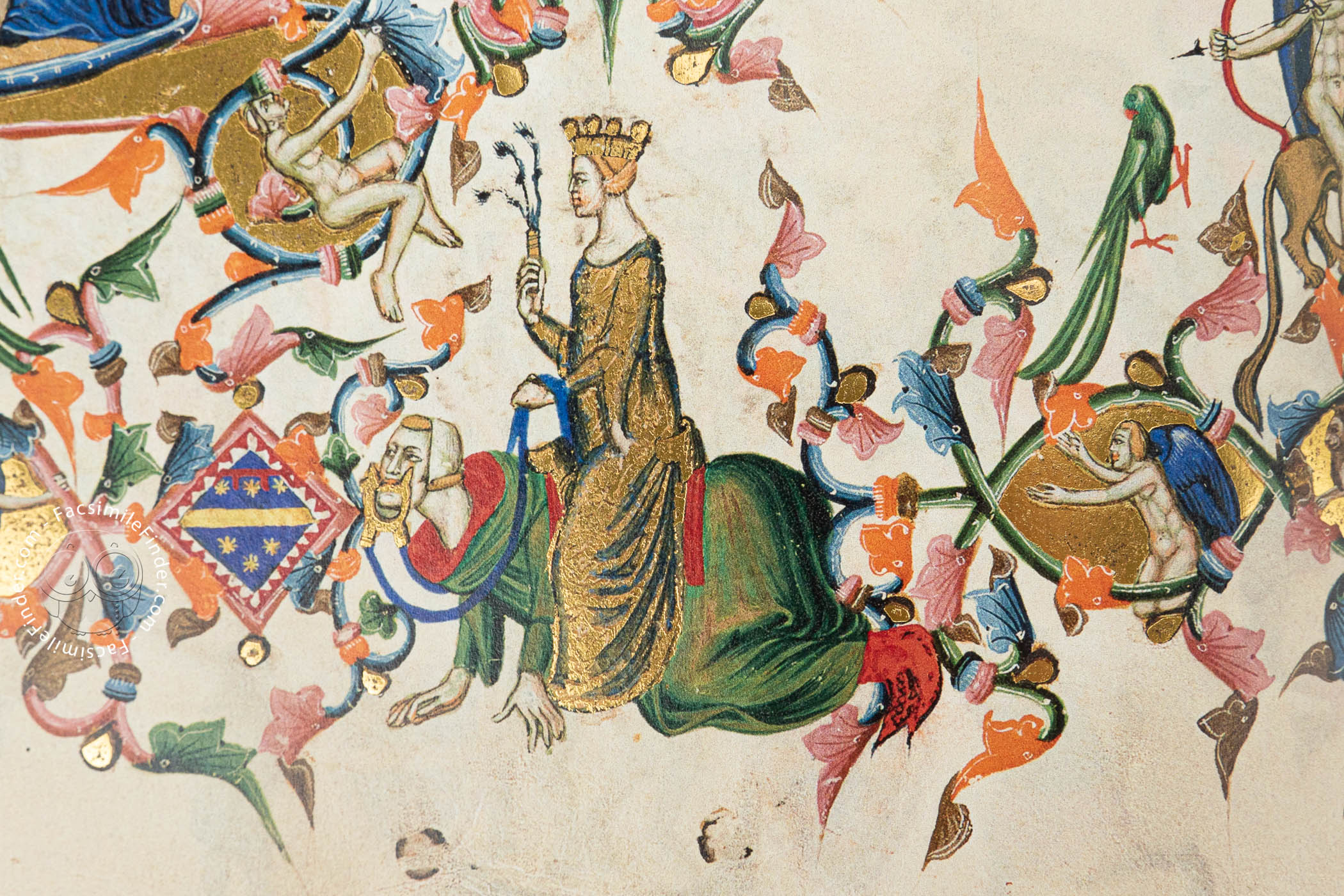
Three generations of rulers are pictured on the facing page. They are Charles I (1226-1285), King of Naples, and his consort Beatrice (1234-1267); Charles II (d. 1309), King of Naples, and his consort Maria (d. 1332); and, in the bottom register, Robert and his second wife, Sancia (d. 1345). Robert is also depicted in the middle register with his two granddaughters, the elder—Joanna (d. 1382)—being his designated successor (fol. 4r).
Unusual Subjects Inspired by Text
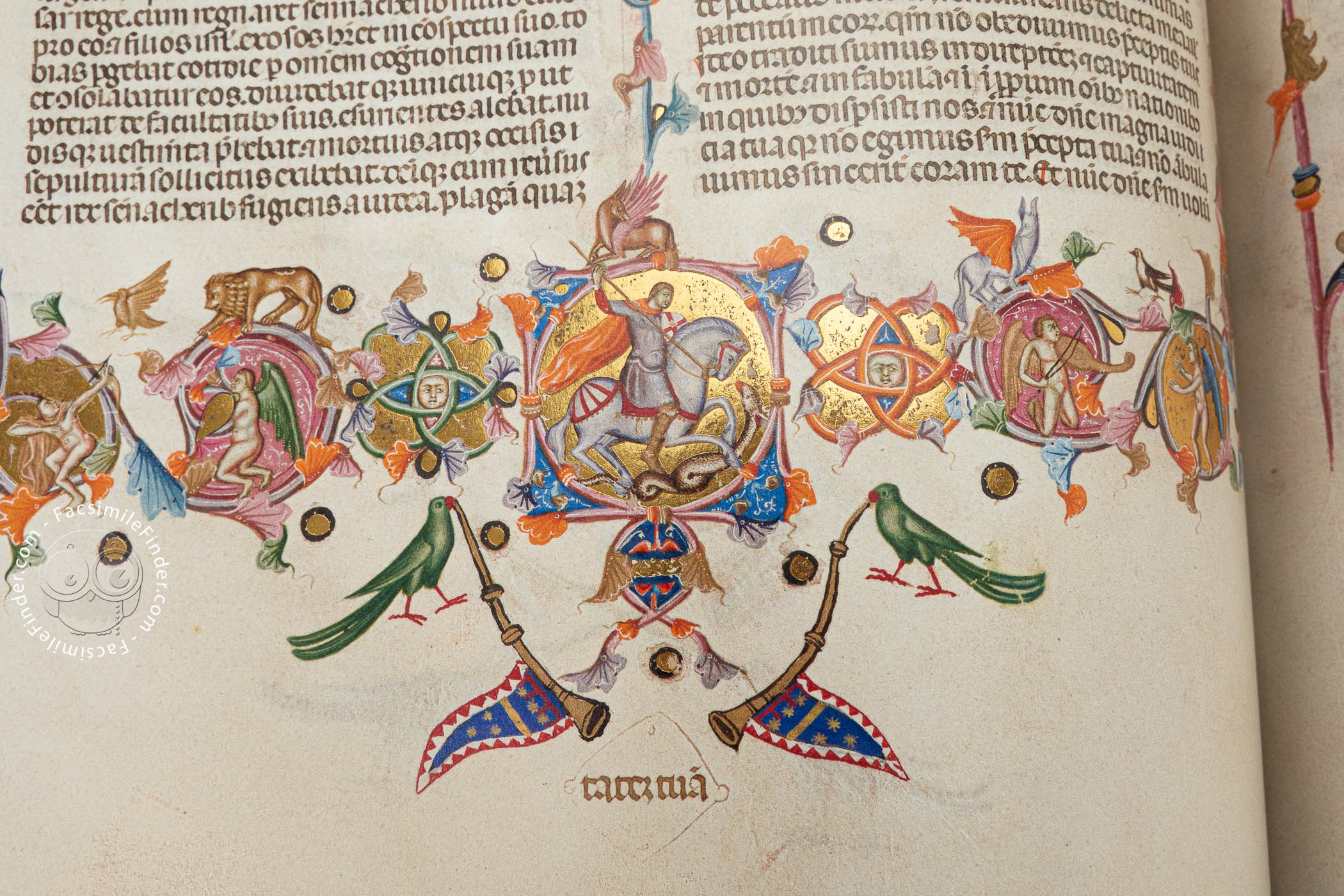
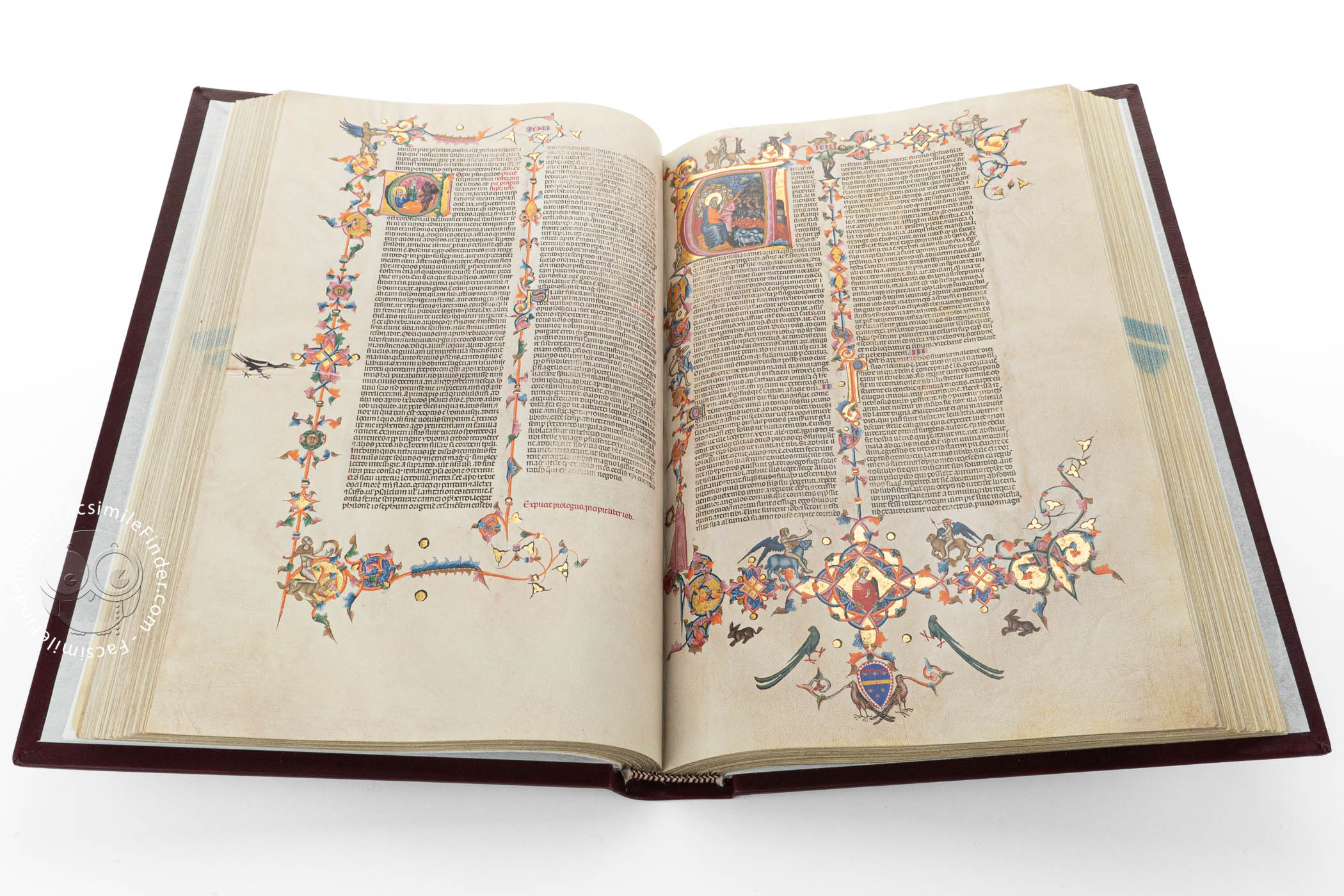
The Anjou Bible is remarkable for the frequently surprising subjects of its historiated initials. These result from a tendency to illustrate the immediately proximate text, that is, the opening verses of the biblical book. For example, the initial for the book of Job shows the godly man and his wealth in the form of large numbers of camels, asses, cattle, sheep, and children, as described in Job 1:3 (fol. 130r), rather than the more usual scene of his misery.
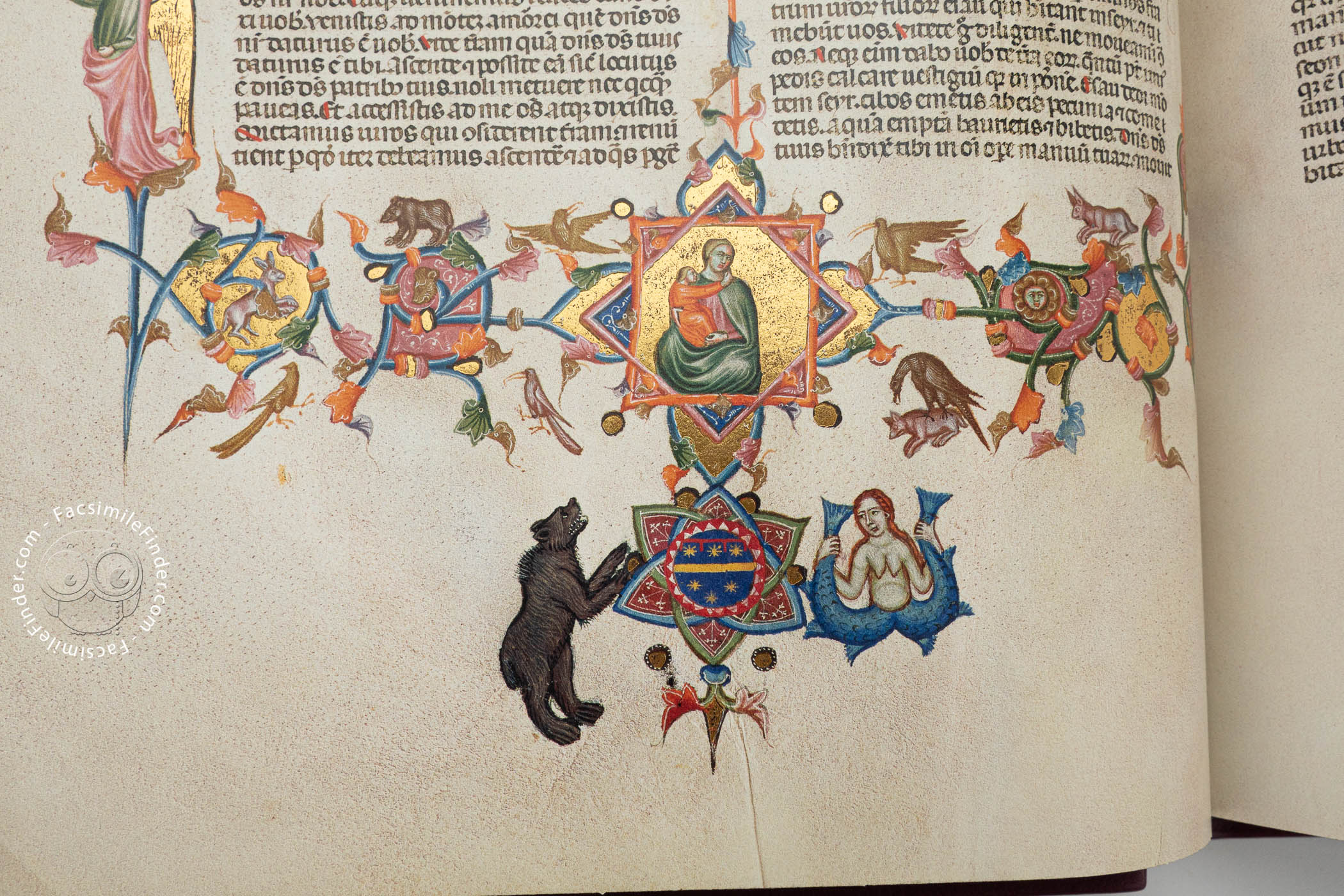
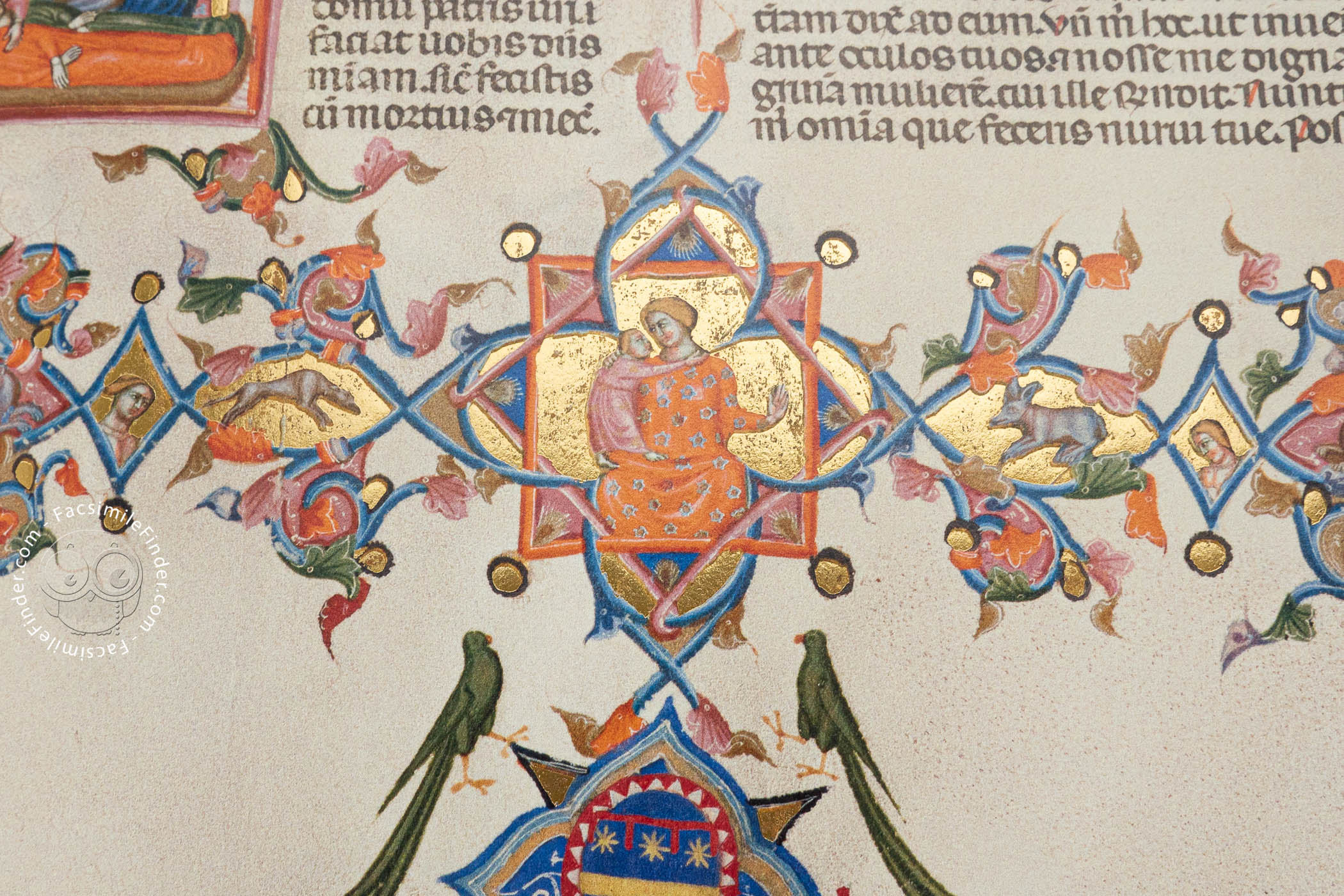
Worlds Unfold in Margins
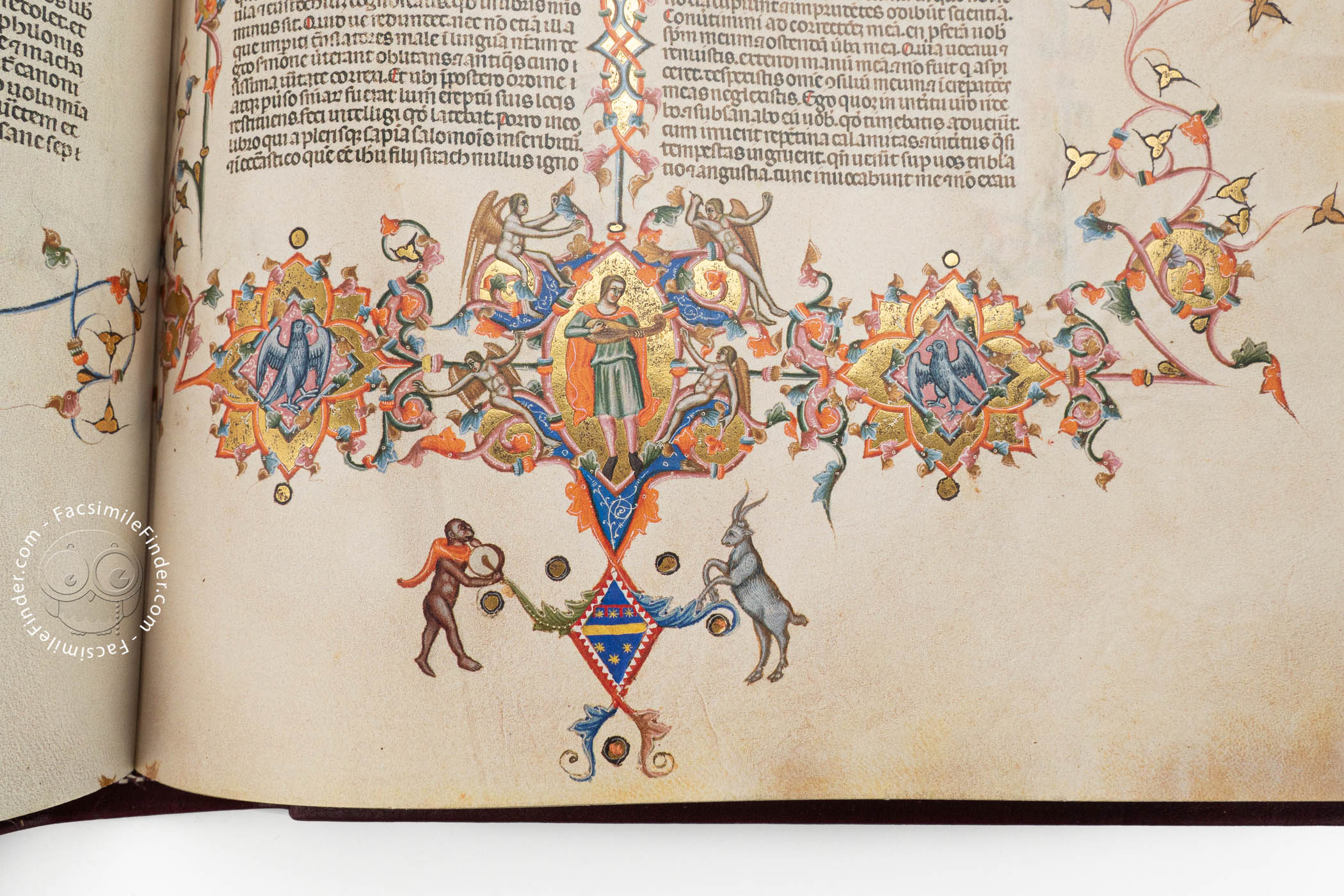
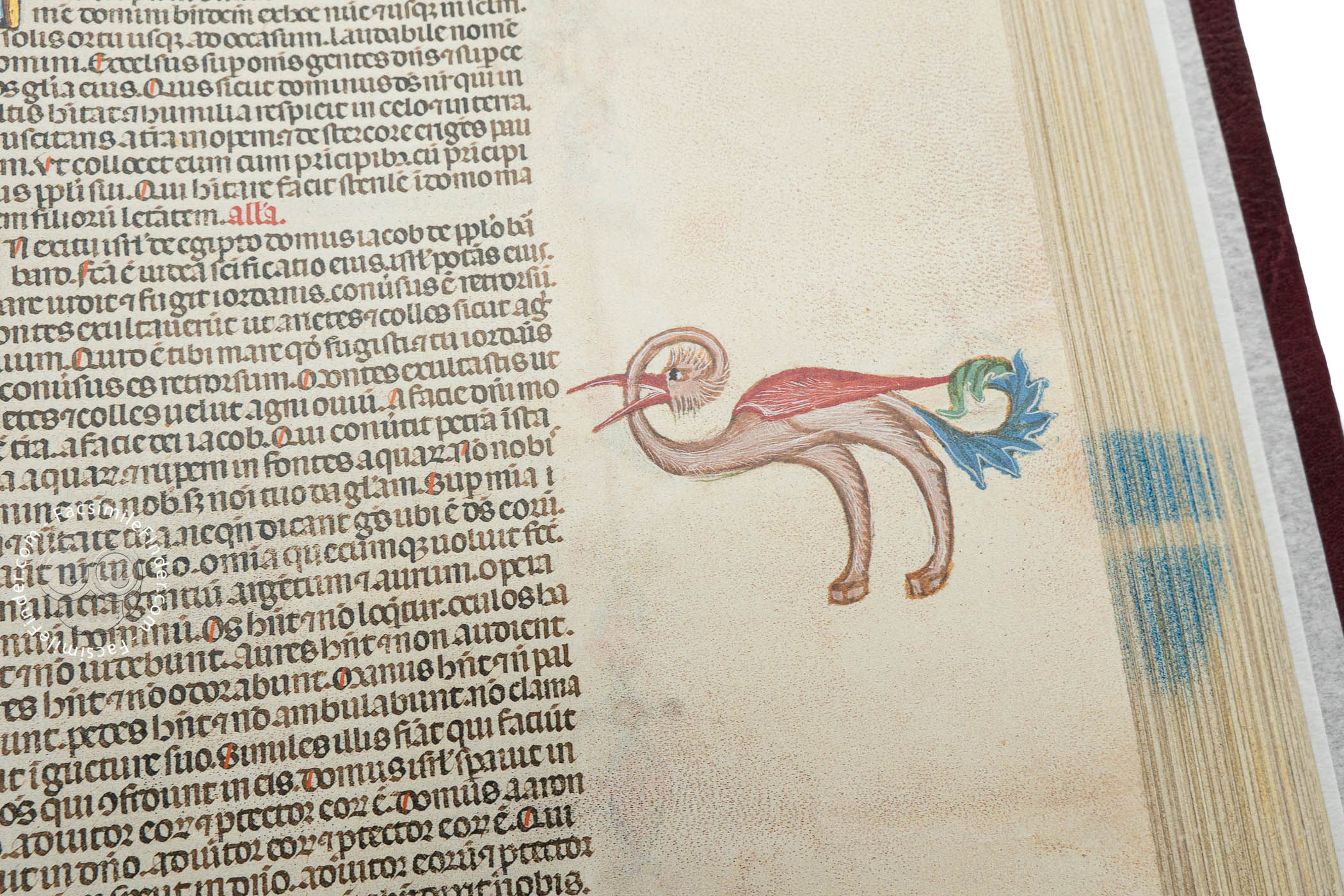
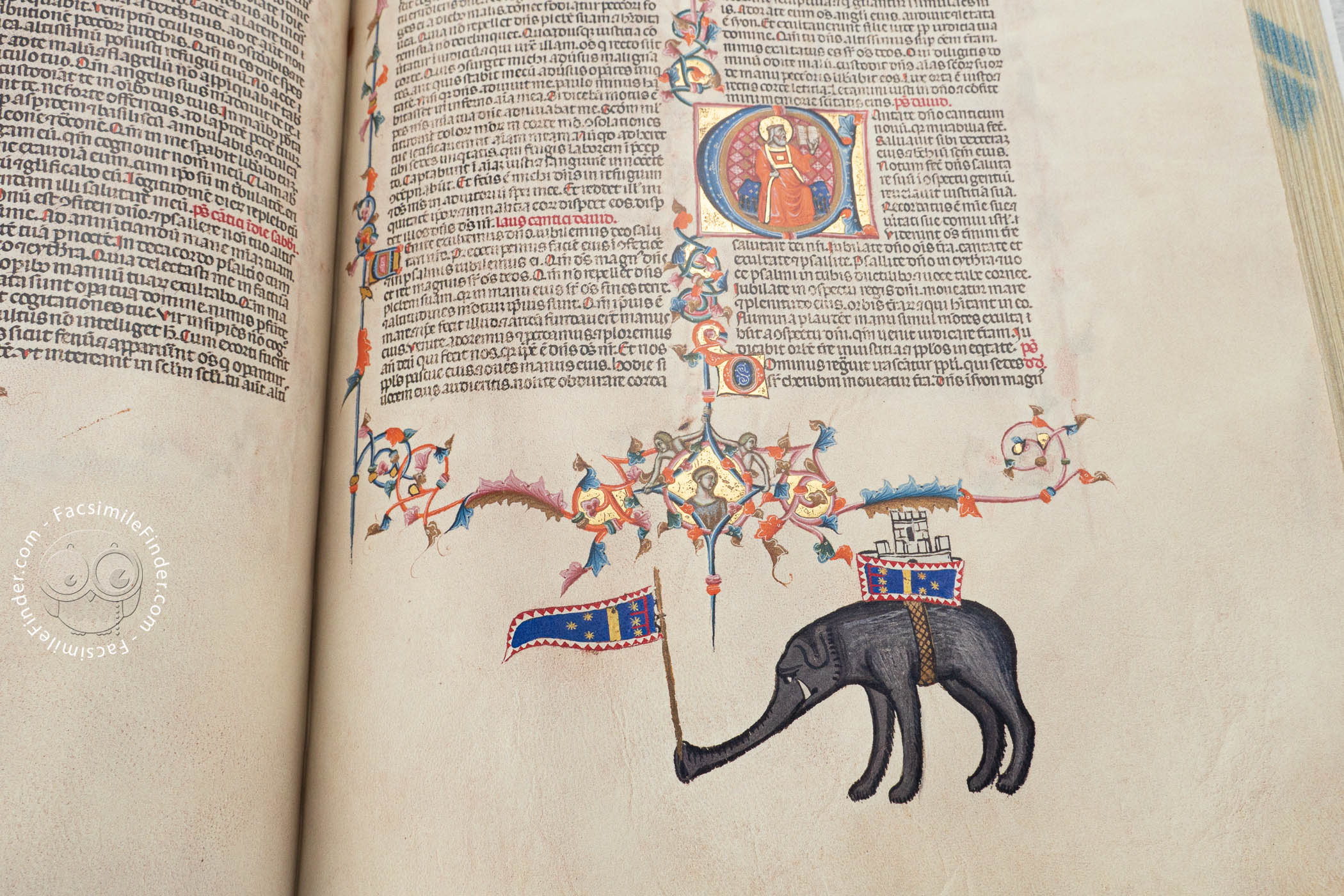
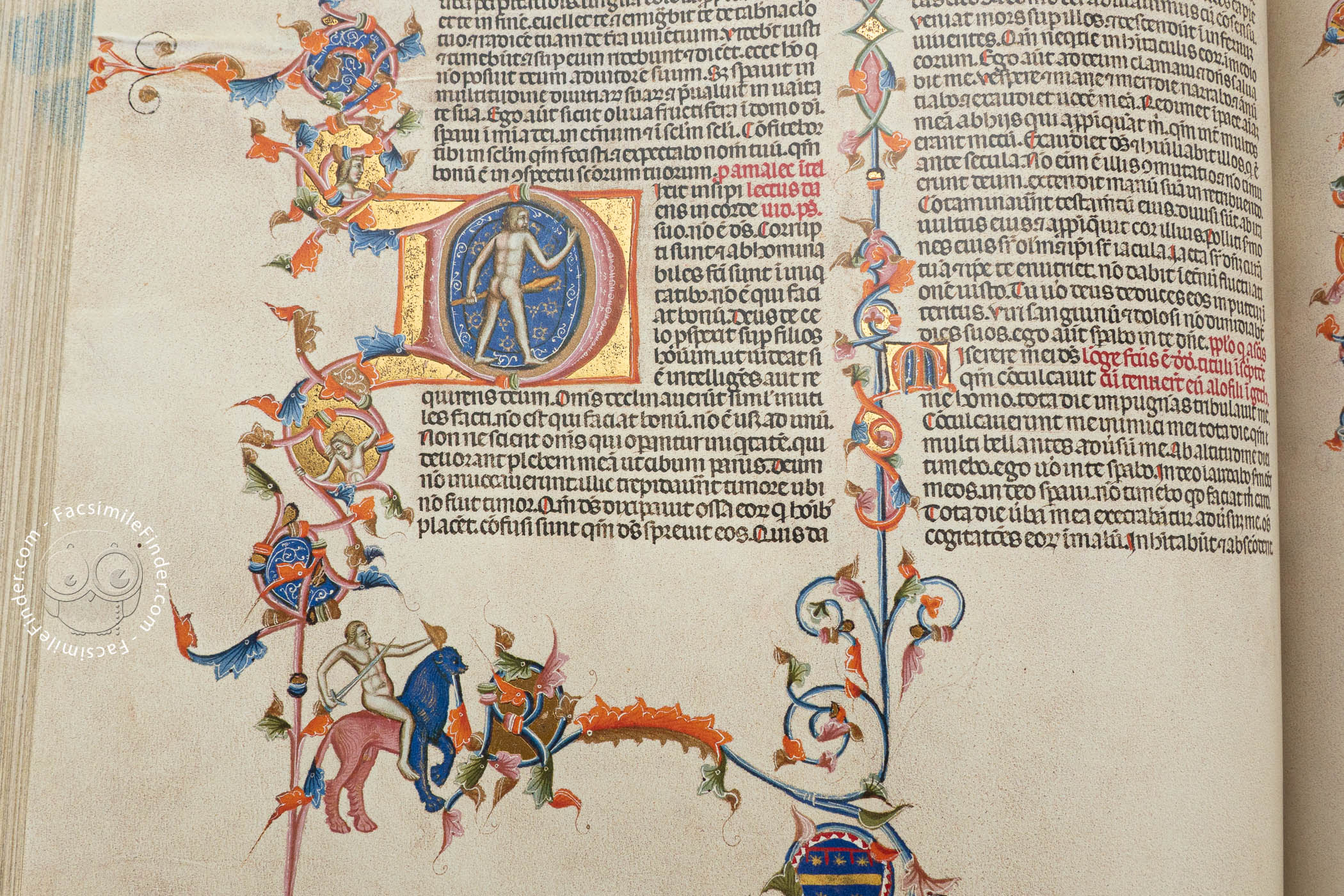
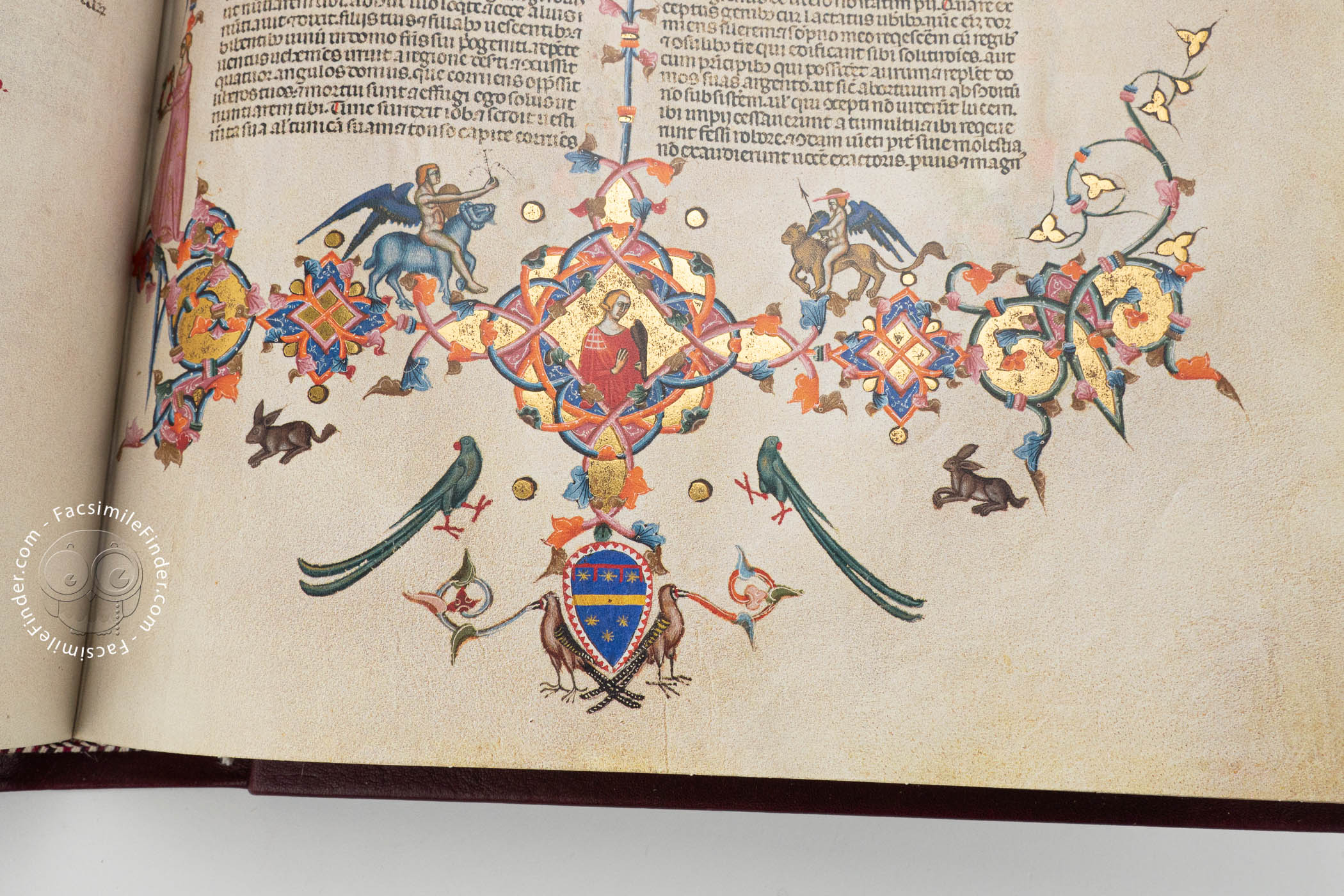
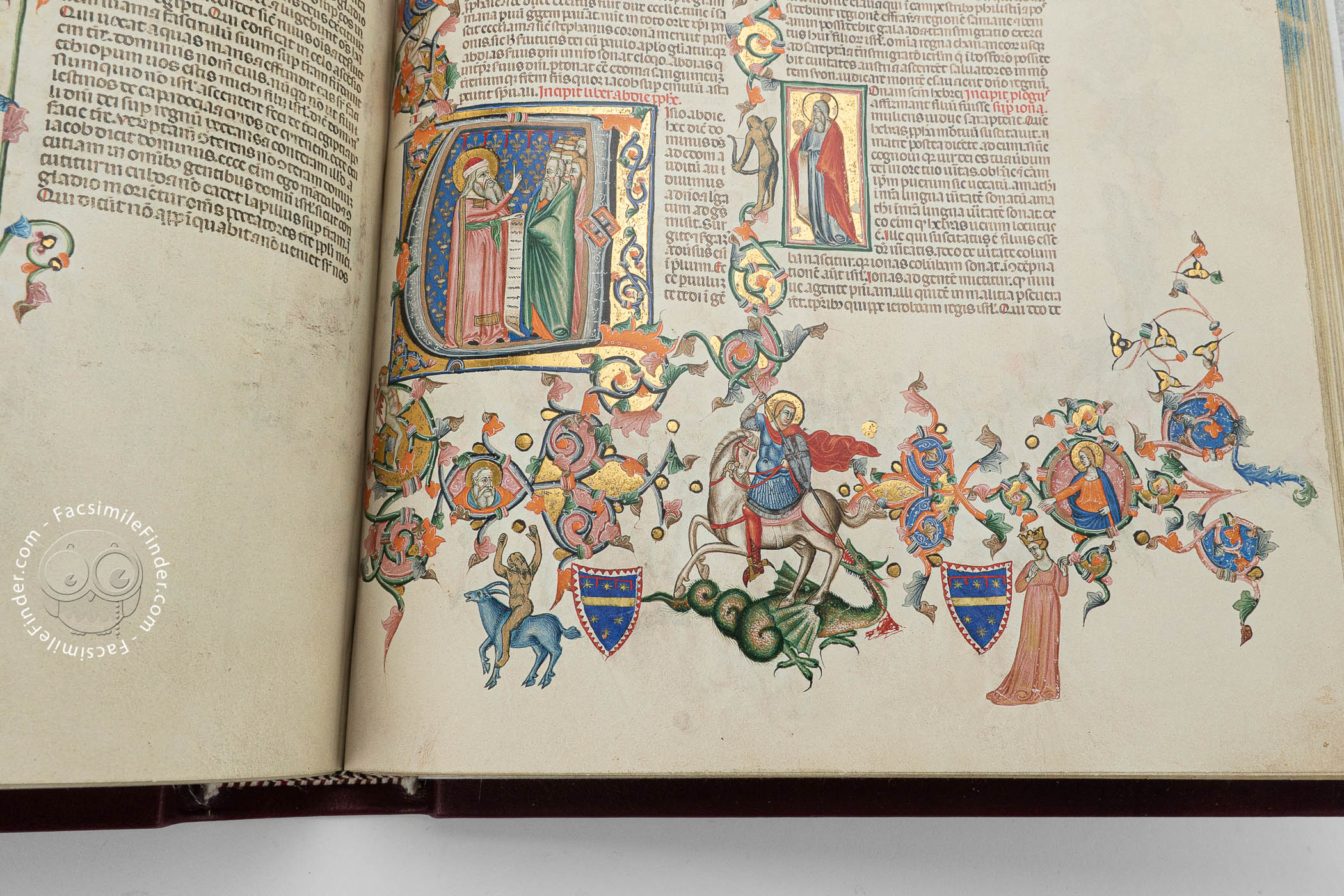
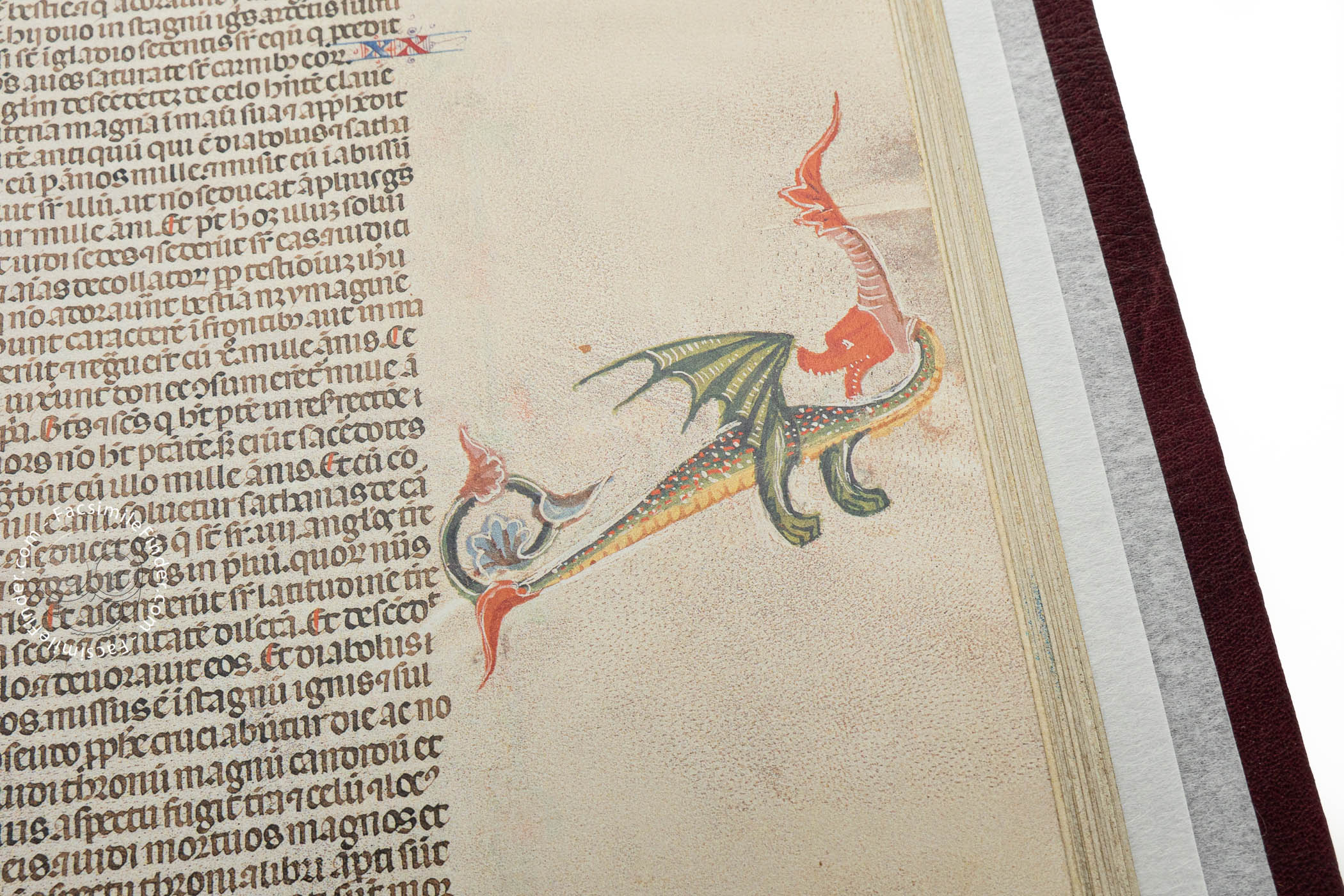
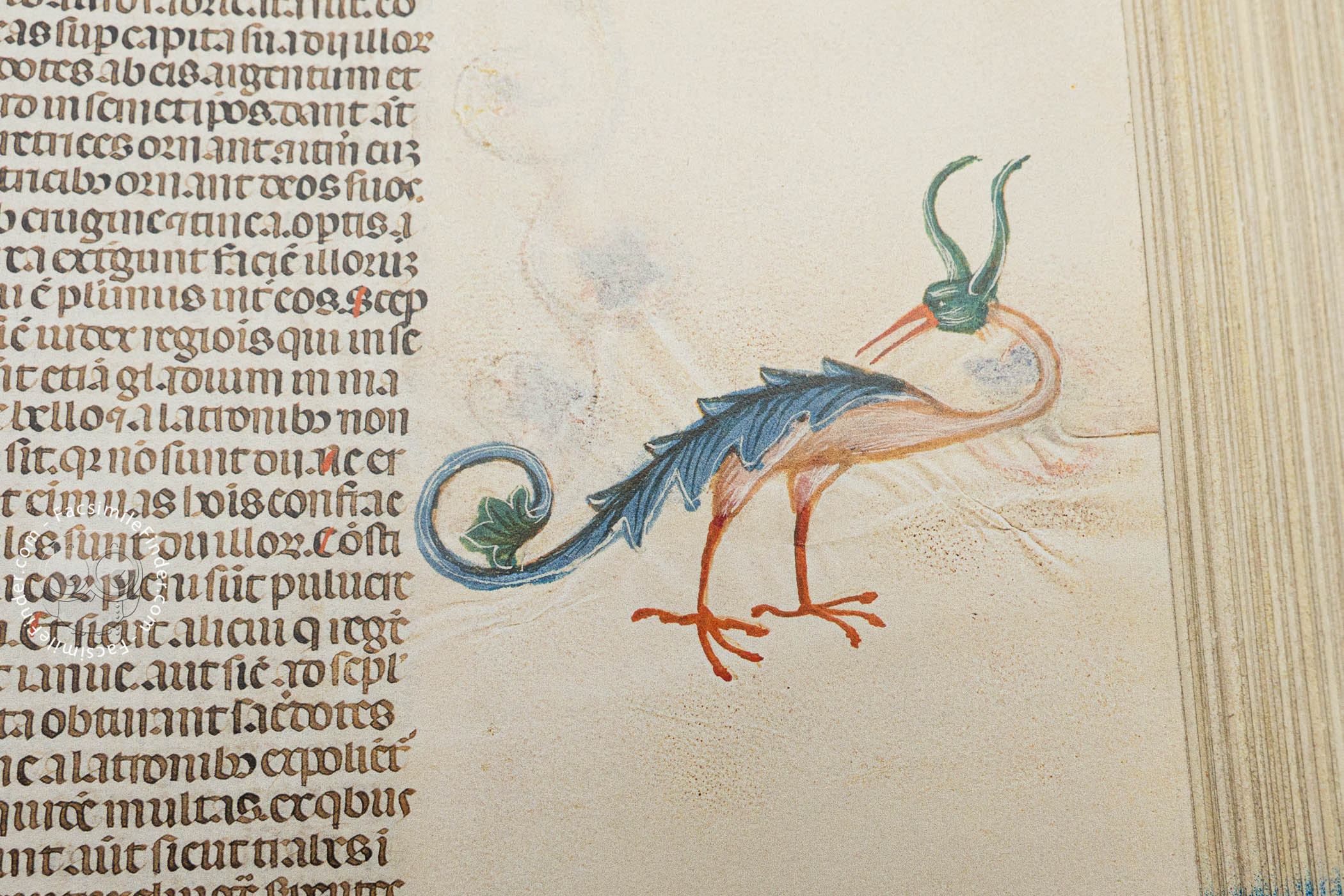
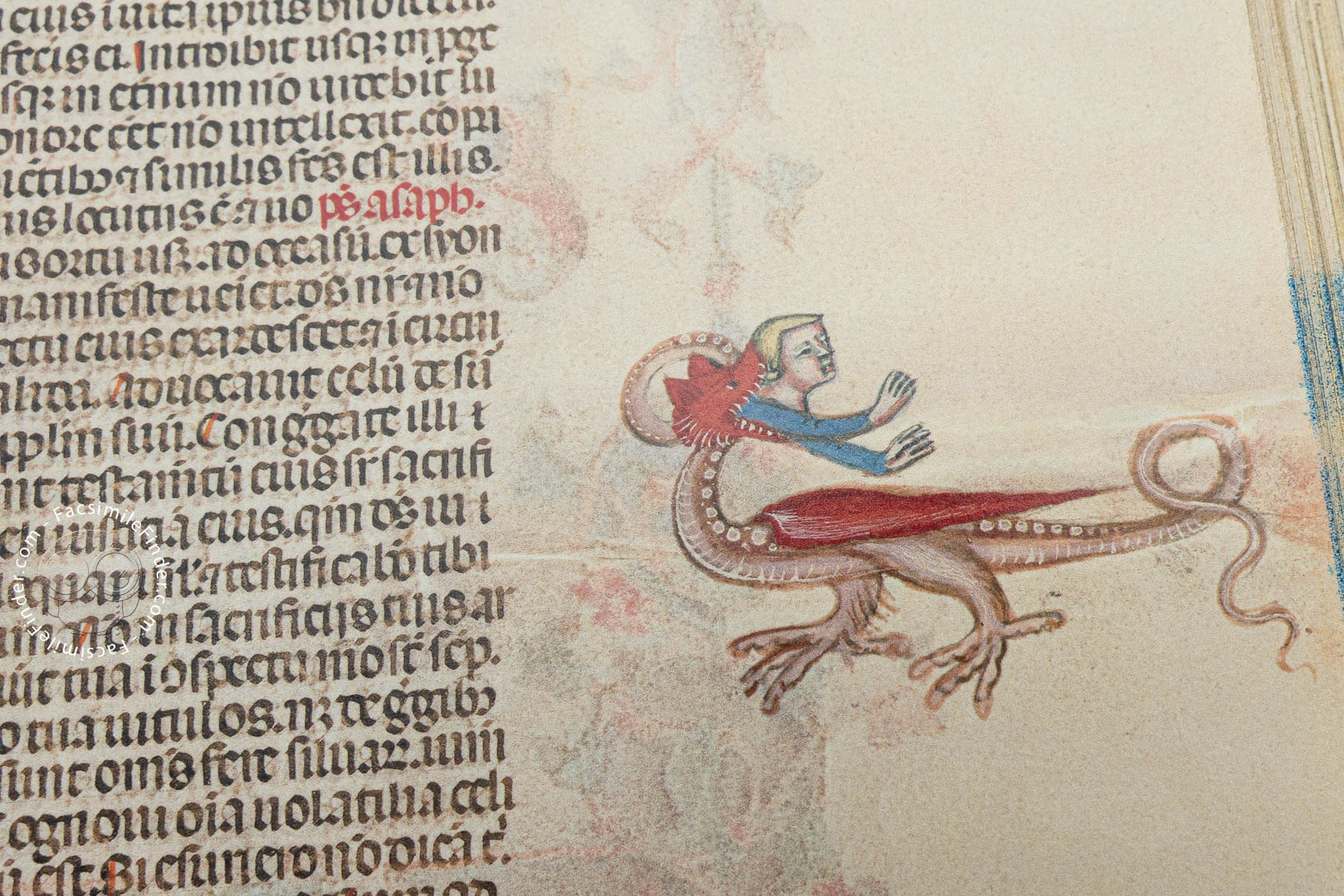
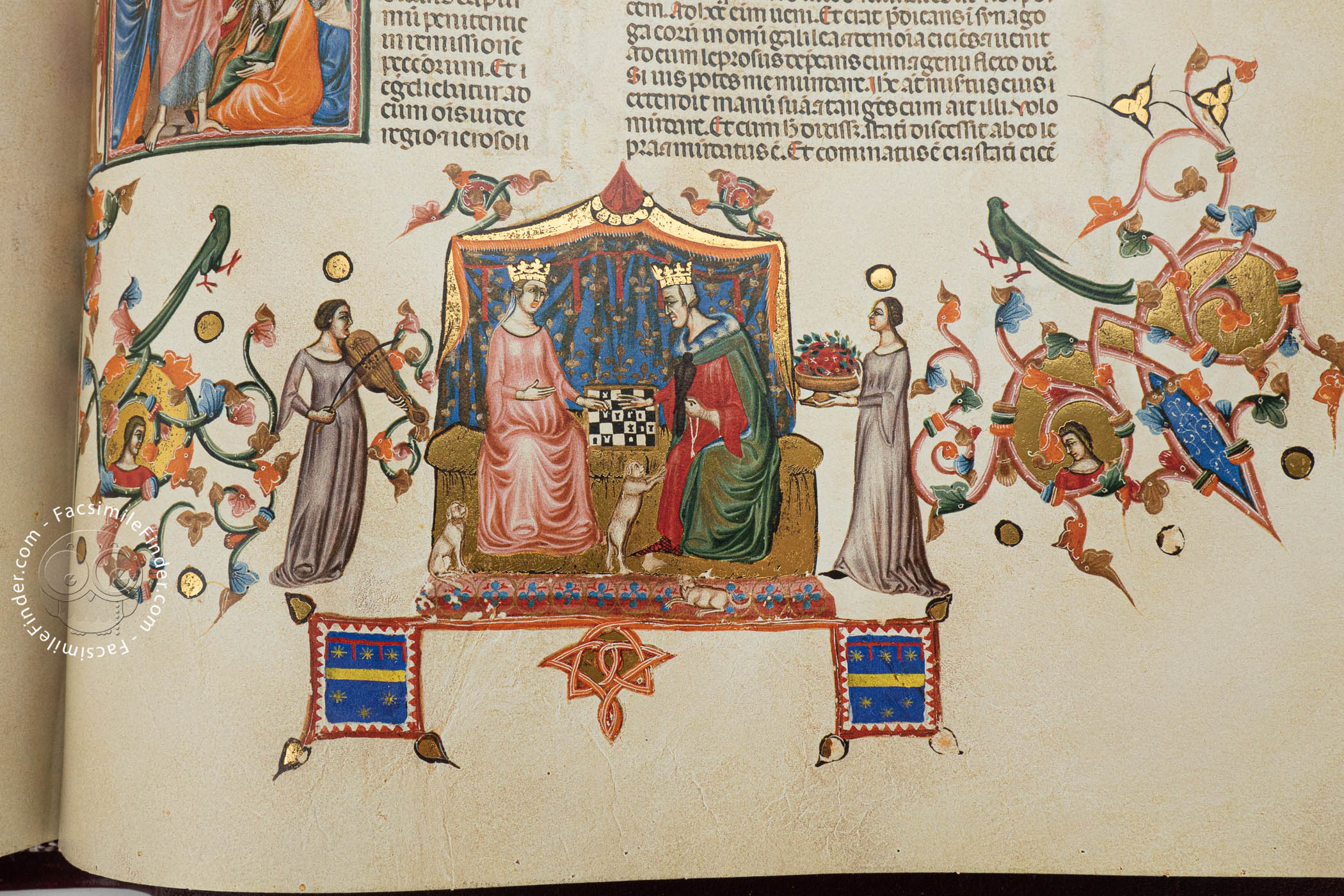
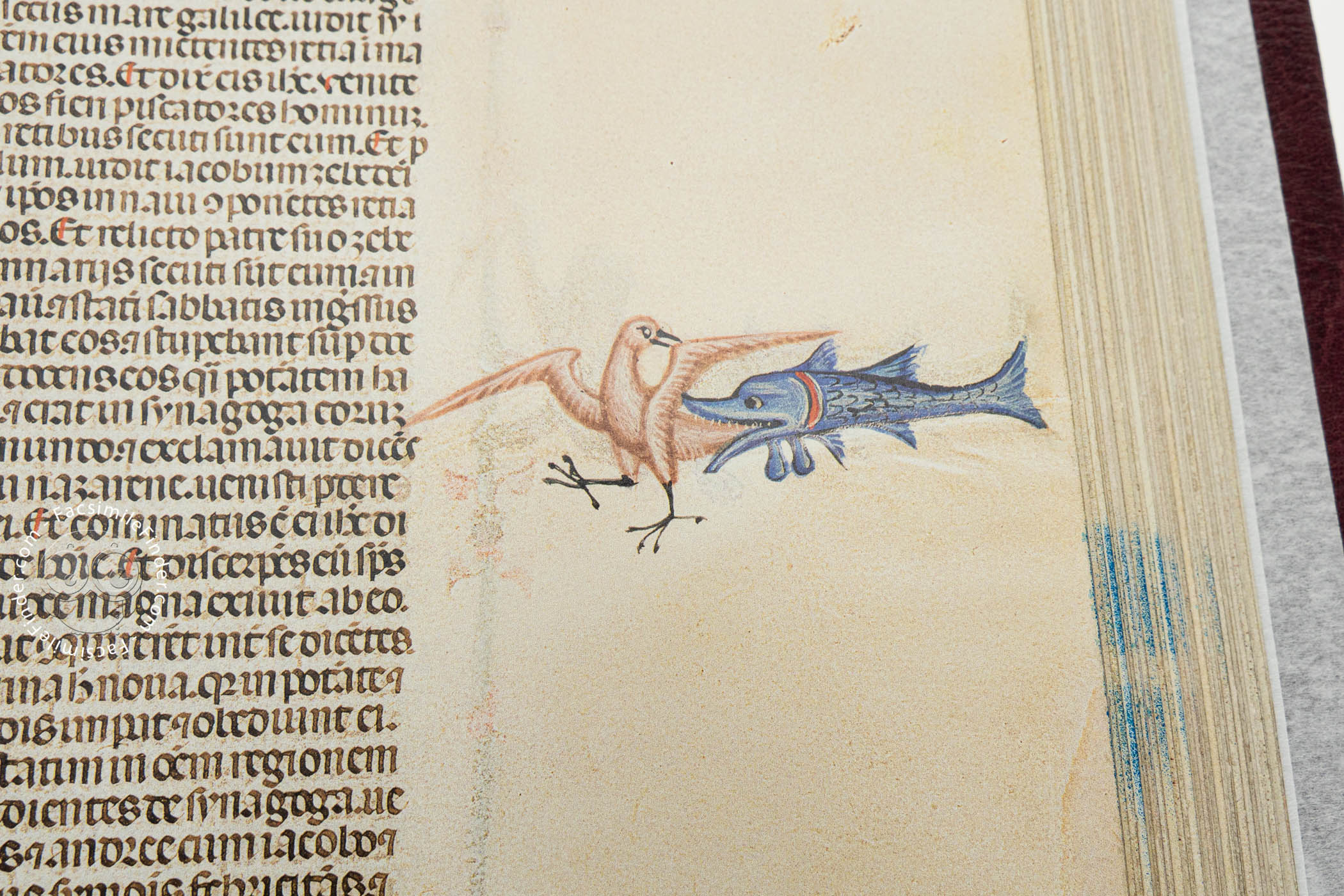
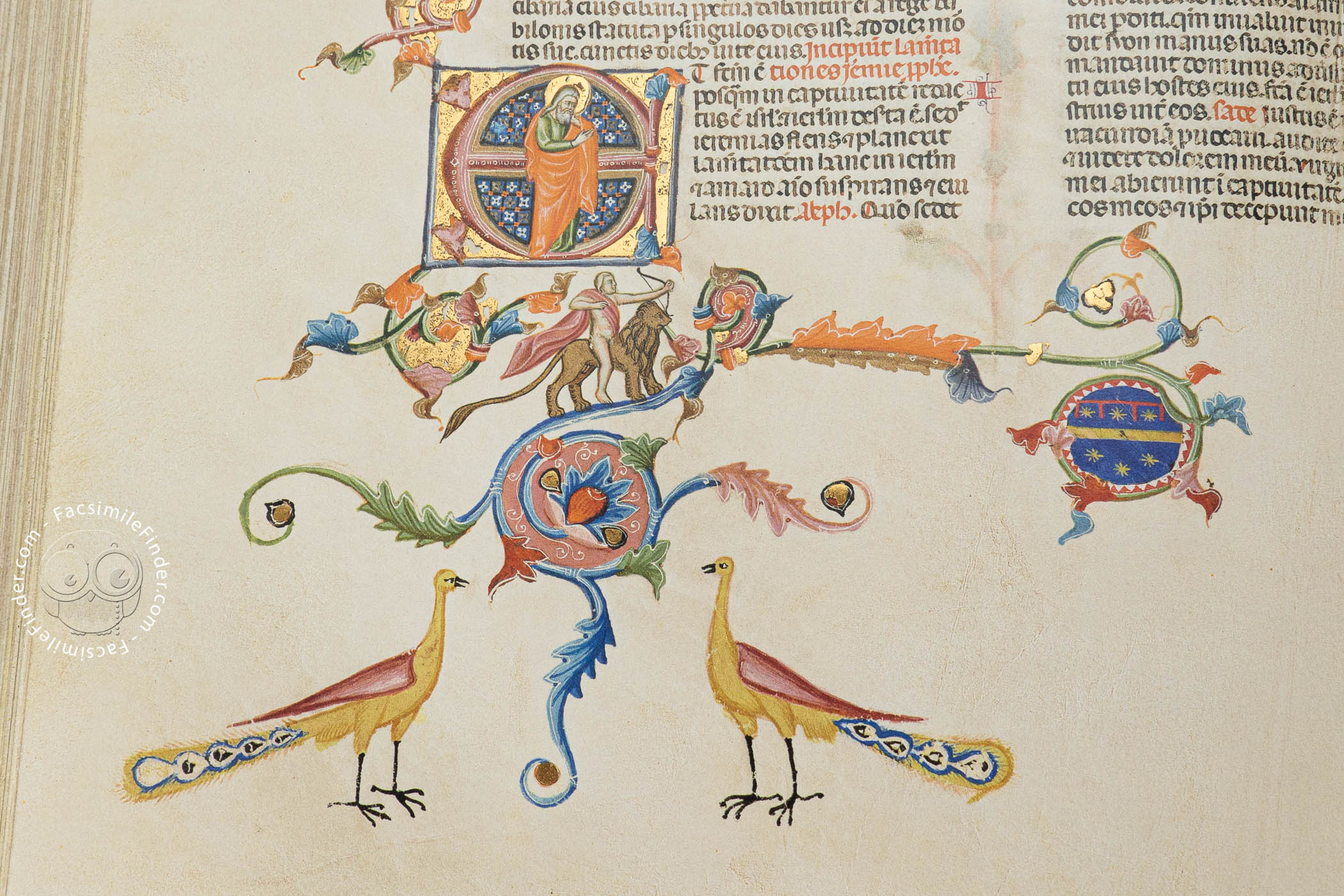
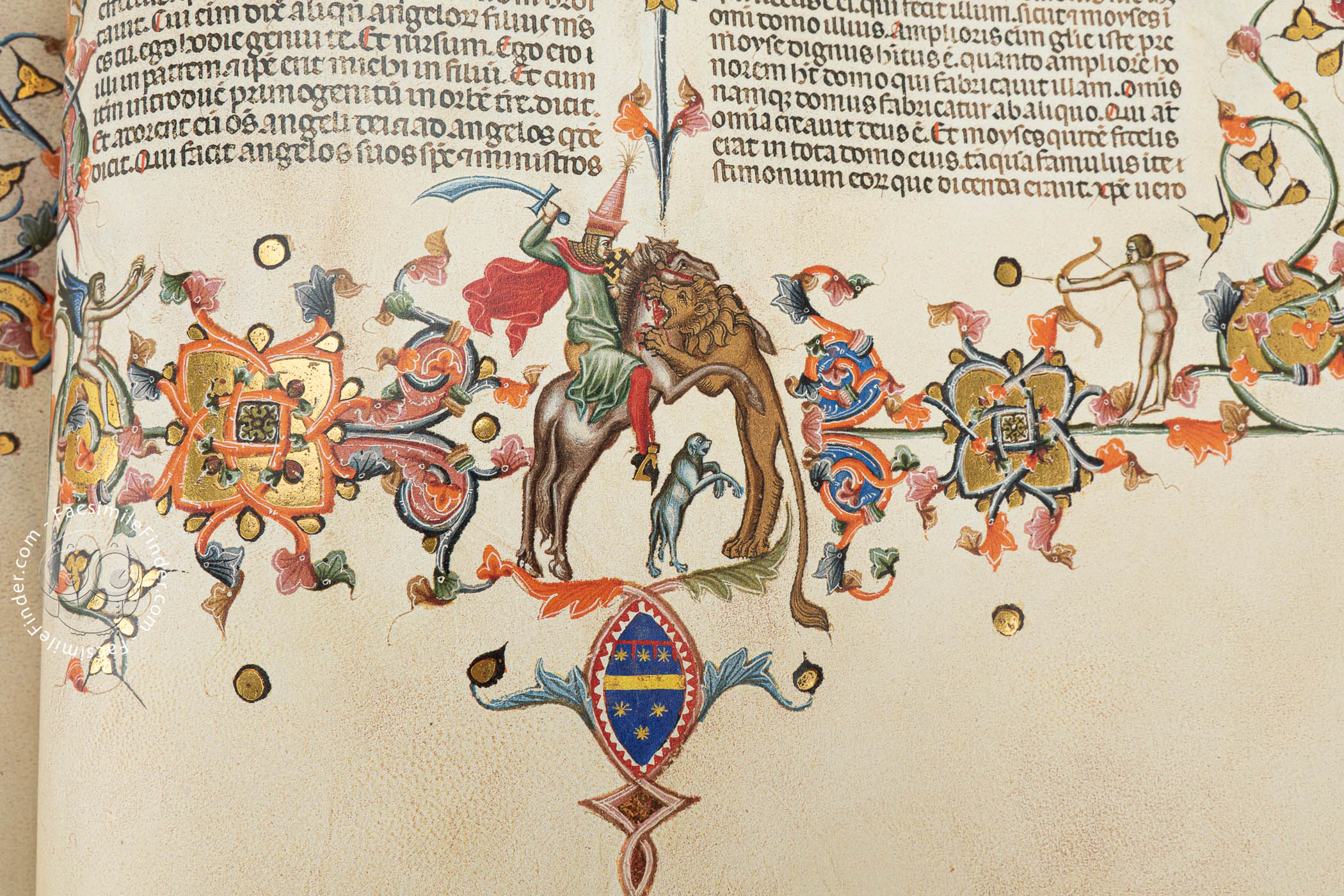
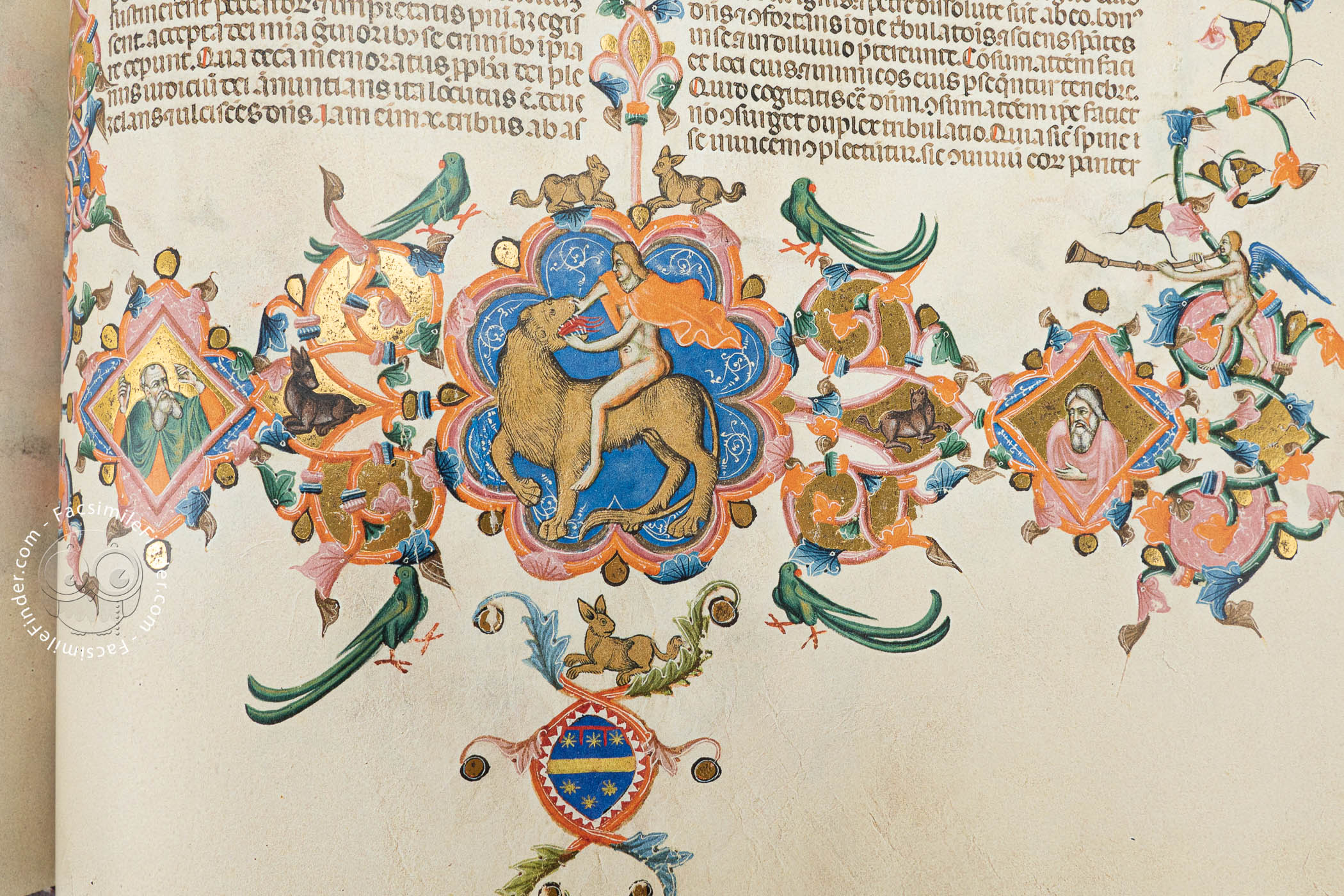
The painted initials all have marginal extensions populated by animals, birds, humans, and putti (winged naked youths). These often form quasi-narrative vignettes. For example, at the opening of the book of Jonah, the margins feature a shrouded figure riding a donkey, an archer aiming at a bird, and—in the bas-de-page—the story of Saint Eustace (d. 118), a Roman soldier who converted to Christianity after a crucifix appears between the antlers of a stag he was hunting (fol. 227v).
The Scribe Who Did It All
The scribe, Iannutius de Matrice, tells the reader that he "began, continued, and completed" the work (fol. 312v). He wrote the biblical text in two columns and the explanation of Hebrew names in three columns, all in Gothic Rotunda, the elegant formal script of the time favored south of the Alps.
Journey from Italy to France to Belgium
The manuscript came early into the possession of the notary Niccolò di Alife (d. 1367), who had his arms painted over those of Anjou throughout the book. By 1402, the manuscript was in the library of the great bibliophile of the age, Jean de France (1340-1416), Duke of Berry.
A century later, it appeared in the collection of the Collège d’Arras in Leuven by way of Nicolaas le Ruistre (d. 1509), bishop of Arras. At the dissolution of the college at the end of the eighteenth century, the manuscript was transferred to the Bibliotheek Grootseminarie Mechelen. Thence, it was transferred in 1970 to its present home.
We have 1 facsimile edition of the manuscript "Anjou Bible": Manoscritto Maurits Sabbe-Bibliotheek, MS 1: Bibbia d'Angiò facsimile edition, published by Istituto dell'Enciclopedia Italiana - Treccani, 2022
Request Info / Price