
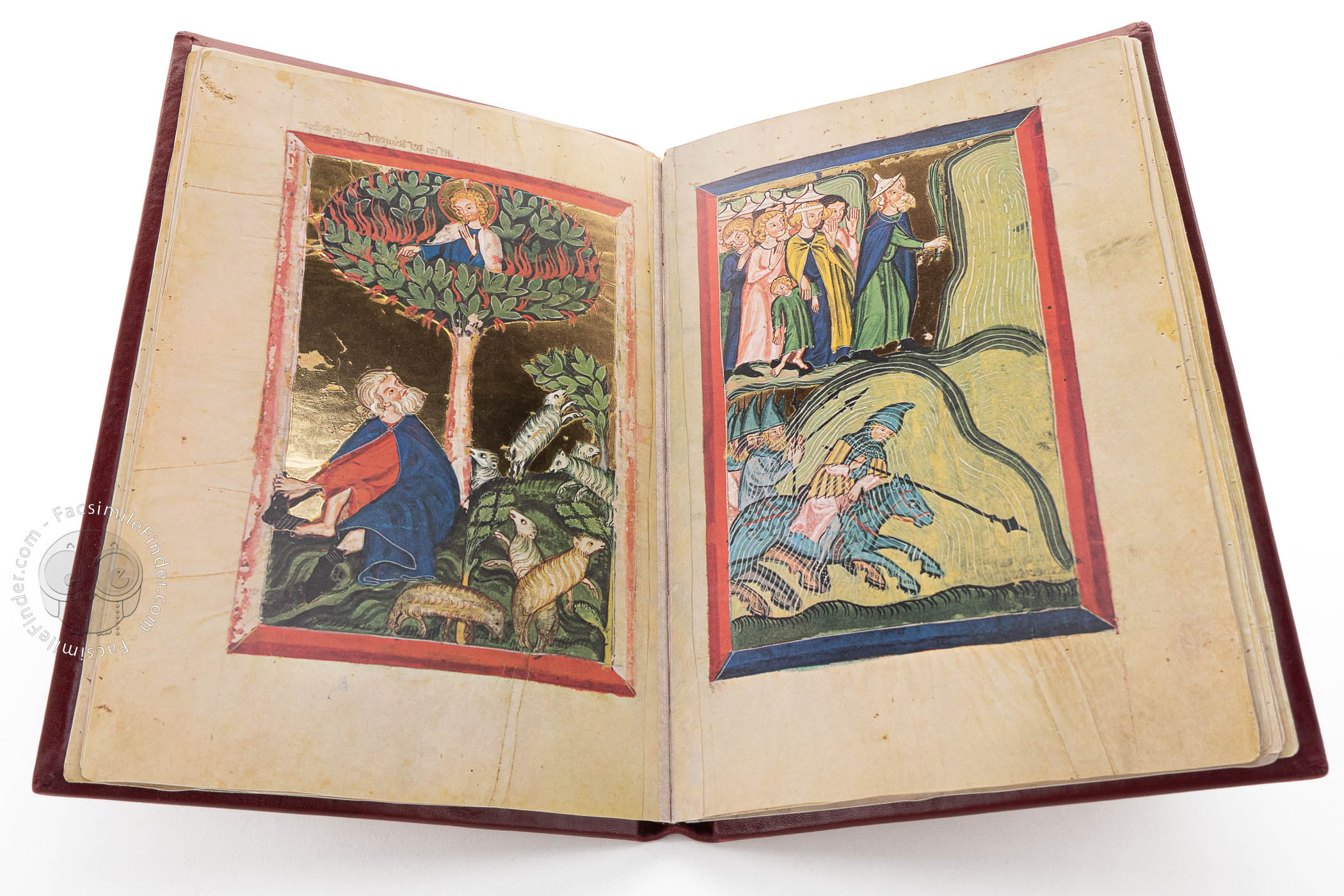
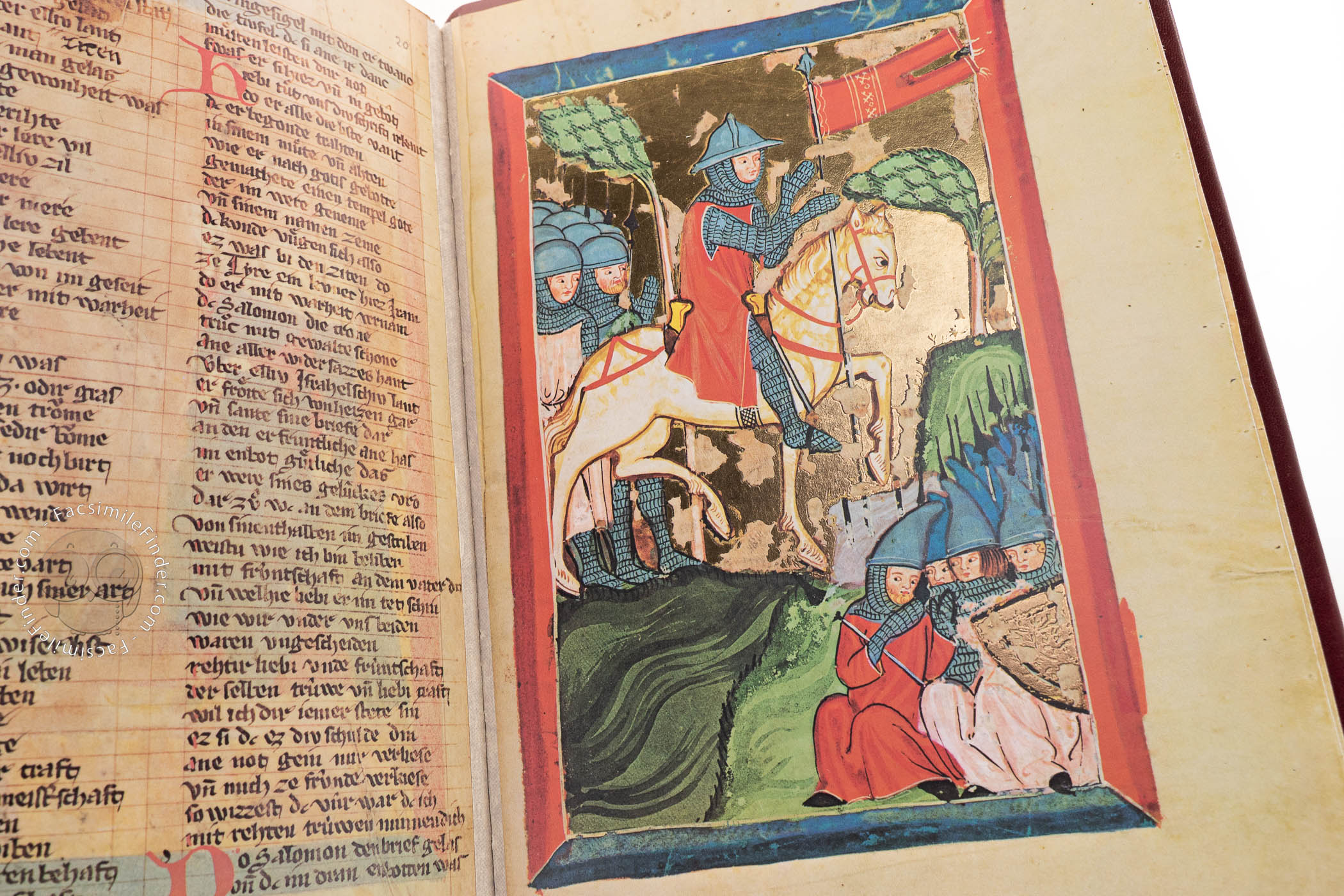

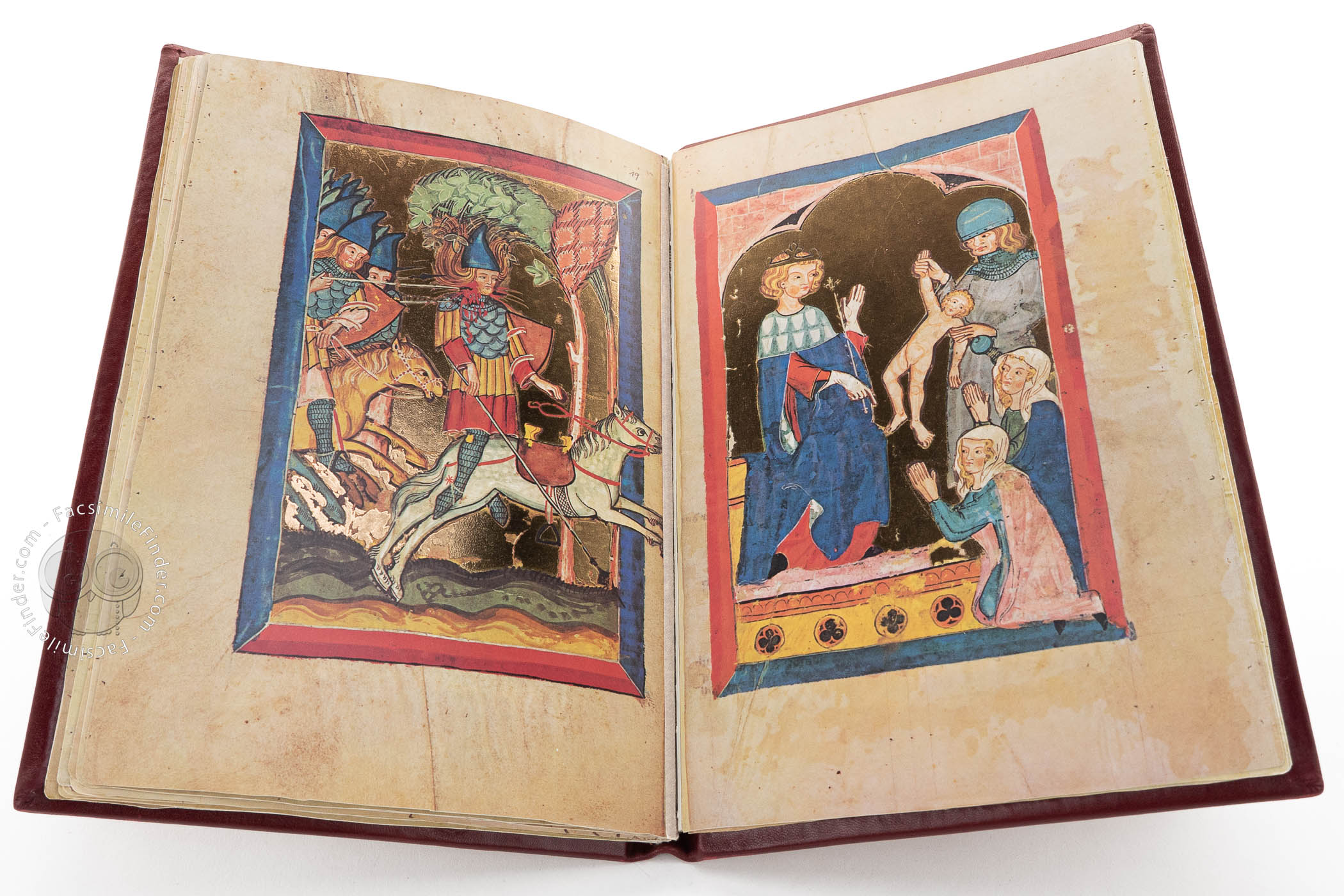
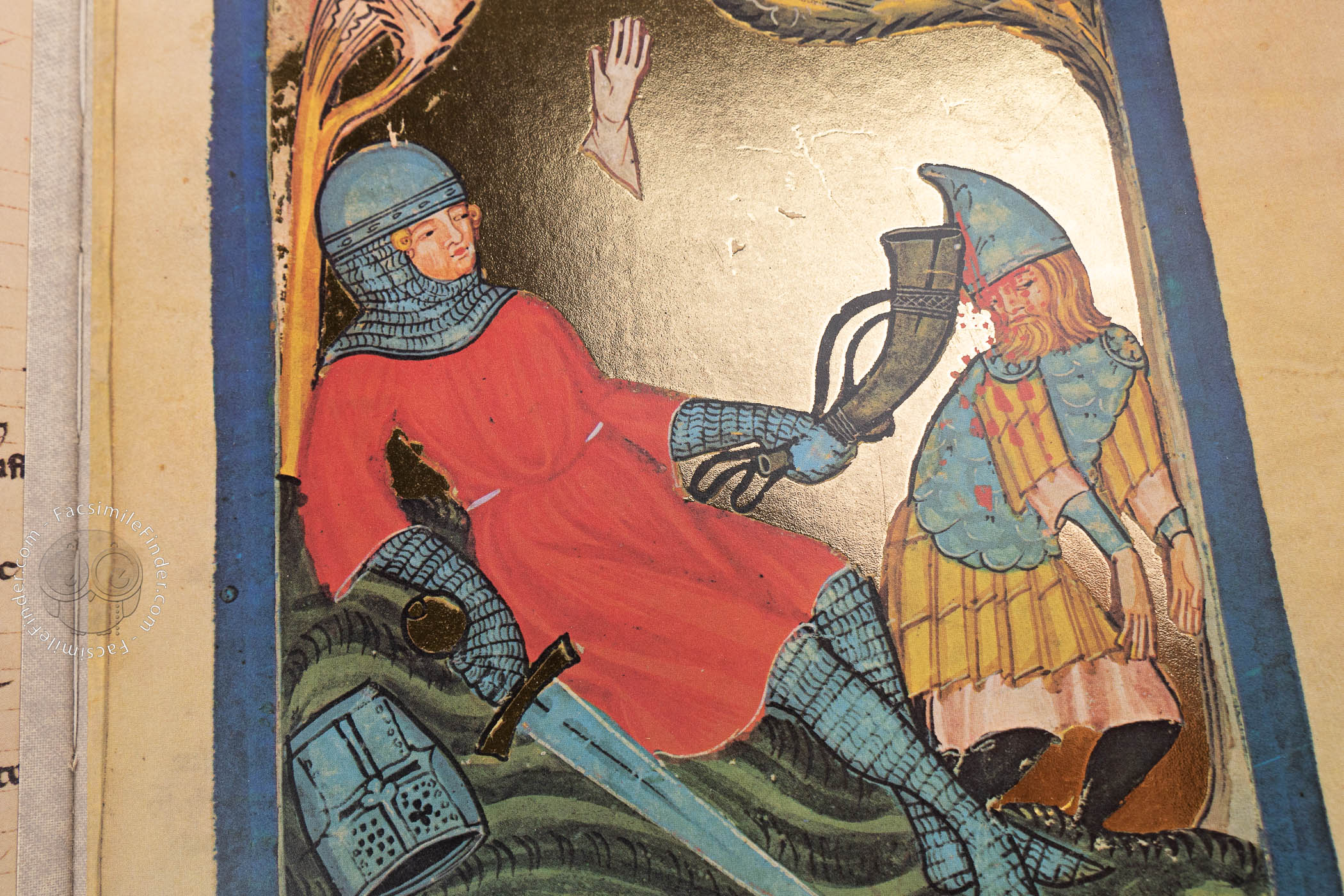
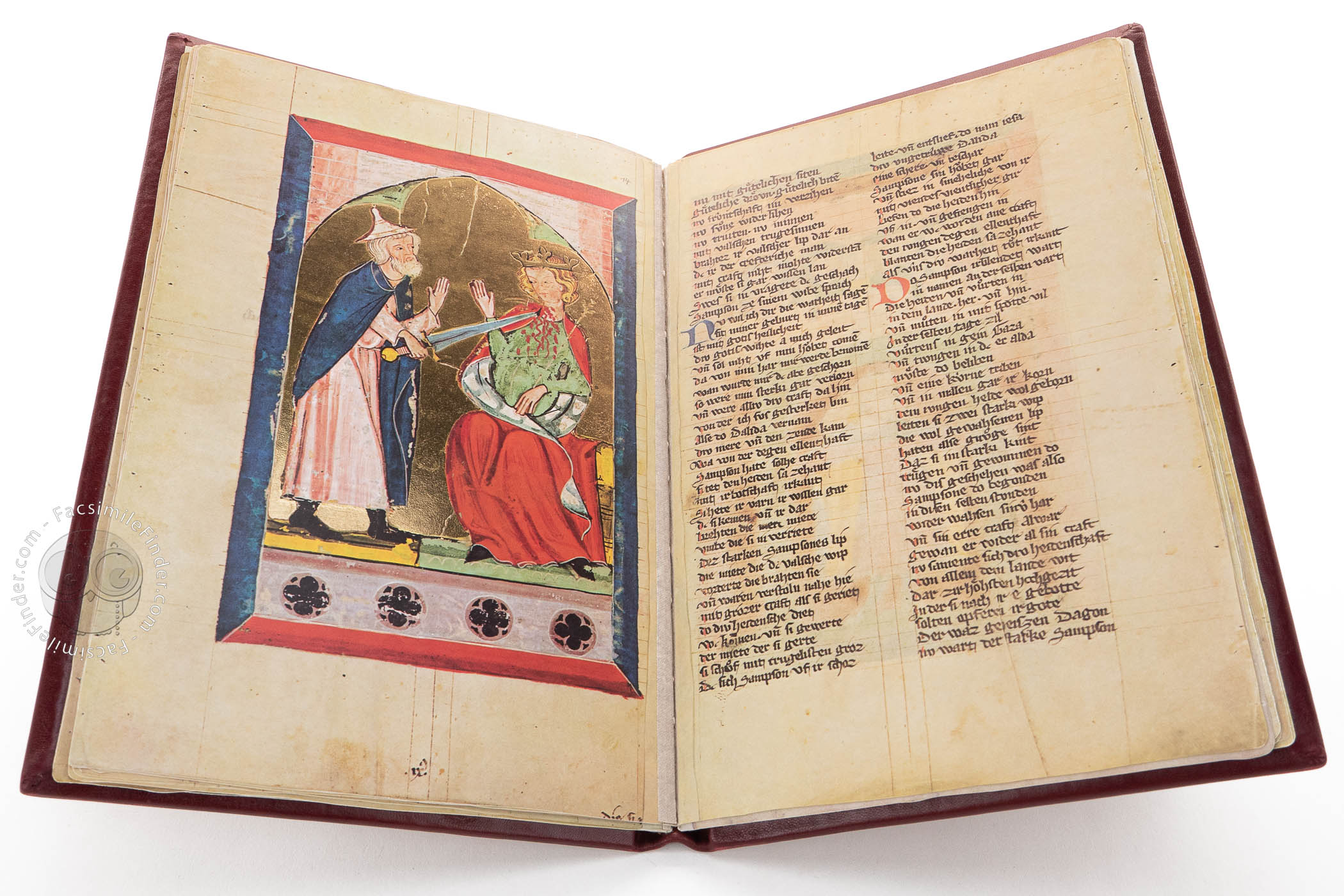
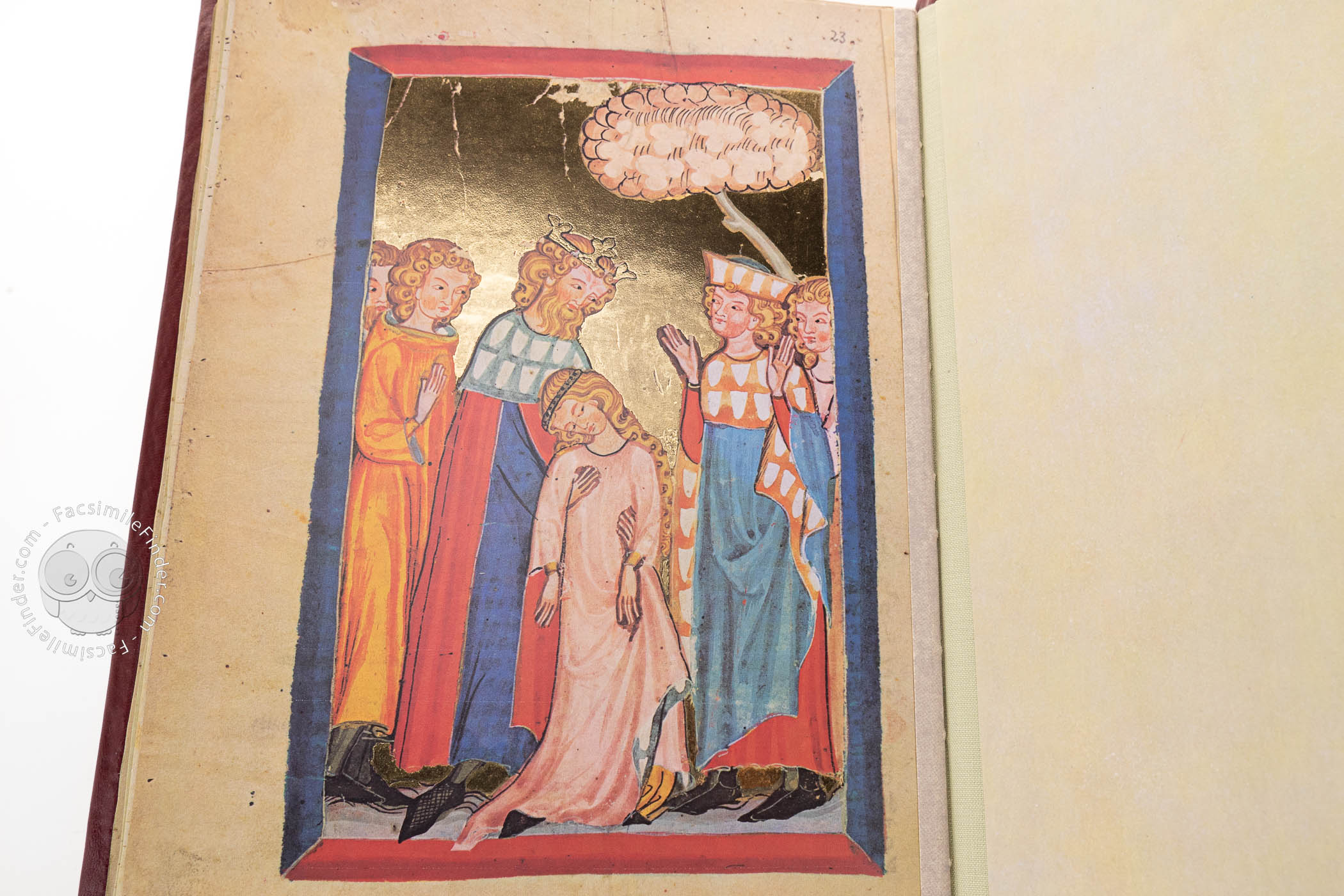
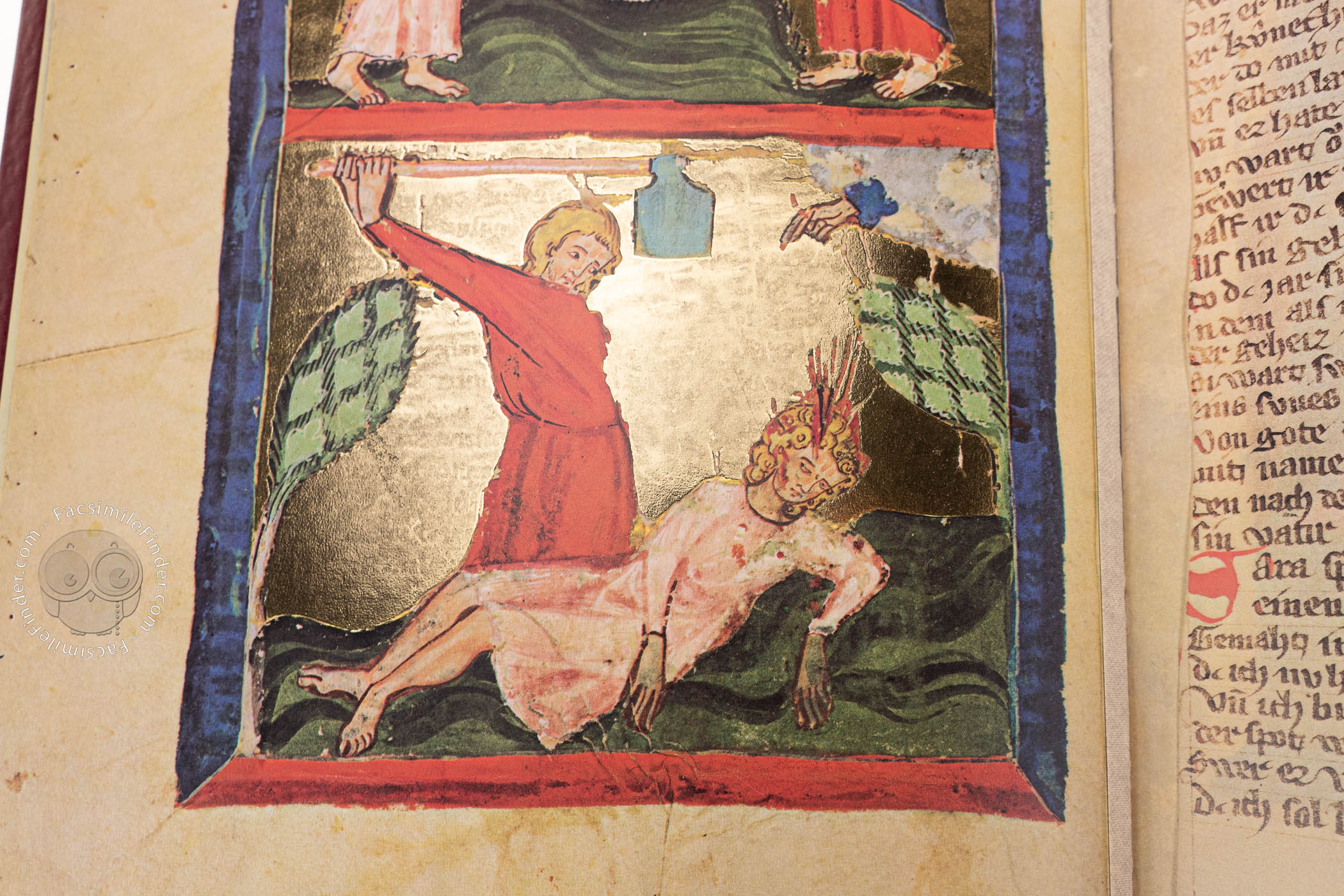
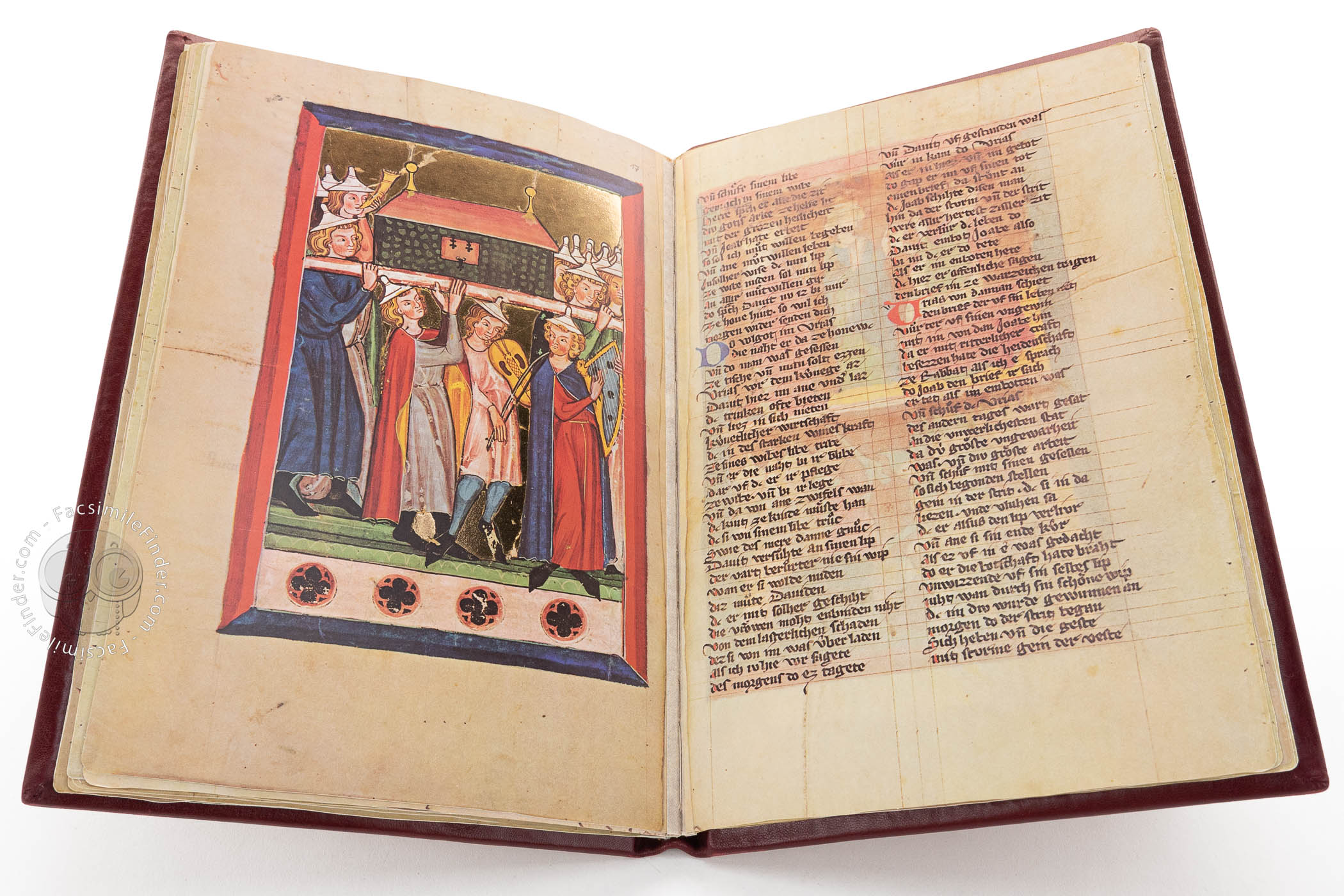
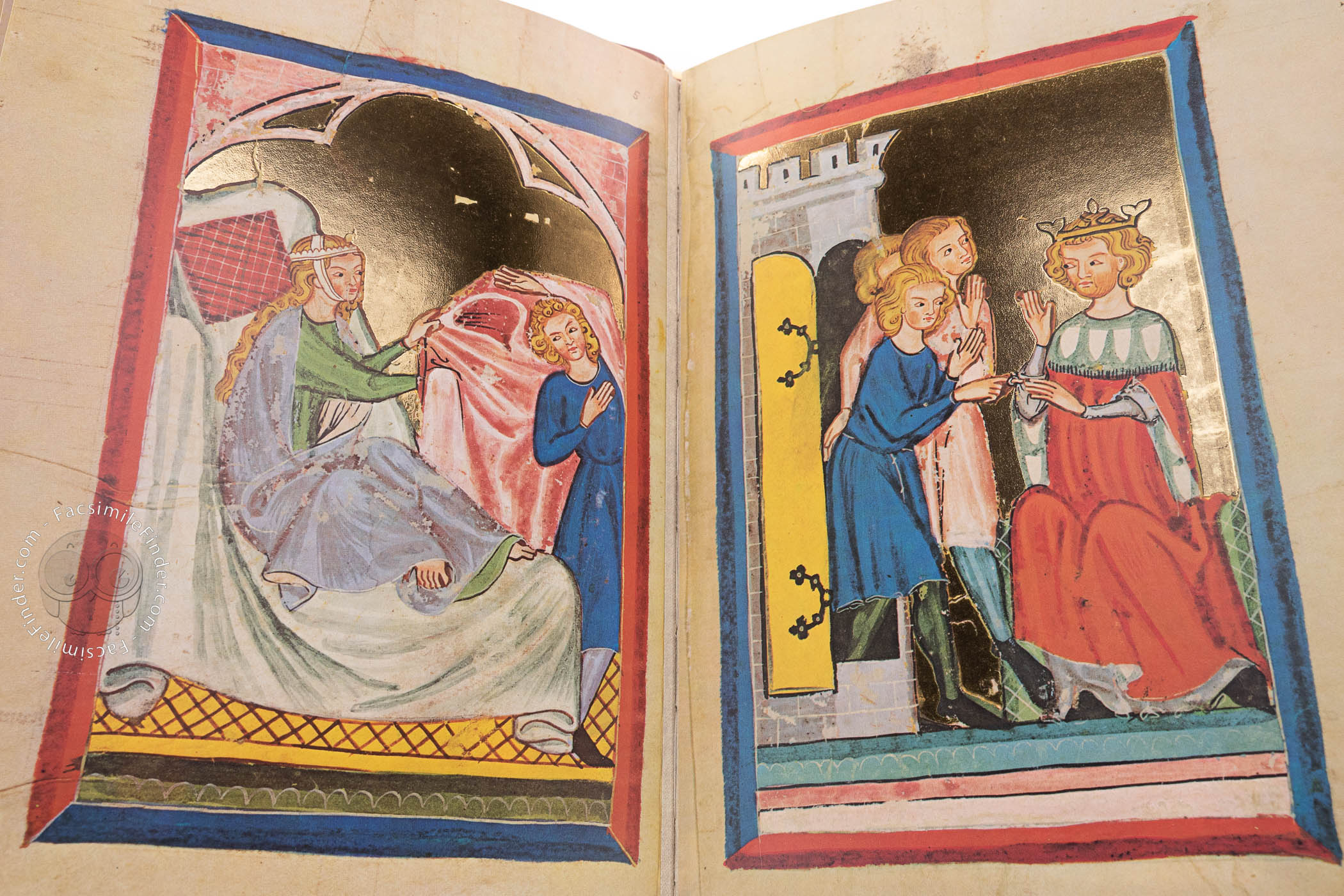
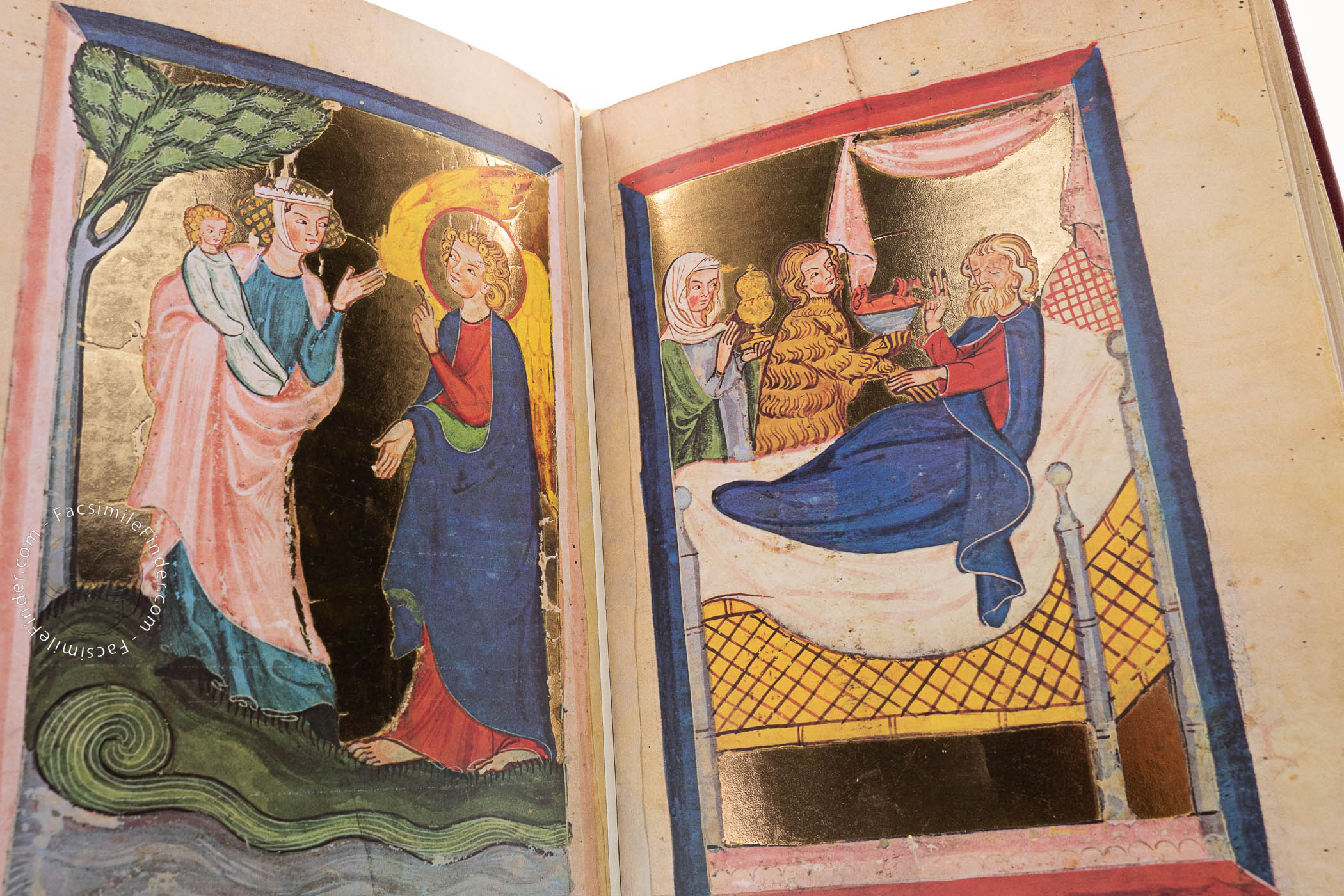

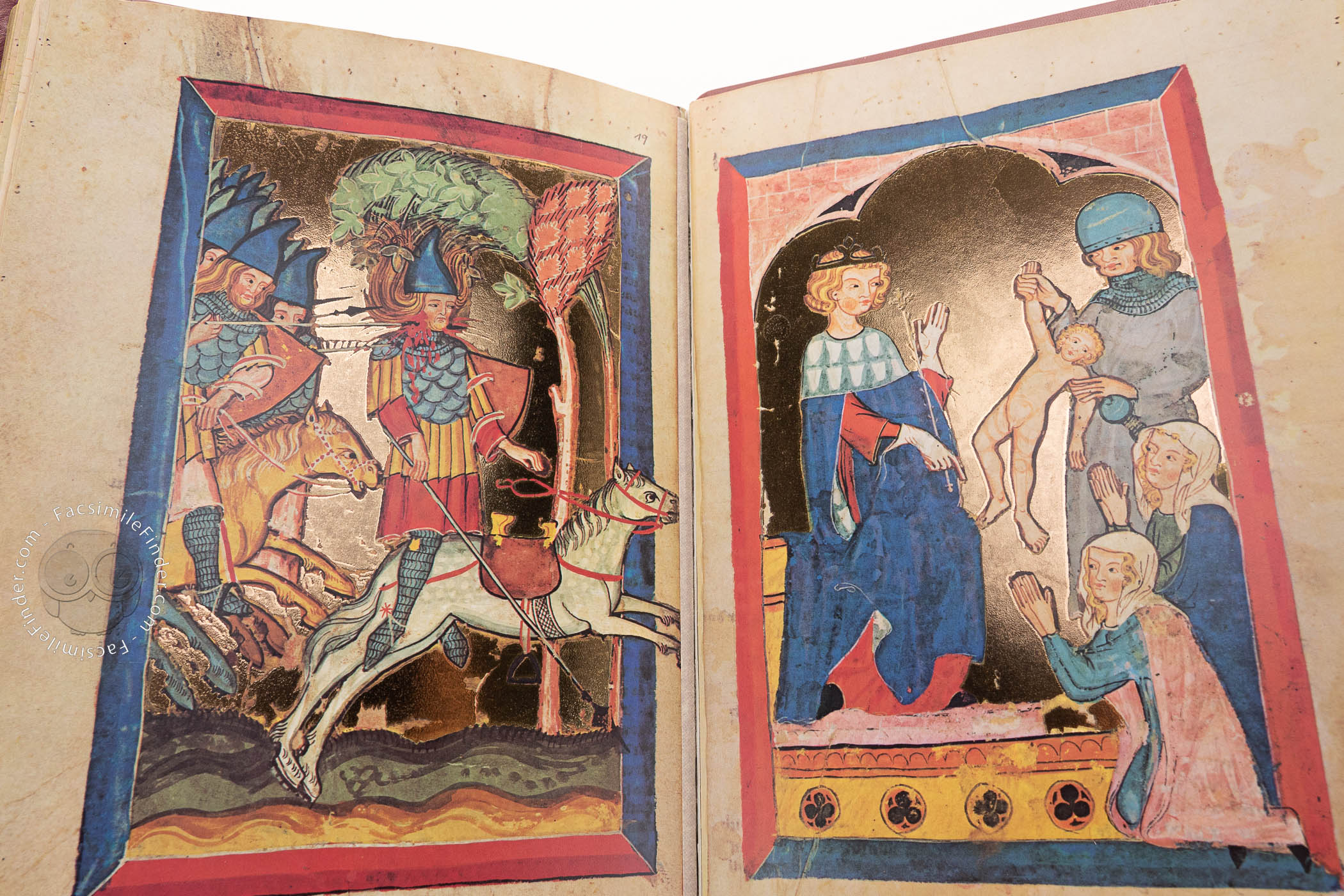



The Berlin World Chronicle is a fragment of a manuscript containing two works of Middle High German poetry: Rudolf von Ems's universal chronicle (Weltchronik) and Der Stricker's life of Charlemagne (Karl der Grosse). It was written and illuminated in the Upper Rhine in the 1320s. Its twenty-three full-page miniatures feature animated figures before polished gold backgrounds. They depict scenes from the Christian Old Testament extending from Creation to the reign of the Israelite king Solomon and episodes from the legend of the Frankish military leader Roland.
The twenty-three surviving leaves were unquestionably preserved for their miniatures, which—in contrast to the format found in other manuscripts of the texts, such as the Saint Gall World Chronicle—fill entire pages. The original manuscript probably extended to 277 leaves, and many miniatures must be lost.
Grand Compositions
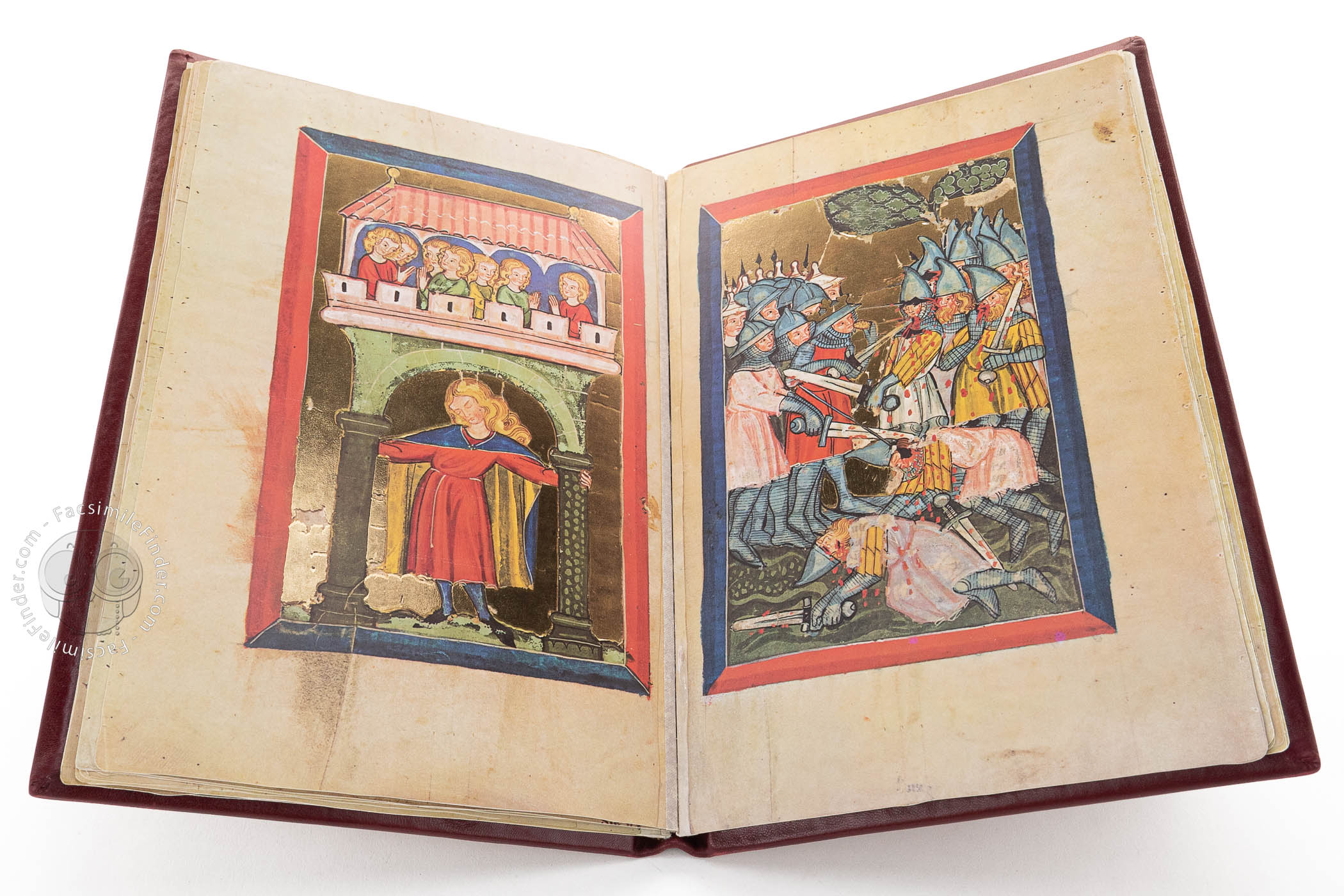
The miniatures illustrate twenty episodes in the chronicle and three in the story of Roland. Most are devoted to a single scene, but four are divided into two horizontal registers. All are the work of an illuminator who ably balanced overall grandeur with anecdotal detail. For example, the house of the Philistines in the scene of Samson about to destroy it features stout marble columns and also an attic filled with gesturing figures (fol. 15).
The tall format of most of the scenes allows for the establishment of landscape and architectural settings. Stylized trees, for example, set the stage in the miniatures of an Angel Visiting Hagar and Ishmael, the Death of Absalom, and Roland Riding through the Valley of Roncesvalles (fols. 3, 19, and 21).
Two Epic Poems of the Preceding Century
Rudolf von Ems began writing his World Chronicle at the behest of Konrad IV (1228-1254), King of Germany, with the intention of bringing the narrative up to the Hohenstaufen dynasty of Konrad, but the poem remained unfinished at Rudolf's death (around 1254). The poem, in rhymed couplets, begins with Creation and is based largely on the Christian Old Testament, but episodes from ancient and medieval history are incorporated to form a universal history, even if left incomplete and ending at the death of Solomon.
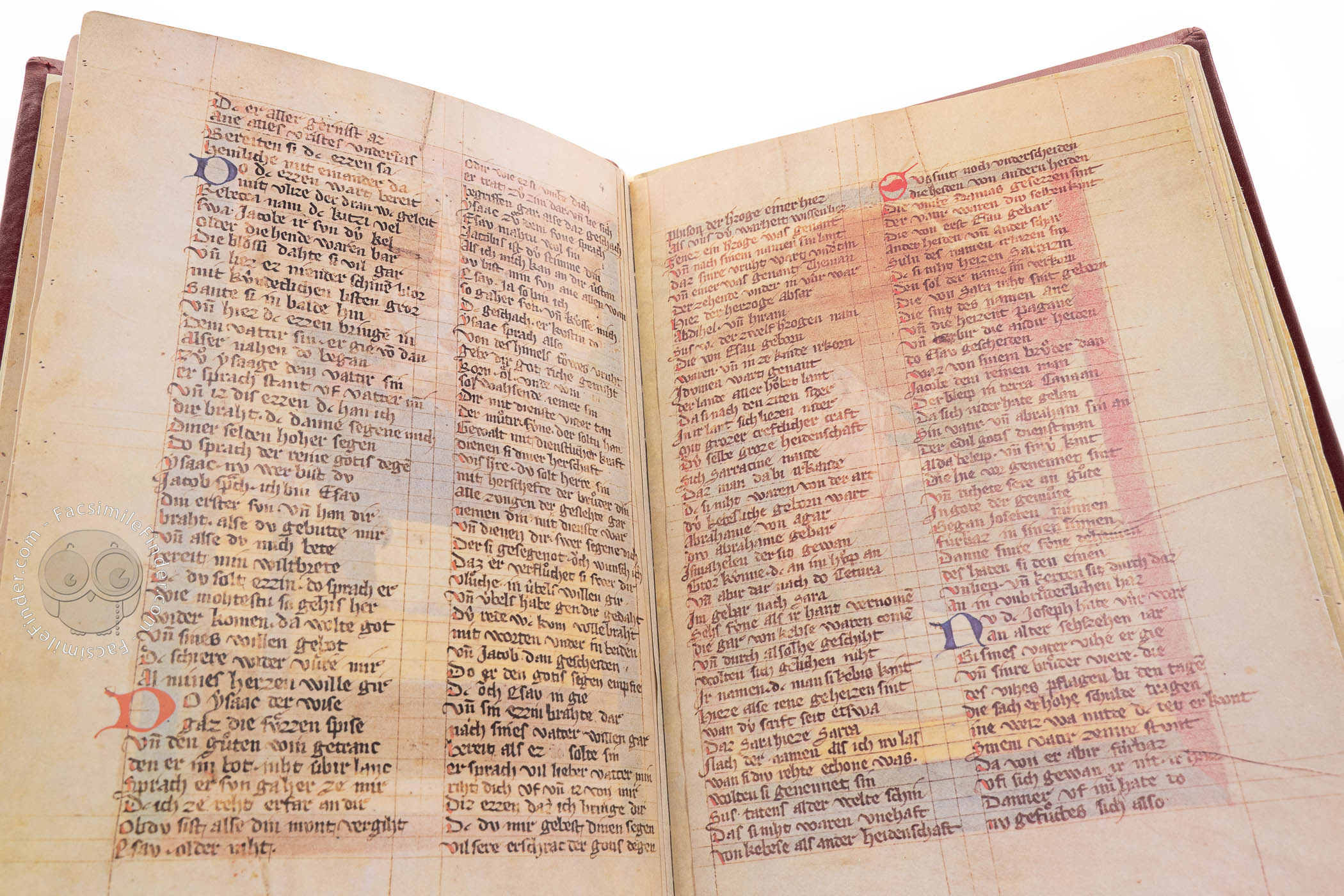
Expanding on the French-language Song of Roland, the anonymous poet known as Der Stricker ("The Knitter") was, like Rudolf von Ems, active in the first half of the thirteenth century. He presents the legend of the military exploits of Charlemagne and Roland in rhymed couplets. Both poems are written in two columns in Gothic Textualis, with the poetic form clearly articulated by touches of red on the first letters of each verse and the rhymes at the ends of the physical lines of text. Major textual divisions are marked by red or blue bulbous so-called Lombard initials.
Purchased for the Prussian Royal Library
Jacobus Koning (1770-1832) gave the fragment to August Heinrich Hoffmann von Fallersleben (1798-1874) in 1826. Hoffmann von Fallersleben sold the manuscript in 1850 to the Prussian Königliche Bibliothek, renamed the Preußische Staatsbibliothek after 1918, and emerging as the Staatsbibliothek zu Berlin after the political disruptions of the twentieth century. The fragmentary manuscript was rebound in 1884 and is now in a recent conservation binding.
We have 2 facsimiles of the manuscript "Berlin World Chronicle":
- Weltchronik - Karl Der Grosse facsimile edition published by Mueller & Schindler, 1980
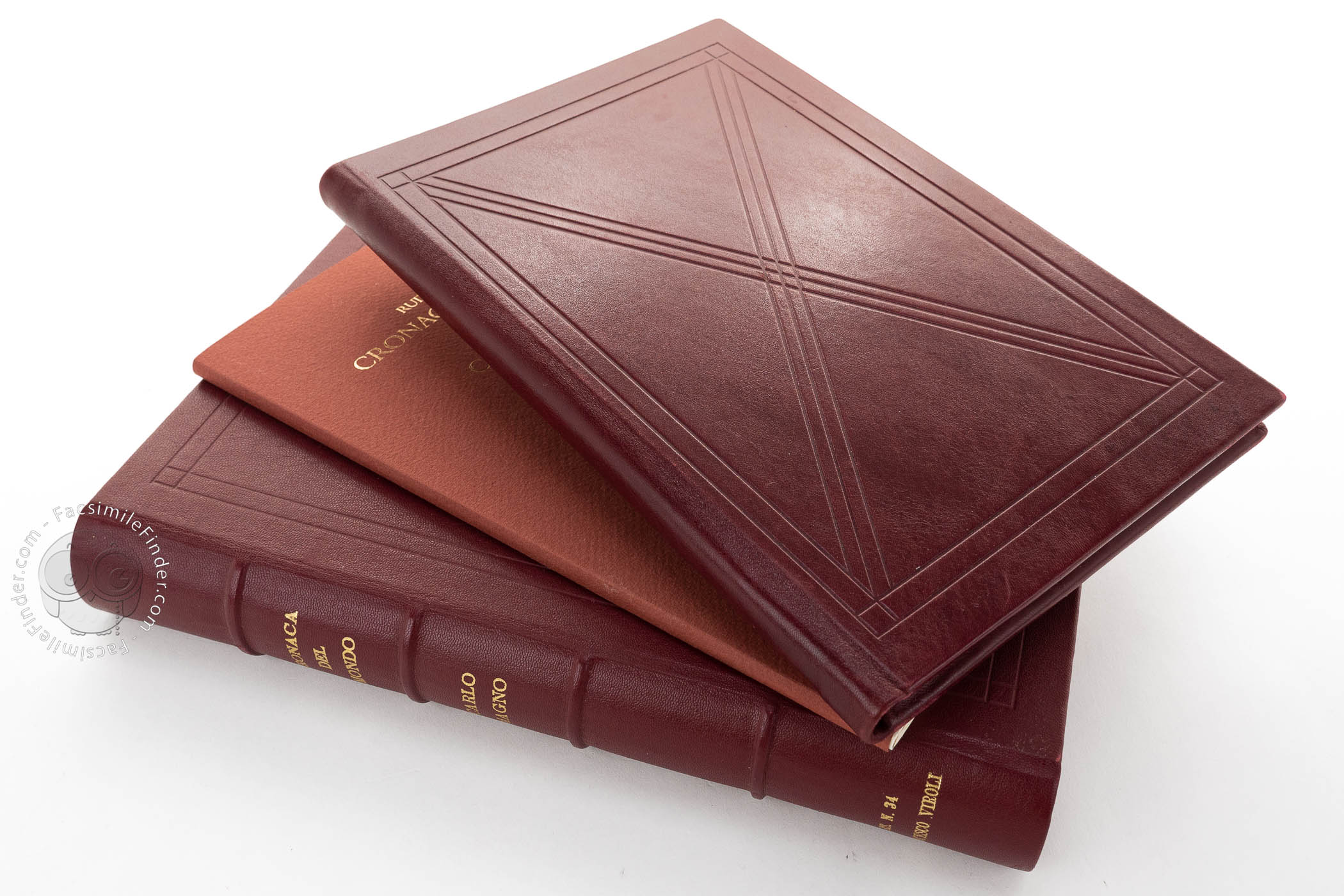
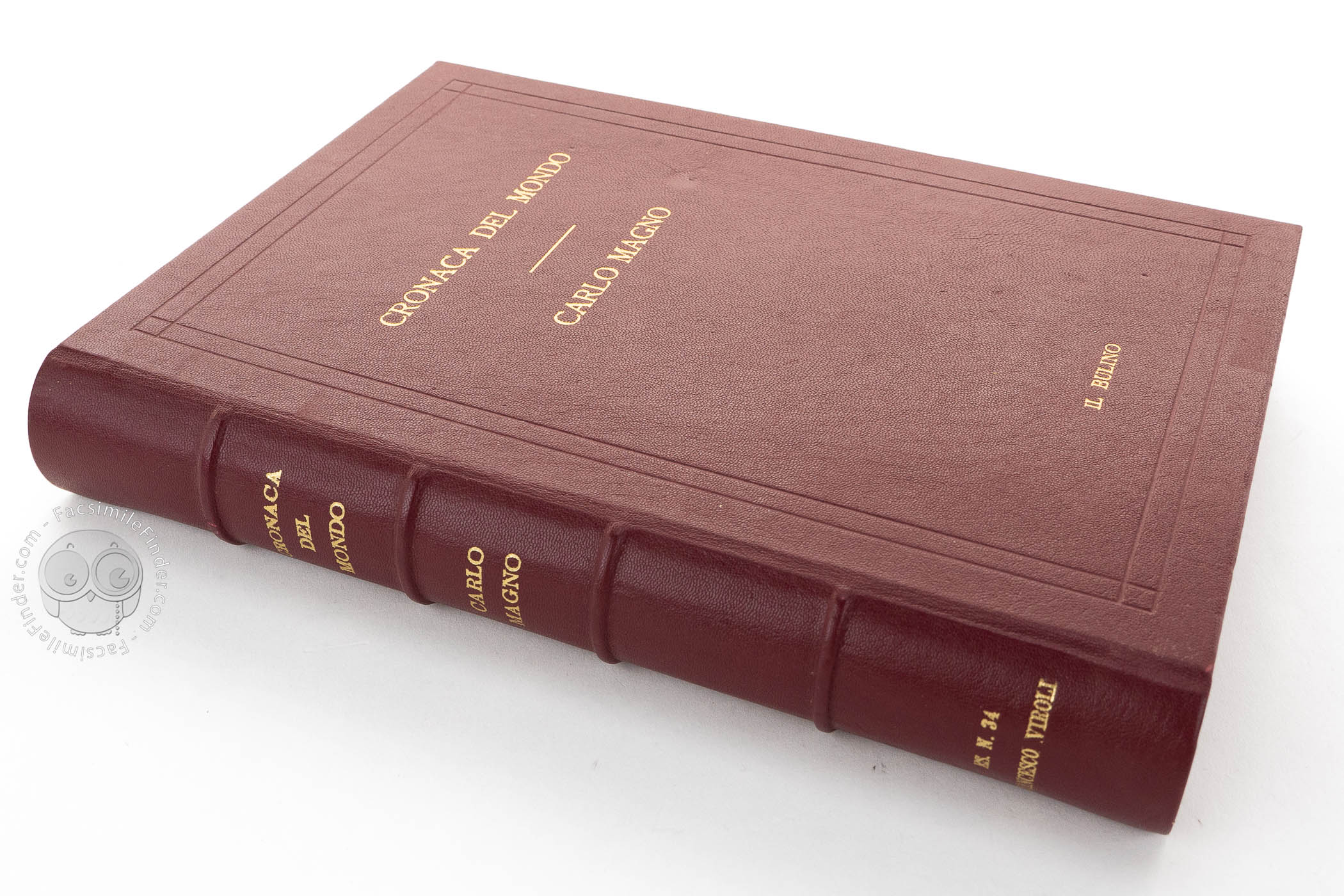
- Cronaca del Mondo e Storia di Carlo Magno facsimile edition published by Il Bulino, edizioni d'arte, 2004