
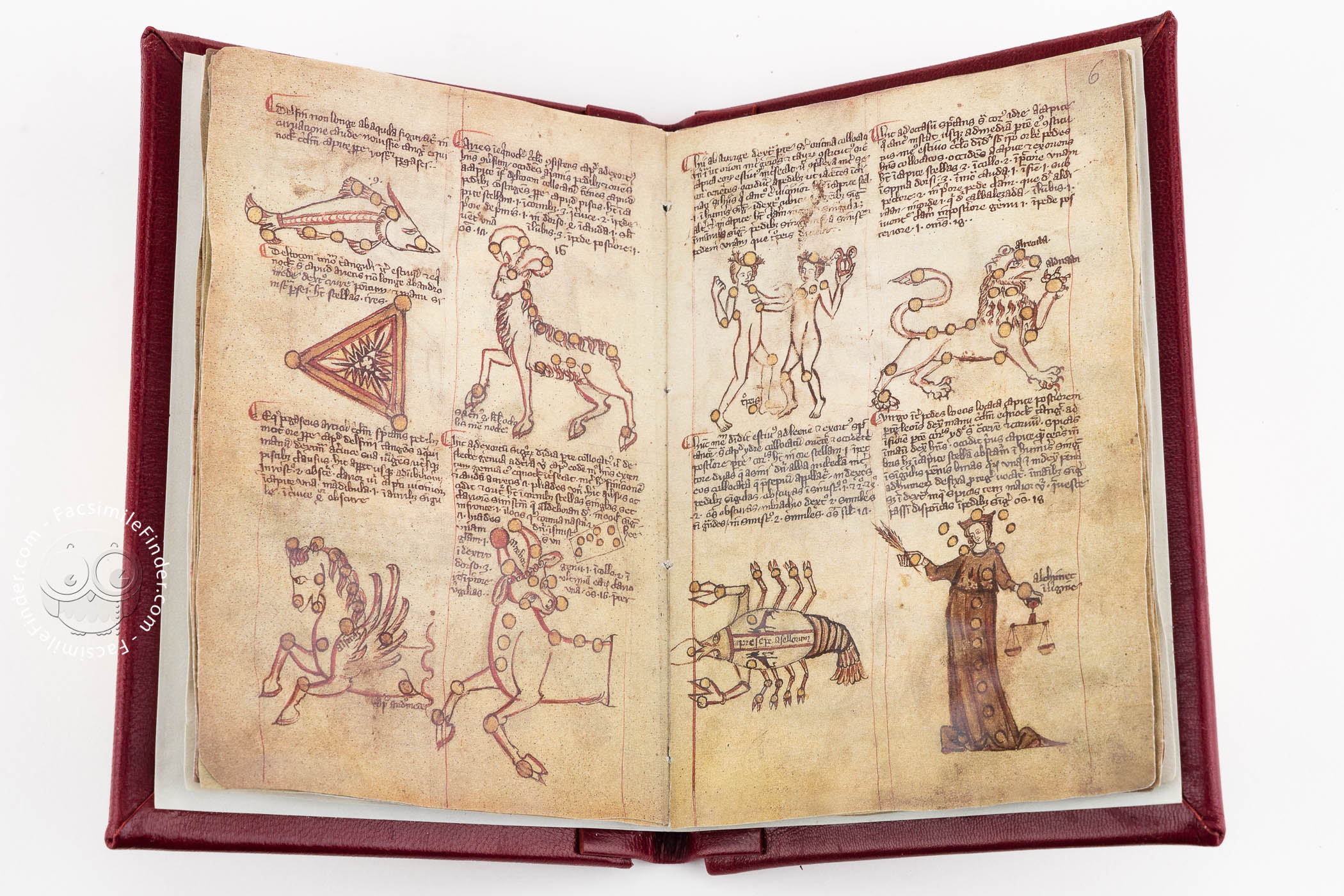



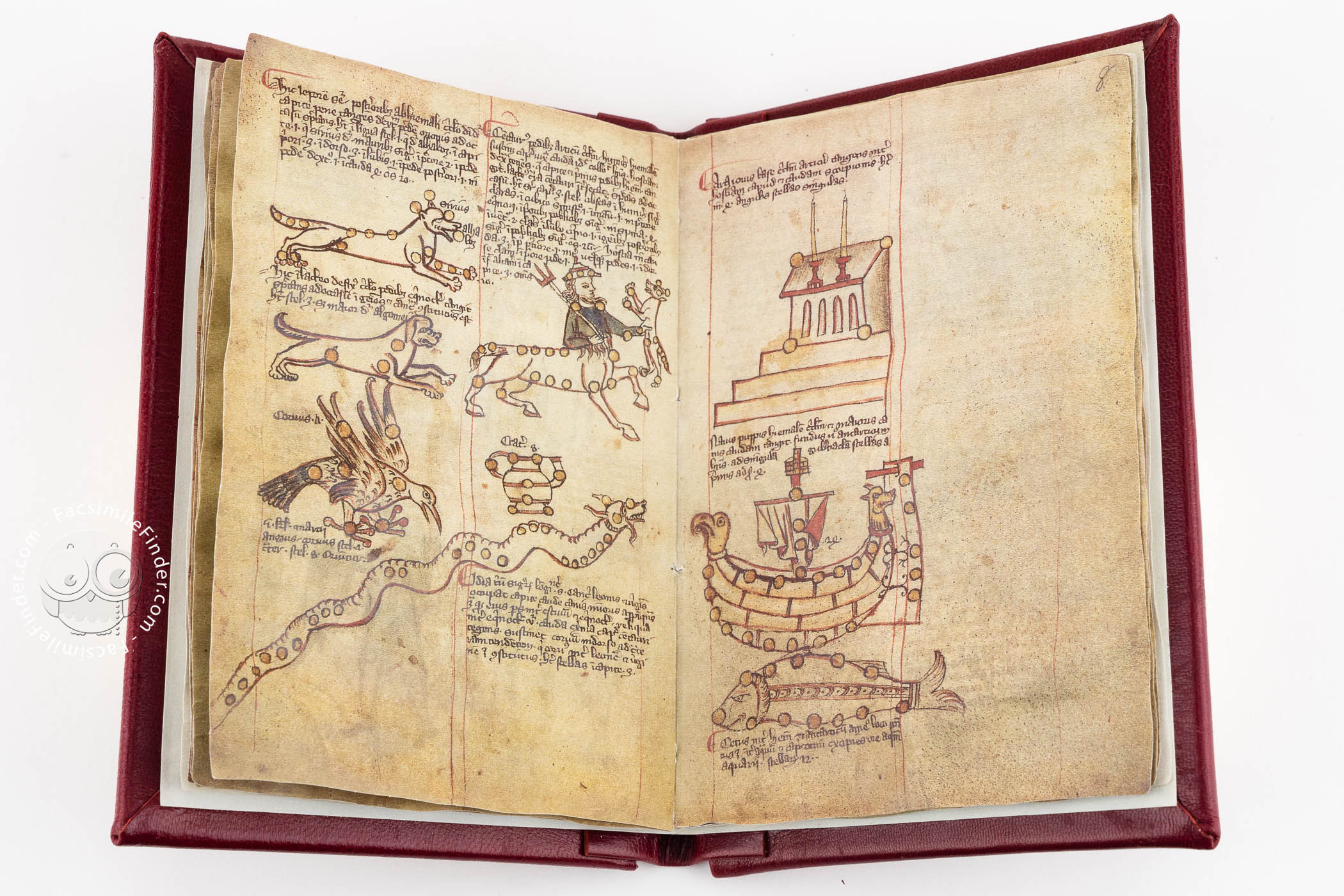

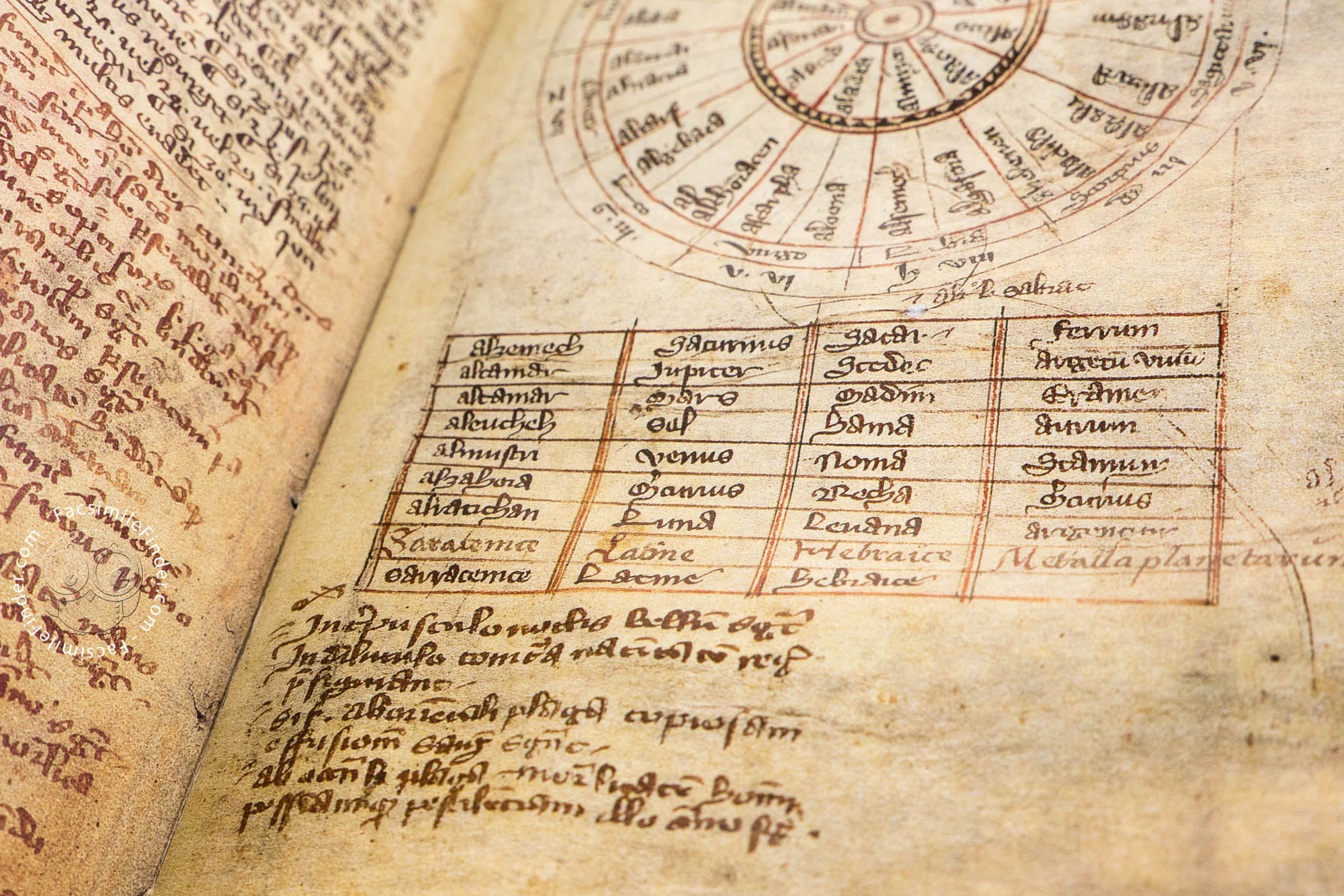
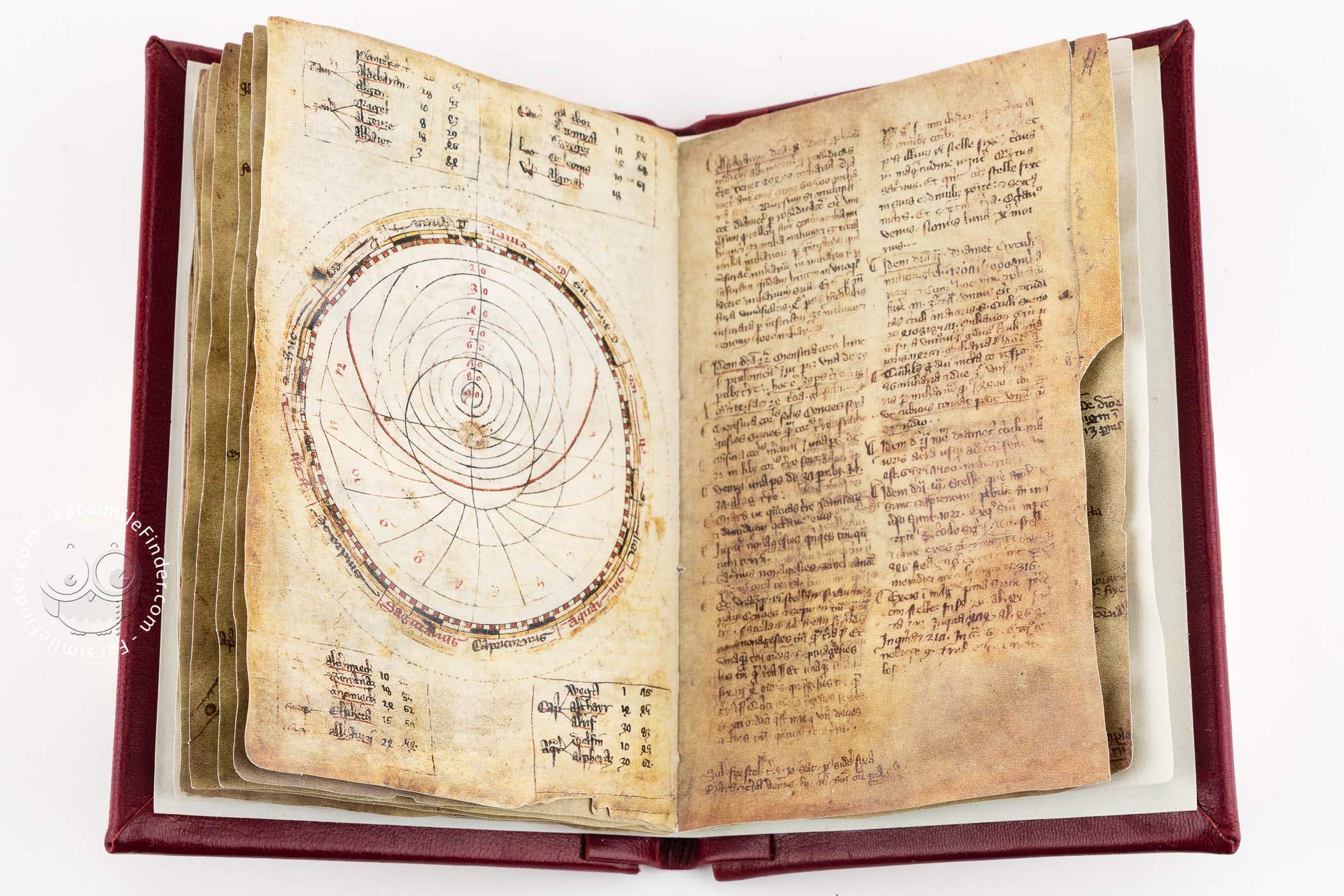
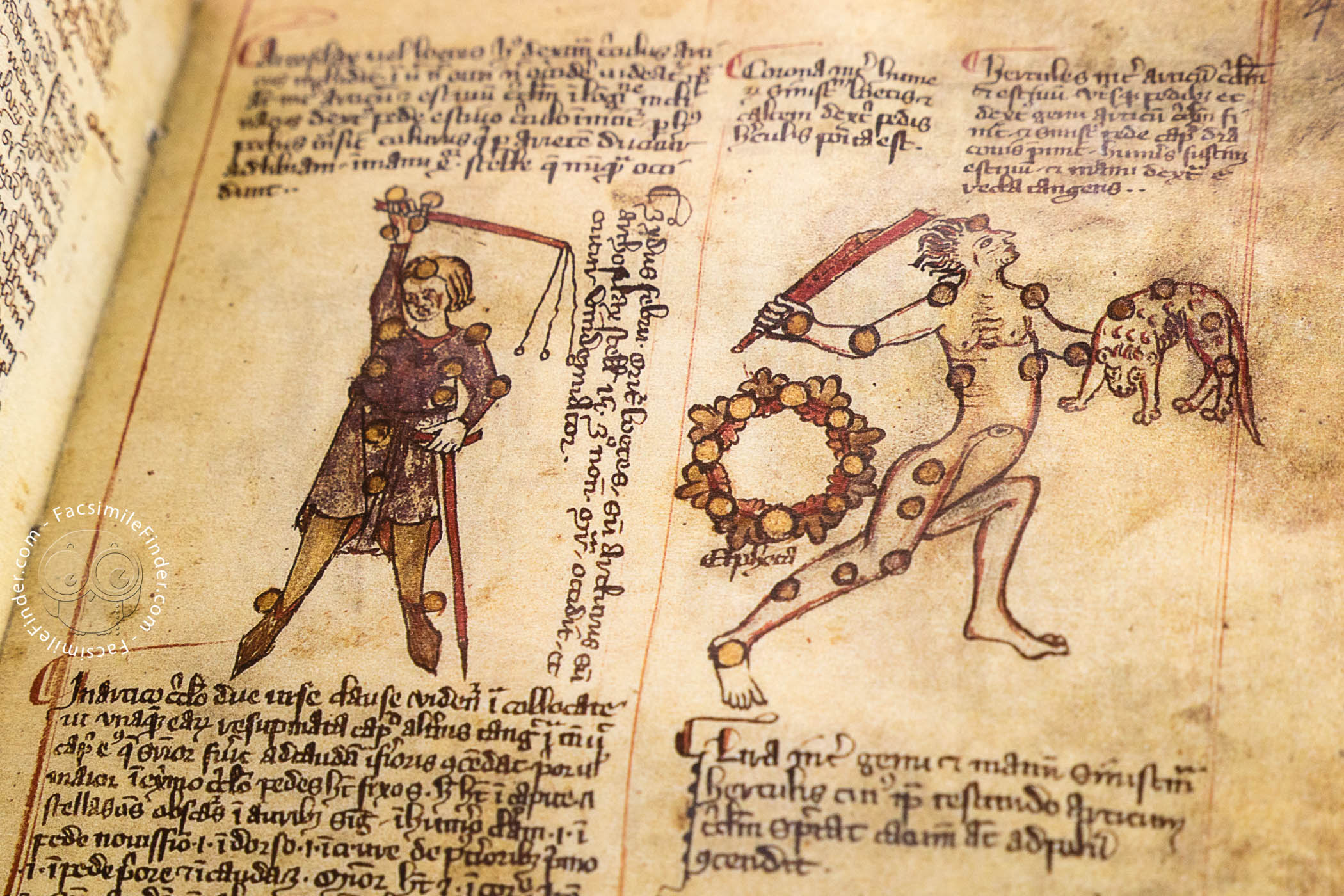




The Berlin Hyginus was produced in Northern Europe, likely in Germany, Northern France, or possibly Flanders in the late Middle Ages. It is an illustrated compilation of various prominent astrology texts, with a particular emphasis on descriptions of constellations by the ancient Roman scholar C. Julius Hyginus. The codex boasts forty-four illustrations of constellations. A table and four diagrams chart the perceived relationships between star signs and the traits of those born under them. The manuscript thus provides tantalising insight into medieval understandings of the night sky.
The Berlin manuscript largely draws from book 3 of Hyginus’s treatise, which describes the constellations, associating many with figures of ancient mythology. Although Hyginus paid careful attention to the relative locations of constellations, this was of less concern to the compiler of the Berlin Hyginus.
Spotting Star Signs
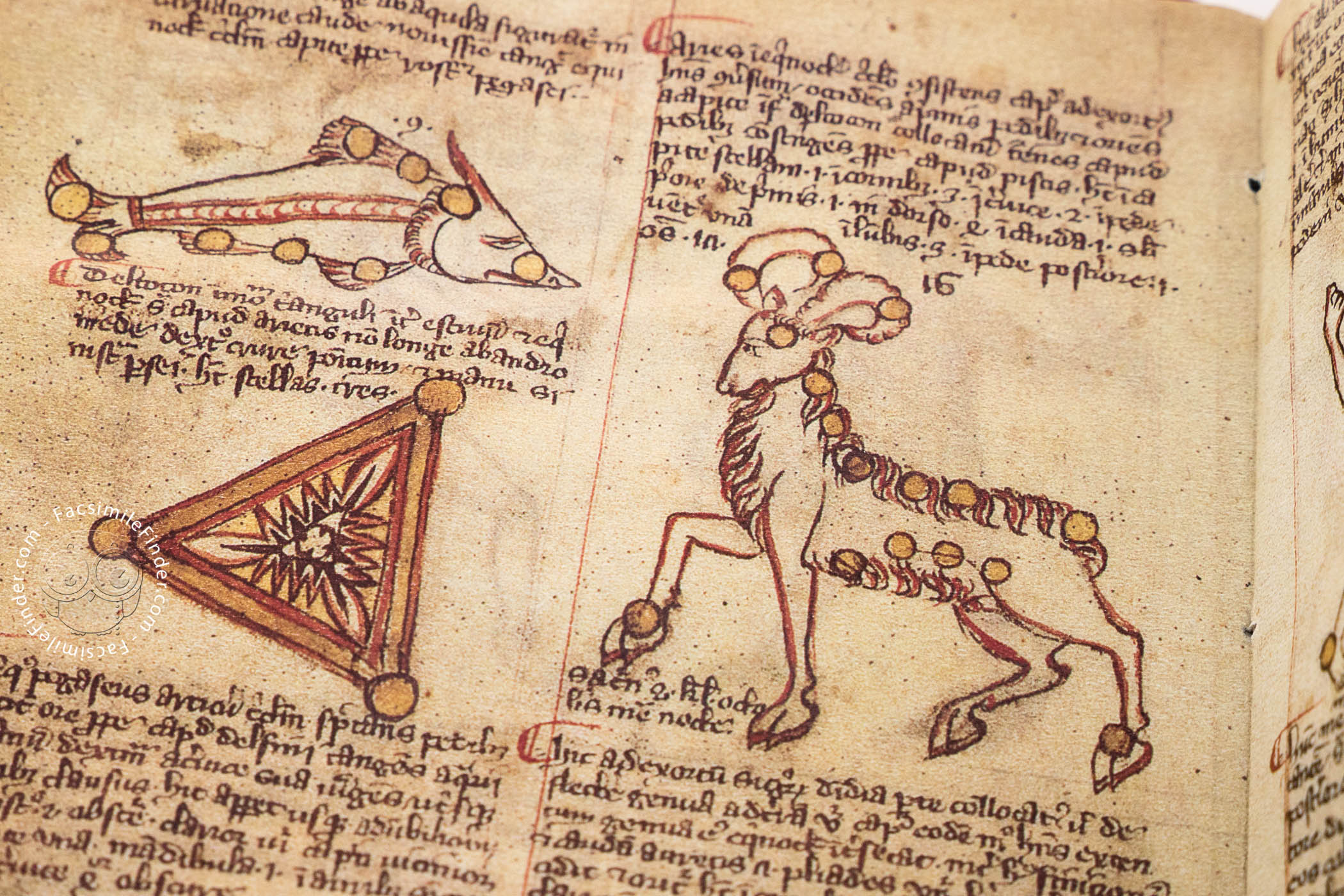
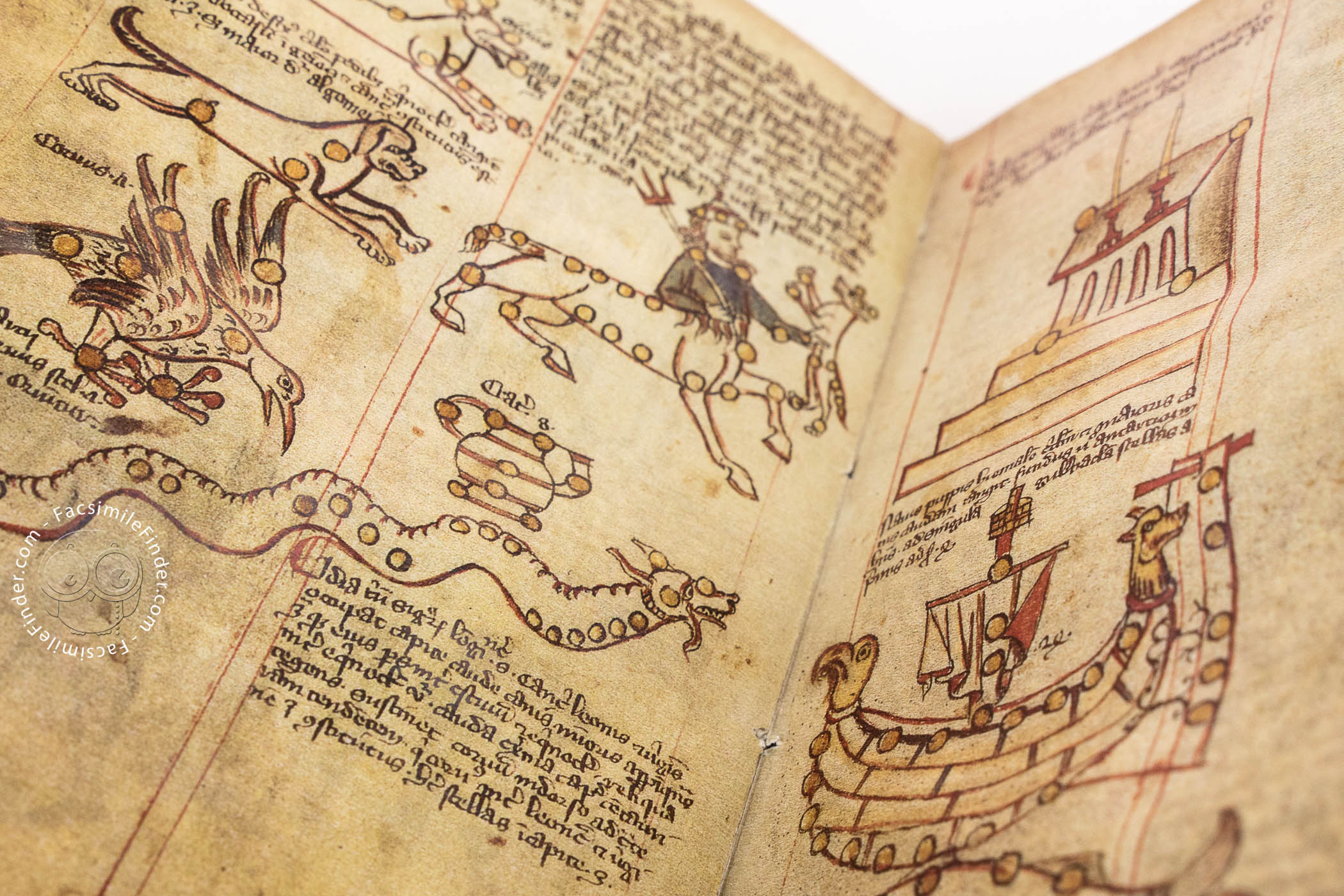
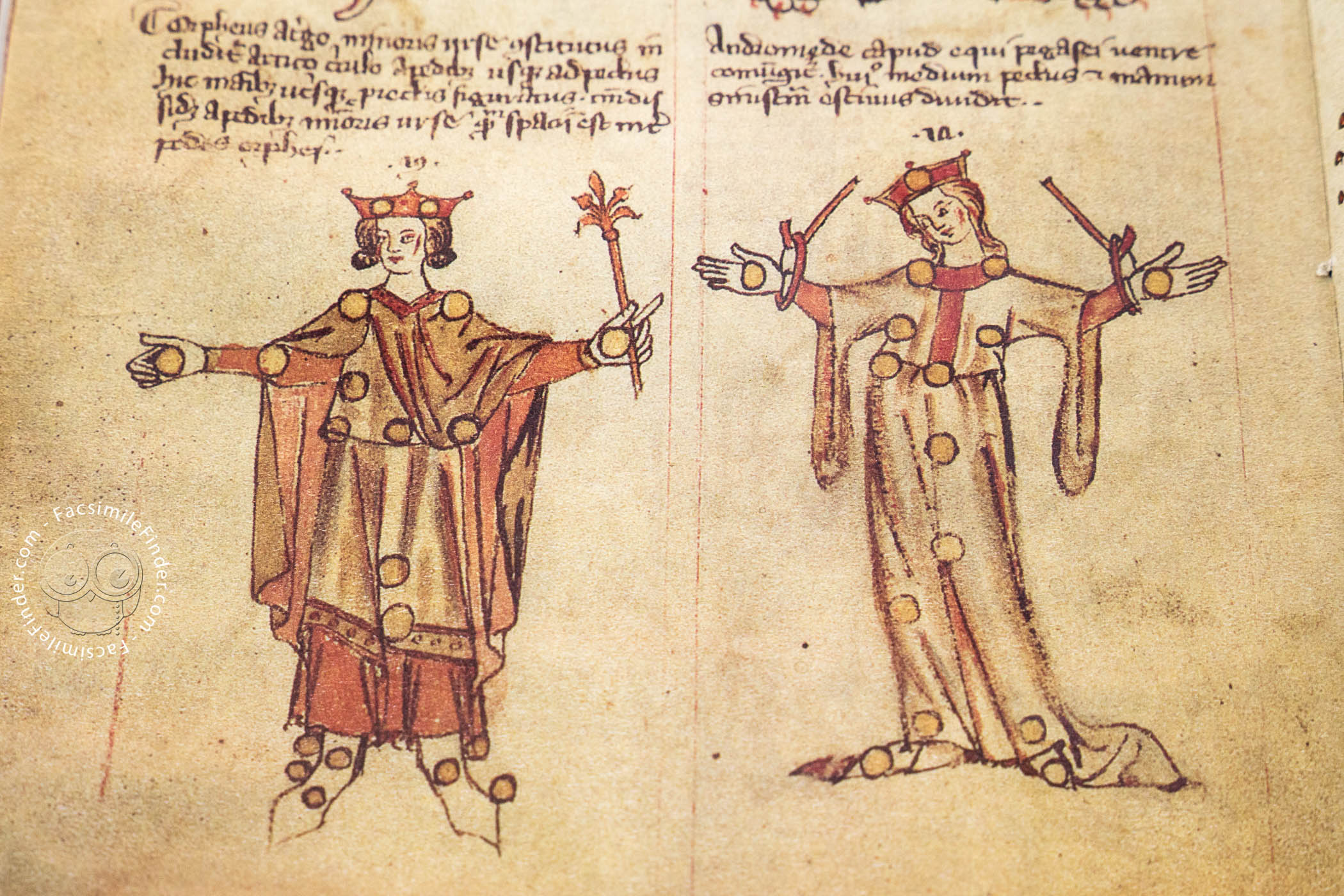
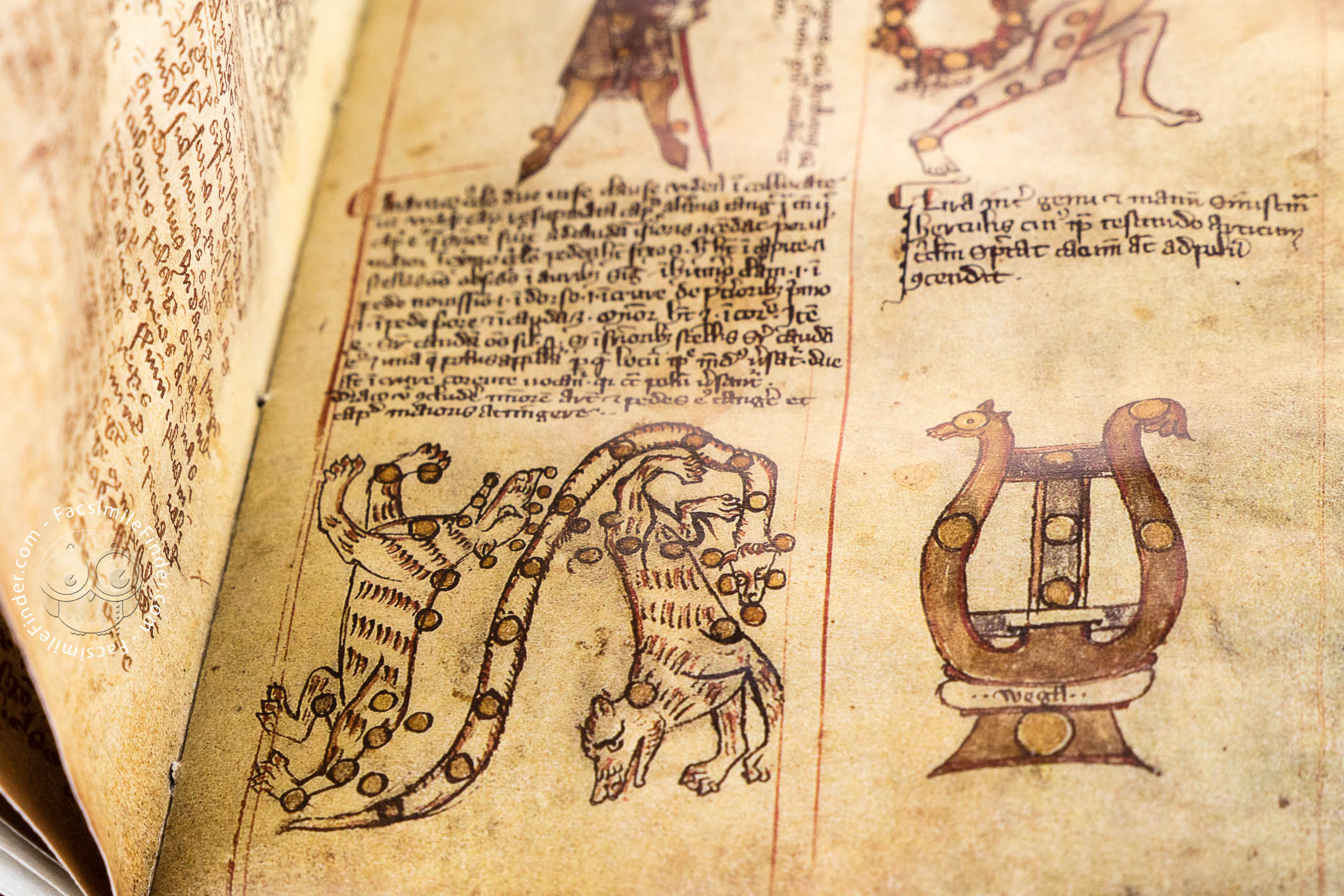
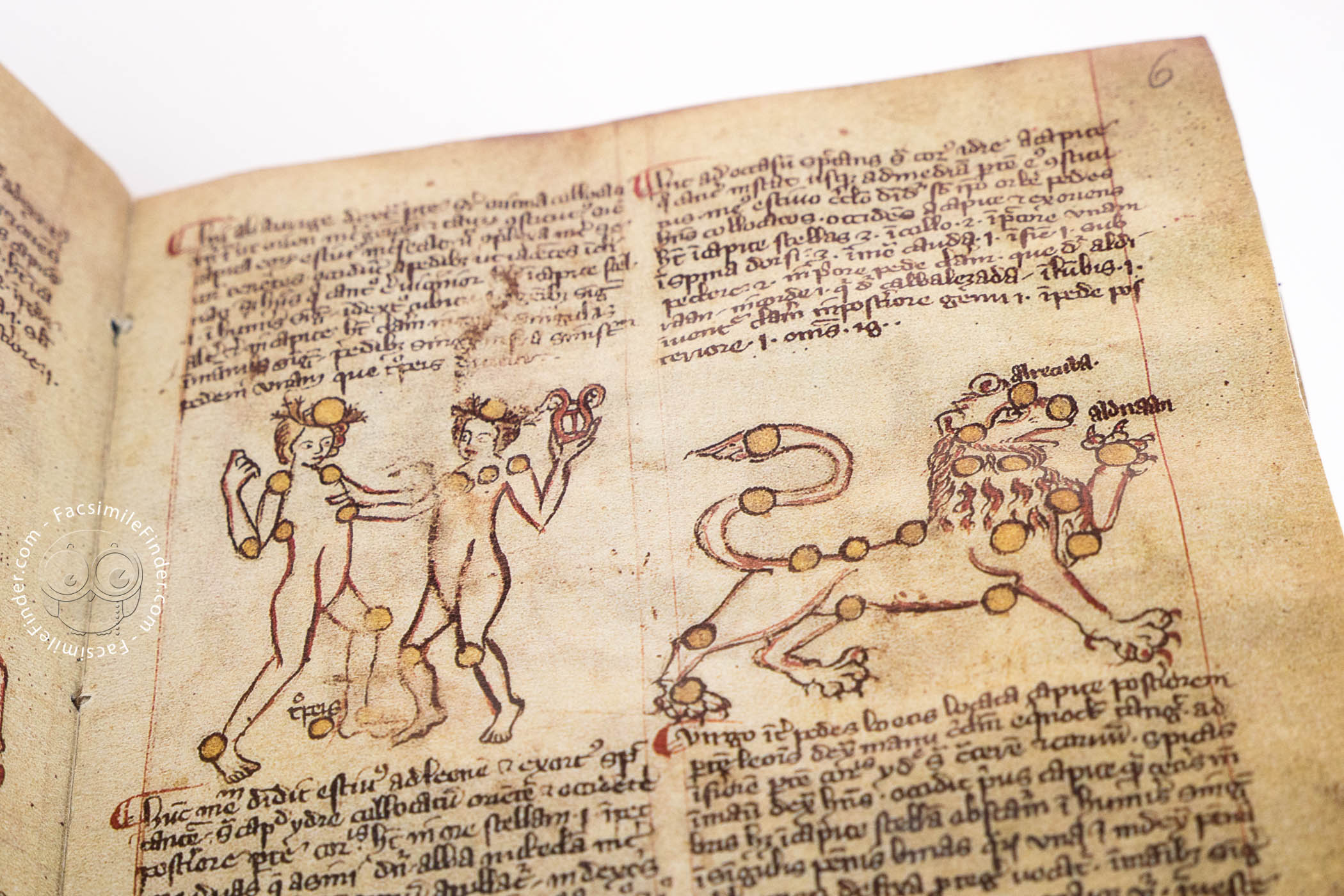
The manuscript’s drawings of star groups are in red and brown ink, shaded in green and lavender, and depict the creature, figure, or object associated with each. These are superimposed with burnished gold spheres, depicting individual stars. Although the arrangement of these stars is not entirely accurate, this composition helps indicate how constellations could be seen to resemble their namesakes. Some of the brightest stars are labeled with transliterations of their Arabic names.
The Tools of the Trade
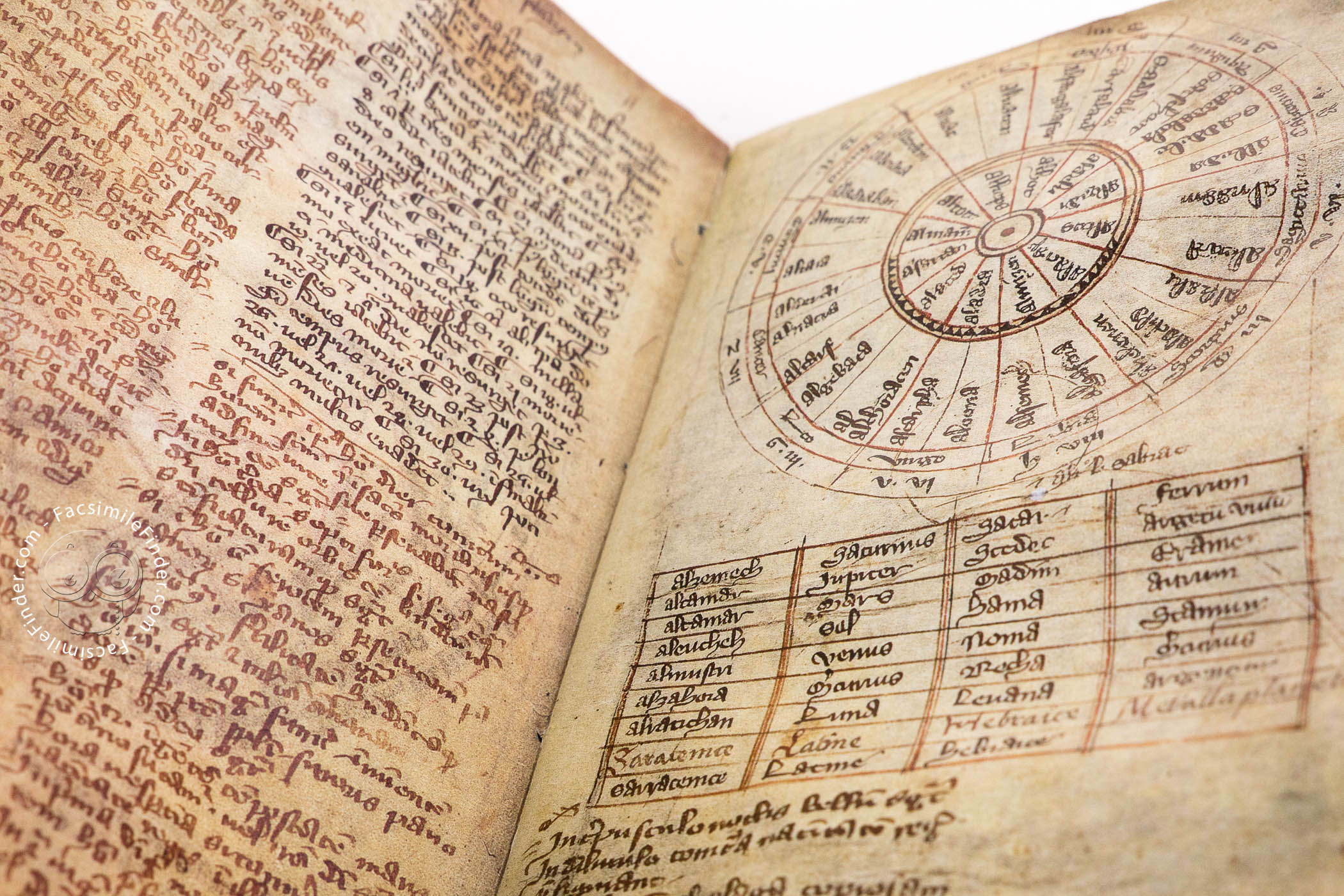
The codex includes carefully constructed diagrams of astrological equipment, including a partial illustration of a quadrant (fol. 1v). Another diagram represents the tympanum of an astrolabe, an instrument used to make astrological measurements, which could be used to tell the time or to assess the relative distance of celestial bodies (fol. 10v).
Storytelling through Stars
One drawing depicts Andromeda, a princess in mythology who was sacrificed to a sea monster (fol. 5r). Accordingly, she is shown with her wrists in chains, loosely corresponding to the arrangement of the constellation itself. The preceding illustrations depict constellations named after Andromeda’s parents. Perseus, Pegasus, and Cetus, who also feature in her myth, are also described and pictured in this manuscript (fols. 5r, 5v, and 7r).
Global Astrology
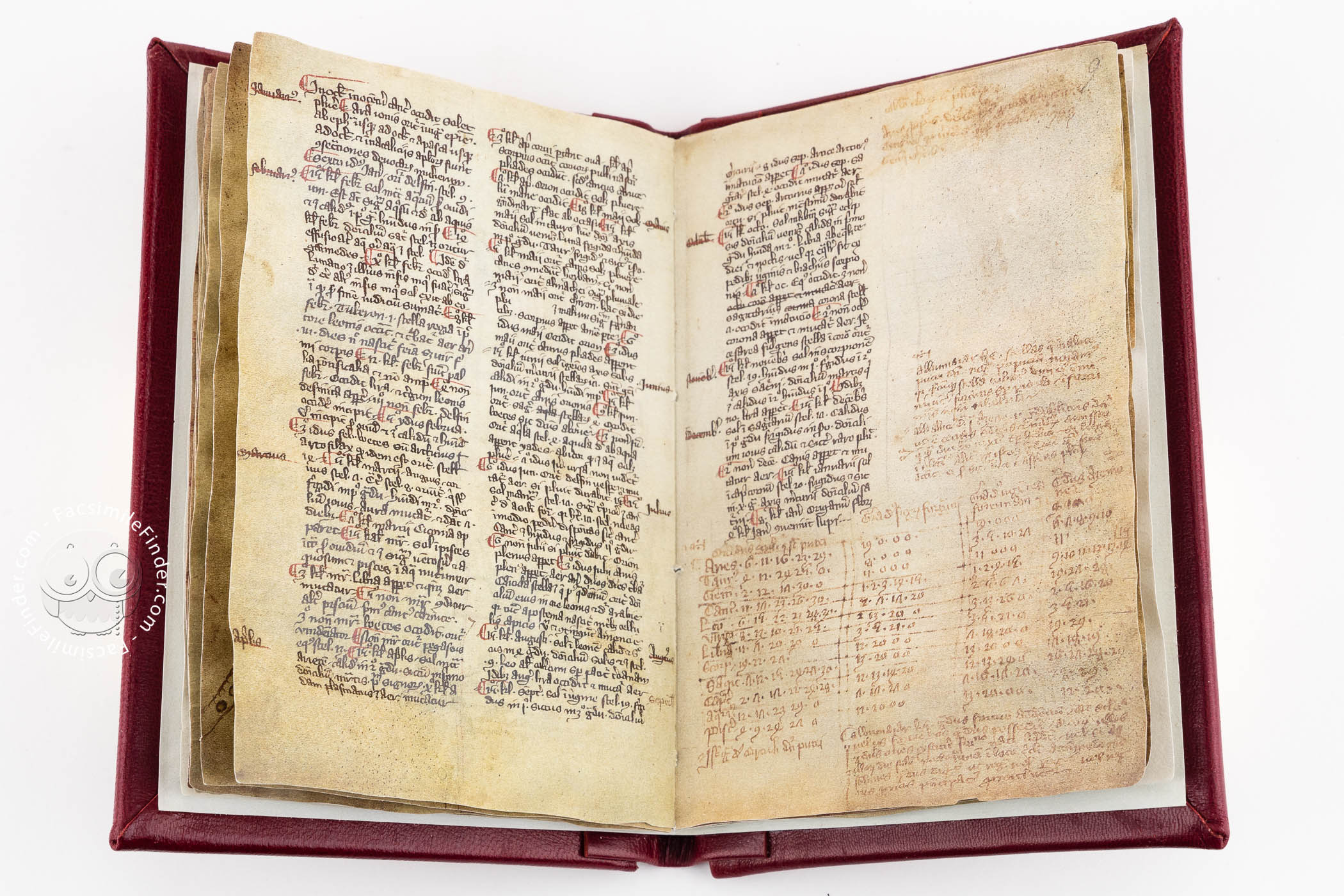
The manuscript was written by a single scribe in Cursiva Antiquior script, using red and dark brown ink, mostly in two columns. It includes a lunary with predictions based on the position of the moon (fol. 2v). A table gives the names of the planets in Hebrew, Greek, and Arabic, a useful reference that reflects disparate sources of astrological and astronomical knowledge in the Middle Ages (fol.3r). In particular, the work of Islamic scholars was hugely significant for the development of astronomy as we know it.
Uncertain Origins
Surviving sources provide little insight into its provenance, and so its possible origins have been identified via comparison with more readily localizable manuscripts. By the eighteenth century, the manuscript was in the Prussian royal library, which formed one of the foundation collections of the Preussische Staatsbibliothek, which by the end of the twentieth century was named the Staatsbibliothek zu Berlin.
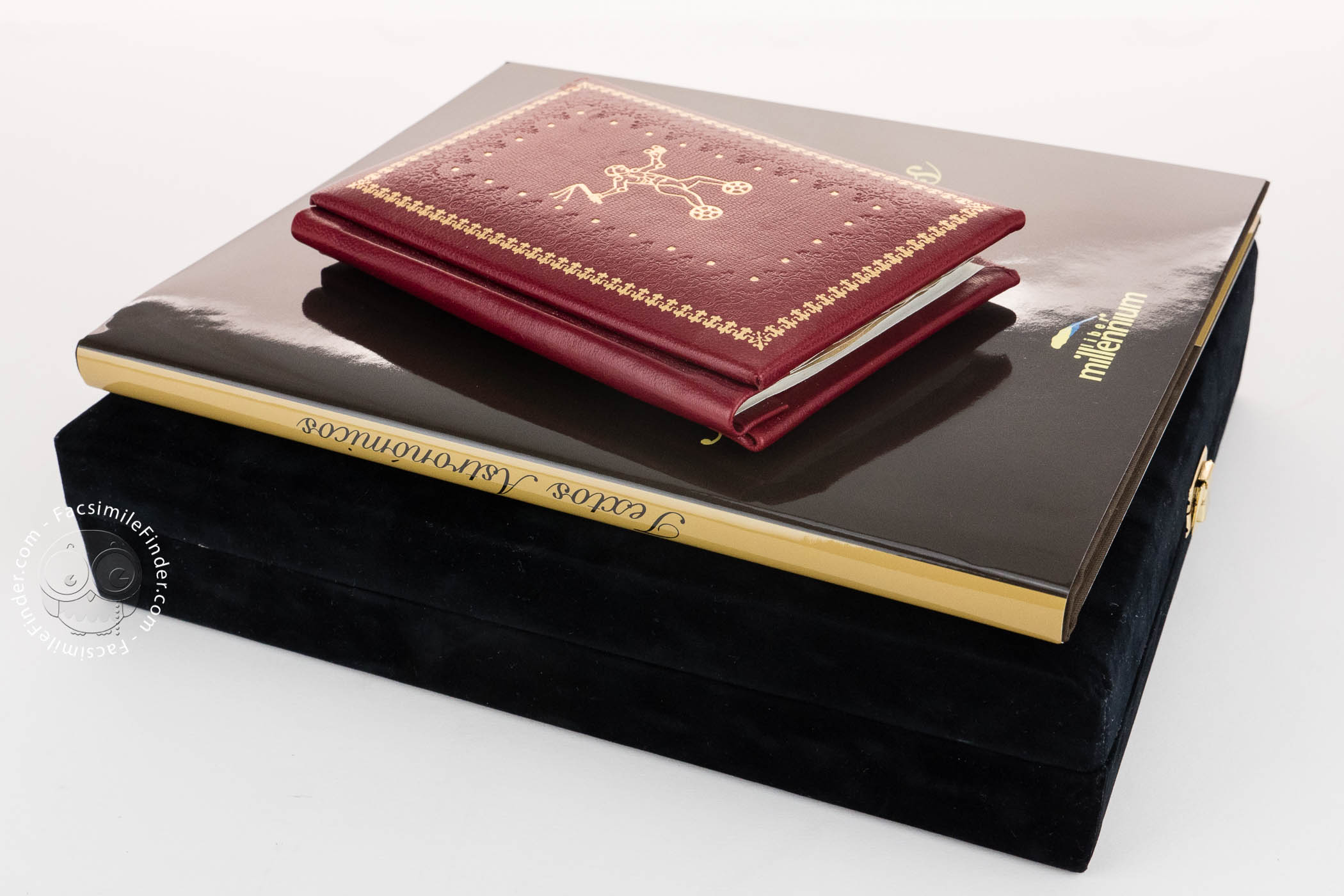
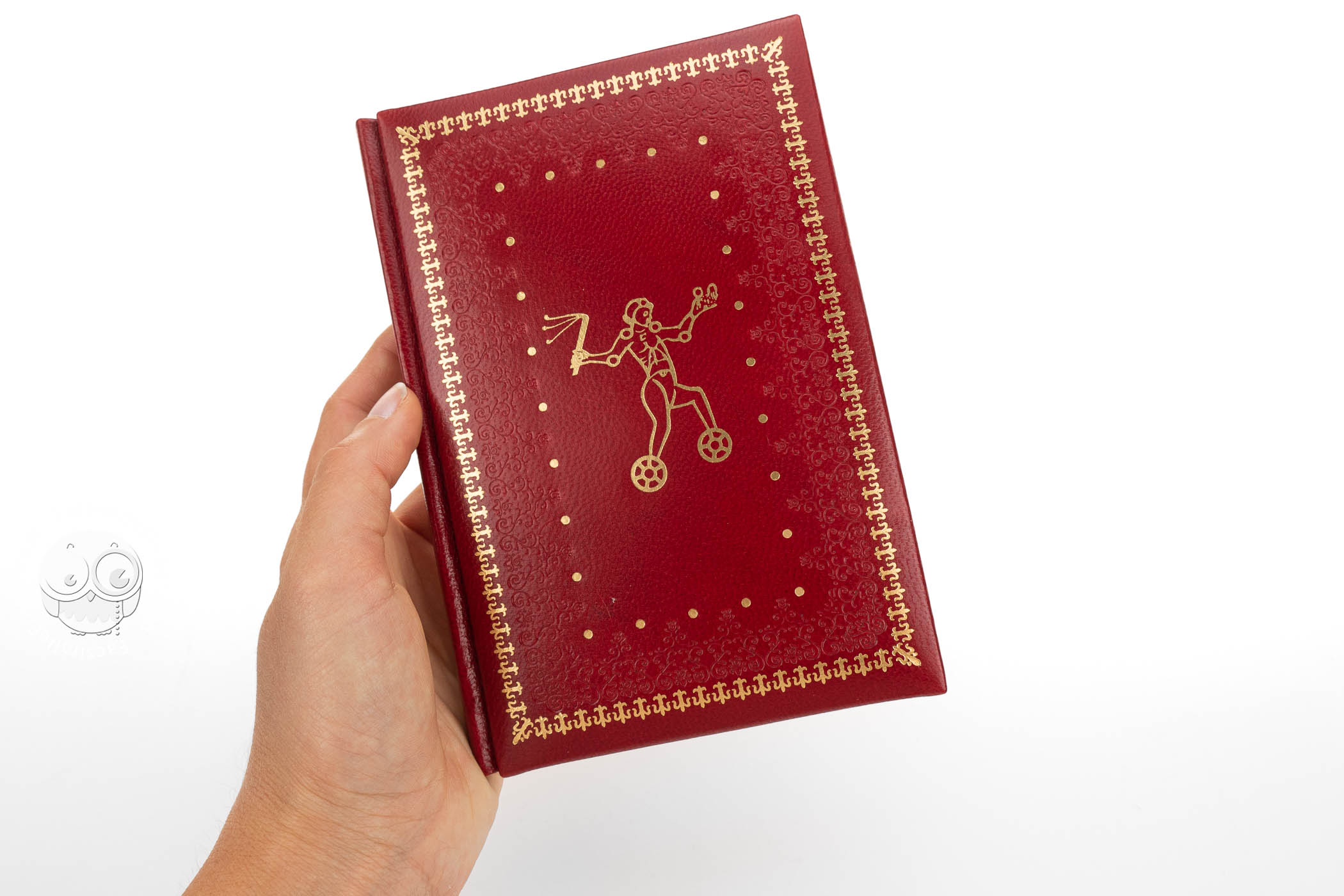
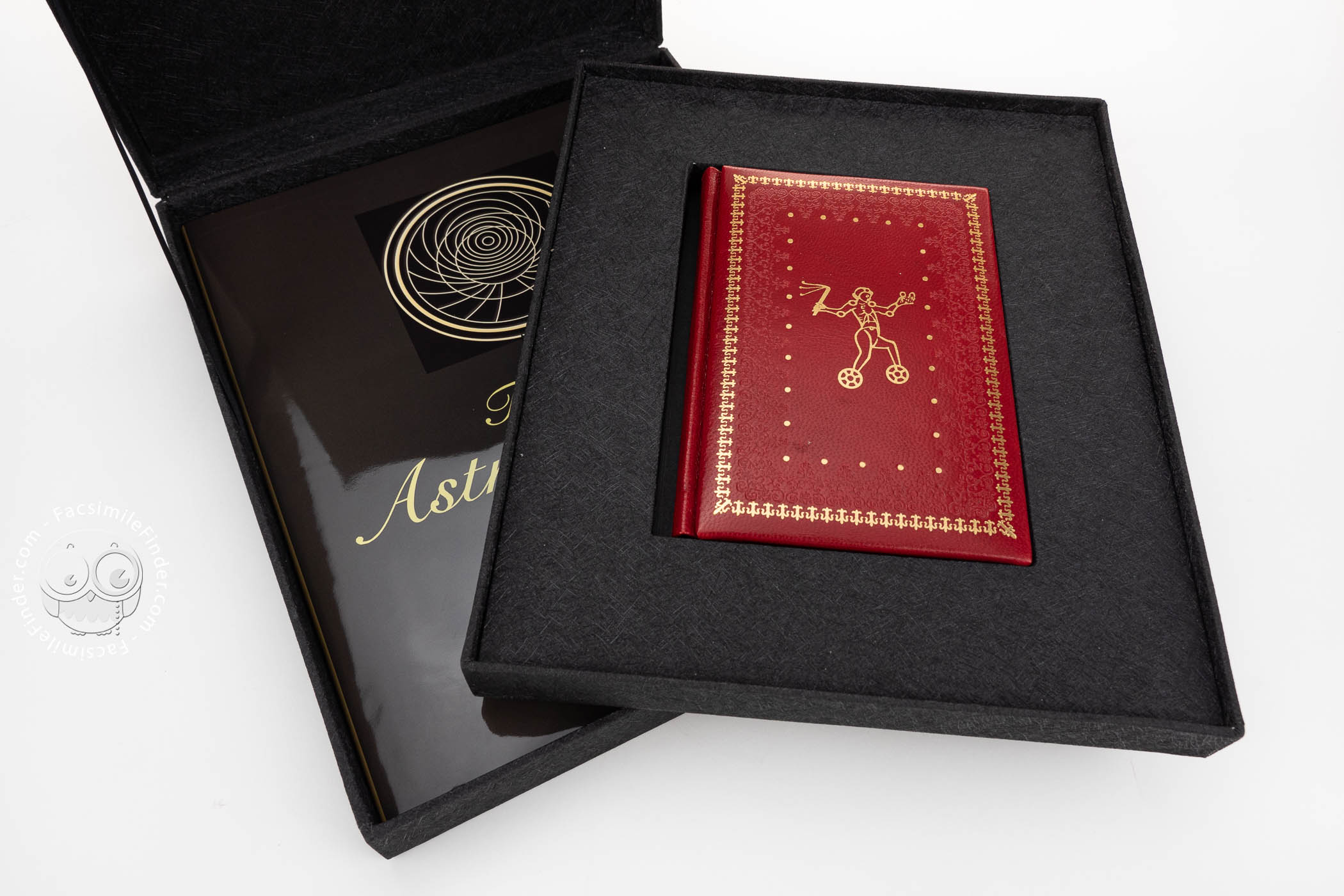
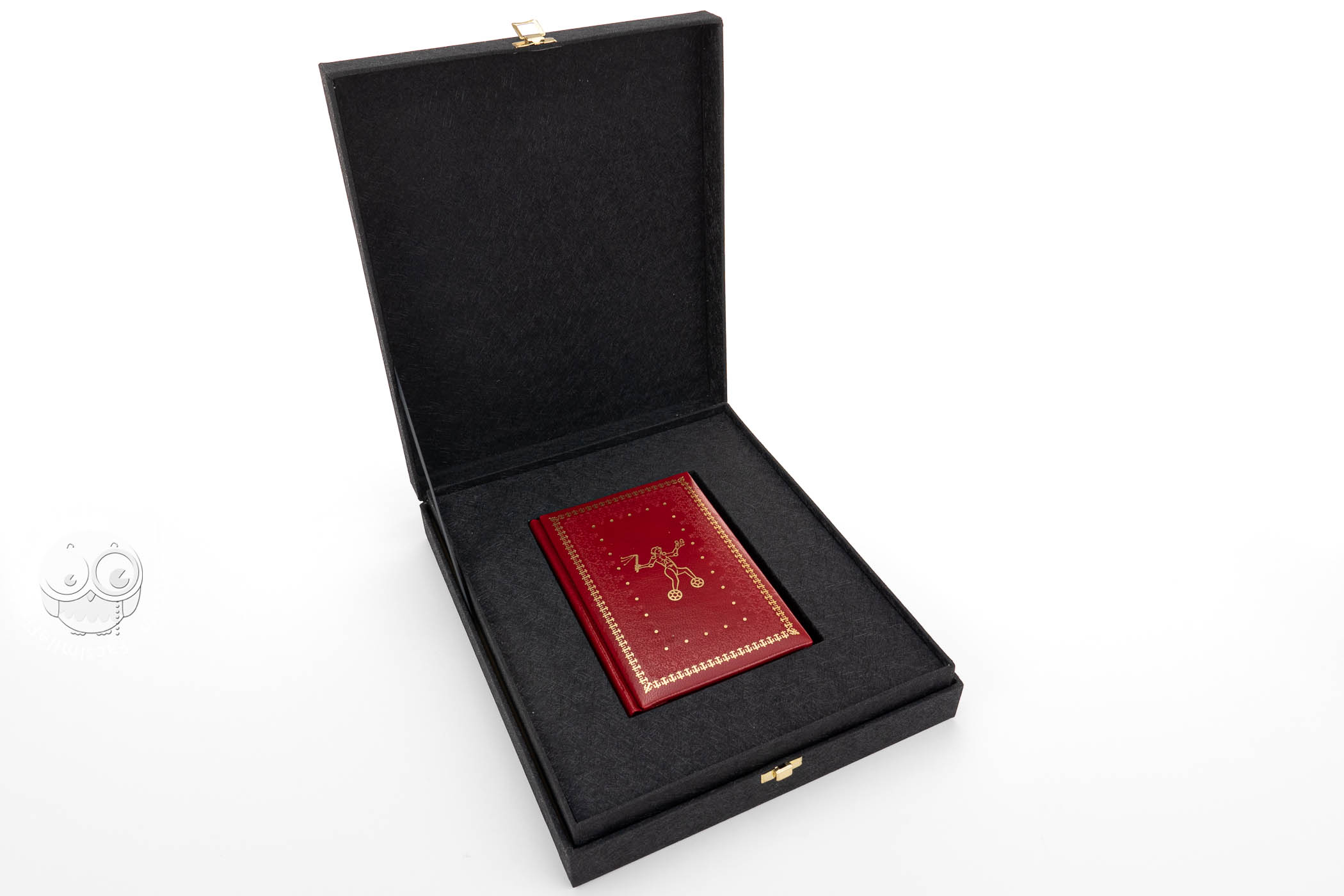
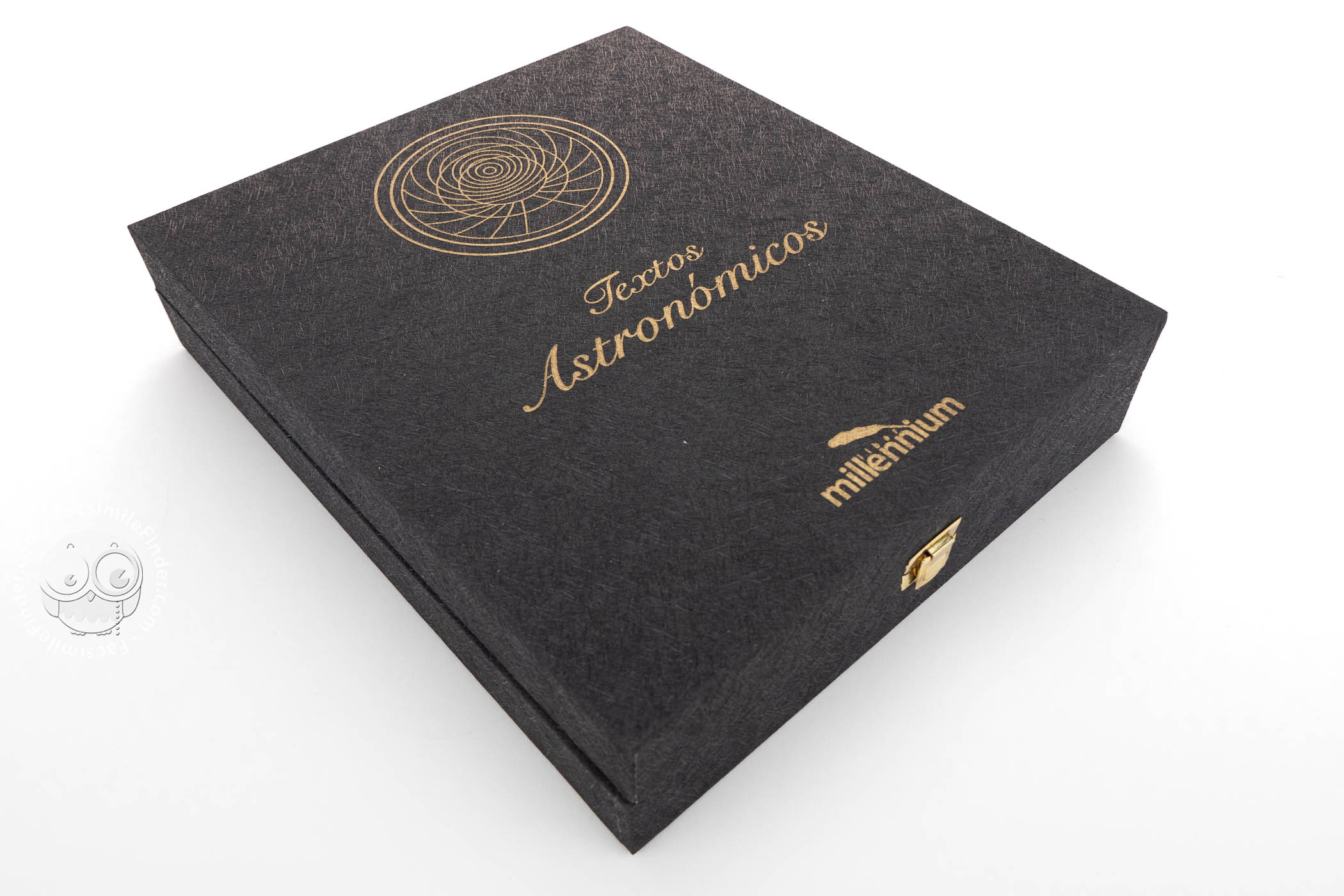
We have 1 facsimile edition of the manuscript "Berlin Hyginus": Textos Astronómicos facsimile edition, published by Millennium Liber, 2007
Request Info / Price