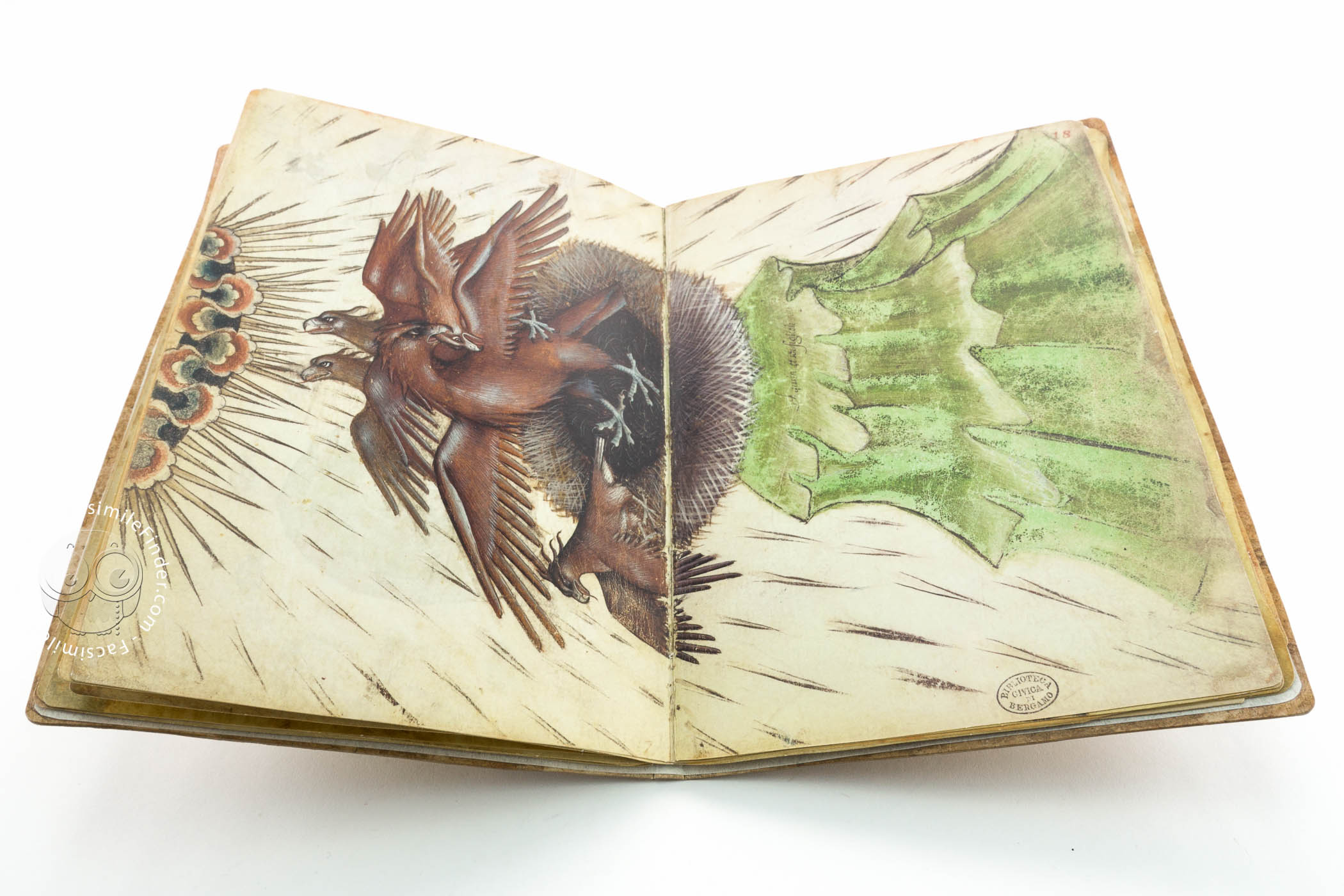
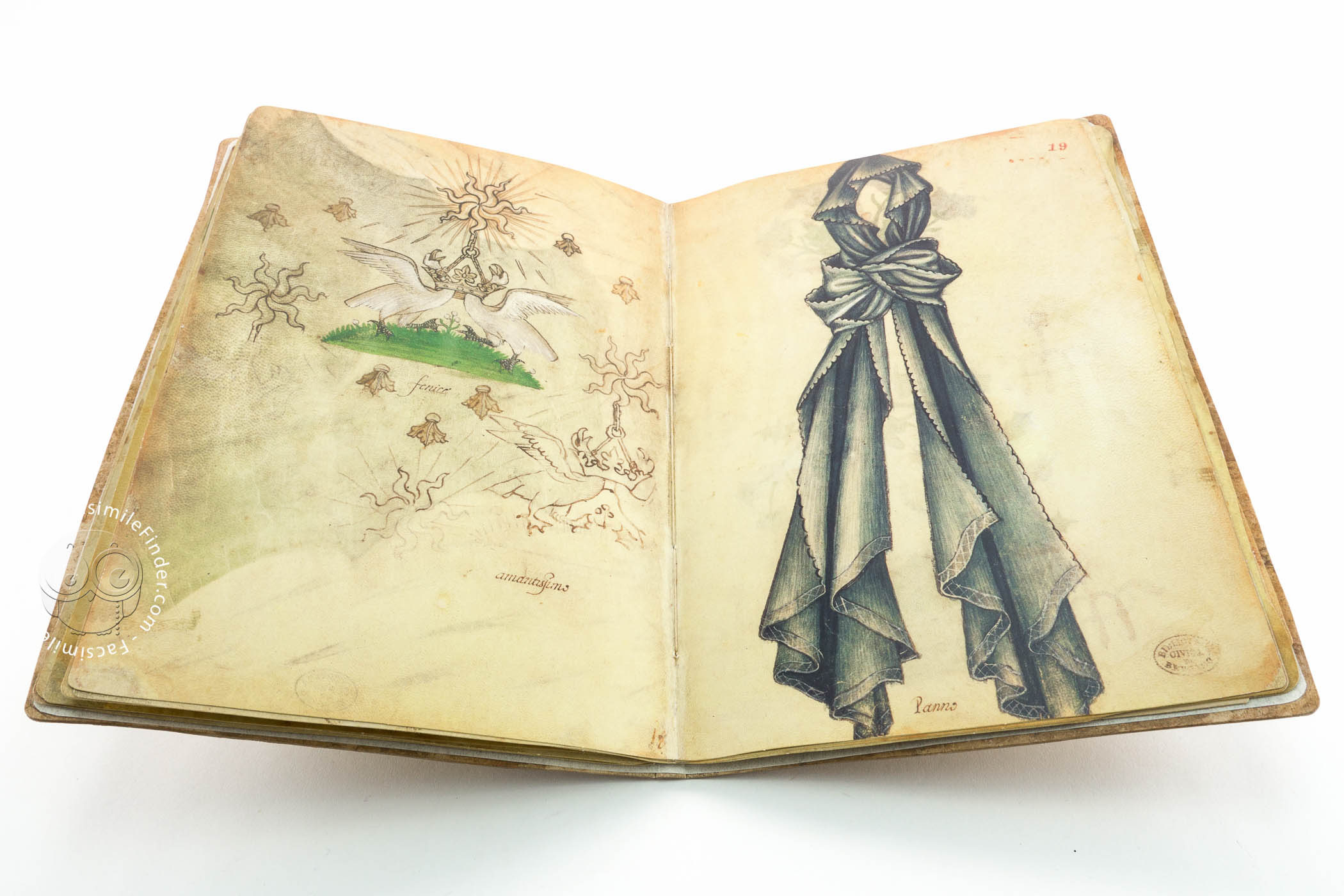
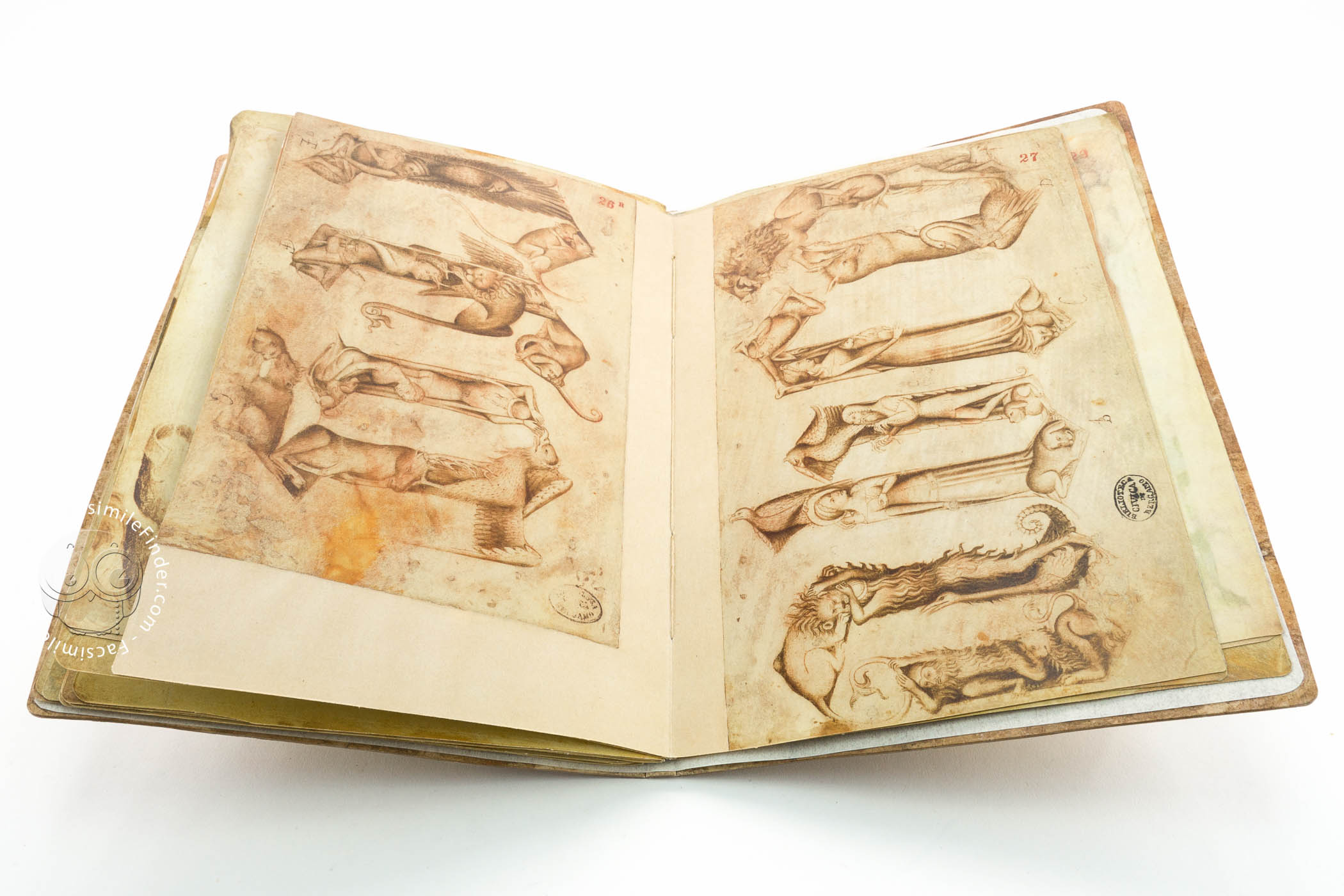
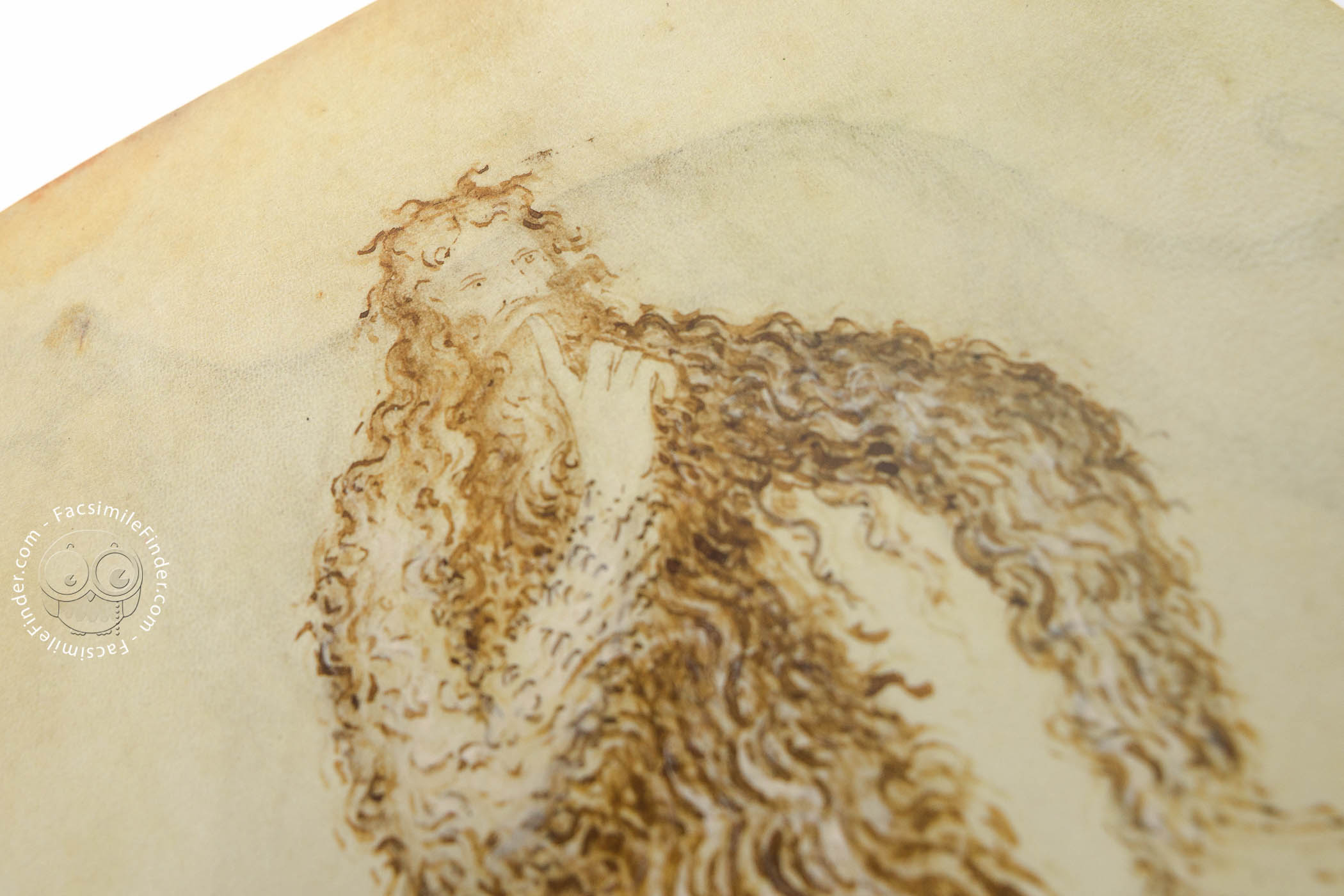




The Sketchbook of Giovannino de' Grassi was produced in Milan in the second half of the fourteenth century. It may have served as a model book, providing Giovannino's workshop with around eighty-five compositions to be copied and adapted. The book includes an ingeniously devised Gothic alphabet, with each letter composed of various figures and creatures. Local and imported animals are represented throughout, some naturalistically and others stylized. As such, the book is a testament to the collaborative nature of pre-modern art.
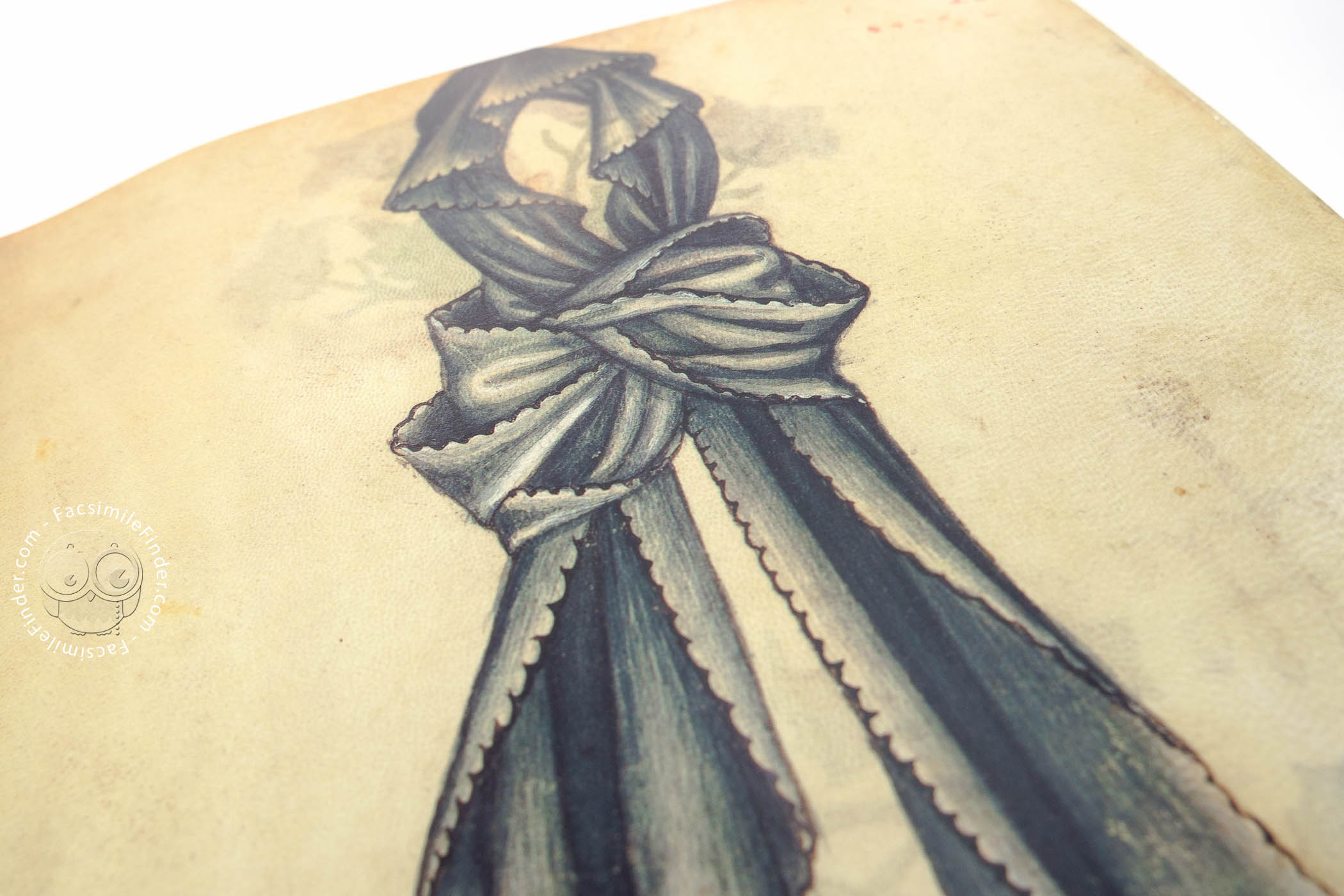
The subjects depicted range from human figures engaged in leisure activities to ornamental motifs. Most were copied from existing drawings or paintings, but some seem to have been drawn from life. All are carefully executed. The use of color creates a strong visual appeal.
Two Phases of Creation
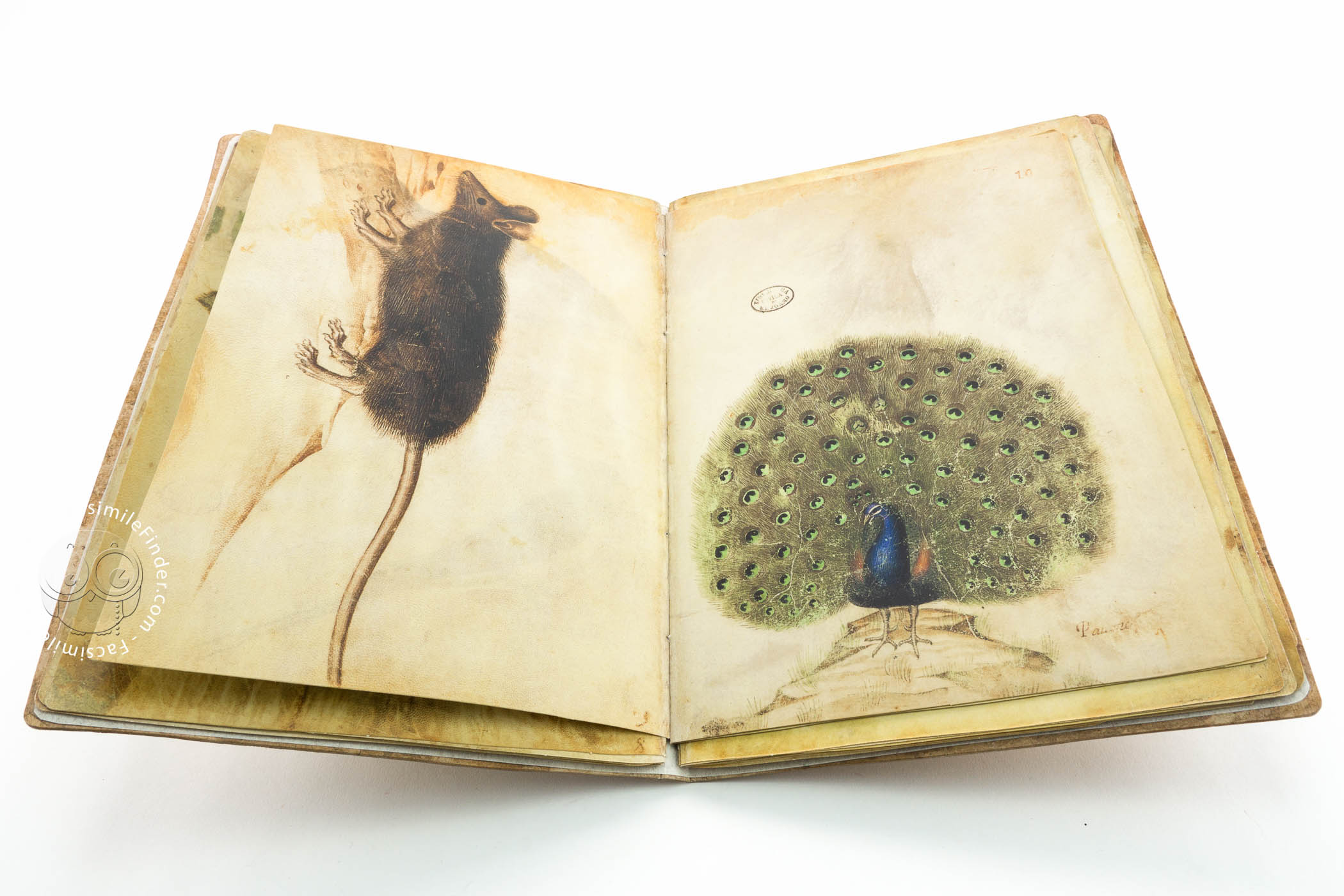
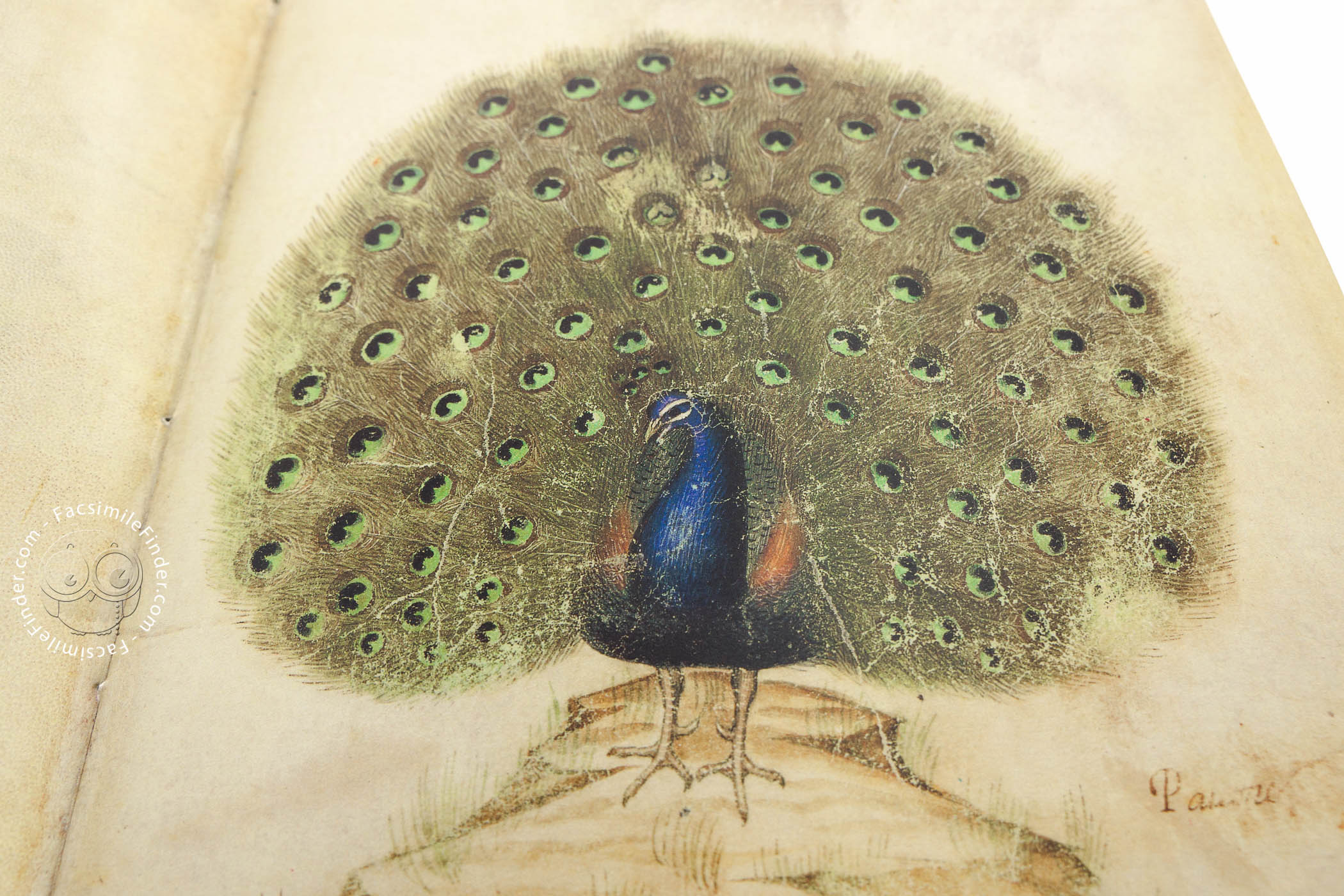
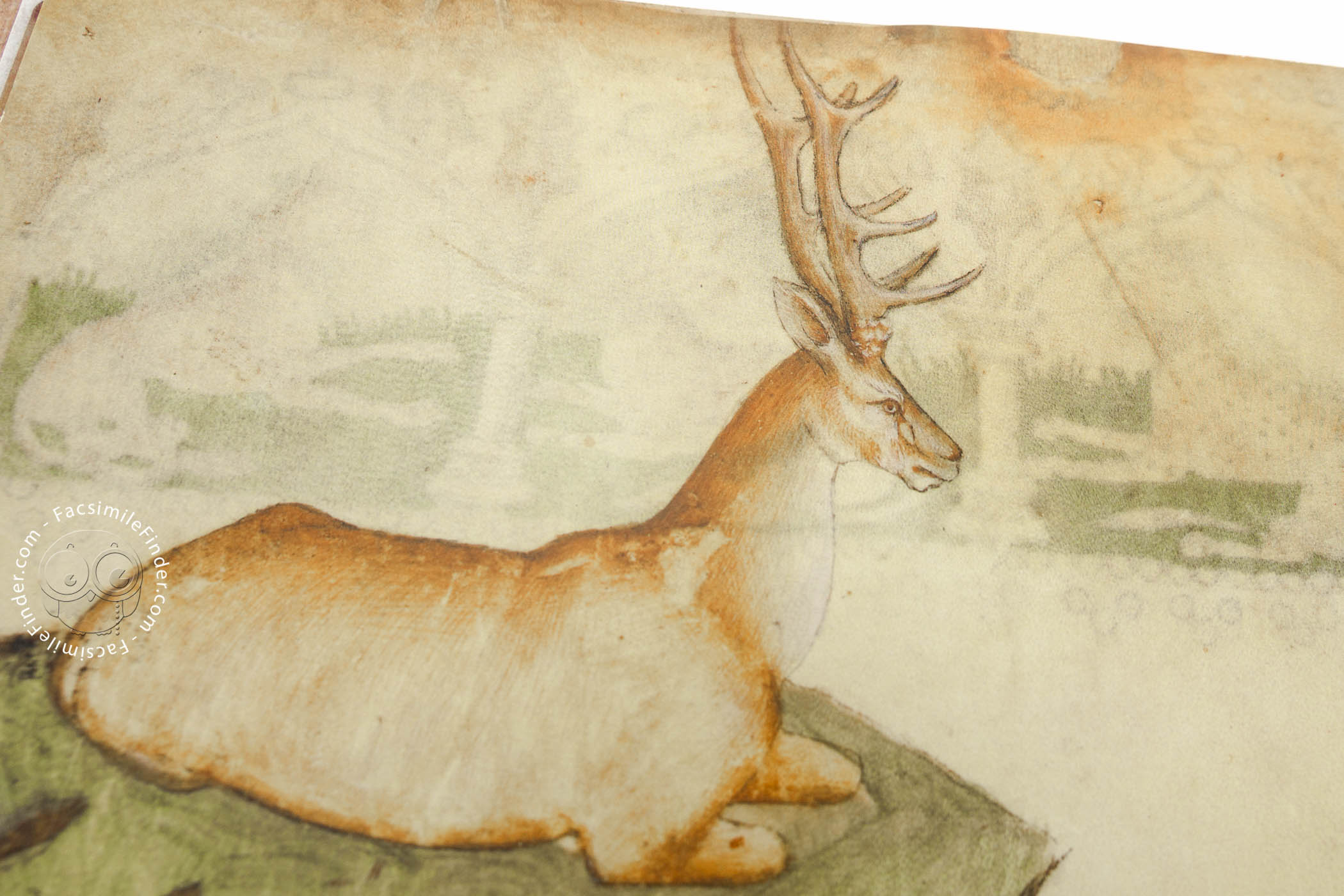
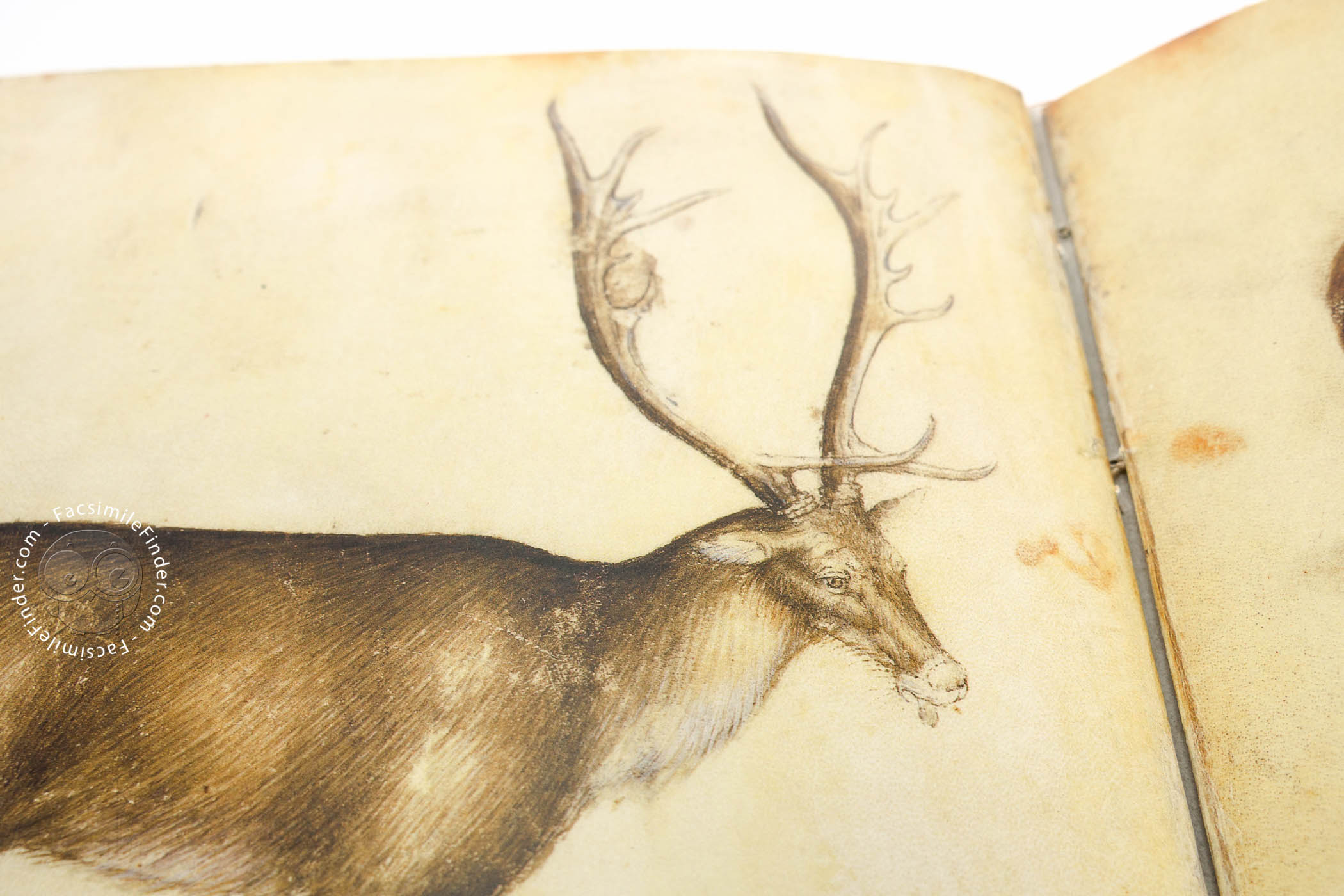
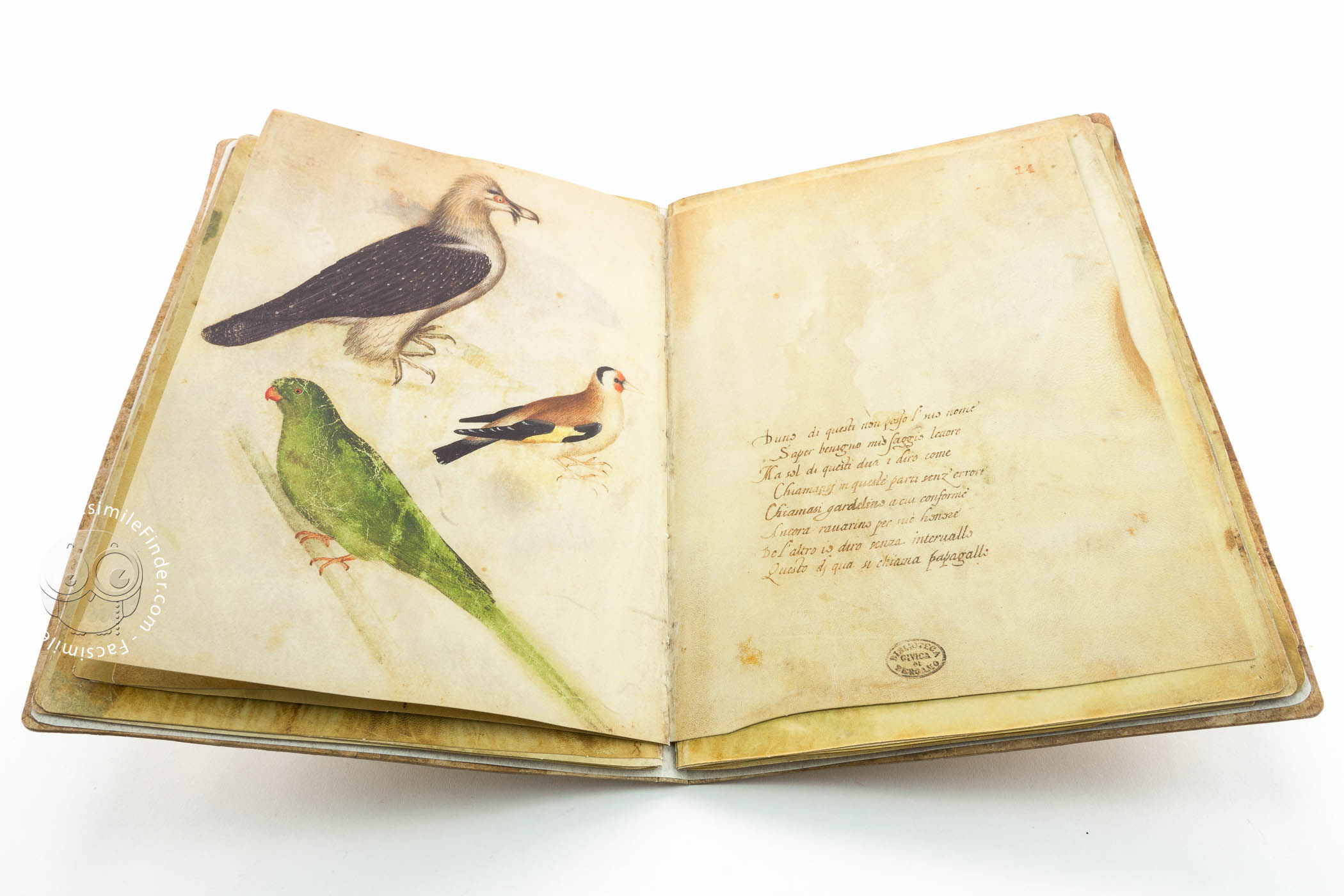
The pages of the section dominated by watercolor images of birds (fols. 9-14) are smaller than the others (which are irregular at best) and must represent a second stage in the sketchbook's fabrication. A drawing of three deer in a landscape by Giovannino extends across two pages that no longer face each other (fols. 8v and 15r).
Painter and Architect
An inscription contemporary with the surrounding drawings attributes them (or their designs) to Giovannino de' Grassi (fol. 4v). Giovannino was active in Milan: he designed architectural and sculptural elements for the cathedral and began the ambitious illumination program of the Visconti Hours, which shares several animals in the same poses found in the sketchbook. He was probably responsible for many of the animal sketches.
Animals
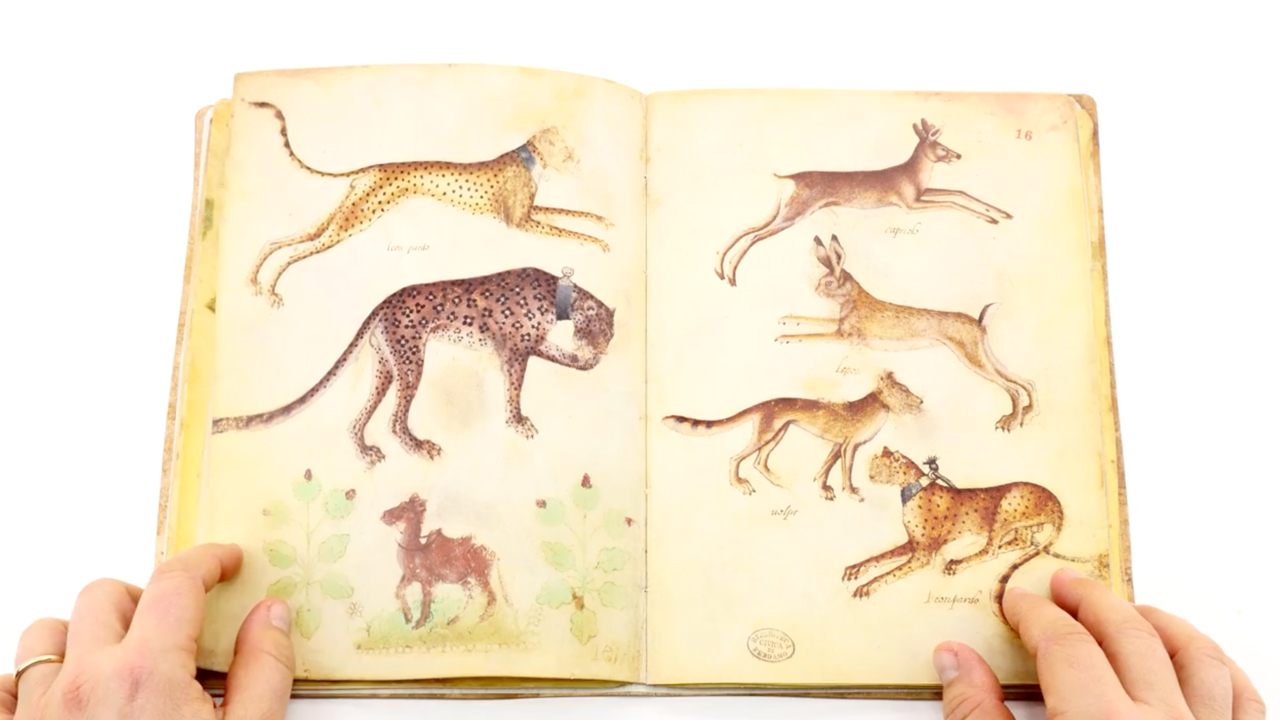
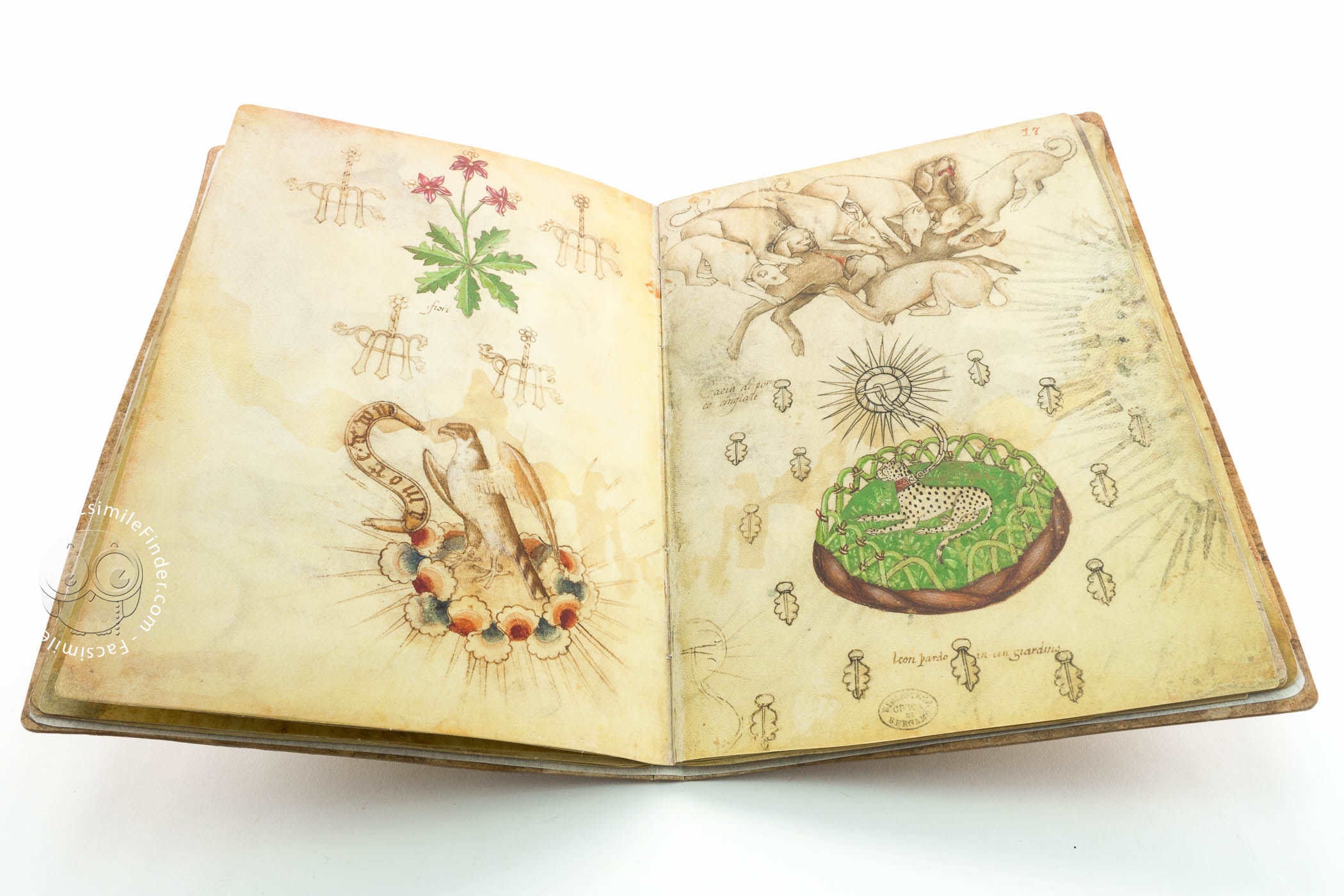
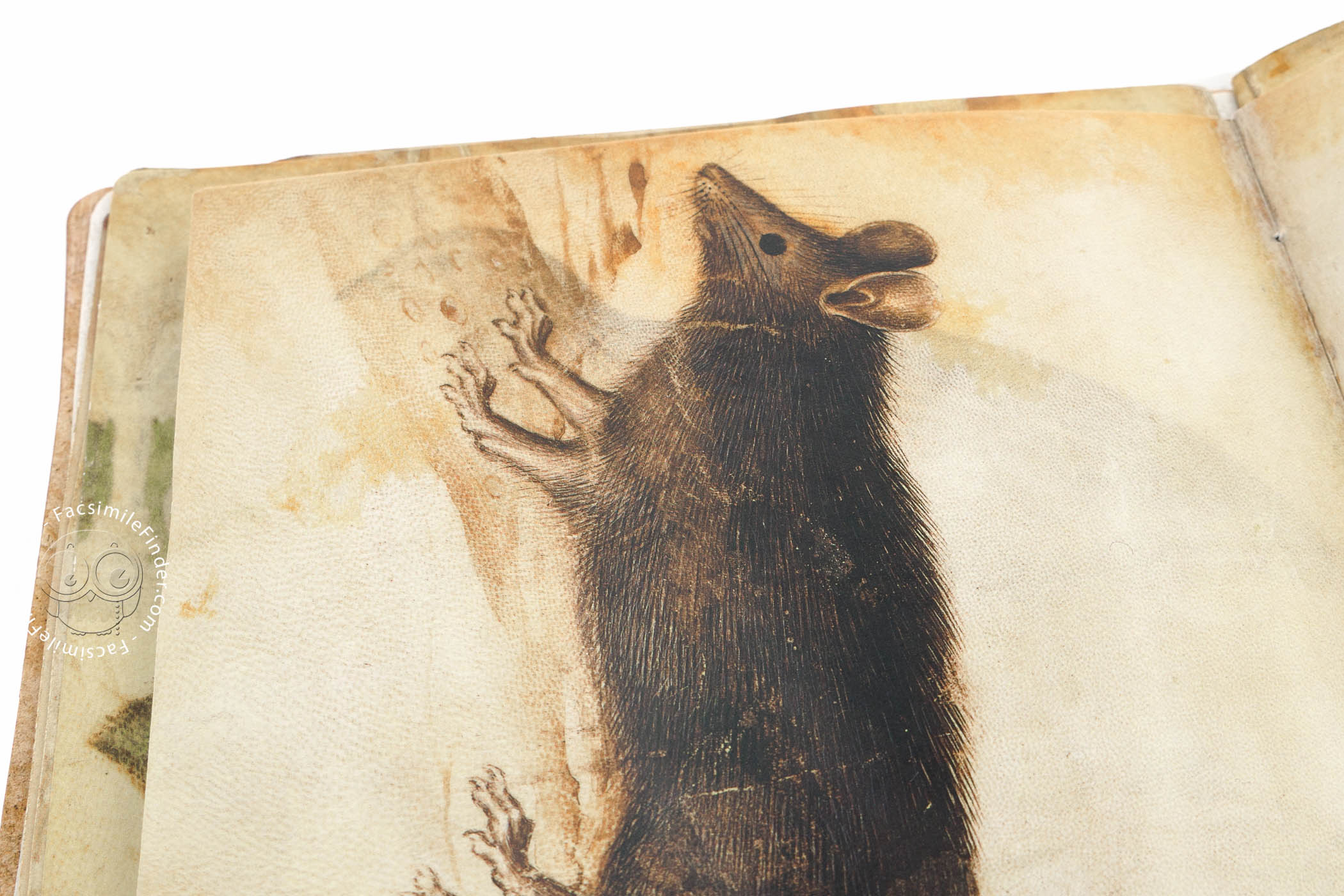
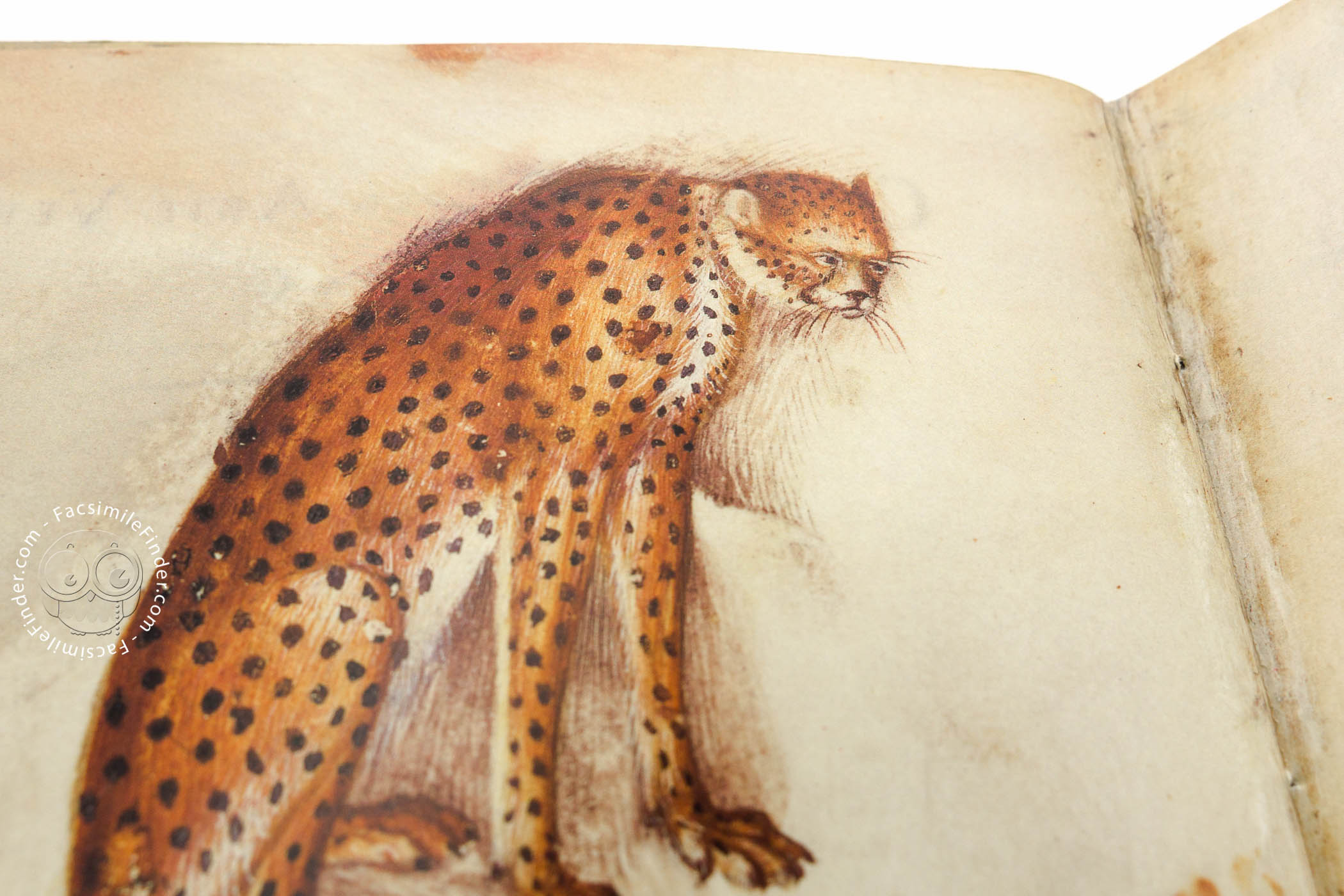
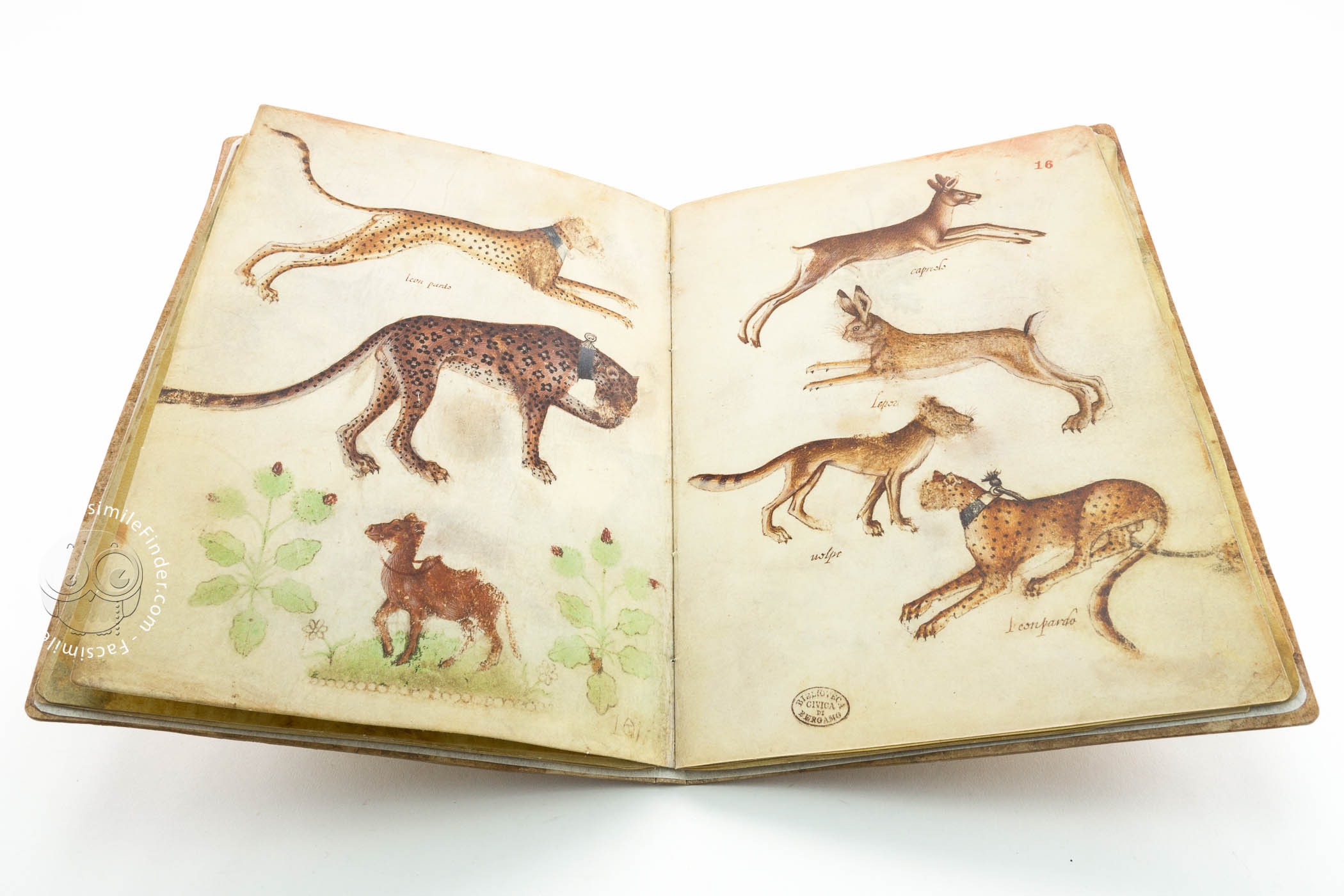
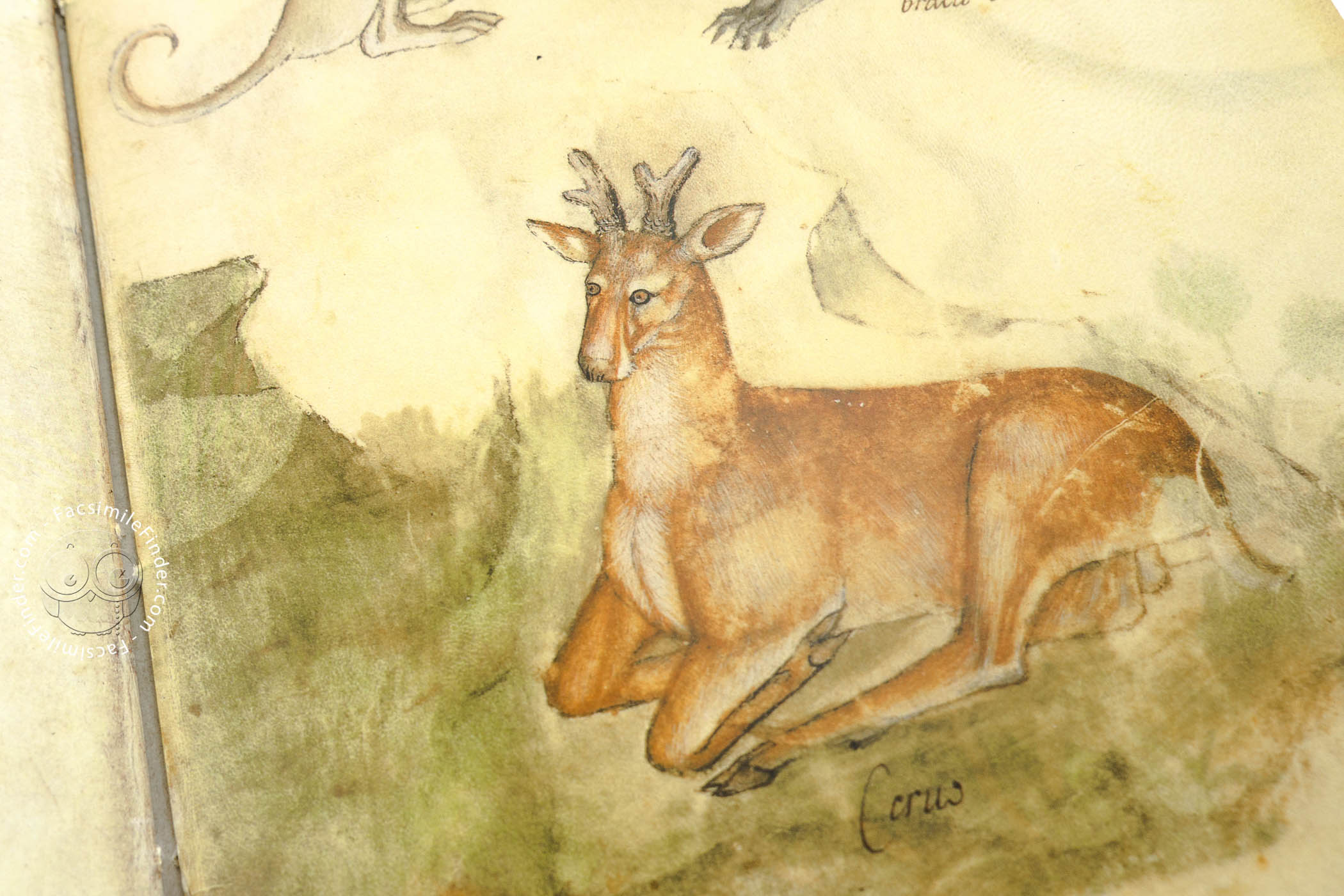
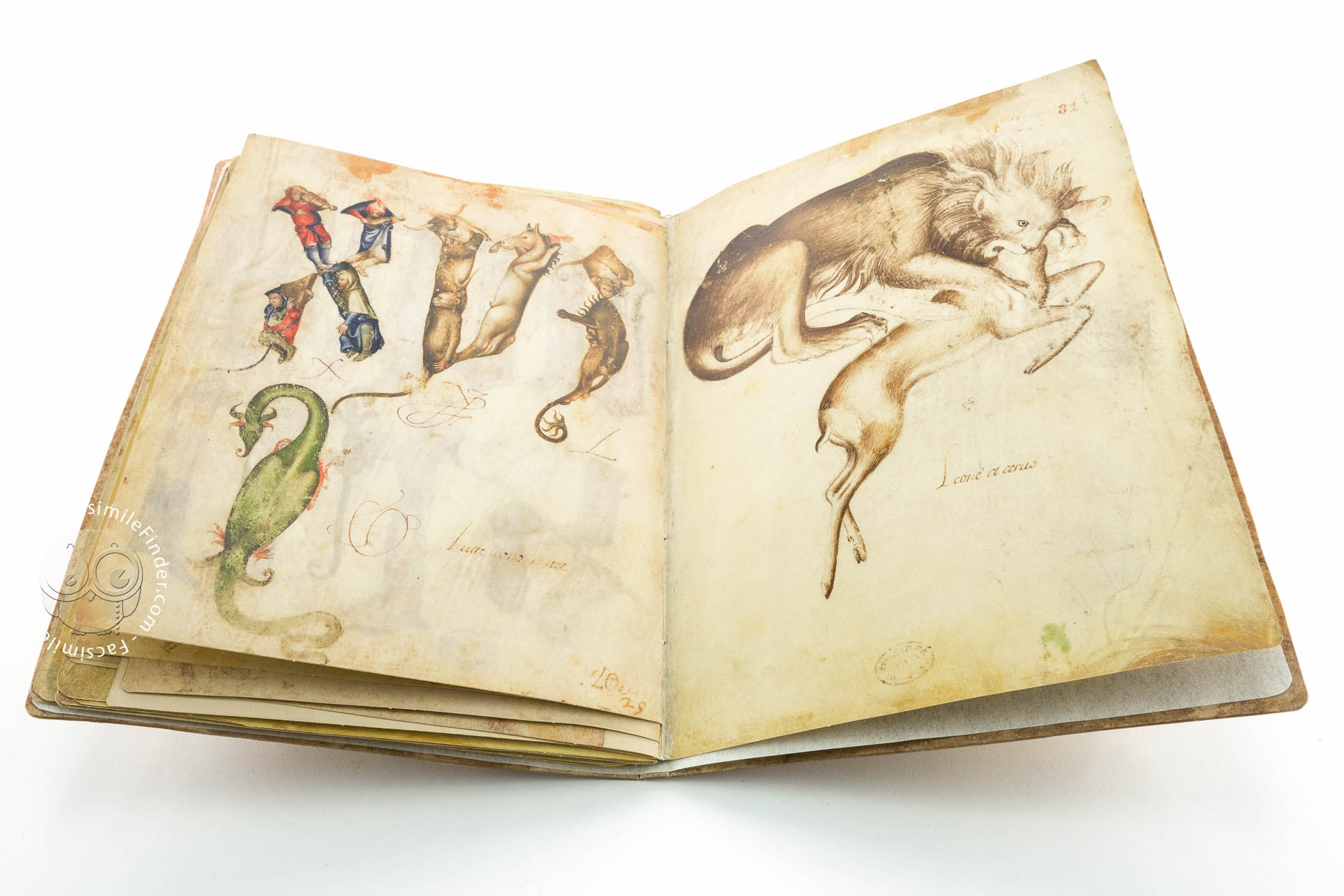
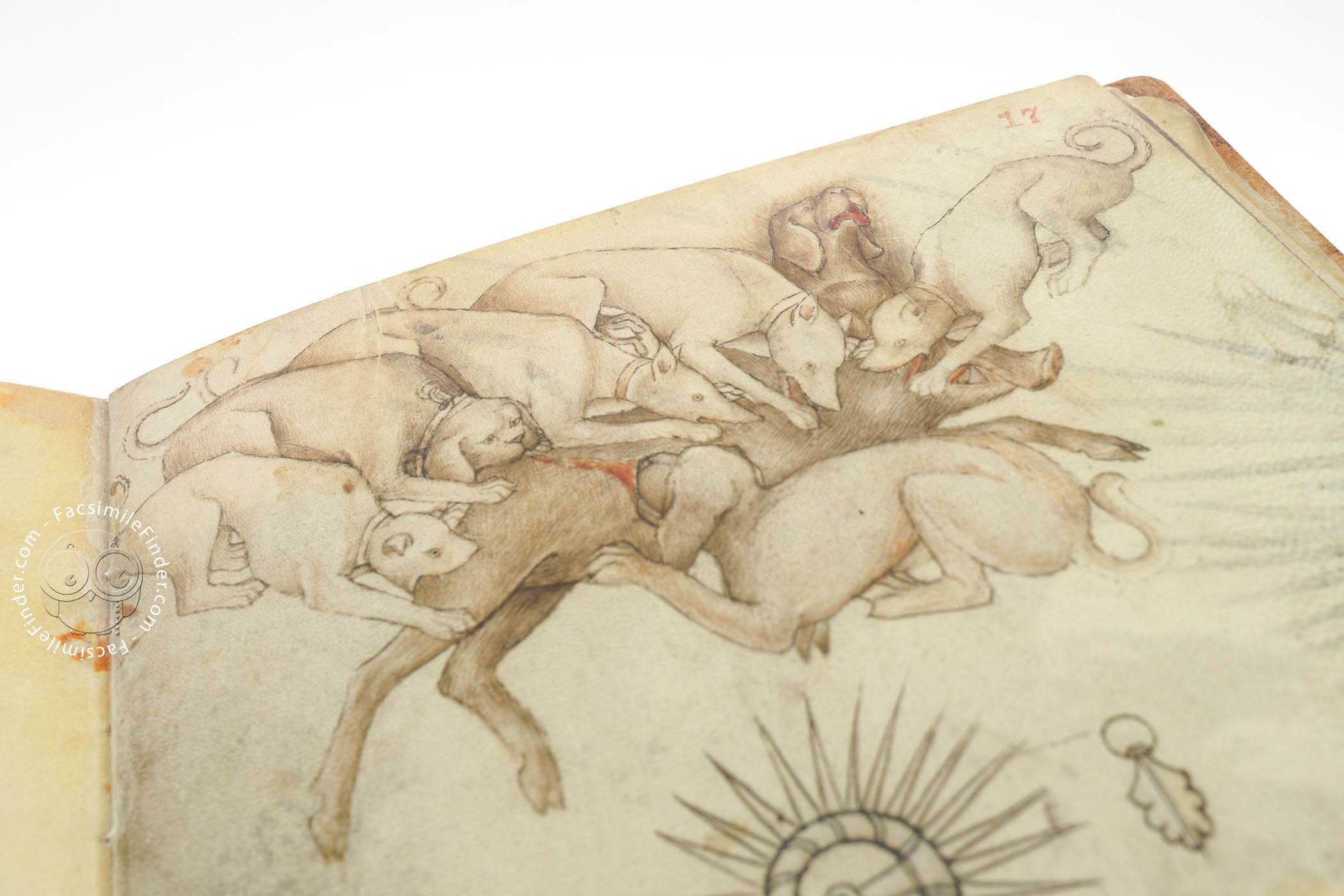
The animals depicted, as many as ten on a page, include a bear, a lion, a camel, a porcupine, a beaver, a squirrel, a rat, two donkeys, four dogs, seven leopards or cheetahs, and ten deer. They are usually shown isolated and in profile, but there are also drawings of animals interacting.
Humans
Human figures are depicted engaged in courtly activities. A watercolor of two women engaged in music-making faces a sketch of a woman reading from a prayer book to another woman (fols. 3v-4r). A group of five men, shown singing from a scroll, is delicately drawn in ink with the facial features especially well defined (fol. 5v).
Birds
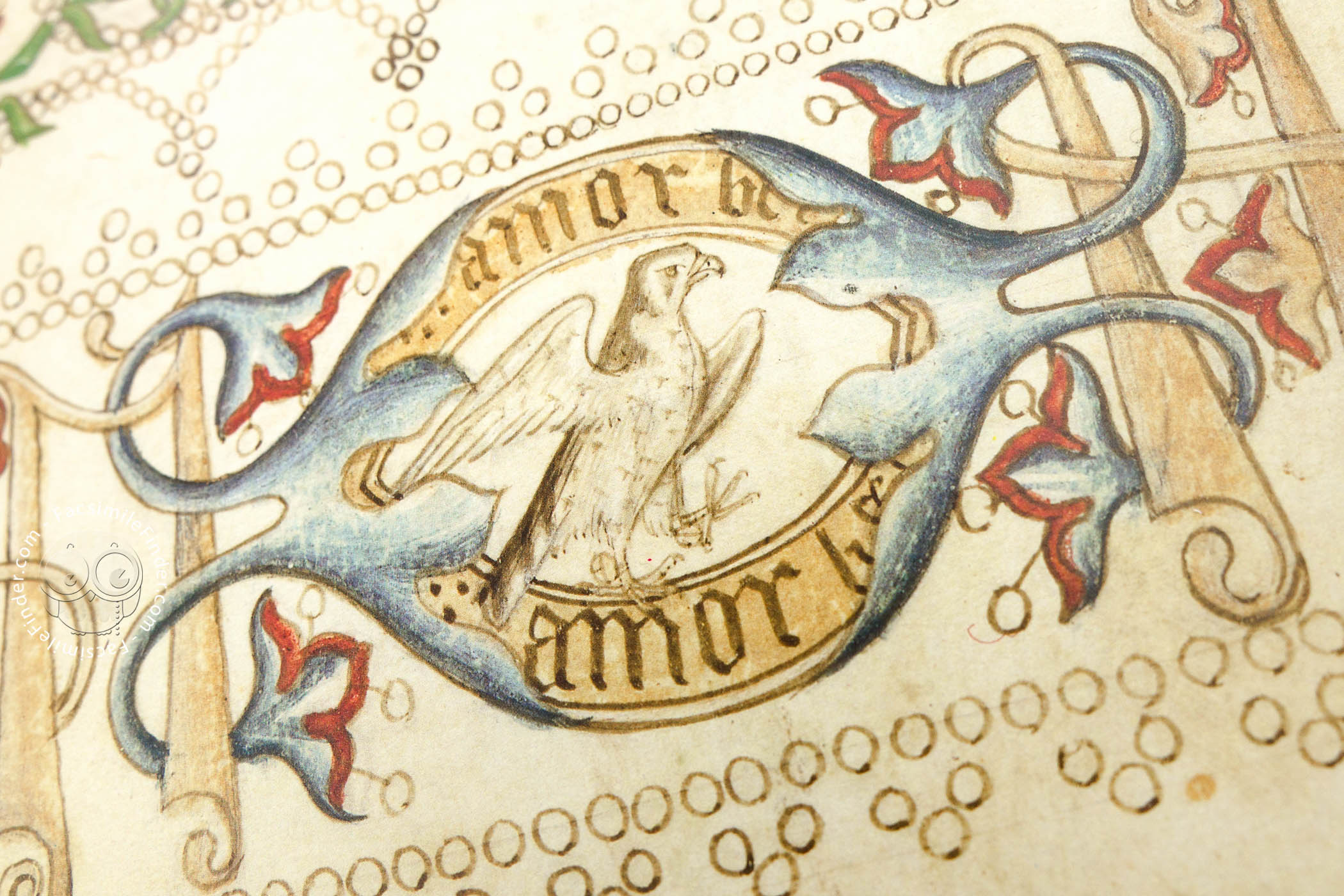
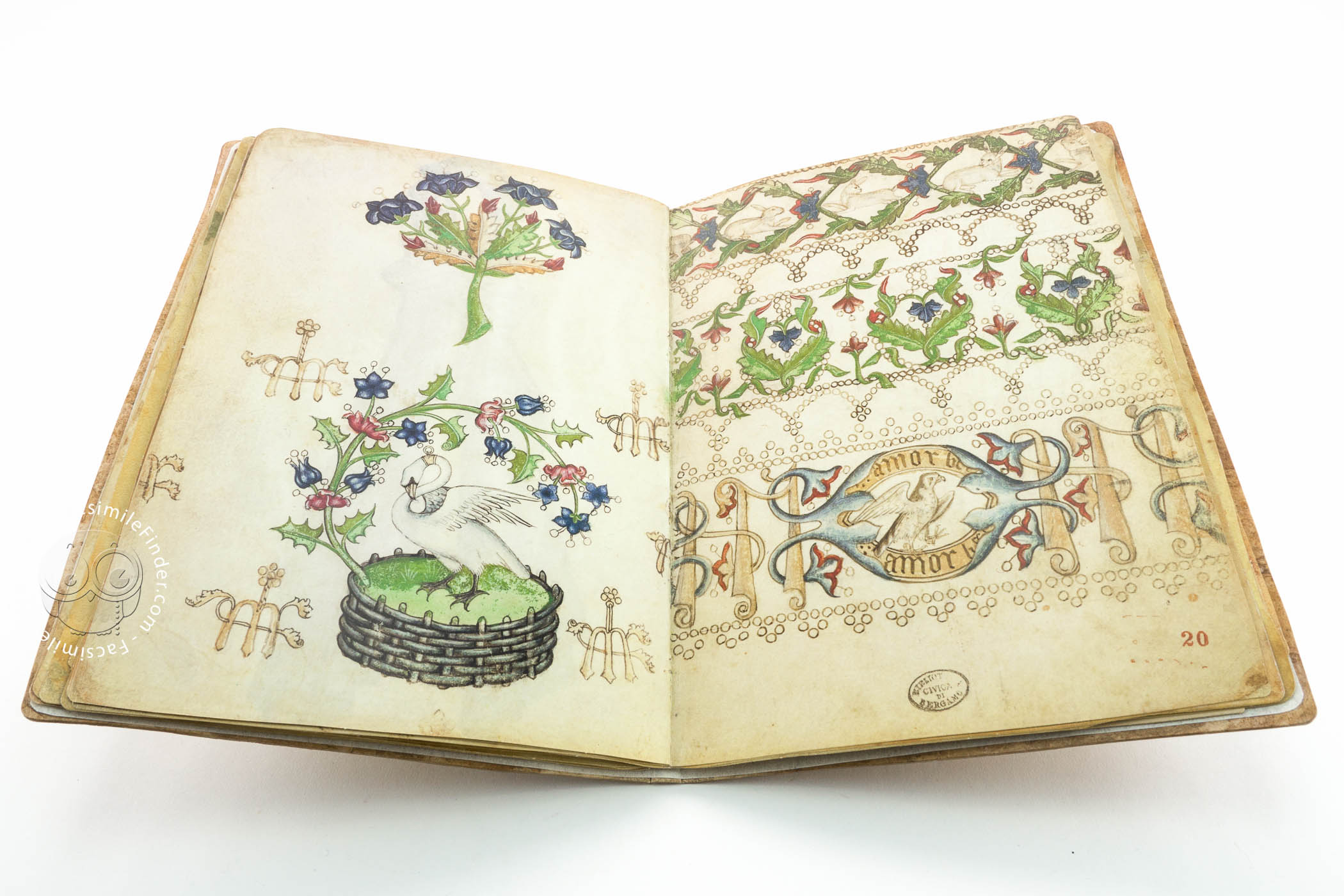
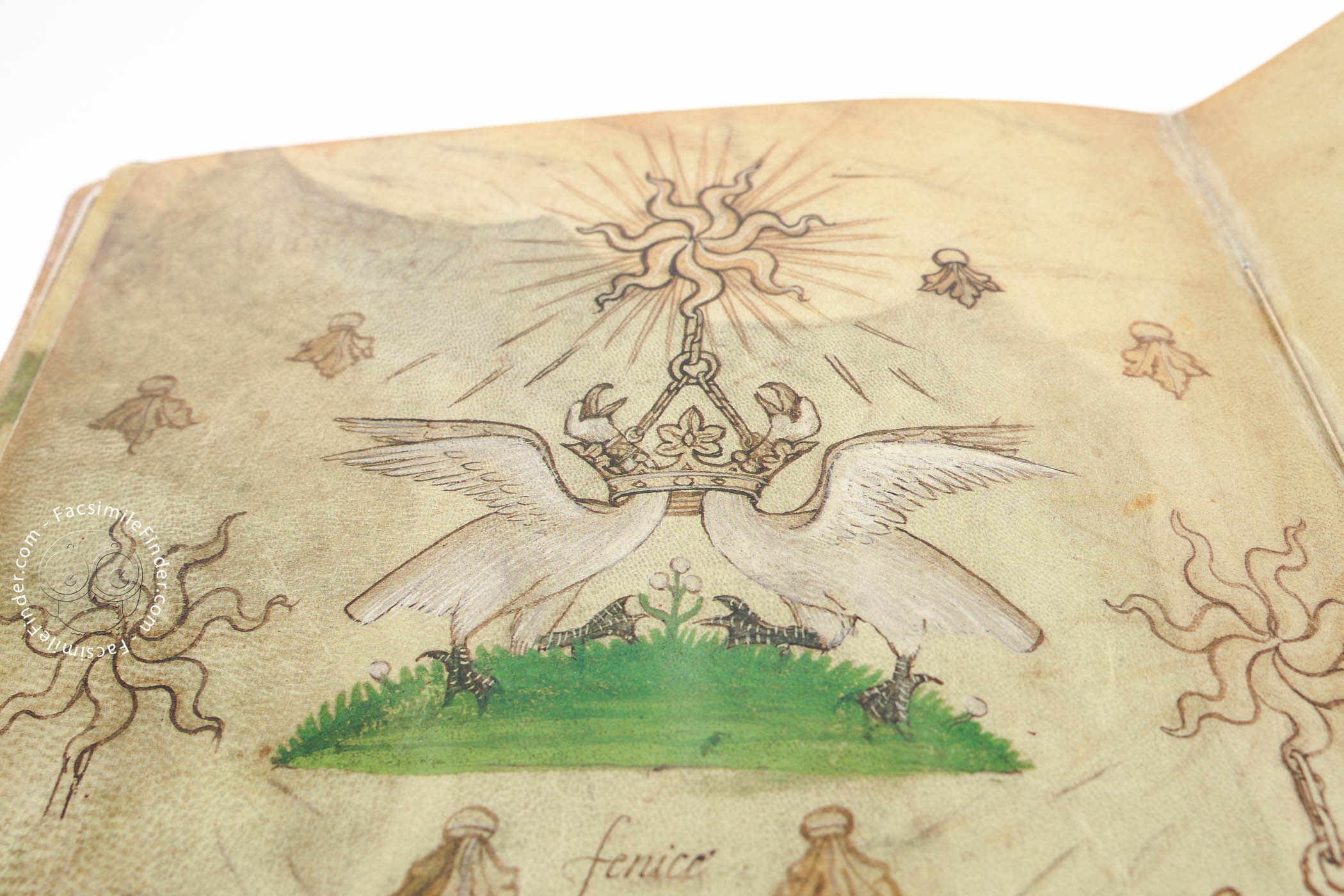
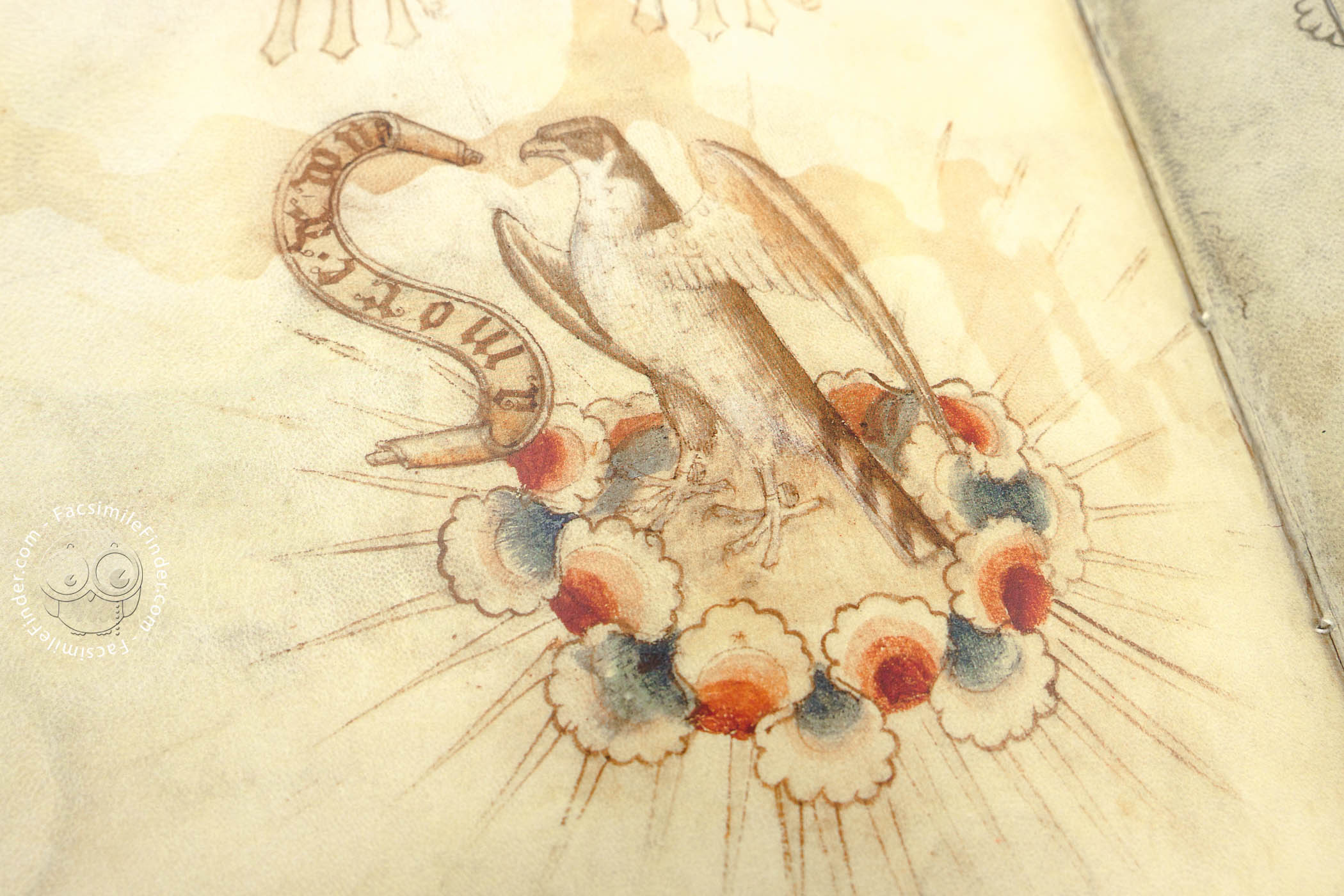
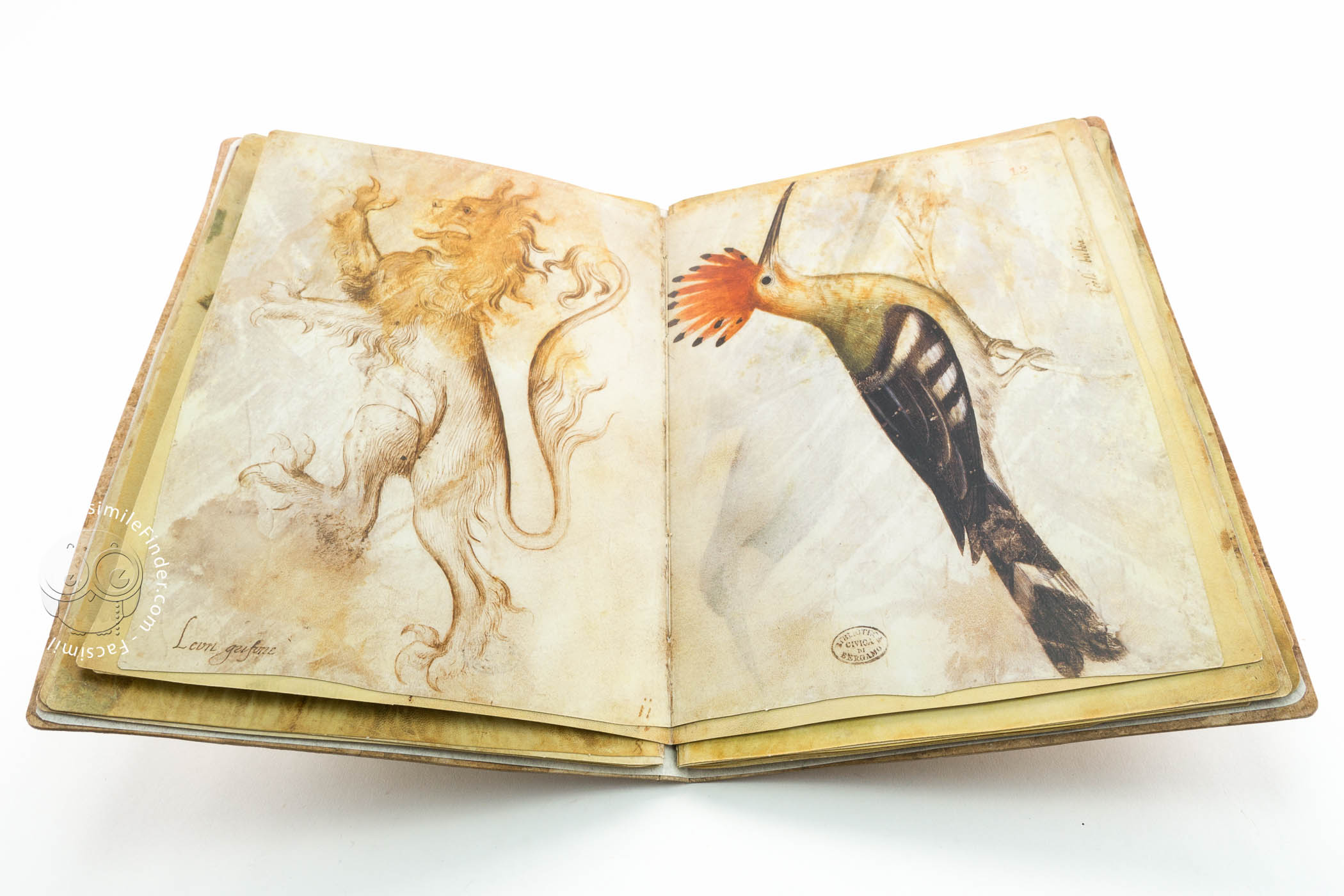
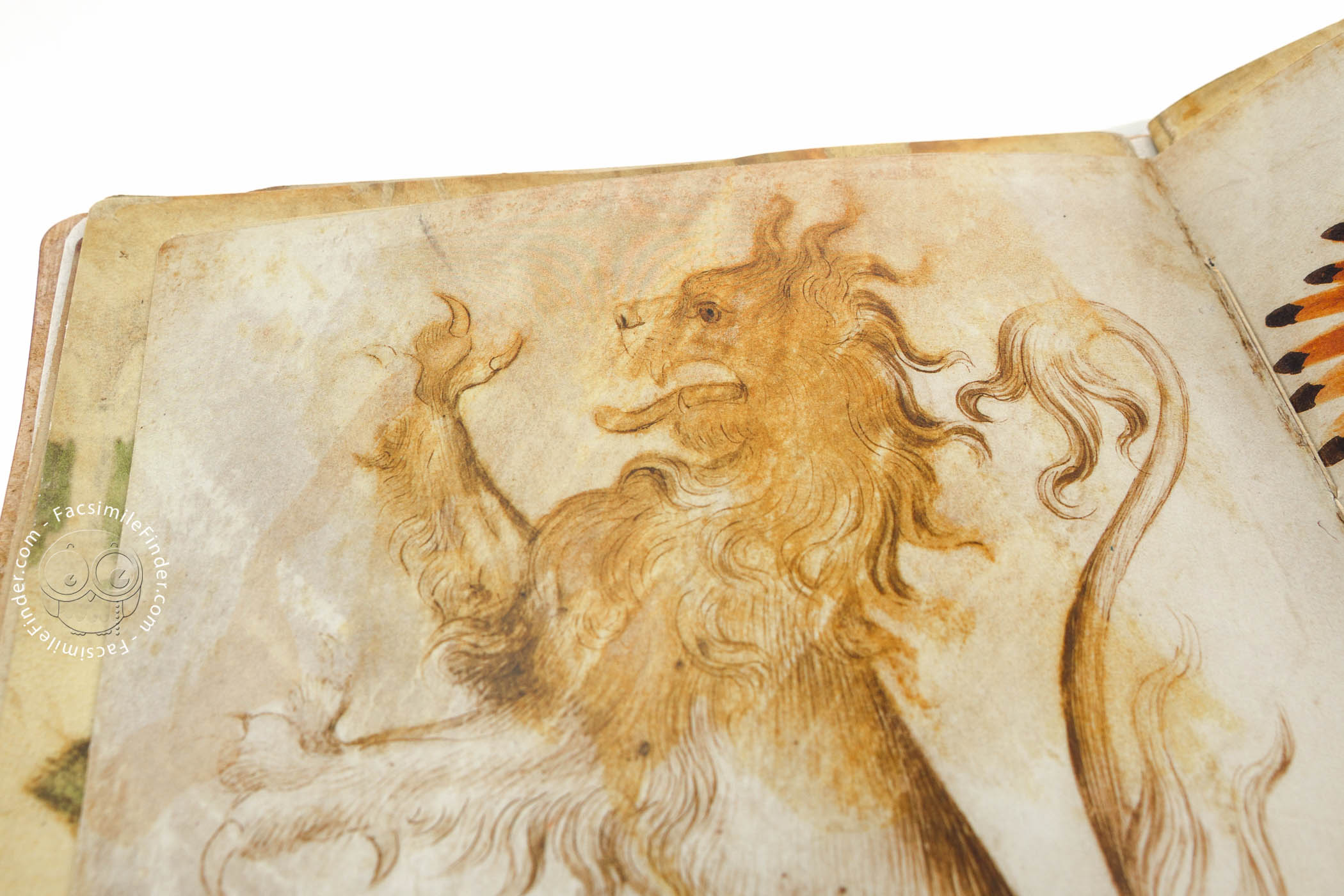
Three falcon-like birds and a lion, rendered in brown ink, and a goat with impossibly long ears and a squirrel (both colored) occupy the page with the attribution to Giovannino. Most of the birds, the work of another in his studio, are rendered naturalistically in watercolor. These include a hoopoe, a bearded vulture, a green woodpecker, and a quail.
An Alphabet of Creatures
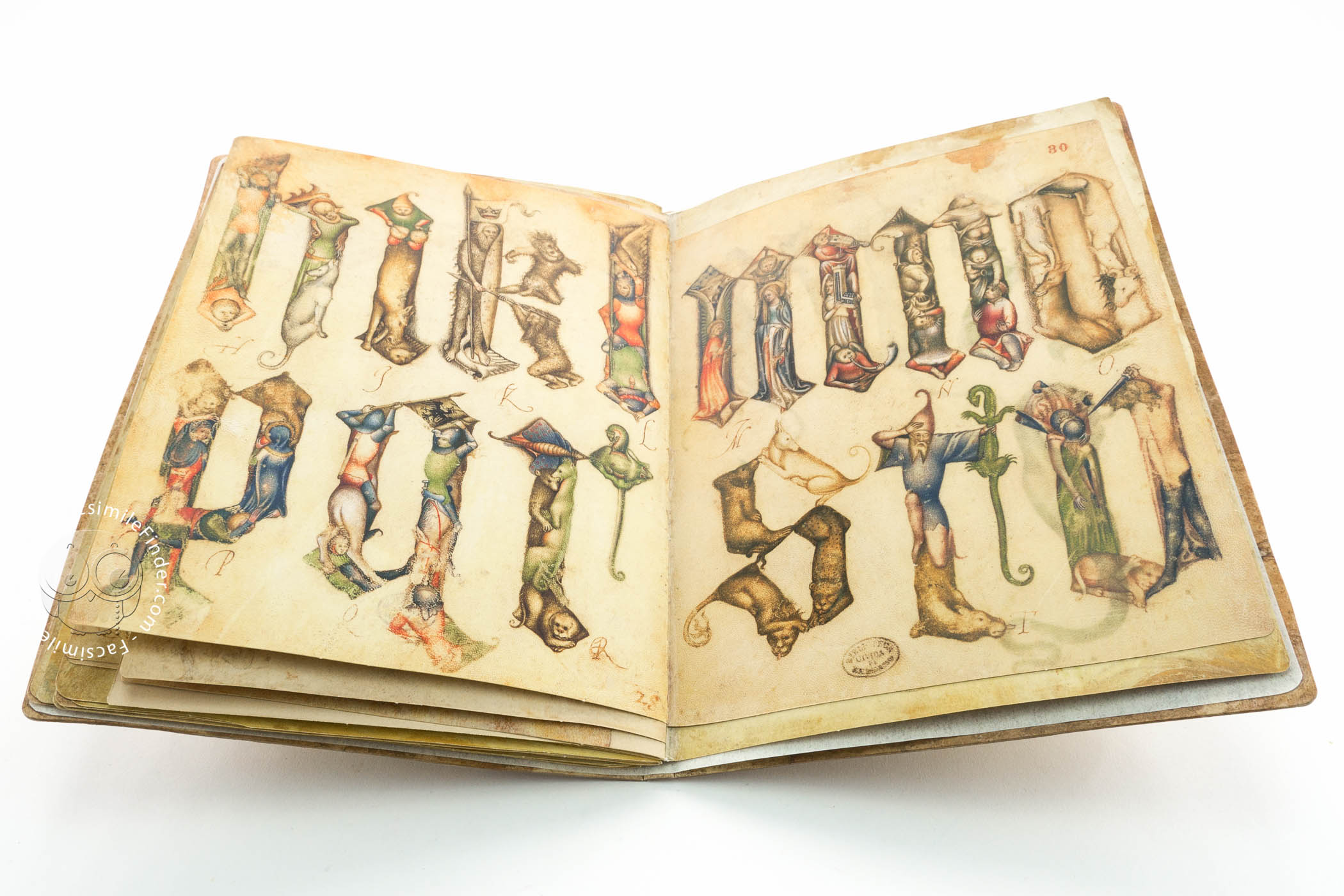
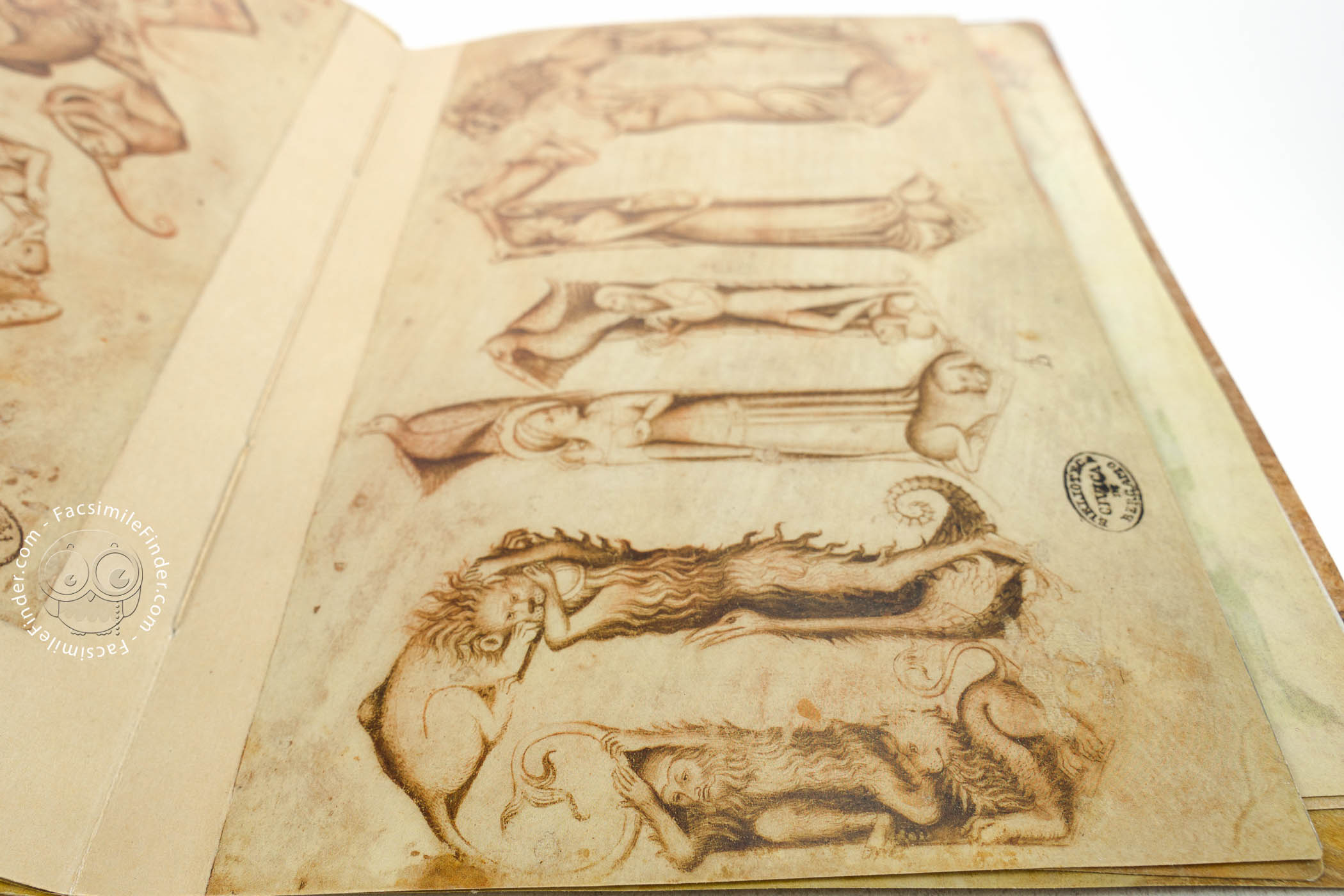
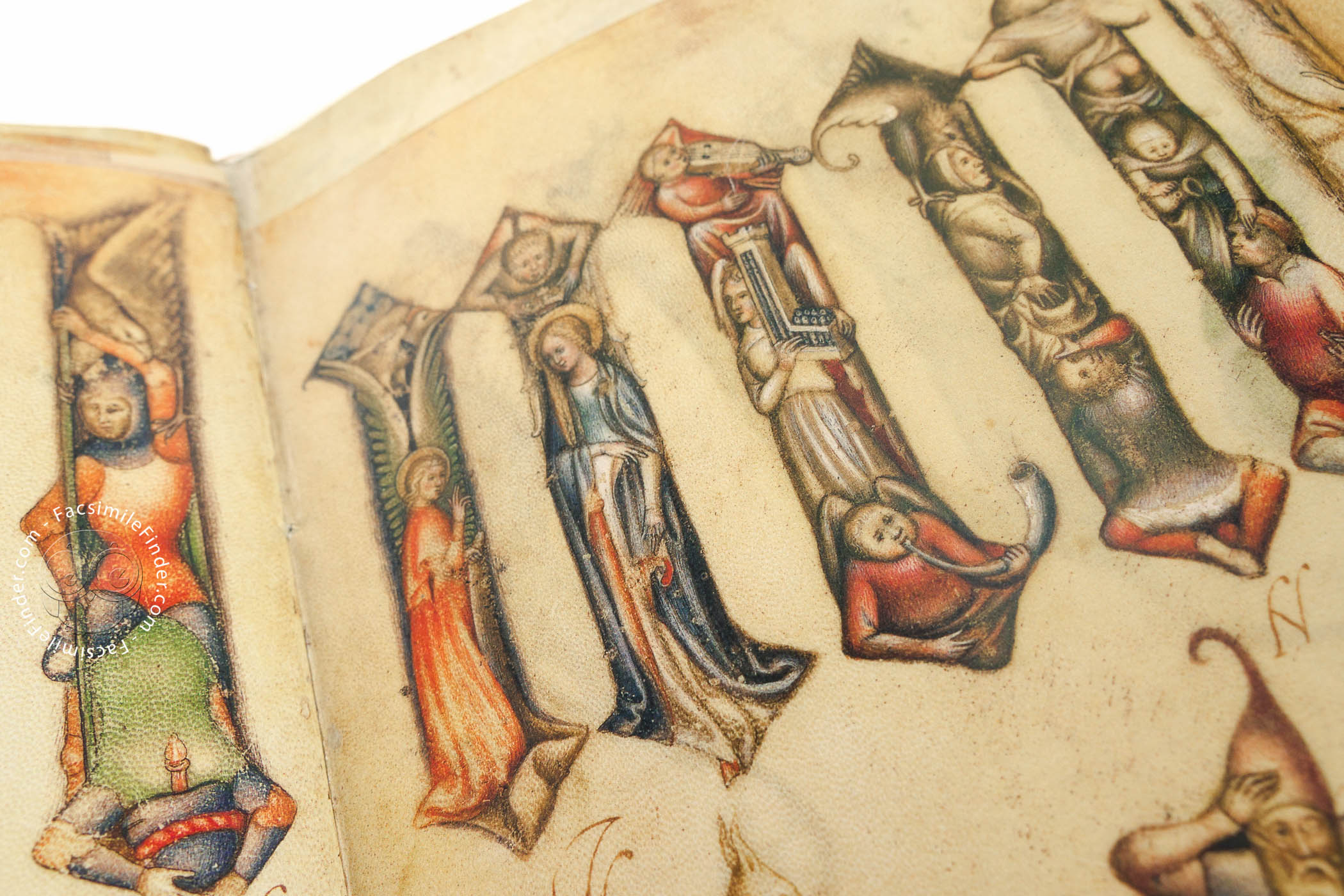
The letters of the alphabet are anthropomorphic or zoomorphic or embrace a mix of human and animal creatures (fols. 26Rv-30v). The figures in the m form the scene of the Annunciation to the Virgin with angel musicians (fol. 30r). The opening letters (a–g) are in shades of brown ink, and the remaining letters are rendered in full color.
Writing over Centuries
Very few of the inscriptions belong to the early stages of the book's creation. Most of the labels identifying the animals and birds in Latin and Italian and an Italian-language poem on birds, written in Humanistic Cursive, were added in the sixteenth century.
In Bergamo from an Early Date
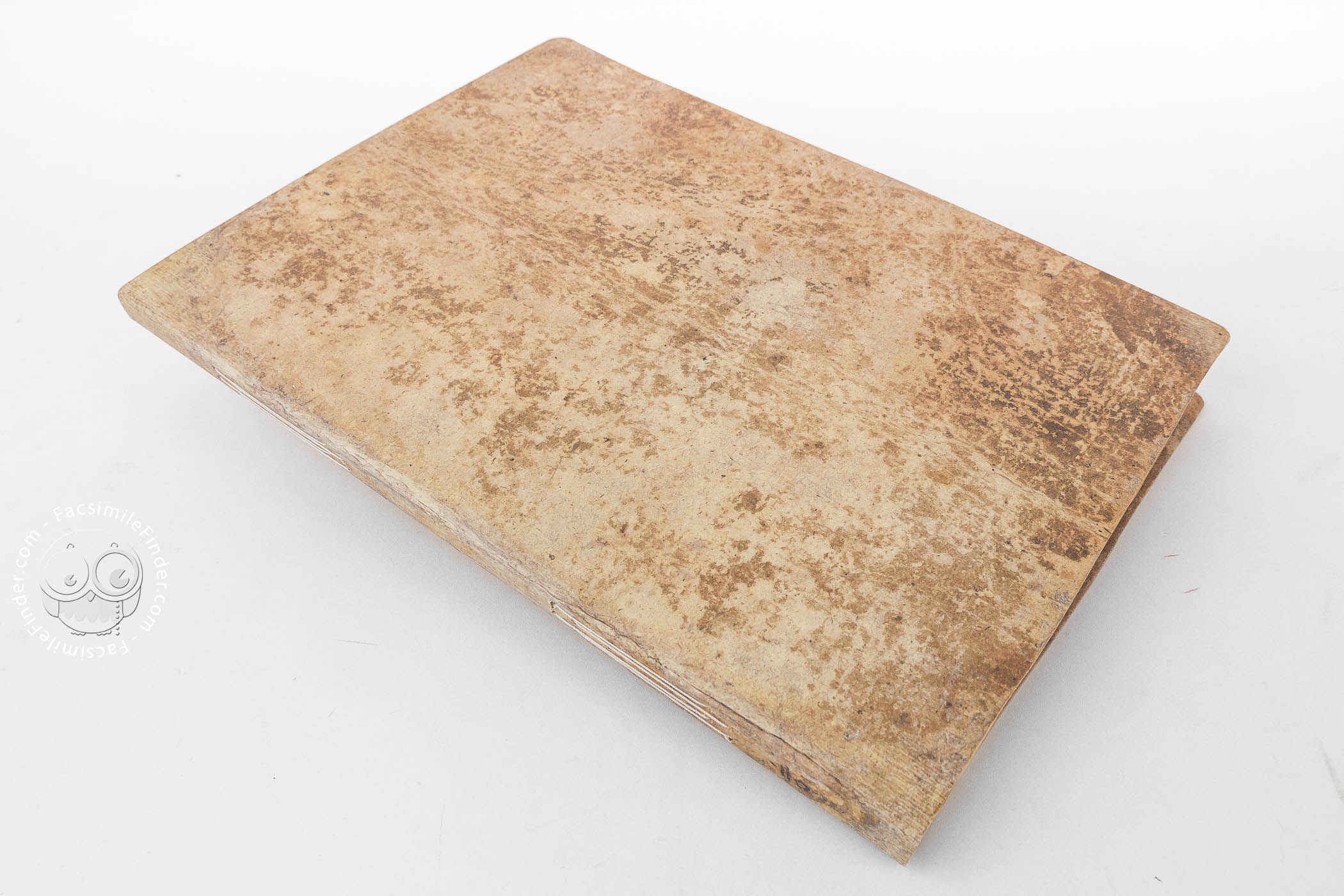
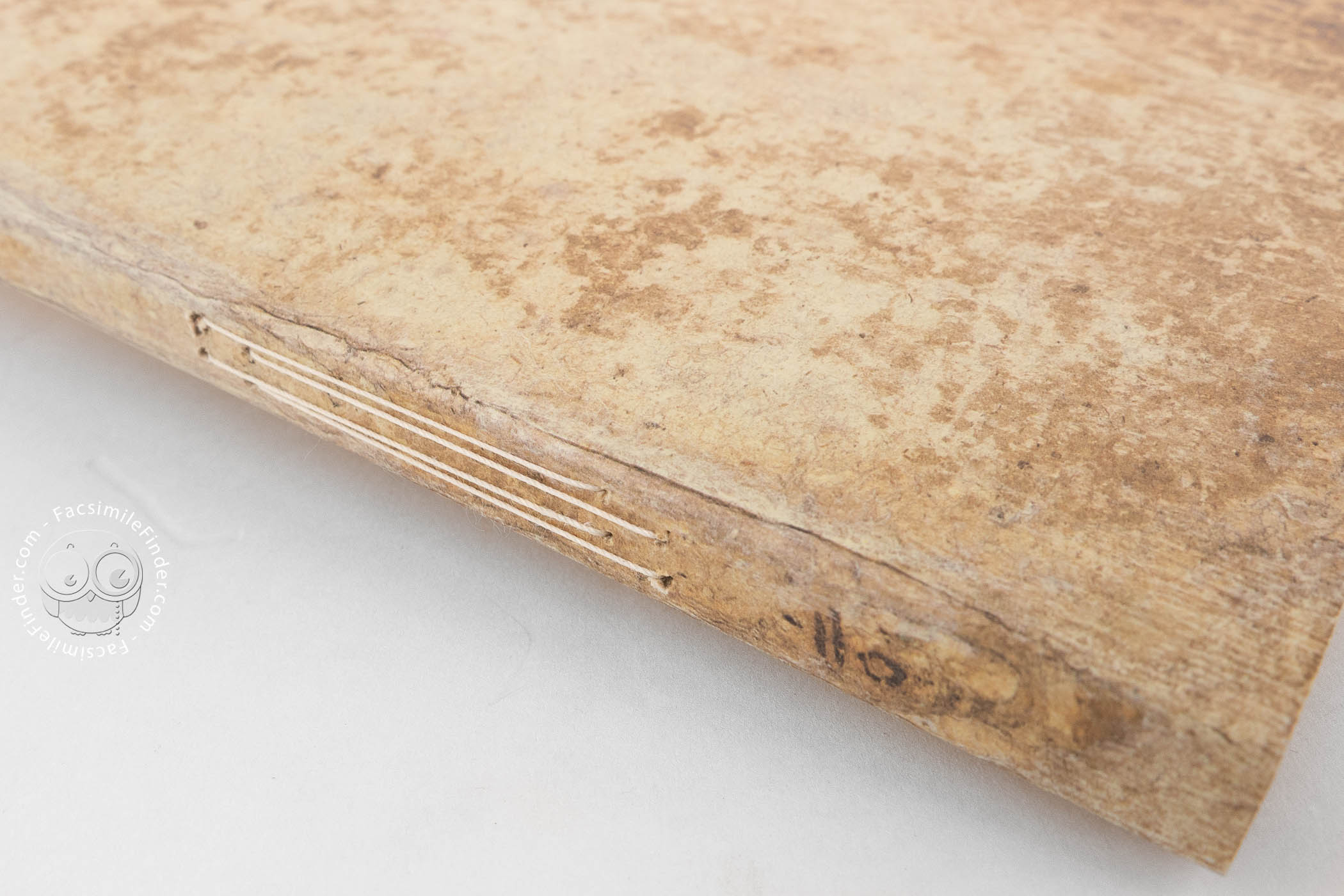
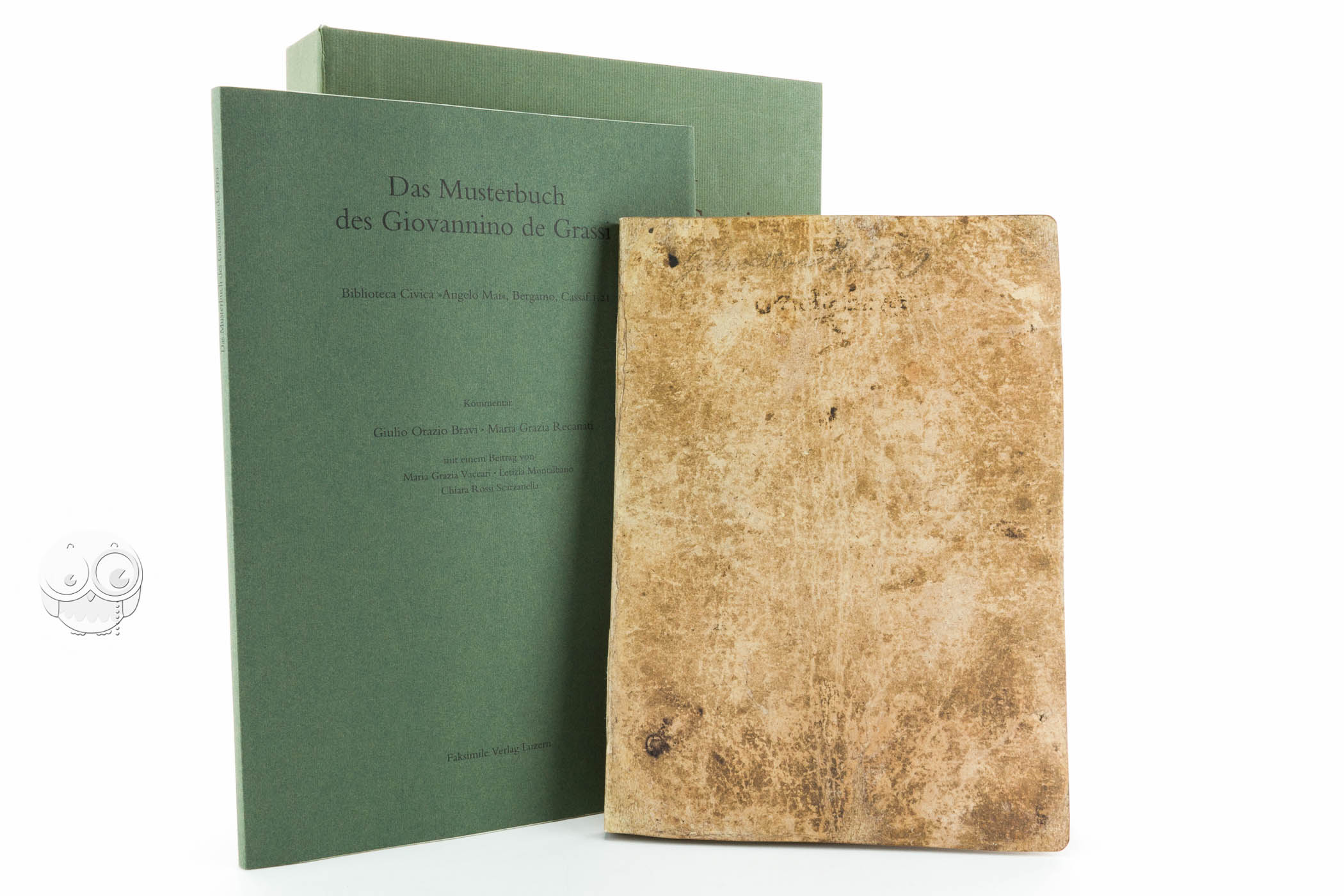
The present-day pasteboard binding, which was originally covered with parchment, probably dates from 1542. Gian Giacomo Olmo of Bergamo is the first firmly identifiable owner. He signed his name in the book (fol. 21v). His father, Giovanni Fortunato, a sixteenth-century illuminator and calligrapher, was perhaps responsible for most of the added text. By 1630, the manuscript had passed into the hands of Sillano Licino, also of Bergamo. In the eighteenth century, Alessandro Tassi (1691-1771) owned the sketchbook. Leonino Secco Suardo donated it to Bergamo's Biblioteca Civica in 1845.
We have 2 facsimiles of the manuscript "Sketchbook of Giovannino de' Grassi":
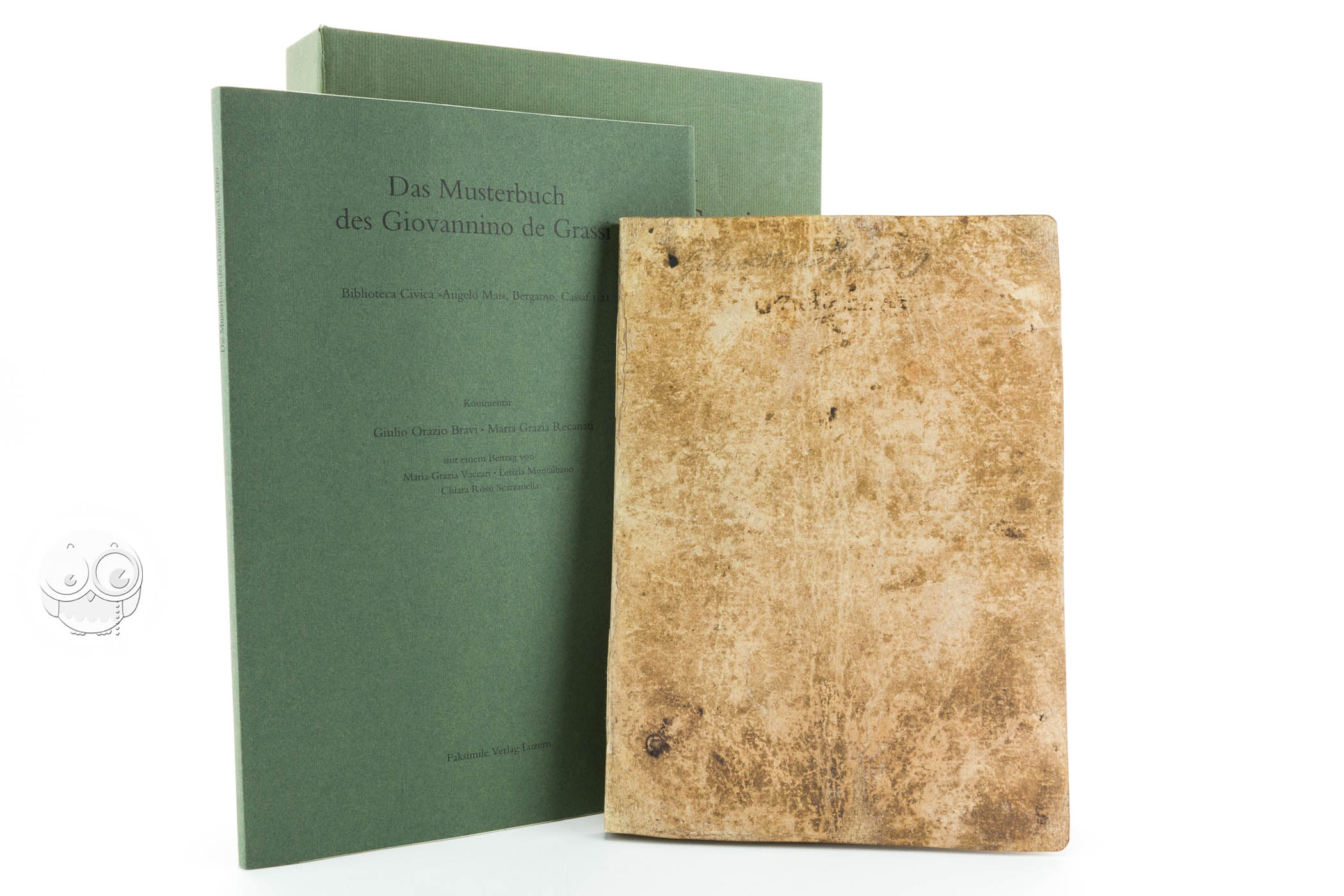
- Musterbuch des Giovannino de Grassi facsimile edition published by Faksimile Verlag, 1998
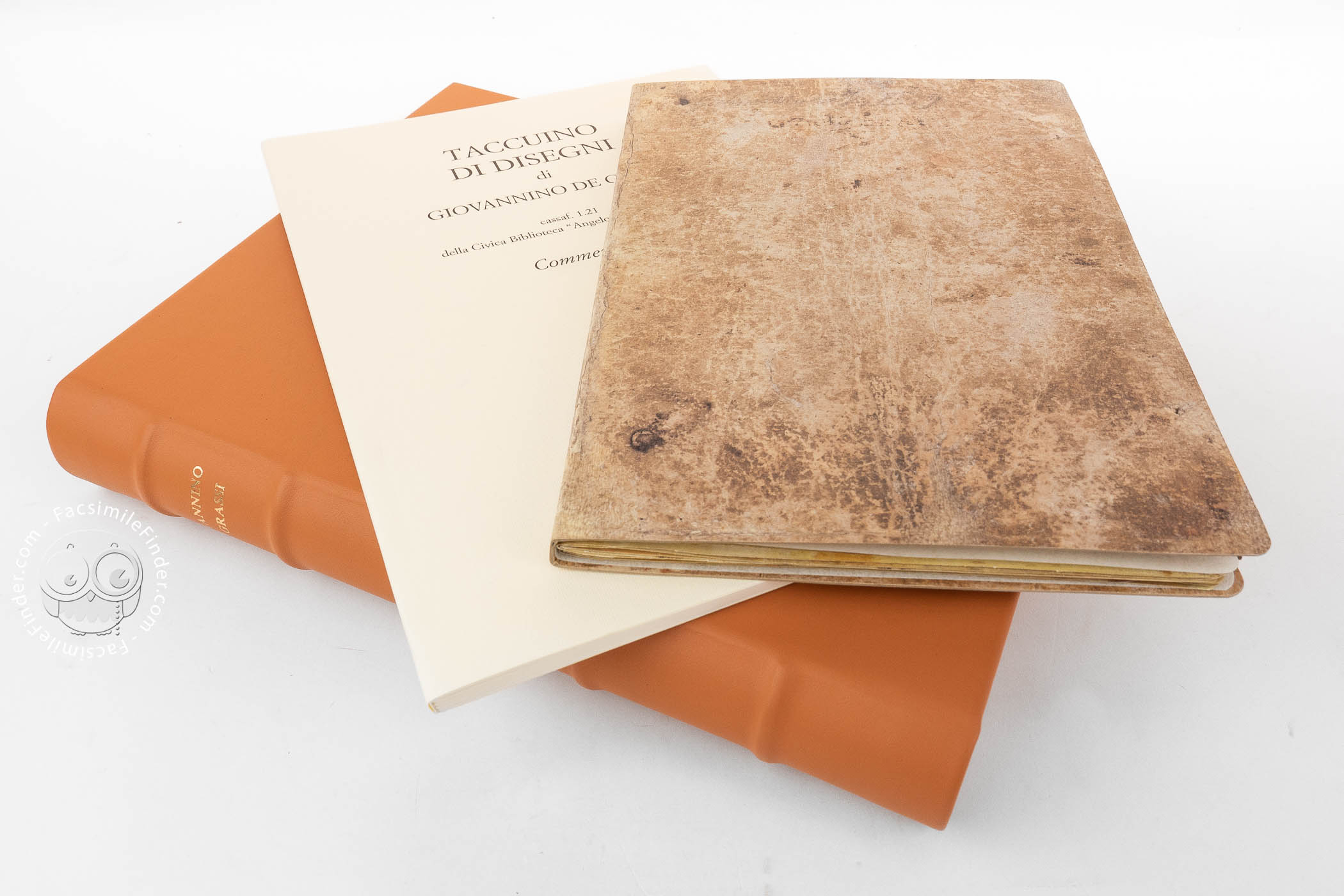
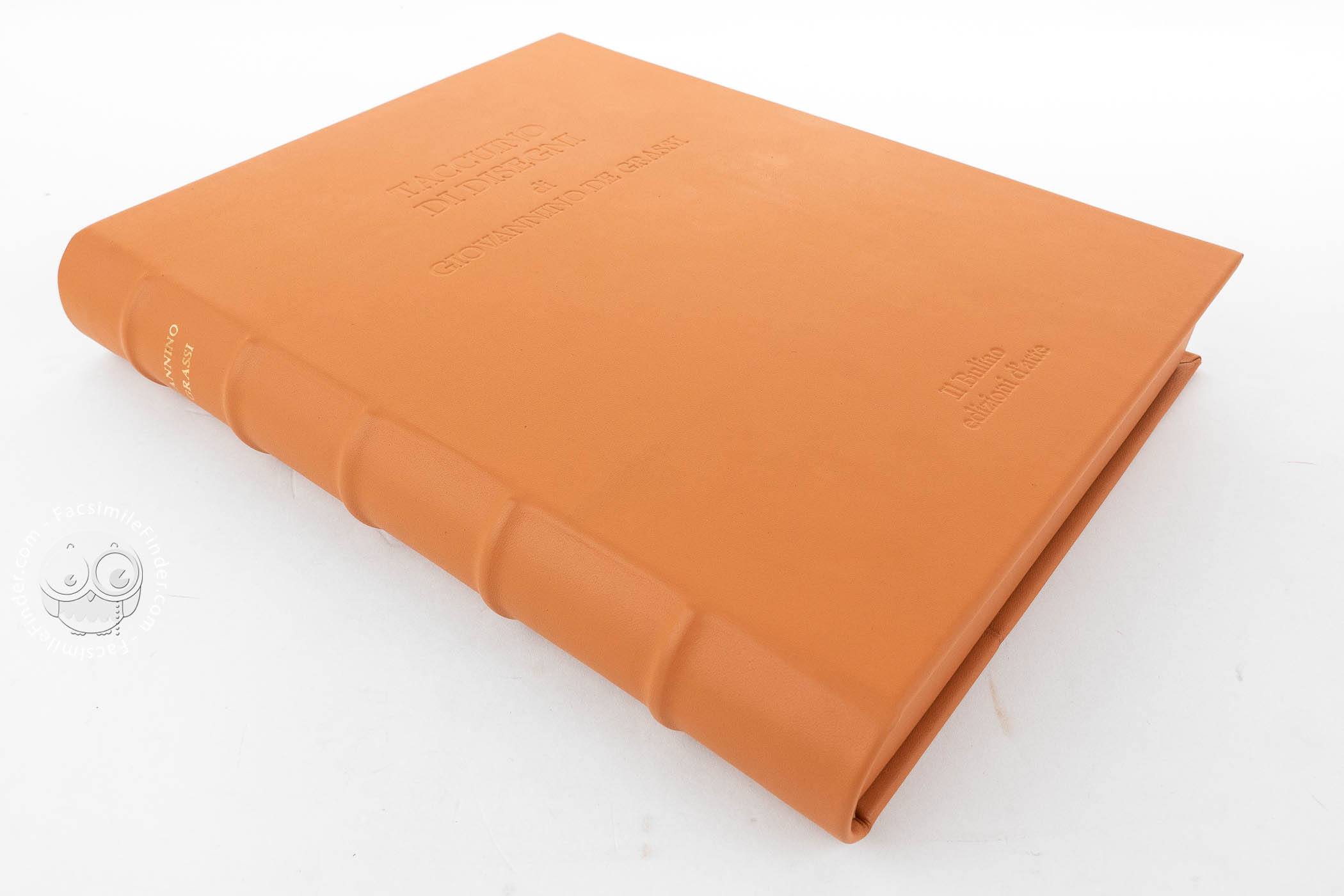
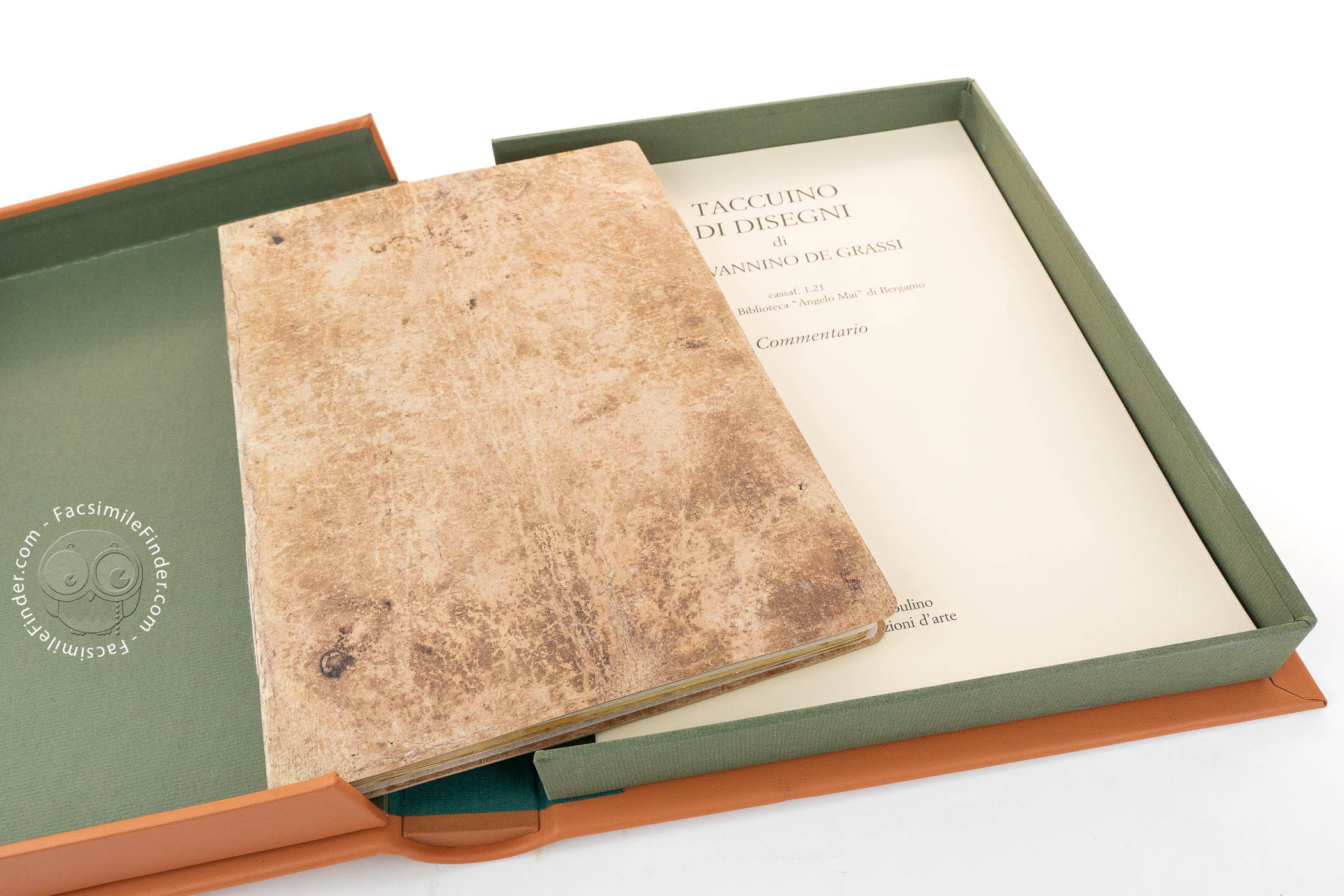
- Taccuino di disegni di Giovannino De Grassi facsimile edition published by Il Bulino, edizioni d'arte, 1998