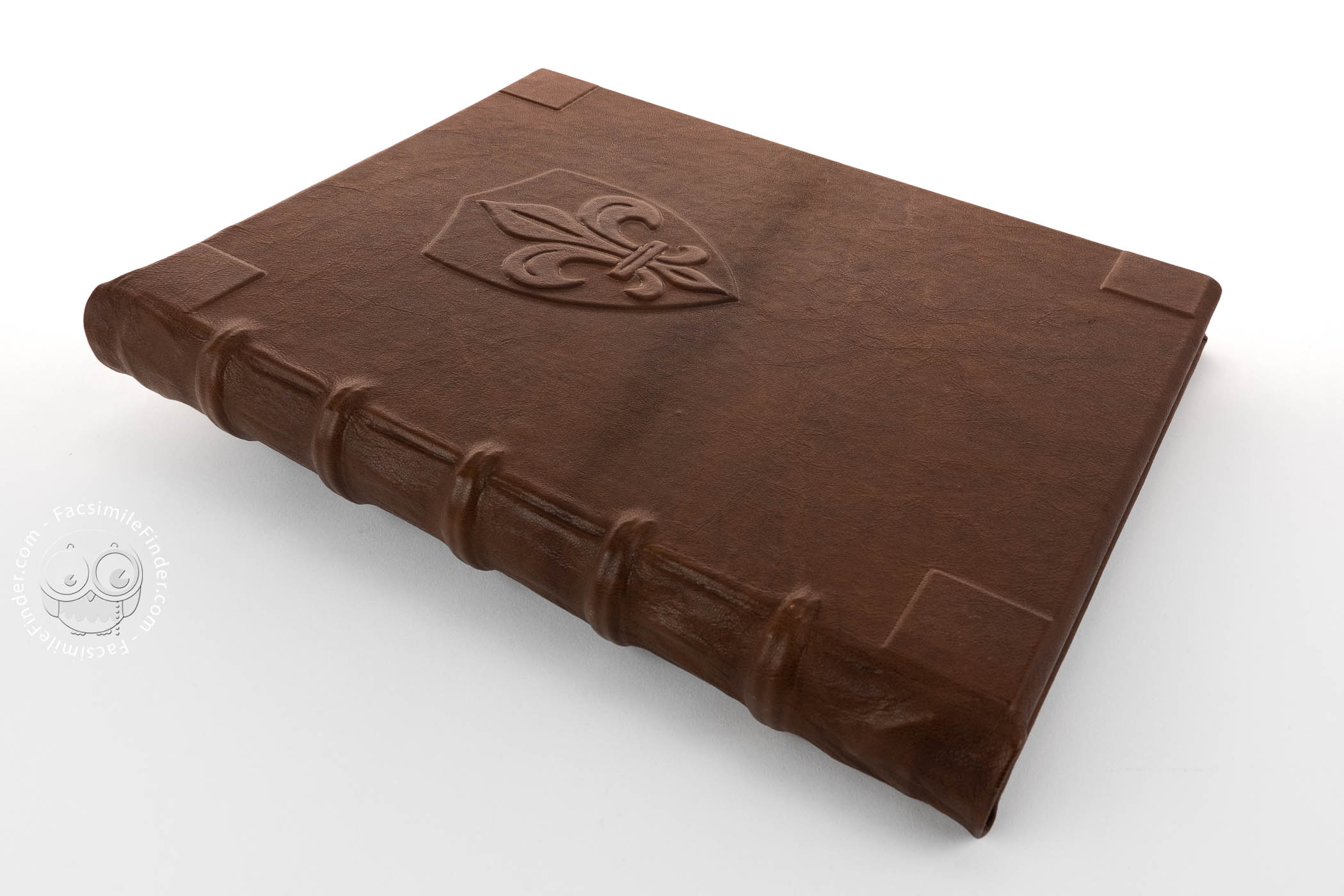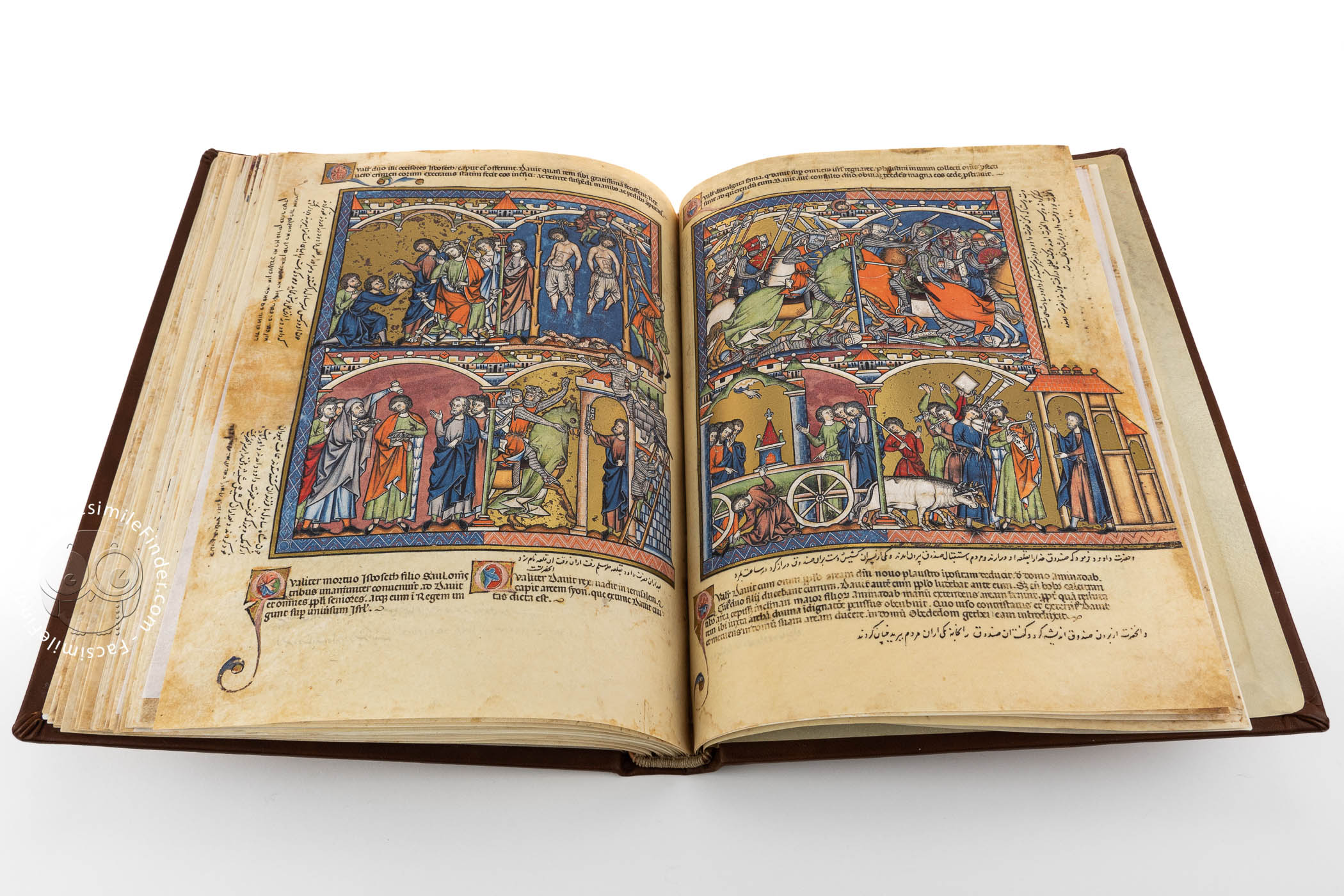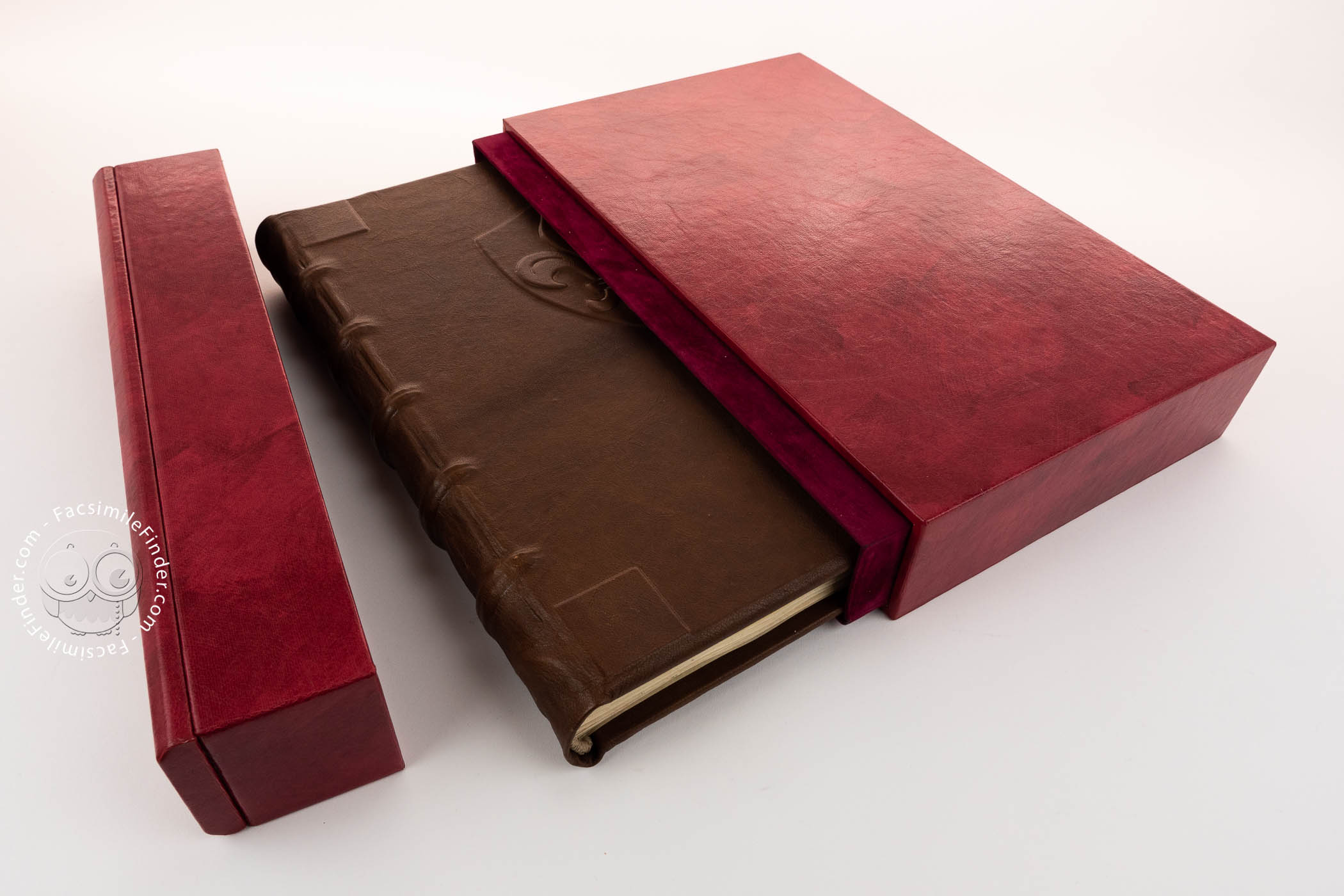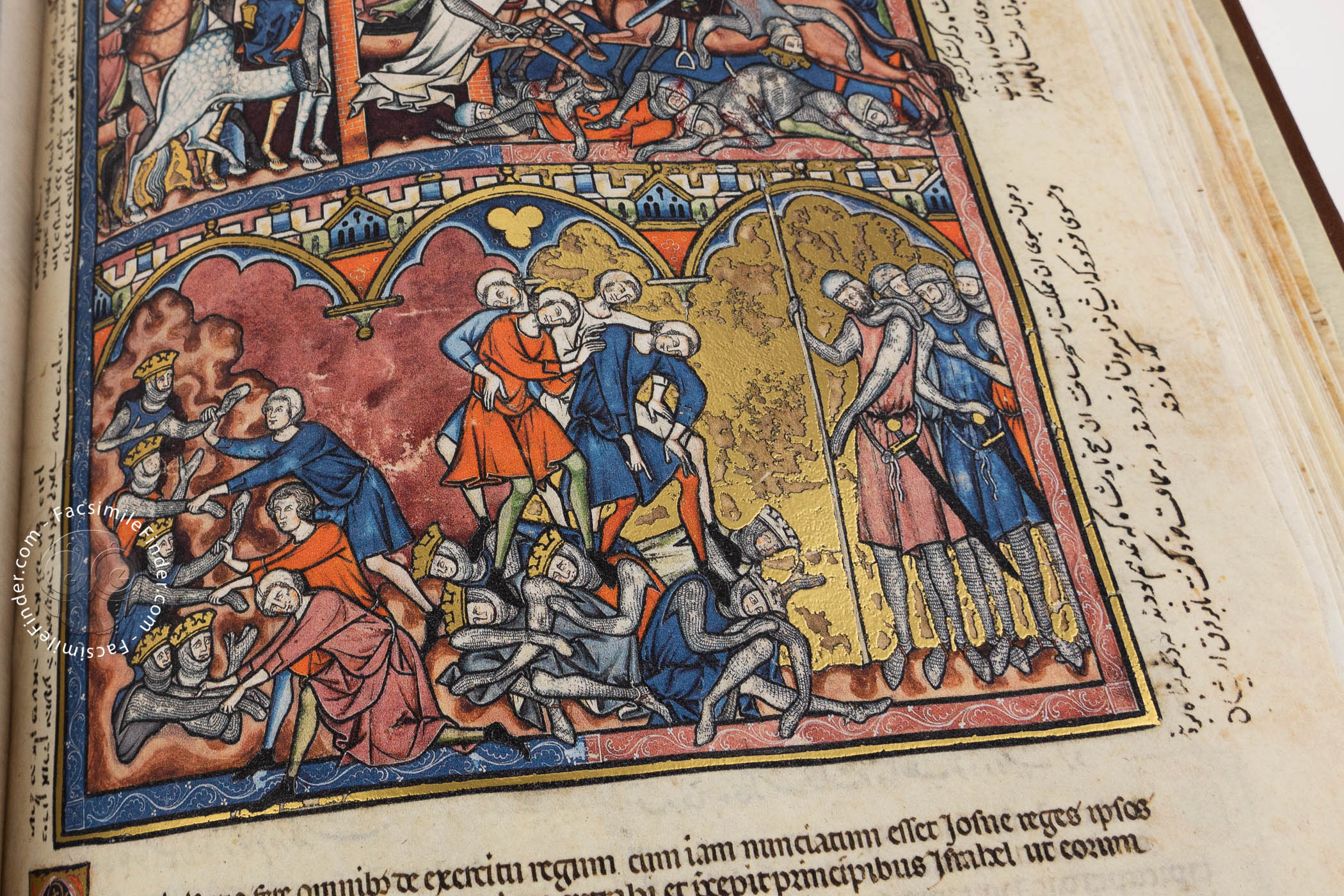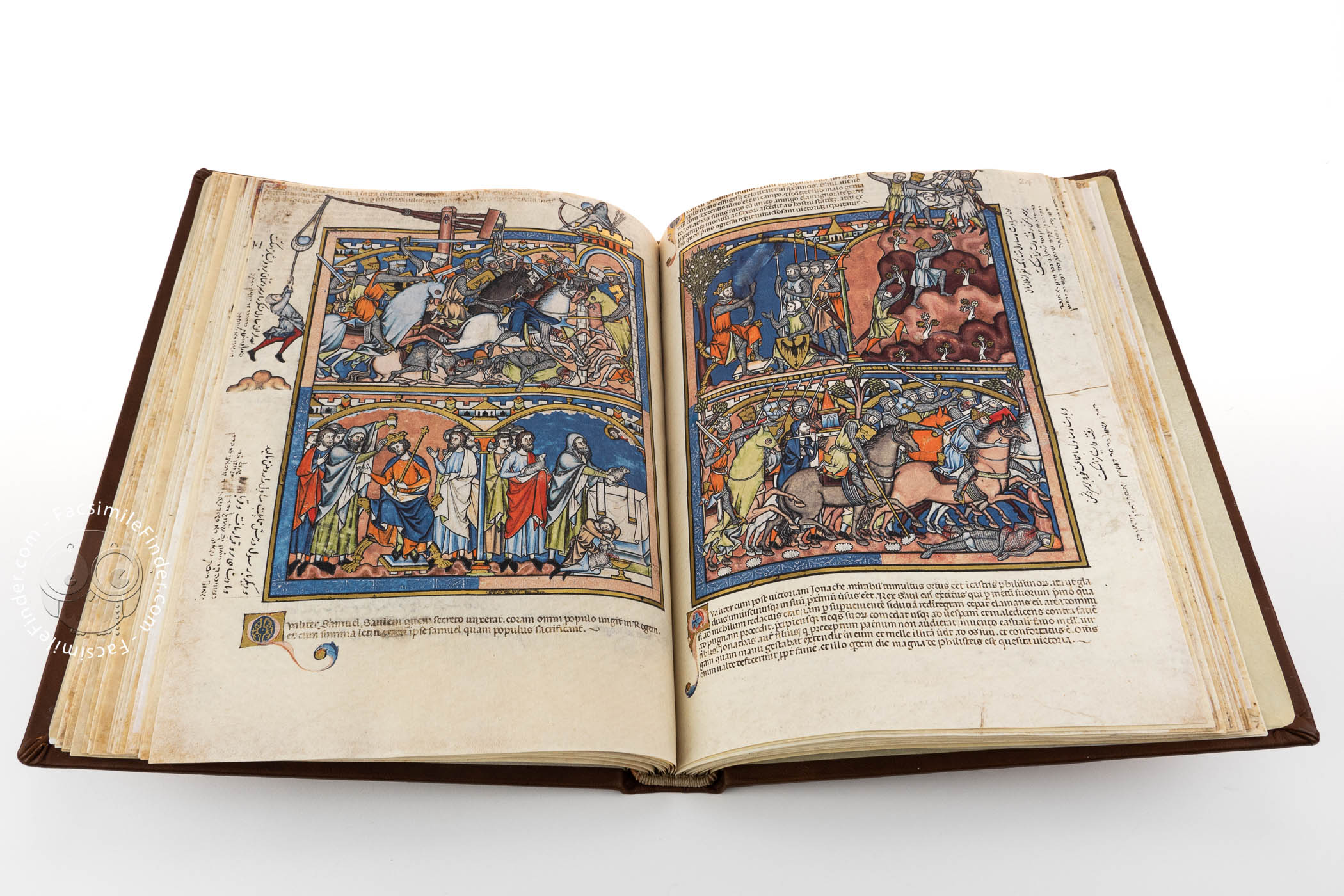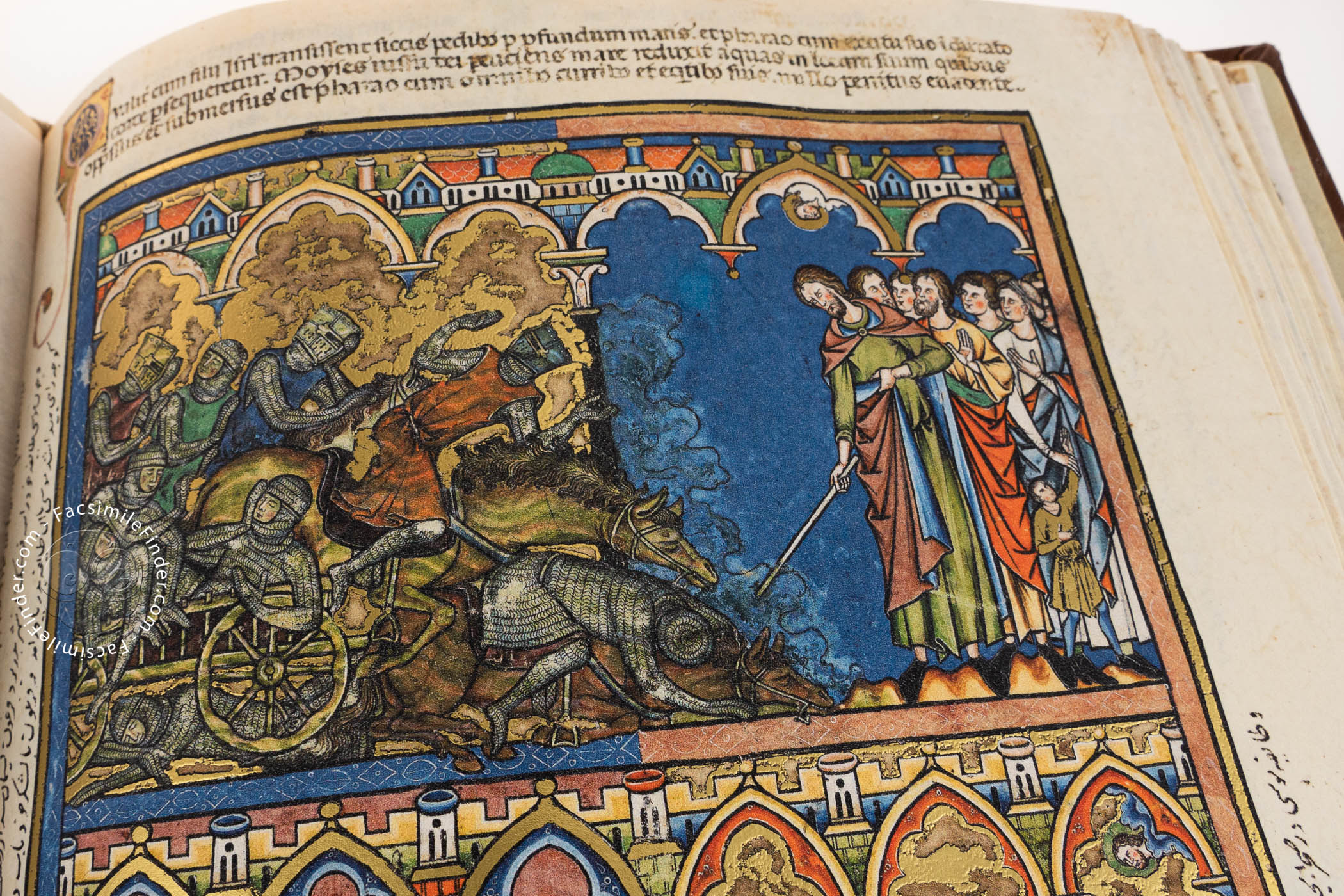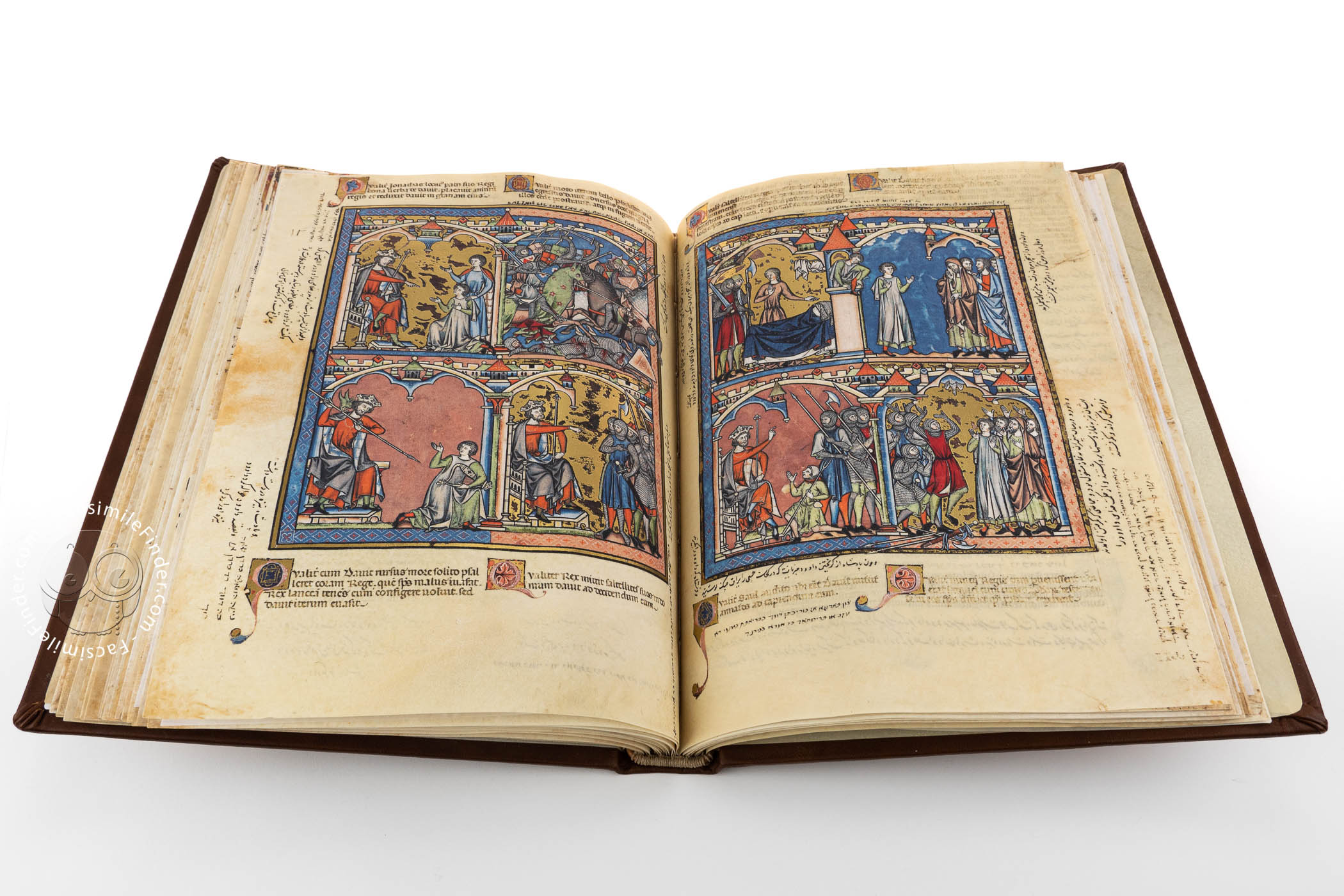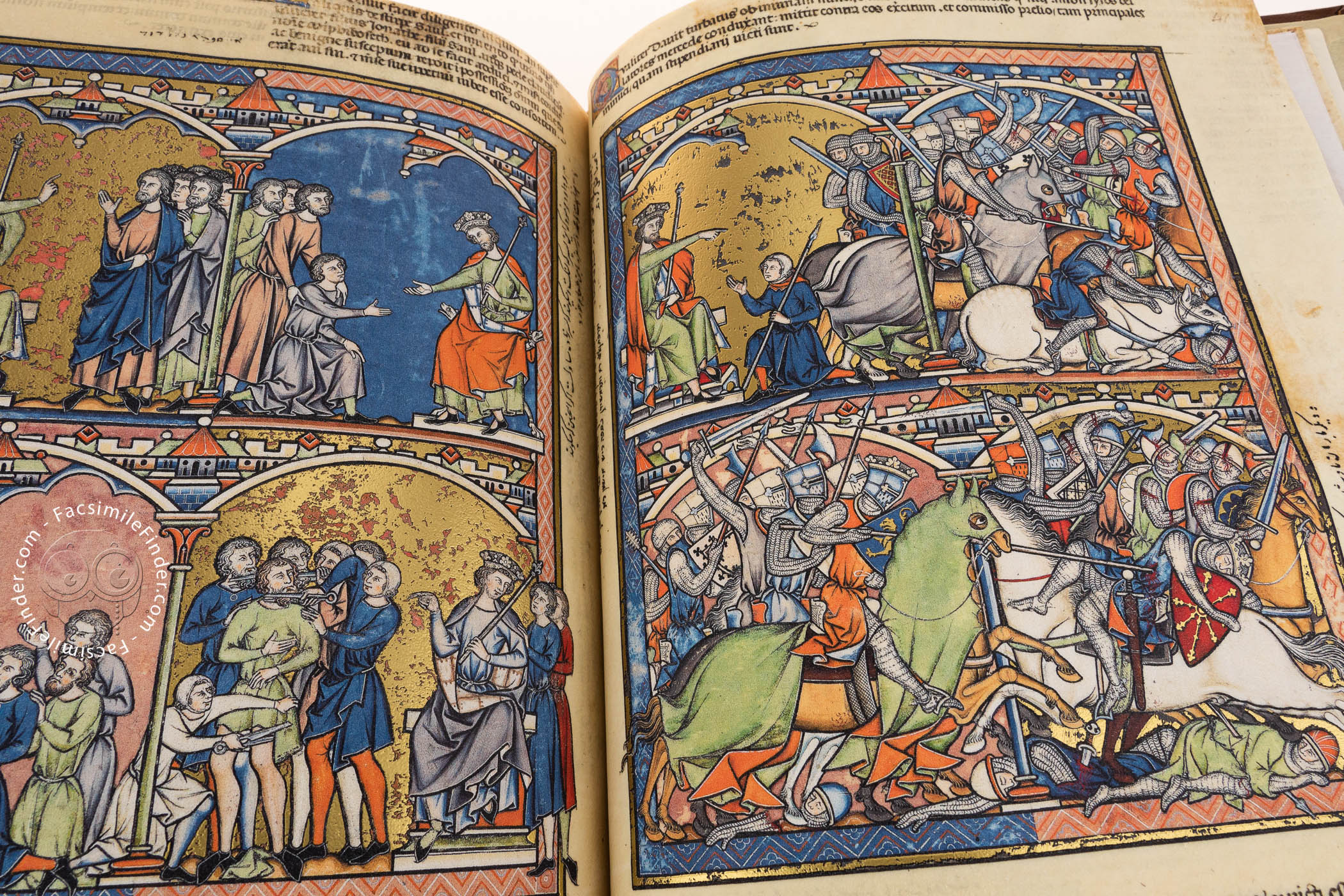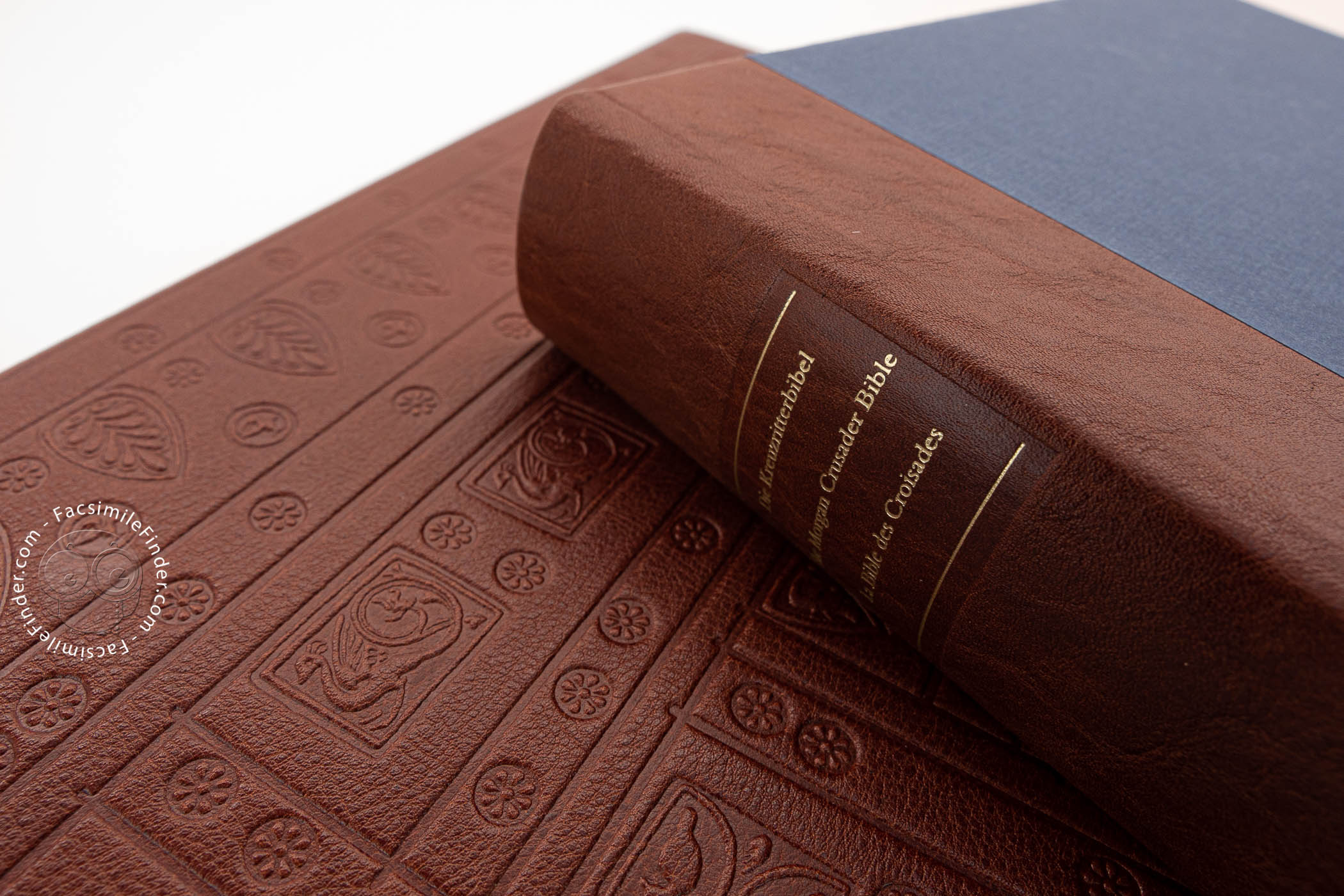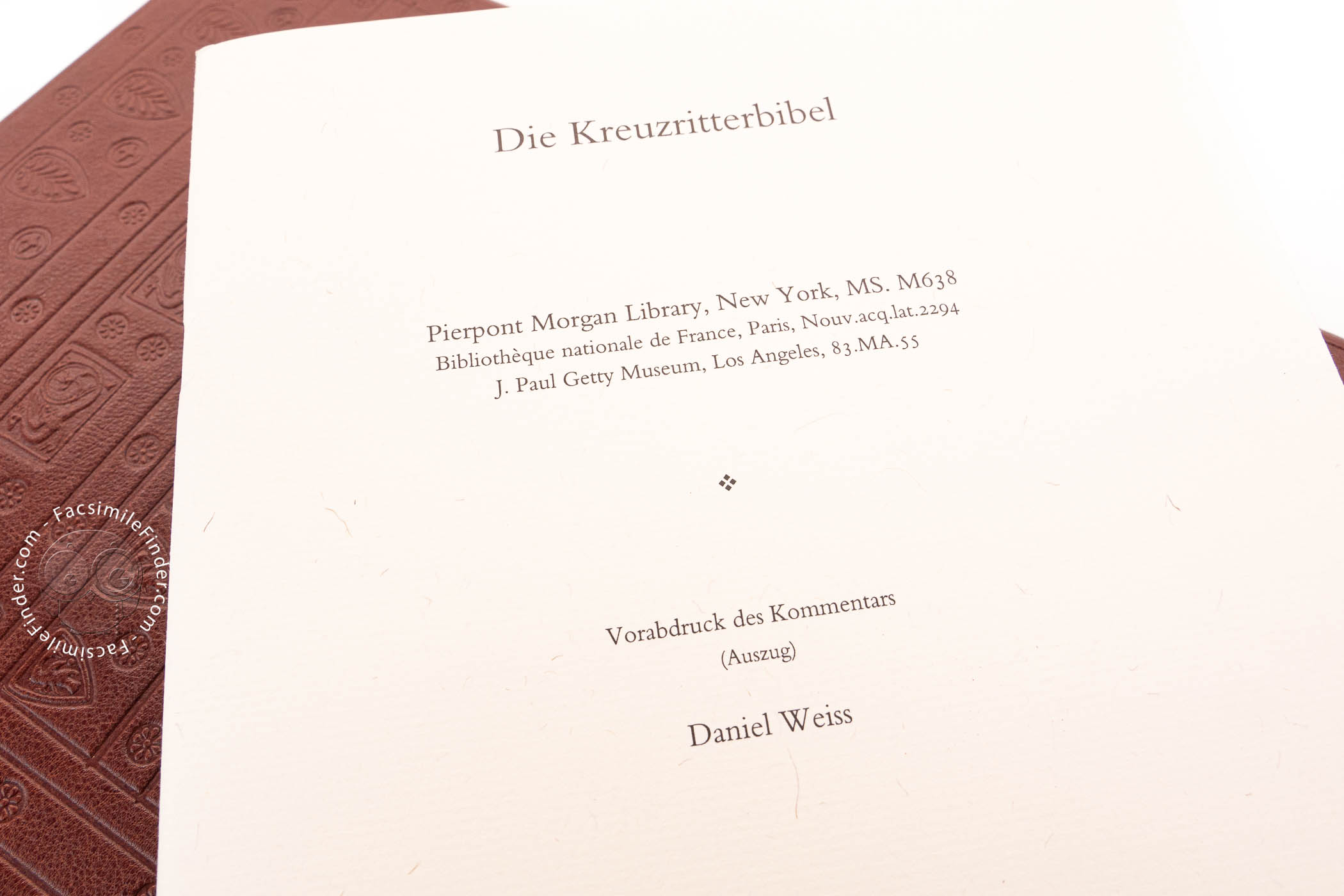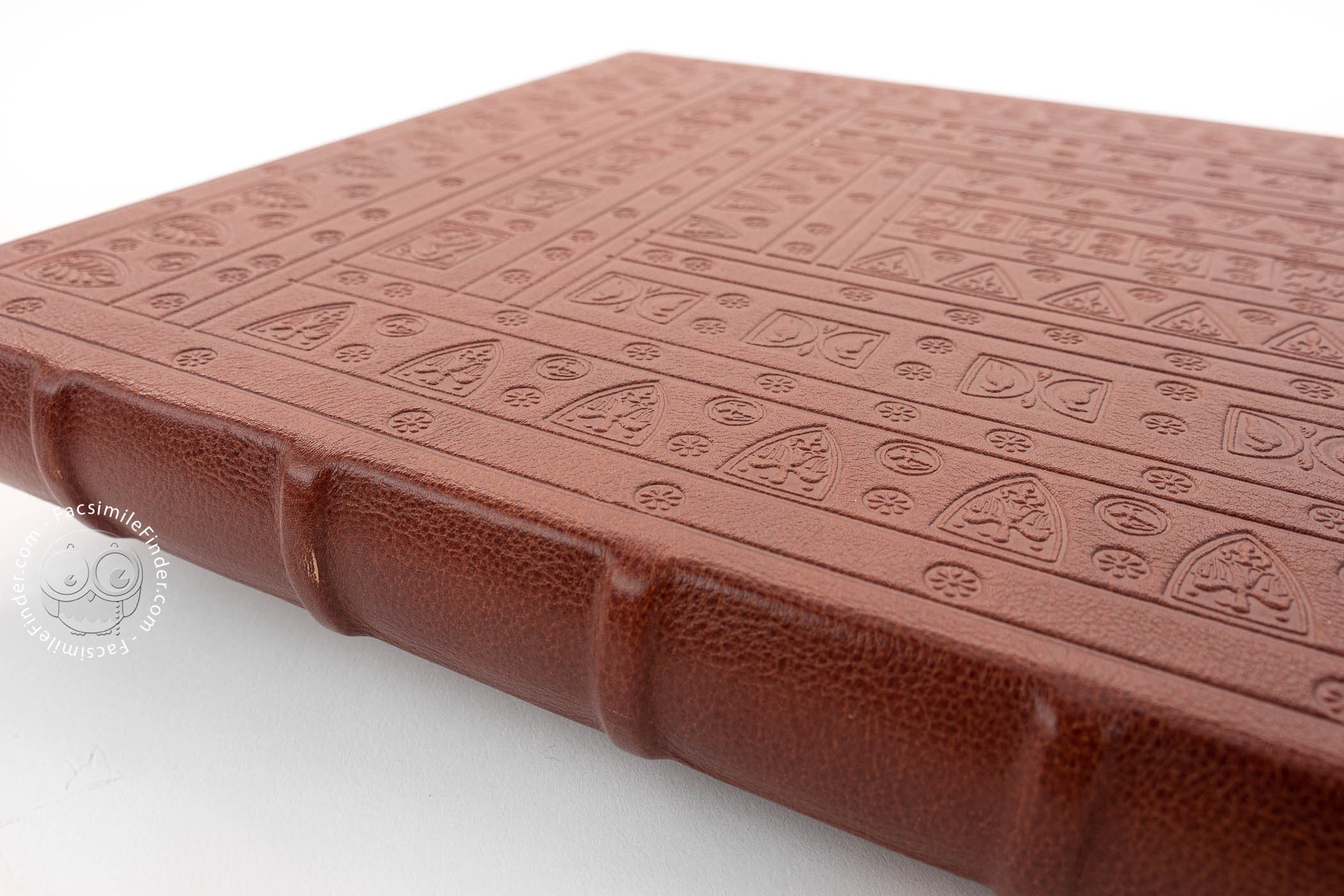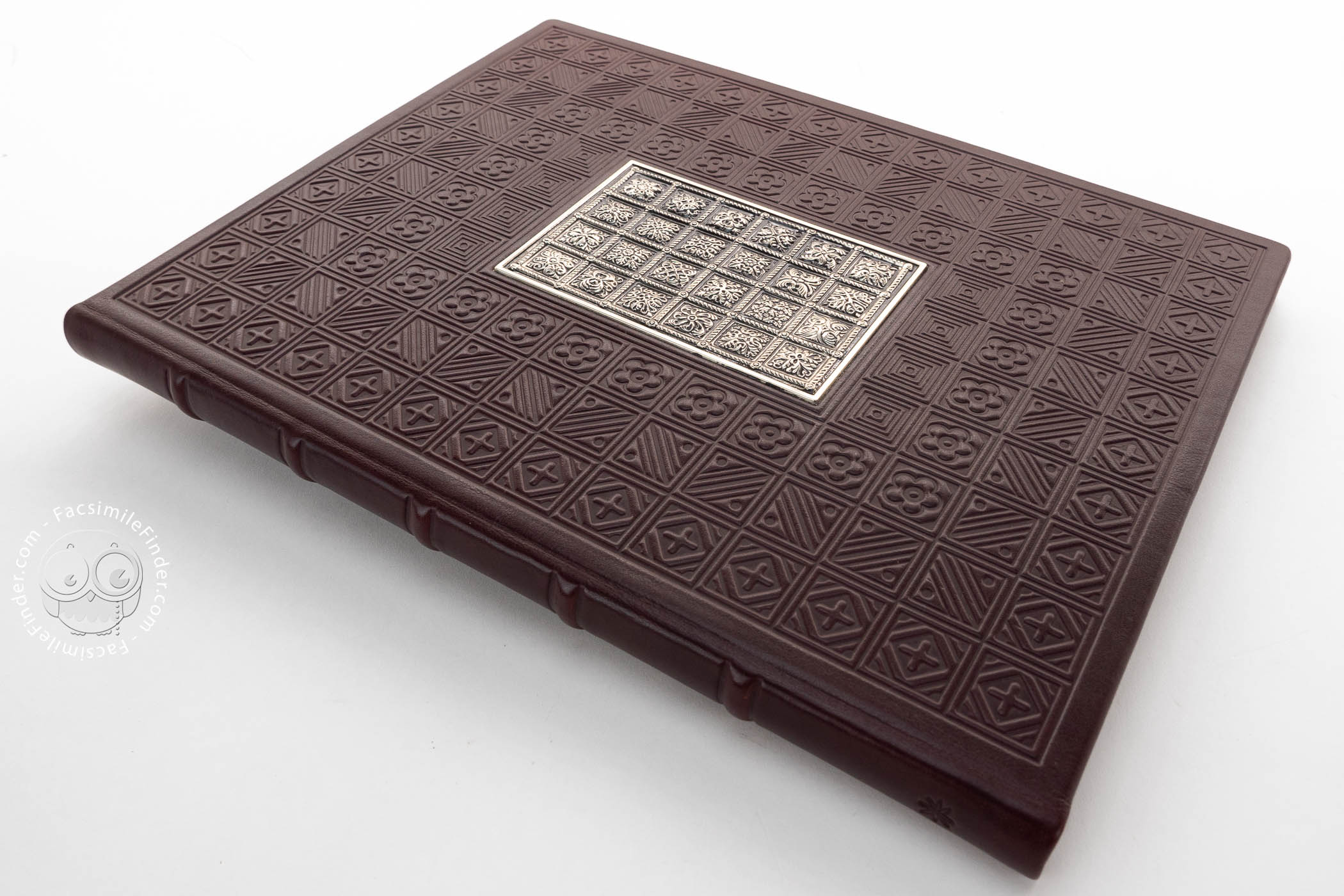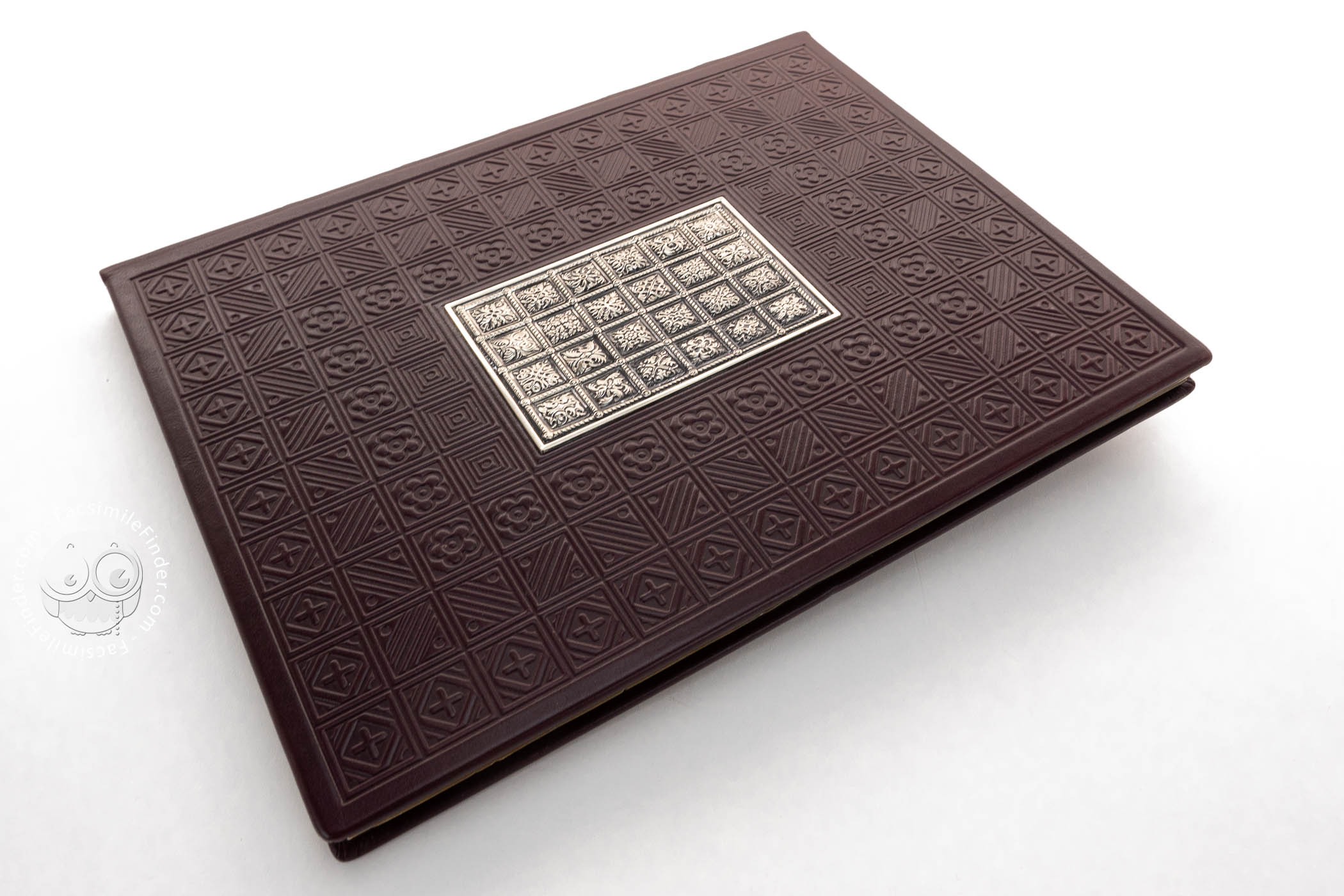
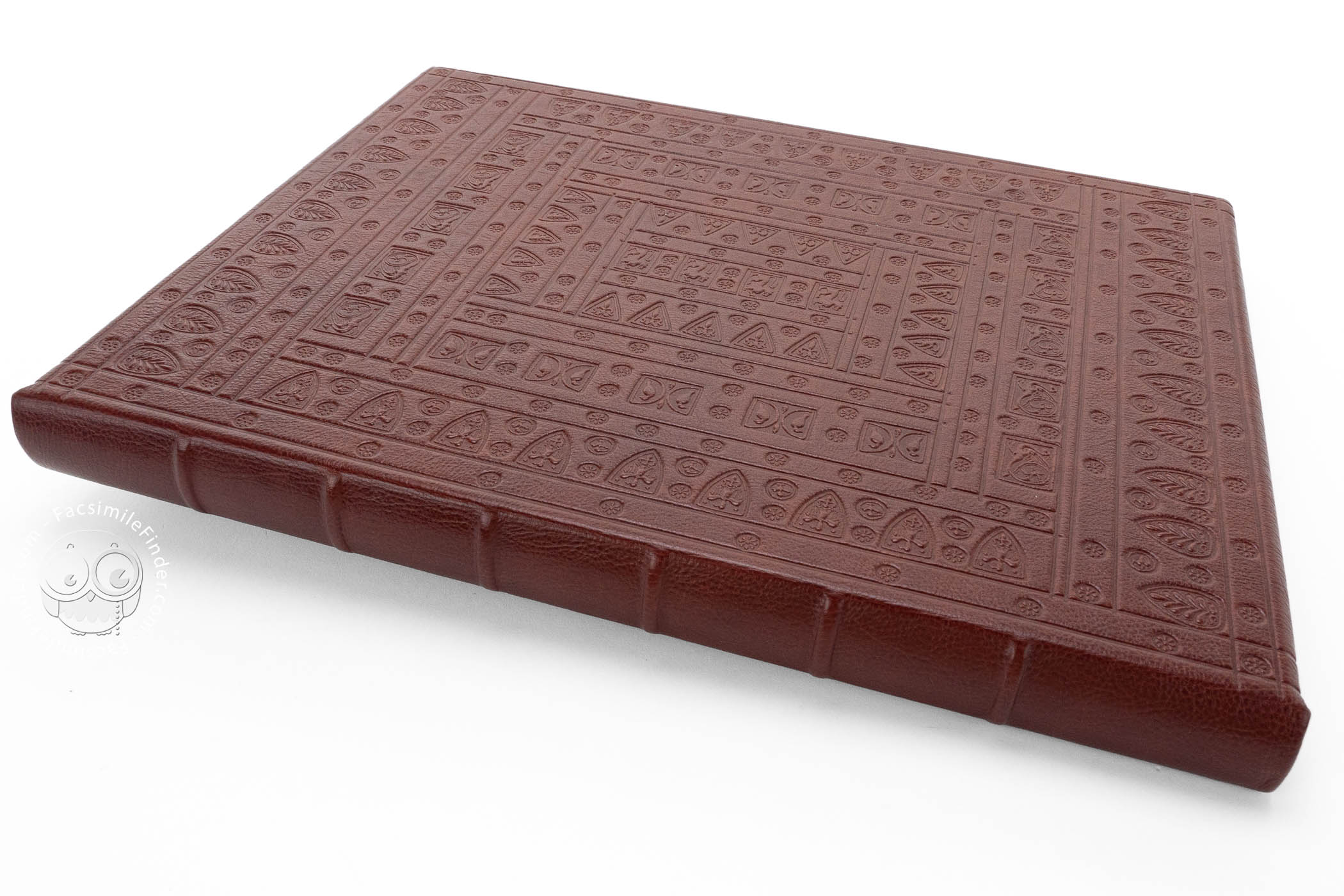
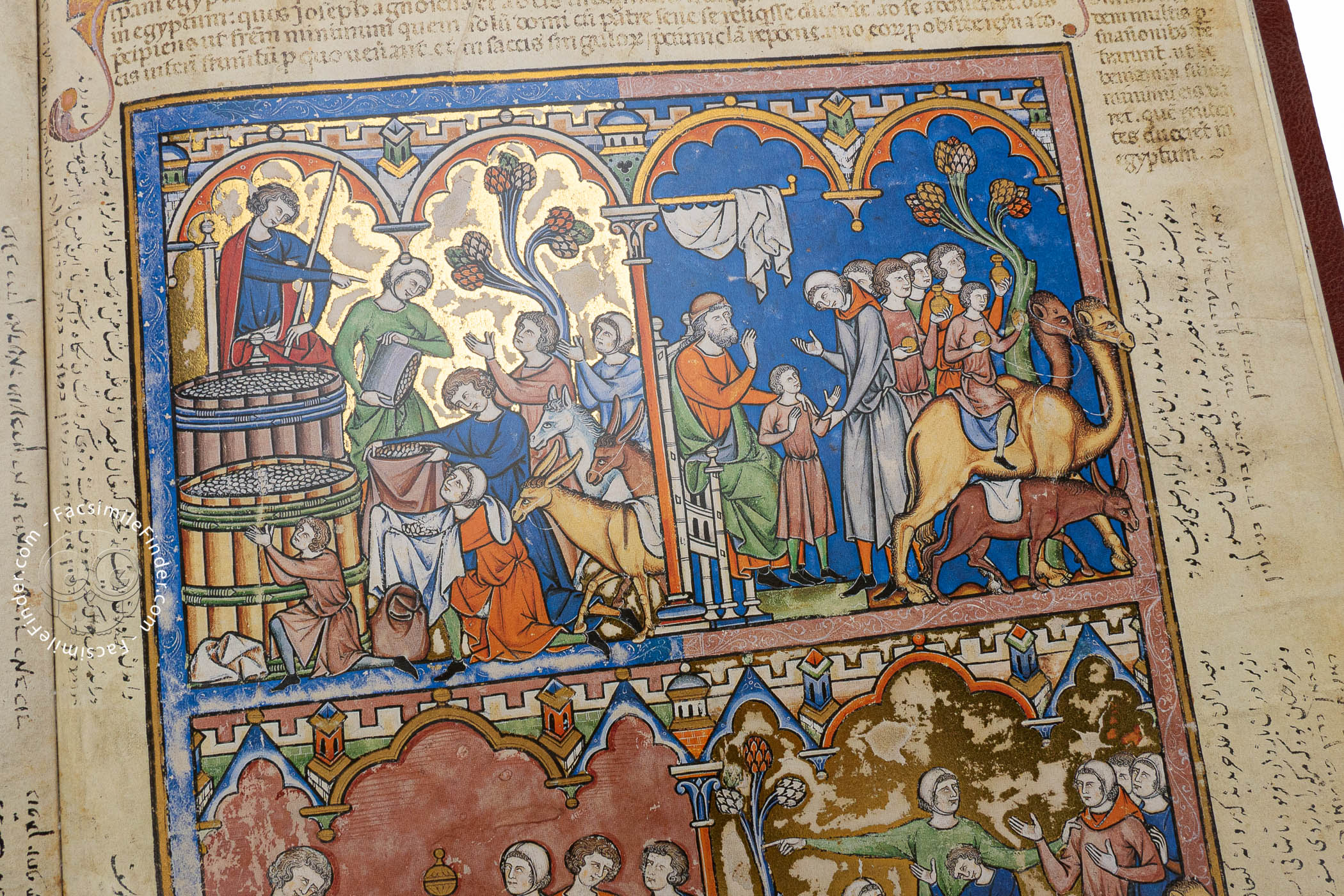
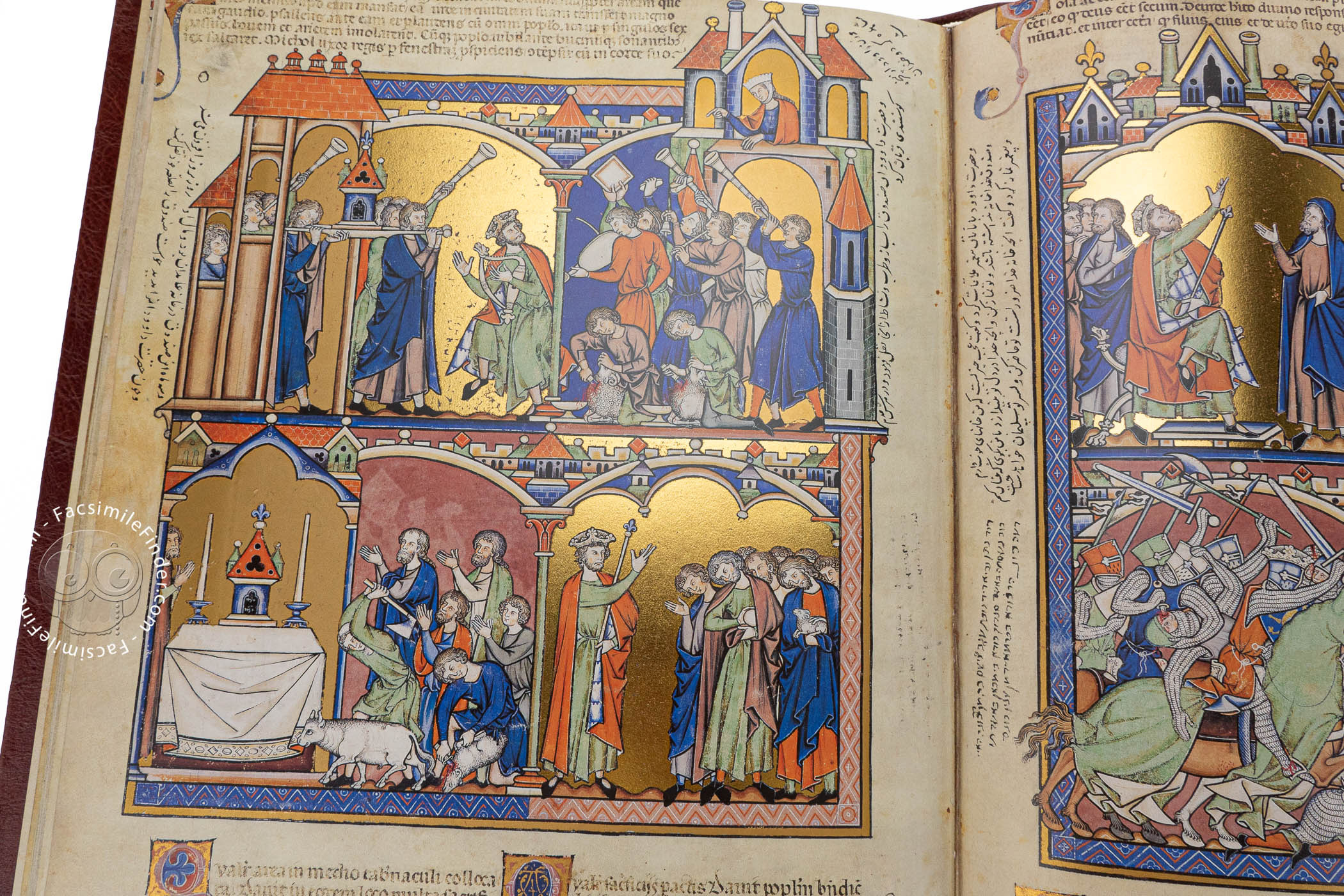
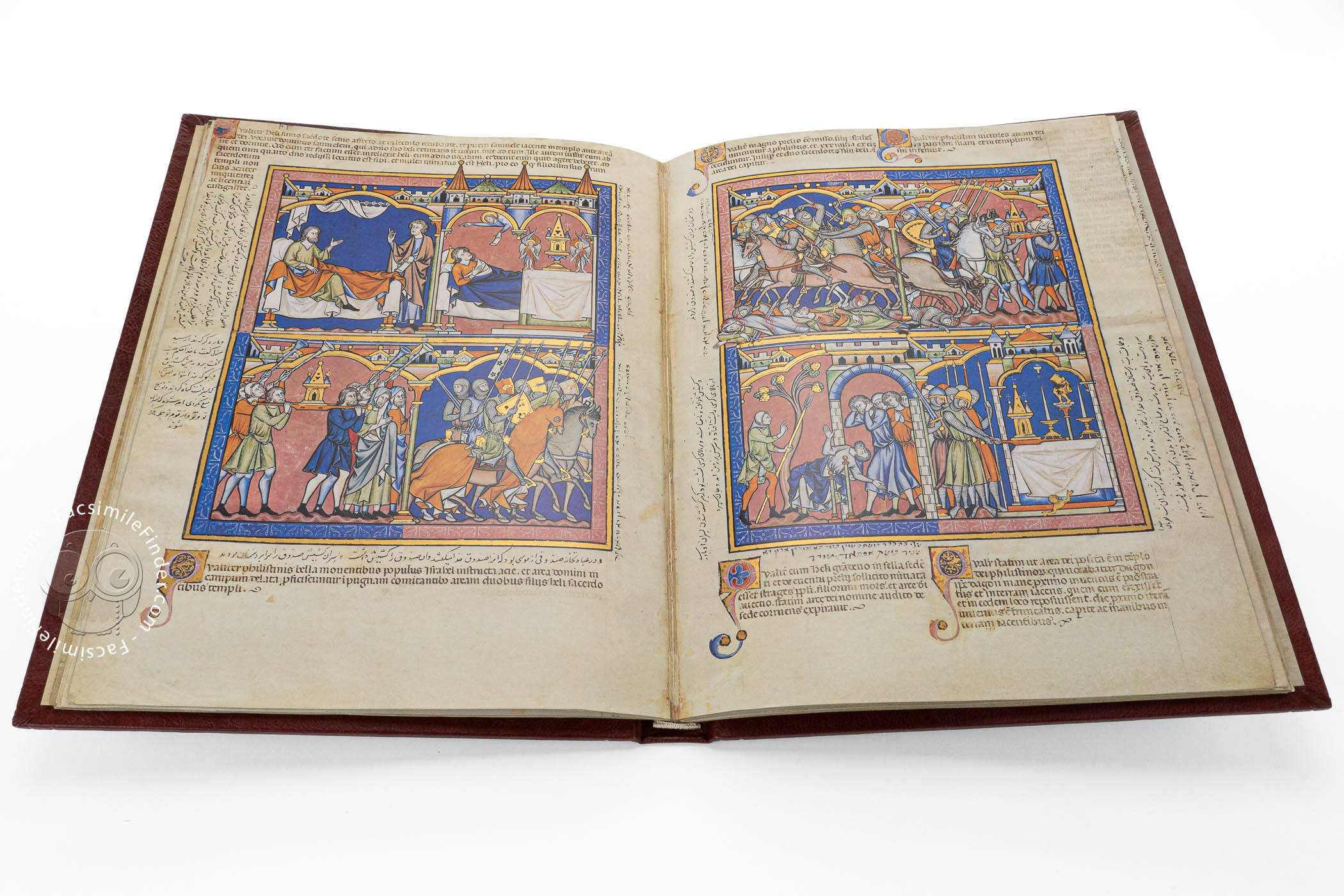
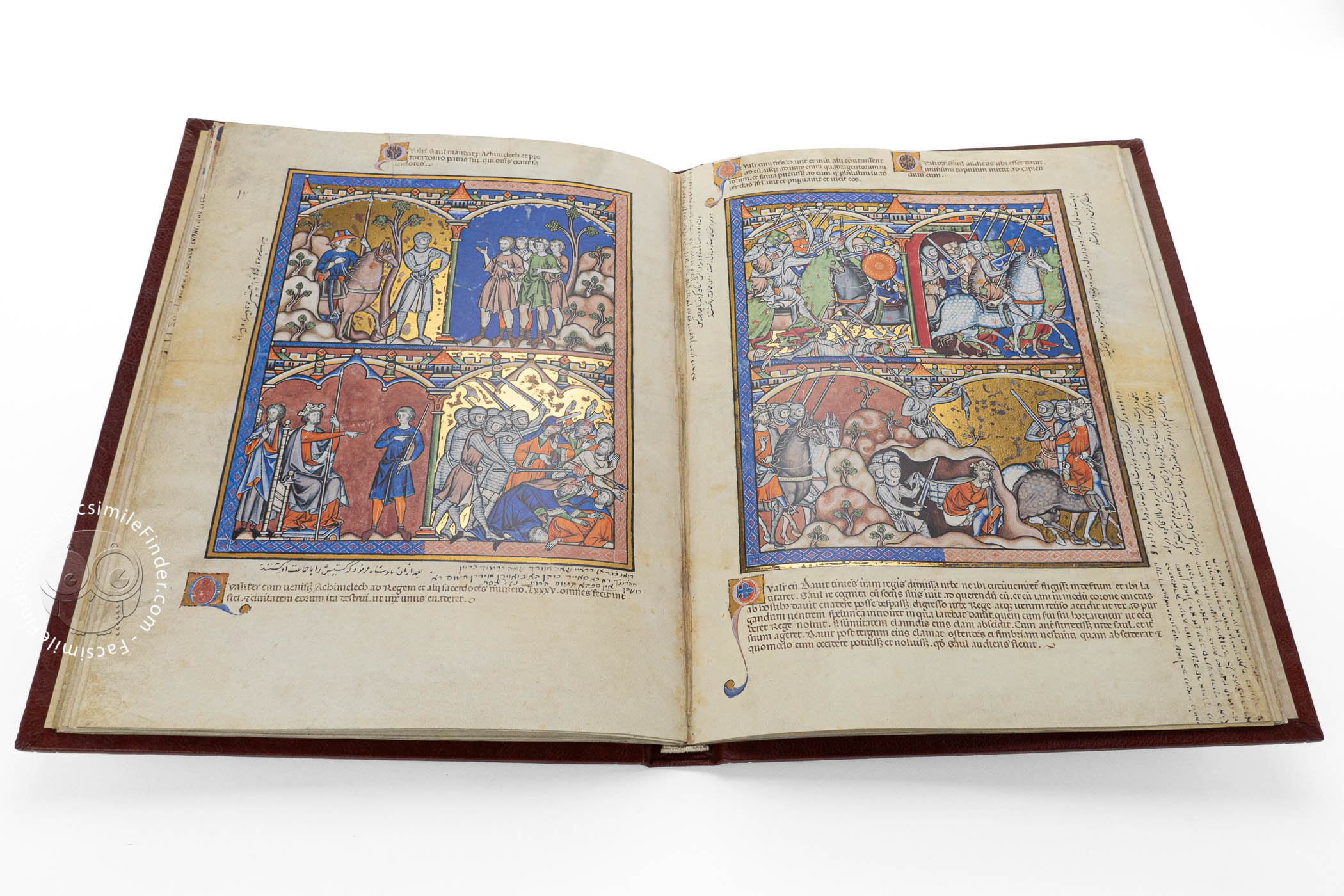
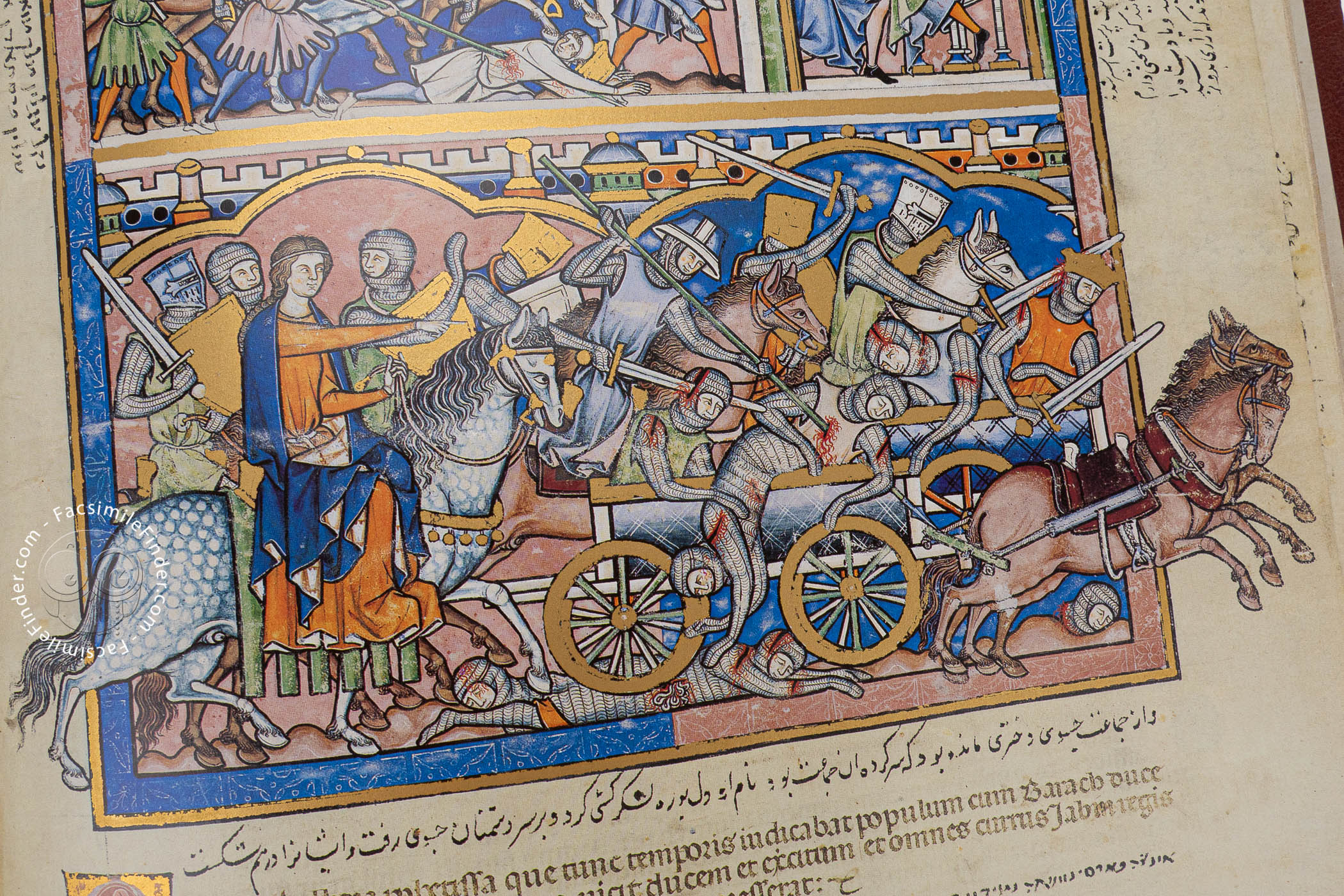
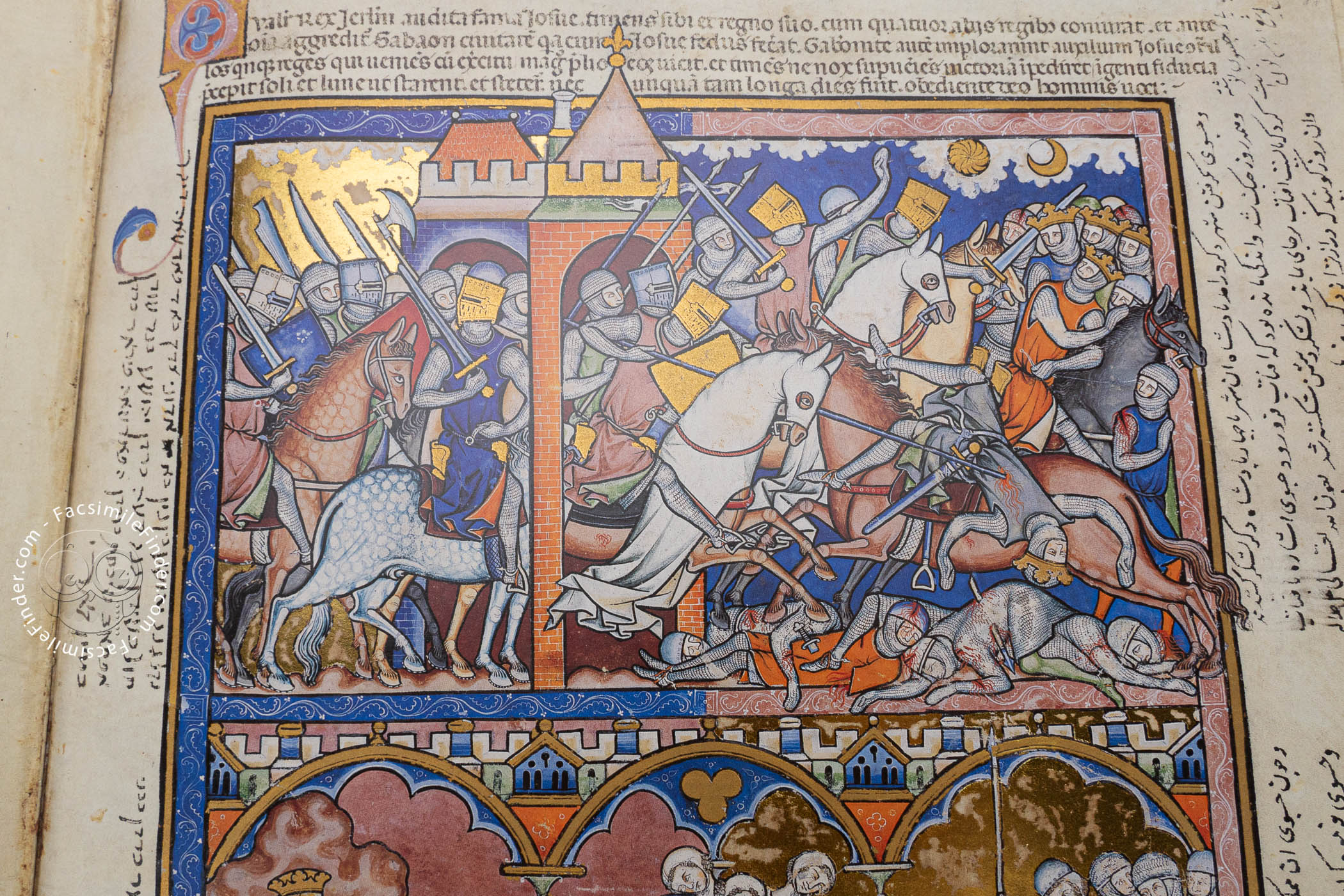
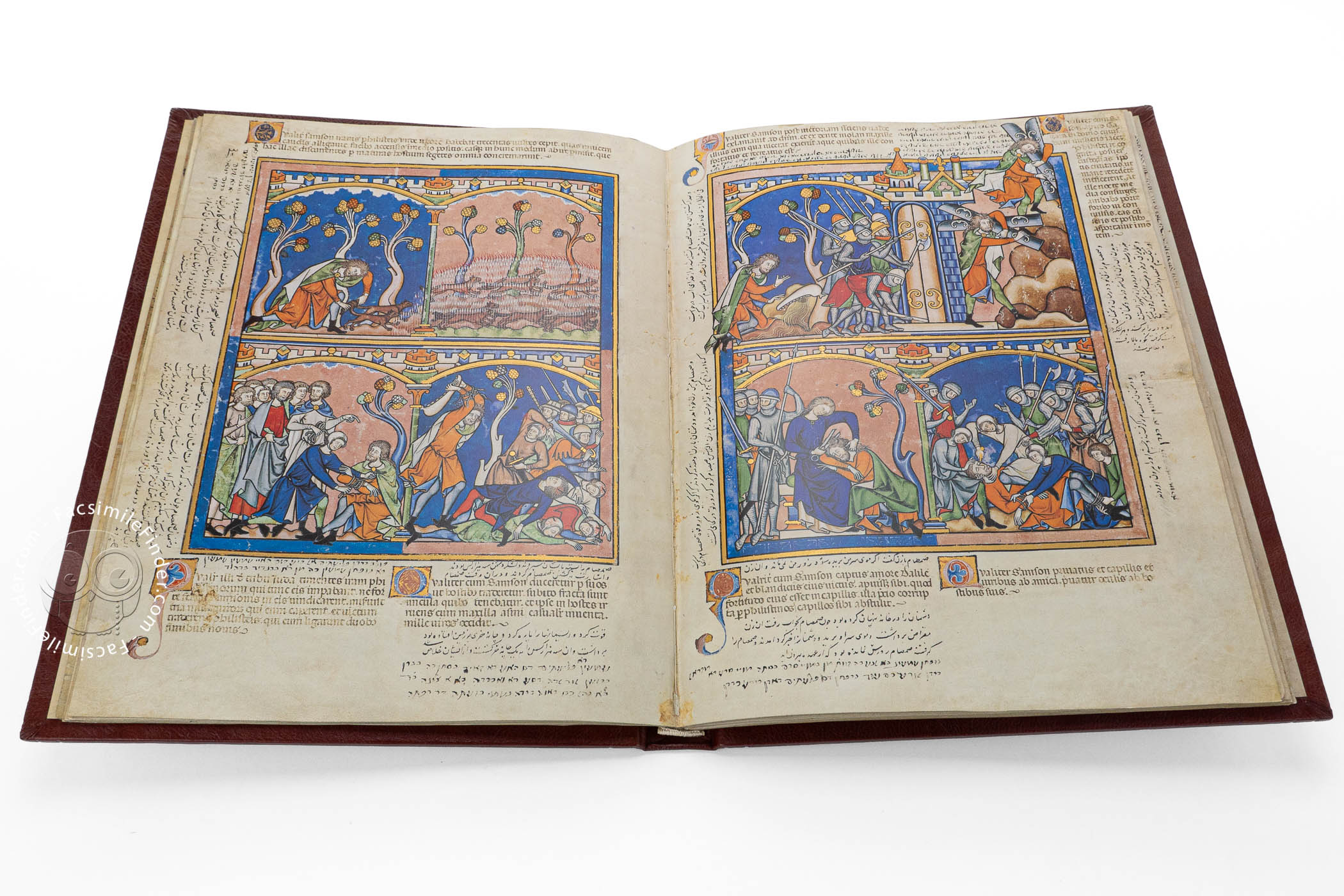
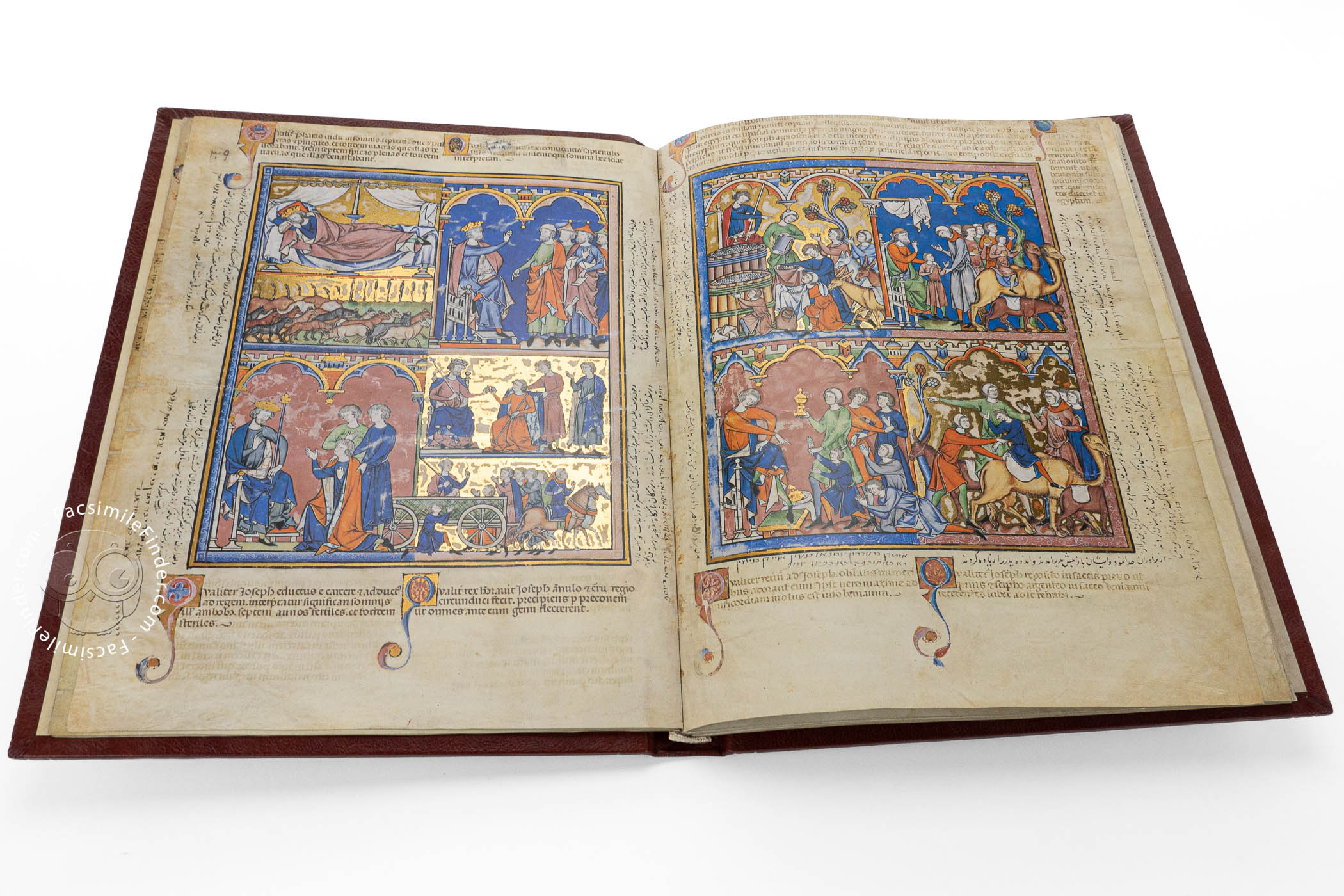
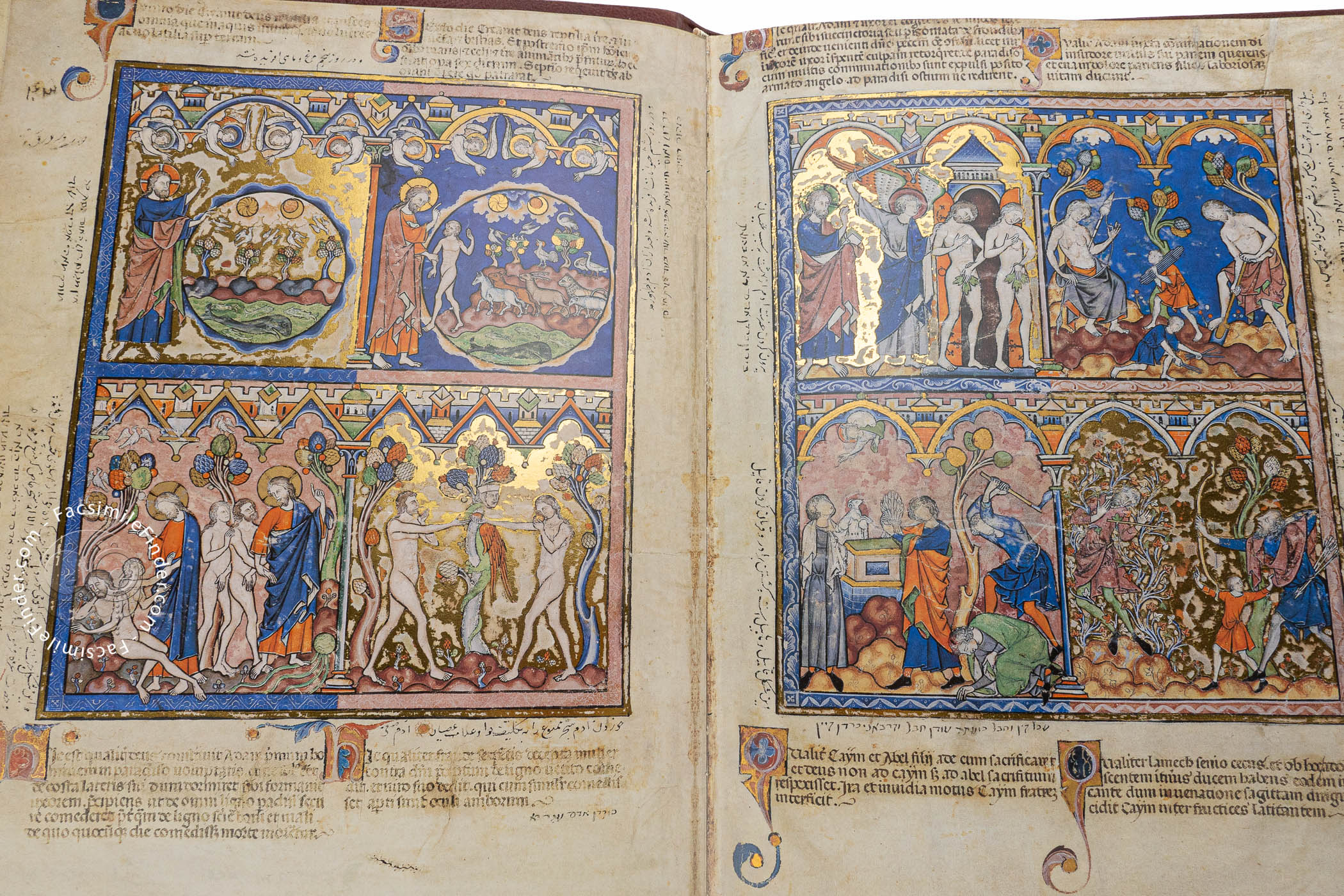
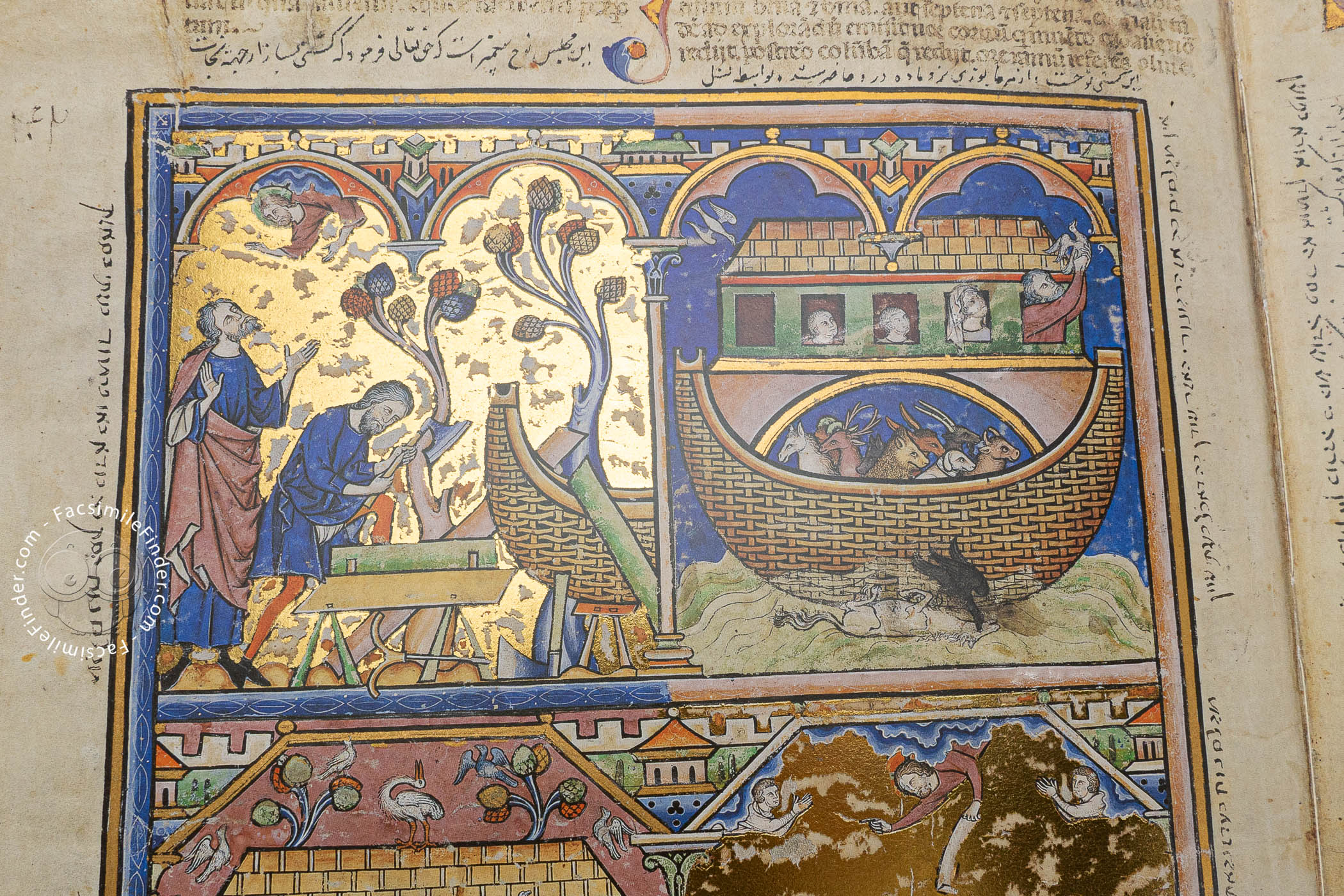
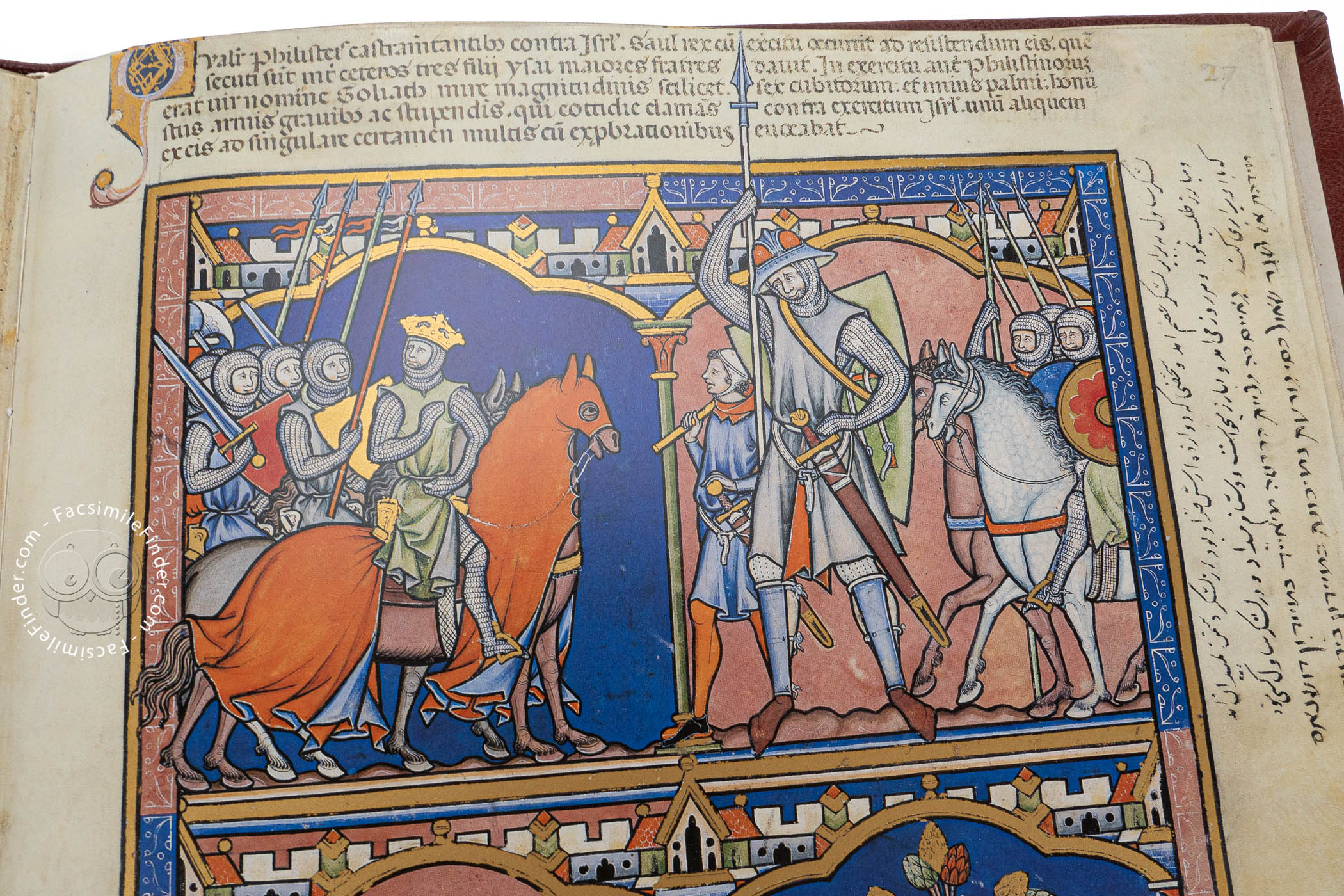
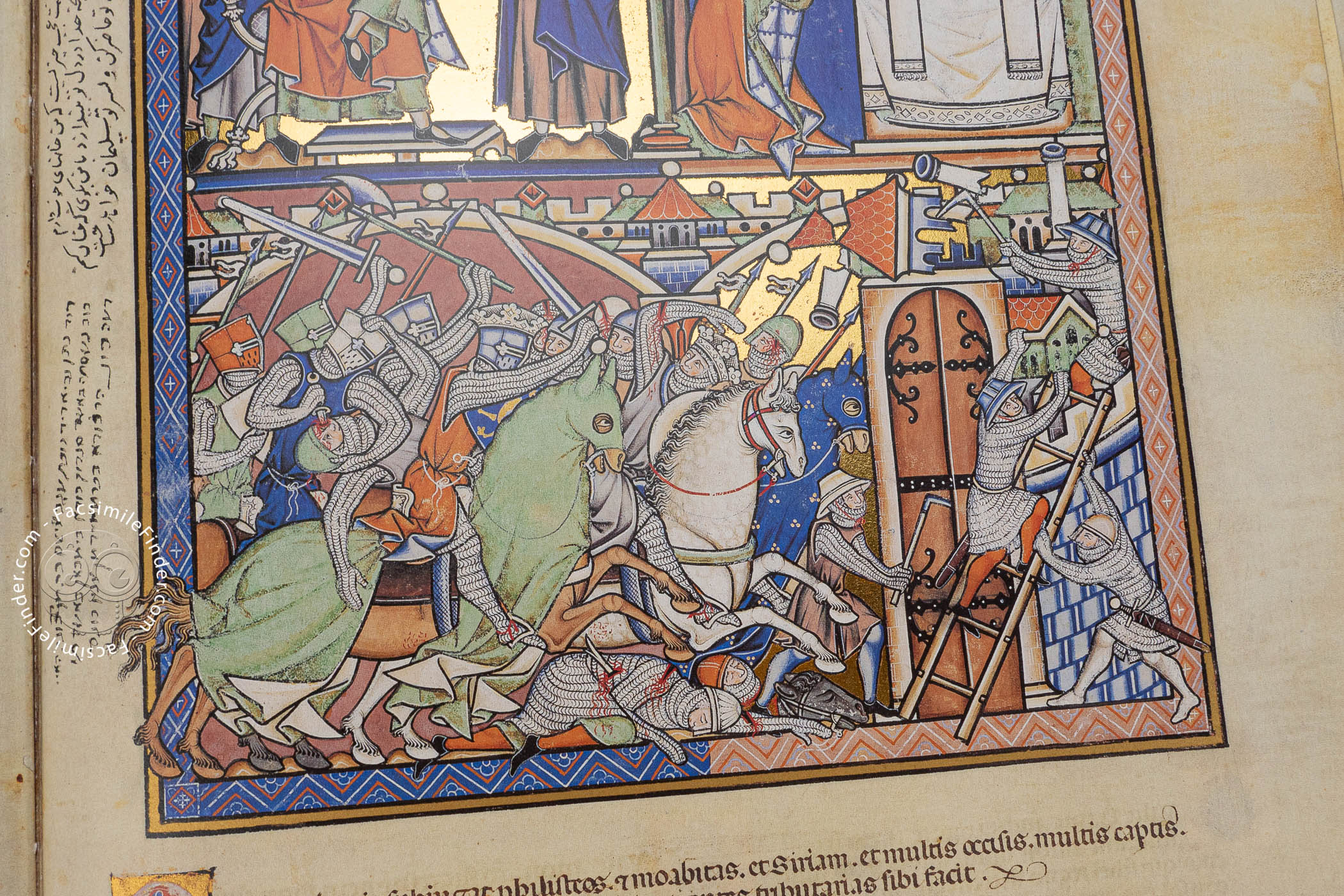
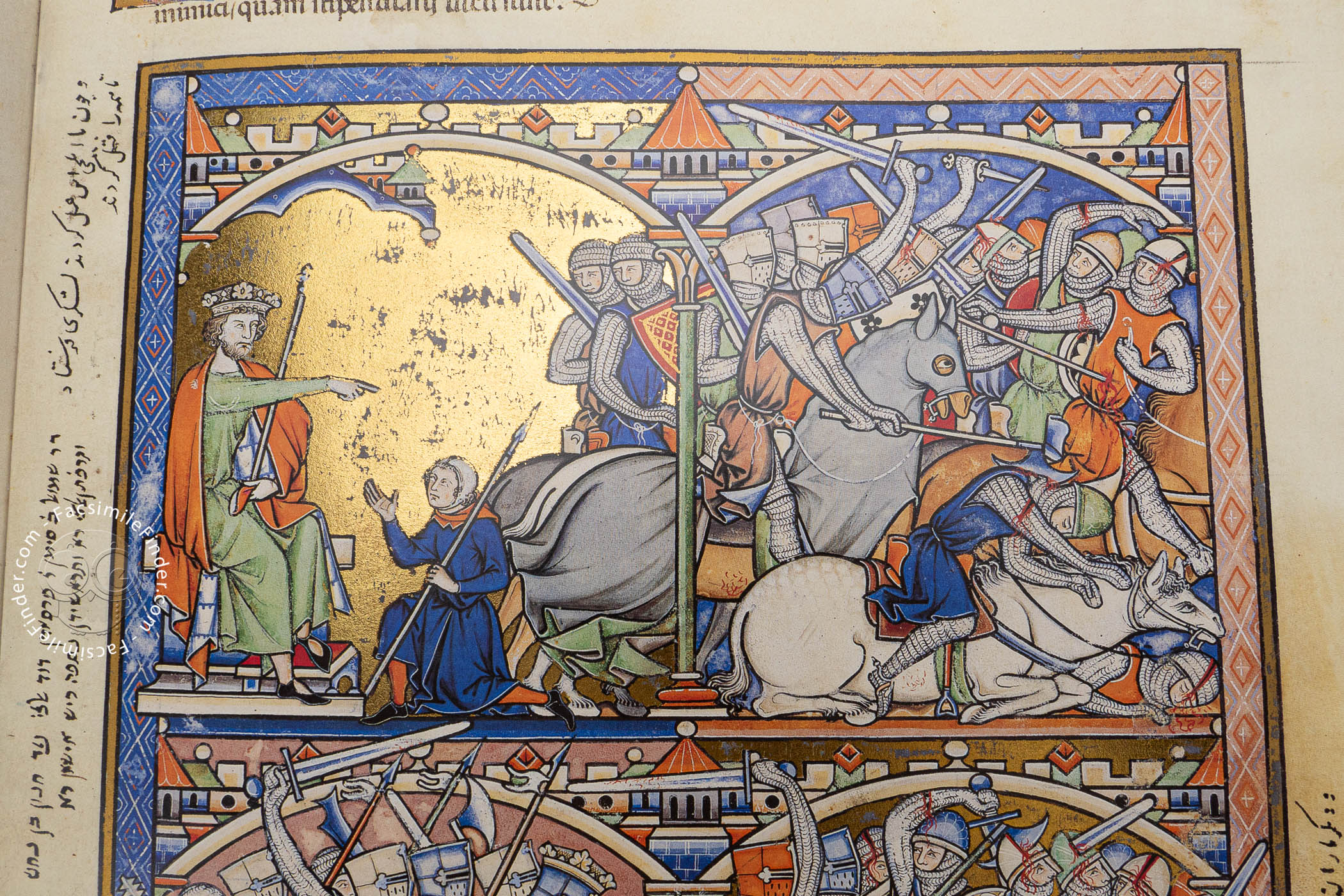
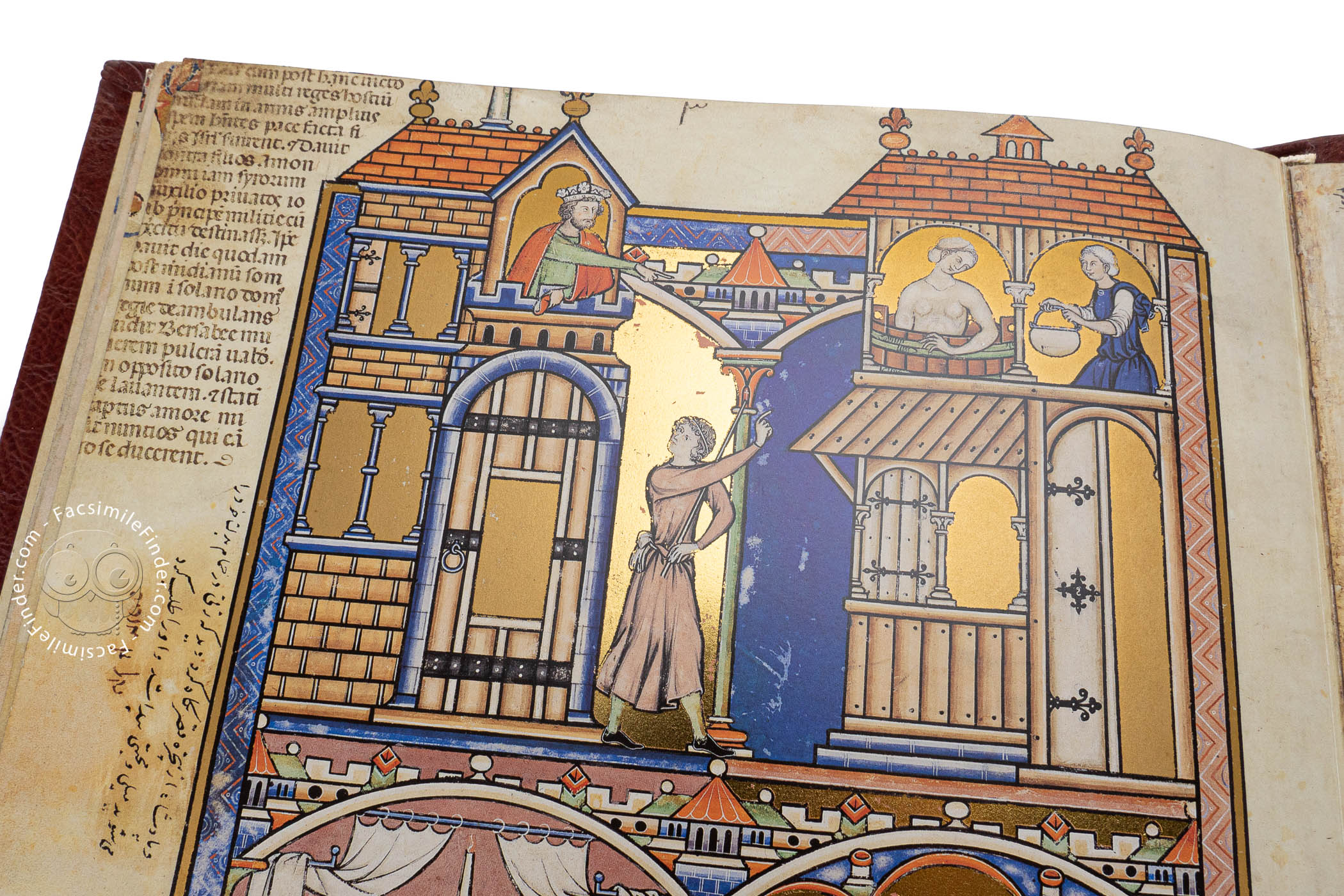
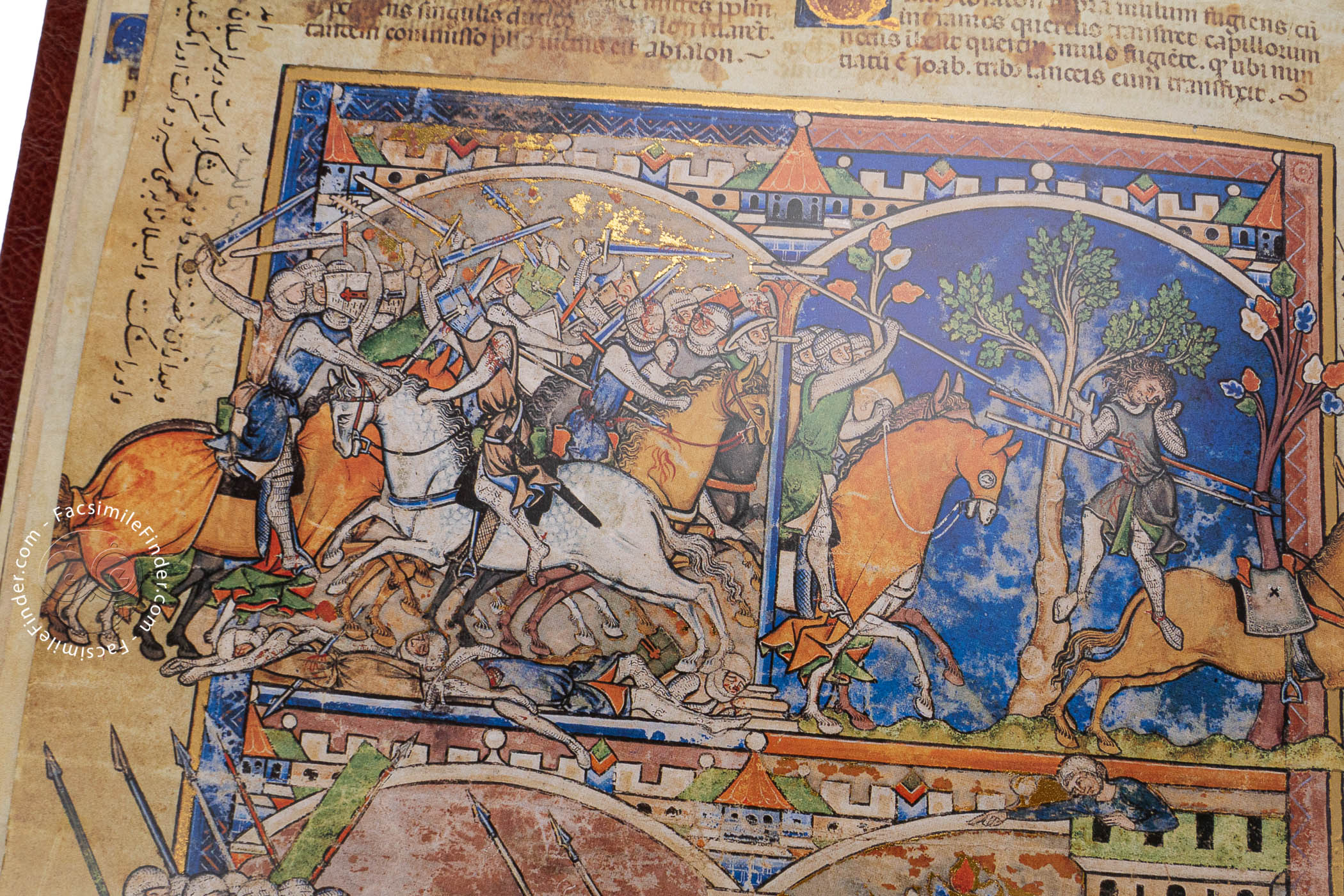
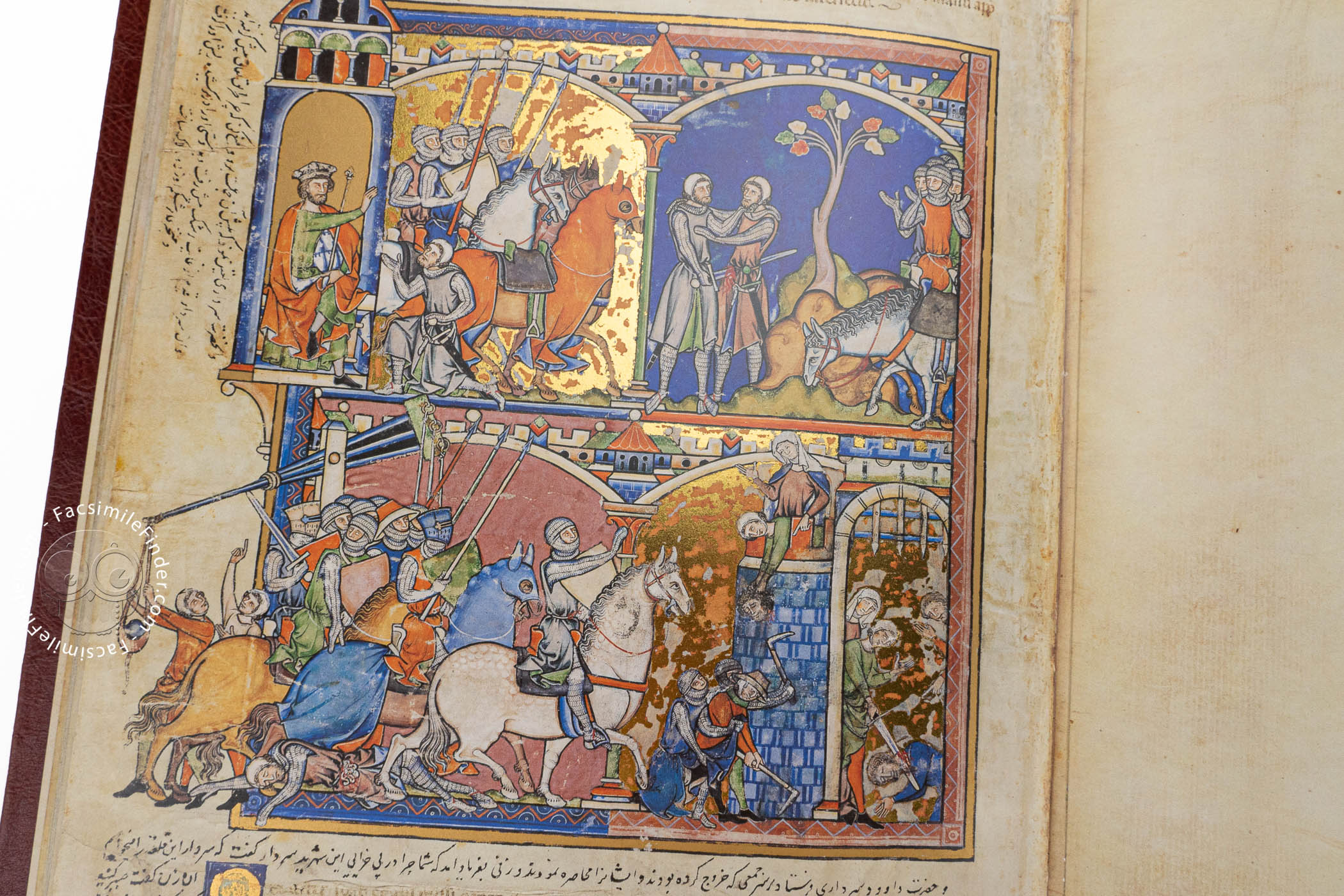
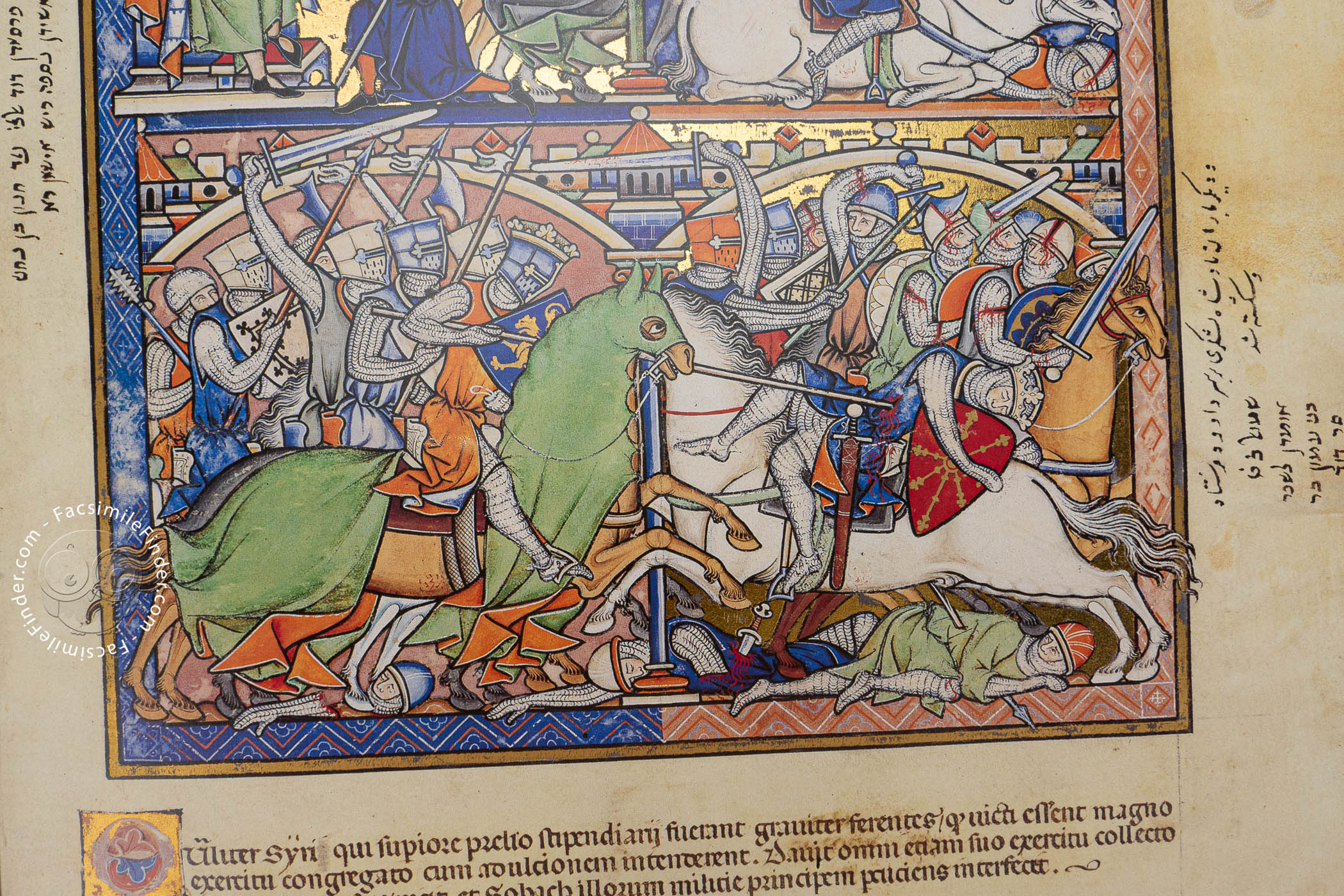
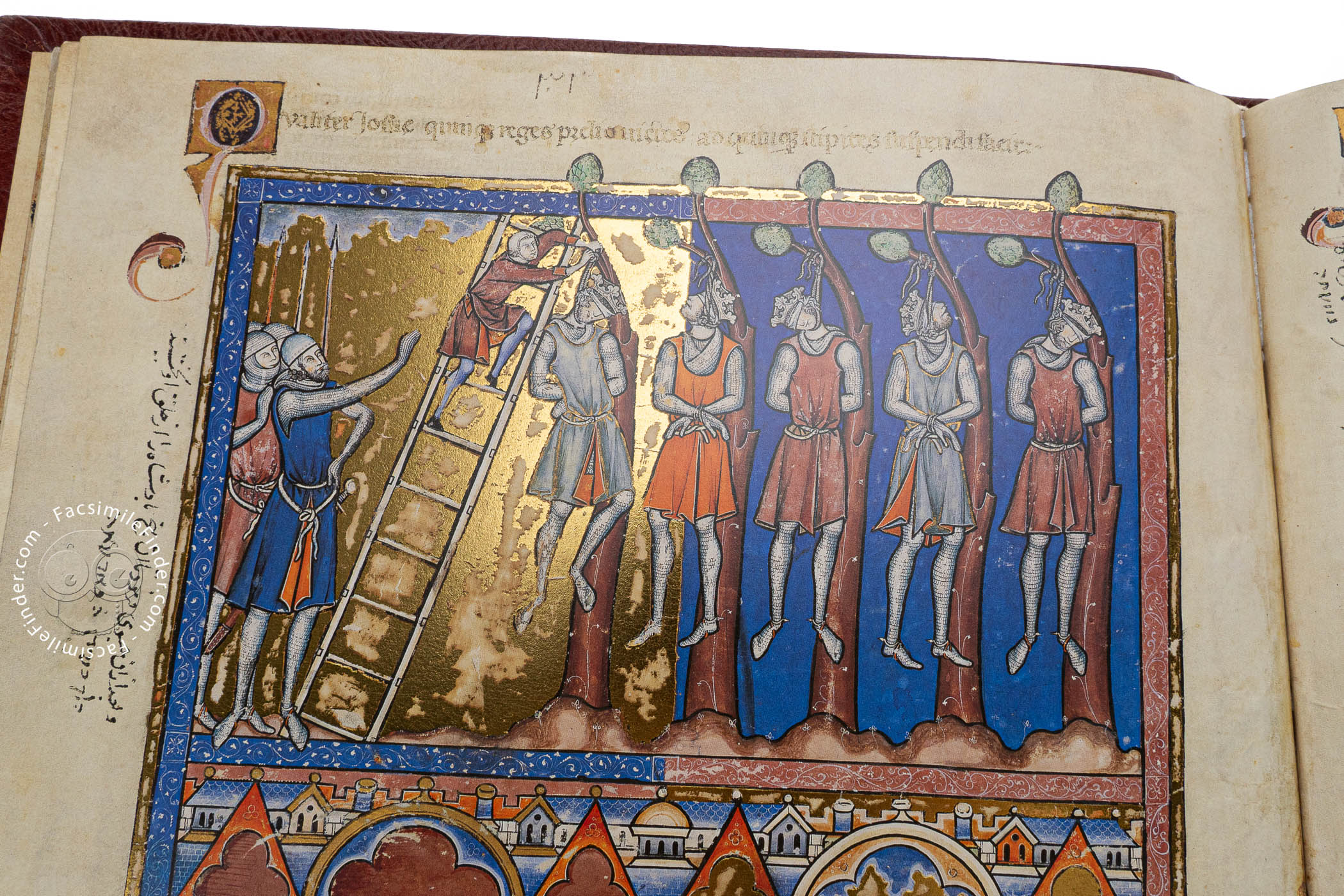
One of the masterpieces of French Gothic illumination, the Morgan Picture Bible is an impressive reminder of the importance of the Christian understanding of biblical history for the ideology of the Crusade. The sumptuous picture book—also known as the Maciejowski Bible, the Shah 'Abbas Bible, and the Crusader Bible—was created in a Parisian workshop for the Capetian king Louis IX between 1244 and 1254. Its forty-six leaves, fully illuminated on both sides, feature ninety-two full-page miniatures illustrating scenes from the Old Testament.
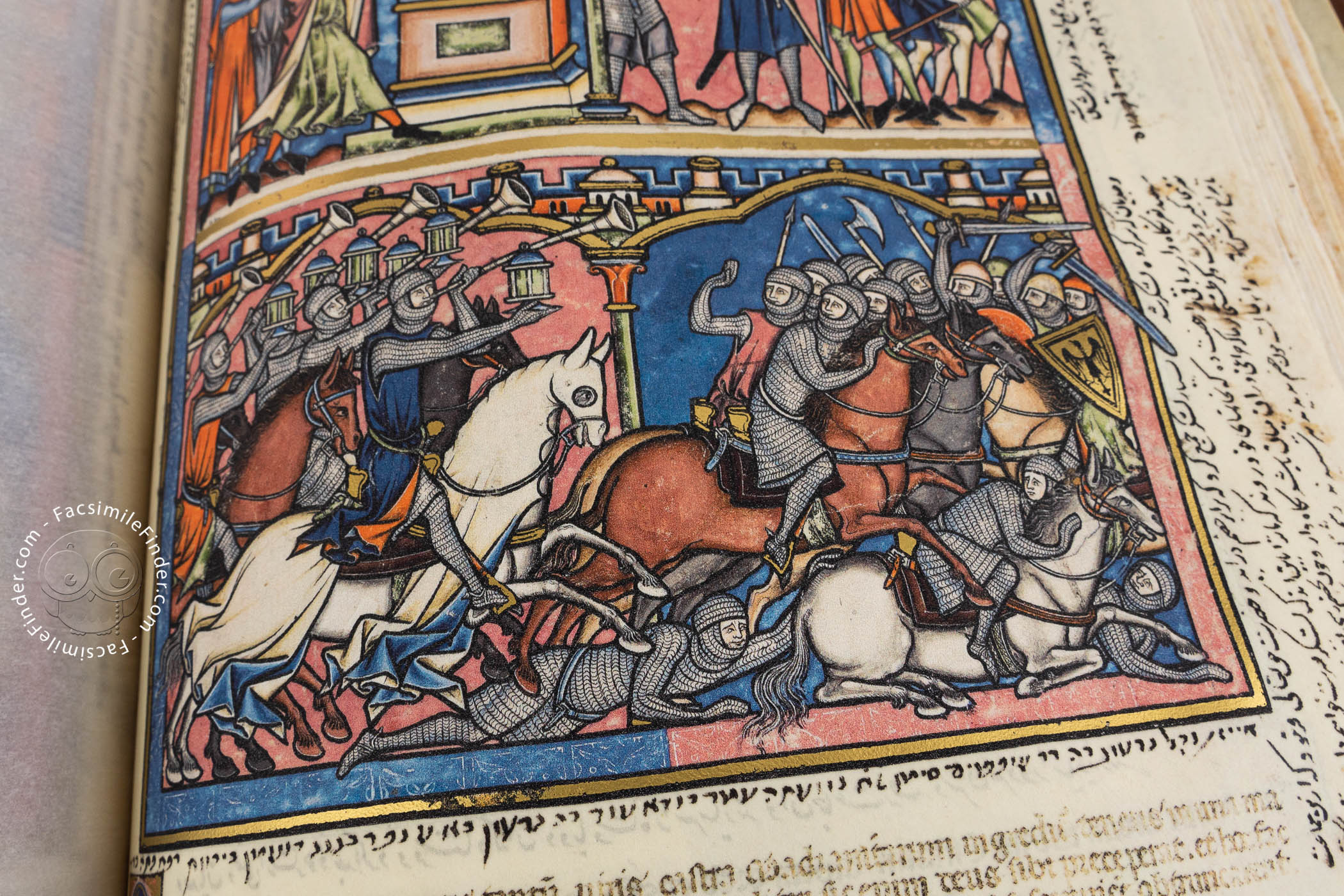
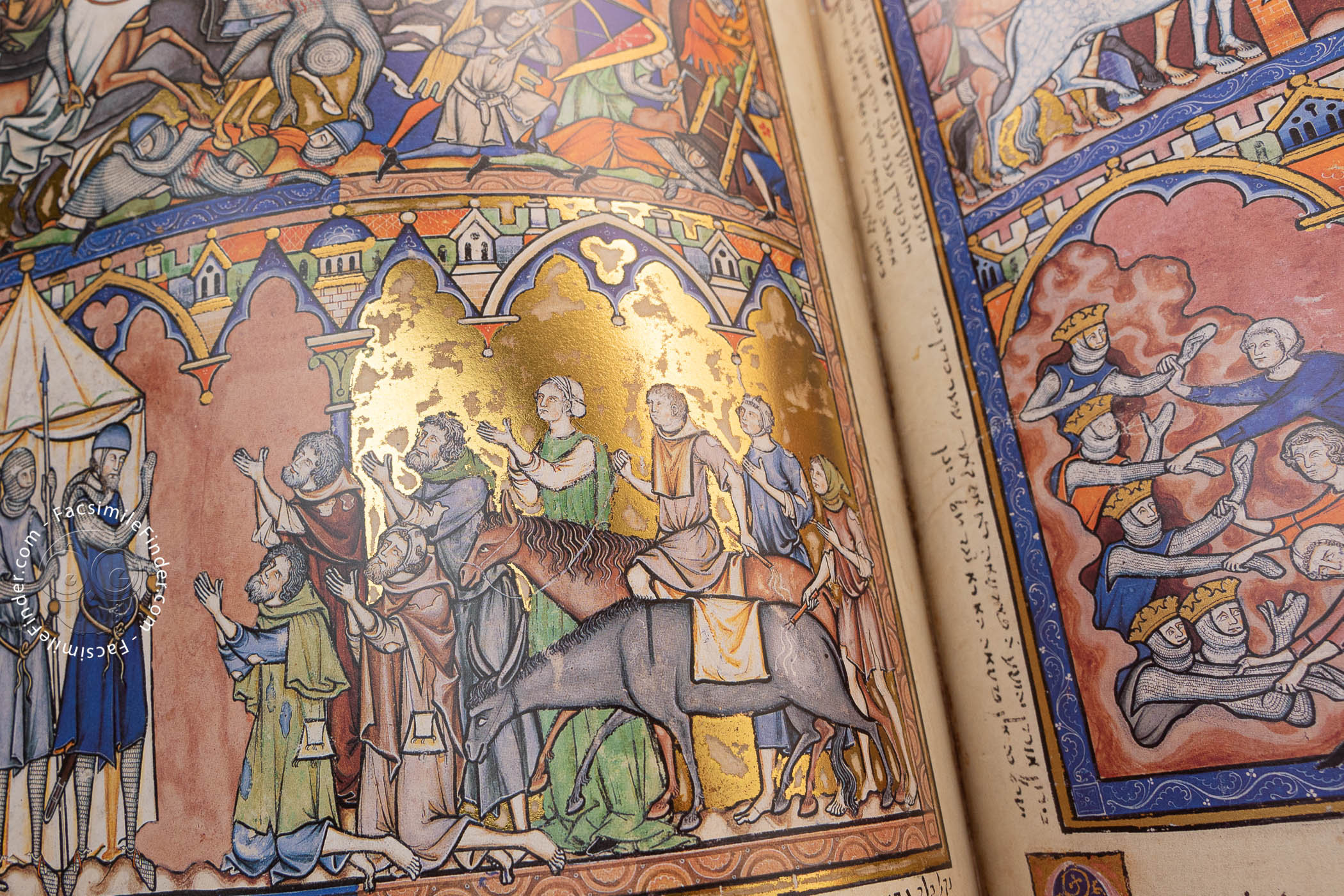
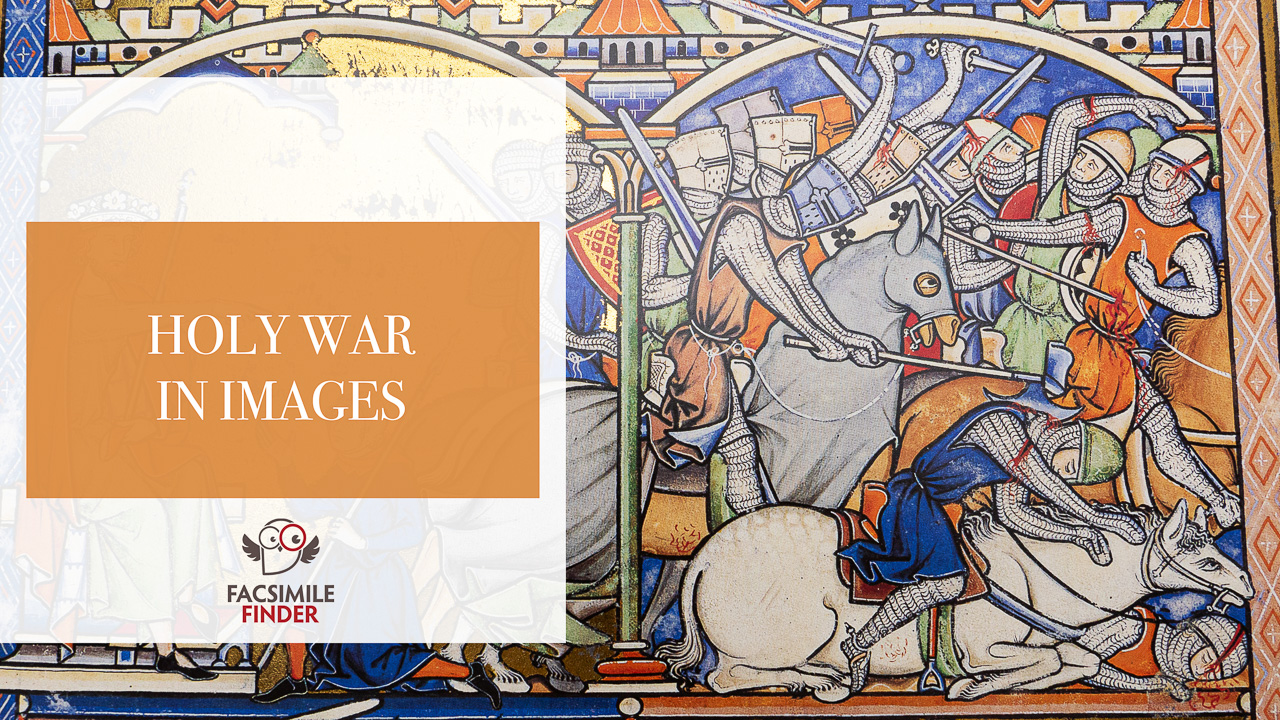
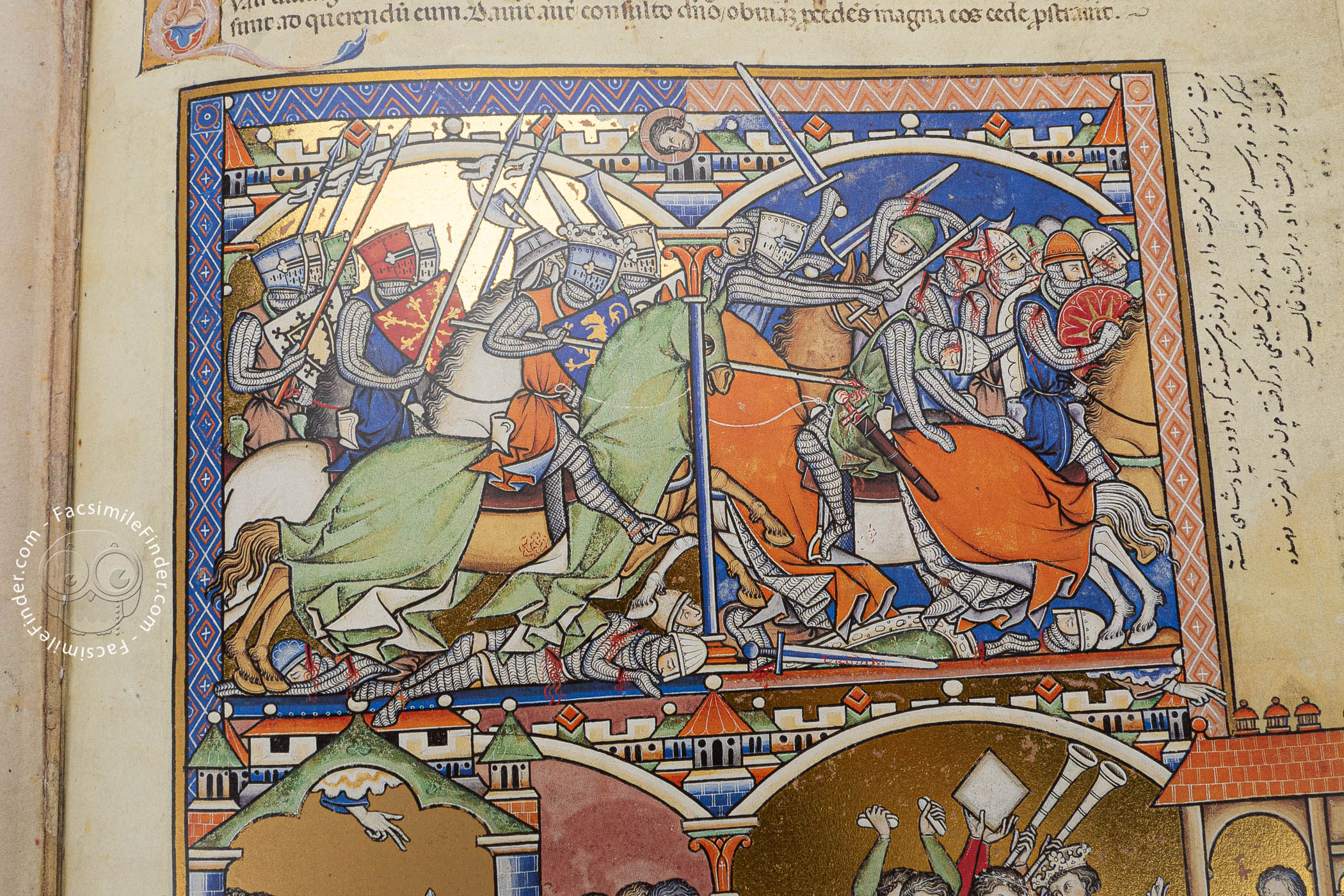
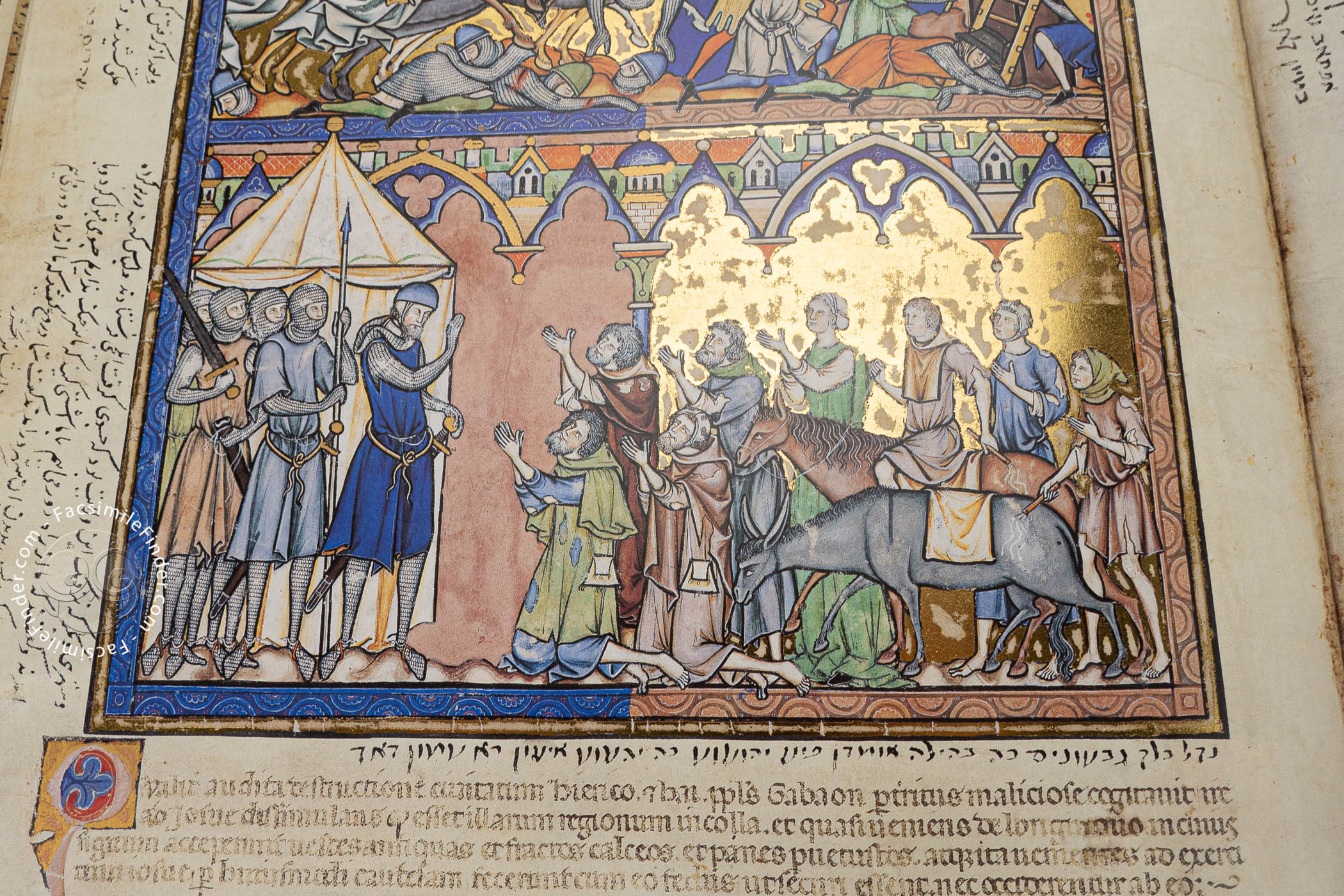
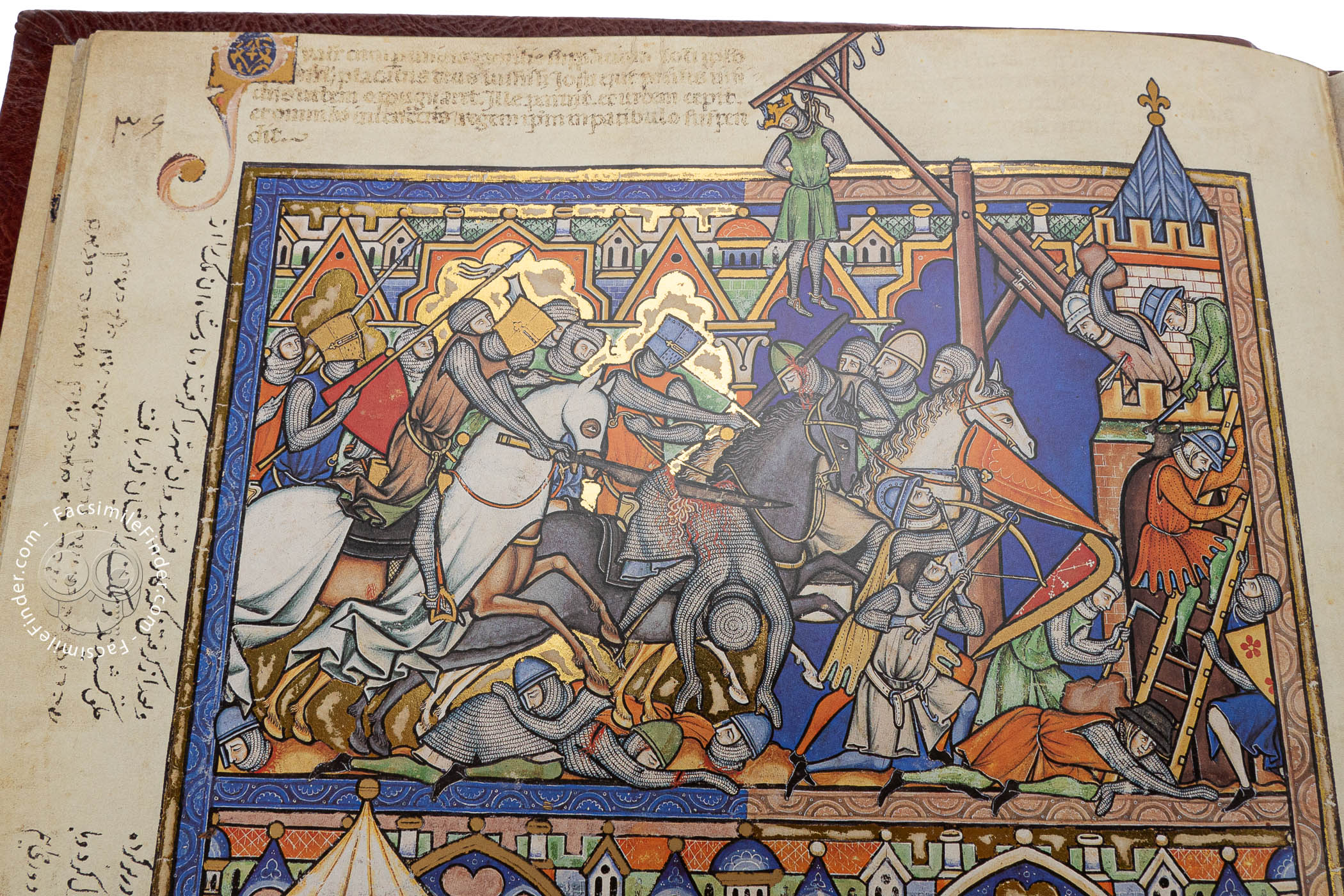
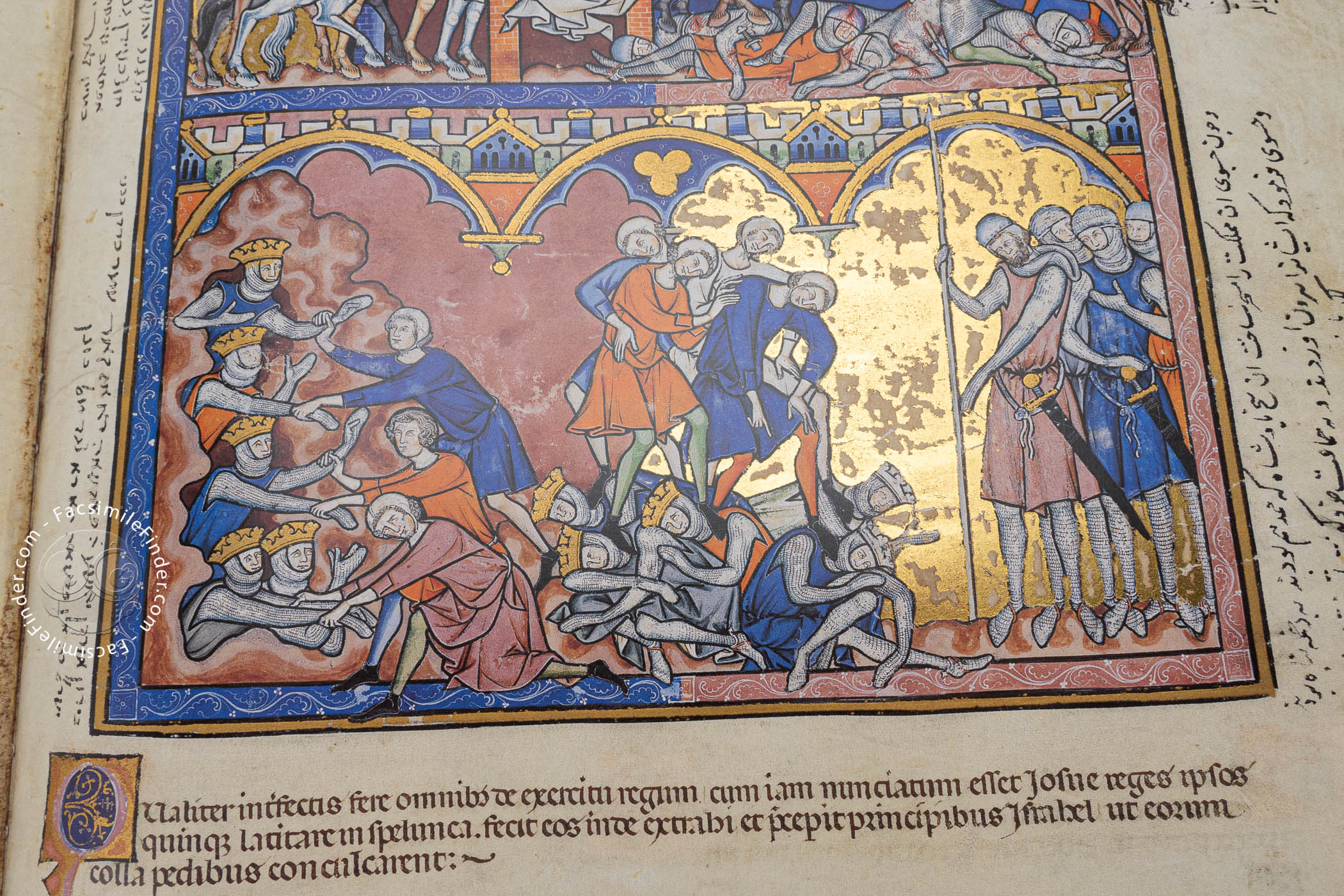
Originally devoid of accompanying text, the sacred visual history of the Morgan Picture Bible emphasizes holy war and kingship and furnishes the Old Testament characters with the armor and weapons of thirteenth-century French Crusaders.
The Christian Old Testament in Pictures
The Morgan Picture Bible illustrates selections from the Old Testament, beginning with a Creation cycle and concluding with the life of the Israelite king David and his falling out with his son Absalom. Nearly half of the pages are devoted to David, whose identity as a sacred warrior-king was embraced as a model by Louis IX.
Visual History of Holy War
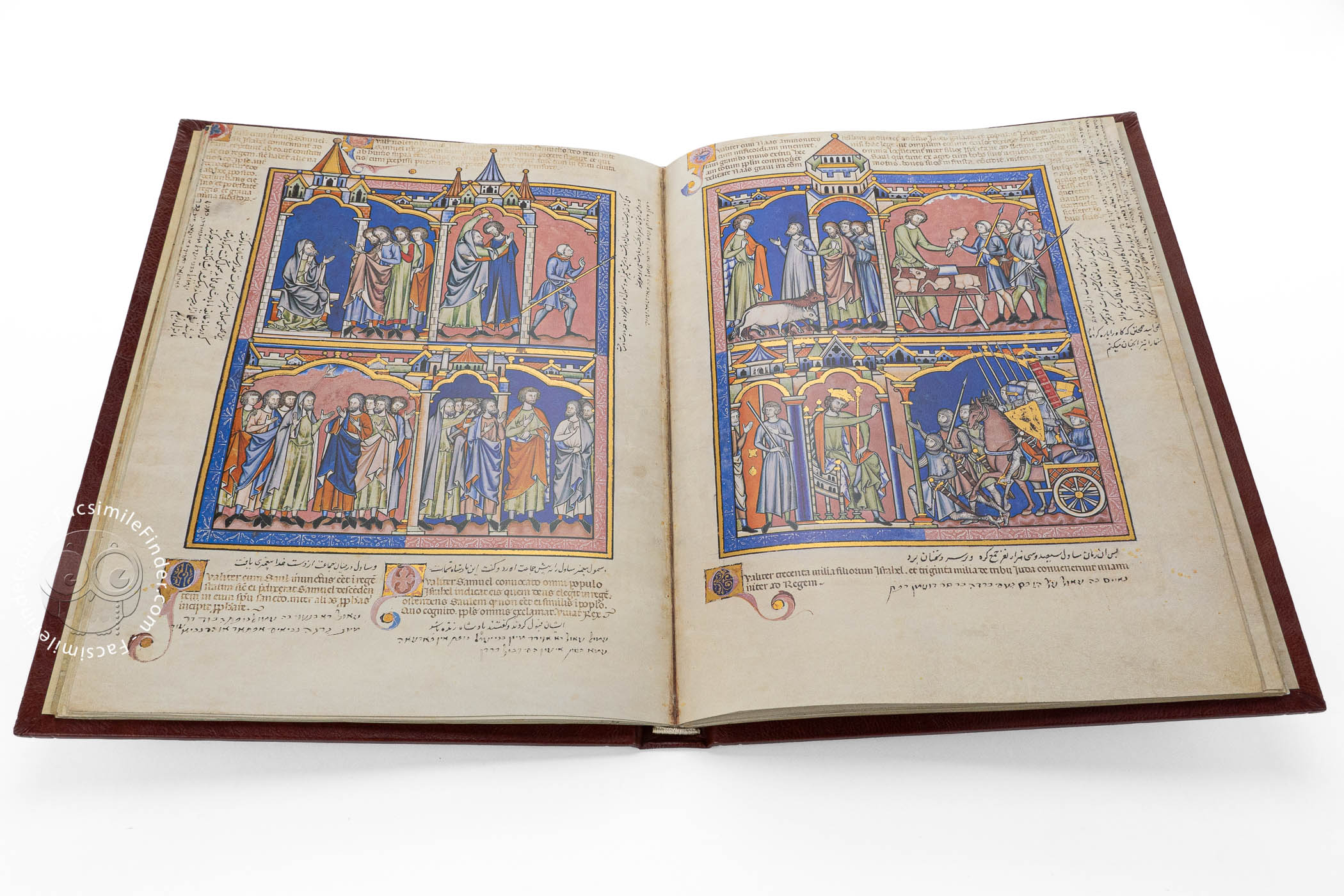
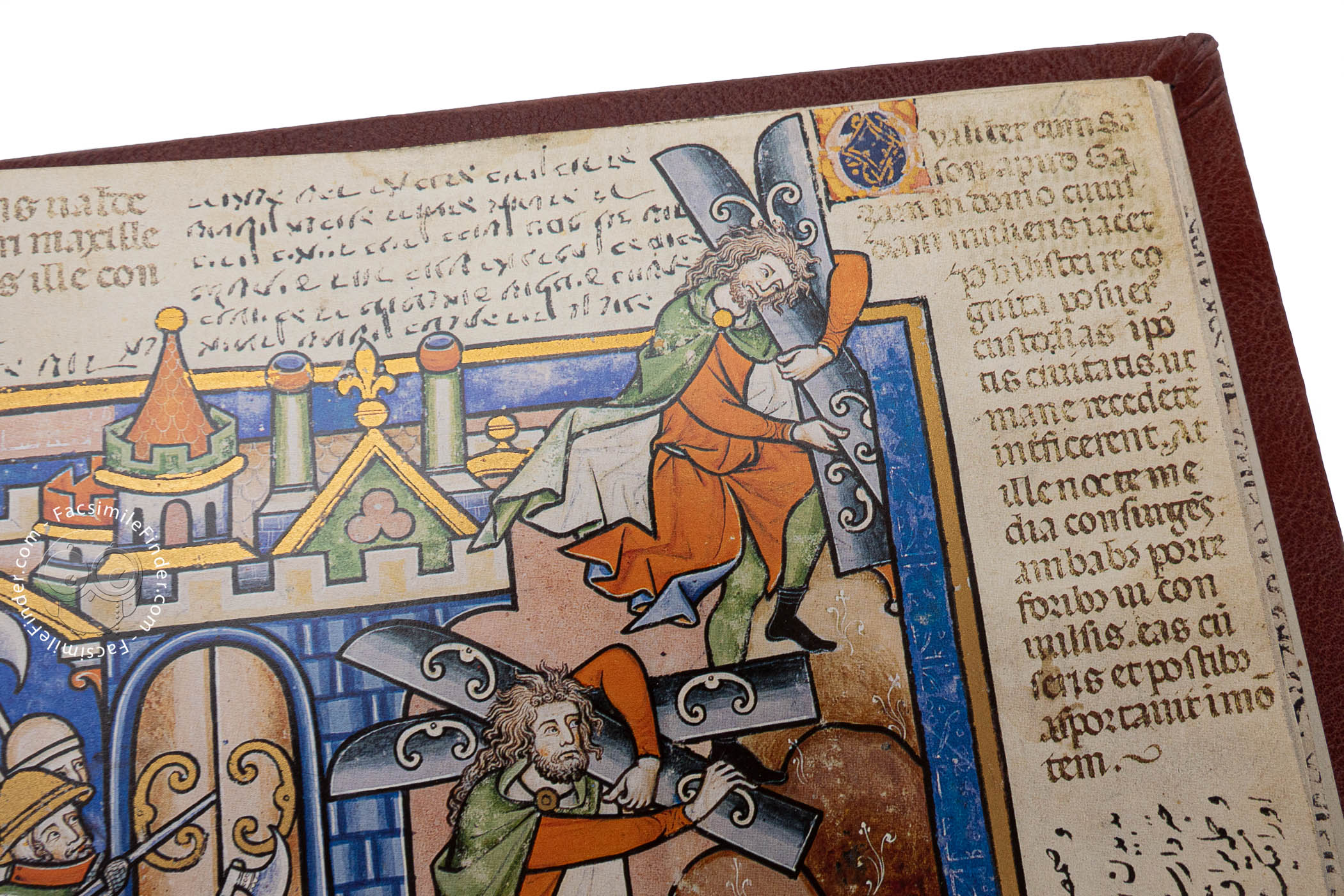
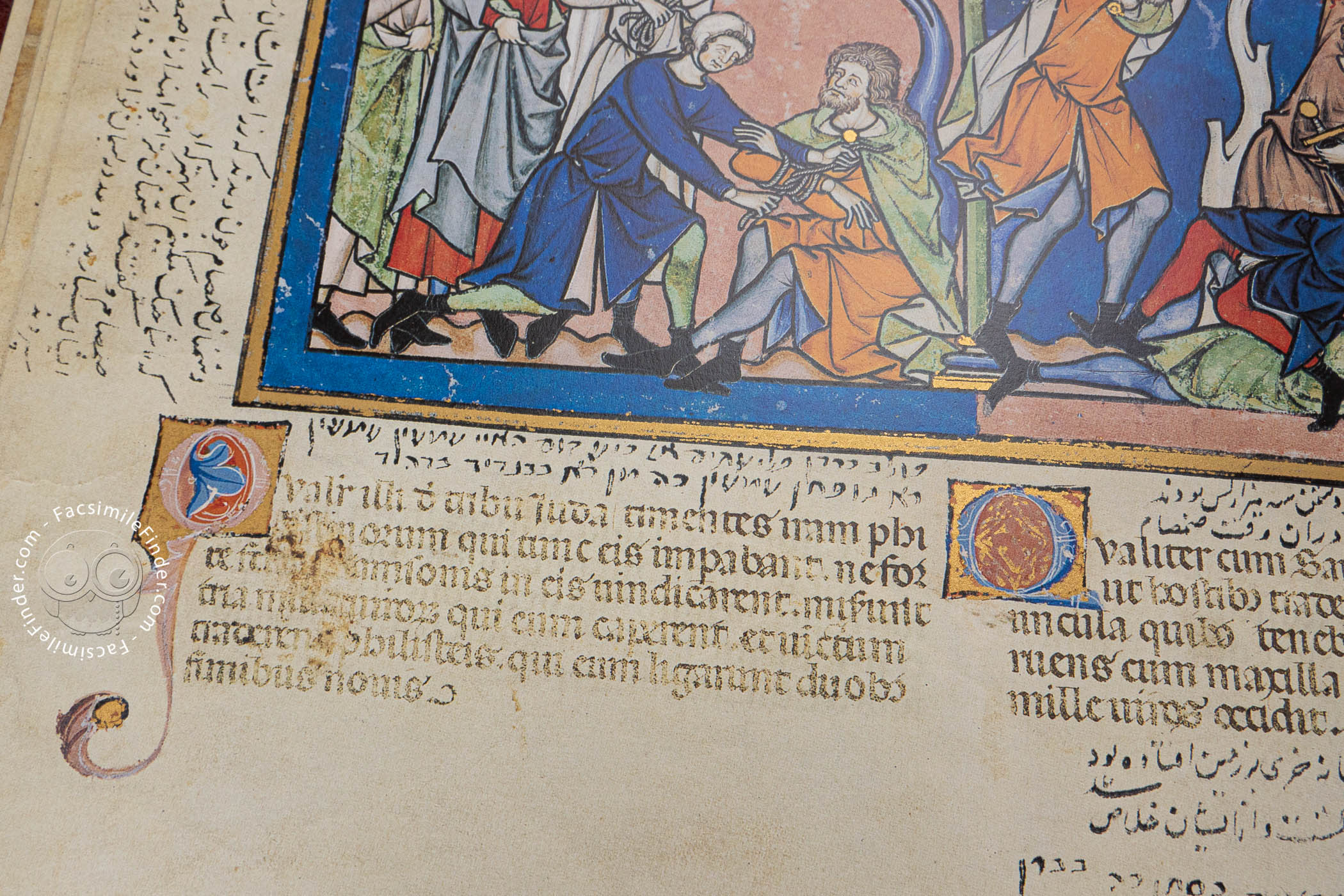
Composed of 346 individual scenes of two, three, or four per page, the Old Testament cycle is one of the most extensive produced in the Middle Ages. The miniatures are skillfully painted with a wealth of naturalistic detail, emotional affect, and finely drawn figures. Gold and ultramarine blue dominate throughout. Seven painters contributed to the illumination, one of whom painted forty percent of the miniatures and oversaw the work of the others.
The book is known for the compelling and naturalistic battle scenes that spill out beyond the border of the pictorial space into the margins. With their attention to gore and technically accurate depictions of armor and weapons, these scenes suggest first-hand observation of the brutalities of war.
Message for a Crusading King
By framing contemporary violence in biblical terms, the visual program offers a powerful justification for Louis IX's departure on the Seventh Crusade and protracted Frankish activity in the Holy Land. Visually and thematically, the Morgan Bible is related to other works made for Louis IX, including the stained-glass windows of the Sainte-Chapelle, the Saint Louis Psalter, and the Arsenal Old Testament (Paris, Bibliothèque de l'Arsenal, MS 5211).
Sacred Stories in Translation
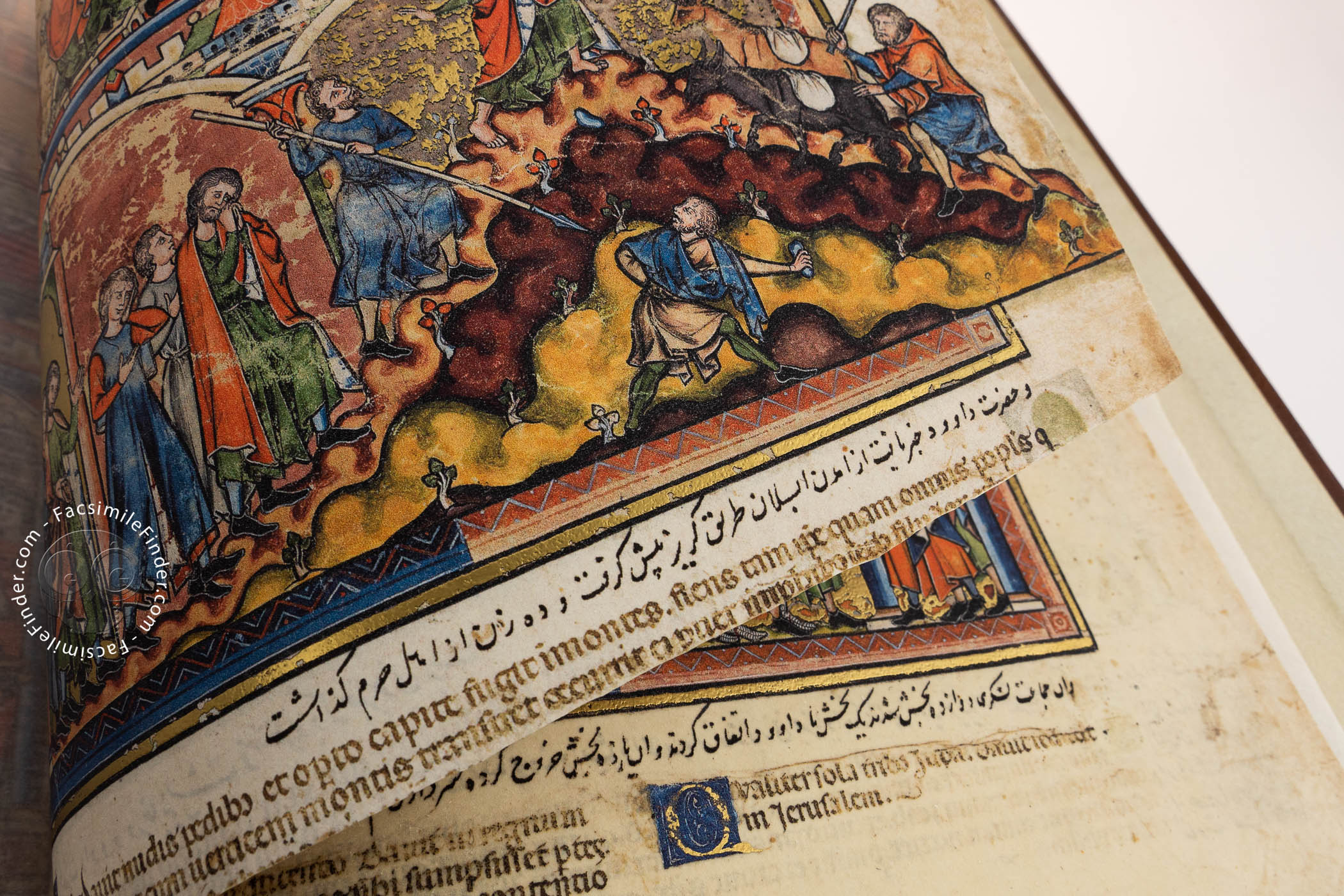
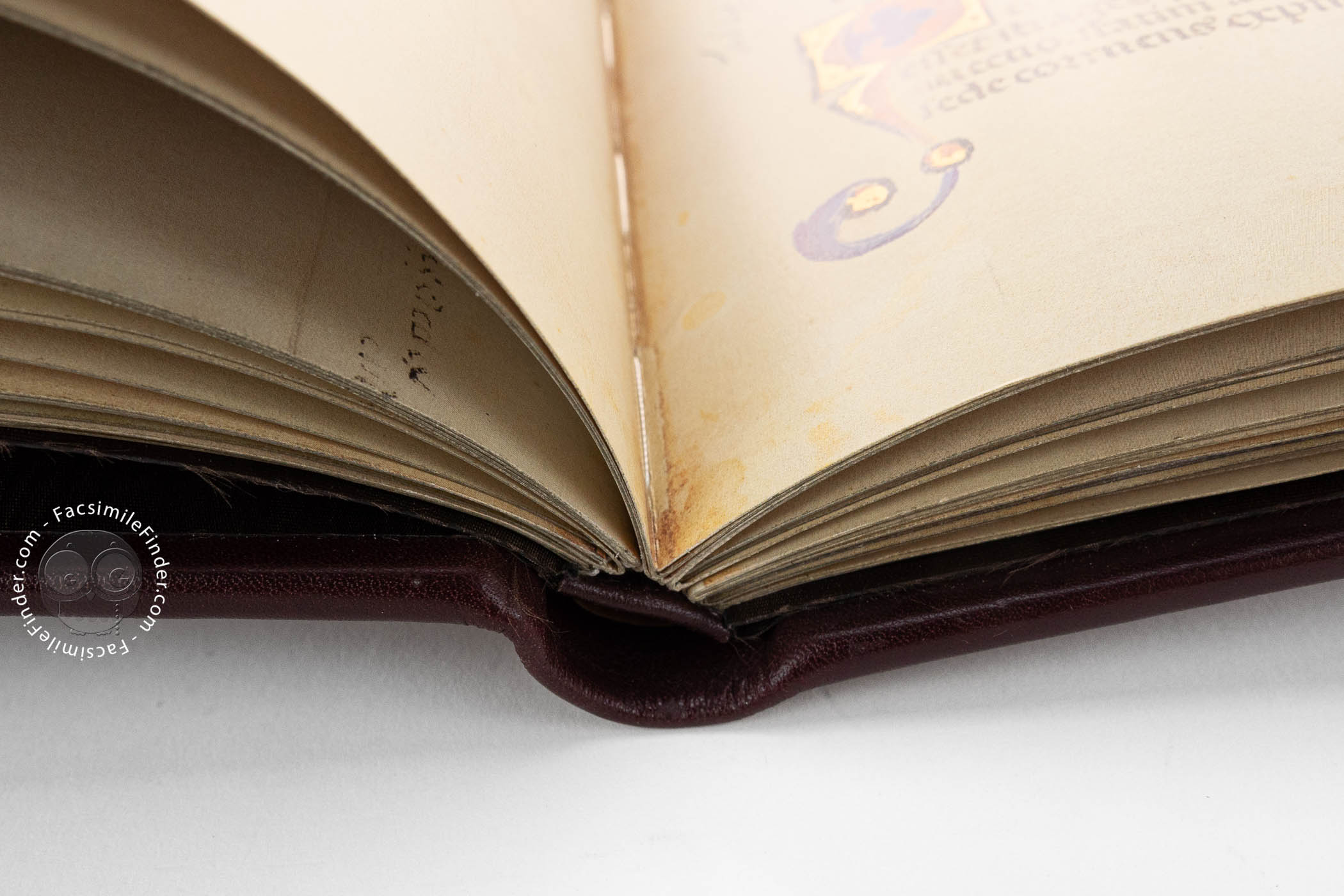
Over centuries, inscriptions in Latin, Persian, and Judeo-Persian were added. These identified the pictured scenes. The Latin inscriptions date from the fourteenth century and feature a painted initial at the beginning of each picture caption.
The manuscript was in the collection of Bernard Maciejowski (1548-1608), Bishop of Kraków, who sent the book as a diplomatic gift to 'Abbas I (1571-1629), Shah of Iran, who had the Persian captions added. The book later came into the hands of a Persian-speaking Jew—probably in the eighteenth century—who had another set of identifying inscriptions added, these in Judeo-Persian (Persian written in the Hebrew alphabet).
Many Illustrious Owners
Three leaves were removed soon after the shah’s Persian inscriptions were added in the early seventeenth century. Two leaves were given to the Bibliothèque nationale (now Bibliothèque nationale de France) in 1891. Sydney Carlyle Cockerell (1867-1962) purchased the third leaf in 1910. Peter and Irene Ludwig subsequently purchased that leaf before it entered the J. Paul Getty Museum in 1983.
The remaining forty-three leaves of the manuscript were purchased in Cairo by the archaeologist Giovanni d'Athanasi (1798-1854) and sold at Sotheby's in 1833 to book dealers Payne and Foss, who in turn sold it to the book collector Thomas Phillipps (1792-1872).
In 1916, Phillipps's grandson, Thomas Fitzroy Phillipps Fenwick (1856-1938), offered the manuscript for sale to Belle DaCosta Greene (1879-1950), the remarkably astute personal librarian to J. P. Morgan (1867-1943). Morgan made his and his father's collection a public institution in 1924 (now the Morgan Library & Museum).
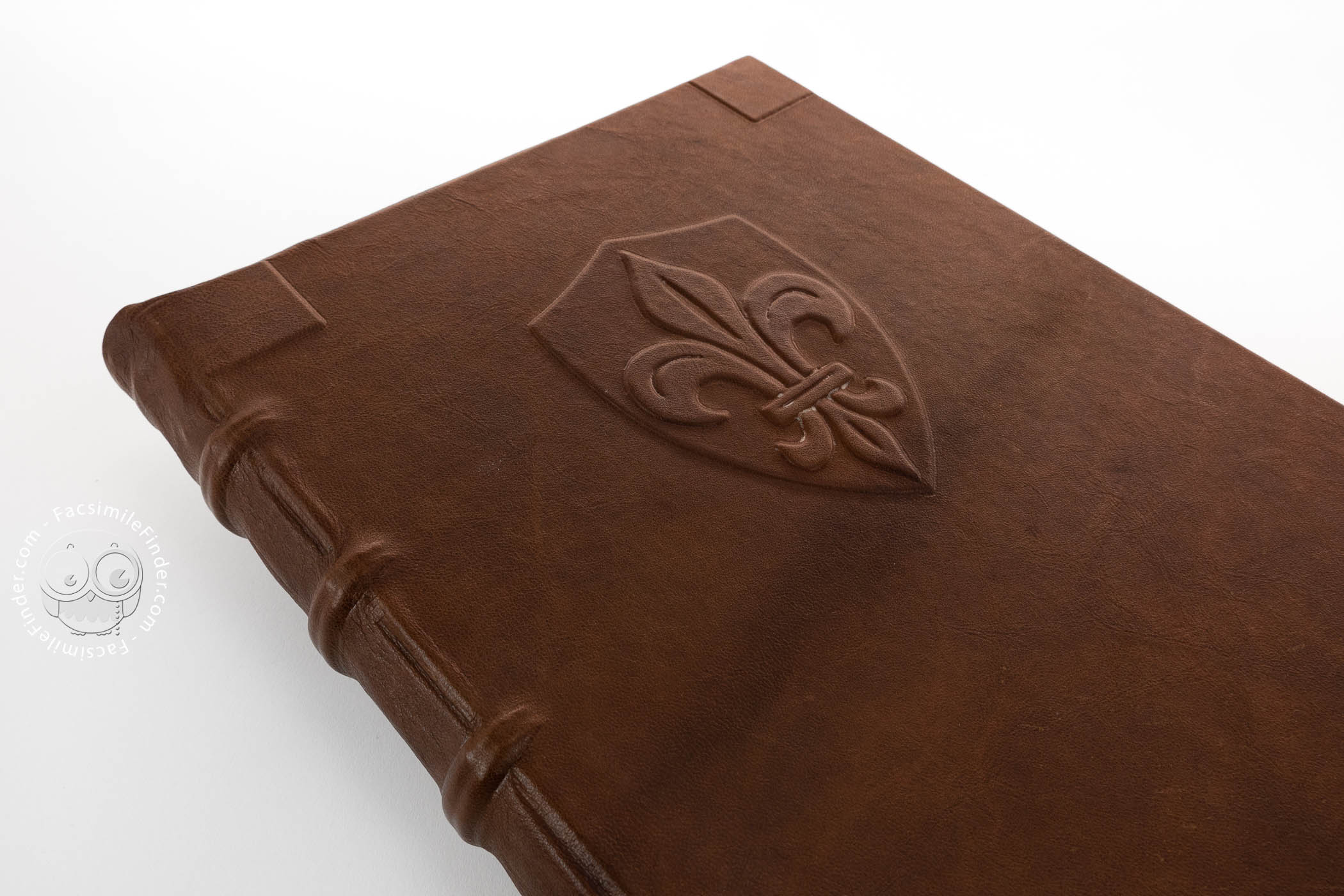
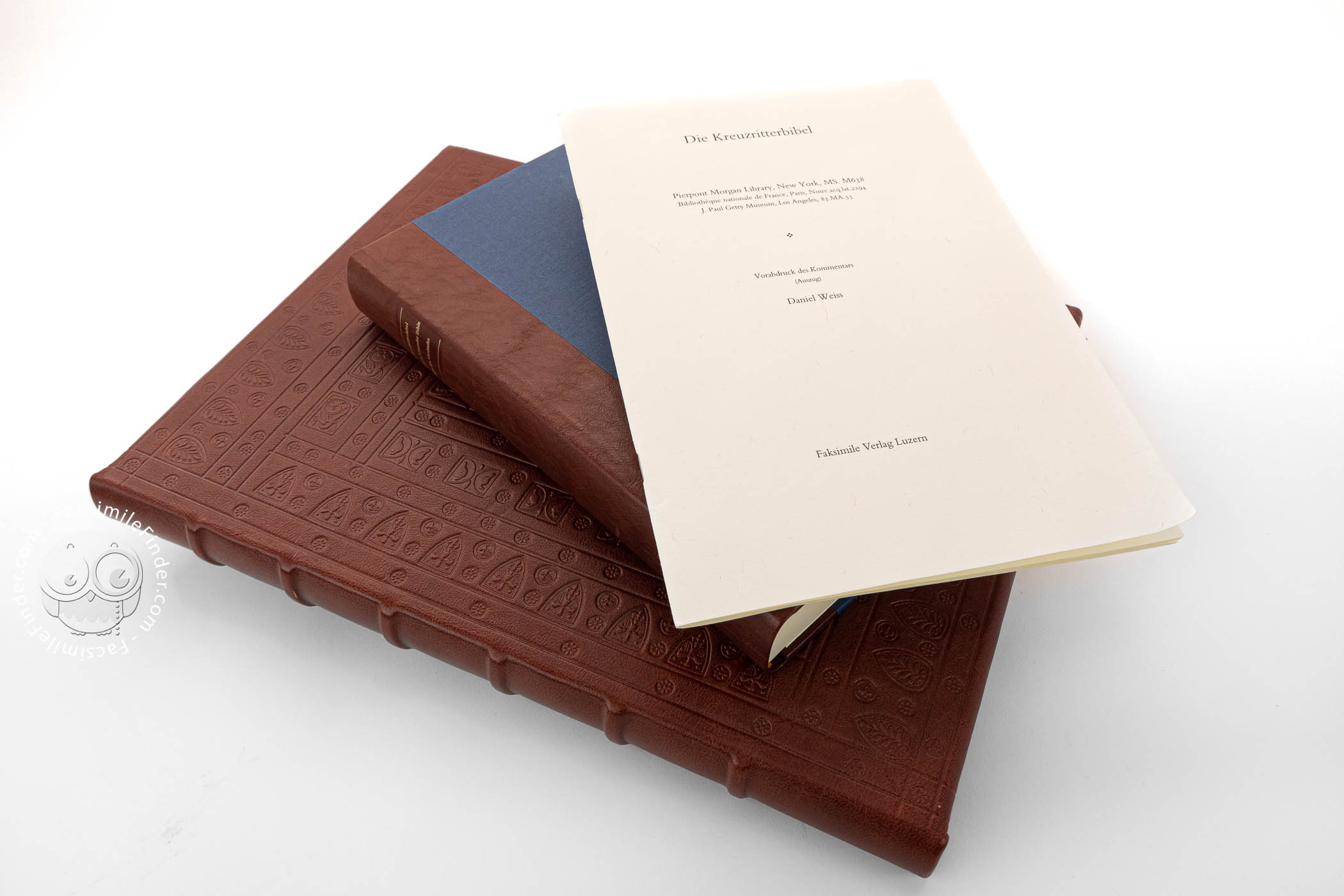
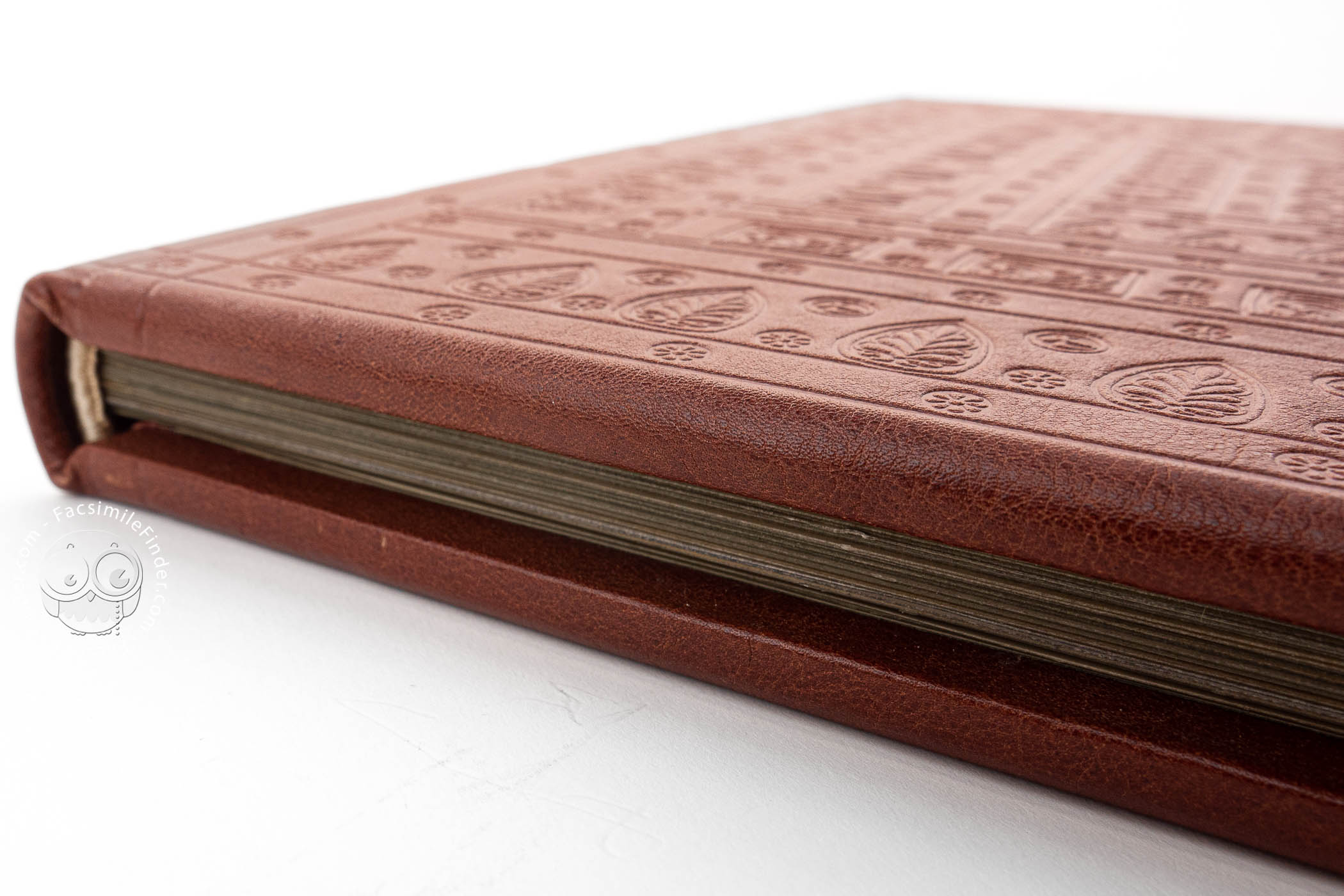
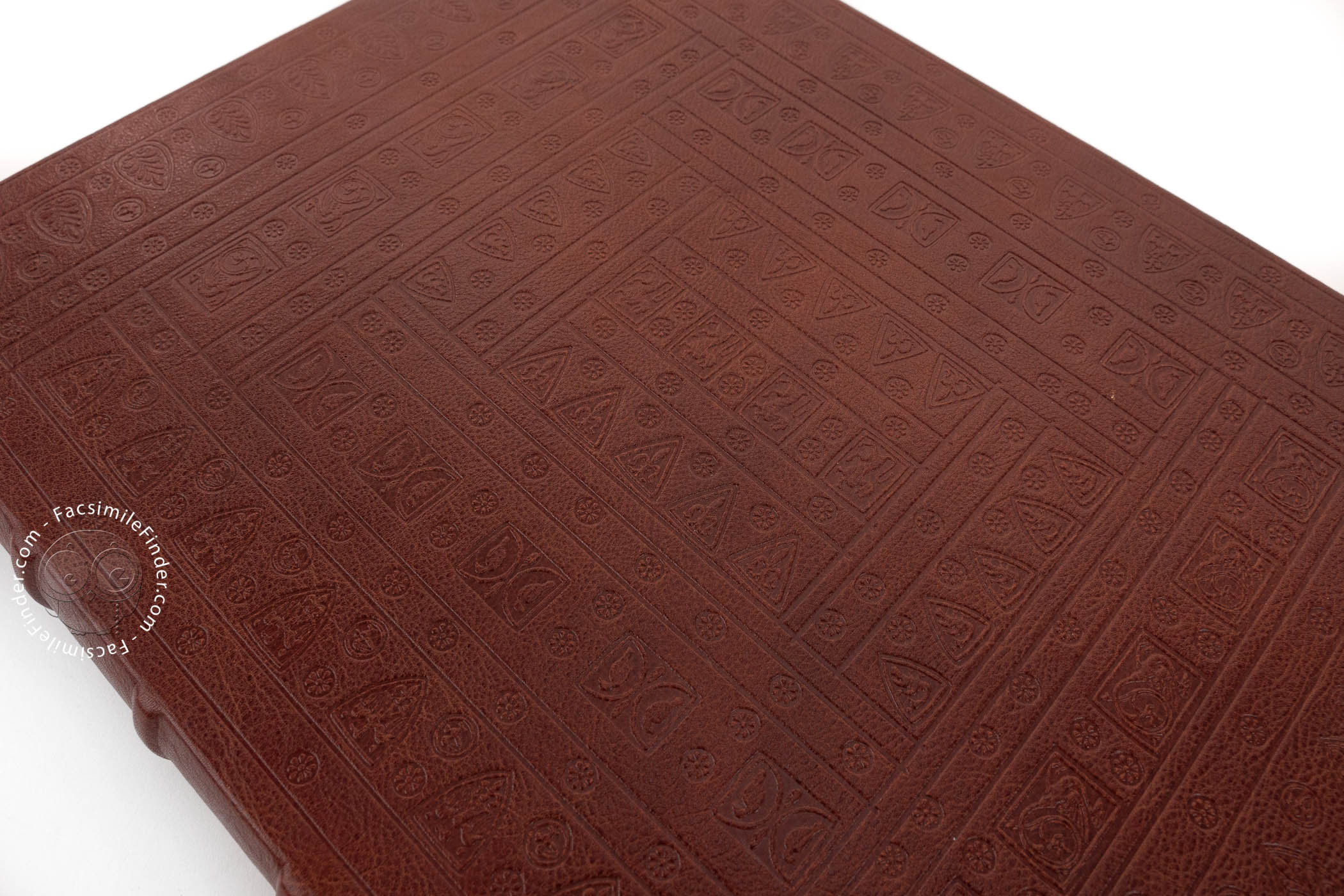
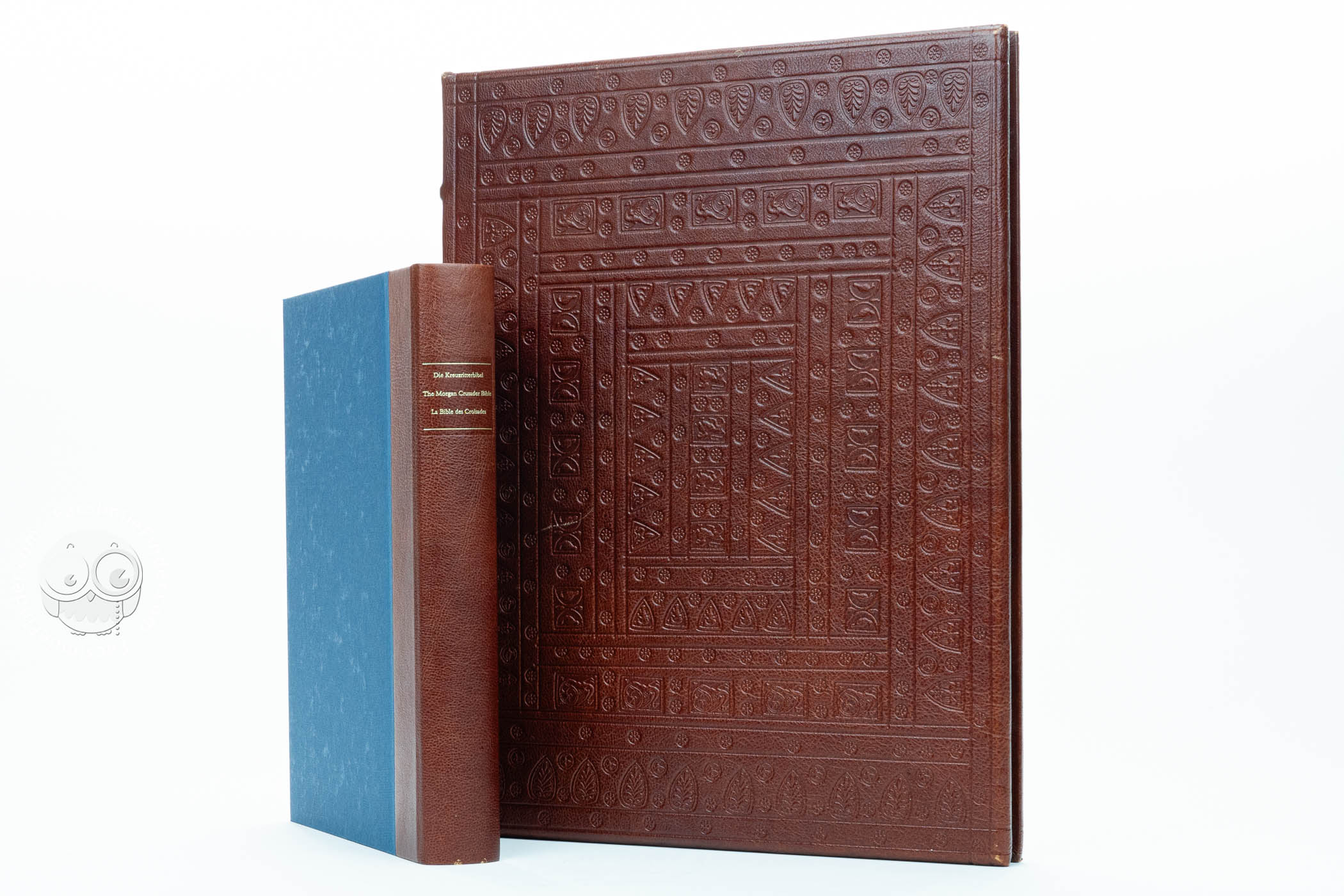
We have 4 facsimiles of the manuscript "Morgan Picture Bible":
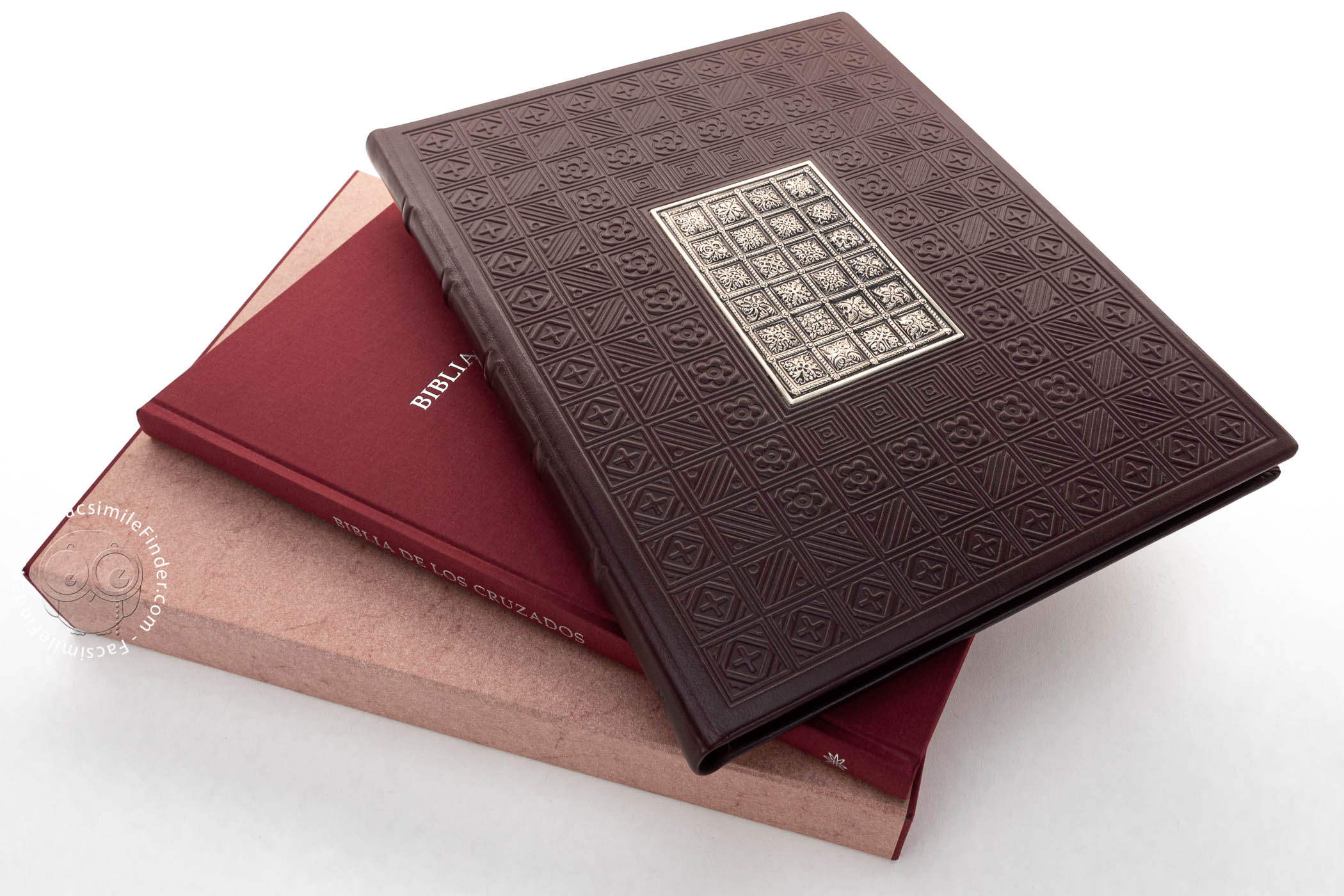
- Biblia de los Cruzados (Parchment Facsimile) facsimile edition published by Scriptorium, 2013
- Kreuzritterbibel facsimile edition published by Faksimile Verlag, 1998
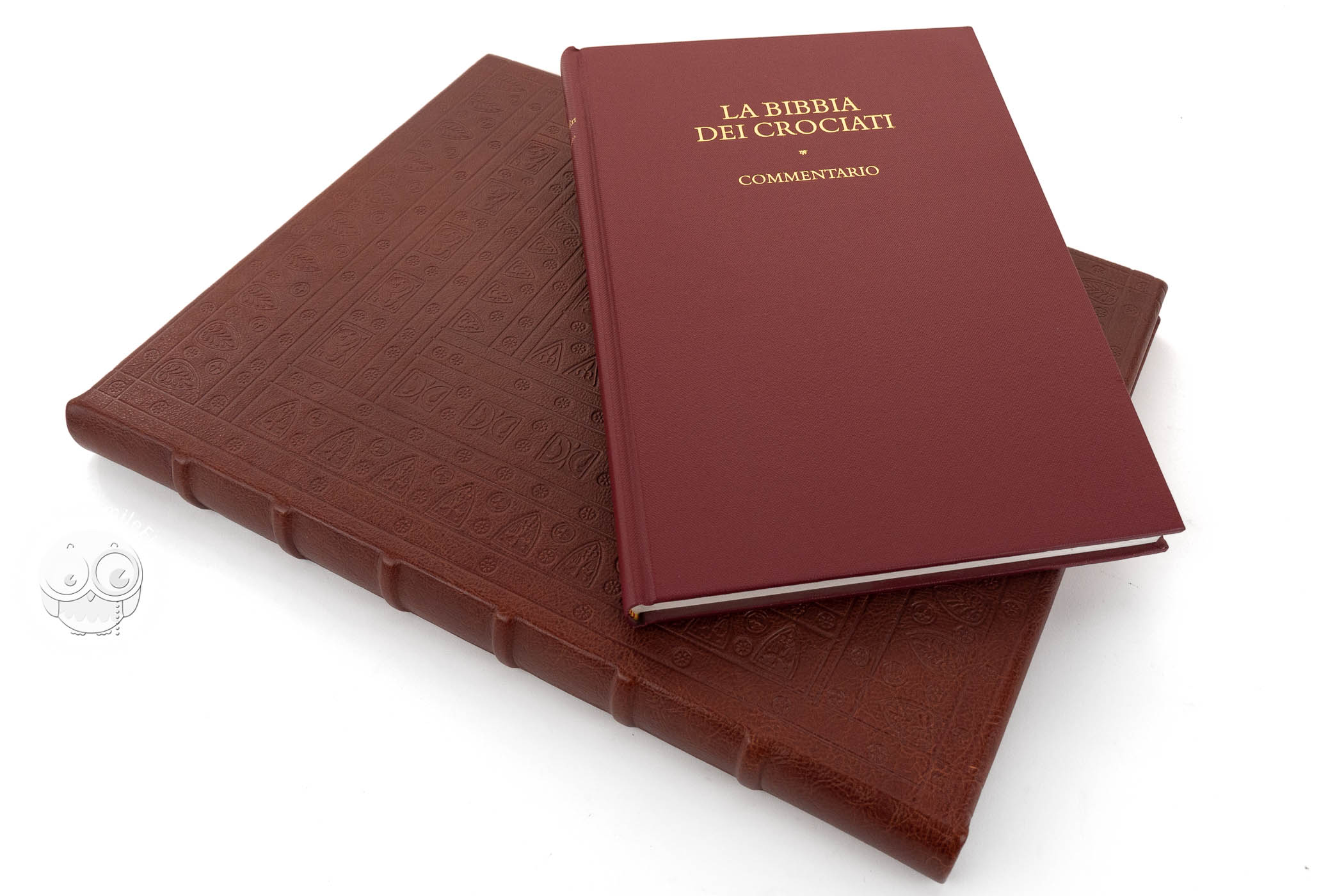
- Bibbia dei Crociati facsimile edition published by Salerno Editrice, 1998
- Biblia de loz Cruzados facsimile edition published by Ars Millenii, 1999