



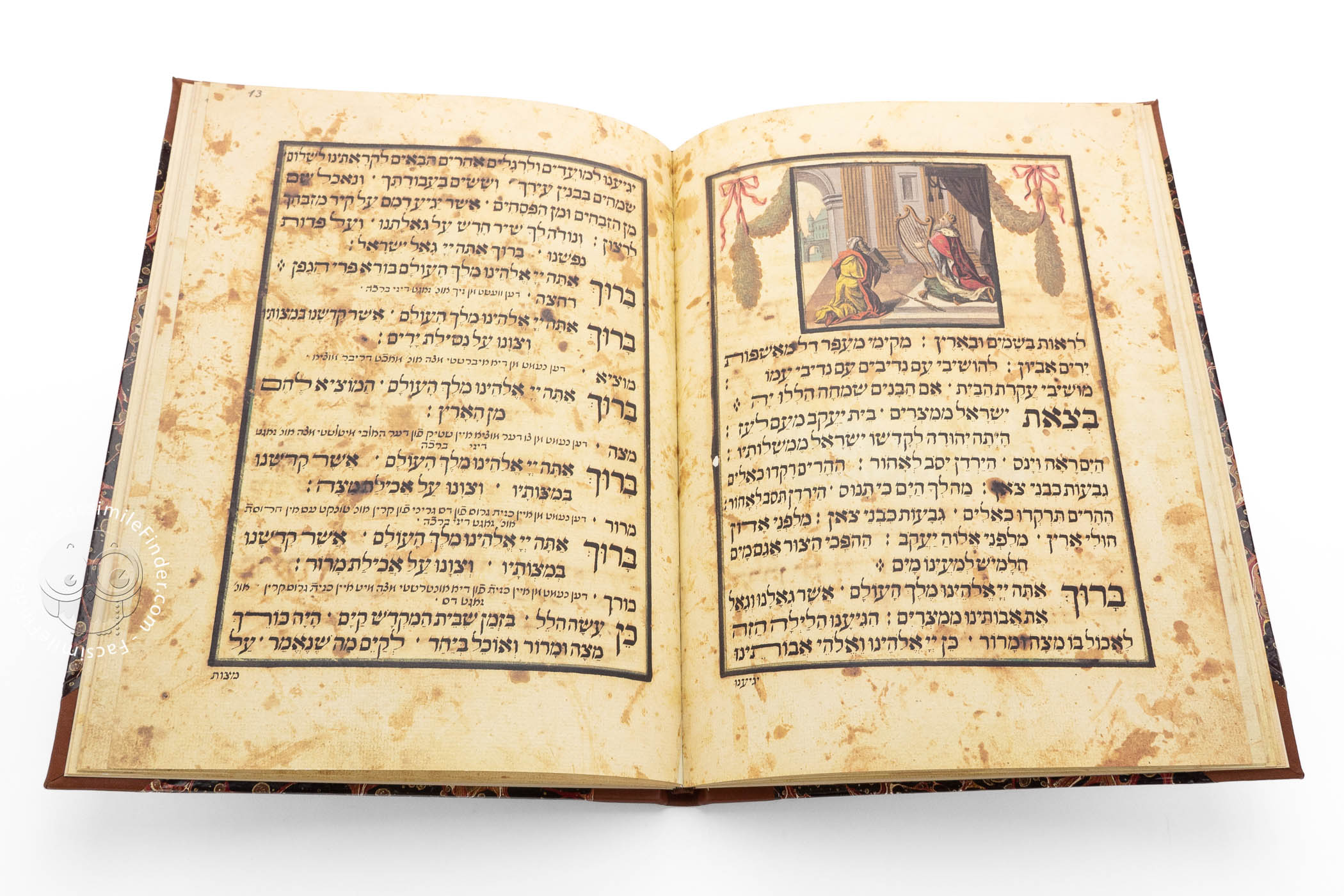
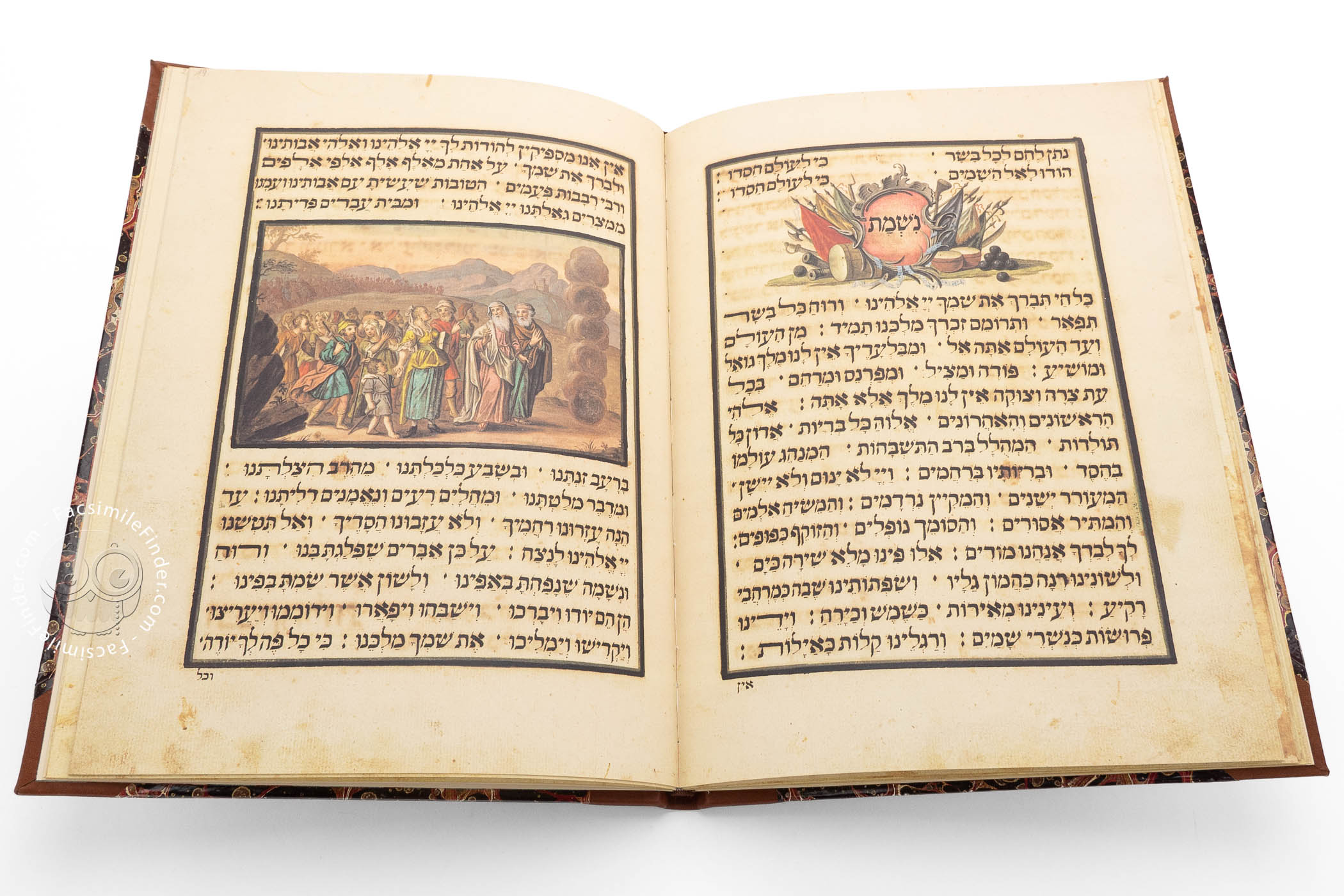


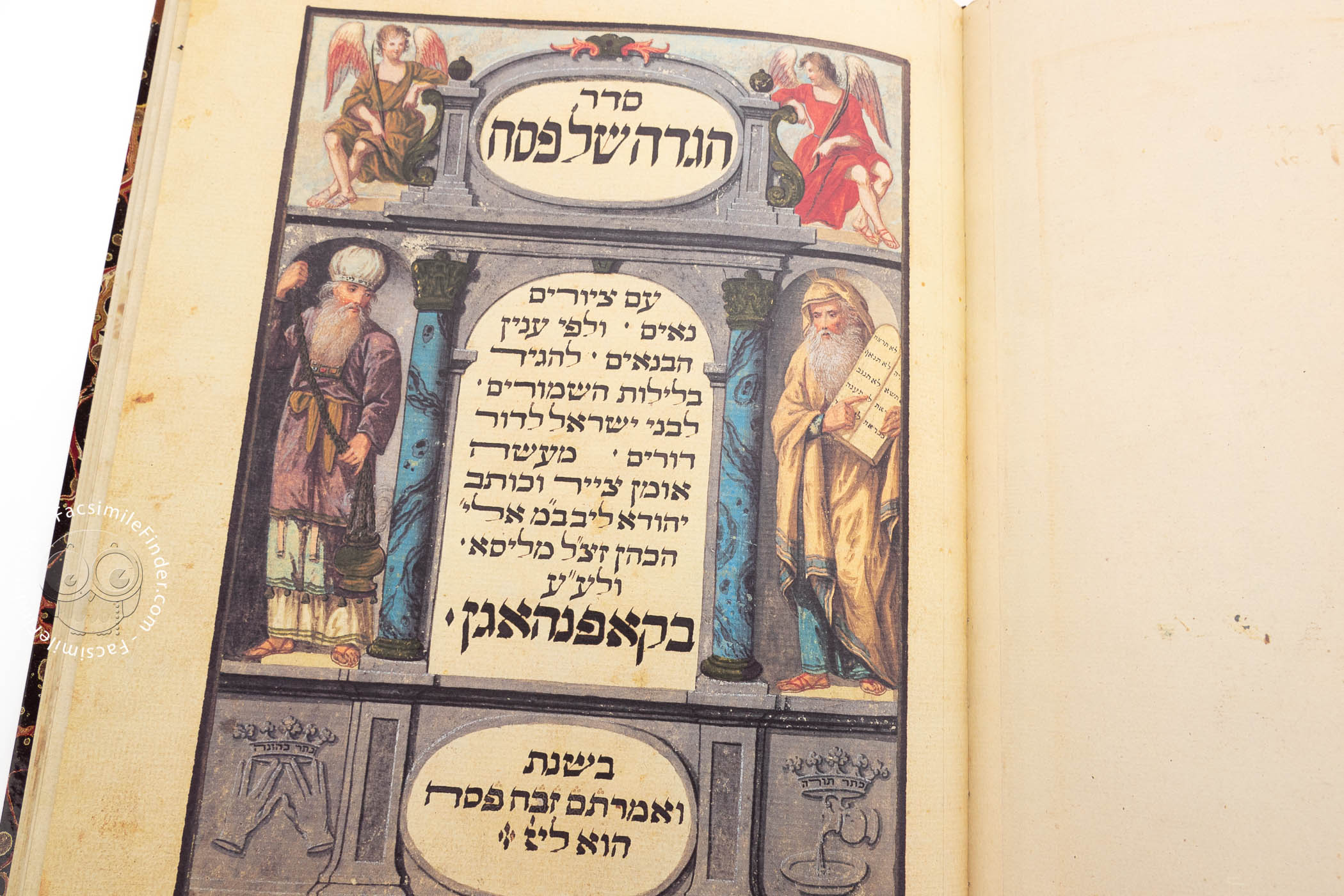
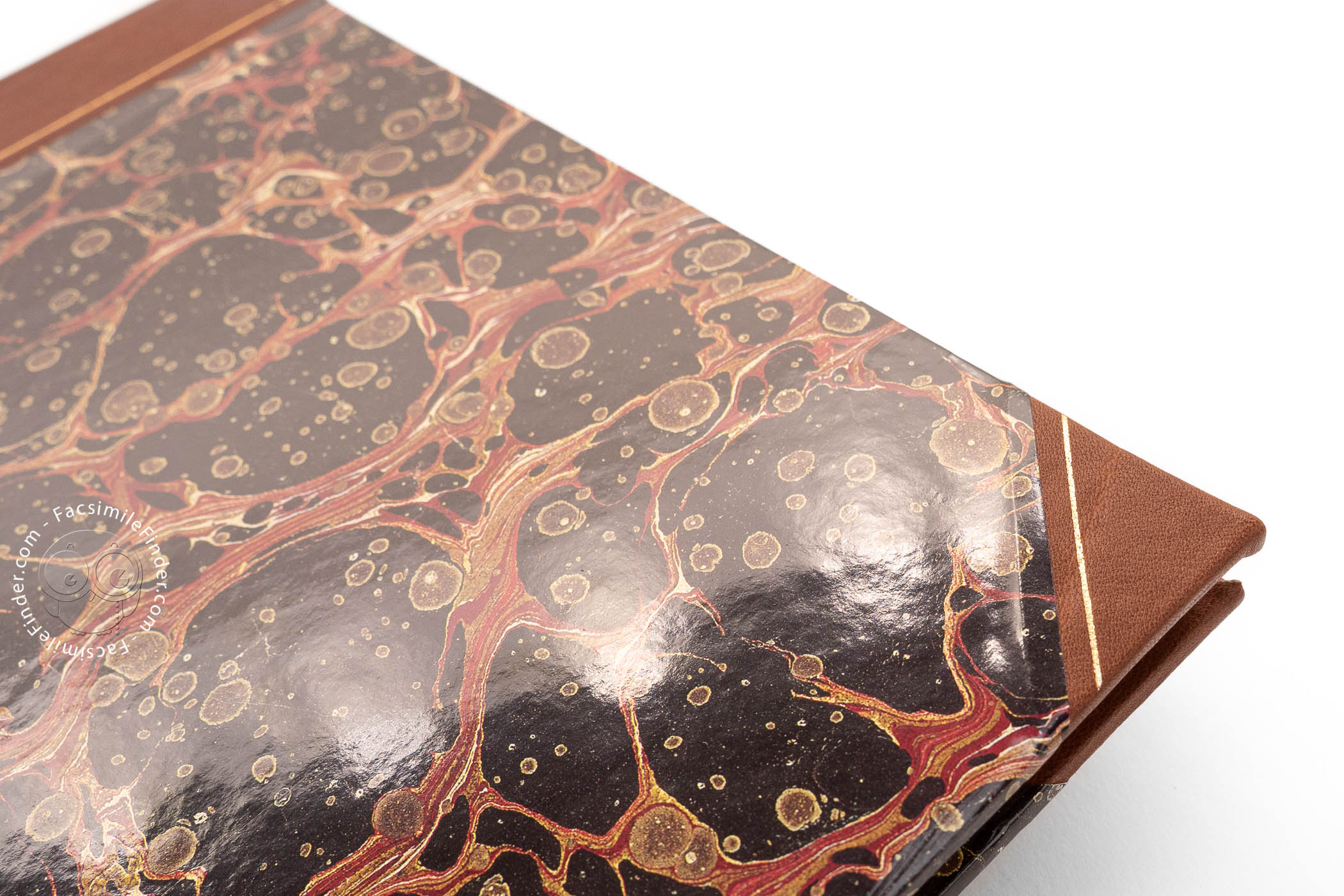
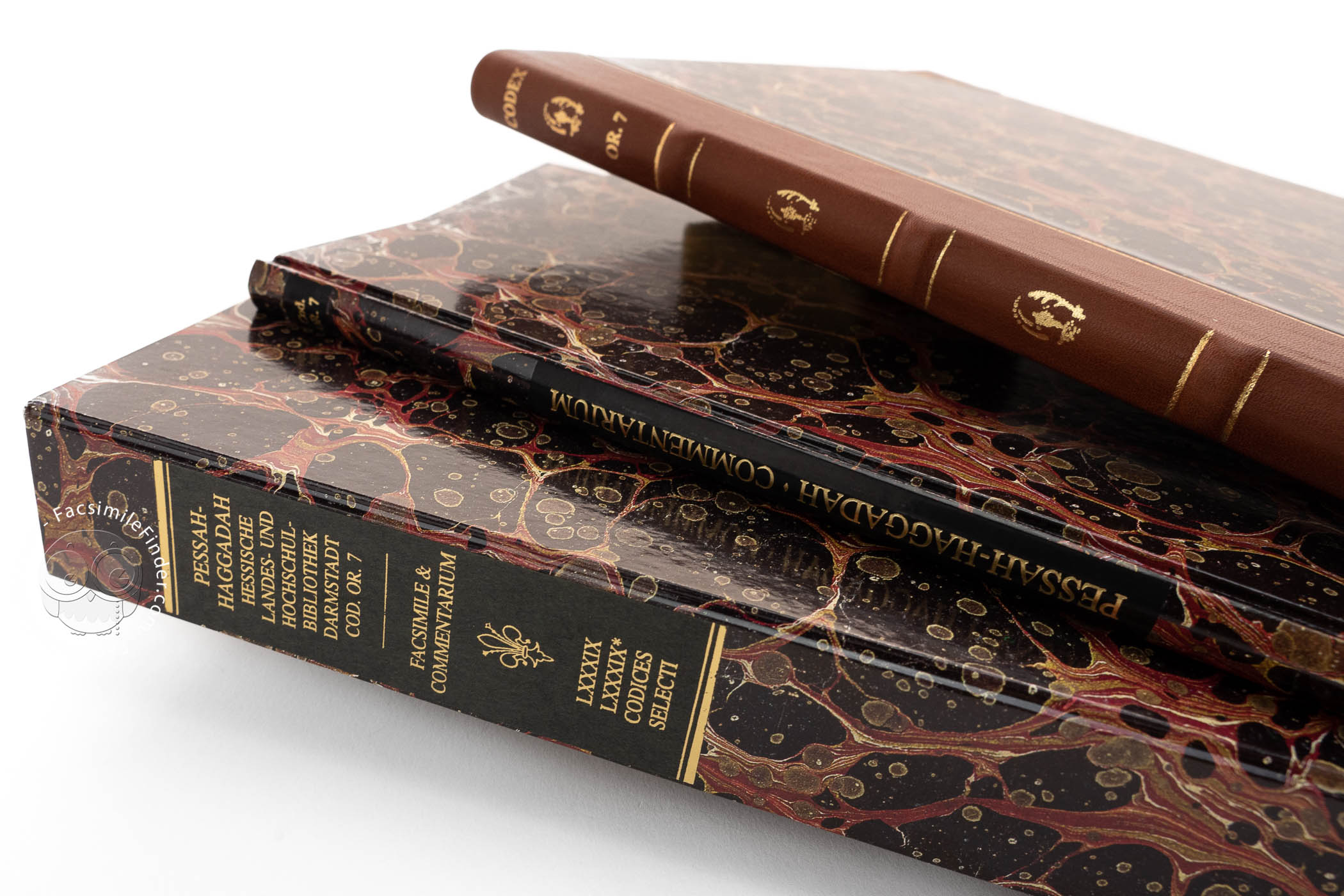
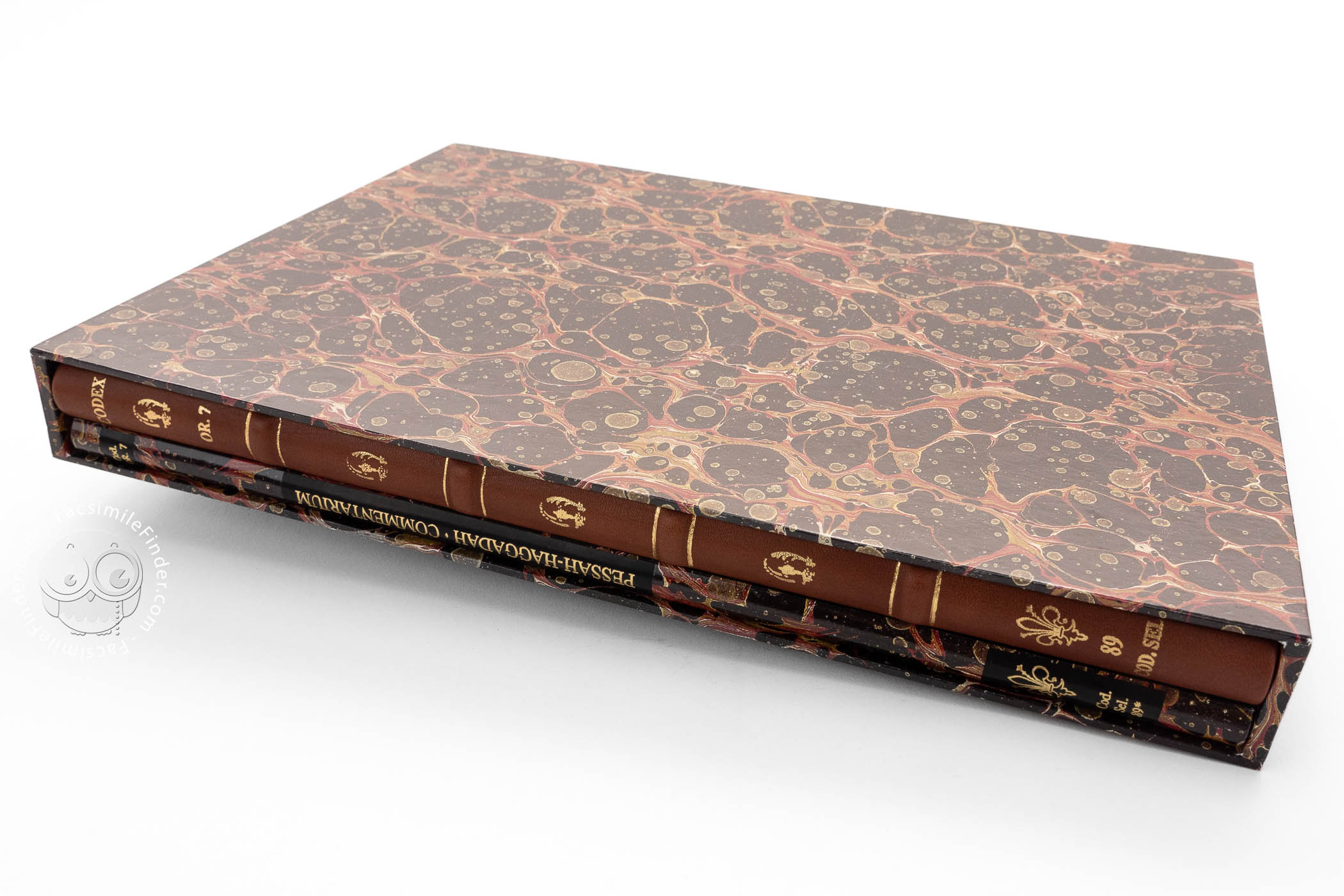
The Darmstadt Pessach Haggadah is an illuminated manuscript of the guide to the seder, the ritual family meal of the Jewish Passover. Written and illuminated by Yehuda Leyb ben Eliy ha-Kohen in Copenhagen in 1769, the handsome manuscript is a precious witness to Jewish life in eighteenth-century Denmark. Its sixteen framed miniatures, title page, and seven vignettes reveal Leyb's originality and full mastery of Baroque, Rococo, and Neoclassical idioms of painting. The pictorial content embraces both episodes in the Hebrew Bible and scenes of contemporary Jewish ritual practice.
In Europe, the seder is celebrated on the first two nights of the Passover festival, which lasts eight days and commemorates the Exodus of the ancient Israelites from Egypt. Symbolic dishes—bitter herbs and unleavened bread—remind the faithful of the haste with which their forebears fled Egypt.
An Informed and Eclectic Painter
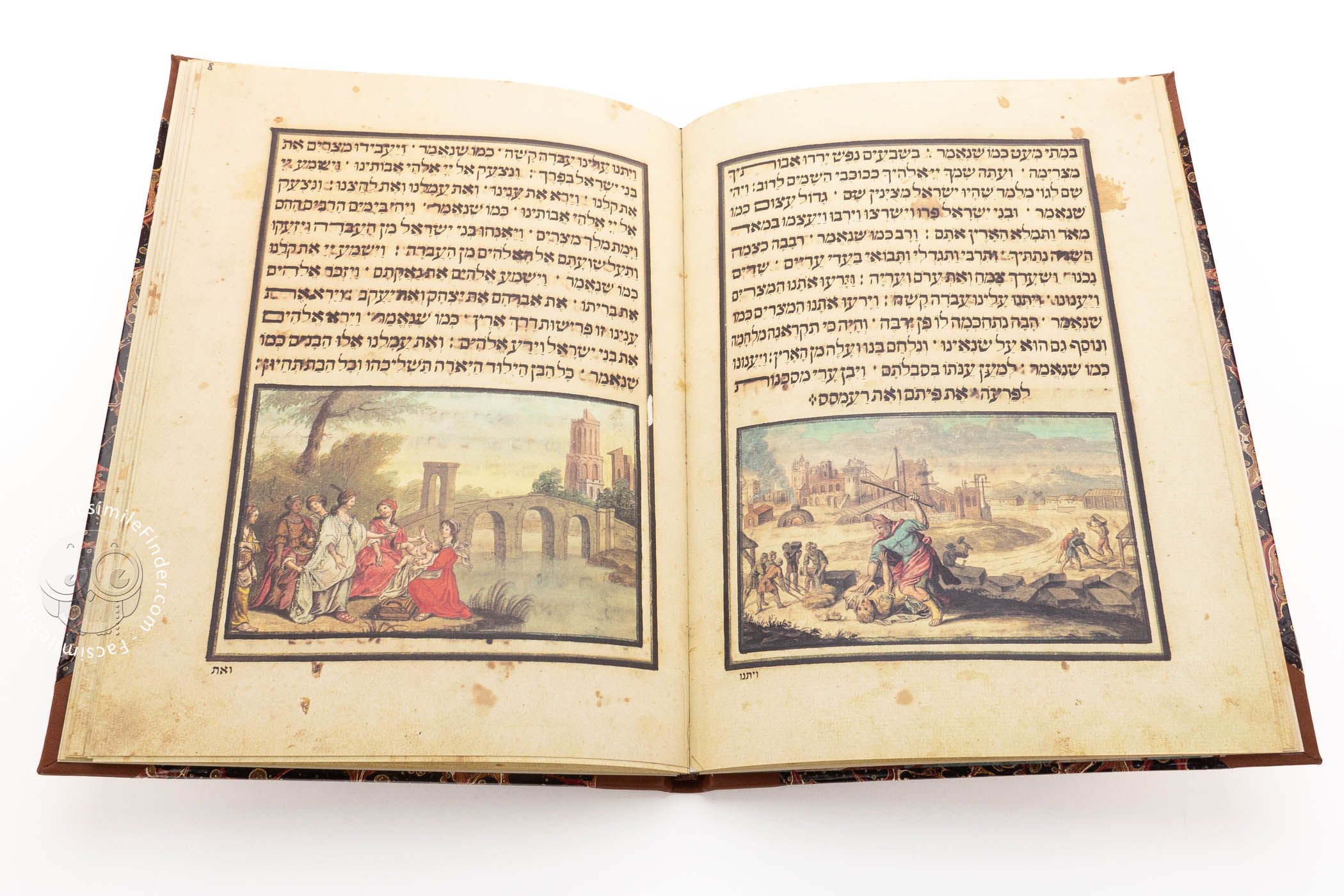
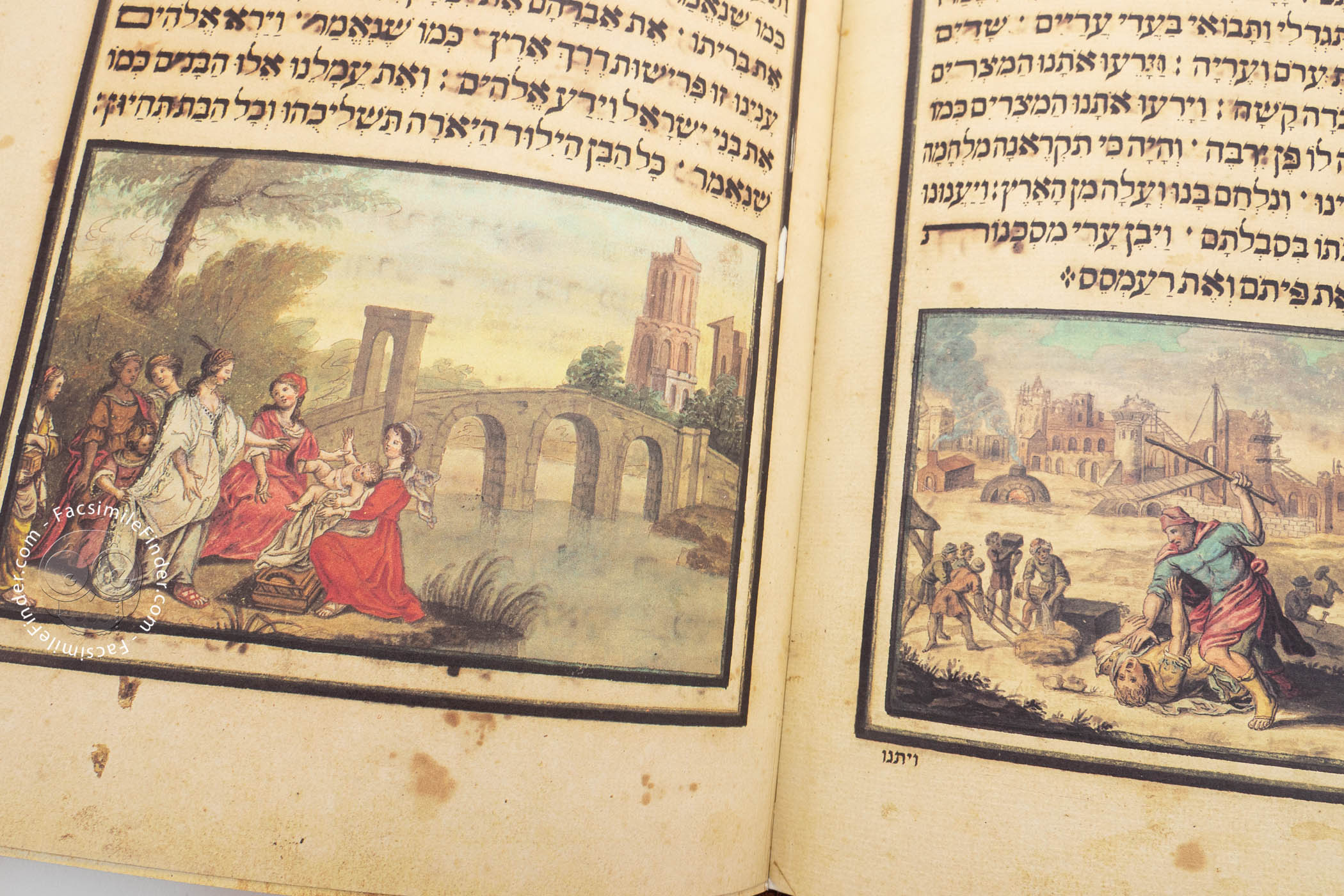
As was common in eighteenth-century manuscript Haggadot, Leyb based some of his imagery on copperplate engravings in the Haggadot printed in Amsterdam in 1695 and 1712. The miniature of the cities of Pithom and Raamses, built by the enslaved Egyptians, for example, is clearly copied from the earlier engraving (fol. 7v).
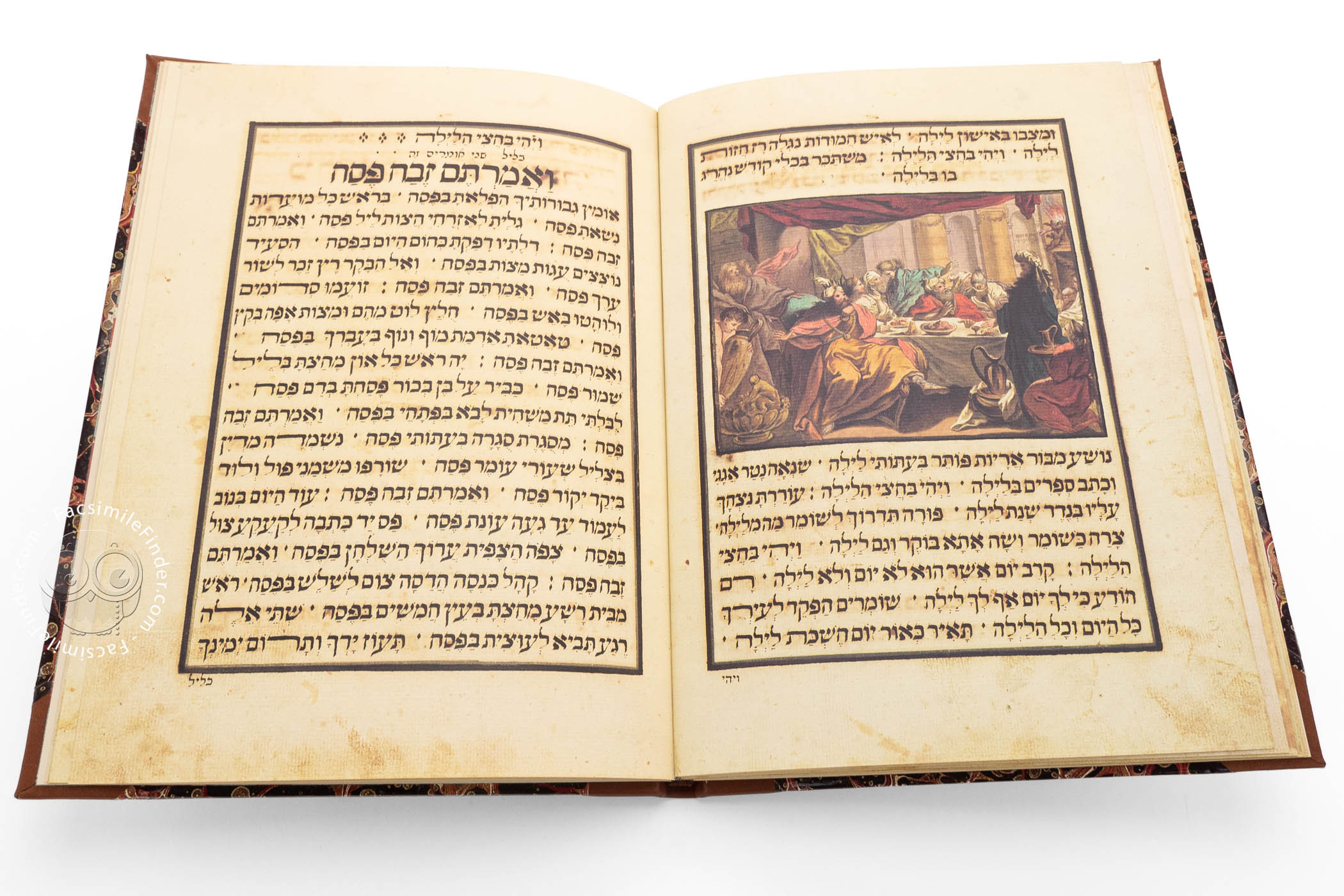
Leyb more often created images that diverged in composition or subject from the print tradition that reflect the artistic sensibilities of his own time. The scene of Belshazzar's Feast is an entirely new invention that uses the dramatic lighting of Flemish and Dutch Baroque history painting (fol. 20v). Leyb envisions the Jerusalem Temple as a Neoclassical edifice, which he renders in strict linear perspective (fol. 22r).
Exodus Illustrated
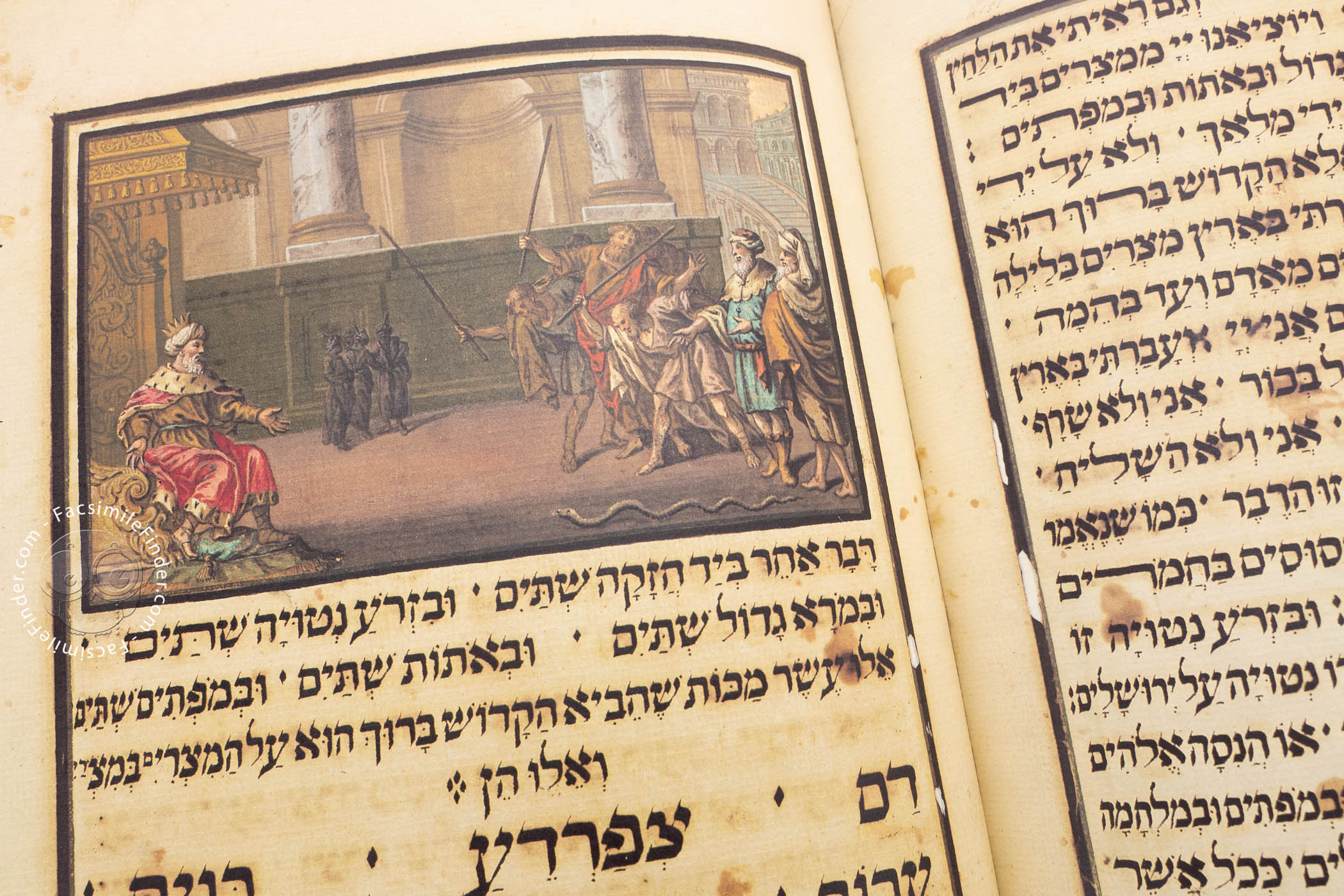
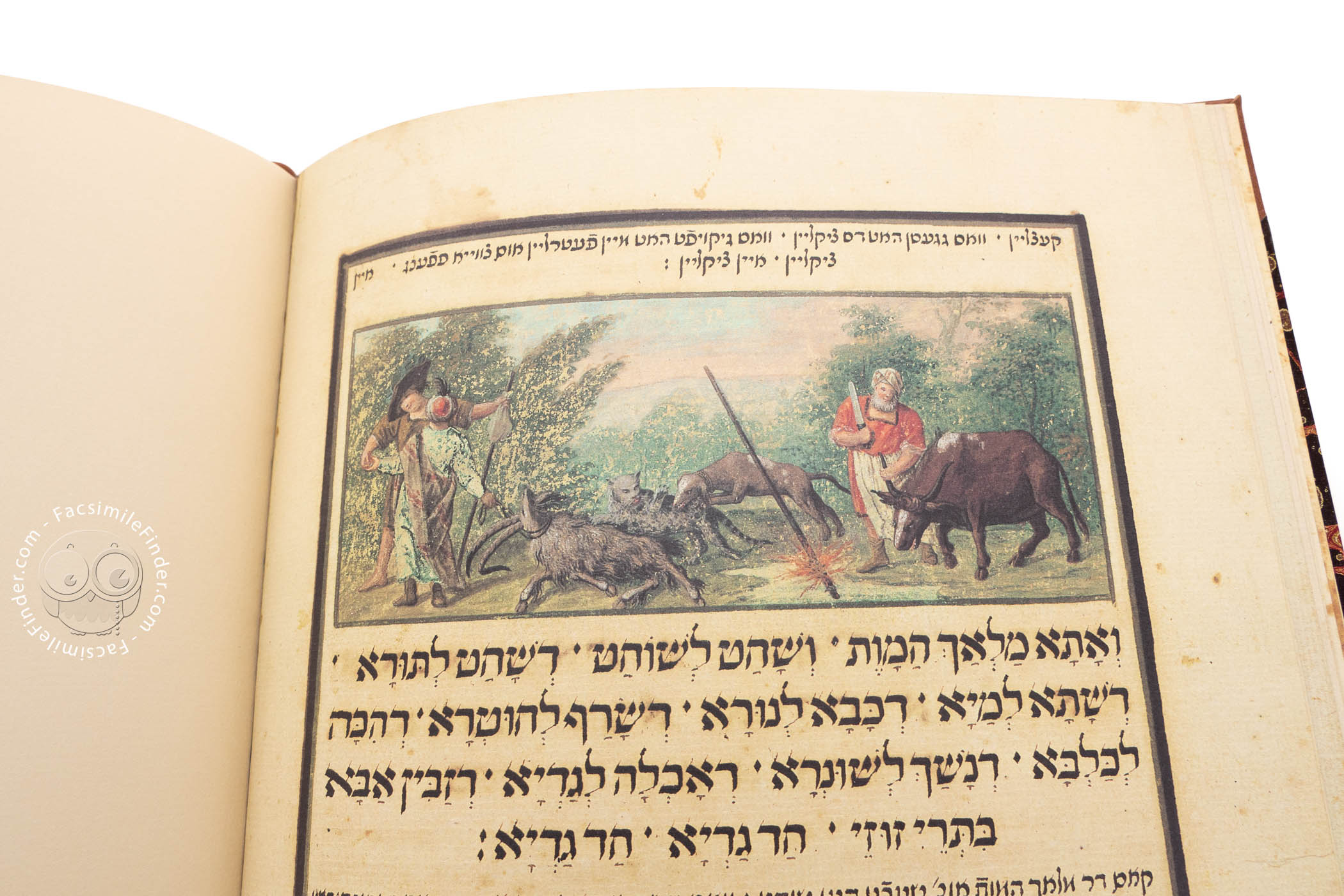
The Construction of Pithom and Raamses is the first of four miniatures depicting the story of the Israelites in Egypt. There follow the Finding of Moses, Aaron's Rod Turned into a Serpent, and Moses Receiving the Decalogue (fols. 8r, 9r, and 10v).
Ages of Humanity in the Four Sons
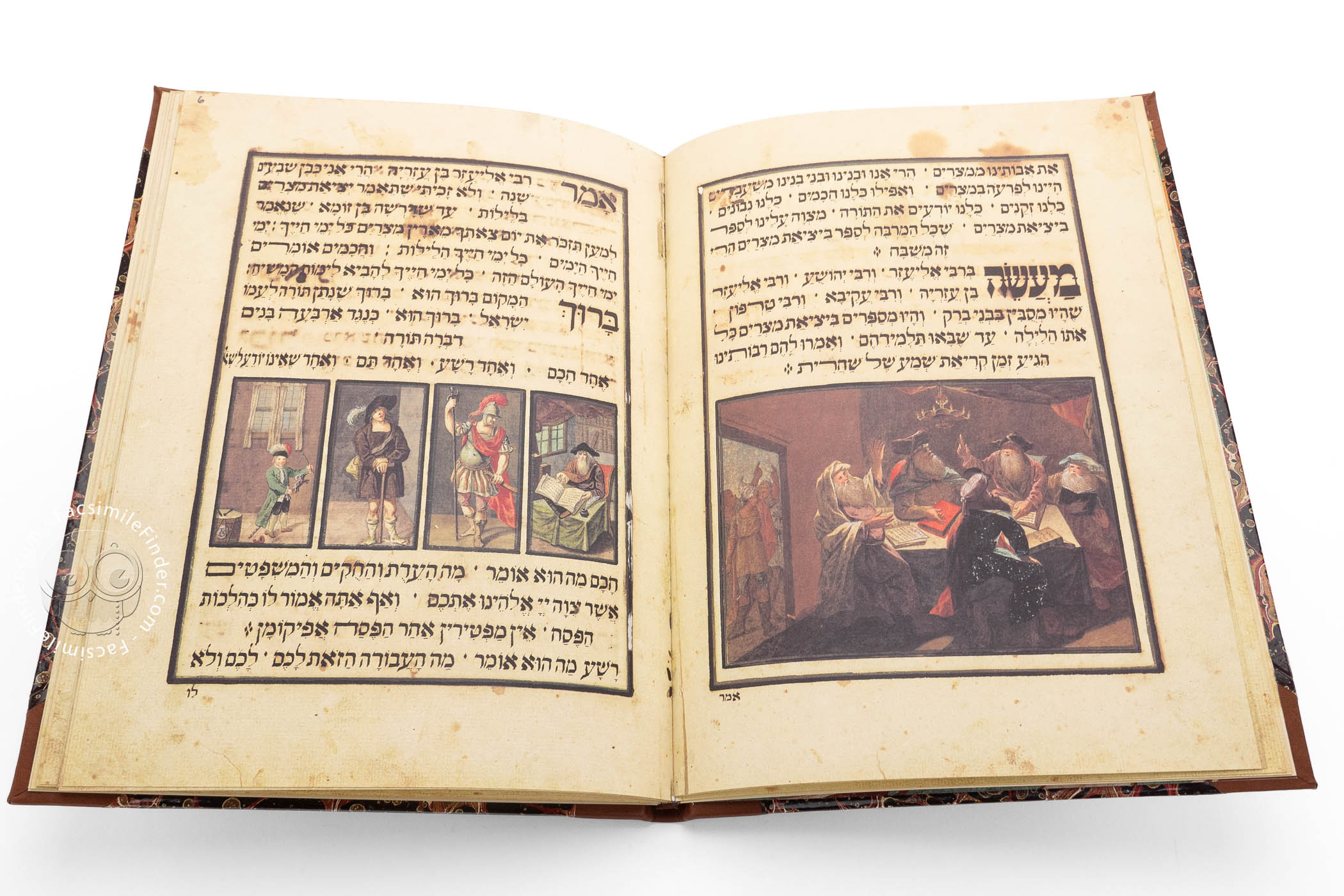
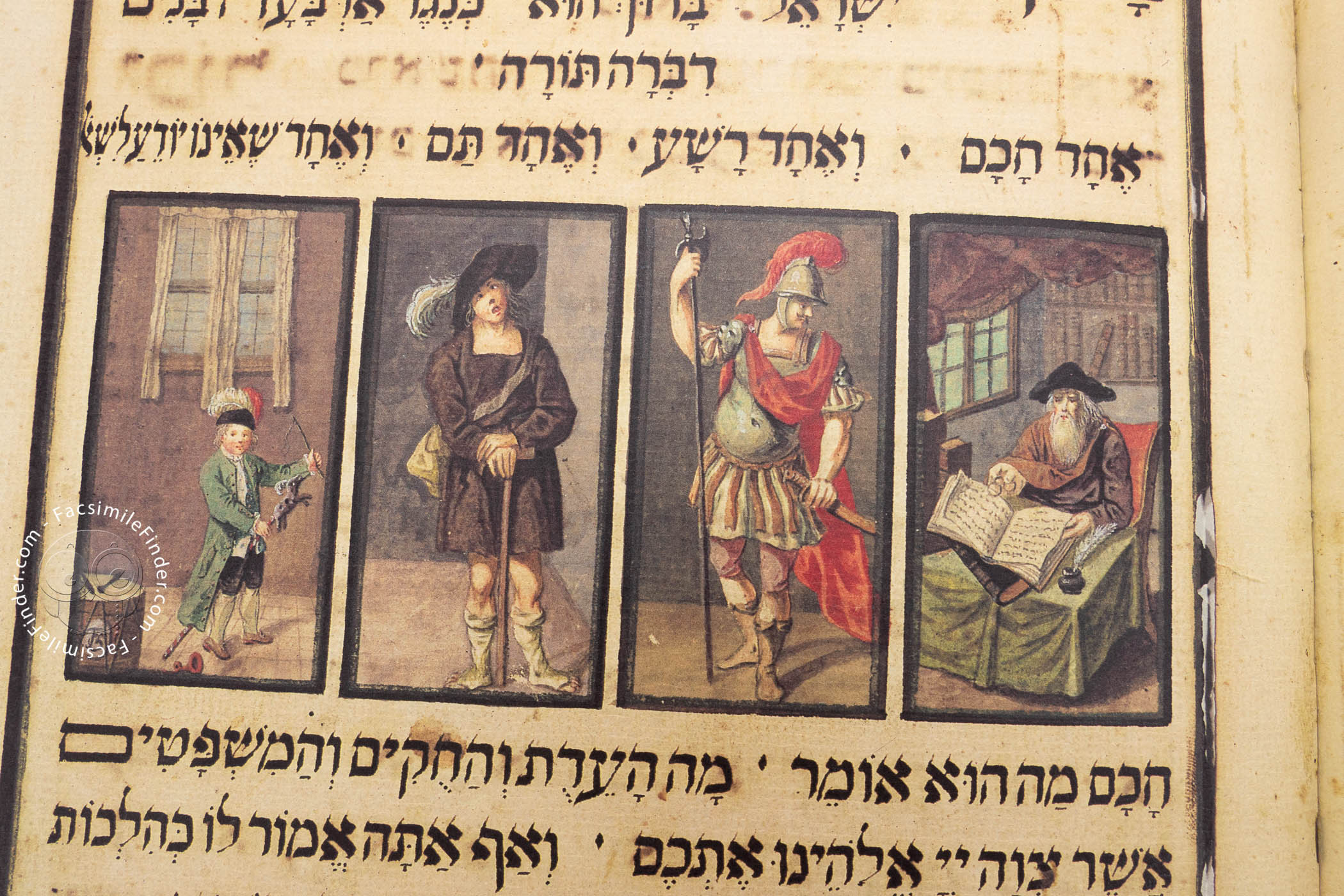
The Haggadah tells of the father's responsibility to teach the precepts of the Passover to his sons. This is represented in the Darmstadt manuscript by a row of four miniatures showing, from right to left, the wise son, the wicked son, the simple son, and the child son (fol. 6r). Leyb has built into this sequence a four-part understanding of the maturation of a human, from left to right, childhood to old age.
A Visual Pun
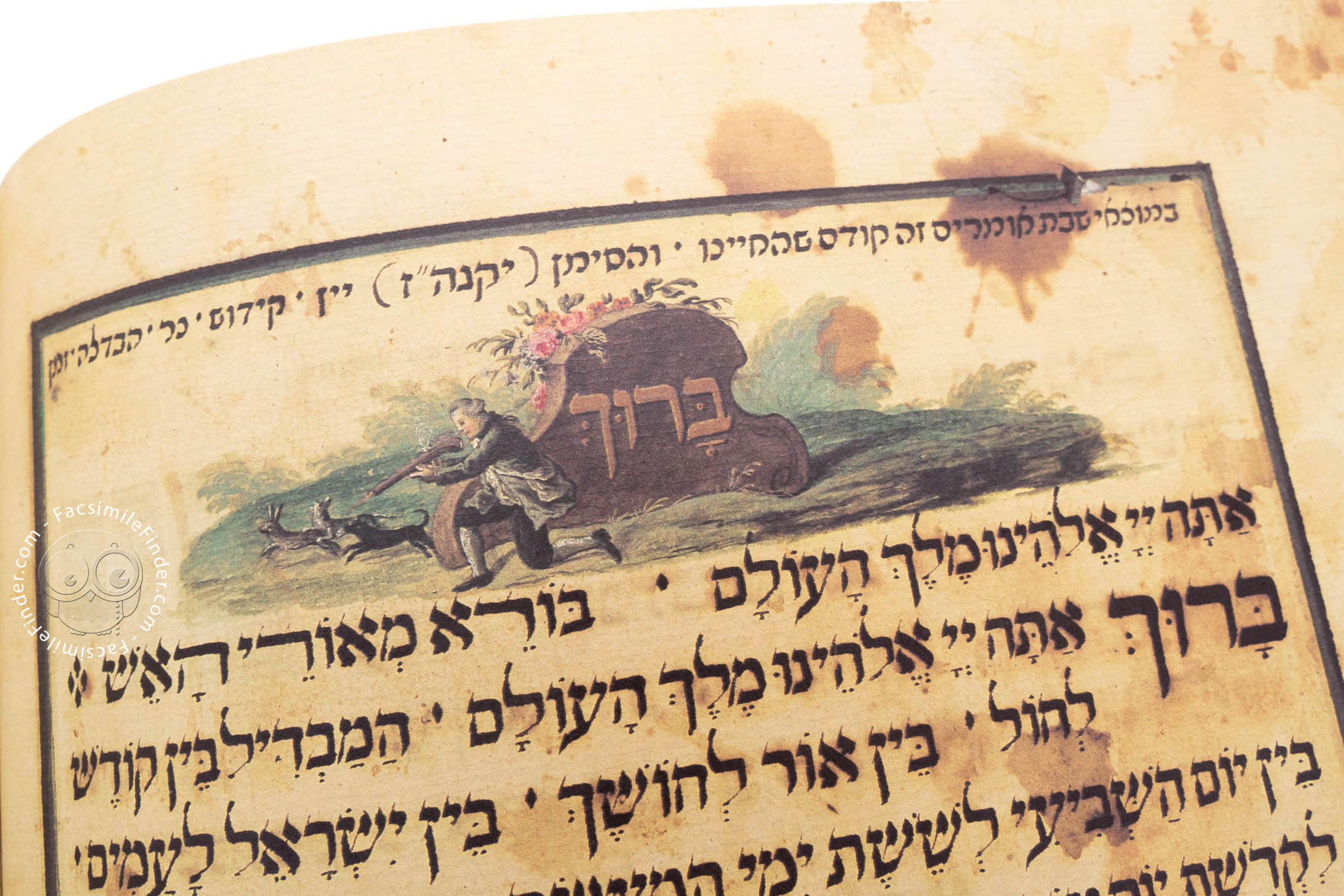
The vignette at the head of the blessings is a visualization of the acronym used to help remember their sequence: YaKNeHaZ (for Yayin, Kiddush, Ner, Havdala, Zeman), which, when sounded out, suggests "hunt the hare" in German. The vignette, accordingly, shows a young hunter with his dog in pursuit of two hares, a charming Rococo genre scene (fol. 4v).
Stately Presentation
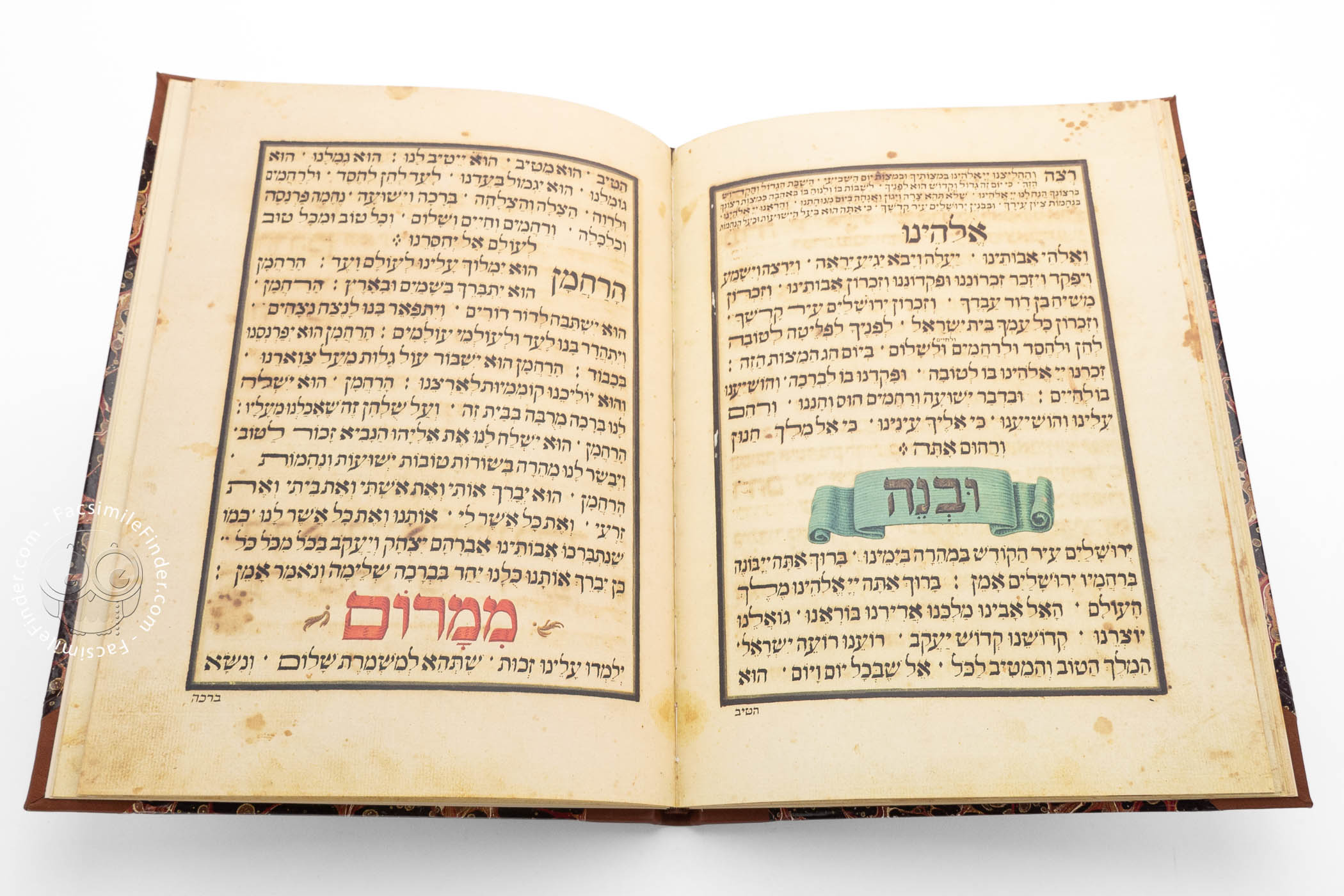
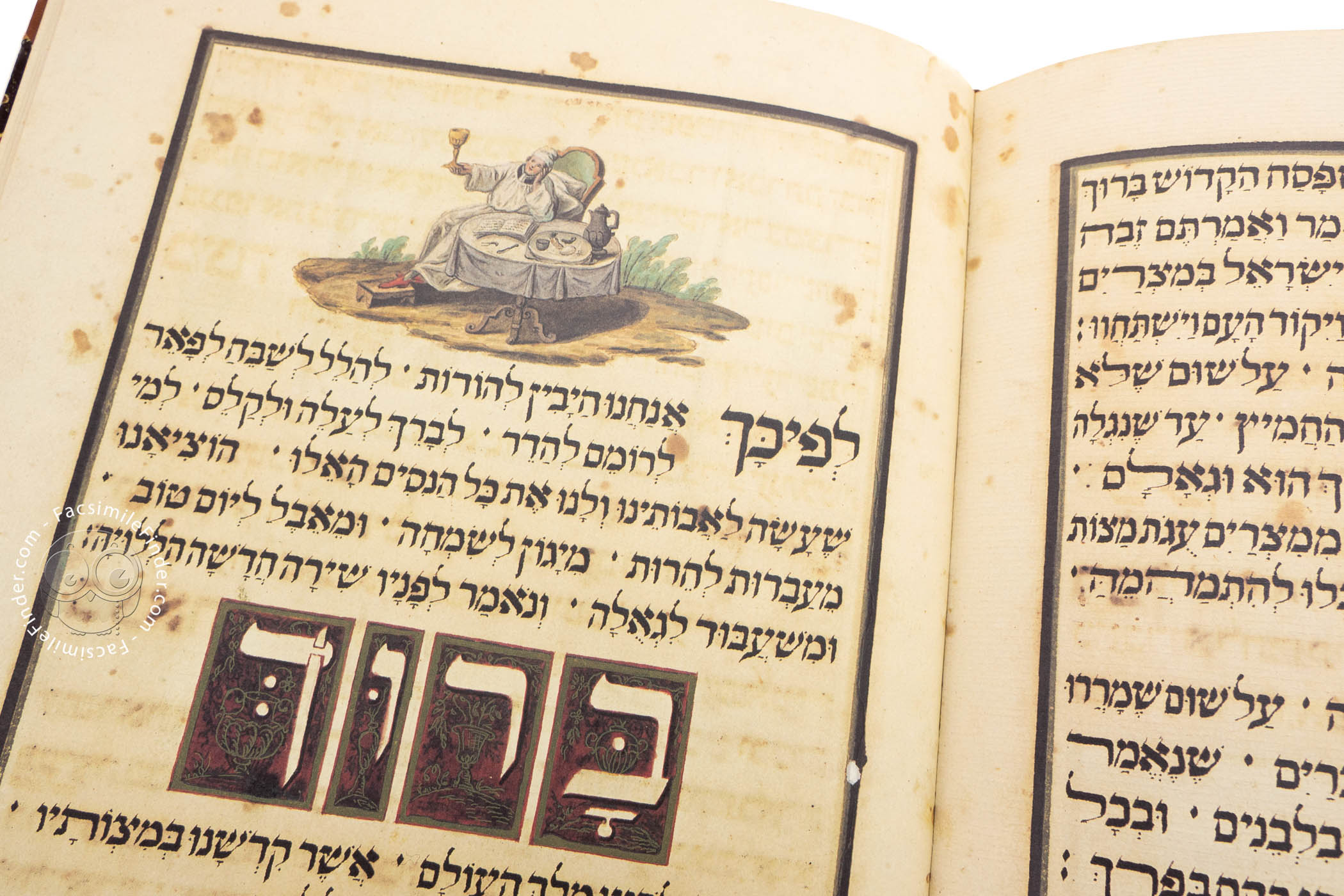
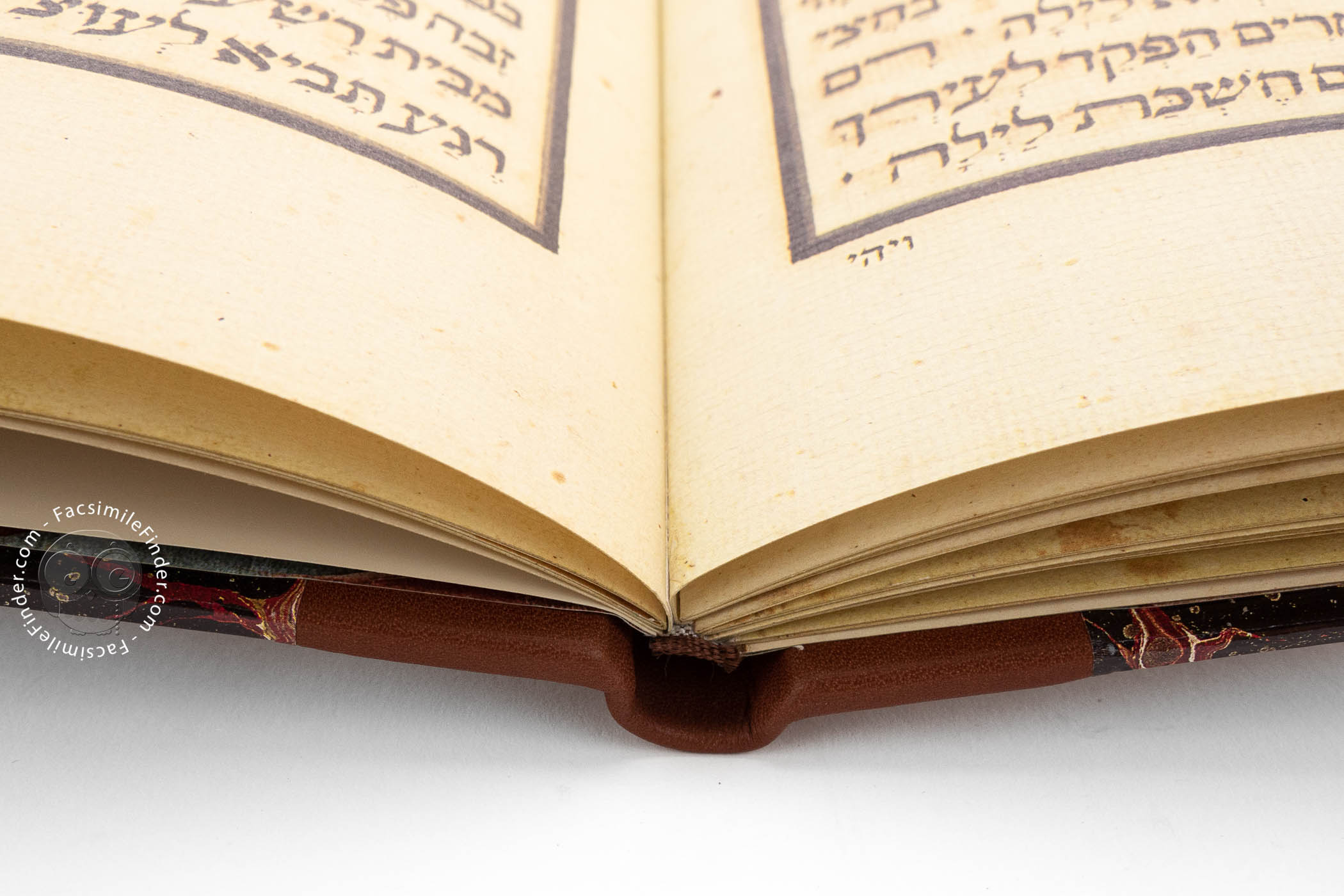
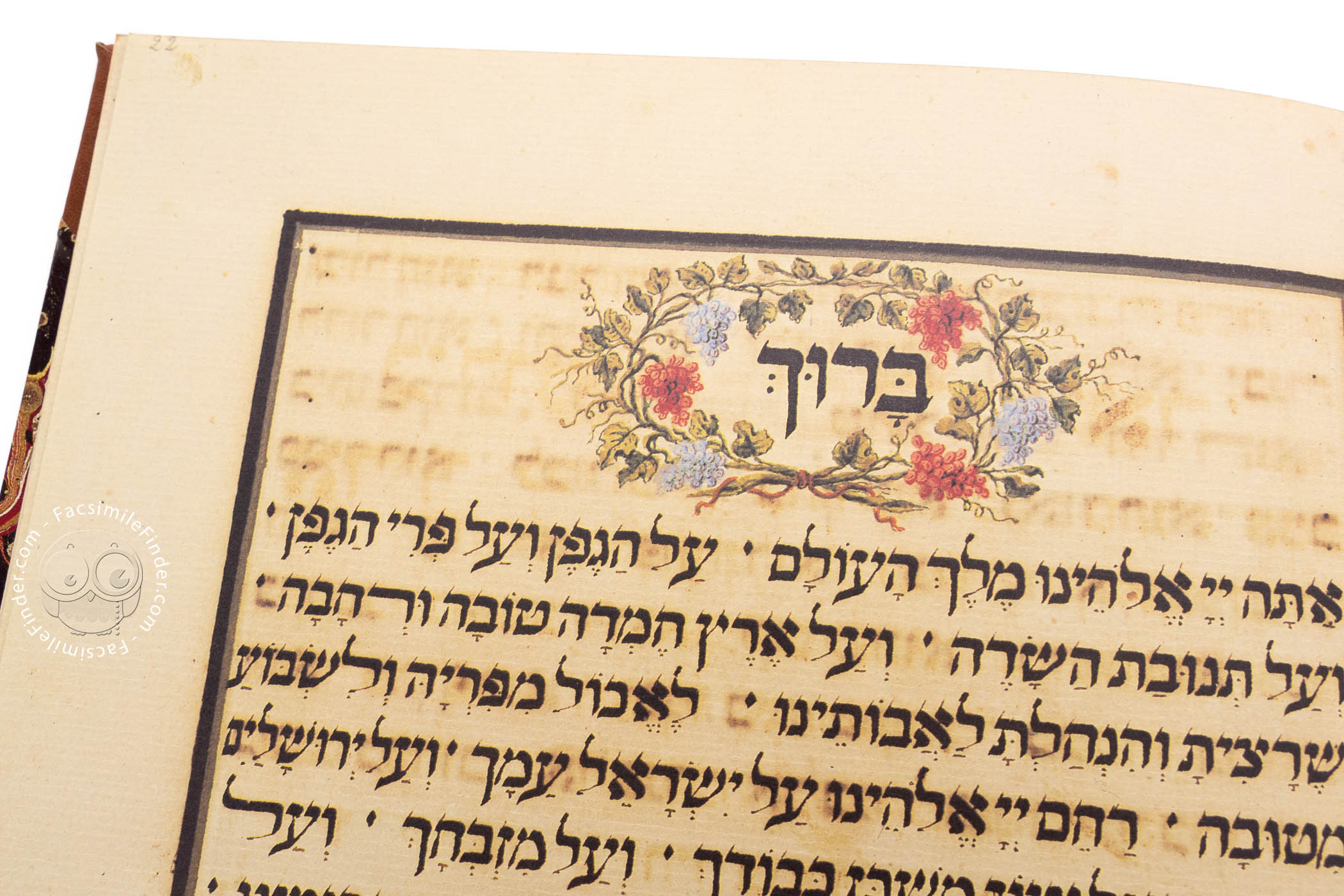
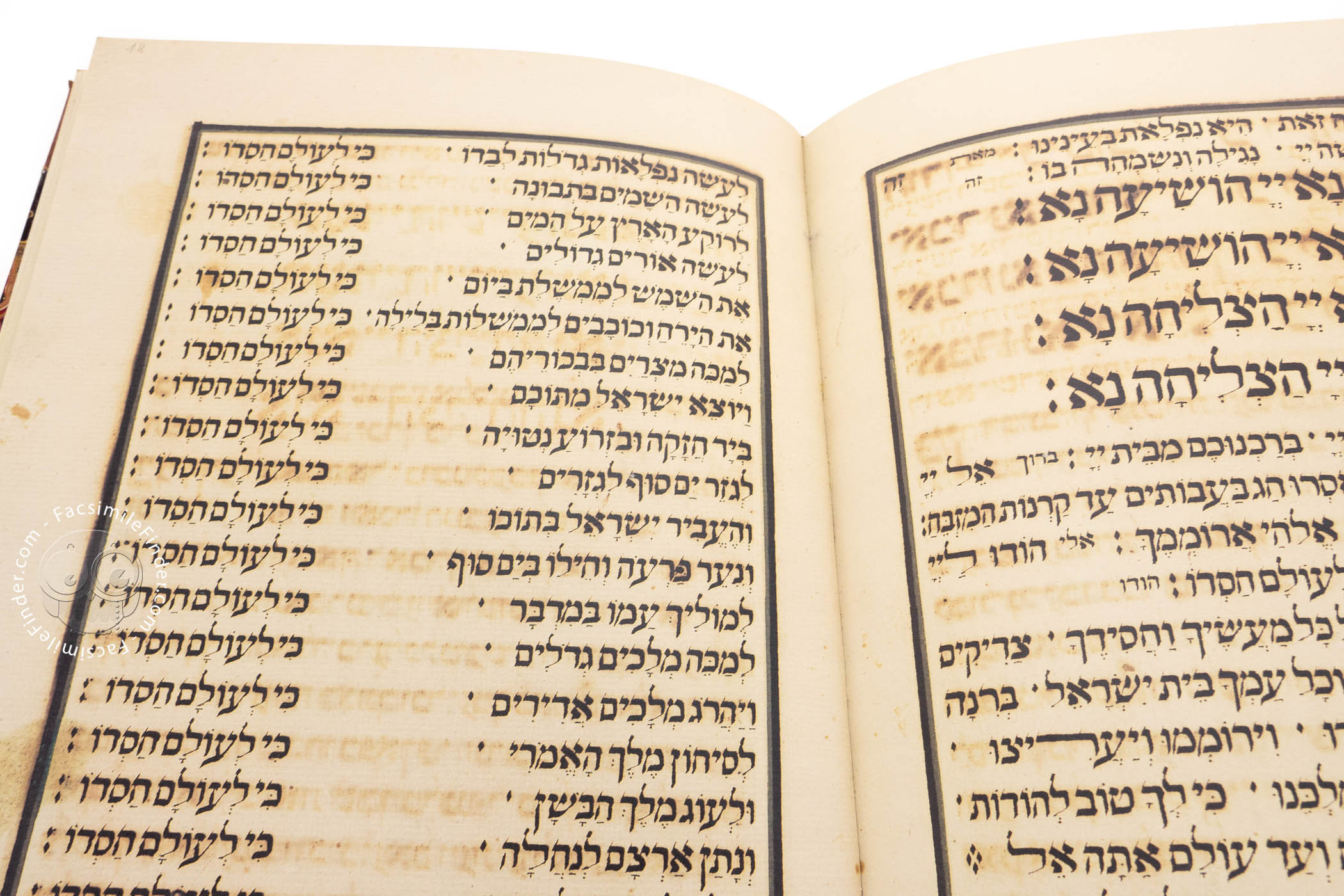
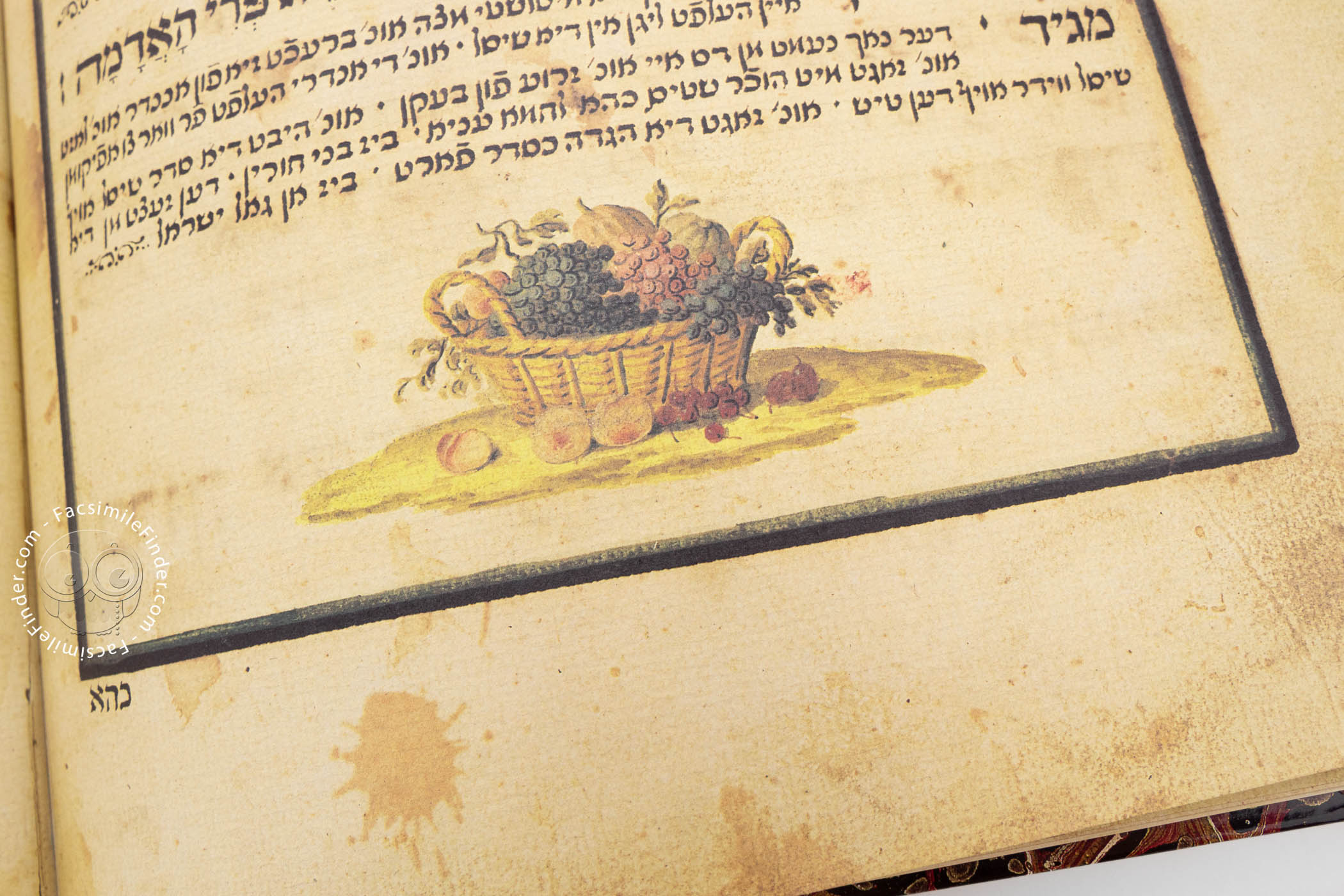
Leyb wrote the Hebrew and Aramaic text in Hebrew Square Script. Each page, whether of text or text and image(s), has a painted frame. He varied the size of the script to help articulate the different sections of the text. Three opening words of sections are enlarged and composed of fictive ribbons (fols. 3r, 5r, and 7r). Another first word appears to be written on a ribbon (fol. 14v).
Owned by the Chief Rabbi of Denmark
In 1860, Denmark's Chief Rabbi Abraham Alexander Wolff (1801-1891) presented the manuscript to the Hofbibliothek of the Grand Duke of Hesse in his native city of Darmstadt. The court library became the Hessische Landesbibliothek in 1920 and is now absorbed into the Universitäts- und Landesbibliothek Darmstadt.
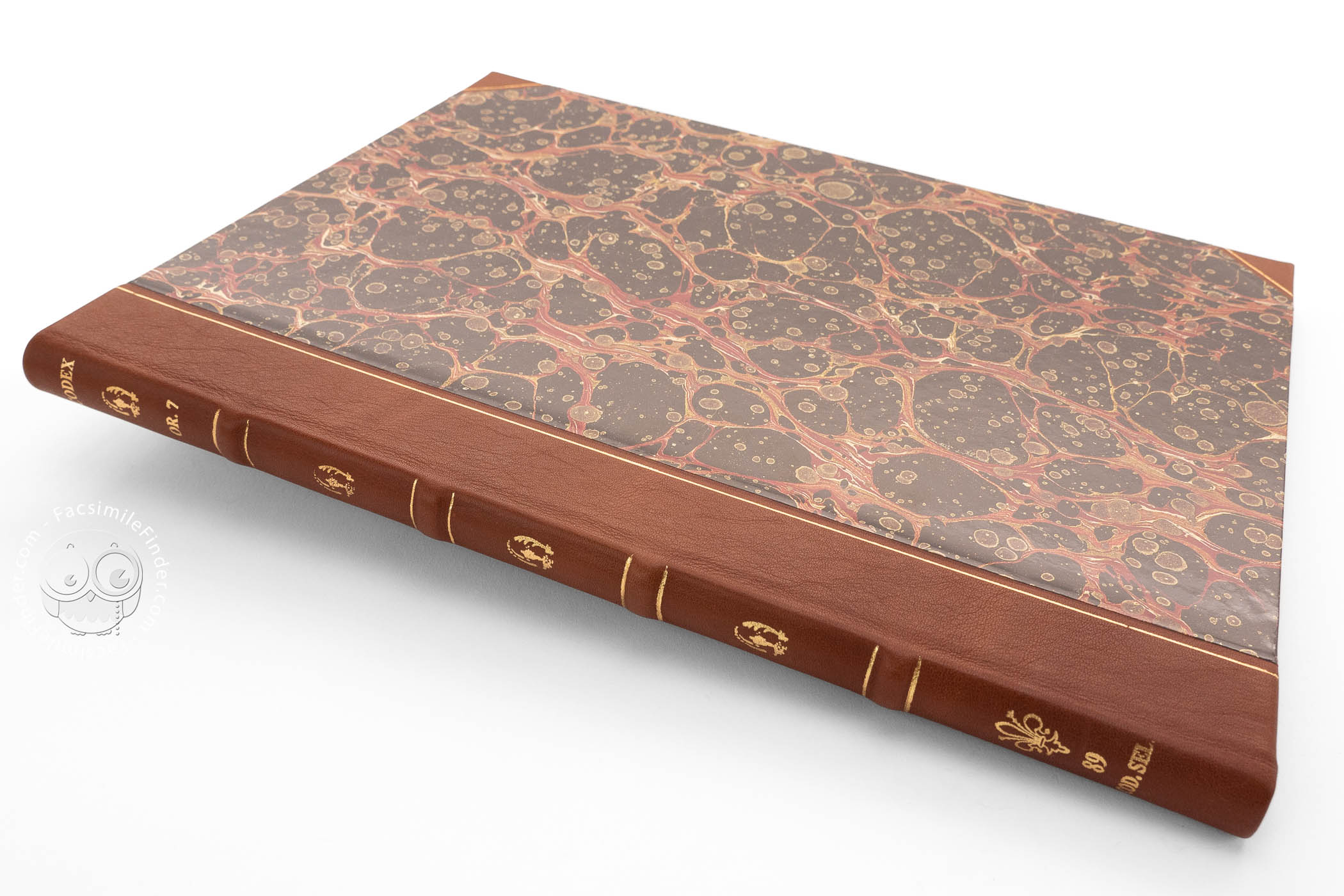
We have 1 facsimile edition of the manuscript "Darmstadt Pessach Haggadah": Die Pessach-Haggadah facsimile edition, published by Akademische Druck- u. Verlagsanstalt (ADEVA), 1989
Request Info / Price