

There are moments when history steps down from the page and quietly takes a seat among us. This is what happened when Clara was invited into a primary school classroom in the small town where she lives, carrying with her not just knowledge, but a fragment of ancient Egypt itself.
The Papyrus of Ani and the Egyptian Book of the Dead
On the desk lay one of the thirty-seven fragments of the Papyrus of Ani—a section of the famous Book of the Dead, created around 1250 BCE, discovered in Thebes, and today preserved at the British Museum. In front of her, twenty children waited with the uncompromising curiosity of those who refuse ready-made answers.


Their questions began with the object: What is papyrus? How was it made? Why is it so long? But very quickly, the conversation moved elsewhere—to death, the afterlife, justice, memory, and the beliefs of the ancient Egyptians. Together, they explored the world of Egyptian deities and the powerful image of the Psychostasia, the weighing of the heart. The children learned how the heart, seat of conscience and moral life, was measured against the feather of Ma’at, and how destiny depended not on status, but on one’s actions in life.
Learning Through Facsimiles: Experiencing the Papyrus of Ani Up Close
Then came the moment that changed everything. The children were allowed to touch the papyrus. They traced the weave of its fibres with their fingertips, observed the still-vivid pigments, and followed the precise, confident strokes of the hieroglyphs. The room grew quiet—not out of instruction, but out of awe. Holding a material witness to such distant centuries transformed history from an abstract narrative into a lived experience.
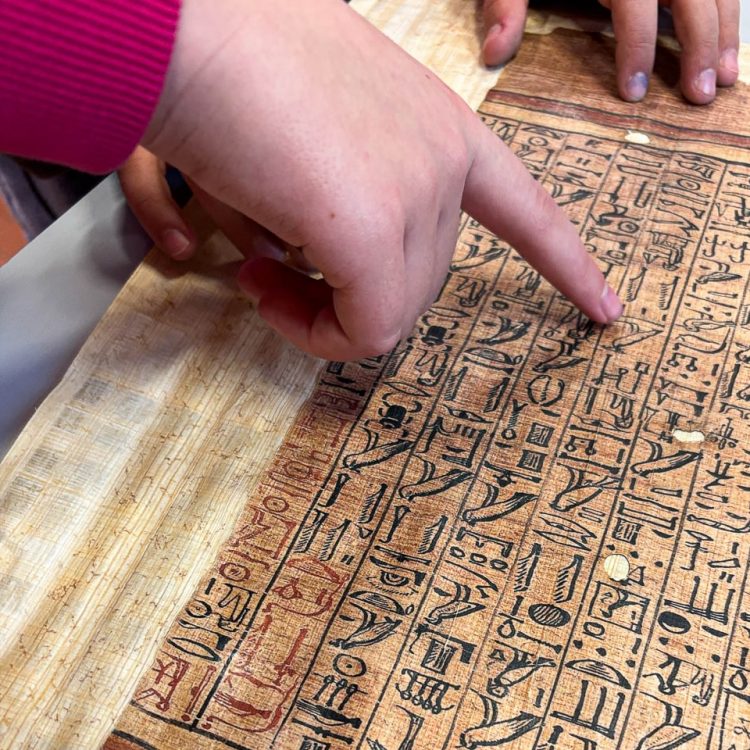
Holding a material witness to such distant centuries transformed history from an abstract narrative into a lived experience.
Questions followed naturally. Who could afford a funerary manuscript over twenty metres long and so richly decorated? (Ani, they learned, was a high-ranking official.) Were there papyri where the judgment ended badly—where the heart was devoured by Ammit, condemning the deceased to oblivion? Did this ever happen to kings or pharaohs? These were not idle curiosities, but ethical questions, asked with seriousness and empathy. The past became a mirror for thinking about responsibility, justice, and consequence.
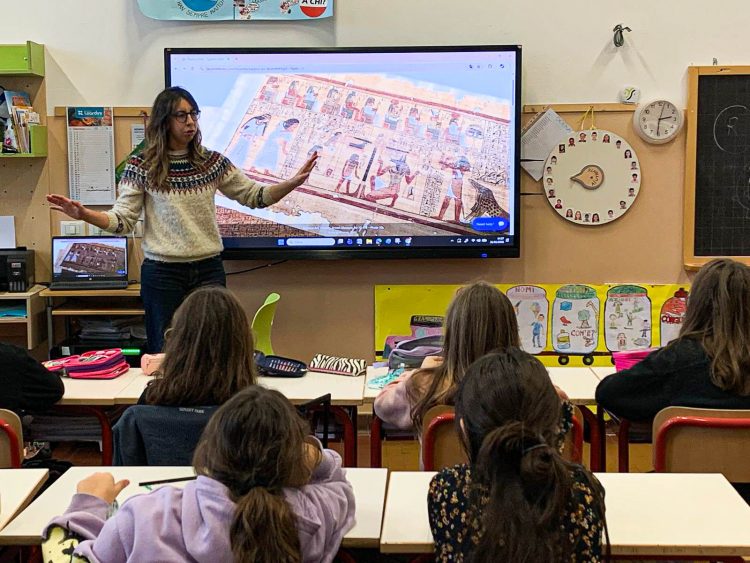
In a multicultural classroom, curiosity expanded further. Were there contacts between ancient Egypt and peoples of Central or East Asia? Where does documented history end and legend begin? Clara answered honestly: while we must rely on evidence, human curiosity has never been constrained by geography. Long before modern transport, people travelled vast distances for trade, resources, and the desire to know the world beyond the horizon.
Facsimiles, Manuscripts, and How the Meaning of Books Changed Over Time
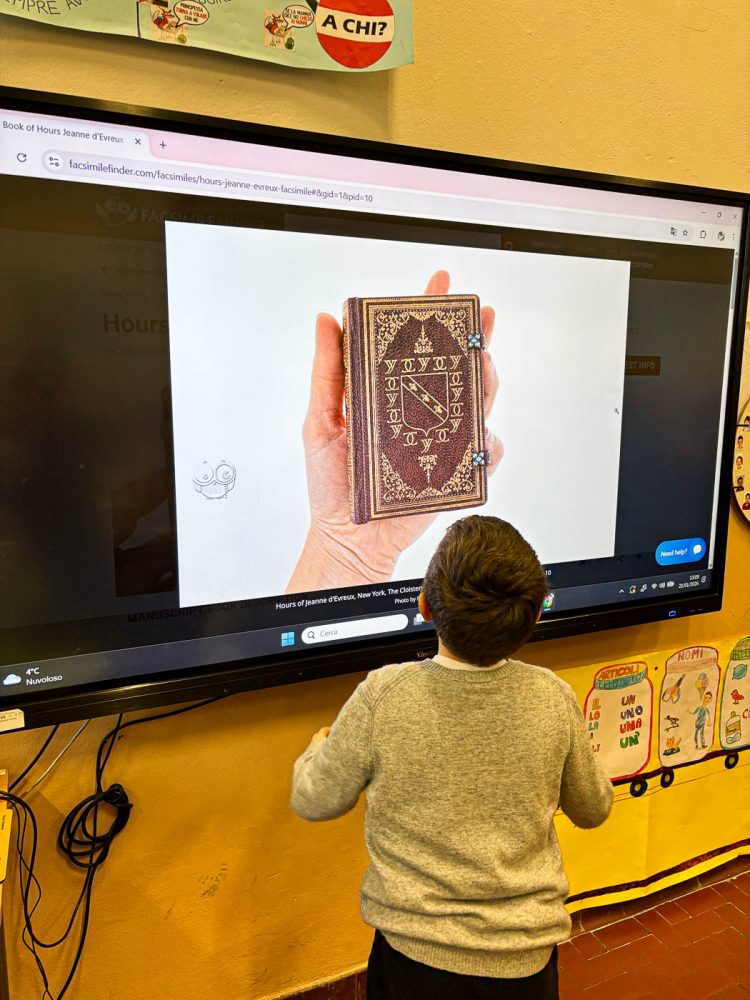
From papyrus, the lesson moved on. Facsimile editions on parchment and paper were introduced—objects representing different centuries, styles, and purposes. Together, the class reflected on what a book is, and how its meaning has changed over time: from a luxury object of prestige, enriched with illumination and artistry, to a mass-produced item of daily use—often without images at all.
When a child finally asked Clara how one comes to do her work, and why, her answer was simple and deeply felt. Technology helps us reach audiences, collectors, and scholars across the world. But nothing can replace the magic of physical encounter. Whether in museums, archives, or through high-quality facsimiles, it is the tangible presence of manuscripts that creates understanding, emotion, and memory.
This day will remain with all of us—not just as an educational activity, but as proof that teaching history through objects invites deeper questions, shared wonder, and new ways of learning. For children, for university students, and for all of us who continue to believe that the past still has something urgent to say.
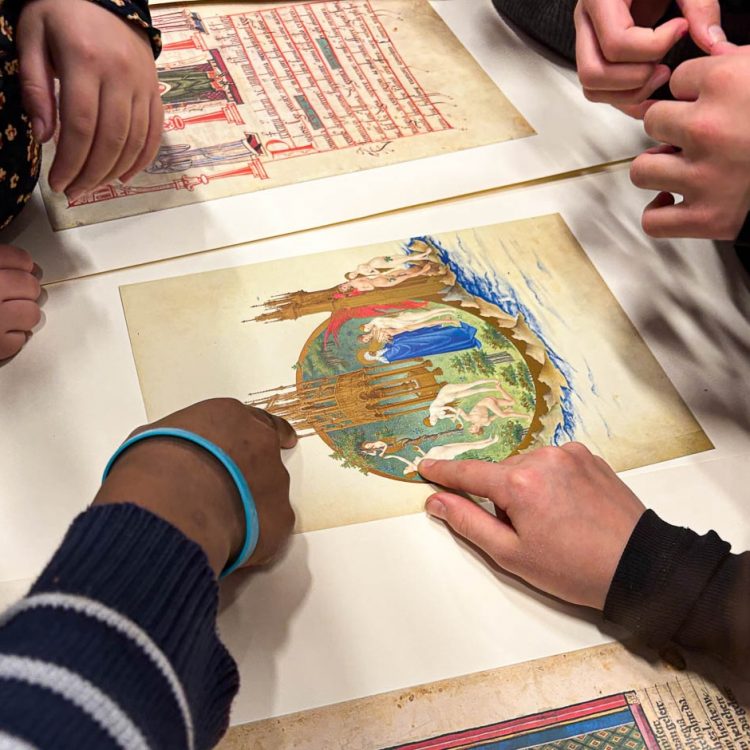
It is the tangible presence of manuscripts that creates understanding, emotion, and memory.
Check out this link to view a complete gallery of the Papyrus of Ani facsimile!
Or watch our informative YouTube video.